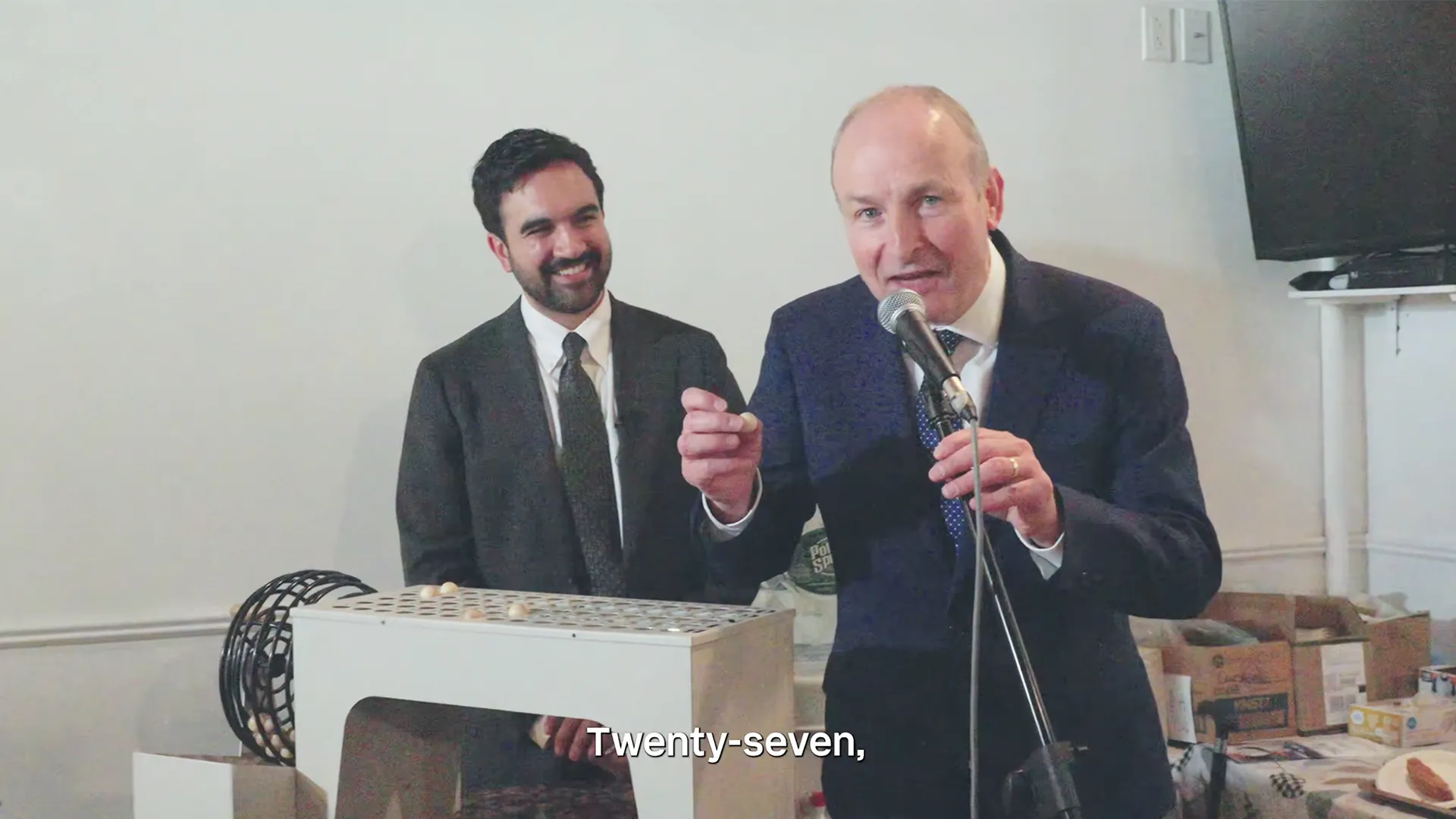
Mamdani, Irish PM play bingo, ‘split the G’ in New York
New York City Mayor Zohran Mamdani shared a video riding the subway with Irish PM Micheal Martin during UN week.
Source link
New York City Mayor Zohran Mamdani shared a video riding the subway with Irish PM Micheal Martin during UN week.
Source link
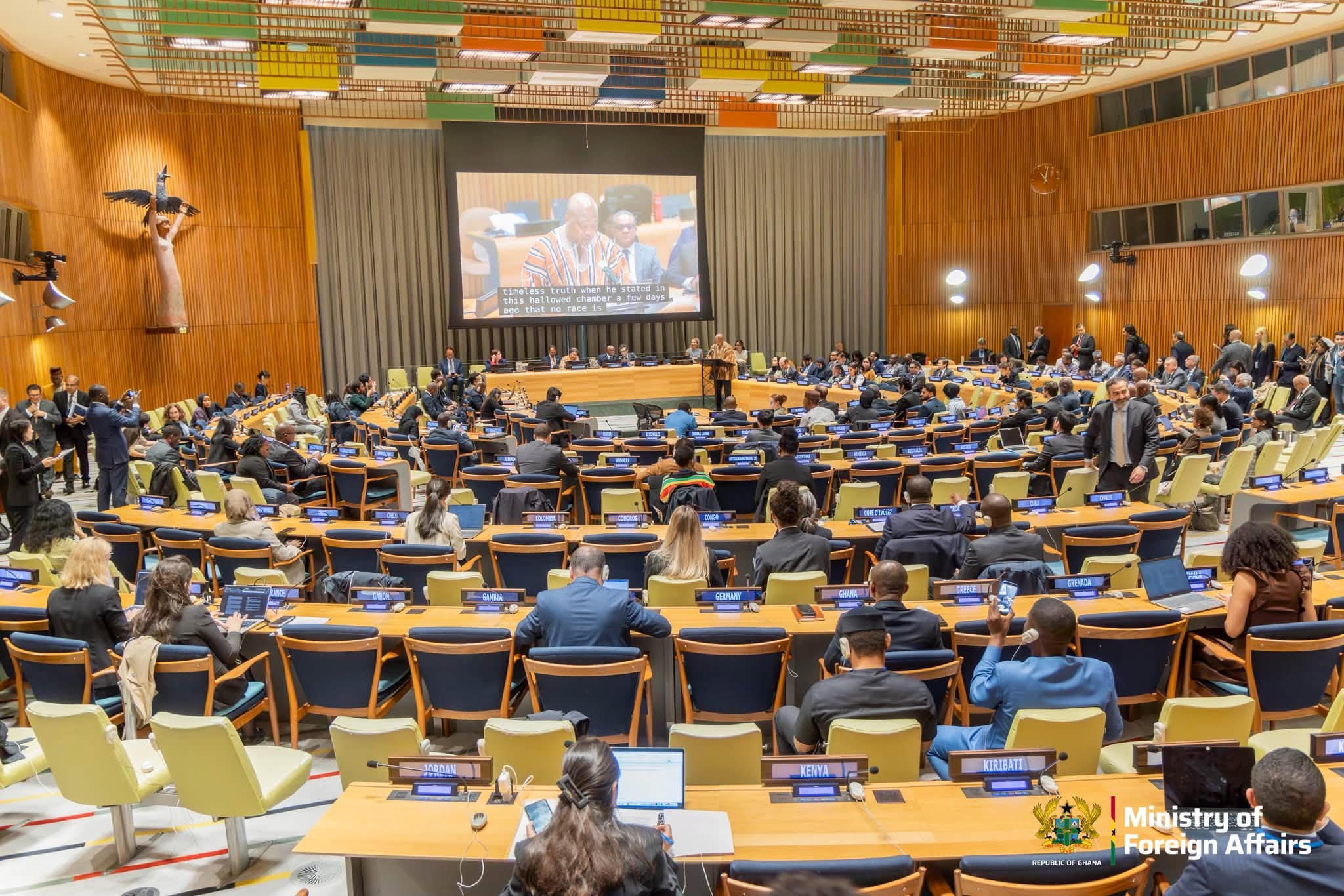
US and Israeli officials praised the countries that did not participate in the high-level meeting. (Archive)
Caracas, October 1, 2026 (venezuelanalysis.com) – Venezuela joined the United States, Israel, and allies in shunning a high-level UN meeting commemorating the 25th anniversary of the Durban Declaration.
The event took place on Monday at the UN headquarters in New York to celebrate the landmark anti-colonial and anti-racist declaration and programme of action adopted at the Durban Conference in 2001.
“48 UN Member States refused to participate in the UN’s shameful High-Level Meeting commemorating the 25th anniversary of the notorious anti-Western, antisemitic Durban Conference,” US ambassador to the UN Mike Waltz wrote on X. “We thank all Member States who joined the United States in rejecting Durban’s poisonous legacy.”
Waltz posted the flags of the 48 countries that reportedly boycotted Monday’s event. Venezuela joined Argentina, Bolivia, Chile, Colombia, and Paraguay, countries with US-aligned right-wing governments, as the only Latin American countries not to take part. All African and Caribbean countries participated with the exception of South Sudan.
Israel likewise lobbied countries not to attend the event, with ambassador Danny Danon insisting that “the UN must bury Durban’s toxic legacy.”
In his opening remarks at Monday’s meeting, UN Secretary-General António Guterres called the Durban Declaration and Programme of Action a “global blueprint for racial justice and equality.”
Cuban Foreign Minister Bruno Rodríguez told delegates present that “intolerance and supremacist ideologies” are on the rise in Global North countries.
“The wealthiest nations, which benefited from centuries of conquest, colonization, and the transatlantic slave trade, refuse to acknowledge their historical responsibilities,” he said. “Some even opposed this Assembly’s recognition of the slave trade as a crime against humanity, the gravest in history.”
The World Conference against Racism (WCAR), held in Durban, South Africa, from August 31 to September 8, 2001, aimed to establish global strategies against racism, xenophobia, and other forms of intolerance. The US, European countries, and Israel decried draft articles condemning colonialism and the slave trade, as well as declaring Zionism as a form of racism.
Though the language was watered down and non-committal on issues such as reparations, the US and Israeli delegations withdrew from the conference in protest against the final declaration’s references to Israel and proceeded to boycott subsequent gatherings held every five years.
The Venezuelan government did not comment on its decision to join Washington and Tel Aviv in opposing the latest anti-racist meeting.
Former President Hugo Chávez strongly endorsed the original Durban conference and its final resolution. He was likewise a firm backer of Pan-African unity and the Palestinian cause, having severed ties with Israel in 2009 and fiercely denounced the US ally for genocide. His stance was maintained by his successor Nicolás Maduro, who endorsed South Africa’s activation of the Genocide Convention against Israel at the International Court of Justice (ICJ) in 2024. Over their quarter century in power, both administrations also forged closer diplomatic and political-cultural ties with the African continent and approved landmark anti-racial discrimination legislation.
Back at the 20th anniversary commemoration of the Durban Declaration in 2021, then-Venezuelan Foreign Minister Félix Plasencia stated that the text’s “principles and motivations remain more relevant than ever.” Plasencia was reappointed to the post by Acting President Delcy Rodríguez in July.
Rodríguez’s latest decision to diplomatically support Washington and Tel Aviv marks another significant milestone in Caracas’ foreign policy realignment since the January 3 US military strikes and kidnapping of Maduro.
Venezuela re-launched ties with Israel, first accepting a diplomatic and military mission in the wake of the June 24 double earthquake and later announcing further “technical cooperation” and the reestablishment of consular services.
Orthodox Rabbi Isaac Cohen stated in a September interview that Venezuela and Israel are going through a “dating period” that will lead to a “marriage” in the form of a full diplomatic normalization and reopening of embassies.
Caracas further engaged with Tel Aviv by accepting a reported medicine donation from Israel that was financed by Momentum Solutions, a logistics company run by prominent Zionist entrepreneurs Walter and Stephen Arbib.
Venezuelan Health Minister Carlos Alvarado received the donated supplies on Tuesday at the Tiferet synagogue in Caracas alongside Cohen and other representatives from the Venezuelan Jewish community.
Alvarado, who posed for pictures alongside the Israeli flag, claimed that the medicines would address needs in the country’s hospitals. He offered no details on the shipment’s contents.
Edited by Lucas Koerner in Philadelphia, USA.
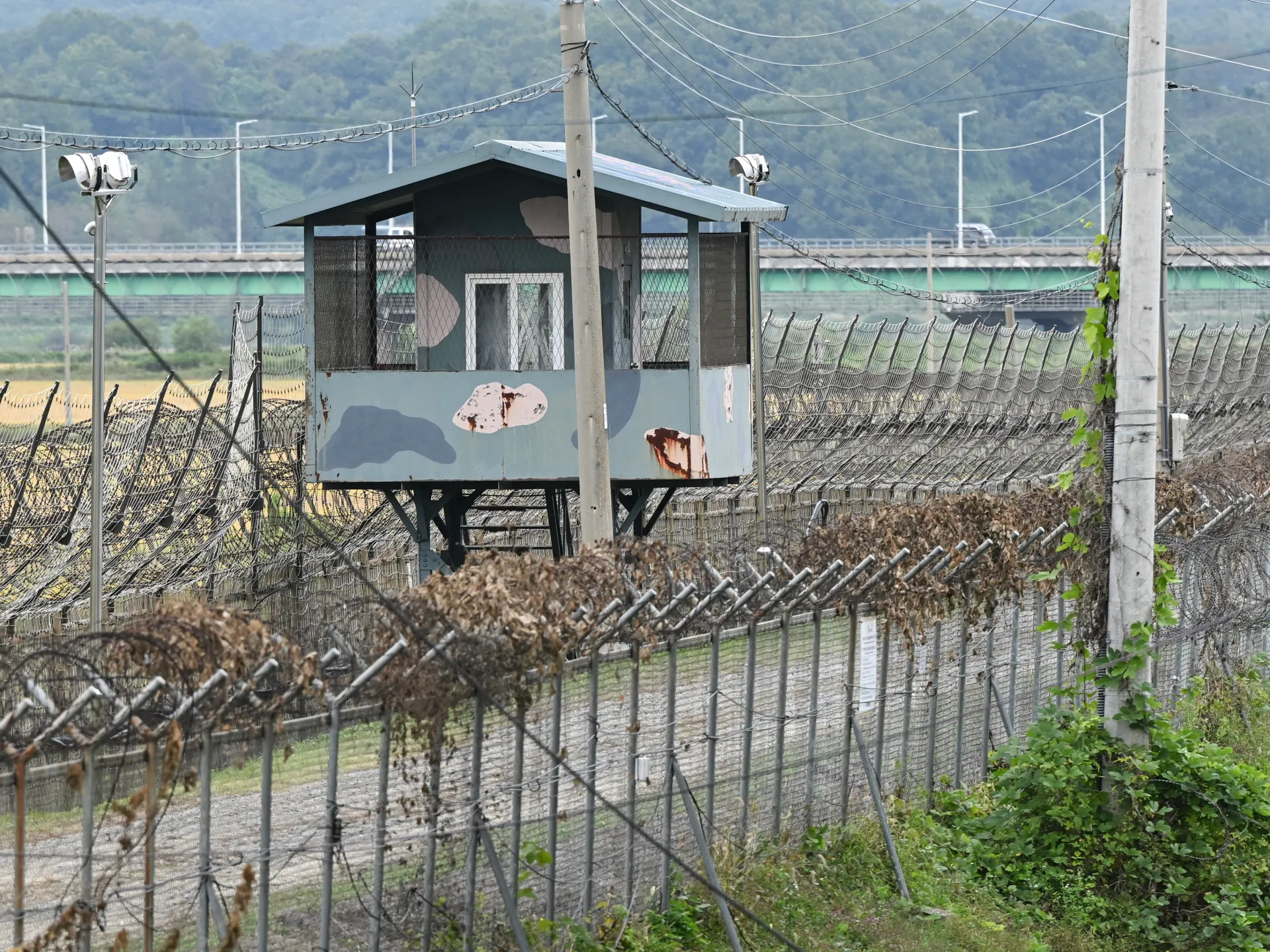
South Korea calls for a formal apology from North Korea over the DMZ explosion that injured three soldiers.
Published On 30 Sep 202630 Sep 2026
South Korea’s military has demanded an apology from North Korea over landmine explosions earlier this month in the border zone between the two countries that wounded three soldiers.
Three South Korean soldiers were injured in two explosions on September 21 near the military demarcation line in the western section of the Demilitarized Zone, a heavily fortified border buffer zone between the Koreas that is commonly known as the DMZ.
list of 3 itemsend of list
Kang Hyunwoo, the South Korean joint chiefs of staff’s director of operations, said the military “strongly urges” North Korea to apologise for the blasts and take “responsible measures” to prevent a recurrence.
“This is a clear violation of the Armistice Agreement and undermines the spirit of existing inter-Korean agreements; it must be stopped immediately,” he said on Wednesday, adding “we strongly urge an apology and responsible measures”.
Defence Minister Kang Shin-chul said South Korea would consider unspecified “corresponding measures” if a complete investigation confirms the North was responsible.
Kim Yo Jong, the sister of North Korean leader Kim Jong Un, said the South Korean assessment is a “conspiratorial farce” and accused Seoul of making groundless claims to create a pretext for provocation against Pyongyang.
She also criticised the South for broadcasting warnings and firing warning shots at North Korean troops conducting front-line fortification work, adding “our soldiers have never crossed the border”.
“If the [South Korean] military gangsters fire at our soldiers carrying on the permanent project for the southern border, not warning shots, our border units will take immediate and merciless retaliatory action,” she said.
The United Nations Command said on Wednesday it had “identified an active Democratic People’s Republic of Korea (North Korea’s) anti-personnel mine on the ROK side of the Military Demarcation Line”, in a joint investigation with Seoul’s military.
“Based on the findings of the investigation, UNC determined that an Armistice Agreement violation occurred,” it added.
The UN Command is a US-led multinational military force charged with overseeing the armistice agreement that halted fighting in the Korean War and administers the southern side of the DMZ.
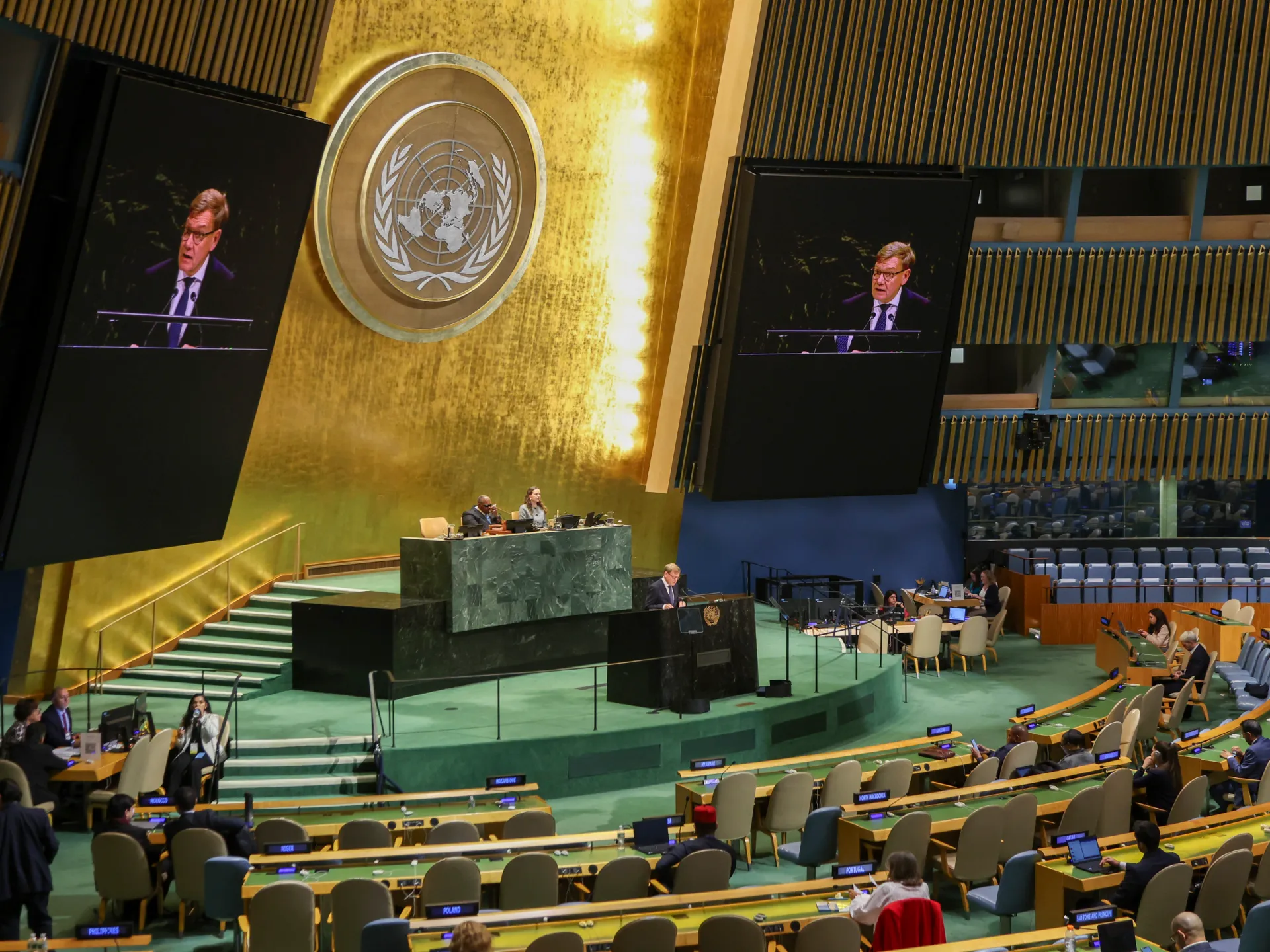
The 81st United Nations General Assembly (UNGA) concluded on Monday with artificial intelligence (AI), the Israel-Palestine conflict and the US-Israel war on Iran dominating world leaders’ addresses during the general debate.
UN Secretary-General Antonio Guterres, in his final address before his term ends, warned that the future of the world would be shaped by four tests: AI, climate change, wars and inequality.
list of 3 itemsend of list
“Across all four tests, the decisive issue is power. Power over force, money, energy, technology, rules and the future. That is why the UN Charter – and the work of the United Nations – matter more than ever,” Guterres said.
Speeches ranged from calls to reform the UN to appeals for upholding international law, as the global body has been undermined by the unilateral foreign policy pushed by United States President Donald Trump.
Here are the biggest takeaways from this year’s summit:
The situation in Palestine was a key issue among members amid Israel’s ongoing genocidal war on Gaza despite the so-called “ceasefire” and escalating settler pogroms in the occupied West Bank.
France, Canada, Iraq, the United Kingdom and others called for Palestinian sovereignty during their speeches.
“What credibility do we have if we continue to remain inactive in the face of Gaza,” French President Emmanuel Macron said in his address.
“Some boast of a supposed peace, but this peace hasn’t reopened humanitarian routes for a single second,” he said, adding: “Must we stand by and watch this spectacle that shames us all?”
Macron, British Prime Minister Andy Burnham, his Canadian counterpart Mark Carney and Saudi Foreign Minister Prince Faisal bin Farhan Al Saud chaired a meeting at the UNGA on Palestinian statehood, which is being actively undermined by Israel. Israeli Prime Minister Benjamin Netanyahu’s government has accelerated construction of illegal settlements and provided impunity to settlers in the occupied territory.
At the same time, the US-led Board of Peace unveiled a 66-project reconstruction blueprint with proposed funding of $2.4bn for the Gaza Strip on the sidelines of the UNGA.
However, the board’s plan excludes the UN agency for Palestinian refugees (UNRWA), saying it has no role in the future of Gaza. The decision was described by Palestinian political analyst and playwright Ahmed Najar to Al Jazeera as aligned with Israeli efforts to “marginalise and ultimately dismantle the agency, removing it not only from Gaza’s present but from its future”.
Dozens of delegates left the hall in protest as Netanyahu delivered his speech, in which he declared that Israeli forces would continue fighting against Hamas and Iran.
In his address, Trump emphasised that while others spoke of peace, he “made peace”.
Trump defended his actions in abducting the then-Venezuelan President Nicolas Maduro in January and said, since his military operation, hundreds of political prisoners had been freed in the South American country and that Caracas had signed the largest oil deal in history last month, covering “65 billion barrels of oil, which will benefit both Venezuela and the United States enormously and help drive down the cost of energy all over the world”.
“It was perhaps the biggest deal ever made. To the victor belong the spoils – you’ve all heard that,” Trump boasted.
Trump reiterated that he would never allow Tehran to have nuclear weapons and that the 12-day war in July 2025 had “obliterated their nuclear programme beneath mountains of rubble” as the ongoing US-Israel war on Iran had sunk “159 ships of their navy” to the bottom of the sea.
“I have a big decision to make – will a deal be made with Iran that lets them rebuild and create a far greater country than it ever was before … or do I annihilate the Islamic Republic and do it quickly, never giving them a chance to kill and destroy people and countries again,” he said, adding: “I believe we make a deal right after the elections.”
During sideline talks and one-on-one meetings, Iranian officials were in demand.
In his speech to delegates, President Masoud Pezeshkian emphasised that Iran had only “defended ourselves” amid attacks on his country and killings of Supreme Leader Ayatollah Ali Khamenei, scientists and children.
“We are not terrorists, our innocent people have been the targets of cowardly attacks and aggressions imposed upon our country,” he said.
Pezeshkian added Iran would not accept that peaceful nuclear technology is held exclusively in the hands of a few countries.
“We will not bow our head and give up the right that is inherently ours,” he said.
Meanwhile, on the sidelines of the summit, Foreign Minister Abbas Araghchi met his counterparts from India, Qatar, Turkiye, Pakistan, Ukraine and other countries.
He also met US Special Envoy Steve Witkoff and Trump’s son-in-law Jared Kushner in a four-hour meeting mediated by Qatar.
World leaders used their time at the podium to call for a global approach to using AI as interest in the technology grows, but fears that it could escalate if unchecked are also growing.
In his address, Finnish President Alexander Stubb said AI was the “most consequential technology in the history of mankind”.
“It will impact science, the economy, politics, security, and the very essence of our humanity. Humans can and should be in the driver’s seat. We have a choice: we can compete, cooperate or slow down. For me, cooperation is the best way forward,” he said.
While discussions are moving away from a good-versus-bad dichotomy, officials disagreed on approaches.
While Guterres and the European Union called for safety standards and international rules, Trump said AI innovation should not be constrained by international regulation, adding that the US should control its AI sector.
Chinese President Xi Jinping skipped the UNGA despite being in the US for a summit with Trump. He sent Vice President Han Zheng to attend.
Xi rarely attends the UNGA. He had sent Premier Li Qiang in his place last year. In 2024, Foreign Minister Wang Yi attended the annual gathering.
Without mentioning Iran in his address, Han reiterated Beijing’s position that “sovereignty and security of countries in the Middle East, including the Gulf, should be respected”.
“China calls for advancing the governance of the West Bank and the post-conflict reconstruction of Gaza in accordance with the principle of the Palestinians governing Palestine. It also calls for bringing the Palestinian question back onto the right track of the two-state solution at an early date,” he said.
Han also called for a “people-centred approach and develop AI for the positive and for good, narrow the digital divide, and promote development that is universally beneficial”.
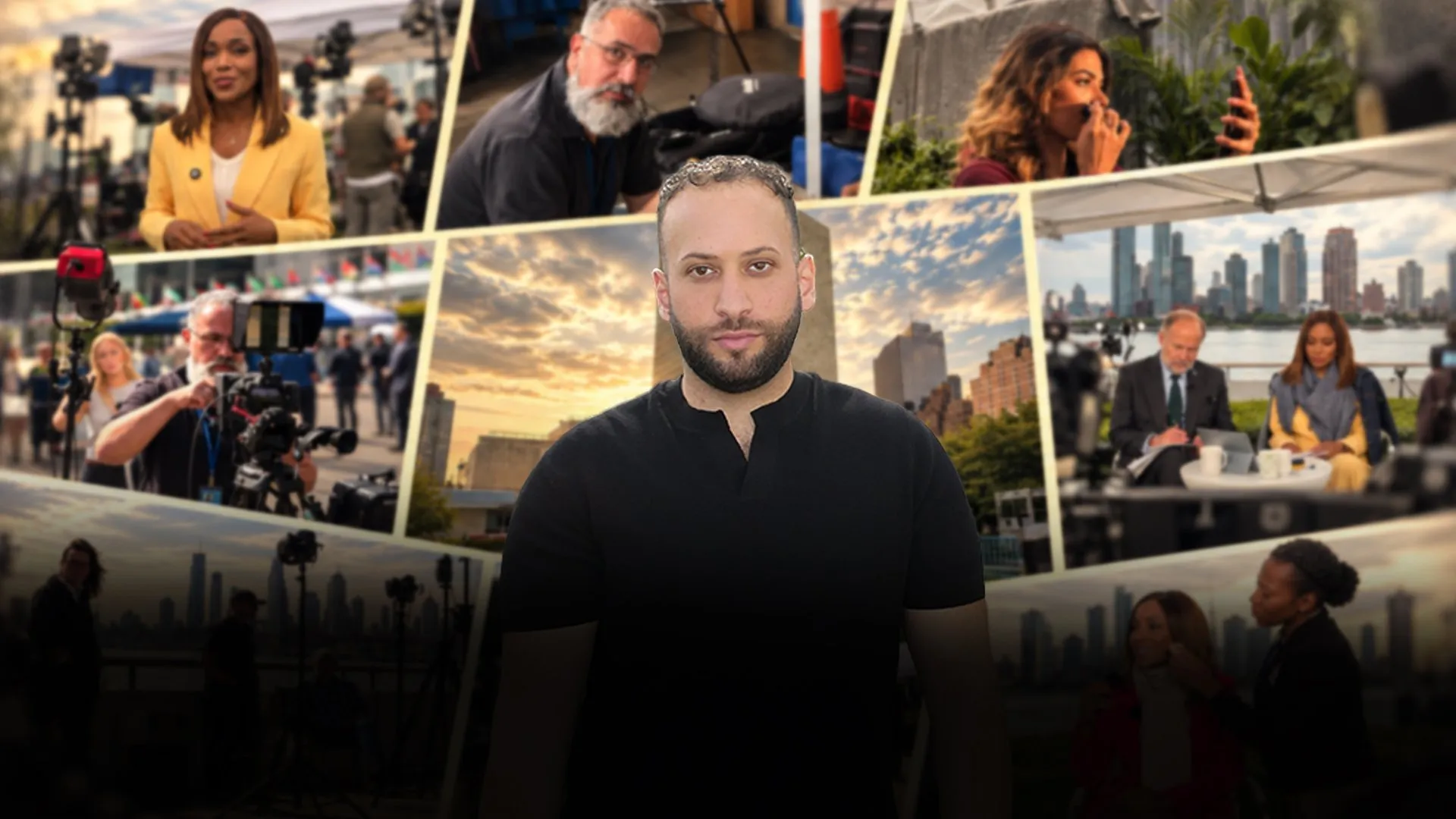
Once a year, leaders from across the globe meet face-to-face at the UN General Assembly, and Al Jazeera’s journalists were there covering daily developments. Here’s a look at what it was like behind the scenes of the coverage you saw online and on TV.
Published On 29 Sep 202629 Sep 2026
Share
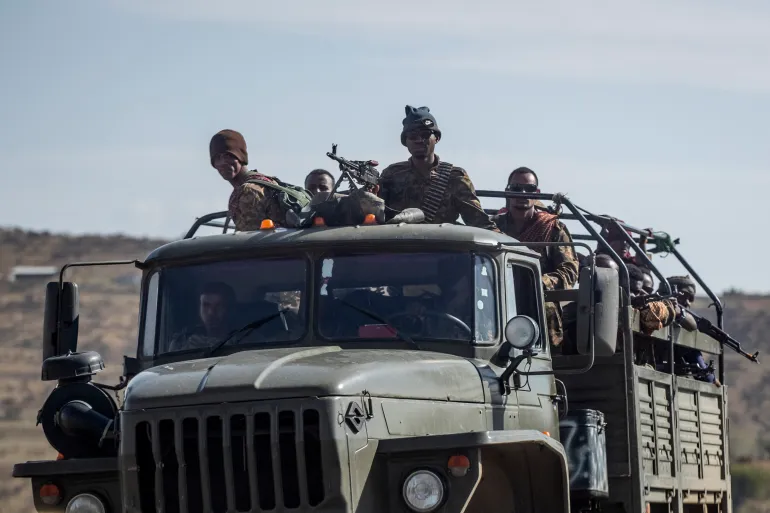
Army chief accuses Eritrea of funding and supporting armed groups to weaken Ethiopia.
Ethiopia’s federal military has said it is handling rising tensions in the country’s north with restraint, as fears grow that Ethiopia could be heading towards another civil war.
In his first comments on the recent military developments, Army Chief of Staff Field Marshal Berhanu Jula said the army was responding to what he called provocations from the Tigray front with “wisdom and restraint”.
list of 3 itemsend of list
He accused Eritrea of funding and supporting armed groups to weaken Ethiopia, describing the “Tsimdo” alliance as an extension of a longstanding pattern of hostile alliances, which he said cannot confront the state without outside backing.
Eritrea, wary that landlocked Ethiopia may be seeking to invade it to gain access to the Red Sea, denied the accusations.
The fighting has spread from Tigray into neighbouring Afar and Amhara regions after seven armed groups announced an alliance, the Ethiopian Peoples’ Forces Alliance for Survival, committed to removing Prime Minister Abiy Ahmed’s government.
In Afar, the latest battles have taken place around Abala, where the military has been trying to prevent rebels from seizing control.
Separately, in North Wollo, a zone of Amhara bordering Tigray, the army said on Thursday it had killed 272 Tigrayan fighters and wounded 260 in a counter-offensive, reporting heavy losses for the Tigray People’s Liberation Front (TPLF).

The TPLF’s Tigray Army said the federal government had launched a “full-scale offensive” involving infantry, mechanised units and drones.
Abdisalam Balema, a TPLF central committee member, told Al Jazeera the situation had become a “full war”.
Fighting has also continued around Sama, Soqota and Raya Alamata, with government forces reportedly closing in on the town of Alamata.
The army command said it prefers a strategy of “strategic calm” over a large-scale military confrontation, arguing the Tigray front’s popular support is dwindling and its leadership divided.
Internet access was reportedly cut across northern Ethiopia on Friday, a day after the UN said it was alarmed by reports of drones being used against civilians there.
The renewed fighting has put the 2022 Pretoria Agreement, which ended a brutal two-year civil war in Tigray, under severe strain. It comes weeks after Washington lifted sanctions on Ethiopia and Eritrea tied to atrocities from the last war, saying the “national emergency … has expired”.
It marks the most serious challenge yet to that agreement, raising fears of a wider regional conflict that could draw in armed groups from across Ethiopia.
Addressing the UN General Assembly, Ethiopia’s president sought to portray the country as a force for regional stability, accusing unnamed external actors of meddling in Ethiopia’s affairs while highlighting Addis Ababa’s role in supporting peace efforts in neighbouring Sudan.
Alemayehu Weldemariam, a professor of law at Indiana University, told Al Jazeera that the federal government bears much of the blame for the collapse of the Pretoria Agreement.
“This war has been in the making for a while now. Much of the provisions in the cessation of hostilities [in the 2022 agreement] were primarily sabotaged by the federal government itself,” he said, citing fuel, service and cash restrictions imposed on Tigray, and the government’s failure to set up the interim administration the deal had promised.
“What was supposed to be an interim arrangement turned out to be permanent,” with Tigray excluded from national elections since, he added.
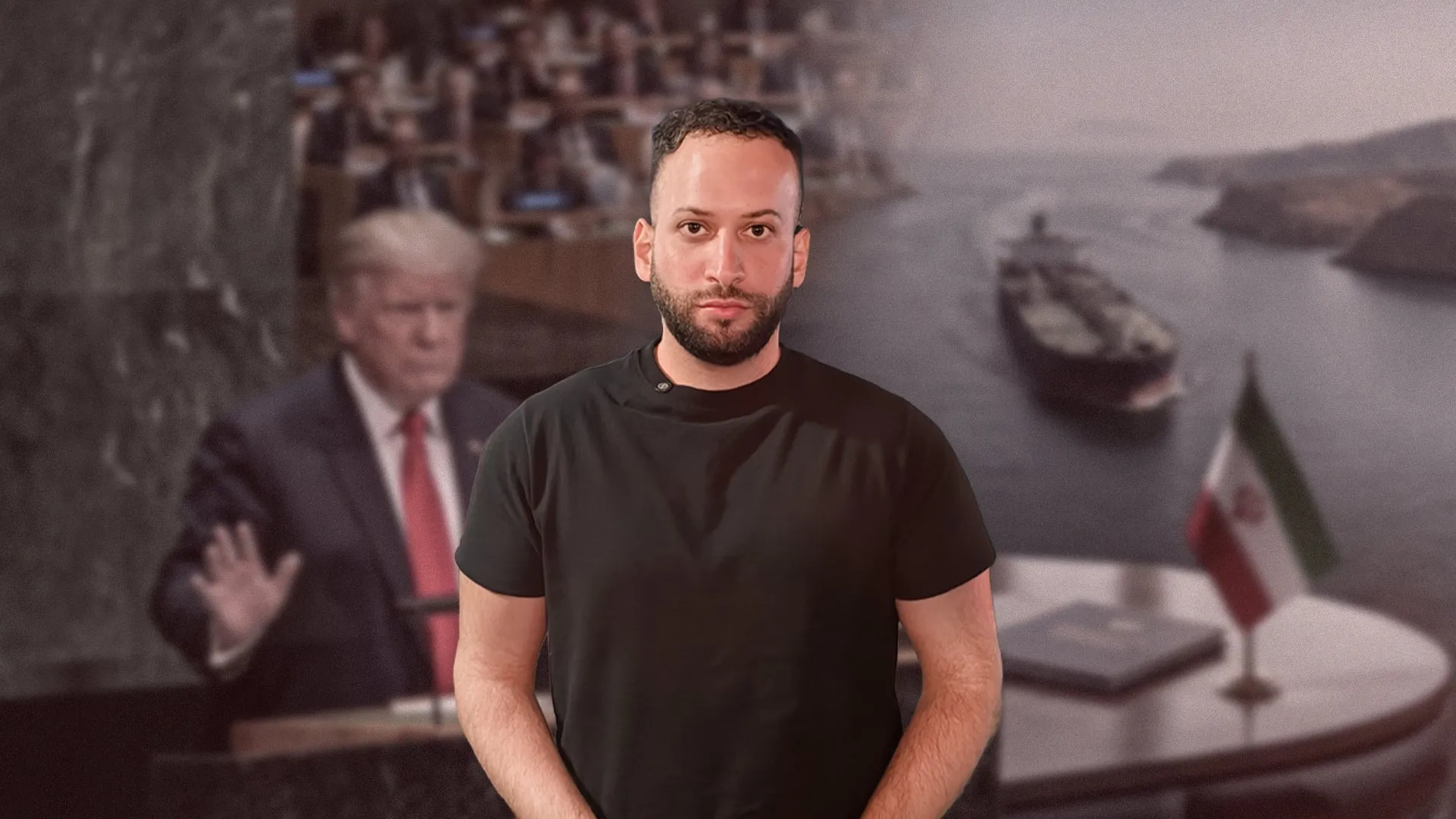
As the UN General Assembly wraps up with mixed diplomatic outcomes, Al Jazeera’s Mohammad Qasem reports on how US President Donald Trump has rejected Iran’s latest proposal to reopen the Strait of Hormuz. Meanwhile, Russia and Germany have re-established high-level talks, and China has criticized Washington’s approach to the region.
Published On 27 Sep 202627 Sep 2026
Share
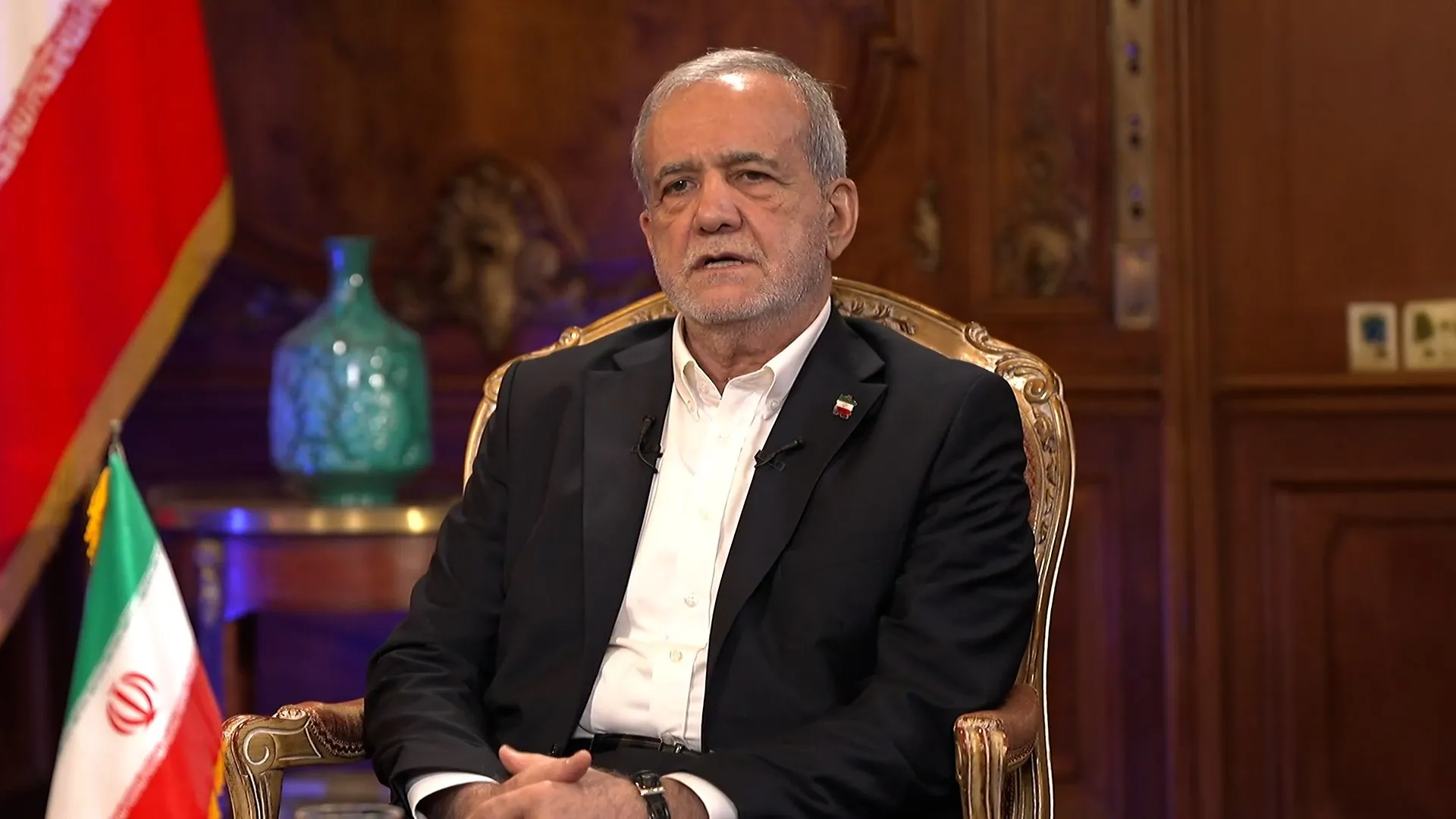
Iran’s President Masoud Pezeshkian told Al Jazeera that Tehran no longer trusts talks with the US after previous negotiations were followed by attacks and sanctions. His comments came shortly before Donald Trump rejected Iran’s proposal to reopen the Strait of Hormuz within seven days.
Published On 26 Sep 202626 Sep 2026
Share
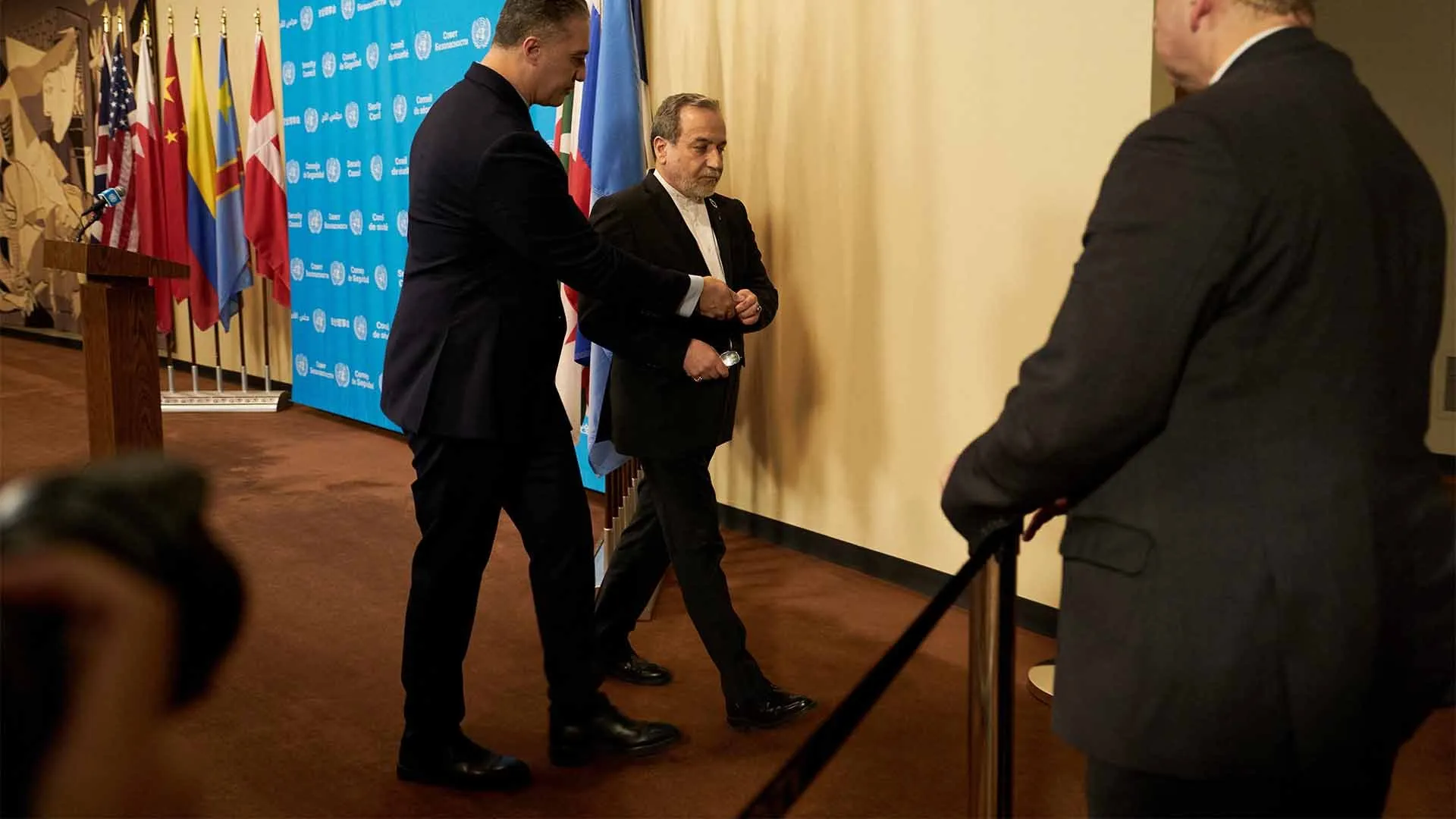
US State Department Spokesman Tommy Pigott says President Donald Trump ‘holds all of the cards’ in talks with Tehran. Officials from both countries met with mediators on the UNGA sidelines, but so far, there is no deal.
Published On 26 Sep 202626 Sep 2026
Share
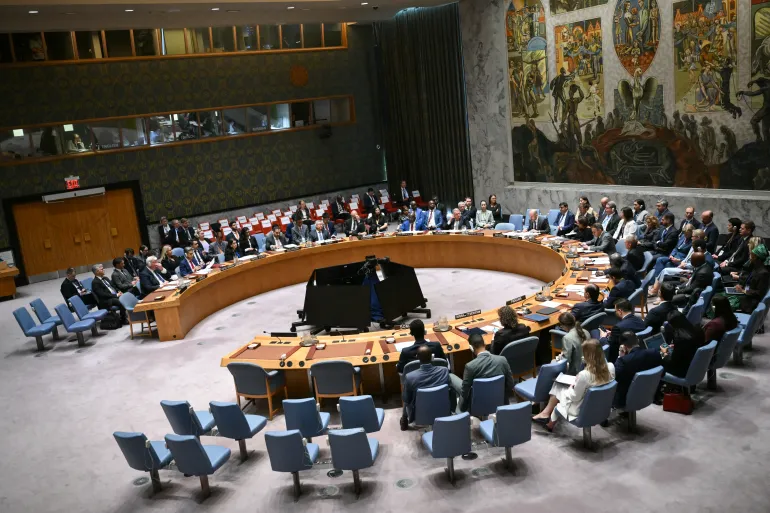
Abuja, Nigeria – Africa’s long-running campaign for permanent representation on the United Nations Security Council is back in focus at the 81st UN General Assembly, with leaders renewing calls to reform a body whose five permanent members have remained unchanged since 1945.
UN Secretary-General Antonio Guterres used his final address to the General Assembly on Tuesday to renew his call for Security Council reform, saying it must become more representative and better reflect today’s geopolitical realities.
Nigeria’s Vice President Kashim Shettima, delivering President Bola Tinubu’s national statement, called for at least two permanent seats for Africa, with veto powers for as long as the veto exists, as well as five non-permanent seats for the continent.
Ghana’s President John Mahama made a similar appeal: “Security Council reform is not a favour to Africa; it is an imperative for the legitimacy, credibility and survival of the United Nations”.
The renewed calls highlight the scale of Africa’s demand. But translating them into an agreement that changes the Council’s structure remains a far more difficult task.
The Security Council has 15 members: five permanent members, China, France, Russia, the United Kingdom and the United States, and 10 members elected by the General Assembly for two-year terms.
The five permanent members hold veto power, allowing any one of them to block a substantive Council resolution.
No African country has a permanent seat.
Yet Africa remains central to much of the Council’s work. In 2025, the Council adopted 44 resolutions, including 24 under Chapter VII of the UN Charter, which covers measures such as sanctions and authorisations for the use of force.
Eighteen of those 24 Chapter VII resolutions concerned Africa.
For Professor Ibrahim Gambari, a former Nigerian foreign minister and former Nigerian permanent representative to the UN, the issue is not simply one of geography.
“The status quo is not really interested in change,” he told Al Jazeera. “In the appointment of the Secretary-General, you cannot be a candidate unless each of the five permanent members agrees. Therefore, we have the privilege of the unelected P5, which they don’t want to relinquish.”
Gambari said Africa’s absence was difficult to justify given the continent’s size and the amount of Security Council business involving it.
“In the case of Africa, we have a whole continent that has the largest single bloc, yet has no permanent seat on the Security Council,” he said.
The General Assembly launched the intergovernmental negotiations process on Security Council reform in 2008. The talks cover the Council’s size, membership categories, regional representation and the veto, and have continued through successive General Assembly sessions without agreement on the core questions.
Changing the Council’s permanent membership would also require an amendment to the UN Charter. Under Article 108, that requires approval by two-thirds of the General Assembly and ratification by two-thirds of UN members, including all five permanent members.
That gives the existing permanent members a formal role in any change to the system that grants them permanent membership and veto power.
Which African countries would eventually occupy any new permanent seats is another unresolved issue.
Nigeria has consistently presented itself as a country prepared to take on such a role. At this year’s General Assembly, the country renewed its call for at least two permanent African seats with all the rights and responsibilities of permanent membership, including the veto for as long as it exists.
Dr Fola Aina, a political scientist and international security expert at the School of Oriental and African Studies (SOAS), London, told Al Jazeera the issue also carried particular significance for Nigeria.
“Securing this position would essentially elevate Nigeria’s global diplomatic influence, give Africa a continuous voice in international security decisions and grant Nigeria the power to consolidate its position as a regional hegemon and middle power,” he said.
“The timing of Nigeria’s push is particularly strategic given the current age of strategic competition.”
Nigeria is not alone in seeking a permanent role. Egypt and South Africa have also pursued permanent representation, while other African states have expressed interest.
The African Union, however, has not selected specific countries to occupy the proposed seats. Its common position calls for at least two permanent African seats and five non-permanent seats on an expanded Council, with the AU determining which countries should represent the continent.
Even if agreement could be reached on who should represent Africa, another obstacle would remain: the veto.
The African Union’s Ezulwini Consensus calls for any permanent African members to have the same rights and privileges as the existing permanent members, including veto power for as long as the veto remains part of the Council’s system.

African governments have therefore argued that adding permanent seats without equivalent powers would not fully address the imbalance they are seeking to correct.
That leaves two separate questions: whether the Council should expand and what powers any new permanent members would receive.
Gambari argues that Africa’s absence also affects the Council’s day-to-day work.
“All these peacekeeping missions in Africa are based on the mandate of the Security Council,” he said.
“The P5 assign themselves the role of penholders, which hardly allows elected non-permanent African countries to initiate draft resolutions affecting their region.”
He said the imbalance was also visible in the way Security Council missions operate on the continent.
“Even Security Council missions to Africa are not led by Africans nowadays. How can the parties in dispute have confidence in such a team?” he said.
“Even for the Security Council’s continued relevance, it has to be reformed so that Africa can have representatives in the permanent seat category.”
For Favour Aniezi, a Nigerian creative and youth advocate, the issue is also about who has influence over decisions affecting the continent.
“Beyond representation, Africa’s absence from the permanent seats of the UN Security Council is a question of whose voice gets to shape decisions that affect the continent,” she told Al Jazeera.
“As a young Nigerian woman, I think it matters that Africa is not only present when global institutions discuss our challenges but has a meaningful role in deciding how those challenges are addressed. We should not simply be represented at the table, Africa should have a voice with the weight to influence what happens at it.”
For now, the core questions remain unresolved: how many new permanent members there should be, which African countries would take the seats, whether they would receive veto power and whether the existing permanent members would accept the changes.
“As long as they keep sticking to this anachronistic formula, reforms will be hard to attain,” Gambari said.
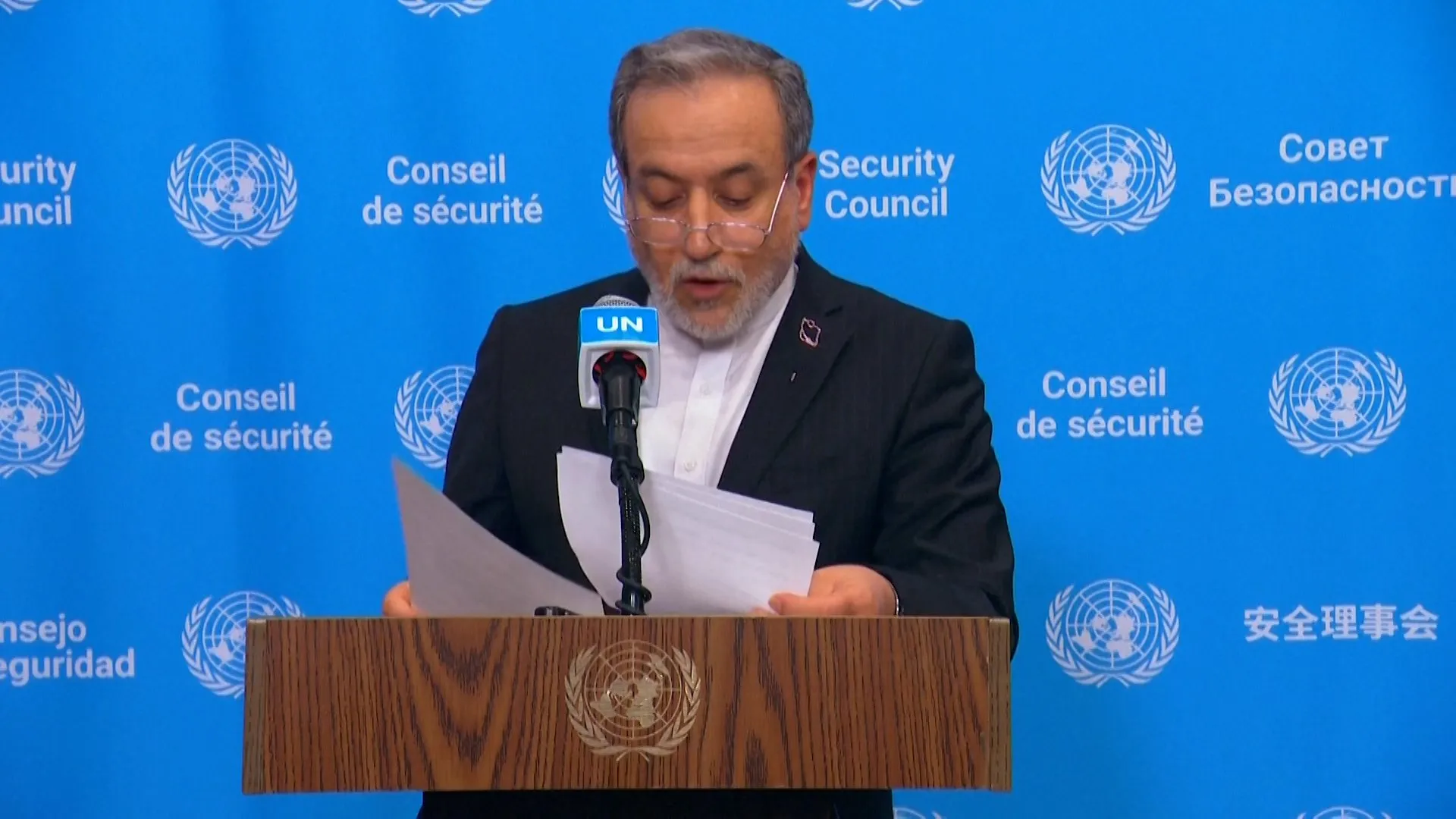
Iran will reopen the Strait of Hormuz within seven days, but the choice now rests with the US, says Iranian Foreign Minister Abbas Araqchi who spoke from the United Nations. The plan is based on the previously-agreed-upon Memorandum of Understanding (MOU) brokered in June.
Published On 25 Sep 202625 Sep 2026
Share
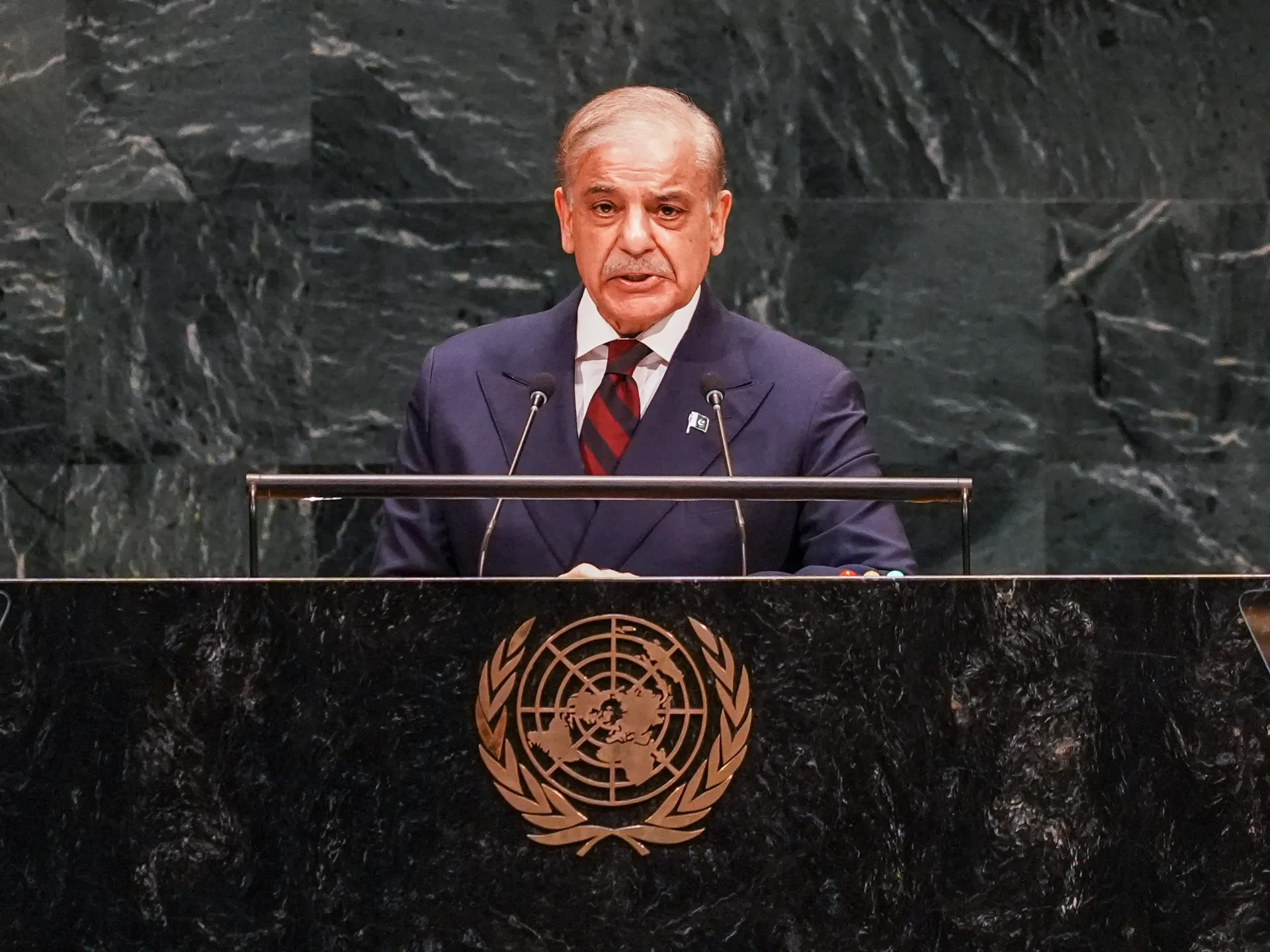
Shehbaz Sharif speaks as Islamabad, Riyadh and Ankara army chiefs meet to discuss Mecca pact, closer military ties.
Pakistan’s prime minister has condemned Houthi attacks on Saudi Arabia, warning that any “threat to the sanctity” of the Muslim holy cities of Mecca and Medina is a “red line that must never be crossed”.
Addressing the United Nations General Assembly in New York on Friday, Shehbaz Sharif denounced recent Houthi attacks as “deplorable”.
list of 3 itemsend of list
He added that an attack by the Iran-aligned Yemeni group, which Riyadh says targeted Mecca, “outraged Muslims across the globe”. The Houthis have dismissed the accusations as a “heinous lie”.
Last month, Pakistan, Saudi Arabia and Turkiye signed a trilateral defence pact, formally known as the Mecca Joint Defence Agreement. The pact states that an attack on any member will be treated as an attack on all. However, Islamabad and Ankara have refrained from getting involved in Riyadh’s ongoing fight with the Houthis.
The military chiefs of all three countries met in Riyadh on Friday and discussed enhancing intelligence sharing and military coordination, the Pakistani military said. The chiefs reviewed the security situation and threats facing Saudi Arabia, affirmed a commitment to collective defence and pledged to turn Mecca Agreement commitments into effective cooperation, the army added.
It is not clear what, if any, support Ankara and Islamabad may provide to Riyadh. In a written interview published by the US media outlet Newsweek on Friday, Turkish President Recep Tayyip Erdogan said support could include “intelligence, logistics or ammunition, with more extensive military assistance possible depending on the scale of the threat”.
In Sharif’s UN address, he also referenced the US-Israeli war that was launched against Iran in late February, as well as Islamabad’s role as a co-mediator.
Pakistan’s efforts culminated in the Islamabad Memorandum of Understanding, signed by Washington and Tehran, which was intended to help end the conflict.
The accord has since unravelled while regional countries push for a conclusive end to the war, which has caused a global energy crisis and exacerbated tensions across the Middle East.
“Yet amid the roar of missiles, drones and guns, the voice for diplomacy must echo even louder and stronger,” Sharif said.
He added that the Strait of Hormuz, which Iran has effectively blockaded, and the Bab al-Mandeb waterway, which is now largely under Houthi control, are “arteries of the global economy” that should remain free and safe.
The Pakistani prime minister also denounced what he described as Israel’s “genocidal agenda” in Palestine, while condemning “Israeli aggression against Lebanon and Syria”. These were sentiments echoed earlier in the day by Lebanese Prime Minister Nawaf Salam in his UN General Assembly address.
Closer to home, Sharif’s speech touched on tensions with Pakistan’s neighbours.
Criticising India, he accused New Delhi of weaponising the Indus waters, which both countries have jointly managed for more than six decades. The two neighbours heavily rely on the Himalayan river network.
Sharif warned that “any attempt to stop, impede or divert Pakistan’s share of the waters will be treated as an act of war”.
He also called for what he described as a “just and fair solution” to the Kashmir dispute, which both Pakistan and India claim in its entirety. Sharif alleged that there have been attempts to “alter the legal status” of Kashmir through demographic engineering.
Another pressing issue for Islamabad is the threat posed by the Tehrik-e-Taliban (TTP), or Pakistani Taliban. Sharif said groups operate from “sanctuaries inside Afghanistan, with the aim of destabilising Pakistan”, insisting that attacks launched from Afghanistan “must come to a grinding halt”.
This comes as the latest cross-border fighting left several Afghan Taliban fighters dead on Friday.
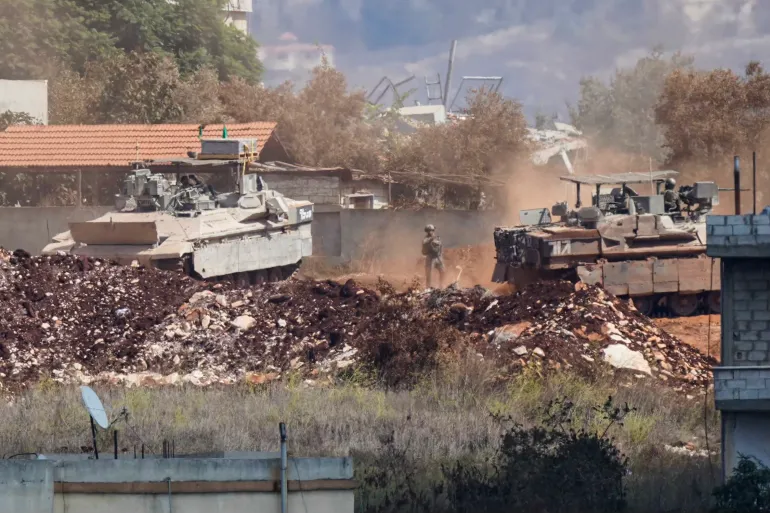
Lebanese Prime Minister Nawaf Salam wants US-brokered ceasefire to be consolidated and for Israel to retreat.
Lebanese Prime Minister Nawaf Salam has called for an end to the Israeli occupation of southern Lebanon and the full enforcement of the ceasefire, as Israeli shelling and demolitions continue.
“We want the war to end and we want the ceasefire [with Israel] consolidated,” Salam said in a speech at the United Nations General Assembly in New York on Friday.
The prime minister demanded a complete withdrawal of Israeli forces from Lebanese territory up to its internationally recognised border and the release of all Lebanese detainees.
As delegates gathered to listen to Salam, on the ground in Lebanon, Israeli forces carried out a large explosion near Taybeh and Deir Siryan, while an Israeli air strike targeted a valley between Froun and Ghandourieh, triggering a large fire.
Al Jazeera’s Zeina Khodr, reporting from Froun, said the reality on the ground is that the conflict is far from over.
“From the ground here in Froun, we can still see Israeli warplanes and drones flying at low altitudes in the skies above and Israeli artillery shelling is still causing uncontrollable fires. Lebanese civil defence and firefighters are not being allowed by the Israelis to reach these areas and put out the flames,” she said.
“More than 60 towns in southern Lebanon are still occupied by the Israeli army, where the Israelis are carrying out a systematic campaign of demolitions,” Khodr added.
Israeli forces are “blowing up people’s homes, despite the framework agreement in which there is supposed to be a ceasefire that they have signed with the Lebanese government,” she said.
Israeli attacks in southern Lebanon have killed at least 4,386 people and wounded 12,407 others since March 2 , when the current Hezbollah-Israel war started. Since then, Israeli forces have occupied up to 600sq km of Lebanese territory up to the Litani River.
A US-brokered framework agreement between Lebanon and Israel in June provides for a gradual Israeli withdrawal from Lebanese territory and the deployment of the Lebanese army in areas vacated by Israeli forces.

Speaking at the UNGA, Salam said his government had entered into negotiations with Israel, mediated by the United States and President Donald Trump, “to end the war and restore Lebanon’s sovereignty”, adding that the success of any agreement is measured not by intentions but by fulfilment of commitments.
“What is required is to complete the translation of this agreement into practical steps within a clear timetable and with a verification mechanism that ensures the implementation of all its provisions,” he said.
He focused on state sovereignty, saying it “cannot be untouchable in one place and negotiable in another, nor can the rules of international law apply to some but not to others”.
Salam also pledged to oversee the disarmament of Hezbollah in exchange for Israel’s eventual full withdrawal, also saying “weapons must be exclusively in the hands of the state and that decisions on war and peace rest solely with its constitutional institutions”.
Stability in the Middle East can only come with respect for Palestinian rights, he said.
“There can be no lasting stability in Lebanon without lasting stability in our region, and there can be no stability in the region as long as this organisation [the UN] remains unable to enable the Palestinian people to exercise their inalienable right to self-determination, like all other peoples of the world,” Salam said. “No less and no more.”
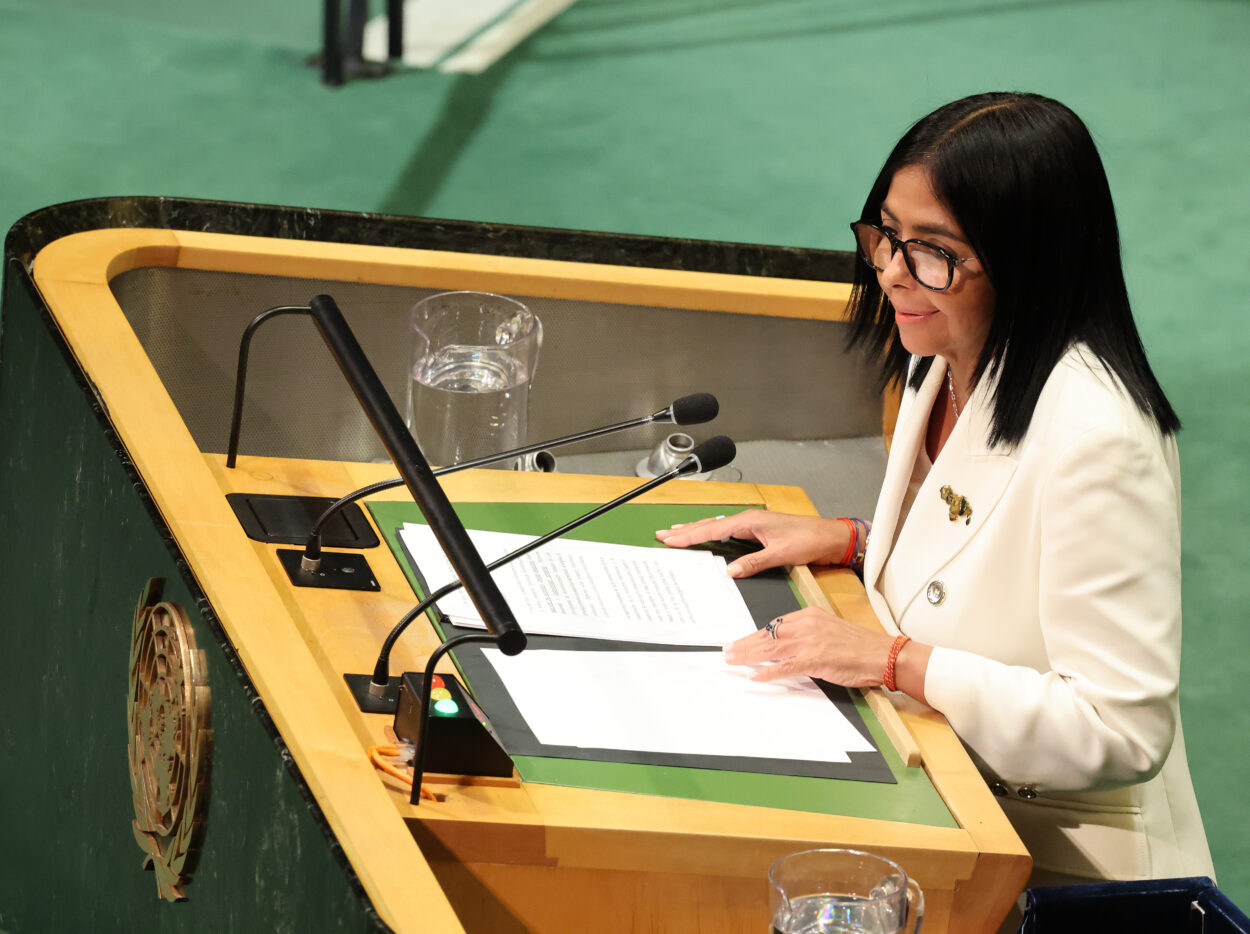
Acting President Delcy Rodríguez delivering her speech at the 81st United Nations General Assembly in New York. (Presidential Press)
Caracas, September 25, 2026 (venezuelanalysis.com) – Venezuelan Acting President Delcy Rodríguez outlined a foreign policy built on “peace” and “dialogue” in her address at the 81st session of the United Nations General Assembly in New York on Wednesday.
Speaking before world leaders, Rodríguez insisted on peace over conflict, thanked the Trump administration for diplomatic backing, and committed to international cooperation on environmental, energy, and AI regulation. She went on to urge young Venezuelan migrants to return home and laid out a proposal for structural “democratic transformation” of the Caribbean nation.
Opening her address, Rodríguez underscored Caracas’ rejection of warfare, linking global stability to diplomatic resolution.
“Venezuela, which today knows what it is to lift its children out from under the rubble, extends its deepest solidarity to all peoples who suffer from war, and reaffirms that peace […] is not a naive aspiration, but the only truly human path,” she declared.
Rodríguez explicitly addressed the diplomatic rapprochement with Washington after the January 3 US military strikes and kidnapping of President Nicolás Maduro and First Lady Cilia Flores. She expressed thanked Trump for aiding Venezuela’s reintegration into international forums following years of heavy economic sanctions and diplomatic isolation.
“I want to thank President Donald Trump and his government for their willingness to resume the path of diplomatic and cooperative relations with Venezuela,” Rodríguez stated, referencing the recent oil deal as “one of the largest ever signed” and pledging that it will contribute to regional energy stability.
Rodríguez refrained from condemning the US attack, calling it a “difficult moment” that resulted from the “exhaustion of domestic policies and heightened confrontation with the US.” She likewise made no mention of Maduro and Flores, presently detained 10-15 miles away from the UN headquarters and facing trial for charges including drug trafficking conspiracy.
The Venezuelan acting president had conveyed similar gratitude in a face-to-face meeting with Trump on Tuesday that she labeled as “historic.”
Turning to domestic affairs in her UN address, Rodríguez spoke of the severe wave of migration triggered by past political and economic crises, and vowed to the Venezuelan youth residing abroad that there will be improved conditions for their return.
“To the young people, who have grown up seeing a fractured country and who often decided to leave seeking what they could not find here: I tell you that it is worth believing again,” the acting leader affirmed. “This is the moment to build the country that many want to return to, and not just the one that many wanted to flee.”
This message was framed as part of what Rodríguez termed a “democratic transformation for a rebirth,” which she described as an institutional, orderly, and verifiable process.
“In Venezuela, there will be elections. We have already initiated a political dialogue with sectors of the opposition that leads to a process on equal terms for all,” she noted.
Though Rodríguez did not explicitly name unilateral sanctions from Washington and its allies, she stated that the country needs to be “free from economic restrictions” and pledged to “guide Venezuela toward an era of full democracy, recognized by its people and the world.”
The acting president’s UN speech came amid a flurry of diplomatic activity in New York, including meetings with International Monetary Fund (IMF) Managing Director Kristalina Georgieva, World Bank President Ajay Banga, and Inter-American Development Bank (IDB) President Ilan Goldfajn.
On the sidelines of the UN assembly, Rodríguez also held bilateral meetings with Chilean far-right president José Antonio Kast to discuss regional trade and stability, as well as with a delegation from Trinidad and Tobago, led by Prime Minister Kamla Persad-Bissessar, initiating a “new stage in bilateral relations” centered on joint offshore natural gas exploration and maritime security.
Venezuela had suspended cooperation with neighboring Port of Spain after Persad-Bissessar backed the US’ military build-up on the country’s shores in late 2025.
Rodríguez’s New York trip coincided with a second round of US-backed talks between government negotiators led by National Assembly President Jorge Rodríguez and a sector of the opposition led by former deputy Dinorah Figuera.
The latest negotiations reportedly focused on electoral guarantees, freedom of expression, institutional reform, including renewing the Supreme Court, and efforts to secure the unfreezing of Venezuelan assets abroad, including gold reserves worth approximately US $4 billion. The gold held by the Bank of England is set to be transferred to the US, to be released for post-earthquake recovery efforts under White House oversight.
Edited by Ricardo Vaz in Lisbon, Portugal.
Iran says it has put forward a plan to the United States to reopen the Strait of Hormuz within seven days, as Qatar passes messages between the two countries at the United Nations General Assembly in New York.
Speaking on the sidelines on Thursday, Iran’s Foreign Minister Abbas Araghchi said the timetable could begin as soon as Washington accepted the proposal.
list of 4 itemsend of list
Both sides have described the indirect contact facilitated by Qatar in New York positively, but neither has indicated any diplomatic breakthrough as the war approaches its seven-month mark.
Analysts have told Al Jazeera a firm peace deal remains unlikely, with Iran still wanting to follow the approach set out in an earlier agreement, which would give it and Oman a main role in managing the strait before moving on to discussing terms for a broader peace deal.
For its part, the US, which has claimed to be “in total control” of the Strait of Hormuz, wants Iran’s nuclear programme to be the subject of discussions straight away.
Iran has previously made clear that it will not engage with broader peace talks, including addressing the issue of its nuclear programme, until the US naval blockade of its ports in and around the Hormuz strait is lifted, sanctions are repealed and the US provides a guarantee of an end to strikes, among other conditions.
Here’s what we know.
Araghchi told reporters in New York that Iran had presented its plan to the US through intermediaries. “If certain conditions are met, the Strait of Hormuz would be open on the end of the seventh day and [peace] talks would restart,” he said.
He did not give details but said the proposal resembles the June 17 memorandum of understanding (MoU) signed by Iran and the US, which briefly eased the conflict before breaking down. “The moment they accept this plan, from the next day, this timetable can start, and after seven days, the strait will be open,” he said.
Under the June agreement, Iran undertook to allow ships to pass through the strait without paying tolls for 60 days – that was the period of time given for peace talks to take place. But the MoU left open what would happen after that period.
Araghchi did not say whether the same arrangement formed part of his new proposal. Nor did he spell out what Washington would have to do before the seven-day timetable began, how either side would verify those steps, or what rules would govern shipping once the strait reopened.
It is highly unlikely Iran would be offering to cede control of the Strait of Hormuz, analysts say.
Urban Coningham, a research fellow at the Royal United Services Institute, told Al Jazeera that Tehran is unlikely to receive the sanction relief it has previously demanded and, therefore, sees the strait as its primary ticket to helping it recover from the war economically.
“Hormuz is a clear Iranian red line,” he told Al Jazeera. “The Iranians will not get reparations for the war, so control of the strait is the only way they can recover economically. I cannot see them backing down from that.”
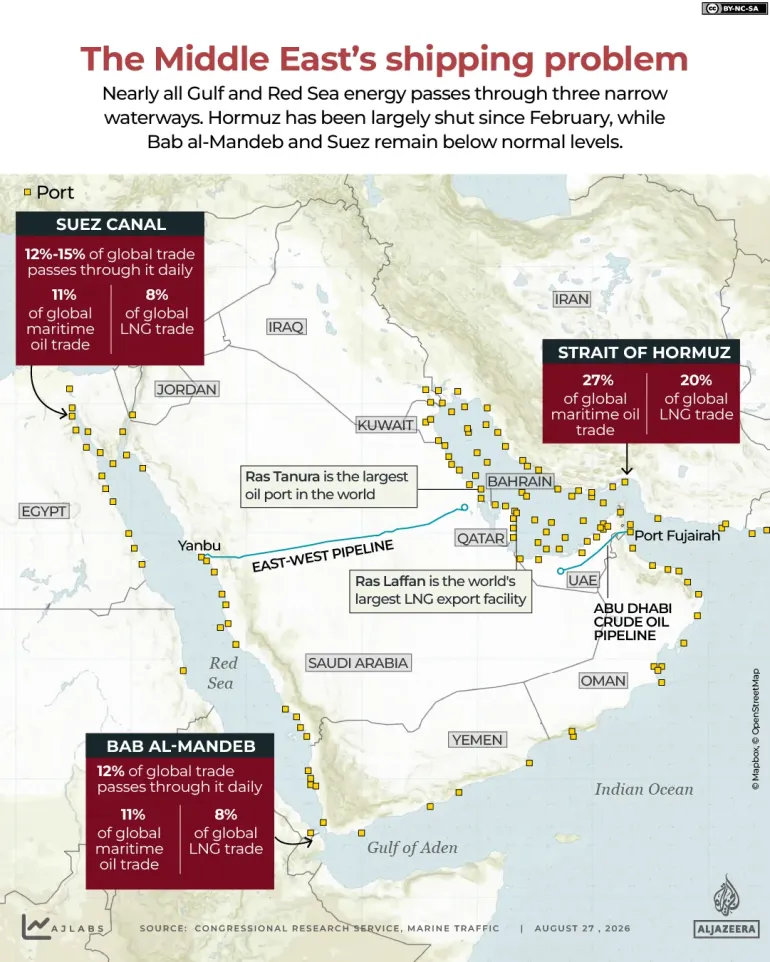
![[Al Jazeera]](https://i0.wp.com/occasionaldigest.com/wp-content/uploads/2026/09/INTERACTIVE-MIDDLE-EAST-iran-hormuz-shipping-aug-27-2026-1787815800-1788488337.webp?w=640&ssl=1)
The MoU signed in June set out an immediate halt to military operations on all fronts, including in Lebanon, where Israel has launched strikes and occupied part of the country, and triggered a 60-day period for negotiations on a lasting peace settlement. It included US waivers for Iranian oil exports and provisions to restore maritime traffic through the strait.
It deferred other issues, including the future of Iran’s enriched uranium stockpile, to broader peace talks.
But the agreement unravelled the following month amid renewed confrontation over shipping routes through the strait.
Coningham told Al Jazeera that Iran’s latest proposal follows this earlier model: “Open the strait within seven days, then start talks on the nuclear file.”
But “the US does not want to compartmentalise the issues, it wants them discussed as one package”, he said.
Coningham also sees a political calculation in making the offer publicly at the UN as Americans contend with high fuel prices. “By explicitly saying this may be the only chance before the midterms, Iran is putting pressure on Trump over oil and gas prices and the strait,” he said. “It is a tactic to put more pressure on the US.”
The strait, which runs between Iran and Oman, is a vital route for oil and gas exports from the Gulf. Disruption to shipping has driven up energy prices far beyond the region, giving both governments an economic reason to reach an agreement despite their differences.
With the US midterm elections approaching, a deal to get it reopened could give Trump a chance to bring down fuel prices before voters go to the polls – potentially giving the Republican Party a much-needed electoral boost before the midterms.
Trump has presented the electoral calculation differently, however. In his address to the General Assembly on Tuesday, he accused Iran of waiting to see how his Republican Party performs in November and predicted a deal would happen after the vote. He also threatened to “annihilate the Islamic Republic” if there was no agreement.
Trump claimed the election did not affect his own decision-making on Iran: “The only thing that does is that Iran will never have a nuclear weapon.”
That leaves an open question about whether the prospect of lower energy prices is enough to persuade his administration to accept Iran’s proposed order of talks. Coningham doubts it. “Trump is prepared for this to go on through the midterms,” he said. “The same problem remains where the proposal does not answer questions about the nuclear file.”
Araghchi met US envoy Steve Witkoff and Trump’s son-in-law Jared Kushner on Tuesday in talks mediated by Qatar. The Iranian foreign minister described the exchange as productive and said messages continued to pass between the sides.
US Secretary of State Marco Rubio said it would be wrong to describe the meeting as a major breakthrough, however.
Burcu Ozcelik, a senior research fellow for Middle East security, told Al Jazeera that the major blockage for Washington and Tehran is that each is making different assumptions about how much pressure they can exert on the other. The Trump administration is unlikely to revive the failed MoU, she said, because it assesses its naval blockade and tighter sanctions as working.
“The US appears to believe it can wait this out until Tehran is prepared to make meaningful concessions,” Ozcelik said.
“But Iran remains defiant despite indications that it is hurting economically.”
‘Hit by the climate we didn’t warm, hit by the wars we didn’t start.’
Nepal’s Prime Minister Balendra Shah was applauded at the UN General Assembly, as he highlighted how the world is failing countries on the frontline of the climate crisis.
Published On 25 Sep 202625 Sep 2026
Share
Prime Minister Balendra Shah told the UN that world leaders must act on climate change.
Published On 25 Sep 202625 Sep 2026
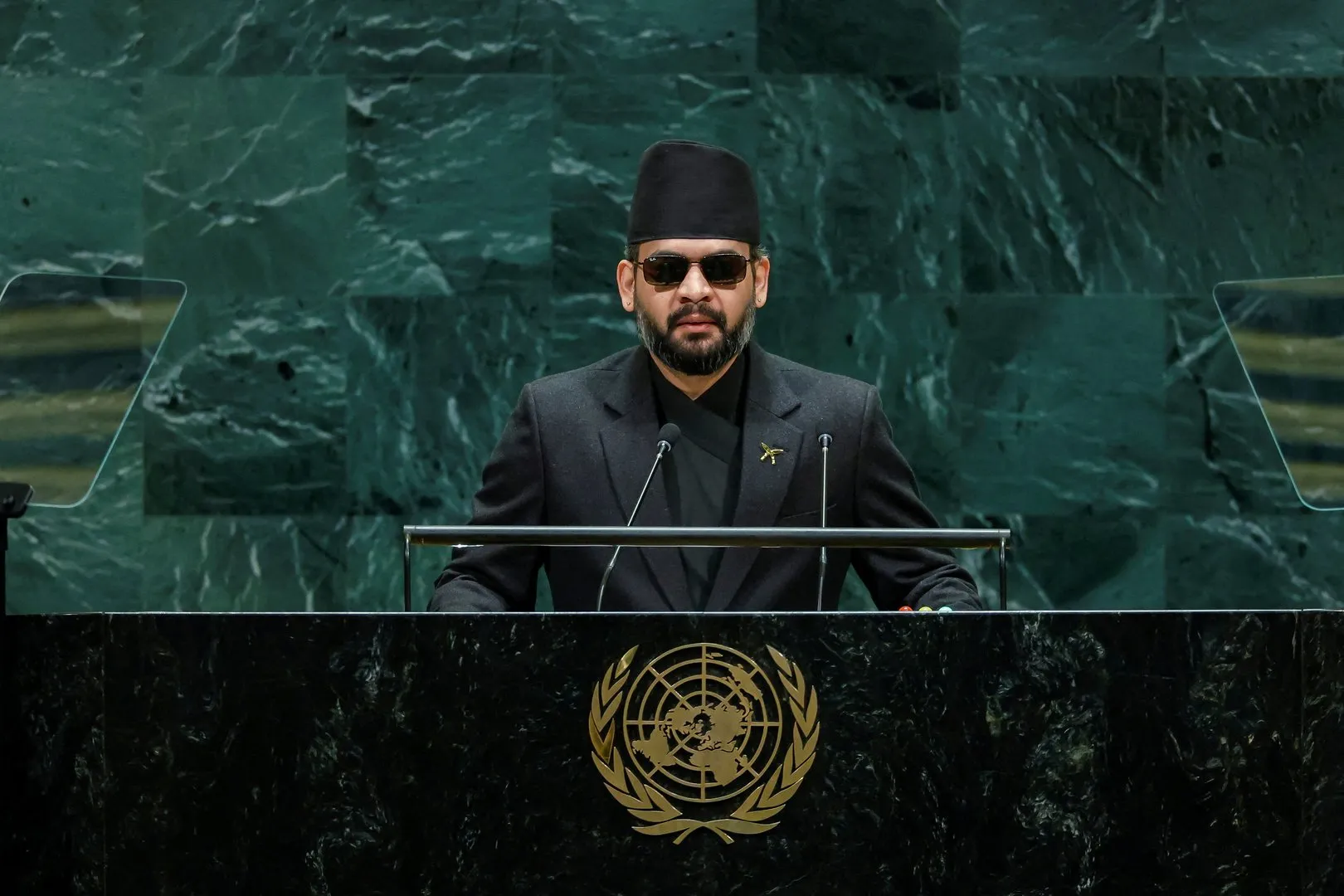
Nepal’s Prime Minister Balendra Shah has appealed for action to combat the rising threat of climate change, calling the flood that devastated his country last month “a warning to the world”.
Shah made the comments during his address to the 81st Session of the United Nations General Assembly in New York on Thursday night. He told the gathering that the August disaster “was not just a local tragedy”, asking them the question, “Have you really heard that warning?”
list of 3 itemsend of list
Political leaders “have been negligent to translate those warnings in action at the speed and scale that the vulnerable people require,” he said.
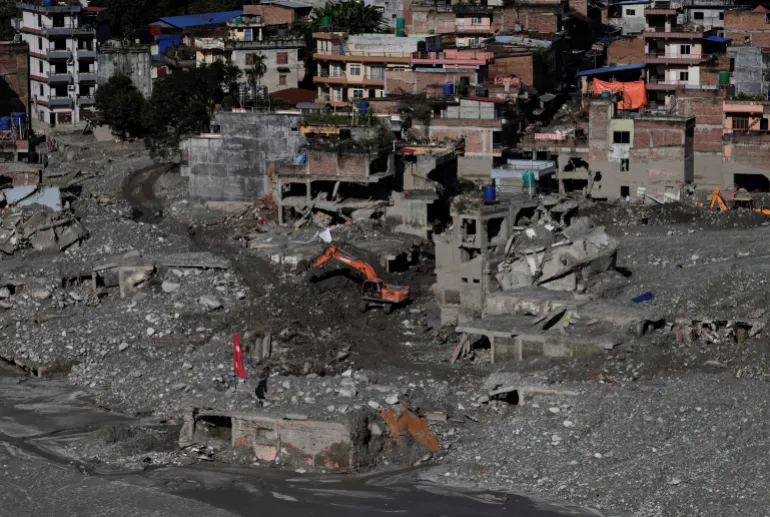
![An excavator clears mud from damaged houses following deadly flash floods and a mudslide, in Nuwakot district, Nepal, September 21, 2026 [Navesh Chitrakar/Reuters]](https://i0.wp.com/occasionaldigest.com/wp-content/uploads/2026/09/2026-09-25T021410Z_709369844_RC2ENNAUM1TN_RTRMADP_3_NEPAL-FLOODS-BALEN-UN-1790312192.jpg?w=640&ssl=1)
At least 1,453 people died when a torrent of mud, rock and water struck northern Nepal and the China-Tibet border on August 26, triggered by a glacial collapse.
According to Nepal’s National Disaster Risk Reduction and Management Authority, 5,500 people were still missing and 13,795 had been rescued.
Researchers from the World Weather Attribution (WWA) group said in a report released last week that the disaster was not caused by a single extreme weather event, but rather a “compound crisis” shaped by long-term warming, glacier retreat, permafrost thaw and geological instability.
Shah said climate change was hurting people not responsible for the crisis but who “are paying a colossal price for it”.
He said Nepal contributed less than one-tenth of 1 percent of the heat-trapping gases behind climate change. About 99 percent of the country’s electricity comes from hydropower, and many workers were trapped in tunnels by the flooding.
“Our glaciers are retreating, our mountain slopes are becoming unstable, our rivers are becoming less predictable, and every major disaster threatens to erase years of development,” Shah said.
![Nepal Prime Minister Balendra Shah addresses the 81st United Nations General Assembly at UN headquarters in New York City, US, September 24, 2026 [Eduardo Munoz/Reuters]](https://i0.wp.com/occasionaldigest.com/wp-content/uploads/2026/09/2026-09-25T002524Z_1559668133_RC20QNACRCWK_RTRMADP_3_UN-ASSEMBLY-1790312740.jpg?w=640&ssl=1)
Shah urged the international community to help bear the cost of helping Nepal adapt to climate change.
He proposed to create a ‘Himalaya Climate Resilience Mechanism’ which would include Nepal and neighbours India and China, and would allow them to share satellite data and expertise, monitor glacial lakes and strengthen joint early warning systems.
Nepal has asked the UN’s loss and damage fund for $20m in aid, the maximum allowed, but a tiny fraction of what it needs. A preliminary assessment by the government has placed the cost of the disaster at $5bn.
The fund, established in 2022 in the aftermath of catastrophic floods in Pakistan, has yet to make even its first disbursement, and observers see Nepal as a key test of its credibility.
Earlier this week, the United States pledged an additional $31m in new flood recovery support.
Dozens of delegates walked out on Netanyahu, Yemen’s government pleaded for help, and Kuwait riled against threats to sovereignty. Al Jazeera’s Zeena Aqel explains what happened on day three of the UN General Assembly.
Published On 25 Sep 202625 Sep 2026
Share
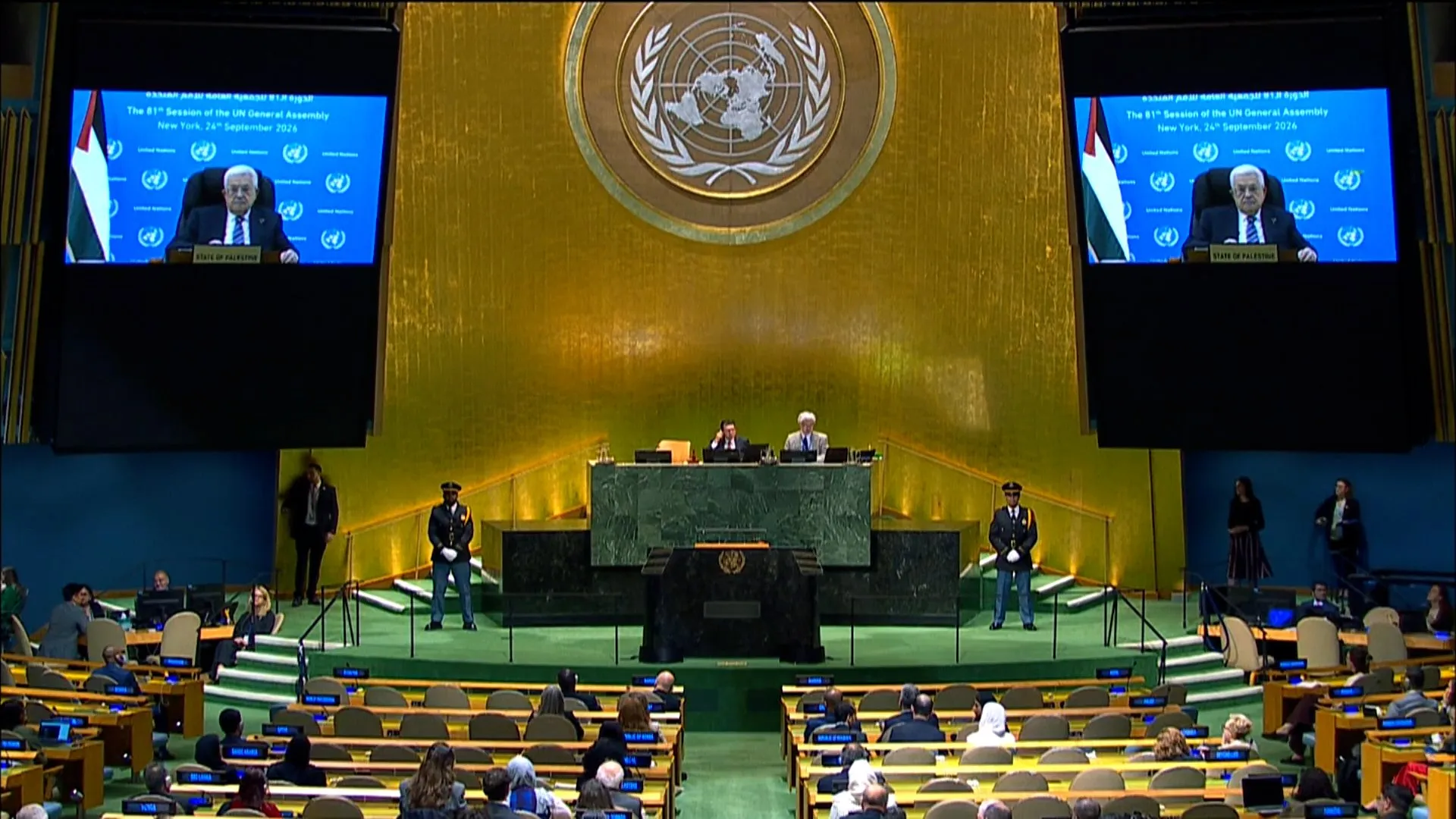
Israel’s Prime Minister addressed the UN General Assembly in person, despite having an International Criminal Court (ICC) arrest warrant issued against him. Palestinian President Abbas meanwhile was forced to address the Assembly virtually. Al Jazeera’s James Bays reports.
Published On 25 Sep 202625 Sep 2026
Share
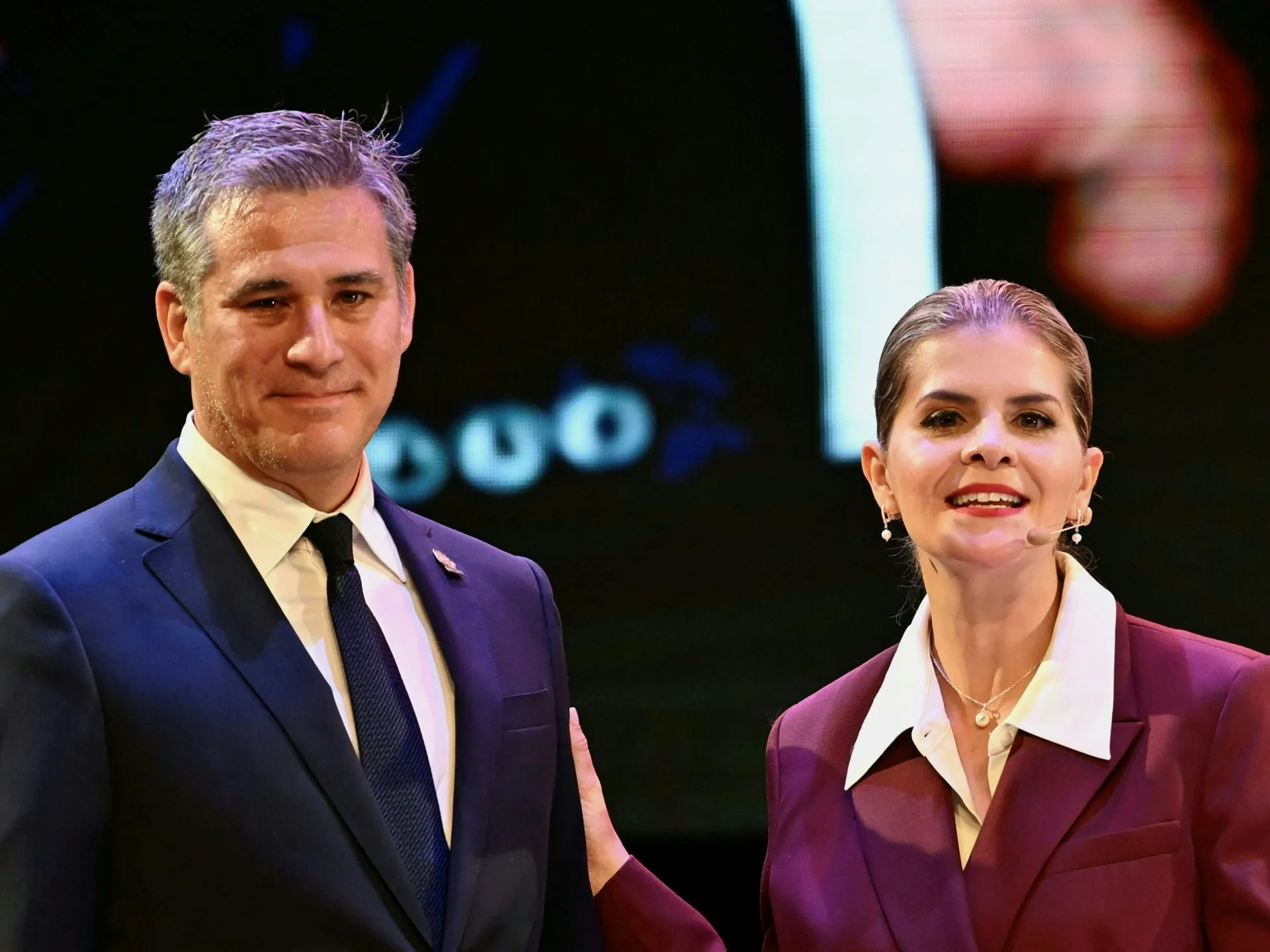
Laura Fernandez dismissed the foreign minister over his attendance at “Shield of the Americas” meeting in New York.
Published On 24 Sep 202624 Sep 2026
Costa Rican President Laura Fernandez has fired Foreign Minister Manuel Tovar after he attended a US-led regional security summit with United States President Donald Trump without notifying her, an omission the government has said blocked her own participation and caused major strategic harm to the country’s interests.
Fernandez said that she should have been the one to attend the meeting of Trump’s anti-cartel “Shield of the Americas” alliance in New York. The coalition says its mission is to combat drug trafficking and organised crime across the region.
Tovar attended “without giving prior notice or informing” the president, a conservative Trump ally, of his participation, Costa Rica’s government said.
Several right-wing Latin American presidents also participated in the meeting, which took place on the sidelines of the United Nations General Assembly in New York. Fifteen coalition members issued a joint statement declaring their intent to impose asset freezes and visa restrictions and seek criminal liability for members and supporters of 24 criminal organisations.
The gathering was the administration’s latest effort to rally the region behind a more aggressive approach to drug trafficking. Since returning to office last year, Trump has designated cartels as foreign “terrorist” organisations and ordered dozens of strikes on boats in the Caribbean and eastern Pacific that US officials say were carrying narcotics bound for the US.
Costa Rica, a tourist haven that has long been seen as a beacon of stability in Latin America, is grappling with a surge in drug-related violence.
Tovar avoided commenting on his dismissal and simply thanked Fernandez, in power since last May, for including him in her cabinet.
Indiana Trejos, Costa Rica’s current Minister of Foreign Trade, has been named acting foreign minister and will assume the role upon returning from her mission at the UNGA.
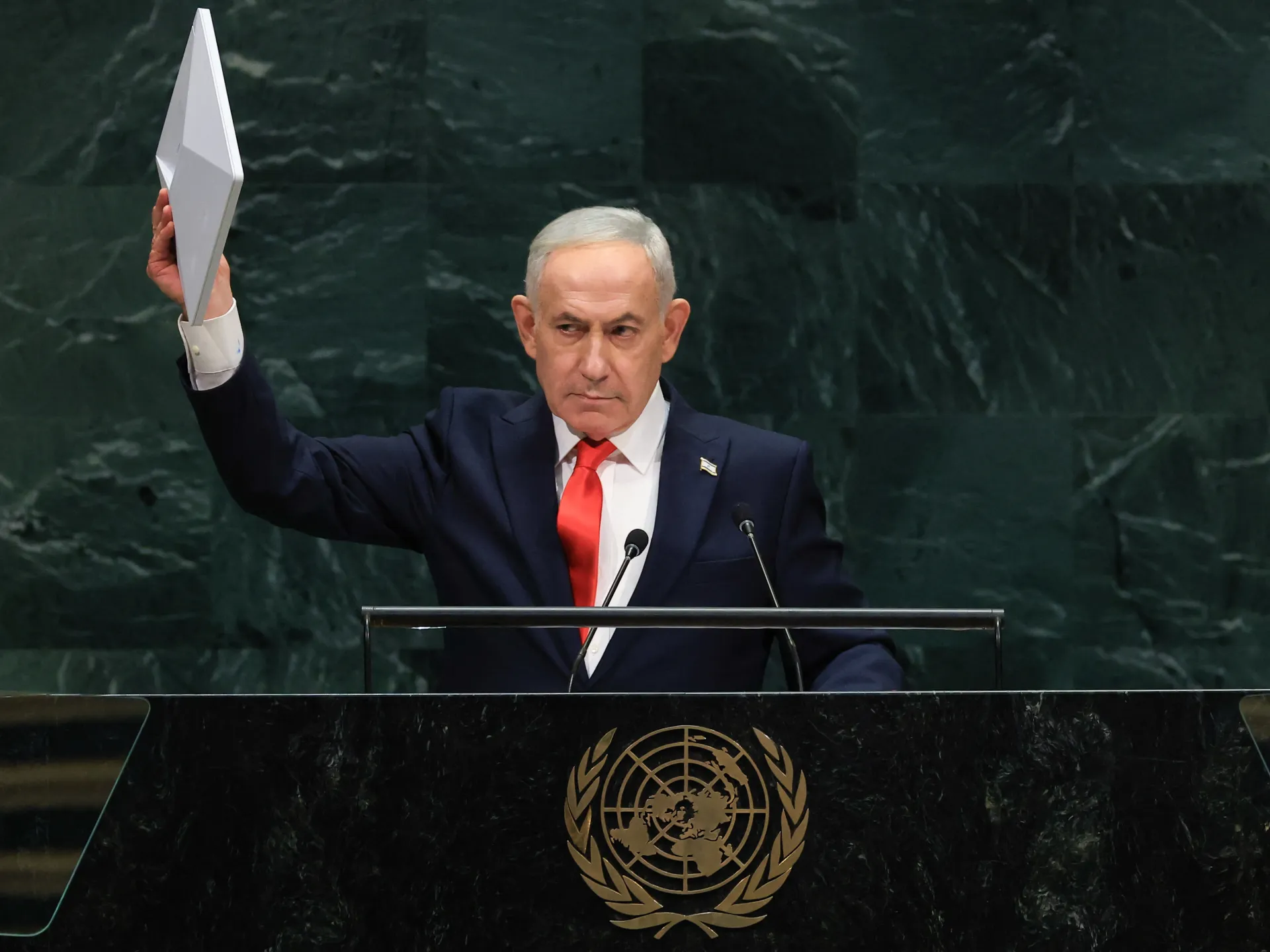
Israeli Prime Minister Benjamin Netanyahu has used his platform at the United Nations General Assembly to attack detractors and allies alike, and his presence sparked uproar in the chamber.
Speaking before the UNGA on Thursday, Netanyahu attacked New York City Mayor Zohran Mamdani, critics and Iran’s leadership, as well as allied countries like the United Kingdom and France.
list of 3 itemsend of list
Back home, the prime minister is locked in a tight race to stay in power ahead of an election on October 27, and analysts say his UNGA speech was aimed as much at people back home as it was at international viewers.
Dozens of envoys from around the world walked out as the speech began, some jeering and booing, while Netanyahu’s own team stood and applauded, and the speaker of the session shouted for order.
“If there are any other moral cowards who haven’t left this hall, please do so now,” Netanyahu said to those turning their backs on him.
He addressed the war that the US and Israel launched on Iran in February, saying: “Devastating Iran’s nuclear facilities was hard, was very hard to do.”
“But for me, it was one of the easiest decisions I’ve ever had to make as prime minister”, claiming that if he had not, “we’d all be dead”, he added.
In his own speech before the UNGA on Wednesday, Iranian President Masoud Pezeshkian also addressed the nuclear issue and called out the “double standard”.
“The nuclear weapon is in Israel, but the inspectors are in Iran. Israel kills, but Iran is subject to sanctions,” Pezeshkian said.
Netanyahu on Thursday said that Israel was fighting a “seven-front war”, including Gaza, the occupied West Bank, Syria, Lebanon, Iran, Yemen’s Houthis and militias in Iraq.
“We are going to win. We have no other choice,” Netanyahu declared, repeating the words of his older brother Yonatan Netanyahu, who was killed in 1976 during Operation Entebbe in Uganda.
The United Kingdom and France, historic partners of Israel, were also in Netanyahu’s firing line. They have become increasingly outspoken in their criticism of the country’s actions and have both imposed limited sanctions on Israeli exports from the occupied West Bank.
“They accuse Israel, tiny Israel, of colonialism – some colonialism. And who’s accusing us? Among them are people in Britain and in France. For God’s sakes, they invented the term,” he said.
But Netanyahu thanked his “friend”, United States President Donald Trump.
“In this battle against the barbarians, we’ve had no greater partner than President Trump,” he said, as the US delegation joined the Israeli one in applauding Netanyahu’s remark.
“I thank him,” said Netanyahu, adding that Israel and the US had acted together as pilots from both countries “flew joint missions over the skies of Iran”.
Netanyahu said the US and Israel also “worked together to bring back our remaining hostages [from Gaza]”, as he defended Israeli actions in the enclave against charges of genocide.
“To all those spreading lies about my country, whether they sit in this hall or in the office of the anti-Semitic mayor of New York, I say this: shame on you,” Netanyahu said as he attacked Zohran Mamdani, who had previously said he would push for the arrest of the Israeli prime minister during his visit to the city.
“Mr Mamdani, you tried to stop me from coming here. You tried to silence me. Well, you can’t silence me,” Netanyahu said as he denied that Israel has committed genocide in Gaza.
Reacting to Netanyahu’s comments, Mamdani called the accusations against him “baseless lies” meant to “sanitise his genocide of Palestinians”.
Since October 7, 2023, Israel has faced repeated accusations of genocide in Gaza, as well as systematic war crimes in Gaza and the occupied West Bank.
The Hague-based International Criminal Court (ICC) said in 2024 it had reasonable grounds to believe Netanyahu was responsible for war crimes in Gaza, where over 73,000 Palestinians have been killed. Netanyahu denies the ICC charges.
Netanyahu attended the UNGA meeting despite an ICC warrant calling for his arrest. While he was welcomed, the Trump administration denied a visa for Palestinian President Mahmoud Abbas, who addressed the UNGA through a prerecorded video statement from Ramallah earlier in the day.
As Netanyahu spoke, activists from US-based organisation Jewish Voice for Peace protested outside, accusing the United Nations of “playing host to a war criminal”.
“All across New York, Jews, Palestinians and people of conscience are rising up to demand an end to US support for the livestreamed horrors, rigged ceasefires and forever wars,” Sonya Meyerson-Knox, the group’s communications director, told Al Jazeera.
Meyerson-Knox said that “solidarity with Palestinian freedom has never been greater, and here in the US we are demanding with one voice to stop arming Israel”.
Adding to tensions, dozens of protesters, some brandishing “stop the genocide” banners, gathered near the UN. Several demonstrators were detained, including prominent actor Susan Sarandon.
Inside the UN, but addressing divisions back home in Israel, Netanyahu said: “Throughout this long war, our goal never wavers – to win with unwavering resolve … What unites us is so much stronger: our history, our values, our courage.”
Ariel Cohen, a senior fellow at the Atlantic Council’s Eurasia Center, said the Israeli prime minister delivered a “good speech” at the UNGA but that he did so in the “wrong forum”.
“That speech should be given at an election rally in Israel; this is who he’s communicating to,” Cohen told Al Jazeera. “He is making points that should be made to the Israeli audience for his political survival.”
Netanyahu is only making a whirlwind stop in New York before rushing back to Israel, where the election campaign is in full swing. He is not scheduled to meet any top US leaders.
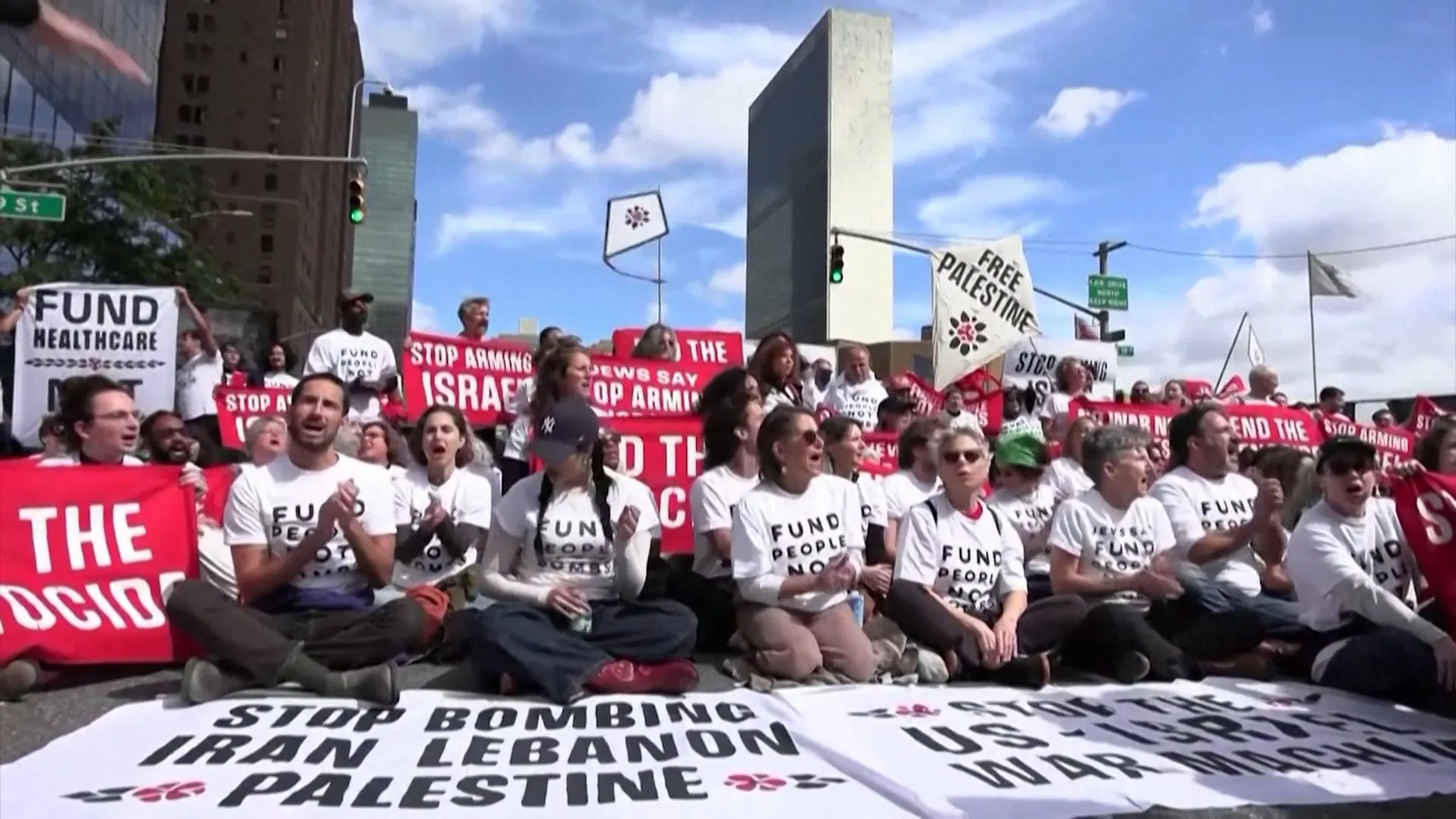
Actors Susan Sarandon and Hannah Einbinder were among roughly 100 protesters arrested by New York City police outside the UN ahead of Israeli PM Benjamin Netanyahu’s speech. Protest organiser Jewish Voice for Peace had accused the UN of “playing host to a war criminal”.
Published On 24 Sep 202624 Sep 2026
Share