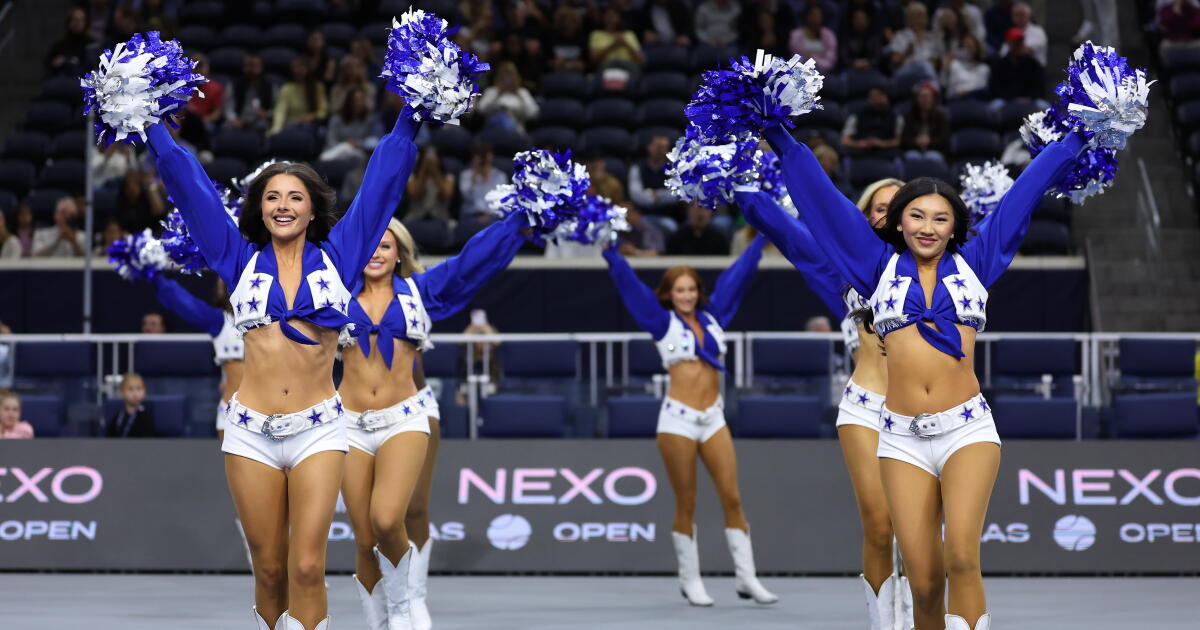
Dallas Cowboys Cheerleaders take legal action against My Chemical Romance
The parent company of the Dallas Cowboys Cheerleaders has filed a petition aimed at preventing emo-rock band My Chemical Romance from continuing to use dancers wearing outfits nearly identical to those worn by the iconic cheering squad since the 1970s.
Pro Silver Star filed a document Monday in the District Court of Collin County, Texas, asking for a temporary restraining order and injunction against the band and event promoter Live Nation “to stop them from infringing DCC’s signature cheerleading uniform in a manner that causes confusion, trades off of Silver Star’s decades of goodwill, and degrades the DCC brand.”
A temporary restraining order hearing is scheduled for Tuesday morning.
On Wednesday, My Chemical Romance played the first of five Hollywood Bowl shows scheduled through the end of the month. During the song “Teenagers,” background dancers performed in costumes that the filing states “copied the DCC Uniform’s signature elements: white boots, white shorts, a blue blouse tied above the midriff, and a white vest adorned with blue stars.”
“Defendants left no doubt about who the performers were meant to be,” the filing states. “As the costumed performers cheered across the stage, MCR frontman Gerard Way told the crowd, ‘Thank you, Dallas.’
“Then Defendants handed the performers rifles. The costumed performers armed themselves with semi-automatic rifles and joined a staged firefight, and were then depicted being shot and crawling off the stage.”
Attorneys for Pro Silver Star sent the band a cease-and-desist letter on Thursday, the filing states, and a copy of the petition for the restraining order and injunction on Friday. The causes of action listed in the petition include false designation, false association, false endorsement, trade dress infringement and federal trademark dilution by tarnishment.
“MCR’s performers nevertheless again wore the DCC Uniform” on Friday night during the band’s second Hollywood Bowl performance, the filing states. “Audience members at both shows and online commentators understandably believed that the performers were the real Dallas Cowboys Cheerleaders and said so in social media posts that continue to circulate.”
Online photos appear to show that the costumes were used again during Saturday night’s show. A representative for My Chemical Romance, which finishes it run at Hollywood Bowl this Friday and Saturday, did not immediately respond to a request for comment.
“Silver Star is not litigious, and it takes no issue with MCR’s music, its artistic ambitions, or any message Defendants seek to convey,” the filing states. “Silver Star does not ask Defendants to change their setlist, narrative, politics, choreography, or even their decision to put gun-toting performers on stage. Silver Star asks only that those performers not wear the DCC Uniform while doing it. The universe of alternative costume designs is effectively unlimited.”
One of the most recognizable cheer squads in sports, the Dallas Cowboys Cheerleaders have appeared on countless calendars and posters and starred in their own movies and TV series, including Netflix’s “America’s Sweethearts: Dallas Cowboys Cheerleaders,” which is currently in its third season.
Last week, after years of fighting for pay increases, the cheerleaders announced that they have unionized, with the Cowboys recognizing the Dallas Cowboys Cheerleading Assn. as the collective bargaining representative for the cheer squad.