
UK house prices fall as Iran war uncertainty dampens demand
Mortgage rates have been rising and hundreds of the cheapest deals have disappeared over the last month.
Source link
Mortgage rates have been rising and hundreds of the cheapest deals have disappeared over the last month.
Source link

Investors remain wary, as the Wall Street Journal report came on the same day the US president threatened to destroy Iran’s key oil export hub and desalination plants unless it accepts a deal, while also suggesting that diplomacy was making progress.

The news comes as governments around the world scramble to implement measures to ease the burden of surging fuel prices while also seeking to conserve energy, with around one-fifth of global crude oil and gas passing through the waterway.
The Wall Street Journal, citing administration officials, said Trump and his aides had concluded that a mission to reopen the waterway would extend beyond his four- to six-week timeline. It added that he had decided to focus on targeting Iran’s missiles and navy, before seeking to pressure the country diplomatically to reopen the Strait.
Further fuelling concerns, a drone struck a Kuwaiti oil tanker in Dubai waters, causing a fire on Tuesday morning. Dubai authorities said the blaze had already been extinguished, but concerns about a potential oil spill remain.
Maritime traffic disruptions in the Strait of Hormuz, through which roughly a fifth of the world’s oil normally passes, remain a key pressure point for global energy supplies. US Secretary of State Marco Rubio said Trump has “options available” in response to Tehran’s threats to control the strait, after Iran was reported to have effectively created a “toll booth” there.
Both major oil benchmarks fell on Tuesday, though West Texas Intermediate and Brent crude remained well above $100 a barrel. At 7 a.m. CET, the international benchmark Brent was trading at nearly $113, while WTI crude was above $102 a barrel.
Most equity markets in Asia rose briefly, but by this point Tokyo’s Nikkei 225 was down 1.3%, South Korea’s Kospi had fallen 3.3%, Hong Kong’s Hang Seng had shed 0.5%, and the Shanghai Composite index was down 0.4%.
US futures were up between 0.6% and 0.8%.
In other early Tuesday trading, gold and silver prices rose. Gold was up 0.7% at $4,587.80 an ounce, while silver climbed 2.4% to $72.25 per ounce.
The US dollar stood at 159.61 Japanese yen, down from 159.71 yen. The euro was trading at $1.1472, up from $1.1465.
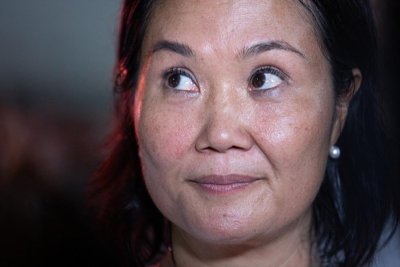

Keiko Fujimori, the Popular Force party’s presidential candidate, reacts during a campaign event in Lima on March 8. Fujimori holds a slight lead over former mayor Rafael Lopez Aliaga for first place in voting intentions for the April 12 elections. Photo by Renato Pajuelo/EPA
March 23 (UPI) — With just weeks to go before the April 12 general elections, Peru’s electoral landscape is defined by unprecedented fragmentation and a voter base that appears to be turning away from the traditional political class.
Right-wing candidates Keiko Fujimori and Rafael López Aliaga remain virtually tied for first place in national popularity, according to a Datum Internacional poll for the newspaper El Comercio, published Sunday.
However, analysts say the figure that truly dominates the race is not any candidate’s percentage, but rather the 57% of Peruvians who still do not know whom they will vote for or who plan to cast a null ballot.
The public opinion survey showed that only 43% of Peruvians say they have decided on their vote and will not change it. According to data collected by the pollster, this scenario has remained stable since the beginning of the month, Canal N reported.
Datum analyst and CEO Urpi Torrado said the real protagonist of this process is the “undecided bloc.” According to her assessment, the disconnect is so deep that 53% of voters admit they do not even know the party symbol of the candidate they say they will support.
The results show a technical tie at the top, but with extremely low figures for a race of this magnitude. Keiko Fujimori, of Fuerza Popular, leads with 11.9%, followed closely by Rafael López Aliaga, of Renovación Popular, with 11.7%.
Further behind are rising figures such as leftist Alfonso López Chau with 6.5%, actor Carlos Álvarez with 5.0% and social democrat Jorge Nieto with 4.6%.
Analyst Carlos Meléndez told television channel Latina Noticias that this dispersion of votes, spread across a record 36 candidates, ensures that the June 7 runoff would be decided by very narrow margins.
Analyst Pedro Tenorio said that 75% of citizens believe the candidates do not understand their real problems. Even so, he noted a trend toward center and right-wing positions, which together account for 52% of voter identification, compared with a weakened 11% identifying with the left.
According to experts, the risk is that the next president could come to power with very weak initial legitimacy, facing an equally fragmented bicameral Congress that could deepen political instability and legislative gridlock.
The overall political environment is one of extreme fragility. Unlike previous processes, there is no “coattail effect” or consolidated ideological currents. The prevailing sentiment is rejection, with 81% of the population saying they do not feel represented by any political group.
This detachment has translated into a subdued campaign, where candidates struggle to break through a ceiling that does not exceed 15%.
The emergence of figures such as Wolfgang Grozo, a retired major general and former director of intelligence of the Peruvian Air Force, who has risen in the polls thanks to a strong presence on Instagram and TikTok, shows that sustained anti-establishment sentiment could trigger a last-minute shift among undecided voters and drastically alter the race.
This scenario is not unfamiliar in Peru. In the 2021 general elections, Pedro Castillo staged one of the biggest political upsets in the country’s history, going from a virtually invisible candidate in the polls to winning the presidency in a context of extreme fragmentation.
At that time, weeks before the first round, Castillo, a primary school teacher and union leader from Cajamarca, appeared in the “others” category with less than 3% voting intention. His rise was explosive in the final 10 days, driven by intensive campaigning in rural areas that urban polls failed to capture in time.
Castillo won the first round with just 18.9% of valid votes. It was the first time in the country’s history that a candidate advanced to the runoff with such limited support, highlighting a total crisis of representation among the 17 candidates competing in that election.
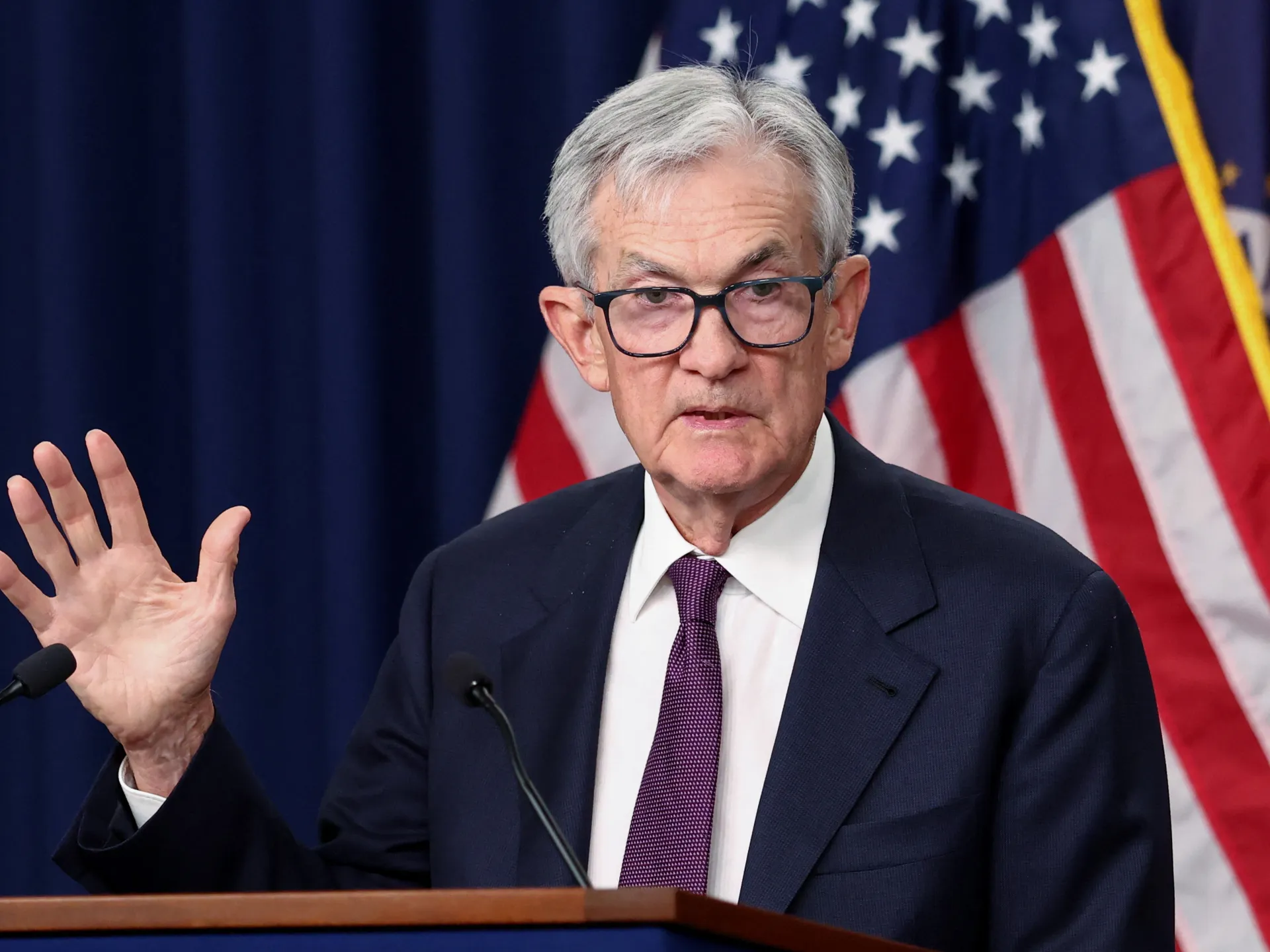
The United States Federal Reserve will hold interest rates steady as the labour market cools and prices on goods and services surge following the US and Israel’s joint strikes on Iran.
The central bank will maintain its benchmark rate at 3.5–3.75 percent, consistent with the Fed’s decision last month, when it also held rates steady.
list of 4 itemsend of list
“The Committee seeks to achieve maximum employment and inflation at the rate of 2 percent over the longer run. Uncertainty about the economic outlook remains elevated. The implications of developments in the Middle East for the US economy are uncertain,” the central bank said in a statement announcing its policy decision and referring to its Federal Open Market Committee.
“The Committee is attentive to the risks to both sides of its dual mandate.”
Holding rates steady was in line with estimates. CME FedWatch, a tool that tracks monetary policy decisions, forecast that there was a 99 percent chance that rates would hold steady.
The stall comes after three rate cuts in 2025.
Consumers are also facing the repercussions of US President Donald Trump’s trade and military policies in their daily expenses.
“Despite meaningful progress on inflation in 2024, Trump’s tariffs have stalled progress and kept inflation persistently above the Fed’s target. Wholesale prices are running hot as service prices surge, and now, Trump’s war in Iran is rocking commodity markets around the globe,” Elizabeth Pancotti, managing director of policy and advocacy at Groundwork Collaborative, an economic think tank, said in comments provided to Al Jazeera.
Last month, the US Supreme Court ruled against the president for his use of the International Emergency Economic Powers Act (IEEPA). The high court said the president exceeded his authority and that the tariffs imposed under that order must be refunded. However, the president then imposed new tariffs not covered by IEEPA.
The White House announced a 15 percent tariff through Section 122, which allows the president to impose tariffs for 150 days. Those changes were reflected in the producer price index report released by the US Department of Labor’s Bureau of Labor Statistics on Wednesday.
Wholesale prices rose by 0.7 percent for the month, marking the biggest one-month surge in a year. Goods prices rose 1.1 percent overall after tumbling for two months. Energy prices rose by 2.3 percent, with the cost of gas or petrol rising by 1.8 percent. Those costs are expected to get higher as tensions rise in the Strait of Hormuz following joint US-Israel strikes on Iran in late February and the subsequent retaliation.
“In the near term, higher energy prices will push up overall inflation; however, it is too soon to know the scope and duration of the potential effects on the economy,” Fed Chair Jerome Powell told reporters.
In the last month, petrol prices have jumped for US consumers. The average price for a gallon of regular gasoline is $3.84, up from $2.92 this time last month.
“The Fed’s inflation worries extend beyond weathering a fleeting wave of one-off price hikes associated with tariffs and, more recently, an energy price spike,” Stephen Stanley, chief US economist at Santander US Capital Markets, told the Reuters news agency.
Holding rates steady also comes as the job market stagnates. The latest jobs report, which was released earlier this month, showed that the US economy lost 92,000 jobs, with unemployment rising to 4.4 percent.
Meanwhile, the Job Openings and Labor Turnover Survey, or JOLTS report, which came out last week, showed 6.9 million open jobs in the US, unchanged from the month prior. That shows that employer hiring has stalled and that those who have jobs are seldom leaving for new ones.
“This might be one of the toughest moments in recent memory for the Federal Reserve’s Open Market Committee,” Michael Linden, Senior Policy Fellow at the Washington Center for Equitable Growth, said in remarks provided to Al Jazeera. “Recent data has revealed that economic growth in the back half of last year was extremely weak, the labour market seems to be on the precipice of disaster, and prices keep rising faster than anyone feels comfortable with.”
Wednesday’s decision is the second-to-last one of current Fed Chair Powell, whose term is up in May. Powell, who was first appointed by Trump during his first administration, has been a target of Trump’s scorn and criticisms for not cutting interest rates fast enough.
“When is ‘Too Late’ Powell lowering INTEREST RATES?” Trump posted on his social media platform Truth Social on Wednesday morning ahead of the decision.
Previously, Trump said he would not nominate someone to lead the central bank unless the nominee agreed with his position.
“Anybody that disagrees with me will never be the Fed Chairman!” Trump said in a post on Truth Social in December.
“We at the Fed will continue to do our jobs with objectivity, integrity and deep commitment to serve the American people,” Powell told reporters.
Trump’s nominee to succeed Powell, Kevin Warsh, has his nomination in flux as Republican Senator Thom Tillis said he would not vote to advance any of Trump’s nominees to the central bank until a criminal probe into the current chairman, Powell, is closed.
Tillis sits on the Senate Banking Committee, which vets nominees for the central bank, including Warsh. He said he will not approve Trump’s Fed nominees until the probe of Powell is closed. The criminal probe of Powell centres on Fed building renovations after a judge quashed grand jury subpoenas and called the investigation a pretext to pressure the central bank to lower interest rates.
If Warsh has not been confirmed by the Senate in time for the Fed’s June 16–17 meeting, Powell would continue to lead the rate-setting Federal Open Market Committee.
“If my successor is not confirmed by the end of my term as chair, I would serve as chair pro tem until he is confirmed. That is what the law calls for,” Powell said.
“On the question of whether I will leave while the investigation is ongoing, I have no intention of leaving the board until the investigation is well and truly over with transparency and finality.”