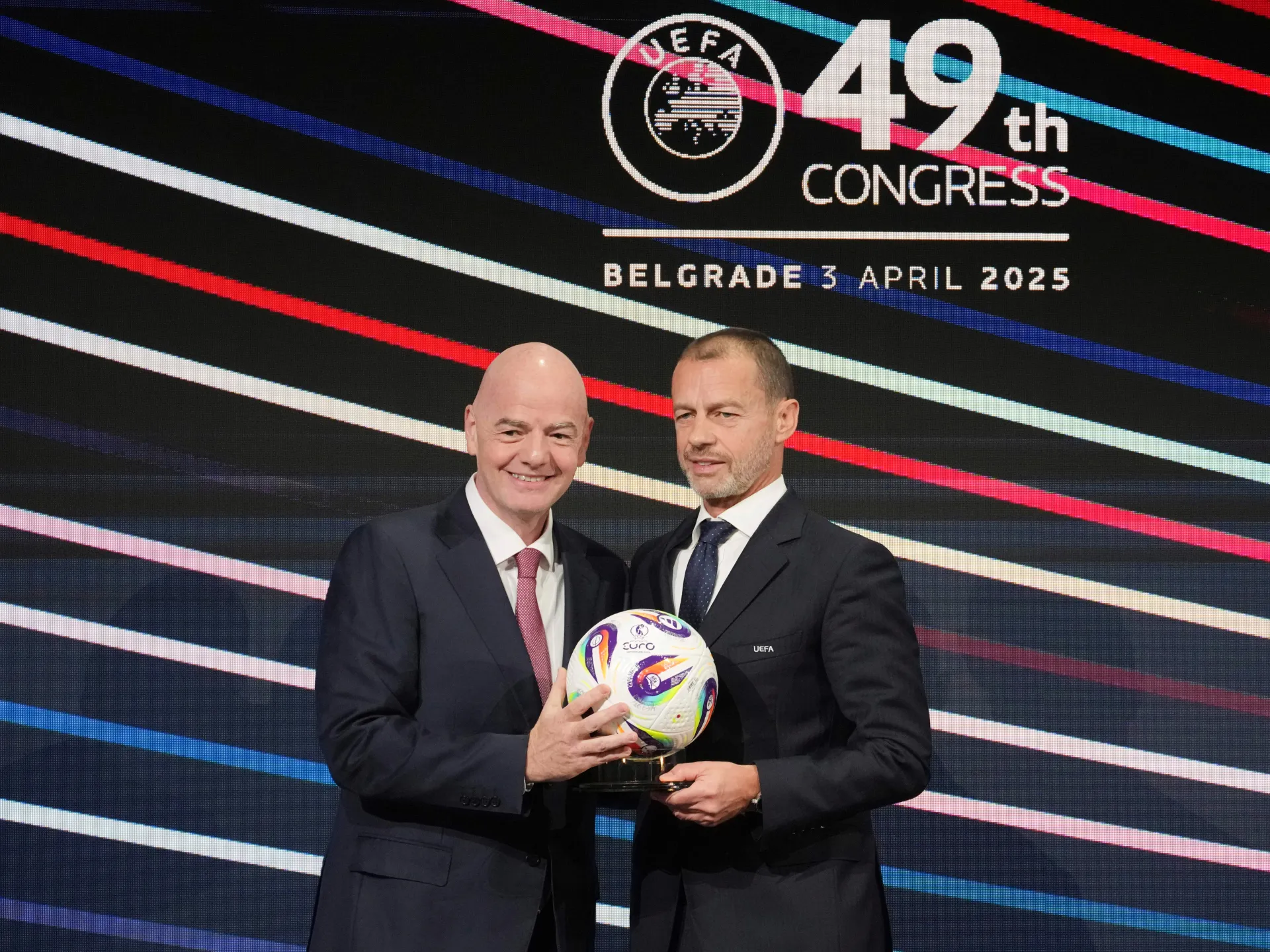
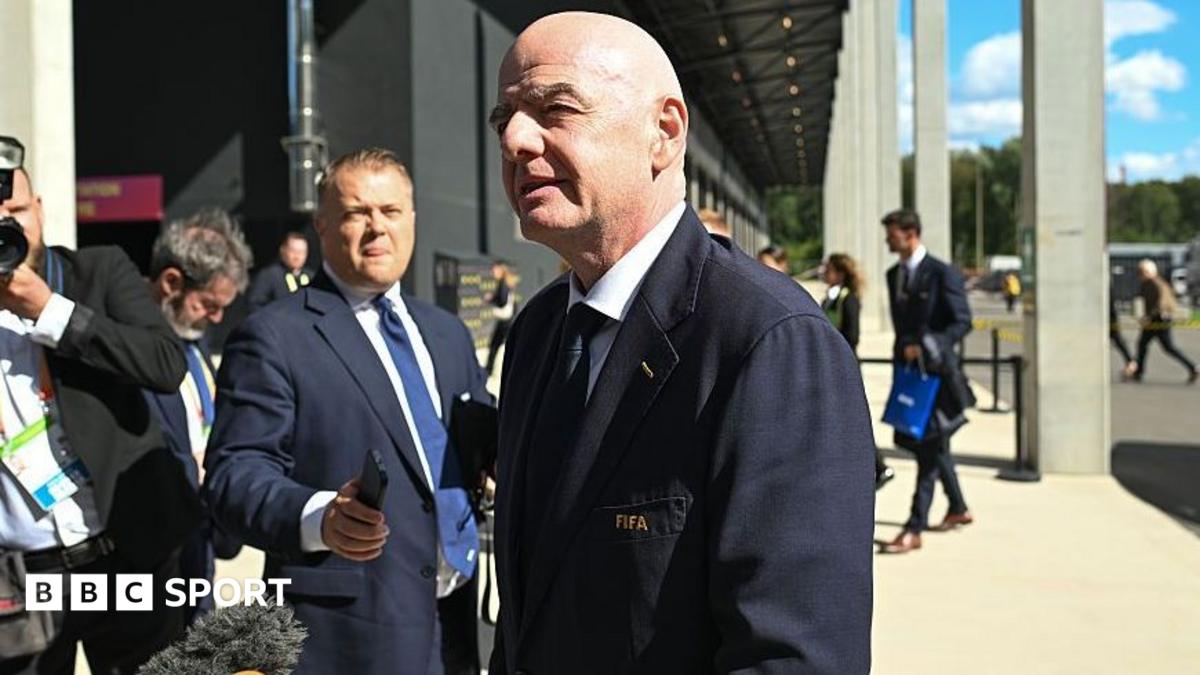
European football leaders meet on Wednesday with the aim of shaping strategy to oust Gianni Infantino as FIFA president.
Published On 7 Oct 20267 Oct 2026
European football leaders were gathering Wednesday with time pressing to find a candidate and shape their strategy for trying to oust Gianni Infantino as president of FIFA.
UEFA has called its 55 member federations to a previously scheduled summit on Thursday in Berlin that arrives in the midst of European efforts to get a new leader for football’s world body.
Recommended Stories
list of 4 itemsend of list
Infantino’s divisive World Cup private investment plan – that failed within days of being revealed in July – pushed UEFA to act on longstanding mistrust of its former employee’s increasingly executive presidency at FIFA.
UEFA’s longer-term plans include preparing a criminal complaint against Infantino in Switzerland for possible financial mismanagement in the World Cup sell-off deal. It has asked courts in the United States to authorise discovery of evidence.
“Somewhere along the way things went too far with FIFA, and we’re looking to put things back where they belong,” UEFA general-secretary Theodore Theodoridis said last month.
Europe’s 55 count for more than a quarter of FIFA’s 211 member federations that can vote in the election on March 18 in Rabat, Morocco. Research by The Associated Press news agency suggests Infantino already has about 90 votes pledged – albeit before any potential opponent is known.
Still, UEFA is not a united bloc. Infantino has support promised from Azerbaijan, the home country of a close aide, and Latvia. On Wednesday he met with football and government officials in the Czech capital Prague.
First, UEFA and its allies worldwide need to agree on at least one candidate to challenge Infantino by the November 18 deadline to enter the race.
UEFA President Aleksander Ceferin was joined in August by his fellow FIFA vice presidents from Asia and North America in denouncing Infantino for deception and breach of trust over the World Cup sell-off plan.
Still, neither Ceferin nor his counterparts at the AFC and CONCACAF, Sheikh Salman bin Ebrahim Al Khalifa of Bahrain and Victor Montagliani of Canada, currently look set to be on the FIFA ballot.
Ceferin has long dismissed any talk of himself running to lead FIFA, though he said last month at UEFA meetings in Greece there were “many, many” potential candidates.
Montagliani is expected to focus on his own re-election at CONCACAF in February.
Sheikh Salman has been Infantino’s FIFA election opponent before. He had been favourite in a five-man campaign that Infantino eventually won in February 2016.
Speculation has often pointed to Paris Saint-Germain president Nasser Al-Khelaifi, a close ally of Ceferin. The Qatari member of UEFA’s executive committee ruled himself out last week at a meeting of the influential European Football Clubs group he leads.
Infantino is part of UEFA’s focus in Berlin for the biennial business meeting of top executives from its member federations, which can debate policy, strategy and international football competitions.
The meeting is expected to discuss proposals for a more transparent FIFA and a presidential candidate willing to commit to those reforms.
Coming on the back of a 10-match winning streak, Spain face Croatia with sights on the Nations League quarterfinals.
Who: Croatia vs Spain What: UEFA Nations League 2026-27, Group A3 match Where: Stadion Poljud, Split, Croatia When: Tuesday, October 6, at 8:45pm local time (18:45 GMT) How to follow: Al Jazeera Sport will bring you all the build-up and live updates from 15:45 GMT.
FIFA World Cup holders Spain can confirm their ticket to the UEFA Nations League quarterfinals when they face Croatia on their trip to Split.
Recommended Stories
list of 3 itemsend of list
With a perfect record in the tournament and an overall 41-match unbeaten streak, the odds swing heavily in Spain’s favour to clinch victory.
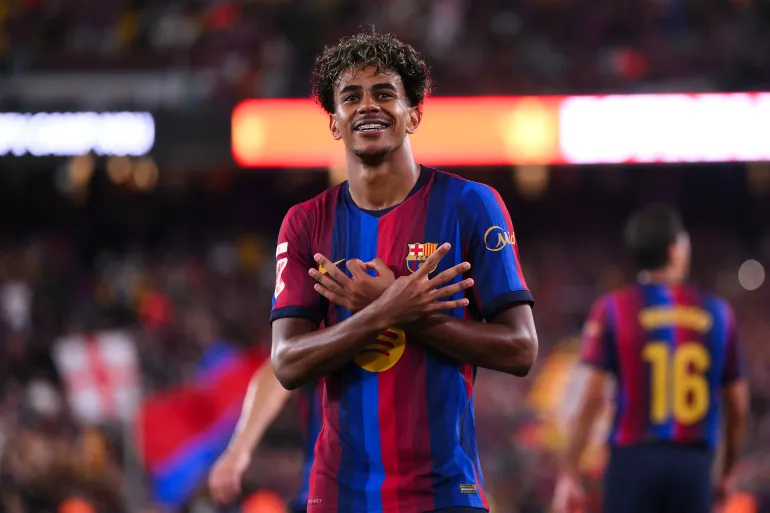
La Roja’s attack has been on fire this term – they have netted 10 goals from seven scorers in three games, with teenage sensation Lamine Yamal leading the scoring charts.
Unlike Spain, Croatia’s performance has been far from exemplary, with Luka Modric’s side suffering their heaviest defeat in history in the last fixture.
Before the clash of generations 2.0 between Yamal and Modric, Al Jazeera breaks down everything you need to know:
What is the UEFA Nations League?
The UEFA Nations League was founded in 2018 to reduce the number of meaningless friendlies and give nations competitive matches against equally ranked teams.
In this competition, countries from across Europe participate in a league structure, which features promotion and relegation.
How does the UEFA Nations League work?
The teams compete across four divisions, facing every other team in their group twice: Once at home and once away. The league phase ends in November.
In the top league, League A, the top two teams from each group advance to the quarterfinals, which take place in March 2027.
The finals will again be contested between four teams. The host and dates of the finals have not been confirmed yet.
How have Croatia and Spain played in the Nations League?
Croatia are third in this group with three points from three games.
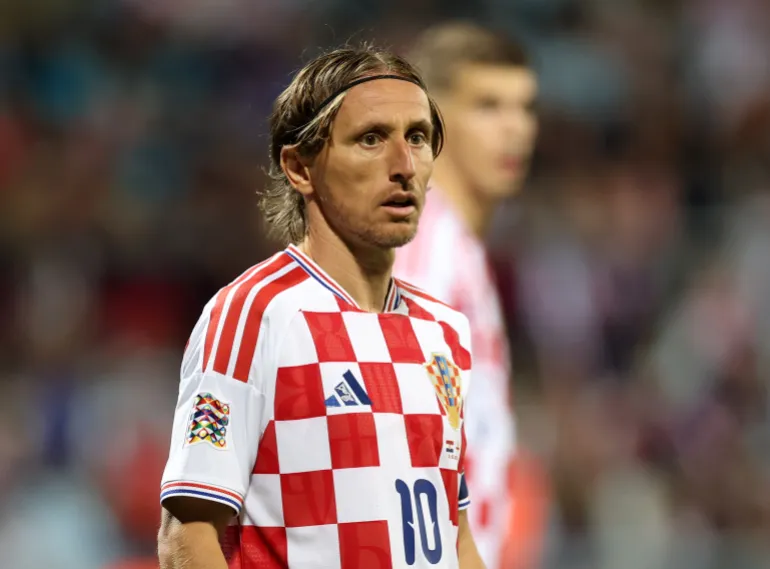
Luka Modric, 41, is Croatia’s captain [Carl Recine/Getty Images]
Croatia vs Spain: Form guide
(Last five matches; latest match first)
Croatia: L-L-W-L-W
Spain: W-W-W-W-W
Who are the top players to watch?
Luka Modric and Ivan Perisic (Croatia): The evergreen Modric, very much the heartbeat of the Croatian midfield even at 41 years old, has found the net once in this campaign. His fellow experienced teammate, Perisic, has also been impactful with his two assists.
Lamine Yamal and Alex Baena (Spain): With four goals in three games, Yamal is the joint leading scorer in this year’s Nations League, alongside three others, including England’s Harry Kane. The Barcelona star has found the net in each game, including a double against Croatia in the initial face-off in Seville. Atletico Madrid’s Baena, on the other hand, has been influential in more ways than one, bagging two assists and a goal.
Team news and predicted lineups
Croatia
Centre-back Martin Erlic is sidelined with injury until mid-October, while Josip Juranovic is unavailable due to illness.
Probable Croatia XI: Dominik Livakovic; Josip Stanisic, Luka Vuskovic, Josko Gvardiol, Ivan Perisic; Luka Modric; Franjo Ivanovic, Petar Sucic, Mateo Kovacic, Martin Baturina; Petar Musa
Spain
As many as four Spain squad players are doubtful due to injuries: Ferran Torres (physical discomfort), Alejandro Grimaldo (thigh), Joan Garcia (knee) and Nico Williams (thigh).
Probable Spain XI: David Raya; Ivan Fresneda, Robin Le Normand, Aymeric Laporte, Fran Garcia; Rodri, Pedri; Lamine Yamal, Dani Olmo, Alex Baena; Roberto Fernandez
Croatia vs Spain: TV channel, livestreaming
Croatia: gol
Spain: RTVE PLAY
United Kingdom: Prime Video UK
United States: FOX Sports, FuboTV, ViX
India: Sony Sports Network
Middle East and North Africa: beIN SPORTS
South Africa: DStv Stream
You can find your regional broadcaster on UEFA’s official list.
Only one point separates Group A1 leaders France and second-placed Belgium before Monday’s clash.
Published On 5 Oct 20265 Oct 2026
Who: France vs Belgium What: UEFA Nations League 2026-2027, Group A1 match Where: Stade de France, Saint-Denis, France When: Monday at 8:45pm (18:45 GMT) How to follow: Al Jazeera Sport will bring you all the build-up and live updates from 15:45 GMT.
Two-time world champions France host Belgium in the last of four Nations League games played over this extended international window.
Recommended Stories
list of 4 itemsend of list
Monday’s clash in Saint-Denis pits the top two teams in A1 against each other with France looking to complete the double in this league phase after their initial victory in Brussels in late September.
France and Belgium both enter this match with their creative stars in red-hot form. Michael Olise scored a goal in back-to-back matches while Kevin De Bruyne’s double steered Belgium to victory last time out.
However, Belgium will have to do without De Bruyne for the Les Bleus test with the midfield sensation suspended alongside their captain, Youri Tielemans.
Here’s all you need to know about France vs Belgium:
What is the UEFA Nations League?
The UEFA Nations League was founded in 2018 to reduce the number of friendlies and give nations competitive matches against equally ranked teams.
In this competition, countries from across Europe participate in a league structure that features promotion and relegation.
How does the UEFA Nations League work?
The teams compete across four divisions, facing every other team in their group twice: once at home and once away. The league phase ends in November.
In the top-most league, League A, the top two teams from each group go through to the quarterfinals, which will take place in March.
The finals will again be contested between four teams. The host and the dates of the finals have not been confirmed yet.
How have France and Belgium played in the Nations League?
France lead Group A1 with seven points from three games.
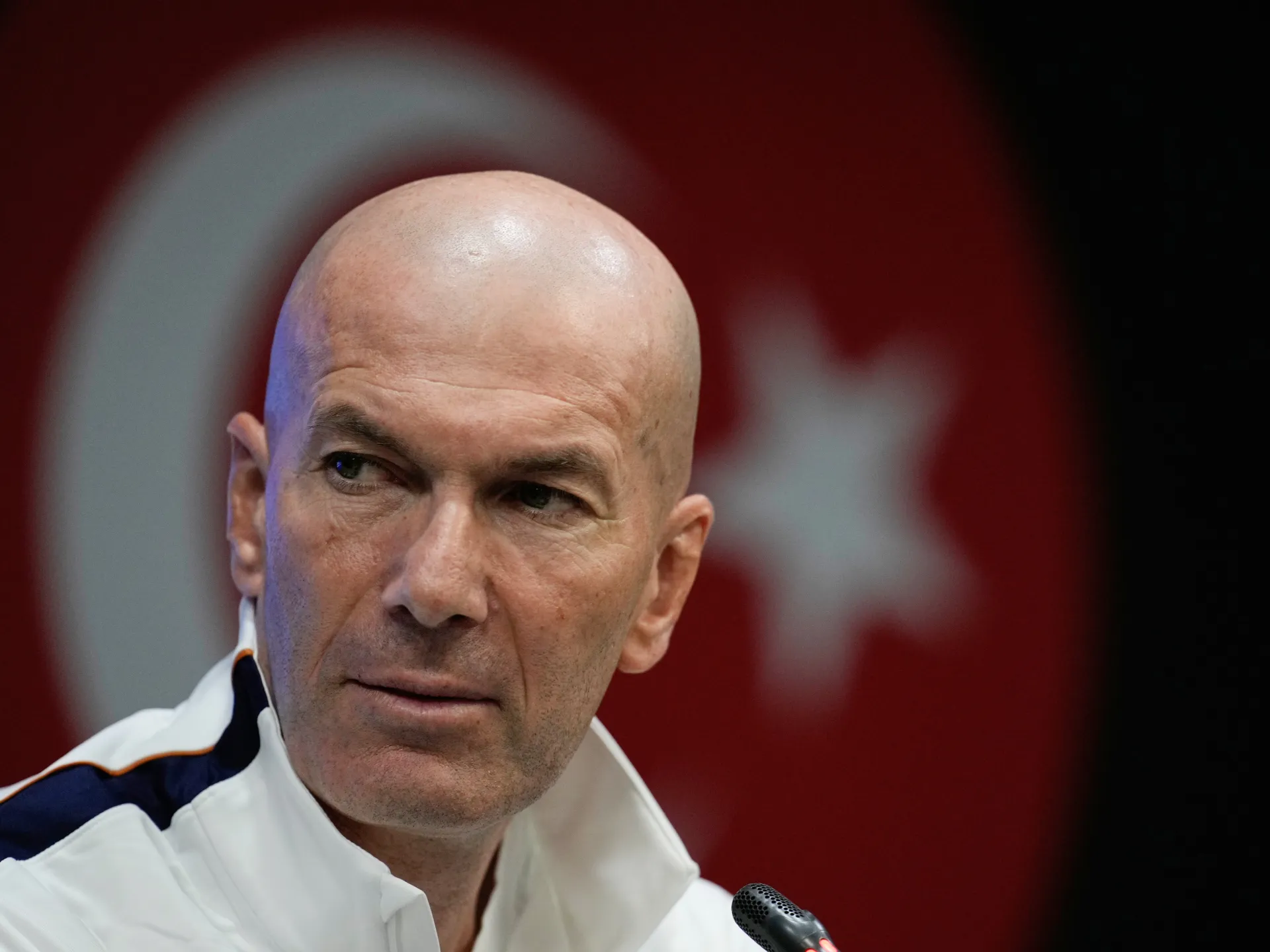
Zinedine Zidane (France): “We always want to win. We are competitors. The most important thing is to prepare well for matches and to feel comfortable on the pitch. I am very satisfied with the mentality I have seen so far. I have clear convictions. I love the French national team, and I have top-class players, but I know it will take time. I am very happy with what I have seen.”
French head coach Zinedine Zidane has led the team to two wins and a draw in this year’s Nations League [AFP]
Mark van Bommel (Belgium): “France have an exceptional amount of quality. They’re a complete team. In the first match, however, we should have taken at least a point. So it is possible tomorrow. We have to be top in all areas.”
Team news and predicted lineups
France
Matteo Guendouzi and Dayot Upamecano are suspended, and Warren Zaire-Emery is out with a thigh injury.
Probable France XI: Mike Maignan; Pierre Kalulu, Jeremy Jacquet, Maxence Lacroix, Adrien Truffert; Rayan Cherki, Lucas Da Cunha, Eduardo Camavinga; Michael Olise, Ousmane Dembele, Desire Doue
Belgium
De Bruyne and Tielemans are both suspended after picking up two yellow cards in successive matches.
Probable Belgium XI: Senne Lammens; Timothy Castagne, Nathan Ngoy, Brandon Mechele, Maxim De Cuyper; Nicolas Raskin, Romeo Lavia, Hans Vanaken; Dodi Lukebakio, Charles De Ketelaere, Mika Godts
Who: Portugal vs Norway What: UEFA Nations League 2026-27, Group A4 match Where: Estadio do Dragao, Porto, Portugal When: Sunday, October 4, at 8:45pm local time (18:45 GMT) How to follow: Al Jazeera Sport will bring you all the build-up and live updates from 15:45 GMT.
For the second time in a week, Portugal and Norway clash in the UEFA Nations League. But this time, things are not quite the same in the Selecao camp.
Recommended Stories
list of 4 itemsend of list
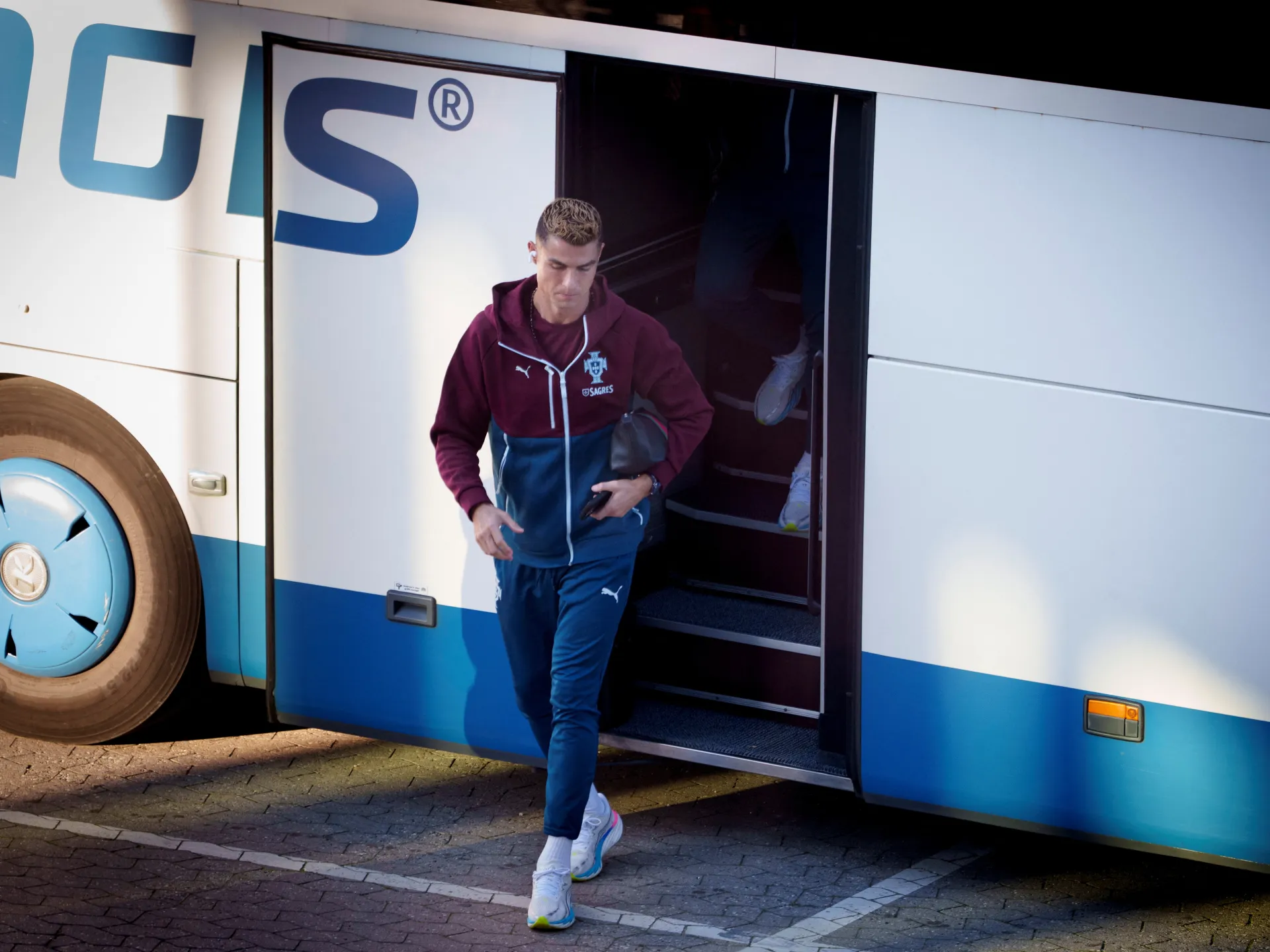
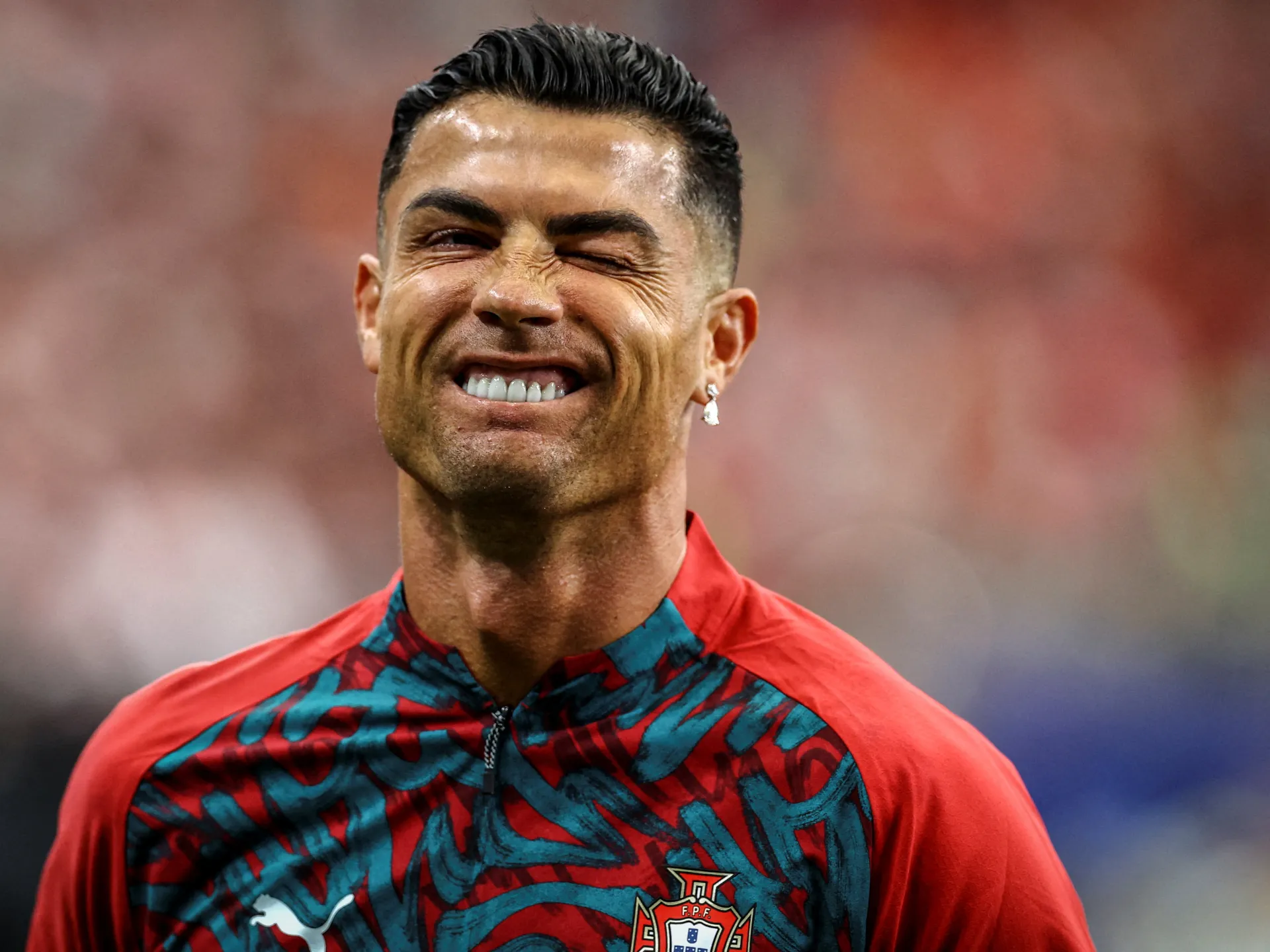
Sunday’s fixture in Porto will see the Nations League title holders play without their talisman, Cristiano Ronaldo, after the 41-year-old abruptly left their camp, raising questions about his international future.
Ronaldo’s dramatic exit and apparent rift with new coach Jorge Jesus have dominated headlines worldwide. Portuguese players have largely blocked the outside noise, however, maintaining a perfect record at the tournament where they are chasing a record-extending third crown.
However, their striker Erling Haaland – one of Europe’s most lethal players – poses enough danger to put Portugal under pressure ahead of this weekend’s thrilling encounter.
What is the UEFA Nations League?
The UEFA Nations League was founded in 2018 to reduce the number of meaningless friendlies and give nations competitive matches against top-ranked teams.
In this competition, countries from across Europe participate in a league structure which features promotion and relegation.
What is the latest news on Cristiano Ronaldo?
Ronaldo left the squad late on Wednesday, shortly after a news conference in which coach Jesus confirmed the five-time Ballon d’Or winner would be left out of his starting line-up for a second consecutive Nations League game.
The 41-year-old’s decision to walk out came as a shock as he had been due to train with his teammates at the Parken Stadium in Copenhagen.
Portugal’s leading scorer with 146 goals had already spent the entirety of last weekend’s 2-1 Nations League win in Norway on the bench, having captained the side in the 1-0 home victory over Wales last Thursday.
He appeared to indicate that the reasons behind Jesus’s decision ran deeper and hinted at a departure from the national team he has graced for more than two decades.
“In due course, I will tell the truth to all the Portuguese people about my reasons for leaving the national team, to which I have always been dedicated,” Ronaldo said in a cryptic Instagram post, announcing his sudden exit from the camp.
Spanish sports daily Marca said that Jesus and Portuguese federation president Pedro Proenca followed Ronaldo to Copenhagen airport in an attempt to persuade him to stay with the squad, before the player boarded his private jet.
Jesus insisted earlier on Wednesday that there was no rift between them, although the 72-year-old, who was appointed in July, acknowledged that his captain was disappointed to remain on the bench against Norway.
How have Portugal and Norway played in the Nations League?
Portugal are on top of Group A4 on nine points, with three wins out of three. They started their campaign with a 1-0 home win over Wales, before adding a 2-1 victory over Norway in Oslo. In the last match, they thrashed Denmark 4-2 in Copenhagen.
Norway are second-bottom in the group, with only three points. They started their campaign with a 3-2 home win over fellow Scandinavians Denmark but suffered identical 2-1 defeats at home to Portugal and to Wales in Cardiff.
Joao Felix and Goncalo Ramos scored for Portugal, while Haaland struck the consolation goal for Norway.
Portugal vs Norway: Head-to-head
Matches: 12
Portugal wins: 9
Norway wins: 1
Draws: 2
Portugal vs Norway: Form guide
(Last five games, latest results first)
Portugal: W-W-W-L-W
Norway: L-L-W-L-W
Who are the top players to watch?
Joao Felix and Goncalo Ramos (Portugal): Al Nassr forward Felix has emerged as the reliable scorer in the Portugal setup, finding the net in each of the three games this term. Meanwhile, Ramos, playing in place of Ronaldo, has made up for CR7’s absence with goals in the last two matches.
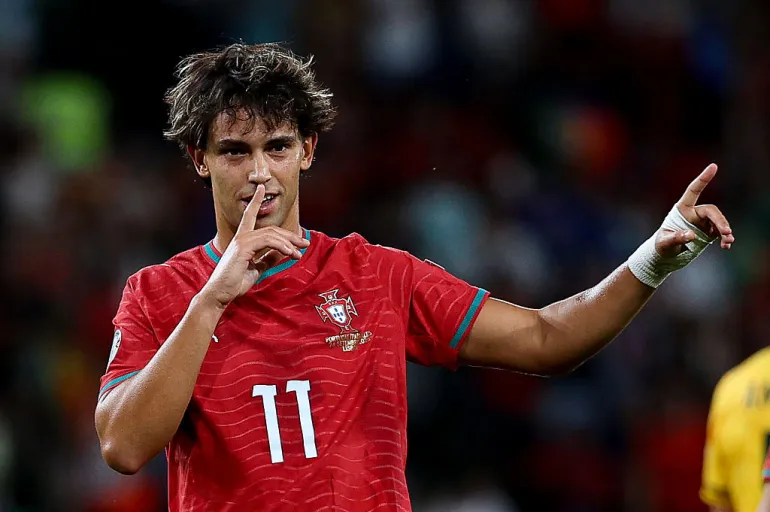
João Felix of Portugal has scored in every Nations League game this season [File: Diogo Faria Reis/MB Media/Getty Images]
Erling Haaland and Oscar Bobb (Norway): All of Norway’s goals in the ongoing competition have come through Haaland (three) and Bobb (two). While their partnership proved successful in the opening match, their goals were not enough in the following matches, as the Norwegians suffered back-to-back defeats. Norwegians will demand better from Haaland, especially after the Manchester City talisman’s incredible start to the club season that features seven goals in as many games.
Team news and predicted lineups
Portugal
Winger Francisco Conceicao is doubtful for the game due to a thigh injury.
Probable Portugal XI: Diogo Costa; Joao Cancelo, Ruben Dias, Renato Veiga, Nuno Mendes; Ruben Neves, Vitinha; Pedro Neto, Bruno Fernandes, Rafael Leao; Goncalo Ramos
Norway
Wing-back Julian Ryerson is doubtful with a muscle injury, while centre-back Torbjorn Heggem is suspended.
Probable Norway XI: Orjan Nyland; Julian Ryerson, Kristoffer Ajer, Torbjorn Heggem, David Moller Wolfe; Martin Odegaard, Sander Berge, Patrick Berg; Oscar Bobb, Erling Haaland, Antonio Nusa
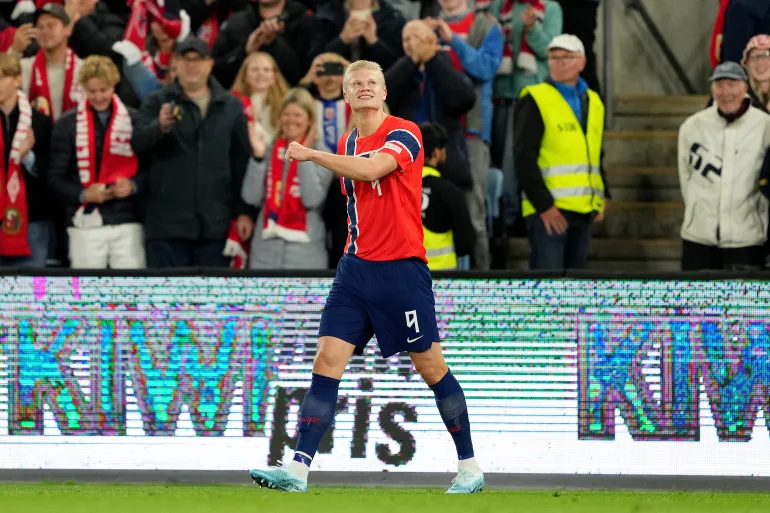
Norwegians need Erling Haaland to be on the scoresheet if they are to beat Portugal [File: Marius Nordnes / Nordnes Foto/Getty Images]
Portugal vs Norway: TV channel, livestreaming
Portugal
Norway
United Kingdom: ITV1
United States: FOX Sports, FuboTV, ViX
India: Sony Sports Network
Middle East and North Africa: beIN SPORTS
South Africa: DStv Stream
You can find your regional broadcaster on UEFA’s official broadcaster listing.
Heavyweights England play away to Croatia, with captain Harry Kane going up against veteran Luka Modric.
Who: Croatia vs England What: UEFA Nations League 2026-27, Group A3 match Where: Rujevica Stadium, Rijeka, Croatia When: Saturday, October 3, at 6pm local time (16:00 GMT) Howto follow: Al Jazeera Sport will bring you all the build-up and live updates from 13:00 GMT
Action in the Nations League continues this weekend with a matchday three tie between Croatia and England.
Recommended Stories
list of 4 itemsend of list
With a win and a defeat each, Croatia and England have both made a mixed start to this year’s competition.
Drawn in a group alongside the reigning world champions Spain and minnows Czechia, Croatia and England find themselves in an interesting yet challenging pool.
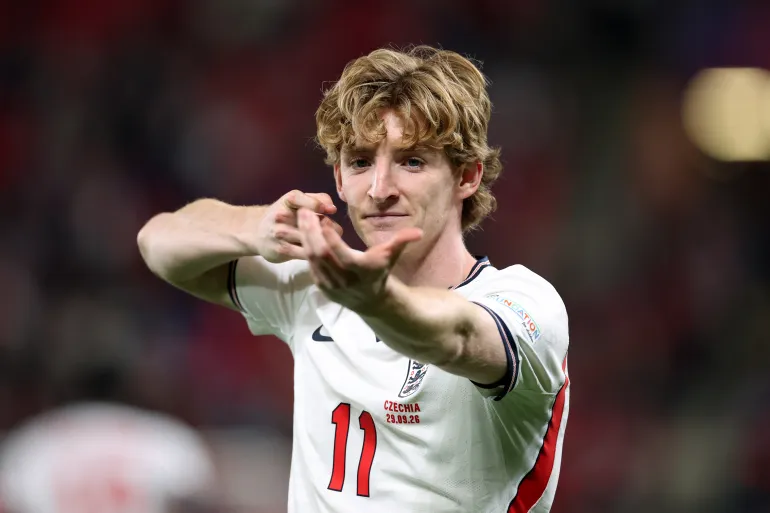
Captain Harry Kane has led from the front for the Three Lions, excelling in front of goal alongside winger Anthony Gordon, while Luka Modric continues to defy age, still playing a vital role in Croatia’s midfield even at 41.
Al Jazeera breaks down everything ahead of Croatia vs England:
What is the UEFA Nations League?
The UEFA Nations League was founded in 2018 to reduce the number of meaningless friendlies and give nations competitive matches against top-ranked teams.
In this competition, countries from across Europe participate in a league structure which features promotion and relegation.
How have Croatia and England played in the Nations League?
Both Croatia and England have won once and lost once.
Croatia started their Nations League campaign with a 2-1 win over Czechia in Prague before losing 4-1 to world champions Spain in Seville.
England, on the other hand, fell 3-2 to Spain in their campaign opener in London before beating a 10-man Czechia side 2-0 in Prague.
When did Croatia and England last meet?
They last met at the 2026 FIFA World Cup.
England beat Croatia 4-2 in a World Cup group game on June 17 in Arlington, Texas. Captain Harry Kane scored a brace, while Marcus Rashford and Jude Bellingham scored a goal apiece.
Croatia vs England: Head-to-head
Matches: 12
Croatia wins: 3
England wins: 7
Draws: 2
Croatia vs England: Form guide
(Last five games, latest results first)
Croatia: L-W-L-W-W
England: W-L-W-L-W
Who are the top players to watch?
Luka Modric and Ivan Perisic (Croatia): The evergreen Modric, very much the heartbeat of the Croatian midfield even at 41 years old, scored the opening goal in their away win in Czechia. Time and again, the captain has pulled the strings in the middle of the park, proving age is just a number. His fellow experienced teammate, Perisic, is also chipping in style, bagging back-to-back assists.
England international Anthony Gordon has scored in back-to-back games [Justin Setterfield/Getty Images]
Harry Kane and Anthony Gordon (England): The script for England has looked the same in the last two games: Gordon opens the scoring, and Kane follows suit. While that wasn’t enough to beat the mighty Spain, it did the job against Czechia. Can this dynamic duo strike again? The numbers swing in their favour – Gordon has five assists already for Barcelona this season, while Kane has scored six times for Bayern Munich.
Team news and predicted lineups
Croatia
Centre-back Martin Erlic is out injured until mid-October, and right-back Josip Juranovic is sidelined with illness.
Probable Croatia XI: Dominik Livakovic; Josip Stanisic, Luka Vuskovic, Josko Gvardiol, Ivan Perisic; Luka Modric, Mateo Kovacic; Luka Sucic, Petar Sucic, Franjo Ivanovic; Dion Beljo
England
England are without left-back Nico O’Reilly, who withdrew from the squad with injury.
Probable England XI: James Trafford; Trent Alexander-Arnold, Trevoh Chalobah, Marc Guehi, Lewis Hall; Elliot Anderson, Miles Lewis-Skelly; Bukayo Saka, Morgan Rogers, Anthony Gordon; Harry Kane
Croatia vs England: TV channel, livestreaming
Croatia: gol
United Kingdom: ITV1
United States: FOX Sports, FuboTV, ViX
India: Sony Sports Network
Middle East and North Africa: beIN SPORTS
South Africa: DStv Stream
You can find your regional broadcaster on UEFA’s official broadcaster listing.
Who: France vs Italy What: UEFA Nations League 2026-27, Group A1 match Where: Stade de France, Saint-Denis, France When: Friday, October 2, at 8:45pm local time (18:45 GMT) How to follow: Al Jazeera Sport will bring you all the build-up and live updates from 15:45 GMT.
It’s time for Zinedine Zidane’s homecoming.
Recommended Stories
list of 4 itemsend of list
Two-time world champions France face neighbours Italy in Friday’s Nations League match, with Zidane taking charge for the first time on home soil.
Appointed in late July as successor to Didier Deschamps, ex-captain Zidane has guided France to back-to-back away wins. Now he has the chance to complete a hat-trick of victories in front of Les Bleus faithful.
Despite losing captain Kylian Mbappe to injury, France have maintained their winning start, all thanks to their squad depth and talent across positions.
Like France, four-time World Cup winners Italy are also managed by a former player – Roberto Mancini – who is back in the job for the second time. Mancini’s first game back in charge ended in Roman jeers, but the Azzurri responded in style with an emphatic win in their second game.
Friday’s match is expected to be played in front of what will be a sell-out crowd of close to 80,000 fans at the national stadium north of Paris.
So, can Italy build on their dazzling display or will France give Zidane more reasons to rejoice?
Al Jazeera breaks down everything in this match preview:
What is the UEFA Nations League?
The UEFA Nations League was founded in 2018 to reduce the number of meaningless friendlies and give nations competitive matches against top-ranked teams.
In this competition, countries from across Europe participate in a league structure which features promotion and relegation.
How have France and Italy played in the Nations League?
France are on top of this group with six points after identical 1-0 wins over Turkiye and Belgium.
Italy, on the other hand, are second-to-last with three points after losing 2-0 to Belgium and thrashing Turkiye 4-1.
When did France and Italy last meet?
They last met in a Nations League group match in November 2024.
France defeated Italy 3-1 in Milan then, with a double from Adrien Rabiot and a Guglielmo Vicario own goal. Andrea Cambiaso netted the consolation goal for the Italians.
France vs Italy: Head-to-head
Matches: 41
France wins: 12
Italy wins: 20
Draws: 9
France vs Italy: Form guide
(Last five games, latest results first)
France: W-W-L-L-W
Italy: W-L-W-W-D
Who are the top players to watch?
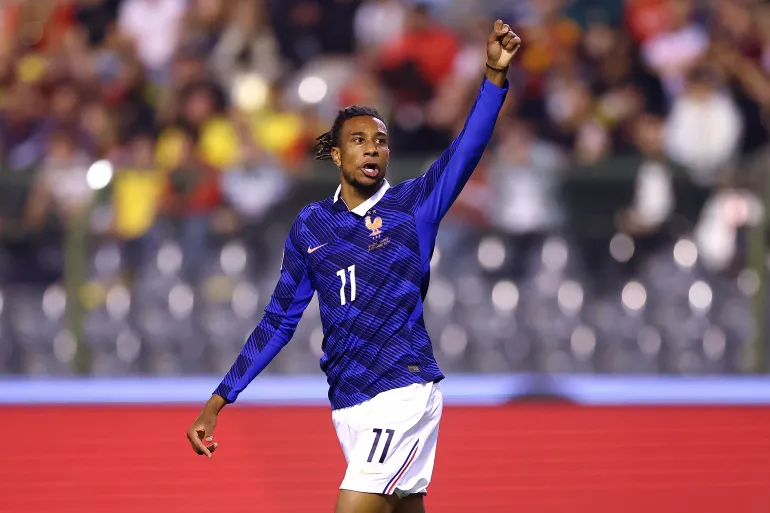
Michael Olise and Desire Doue (France): Olise’s outrageous finish in Monday’s Belgium game had Zidane going berserk on the sideline. Such is his talent. He has been involved in both goals France scored in this year’s Nations League and is also enjoying a flying start at Bayern Munich this term with eight goals and four assists. Doue, 21, is equally impressive – he assisted Olise in the last game, earning player of the match.
Michael Olise of France celebrates scoring against Belgium in the match in Brussels on Monday [Dean Mouhtaropoulos/Getty Images]
Francesco Pio Esposito and Davide Frattesi (Italy): Pio Esposito not only scored a goal in the last game but also celebrated a sweet bit of history – he and his older brother Sebastiano played against Turkiye, marking the first time two brothers started for Italy in more than a century. Inter Milan striker Pio already has five goals in 10 Azzurri appearances. Italian fans should also watch out for Frattesi, another scorer from the last game who has also netted three times for Lazio in this year’s Serie A.
What have the coaches said?
Zinedine Zidane (France): “It is going to be really emotional,” said Zidane, whose last appearance at the Stade de France came as a player in a friendly against Mexico in 2006.
Roberto Mancini (Italy): “Facing Zidane will be a pleasure, but this isn’t a duel between us,” assured Mancini in his press conference.
“It is going to be a great game between France and Italy, teams who are still trying to figure things out. Whatever happens, I feel that this match will be very useful for the process.”
Team news and predicted line-ups
France
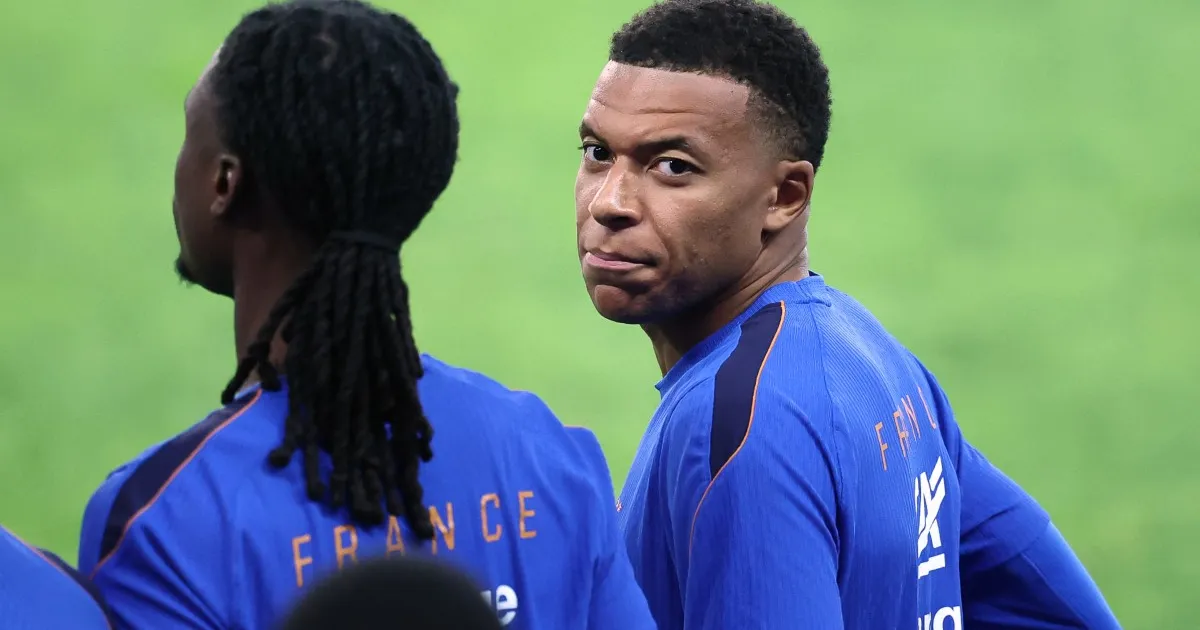
Mbappe is the biggest name missing from the France squad. He picked up a knee injury after scoring the winning goal against Turkiye and has since been sidelined for two weeks.
Elsewhere, central midfielder Warren Zaire-Emery is out with a thigh injury, and Matteo Guendouzi remains suspended.
Probable France XI: Mike Maignan; Jules Kounde, Jeremy Jacquet, Maxence Lacroix, Adrien Truffert; Rayan Cherki, Manu Kone, Adrien Rabiot; Desire Doue, Ousmane Dembele, Bradley Barcola
Michael Kayode (right) of Italy celebrates scoring his team’s third goal with teammate Sandro Tonali during last week’s game against Turkiye in Bursa [Ahmad Mora/Getty Images]
Italy
Italy have a fully fit squad.
Probable Italy XI: Gianluigi Donnarumma; Michael Kayode, Giorgio Scalvini, Alessandro Bastoni, Matteo Ruggeri; Sandro Tonali; Davide Frattesi, Nicolo Fagioli; Giacomo Raspadori, Francesco Pio Esposito, Sebastiano Esposito
France vs Italy: TV channel, livestreaming
France: la chaine L’Équipe, TF1+
Italy: RAI PLAY, Mediaset, Sky Italia
United Kingdom: Prime Video UK
United States: FOX Sports, FuboTV, ViX
India: Sony Sports Network
Middle East and North Africa: beIN SPORTS
South Africa: DStv Stream
You can find your regional broadcaster on UEFA’s official broadcaster listing.
Ireland’s players wore black armbands in support of Palestinians, bowed their heads during the Israeli anthem, and refused pre-match handshakes.
Published On 27 Sep 202627 Sep 2026
The Republic of Ireland has won the first of two football matches against Israel at the UEFA Nations League, defeating the Israeli team 3-0 after calls to boycott the match drew international attention.
Ireland’s players wore black armbands at the game in Hungary on Sunday in support of Palestinians killed during Israel’s genocidal war on Gaza. Irish players also bowed their heads during Israel’s national anthem and did not shake the hands of the Israeli team. Ireland’s captain, Dara O’Shea, has also pledged to donate all of his earnings from the match to aid Gaza.
Recommended Stories
list of 3 itemsend of list
On Saturday, Football Association of Ireland (FAI) chief executive David Courell said the players would wear black armbands “in recognition of all lives lost in the conflict” as he confirmed that the match would take place after hours of talks and a vote among the team. Israel was informed in advance by the FAI that Ireland’s players would not shake hands, and UEFA accepted the arrangement.
After the FAI confirmed that it would participate in the match, the Republic of Ireland’s first-choice goalkeeper, Gavin Bazunu, became the only player to publicly opt out of the fixture.
Bazunu posted a statement on social media on Saturday, saying he felt “it would be wrong to participate in the upcoming fixtures against Israel”.
He withdrew from both legs of the fixture, including the next match set to take place on October 4 in Backa Topola, Serbia.
Fans protest an upcoming match between the Republic of Ireland and Israel during the international friendly match between the Republic of Ireland and Qatar on May 28, 2026, at Aviva Stadium in Dublin, Ireland [File: Charles McQuillan/Getty Images]
The match on Sunday proceeded despite months-long pressure on the FAI to boycott the match due to Israel’s genocide in Gaza.
Since May, leading Irish footballers have joined a campaign run by Irish Sport for Palestine, urging Ireland to boycott the match against Israel. More than 160 Irish athletes signed an open letter urging the FAI to reconsider its decision to proceed with the games.
The campaign says Israel has breached UEFA and FIFA statutes by allowing teams to play on occupied Palestinian land and should be stripped of its membership at both football bodies.
Who: Norway vs Portugal What: UEFA Nations League 2026-2027, Group A4 match Where: Ullevaal Stadion in Oslo, Norway When: Sunday at 7:45pm (18:45 GMT) How to follow: Al Jazeera Sport will bring you all the build-up and live updates from 15:45 GMT.
Record two-time UEFA Nations League champions Portugal continue their title defence on matchday two with a trip to Oslo against an exciting Norway side.
Spearheaded by Erling Haaland, arguably one of Europe’s most dangerous strikers, and captained by midfield maestro Martin Odegaard, Norway made a winning start too, beating their Scandinavian rivals Denmark 3-2 in a thrilling opener.
Frustrated after a string of missed chances in the first game, Portugal’s talisman Cristiano Ronaldo will hope to rediscover his form as the team embraces a new chapter under coach Jorge Jesus, whose first game in charge was on Thursday against Wales.
What is the UEFA Nations League?
The UEFA Nations League was founded in 2018 to reduce the number of meaningless friendlies and give nations competitive matches against equally ranked teams.
In this competition, countries from across Europe participate in a league structure that features promotion and relegation.
When did Norway and Portugal last meet?
The teams last met in a 2016 international friendly in Porto when hosts Portugal defeated Norway 3-0.
Norway vs Portugal: Head-to-head
Matches: 11
Norway’s wins: 1
Portugal’s wins: 8
Draws: 2
Norway vs Portugal: Form guide
(Last five games, latest results first)
Norway: W-L-W-W-L
Portugal: W-L-W-D-W
Who are the top players to watch?
Haaland and Oscar Bobb (Norway): A double from Haaland and another goal from Bobb set Norway on course for a winning start, and the attacking pair should be in the limelight in front of their home crowd this weekend. Manchester City’s Haaland, especially, has been in top form this term with an incredible seven goals in as many games across all competitions.
Ronaldo and Joao Felix (Portugal): Portugal’s striking pair of Ronaldo and Felix ought to be careful in the final third this time out after Felix’s lone strike in the opening win in Lisbon. Ronaldo had a goal ruled out and was among the players who missed a flurry of chances as Portugal registered a whopping 23 total shots but with only five on target, of which just one hit the back of the net.
On average, Erling Haaland scores more than one goal a game for Norway [File: Marius Nordnes/Nordnes Foto via Getty Images]
Will Haaland, Ronaldo and Bruno Fernandes play?
Both forwards are fit to play, but Portugal will miss the services of their talismanic midfielder Bruno Fernandes, who is injured.
Fernandes has played in all seven of Manchester United’s matches this season and featured from the start for Portugal against Wales before being withdrawn in the 90th minute.
Jesus said he doesn’t want to “risk” the player against Norway.
“Against Wales, we went in with practically everyone physically available and came out with a complicated problem with Bruno Fernandes,” the coach said.
“He’s coming off an injury at United, and he told me he’s been playing with that pain for the last three games, which is hindering him.
“It was one of the factors that prevented Bruno from playing at his best against Wales. I’ve already spoken to him, and I prefer not to risk it in this game, so he’s fully fit for the Denmark match.”
Haaland: The King of the North
Haaland’s double against Denmark on Thursday marked another milestone in the 26-year-old striker’s enviable career. He is now the highest-scoring Nordic man in international football history, surpassing Sweden’s Zlatan Ibrahimovic.
Haaland’s goal tally for Norway stands at 64 goals compared with Ibrahimovic’s 62. Incredibly, Haaland has shattered that record in 56 appearances – less than half of the 122 matches Ibrahimovic needed.
“It is not possible to explain nor is it possible to learn. He is born with it. It is instinct,” Norway manager Stale Solbakken said about Haaland.
Having made his senior debut in 2019, Haaland boasts a record of scoring more than one goal per game for Norway.
“It’s madness,” midfielder Sander Berge said about Haaland’s talent. “It’s everyday business that Haaland scores goals, so it’s reasonable that he is up there, but it’s powerful.”
What have the coaches said?
Jesus: “Norway are one of the strongest teams in Europe. They have players we know like Haaland and Odegaard who play at a very high level in England. They will create more goalscoring opportunities against us than Wales, and I hope we have the defensive capacity.
“There’s not much to improve. We’ll evolve the game we’ve already played, but I trust that the team will respond defensively and will be more creative offensively.”
Solbakken: “They changed the coach, and if you look at what he did at his previous clubs and the football they played, the way they played against Wales was a little different to what it was with [Roberto] Martinez. There were players in other positions, and we took that into account in our game plan. Obviously, they have good players all over the field. We expect a close and balanced game. It’s our home game, so we’ll try to stop their biggest assets, but it’s also important for us to play our game and be loyal to the way we’ve been playing in recent years.”
Have Haaland and Ronaldo ever played each other?
No, the 26-year-old and 41-year-old greats have never crossed paths. Norway and Portugal have not played each other frequently either.
Who: England vs Spain What: UEFA Nations League 2026-27, Group A3 match Where: Wembley Stadium, London, United Kingdom When: Saturday, September 26, at 7:45pm (18:45 GMT) How to follow: Al Jazeera Sport will bring you all the build-up and live updates from 15:45 GMT.
England begin their new Nations League campaign with a heavyweight home fixture against the reigning world champions, Spain.
Recommended Stories
list of 3 itemsend of list
Saturday’s clash at Wembley will be a rematch of the UEFA Euro 2024 final, which Spain won 2-1 in Berlin, Germany.
La Roja, the 2023 Nations League winners, are looking to add a second title to their collection, having also finished runners-up to Portugal in the last edition in 2025.
England, on the other hand, enjoyed their best result in the inaugural 2019 edition, finishing third. They return to League A this time after winning Group B2 in their previous appearance.
Competing in the top division of the structured competition, Croatia and Czechia are the other teams in Group A3 with England and Spain.
What is the UEFA Nations League?
The UEFA Nations League was founded in 2018 to reduce the number of meaningless friendlies and give nations competitive matches against equally-ranked teams.
In this competition, countries from across Europe participate in a league structure, which features promotion and relegation.
England vs Spain: Predictions
Opta’s supercomputer has handed Spain a 40.2 percent probability of victory, while England have a 33.6 percent chance of winning. The odds of a draw stand at 26.2 percent.
When did England and Spain last meet?
Spain have won six of their last nine meetings with England.
England and Spain last met at the UEFA Euro 2024 final, in which goals from Nico Williams and Mikel Oyarzabal handed La Roja a 2-1 championship victory. That result marked a record-breaking fourth European crown for Spain.
England vs Spain: Head-to-head
Matches: 28
England wins: 13
Spain wins: 11
Draws: 4
England vs Spain: Form guide
(Last five games, latest results first)
England: W-L-W-W-W
Spain: W-W-W-W-W
Which are the top players to watch?
Harry Kane and Jude Bellingham (England): All English hopes will once again rest on captain and Ballon d’Or frontrunner Harry Kane of Bayern Munich, who recently became the fastest player to 100 German Bundesliga goals. Elsewhere, attacking midfielder Jude Bellingham has made an impressive start under new Real Madrid coach Jose Mourinho, producing three goals and three assists in seven La Liga appearances.
Lamine Yamal of FC Barcelona has seven goals and four assists in seven La Liga appearances this season [David Ramos/Getty Images]
Ferran Torres and Lamine Yamal (Spain): La Roja fans will be excited to see Ferran Torres in the national team colours this weekend after he scored a hat-trick in his first Champions League appearance for new club Paris Saint-Germain. His former Barcelona teammate Lamine Yamal, too, is enjoying a strong start this season, with his seven goals rated joint-second-highest in La Liga.
What have the coaches said?
Thomas Tuchel, England coach: “I think the more you analyse Spain and their last matches they played in, you have to admire the way in which they defend. They added this to their game. It’s difficult for every single team in the world to create chances against Spain. But we have a plan, we have ambition, and we want to be the exception to the rule. At the moment, though, they are a very complete team.”
Luis de la Fuente, Spain coach: “I know what these players are made of. We are not satisfied with what we have done so far, I guarantee it. One story is over; now another begins. Another one in which we are very excited. We want to continue doing important things, to continue making records as historic as those that are being achieved.”
England manager Thomas Tuchel during a pre-match news conference [Bradley Collyer/Getty Images]
England vs Spain: TV channel, livestreaming
United Kingdom: ITV1
Spain: RTVE PLAY
Middle East and North Africa: beIN SPORTS
India: Sony Sports Network
South Africa: DStv Stream
United States: FOX Sports, FuboTV, ViX
England’s team news and predicted lineup
England are without winger Marcus Rashford, who picked up a knock, and attacking midfielder Cole Palmer, who has a muscle injury.
Probable England XI: Jordan Pickford; Trent Alexander-Arnold, Ezri Konsa, Marc Guehi, Nico O’Reilly; Elliot Anderson, Miles Lewis-Skelly; Bukayo Saka, Jude Bellingham, Anthony Gordon; Harry Kane
Spain’s team news and predicted lineup
Centre-back Marc Pubill is sidelined with physical discomfort, and goalkeeper Joan Garcia is out with a knee injury.
Probable Spain XI: Unai Simon; Eric Garcia, Pau Cubarsi, Dean Huijsen, Marc Cucurella; Fermin Lopez, Rodri, Fabian Ruiz; Lamine Yamal, Mikel Oyarzabal, Nico Williams
Who: Turkiye vs France What: UEFA Nations League Where: Kocaeli Stadium in Izmit, Turkiye When: Friday, September 25, at 9:45pm (18:45 GMT) How to follow: Al Jazeera Sport will have all the build-up from 15:45 GMT.
Zinedine Zidane was asked if taking charge of his first France game on Friday will feel just as special as his playing debut for Les Bleus more than 30 years ago.
Recommended Stories
list of 4 itemsend of list
“Even more so, maybe,” a smiling Zidane said on Thursday ahead of a Nations League game in Turkiye. “I feel an immense emotion being at the head of this France team.”
Zidane’s dream was realised when he replaced Didier Deschamps after the 2026 World Cup. His former teammate Deschamps was in charge for 14 years, winning the World Cup in 2018 and losing the 2022 final.
Now it’s Zidane’s chance to make his mark on a team he once starred for.
Affectionately nicknamed “Zizou”, his face was beamed onto the Arc de Triomphe in Paris the night France celebrated its first World Cup triumph in 1998.
Zidane scored two headers in the final in a 3-0 win over Brazil and later that year he won the Ballon d’Or. Two years later, he was instrumental in France winning the European Championship.
His rise to the top seemed almost fated, for his international career began brilliantly in 1994 with two stunning goals against the Czech Republic after coming on as a substitute.
He then won league titles with Juventus and Real Madrid and scored a brilliant volley to help Madrid win the Champions League in 2002.
Zidane understands expectations are high, given his achievements as a player and how he led Real Madrid to three straight Champions League titles as a coach.
“It’s something new. I’m taking over as head coach so people are talking about it,” he said. “That makes sense.”
After facing Turkiye, France plays Belgium away on Monday before hosting Italy on October 2, and Belgium three days later, with both those games at the Stade de France.
Mbappe given all clear for France’s trip to Turkiye
France’s all-time top scorer Kylian Mbappe is set to captain the side, having shrugged off a minor injury.
Zidane was asked why, given that Mbappe is captain, he was not present at Thursday’s pre-match news conference. Instead, it was midfielder Adrien Rabiot who spoke to the media.
“The obligation is to have one player and the coach,” Zidane said. “[Mbappe] is fine. He will be ready to play tomorrow.”
Rabiot is one of France’s vice-captains along with forward Ousmane Dembele and right back Jules Kounde.
Rabiot said the huge attention placed on Zidane gave the players a welcome back seat.
“His aura means he commands a lot of attention,” Rabiot said. “In a way, it’s a good thing that the focus is more on the coach than the players. It gives them a bit more peace and quiet.”
Zidane understands the limelight but does not seek it.
“You have to accept how things are. But I’m not here for that,” he said. “Winning matches is what interests me the most.”
What happened the last time Turkiye played France?
The sides shared a 1-1 draw in Paris in 2019 in a qualifier for Euro 2020.
Olivier Giroud gave the home side the lead in the 76th minute before Kaan Ayhan levelled for Turkiye five minutes later.
Head-to-head
This will be the seventh meeting between the nations, with France claiming four wins to Turkiye’s one in the previous encounters.
Turkiye team news
Turkiye will be without the services of Hakan Calhanoglu and Kenan Yildiz due to injury. Real Madrid starlet Arda Guler, however, is available despite fears of a knock.
Zidane can choose from six new faces in his squad.
Striker Esteban Lepaul (Rennes), defenders Leny Yoro (Manchester United) and Jeremy Jacquet (Liverpool), midfielder Lucas Da Cunha (Como), Andy Diouf (Inter Milan) and Guillaume Restes (Toulouse) are set for their debuts.
“I’m happy with what I’ve seen so far. The French team is open to everyone,” Zidane said. “We’ve got a good squad, some veterans, some newcomers.”
The road to the UEFA Nations League 2026-27 begins on Thursday, with 54 teams in action in the league phase.
Portugal, the record two-time champions, will look to successfully retain the title they won in 2025.
Recommended Stories
list of 3 itemsend of list
But with reigning World Cup winners Spain, and former champions France and heavyweights England also in the mix, the title defence will be far from easy.
What is the UEFA Nations League?
The UEFA Nations League was founded in 2018 to reduce the number of meaningless friendlies and give nations competitive matches against equally-ranked teams.
In this competition, countries from across Europe participate in a league structure, which features promotion and relegation.
How many teams are in the Nations League?
A total of 54 teams will participate in the 2026-27 UEFA Nations League.
They are divided into the following leagues and groups, following the draw in Brussels, Belgium in February:
League A
Group A1: France, Italy, Belgium, Turkiye Group A2: Germany, Netherlands, Serbia, Greece Group A3: Spain, Croatia, England, Czechia Group A4: Portugal, Denmark, Norway, Wales
League B
Group B1: Scotland, Switzerland, Slovenia, North Macedonia Group B2: Hungary, Ukraine, Georgia, Northern Ireland Group B3: Israel, Austria, Republic of Ireland, Kosovo Group B4: Poland, Bosnia and Herzegovina, Romania, Sweden
League C
Group C1: Albania, Finland, Belarus, San Marino Group C2: Montenegro, Armenia, Cyprus, Latvia Group C3: Kazakhstan, Slovakia, Faroe Islands, Moldova Group C4: Iceland, Bulgaria, Estonia, Luxembourg
League D
Group D1: Gibraltar, Malta, Andorra Group D2: Lithuania, Azerbaijan, Liechtenstein
What is the schedule for the UEFA Nations League?
UEFA has earmarked the following dates for the Nations League 2026-27:
League phase
Matchday 1: September 24-26 Matchday 2: September 27-29 Matchday 3: October 1-3 Matchday 4: October 4-6 Matchday 5: November 12-14 Matchday 6: November 15-17
Quarterfinals, League A/B and League B/C promotion/relegation playoffs
March 25-30, 2027
League C/D playoffs
March 23-28, 2028
Final tournament
June 9-13, 2027
How does the UEFA Nations League work?
The teams compete across four different divisions, facing every other team in their group twice: once at home and once away. The league phase ends in November.
In the top-most league, League A, the top two teams from each group go through to the quarterfinals, which take place in March 2027.
The finals will again be contested between four teams. The host and the dates of the finals have not been confirmed yet.
As for each of the group winners in Leagues B, C and D, they will be promoted to the league above. The teams finishing bottom of their groups in Leagues A, B and C will be relegated one league below.
Here’s the full breakdown of the promotion and relegation scenarios:
League A
The group winners and runners-up advance to the quarterfinals.
The two highest-ranked third-placed teams remain in League A.
The two lowest-ranked third-placed teams and two highest-ranked fourth-placed teams contest the League A/B play-offs against the four runners-up from League B.
The two lowest-ranked fourth-placed teams are relegated to League B.
League B
The group winners are promoted to League A.
The runners-up contest the League A/B play-offs against the two lowest-ranked third-placed teams and two highest-ranked fourth-placed teams from League A.
The third-placed teams remain in League B.
The fourth-placed teams contest the League B/C play-offs against the four runners-up from League C.
League C
The group winners are promoted to League B.
The runners-up contest the League B/C play-offs against the fourth-placed teams from League B.
The third- and fourth-placed teams remain in League C.
League D
All teams are promoted to League C.
FIFA World Cup 2026 winners Spain will also be in action in the upcoming UEFA Nations League [File: Hannah McKay/Reuters]
Is the Nations League linked to major tournaments?
According to European football’s governing body, UEFA, the 2026-27 UEFA Nations League is expected to be linked to qualification for UEFA EURO 2028 in the United Kingdom and Ireland.
Based on their UEFA Nations League results, some teams will be given a second chance to enter the playoffs for the final tournament.
Will Ronaldo play in the Nations League?
Yes. Cristiano Ronaldo will feature in the upcoming Nations League after being called up for their upcoming four fixtures. Last weekend, he was included in new coach Jorge Jesus’s first 25-man squad.
However, in August, the 41-year-old fuelled speculation about his retirement plans after saying the coming year would probably be the last of his playing career.
The Portugal captain has won major trophies at the club level with Manchester United, Real Madrid, Juventus and current club Al-Nassr since making his senior debut for Sporting in 2002.
But he has not quite tasted similar success with his national team.
The five-time Ballon d’Or winner has yet to win a FIFA World Cup, football’s biggest prize, after Portugal were knocked out in the last 16 by eventual champions Spain.
Has Ronaldo won the UEFA Nations League?
Yes. Ronaldo led Portugal to UEFA Nations League victories in the inaugural edition in 2019 and the latest one in 2025.
In the 2019 edition, Portugal were crowned winners on home soil in Porto, defeating the Netherlands 1-0 in the final.
In the last edition, they were crowned champions for a second time, beating Spain 5-3 on penalties after the match was tied 2-2 in extra time, with Ronaldo among Portugal’s goalscorers in Munich.
Which other top players will play in the Nations League?
The UEFA Nations League 2026-27 is filled with stars across all divisions.
In Group A, world champions Spain have talent all around with Lamine Yamal, Rodri and Ferran Torres among the standout names, while England skipper Harry Kane and Jude Bellingham also add glamour to the division.
Norway’s talismanic forward Erling Haaland and captain Martin Odegaard headline their team, Brian Bobbey has the spotlight on him in the Netherlands squad, and veteran Luka Modric continues his journey with Croatia.
In Group B, fans should watch out for Sweden’s Victor Gyokeres, the top scorer in the 2024-25 Nations League, Georgia’s winger and PSG star Khvicha Kvaratskhelia.
Which players will miss the opening UEFA Nations League games?
Several players have been sidelined with injuries, including England’s Cole Palmer, Declan Rice and Marcus Rashford.
Pedro Porro has been ruled out of the Spain squad.
Is the Nations League held every two years?
Yes. The UEFA Nations League has been held every two years since 2019.
Hungary has been deemed a suitable host nation for Israel matches because the two nations enjoy stronger diplomatic ties than those between Israel and many other European nations, and it has been willing to provide the necessary policing and security arrangements for matches to operate smoothly.
The FAI decided in the summer to play its ‘home’ fixture against Israel at a neutral stadium, citing “operational challenges that could impact on the delivery of the game on home soil”.
Reports have claimed the FAI was concerned protests could prevent the match from taking place in Dublin.
The FAI gave no official reason for the selection of Backa Topola, but choosing a venue in Serbia – in a town so remote – in theory renders security management easier and reduces the possibility of protest.
In 2025, Serbian foreign minister Marko Duric described Israel as one of Serbia’s “closest friends and strategic partners”. Serbia has also purchased military equipment, including drones and missiles, from Israel in recent years.
The decision to play in neutral stadiums has not curtailed opposition.
Fans of various Irish clubs have demonstrated against the matches during domestic fixtures in recent weeks, and on Monday more than 160 Irish athletes signed an open letter by the Irish Sport for Palestine group urging a boycott. The signatories include boxer Tyrone McKenna and former European champion athlete Ciara Mageean.
Uefa and Concacaf have written to Gianni Infantino calling on Fifa to pay at least $10m (£7.5m) from its cash reserves to each of the 211 member associations.
It is the latest chapter in the war of words between the governing bodies, in response to Fifa president Gianni Infantino’s aborted private equity proposal.
Fifa Forward Enterprise (FFE) would have meant a new company being created to manage commercial and ticketing rights of all competitions, including World Cups, with 21% sold off to an investment company.
The idea was scrapped after four days following widespread opposition from national associations.
The letter, seen by BBC Sport, was signed by Uefa president Aleksander Ceferin and his Concacaf counterpart Victor Montagliani.
It outlines that “Fifa is on course to close 2023-26 with reserves of approximately $6bn (£4.5bn)” which is “considerably more than is required” through to the 2030 men’s World Cup.
It said that Fifa should “make at least $10m available to each of its 211 member associations over the 2027-30 cycle” which should be used “for investment in infrastructure and football development”.
This “one-off release of reserves” would come at a cost of $2.11bn (£1.57bn), and would be in addition to the regular funding in the cycle.
When the controversial plan was revealed in the days following the World Cup final, Infantino told members they would receive $40m (£30m) if they backed it.
Infantino set a deadline of 19 September for federations to accept his plans if they want to access an initial $20m (£15m).
In the letter, Ceferin and Montagliani said analysis carried out on Fifa’s published financial statements and budgets raised doubts that the FFE proposal was “necessary to deliver greater resources”.
It added that the analysis was “deliberately conservative” and a larger distribution from the reserves should be considered by the Fifa Council once the financial position at year-end is known.
An “independent review” of Fifa’s finances should be commissioned, it added, with “full access to the underlying figures and assumptions”.
“Fifa currently holds billions of dollars in accumulated reserves,” it read. “These resources belong to football and exist to serve the game and its 211 member associations.
“Prudence should not prevent a careful examination of whether a portion could responsibly be released to the extent those reserves exceed Fifa’s foreseeable needs.
“Releasing part of these reserves would demonstrate that member associations should not have to choose between development and good governance; between investment and integrity; or between financial support and the ability to consider proposals on their merits.
“Development is an institutional responsibility of Fifa – not a matter of individual discretion.”
Another letter, also seen by BBC Sport, has been sent to the presidents of the other confederations – Asia, Africa, South America and Oceania – asking them to support the motion.
Hewitt, a Fifa vice-president, said that the Fifa Council should also receive a written explanation for the cancelled suspension of United States forward Folarin Balogun at the World Cup.
Infantino was told he should make all documents available before the next Fifa Council meeting, which is on 15 October.