Uber

A California lawmaker wants to make it easier for taxis to compete with Uber. But is it too little, too late?

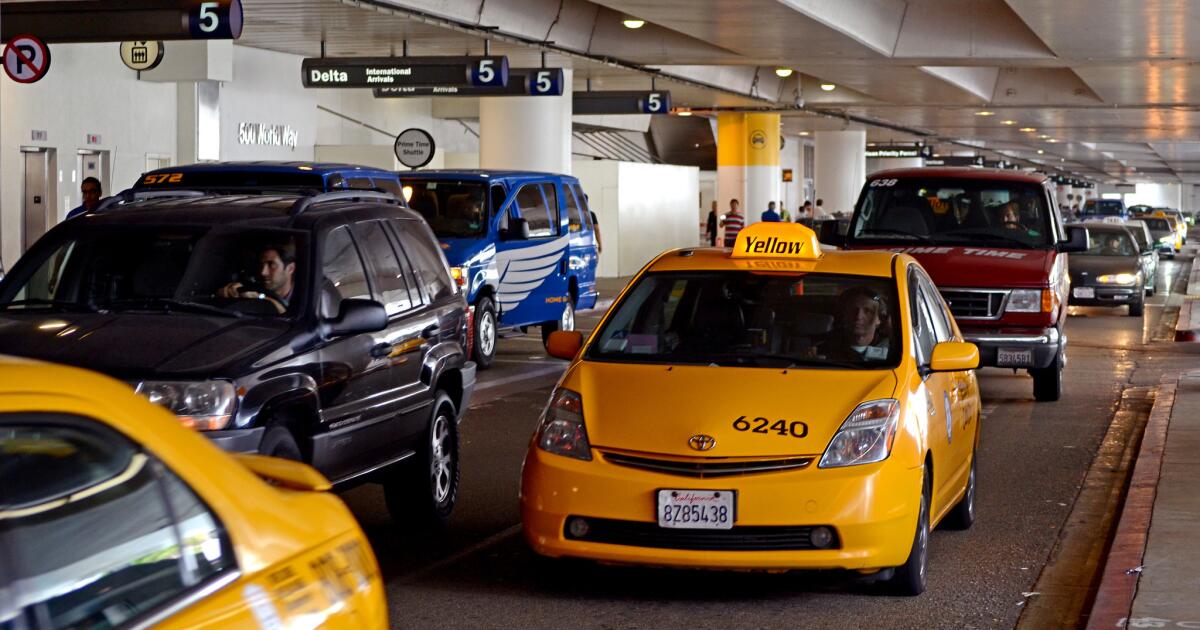
Uber and Lyft continue to expand their dominance in California, and taxi companies are looking to the state Legislature for some relief.

“If communities value taxicabs, then we’re going to have to have a regulatory environment that allows cab companies to thrive,” said William Rouse, general manager of Yellow Cab of Los Angeles. “Right now, that’s just not the case.”

Rouse and others in the taxi industry have turned to Assemblyman Evan Low (D-Campbell) for help. Low has introduced AB 1069, which aims to ease taxi regulations to make the companies more competitive with their ride-hailing rivals.

Under Low’s legislation, which overwhelmingly passed the Assembly last month, taxi regulation would occur regionally rather than city by city. This means, for instance, cabs could pick up passengers in Los Angeles, drop them off in Santa Monica and vice versa without needing multiple permits.

Taxis also could lower or raise their prices — similar to Uber and Lyft’s surge-pricing models — in response to demand, with a maximum price set by each region.

“If we don’t do anything now, they will completely be annihilated,” Low said.

In California, numbers show the extent of the taxi industry’s decline and the ride-hailing boom. Taxi trips dropped nearly 30% in Los Angeles from 2012, right before Uber and Lyft began operating, to 2015. New research from the Brookings Institution shows that the number of ride-hailing drivers doubled in Los Angeles, Sacramento, San Diego and San Jose in 2015.

Uber and Lyft’s business models rely on using public pressure and lobbying to shape and change laws and regulations, said Elizabeth Pollman, a professor at Loyola Law School who has written about how Uber and Lyft have challenged existing state and local rules.

“Their business model wasn’t just to replicate the world we had, but rather to create a new model,” Pollman said.

Uber and Lyft have succeeded at the state Capitol in getting regulations and laws passed to benefit their industry and shooting down those that don’t. Even if Low’s bill passes, major regulatory disparities between ride-hailing companies and taxis will remain.

Taxi drivers still will have to pass fingerprint-based background checks, while Uber and Lyft drivers face less onerous rules. After years of delays, the California Public Utilities Commission, which regulates ride-hailing statewide, is scheduled in the fall to decide whether ride-hailing drivers will need to pass fingerprint checks as well. Neither Uber nor Lyft has taken a position on Low’s bill, but each company has been generally supportive of loosening taxi regulations.

Still, cab companies and transportation experts said the legislation could have clear benefits for the taxi industry. Currently, it costs more than $3,000 a year for taxi permits to operate in four cities — Torrance, Redondo Beach, Hermosa Beach and Manhattan Beach — that stretch roughly six miles along the Los Angeles County coast. In Silicon Valley, similar annual city-by-city fees can run $13,000. Low’s bill aims to wipe away such charges and replace them with a single payment.

The measure would promote greater competition by allowing taxis to grow their own on-demand apps and other dispatch services with fewer restrictions, said Bruce Schaller, a New York-based consultant who monitors both industries.

Schaller said the taxi industry’s problems go beyond regulation, and cabs will need to dramatically improve their service and reduce their fares.

“Why do people use Uber and Lyft?” Schaller said. “It’s because they’re cheap and they show up. That’s it.”

Low’s bill faces many obstacles. Last year, he wrote legislation that would have turned over taxi regulation to the state, but Gov. Jerry Brown vetoed it. The governor’s veto message said he didn’t believe such a major change was warranted. Low’s current bill shifts the burden from cities to counties, but counties don’t want the responsibility.

In a May letter opposing the bill, a representative of the California State Assn. of Counties wrote that counties were ill-equipped to handle taxi regulations without help from cities.

“AB 1069 confuses the relationship between counties and cities by arbitrarily placing the entire burden on the county for taxicab licensure,” the letter said.

Low said he’s open to another entity, such as regional agencies including the Southern California Assn. of Governments in the Los Angeles area, to regulate taxis instead of counties handling them. But he warned that local governments shouldn’t be shortsighted in maintaining strict regulations and high fees that could continue driving taxis out of business.

In that case, Low said, cities “won’t get any of their revenues whatsoever.”

liam.dillon@latimes.com

@dillonliam

ALSO

An overhaul of California’s taxi regulations passes the Legislature

With Uber battle raging, one state lawmaker wants to deregulate the taxi industry
Uber and Lyft are winning at the state Capitol — here’s why

Updates on California politics


Source link

Car towed, vehicle of interest sought in Nancy Guthrie case

Investigators towed a car and obtained video footage of a vehicle of interest but have no firm leads on the whereabouts of Nancy Guthrie, 84, after she went missing from her Tucson home early Sunday morning. Image by the Department of Justice/FBI

Feb. 7 (UPI) — Investigators towed a vehicle and searched Nancy Guthrie’s Tucson, Ariz., home and property and are seeking a vehicle of interest seven days after she went missing.

Investigators searched her home and property on Friday and towed a car that was parked near it, but they still have no suspects.

Instead, they have a vehicle of interest and obtained video footage of the vehicle and possibly one or more occupants that was recorded by a surveillance camera at an Arizona Circle K.

Digital billboards in Texas, New Mexico and California are assisting with the hunt for information that might lead to Guthrie’s recovery or identify her potential kidnappers.

The digital billboards mostly are placed along the I-10 corridor, from Houston to San Diego, and in Albuquerque, Los Angeles and Dallas.

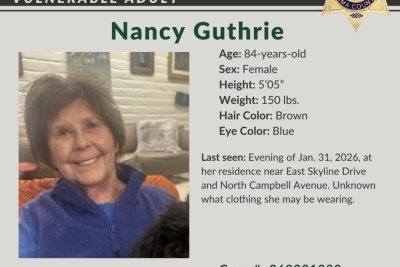
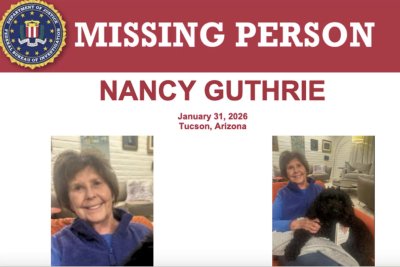
Guthrie, 84, is the mother of NBC Today show co-anchor Savannah Guthrie and likely was abducted from her home during the early morning hours on Sunday.

Investigators have no persons of interest so far, despite receiving several ransom notes, including one on Friday that might be genuine.

They said she likely was abducted from her Tucson home early Sunday morning and are treating a prior ransom note that was sent to multiple news outlets as authentic due to the detailed information that matches what was found at her home.

A local television station received another ransom note on Friday morning, which authorities are trying to authenticate.

Investigators also confirmed that blood drops near her home’s entrance are Guthrie’s.

They have not received any proof of life regarding her condition, but they are working on the assumption that she is alive until proven otherwise, Pima County Sheriff Chris Nanos told reporters on Thursday.

The FBI has issued a $50,000 reward for information leading to Guthrie’s recovery.

Before her disappearance, investigators said Nancy Guthrie visited with family members at 5:32 p.m. on Saturday and returned to her home at 9:48 p.m.

She obtained rides from the Uber ride-hailing service, and investigators spoke with the driver who took her home.

Investigators said a doorbell camera on her home was disabled at 1:47 a.m. on Sunday, but its software detected movement at 2:12 a.m.

Her pacemaker disconnected from her personal device at 2:28 a.m., and her family arrived at the home to check on her several hours later at 11:56 a.m.

They placed a 911 call minutes later at 12:03 p.m., and Pima County Sheriff’s deputies arrived about 10 minutes later.

Source link

Nancy Guthrie search: Police have no suspects; FBI offers $50K reward

1 of 2 | Nancy Guthrie was last seen Saturday around 9:45 p.m. and was reported missing after failing to show up for church Sunday. Photo courtesy Pima County Sheriff’s Department

Feb. 5 (UPI) — The FBI on Thursday announced a $50,000 reward for information leading to the return of Tucson, Ariz., resident Nancy Guthrie, 84, as the search for the mother of Today show anchor Savannah Guthrie enters its fifth day.

The reward is also available for information leading to “the arrest and conviction of anyone involved in her disappearance,” the FBI said.

Local law enforcement officials said no suspects have been identified in Nancy Guthrie’s disappearance, which happened in the early hours of Sunday.

“They just hurt. Understandably so,” Pima County Sheriff Chris Nanos said of the missing woman’s family during a Thursday afternoon news conference. “The community is hurting with you. We really just want mom back.”

He said investigators “believe Nancy is still out there” and that local police and the FBI are “working around the clock” to find her.

“We just want her home and to find a way to get to the bottom of all of this,” Nanos said.

A larger regional team of Tucson-area law enforcement has been added to the task force that includes a large team of FBI personnel to investigate her suspicious disappearance.

“We’re sharing every piece of information — all the data that we can — to get this solved,” he said.

He also confirmed that blood found on the porch of Nancy Guthrie’s home is hers.

FBI Phoenix Special Agent in Charge Heigh Janke confirmed that ransom notes have been received, including one seeking an Apple watch and another asking for a floodlight.

He said investigators were limiting the amount of facts released because some people might use them to profit from the case.

Janke said one “imposter” has been arrested, and investigators were working on the ransom note that was shared with media.

No proof of life has been provided, Janke said, but Nanos told reporters that they are investigating based on Nancy Guthrie still being alive until evidence shows that she is not.

One of the ransom notes included “facts associated with a monetary value they were asking for,” Janke said.

Nancy Guthrie was reported missing by her family on Sunday afternoon after they received a call from her church saying that she was not at home.

Before her disappearance, investigators said Nancy Guthrie visited with family members at 5:32 p.m. on Saturday and returned to her home at 9:48 p.m., NBC News reported.

She obtained a ride both ways from the Uber ride-hailing service, and investigators spoke with the driver who took her home.

Investigators said a doorbell camera on her home was disabled at 1:47 a.m. on Sunday, but its software detected movement at 2:12 a.m

Her pacemaker disconnected from her personal device at 2:28 a.m., and her family arrived at the home to check on her several hours later at 11:56 a.m.

They placed a 911 call minutes later at 12:03 p.m., and Pima County Sheriff’s deputies arrived about 10 minutes later.

Source link