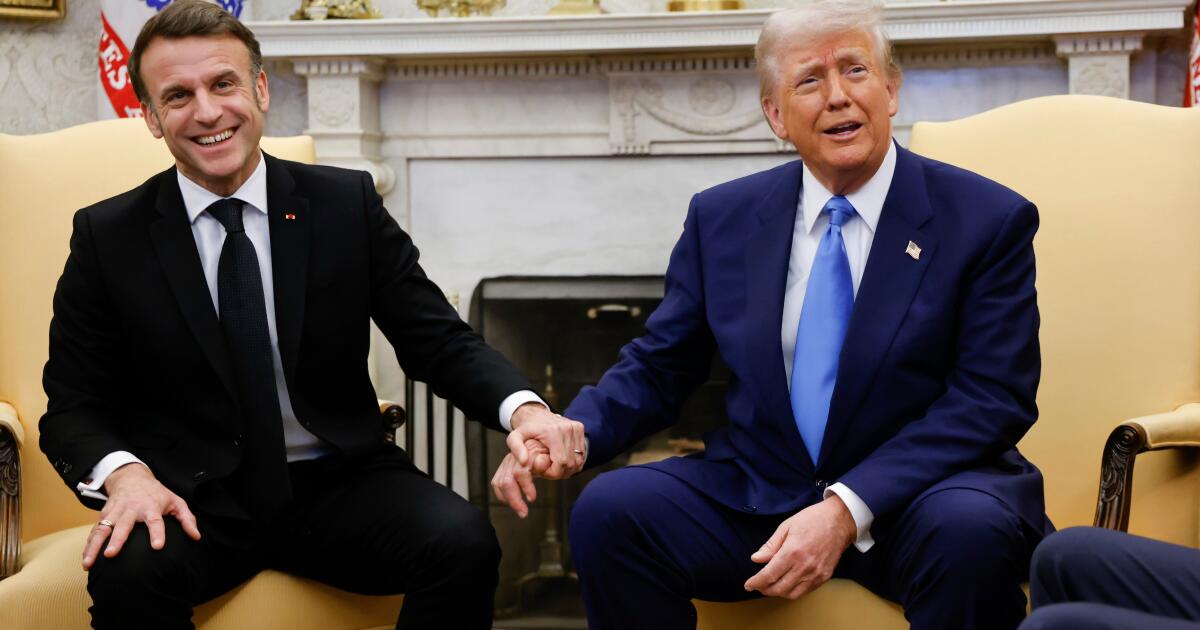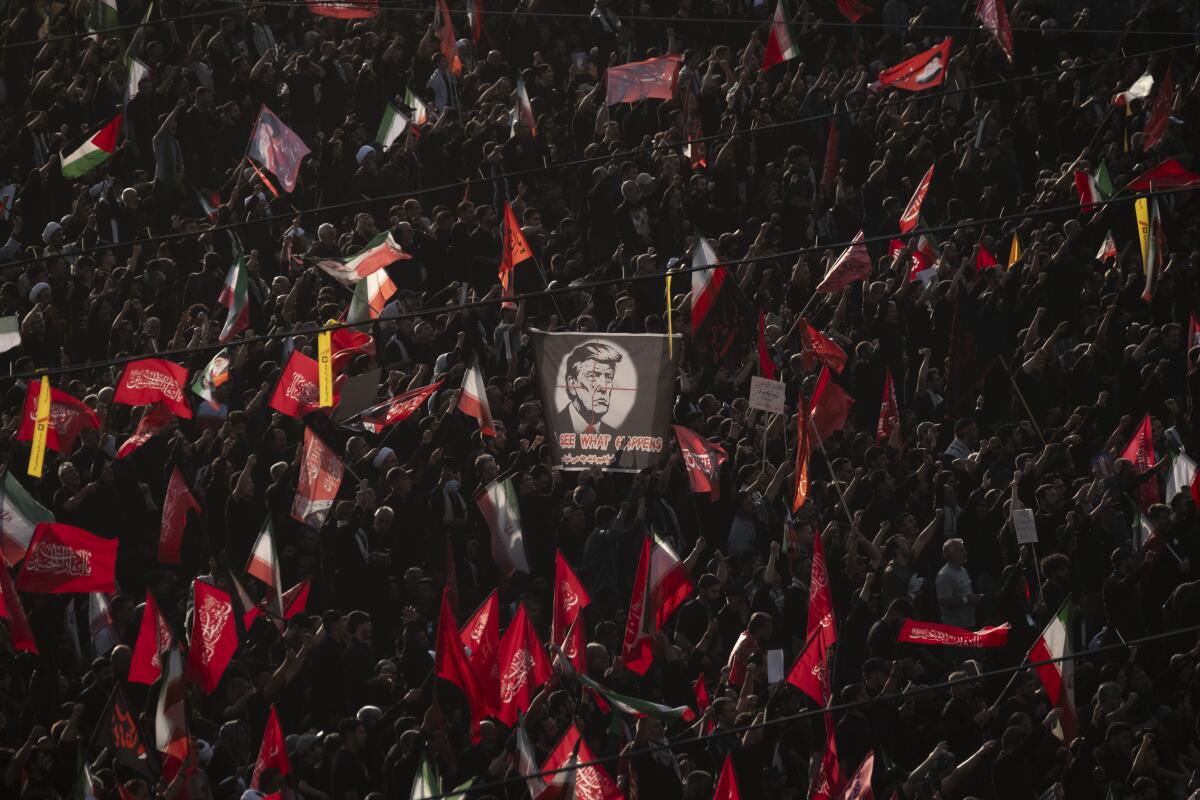
Donald Trump is accustomed to criticism from coast to coast — Democrats, disaffected Republicans, late-night comedians, massive protests. Yet in his second presidency, Trump’s most influential American critic doesn’t live in the country but at the Vatican.
It’s an unprecedented situation, with the first American pope directly assailing the American president over the war in Iran, where a fragile ceasefire took hold this week. The announcement came after Pope Leo XIV declared that Trump’s belligerence was “truly unacceptable.”
Never before has the relationship between Washington and the Vatican revolved around two Americans — specifically, a 79-year-old politician from Queens and a 70-year-old pontiff from Chicago. They come from the same generation and share some common cultural roots yet bring jarringly distinct approaches to their positions of vast power. And the relationship comes with risks for both sides.
“They’re two white guy boomers but they could not be any more different in their life experiences, in their values, in the way they have chosen to live those values,” said theology professor Natalia Imperatori-Lee of Fordham University. “This is a very stark contrast, and I think an inflection point for American Christianity.”
Polar positions on Iran among U.S. Christians
Experts on the Catholic Church emphasized that Leo’s opposition to the war reflects established church teachings, not the reflexive politics of the moment.
“For the last five centuries, the church has been involved in a project of helping develop strong international norms,” including the Geneva Conventions in recent centuries, said Catholic University professor William Barbieri. “It is a very long-standing tradition rooted in Scripture and theology and philosophy.”
Yet the U.S. administration, which has close ties to conservative evangelical Protestant leaders, has claimed heavenly endorsement for Trump’s war on Iran.
Defense Secretary Pete Hegseth urged Americans to pray for victory “in the name of Jesus Christ.” When Trump was asked whether he thought God approved of the war, he said, “I do, because God is good — because God is good and God wants to see people taken care of.”
The Rev. Franklin Graham, son of iconic Baptist evangelist Billy Graham, said of Trump that God “raised him up for such a time as this.” And Graham prayed for victory so Iranians can “be set free from these Islamic lunatics.”
Leo countered in his Palm Sunday message that God “does not listen to the prayers of those who wage war, but rejects them.” He referenced an Old Testament passage from Isaiah, saying that “even though you make many prayers, I will not listen — your hands are full of blood.”
While it’s not unusual for popes and presidents to be at cross purposes, it’s exceedingly rare for the leader of the Catholic Church to directly criticize a U.S. leader, and Leo later named Trump directly and expressed optimism that the president would seek “an off-ramp” in Iran.
An even stronger condemnation came after Trump warned of mass strikes against Iranian power plants and infrastructure, writing on social media that “an entire civilization will die tonight.” Leo described that as a “threat against the entire people of Iran” and said it was “truly unacceptable.”
Experts: Leo doesn’t see himself as a Trump rival
Imperatori-Lee said Leo’s direct criticism stands out from the church’s more general critiques of political and social systems. For example, Pope Francis urged U.S. bishops to defend migrants without specifically mentioning Trump or his deportation agenda. Leo also previously called for humane treatment of migrants.
“Popes have critiqued unfettered capitalism before, very robustly. The popes have critiqued the Industrial Revolution, right? Things that the U.S. has been at the forefront of,” Imperatori-Lee said, “but it’s never been this specific and localized.”
She said Leo’s commentary resonates in the U.S. — with Catholics and non-Catholics — because he is a native English speaker.
“There’s no question about his inflection and meaning,” she said. “It removes any ambiguities.”
Trump welcomed Leo’s election last May as a “great honor” for the country, and he hasn’t responded to the latest criticisms. The White House did not respond to a request for comment.
“What Pope Leo and Donald Trump have in common is they both lived through the post-war polarization,” including the political upheaval of the Civil Rights Movement and Vietnam War, said Steven Millies, a professor at Chicago’s Catholic Theological Union, one of the pope’s alma maters.
He noted that Leo is a subscriber to The New York Times, plays the “Wordle” game, keeps up with U.S. sports and talks regularly with his brothers, including an avowed Trump supporter.
“In some ways he’s just like us,” Millies said, someone “who understands where our domestic political crisis came from,” unlike the Argentinian Francis, “who did not fully understand the peculiarities of the United States” even as he offered implicit criticism.
Barbieri said Leo’s American savvy still does not change an underappreciated reality of Catholicism and the papacy. “The Catholic Church doesn’t neatly fit into either right or left boxes as they’re understood in U.S. politics,” he said.
Leo’s global focus vs. Trump’s ‘transactional’ politics
Leo spent much of his pre-papal ministry, including all his time as a bishop and cardinal, outside the U.S.
He was educated in Rome as a canon lawyer within the church. He was a bishop in poor, rural swaths of Peru. He led the Augustinian order and served as Francis’ prefect for recommending bishop appointees around the world.
Imperatori-Lee said that global reach gave him a first-hand perspective on how Washington’s economic and military policies — including backing dictators in Latin America — have negatively affected less powerful nations and their citizens.
His varied experiences made then-Cardinal Robert Prevost uniquely suited to be elected pope despite the College of Cardinals’ traditional skepticism toward the U.S. and its superpower status. Millies argued that Trump and his advisers, even Vice President JD Vance, a Catholic convert, may not appreciate those distinctions.
“This is an administration that seems to think only in terms of transactional politics — who’s for us and who’s against us,” he said.
Polarization poses risks for Leo and Trump
Relations between Washington and the Vatican have become so strained that a report of an allegedly contentious meeting involving Pentagon and Catholic Church officials sent shockwaves through both cities.
According to the report in The Free Press, a member of Trump’s administration warned the church in January not to stand in the way of U.S. military might.
The Vatican on Friday issued a statement rejecting the report’s characterization of the meeting, saying it “does not correspond to the truth in any way.”
The U.S. Embassy to the Holy See also pushed back, writing on social media that “deliberate misrepresentation of these routine meetings sows unfounded division and misunderstanding.”
Millies, meanwhile, questioned whether anything the pope or U.S. bishops say can sway individual Catholics. Trump is likely to lose support among Catholics as he loses support across the broader electorate, Millies said, but that’s not necessarily because members of Leo’s flock are applying church doctrine.
“Partisan preferences always trump the religious commitments,” Millies said, describing a “disconnect” between church leaders and many parishioners who look to other sources, politicians included, when shaping their views of faith and politics.
“The icon of Catholicism in American politics now is JD Vance, and it’s more about winning an argument,” he said. “It’s a very different emphasis, but it’s one that may suit the Trump administration very well.”
Barrow writes for the Associated Press. AP reporters Nicole Winfield in Rome and Konstantin Toropin in Washington contributed to this report.
Trump slams Pope Leo as ‘weak,’ but the U.S.-born pontiff stands firm on peace
WASHINGTON — President Trump was propelled into office in large part by support from evangelicals and Catholics, at times framing his political rise in divine terms.
But that relationship is now fraying, and, in some corners of the Catholic Church, breaking, after Trump spent the weekend maligning Pope Leo XIV — “Leo is WEAK on Crime” — and circulating a widely condemned social media post depicting himself as Jesus Christ.
Leo, meanwhile, on Monday repeated his calls for an end of hostilities between the U.S. and Iran. “I have no fear of neither the Trump administration nor of speaking out loudly about the message of the Gospel,” Leo told reporters. “Blessed are the peacemakers.”
Trump had lashed out at the pontiff in a Truth Social post on Sunday night and repeated those criticisms Monday. “I’m not a big fan of Pope Leo,” he said. “He’s a very liberal person, and he’s a man that doesn’t believe in stopping crime. He’s a man that doesn’t think we should be toying with a country that wants a nuclear weapon so they can blow up the world.”
The tirade drew swift backlash from Catholic leaders and rank-and-file believers alike, who have increasingly withdrawn support from the president since he and Israel launched attacks on Iran, according to recent polls.
Also fueling backlash was the artificial-intelligence-generated image of Trump, in a white robe and a red stole, placing his hand on the forehead of a man in a hospital bed. Trump confirmed he had posted the image but insisted he thought it portrayed him as a doctor, not Jesus healing the sick.
That’s not how many people viewed it.
“In the Christian faith, this is considered blasphemy: depicting yourself as Christ, elevating yourself to the level of Christ,” conservative commentator Alyssa Farah Griffin said on “The View.” “Our faith is bigger than our politics. That is one thing that will always trump politics for people who are practicing in their faith. He clearly doesn’t understand that.”
The Rev. Thomas Reese, who also works as an analyst at Religious News Service, called Trump’s AI-generated image “an absolute disaster and blasphemous,” adding that it appeared to unsettle even some of the president’s religious supporters. The post was later removed from Truth Social.
More broadly, Reese said the war itself, and the way it has been framed, is colliding with core church teaching.
“To invoke God for a war of choice is just wrong,” he said, noting that Catholic leaders have increasingly emphasized diplomacy and reconciliation over military action.
“The Catholics who voted for him feel betrayed,” Reese said. “I think they’re beginning to say, ‘This is not what we voted for,’ especially when you tie the war to higher gasoline prices, higher food prices.”
In his Truth Social post, Trump also took some credit for Leo’s election as pontiff last year after the death of Pope Francis, writing that Leo was chosen “because he was an American, and they thought that would be the best way to deal with President Donald J. Trump. If I wasn’t in the White House, Leo wouldn’t be in the Vatican.”
Tensions had been simmering between the two leaders for months, but boiled over after Trump issued a threat to use the U.S. military to wipe out all of Iranian civilization.
At a peace vigil at St. Peter’s Basilica on Saturday, Leo said that a “delusion of omnipotence” is fueling the war that has left thousands dead. Though he did not name Trump, the pope has repeatedly cautioned against invoking religion to justify violence.
Many Trump supporters have claimed he had a divine mandate, and Trump himself has repeatedly asserted that God saved him in the July 2024 assassination attempt so that he could lead the United States.
His administration has undertaken extraordinary efforts to infuse Christianity into government functions — establishing a White House Faith Office and holding prayer services at the Pentagon and the Labor Department.
After Iran shot down a U.S. fighter jet on April 3, Defense Secretary Pete Hegseth compared the rescue of one of the aviators to Jesus’ crucifixion and resurrection: “Shot down on a Friday, Good Friday. Hidden in a cave, a crevice, all of Saturday and rescued on Sunday. Flown out of Iran as the sun was rising on Easter Sunday. A pilot reborn, all home and accounted for, a nation rejoicing.”
A military watchdog group last month said it had received more than 200 complaints from U.S. service members reporting that military commanders were telling troops that the Iran war was part of a divine plan by God to trigger Armageddon. A group of Democratic lawmakers called for an investigation into whether military operations were being guided by “end-times prophecy.”
Catholics rallied for Trump in 2024, when 55% of voting Catholics cast their ballots for Trump, clocking in at 12 points higher than his Democratic opponent, Kamala Harris.
But he’s steadily lost their support since the onset of the war, according to new bipartisan polling. Some 52% of Catholics say they disapprove of the president’s job performance, according to one survey by Republican pollster Shaw & Co. Research and Democratic pollster Beacon Research. Another 23% say they strongly approve of the job he is doing and another 25% somewhat approve.
Consisting of about a quarter of the U.S. population, the Catholic voting bloc has long been regarded as the bellwether demographic, having historically chosen the winner of the popular vote in nearly every presidential election for the last 50 years.
Since ascending to the throne of St. Peter, Leo has frequently clashed with the administration on issues ranging from immigration to foreign policy, emphasizing humanitarian concerns and diplomacy over force.
That attitude appears to be resonating in the pews. Reese, the commentator and priest, pointed to growing frustration among Catholic voters, including some who backed Trump in 2024 expecting an end to prolonged Middle East conflicts.
Reflecting on church history, he said: “The papacy survived Attila the Hun. They survived Napoleon, they survived Mussolini and they survived Hitler. They will survive Trump.”
In AD 452, when Attila the Hun sacked city after city in his conquest of the known world, it was the Catholic Church, not the Roman military, that met him in a show of diplomacy. The pontiff of the time, who persuaded Attila to turn his army back and spare Rome, was called Pope Leo I.
Source link
A president and a pope: The world’s most influential Americans are at odds over Iran
Donald Trump is accustomed to criticism from coast to coast — Democrats, disaffected Republicans, late-night comedians, massive protests. Yet in his second presidency, Trump’s most influential American critic doesn’t live in the country but at the Vatican.
It’s an unprecedented situation, with the first American pope directly assailing the American president over the war in Iran, where a fragile ceasefire took hold this week. The announcement came after Pope Leo XIV declared that Trump’s belligerence was “truly unacceptable.”
Never before has the relationship between Washington and the Vatican revolved around two Americans — specifically, a 79-year-old politician from Queens and a 70-year-old pontiff from Chicago. They come from the same generation and share some common cultural roots yet bring jarringly distinct approaches to their positions of vast power. And the relationship comes with risks for both sides.
“They’re two white guy boomers but they could not be any more different in their life experiences, in their values, in the way they have chosen to live those values,” said theology professor Natalia Imperatori-Lee of Fordham University. “This is a very stark contrast, and I think an inflection point for American Christianity.”
Polar positions on Iran among U.S. Christians
Experts on the Catholic Church emphasized that Leo’s opposition to the war reflects established church teachings, not the reflexive politics of the moment.
“For the last five centuries, the church has been involved in a project of helping develop strong international norms,” including the Geneva Conventions in recent centuries, said Catholic University professor William Barbieri. “It is a very long-standing tradition rooted in Scripture and theology and philosophy.”
Yet the U.S. administration, which has close ties to conservative evangelical Protestant leaders, has claimed heavenly endorsement for Trump’s war on Iran.
Defense Secretary Pete Hegseth urged Americans to pray for victory “in the name of Jesus Christ.” When Trump was asked whether he thought God approved of the war, he said, “I do, because God is good — because God is good and God wants to see people taken care of.”
The Rev. Franklin Graham, son of iconic Baptist evangelist Billy Graham, said of Trump that God “raised him up for such a time as this.” And Graham prayed for victory so Iranians can “be set free from these Islamic lunatics.”
Leo countered in his Palm Sunday message that God “does not listen to the prayers of those who wage war, but rejects them.” He referenced an Old Testament passage from Isaiah, saying that “even though you make many prayers, I will not listen — your hands are full of blood.”
While it’s not unusual for popes and presidents to be at cross purposes, it’s exceedingly rare for the leader of the Catholic Church to directly criticize a U.S. leader, and Leo later named Trump directly and expressed optimism that the president would seek “an off-ramp” in Iran.
An even stronger condemnation came after Trump warned of mass strikes against Iranian power plants and infrastructure, writing on social media that “an entire civilization will die tonight.” Leo described that as a “threat against the entire people of Iran” and said it was “truly unacceptable.”
Experts: Leo doesn’t see himself as a Trump rival
Imperatori-Lee said Leo’s direct criticism stands out from the church’s more general critiques of political and social systems. For example, Pope Francis urged U.S. bishops to defend migrants without specifically mentioning Trump or his deportation agenda. Leo also previously called for humane treatment of migrants.
“Popes have critiqued unfettered capitalism before, very robustly. The popes have critiqued the Industrial Revolution, right? Things that the U.S. has been at the forefront of,” Imperatori-Lee said, “but it’s never been this specific and localized.”
She said Leo’s commentary resonates in the U.S. — with Catholics and non-Catholics — because he is a native English speaker.
“There’s no question about his inflection and meaning,” she said. “It removes any ambiguities.”
Trump welcomed Leo’s election last May as a “great honor” for the country, and he hasn’t responded to the latest criticisms. The White House did not respond to a request for comment.
“What Pope Leo and Donald Trump have in common is they both lived through the post-war polarization,” including the political upheaval of the Civil Rights Movement and Vietnam War, said Steven Millies, a professor at Chicago’s Catholic Theological Union, one of the pope’s alma maters.
He noted that Leo is a subscriber to The New York Times, plays the “Wordle” game, keeps up with U.S. sports and talks regularly with his brothers, including an avowed Trump supporter.
“In some ways he’s just like us,” Millies said, someone “who understands where our domestic political crisis came from,” unlike the Argentinian Francis, “who did not fully understand the peculiarities of the United States” even as he offered implicit criticism.
Barbieri said Leo’s American savvy still does not change an underappreciated reality of Catholicism and the papacy. “The Catholic Church doesn’t neatly fit into either right or left boxes as they’re understood in U.S. politics,” he said.
Leo’s global focus vs. Trump’s ‘transactional’ politics
Leo spent much of his pre-papal ministry, including all his time as a bishop and cardinal, outside the U.S.
He was educated in Rome as a canon lawyer within the church. He was a bishop in poor, rural swaths of Peru. He led the Augustinian order and served as Francis’ prefect for recommending bishop appointees around the world.
Imperatori-Lee said that global reach gave him a first-hand perspective on how Washington’s economic and military policies — including backing dictators in Latin America — have negatively affected less powerful nations and their citizens.
His varied experiences made then-Cardinal Robert Prevost uniquely suited to be elected pope despite the College of Cardinals’ traditional skepticism toward the U.S. and its superpower status. Millies argued that Trump and his advisers, even Vice President JD Vance, a Catholic convert, may not appreciate those distinctions.
“This is an administration that seems to think only in terms of transactional politics — who’s for us and who’s against us,” he said.
Polarization poses risks for Leo and Trump
Relations between Washington and the Vatican have become so strained that a report of an allegedly contentious meeting involving Pentagon and Catholic Church officials sent shockwaves through both cities.
According to the report in The Free Press, a member of Trump’s administration warned the church in January not to stand in the way of U.S. military might.
The Vatican on Friday issued a statement rejecting the report’s characterization of the meeting, saying it “does not correspond to the truth in any way.”
The U.S. Embassy to the Holy See also pushed back, writing on social media that “deliberate misrepresentation of these routine meetings sows unfounded division and misunderstanding.”
Millies, meanwhile, questioned whether anything the pope or U.S. bishops say can sway individual Catholics. Trump is likely to lose support among Catholics as he loses support across the broader electorate, Millies said, but that’s not necessarily because members of Leo’s flock are applying church doctrine.
“Partisan preferences always trump the religious commitments,” Millies said, describing a “disconnect” between church leaders and many parishioners who look to other sources, politicians included, when shaping their views of faith and politics.
“The icon of Catholicism in American politics now is JD Vance, and it’s more about winning an argument,” he said. “It’s a very different emphasis, but it’s one that may suit the Trump administration very well.”
Barrow writes for the Associated Press. AP reporters Nicole Winfield in Rome and Konstantin Toropin in Washington contributed to this report.
Source link