u. s. customs

Trump administration starts building border wall project in Arizona over tribe’s objections

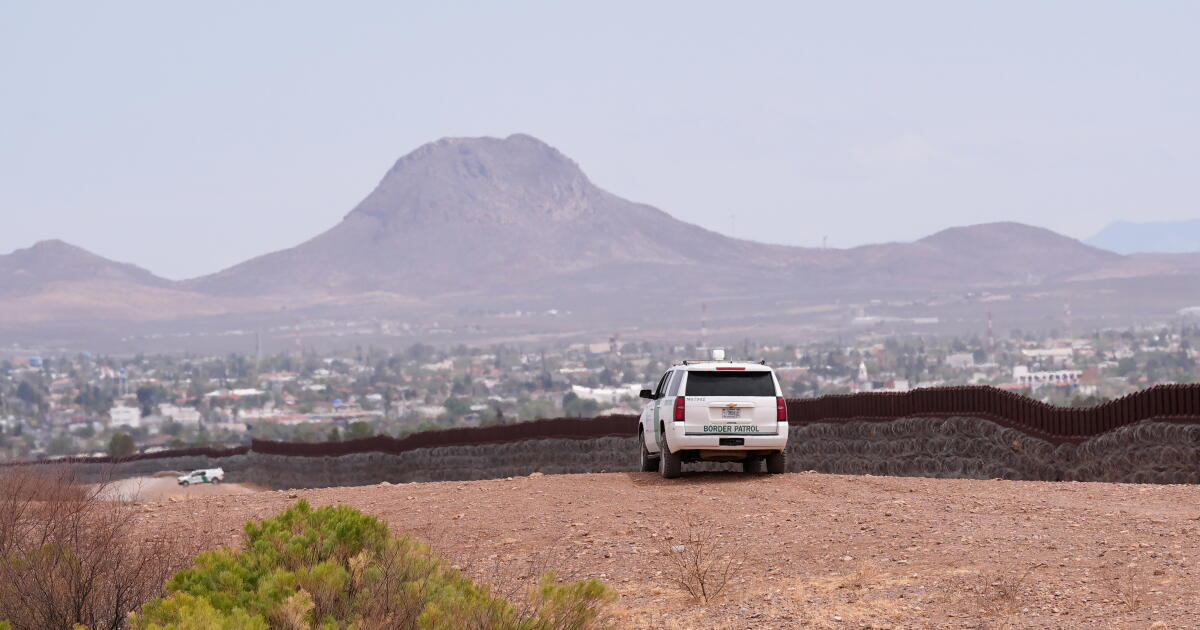
The Trump administration has begun work on a project to build a stretch of border wall in southern Arizona along part of a Native American tribe’s reservation, pushing ahead with one of its signature projects despite protests from the tribe.

U.S. Customs and Border Protection says the area is a dangerous smuggling route and that building the wall will close a longstanding security gap. But members of the Tohono O’odham Nation, whose membership spans both sides of the U.S.-Mexico border, have accused the administration of trespassing and say the construction will damage land sacred to the tribe.

The wall segment is part of a $46 billion effort by the Trump administration to fill the border with 30-foot steel bollard walls, vehicle barriers, and technology designed to stop undocumented immigration and smuggling.

But as building efforts have ramped up, the administration has run into opposition from landowners, environmental groups, and Native American tribes who say construction is violating property rights and desecrating sacred Indigenous sites.

The Tohono O’odham Nation said in a statement Tuesday that about 20 Customs and Border Protection officers, working with contractors, went onto the tribe’s land early that morning to begin construction.

Drone videos published by nation officials show roughly 14 vehicles and an industrial drill at one of the sites.

A federal judge permitted the government to move forward with construction earlier this month, but the tribe says the contractors are violating tribal codes and trespassing to access the border wall site.

The Tohono O’odham Nation, which has 37,000 members including thousands who live in Mexico, sued the federal government in June in an attempt to block construction of the border wall. The tribe argued that the wall would cause “significant devastation” on the reservation, including the destruction of mountain peaks sacred to the tribe, and would alter boundaries of their nation.

U.S. District Judge Richard Leon in Washington, an appointee of former President George W. Bush, ruled in favor of the government, noting that the border wall would be built on a 60-foot wide buffer zone of federally owned land called the Roosevelt Reservation.

“Defendants have not yet articulated plans to construct outside the Roosevelt Reservation,” the judge wrote in his opinion.

The Tohono O’odham Nation said that even if construction were contained to the Roosevelt Reservation, driving onto tribal land to access the area still constitutes trespassing.

“The contractors, who are on the Nation illegally, were accompanied by agents as they worked on three separate locations near the border with drill trucks to conduct soil sampling and other activities,” tribal officials said in a statement.

The CBP agents were masked, armed, and set up a vehicle blockade to stop tribal police from removing the contractors, according to Tohono O’odham officials. The nation had set up “No Trespassing” signs before Tuesday.

So far, no physical confrontations between police or members of the Tohono O’odham Nation have been reported.

CBP defended the need for the wall in a statement Tuesday, saying the desert spanning the Tohono O’odham Nation is a corridor for drug smuggling.

“The project will close one of the most dangerous smuggling and trafficking corridors on the Southwest border: remote desert that has facilitated decades of drug loads, migrant deaths, and cartel activity,” said CBP Commissioner Rodney Scott.

Tribal officials said they’re exploring further legal actions in an effort to remove contractors.

SLSCO Ltd., the Texas-based construction company building the section in Arizona, has secured over $390 million in funding from the Department of Homeland Security to build the border wall since 2023.

Schuettler writes for the Associated Press.
Source link

Texas’ Big Bend park gets border barriers that some Trump allies dislike

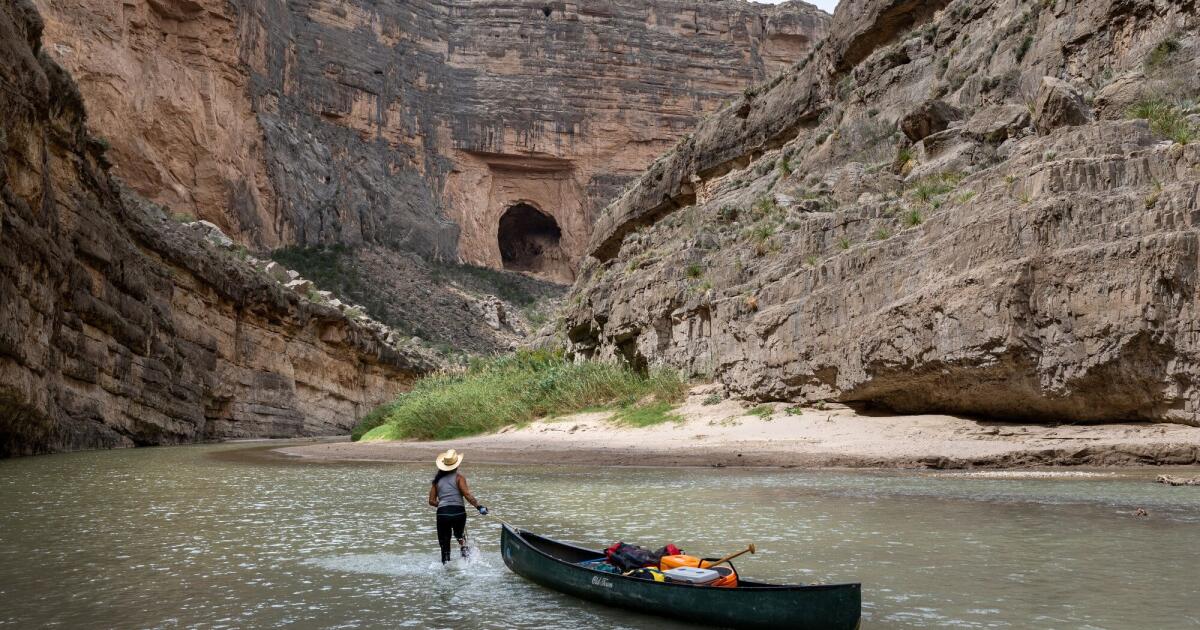
The Trump administration has moved heavy-duty construction equipment into Big Bend National Park and started work on a border security project despite bipartisan concern about damage to the environmentally sensitive area of west Texas.

Bulldozers and other machinery appeared last week in the remote park, which sits about 300 miles southeast of El Paso and includes one of the least crossed stretches of the U.S.-Mexico border, according to Laiken Jordahl, a national public lands advocate for the Center for Biological Diversity, which has sued the Biden and Trump administrations seeking to halt border-wall construction.

Jordahl said he and other activists watching the work have seen bulldozers plowing through vegetation “clearing a path for the barriers, the wall or whatever is going in.”

U.S. Customs and Border Protection “is building an access road, improving existing roads, installing detection technology and placing vehicle barriers in limited, strategic locations,” Commissioner Rodney Scott, the agency’s top official, said in an email Thursday. “We are securing this park to protect its legacy — keeping it safe, secure, and pristine so American families can enjoy the beauty of our country, free from fear of cartel activity.”

The Trump administration is moving ahead with the project over the objections of not just environmental activists and others opposed to the crackdown on immigration, but also local residents, many of them Republicans who otherwise support President Trump, as well as retiring GOP Sen. John Cornyn. They note that the rugged terrain — mostly desert with steep ravines and scrubland covered in creosote bushes and prickly pear cactus — serves as a natural barrier from anyone trying to cross from Mexico, making the infrastructure unnecessary.

They say the construction and equipment will mar the landscape and imperil the animals who live in the park, including javelinas, ringtails, mountain lions and desert bighorn sheep.

In June, Homeland Security Secretary Markwayne Mullin formally waived all environmental laws and reviews that could otherwise slow any work in the park.

Texas Gov. Greg Abbott’s office has said he supports using every tool available to help deter illegal immigration, including deploying technology in rugged and isolated areas such as Big Bend.

Trump has long pledged to build a wall along all of the roughly 2,000-mile U.S. border with Mexico, though Customs and Border Protection has repeatedly said it wouldn’t build his preferred 30-foot barrier in the environmentally sensitive park.

Earlier this year, the administration issued a $1.7-billion contract for the project in Big Bend. The vehicle barriers set to be installed are typically 5-foot steel posts set a few feet apart and intended to block cars or trucks from crossing.

The park is part of the Border Patrol’s Big Bend Sector, which has for decades been one of the least crossed areas along the whole of the border. In June, agents there made 148 arrests. Since Oct. 1, the start of the government’s fiscal year, agents have made 1,509 arrests, about 1.5% of all apprehensions along the Mexican border, according to Customs and Border Patrol arrest data.

Brandon Herrera, the GOP candidate for a House district that includes the park, met with White House and Department of Homeland Security officials in March to pitch a less-invasive “alternative solution.”

In a letter this month, Cornyn asked Mullin to meet with local officials who have voiced concerns over the project, citing complaints about its effect on the region’s natural beauty, wildlife, cultural sites and economy. Cornyn wrote that his “constituents believe that the 1,000-foot riverbank cliffs and remote Big Bend terrain offers its own source of deterrence for any illegal migrants crossing into the United States.”

James Talarico, a Democratic state representative running to succeed Cornyn in the U.S. Senate, echoed the Republican’s concerns and called the project irresponsible spending.

“This monument to corruption represents wasteful, irresponsible government spending that no Texan asked for, enriching wealthy contractors without making Texans one bit safer,” he said.

Texas’ Big Bend region relies on tourism as an economic driver, with more than 568,000 visitors to the national park in 2025. Local businesses in Terlingua, a small gateway town west of the park, have revolted against the proposed wall, with workers at one restaurant wearing shirts that read “No Al Muro” — No to the Wall.

Caldwell and Lovinger write for Bloomberg.

Source link

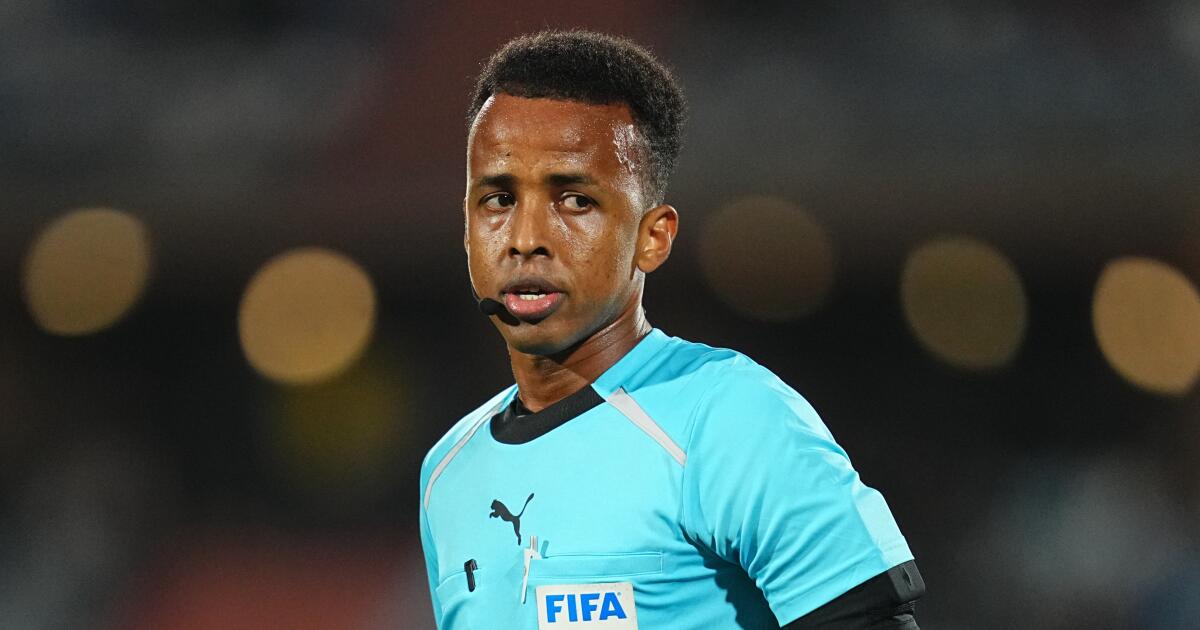
No World Cup for Somali referee Omar Artan suspected of terrorist ties

Somali referee Omar Abdulkadir Artan was denied entry into the United States for the World Cup after enduring an 11-hour interrogation in Miami, according to media reports. Andrew Giuliani, head of the White House Task Force on the World Cup, indicated Artan was suspected to having ties to a Somali militant group.

“We want to make sure we are not going to allow a soccer tournament to be the opportunity for terrorists to potentially get in the country or anybody who is actually talking to them,” Giuliani told the British Broadcasting Corporation.

The New York Times reported that Artan’s name is similar to that of a man identified as linked to Al Shabab, a group that has been the target of U.S. government sanctions.

“I am very, very disappointed,” Artan told the Times from Istanabul, where he stopped on his way back to Somalia. “I’m just simply a referee who’s trying to live his dream, the biggest dream of my life, to come to the World Cup.”

Safety was purportedly the concern with Artan, whose interrogation was conducted by the U.S. Customs and Border Protection.

“During processing, the traveler underwent additional inspection, a routine part of CBP’s inspection process when officers need to verify information or determine admissibility,” CBP said in a statement. “Following inspection, the traveler, a referee for the FIFA World Cup, was determined to be inadmissible due to vetting concerns and was denied entry.”

Somalia is on the U.S. list of banned countries for immigration, although exceptions can be made. Artan is considered one of the best referees in Africa, having officiated in the Somali national football league championship and at the African Cup of Nations.

“Despite the circumstances, I am in a positive mood and focused on the next challenges in my refereeing career,” Artan said in a statement. “I would like to thank FIFA and [the African federation] for all their support and I promise to keep my refereeing levels up as I concentrate on the future.”

Artan, Africa’s Referee of the Year in 2025, was greeted Wednesday at Aden Adde International Airport in Somalia by government officials and hundreds of well-wishers.

“I want to thank FIFA for supporting me all the way, and for Somali people also,” he told Al Jazeera. “So I am very grateful for FIFA and for CAF also. This is what I have to say.”


Source link