tyre

U.S. says it has launched strikes against Iran following crash of Army Apache helicopter

The U.S. military said Tuesday it has begun strikes against Iran following the crash of a U.S. Army Apache helicopter off the coast of Oman that President Trump blamed on the Islamic Republic.

In a statement posted to social media, U.S. Central Command said the strikes would be “a proportional response to unjustified Iranian aggression.” It comes after Trump blamed Iran for downing the helicopter and vowed that the U.S. would respond.

Iranian state media reported that explosions were heard on an Iranian island in the Strait of Hormuz.

Trump had blamed Iran for shooting down a helicopter close to the Strait of Hormuz and said the United States must respond. Iran’s top diplomat said foreign military forces near the country’s territory “are at constant risk.”

The Apache helicopter that crashed went down after colliding with an Iranian drone, according to a U.S. official, who spoke on condition of anonymity to discuss an ongoing investigation.

It wasn’t clear whether the collision was intentional, and official statements only said the crash is under investigation. CNN, CBS News and other outlets earlier reported the Iranian drone collision.

Trump said Iran shot down the aircraft while it was on patrol over the Strait of Hormuz and declared that the U.S. “must, of necessity, respond to this attack,” in a post to social media.

The U.S. military later announced that it had begun strikes against Iran.

In the first known operation of its kind by the American military, a drone boat rescued the two aviators who were aboard the Apache attack helicopter when it went down near the critical shipping lane that Iran has effectively closed during its war with the U.S. and Israel.

Trump said in a social media post that military officials told him “the Iranians shot down one of our highly sophisticated Apache Helicopters.” Both service members “are safe and uninjured,” he added.

“Nevertheless, the United States must, of necessity, respond to this attack,” Trump wrote.

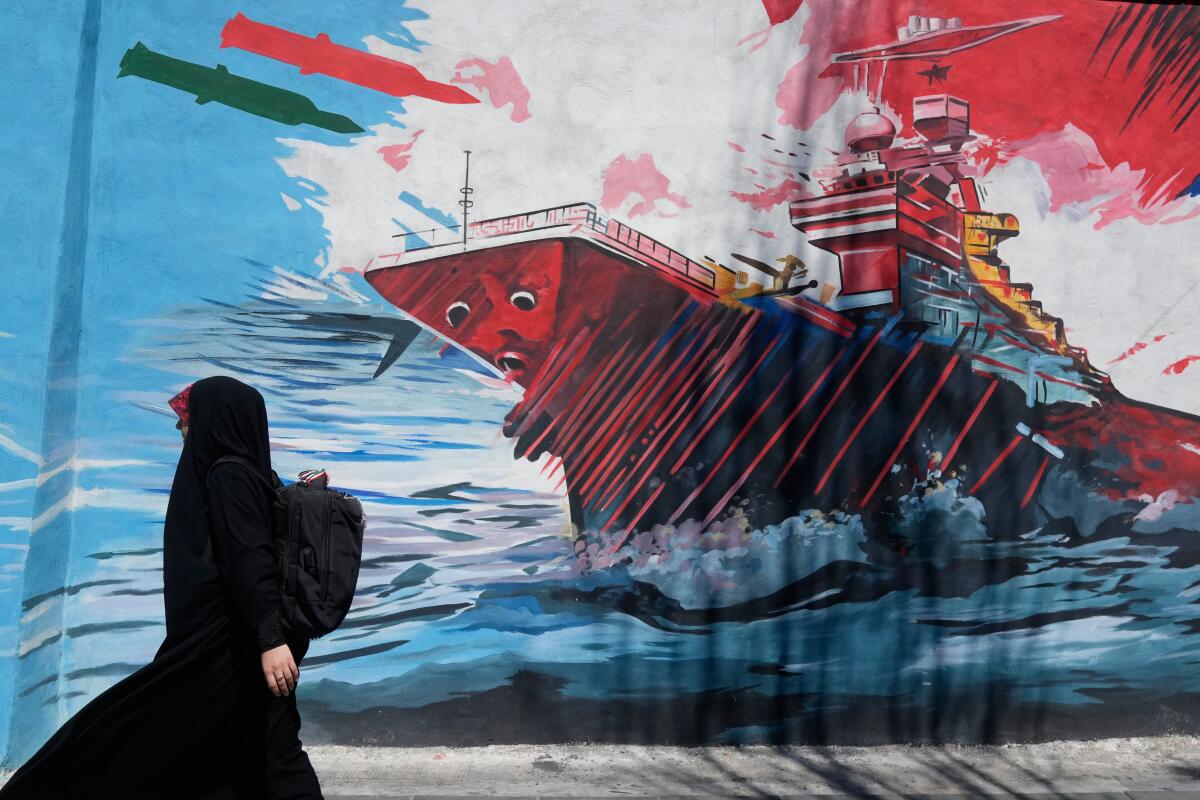
A woman walks past a mural depicting a U.S. aircraft carrier under missile attack

A woman walks past a mural depicting a U.S. aircraft carrier under missile attack in downtown Tehran, Iran on Monday.

(Vahid Salemi / Associated Press)

Soon after Trump made his accusation, Iranian Foreign Minister Seyed Abbas Araghchi said in a social media post that the strait is “thousands of miles away from U.S. shores.”

“Foreign forces in proximity to our territory are at constant risk on account of their own human errors, plain accidents, or potentially being caught in crossfire,” Araghchi wrote. “To reduce risk, best solution is for them to leave.”

The downing of the helicopter further strained a two-month ceasefire a day after Iran and Israel exchanged fire for the first time since the fragile truce took effect. Iranian state television said Tuesday that the Israeli attacks killed at least two members of the country’s air-defense units.

Since the U.S. and Israel began striking Iran on Feb. 28, the war has shaken the global economy, driven up energy prices around the world and made many basics, including food, more expensive.

Officials have been unable to turn the April ceasefire into a deal to permanently end the conflict, particularly as Israel intensifies and expands its military campaign in Lebanon against the Iranian-backed militia Hezbollah.

Army crew members picked up by drone boat

The Army aviators were rescued at 3:30 a.m. local time Tuesday, about two hours after their helicopter went down during a patrol off the coast of Oman, U.S. Central Command said.

The U.S. service members were spotted and picked up by a drone boat that took them to another location on the water, where they were picked up by a helicopter, said Capt. Tim Hawkins, a spokesman for U.S. Central Command. Hawkins initially said the drone took the two to shore, and he did not elaborate on the updated timeline.

It was the first known drone rescue at sea by the U.S. military, Hawkins said.

AH-64 Apache helicopters have been a key asset for the American military as it enforces a blockade on Iranian crude oil shipments and tankers, seeking to pressure Tehran into a deal. The helicopters have also been used by the United Arab Emirates to shoot down Iranian drones.

The drone used to perform the rescue was a 24-foot vessel called a Corsair, Hawkins said. It’s manufactured by Saronic Technologies.

The drone was assigned to the Navy’s Task Force 59, established in 2021 as the Navy’s first uncrewed and artificial intelligence unit that focuses on maritime security in the Middle East, including the Strait of Hormuz and the Suez Canal.

Trump insists an Iran deal is coming

Before he accused Iran of downing the U.S. helicopter, Trump had expressed renewed optimism over negotiations with Iran.

“We have a good chance” of signing a deal in “two or three days,” Trump said late Monday. But he did not provide any details on why there was reason for new optimism. In the two months since the U.S. and Iran agreed to an initial ceasefire, Trump has repeatedly predicted that a deal is near.

“We’re very close to having a very, very good, strong, powerful deal,” the president said.

Mediators, led predominantly by Pakistan, have been trying for weeks to get a deal across the line. However, both Iran and the U.S. have taken hard-line positions.

The U.S. wants to see Iran give up its stockpile of highly enriched uranium, which is believed to be entombed in the aftermath of American airstrikes that happened during the 12-day war in 2025. But Iran is refusing that and demanding relief from sanctions. It also wants the release of frozen assets even before a final agreement is in place, something rejected by Trump.

Before Trump’s comments on negotiations, Qalibaf said Monday that Trump’s remarks so far on a possible deal “contradicted the agreed-upon sections,” showing that the U.S. is “neither seeking a ceasefire nor dialogue.”

The continued fighting between Israel and Hezbollah is still a top Iranian priority as well. Lebanon’s army chief, Gen. Rodolphe Haykal, traveled to Pakistan on Tuesday. There, he met Pakistan’s army chief, Field Marshal Asim Munir, who has been a key figure in the Iran-U.S. talks.

Haykal’s visit comes as Lebanon’s government takes an increasingly hard line on Hezbollah but remains unable to disarm the powerful militia. Hezbollah thanked Iran on Tuesday for attacking Israel “in defense of our Lebanese people,” suggesting that Lebanon’s government should take this opportunity to improve relations with Tehran.

Israel issues a warning for Tyre, Lebanon

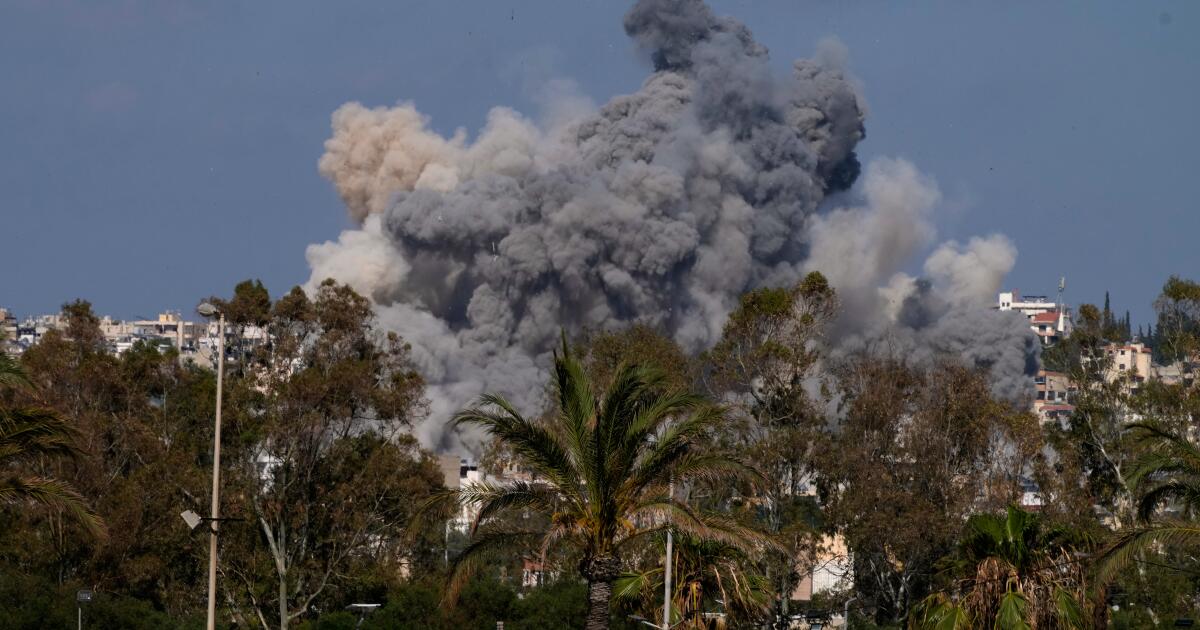
Meanwhile, the Israeli military issued an evacuation warning for Lebanon’s southern port city of Tyre, including the Christian quarter, which has so far been spared from airstrikes on the city.

Last week, Israel warned the Christian neighborhoods in Tyre that it believed Hezbollah members were among them. Many Lebanese Shiite Muslims fled to those areas as Israeli strikes hammered the Mediterranean coastal area over the past two weeks.

After last week’s warning, the Lebanese army deployed to the Christian district of Tyre in an effort to prevent Israeli attacks there and to show that Hezbollah has no armed presence in the area. But Avichay Adraee, the Israeli military’s Arabic-language spokesperson, posted on X on Monday that the Israeli military “will have to act against their terrorist activities in the neighborhood soon.”

Gambrell, Superville and Toropin write for the Associated Press. Superville and Toropin reported from Washington. AP writers Michelle L. Price in New York, Will Weissert in Washington, Bassem Mroue in Beirut, Munir Ahmed in Islamabad and Russ Bynum in Savannah, Ga., contributed to this report.
Source link

Israel orders Lebanese city of Tyre to evacuate, ignores Iran warning

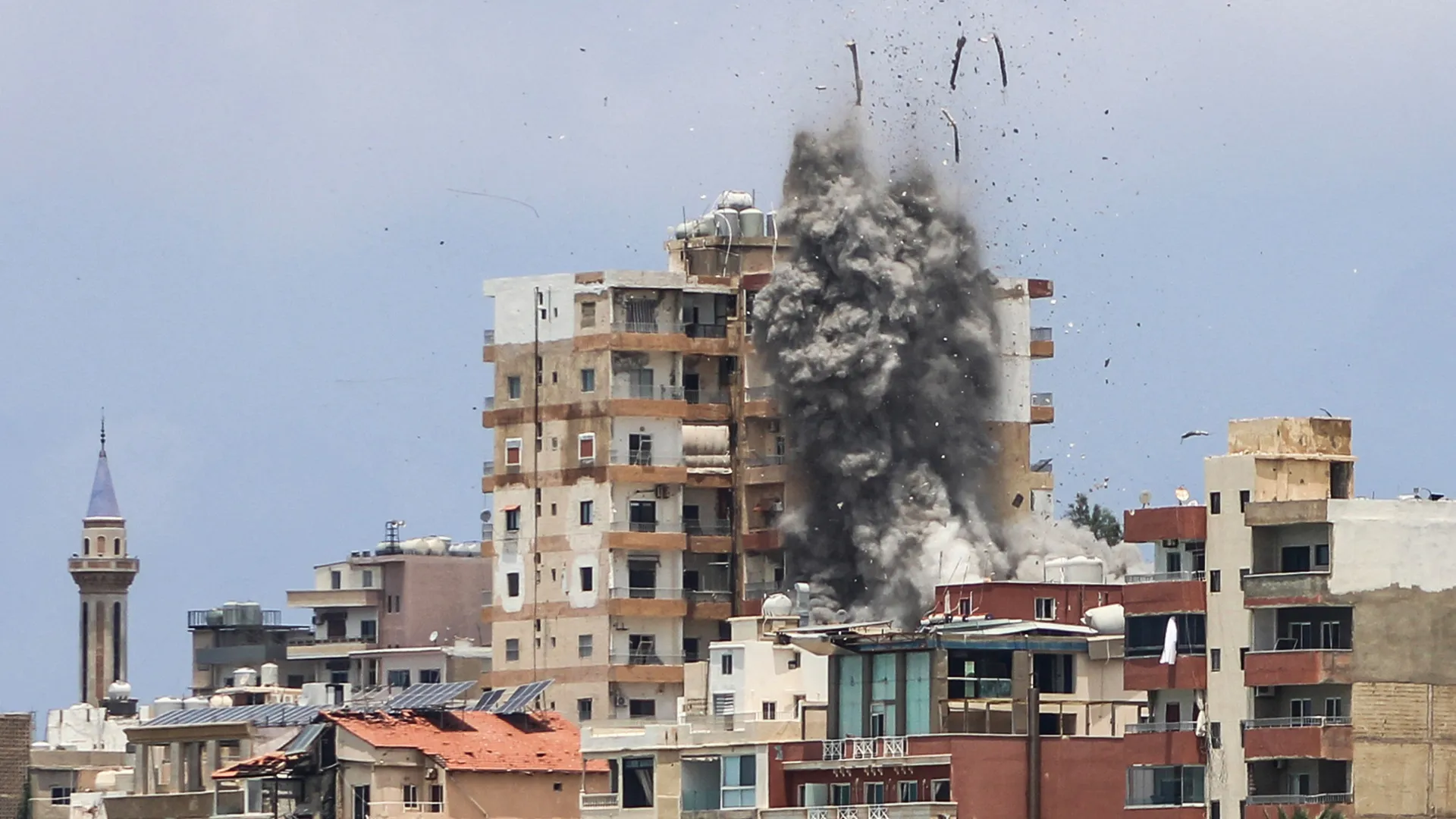
The aftermath of an earlier Israeli airstrike on the southern Lebanese port of Tyre in May. On Tuesday, the Israel Defense Forces ordered residents, including for the first time those in Christian neighborhoods, to evacuate well to the north of the city for their safety as it prepared to target Hezbollah “elements, facilities and combat means.” File photo by Stringer/EPA

June 9 (UPI) — The Israel Defense Forces ordered residents of the Lebanese city of Tyre, including the Christian quarter and more than 10 refugee camps, to evacuate Tuesday, pending Israeli military action against targets of Iran-proxy Hezbollah.

IDF spokesman Avichay Adraee wrote on X that “out of concern for your safety,” residents should leave their homes immediately and move some 20 miles north beyond the Zahrani River and warned that anyone remaining south of the river was putting their life at risk.

“Your presence near Hezbollah elements or their facilities or combat means endangers your lives. As we warned in the past days, following Hezbollah elements’ actions inside the Christian Quarter in the city, the Israel Defense Forces will be compelled to act against their terrorist activities in the quarter in the near term,” said Adraee.

“Any building used by Hezbollah for military purposes may be subject to targeting. To ensure your safety — evacuate your homes immediately and move north beyond the Zahrani River. Attention — any movement south of the Zahrani River may endanger your lives,” he added.

The development came a day after Israel and Iran backed away from direct confrontation that flared up at the weekend over an Israeli strike on the southern suburbs of Beirut that prompted Tehran to fire as many as 30 missiles at Israel with Israel striking back against military targets in central and western Iran.

In standing down its military, Tehran warned that in the event Israel continued its attacks in Lebanon, including in the south, “much more severe and crushing measures will be on the way.”

Israeli Prime Minister Benjamin Netanyahu said in a post on X Monday evening that Israel had only halted hostilities because “after we struck the terror regime in Tehran, it ceased attacking us” and threatened to “respond with overwhelming force” if Iran made the mistake of attacking Israel again.

Netanyahu said that by firing into Israel over the past day, Iran and Hezbollah had attempted “to impose a new equation upon” where they believed they could fire at Israel from Lebanese territory and from Iran and Israel would not react.

“That did not happen, and it will not happen. Not on my watch! It is an equation I find intolerable and unacceptable,” wrote Netanyahu.

The sides halted their respective military strikes at the request of U.S. President Donald Trump who urged them to “stop shooting” because a deal ending the 100-day-long U.S.-Iran conflict was imminent.

Speaking on the tarmac at JFK Airport in New York on Monday night, Trump said the United States and Iran were very close to “a very good deal that will not allow in any way, shape, or form nuclear weapons.”

“And the [Hormuz] Strait will open up right away — they’ll open up immediately upon signing, which could be in two or three days,” said Trump.

He said he didn’t believe there were any sticking points.

Trump said the alternative was to return to bombing Iran but that would be counterproductive because it would mean the Strait of Hormuz remaining closed for many months and the needless deaths of many more people.

“Who wants to do that? I don’t. And we’ll have a signed document that’s actually stronger than doing the bombing,” he said.

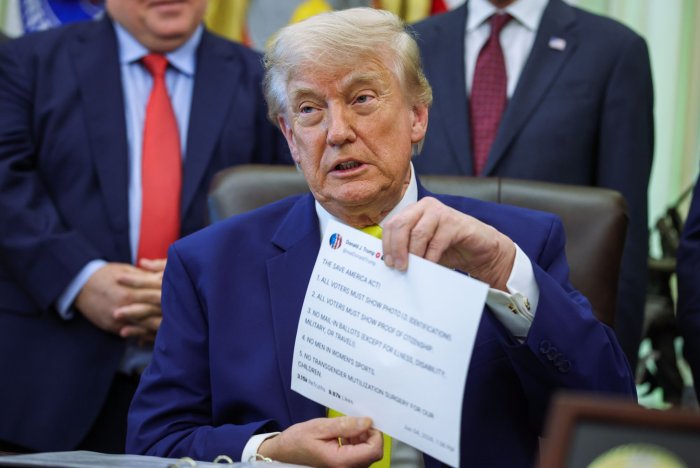
President Donald Trump discusses renovations to the Lincoln Reflecting Pool and makes an announcement on coal in the Oval Office at the White House on Thursday. Photo by Samuel Corum/UPI | License Photo

Source link

Trump acknowledges calling Netanyahu ‘crazy’ and says Israel is complicating peace talks with Iran

President Trump acknowledged criticizing Israeli Prime Minister Benjamin Netanyahu as “crazy” in a phone call that involved expletives, saying he was “a little bit perturbed” that Israel’s fighting with Hezbollah militants in Lebanon was holding back peace talks with Iran.

But even as the president conceded the tensions in an interview released Wednesday, he insisted that his relationship with Netanyahu was solid and that they connected, in part, because they are both “wartime” leaders.

“We’ve worked very well together. I like Bibi a lot. And I work very well with him,” Trump told the New York Post’s “Pod Force One.”

In an interview on the American business-news channel CNBC, Netanyahu responded that he and Trump sometimes have “tactical disagreements” but have “common goals” and “agree on the main things.”

“He respects me. I respect him. We always find a way to work out our differences,” the prime minister said.

The president’s comments about the Monday call offered a sign of the growing pressure he faces to resolve the Iran war as higher energy prices and economic uncertainty threaten Republican prospects in the midterm elections and hamper global commerce.

Talks have dragged on for weeks as mediators seek to extend a fragile ceasefire into a more enduring truce. The negotiations are further strained by Israel’s broadening war with the Iranian-backed militia group in Lebanon. The conflicts have become increasingly intertwined as Iran insists that any potential truce in the war there must also quell the fighting in Lebanon.

Trump does not commit to timeline for ending Iran war

Trump remained noncommittal about a timeline for settling the Iran conflict, saying the Strait of Hormuz might stay blocked through the Labor Day holiday on Sept. 7. He has insisted that Iran stop any efforts that could lead to a nuclear weapon and that the strait be reopened for shipments of oil and natural gas.

“I don’t know. I mean, I think it could be [closed through Labor Day], but I think it’s unlikely. I think that we’ll have it. I think this will resolve itself fairly quickly,” Trump said.

Iran’s Supreme Leader Mojtaba Khamenei, who succeeded his late father, is “involved” in peace talks, Trump added.

“They have a lot of respect for him,” the president said in the interview.

Trump said that Khamenei is not doing well due to wounds sustained in an airstrike, but “they say he’s giving approval because that’s the way it has been for a long, long time.” Khamenei’s father was killed in an airstrike when the U.S. and Israel attacked Iran at the end of February.

Meanwhile in the Persian Gulf region, Kuwait briefly shut its main airport Wednesday after Iranian drones hit a passenger terminal building, killing one person and wounding dozens. It was the latest in the back-and-forth attacks by Tehran and Washington that have tested the ceasefire.

The strike again brought home the risks to residents and travelers in Gulf countries that had considered themselves relative safe havens before the war, now in its fourth month.

Path to a lasting ceasefire in Lebanon is obscured by new strikes

The path toward a lasting ceasefire between Israel and Hezbollah remained unclear as hostilities continued in Lebanon.

An Israeli strike Wednesday hit a car on a busy highway just south of Beirut, hours before the second day of talks between Lebanon and Israel in Washington were set to take place.

The strike in Khaldeh came without warning, and it was not immediately clear if the person targeted was killed.

Israel and Lebanon on Monday reached a U.S.-brokered agreement in which Israel would not strike Beirut’s southern suburbs and Hezbollah would end its attacks on northern Israel.

The agreement was made hours after Israel announced that it was going to launch strikes across the sprawling urban neighborhoods near the Lebanese capital in what would have been the most intense strikes since a nominal ceasefire went into effect on April 17.

The State Department said progress was made during the first day of talks on Tuesday. Lebanon hopes to widen the scope of the ceasefire so it becomes comprehensive across the country. Israel wants to disarm Hezbollah immediately before the Israeli military ends its operations in Lebanon and withdraws its troops from dozens of villages and towns.

Not long after the strike on Khaldeh, the Israeli military said it intercepted what it called a hostile aircraft coming from southern Lebanon, but it did not immediately blame Hezbollah. Hezbollah has not claimed a cross-border attack since the agreement.

Israeli military warning rattles coastal city

Israeli strikes over southern Lebanon continued, especially in and around the battered cities of Tyre and Nabatiyeh. Two overnight strikes near Tyre, a coastal city, killed four Syrians and two Palestinians.

Israel warned the Christian neighborhoods in Tyre that Hezbollah members were among them. Many Lebanese Shiite Muslims fled to those areas in recent days because they were spared from the aerial bombardment along the Mediterranean coast.

After the warning, the Lebanese army deployed to the Christian district of Tyre in an effort to prevent Israeli attacks there and to show that Hezbollah has no armed presence in the area.

Israel launched an invasion of southern Lebanon days after the latest war was sparked on March 2, when Iran-backed Hezbollah fired rockets toward northern Israel in solidarity with Iran. Israeli troops have pushed deeper into Lebanon over the past week, as Hezbollah continues to claim rocket and drone attacks.

The latest round of fighting between Israel and Hezbollah has killed 3,468 people in Lebanon and displaced 1.2 million people. According to Netanyahu’s office, at least 27 Israeli soldiers and a defense contractor have been killed in or near southern Lebanon. Two civilians have also been killed in northern Israel.

Strike on village kills most of a family

Many residents of southern Lebanon remained in villages near the hostilities or returned to areas where strikes occurred after evacuation warnings.

The Al-Abdallah family returned to their home in Marwanieyh, which they left because they thought the village was unsafe following earlier strikes. A day later, two rockets hit the home, bringing down the three-story building and killing six family members, said the brother of Hassan Al-Abdallah, who was killed.

Ahmed Al-Abdallah, 13, was thrown away from the building by the force of the blasts and was the only member of his family to survive. His uncle, Eissa Al-Abdallah, said the boy has two broken legs and shrapnel wounds all over his body.

“What good is talking now? They are gone, and nothing will bring them back,” the uncle told the Associated Press in a phone call Tuesday. “This land costs blood.”

Chehayeb, Boak and El Deeb write for the Associated Press. Boak reported from Washington.

Source link