TV Shows

What’s driving attacks against gov’t and Russian forces in Mali? | Conflict

Opponents, including an al-Qaeda-linked group, join forces.

Former enemies in Mali, including an al-Qaeda-linked group, have join forces to target military sites.

The defence minister has been killed.

Russian mercenaries backing the government have come under attack.

What are the implications of this unrest?

Presenter:

Imran Khan

Guests:

Oluwole Ojewale – Regional co-ordinator for West and Central Africa at the Institute for Security Studies

Nicolas Normand – Former French Ambassador to Mali and vice president of the Friends of Mali Association

Ovigwe Eguegu – Policy analyst at Development Reimagined, an independent African think tank, and a specialist in West Africa and Sahel geopolitics

Source link

Has Iran exposed the limits of what US can achieve by force? | US-Israel war on Iran

Political scientist Vali Nasr argues that US and Israeli military options ‘have come up short’.

Despite on-again, off-again negotiations, the United States has no other option but to pursue a diplomatic solution with Iran, argues Vali Nasr, professor of international affairs and Middle East studies at Johns Hopkins University.

Nasr tells host Steve Clemons that the US-Israel war on Iran has shown the limits of military force.

“You don’t go to the table to demand surrender. The other side is not going to surrender because they haven’t lost. So you have to cut a deal,” Nasr said, adding that Iran’s objective is to make sure the US and Israel understand that “war with Iran isn’t easy”.

Source link

How serious is the rift in NATO? | NATO News

Trump fury over Europeans’ refusal to join Iran war.

Divisions are widening within NATO.

US President Donald Trump is furious after a refusal by European member states to join the US-Israeli war on Iran.

Reports say he’s considering measures against the United Kingdom and Spain.

So, how serious is the rift for the future of the military alliance?

Presenter: James Bays

Guests:

Carne Ross – Former British diplomat and founder of the nonprofit advisory group, independent diplomat

Eli Bremer – Retired major in the US Air Force and a Republican strategist

Pablo Calderon Martinez – Head of politics and international relations at Northeastern University London and a specialist in European affairs

Source link

Who’s in control of AI? | Technology News

Owner of US tech giant reveals breach of one of world’s most powerful AI models.

Reports of unauthorised access to one of the most powerful Artificial Intelligence models yet developed have emerged.

Nothing malicious, say the owners – but it has intensified focus on such technology falling into the wrong hands.

So, how is AI being controlled globally?

Presenter: James Bays

Guests:

Ramesh Srinivasan – Professor at UCLA Department of Information Studies, AI and technology specialist.

Marc Einstein – Research director and global head of AI research at Counterpoint Research and digital transformation analyst

Adrian Monck – Senior adviser on AI and technology to the United Nations and Editor of the Seven Things newsletter in Geneva.

Source link

Mazzucato on the Iran war’s economic shock: Who pays the price? | Business and Economy

Redi Tlhabi speaks to economist Mariana Mazzucato on the Iran war’s economic fallout and who’s really paying the price.

The world is reckoning with the biggest oil supply disruption in history, one that has sent energy prices soaring, rattled stock markets and exposed the deep vulnerabilities of economies still hooked on fossil fuels. While millions face higher fuel and energy bills, top oil and gas companies are reportedly profiting about $30m per hour since the war began.

This week on UpFront, Redi Tlhabi speaks with renowned economist Mariana Mazzucato about what a genuine green industrial strategy looks like, why the World Bank has fallen short, and how her concept of the “common good economy” offers a new compass for governments navigating crises.

Source link

Is Iran’s economy buckling under war pressure or holding up? | US-Israel war on Iran

The Iran war has deepened the damage to its sanctions-hit economy, but oil revenues have provided a crucial cushion.

The US has spent decades trying to squeeze Iran economically.
Six weeks into the Middle East conflict, Tehran is still standing.
US and Israeli attacks on infrastructure, industry and trade have damaged Iran’s sanctioned economy even further.

But oil revenues have kept flowing, giving the regime a financial cushion.

The Strait of Hormuz is now at the centre of this economic battle; whoever controls it controls the pressure.

At the negotiating table, sanctions relief, billions in frozen assets and war reparations are all at stake.

Meanwhile, millions of Iranians are bearing the brunt of inflation, shortages and a collapsing currency.

Source link

Who controls the Strait of Hormuz? | US-Israel war on Iran

A US move to block the strait has intensified a broader struggle over who controls access and under what terms.

Now, the United States is the one shutting the Strait of Hormuz, even as President Donald Trump was calling for it to reopen just a few days ago. He said ships entering or leaving Iranian ports would be stopped by the navy after talks between Tehran and Washington fell apart.

However, this is not just about a blockade. Iran is tightening its grip on the strait, demanding the right to impose tolls on ships passing through it.

The ripple effects could go beyond energy and trade flows, challenging the dominance of the US dollar in global shipping.

Source link

Has Israeli society become conditioned to permanent war? | US-Israel war on Iran

Opinion polls indicate opposition to ending war against Iran.

A negative political and public reaction in Israel to the ceasefire with Iran, despite the respite it brings.

No pause for Israel’s army, however – or its victims. Hundreds have been killed in Lebanon, with more dead in Gaza.

Is Israel a society effectively on a permanent war footing?

Presenter: Tom McRae

Guests:

Ilan Pappe – Historian and professor at Exeter University

Gideon Levy – Columnist at Haaretz newspaper in Tel Aviv

Haim Bresheeth – Professor at the School of Oriental and African Studies, University of London

Source link

Can global supply chains recover from the Iran war? | US-Israel war on Iran

Conflict upends flow of critical raw materials for manufacturing, aviation and technology.

The United States and Iran may have agreed to a ceasefire for now, but the world’s supply chains will continue to feel the effects.

Beyond oil and gas, Iran’s near closure of the Strait of Hormuz has blocked shipments of critical raw materials from the Gulf.

Petrochemicals, helium and aluminium are just some of the products that have not been able to reach manufacturing hubs around the world.

Many everyday items are affected, from plastic packaging to the advanced semiconductors in our smartphones.

How will our supply chains recover, and can they become more resilient to global shocks?

Source link

Can Africa tackle the oil shock from the Iran war? | US-Israel war on Iran

African nations are scrambling to secure oil and gas as the Iran war disrupts supplies from the Middle East.

The war in Iran has created an energy shock in Africa.

The continent relies heavily on oil and gas imports from the Middle East.

Much of this supply is currently stuck on tankers near the Strait of Hormuz, which is closed.

Countries including Kenya, Ethiopia and Zambia are reporting shortages.

Africa’s largest oil refinery in Nigeria is pumping out crude at maximum capacity, but that’s nowhere near enough to meet the continent’s needs.

In addition, Africa’s energy infrastructure has suffered from years of underinvestment.

So, what choices do governments have to contain the crisis?

Source link

Why is Iran’s Bushehr nuclear power plant being attacked? | US-Israel war on Iran

The WHO has warned of ‘catastrophic’ risks if radioactive release occurs.

Iran’s Bushehr Nuclear Power Plant has been targeted four times since the United States-Israel war on Iran began more than a month ago.

And the World Health Organization (WHO has warned of “catastrophic” risks if a radioactive release occurs.

Recommended Stories

list of 3 itemsend of list

Tehran has accused the United Nations’ nuclear watchdog of inaction – an allegation that the International Atomic Energy Agency (IAEA) rejects. But it does acknowledge that the situation is of deep concern.

Why are the attacks happening, and what risks do they pose?

Presenter: James Bays

Guests:

Tariq Rauf – Former head of verification and security policy coordination at the IAEA

Abas Aslani – Senior research fellow at the Center for Middle East Strategic Studies

Alicia Sanders-Zakre – Head of policy at the International Campaign to Abolish Nuclear Weapons

Source link

Has the humanitarian crisis in Gaza been ignored? | Israel-Palestine conflict

Conditions in Gaza worsen amid the United States-Israel war on Iran.

Humanitarian conditions in Gaza remain dire, despite the “ceasefire” that came into effect in October.

For months, the Israeli military has violated the agreement – carrying out air strikes and limiting the entry of aid.

But the situation got worse when Israel and the United States launched their war on Iran on February 28.

The Rafah border crossing was closed again. And deliveries of food, fuel and aid were further restricted.

With the Iran war disrupting global supply chains and the United Nations warning of threats to food security, what are the implications for Palestinians in Gaza?

Presenter: Imran Khan

Guests:

Dr Mohammed Tahir – Orthopaedic surgeon who has worked extensively in Gaza

Alex de Waal – Executive director of the World Peace Foundation

Xavier Abu Eid – Political analyst and former communications director for the Palestine Liberation Organization (PLO)

Source link

Mearsheimer: No signs of quick end to US-Israel war on Iran | US-Israel war on Iran

US political scientist John Mearsheimer argues that Israel – not Iran – is the Middle East country that is ‘highly aggressive’.

The greatest threat to stability in the Middle East is not Iran, but “the US working closely together with Israel”, argues United States political scientist John Mearsheimer.

Mearsheimer tells host Steve Clemons that the notion that the US and Israel are making a safer, more stable Middle East is “ludicrous”. And the idea that Iran is “the great destabiliser” in the region is “a myth that the US and Israel purvey”.

After US President Donald Trump insisted that “We have all the cards; they have none”, Mearsheimer says the exact opposite is true – “and that’s why we are in desperate straits”.

Source link

How will Pakistan deal with the fallout from Iran war? | US-Israel war on Iran

War in the Middle East is worsening economic crisis in Pakistan.

Soon after the war between the US, Israel and Iran began, its ripple effects were evident.

Pakistan stands out as one of the countries paying a heavy price.

It’s heavily dependent on energy supplies from the Gulf.

And with the Strait of Hormuz blocked, the government increased the fuel price twice in a month.

The increases triggered mass protests, with people furious at the government’s decision to pass on the burden of higher costs.

Why is Pakistan more vulnerable to the current crisis than other countries?

Presenter: Rishaad Salamat

Guests:

Kaiser Bengali – Economist and former head of the Chief Minister’s Policy Reform Unit for Balochistan

Michael Kugelman – Senior fellow for South Asia at the Atlantic Council

Ali Salman – Founder and CEO of the Policy Research Institute of Market Economy

Source link

Will force be used to reopen Strait of Hormuz? | US-Israel war on Iran News

Some countries threaten action against Iran’s blockade of waterway.

When the US and Israel launched their joint offensive on Iran more than a month ago, Tehran moved quickly to block the Strait of Hormuz.

Since then, the Revolutionary Guard has allowed some vessels to transit. But the majority, about 3,000, are stranded.

Recommended Stories

list of 3 itemsend of list

And Iran is accused of holding the global economy hostage.

On Thursday, the UK hosted a meeting of 40 countries to discuss the situation.

The gathering yielded no concrete results, except for an acknowledgement that further consultations were needed.

So, how should the Strait of Hormuz and other vital shipping routes be governed in times of war?

Presenter: Rishaad Salamat

Guests:

Hassan Ahmadian – Associate professor at the University of Tehran

Rockford Weitz – Maritime studies programme director at Tufts University’s Fletcher School

Craig Murray – Maritime specialist and former maritime section head of the UK’s Foreign Office

Source link

Can Russia help fill the global energy gap? | US-Israel war on Iran

Higher crude prices due to the disruption in the Strait of Hormuz have helped Russia earn more from energy exports.

One nation that’s hoping to gain from the United States-Israel war on Iran is Russia, the world’s third largest oil producer. Higher crude prices due to the disruption in the Strait of Hormuz have allowed Russia to earn more from its oil and gas exports. A sanctions waiver announced by the US is also helping Moscow.
But its revised budget plans are at risk after repeated Ukrainian attacks on its ports and oil refineries. Russia has banned petrol exports to protect against domestic fuel shortages. So can Russia help fill the global energy gap, or is its capacity already under threat?

Source link

US messages via Witkoff and intermediaries are not negotiations: Araghchi | US-Israel war on Iran

Iran’s foreign minister says message exchanges continue with Washington, but insists there are no negotiations, and no trust.

Iran’s Foreign Minister Abbas Araghchi tells Talk to Al Jazeera that Iran is not negotiating with the United States, despite ongoing exchanges of messages, including direct communication from US envoy Steve Witkoff.

Araghchi says talks lack trust, adding that no response has been given to US proposals, and that there is no basis for negotiations. Araghchi outlines Iran’s conditions for ending the war, warns against threats and deadlines, and signals a readiness to continue defending the country as regional tensions escalate.

Source link

What can nations do to make up for the ongoing energy shortfall? | US-Israel war on Iran

The Middle East conflict has cut off 20 percent of the world’s fuel supply. Countries are scrambling for alternatives.

The disruption in the Strait of Hormuz has cut access to one-fifth of the world’s oil and gas supply, leaving many countries scrambling for alternatives.

So what can they rely on to make up for the shortfall in a quick time?

Many Asian countries are turning to coal, reopening shuttered plants and expanding production.

Policymakers say immediate energy needs supplant environmental concerns.

Others are hoping to turn to renewables. Solar power is now the cheapest form of electricity in many parts of the world. But renewables, especially wind, have faced hostility from the Trump administration.

Source link

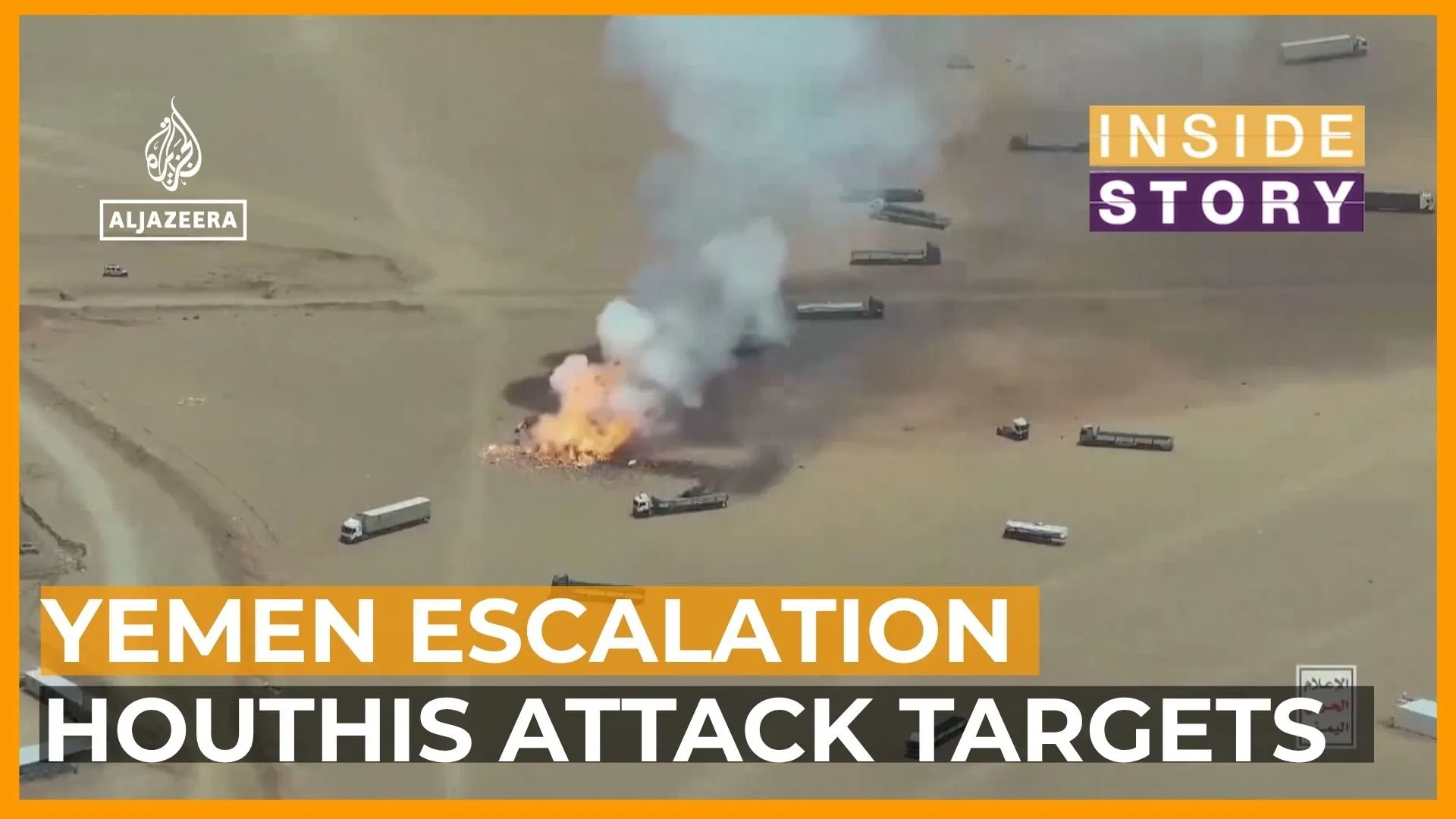
How will the Houthis’ involvement shape the war? | US-Israel war on Iran News

The Yemeni group has launched missiles towards Israel in support of Iran.

They have threatened to join the war ever since it started a month ago.

Now, Yemen’s Ansar Allah, also known as the Houthis, have followed up on their threat and launched missiles towards Israel.

This move marks a significant escalation in the US-Israel war on Iran.

There are fears that the Iran-aligned group could attack shipping in the Red Sea, as it has done before.

This would further disrupt global trade, already affected by Iran’s blockade of the Strait of Hormuz.

Will Israel and the US retaliate? And if so, how?

Presenter: James Bays

Guests:

Hisham Al-Omeisy – senior Yemen adviser at the European Institute of Peace

H A Hellyer – senior associate fellow in defence and security studies at the Royal United Services Institute

Michael Mulroy – former US deputy assistant secretary of defence for the Middle East

Source link

The war on Iran faces a MAGA backlash | US-Israel war on Iran

Four weeks into the war on Iran, the White House continues to confuse the public and the press with constant pivots and contradictions.

Now the administration faces even more pressure as many of its own supporters have started to turn against it. This war has split up the MAGA movement, with an intriguing debate currently happening outside the mainstream and in the midst of their own media sphere.

Contributors:
Jamal Abdi – President, National Iranian American Council
Jude Russo – Managing editor, The American Conservative
Ben Lorber – Senior research analyst, Political Research Associates

On our radar

This week, the Israeli parliament approved the first vote on a bill that introduces a mandatory death penalty by hanging. This applies to any Palestinian convicted of killing Israelis in attacks defined as “terrorism” or motivated by “hatred”. Ryan Kohls reports on how this bill has been promoted in the media.

Memes, trash talk and AI – the online war between Washington and Tehran

The propaganda war in the ongoing war on Iran has taken a new form.

Beyond the traditional tactics, both the US and Iran are increasingly using memes and trash-talk mockery of the adversary through AI-driven animations, designed with virality in mind. We look at the strategies behind the different messaging coming out of Washington, Tel Aviv and Tehran.

Featuring:
Meredith Clark – Professor, University Of North Carolina
Roger Stahl – Documentarian and author, Militainment, Inc.
Marc Owen Jones – Associate professor, Northwestern University In Qatar

Source link

How important are the Gulf economies to the world? | US-Israel war on Iran News

Impact of US-Israeli war on Iran poses serious risks beyond energy sector.

The US-Israeli war on Iran is hitting Gulf Arab nations hard – but with a wider impact in today’s interlinked world.

As well as global oil and gas supplies, Gulf states play a critical role in many economies.

So how are they connected – and what could be at risk?

Presenter: James Bays

Guests:

Nikolay Kozjharnov – Research associate professor in energy security at the Gulf Studies Center at Qatar University

Cornelia Meyer – Macroeconomist and oil and gas specialist

Torbjorn Soltvedt – Associate director at global risk intelligence company Verisk Maplecroft

Source link

Is Europe heading to an energy crisis? | US-Israel war on Iran

Europe is bracing for a supply crunch and a price shock as the Iran conflict drags on.

It diversified energy supplies, built LNG terminals and reduced its dependence on Russia.

Europe thought it had learned its lesson after the war in Ukraine.
But today it’s facing another energy shock.

And this time it may be even worse, as the war in Iran disrupts supply through the Strait of Hormuz.

It’s happening when EU gas reserves are unusually low.

That means Europe will be competing with Asia to fill its storage tanks, which might force the price of LNG even higher.

Electricity bills are climbing.

Industry is under pressure.

Governments are stepping in to cushion the blow.

Source link