TurkiyeSaudiPakistan

Erdogan says Egypt could join Turkiye-Saudi-Pakistan defence pact | Al Jazeera News

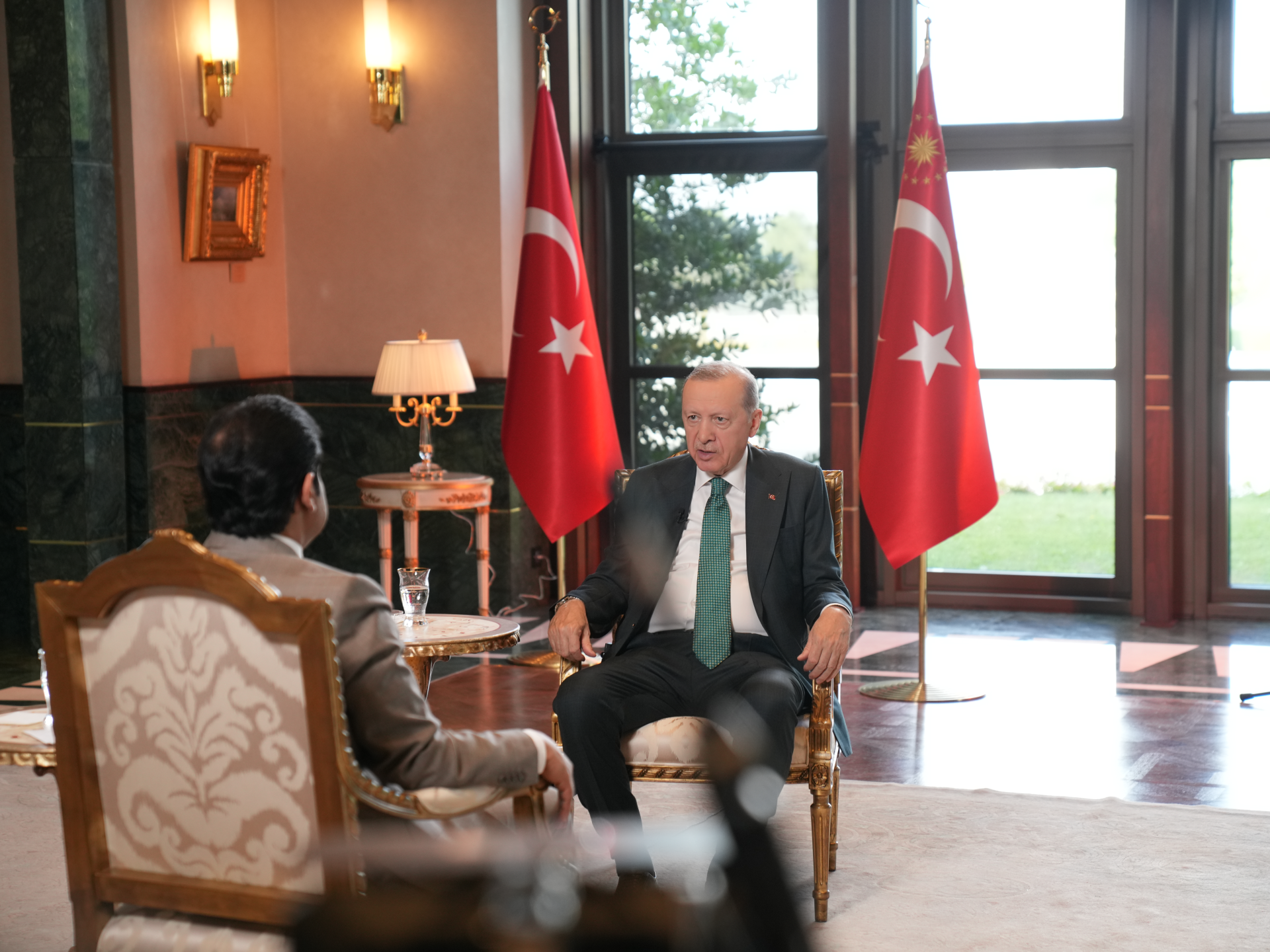
Turkish President Recep Tayyip Erdogan said Egypt could join the joint defence agreement recently signed by Turkiye, Saudi Arabia and Pakistan, describing Cairo’s accession as “possible” and the pact as open to further members.

Speaking to Al Jazeera in an exclusive interview for Al Muqabala (The Interview), which will air on Sunday evening on Al Jazeera Arabic, Erdogan said the Mecca Joint Defence Agreement commits signatories to taking unified steps should any one of them come under external attack.

Recommended Stories

list of 3 itemsend of list

“This agreement has sent an important message to the world,” Erdogan said, adding that Egypt’s participation was among the options for its future expansion.

The deal, also known as the Mecca Pact, was signed in the holy city last Friday by Erdogan, Saudi Crown Prince Mohammed bin Salman and Pakistan’s Prime Minister, Shehbaz Sharif. It stipulates that an armed attack against any one of the three would be treated as an attack against them all, a collective-deterrence provision that analysts have compared to NATO’s Article 5. However, officials in Islamabad have cautioned against interpreting it as a NATO equivalent or as being directed at any single country.

Erdogan spoke on a range of regional issues, including tensions over the Strait of Hormuz and the wars in Syria, Gaza and Lebanon.

The Turkish leader said reopening the strait was a priority for Ankara, arguing that its continued closure served no one’s interests. He credited Qatar with playing an important role in mediation efforts to halt fighting in the region.

Syria, Gaza and Lebanon

Erdogan pledged that Turkiye would not leave its neighbours to face regional turmoil alone, singling out Syria, Gaza and Lebanon.

He said Ankara would do everything in its power to support stability in Syria, noting his plans to visit the country, and that Syria’s Kurds would have “a share of peace and stability”. Turkiye would also continue to strengthen ties with Kurdish communities and safeguard their rights across the region, he added.

Concerning Gaza, Erdogan said Turkiye “cannot leave Gaza alone” and would do whatever was necessary to support it. He said Hamas was meeting its commitments in good faith, while Israel continued its war.

Turning to Lebanon, the Turkish president said continued Israeli attacks were a source of serious concern for Ankara. He said he had raised the need to end the war on Lebanon with the US president during Donald Trump’s recent visit to Turkiye, stressing Washington’s role in bringing the fighting to a close.

Erdogan said Turkiye would continue to support Sudan and described his relations with the head of its Sovereignty Council, Abdel Fattah al-Burhan, as good. He said Ankara’s relations with Libya were stable and that Turkiye would not abandon it.

On Europe, Erdogan said the European Union did not appear willing to admit Turkiye, adding that membership was no longer a priority for Ankara and that Europe would be “the loser” as a result.

He also said he had received a promise from Trump regarding F-35 fighter jets and was waiting for it to be honoured.

Turkiye was removed from the multinational F-35 programme in 2019 after taking delivery of the Russian-made S-400 air defence system, which Washington argued could compromise the stealth jet’s technology. Standing beside Erdogan during the NATO summit in Ankara last month, Trump said his administration would lift the CAATSA sanctions imposed on Turkiye in December 2020 over the S-400 purchase, and said a return to the F-35 programme was “something certainly we’d consider”.

Any sale, however, still faces resistance in Congress and a 2020 law bars the Pentagon from transferring F-35s to Turkiye for as long as it retains the S-400 system.
Source link

Which other countries could join the Turkiye-Saudi-Pakistan defence pact? | Military News

Turkiye wants to expand its newly formed defence pact with Pakistan and Saudi Arabia to include more countries, says Foreign Minister Hakan Fidan, citing President Recep Tayyip Erdogan.

“Under our president’s vision, we should not remain limited to three countries. We should grow and, if necessary, bring all countries under this umbrella,” Fidan told state news agency Anadolu, according to a report published on Saturday.

Recommended Stories

list of 4 itemsend of list

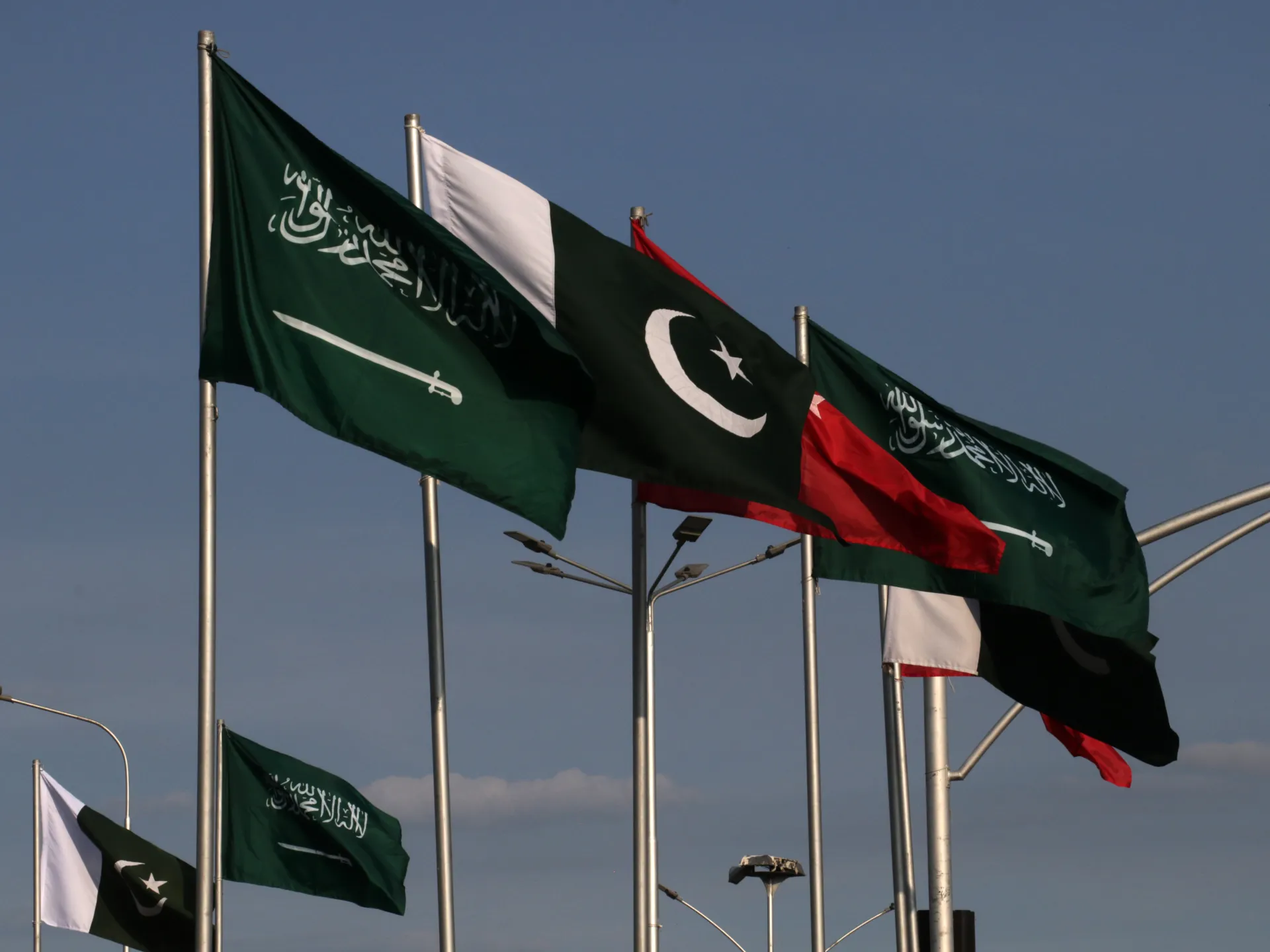
Turkiye, Saudi Arabia and Pakistan on Friday signed the Mecca Joint Deterrence Agreement, in what analysts say could be a step towards a new security architecture in the region.

So who could join the pact next, and what would an expanded alliance mean for regional security?

What does the pact do?

The Mecca defence pact builds on a previous agreement reached between Saudi Arabia and Pakistan a year ago.

Regional officials have suggested that the pact could eventually expand to include other countries, strengthening its role as a mechanism for collective security and deterrence.

The pact’s central feature is a NATO-like stipulation that an attack on any one of the three states would be treated as an attack on all of them although the details have yet to be fleshed out.

Turkish Foreign Minister Hakan Fidan said the allies will decide through consultations what degree, form and format of support they would ask for in the event of an attack but no country would be considered a threat as long as a member state is not attacked.

Turkish and Saudi officials have stressed that the pact is not meant to supplant any other strategic alliances or relationships while Turkiye, which is a member of NATO, has said the agreement does not target any country, including Iran.

Which countries could join next?

Egypt is the only country whose potential membership has been publicly raised by an official from one of the pact’s signatory countries.

Fidan described Egypt as a “natural partner” and said he expects Cairo to formally join once “technical issues” are ironed out.

“I believe that at the next stage, Egypt will also be among us in the alliance,” Fidan said. “We already act towards one another as if we were alliance members.”

Ali Bakir, professor of international relations, security and defence at Qatar University, said Egypt’s inclusion would “significantly increase the pact’s political weight, regional influence and operational effectiveness” if it materialises.

What might stand in the way of Egypt’s membership?

Egypt already has a solid working relationship with Saudi Arabia, Pakistan and Turkiye, with which it is part of a group called the R4, which consults on regional issues. Egypt has also recently developed stronger military ties with Turkiye despite previous tensions over the Egyptian military’s 2013 overthrow of President Mohamed Morsi, the conflict in Libya and the discovery of gasfields in the Eastern Mediterranean.

But analysts said Cairo may be wary of the potential military obligations that could come with a binding defence treaty with states whose interests do not always align with its own as well as the implications for its existing peace treaties.

“Egypt may join only if the language protects its aid relationship with Washington, doesn’t undermine existing alliances and peace treaties, and maintains its own freedom to decide when and where it fights,” Karim Elgendy, associate fellow at Chatham House’s Middle East and North Africa Programme, told Al Jazeera.

“If the pact stays a political framework with room to calibrate each response, Cairo can live with it and may eventually sign. If it hardens into an obligation that could pull Egyptian forces into someone else’s war, the answer is likely to be negative,” Elgendy said.

Technical issues holding Egypt back could be both “legal and operational”, Elgendy added. “On the legal side, Egypt needs to know exactly what it is committing to defend, and it will want assurances so that a signature never reads as a commitment against Israel or as taking Ankara’s side in Libya and the Eastern Mediterranean,” he said.

For Bakir, Cairo’s decision will come down to how it weighs the benefits of membership against the diplomatic complications.  Egypt’s decision on whether to join the pact will hinge on the level of “strategic value” it believes it brings as well as its ability to “manage relations with countries whose interests” contrast with or even “actively oppose” the alliance, he said.

Ahmed Aboudouh, an associate fellow with Chatham House’s Middle East and North Africa Programme, told Al Jazeera that while Egypt broadly shares the trilateral pact’s security concerns, it “does not share its underpinning threat perception” and may be resistant to “security commitments”.

“Cairo’s preference is to be part of overlapping regional security arrangements that are narrow in scope and are issue-related … rather than being entangled in defence commitments with elevated risks/cost,” Aboudouh said.

He added that Egypt may still opt to join the pact in the future but it would be a “complex decision”.

Which other countries could join?

Several officials have suggested other Gulf countries could eventually join the alliance.

In a post on X, former Qatari Prime Minister Sheikh Hamad bin Jassim Al Thani expressed hope that all members of the Gulf Cooperation Council (GCC) would “take the initiative to join” the pact. In addition to Saudi Arabia, the GCC includes Qatar, Bahrain, Kuwait, Oman and the United Arab Emirates.

Fidan also spoke about the alliance bringing in more regional countries, saying some nations, which he did not name, had already expressed interest. “Under our president’s vision, we should not remain limited to three countries. We should grow and, if necessary, bring all countries under this umbrella,” Fidan said.

Among the Gulf states, Elgendy said, “the names to watch first are Qatar and Kuwait.”

Both countries are “close to all three signatories” and “have the strongest motive to buy extra insurance” after feeling “exposed” during the United States-Israel war on Iran and by Israel’s strike on Doha in September, he said.

Bakir similarly identified Qatar as the “most natural” Gulf state to opt in with Kuwait another possible candidate. He also said Azerbaijan, Syria and Jordan could also join “relatively quickly”.

Elgendy expressed scepticism about the pact transforming into a broader bloc. “This looks like a coalition of the willing that will grow on a case-by-case basis, shaped by each capital’s own risk calculus,” he said.

Source link