Qatar, Turkiye, Pakistan and Indonesia signed a deal on Wednesday to deepen their defence industry cooperation, reflecting a broader effort by countries in the region to widen their network of security partners amid the prolonged US-Israel war with Iran.
The four countries signed the memorandum of understanding in Doha, building on existing military projects through joint production, technology transfers and more closely integrated supply chains.
Recommended Stories
list of 4 itemsend of list
The initiative comes as the failure of the United States and Iran to reach a concrete peace agreement pushes countries in the region to diversify their defence partnerships and look beyond what experts described as an overreliance on Washington for their security. But they stress that closer cooperation does not mean abandoning long-standing alliances. Instead, the ambition is to gain greater control over their own security while strengthening pre-existing partnerships.
Arda Mevlutoglu, a defence industry analyst and managing director of Mergen Analytical Strategies, told Al Jazeera that the implications could extend well beyond the four participants.
“We may be witnessing the emergence of an interconnected network of defence and security arrangements extending from the Gulf to South and Southeast Asia, rather than a single formal alliance,” he said.
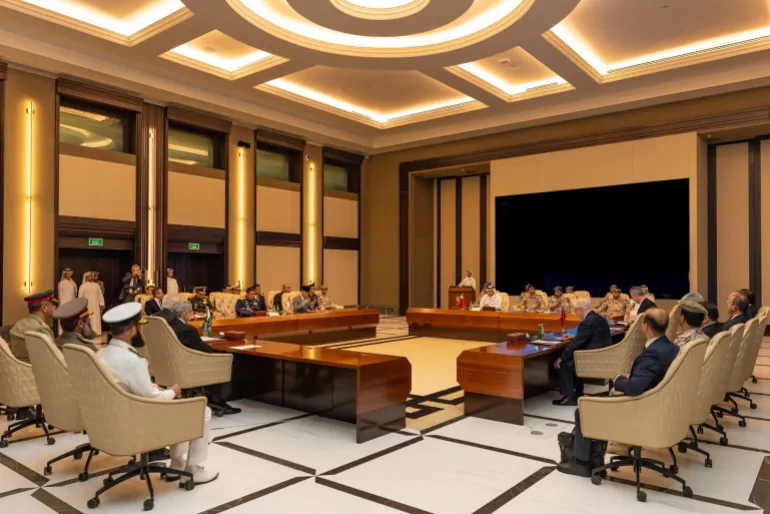
The multilateral ‘Badr’ agreement was signed in the Qatari capital, Doha, on Wednesday, October 21, 2026 [Handout/ Ministry of Defence via Al Jazeera]
What would the agreement do?
In a statement, the Qatari Defence Ministry said the “Badr” Memorandum of Understanding “aims to foster cooperation in the field of defence manufacturing, enhance defence capabilities among the four countries, and promote collaboration in technical defence training, as well as in research and development areas, thereby contributing to the creation of solutions and industries worthy of the evolution of modern defences”.
Experts say that under the agreement, each country will bring its own resources or set of skills to the table. “Turkiye contributes technological expertise, systems integration and a mature defence industry; Pakistan and Indonesia offer manufacturing capacity, skilled workforces and sizeable domestic markets; and Qatar provides investment potential and demand,” said Mevlutoglu.
Together, the four nations could “establish integrated supply chains, allowing these countries to jointly develop, manufacture and sustain defence systems”, he told Al Jazeera.
Such arrangements could give buyers a larger role in producing and supporting their own equipment, while providing manufacturers with longer-term orders and investment. Albert Vidal, a research associate at the International Institute for Strategic Studies, told Al Jazeera that Pakistan and Indonesia were both willing to purchase Turkish weapons and locate part of their production at home.
This could bring down costs for Turkish companies and bring jobs to Pakistan and Indonesia, while Qatar brings “financial depth”, he said.
Building on existing partnerships
Turkiye, home to one of the world’s most advanced defence sectors, already has military manufacturing ties with Qatar, Pakistan and Indonesia separately. Qatar and Turkiye, for instance, signed a bilateral defence industry memorandum in October 2025.
But Vidal says that the new agreement, bringing together all four nations, points to a strategic calculation alongside an industrial one. Closer relationships could give more countries a stake in each other’s security. He pointed to Qatar’s investment in the Turkish defence industry over more than a decade and Ankara’s deployment of forces to Doha during the 2017 diplomatic crisis.
Pakistan’s existing naval manufacturing project with Turkiye, meanwhile, shows how weapons purchases can support domestic manufacturing. Of the four ships announced under the project, two are to be built in Istanbul and two at Karachi Shipyard.
Indonesia and Turkiye, meanwhile, are jointly building a tank.
“The rationale is to streamline these distinct defence export and joint production agreements under a more structured and resilient networked hub, rather than reinvent the wheel with each new defence agreement,” Burcu Ozcelik, a senior research fellow at the Royal United Services Institute, told Al Jazeera.
Less dependence on Washington?
The US-Israeli war with Iran and recent Houthi attacks on Saudi Arabia have heightened regional security concerns, analysts say, while reported US weapons shortages may be adding urgency to efforts to strengthen pre-existing partners and bolster domestic arms-building capacity.
“Diversification is a major driver, particularly as recent conflicts have exposed vulnerabilities associated with dependence on foreign suppliers, technology restrictions and supply chain disruptions,” Mevlutoglu said.
But he cautioned against interpreting the memorandum as a break with Washington. “Qatar is unlikely to abandon its strategic relationship with Washington, while Turkiye seeks greater technological independence within NATO, not autonomy from it,” he said.
According to Bader Mousa Al-Saif, an associate fellow with Chatham House’s Middle East and North Africa Programme and an assistant professor at Kuwait University, the initiative reflects Gulf countries increasingly looking towards the Global South and fellow Muslim countries.
It also complements a separate effort to formalise military cooperation across the region, analysts say. Saudi Arabia, Pakistan and Turkiye signed the Mecca Joint Defence Agreement in August, establishing a mutual defence commitment. Ankara submitted the agreement to parliament for ratification on Wednesday, although deploying Turkish troops abroad would require separate parliamentary approval.
The Doha memorandum concerns industrial cooperation rather than a mutual defence pledge, but Mevlutoglu sees a connection between the two initiatives. “While Mecca focuses on collective deterrence and military cooperation, Doha could provide the industrial and technological foundations for such partnerships,” he said.
THE best hotels and resorts in Europe have been revealed and two in the UK have made the cut.
The annual World Travel Awards has named everything from beach resorts to city stays.
The Chancery Rosewood in London has been named Europe’s Leading New Hotel 2026Credit: Booking.comIt opened in September last year and has an underground swimming poolCredit: Booking.com
The good news for us Brits is that there are two in the UK – one in London and the second is a floating hotel in Edinburgh.
The Chancery Rosewood in London which opened its doors in September last year has been named Europe’s Leading New Hotel 2026.
Sign up for the Travel newsletter
Thank you!
The Grade II listed building is on Grosvenor Square and is considered one of the most expensive hotels in the country.
It has 144 suites, some of which even have steam rooms and two-person bathtubs.
On the roof are the two penthouses named Elizabeth and Charles which are 350sqm in size, and even come with private butler.
Start saving – they can cost £20,000 a night.
Otherwise the hotel has a whopping eight restaurants and bars, 24-hour in-room dining and a spa with a 25metre long swimmingpool and fitness studio.
The other hotel mentioned on the list is Fingal Hotel in Scotland which was named Europe’s Leading Boutique Hotel.
It’s unlike most others as the hotel is inside the Northern Lighthouse Board ship that is permanently docked in the Port of Leith.
It has 23 custom- designed cabins onboard with super-king beds, tartan textiles,and Art Deco styling with a sun terrace, restaurant and bar.
The Fingal Hotel in Scotland is onboard the Northern Lighthouse Board shipCredit: Booking.com
A one-night stay for two adults starts from £279.
When it comes to hotels abroad, Ikos Odisia in Greece is one to talk about – it’s won Europe’s Leading All-Inclusive Resort at the World Travel Awards for three years in a row.
The hotel in Corfu sits on the edge of Dasia Bay – it has Mediterranean-style rooms, 10 swimming pools and a private beach.
With its ‘All Inclusive Plus’ package, guests have unlimited access to all restaurants and bars, as well as beach and pool food and beverage service with drinks, cocktails and snacks.
There’s 24-hour complimentary room service, guests can also use the Local Discovery programme which includes the use of a Tesla for one full day during the stay.
It also includes free museum tickets (one museum ticket per person, per stay) and 30-minute complimentary beachside childcare for children four and up.
The Cullinan Belek in Turkey is the Leading Luxury All-Inclusive Resort this yearCredit: Booking.comIkos Osidia has a generous all-inclusive package including use of a TeslaCredit: Booking.com
Named as Europe’s Leading Luxury All-Inclusive Resort is Cullinan Belek in Turkey.
It’s been described as having true ‘glitz and glamour’ with 600 rooms in total some of which are private family villas or rooftop suites with Jacuzzis.
When one Sun Writer checked into the Cullinan Belek, she found her room came with its own pillow menu.
Her Superior Duplex room also had “top-of-the-range tech to control lights, curtains and air, plus divine Bvlgari toiletries in the two bathrooms.”
She added: “But the real treat is the swim-up infinity pool which lapped my second-floor terrace, overlooking the main resort.”
There’s a gym with a Pilates reformer stand, yoga room, Hyrox zone and the hotel has its own golf course.
Almar Lido Jesolo in Italy is right on the beach with incredible views from the roomsCredit: Booking.com Elounda Beach Hotel & Villas has won Europe’s Leading Beach ResortCredit: Unknown
Meanwhile, Almar Lido Jesolo in Italy has been named Europe’s Leading Beach Hotel.
Fifty minutes away from Venice, the hotel has 184 rooms as well as a 70metre pool heated to three different temperatures.
Even the gym overlooks the sea, otherwise head to the ocean as there is a path down to the private beach.
Another beach hotel that made it onto the award winners list is Elounda Beach Hotel & Villas which won Europe’s Leading Beach Resort.
It’s considered one of the most luxurious in Crete – the five-star resort has everything from five tenniscourts and a scuba diving centre, to a swimming pool and two private beaches.
There are lots of rooms to choose from but one of the most impressive is the Island Bungalow Waterfront which has direct access to the water.
When it comes to Europe’s Leading New Boutique Hotel, the Avali by Mar-Bella Collection in Corfu has been named the best.
The hotel is on the smaller side with 76 rooms and suites, some of which have private rooftop pools.
There’s an option to go all-inclusive (which comes with unlimited ice cream) as well as 30-minutes free use of a canoe and pedalo.
It’s not all about relaxing though, the awards even highlighted the best Theme Park Hotel in Europe which went to The Land Of Legends Kingdom Hotel in Turkey.
Avali by Mar-Bella Collection in Corfu is Europe’s Leading New Boutique HotelCredit: TUI Guests at the Kingdom Hotel get unlimited access to the Land of Legends theme parkCredit: Unknown
For any fan of the theme park its ideal as guests of the hotel get included and unlimited access to the attraction.
This includes its rollercoasters and Aqua Land waterpark, and a complimentary shuttle bus and access to the private beachfront.
Next door is the newly opened Nickelodeon Hotel which opened just last year – it has character meet-and-greets throughout the day with free gaming stations and a kids’ club.
Here are all the hotels and resorts in the Winners 2026 list…
Europe’s Leading Airport Hotel 2026 – NH Lyon Airport, France
Europe’s Leading All-Suite Hotel 2026 – THE VIEW Lugano, Switzerland
Europe’s Leading All-Inclusive Resort 2026 – Ikos Odisia, Greece
Europe’s Leading Beach Hotel 2026 – Almar Lido Jesolo, Italy
Europe’s Leading Beach Resort 2026 – Elounda Beach Hotel & Villas, Greece
Europe’s Leading Boutique Hotel 2026 – Fingal Hotel, Scotland
Europe’s Leading Boutique Resort 2026 – Collegio alla Querce, Auberge Resorts Collection, Italy
Europe’s Leading Casino Resort 2026 – City of Dreams Mediterranean, Cyprus
Europe’s Leading City Hotel 2026 – Conrad Istanbul Bosphorus, Türkiye
Europe’s Leading Design Hotel 2026 – 1908 Lisboa Hotel, Portugal
Europe’s Leading Entertainment Hotel 2026 – Seven Visions Resort & Places, The Dvin, Armenia
Europe’s Leading Family Resort 2026 – Sani Resort, Greece
Europe’s Leading Heritage Hotel 2026 – Párisi Udvar Hotel Budapest
Europe’s Leading Hotel 2026 – Estoril Vintage Hotel, Portugal
Europe’s Leading Hotel & Spa 2026 – Almar Timi Ama Villasimius, Italy
Europe’s Leading Island Resort 2026 – Inchydoney Island Lodge & Spa, Ireland
Europe’s Leading Landmark Hotel 2026 – The Phoenicia Malta
Europe’s Leading Leisure Resort 2026 – Domes Zeen Chania, a Luxury Collection Resort, Greece
Europe’s Leading Lifestyle Hotel 2026 – Hyatt Regency Vilamoura Algarve, Portugal
Amanda Cannon was taken ill while on holiday with her daughter
08:10, 19 Oct 2026Updated 08:16, 19 Oct 2026
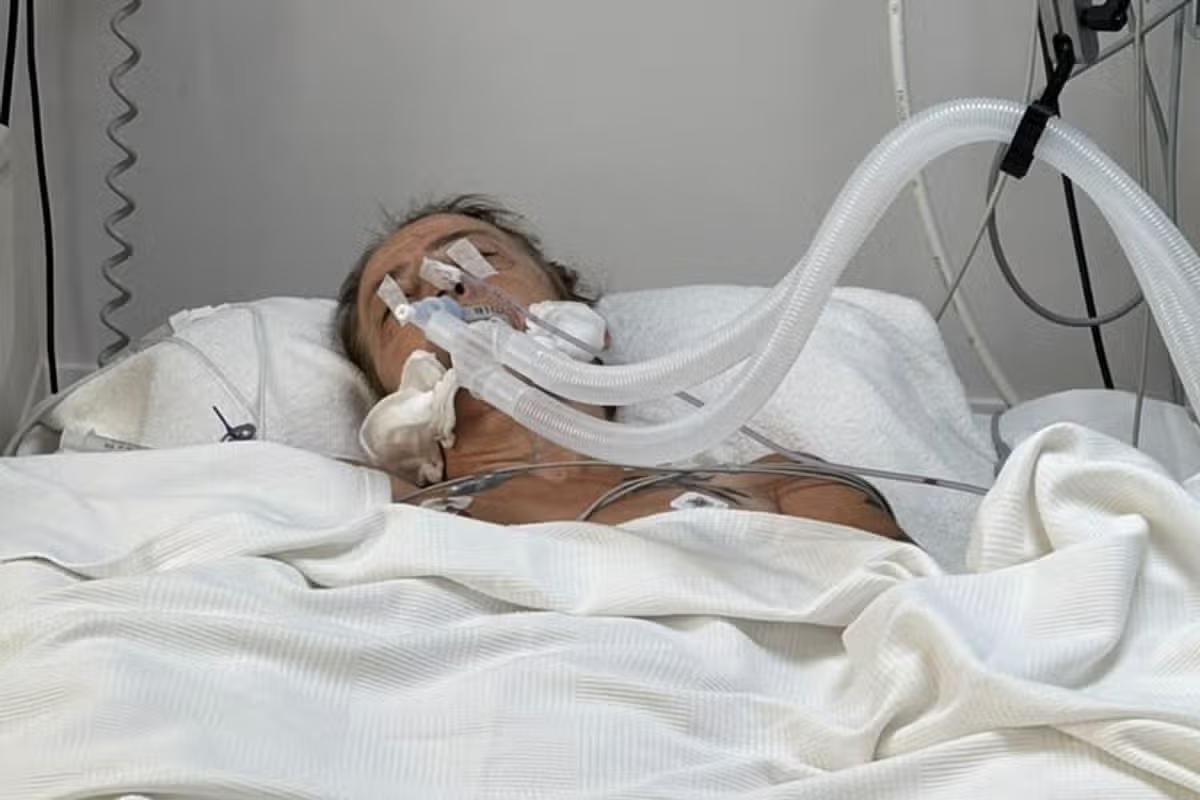
Amanda Cannon is fighting for her life in Turkey(Image: Marisa White/SWNS)
A British nan is fighting for her life in Turkey after suffering a heart attack while on holiday as her family faces a £25,000 hospital bill.
Amanda Cannon, 58, was rushed to intensive care after collapsing during a trip with her daughter Marisa White on October 10. The grandmother-of-nine from Redhill, Surrey, reportedly went without oxygen for 10 minutes after suffering what doctors believe was an epileptic seizure and cardiac arrest.
She is currently on life support in a private hospital in Antalya, Turkey. Relatives say her treatment is costing around €3,500 (£3,000) a day, with the bill already reaching €30,000 (£25,000).
Hannah Cooper, the mum of Amanda’s grandchildren, flew to Turkey with her five-year-old daughter after receiving a distressing call from Marisa. She said Amanda suddenly “jolted backwards”, turned blue and stopped breathing. Marisa immediately began CPR before paramedics arrived and took over.
No travel insurance
But because she has no travel insurance, her former daughter-in-law Hannah said Turkish medics would not stop treatment for religious reasons. They fear the mounting costs could run into hundreds of thousands of pounds if her condition does not improve.
Hannah, 33, from Shoreham-by-Sea, Sussex, told Talk to the Press: “She’s now in a deep coma. She’s got kidney failure, liver failure. They said there’s a 20 per cent chance that she’ll wake up and if she does, she’ll be in a vegetative state.”
She added: “I got a phone call from her daughter saying that she just suddenly jolted backwards, went grey, purple, blue, started foaming from the mouth and stopped breathing. Her daughter gave her CPR. Then when the ambulance got there, they took over. She went without oxygen for about 10 minutes.”
Doctors later told the family Amanda had suffered what appeared to be a seizure as well as a heart attack. She was placed on life support and remains in coma.
Amanda travelled to Turkey with daughter Marisa, who Hannah said suffered from many severe physical and mental health conditions. Concerned she would struggle to deal with the crisis alone, Hannah booked flights and travelled out to support her.
She said: “She doesn’t have the mental capacity to cope with what’s going on. The language barrier is so hard. We have to keep going on Google Translate to speak to the doctor because he doesn’t understand us and we don’t understand him.”
Medical costs stacking up
As the family tried to come to terms with Amanda’s condition, they were shocked to learn of the mounting medical costs. Hannah said she received a phone call asking for £5,000 shortly after Amanda was admitted.
She said: “I said to them that I don’t have £5,000, but I’d be flying over to Turkey. Since then, I’ve had several emails asking for payment.”
Hannah later discovered Amanda’s stay in the private intensive care unit was costing around €3,500 every day. She also revealed that the hospital wouldn’t release her to a public one until they cleared half of the bill.
Hannah said: “I’ve asked for a transfer to a state hospital where it would still cost money, but not like this.”
The family launched a GoFundMe appeal with an initial target of £15,000, but now fear the total bill could be far higher. Despite no longer being with Amanda’s son, Hannah said the 58-year-old has remained a huge part of her life.
She said: “She’s been like a second mum to me for 17 years. She’s always been my biggest supporter.”
Toll on family
The ordeal has also taken a toll on Amanda’s grandchildren.
Hannah said: “My eldest is asking a lot of questions and is upset. My little girl just keeps saying she wants to see her nan.”
She said doctors would either wait until Amanda was biologically dead or keep her alive. Hannah and her daughter are set to return to the UK on Sunday, October 18, while Marisa plans to fly back to Turkey after collecting medication.
Hannah concluded: “We’re upset, shocked and confused. We just don’t know what’s going to happen next.”
A Kalkan sunset is always a beautiful thing – the horseshoe-shaped bay deepening to azure blue against an apricot-rose sky – but, in October, when the light is low and the sun drops early, it’s almost transcendentally lovely. In some Turkish resorts, you’d be sitting watching it surrounded by quiet streets, half-empty bars and that melancholic sense that another season is over. In Kalkan, it still feels like summer; the harbourfront restaurants throng with visitors, the day gulets (wooden boats) still putter in and out of the bay and you don’t have to wait an hour to get a taxi back to your villa.
For me, the best thing about an autumn break – besides the sunsets – is that I can visit some of my favourite places that just get overrun in summer. The glittering beach at Kaputas, sandwiched into a triangular gap on the mountainous Kalkan-Kas road, has become a victim of Instagram; from May to September, it’s impossible to get near. In October, the waters are still warm and the beach – although still busy – has plenty of space for a dip and a laze.
About 20 minutes’ drive inland, the mountain village of Bezirgan, which used to serve as a summer retreat for wealthier Kalkan residents, settles back into complete peace in autumn, save for the woodpeckers battering away at the bark of the almond trees and the squirrels skittering through the leaves. The Lycian Way weaves through the village, past Ottoman-era grain stores, with the lush gardens of the Pirha Köy Sofrası restaurant a great bet for a plate of traditional manti (dumplings in yoghurt) or kofte (meatballs), before setting off for a hike (they do fantastic breakfasts too).
Back in Kalkan, it’s always cocktail hour somewhere; often on a roof terrace, with a jazz soundtrack floating out above the streets of the Old Town. This year, the Fountain Terrace Cocktail Bar has been popular, but I still love sitting in the Merkez Cafe, a Kalkan institution since the early 1990s, smack-bang in the heart of the village and a prime spot for people-watching when the evening begins.
The glittering beach at Kaputas near Kalkan. Photograph: daphnusia/Alamy
And because the season’s end is in sight, all the restaurant owners and waiters are cheerfully giddy, and the whole place swings with an end-of-term vibe. Sitting at the Blue Marlin (tucked away beneath the Pirat hotel) with a cold Efes beer and a selection of the town’s best meze, the only thing that makes me rueful is that it will be several months before I’ll be back here again.
The village of Agua Amarga, where Sexy Beast was filmed. Photograph: Juana Mari Moya/Getty Images
Along Spain’s wild Costa de Almería are a handful of exquisite little towns and villages. San José is probably the best known, put on the map by its most famous inhabitant, the late Joe Strummer, but 25 miles east is the real jewel of the Almería coast. Agua Amarga is a typical Andalucían fishing village moonlighting as a stylish low-key holiday destination, perfect for late-season sun-seekers.
Its location, on a crescent bay, makes for spectacular sunrises and sunsets over the arid headlands that bookend the 500-metre-long beach. In the narrow, whitewashed streets, a lush palm grove and splashes of pink bougainvillaea remind you that north Africa is just a short hop across the Mediterranean. In the summer, Agua Amarga’s unspoilt sands and turquoise waters attract plenty of visitors, but the vibe remains relaxed. There are a handful of restaurants and bars around the main plaza, and a few eateries on the beach, including Los Tarahis, a traditional chiringuito (beach bar) where you can enjoy dishes such as arroz negro con bogavante (black rice with lobster) with your toes in the sand. In winter, the town goes into hibernation, but in autumn the sun and sea are still warm and the bars and restaurants are still open for business.
Agua Amarga is not the place to go to party. It’s a world away from the overdeveloped costas to the west and north, but it is the perfect base to immerse yourself in nature. Hiking trails lead from the village over the cliffs to a string of isolated coves and the ruins of 18th-century forts dotted along the headlands. And if you tire of following the shimmering sea, you can strike out inland to explore the Cabo de Gata nature reserve, with its winding ramblas (dry riverbeds), prickly pears and eerie abandoned goldmines.
The sea by Agua Amarga is still warm in autumn. Photograph: Dronie_Spain/Shutterstock
This corner of Spain is famous for its movie locations, notably Sergio Leone’s spaghetti westerns and Hollywood blockbusters including Lawrence of Arabia and Conan the Barbarian. For UK cinephiles, British gangster classic Sexy Beast was filmed in Agua Amarga, and Ray Winstone’s swanky villa is available as a holiday rental (minus the boulder in the swimming pool).
The name Agua Amarga translates as “bitter water”, dating back to the 19th century and the contamination caused by mining iron ore. Those days are gone, and now Agua Amarga couldn’t be sweeter.
Cascais was once the summer retreat of Europe’s nobility. Photograph: Chunyip Wong/Getty Images
As many of Portugal’s southern resorts prepare to hibernate for winter, Cascais’s green-fingered municipal workers set to work on the town’s well-manicured flower beds, ensuring a seamless seasonal rotation. Violas, primroses and cyclamen furnish pops of purple, magenta and orange below tall palms lining a promenade punctuated with palatial homes and pockets of golden sand. Even in late autumn, the semi-tropical scene banishes the blues.
My happy place when the off-season rolls around, Cascais has enough energy and atmosphere to entertain, and is arguably at its finest after summer’s beach throngs and Lisbon day trippers (Cascais lies 20 miles west of the city, a 30- to 40-minute train ride from Cais do Sodré station) have receded.
Once the summer retreat of Europe’s nobility, Cascais is now Portugal’s year-round crowd-pleaser – and come autumn, accommodation prices are far less aristocratic. There are stately manors and spa hotels aplenty, but my pick is Casa Vela, a surprisingly spacious sidestreet bolthole. Its sauna, shrouded in tropical gardens imported by the owner and his grandfather, brings joy even on the chilliest days. And if rains do come, there are a clutch of cultural attractions in the town, including the pyramid-shaped, terracotta-hued Casa das Histórias Paula Rego, featuring works by the acclaimed Portuguese-British artist.
Still, with about 300 sunny days a year, Cascais’s main off-season pull is for those who like to be active outdoors. Blue-sky mornings see waterfront joggers pass pretty squares carpeted in black-and-white calçada portuguesa (the distinctive patterned pavement mosaics), the hulking 15th-century citadel, and a mustard-hued palace overlooking a cove. Swimming is bracing, but kayaking on the calmer waters where the Tagus River meets the Atlantic more than compensates.
Casa das Histórias Paula Rego in Cascais. Photograph: Witold Skrypczak/Alamy
Better still, hire a bicycle and trace the craggy coastline, which grows wilder as it arches north-west, with sheer cliffs appearing in the distant haze. Praia do Guincho is the star, a glorious dune-backed beach battered by winds that keep surfers of all stripes well sated.
A half-hour bus ride from Cascais, Sintra’s iconic palaces and quintas unfurl across the forest-clad mountains. Summer in the town will test your patience. But with fewer crowds in the off-season, the essence of this former elite enclave and trove of European Romantic architecture returns. Hiking the hewn stairs to the Moorish Castle in thick fog is magical, while the vibrant burgundy-and-yellow facade of the fairytale National Palace of Pena brightens the greyest of days.
As the nights start to draw in, you can chase the dwindling sunlight by heading to windswept Cabo da Roca at Portugal’s far western tip. Not only are the sunsets here spectacular, for much of autumn and winter they are the latest in mainland Europe – a sweetener for the shorter days.
Senigallia and its Velvet Beach. Photograph: Michal Szymel/Alamy
Velvet Beach (Spiaggia di Velluto) is the alluring name for the miles of fine sand that fringe the town of Senigallia, in Italy’s Marche region. But from May to September, that golden loveliness all but disappears under the umbrellas and sunbeds of beach clubs.
Italians love the place, some returning every summer for decades, but in high season it is probably best left to them. However, Senigallia has an allure beyond the beach that can be enjoyed year-round – and autumn is particularly rewarding.
It’s known in Italy as the “five-star town” for the number of Michelin stars its top two restaurants hold between them. At Uliassi (three stars) and Madonnina del Pescatore (two), ambitious locally born chefs have kept one another on their toes for decades, and their fame has encouraged other restaurateurs to up their game.
If Uliassi’s famous €280 tasting menu is beyond your budget, Senigallia has plenty of innovative, quality places that are more affordable. It’s hard to eat badly here, but fish fans will relish the exquisitely prepared raw stuff at Cuocodi Bordo (two courses from €34) on the seafront. The more rustic Rimante (two courses from €27), in the cobbled centre, offers super-friendly service, great pasta and a roast goose speciality. For pizza nights, nearby O’sarracin has superlative margheritas (€8.50) and tasty ragù-filled arancini to start.
Senigallia is renowned for seafood restaurants such as the Michelin-starred Madonnina del Pescatore. Photograph: Brambilla Serrani
Pizza al formaggio, by contrast, isn’t pizza at all, but a sort of savoury panettone, flavoured with parmesan and pecorino cheese, maybe with chunks oozing out of a warm slice. It’s usually an Easter treat, but bakery Pandefrà makes it from October until May. Autumn in Senigallia also brings amazing fresh produce (chestnuts, persimmons, grapes and pomegranates; pumpkins, greens and radicchio) to chefs and market stalls.
And, of course, it brings the olive harvest, with new oil to taste in local delis and at the Festa dell’Olio Nuovo (6-10 November) in Scapezzano, three miles inland, reached by a pleasant hour’s walk up the quiet Strada di Fontenuovo (there’s a bus back).
With so much eating, you do need to work up an appetite. Hiking the Heron Trail along the Misa River will help, and offers downy oaks in their autumn finery, but the best walk for me starts at the splendid Rotonda a Mare gallery on its 1930s pier, heads inland on quiet lanes to Gabriella and Montignano villages, then descends to the coast for a sunset stroll back along that – now peaceful – Velvet Beach.
Saint-Jean-de-Luz holds on to the warmth of summer a little longer than the rest of France’s west coast. Photograph: Mehdi33300/Alamy
Tucked away in the corner of France just before the Basque coast runs into Spain, Saint-Jean-de-Luz hangs on to the warmth of summer a little longer than the rest of the west coast. Its enticing crescent beach is sheltered by two headlands and so, as the Atlantic crashes against the rest of the coast, you can dig your toes into the golden sand as the sea gently laps the shore and truly feel as if you’ve escaped the world.
The town makes for a great introduction to the French Basque Country, with its traditional red or green timber-framed architecture, adorned in many cases with strings of the local espelette chilli pepper – its gentle heat infuses many of the local dishes. Pick up a pot at the local market hall, which is a good place to find other hero products of the local cuisine, such as Ossau-Iraty cheese and black cherry jam.
Elsewhere, the patisserie Maison Adam is the place to find the local almond macaron called the pare gabea (it means incomparable in Basque), which was first made in 1660 to celebrate the marriage of King Louis XIV and Marie-Thérèse of Spain. Their nuptials took place just round the corner at the Saint-Jean-de-Baptiste church – half-built at the time – which has an extraordinarily detailed gilt altarpiece that was installed in 1669, as well as a three-tiered gallery for the congregation. Meanwhile, a votive ship hanging from the ceiling is a nod to the town’s close relationship to the sea, with small fishing boats departing the neat harbour to fish for hake, a local speciality.
You can venture out on to the seas too, with a boat trip on the small cruiser Nivelle V (€20), which goes along the coast towards Spain, first passing the 17th-century cylindrical fort at Socoa and its sea wall that juts across the bay. As you cruise past the Flysch cliffs, which look like layers of diagonally stacked cardboard, you might spot a few silver flying fish jumping out of the steely blue Atlantic.
The neighbouring village of Ciboure. Photograph: Andia/Alamy
On arrival back at port, take the short walk across the bridge that spans the River Nivelle to the neighbouring village of Ciboure. It’s a warren of red and green Basque townhouses that overlook narrow streets winding up the hill. Between them sits the restaurant Chez Mattin (mains from €28), a local institution, where chef Michel Niquet serves his signature dish, ttorro, a fish stew that was invented by his grandfather.
Egyptian president pledges ‘any measure’ to help defend Saudi Arabia ‘if it is requested of us’.
Published On 17 Oct 202617 Oct 2026
Egypt’s President Abdel Fattah el-Sisi has called for an emergency parliamentary session to authorise him to approve any requests from Saudi Arabia for defence assistance, if Riyadh were to ask.
Speaking at a graduation ceremony at the Egyptian Military Academy on Saturday, el-Sisi emphasised Cairo’s readiness to back the kingdom.
Recommended Stories
list of 3 itemsend of list
Egypt will “carry out any measure to protect” Saudi Arabia “in accordance with the directives of His Majesty King Salman and the directives of the Crown Prince, Mohammed bin Salman”, he said.
“I know that this matter requires the approval of the Egyptian parliament, and I hope that parliament will convene in an emergency session to give us this authorisation, if it is requested of us,” he said.
“I am not speaking in order for us to fight anyone or attack anyone. I am speaking only for defence.”
Attacks on Saudi Arabia
The request follows a barrage of attacks on the kingdom from Yemen’s Iran-backed Houthis, including airports and oil facilities.
Recent Houthi strikes on Saudi Arabia have mainly targeted key infrastructure on the outskirts of the capital, Riyadh, but they appear to be edging closer to the city centre.
Houthi attacks on Riyadh’s King Khalid International Airport earlier this month killed 14 people and wounded more than 300. Houthi attacks have also been reported on other airports, including Dammam, Abha, Jazan and Najran.
Yemen’s Saudi-backed, internationally recognised government launched a full-scale military campaign against the Houthis this month to recapture territory seized by them.
El-Sisi had backed Saudi calls for secure and unhindered navigation in the Red Sea in a meeting with the Saudi Crown Prince, known as MBS, in Cairo last month.
A statement from the Egyptian presidency then said that “the security of Saudi Arabia and the Gulf states is an integral part of Egypt’s national security”.
Red Sea security
That meeting came just days after the Houthis seized Yemen’s Red Sea coast, gaining significant control over the Bab al-Mandeb strait, the southern gateway to the Suez Canal.
Saudi Arabia already has a defence pact with Pakistan and Turkiye, known as the Mecca Alliance for Defence, which was signed in August.
Earlier this month, the three countries agreed to activate “deterrence measures” under the pact and rapidly deploy forces to the Gulf kingdom to counter attacks by Yemen’s Houthis.
Analysts say Riyadh is looking for help to protect the kingdom and Red Sea shipping and that Egypt, whose Suez Canal revenue depends on the same traffic, is an obvious partner.
They say Egypt is eager to prevent Iran and its allies from imposing control over the region, especially over maritime traffic in the Red Sea, given the direct repercussions for the Suez Canal.
Saudi Arabia has accused Iran of encouraging Houthi attacks against the kingdom, a claim Tehran rejects. Iran has offered assistance to halt the conflict between the two sides.
Ukraine says it has received proposals from India, Turkiye, Egypt and the United States to broker talks with Russia. The offers come as the two adversaries escalate attacks on each other’s energy and port infrastructure with their war now in its fifth year.
Ukrainian Foreign Minister Andrii Sybiha revealed the four proposals at a briefing in Kyiv on Friday and singled out New Delhi’s. “The most comprehensive is India’s proposal,” he said, adding that India had signalled a willingness to play a role for the first time.
Recommended Stories
list of 3 itemsend of list
None of the proposals aims to end the war. Each seeks a narrower truce, covering energy facilities, ports or commercial shipping in the Black Sea.
Here’s what we know:
What is India proposing?
India has not made its plan public. Quoting unnamed sources, however, Indian media have reported it has three parts. According to the Hindustan Times, it would aim to protect infrastructure, keep grain and energy supplies moving through Black Sea ports, and ensure the safety of commercial shipping.
The first part – mutually halting strikes on energy facilities and ports – matches what Kyiv has been demanding. Sybiha said any deal must be a complete energy truce that covers port infrastructure as well.
The second part builds on the Black Sea Grain Initiative, which Turkiye and the United Nations mediated in 2022 but Russia abandoned in 2023.
The third part, protecting merchant ships and their crews, is particularly important to India because Indian sailors have been killed or harmed on Black Sea routes.
The sources were quoted as saying India’s plan goes further than the other three proposals because it covers infrastructure and shipping together. A Ukrainian official told the Kyiv Independent that it incorporates elements of the Turkish, Egyptian and US initiatives. The Kyiv Post reported that Sybiha also described the plan as addressing a possible ceasefire along the front lines, although other accounts said he gave no specifics.
The proposal likely took shape during Indian External Affairs Minister Subrahmanyam Jaishankar’s first visit to Ukraine last month and in a later meeting with Sybiha at the UN General Assembly in New York, also in September. Jaishankar said New Delhi was “trying to be helpful, starting with the Black Sea safety of shipping issue”.
What do we know about the Turkish and Egyptian proposals?
Very little. Neither Ankara nor Cairo has published details. Both reportedly focus on keeping Black Sea grain supplies moving by suspending attacks on commercial shipping. Some reports said the two countries proposed a grain truce jointly while others described two separate plans.
Turkiye has done this before. With the UN, it steered the 2022 grain deal, one of the few narrow truces of the war to hold for any length of time. Ankara and the UN are now organising new Black Sea talks with a round planned for October.
Beyond its Black Sea focus, almost nothing is known about Egypt’s proposal. Its interest, however, is clear: Egypt relies on Ukraine for nearly one-third of its grain supplies.
What is the US pitching?
According to Ukrainian President Volodymyr Zelenskyy, Washington has proposed three steps: a mutual halt to energy strikes, a reopening of the grain corridor and a trilateral meeting with Ukraine and Russia, possibly in Abu Dhabi.
The latest effort began in early September when US President Donald Trump’s envoys visited Kyiv and Moscow and secured an agreement in principle for a trilateral meeting. Steve Witkoff and Jared Kushner met Russian President Vladimir Putin in Moscow on September 5 while Kremlin envoy Kirill Dmitriev visited the US twice in September.
The trilateral meeting has since been pushed back. It had been expected to take place in the United Arab Emirates in early October. Washington now wants it in late October, and people close to the talks blamed the delay on Russia.
Washington has also invited Putin to the Group of 20 summit in Miami, Florida, in December. “We hope that’s an invitation he’ll accept,” US Secretary of State Marco Rubio said. The Kremlin said no decision has been made.
At the same time, the US is applying pressure to try to end the war. Trump recently signed a law giving him sweeping powers to sanction buyers of Russian energy.
He has also called on Ukraine to stop targeting Russian diesel facilities amid a diesel prices crisis in the US, where Trump faces tricky midterm elections next month. “Mr Zelenskyy has to do one thing,” he said on September 13. “He has to stop knocking out diesel fuel in Russia.” This drew much criticism that Trump instead should focus his comments on Russia, which began the war with its invasion of Ukraine in February 2022.
He is reportedly sceptical about his own government’s latest diplomatic initiative. People familiar with his thinking have told US media that he doubted Putin would agree to an energy truce before winter.
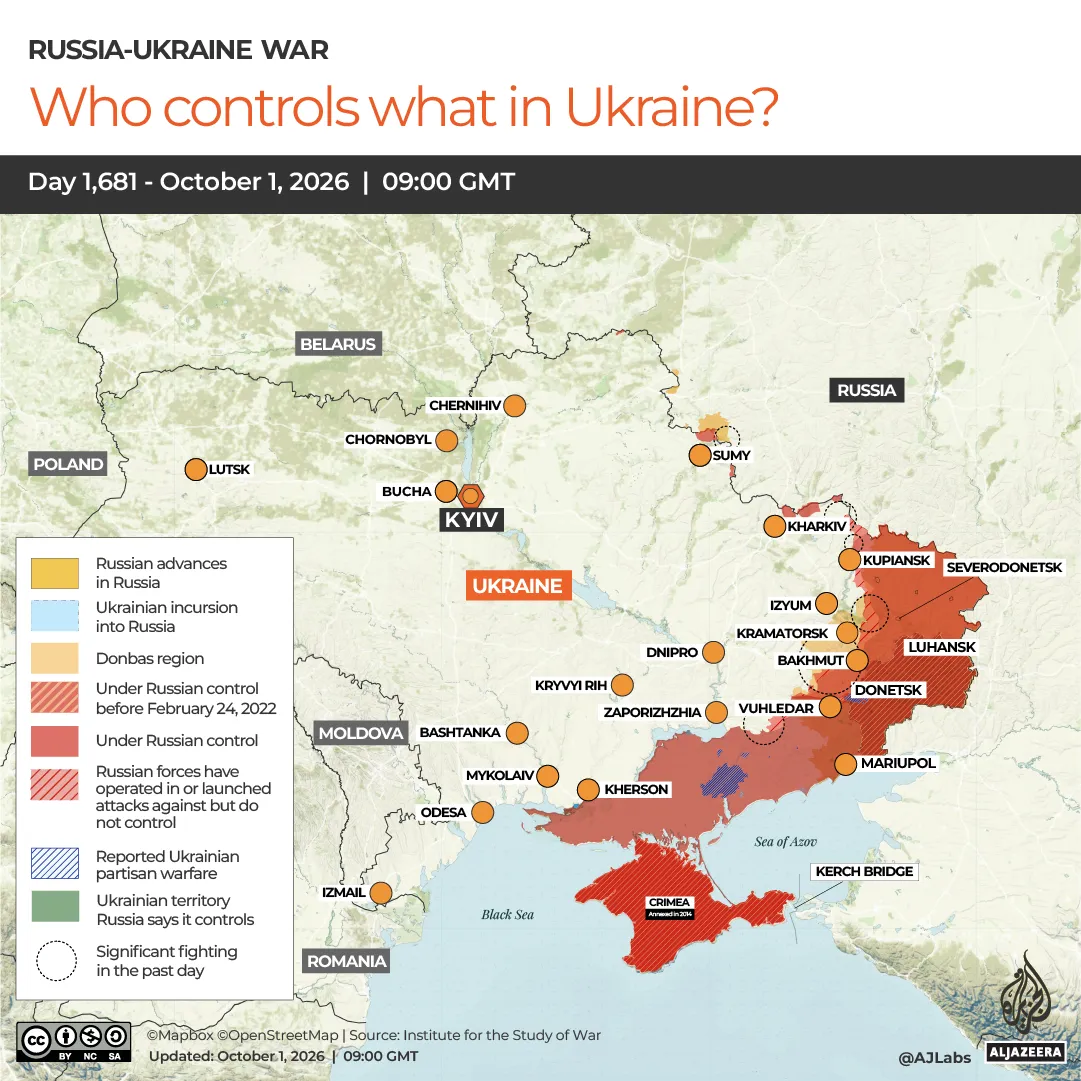
(Al Jazeera)
How have Russia and Ukraine responded?
Sybiha said Ukraine would agree to a truce but with conditions. It would accept an energy and Black Sea shipping ceasefire, but only as a combined package, he said.
He added that Kyiv is also open to an unconditional ceasefire along the current front lines. Zelenskyy backs the US-proposed meeting but stressed it needs “not only Ukraine but also the Russian side” to support it.
Moscow has been warm in tone but has committed to nothing. Kremlin spokesperson Dmitry Peskov said Russia would welcome India’s peace efforts while Putin said Modi has “very good ideas aimed at finding mutually acceptable solutions”, but he did not elaborate.
In private, Moscow appears to have said no. A Ukrainian official told the Kyiv Independent that Russia has rejected India’s proposal although this has not been confirmed publicly. Ukraine’s agriculture minister said Russia had rejected every Black Sea ceasefire option the mediators have presented.
Why are Global South countries becoming more involved?
Food supplies, the lives of their citizens and fuel prices are all at stake.
“I think it’s clear to many countries that this war is not a localised war, but it’s a war that has these global consequences,” Fredrik Wesslau, a senior policy fellow at the European Council on Foreign Relations, told Al Jazeera.
Russia and Ukraine account for more than a quarter of global wheat shipments, and their attacks on each other’s ports helped push wheat futures to a three-year high in August.
Sailors from countries with no links to the war are being killed. At least five Indian seafarers have died in strikes on Black Sea shipping in recent months along with seven Azerbaijani crew members since June. On Saturday, a Russian strike on a Liberian-flagged ship in a port in the Odesa region killed a crew member. Ukraine, for its part, has targeted tankers it links to Russia’s shadow fleet since July.
The energy war is also being felt in global markets. Ukraine reported more than 194 drone attacks on Russian refineries this year, hitting all 11 of the largest. Bloomberg News estimated that Russia’s fuel output has fallen by more than 30 percent. With Middle East supply already down as a result of the US-Israel war on Iran, global diesel markets are more exposed to the loss of Russian supplies.
Maximilian Hess, a nonresident senior fellow in the Eurasia Program at the Foreign Policy Research Institute, said energy is at least as important as grain in driving the diplomatic efforts. He pointed to a “clear frustration” among many countries over high oil prices, which reflect both the Russia-Ukraine war and the crisis in the Middle East.
“Of course, Ukrainian grain is important for them, but the oil-price factor is important there as well,” he told Al Jazeera. “I think it is those commodity-shock concerns that are pushing them to re-embrace this rhetoric, rather than anything else.”
What are the challenges ahead?
Every previous attempt at diplomacy has failed to end the Russia-Ukraine war. A US-brokered, 30-day energy truce in early 2025 collapsed amid accusations of violations on both sides. At talks in Istanbul in May 2025, Zelenskyy complained that Russia had sent a junior delegation with no authority to sign a ceasefire.
In August 2025, a meeting between Trump and Putin in Alaska yielded no results despite Trump claiming to be close to a deal ahead of it.
Wesslau said Washington’s efforts have faltered partly because Trump – who had boasted he would end the war within 24 hours of taking office in January 2025 – has appeared unwilling to put real pressure on Moscow. “The Russians see this, and they conclude that they can continue this war,” he said.
Deep distrust remains. Oleksandr Merezhko, head of the Ukrainian parliament’s foreign affairs committee, said: “Putin never keeps agreements.”
Moscow’s actions on the ground suggest it is in no hurry, Wesslau said “They’re trying to strangle Ukraine, strangle the economy, and make it unliveable ahead of the winter,” he said. He added that Moscow’s occasionally softer rhetoric was aimed mainly at the Trump administration and “has always proved to be a bluff”.
Russia’s terms are another obstacle. Hess said Moscow’s demands have not softened at any point since it launched the war and at times have grown. Putin has demanded all of Ukraine’s Donetsk, Luhansk, Kherson and Zaporizhia regions, including territory Russian forces have never controlled, as well as a buffer zone in northern Ukraine. Moscow is also seeking sanctions relief and military concessions for any Black Sea deal.
“I don’t think it’s a question of who actually mediates. I think it’s really a question of the calculation in Moscow,” Wesslau said. “Fundamentally, the problem is that Putin doesn’t want a ceasefire or a peace agreement. He wants to continue the war. He believes that he can win.”
Analysts said only greater economic pressure is likely to change that calculation.
Wesslau said if Europe can close down Russia’s shadow fleet of oil tankers, “this would be a massive blow to Russia’s war economy.” Hess said the country best placed to shift things quickly is China, rather than the US, by cutting its purchases of Russian oil. However, he added: “I don’t think Beijing is interested in doing so.”
Hess said that unless there is an outside shock, the war “is much more likely to last another four years than another four months”.
At the 2026 International Astronautical Congress in Turkiye, SpaceX unveiled a new visualisation of its plan to put a million satellites in space to power AI data centres.
Rescuers halt operation off the coast with no survivors found, following a Black Sea attack that also damaged a second vessel.
Published On 7 Oct 20267 Oct 2026
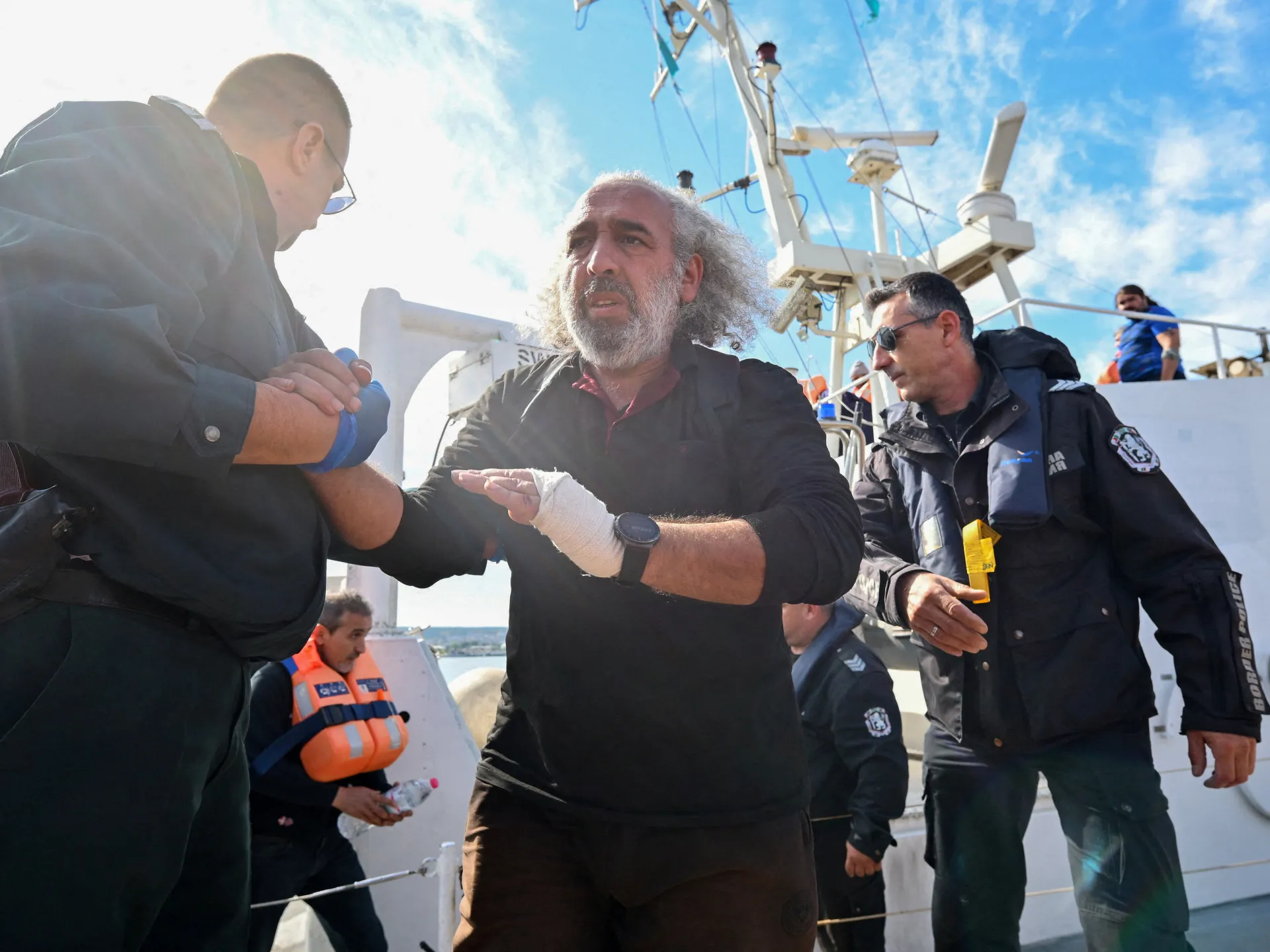
Bulgarian authorities have ended search operations after confirming no survivors were found following a drone strike that sank a ship off the country’s coast.
“There is no trace of the sailors,” Rumen Nikolov, the head of the country’s Maritime Search and Rescue Coordination Centre, told reporters on Wednesday.
The search stopped late on Tuesday and would not continue, he added.
Eighteen Turkish and Indian crew members were rescued from the ship that caught fire, but the crew members from the vessel that sank remain missing.
Authorities have not said how many people are missing, but according to the Maritime.bg specialised website, 10 people were on board the ship.
Nikolov said the incident occurred in a so-called “responsible search and rescue zone” and not in the country’s territorial waters, which extend to 12 nautical miles off the coast.
“What was found from the sunken ship was one overturned boat, three life rafts and debris from the ship’s equipment that was floating on the surface of the sea,” he said.
Asked whether any debris from the drones had been recovered, Nikolov said: “I have no information about drone debris.”
Prime Minister Rumen Radev has described the attack as “absolutely unacceptable”.
European Union chief Ursula von der Leyen has also condemned the incident.
Bulgarian authorities have said they are not yet able to determine the origin of the drones.
A distress beacon signal from the ship that sank was received at 2:54am on Tuesday (23:54 GMT on Monday), while the distress signal from the other ship was received at 3:23am (00:23 GMT), Nikolov said.
Both commercial ships were managed by Turkiye-based companies, according to the Equasis merchant shipping database.
They were hit about 80 nautical miles (150km) east of the Bulgarian coastal town of Byala.
The strikes came a day after another ship caught fire and sank off the Romanian coast on Monday, killing two people. Ukraine blamed Russia for the drone attack.
Turkiye’s first domestically produced electric SUV, the Togg T10X burst into flames at a charging station. No one was injured and the operator says the car was not charging when the fire started. EVs reportedly accounted for 52% of new car sales in Turkiye so far this year.
Space used to be an exclusive club dominated by a few key players. But at the 2026 International Astronautical Congress in Turkiye, emerging nations are pushing for more inclusivity.
Arrests were made over interference with refereeing procedures, among other accusations, Turkish justice minister says.
Published On 29 Sep 202629 Sep 2026
The head of Turkiye’s football refereeing body and six other people have been arrested over accusations of interference in refereeing procedures, Justice Minister Akin Gurlek said.
“Claims regarding interference in the formation of referee classifications, assignments, scoring and appointment processes, as well as rule examinations, have been investigated,” Gurlek wrote in a social media post on Tuesday.
Ferhat Gundogdu, the president of the refereeing body, and his deputy were among those arrested.
Gurlek said searches had been carried out at the suspects’ “residences, workplaces and offices”.
“We will steadfastly continue the fight for clean football so that claims undermining trust in Turkish football are clarified, those responsible are held accountable before the law, and football is remembered for the effort, struggle, and sportsmanship on the field,” Gurlek added.
A year ago, the Turkish Football Federation (TFF) suspended 149 referees on charges of involvement in an illegal betting scandal.
The TFF investigation found that 371 out of the country’s 571 referees officiating in the professional leagues had betting accounts and 152 of them actively placed bets.
Some 29 people were arrested in the sprawling scandal, including 14 footballers, one of whom was Fenerbahce’s international midfielder Mert Hakan Yandas.
Authorities suspended more than 1,000 players, including 25 from the first division.
However, Gurlek did not draw any link between last year’s betting scandal and the current investigation.
Kylian Mbappe scores the only goal of France’s win in Turkiye, but Real Madrid striker immediately forced off by injury.
Published On 25 Sep 202625 Sep 2026
Kylian Mbappe scored the only goal of the game before having to come off grimacing with a knee injury, as France won 1-0 in Turkiye in the UEFA Nations League in new coach Zinedine Zidane’s first game in charge on Friday.
The Real Madrid star was moved out to the left wing by his new coach after being used through the middle of the France attack under former coach Didier Deschamps at the recent World Cup, which he ended as the top scorer with 10 goals.
It was from the left that Mbappe, France’s all-time top scorer, notched his 67th international goal, controlling and firing into the net low at the near post after being set up by Michael Olise.
He winced in pain as his teammates came across to celebrate the goal at the Kocaeli Stadium in Izmit, about 100km outside Istanbul.
Mbappe tried to carry on after receiving treatment, but eventually slumped to the ground and looked concerned as he prodded the outside of his left knee, before walking off to be replaced by Desire Doue.
France and Real will now nervously wait to discover the extent of the injury, with Les Bleus playing three more games over the next 10 days before the club season resumes.
The sight of his star player and skipper coming off overshadowed Zidane’s first match since being appointed coach in late July on a deal to 2030.
The France legend and 1998 World Cup winner is making his return to elite coaching for the first time since his second stint in charge of Madrid ended in 2021.
France, beaten in the semifinals at the World Cup by eventual winners Spain, are in Group A1 of this edition of the Nations League and will now go to Brussels to face Belgium on Monday. Belgium won 2-0 away to Italy on Friday.
Zidane, whose last match as a player came for France against Italy in the 2006 World Cup final, will then make his home debut as coach against the Italians at the Stade de France next Friday.
His first team selection was not dramatically different from the side that regularly played at the World Cup, although Bournemouth’s Adrien Truffert was in at left-back while Manchester City’s Rayan Cherki came into the starting XI.
Olise, the Bayern Munich star who lit up the World Cup, was unlucky not to open the scoring late in the first half when his superb strike was tipped over by home goalkeeper Ugurcan Cakir.
France goalkeeper Mike Maignan responded at the start of the second half as he tipped over an attempt by Abdulkerim Bardakci for Turkiye, who finished bottom of their group at the World Cup, despite a 3-2 win over cohosts the United States.
Mbappe’s goal came shortly after, and the visitors later saw Jules Kounde hit the post before Turkiye were reduced to 10 men late on.
Cakir came flying out of his area to halt Bradley Barcola as the France substitute raced through on goal. German referee Felix Zwayer initially waved play on before undertaking a VAR review, after which he decided the goalkeeper had handled the ball, which meant a red card.
Turkiye, coached by former Italian international Vincenzo Montella, will host Italy next on Monday.
Shehbaz Sharif speaks as Islamabad, Riyadh and Ankara army chiefs meet to discuss Mecca pact, closer military ties.
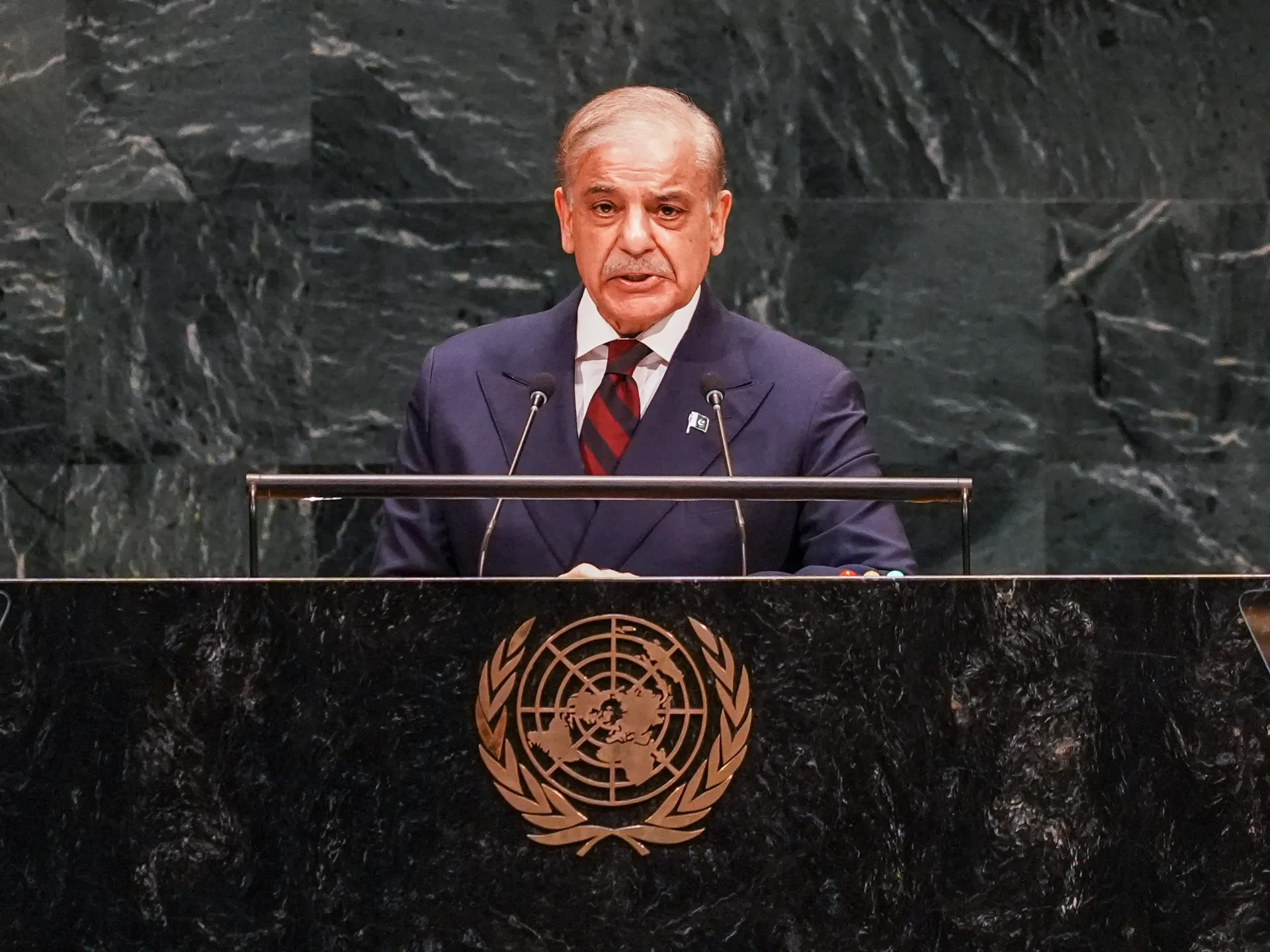
Pakistan’s prime minister has condemned Houthi attacks on Saudi Arabia, warning that any “threat to the sanctity” of the Muslim holy cities of Mecca and Medina is a “red line that must never be crossed”.
Addressing the United Nations General Assembly in New York on Friday, Shehbaz Sharif denounced recent Houthi attacks as “deplorable”.
Recommended Stories
list of 3 itemsend of list
He added that an attack by the Iran-aligned Yemeni group, which Riyadh says targeted Mecca, “outraged Muslims across the globe”. The Houthis have dismissed the accusations as a “heinous lie”.
Last month, Pakistan, Saudi Arabia and Turkiye signed a trilateral defence pact, formally known as the Mecca Joint Defence Agreement. The pact states that an attack on any member will be treated as an attack on all. However, Islamabad and Ankara have refrained from getting involved in Riyadh’s ongoing fight with the Houthis.
The military chiefs of all three countries met in Riyadh on Friday and discussed enhancing intelligence sharing and military coordination, the Pakistani military said. The chiefs reviewed the security situation and threats facing Saudi Arabia, affirmed a commitment to collective defence and pledged to turn Mecca Agreement commitments into effective cooperation, the army added.
It is not clear what, if any, support Ankara and Islamabad may provide to Riyadh. In a written interview published by the US media outlet Newsweek on Friday, Turkish President Recep Tayyip Erdogan said support could include “intelligence, logistics or ammunition, with more extensive military assistance possible depending on the scale of the threat”.
Iran and Palestine
In Sharif’s UN address, he also referenced the US-Israeli war that was launched against Iran in late February, as well as Islamabad’s role as a co-mediator.
Pakistan’s efforts culminated in the Islamabad Memorandum of Understanding, signed by Washington and Tehran, which was intended to help end the conflict.
The accord has since unravelled while regional countries push for a conclusive end to the war, which has caused a global energy crisis and exacerbated tensions across the Middle East.
“Yet amid the roar of missiles, drones and guns, the voice for diplomacy must echo even louder and stronger,” Sharif said.
He added that the Strait of Hormuz, which Iran has effectively blockaded, and the Bab al-Mandeb waterway, which is now largely under Houthi control, are “arteries of the global economy” that should remain free and safe.
The Pakistani prime minister also denounced what he described as Israel’s “genocidal agenda” in Palestine, while condemning “Israeli aggression against Lebanon and Syria”. These were sentiments echoed earlier in the day by Lebanese Prime Minister Nawaf Salam in his UN General Assembly address.
India, Kashmir, Afghanistan
Closer to home, Sharif’s speech touched on tensions with Pakistan’s neighbours.
Criticising India, he accused New Delhi of weaponising the Indus waters, which both countries have jointly managed for more than six decades. The two neighbours heavily rely on the Himalayan river network.
Sharif warned that “any attempt to stop, impede or divert Pakistan’s share of the waters will be treated as an act of war”.
He also called for what he described as a “just and fair solution” to the Kashmir dispute, which both Pakistan and India claim in its entirety. Sharif alleged that there have been attempts to “alter the legal status” of Kashmir through demographic engineering.
Another pressing issue for Islamabad is the threat posed by the Tehrik-e-Taliban (TTP), or Pakistani Taliban. Sharif said groups operate from “sanctuaries inside Afghanistan, with the aim of destabilising Pakistan”, insisting that attacks launched from Afghanistan “must come to a grinding halt”.
This comes as the latest cross-border fighting left several Afghan Taliban fighters dead on Friday.
Flights operated by Iranian airlines to and from the UAE suspended as part of broader efforts to enforce US aviation sanctions on Iran.
Published On 25 Sep 202625 Sep 2026
The United Arab Emirates has halted flights operated by Iranian airlines, joining several other countries in adopting United States sanctions aimed at pressuring Tehran’s aviation sector.
On Thursday, a statement carried by the Emirati WAM news agency said, “The General Civil Aviation Authority announced the suspension of all flights operated by Iranian airlines to and from the UAE.”
Recommended Stories
list of 3 itemsend of list
It said the decision was “based on the US sanctions imposed on Iranian airlines preventing them from using airports around the world”.
The UAE has joined Oman, Iraq, Azerbaijan, Georgia and Turkmenistan in restricting or suspending access for Iranian airlines amid the new US sanctions threat.
Dubai, the UAE’s commercial hub, is a major destination for Iranian carriers, with multiple daily flights, a large Iranian community and close business links.
An Iran Airtour flight from Tehran to Dubai was cancelled shortly before its scheduled departure on Thursday morning, after tickets had already been issued, according to the AFP news agency.
The UAE, which was repeatedly hit by Iranian missiles and drones throughout the US-Israel war on Iran, suspended trade and financial exchanges with Iran last month.
On Wednesday, the UAE’s central bank blocked transactions involving Iran’s Bank Melli, claiming the financial institution had violated rules on money laundering, terrorism and arms proliferation.
The US Treasury announced sweeping sanctions on Iran’s aviation sector earlier this month, targeting 27 airlines and dozens of companies that support them. The measures aim to cut off Iran’s air links entirely, warning that any airport or company still servicing Iranian carriers risks being cut off from the US dollar system.
Iran’s Civil Aviation Organization spokesman Majid Akhavan said: “Diplomatic and aviation talks are under way to remove the restrictions and restore flights” to the UAE.
Akhavan added that Turkmenistan also turned back a flight from Tehran to Dushanbe on Thursday.
“Turkmenistan’s refusal to allow the Iranian aircraft to pass through its airspace meant the flight could not continue on its route and had to return,” Akhavan told the Iranian IRNA news agency.
Several smaller Iranian airlines continue flying to China and Armenia, both of which have resisted US pressure, while routes to Turkiye remain open for some carriers.
Who: Turkiye vs France What: UEFA Nations League Where: Kocaeli Stadium in Izmit, Turkiye When: Friday, September 25, at 9:45pm (18:45 GMT) How to follow: Al Jazeera Sport will have all the build-up from 15:45 GMT.
Zinedine Zidane was asked if taking charge of his first France game on Friday will feel just as special as his playing debut for Les Bleus more than 30 years ago.
Recommended Stories
list of 4 itemsend of list
“Even more so, maybe,” a smiling Zidane said on Thursday ahead of a Nations League game in Turkiye. “I feel an immense emotion being at the head of this France team.”
Zidane’s dream was realised when he replaced Didier Deschamps after the 2026 World Cup. His former teammate Deschamps was in charge for 14 years, winning the World Cup in 2018 and losing the 2022 final.
Now it’s Zidane’s chance to make his mark on a team he once starred for.
Affectionately nicknamed “Zizou”, his face was beamed onto the Arc de Triomphe in Paris the night France celebrated its first World Cup triumph in 1998.
Zidane scored two headers in the final in a 3-0 win over Brazil and later that year he won the Ballon d’Or. Two years later, he was instrumental in France winning the European Championship.
His rise to the top seemed almost fated, for his international career began brilliantly in 1994 with two stunning goals against the Czech Republic after coming on as a substitute.
He then won league titles with Juventus and Real Madrid and scored a brilliant volley to help Madrid win the Champions League in 2002.
Zidane understands expectations are high, given his achievements as a player and how he led Real Madrid to three straight Champions League titles as a coach.
“It’s something new. I’m taking over as head coach so people are talking about it,” he said. “That makes sense.”
After facing Turkiye, France plays Belgium away on Monday before hosting Italy on October 2, and Belgium three days later, with both those games at the Stade de France.
Mbappe given all clear for France’s trip to Turkiye
France’s all-time top scorer Kylian Mbappe is set to captain the side, having shrugged off a minor injury.
Zidane was asked why, given that Mbappe is captain, he was not present at Thursday’s pre-match news conference. Instead, it was midfielder Adrien Rabiot who spoke to the media.
“The obligation is to have one player and the coach,” Zidane said. “[Mbappe] is fine. He will be ready to play tomorrow.”
Rabiot is one of France’s vice-captains along with forward Ousmane Dembele and right back Jules Kounde.
Rabiot said the huge attention placed on Zidane gave the players a welcome back seat.
“His aura means he commands a lot of attention,” Rabiot said. “In a way, it’s a good thing that the focus is more on the coach than the players. It gives them a bit more peace and quiet.”
Zidane understands the limelight but does not seek it.
“You have to accept how things are. But I’m not here for that,” he said. “Winning matches is what interests me the most.”
What happened the last time Turkiye played France?
The sides shared a 1-1 draw in Paris in 2019 in a qualifier for Euro 2020.
Olivier Giroud gave the home side the lead in the 76th minute before Kaan Ayhan levelled for Turkiye five minutes later.
Head-to-head
This will be the seventh meeting between the nations, with France claiming four wins to Turkiye’s one in the previous encounters.
Turkiye team news
Turkiye will be without the services of Hakan Calhanoglu and Kenan Yildiz due to injury. Real Madrid starlet Arda Guler, however, is available despite fears of a knock.
Zidane can choose from six new faces in his squad.
Striker Esteban Lepaul (Rennes), defenders Leny Yoro (Manchester United) and Jeremy Jacquet (Liverpool), midfielder Lucas Da Cunha (Como), Andy Diouf (Inter Milan) and Guillaume Restes (Toulouse) are set for their debuts.
“I’m happy with what I’ve seen so far. The French team is open to everyone,” Zidane said. “We’ve got a good squad, some veterans, some newcomers.”
Strikes carried out in southeastern province of Khost cause no casualties, governor’s office says.
Published On 24 Sep 202624 Sep 2026
Pakistan says it has carried out air strikes on 10 locations in Afghanistan used to store and launch drones, some of which were used in cross-border attacks.
The air strikes on Thursday were carried out as tensions grow between the former allies over attacks by armed groups in Pakistan, which triggered their worst fighting in years in February.
Recommended Stories
list of 3 itemsend of list
Islamabad accuses Kabul of harbouring fighters who stage cross-border attacks, but Afghanistan’s Taliban government denies harbouring anti-Pakistani armed groups and says the attacks are Pakistan’s internal problem.
The air strikes were “deliberate, precise, calibrated, and proportionate, and strictly limited to identified military objectives directly linked to the attempted attacks against Pakistan”, Pakistani Information Minister Attaullah Tarar wrote on X.
He condemned a “deliberate and unlawful incursion into Pakistan by drones” on Wednesday.
“This constitutes a blatant violation of Pakistan’s sovereignty and territorial integrity and is a grave and unacceptable act of aggression,” he said.
The Pakistani air strikes were conducted in several areas of Khost province in southeastern Afghanistan, Mustaghfir Gurbaz, spokesperson for the Khost governor, said.
There were no casualties, he said.
An attack on a police facility in northwestern Pakistan last week that killed at least 21 people has reignited fighting between the countries after nearly three months of relative calm. A Pakistan Taliban faction claimed responsibility for the blast and subsequent gun battle.
On Monday, air strikes targeting three locations in northeastern Afghanistan killed three civilians in the Nurgal district of Kunar province, Afghan officials said. Islamabad said it killed 28 “terrorists”.
The escalation threatens mediation efforts by China, Turkiye, Qatar and Saudi Arabia to broker a lasting peace between the two neighbours.
Relations between the former allies have been strained since the fighting in February, the worst for years.
Iraqi Prime Minister al-Zaidi and Turkish President Erdogan pledged deeper security cooperation at UNGA.
Published On 24 Sep 202624 Sep 2026
Turkiye and Iraq have agreed to a gradual transfer of Ankara’s military base in Bashiqa to Baghdad, according to a statement released by the Iraqi prime minister’s office.
The announcement followed a meeting on Wednesday between Iraqi Prime Minister Ali al-Zaidi and Turkiye’s President Recep Tayyip Erdogan on the sidelines of the United Nations General Assembly in New York.
Recommended Stories
list of 3 itemsend of list
“Within this framework, they reached an agreement on fully establishing state authority in Sinjar and ending the presence of outlawed foreign armed elements,” Iraq’s prime minister’s office announced, in an apparent reference to the Kurdistan Workers’ Party (PKK), which has maintained a presence in the mountainous Sinjar region of northern Iraq.
“The two sides also agreed to expand the volume of bilateral trade and investment, to implement signed agreements immediately, and to accelerate joint strategic projects, particularly the Development Road project,” the office added.
Turkiye’s President Recep Tayyip Erdogan at the United Nations General Assembly on September 22, 2026 [Julia Demaree Nikhinson/AP]
The decision to transfer the facility addresses a longstanding flashpoint between the two neighbours.
Turkiye first established the base in Bashiqa, northeast of Mosul, in December 2015 through an agreement with the autonomous Kurdistan Regional Government to train local forces fighting the ISIL (ISIS) group.
The deployment of up to 600 Turkish soldiers drew criticism from Baghdad, which viewed the presence as a violation of Iraqi sovereignty.
The Sinjar region has long been a focal point for Turkish military operations targeting fighters from the PKK.
Kurdistan Workers’ Party fighters, who reportedly withdrew from Turkiye with their weapons, stand at attention during a ceremony in the Qandil area of northern Iraq in 2025 [File: Rashid Yahya/AP]
Cross-border operations in Sinjar had eased following a landmark peace process between Ankara and the PKK in 2025, paving the way for federal authorities to assert control over the border zone.
Wednesday’s accord caps months of efforts by Baghdad to consolidate state authority over northern flashpoints, while aligning with Ankara on trade corridors and security coordination along their shared frontier.
With Wowcher you can buy a 4* holiday to Marrakesh including a hotel stay and return flights from £59pp from October 5-9.
Seville, Spain
One of the best things about Seville is that it’s less than three hours away from the UKCredit: Alamy Stock Photo
Under three hours away from the UK, Seville is Spain’s fourth-largest city with lots to offer from its tasty tapas and fabulous flamenco.
Not to mention in early October temperatures tend to sit around 26C on sunny days.
Top spots to see include Plaza de Espana – and pop by El Rinconcillo, the city’s oldest tapas bar where a huge glass of wine barely costs £3.
With loveholidays, book a stay at the Ilunion Alcora Sevilla which has sweeping views of the city, and a luxury swimmingpool.
A four-night stay between October 19-23 starts from £279pp with return flights to London Gatwick.
Sharm El Sheikh, Egypt
Dubbed to be super popular next year (so get ahead of the game), Sharm El Sheikh is in Egypt.
The resort city on the Red sea has world-class reefs, incredible beaches and average highs of 31C in October.
Sharm El Sheikh has world-class reefs and incredible beachesCredit: Getty
For Brits, it has lots to offer alongside its sunshine like all-inclusive hotels and waterparks.
With Wowcher, there’s an offer for a seven-night 4* all inclusive Sharm El Sheikh getaway with return flights – the hotel has a spa, sauna, gym, tennis courts and watersports.
Book a stay at the Sharm Club Beach Resort from £299pp
Antalya, Turkey
Antalya has bright blue seas and can be as high as 26C in OctoberCredit: Getty
If you’re seeking autumn sunshine, why not look in what has been called ‘paradise on earth‘?
To make it even better, the average flight time from the UK is around four and a half hours.
There’s a current offer with Wowcher for a 4* Antalya getaway in a sea view hotel stay with breakfast and return flights included.
Book a stay from 5-8 October from £159pp.
Limassol, Cyprus
In Limassol, the largest waterpark is Fasouri Watermania WaterparkCredit: Alamy
Five hours away from the UK is the city of Limassol in Cyprus which has daytime highs of 27C next month.
Some favourite sunbathing spots include Kourion Beach and Pissouri Beach which has been described as a “beautiful rustic pebble beach with pristine water.”
With loveholidays, you can book into the Troodos Hotel which is minutes from Mount Olympus and is surrounded by natural beauty.
A seven-night holiday between October 5-12 starts from £369pp.
Reggio Calabria, Italy
Head to southern Italy for warm weather and vineyard toursCredit: Getty
In just three hours, you could be basking in the Italian sunshine in Reggio Calabria with city with sun, beaches, mountains, waterparks and lots ofhistory.
Not to mention there are highs of 26C in October and Brits can fly directly to Reggio Calabria from London Stansted and return fares start from under £30.
As southern Italy is the perfect place for vineyards, there are even vineyard tours and wine tastings for £20.
You can book a getaway with loveholidays to La Bussola a hotel with huge swimming pools and plenty of space to sunbathe.
A seven-night break between October 4-11 starts from £270pp.
Tenerife, Canary Islands
Tenerife has golden sand beaches and a huge Thai-themed waterparkCredit: Getty
The Canary Islands are a safe option for autumn sunshine, and in October, the island of Tenerife has highs of 26C.
The island also has hundreds of beaches, coastal towns with bustling promenades and head up to Mount Teide National Park on the cable car.
Siam Park, an enormous Thai-themed waterpark is open throughout next month too.
It has high-speed slides, family zones, beaches and plenty of swimming pools.
With Wowcher, book an all-inclusive break to Tenerife from October 5-8 including return flights from £169pp.
Fuerteventura, Canary Islands
Fuerteventura is the sunniest Canary IslandCredit: Getty
Tenerife’s trusty neighbour, Fuerteventura has the same high temperatures – and can actually be cheaper.
On the second largest Canary Island, you can explore a number of beaches like Playa de Matorral, Corralejo and Playa Bajo de la Burra.
It’s easy to take a boat excursion out into the waters and go snorkelling to spot colourful fish and sometimes even stingrays.
Also make sure to check out Acua Water Park and hike on Corralejo Natural Park.
With Wowcher, book an all-inclusive break to Fuerteventura including return flights from £179pp.
Sousse, Tunisia
Sousse is a coastal city in Tunisia and lots of pretty beachesCredit: Corbis via Getty Images
It’s no secret that Tunisia is a top spot when it comes to staying sunny during autumn.
In October, daytime highs can reach 28C – perfect sunbathing weather.
Sousse in particular is known for its sandy beaches and modern marina with boutique shops and boat trips.
Tunisia is relatively cheap too with a pint of beer costing less than £2.
With loveholidays, book a seven-night break between October 9-16 to Riadh Palms which has an enormous swimming complex – prices start from £415pp.
Dubai, UAE
Dubai has highs of around 35C in October making it the ideal autumn getawayCredit: Stefan Tomic
In the UAE, Dubai offers all the delights of an autumn getaway from its many luxury hotels to its thrilling waterparks and exotic beach clubs.
You can do all this next month while enjoying highs of 35C – and Emirates offers direct flights to Dubai which get there in seven hours.
Don’t forget to hit the shops or head to the Grand Souk for tasty treats like stuffed breads.
Or try a Iranian falooda — a sorbet-like dessert made of thin rice noodles and syrup.
With Wowcher, book a break to Dubai (a four or seven night stay) including breakfast and return flights from £449pp.
In terms of the ongoing conflict in the Middle East, the FCDO no longer advises against travel to the UAE, but warns that “the situation in the Middle East remains unpredictable”.
Police arrest suspect in shooting near high school as injured are rushed to local hospitals for treatment.
Published On 22 Sep 202622 Sep 2026
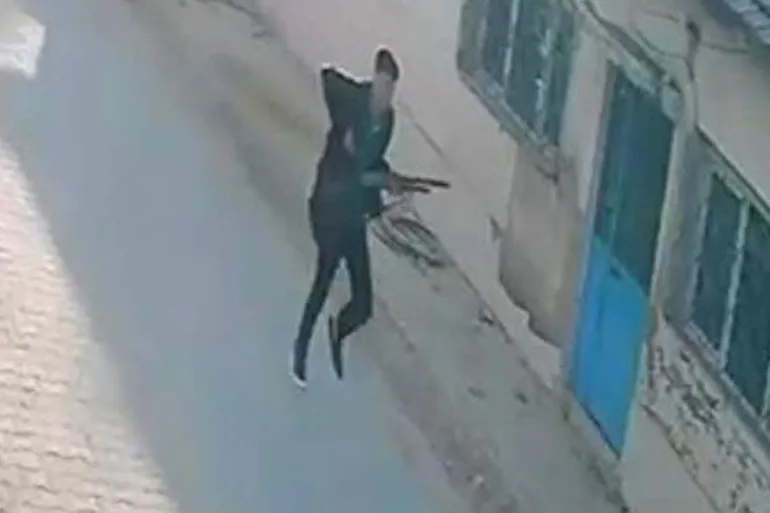
An armed man has opened fire near a high school in western Turkiye, wounding eight people, including students, authorities said.
The injured were rushed to hospitals after the shooting early on Tuesday near a vocational and technical high school in the Turgutlu district in the western Manisa province, the governor’s office said in a statement on X.
Recommended Stories
list of 3 itemsend of list
Police arrested the suspect after he attempted to flee the scene.
“A report was received regarding gunfire in the vicinity of the Inci Uzmez Vocational and Technical Anatolian High School in our Turgutlu district at 07:59,” the governor’s office said.
The motive for the attack was under investigation, it added.
“After the incident, the suspect believed to have fired the weapon was caught by security forces and taken into custody,” the statement read.
Several images of the suspect were posted online, showing him walking near the school holding a gun.
Security camera image of an armed man near a school in Turgutlu, west of the resort city of Izmir, Turkiye [Handout/DHA via AFP]
The attack comes months after two school shootings in Turkiye.
In April, 16 people, mostly students, were wounded when a former student opened fire at a high school in the Sanliurfa province. The attacker later killed himself.
The following day, a 14-year-old killed nine people, including students and teachers, and wounded 13 others in an attack at his school in the Kahramanmaras province. The assailant was killed by police.