How Volker Turk won new UN rights chief term despite US, Israel opposition | United Nations News
EXPLAINER
The UN General Assembly voted 144-10 to grant Turk a new four-year term, despite objections from the US, Israel and Russia.
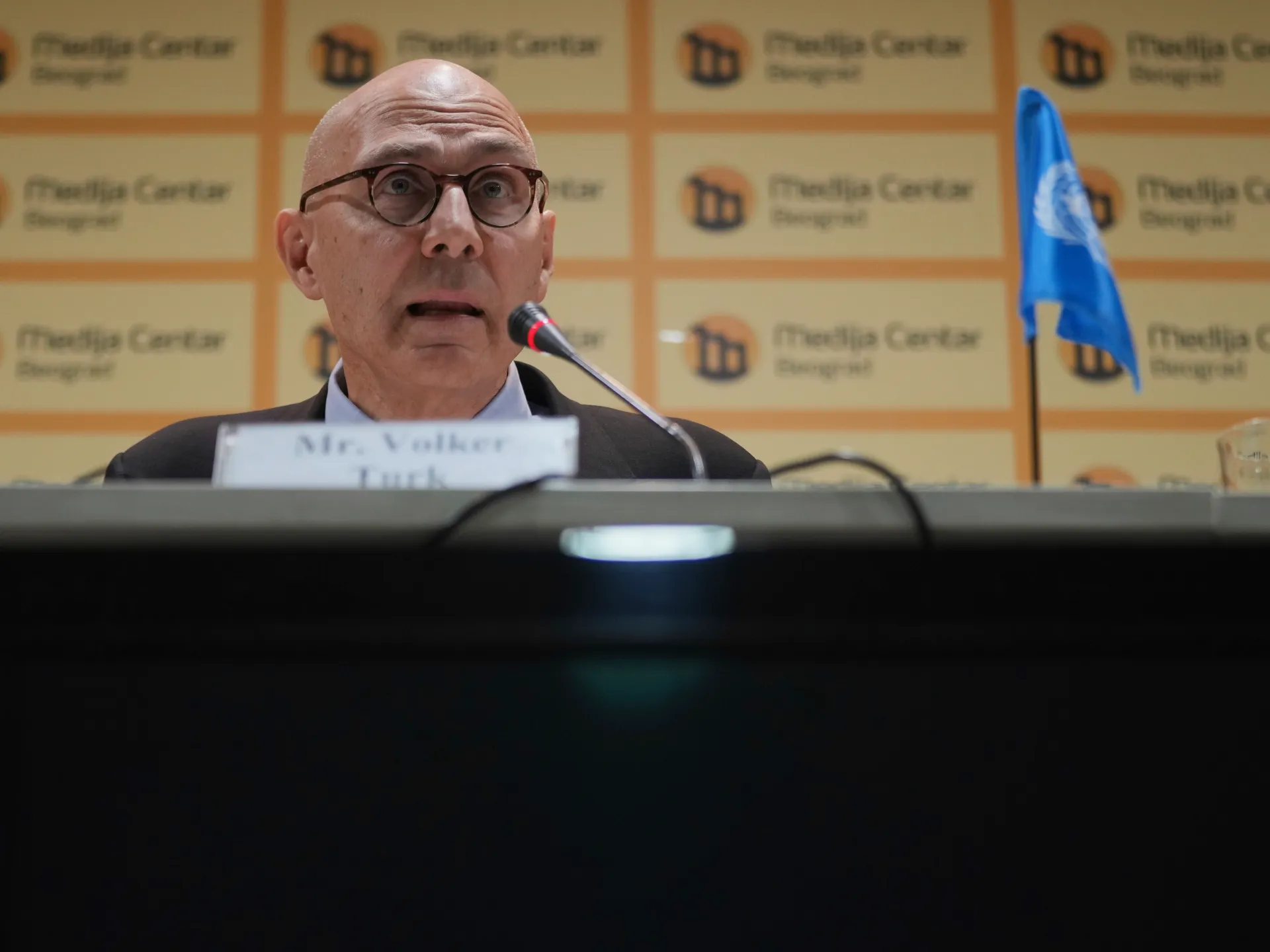
Volker Turk has been elected as United Nations human rights chief for another four-year term, despite strong objections from the United States, Russia and Israel.
The United Nations General Assembly vote on Friday means Turk, who has served in the role since 2022, will become the first person to serve two full terms as the UN rights chief since the position was created in 1993.
Recommended Stories
list of 3 itemsend of list
Who is Turk and why has his reappointment caused controversy?
Who is Volker Turk?
Turk, an Austrian lawyer, joined the United Nations in 1999 and went on to work in the organisation’s refugee agency. This included posts in Malaysia, Kosovo, Bosnia and Herzegovina and the Democratic Republic of the Congo.
He later worked in senior roles at UN headquarters in New York, including as assistant secretary-general for strategic coordination under UN Secretary-General Antonio Guterres. The two are believed to have a close relationship.
In his role as UN rights chief, Turk has been highly critical of both Israel’s genocidal war on Gaza and Russia’s invasion of Ukraine. He has also been vocal on conflicts and rights abuses in Afghanistan, Sudan, Bangladesh, Myanmar and Nicaragua.
How was he reappointed?
The UN General Assembly overwhelmingly backed a proposal by Guterres to give Turk another four-year term with 144 votes in favour, 10 against and 13 abstentions.
Earlier, the assembly shot down a US proposal to delay the vote until the end of next week as well as a Russian bid to extend Turk’s term until the end of the year only.
How has Turk angered the US, Russia and Israel?
The role of UN human rights chief is inherently controversial because it requires public criticism of governments of UN members for alleged rights violations.
Turk’s outspoken criticism of policies in Israel, Russia and the US has put him at odds with all three countries.
Turk has repeatedly criticised Israel’s genocidal war on Gaza, its deadly assault on Lebanon, and a “shameful” lack of accountability for its rights abuses in the occupied Palestinian territory.
Turk has also described Russia’s war in Ukraine as “senseless” and a “blatant affront to the UN Charter and the whole body of international law”.
On the US, he has raised concerns about the war on Iran and the “dehumanisation” of immigrants under President Donald Trump, citing routine “abuse and denigration of migrants and refugees”.
Israel’s Ministry of Foreign Affairs criticised Turk’s record, saying that under his leadership the Office of the High Commissioner for Human Rights has “erased the atrocities of October 7, misused funds, and betrayed UN neutrality in favor of corrupt political radicalism”.
Russia’s Deputy Ambassador to the UN Dmitry Chumakov accused Turk of bias and making unfounded allegations against Russia.
What objections were raised to Turk’s reappointment?
Guterres, whose own term is due to end at the end of this year, has faced criticism for how he managed the reappointment. Critics say the vote was rushed and the selection of a rights chief should have been left to his successor.
The UN secretary-general, whose term expires in December, sent letters to regional groups at the UN earlier this month informing them of his intention to reappoint Turk, and held the vote just weeks later.
The US Department of State criticised the vote for being rushed and said it was “another example of the UN’s inherent corruption and incompetence”.
The US also accused Turk of turning “a blind eye to real atrocities and instead pursued a radical ideological agenda”. US Deputy Ambassador Jeff Bartos claimed before Friday’s vote that reappointing Turk would prove that the General Assembly “is dysfunctional”.
Israel’s Foreign Ministry called Guterres’s push for a second term for Turk a “moral failure,” saying that the choice should be left to his successor.
UN spokesperson Stephane Dujarric said Guterres had followed UN rules and engaged “in a very transparent manner” in appointing Turk, including by holding prior consultations with member states and regional groups.
What other criticism has Turk faced?
Turk’s critics say he could have done more to publicly follow up on a report issued by his predecessor, former Chilean President Michelle Bachelet, that said China’s detention of Uighurs and other mostly Muslim ethnic groups in Xinjiang may amount to crimes against humanity.
Turk also has stopped short of joining independent UN rights experts who have accused Israel of genocide against Palestinians in Gaza.
Turk’s office said he had used both private engagement with Beijing and his public advocacy to support human rights in China.

