tuition

Judge dismisses DOJ suit over Minnesota tuition for undocumented students

Minnesota public universities can continue to offer in-state tuition and scholarships to some immigrants in the country without legal status, a federal judge ruled Friday, dismissing a lawsuit filed by the U.S. Justice Department last summer that attempted to halt the programs.

The decision follows a series of clashes between the federal government and Minnesota officials over immigration enforcement.

U.S. District Judge Katherine Menendez said in her decision that the federal government failed to prove that programs offering in-state tuition for immigrants without legal status discriminated against U.S. citizens.

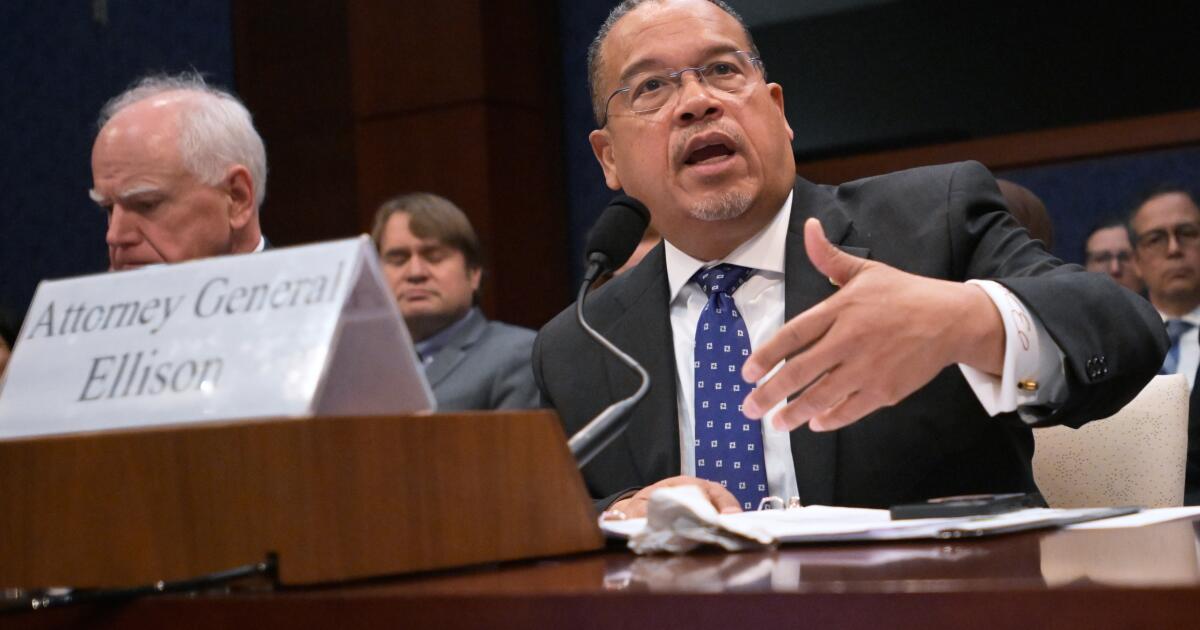
The federal lawsuit named Democratic Gov. Tim Walz and Democratic state Atty. Gen. Keith Ellison as defendants, along with the state’s Office of Higher Education. It said Minnesota law discriminates against U.S. citizens because it provides in-state tuition and scholarships to students living in the U.S. illegally if they attended a Minnesota high school for three years, and U.S. citizens who attended schools outside of the state cannot receive the same benefits. States generally set higher tuition rates for out-of-state students.

The federal government said those state statutes “flagrantly” violate a federal law that prevents states from providing preferential benefits to immigrants in the U.S. illegally regardless of whether or not they meet residency requirements.

“No state can be allowed to treat Americans like second-class citizens in their own country by offering financial benefits to illegal aliens,” U.S. Atty. Gen. Pam Bondi said in a statement after the lawsuit was filed last year.

Menendez said the Justice Department misinterpreted the law, enacted during the Clinton administration, because anyone who attended a Minnesota high school for at least three years are granted the same public benefits, regardless of their U.S. residency or immigration status.

She also said the federal government didn’t have standing to sue the state attorney general or governor since neither has the power to change the state laws that determine tuition eligibility.

Ellison celebrated the decision in a statement Friday.

“Today, we defeated another one of Donald Trump’s efforts to misconstrue federal law to force Minnesota to abandon duly passed state laws and become a colder, less caring state,” he wrote.

The funding for immigrants without legal status represents an “investment for our state to do everything we can to encourage a more educated workforce,” Ellison wrote.

The U.S. Justice Department didn’t respond to an email request for comment Friday.

The department has filed similar lawsuits this month against policies in Kentucky and Texas. Last week, a federal judge in Texas blocked that state’s law giving a tuition break to students living in the U.S. illegally after the state’s Republican attorney general, Ken Paxton, said he supported the legal challenge.

In discussing the Texas case last year, Bondi suggested more lawsuits might be coming.

Florida ended in-state tuition eligibility for immigrants living in the U.S. illegally. At least 22 states and the District of Columbia have laws or policies granting the in-state benefit, according to the National Immigration Law Center. Those states include Democratic-led California and New York, but also Republican states including Kansas and Nebraska.

According to the center, at least 13 states in addition to Minnesota allow immigrant students without legal status to receive financial aid and scholarships on top of in-state tuition.

Riddle writes for the Associated Press.
Source link

Promising free college tuition is obvious politics — and a good idea

One unique perk California kids enjoyed for generations was tuition-free college. Now, a candidate for governor promises to bring that back. And bravo for her.

The candidate, former congresswoman Katie Porter of Orange County, even suggests a way to pay for her bold pledge. That’s unusual for a politician. It’s normal to promise the moon without specifying how to get there.

She‘d raise the corporate income tax a notch.

You’re reading the L.A. Times Politics newsletter

George Skelton and Michael Wilner cover the insights, legislation, players and politics you need to know. In your inbox Monday and Thursday mornings.

By continuing, you agree to our Terms of Service and our Privacy Policy.

OK, it’s very unlikely to ever happen.

The powerful business lobby would scream, even though California companies would benefit from a more educated workforce.

And California’s public universities would probably cry about their revenue streams having to rely on unpredictable corporate profits rather than the pocketbooks of students’ parents.

But at least there’s a potential governor who’s advocating tuition-free higher education and proclaiming it to be a priority.

Why is this Democrat, a UC Irvine law professor, pushing the issue? Tuition cost doesn’t show up anywhere on voter lists of important concerns. But California’s high cost of living is a gigantic gripe. And “affordability” these days is one of the most overused words in any politician’s vocabulary.

“When we talk about affordability, there’s lots of talk about the problem, but people want to hear what [candidates] would do about it,” Porter told me over coffee last week. One thing she’d do is eliminate much of the tuition at public universities.

Another reason for making college tuition-free again, she said, is that “it was a promise made to the people” by the California Master Plan for Higher Education.

But that was 66 years and nine governors ago. A lot has changed.

Actually, tuition-free public higher education was a California birthright long before Gov. Pat Brown’s master plan.

Policymakers regarded tuition-free college as a sound economic investment. It was in the state’s self-interest to produce highly educated innovators and skilled professionals to grow the economy. The middle class expanded, with people landing good-paying jobs that resulted in higher tax revenue for state coffers.

That didn’t mean college was free — and it wouldn’t be under Porter’s plan. There’s still housing, meals, books and annoying fees.

But Sacramento switched priorities in the 1970s, spending tax money on other things: enhanced welfare, healthcare and specifically K-12 schooling.

Free tuition existed before the creation of Medi-Cal healthcare, which now eats up 20% of the state general fund. It also was prior to Proposition 13 in 1978 that dramatically cut property tax revenue for K-12 schools. The state felt obliged to make up the difference.

Naysayers contend California can’t possibly afford to educate students today without their paying tuition. Nonsense. The state could happily afford it long before we expanded into the world’s fourth largest economy. It’s about priorities.

And today, free tuition could be the PR tonic California needs to brighten its faded image across America. It could attract middle-class families to California and keep those already here from fleeing.

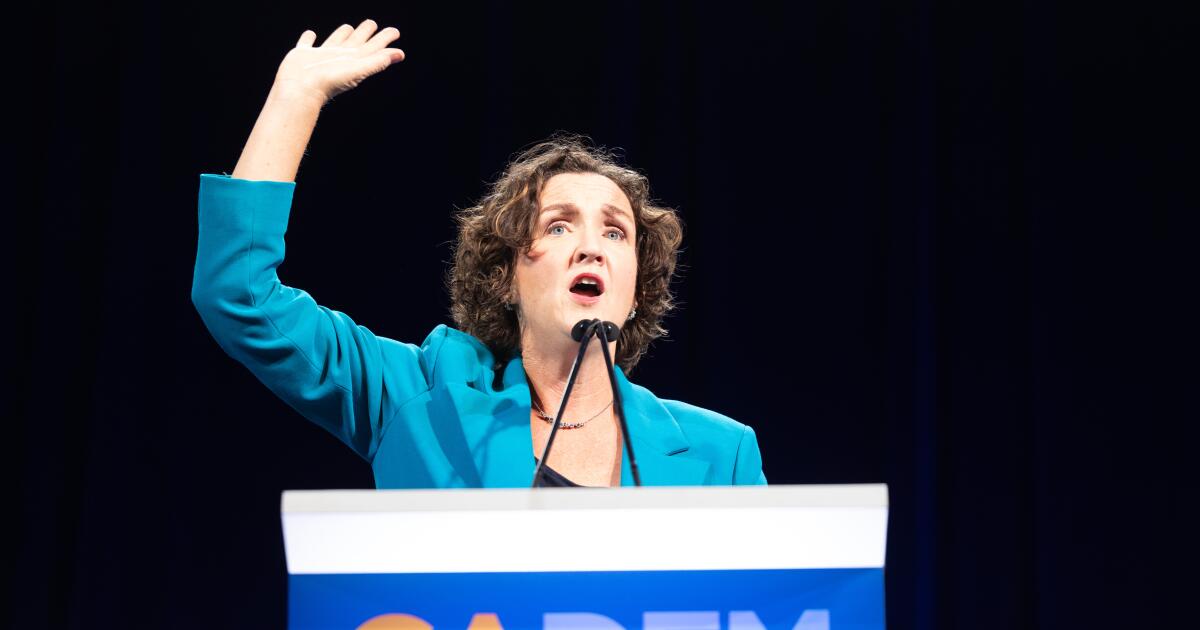
Porter promised a return to yesteryear in a speech that was a far cry from old-time political rhetoric. Addressing more than 2,000 delegates at a recent Democratic state convention in San Francisco, she held up a whiteboard with two words in large letters: “F— Trump.”

And she led the delegates in shouting “F— Trump.”

That was a bit of a turnoff for this old traditionalist, who thinks politics has gotten too coarse and foul-mouthed.

I asked Porter what prompted the profanity and whether she had any regrets.

No, she answered. Candidates were allotted only four minutes to speak and “I was economical with my time.

“I wanted to be very clear in the first 15 seconds that I would fight Trump. I wanted the other three minutes and 45 seconds to be about all other stuff.

“Some people just want to talk about Trump because they don’t want to talk about our own problems.”

Plowing into her speech, she quickly promised to “deliver single-payer healthcare, less-expensive housing, free childcare for all, zero tuition at our UCs and CSUs, and [elimination of] income tax for those earning less than $100,000.

“Those are real affordability solutions.”

Right. But no specifics. How does a state wading in red ink afford all that?

I pressed her when we met later. She didn’t have time for details at the convention, she said. But this is her plan on tuition:

Free tuition only for California residents who are undergrads. And only in their third and fourth years at the University of California and California State University. If they desired free tuition in their first two years, they could attend community college.

Many community colleges already waive course fees for full-time, first-time students. Kids are better educated in their first two years at community college anyway, the UC professor said.

Many liberals complain that free tuition would waste tax money on rich kids who don’t need it.

“I’m a believer in universal programs” that don’t base eligibility on income, Porter said. “Something I learned in Congress. You know what never gets cut? Universal programs such as Social Security and Medicare.”

Anyway, she added, “Kids from really wealthy families go to Harvard or USC or other options.”

Public school tuitions are bargains in California compared to other states and private universities.

At UC, annual tuition is roughly $14,900 and at CSU it’s around $6,500. Without tuition, UC would lose roughly $5.9 billion and CSU $3.7 billion, state budget officials say.

But under Porter’s plan, the universities would lose much less. They’d still collect tuition from freshmen and sophomores and hefty levies from non-Californians. Also student aid could be cut back if kids weren’t saddled with tuition.

Hiking the corporation tax from 8.84% to 9.5% “would generate way more than I need for tuition-free,” Porter said. “I would use any extra money for free childcare.”

Political promises often aren’t worth a nickel. But tenacious and feisty Porter’s free tuition pledge might be worth at least a few bucks. And, maybe some votes.

What else you should be reading

The must-read: Veteran Rep. Darrell Issa decides not to seek reelection in new Democratic-leaning district.
Internal combustion: Anxiety grows among California Democrats as gubernatorial candidates rebuff calls to drop out.
The L.A. Times Special: Yes, Republicans have a chance in California governor’s race. Here’s our expert analysis.

Until next week,
George Skelton


Was this newsletter forwarded to you? Sign up here to get it in your inbox.

Source link