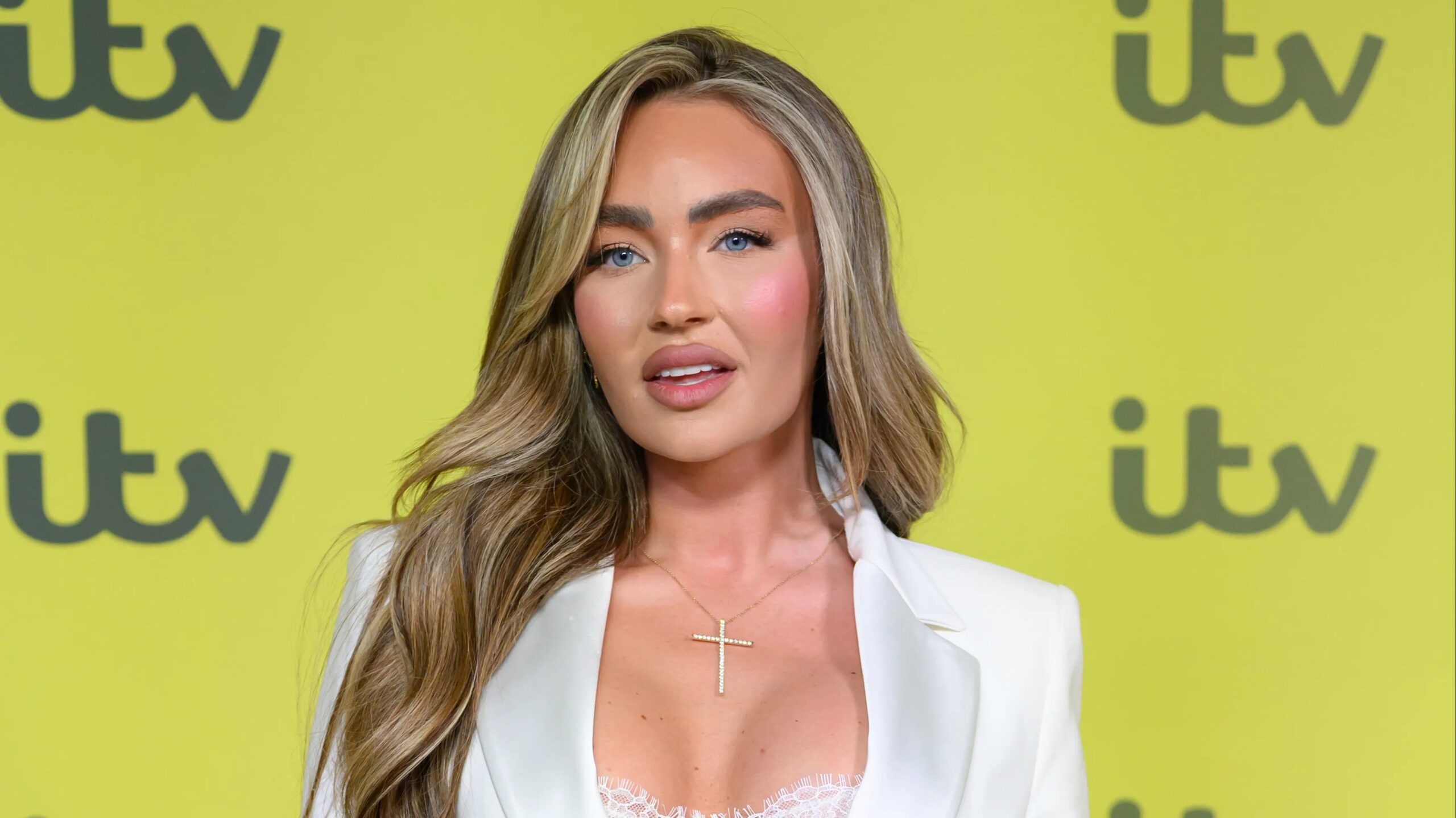
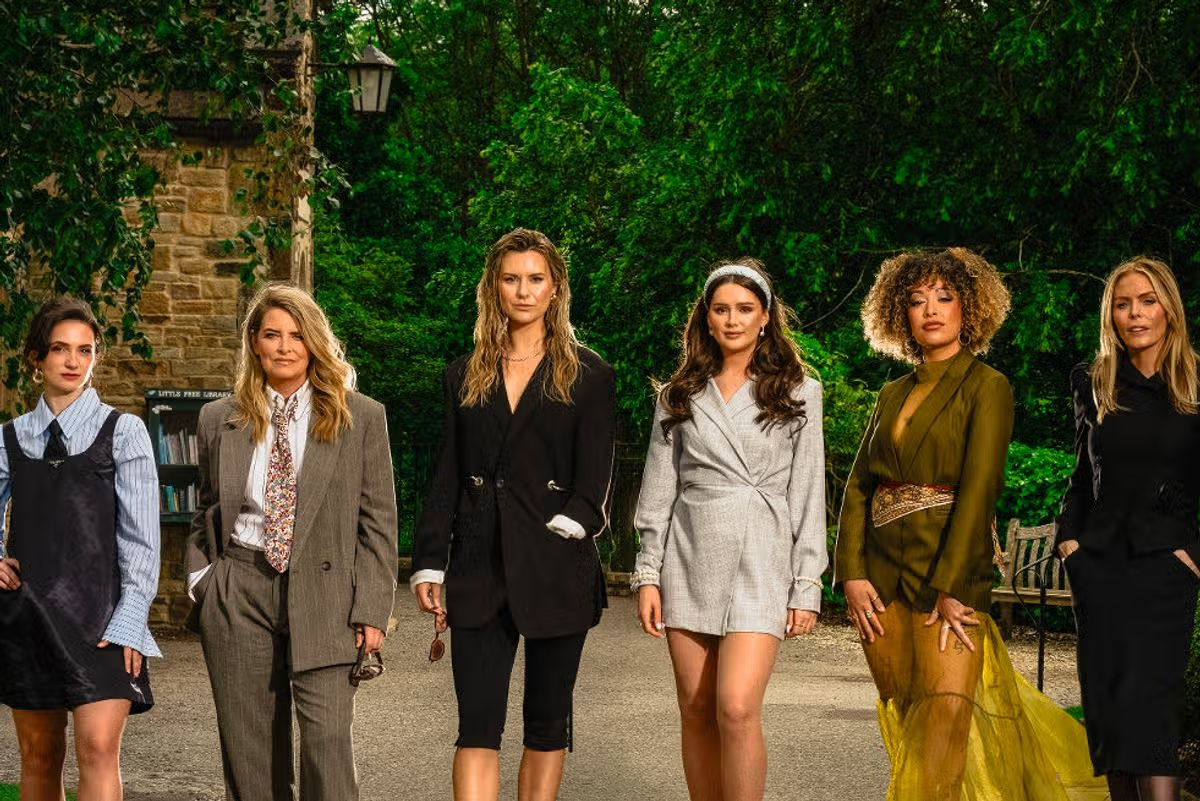
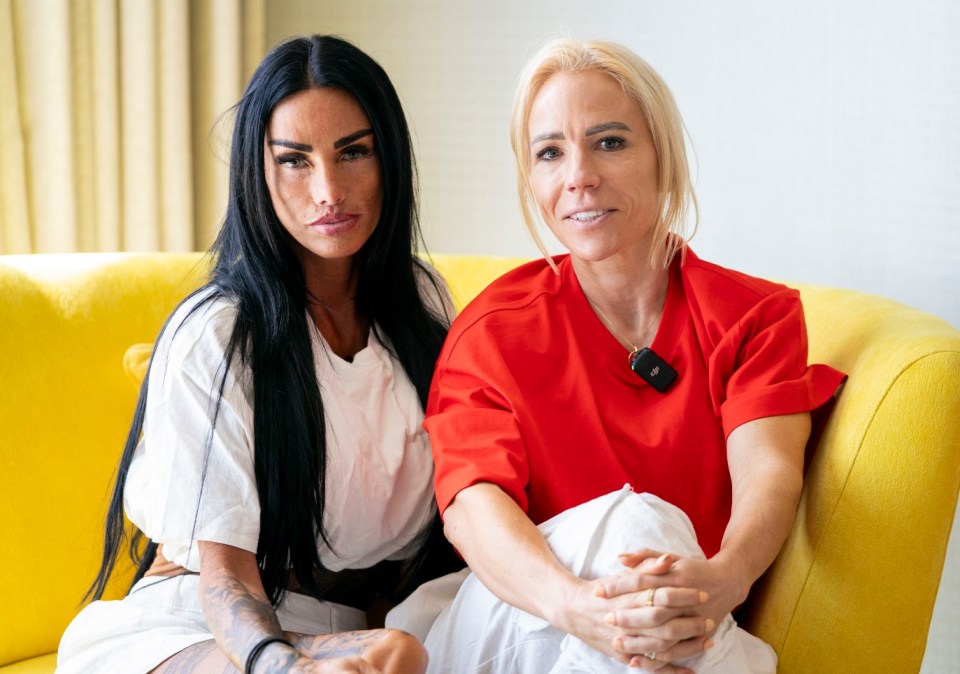
SHE’S long been known as one of Towie’s most fiery personalities, but Ella Rae Wise has now broken her silence on a fresh fallout with a co-star – and revealed exactly what’s going on behind the scenes with an ex she once couldn’t be in the same room as.
Speaking to The Sun, the 26-year-old lifted the lid on the real story behind her rocky relationship with former best friend Dani Imbert, addressed another friendship that has quietly crumbled away from the cameras, and explained what it’s actually like filming alongside ex Dan Edgar these days.
Ella Rae Wise, left, and Dani Imbert were once part of Towie’s tightest inner circleCredit: GettyThe pair’s friendship has now fizzled out for good, Ella saysCredit: Getty
When it comes to Dani, Ella insists there was never one big bust-up, but rather a realisation that the loyalty she was giving out wasn’t being returned.
She said: “I would just say we decided not to be friends anymore. I don’t really know why on her behalf, but for me people always scream loyalty, but when the shoe is on the other foot, loyalty probably isn’t that strong towards me.
“But I’m the one that needs to be seen to have loyalty everywhere and cut my nose off to spite my face. With this specific friendship, she was okay doing what she wanted to do behind my back with people who didn’t like me.
“So, it wasn’t a mirrored friendship. It was one-sided is how I feel. With time going on, I think I prepared myself for this… I could see it coming.”
Ella and Dani first became close after Dani joined the show in 2021, quickly forming an inseparable trio alongside Junaid Ahmed that dominated cast trips, nights out and red carpet appearances for the best part of two years.
Matters were made worse when Dani and Junaid began socialising with Chloe Brockett – Ella’s long-running nemesis on the show – something Ella viewed as the ultimate betrayal, accusing Dani during fiery on-screen rows of being spineless and easily led by Junaid.
The pair did appear to patch things up by March 2024, but Ella admits the relationship never really recovered, and their apparent truce hasn’t lasted.
In a teaser shared on Towie’s socials with Ella and her co-star Jodie Wells, Ella reflected on a moment where she found herself defending Dani in her absence, saying: “I defended her in a room she wasn’t in with Jonnie… why was I being so nice?”
Jodie pointed out that Ella had been “really defending Dani… which is really nice considering she wasn’t being that much of a friend to you at that time,” before asking where things stand between them now.
Ella replied: “I’d say the friendship is probably quite non-existent. I didn’t ever think I’d be in this position with Dani. We’ve fell out before and we always made a pact that we wouldn’t fall out again.”
But it seems the girls have gone back on their word, with Ella adding: “I don’t see where the friendship can go,” while Jodie suggested: “Maybe you’ve outgrown each other.”
Asked by The Sun whether she and Dani have fallen out again, Ella made her feelings clear, admitting there’s little chance of a reunion this time round.
The pair have now settled into two firmly separate camps within the cast, with Dani remaining closely aligned with Freddie Bentley, while Ella sticks by her pal Harry Derbidge.
The two groups manage to film together during big cast scenes and parties, but rarely mix on a personal level.
Dani isn’t the only co-star Ella has fallen silent with, though.
She also confirmed she and former best friend Freddie are no longer on speaking terms, telling us bluntly: “No. I’m alright with it, though. I don’t feel any type of way about it.”
Ella and Freddie were close pals long before Freddie officially joined the show and, when he did make his debut, he wasted no time stepping up as one of Ella’s fiercest defenders on screen, backing her throughout her dramatic falling out with Dani and Junaid.
The two became practically inseparable, filming together constantly and championing one another in the media, but their bond hit a wall during a Towie Christmas special when an explosive row – fuelled by shifting group loyalties and Ella’s closeness with Harry Derbidge, who already had history with Freddie, triggered a complete breakdown in their friendship.
Freddie later confirmed on GK Barry’s podcast Saving Grace last year that the pair were “not friends” anymore, and while the two briefly appeared to patch things up during a cast trip to Vietnam earlier this year, secondary drama involving Saffron Lempriere and Elma Pazar reignited old tensions, with a frustrated Freddie quitting the trip early and flying home.
Freddie has since buried the hatchet with Harry but, as Ella’s own words confirm, his friendship with her shows no sign of being repaired heading into the new series.
Dani and Freddie are far from the only names on Ella’s list, either – the star has built up something of a reputation over the years for falling out with those closest to her.
Ella has also fallen silent with former best friend Freddie BentleyCredit: ITVbeThough it’s not all feuds for the star – as she admits things with ex Dan Edgar are now ‘amicable’Credit: ITV
Her rivalry with Chloe Brockett remains one of her longest-running and most explosive, with the pair’s friendship collapsing not long after they joined the show together in 2019 when Ella began dating Chloe’s ex, Harry Lee – a feud that has seen the two repeatedly clash on camera ever since, each branding the other insincere.
Her fallout with Junaid also stemmed from that same Cyprus trip, with Ella accusing him of being controlling and toxic and of deliberately turning mutual friends against her.
Meanwhile her relationship with Amber Turner has been fraught since 2022, when Ella claimed Amber’s then-boyfriend (and her now-ex) Dan Edgar behaved inappropriately towards her on a night out. The feud reignited in 2024 once Amber and Dan split and Ella and Dan struck up a holiday fling of their own while filming in Bali.
Which brings us to the one relationship that, remarkably, appears to be going in a positive direction.
Despite that turbulent history, Ella insists she and Dan have found a way to move past their issues, telling us: “We’re literally amicable, polite to each other, keep it moving. And it’s easy because we’re in the same group.
“The boys banter it and break up the awkwardness. It’s been fine. This series has really been a good series for me. I’m feeling comfortable around everyone.”
It’s a far cry from the tension that once defined their dynamic, after Ella and Dan’s relationship first hit headlines in Bali following his split from Amber.
Things later boiled over during the cast trip to Vietnam for season 36 when Courtney Green accused Dan of “flirting” with Ella and being disrespectful to his then girlfriend Chloe Lewis.
But with their wider friendship group having shifted considerably since then, the pair have settled into a far calmer footing – something Dan himself has previously credited to their mutual closeness with Jodie Wells and James “Diags” Bennewith.
As for her own life away from the group dramas, Ella tells us this series has marked a real turning point in how she feels in herself.
She said: “It’s been fun. It’s been nice to do different things and have happy moments. This series is so different. So much better.
“The change is probably how I feel in myself. I think I needed to focus on how I feel in myself to be able to get over things. So, I did that, and yeah, I’m over it!”
The Towie favourite told us how she’s in a much better place within herself this seriesCredit: GettyElla has found happiness with new boyfriend Ricky. The pair have sparked rumours of an engagement after Ella was pictured with a gold band in Marbella, pictured aboveCredit: fernemccann/Instagram
She added that rebuilding her confidence has come from learning to love herself again and leaning on easier, less intense friendships, saying: “I think it’s more finding love for yourself again. That comes in time, doesn’t it… And the friends you have around you. That’s changed.
“I have a lot more easy-going friendships. They’re not hard work. We don’t have to be attached to each other 24/7. We’ve all got our own lives. It’s been good.”
By Rachel Cusk Farrar, Straus and Giroux: 192 pages, $27
If you buy books linked on our site, The Times may earn a commission from Bookshop.org, whose fees support independent bookstores.
Rachel Cusk is not a people pleaser. The prolific, award-winning British author’s novels are often plotless, discursive and frustratingly obtuse. Yet Cusk has found a large fan base for her work, mainly because she is a deft excavator of the human psyche, a writer who can articulate emotional states with uncanny precision and insight.
On a formal level, Cusk’s new book, “Life Of M,” closely adheres to the rigorously calibrated approach that has been so successful for her across 11 novels. In classic Cusk fashion, “Life of M” unfolds from the inside out. It is resolutely internal and hermetic, told from the point of view of a highly observant and self-conscious narrator. When Cusk writes that a character’s smile “had a sweetness that almost seemed to reproach those who looked at it for their dim and suspicious view of life,” it’s that “almost” which saves the line from sinking of its own weight, one of Cusk’s nuanced brushstrokes that give her prose lift and bounce.
“Life of M” is a two-hander. The primary driver of the narrative is an unnamed writer who has approached a famous actor — the M of the title — with the proposition of ghosting her autobiography. This is the extent of Cusk’s setup. The novel is about as stark and stripped of biographical details as a Samuel Beckett story. Cusk is far more interested in how the writer’s identity is unmoored by the actor, and how the world bends to M’s will and thus changes its shape in her presence: “Standing in the street, I realized that I could not be myself around M. She was friendly, generous, disarmingly modest, yet everything I did or said in her company was false. It was as if I was acting, while M came across as authentic and real.”
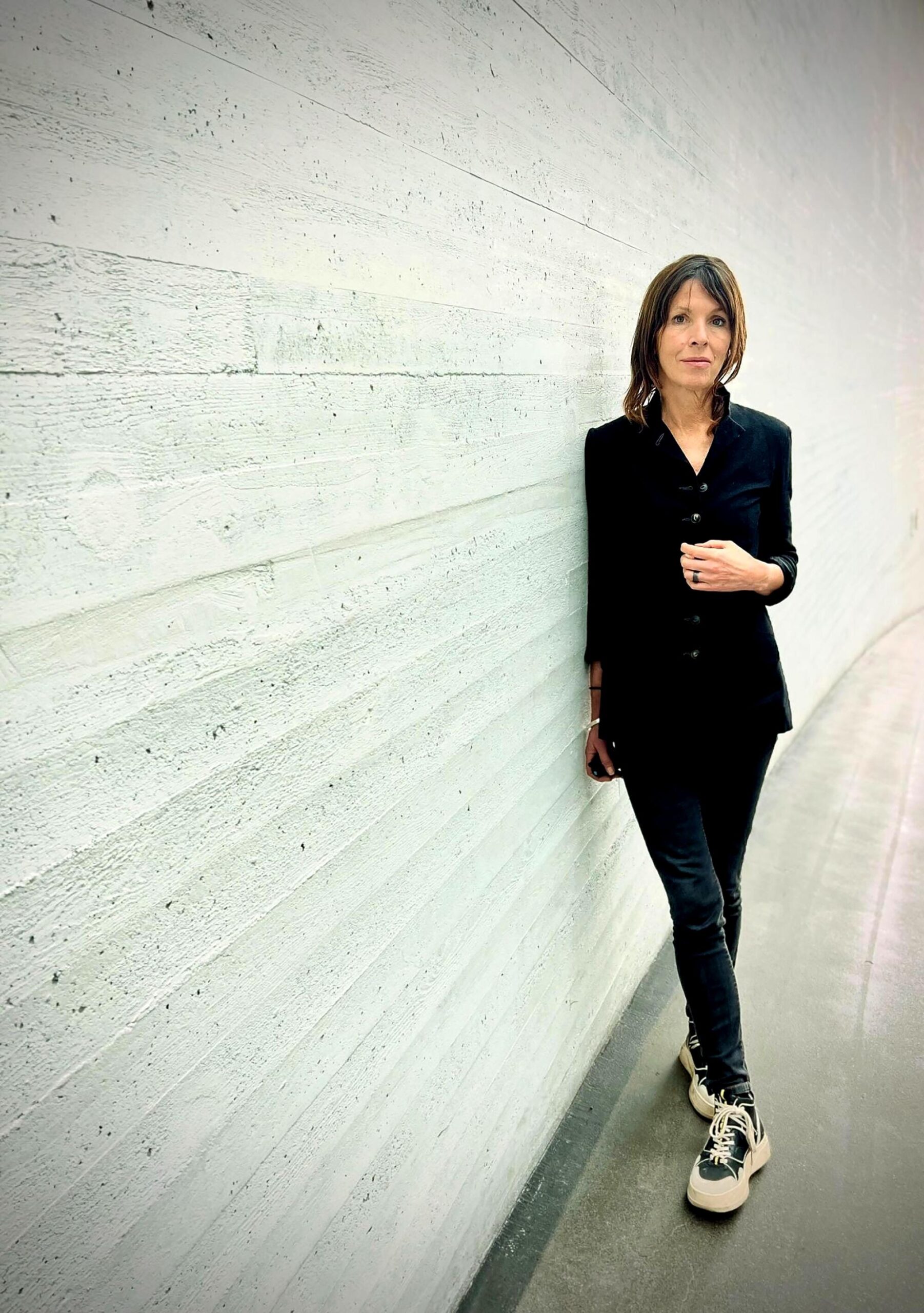
Author Rachel Cusk
(Siemon Scamell-Katz)
Interspersed between these scenes are chapters that shift time and tone. They appear at first to be the writer’s own story, reflections on the past and life apart from M; the “we” in these sections might be referring to siblings or partners. But they are too strange to be memoiristic: “In the evening we flower; like strange nocturnal plants we put out our display.” Then: “Even if we spend the evening at home this feeling of integration, or our interior and our exterior fusing together, occurs.” Are we in M’s head? Is the collective pronoun meant to be a proxy for her private and public selves? These sections are the least effective parts of Cusk’s book, as they are frustratingly indeterminate and hazy.
As the writer and the actor spend time together, and the narrator tries to pry open some small window into M’s psyche, the process of gathering material is constantly being thwarted by M’s casual instructability. It seems M has perfected the art of using candor as a carapace, so that the image of her authentic self recedes the more Cusk’s writer spends time with her. M is not governed by the usual impulses of the civilian; she has no use for love or hate, desire or abnegation. “Acting involved pretending to be other people, whose own emotional states —such as she understood them — could preoccupy her for a time,” writes Cusk. “Once they were completed, she was as locked out of these recordings as the millions of other eyes that watched them.”
M and the writer move through highly mediated spaces that amplify certain features and downgrade others, a kind of edited, hyperreal landscape. M researches a part in a mansion that has been meticulously art-directed to resemble the house of a family who in fact never lived there. Cusk describes these spaces in great detail, as if they were fetish objects. The mansion’s interior is “not heavy or dark,” she writes, “rather it is light and mellow and the panels have finely carved patterns around their edges.” It is the seduction of surfaces Cusk is exploring here, the ways we are taken in by so much that is chimerical: lavish interiors, actors, our own doubled selves.
Cusk has previously explored this gap between truth and signifiers of truth in her “Outline” trilogy. But “Life of M” feels different, perhaps because the world feels far different than it did eight years ago, when “Kudos,” the last book in the trilogy, was published. Now that we have fallen straight through the looking glass of the internet, that gap has narrowed to the extent that we are having far greater difficulty discerning reality from its uncanny simulations. Sadly, we are complicit in this occluding of authentic experience. Millions of us toggle so frequently between our real lives and the well-curated fantasyland of our social media personas that it’s scrambled our neural pathways. We are living the double consciousness of public figures no less readily than a celebrity like M. The notion of a “complete inversion of internal and external that fame brings about” is no longer exclusive to the famous.
According to internet gossip, Cusk’s M is in fact a shadow portrait of Natalie Portman. And there are strong hints in the text that indicate this might be the case. But to think of this novel solely as a journey to the center of Portman’s mind is not only irrelevant; it cheapens Cusk’s project. What the novelist is getting at here resonates far beyond a single celebrity. This is a short, potent book that has much to say about the spiritual rot of our present culture.
Emma has been an integral part of the Kardashian family’s success for the last decadeCredit: YouTube/Emma GredeShe and Khloe launched Good American in 2016 and it made $1m in its first dayCredit: Getty Images
Emma, 43, and KoKo partnered to launch denim brand Good American back in October 2016, which made a staggering $1million in its first day.
But fast forward ten years, and while Khloe remains an owner of the fashion line today, she’s since expressed she no longer feels the need to be as involved.
Sign up for the Showbiz newsletter
Thank you!
“Good American is doing so well, and Good American is strong enough and stable enough to sustain on its own,” she explained during a recent episode of her podcast Khloe in Wonderland.
With Khloe and Emma now spending less time working together their friendship has essentially dissolved, The Sun understands.
Khloe unfollowed Emma on Instagram earlier this year and insiders tell us they’ve ‘consciously uncoupled’Credit: YouTube / Khloe KardashianEmma also teamed up with Kim to launch Skims in 2019Credit: Marc Patrick/BFA.com/Shutterstock
A well-placed insider tells us: “Over time, Khloe just wasn’t as involved – she started cancelling events and not promoting the brand.
“She has a lot on in her personal life, as fans know, but Emma is a businesswoman first and foremost and that just didn’t wash with her.
“Khloe has so much going on and it just wasn’t a priority in her life. In theory, Khloe is still the founder of Good American but it’s Emma who does the hard work behind the scenes. I don’t think Khloe & Emma are on speaking terms now.”
Earlier this year, Khloe dropped the biggest hint yet she was ‘consciously uncoupling’ from her friendship with Emma when she unfollowed her on Instagram.
Our source adds: “They are both smart women who realised it was time to part ways professionally, and they had to navigate it carefully so the brand wasn’t damaged as they are both heavily involved.”
After setting up Good American with Khloe, Emma later teamed up with Kim, 45, to work on her shapewear line SKIMS which debuted in 2019.
And she also joined forces with Kylie Jenner, 29, in 2023 to launch her fashion brand KHY.
But in recent years Emma’s own star has been on the rise. She joined Dragon’s Den in 2024 and she’s been a recurring guest investor on the American version Shark Tank since 2021.
She launched her podcast Aspire in 2025 and earlier this year released her book Start With Yourself: A New Vision for Work & Life.
The Sun understands that, while she was initially happy to fade into the background on projects with the Kardashians, Emma is keen for her hard work to be seen these days.
Emma, pictured with Kris Jenner and Khloe, is said to have a strictly business-only relationship with the family nowCredit: WireImageFans think Emma took a swipe at Khloe when she had Cardi B on her podcast recentlyCredit: YouTube/Emma Grede
“As her profile has grown over the last few years, Emma wants her own hard work recognised,” an insider said. “Good American was Emma’s brain child, but it was Khloe’s investment and her profile that made it happen.
“The fall out with Khloe didn’t affect Emma’s relationship with Kim or the rest of the family, they’ve compartmentalised that off, but it’s very much a business-only relationship.
“Emma is still very involved with Skims, and despite Kim being a mum of four, she’s still extremely hands on and promotes the brand all the time.”
Fans were left convinced that Emma was taking a swipe at Khloe during an interview with Cardi B on her podcast earlier this year.
Rapper Cardi, 33, said: “Oh my God, please y’all – if you ever want to build something, please choose good partners.
“Not everybody with money [is a] good partner. I’m telling you.”
Sparking speculation that she was taking aim at Khloe, Emma was quick to quip loudly: “Oh yeah, say that again…”
Our source added: “Going their separate ways professionally has not been easy and it has affected Emma and Khloe’s friendship, because it’s hard to move past ending a working partnership and there are grievances on both sides.”
The Sun has reached out to representatives for Khloe and Emma for comment.
THEY’VE been soaking up the Ibiza sunshine, while wrapping their arms around one another like two lovesick teenagers at a beach rave.
So it’s only natural that fans have begun asking whether former glamour model Katie Price, 48, and party king Wayne Lineker, 64, could be embarking on a new romance after a trying year for Pricey – who ditched her wedding ring for the Ibiza bash.
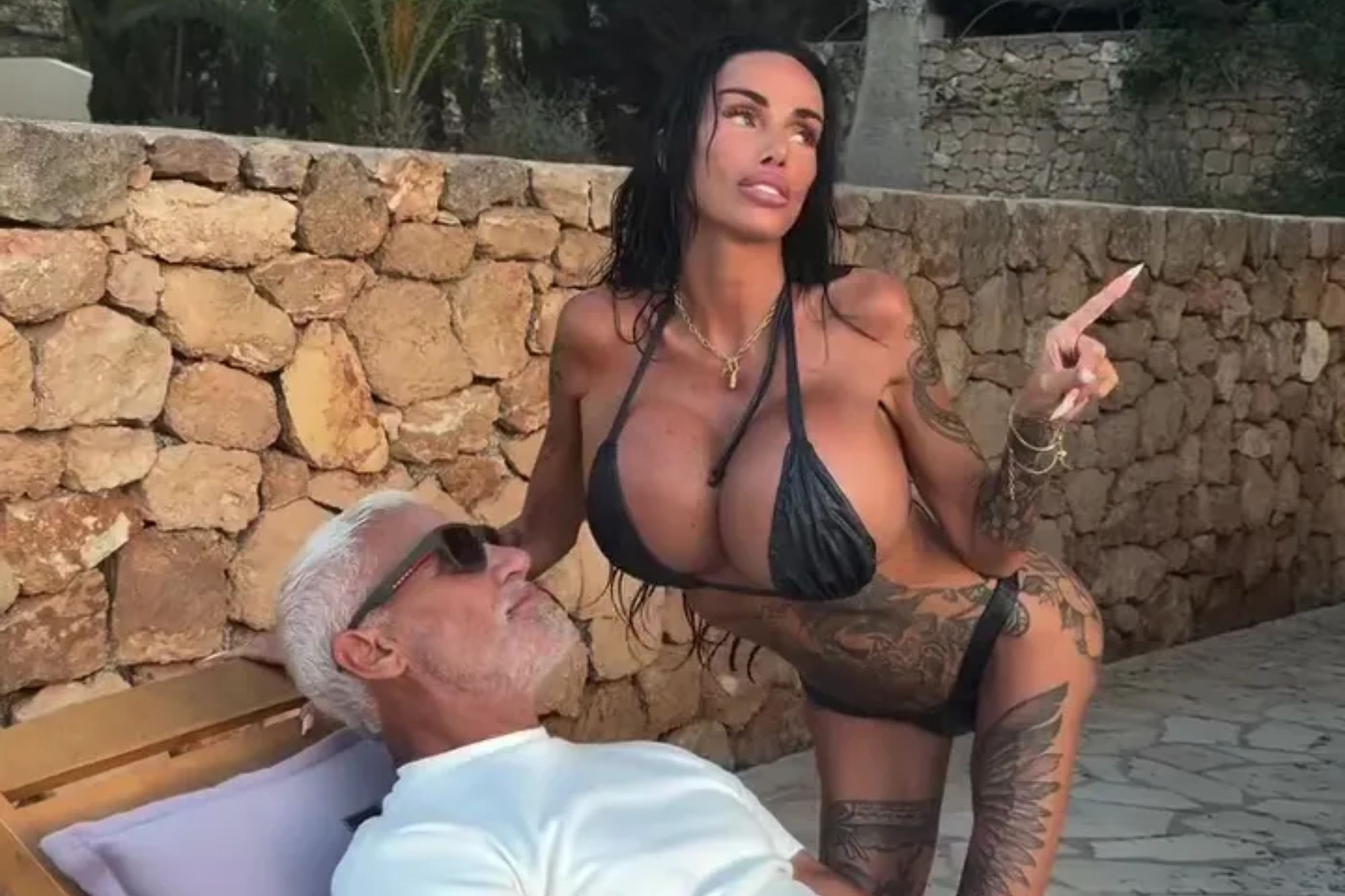
It’s not the first time Katie Price has visited Wayne Lineker at his O Beach Ibiza resort (here pictured in 2025)Credit: BackGridBut this year, Katie put on eye-popping display in this tiny bikini for the businessman who made a cheeky joke about her boobsCredit: waynelineker/Instagram
Pictured on a sunbed at the O Beach Ibiza last week, with Katie wearing a barely-there bikini, the tactile displays of affection between the two showbiz veterans had everyone asking the same question: what on earth is going on here?
Indeed, one insider told me: “It certainly got everyone talking. Naturally people started to wonder if there could be a romantic spark between the pair.
“While many questions have been raised about Katie’s husband Lee Andrews and the reality of his finances, Wayne is the real deal.
“He’s raking it in with all his Ibiza businesses and he’s not ashamed to show off the rewards of his hard work.”
It’s no secret that Katie’s love life has been a rollercoaster of late.
After a whirlwind romance and shock January wedding to Dubai-based businessman Lee, recent months have brought a storm of drama.
Wayne, brother of football legend Gary Lineker, is known as a party boy, and many wondered if the newlywed was seeking comfort in his famously welcoming arms.
After all, he has a taste for models – with his past girlfriends including model Danielle Sandhu and the late Love Island star Sophie Gradon.
But before anyone starts buying a wedding hat for another Pricey trip down the aisle, we can reveal the real truth behind their close connection.
According to those close to Katie, the pair are strictly platonic and the tactile body language is simply the result of two larger-than-life personalities who love letting their hair down together.
“Katie and Wayne are just brilliant mates, plain and simple,” a close insider spilled to us last night.
“People look at the photos of them cuddling up or whispering during the eclipse, and because it’s Katie, they instantly assume there’s a massive romantic scandal brewing.
“But honestly? It’s completely innocent. They just get each other.”
My source continued: “They are both veterans of the showbiz scene and they both love a massive party.
“When Katie is in Ibiza, Wayne is her go-to guy. He treats her like royalty and ensures she has a great time.
“There is zero romantic spark there. She sees him like a fun, cheeky older brother who knows exactly how to throw the best parties.”
Katie’s recent trip to the Mediterranean wasn’t just a wild solo getaway to escape the exhausting Lee Andrews saga back home. It was a fun-filled adventure for her beloved eldest son Harvey, 24, who joined her on the Spanish island.
And it’s actually Wayne’s bond with Harvey that has cemented his status as one of Katie’s most treasured pals.
Harvey, who has Prader-Willi syndrome and is also autistic and blind, was also at the sprawling Ibiza resort dancing away to his favourite tunes.
Katie Price beaming in a mint bikini as she poses alongside Wayne Lineker and Harvey at O Beach Ibiza last weekCredit: waynelineker/InstagramHarvey Price is treated like an absolute icon as he hits O Beach in Ibiza as mum Katie Price ditches her wedding ring againCredit: waynelinker/Instagram
For protective mum Katie, seeing the entrepreneur go out of his way to ensure her boy had a spectacular time meant the absolute world.
“Wayne is absolutely brilliant with Harvey, and that’s the fastest way to Katie’s heart. Not romantically, but purely as a loyal friend,” my insider revealed.
“Wayne rolled out the red carpet for them and even made sure he had his favourite meal of Spaghetti Carbonara.
“He makes Harvey feel so special, safe, and included in all the fun. Katie is endlessly appreciative of that.”
This supportive dynamic is especially poignant for the mum-of-five, given the well-documented absence of Harvey’s biological father.
Former Premier League footballer Dwight Yorke has played no part in his son’s upbringing, leaving Katie to deal with all of Harvey’s very complex needs on her own.
“It genuinely breaks Katie’s heart that Harvey’s real dad has never done a thing for him, so when she sees men like Wayne stepping up just to be kind, patient and supportive, she is so touched,” the pal explained.
“Wayne doesn’t have to go out of his way for Harvey, but he does it because he has a big heart. That’s why Katie is so loyal to him. She will defend their friendship to the hilt.”
So, while the pictures of them cosying up under the sun might scream new romance to the untrained eye, the reality is far sweeter.
It is clearly a feeling shared by Wayne, who took to Instagram to pay tribute to Katie.
He wrote a “special message” to the businesswoman, writing: “We’ve certainly had our moments over the years, you more than anyone knows that.
“We’ve faced obstacles, made mistakes and sometimes been our own worst enemies.
Wayne and Katie were also seen cuddling during last year’s getaway to Ibiza after years of friendshipCredit: INSTAGRAM @waynelinekerKatie’s husband Lee is said to remain locked up in Dubai after being sent to prison last month for the second time this yearCredit: Instagram
“But through it all, there’s one thing I believe we’ve always shared: our two hearts and our genuine love of helping other people.”
With the baggage of her recent marital woes weighing heavily on her mind, Katie wanted a place to let off steam with her son.
And the O Beach did not let her down. The club’s waitresses, wearing skimpy outfits, added to the upbeat party vibe, showing off their best moves on the stage and holding up cards spelling ‘Harvey’ as partygoers chanted his name.
Harvey looked over the moon and threw his hands up in the air with joy.
“Katie knows exactly what she’s doing,” our insider laughed. “She knows people will talk when she wraps her arms around Wayne in a tiny bikini. But she doesn’t care anymore.”
Whether her husband Lee, who remains in Al Awir prison, will be equally nonchalant remains to be seen.
Things people don’t want to do this summer, as evidenced by poor ratings: Watch CBS news anchor Tony Doukopil. Tune into Paramount+’s sci-fi teen drama “Star Trek: Starfleet Academy.” Read President Trump’s Truth Social posts.
No matter how much Trump posts, and he has been posting a lotlately, traffic to the platform he uses as his megaphone for official White House statements and personal rants has fallen off significantly this summer. Last month, the overall number of monthly visitors to Truth Social was down about 36% from where it was in 2025, according to the online tracking firm Similarweb. The numbers were similarly dismal in June.
But Trump’s slumping media fortunes may soon get an infusion of cash, or bitcoin, or whatever it takes to line his coffers before the jig is up.
Never one to leave a source of income untapped, the president has come up with yet another way to add to the $2.2 billion he made in just the first year of his second term. His majority-owned Trump Media & Technology Group earlier this month announced that it was rolling out a new service aimed at cashing in on the president’s every word.
Truth API is a subscription service that offers early access to posts from Trump and other notable users of the platform, for a price. It’s charging fees of up to $100,000 and month.
But there’s a hiccup in the president’s latest grift. On Wednesday, media organizations Freedom of the Press Foundation and The Intercept sued Trump, filing a complaint saying that providing quicker access to his posts to those who pay was “extraordinary, corrupt, and unconstitutional.”
Their suit alleges that Truth API contradicts the First Amendment’s guarantee of equal public access to the president’s statements and violates the Fifth Amendment by granting preferential access for “unreasonable sums.” The lawsuit filed in the U.S. District Court for the Southern District of New York, asked the court to block Trump from publishing official government information exclusively on Truth Social.
So why is this particular money-making scheme garnering so much attention outside Trump’s many other grifts? Because a president’s words can, and often do, sway the stock market. In the frenetic world of Wall Street trading, early access to statements and news from the Commander-in-Chief gives subscribers an edge, and as NPR pointed out, that could mean a difference of millions of dollars.
Unlike any other sitting U.S. president, Trump in his second term has ignored traditional means of communication such as press briefings, live addresses or posting official announcements, executive actions, press releases, and statements on the official White House Website. He’s done so in favor of communicating through his own privately controlled platform, delivering wild posting sprees that often forgo the fact-based, informative briefings we the people still need from our elected officials. But even back when he was using Twitter (now X) during his first term, the White House said his tweets should be considered official statements.
That standard still holds for his frequent barrages of boasts, insults, threats, grouses and indecipherable dispatches via Truth Social. After the humiliating failure of his America 250 celebration, he fired off 67 posts on Truth Social in just two hours, posting almost every single minute between 11:12 a.m. and 1:14 p.m. His musings ranged from attacks on a federal judge to a photo of himself at a 1991 New York City tree-lighting ceremony with his “Home Alone 2” co-stars.
That spree is now among the thousands more posts from the president, that have not been followed up by announcements from the White House outside of Truth Social. “In other words, President Trump’s posts are the only way to get official government news,” the lawsuit said.
Trump Media & Technology Group, or TMTG, is majority-owned by the president. It was launched following Trump’s account suspension across mainstream social platforms including Twitter, Facebook and YouTube. The platforms cited risks of inciting violence following the Jan. 6, 2021, U.S. Capitol riot. Trump responded by creating his own platform, and Truth Social debuted in 2022.
But the platform’s parent company, TMTG, has lost money ever since it went public in 2024. On Monday, Trump Media reported a $238-million loss for the second quarter, tied mostly to cryptocurrency assets. Executives told investors on a conference call that they are now going to focus their energy on Truth Social and soft-explained their latest scheme to profit off the presidency.
“Our customers will get published and publicly available posts fractionally faster” than everyone else,” said Kevin McGurn, the company’s interim chief executive. He added that such early access is a “well-established business practice.”
Unless it’s a sitting U.S. president doing the selling. We’re in uncharted territory, once again. But another big question around this new subscription service is whether investors and traders can trust the intelligence they get from early access to Trump’s posts.
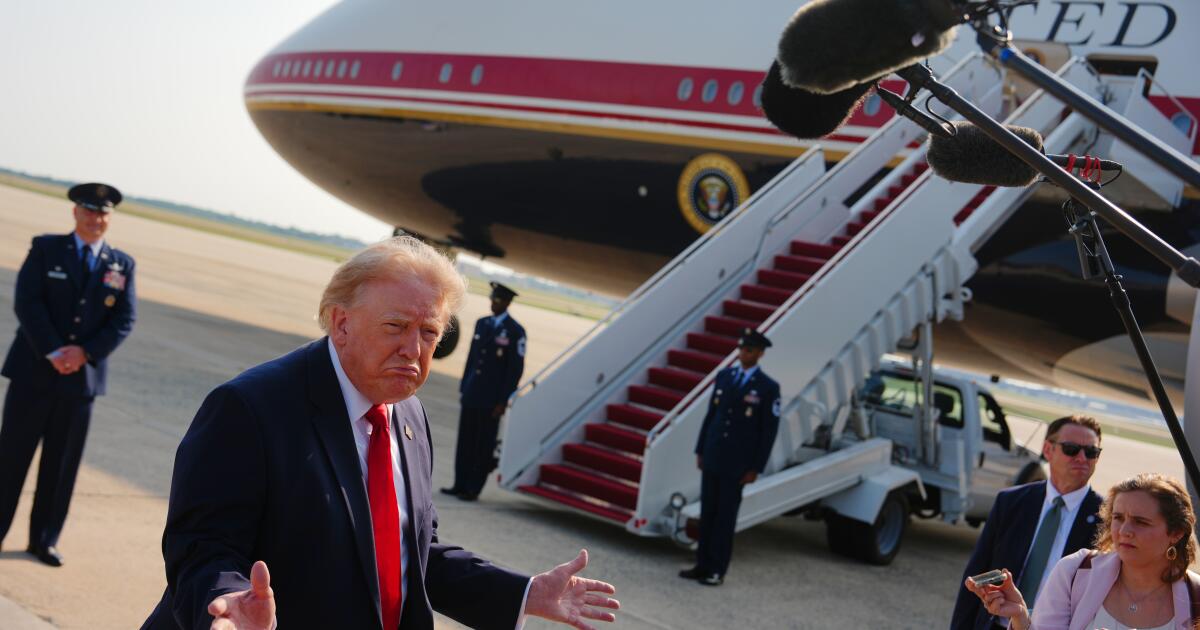
It was revealed this week that the president published deceptive information last month, putting the lives of dozens in danger. Before leaving a NATO meeting in Turkey, he posted that he’d be riding on the older Air Force One “for old time’s sake” instead of the newly retrofitted, Qatari-donated jet. His misdirection was part of an elaborate ruse to mask his transfer from Air Force One to a military fighter jet following intel that Iran may be targeting the president’s plane. The subterfuge involved him stowing away in an airport catering container to sneak onto the jet. Of course a president has to be protected, but Air Force One still had members of the press and his administration aboard when they sent it into the sky. Essentially, they were unwitting decoys.
Sometimes a president has to lie to stay safe. And often times this president peddles misinformation as a means to other ends, like amassing more money for himself while holding onto his seat of power. Paying for early access to Trump’s posts is a great idea — for Trump.
The Intercept and the Freedom of the Press Foundation went to court in New York on Wednesday to shut down Truth API, a subscription launched this month by Trump Media and Technology Group, the Nasdaq-listed company behind Truth Social.
ADVERTISEMENT
ADVERTISEMENT
The subscription provides privileged access to US President Donald Trump’s social media posts straight to trading firms, sending them fractions of a second before they appear on the public timeline, which is enough time for high-frequency algorithms to execute thousands of orders before others process the information.
Contracts run from about $60,000 (€52,000) to $100,000 (€86,600) a month and cover the platform’s 10 most-followed accounts, among them US President Donald Trump, the White House itself, US Vice President JD Vance, FBI Director Kash Patel and Health Secretary Robert F. Kennedy Jr.
More than 10 customers have signed up, mostly high-frequency trading firms, according to company executives.
Interim CEO Kevin McGurn told an earnings call on Monday that subscribers receive news “fractionally faster” than everyone else, having earlier pitched it as a real-time channel for the platform’s most market-moving posts.
US President Donald Trump holds roughly 41% of the company through a revocable trust overseen by his eldest son, Donald Trump Jr., with the stake currently worth close to $1 billion (€866mn).
Official announcements, The Intercept and the Freedom of the Press Foundation argue, belong to the public rather than to whoever pays most for them.
Two constitutional claims
The complaint, which names US President Donald Trump alongside deputy chief of staff Dan Scavino, executive assistant Natalie Harp and the Executive Office of the President, calls the arrangement “profoundly corrupt”.
It argues the service breaches the First Amendment by denying equal access to presidential announcements and the Fifth by conditioning that access on unreasonable sums, noting that many of the 9,000 to 11,000 posts Trump has published since January 2025 came with no White House statement.
“Trump is trying to enrich himself by privatizing government information,” said Ben Muessig, editor-in-chief of The Intercept.
A Trump Media spokesperson countered that critics show “a failure to grasp the distinction between public and nonpublic information”, adding that left-wing activists were weaponising the courts.
The White House has not commented on the lawsuit which follows a request last month from US Senators Elizabeth Warren and Adam Schiff for the Securities and Exchange Commission to examine whether the service undermines market integrity.
A pattern that predates the paywall
The service formalises an advantage that has drawn questions for months.
On several occasions this year, futures markets have registered unusual bursts of activity minutes before major Iran war announcements appeared on US President Donald Trump’s account.
No investigation has reached a conclusion.
The clearest case came on 23 March, when the S&P 500 and oil futures recorded isolated volume spikes at about 6:50am in New York. Fifteen minutes later Trump posted that talks with Iran had taken place and strikes on its energy infrastructure were paused.
Equity futures jumped more than 2.5% and West Texas Intermediate fell almost 6%.
According to one analysis of 1,341 posts between late January and early April, conducted by the Queensland University of Technology, there were 15 episodes that raised suspicions of insider trading.
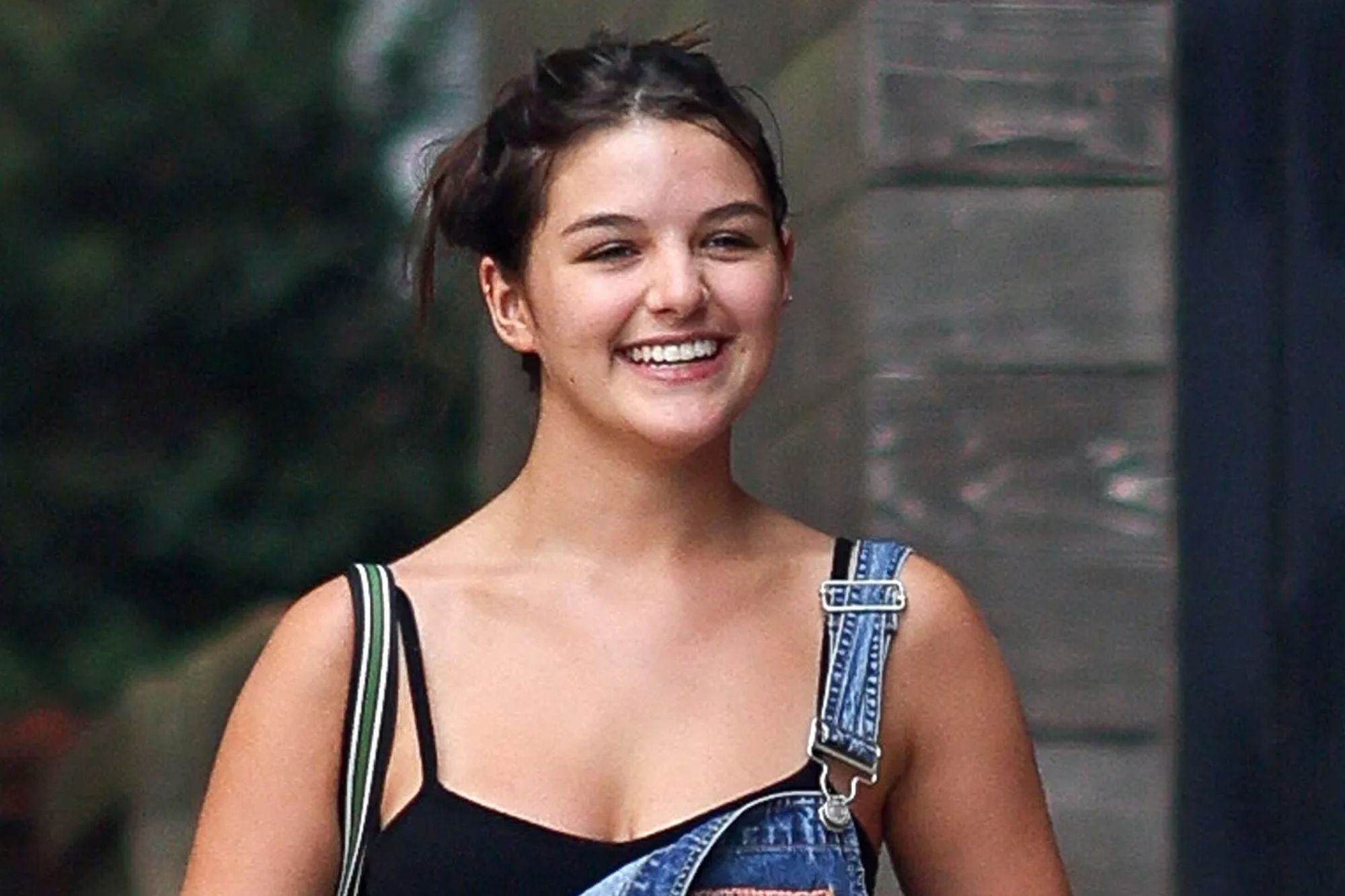
Tom Cruise’s daughter has ditched the Cruise nameCredit: ReutersActress Suri has swapped the name in favour of her mum’s middle name, NoelleCredit: Splash
It was May 2005 and Tom, who divorced fellow Hollywood A-lister Nicole Kidman in 2001, had been dating Dawson’s Creek beauty Katie for just a month.
It seemed the love was mutual, with Katie revealing she was taking lessons in Scientology, a controversial religion founded by science fiction writer L. Ron Hubbard and beloved by her husband.
“I’m really excited about it,” she said, while Tom emphasised: “She makes her own decisions.”
And it seemed TomKat, as they were nicknamed, were flourishing.
Just 11 months after his dramatic declaration of love, their daughter Suri was born.
Katie and Tom wed in November 2006, but after five and a half years of marriage, she apparently blindsided her husband when she unexpectedly filed for divorce in June 2012 because of Scientology and its impact on her daughter.
The move emerged after she publicly registered to vote in Pennsylvania, where she studies under the alternative name.
Suri during a performance of Shakespeare’s A Midsummer Night’s Dream at the Edinburgh Festival FringeCredit: Camera PressSuri’s name tweak in programmeCredit: Supplied
It is also reported she has been estranged from Tom, 64, since she was ten, while remaining close to Katie, 47, who is no longer a Scientologist.
And she seems to have inherited her father’s talent for acting, with critics saying the Carnegie Mellon uni student “stole the show”.
Journalist Tony Ortega, who has investigated the workings of Scientology for three decades, said of the family breakdown: “When Katie split with Tom, any normal Scientologist would be told she is an SP, a suppressive person — an enemy of the church.
“And Suri, being connected to Katie, would be considered a PTS — potential trouble source.
“Tom would be expected to disconnect from them and not have anything to do with them.”
The church says: “A suppressive person (SP) is a person who seeks to suppress other people in their vicinity.
“A suppressive person will goof up or vilify any effort to help anybody and particularly knife with violence anything calculated to make human beings more powerful or more intelligent.
“The suppressive person is also known as the antisocial personality.
“Within this category one finds Napoleon, Hitler, the unrepentant killer and the drug lord.
“But if such are easily spotted, if only from the bodies they leave in their wake, antisocial personalities also commonly exist in current life and often go undetected.”
Suri with mum Katie HolmesCredit: BackGridCruise with daughter Suri in 2007Credit: Getty
Bella and Connor were adopted by Tom and Nicole in 1992 and 1995 respectively.
As youngsters, the pair divided their time between Sydney and Los Angeles, although they also lived in Hertfordshire for three years.
When their parents split up, the stars would initially spend their time between the children.
With dad Tom, they visited Scientology sessions at the church’s main hub in Clearwater, Florida, where followers spoke about attaining “spiritual freedom”.
In 2004, instead of seeing their mum, they were packed off to a Scientology summer camp.
The next year, they were living full-time with their dad.
In 2019, Bella told in a promotional email for Scientology how she was “drowning in problems” before training as an “auditor” — which is basically a counsellor who helps other believers shed “spiritual distress” using an “E-meter”.
The device is similar to a lie detector and delivers low-voltage electricity to the subject.
The email said: “This is what I had been searching for. The missing piece. Thank you to my dad for everything. We all need to do this. Wow. What an accomplishment. It’s hard work. It’s a lot of effort.
“It’s a few meltdowns and running to the bathroom to have a mini- episode, but it is worth everything because you will get through.
“This is a gift to yourself and so many others. It doesn’t matter if you aren’t going to be an auditor or aren’t going to join staff. If you are going to make it as a being for the long run, you need this.
“That’s the truth. So stop messing around and get going.”
Tom Cruise leaping on a sofa while telling Oprah Winfrey about dating Katie HolmesCredit: Not known clear with Picture DeskTom does seem to be in contact with his two other childrenCredit: Alamy
However, despite her support of Scientology, Bella has not stayed living near her dad. Instead, she has switched the bright lights of Hollywood for the far less glitzy Croydon, South London.
She lives in an ordinary semi-detached house with her British husband, Max Parker, 34, an IT consultant she met through friends and married in 2015.
She works as an artist, selling trendy tote bags and T-shirts with her prints on, and posts Instagram pictures and videos of her artwork and trips to Brighton.
Previously, neighbours told The Sun: “I wouldn’t have known her if she’d come up and smacked me in the face. I don’t keep up with celebrity culture.
“They have a reptile of some kind — we can see the red light of the tank. That’s all anybody seems to know. She’s very mysterious.
Former Scientologist and US actress Leah Remini, 56, wrote a book about her time in the church called Troublemaker: Surviving Hollywood And Scientology.
In it, she said she asked Bella if she saw her mum often and claims Bella replied: “Not if I have a choice. Our mom is a f***ing SP.”
Nicole, who left Scientology around the time of her divorce from Tom, has previously said: “I’ve chosen not to speak publicly about Scientology. I have two children who are Scientologists and I utterly respect their beliefs.”
She reiterated this in 2018, saying: “They are able to make their own decisions. They have made choices to be Scientologists, and as a mother it’s my job to love them.”
Bella Kidman Cruise, the adopted daughter of Tom Cruise and Nicole Kidman, lives a normal lifeCredit: Instagram/@bellakidmancruiseConnor Cruise is another of Tom’s adopted childrenCredit: Getty – Contributor
Bella does follow her half-sister, Sunday Rose, 18 — from Nicole’s marriage to country singer Keith Urban — on Instagram as well as both parents.
However, neither Nicole nor Keith attended Bella’s wedding reception in London, and it’s said she turned down her dad’s offer of a £324,000-a-month rented penthouse when she first moved to the UK capital.
Connor, understood to live near Clearwater, Florida, has been pictured with Tom at various sporting events.
A source told People magazine in 2019: “Connor has been able to remain close with Tom because of Scientology.”
On Instagram, he has shared pictures of him with his father, writing: “Watching the Yankees beat the Dodgers a couple years back with my dad.”
Scientology has two major centres in London, and its UK base is at the Grade II-listed Saint Hill Manor in East Grinstead, West Sussex.
And while Bella is in Croydon, it is unclear if she will travel north to Edinburgh to see her half-sister Suri, who is busy making a name for herself on stage.
Ruby Franke is at the heart of tonight’s BBC true crime doc The Devil in the Family.
Hayley Anderson Screen Time TV Reporter
22:20, 06 Aug 2026Updated 22:20, 06 Aug 2026
BBC’s true crime doc on former YouTuber Ruby Franke aired tonight (Image: BBC)
A BBC true crime doc investigates the truth behind the case of Ruby Franke.
The Devil in the Family: The Fall of Ruby Franke aired this evening, Thursday, August 6, on BBC Two, with the three-part special investigating the life and crimes of Franke.
Speaking to those who knew the 44-year-old best, this third episode delves into the truth which “proves far worse than anyone imagined”.
Who is Ruby Franke?
Ruby Franke is an American former family vlogger who ran the controversial YouTube channel 8 Passengers.
She started the channel in 2015 and ran it with her then-husband Kevin, documenting their lives with their six children with 8 Passengers attracting almost three million subscribers.
While it was popular, 8 Passengers received plenty of online criticism as it promoted strict parenting rules and harsh disciplinary tactics. When the channel started to decline, and was eventually suspended, Franke teamed up with mental health counsellor Jodi Hildebrandt.
Together, they launched their joint Instagram profile and podcast Moms of Truth which similarly talked about extreme parenting but also the idea that children who didn’t follow their rules were possessed or acting under dark influences.
Franke and Hildebrandt were also business partners who ran an online life-coaching service named ConneXions.
In August 2023, Franke was arrested after her 12-year-old son escaped a home in Utah, now known to be Hildebrandt’s, and asked a neighbour for help.
Police discovered that her two youngest children were extremely malnourished with physical injuries and bondage wounds.
Franke pleaded guilty to four counts of aggravated child abuse and was sentenced to four prison terms of one to 15 years each to run consecutively.
This means she will serve a total prison sentence of four to 30 years which was the maximum penalty under Utah law. Hildebrandt also received this sentence for her involvement in the abuse.
The Devil in the Family: The Fall of Ruby Franke is available to watch on BBC iPlayer.
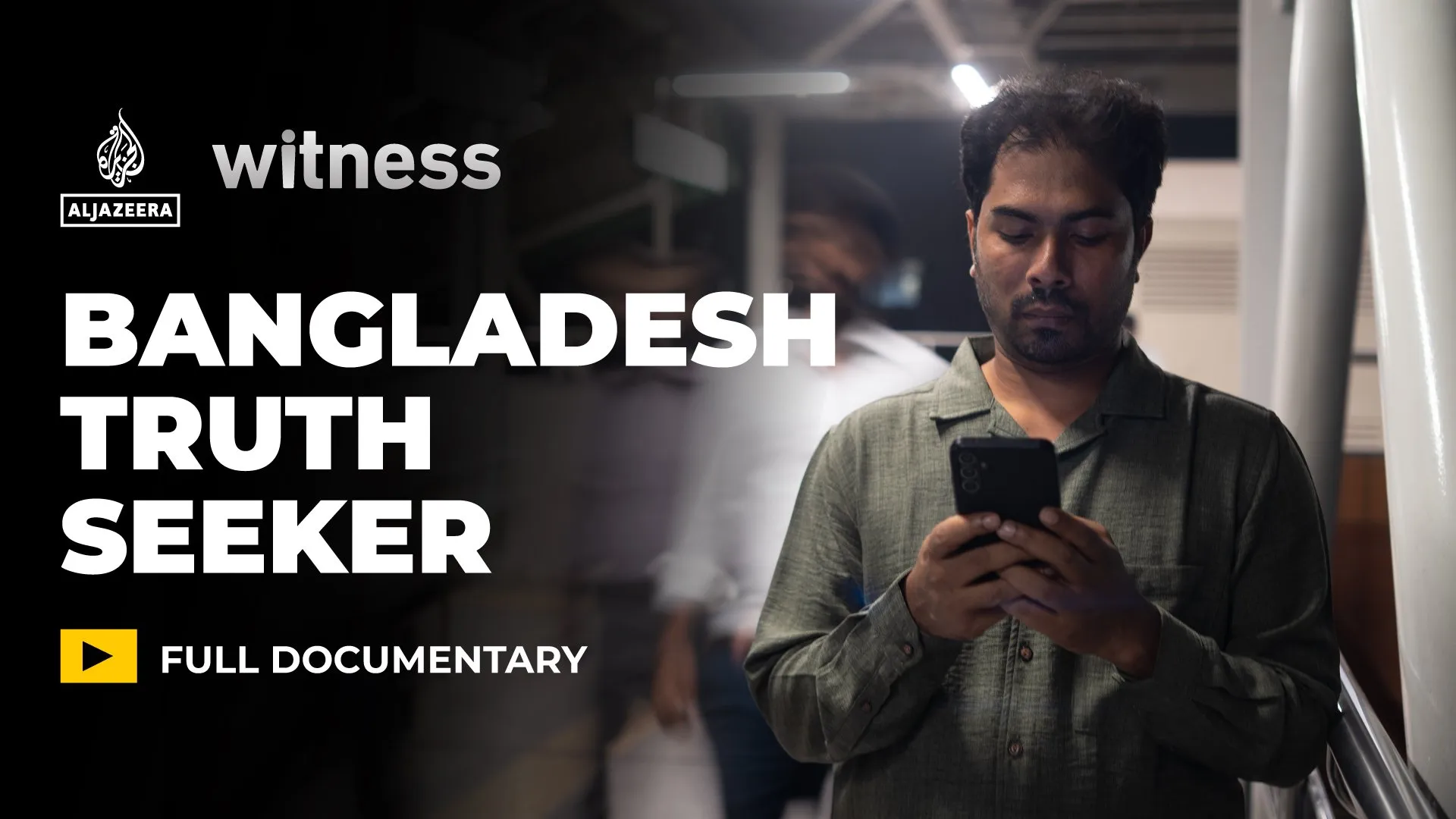
Amid political upheaval in Bangladesh, a journalist debunks fake news in a fight for his nation’s democratic future.
Bangladeshi journalist and fact-checker Qadaruddin Shishir investigates extrajudicial killings and disinformation following the student-led protests that ousted former Prime Minister Sheikh Hasina in 2024.
As Bangladesh continues a political transition under new governance, he turns his focus towards debunking fake news and misleading narratives spreading online. Determined to safeguard his nation’s democratic integrity, he launches an independent organisation to expand his work and mentor a new generation of fact-checkers.
As Bangladesh struggles to rebuild trust after political turmoil, Shishir pins his hopes on a new generation willing to defend the truth.
Truth Social, the social media firm owned by Trump Media & Technology Group (DJT), on Saturday launched Truth API, a licensed data feed that enables real-time access to posts from its high-profile users, including President Donald Trump.
Emmerdale is preparing for a huge summer surrounding some of the soap’s biggest female characters including Charity, Sadie, Dawn, Sarah, Gabby and Serena
08:30, 31 Jul 2026Updated 08:30, 31 Jul 2026
Emmerdale is all about strong women this summer
Emmerdale’s strong female characters will take centre stage this summer in a string of big storylines.
The ITV soap has promised a huge summer for some of the biggest characters, with explosive secrets being revealed, new alliances forming and devastating consequences.
For fan favourite Charity (Emma Atkins), there is much drama ahead as her lies catch up with her. With Charity desperate to protect her family, she falls deeper in the lies that the baby she carried belongs to her and Ross Barton.
With everything she holds dear at risk, a confession comes – and the secret she reveals threatens to shake the entire village to the core, with devastating scenes set to air for the wider Dingle family.
Sarah, played by Katie Hill, will struggle to cope when she gets pushed to the edge by devastating news. Her world could come crumbling down if she learns the truth about where her and Jacob’s daughter Leyla’s true parentage lies.
It is bad news for Dawn – played by Olivia Bromley – who finds herself caught in the crossfire of a terrifying feud. She seems happy with Joe Tate and her new family, but things take a turn for the worse.
As her wedding day approaches, she’s trapped and needs to make a huge choice. A present life as it is now, or the hope of finally having the future she wants for her and her family.
New arrival Serena (Casey Al-Shaqsy) has caused quite the star since she showed up as the newest member of the Sugden family. She faces more drama this summer, and needs to decide how much she will face to lose to protect her biggest secret.
Gabby – played by Rosie Bentham – has always been the centre of some big storylines in the Dales, but this summer, she is struggling to keep things under control. Her health will be devastatingly impacted by her struggles and her life is at risk.
She is faced with the biggest moral decision of her life when a terrible incident takes place. Will she destroy the lives of the people she cares about with her terrifying decision?
There’s also a huge return for Patsy Kensit’s character Sadie, who has quite the agenda when she waltzes back into the Dales. Armed with a big surprise, she has a secret to tell, and the village will be left reeling.
Emmerdale Producer, Laura Shaw, teased: “From explosive secrets that shatter lives to dangerous new allegiances that threaten to tear the village apart, this season promises to be one of our most intense yet. The village is set for a dramatic transformation, and we can’t wait for our audience to see the peril these characters face.”
MOST young mothers cannot fathom the agony of losing custody of their babies, but for British model Lucia Bartoli, an unimaginable nightmare has taken a dark and twisted turn after a ‘social media ban’.
The 30-year-old Luton-born mum has spent the last year fighting a desperate, David-and-Goliath legal battle against her ex-boyfriend, the £700million German fashion designer Philipp Plein.
Lucia has spent the last year fighting a desperate, David-and-Goliath legal battle against her ex-boyfriend, the £700million German fashion designer Philipp PleinCredit: suppliedPhilipp Plein attends the Philipp Plein x Snoop Dogg sneaker unveiling at private LA residenceCredit: Getty
Now, in a devastating new blow, Lucia has been silenced after a bizarre move wiped her only lifeline – her Instagram account – off the internet, leaving her isolated and on the brink of homelessness in a foreign country.
Her devoted fans have expressed concern about her internet disappearance.
With celebrity supporters such as actress Alice Evans posting: “Lucia you are SO STRONG. No mother should have to go through this. We are all here for you. Don’t break. We have a collective voice and we can speak for you.. Silence is violence.”
Since her bitter split from Philipp in 2023, Lucia had bravely used her Instagram account to document the destruction of her family and rally support from more than 300,000 followers.
The platform became a crucial tool, helping her raise over £50,000 through GoFundMe to pay her mounting legal bills in her fight to be reunited with her two young sons.
But days after a crushing blow was dealt on June 30, when her Instagram profile appeared to have disappeared.
Friends of the model claim the account was abruptly suspended after five of her own personal family posts, dating back to 2019, 2023, and 2024, were hit by copyright claims.
It is not known who is reporting the young mum’s social media accounts.
A friend of the distraught mother told The Sun: “Lucia is devastated. She is alone in Switzerland and, she has a few good friends there but her main support network is either at home in the UK or online. Losing the account has therefore been a huge blow.”
The digital wipeout has left the young mother feeling completely bewildered and targeted.
Her pal continued: “This came out of nowhere, and Lucia is very confused as to why old content that had been online for years was suddenly flagged for copyright.
“She is desperate to get the account back and has been following all the official steps to try and appeal.”
Lucia’s erasure from the internet has even followed her to other apps, according to pals, who say she has had difficulty posting on TikTok.
The timing of this high-tech silencing campaign could not be worse for the desperate mother.
Lucia was recently evicted from an apartment owned by her billionaire ex and is now rapidly running out of funds.
She has been living in a temporary Airbnb in Lugano, Switzerland, to stay near the jurisdiction where her children reside, but that lifeline is about to be cut.
Revealing the terrifying reality of her living situation, her friend said: “Lucia won’t be able to afford to live in Switzerland for much longer.
“Right now, she is living in a temporary Airbnb where the booking runs out in the next 10 days and she is unable to fund another place with ongoing legal costs.
“She is financially dependent on strangers’ kind donations through her GoFundMe, and she is worried that she may have to fly back to the UK.”
Without her Instagram platform to share her story, those vital donations are at risk of drying up completely, threatening to physically separate her from her boys while her ex pushes ahead with an application to permanently relocate the children to the United States.
At the heart of this digital warfare is a very human tragedy: a mother fighting simply to see her children.
The estranged couple faced each other in court in Lugano, Switzerland again in June for a new hearing, but no settlement was reached.
The estranged couple faced each other in court in Lugano again in June for a new hearing, but no settlement was reachedCredit: instagram/xluciabartoliLucia has not seen her eldest child for nearly a year after Philipp was given full custodyCredit: Supplied
Consequently, matters relating to custody and residency of the children remain undecided, and Lucia’s court-ordered custody arrangement has not changed.
She continues to endure the pain of having absolutely no visitation or contact with her eldest child – a heartbreaking reality she has faced for nearly a year.
While her contact with her youngest child remains restricted.
The emotional toll of fighting on multiple fronts is becoming unbearable. Her friend admitted: “Dealing with her account suspension, on top of preparing for the next stage of her custody battle, has been exhausting for Lucia, and it has been almost impossible for her to stay positive.”
Philipp, 48, who is dubbed the “King of Bling” for his jewel-encrusted and extravagant designs, won temporary full-time custody last year.
While Lucia battles to restore her Instagram account and faces the very real prospect of homelessness, Philipp has previously maintained that he never wanted the legal fight.
In a prior statement to The Sun, a spokesman for the designer: “Mr Plein always believed, with pure heart and total integrity, in the Swiss judicial system and defended his rights and those of his children in procedures that were not started by him, that he did not want and that he tried everything he could to avoid and prevent.
“He is now facing the big challenge of protecting his children, himself, his family and his business.
“He will continue this fight to achieve respect and protection for his children.”
For Lucia, however, the fight is simply about survival and a mother’s desperate hope to hold her children again.
But with her funds drying up, her legal options narrowing, and her voice systematically erased online, the odds against this British mum have never looked so terrifyingly steep.
Coronation Street’s Sarah Platt has confessed to Todd that she killed Theo but a short time later she was the one who had to deal with a shock truth that came her way
21:53, 25 Jun 2026Updated 21:54, 25 Jun 2026
Sarah Platt has told Todd Grimshaw that she killed Theo on Coronation Street
Sarah Platt confessed to Todd Grimshaw that she killed Theo on the latest episode of Coronation Street. The legendary Weatherfield resident, who has been played by Tina O’Brien since 1999, hit the evil scaffolder over the head with a pipe during a confrontation above the builder’s yard – seemingly sending him plunging to his death.
For months, viewers were left guessing as to who had killed Theo, who spent almost a year abusing partner Todd Grimshaw, but Sarah was never one of the official suspects and is yet to even be a person of interest to police, most likely thanks to the fact that on the night in question, she was knocked unconscious in the living room of number eight.
Sarah is currently dating, and looks set to get engaged to DC Kit Green (Jacob Roberts), so she felt it was unwise to involve him. Instead, she roped Gary Windass (Mikey North) into the whole sorry mess, who has been helping her keep the whole thing secret, much to the chagrin of his wife Maria (Samia Longchambon), who thought they had been having an affair.
To make matters even worse, DS Lisa Swain (Vicky Myers), who has a habit of putting innocent people in prison, charged Todd’s adoptive daughter Summer (Harriet Bibby) with murder and, although she was recently released, Sarah said nothing and allowed her to be put behind bars.
Having had enough of Todd constantly blaming Gary for the murder, Sarah finally confessed all to her best friend in Thursday night’s instalment of the world’s longest-running TV soap.
Through tears, Sarah said: “It was me. I knocked Theo off the scaffolding.” as he looked on in shock. “You’re wrong and I’m not even gonna let you think it. He is not corrupt – he wants to marry me!
“Afterwards. I was in shock and…Theo was…dead. And I couldn’t ring Kit, I couldn’t. I didn’t know who else to turn to. “
“He was talking like he’d killed you, and I believed him because why wouldn’t I? You thought he was capable. That’s why you ran.
“Don’t look down your nose at me, Theo ruined your life and then you brought him into mine. I didn’t have the option to run – not when I was 20ft up, on scaffolding on a plank that wide with a psycho waving a bottle in my face. A psycho who was ten times stronger than me and two times the size of me.
“He got in my face and I pushed him away and then he came back at me. All the time, he had this little white fleck in the corner of his mouth when he was ripping into me and I couldn’t take my eyes off it. That I was a sl*g, a w***e, three different kids to three different men and no wonder our baby died because it was an abomination.
“Those were the words he said about an innocent, newborn child. There was a pole. It was just instinct, I closed my eyes and swung and he crumpled.”
Later on, Sarah presumed Todd was going to go to the police but when she found him in the Rovers Return later on, he admitted he just couldn’t do it – even though he angrily told Sarah she had robbed him of the chance to make sure Theo got justice for all the abuse he had subjected him to.
He added: “The most annoying thing about all of it is the fact that I love you…so much. And I can’t see you go to prison.” Todd and Sarah were teenage sweethearts amid the programme’s first coming out story in 2004 and, even after Todd came out as gay, the pair have remained close.
Initially, Sarah threw her arms around Todd as she thanked him, but he then dealt the final blow as he vowed to cut her out for good.
He said: “Listen to me Sarah, this is it, for you and me. We’re done. I don’t want you in my life anymore,” leading Sarah to march back into the pub and continue to drink as she she stumbled round to Whitney Houston’s I Wanna Dance With Somebody before her family escorted her out.
But there was another twist in store back at number eight when Sarah, sat stroking David the dog, was having a conversation with Jodie. Without realising what she was saying, Jodie said: “It’s not easy to get over an attack like that – it takes time. Maybe this wasn’t the best place to bring you to, it must be triggering.”
As Jodie stroked the dog, she said: “At least you’re not barking your head off, this time, eh?” and Sarah immediately began to put two and two together as she said: “How did you know he was barking that night?”
Jodie tried to play the whole thing down but the cogs were already turning for Sarah, who has seemingly worked out that it was Shona’s mysterious long-lost sister all along.
Coronation Streetairs Monday to Friday at 8:30pm on ITV1 and is available to stream from 7am onITVX.
AFTER quitting smoking years ago, Rachel Stevens was spotted in a rare relapse as she puffed on a cigarette on a recent trip to London.
While many a celeb has been caught giving in to their smoking urges, the image is a far cry from her “clean girl” Instagram aesthetic and carefully curated social media, and Insiders tell The Sun that the cheeky cig-break is only a glimpse of the real Rachel, who has hidden behind her S Club 7 persona for years.
Rachel was spotted enjoying a cigarette after previously quitting smoking years agoCredit: TillenDoveExclusive Sun pictures captured a side of the star rarely seen by fansCredit: TillenDove
One source close to the singer says: “People have always had this perception of Rachel as the ultimate girl-next-door. She’s sweet, wholesome, polite and completely drama-free, but the truth is she’s always been far more complex than that.”
“Rachel has spent years carrying the weight of an image that was created when she joined the band aged just 19, and while she appreciated the love from fans, there were times when she felt trapped by the expectations.”
Even now, at 48, Rachel’s online world remains extremely polished.
Just days ago, she was posting perfectly styled outfits, wellness content and carefully framed snapshots of her life.
Scroll through Rachel’s social media, and you’ll find plenty of evidence of the lifestyle she has built her brand around. One day she’s sharing a Pilates session, the next she’s posting from the gym lifting weights or promoting healthy meals and wellness products. Yoghurt bowls, workout routines and clean living have become as much a part of her image as the pop career that made her famous.
What she wasn’t posting about was arguably one of the biggest professional moments she has had in years.
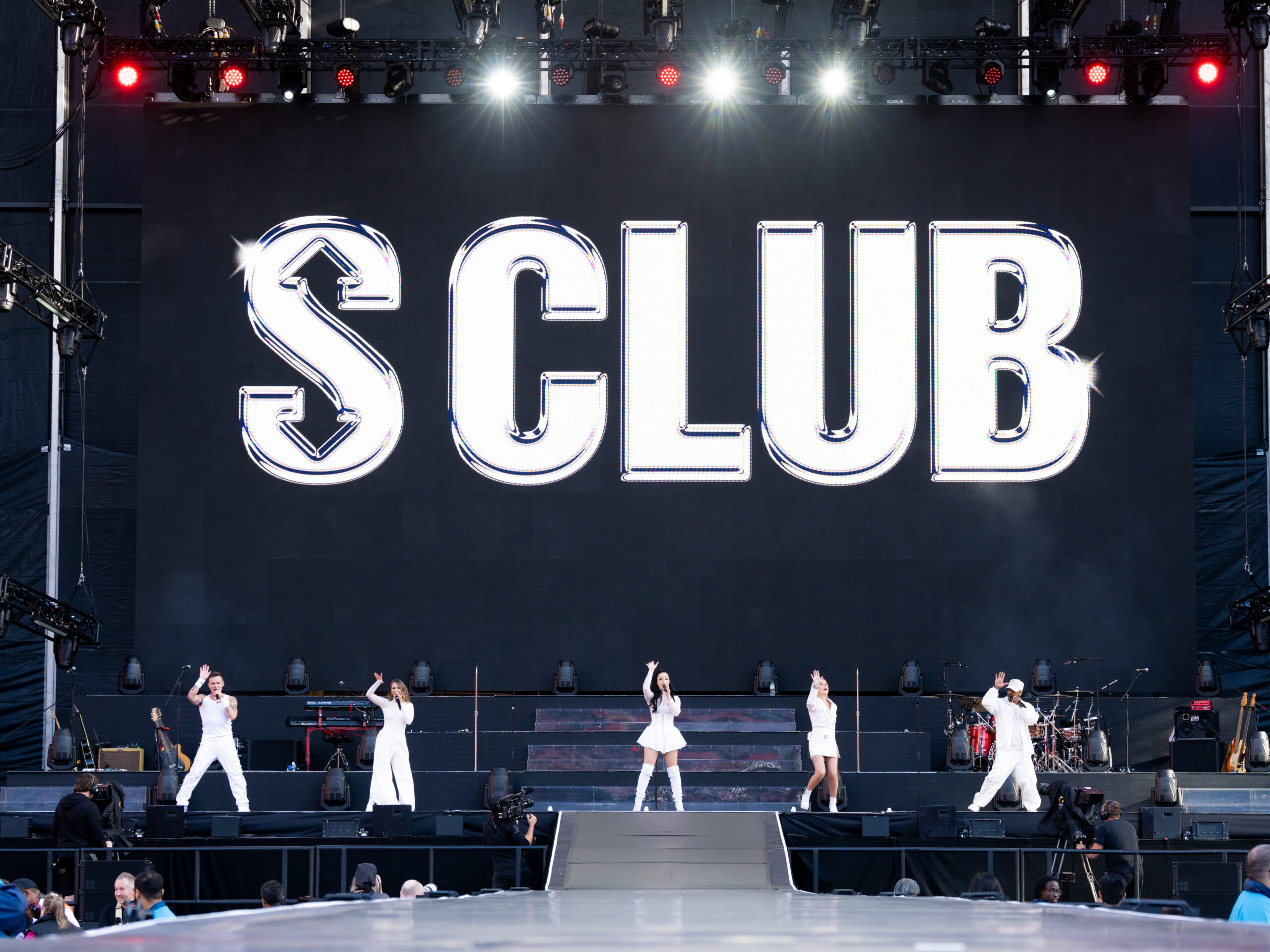
It marked one of the band’s most significant performances since October 2023.
Yet while many artists would have flooded their feeds with backstage snaps and promotional content, Rachel largely stayed quiet. There were a handful of Stories and a Reel, but little fanfare.
Though some fans were left questioning her excitement, for those close to Rachel, it’s entirely typical.
Our source said: “Rachel has always separated the public version of herself from her private life. She doesn’t feel the need to broadcast everything she’s doing. People assume they know her because she’s been famous for so long, but actually she’s one of the more private people in show business.”
That privacy perhaps explains why so much of Rachel’s personal life has unfolded away from public view.
Following the breakdown of her marriage, Rachel began dating Dancing On Ice professional Brendyn Hatfield. They were together for three years, before calling it quits last summer.
The relationship attracted huge attention, with speculation swirling about timelines and cheating rumours that Rachel was ultimately forced to deny. According to those close to her, the experience was deeply uncomfortable.
A pal said: “Having private matters become public talking points was incredibly difficult for Rachel.
“She’s always preferred to keep her personal life out of the spotlight. The divorce came as a shock not just to fans but to people around her too because they genuinely thought the marriage would last forever.”
Yet relationship drama is far from the only challenge Rachel has faced.
Perhaps the most startling chapter of her life came years earlier when she found herself caught up in two terrifying incidents within weeks of each other. In 2009, Rachel was violently attacked during a robbery at her North London home.
The images offered a glimpse behind the wellness-focused persona she presents onlineCredit: TillenDoveRachel’s social media is usually filled with wellness content, healthy living and polished lifestyle postsCredit: Instagram
The singer later recalled being ambushed by a man who grabbed her around the neck and covered her mouth.
Speaking in court years later, she admitted she was left “absolutely terrified”. Just weeks after that ordeal, she found herself caught up in another traumatic incident while having dinner with family in St John’s Wood when a gunman opened fire nearby during a gangland shooting.
The star admitted: “The two incidents that happened so close together definitely caused a lot of post-traumatic stress. After that, I felt scared to even leave my house, get out of my car, and I was just very fearful.”
It was a side of the pop star the public rarely saw. After all, while Rachel was being voted one of the sexiest women in Britain and appearing on magazine covers, privately she was battling fears few fans knew existed.
The source adds: “Everyone assumed she was confident because she was on TV and branded one of the sexiest celebrities in the world every week. But privately she could be incredibly anxious and hard on herself.”
Even Rachel’s driving ban became a talking point because it didn’t fit the image many people had of her.
The singer appeared in court after accumulating 21 penalty points from five speeding offences and attempted to avoid a ban by explaining how it would affect work commitments and family life.
Rachel regularly shares healthy breakfasts and wellness-focused content with her followersCredit: InstagramRachel has shared fitness brands and workout platforms as part of her wellness journeyCredit: Instagram
Again, it surprised many because it felt so at odds with the Rachel the public thought they knew. But insiders insist that’s precisely the point.
Our source explained: “She’s made mistakes, faced challenges and dealt with consequences when things have gone wrong. The idea that she’s some squeaky-clean pop robot isn’t accurate. But neither is the suggestion that there’s some secret wild side waiting to be exposed.”
Indeed, those closest to Rachel say these photos will reveal a whole new authentic side to the pop star.
An insider added: “What people are seeing now is a woman who’s much more comfortable being herself. The smoking pictures might surprise some fans, but those who know Rachel aren’t shocked.
The former S Club singer looked relaxed as she shared a crafty smoke with a friend in Central LondonCredit: TillenDoveRachel reunited with S Club this month for one of the band’s biggest performances in years, opening for BoyZoneCredit: GettyDespite the major comeback moment, Rachel kept the promotion of the reunion surprisingly quiet on social mediaCredit: GettyRachel’s former relationship with Dancing On Ice professional Brendyn Hatfield attracted huge public attention following her divorceCredit: Instagram
“She’s never claimed to be perfect, and she’s certainly never lived her life trying to be a saint.”
For years, Rachel Stevens was boxed into a role she never quite chose: the impossibly perfect girl next door. But behind the green juices has always been somebody far more human.
As one insider puts it: “The real Rachel sits somewhere in the middle. Warm, emotional, resilient, occasionally rebellious and a lot more human than the image people have projected onto her for the last 25 years.”
And if a cigarette outside a venue is finally enough to remind people of that, Rachel probably won’t lose too much sleep over it.
Steven Spielberg’s latest sci-fi thriller, “Disclosure Day,” topped the box office this weekend, an encouraging sign for what could be a big summer for theaters.
The film, which stars Emily Blunt and Josh O’Connor, brought in $44 million in the U.S. and Canada for a worldwide total of $92.9 million, according to studio estimates. The opening weekend totals beat box office analysts’ expectations of about $40 million to $50 million.
“Disclosure Day” is Spielberg’s latest alien-centric movie that charts a desperate race to show the world the truth about extraterrestrials.
The film, which had a production budget of about $115 million, was also scored by legendary composer and longtime Spielberg collaborator John Williams, who is now 94 years old.
Spielberg described the film in April as “way closer to truth than fiction” during a speech at the CinemaCon trade convention in Las Vegas. The veteran director of 1977’s “Close Encounters of the Third Kind,” 1982’s “E.T. the Extra-Terrestrial” and 2005’s “War of the Worlds” said at the time that he’s been curious about “what’s going on in the night” since he was a child and “been very fixated on the possibilities.”
Focus Features’ “Obsession” came in second at the box office with a domestic haul of $19 million, a continuation of the film’s strong run in theaters.
“Scary Movie,” “Backrooms” and “Masters of the Universe” rounded out the top five at the box office.
Recent box office performance — particularly with Gen Z hits “Obsession” and A24’s “Backrooms” — along with a slate of upcoming blockbuster franchise installments has buoyed the hopes of exhibitors and studio executives for a strong summer.
Next week, Walt Disney Co. and Pixar will release “Toy Story 5,” while Warner Bros.’ DC Studios has “Supergirl” landing in late June.
Universal Pictures and Illumination’s “Minions & Monsters,” Disney’s live-action “Moana,” Christopher Nolan’s “The Odyssey” and Sony Pictures’ “Spider-Man: Brand New Day” are all slated for July.
That steady cadence of new and different films is key for a healthy box office and a successful summer, said Daniel Loria, editorial director at the Box Office Co.
“We’re seeing that momentum come back on a weekend-by-weekend basis,” he said. “What we needed to get back to a healthy industry post-pandemic is consistency, and that’s the difference here in 2026.”
IT’S the story the whole nation is talking about – and The Sun’s Clemmie Moodie has the inside scoop after joining Katie Price in Dubai to find out the truth about husband Lee Andrews.
The Sun’s Clemmie has the answers to the story everyone is talking aboutCredit: Louis Wood News Group Newspapers LtdTonight Katie will reveal the damning truth she discovered about her husbandCredit: Instagram
Clemmie and Katie, 48, have embarked upon an extraordinary international trek looking for “the world’s most hated man” – and tonight, she bares her soul to The Sun in her only sit-down interview since the firestorm started.
And Katie confesses that if she doesn’t get the answers she wants from her husband, she is prepared to turn the tables in explosive fashion.
In the hour-long interview, Katie shares her sensational side of the story after initially being led to believe that Lee had been kidnapped before – following three weeks of zero contact – learning of his incarceration.
She’s someone who has lived every possible high and low, both personally and professionally, in the glare of the public eye.
But even she warns readers of her latest tell-all: “You don’t want to miss it.
“This is where you’ll see the truth.”
Katie flew out to Dubai last Monday and has visited Al Awir Central Prison several times, though her only contact with her Lee has been via the phone.
She opens up to Clemmie about Lee’s infamous flight ban – after he humiliated her by forcing her to do a live TV interview without him – and about the concerns from loved-ones and fans alike over her marriage.
And, in a shock turn of events, Katie will tell all after being confronted with some damning news about the man she loves.
You can read and watch Clemmie’s interview with Katie tonight at 7pm right here on The Sun.