Trump-Xi-Putin trilateral meeting at APEC: What to expect | Nuclear Weapons News
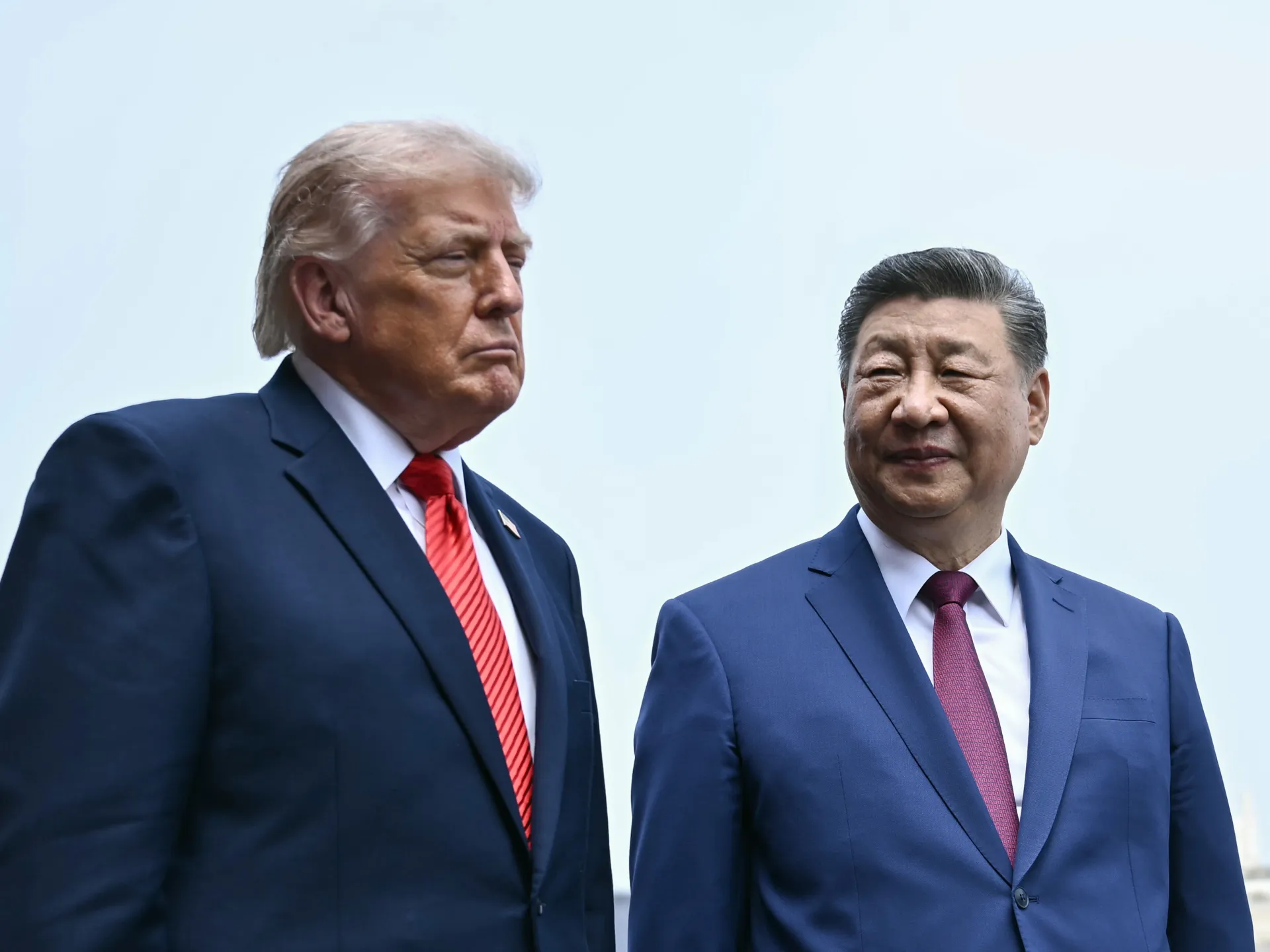
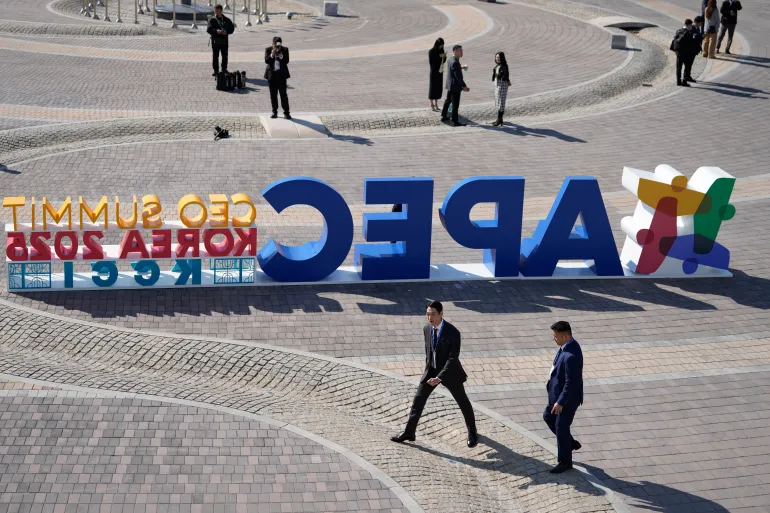
US President Donald Trump, China’s President Xi Jinping and Russia’s President Vladimir Putin will hold their first trilateral meeting on the sidelines of the Asia-Pacific Economic Cooperation (APEC) summit in China’s Shenzhen, the White House has confirmed.
On Friday, Washington also confirmed Trump’s attendance at the summit, which will take place from November 18-19.
Recommended Stories
list of 4 itemsend of list
Talks will focus on nuclear proliferation, the White House said. But they come amid significant global turbulence: Russia’s war in Ukraine, the US-Israeli war on Iran and ongoing trade tensions between Washington and Beijing.
Not all the issues hold equal weight for the leaders, though. So what does each side want? Here’s what we know:

What’s on the agenda?
Each leader has his own priorities, but there are some issues all will want to discuss.
New nuclear treaty
A top issue for Russia and the US is the New Strategic Arms Reduction Treaty (New START), which lapsed in February. The treaty was first signed in 2010 and caps US and Russian strategic nuclear arsenals.
Russia currently possesses the largest number of warheads, followed by the US and then China, which is rapidly building up its own arsenal.
Trump previously rejected Russia’s proposal to extend the treaty after it expired, demanding instead a “new, improved and modernised” deal that includes Beijing.
China is understood, however, to be reluctant to join an agreement it was not involved in forming.
A senior Trump administration official told Reuters this topic will start the conversation but that “we do not expect to get any kind of agreement”.
US-Israel war on Iran
Officials also say the world leaders will discuss the Iran war, which the US and Israel launched on February 28. While full-scale strikes have, for now, ceased, the conflict remains in a deadlock.
After more than 100 days, the critical Strait of Hormuz remains closed, and oil and gas prices are still volatile as ships in the strait continue to face Iranian strikes and seamines. One-third of China’s crude oil supply transited the strait before the war. The conflict is also hampering demand for Chinese exports.
Russia, meanwhile, has profited from rising energy prices and recent sanctions relief from Washington amid supply crunches – particularly of diesel.
China-US trade rivalry
Trade wars and the race to control microchips used to power artificial intelligence are straining relations between Beijing and Washington.
Trump hit China with a 145 percent tax hike last year, while Beijing retaliated by imposing 125 percent levies on US imports. Tensions mounted further over China’s restrictions on exports of rare earth minerals needed to manufacture advanced chips and other technology.
The two countries have since reduced tariffs and struck several deals following Trump and Xi’s meetings in South Korea and Washington However, the recent scandal at chip firm Nvidia has prompted the US to allege that China was spying on CEO Jensen Huang. Beijing denies this.
Will the Ukraine war be discussed?
It is very unlikely. A Trump administration official told reporters the US president will not bring up Russia’s war on Ukraine, although Kremlin officials previously suggested the conflict could be discussed.
China, an ally of Moscow’s, has said the Ukraine war is a European issue.
US officials also note that Washington is pursuing peace talks, with US envoys Steve Witkoff and Jared Kushner visiting both Ukraine and Russia this week. “China is not really a part of that track, so it doesn’t seem appropriate to have the Ukraine discussion there,” an official told reporters.
President Trump has accused Ukraine’s President Volodymyr Zelenskyy of “not wanting” to end the war, while Kyiv has reiterated allegations that the US has restricted its Starlink satellite connection that allows it to operate attack drones. Trump has also blamed Ukraine for soaring diesel prices because of its strikes on Russian oil facilities.
At the same time, Trump has feted Putin, agreed to allow Russian diesel into global and US markets, and lifted oil sanctions on Moscow.
What does each side want from this meeting?
Russia
For President Putin, the meeting could provide a positive photo opportunity and a platform to project power while sidelining the Ukraine conflict, analysts say.
It will give him a “first among equals” position that he can display at home to show that he can influence Europe’s security architecture following the Ukraine war, Alexander Bratersky, a Moscow-based journalist and political analyst, told Al Jazeera.
China
Beijing has already been pushing for a resolution to the US war on Iran, which has impacted its own energy supplies.
China will also want to avoid being pulled into a nuclear treaty it had no part in establishing.
Last month, China’s Foreign Ministry said it would be “neither fair, reasonable nor realistic to ask China to join the so-called trilateral nuclear disarmament negotiations at this stage”.
US
Trump’s priority is to include both China and Russia in a new nuclear proliferation treaty, according to administration officials. “The president has made it clear that, among other topics, he will discuss the reduction of nuclear weapons in the world. This proliferation, President Trump believes, is very dangerous,” Olivia Wales, a White House spokesperson, told reporters.
The president could also use the meeting to project his administration’s diplomatic influence, as Iran refuses to capitulate to US demands for ending the war and hand Washington a win.
Trump has also sought closer ties with Xi, Putin and North Korea’s Kim Jong Un, all seen as “strongmen”, and is likely to be perceived as influential in such circles, analysts say.
However, his Republican Party’s crushing defeat in midterm elections last week could undermine his leverage, experts note, as a new Democrat-led Congress is likely to support Ukraine more staunchly.
Is this the start of a new Yalta?
Pyotr Tolstoy, chairman of the Russian parliament’s foreign affairs committee said it could lead to a “new Yalta”.
The 1945 conference in Yalta, in the then Soviet Union, saw USSR President Joseph Stalin, the US’s Franklin D Roosevelt, and the United Kingdom’s Winston Churchill divide Germany and establish the United Nations in what was seen as the template for a new world order.
Kremlin spokesman Dmitry Peskov, called the trilateral meeting now taking place between the leaders of the US, China and Russia as “extremely significant” but pointed out that any agreements reached at the meeting cannot be imposed on other nations.