truce

India to Turkiye, can new proposals to broker Russia-Ukraine truce succeed? | Russia-Ukraine war News

Ukraine says it has received proposals from India, Turkiye, Egypt and the United States to broker talks with Russia. The offers come as the two adversaries escalate attacks on each other’s energy and port infrastructure with their war now in its fifth year.

Ukrainian Foreign Minister Andrii Sybiha revealed the four proposals at a briefing in Kyiv on Friday and singled out New Delhi’s. “The most comprehensive is India’s proposal,” he said, adding that India had signalled a willingness to play a role for the first time.

Recommended Stories

list of 3 itemsend of list

None of the proposals aims to end the war. Each seeks a narrower truce, covering energy facilities, ports or commercial shipping in the Black Sea.

Here’s what we know:

What is India proposing?

India has not made its plan public. Quoting unnamed sources, however, Indian media have reported it has three parts. According to the Hindustan Times, it would aim to protect infrastructure, keep grain and energy supplies moving through Black Sea ports, and ensure the safety of commercial shipping.

The first part – mutually halting strikes on energy facilities and ports – matches what Kyiv has been demanding. Sybiha said any deal must be a complete energy truce that covers port infrastructure as well.

The second part builds on the Black Sea Grain Initiative, which Turkiye and the United Nations mediated in 2022 but Russia abandoned in 2023.

The third part, protecting merchant ships and their crews, is particularly important to India because Indian sailors have been killed or harmed on Black Sea routes.

The sources were quoted as saying India’s plan goes further than the other three proposals because it covers infrastructure and shipping together. A Ukrainian official told the Kyiv Independent that it incorporates elements of the Turkish, Egyptian and US initiatives. The Kyiv Post reported that Sybiha also described the plan as addressing a possible ceasefire along the front lines, although other accounts said he gave no specifics.

The proposal likely took shape during Indian External Affairs Minister Subrahmanyam Jaishankar’s first visit to Ukraine last month and in a later meeting with Sybiha at the UN General Assembly in New York, also in September. Jaishankar said New Delhi was “trying to be helpful, starting with the Black Sea safety of shipping issue”.

What do we know about the Turkish and Egyptian proposals?

Very little. Neither Ankara nor Cairo has published details. Both reportedly focus on keeping Black Sea grain supplies moving by suspending attacks on commercial shipping. Some reports said the two countries proposed a grain truce jointly while others described two separate plans.

Turkiye has done this before. With the UN, it steered the 2022 grain deal, one of the few narrow truces of the war to hold for any length of time. Ankara and the UN are now organising new Black Sea talks with a round planned for October.

Beyond its Black Sea focus, almost nothing is known about Egypt’s proposal. Its interest, however, is clear: Egypt relies on Ukraine for nearly one-third of its grain supplies.

What is the US pitching?

According to Ukrainian President Volodymyr Zelenskyy, Washington has proposed three steps: a mutual halt to energy strikes, a reopening of the grain corridor and a trilateral meeting with Ukraine and Russia, possibly in Abu Dhabi.

The latest effort began in early September when US President Donald Trump’s envoys visited Kyiv and Moscow and secured an agreement in principle for a trilateral meeting. Steve Witkoff and Jared Kushner met Russian President Vladimir Putin in Moscow on September 5 while Kremlin envoy Kirill Dmitriev visited the US twice in September.

The trilateral meeting has since been pushed back. It had been expected to take place in the United Arab Emirates in early October. Washington now wants it in late October, and people close to the talks blamed the delay on Russia.

Washington has also invited Putin to the Group of 20 summit in Miami, Florida, in December. “We hope that’s an invitation he’ll accept,” US Secretary of State Marco Rubio said. The Kremlin said no decision has been made.

At the same time, the US is applying pressure to try to end the war. Trump recently signed a law giving him sweeping powers to sanction buyers of Russian energy.

He has also called on Ukraine to stop targeting Russian diesel facilities amid a diesel prices crisis in the US, where Trump faces tricky midterm elections next month. “Mr Zelenskyy has to do one thing,” he said on September 13. “He has to stop knocking out diesel fuel in Russia.” This drew much criticism that Trump instead should focus his comments on Russia, which began the war with its invasion of Ukraine in February 2022.

He is reportedly sceptical about his own government’s latest diplomatic initiative. People familiar with his thinking have told US media that he doubted Putin would agree to an energy truce before winter.

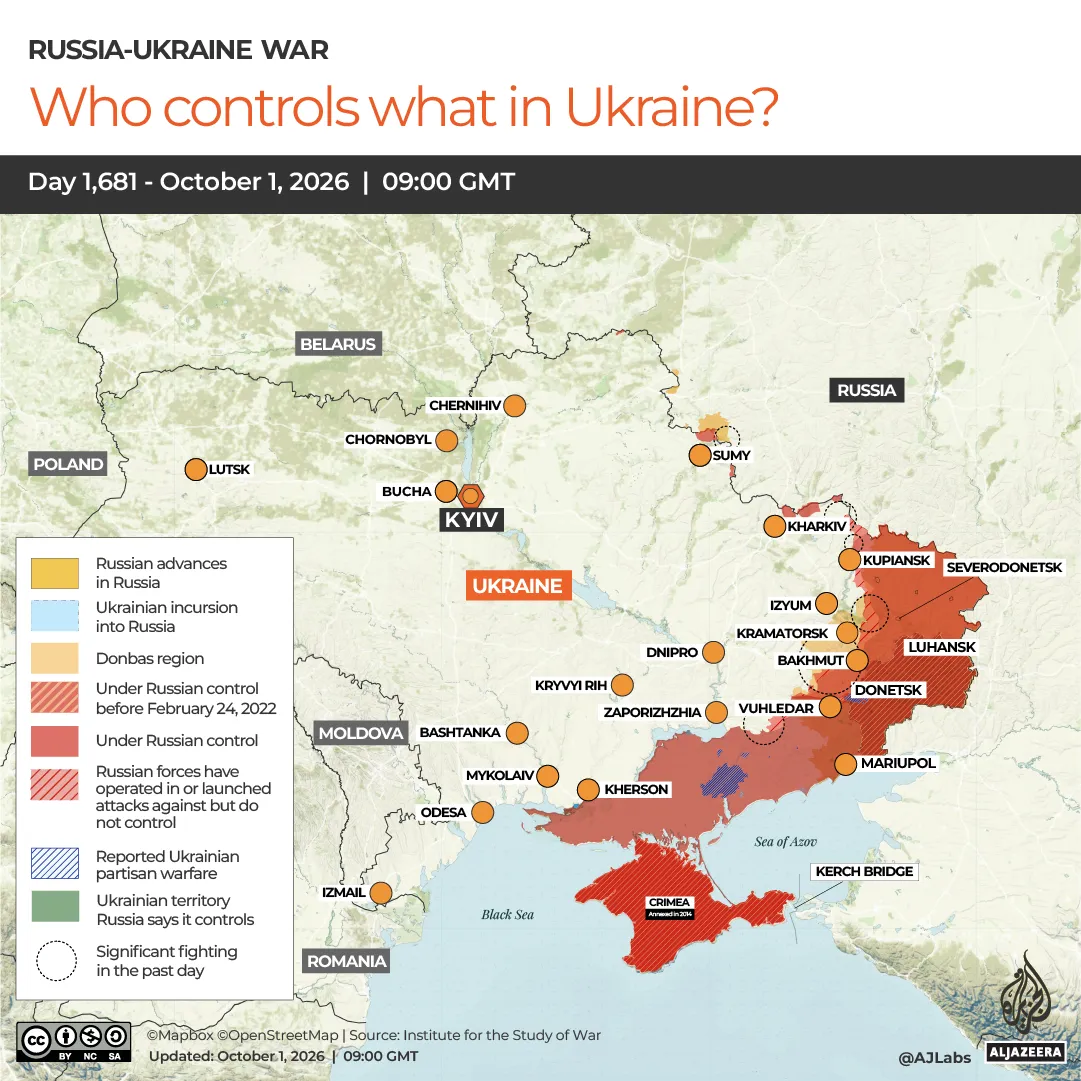
INTERACTIVE-WHO CONTROLS WHAT IN UKRAINE-1790858348
(Al Jazeera)

How have Russia and Ukraine responded?

Sybiha said Ukraine would agree to a truce but with conditions. It would accept an energy and Black Sea shipping ceasefire, but only as a combined package, he said.

He added that Kyiv is also open to an unconditional ceasefire along the current front lines. Zelenskyy backs the US-proposed meeting but stressed it needs “not only Ukraine but also the Russian side” to support it.

Moscow has been warm in tone but has committed to nothing. Kremlin spokesperson Dmitry Peskov said Russia would welcome India’s peace efforts while Putin said Modi has “very good ideas aimed at finding mutually acceptable solutions”, but he did not elaborate.

In private, Moscow appears to have said no. A Ukrainian official told the Kyiv Independent that Russia has rejected India’s proposal although this has not been confirmed publicly. Ukraine’s agriculture minister said Russia had rejected every Black Sea ceasefire option the mediators have presented.

INTERACTIVE Russia Ukraine drone attacks-1788854825

Why are Global South countries becoming more involved?

Food supplies, the lives of their citizens and fuel prices are all at stake.

“I think it’s clear to many countries that this war is not a localised war, but it’s a war that has these global consequences,” Fredrik Wesslau, a senior policy fellow at the European Council on Foreign Relations, told Al Jazeera.

Russia and Ukraine account for more than a quarter of global wheat shipments, and their attacks on each other’s ports helped push wheat futures to a three-year high in August.

Sailors from countries with no links to the war are being killed. At least five Indian seafarers have died in strikes on Black Sea shipping in recent months along with seven Azerbaijani crew members since June. On Saturday, a Russian strike on a Liberian-flagged ship in a port in the Odesa region killed a crew member. Ukraine, for its part, has targeted tankers it links to Russia’s shadow fleet since July.

The energy war is also being felt in global markets. Ukraine reported more than 194 drone attacks on Russian refineries this year, hitting all 11 of the largest. Bloomberg News estimated that Russia’s fuel output has fallen by more than 30 percent. With Middle East supply already down as a result of the US-Israel war on Iran, global diesel markets are more exposed to the loss of Russian supplies.

Maximilian Hess, a nonresident senior fellow in the Eurasia Program at the Foreign Policy Research Institute, said energy is at least as important as grain in driving the diplomatic efforts. He pointed to a “clear frustration” among many countries over high oil prices, which reflect both the Russia-Ukraine war and the crisis in the Middle East.

“Of course, Ukrainian grain is important for them, but the oil-price factor is important there as well,” he told Al Jazeera. “I think it is those commodity-shock concerns that are pushing them to re-embrace this rhetoric, rather than anything else.”

What are the challenges ahead?

Every previous attempt at diplomacy has failed to end the Russia-Ukraine war. A US-brokered, 30-day energy truce in early 2025 collapsed amid accusations of violations on both sides. At talks in Istanbul in May 2025, Zelenskyy complained that Russia had sent a junior delegation with no authority to sign a ceasefire.

In August 2025, a meeting between Trump and Putin in Alaska yielded no results despite Trump claiming to be close to a deal ahead of it.

Wesslau said Washington’s efforts have faltered partly because Trump – who had boasted he would end the war within 24 hours of taking office in January 2025 – has appeared unwilling to put real pressure on Moscow. “The Russians see this, and they conclude that they can continue this war,” he said.

Deep distrust remains. Oleksandr Merezhko, head of the Ukrainian parliament’s foreign affairs committee, said: “Putin never keeps agreements.”

Moscow’s actions on the ground suggest it is in no hurry, Wesslau said  “They’re trying to strangle Ukraine, strangle the economy, and make it unliveable ahead of the winter,” he said. He added that Moscow’s occasionally softer rhetoric was aimed mainly at the Trump administration and “has always proved to be a bluff”.

Russia’s terms are another obstacle. Hess said Moscow’s demands have not softened at any point since it launched the war and at times have grown. Putin has demanded all of Ukraine’s Donetsk, Luhansk, Kherson and Zaporizhia regions, including territory Russian forces have never controlled, as well as a buffer zone in northern Ukraine. Moscow is also seeking sanctions relief and military concessions for any Black Sea deal.

“I don’t think it’s a question of who actually mediates. I think it’s really a question of the calculation in Moscow,” Wesslau said. “Fundamentally, the problem is that Putin doesn’t want a ceasefire or a peace agreement. He wants to continue the war. He believes that he can win.”

Analysts said only greater economic pressure is likely to change that calculation.

Wesslau said if Europe can close down Russia’s shadow fleet of oil tankers, “this would be a massive blow to Russia’s war economy.” Hess said the country best placed to shift things quickly is China, rather than the US, by cutting its purchases of Russian oil. However, he added: “I don’t think Beijing is interested in doing so.”

Hess said that unless there is an outside shock, the war “is much more likely to last another four years than another four months”.
Source link

US-China trade truce extended as both sides seek progress on tariffs and trade

China said on Monday that a two-month extension of its trade truce with the United States would give both sides more time to assess the implementation of their existing arrangements and discuss further steps to resolve economic and trade disputes.

China’s Commerce Ministry confirmed that the truce would remain in place through January 10, saying the extension would provide a “relatively stable and predictable policy environment” for businesses and allow the two countries to continue their talks.

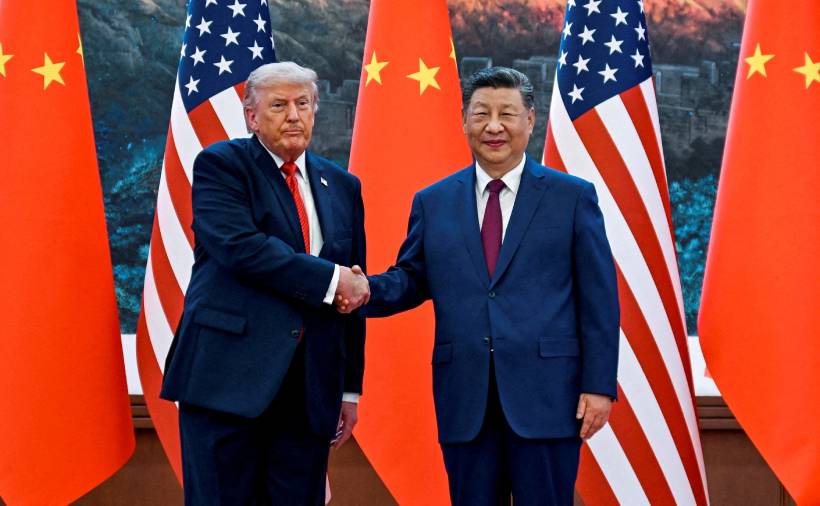
The extension was among the main outcomes of a summit between Chinese President Xi Jinping and US President Donald Trump in Washington last week, their second meeting this year.

Background

The United States and China have spent years imposing tariffs and other trade restrictions on each other, with tensions extending beyond tariffs to technology, investment, supply chains and market access.

Stay ahead of the geopolitical week.

MD Briefing delivers expert analysis across five global fronts — the Indo-Pacific, energy, geoeconomics, European security, and the Middle East — every Monday morning. Free.

The latest extension follows an agreement by the two sides to establish a trade council that will oversee discussions on a range of economic issues.

One of its first tasks will be to discuss reciprocal tariff reductions covering about $30 billion worth of goods, with the aim of maintaining more stable economic and trade relations between the two countries.

China’s Commerce Ministry said the arrangement would also create better conditions for Chinese exporters seeking access to the US market.

The two sides will hold regular discussions on investment opportunities and barriers, policy transparency and predictability, and concerns raised by businesses.

Why it matters

The extension gives US and Chinese companies more time to operate under a relatively predictable trade environment while negotiators work through remaining disputes.

Agriculture is one of the main areas covered by the latest arrangements. A White House list showed that China plans to reduce tariffs on a range of US agricultural products, including corn, wheat, dairy products and meat, although soybeans were not included.

The proposed cuts appear linked to a US-stated Chinese commitment to purchase $17 billion worth of agricultural products. China has already resumed large-scale purchases of US soybeans under an agreement reached last year that called for annual purchases of 25 million metric tons.

The countries will also establish an agriculture working group under the new trade council, with its first meeting expected before the end of the year.

Energy trade is another part of the agreement. China will import 10 million metric tons of US coal annually in 2027 and 2028, according to the White House. That would account for about 2% of China’s annual coal imports. US liquefied natural gas and oil were not included in the list.

The arrangements extend beyond traditional trade. The two countries have agreed to establish a communication channel for artificial intelligence related incidents and hold another dialogue by the end of November.

China will also consider approving foreign financial institutions, including US backed firms, to operate and open branches in the country. Washington and Beijing will meanwhile continue discussions on increasing direct flights between the two countries.

What’s next

The immediate focus will be on implementing the agreements reached at the presidential summit.

The agriculture working group is expected to meet before the end of the year, while the AI dialogue is due to continue by the end of November. The two countries will also use the new trade council to discuss tariffs, investment, market access and regulatory concerns.

The extension runs until January 10, giving negotiators another two months to evaluate whether the existing arrangements are being implemented and determine what further agreements can be reached.

Whether the two sides can turn the temporary truce into longer-term trade arrangements will depend on progress across the different areas covered by their negotiations, including tariffs, agricultural purchases, investment and technology.

With information from Reuters,

Source link

‘Better deal’: What’s behind Trump’s rejection of Iran’s truce offer? | Explainer News

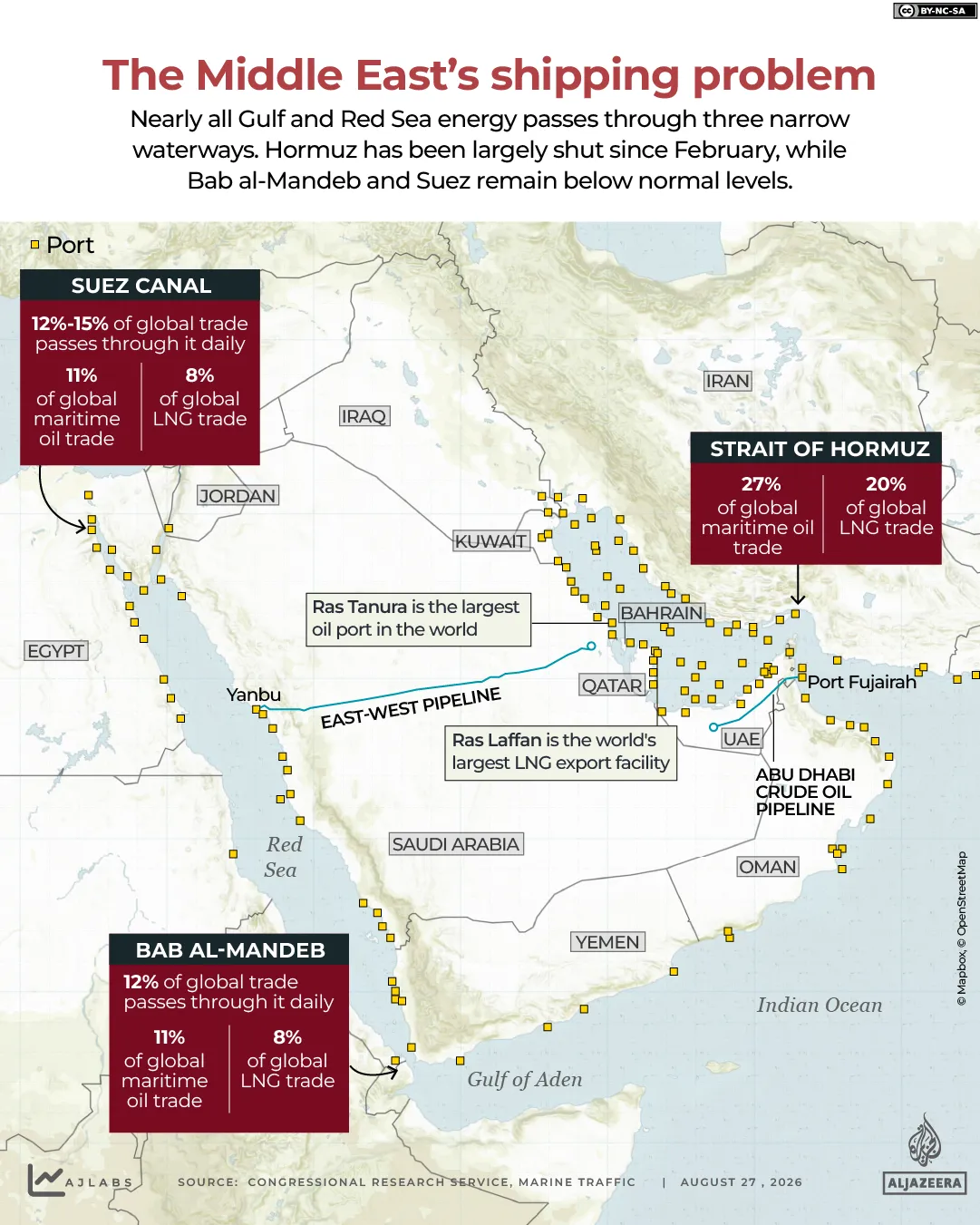
Donald Trump has rejected Iran’s latest proposal to end the war and reopen the Strait of Hormuz as experts say the United States president believes Washington has more to gain by waiting than by accepting Tehran’s terms at this moment.

“I reject their proposal,” Trump told reporters on Saturday, arguing that Iran wants an agreement because it is “losing so badly”.

Recommended Stories

list of 3 itemsend of list

“They want to make a deal, and I think that’s fine,” Trump said. “I’d like to make a deal too. But that deal would not be acceptable.”

On Sunday, Iranian ⁠⁠Foreign ⁠⁠Minister Abbas Araghchi said Tehran had ⁠⁠seen the initial reaction from ‌‌Trump to its proposal but had yet to receive a response through ⁠⁠mediators. In the latest diplomatic efforts, Qatar has played a role in mediating talks between Iran and the US on the sidelines of the United Nations General Assembly meeting in New York.

Iran’s seven-day proposal included Washington lifting its naval blockade of Iranian ports, waiving sanctions on Iranian oil sales, releasing an estimated $12bn in frozen Iranian assets and observing a wider regional ceasefire, including in Lebanon and Yemen.

Iran would then reopen the Strait of Hormuz and begin negotiations with Washington on a final agreement.

The latest proposals are similar to the June memorandum of understanding (MoU) the two countries signed. But the MoU collapsed last month due to differences on the terms of the deal, which resulted in an escalation in attacks, particularly in and around the Strait of Hormuz, which essentially remains under Iranian blockade.

According to experts, Trump’s rejection suggested that while both sides continue to publicly leave the door open for diplomacy, they remain far apart over who should make the first concessions.

“Trump’s calculation looks fairly straightforward. He believes the combination of the naval blockade and economic isolation is finally squeezing Iran hard enough that Tehran’s latest proposal is evidence of weakness rather than an offer Washington needs to seize,” Andreas Krieg, associate professor at King’s College London, told Al Jazeera.

His public argument that Iran is “losing badly” is important because it suggests he thinks time is improving the US bargaining position, Krieg said.

INTERACTIVE - MIDDLE EAST -iran - hormuz - shipping - aug 27, 2026-1787815800
(Al Jazeera)

Why does Trump think he can wait?

A key part of Trump’s calculation appears to be a belief that the economic pressure on Iran has not yet run its course.

The Trump administration has escalated economic pressure on Tehran, tightening its naval blockade while imposing sanctions targeting Iranian oil revenues and threatening secondary sanctions against countries doing business with Tehran.

Last week, the US imposed aviation sanctions on Iran, disrupting flights. This came weeks after US Treasury Secretary Scott Bessent announced an economic pressure campaign against Iran, promising to target Tehran’s financial interests across the world.

Richard Weitz, a senior nonresident associate fellow at the NATO Defence College, told Al Jazeera that the White House may believe it can “wait a bit and get better terms”.

There is also concern in Washington about Iran’s proposed sequencing, he said.

Therefore, Weitz said Washington may be calculating that “economic pressure over time will induce the Iranian government to make more concessions”.

“This is what occurred arguably a decade ago, leading to the 2015 Iran nuclear deal as the Iranian government decided it [the US] needed to end the economic sanctions in return for making concessions on its nuclear programme,” he added.

It is, therefore, possible that “we could see the same kind of trade-off in the coming months”.

Iran could make Trump ‘pay’

However, waiting for a deal also carries considerable political risk for the US president, experts said, because his Republican Party could lose November’s midterm elections.

A late August Reuters/Ipsos poll suggested 63 percent of Americans opposed the US-Israel war on Iran while 31 percent supported it. Rising fuel and transportation costs could also feed into broader cost-of-living concerns before the elections.

The problem for Trump is that time does not only increase pressure on Iran, Krieg said. “The gamble is that time cuts both ways,” he noted.

With the midterms approaching, Trump does not want to appear to lift the blockade, waive oil sanctions and release Iranian assets simply to regain access to a waterway that Iran itself disrupted, Krieg said.

“But every additional week also means elevated energy prices, continued military exposure and mounting pressure on Gulf partners.”

The essential closure of the Strait of Hormuz has disrupted oil and gas flows from the Gulf nations, which depend on energy exports to finance their budgets.

Mohamad Elmasry, a professor at the Doha Institute for Graduate Studies, told Al Jazeera that Iran’s proposal could be viewed as “kind of throwing a bone to Trump” by offering a potential route towards lower oil and gas prices before the vote.

However, Iran may decide “to make Trump pay for declining the proposal and the increased economic pressure the country is under”, he told Al Jazeera.

“They may decide that this is the time to escalate … just as the midterms are approaching.”

The Republican Party is not doing well in the polls, and a number of its candidates are “distancing themselves” from Trump, he noted. Polls indicated that Republicans could lose their slim majorities in the US Congress.

It’s not just the Iranians under severe economic pressure because of the US naval blockade and ongoing sanctions, “it’s also the Trump administration,” Elmasry said.

Trump’s wait for more Iranian concessions could ‘backfire’

Trump “wants Tehran to reopen Hormuz without Washington paying the full economic and political price Iran is currently demanding”, Krieg said.

“The danger is that he is confusing Iranian pain with Iranian willingness to capitulate. Those are not the same thing.”

Iran is undoubtedly under pressure. Krieg said the sanctions and blockade are “biting”, which is precisely why Tehran needs an agreement.

But additional pressure does not necessarily produce additional concessions.

Iran could instead increase the costs of the conflict for its adversaries, Krieg said, including through the Strait of Hormuz, regional infrastructure and potentially Bab al-Mandeb, another strait between Yemen and the Horn of Africa.

In recent weeks, the strategic weight of Bab al-Mandeb has increased dramatically after the Iran-aligned Houthis expanded their control of Yemen’s Red Sea coastline.

This advance in effect has handed the Houthis unrestricted access to the narrow waterway, a worrying development for global shipping given the group’s track record of targeting vessels, including Israeli-linked ships, in solidarity with Palestinians in Gaza.

The Houthis have already declared a naval blockade on Saudi ships in the Red Sea, which Riyadh began to use as an alternative shipping route to Hormuz for its oil exports.

“So this can backfire,” Krieg warned. “Trump thinks Iran’s clock is running faster than America’s. Tehran thinks the opposite: that Qatar, Saudi Arabia, the UAE, global energy markets and ultimately Trump himself have a lower tolerance for prolonged disruption than Iran has for economic punishment.”

Ross Harrison, a senior fellow at the Middle East Institute, similarly told Al Jazeera that Tehran may now be “less worried about overplaying their hand than they are underplaying their hand”.

According to Harrison, Tehran now sees the risk of escalation as less costly than agreeing to something prematurely or appearing willing to compromise, particularly after Washington’s response to the proposal.

In an interview with Al Jazeera that aired on Saturday, Iranian President Masoud Pezeshkian said his country no longer trusts negotiations with Washington after attacks occurred during previous rounds of talks and were followed by sanctions.

“We have no trust in the American side and do not know on what basis an understanding can be reached with it,” Pezeshkian said.

Tehran betting ‘heavily’ on time

US-based analyst Harrison noted that Tehran was probably “not surprised at all” by Trump’s rejection and viewed the offer partly as a way to demonstrate to Iranians and the American public that it remained willing to negotiate.

Experts said Tehran understands the US president wants an exit he can present as a victory.

“Iran is betting heavily on time. … Its strategy is to keep the pressure high enough that he eventually comes back to negotiations while making that exit progressively more expensive,” Krieg said.

“The Iranian calculation is essentially: Do not give Trump the deal cheaply when he may need it more badly several weeks or months from now.”

Harrison said the Iranian offer was a “show of goodwill” intended to demonstrate Iran’s willingness to negotiate to both its domestic audience and the American public.

According to Krieg, “protraction” of the conflict was the “most likely outcome”.

“Both sides need a deal, but both currently think waiting will improve the deal they eventually get,” he added.

Source link

‘Hostile, but hooked’: What’s behind the US-China trade truce extension? | Trade War

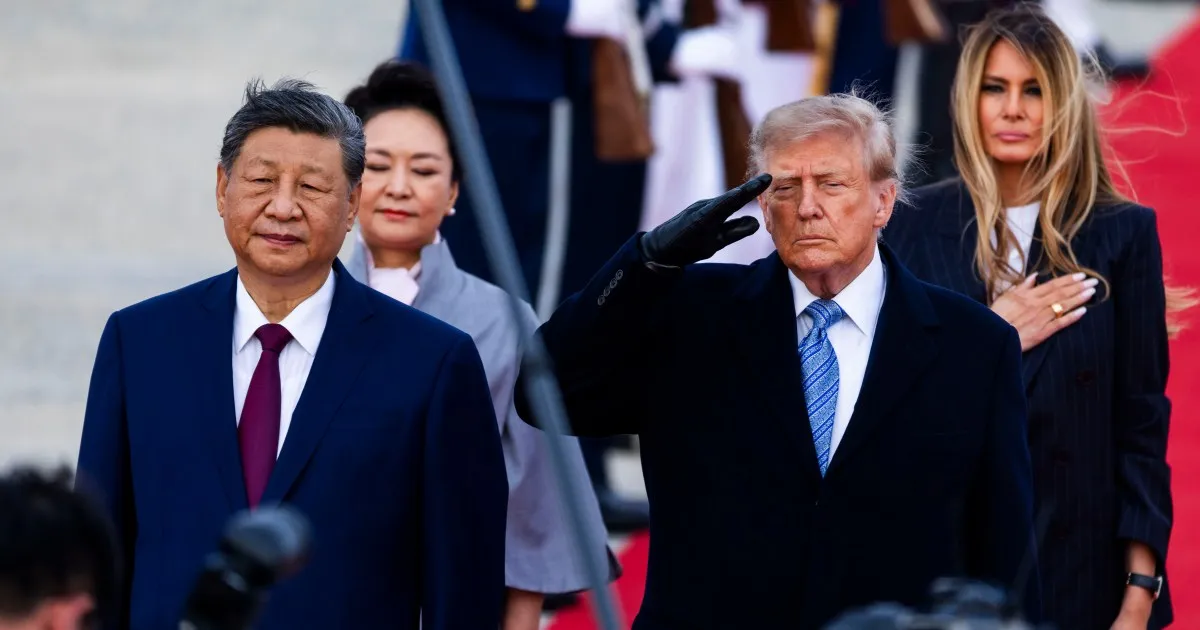
The red carpet was rolled out, and a trade truce was extended. Yet, beneath the pomp and pageantry of Chinese President Xi Jinping’s state visit with US leader Donald Trump on Thursday, Washington and Beijing remain locked in a much deeper strategic rivalry.

Xi arrived in Washington, DC on Wednesday evening for talks on Thursday, and Trump was there to meet him personally on the tarmac.

Recommended Stories

list of 4 itemsend of list

The meeting was the first state visit by a Chinese leader to the US in 11 years. But it is also the third time in less than a year that the two men have met face to face, as the two powers remain uneasily gridlocked in competition over AI, rare-earth metals, the question of Taiwan, and the Iran war.

Overhanging it all is the paused, but simmering, trade war between their two nations.

Almost as soon as Trump began his second term in the White House in January 2025, up went tariffs on Chinese goods as he accused China of facilitating the flow of fentanyl, a deadly drug, to the US. Beijing responded with its own levies, then restricted exports of valuable rare-earth metals which are crucial for the development and manufacture of everything high-tech, from smartphones to fighter jets. At one point, tariffs were heading towards 150 percent before being paused to allow time for talks.

Finally, the two leaders called a truce on the sidelines of the Asia-Pacific Economic Cooperation (APEC) summit in South Korea on October 30, and they met once more, in May, when Trump travelled to Beijing.

As Xi landed in Washington on Wednesday this week, the Trump administration announced that the two countries had agreed to extend an October 2025 truce which had offered some respite from the punishing tariffs, produced an agreement from China to buy more soyabeans from the US and delayed the ban on rare-earth exports from China until January 10. The prospect of a much-longed-for trade deal appeared to be in the air when US Treasury Secretary Scott Bessent told Fox News he had met Chinese ‌Vice Premier He Lifeng before Xi’s visit to “see if we could ⁠do a bigger deal as opposed to just a series ⁠of smaller things”.

But analysts have, for the most part, shot down such hopes. Beyond tariffs, they say, the simmering conflict between the two powers now encompasses new US sanctions on buyers of Russian oil – namely China – and sweeping investment and research restrictions, never mind the intensifying race for dominance in artificial intelligence.

“The two-month extension isn’t a bridge to a grand bargain – it’s a temporary sandbag holding back a structural flood,” Beijing-based Einar Tangen, a senior fellow at the Center for International Governance Innovation, told Al Jazeera.

Theatrics or continued thaw in tensions?

In fact, the truce is little more than “transactional theatre” – an attempt at good optics before the upcoming US midterm elections – Tangen said.

Trump’s deeply unpopular war on Iran has already inflicted severe damage to his chances in that vote. Democrats are leading in the polls amid concerns about the rising cost of energy, triggered by the war which the US started. Trump ultimately needs wins on other issues.

The current truce with China serves a purpose, therefore, but is fragile enough to be undone the moment political utility shifts for Trump, Tangen said.

“Success in January won’t be measured by what is solved, but by whether the knot is left tight enough to hold, but not kill,” said Tangen.

Phillippe Le Corre, professor of international relations and Asian studies at France’s ESSEC Business School, said the length of the truce extension indicates clearly that a more permanent deal remains out of grasp.

“The extensions are getting shorter and shorter, which means they haven’t found a common ground on many issues,” Le Corre told Al Jazeera.

“The two-month extension is a terrible outcome for the US. Nothing is resolved, and many Damocles’ swords are still hanging over Washington’s head,” he added.

Trump’s entire China policy, Le Corre argued, is in fact short-sighted. “That is bringing the world a lot of uncertainty,” he said.

Some analysts are more hopeful, but not much. Sun Chenghao, a fellow at the Center for International Security and Strategy at Tsinghua University in Beijing, described the extension of the trade truce as a “useful interim step”. It shows that both sides want to preserve the recent easing of tensions, which is meaningful progress, he said.

“From China’s perspective, a sustainable agreement needs reciprocal benefits and greater policy predictability,” Sun told Al Jazeera. “Additional purchases cannot indefinitely compensate for uncertainty over tariffs, technology restrictions and market access.”

The extension’s value, however, will depend on whether it produces “concrete commitments” from Beijing and Washington, Sun added.

A game of ‘economic chicken’

There is motivation to get a deal done, analysts say. Any escalation in the US-China trade war will be costly for both sides.

But there is some way to go. A Congressional Research Service report in July 2026 noted that Chinese goods exported to the US still face tariffs of 36.5 percent, while US goods entering China are taxed at 31 percent.

Any higher, and they will raise import and manufacturing costs in the US, squeeze margins and increase pressure on consumer prices, said Sun. They would also hurt US farmers and industrial exporters, he added, just as the US faces pressure from the rising costs of its war on Iran, which have pushed it into a record national debt of $40 trillion two years earlier than expected.

“Washington is playing a high-stakes game of economic chicken with a $40 trillion debt load, an inflationary sword of Damocles, zero fiscal cushion to absorb a truce collapse and a dependence [on] Chinese industrial and manufacturing inputs,” Tangen said.

US consumers and the economy in general will find it tough to survive yet another inflationary shock from renewed tariffs “at a time when the federal budget already operates like a high-wire Ponzi scheme”.

Then there is the AI race, which no one can afford to lose. According to Jon Bateman, a senior fellow at the Carnegie Endowment for International Peace, a partial “decoupling” of US and Chinese technology ecosystems is under way. US policymakers have pushed to become less dependent on Chinese tech and “to secure America’s technological future in the context of a rising China”, Bateman writes.

But that will not help if there is a collapse in valuations of companies in the AI sector, which currently drive global stock markets. An AI valuation collapse, Tangen warned, “could trigger a financial tsunami that makes 2008 look tame – making technological decoupling meaningless as the world is plunged into a depression”.

Despite the trade war and Trump’s tariffs, China’s trade with other countries has risen sharply, with the country registering a $1.2 trillion global trade surplus last year. But an escalation of the trade war with the US would nevertheless spell increased pressure on export orders, employment in exposed industries and business confidence, said Sun.

Beijing does hold one crucial ace card – it is sitting on 60 percent of the world’s known deposits of rare-earth minerals, said Le Corre. It processes 90 percent of them, too. These are the metals that all countries need supplies of for semiconductors, technological components and the manufacture of weapons, to name but a few. Last year, China began to make use of that leverage by restricting exports of five of the 12 rare-earth metals it mines in April. Then, in October, it prepared to restrict seven more – until the trade truce happened. Plans for the export restrictions are not shelved, however, merely on hold.

“[China] understood this over the past year and they are certainly not going to give up on this,” said Le Corre.

“Washington is hostile, but it is hooked,” Tangen said. “You cannot threaten China with secondary sanctions on energy while desperately needing its rare-earths to fuel your military-industrial base.”

A drawn-out path to durability

The path to a lasting US-China trade deal will be long and rocky. First, any new tariff reductions will need more coverage and duration, said Sun.

For a deal to last, it would also require “more predictable licensing and actual deliveries of rare earths and critical minerals; restraint in expanding technology restrictions; and market access reflected in regulatory approvals and completed transactions”, he said.

A durable agreement also needs regular consultations and a process for resolving complaints. If all this can be hammered out then, just maybe, there might be a chance, Sun said.

Tangen and Le Corre were less optimistic, however. “The US view of China as an existential threat has to change before there can be solutions,” said Tangen.

Le Corre, meanwhile, said that while China is a long-term planner, “durable is a word that can hardly be associated with Trump.”

The existing trade truce also risks breaking down if there are new unilateral tariffs, broader technology or mineral restrictions, or disputes over whether commitments have been fulfilled, said Sun.

Tensions over Taiwan, which China claims as its own territory, but for which the US approved an $11.1bn arms sale in December last year, could also trigger a breakdown in trade relations, the analysts said.

“Taiwan remains the ultimate low-probability, catastrophic-impact tail risk – where a single round of arms sales can snap a multibillion-dollar trade truce in an instant,” Tangen noted.

Source link

Outcry in Sudan as US reportedly holds al-Burhan’s UN visa over truce plan | News

Media reports say US withholds army chief’s visa to pressure him into accepting a 90-day truce in Sudan’s civil war.

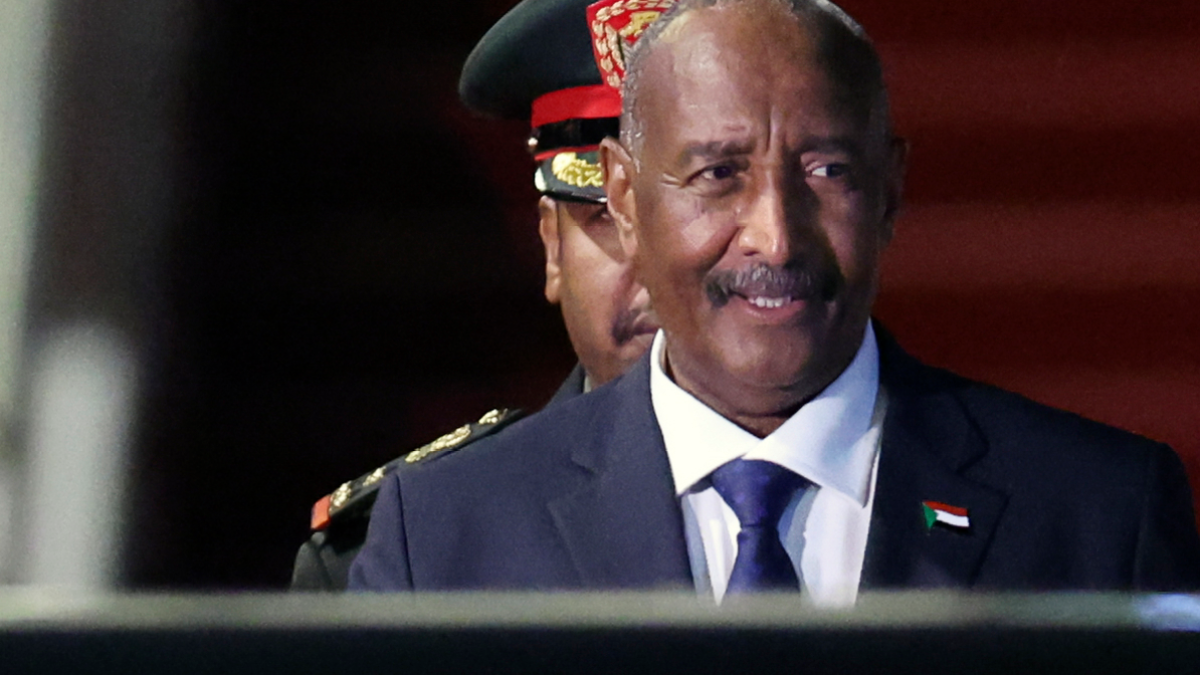
Sudanese activists and journalists have criticised the United States over reports that Washington has withheld a visa from army chief Abdel Fattah al-Burhan before the United Nations General Assembly in an apparent bid to pressure him into accepting a ceasefire proposal.

Activists took to social media on Wednesday to slam the reported move as “political pressure”, arguing that access to the UN should not be used to influence Khartoum’s position on Sudan’s three-year civil war.

Recommended Stories

list of 4 itemsend of list

Neither the Sudanese government nor the US Department of State has commented on the reports.

General al-Burhan, whose army has been fighting the paramilitary Rapid Support Forces (RSF) since April 2023, was scheduled to address the General Assembly on Thursday in New York. The army chief has spoken at the assembly twice since the war began.

The conflict has killed tens of thousands of people and caused the world’s largest hunger and displacement crises.

The Reuters news agency, citing Sudanese sources, reported on Tuesday that the US was withholding al-Burhan’s visa and had made its issuance contingent on him agreeing to a 90-day ceasefire proposed by Massad Boulos, US senior adviser for Arab and African affairs.

The AFP news agency, quoting two diplomatic sources, also reported that Washington refused to issue the visa. One source called the move a “clear violation of the UN’s agreement with the US” while another said the visa had been “conditioned” on al-Burhan accepting the three-month truce.

‘Political pressure’

Sudan’s UN ambassador, Al-Harith Idriss Al-Harith, wrote to Secretary-General Antonio Guterres to request the UN’s “immediate intervention” with US authorities, according to Reuters.

Stephane Dujarric, a spokesman for Guterres, said the UN chief was “deeply concerned” that the visa had reportedly not been issued. He told the AFP that the UN Secretariat has urged the US, as host country, to ensure visas were issued in accordance with its obligations under the UN Headquarters Agreement and in time for al-Burhan to participate in the General Assembly.

Sudanese activist Mamoun al-Sheikh denounced the US move in a post on Facebook, saying: “Even if the visa is withheld, it will not silence Sudan’s voice.”

Another activist, Sayed Al-Mazaj, described linking the visa to a proposed 90-day ceasefire as “a tool for political pressure”. And in a video posted on X, Sudanese journalist Diaa Al-Din Bilal said barring al-Burhan from New York would not force him to accept the US position and could instead boost his popularity and rally support around him.

Another X user, @Atifazhri, also denounced the US move, noting that Israeli Prime Minister Benjamin Netanyahu, who is wanted by the International Criminal Court on charges of war crimes in Gaza, had been granted a visa.

“The issue is double standards – when visas become instruments of political coercion against a sovereign state while far more serious cases are treated differently. International law and justice cannot be applied selectively,” the user wrote.

US questions al-Burhan’s legitimacy

The State Department issued a statement on Tuesday that did not directly address al-Burhan’s visa but called into question his legitimacy. Its spokesman Tommy Pigott said neither the Sudanese army nor the RSF “nor their respective leaders, represent legitimate, constitutional governance for Sudan”.

He added the US would “seek to raise the cost of continued conflict on all belligerents”.

Sudan’s Ministry of Foreign Affairs hit back on Wednesday, calling on the US to engage positively with the country’s government. Any peace initiative, it said, must “be grounded in respect for Sudan’s sovereignty, unity, territorial integrity, and legitimate national institutions”.

“It must also address the root causes of the war’s continuation — foremost among them, negative foreign interference,” the ministry added.

Al-Burhan has been Sudan’s de facto leader since 2019 although the African Union and Western powers withdrew recognition after a 2021 coup that he led with Mohamed Hamdan Dagalo, the RSF’s leader, against the civilian leadership.

He has rejected externally imposed ceasefires, arguing that earlier pauses in the fighting benefitted the paramilitary group.

The US has also refused visas to Palestinian Authority President Mahmoud Abbas and some members of Iran’s delegation to the UN.

Source link