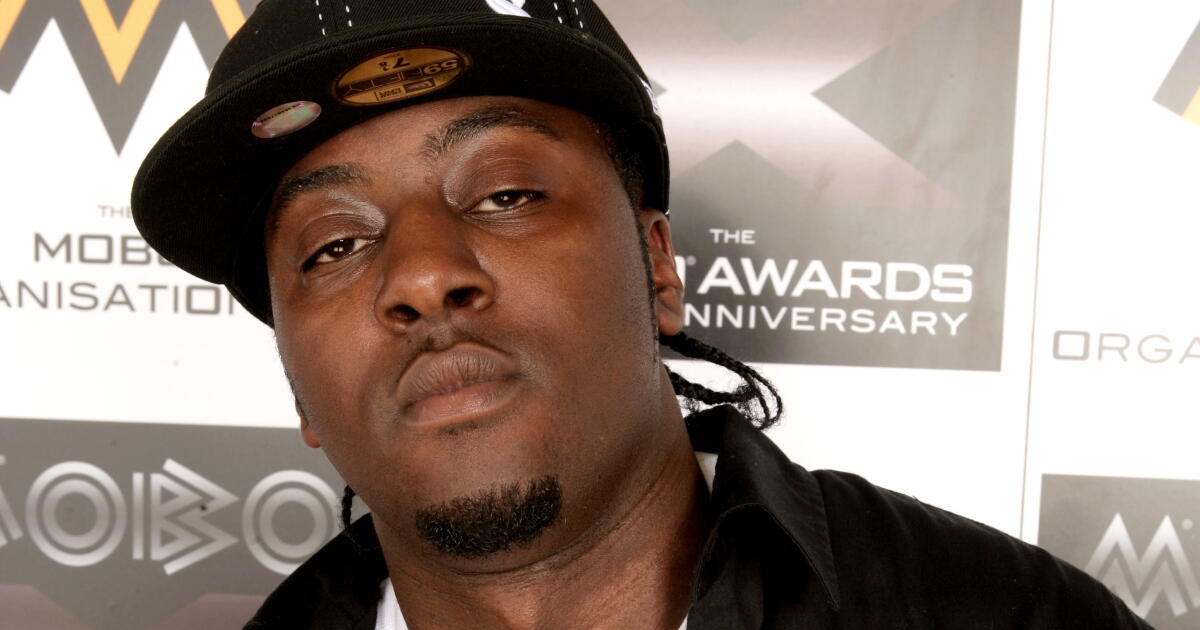
Sway Dasafo, a pioneering British Ghanaian rapper known for his lyric storytelling and championing of British music, has died. He was 44.
The rapper and producer’s death was announced Thursday on social media by the Mobo Awards, which celebrates music of Black origin. Dasafo’s friend Kash Ahmad confirmed to the BBC that he died at his home in Ghana. No cause of death was provided, but the outlet reported that Dasafo had been diagnosed with Hodgkin lymphoma in 2010 before going into remission later that year.
“We’re deeply saddened to hear of the passing of Sway,” Mobo wrote on Instagram. “Sway will always hold a special place in MOBO history.”
In 2005, Dasafo became the first unsigned artist to win the Mobo award for hip-hop act before he released an official album. He won over other established artists including 50 Cent and the Game off the strength of his mixtapes, “This Is My Promo” volumes one and two.
“Mixtapes effectively provide a diary of my life,” Dasafo told the Guardian in 2005. “They feature skits and interviews of me on radio. When people follow your story, they feel closer to you — it’s like a soap opera. People want to know what’s going to happen next.”
“It was a huge moment,” Mobo’s Instagram statement said of Dasafo’s win. “Not just for Sway, but for UK Hip Hop. At a time when British rappers were still fighting to be recognised alongside their US counterparts, his win made a real statement about the talent, creativity and potential coming out of the UK. … [W]e will always be proud that he was part of the MOBO story and of the history we shared together.”
Born Derek Andrews Safo on Sept. 5, 1982, in Hornsey, north London, to Ghanaian parents, Dasafo grew up primarily in England where he developed a love for literature and music. He started rapping as a hobby when he was 10 and was making beats on his computer at 13.
The versatile rapper got his start in groups such as Phynix Crew and One before going solo and releasing his series of mixtapes. Among his early hits were “Up Your Speed” and “Little Derek,” from his debut alum, “This Is My Demo,” which he released from his own label, Dcypha Productions.
“I’m a positive person and this positivity comes out in my music,” Dasafo said in his 2005 Guardian interview. “I don’t go round holding guns to people’s heads, so I won’t rap about holding guns to people’s heads. Trouble attracts trouble. If you rap about trouble, it will come to you.”
From early in his rap career, he expressed his desire to become a producer so he could sign and nurture other talent. Dasafo has collaborated with artists including Riz Ahmed, Ed Sheeran, Lupe Fiasco and Chamillionaire.
BBC Radio 1Xtra broadcaster Remi Burgz called Dasafo a “UK Rap pioneer” and “one of north London’s finest” during her program, according to the BBC.
“He was mine and many others’ first experience of U.K. rap [and] hip-hop in mainstream media,” she said. “He was a literal example of paving the way and showing that U.K. rap can take up space in music.”
Dasafo is survived by his two sons, Jalil and Ammar-Joseph, and twin daughters, Queen-Inaya and Queen-Imara.
TOMORROW night in Philadelphia, Ed Sheeran is expected to return to the stage for the first time since the biggest crisis of his career began.
Venues and promoters removed rapper Macklemore as the opening act on his US tour for voicing pro-Palestinian views on stage — prompting a legion of musicians, many of whom were British megastar Ed’s friends, to publicly turn against him over the past week.
Ed Sheeran performing in the US last yearCredit: GettyEd Sheeran and rapper MacklemoreCredit: Getty
This evening at Lincoln Financial Field, Ed will perform to 60,000 fans alone, with just his guitar and his trusted loop pedal, after Irish singer Aaron Rowe and Danish group Lukas Graham pulled out as support acts.
Irish folk group Beoga have performed with Ed on every night of the Loop World Tour — but they have also withdrawn, along with Billie Eilish’s brother Finneas, who was due to open six of Ed’s south American dates later this year.
Sign up for the Showbiz newsletter
Thank you!
“The world feels like a very lonely place for Ed right now,” an insider tells me.
“He couldn’t have done more to change the situation. He genuinely tried everything. This pile-on has been awful.”
I’m told dad-of-two Ed, 35, is planning on pushing ahead with the concert this evening before taking a view on the remaining ten dates across the US before his shows in South America.
My insider explained: “He wants the tour to continue for fans.
“They will have spent a lot of money on travel and hotels and will want to see him perform.
“The plan is to see how it goes tonight and then Ed and his team can take a view on whether they will carry on or not.”
Last night local action groups Philly Palestine Coalition and Shut Down D&Z confirmed they would be demonstrating at the train station closest to the venue.
Police said they would be increasing patrols in the area and were dispatching extra officers to the area around Lincoln Financial Field before the concert starts at 8pm.
Jasmine Reilly, a spokesman for the Philadelphia Police Department, said last night: “Our officers are talking to Ed’s team to make sure all appropriate measures are taken.”
A second source told me: “A nightmare scenario is if unrest begins inside before or during the show. It’s a possibility because of the heightened emotions with everything that is going on right now.
“Naturally Ed and his team’s concerns are for the safety of the people inside and outside the venue.”
Tonight’s gig will take place 15 days after Macklemore lit the touchpaper under Bad Habits hitmaker Ed.
The rapper — real name Benjamin Haggerty — played his pro-Palestinian protest song Hind’s Hall in New Jersey before telling the crowd: “A big part of the reason why I wanted to do this tour in the first place is so I could stand up in stadiums like this and say two words that are very near and dear to my heart: Free Palestine.”
The next day he stood on stage again at the MetLife Stadium and declared: “To all of my Jewish brothers and sisters: criticism of Israel, criticism of apartheid, being against genocide in no way is a criticism of you.”
Beoga members Sean Og Graham, Niamh Dunne, Liam Bradley, Eamon Murray & Damian McKeeCredit: Getty Images – GettyFinneas O’Connell was due to open six of Ed’s south American dates later this yearCredit: Getty
Two days later, the Israeli-American Council published a petition calling for Macklemore to be removed from Ed’s shows.
On September 8, Jewish singer Pink ramped up emotions when she shared a statement on Instagram with her 11.7million followers.
She blasted Macklemore for going on stage “in front of a stadium full of music-loving families, with violent images from a war on the screens, dedicated a song to the movement of his choice, and then took the mic to tell all of the Jews in the stadium that it wasn’t about them.”
Three days later Macklemore was removed from Ed’s tour. US promoters Messina Touring Group said that it had been notified by venues on Ed’s US tour that they “will not allow a concert to take place with Macklemore on the line-up.”
In a statement calling Ed a “brother”, the rapper said: “Nothing I’m writing here is out of spite or because I want to tear down his character.
“But as I told Ed multiple times on the phone, our friendship can’t change my responsibility to tell the truth about what happened.”
Macklemore explained that Ed had told him billionaire Robert Kraft, the owner of the New England Patriots American football team and their Gillette Stadium in Massachusetts, would not allow him to play the two dates there on September 25 and 26.
Danish group Lukas Graham pulled out as support actsCredit: AFPIrish singer Aaron Rowe has also pulled out as a support actCredit: Getty
Macklemore added: “Ed was in a f***ed-up position.
“His typical apolitical stance was being challenged in a way it never had been before.
“He told me that the words ‘Free Palestine’ and the image of the Palestinian flag were hurtful to a lot of people he spoke with. I told him that if those words were more offensive than tens of thousands of Palestinian children being killed by Israel, then there was a fundamental disconnect between where those people stood and where I stood.
“But he couldn’t get past his public-facing, ‘I don’t take sides.’ ”
The next day Ed addressed the situation in a statement to his 47million Instagram followers and revealed the lengths he had gone to in a bid to get everyone back on board.
He said he had spoken to “activists on both sides” as well as the owners of stadiums to find unity and that he was “appalled” by the conflict.
Ed added: “I am not complicit. I have my personal views on this devastating conflict. Just because I choose not to speak publicly, it doesn’t mean I don’t have them, and it doesn’t mean I don’t care.
“Macklemore coming off the tour was the promoter’s decision, it was not mine.
On September 8, Jewish singer Pink ramped up emotions when she shared a statement on Instagram with her 11.7million followersCredit: Instar ImagesBillionaire Robert Kraft, the owner of the New England Patriots American football team and their Gillette Stadium in MassachusettsCredit: Getty
“I would never let down the fans who had made plans, nor would I abandon the touring crew and the other support acts and musicians who rely on me for work.”
Explaining his decision to remain apolitical, he said: “There is a reason I do not use my professional platform for politics.
“My audience includes young people, often children, of all backgrounds.
“Those who come to my shows do not expect a political forum. I respect Macklemore’s strength of purpose to stand up and shout for what he believes in.
“However there is room for multiple approaches to the same end: peace.”
He concluded: “I have spent this week trying to build bridges, to find a solution, and unfortunately I was unable to do so.
“I know who I am, both as a person and as an artist, and those who know my heart know my values too.”
Despite his attempts to make amends, Ed was left flattened the following day as the artists on his tour started to pull out.
In a statement, Irish group Beoga said: “To play in venues that silence anyone advocating for Free Palestine is simply not an option for us.”
Pro-Israeli billionaire Kraft then came out fighting in Ed’s corner.
Shortly after Macklemore announced he was donating his $1million fee for the tour to humanitarian organisations providing aid to Palestinians, Kraft said Ed had been in touch before asking to match a donation he had made.
Kraft said: “I have dedicated much of my life to building bridges between all people.
“I believe deeply that all lives are worth protecting.
“Earlier today, before Macklemore challenged me to match his donation, Ed called me and asked me to commit $2million to match his donation to aid in the region to fight this humanitarian crisis.
“Ed now plans to reach out to other venue owners and our goal is to continue to work together to build bridges.”
Kraft also pointedly recalled Macklemore’s stunt in 2014, where he performed on stage in a costume which featured anti-Semitic tropes.
Macklemore apologised and said he did not mean to offend anyone but conceded the outfit could have looked like a “Jewish caricature”.
In the days prior to tonight’s show, high-profile stars have waded into the row, including British singer Paloma Faith, Hacks actress Hannah Einbinder and Formula 1 champ Lewis Hamilton.
The controversy also spilled over into politics, with US senator Bernie Sanders blasting Kraft.
The Democrat wrote: “In the United States of America, billionaire stadium owners should not be able to silence artists because they speak out on political issues.
“Today it is the genocide in Gaza. What’s next? If they can silence one artist, they can silence anyone.”
Since his statement, Ed has not spoken and is, insiders tell me, “staying focused” on the hours ahead of the concert.
A source said: “Ed has never faced anything like this before.
“It’s been devastating. He is trying to do the right thing by everyone. Sadly that isn’t always possible.
“As he said in his statement he has his own views on the conflict.
“Just because he has not been public in speaking about them, it doesn’t mean he doesn’t care or hasn’t actively been helping in whatever way he can.”