Column: Trump loves to throw around taxpayers’ money
Donald Trump Jr. has a lot more in common with his dad than just a name, sharing the president’s penchant for shady dealings and for kleptocratic Russians. Sometimes the two proclivities go together. That was the case in May, we learned this week from ProPublica, when Don Jr. married his second wife during a three-day Bahamian bacchanal bankrolled partly with hundreds of thousands of dollars from a Putin-allied oligarch the Trump scion met only recently.
I had to wonder — recalling Don Jr.’s response in 2016 on learning Russia helpfully wanted to dump dirt on Hillary Clinton — whether he replied in kind when his new Russian friend, Umar Kremlev, offered the wedding grift, er, gift: “If it’s what you say I love it.”
My second thought was that Don Jr. is just like his dad in wanting to spend other people’s money, even as the Trump family has accrued billions since President Trump has been back in office. (Cue the continued silence from the sleuths of Hunter Biden’s laptop.)
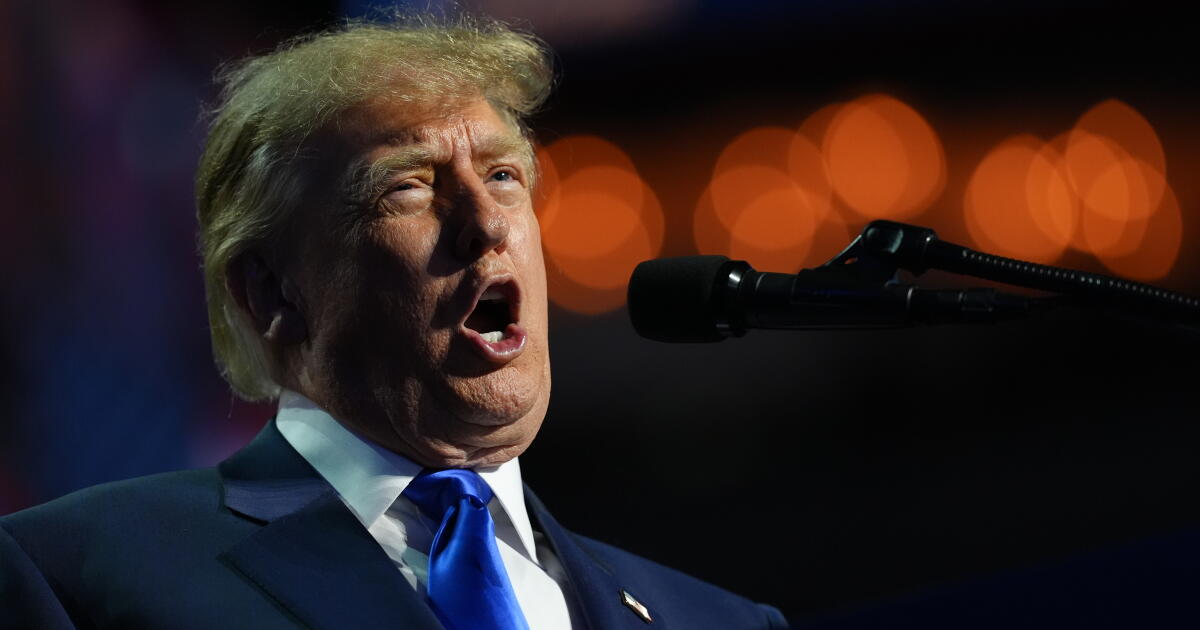
Just days before ProPublica’s exposé, at last week’s midterm Republican convention in Dallas, the elder Trump proffered a gift of $5,000 to every one of the roughly 270 million adult Americans. But the eponymous “Trump dividend” would come only if Republicans keep their House and Senate majorities after the November midterm elections.
The tab? More than $1 trillion, roughly $1.3 trillion. How generous Trump is with the U.S. Treasury, despite the news just last month that rattled bond markets and raised interest rates: The United States’ gross debt has exceeded $40 trillion. As Trump told CNBC in 2016: “I love debt. I love playing with it.” We can’t say he didn’t warn us. Even before his proposed 5K giveaway, Trump was on track to break his first-term record for adding to the unsustainable U.S. debt ($8.4 trillion).
Trump’s unprecedented offer of a post-election payout provoked predictable cries of “bribery” from Democrats and other critics. But legality aside, even the appearance of a bribe isn’t what bothers me most about the proposal.
For one thing, it won’t happen. No one will be receiving a $5,000 Trump dividend, just like no one received the DOGE dividend or $2,000 tariff refund he previously promised. Even if Republicans pull off a miracle and retain control of Congress, those in power show no zeal for his budget-buster, not after their complicity in adding trillions to the debt since last year with tax cuts, war costs and this, that and the other Trump pet project. And Congress indeed would have to act, under the Constitution, despite suggestions from the obsequious Treasury secretary, Scott Bessent, that Trump could act alone. (But “I’m not ready to discuss it at present,” Bessent told a House committee on Tuesday.)
No, what bothers me most about Trump’s idea — what outrages me — is the damnable fiscal irresponsibility of it.
Trump has turned much of historical Republican orthodoxy on its head, including on immigration, trade and policy toward Russia. But his utter disregard for annual deficits — a record $2 trillion for this fiscal year that ends Sept. 30 — and his shameful profligacy with taxpayers’ money is something Americans haven’t seen in their lifetimes, in either party. Worse, Trump implies otherwise, that he is fiscally responsible, and he does it with lies that are so easily refuted, so often contradicted by his own words, that it’s a marvel that even such a chronic prevaricator as himself can utter them.
This week Trump is still claiming that the $5,000 dividend will be paid for because “we’re taking in trillions and trillions of dollars” in revenue from his inflationary tariffs on more than half of the goods imported into the country. The actual number isn’t even close to that, and he should know it: The data that nonpartisan analysts are crunching are from the government he supposedly runs.
In 2026, tariff revenue through August was just under $200 billion, but more than half of that already has been spent on refunds to big corporations including Amazon, Walmart and Home Depot, in keeping with a Supreme Court ruling against some of Trump’s tariffs. And as if Trump’s dividend proposal weren’t mendacious enough, in making it he seems to have forgotten his claim in his State of the Union address in February that he would use the tsunami of tariff revenue to abolish the federal income tax.
And one last thing: Even if each adult American got $5,000, subtract from that the nearly $2,000 that each household has paid, on average, because of higher tariffs since Trump took office, according to the nonpartisan Tax Foundation.
In this one dumb idea, in sum, the giveaway manifests just about all that is wrong with Trump as president: The lying, of course. Fiscal recklessness. The trashing of commendable Republican doctrines. The Trump bubble of sycophantic yay-sayers. And, in turn, the seat-of-his-pants policy idiocy, from war-making to White House demolishing.
The lack of any actual policy deliberation behind Trump’s $5,000 shocker was clear in his lackeys’ flailing and contradictory reactions — not just Bessent’s specious claim of presidential authority, but also Commerce Secretary Howard Lutnick’s inane insistence the administration could somehow “earn the money that Donald Trump wants to pay out” and National Economic Council Director Kevin Hassett’s comment, contrary to Bessent’s, that the White House is indeed looking to Congress for funds.
The good news? Americans get it. Recent polls have the percentage approving of Trump’s handling of the economy as low as 28%. Significant majorities say they are worse off since he became president again.
Such numbers portend an election result that isn’t likely to be changed by a promise of $5,000. Especially from a serial promise-breaker.
Bluesky: @jackiecalmes
Threads: @jkcalmes
X: @jackiekcalmes

