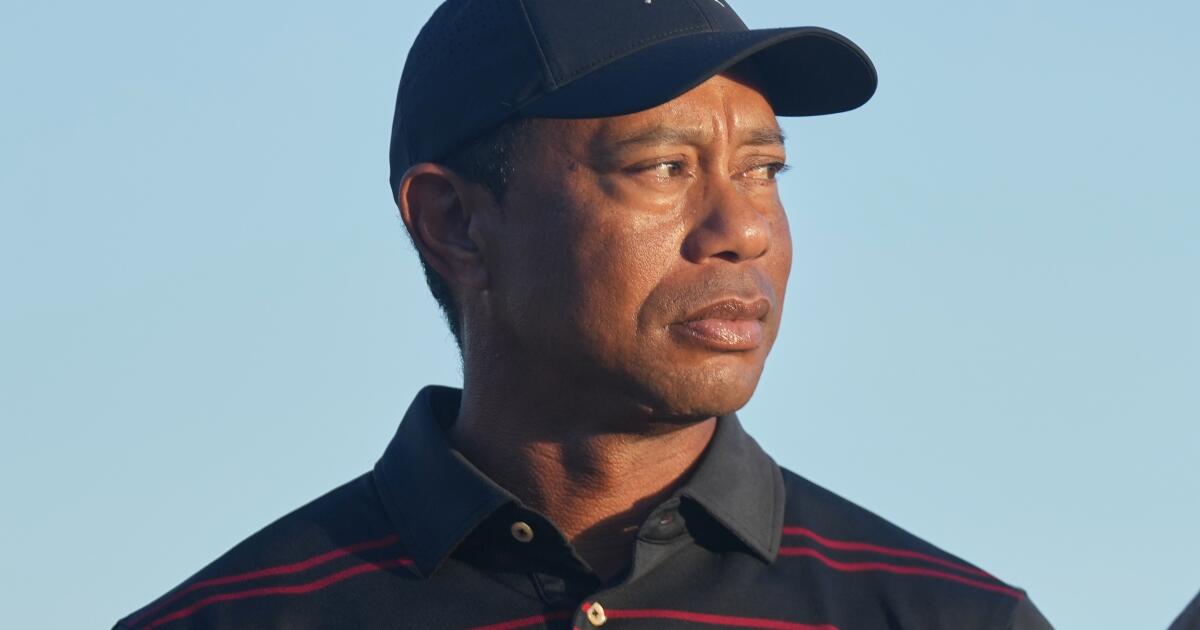
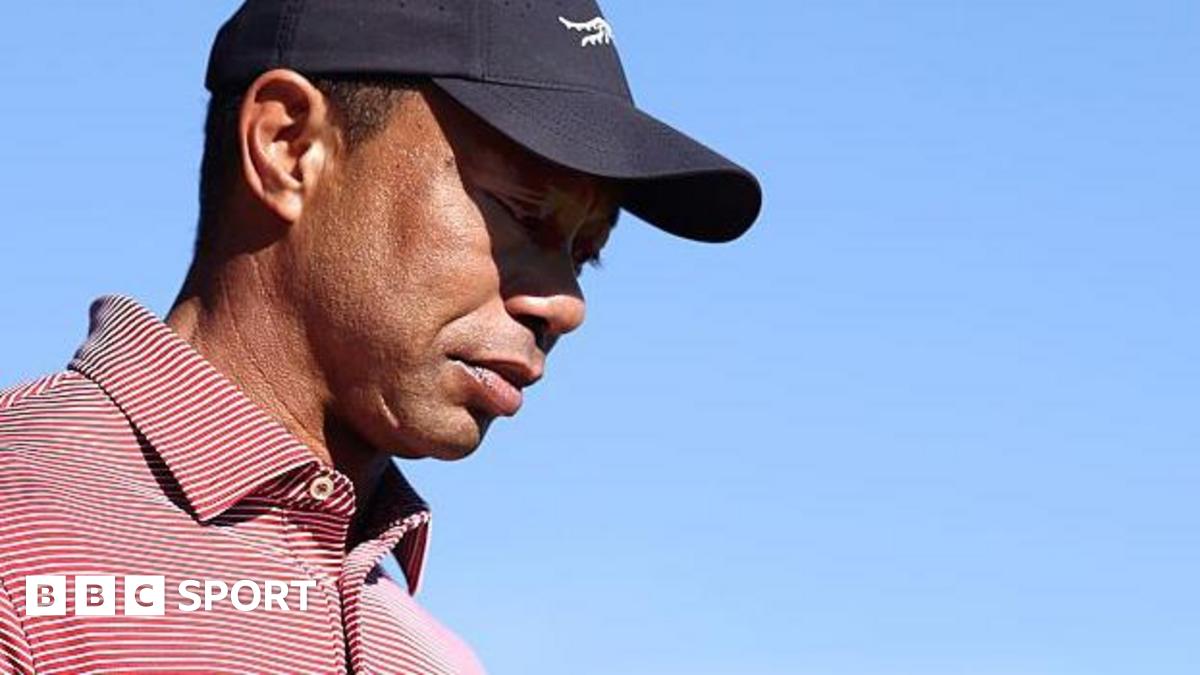
Shortly after his attorney entered a plea of not guilty, Tiger Woods announced he will seek treatment “to prioritize my well-being and work toward lasting recovery.”
The golf legend was arrested Friday on suspicion of DUI with property damage and refusal to submit to a urinalysis stemming from a rollover crash near his home on Jupiter Island, Fla. Hydrocodone pills were found in his pocket and a sheriff’s deputy noted in the arrest affidavit that Woods had bloodshot eyes and dilated pupils and was “sweating profusely” while performing field sobriety tests.
Attorney Douglas Duncan appeared in Martin County, Fla., court Tuesday, waived arraignment on Woods’ behalf, entered not guilty pleas on the two misdemeanor charges and requested a trial by jury.
“I know and understand the seriousness of the situation I find myself in today. I am stepping away for a period of time to seek treatment and focus on my health. This is necessary in order for me to prioritize my well-being and work toward lasting recovery.
“I’m committed to taking the time needed to return to a healthier, stronger, and more focused place, both personally and professionally. I appreciate your understanding and support, and ask for privacy for my family, loved ones and myself at this time.”
Although he hadn’t committed to playing, Woods had been toying with returning to competition for the first time since 2024 at next week’s Masters at Augusta National Golf Club, where he has won five championships.
Now he won’t even make an appearance, let alone play. Woods was scheduled to attend the opening of “The Patch,” a municipal golf course in Augusta that he helped redesign. He also was expected to attend the annual Champions Dinner on April 7.
“Augusta National Golf Club and the Masters Tournament fully support Tiger Woods as he focuses on his well-being,” Masters chairman Fred Ridley said in a statement. “Although Tiger will not be joining us in person next week, his presence will be felt here in Augusta.”
Woods, 50, last competed on the PGA Tour in July 2024 when he missed the cut at the Open Championship, posting an 8-over 79 and 6-over 77 at Royal Troon. It marked his third consecutive missed cut in a major that year.
Widely considered the greatest golfer of all time, Woods has amassed 82 PGA Tour wins, including 15 majors. He has competed sporadically the last four years because of injuries, but has become an increasingly important figure off the course, serving as chairman of the PGA Tour’s Future Competition Committee and serving on the tour’s Enterprises Board, Policy Board and Player Advisory Council.
When arrested Friday, Woods was asked if he had any medical conditions. He replied that he has had seven back surgeries and at least 20 leg operations.
He also has had several car accidents.
Around Thanksgiving 2009, a report that Woods had been in a car accident near his home erupted into a major scandal involving allegations of affairs. It resulted in Woods’ divorce from Elin Nordegren, the mother of his children.
In 2021, Woods was seriously injured in a rollover crash near Rancho Palos Verdes the morning after the Genesis Invitational, which he hosted at Riviera Country Club. He had to be extricated from the wreckage of the Genesis GV80 SUV that he was driving
Woods underwent “a long surgical procedure” on his lower right leg and ankle, according to a statement he released. Doctors inserted a rod into his leg and placed screws into his foot and ankle.
The PGA Tour also issued its first comment on Woods following the golfer’s statement.
“Tiger Woods is a legend of our sport whose impact extends far beyond his achievements on the course,” it said.
“But above all else, Tiger is a person, and our focus is on his health and well‑being. Tiger continues to have our full support as he takes this important step.”
The golf body’s CEO, Brian Rolapp, added: “Tiger Woods is one of the most influential figures the sports world has ever known.
“Over the last year, I have come to deeply appreciate Tiger not only for his impact on the game, but for his friendship and the perspective he has shared with me as I joined the golf industry.
“My thoughts are with him and his family as he takes this step, for which he has my full respect and support.”
Last week’s accident was the latest in a string of incidents that have littered Woods’ recent years.
His marriage ended – as did lucrative sponsorship deals – after he struck a fire hydrant, a tree and several hedges outside his home in a 2009 incident which sparked accusations of extramarital affairs.
Then in 2017 he was sentenced to a year’s probation after pleading guilty to reckless driving. That came after police officers found Woods slumped at the wheel of his car near his home. A toxicology report found he had several legal medications in his system and marijuana’s active ingredient.
In 2021, Woods survived a serious accident which left him with extensive injuries. He has had multiple surgeries since, and played only a limited schedule.
Last week, he competed in the TGL indoor golf league – his first competitive golf for more than a year – following more back surgery and an Achilles injury.
LOVE Island’s Lucinda Strafford has been praised for showing off her natural skin as she gets her lips injected with filler in a new video.
The villa star, who is in a relationship with Sean Stone, popped into Jessica Rose Aesthetics for a couple of treatments.
Sign up for the Showbiz newsletter
Thank you!
Lucinda Strafford showed off her plump lips in a new clinic videoCredit: tiktokShe was injected by Jessica Rose AestheticsCredit: tiktok
She was makeup-free for the beauty session which included filler in her nose and 1ml of Revolax pumped into her lips.
Her eyes caught the attention of viewers as did her spots, with viewers pleased to see her proudly displaying them and urging her to represent brands that treat them.
Lucinda commented on the post: “The most humbling tiktok to ever see tbh xxx.”
She needn’t have felt self-conscious as all the comments were positive.
One follower posted: “She deffo needs to be on as many acne brands as she can, because this girl would be a role model for so many young women. You can be beautiful and have spots!”
Another said “She makes acne look hottt! Beautiful girl inside and out.”
A third shared: “She’s so gorgeous it’s crazy.”
A fourth commented: “Her eyes are insane.”
In the video, Lucinda did her best to stay still, only flinching slightly as the needle pierced her lips.
Lucinda’s piercing eyes wowed viewersCredit: tiktokLucinda and Sean Stone had a dream day in Disneyland ParisCredit: instagram
In one sunny snap in front of the magic castle, Lucinda wore Minnie Mouse ears and captioned it: “Living our fairytale…”
They also visited the Eiffel Tower with Lucinda looking incredible in a tiny polka dot skirt.
The trip to the French capital saw the couple get off to an early start, and Lucinda struggled with her bulging suitcase.
The pair checked in for an EasyJet flight at 6.50am.
After weighing their cases, the couple grabbed breakfast in the airport before boarding.
Lucinda tucked into eggs Benedict while Sean appeared slightly flustered, keeping an eye on the time.
Things quickly turned chaotic as the pair were seen sprinting through the terminal in a last-minute dash for their flight.
Lucinda admitted she had no idea where they were staying, teasing fans that the hotel was a surprise.
The couple were then seen arriving at luxury accommodation before heading out to enjoy a romantic lunch.
Gushing over the glam getaway, Lucinda declared: “This is going to be the best holiday ever!”
The couple are on their first holiday togetherCredit: TikTok/@lucindaSean and Lucinda finished fourth on Love Island: All Stars 2026Credit: Shutterstock Editorial
Argentina’s spunkiest duo Ca7riel & Paco Amoroso have checked themselves into a wellness center for their latest album, “Free Spirits.”
Out Thursday, the LP pushes the limits of the duo’s experimentation, combining unpredictable blends of trap, rock and pop while still maintaining their raunchy sense of humor and musicianship. The 12-track project features collaborations with British musicians Sting and Fred Again, as well as California’s very own Anderson .Paak and Jack Black.
It’s been a busy year for the avant-garde pair, who won their first Grammy in February for their nine-track EP, “Papota.”
At the ceremony, they hinted at a rebrand for the upcoming album; both appearing on the red carpet wearing matching tan robes — a look far less flashy than the custom Versace outfits they wore at the Latin Grammys in November.
“We are trying to heal that velocity that we had in the past year. If you go so fast, you’re going to crash,” Paco Amoroso told Billboard in February. “We are healing ourselves now.”
Following their Tiny Desk performance in Oct. 2024 — which has reached over 27 million views to date — the Buenos Aires singers have etched an unpredictable, kooky path in the crazed music industry, often by criticizing it.
First, their 2025 EP “Papota” humorized their rapid ascent to stardom and poked fun at how artists must dilute their image to fit the mainstream.
Now through their LP “Free Spirits,” they continue to comment on the trope of the burned-out, exhausted artist who through a soul-stripping retreat can find renewal once again.
That purported healing is taking place at “Free Spirits Wellness Center,” a mock-up clinic led by Sting dedicated to advance physiological and cognitive expansion for people working under intense pressure.
In a music video released Wednesday, Ca7riel & Paco Amoroso checked themselves in after taking home five gramophone trophies at the 26th Latin Grammys.
Among the 12-step treatments are skin-changing artotherapy, where patients endure a painful micro-needling session combined with a non-goal-oriented painting session; cryo cerebral rebirth, where the brain regresses to its early developmental stages; and temperature contrast celibation, where they receive an ice bath combined with sexual arousal restrain.
None of these treatments make clear sense — mainly because they aren’t real — but that’s exactly Ca7riel & Paco Amoroso’s point: Fame is all make-believe pandemonium and there is no real recovery from it.
WASHINGTON — White House chief of staff Susie Wiles has been diagnosed with early stage breast cancer but will continue working during her treatment, President Donald Trump said in a social media post on Monday.
Trump said Wiles’ prognosis is “excellent” and described her as “one of the strongest people I know.” He said Wiles plans to begin treatment immediately but made no suggestion she was pulling back on her work as one of his closest advisers.
“During the treatment period, she will be spending virtually full time at the White House, which makes me, as President, very happy!” Trump said on his Truth Social platform. “She will soon be better than ever!”
It comes as the Republican president confronts mounting challenges on global and national fronts, from the war in Iran and soaring oil prices to this fall’s midterm elections and American’s concerns over affordability.
Wiles, 68, is a longtime Trump ally who rose from his campaign co-chair to his closest adviser and counsel. The first woman to become White House chief of staff, Wiles spent decades as a lobbyist and political operative in Florida and led Trump’s 2016 effort in the state.
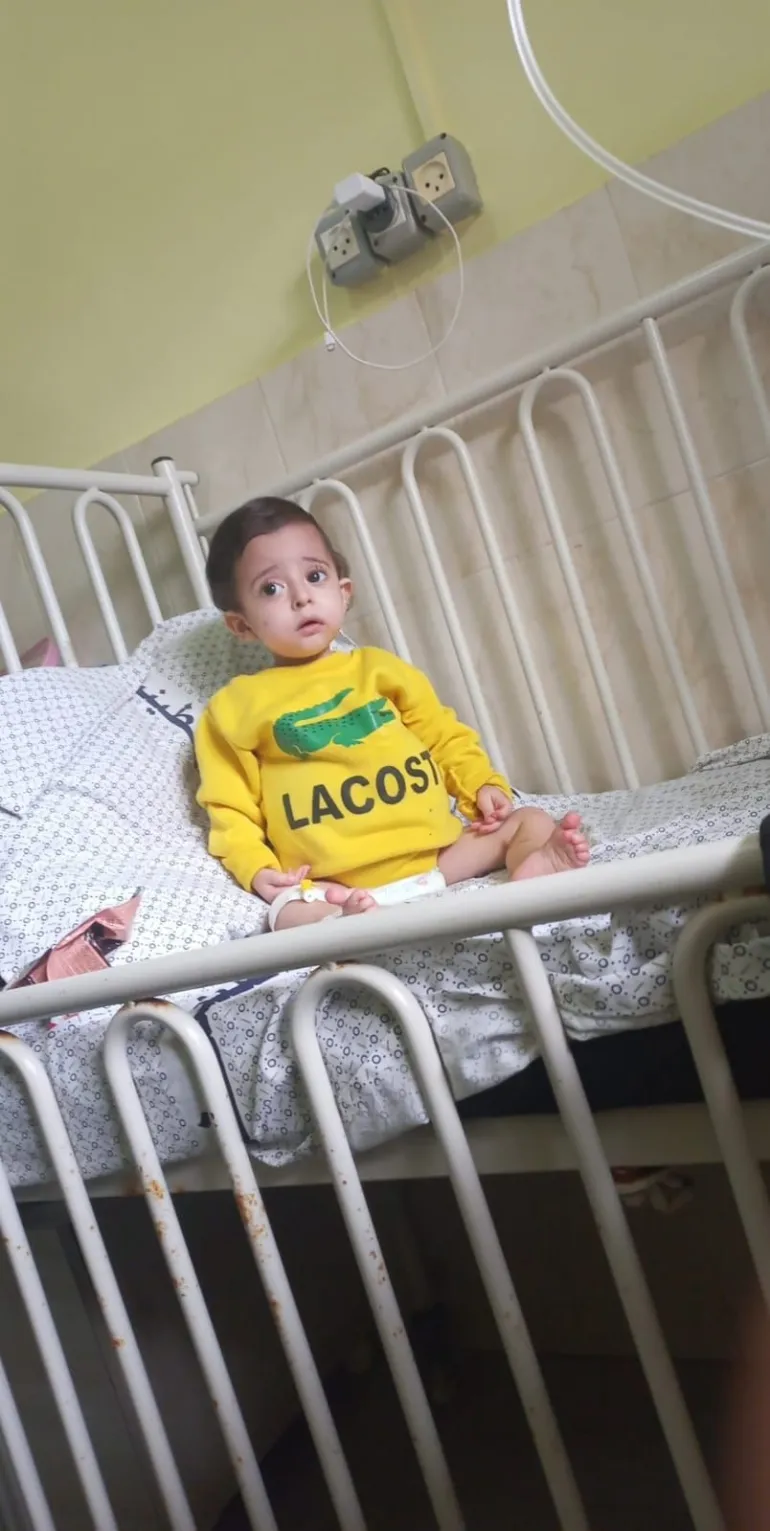
Gaza City, the Gaza Strip – On February 28, Lama Abu Reida was just a few hours away from what she hoped would change the fate of her sick infant daughter, Alma.
The family had finally been informed that the baby girl – fewer than five months old and unable to breathe without an oxygen machine – was eligible for medical evacuation.
Recommended Stories
list of 3 itemsend of list
The small travelling bag was packed, the medical documents in order, and Abu Rheida ready to go. All that remained was to exit the Rafah crossing between Gaza and Egypt and from there head to Jordan, where Alma could undergo a surgery that was not available in the Gaza Strip.
But just one day before the scheduled March 1 trip, Israel shut Gaza’s crossings “until further notice”, citing security reasons. The decision coincided with the launch of a joint military attack alongside the United States on Iran – and shattered Abu Rheida’s hopes.
“They told me the crossing had been closed without any warning because of the war with Iran,” the mother says in a choked voice.
Alma, who suffers from a lung cyst, has been at Nasser Hospital in Khan Younis, in southern Gaza, for more than three months now, with her mother staying by her side day and night.
“She cannot do without oxygen at all,” Abu Rheida says. “Without it, she becomes extremely exhausted.”
‘I don’t know what might happen’
The Rafah crossing, Gaza’s main gateway to the outside world, was closed for long periods during Israel’s genocidal war against Palestinians in the Strip that began in October 2023.
On February 1, Israel announced a limited reopening as part of a trial phase following a “ceasefire” with the Palestinian group Hamas. This allowed some movement under the agreement’s arrangements, particularly for medical cases.
But only a few patients were able to travel, and thousands remained on waiting lists until the February 28 closure, which stopped the transfer of wounded patients abroad, as well as medical evacuations of patients like Alma.
Doctors had told her family the only option for Alma, who was previously admitted to intensive care three times within a month, was to have surgery abroad to remove the cyst from the lung. While not particularly risky, such an operation cannot be done inside Gaza due to limited medical resources.
“My daughter’s life depends on a single surgery, and afterwards she could live a completely normal life,” Abu Rheida says.
“If her travel is delayed any longer … I don’t know what might happen. Her condition is not reassuring,” she adds in despair.
On Sunday, Israeli authorities said the Rafah crossing will open again on Wednesday for ”limited movement of people” in both directions.
Hadeel Zorob’s late son, Sohaib [Courtesy of Hadeel Zorob/Al Jazeera]
‘The closure killed my children’
The very thing Abu Rheida fears is something Hadeel Zorob has already endured.
Zorob’s six-year-old son, Sohaib, died on March 1, 2025, while her eight-year-old daughter, Lana, passed away on February 18 last month. The two children suffered from a rare genetic disease that causes gradual deterioration in the body’s functions.
They were both waiting for medical referrals to travel abroad for treatment – but that never happened.
“I watched my children die slowly in front of my eyes, one after the other, without being able to do anything,” says Zorob, 32, breaking down in tears.
Lana was only a few days away from travelling before she passed away.
“My daughter’s travel had been scheduled around the same period when the crossing was later closed, but she died before that,” Zorob says.
“When the news of the crossing closure came, my grief for my daughter returned all over again as I remembered the many children who will suffer the same fate.”
Zorob says her children were still able to move and play relatively normally in the early stages of their illness.
Before Israel’s war on Gaza, both children were receiving specialised hospital treatment, which helped stabilise their condition to some extent. But as the Israeli attacks intensified, their condition gradually worsened until it reached a life-threatening stage. The collapse of Gaza’s healthcare system left the family struggling to access the medications they relied on.
“We even tried to bring the medicine from the West Bank, and I asked the Red Cross and the World Health Organization, but nothing worked,” Zorob says.
During the war, she and her family had to leave their home and move into a tent in the al-Mawasi area. The new displacament conditions made caring for the children much harder.
“Both were bedridden … in diapers, and their blood sugar needed regular monitoring. We had to give fluids and watch their food … all this in a tent with no basic necessities.”
Zorob says she feels like “going crazy” when she thinks that her children might have survived and improved if they were able to get treatment abroad.
“The closure of the crossings killed my children!” she adds, her voice filled with anguish. “The world gives no value to our lives or to the lives of our children … this has become something normal.”
Zorob says she is trying to stay strong for her third child, four-year-old Layan, despite the persisting pain.
“All I want is that what happened to my children does not happen to any other mother … that the crossing be reopened and that children and patients be allowed to travel.”
‘Is that too much to ask?’
According to the Health Ministry in Gaza, more than 20,000 patients and wounded people are waiting to travel abroad for medical treatment.
Among them are about 4,000 cancer patients in need of specialised care unavailable in Gaza, and roughly 4,500 children.
The lists also include around 440 “life-saving” cases needing urgent intervention and nearly 6,000 wounded people who require continued hospital care outside of Gaza.
The Al-Dameer Association for Human Rights has called the Rafah crossing’s closure a form of collective punishment for civilians in Gaza, warning that it “sentences more patients to death” and deepens Gaza’s humanitarian crisis.
Amal al-Talouli, 43, has been suffering from breast cancer for five years [Maram Humaid/Al Jazeera]
For Amal al-Talouli, the closure of the Rafah crossing was another devastating blow in her battle with cancer.
The 43-year-old has been suffering from breast cancer for about five years. Although she underwent treatment before the war, the disease returned and spread to other parts of her body, including the spine.
“Praise be to God, we accept our fate,” the mother of two says. “Still, why should our suffering worsen because we are prevented from travelling and the crossings are closed?”
Al-Talouli is currently living with relatives after losing her home in the Beit Lahiya project area, in northern Gaza, during the war.
Displacement was not an easy choice due to her health condition, she says. The situation is compounded by a severe shortage of medications and specialised medical staff – a reality also experienced by other cancer patients in Gaza.
“There is a shortage of everything,” al-Talouli says. “I developed osteoporosis and eye fluid from chemotherapy. Chemo needs good nutrition, but malnutrition and famine made it much harder.”
Al-Talouli says the shutdown of the crossings made things worse.
“[It] affects us very, very much. No medicines are entering, and no essential treatments are coming in,” says al-Talouli, whose name was on a waiting list to travel outside of Gaza for treatment.
She stresses that cancer patients in Gaza urgently need support.
“Now I only want the crossing to reopen so I can have a chance to recover and continue my life with my children,” she says. “Is that too much to ask?”