If you’re planning a weekend in Windsor with a trip to Legoland included, this fancy hotel is a treat for the grown-ups but still has everything you need for the kids

(Image: Julie Delahaye)
“Oh no, this place looks fancy,” I told my partner as we drove up the winding path towards the De Vere Beaumont Estate in Windsor.
With its stately home feel and landscaped gardens, it had all of the makings of a lovely romantic getaway. Except we’d turned up with our two-year-old toddler, and now I worried that, despite promising to be a family-friendly hotel, this might be one of those properties where ‘family friendly’ means ‘as long as your kid sits quietly in the corner’. Thankfully, I was wrong.
De Vere Beaumont Estate is quietly family-friendly; at a first look it doesn’t feel like children are welcome, but once you actually settle in, it’s very accommodating.
The hotel may feel grandiose from the outside, but it’s not pretentious. It’s modern with quirky artwork, cosy armchairs, and a parlour bar serving an impressive array of drinks, with a large outdoor terrace.
My only quibble was the check-in process; there was a wedding onsite which caused a long queue at the reception. We actually gave up for a while and went to the bar for about an hour before returning, and even then we still had to wait 20 minutes.
Still, when we did get the keys to our room, it wasn’t disappointing. It was a decent size with a double bed, two armchairs and a table, a desk, and a large bathroom (shower only). If, like us, you’re travelling with a little one who still needs milk at night, be warned that rooms don’t have mini fridges – but we had prepared and packed an ice cooler.
The estate is very picturesque with large landscaped gardens, patches of woodlands, and a playground for older kids. It felt like we scratched the surface when we went for a wander, but there are some longer walks for those who aren’t tied to taking a pram along for the ride.
When it came to dinner, we decided to stick onsite at the hotel’s 1705 Restaurant & Bar. Again, at first glance I wasn’t sure if it would be stress-free with a toddler.
For a start, there wasn’t a children’s menu which had me instantly panicking about whether we’d need to convince our two-year-old that he did in fact want the likes of salad or soup for dinner, but thankfully the staff were incredibly accommodating when we asked if there was anyway we could get some sort of simple pasta dish, and they made us a special portion of mac and cheese.
The menu for grown-ups did tick all the boxes though. We went for the scallops and mozzarella salads as our starters, and steaks for the main. Prices range around £14-£35 per person so it’s not a particularly cheap meal, but the overall vibes, good food and friendly staff made it feel like a holiday treat.
With a toddler, it was time to head back to the room for an early night. However, after an hour of him resisting sleep, we admitted defeat, and headed back down to the terrace for a drink, taking the toddler in his pyjamas, in the pram. Nobody batted an eyelid, we easily found a table, and ended up enjoying some nice wine in the last of the sunshine.
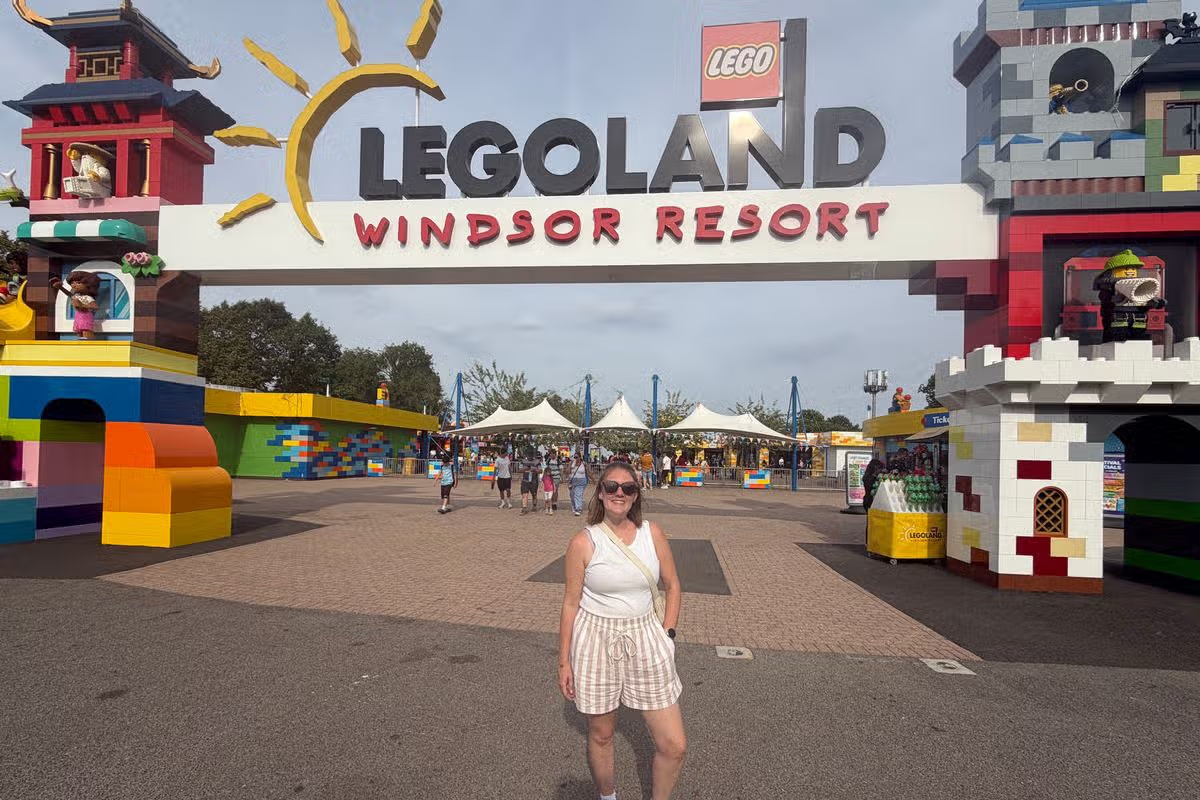
The next morning, after making the most of the hotel’s extensive breakfast and dropping off our room key in a very quick check-out process, we made the most of the hotel’s location just a 15-minute drive from LEGOLAND Windsor.
Our toddler was under 90cm which meant he could enter for free, but also meant he was too short for a few of the bigger attractions. Still we managed to tick off more than I expected including a submarine ride, a train, and the iconic Fairy Tale Brook boat ride. There were also heaps of playgrounds throughout the theme park. As for queues, the longest we saw was 35 minutes for a NINJAGO ride, but generally we were impressed at how quickly everything moved – a very welcome feature when you’re waiting around with a toddler.
The theme park allows you to bring your own food and drink in the park which was very helpful for snacks (our little one, like most his age, is spectacularly picky about what he will eat), but I wish we’d packed more for ourselves too as when we did decide to just get some nuggets and chips for lunch, as well as some ice creams, it set us back about £30.
Overall, De Vere Beaumont Estate proved an ideal base; a lovely space for us grown-ups to enjoy, and a handy location to one of the UK’s biggest attractions. It’s definitely one we’ll be returning to!
- Rooms at the De Vere Beaumont Estate start from £129 a night based on two people sharing. Book at devere.co.uk.
- LEGOLAND Windsor day tickets start from £32pp when booked online in advance at legoland.co.uk.