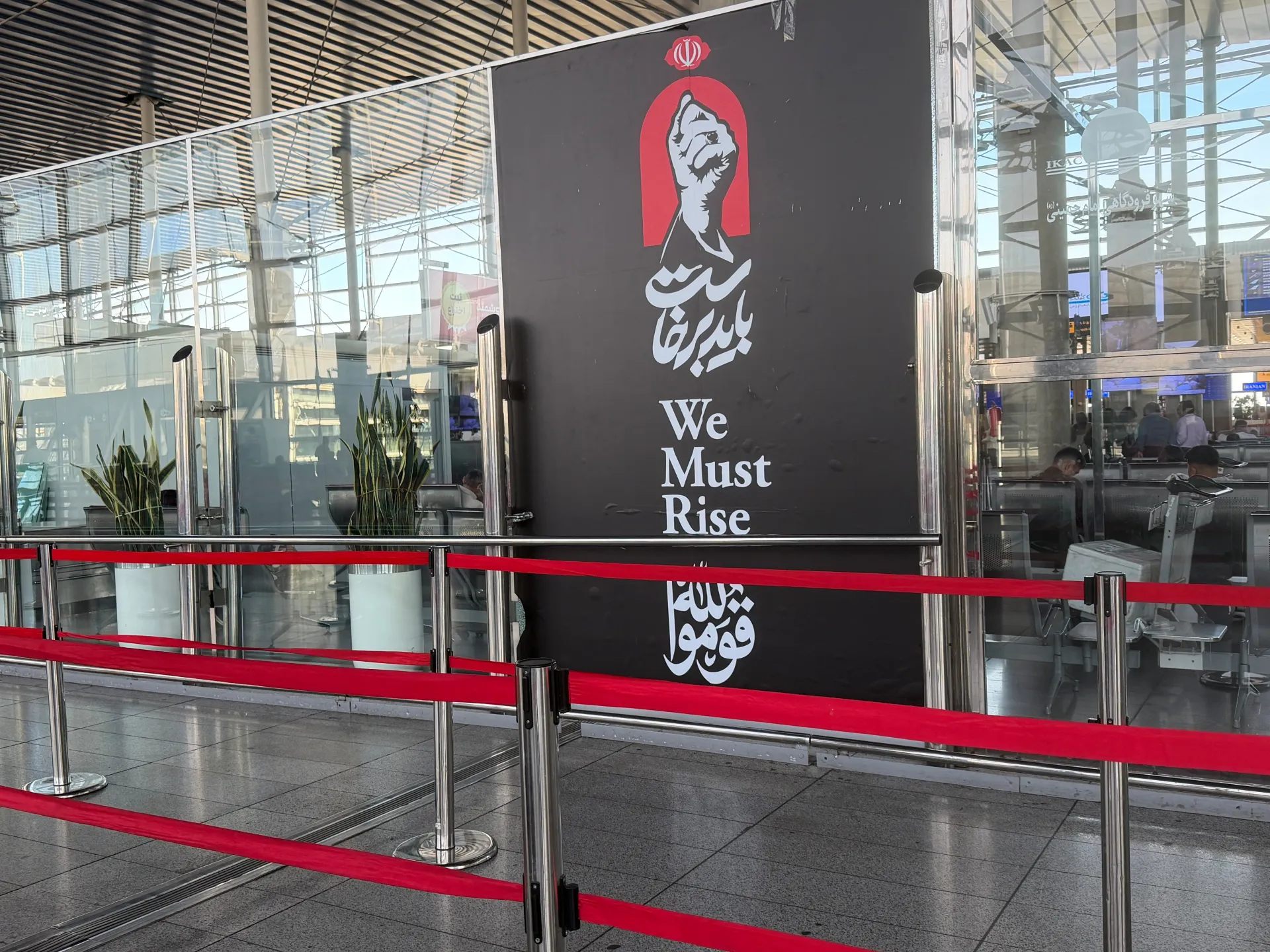
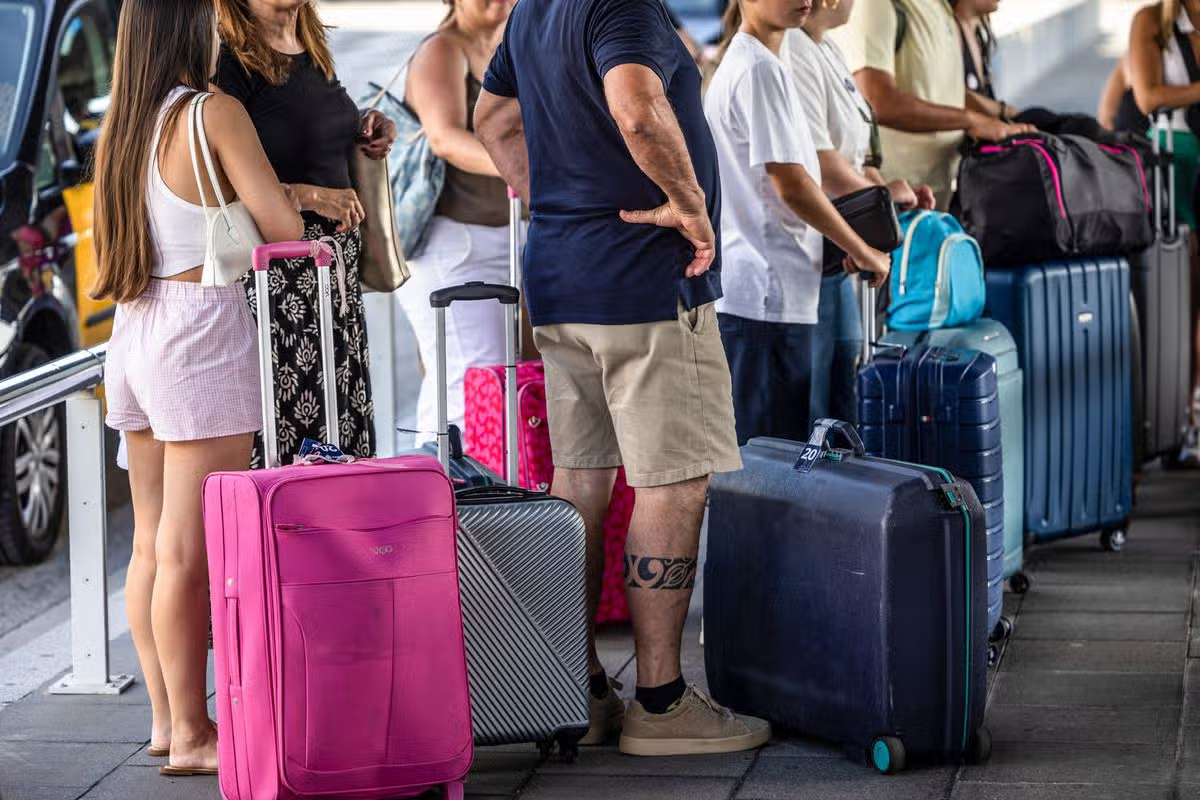
Tehran, Iran – Travel is becoming increasingly difficult for Iranian civilians as United States sanctions shut domestic airlines out of much of the world’s airspace and international carriers continue to avoid the country.
The US Department of the Treasury designated 27 airlines on September 8, covering the remaining Iranian carriers that had not previously been sanctioned by Washington. Major names like Iran Air and Mahan are among those already heavily sanctioned, but have continued limited operations.
Recommended Stories
list of 3 itemsend of list
Recent designations have also targeted individuals and entities linked to aviation support and procurement in the United Arab Emirates, Turkiye, China, India, the United Kingdom, Malaysia and elsewhere.
Airports and companies that provide Iranian-operated aeroplanes with fuel, landing services, or ticket sales risk secondary US sanctions that could cut them off from the US financial system, Treasury Secretary Scott Bessent said on Monday. It is the latest attempt to squeeze Iran and force it to make concessions amid the US-Israel war on Iran.
Wednesday marked the expiry of a short wind-down period allowing countries to stop servicing Iranian carriers, leading to the cancellation of all but a handful of Iranian flights to Turkiye, UAE and China.
Aviation authorities in several neighbouring countries that had continued to allow Iranian airlines to use their airspace and airport services would no longer be providing them, including Oman, Azerbaijan, and Georgia. In Iraq, Baghdad Airport was declared off-limits to Iranian carriers, but flights to Najaf Airport were still operating on Wednesday.
Many flights between Iran and major transit hubs in Turkiye and the UAE had already been suspended because of the war and sanctions. International airlines have also largely stopped flying to Iran, with Turkish Airlines suspending flights until at least March 2027, and Qatar Airways, Emirates, and Lufthansa’s operations also suspended.
‘A new level’ of sanctions
Iran-based aviation and transit expert Mohammadreza Ebrahimpour said years of US sanctions had already forced Iranian airlines to rely on third countries and work with smaller firms to get fuel or services. Obtaining spare parts needed to keep Iran’s ageing aircraft flying has also become increasingly difficult.
But the decision by aviation authorities in neighbouring countries to formally refuse services to Iranian airlines constituted “a new level of sanctions in action” that could have longer-lasting consequences, he told Al Jazeera.
Ebrahimpour said the US had also effectively prohibited international airlines from flying through Iranian airspace by suspending authorisations for some US-origin aircraft to fly to Iran and limiting US-linked overflight payments.
“This is a big blow because payments for overflights were one of the most lucrative parts of [Iran’s] aviation industry, which could act as a support for developing infrastructure and the overall industry,” Ebrahimpour said, adding that Iran earned more than $300m a year from this.
Beyond the effect on civilian passengers and the import of some goods, the measures could put tens of thousands of jobs at risk across the aviation sector and related industries, including tourism and hospitality.
Ebrahimpour pointed out that the International Civil Aviation Agency and other organisations have failed to offer any tangible protection to Iran’s aviation industry during years of sanctions. Iranian authorities, he said, would likely consider China and Russia among the few countries potentially able to provide assistance.
The two countries have rejected US sanctions against Iran, although some of their more globally connected financial networks and companies have, at times, distanced themselves from Iran to avoid secondary sanctions.
Under pressure from all fronts
The flight cancellations have pushed thousands of travellers towards land crossings, particularly those with Turkiye and Armenia, where onward international flights remain available for Iranians. Heavy congestion has been reported in recent days at the Bazargan and Razi border crossings with Turkiye and along land routes to the Armenian capital Yerevan.
But everyday passenger travel overland into Azerbaijan remains restricted, with Azerbaijan’s government citing internal security and COVID-19 restrictions. As a result, Iranians cannot cross overland into Azerbaijan to catch a flight there.
The Shalamcheh and Chazabeh border crossings with Iraq were also temporarily closed earlier this month, leaving travellers stranded, before reopening to passengers on September 13.
For thousands of Iranians attempting to travel, the flight suspensions mean significantly longer journeys. Some members of the Iranian diaspora have expressed concern online that the lingering effects of war and sanctions could potentially prevent them from visiting parents and other family members in Iran.
Bus tickets from Iran to Turkiye have reportedly sold for quadruple their normal price on the black market amid surging demand.
Some of the people making the journey are young Iranians who are attempting to take international language tests that are not allowed to be administered inside Iran due to sanctions. The tests are often a prerequisite for anyone planning to study, work, or settle abroad.
Iranian academics have also expressed concern about growing isolation from the international academic community. Numerous universities across the globe, including in Norway, Australia, Singapore, Estonia and elsewhere, have in recent weeks rejected postgraduate and research applications from Iranians as a result of US education sanctions.
At the same time, many of Iran’s roughly 90 million people are currently unable to afford international travel – or even domestic flights – as the country’s economic conditions worsen.
The Trump administration has portrayed the war and sanctions as measures directed at the Iranian authorities.
The US Treasury has said its aviation restrictions are intended to disrupt the use of Iranian commercial aviation for weapons procurement and transportation, including activities linked to the Islamic Revolutionary Guard Corps (IRGC). But the designation of entire airlines under “Operation Economic Outcast”, after nearly seven months of war, has also had sweeping consequences for affected civilians.
Iran’s international aviation network was already badly damaged prior to the latest package of sanctions. Aviation analytics company Cirium reported that international capacity in August 2026 was 49 percent lower than in August 2025, despite a modest recovery from July.
The latest flight cancellations are also expected to further disrupt imports by air at a time when the US naval blockade of Iran’s southern ports in the Strait of Hormuz has constrained maritime trade routes, while war and sanctions have caused disruptions and delays to road and rail cargo routes.
Some of Iran’s medical imports enter the country by air, raising concerns that the latest aviation restrictions could place more pressure on an already struggling healthcare sector. A domestic pharmaceutical company executive told Al Jazeera earlier this month that the cost of some imported supplies, some of which arrived by air, had risen as much as 10-fold as a result of sanctions, wider economic pressure, and war damage.
Addressing the United Nations General Assembly in New York on Wednesday, Iranian President Masoud Pezeshkian accused the Trump administration of “bullying”.
“They have tested Iran’s resilience, and now they know full well that Iran cannot be forced to surrender through war,” Pezeshkian said.