It is also scheduled to start flying to Dubai, Doha and Tel Aviv on July 1 at the earliest.
But these services will be reduced from what they were before the conflict began.
Flights to Dubai will go from three each day to one daily flight while services to Doha, Tel Aviv and Riyadh will drop from two flights to just one a day.
Flights to the city of Larnaca in Cyprus are scheduled to resume on May 22.
Meanwhile, services to Bahrain and the city of Amman in Jordan, are paused until October 25.
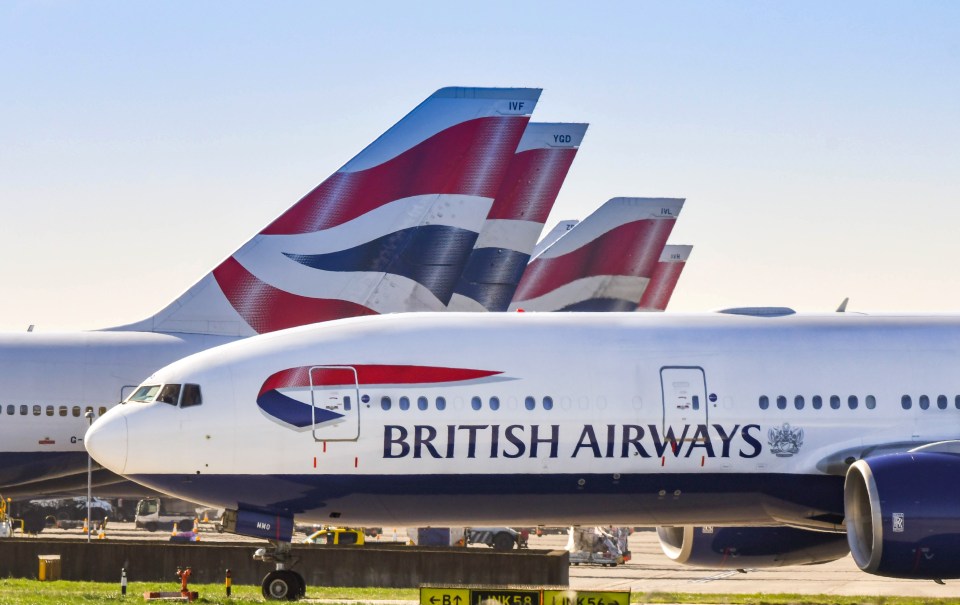
British Airways said: “Due to the ongoing situation in the Middle East, we have made further changes to our flying schedule to provide greater clarity for our customers.
“We’re keeping the situation under constant review and are directly in touch with affected customers to offer them a range of options.”
Due to its reduced flight schedule, BA has said it will use its freed up aircraft to head to other destinations like India and Kenya.
It will begin daily flights to Bengaluru in India and Nairobi in Africa during the summer season until late October.
It will operate a third daily service from London Heathrow to Delhi until May 31.
The airline will add its third daily flight from London Heathrow to Mumbai from May 15 to 31.
NEW travel rules for Brits visiting Europe are being rolled out tomorrow, and it includes everything from airports to ferry ports.
The new rules require all non-EU nationals to register their details like fingerprints and facial images before going abroad – but it’s set to cause chaos as some countries aren’t ready.
Sign up for the Travel newsletter
Thank you!
The deadline for EES is set to be fully operational is tomorrowCredit: AlamyIf you’re heading to the beach this summer you could experience delays at the airportCredit: Alamy
The EU’s Entry/Exit System (EES) started a phased rollout on October 12, 2025 in 29 European countries and will be fully operational as of tomorrow – April 10, 2026.
EES is replacing the need for a passport stamp by automatically checking when a person enters and exits an EU country.
Non-EU nationals – which includes Brits – will be required to register their details on their first visit to a Schengen area country.
This is done by using the EES machines at airports, ferry terminals and the Eurostar to log fingerprints, facial images and scan passports.
Up until now, not every traveller has had to register with EES, but from tomorrow, that will change.
Even through the phased process, it hasn’t been smooth, and there have been reports of long queues across Europe with travellers at airports waiting for hours to register with EES.
Travel Reporter Alice Penwill spent three hours getting through the arrivals hall at Lanzarote Airport last month.
With summerholidays on the horizon and lots more Brits going abroad than off-peak season, officials have even called for the EES to be delayed until later in the year.
Advantage Travel Partnership chief executive Julia Lo Bue-Said told Travel Weekly just two days ago that there are still “significant issues” with EES.
She added: “While we understand the importance of modernising border processes, a smooth rollout must be prioritised in order to avoid major travel chaos at peak periods.
“With very high demand for travel over the upcoming summer holiday period, we are deeply concerned about the impact delays could have at a time when it is vital we maintain high consumer confidence within a travel sector facing global uncertainty and rising costs.”
Reporter Alice Penwill queued for three hours in Lanzarote Airport
Ryanair boss Michael O’Leary called EES “a shambles” and called for EES to be delayed “for five months” until the end of September to ease congestion.
To avoid the predicted travel chaos, some airports are preparing to open Brit-only border control queues in the hope of easing wait times.
The Spanish operator, Aena, said it would adapt security and border control for Brits at Ibiza, Menorca, Malaga and Palma, Majorca airports.
It’s not just airports, ferry terminals and the Eurostar using EES – but reports state that these will actually miss tomorrow’s deadline.
Visa HQ reported that France’s Ministry of the Interior has postponed full EES checks at border points like the Eurostar terminal in St Pancras and the ports of Dover and Calais.
French authorities said that travellers on Eurostar, Eurotunnel Le Shuttle and cross-Channel ferries will not be asked to provide fingerprints or facial images as the technology is not yet in place.
At the Port of Dover, only lorry drivers, coach and foot passengers are registering with EES.
The EES system has been “paused for several weeks” because reportedly, ‘software integration tests failed and physical booth space is still inadequate’.
Here are Sun Travel’s top tips for those heading on holiday this summer and are likely to be caught up in EES chaos…
Book a seat at the front of the plane. If you want to get to border control before the rest of the passengers on your flight, then by being at the front, you’ll be able to get off first.
When you’re booking, it might ease wait times if you go head out on one of the first flights of the day There are generally fewer scheduled flights and they experience less disruption. So if you get an early flight, there’s less likely to be a backlog.
If you are taking a connecting flight, we’d advise to anticipate delays Of course this varies from airport to airport, but some travellers might find it will take longer to get through because of the EES requirements.
If you can go to a bigger airport and take a longer road transfer, it could be worth it. At a larger airport there’s likely to be more EES machines than at one of the smaller ones.
If you have children, or are generally just bored of queues (and who can blame you?) – think about entertainment. It could be worth setting the kids up with an iPad or something that will keep them occupied.
For those who are disabled, make sure to let the airline know in advance as you would usually. After landing, staff should escort you straight through to the front of border control queues.
Quite simply, if you are going to be waiting in line for hours, then you want to be comfortable. So before landing, go to the toilet on the plane.
More than £7million will be spent on signal upgrades to help reduce failures and improve the reliability of journeys.
Network Rail described WCML as “Britain’s economic backbone”, connecting major cities with “thousands of trains and tonnes of goods every day”.
It said that parts of the line could not manage the service’s more recent demands and needed investment to prevent disruptions.
The network owner said it would provide replacement buses between Milton Keynes Central and Bedford or Potters Bar for passengers to get trains to reach central London.
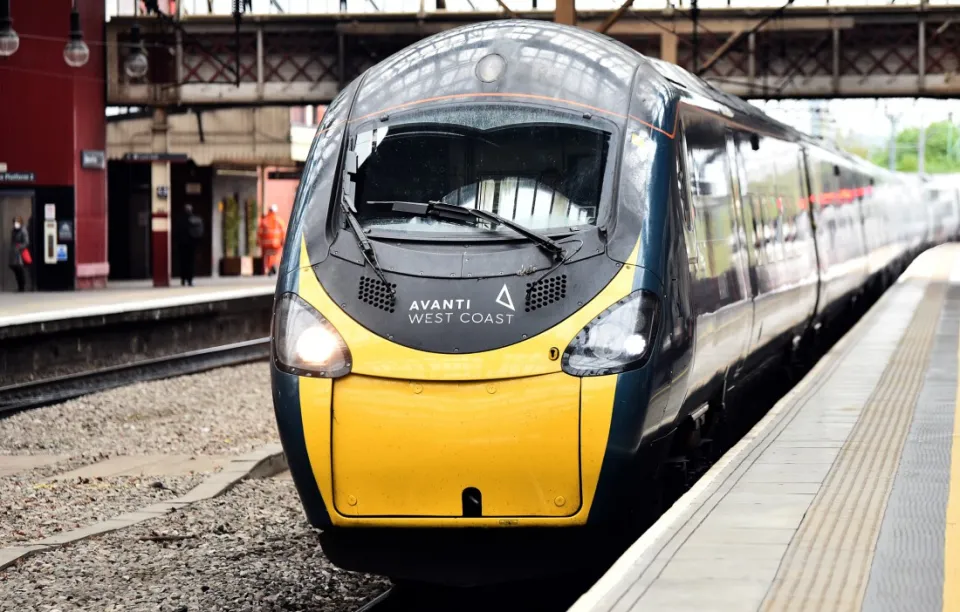
The WCML operator, Avanti, has warned commuters that its train lines are expected to be busy and has lifted peak restrictions for today.
Normal services on WCML are expected to resume on April 9.
He explained: “At a time of great economic uncertainty and steps being taken to conserve energy worldwide, it is neither environmentally nor economically sound for us to continue flying with vastly reduced passenger numbers.”
Passengers affected will be fully refunded.
The flights between London and Cornwall take around 1hr20 and start from £79.99 each way.
This is not only faster – trains take around five hours and include a change to Newquay – but cheaper than the average train fare which is around £85.
Some passengers use it as a way of travelling further onto Europe as well.
One Brit, who was meant to fly from Newquay to Gatwick, then onto Seville told the BBC: “Gatwick is not the easiest airport to get to so our contingency is probably to use rail.”
In the mean time, Ryanair offers flights between Newquay and London Stansted all year round.
And easyJet is due to start a new flight route to Newquay from June 23, with two a week from London Gatwick on Tuesdays and Thursdays.
A Cornwall Airport Newquay spokesperson said: “We are actively working with airline partners and stakeholders to secure sustainable London connectivity for the future.”
He said: “We don’t expect any disruption until early May, but if the war continues, we do run the risk of supply disruptions in Europe in May and June.”
While he said he didn’t see the airline having to cancel flights just yet, he warned that as much as 20 per cent of its jet fuel is costing them nearly $150 a barrel.
Other airlines around the world have already started cancelling flights.
Both Air New Zealand and SAS confirmed that more than 1,000 have been cancelled, mainly affecting domestic routes.
And United Airlines said five per cent of flights would be cancelled in the second and third quarters of 2026 – working out to around 250 a month.
The airline will still operate flights to Newquay from the Isles of ScillyCredit: Alamy
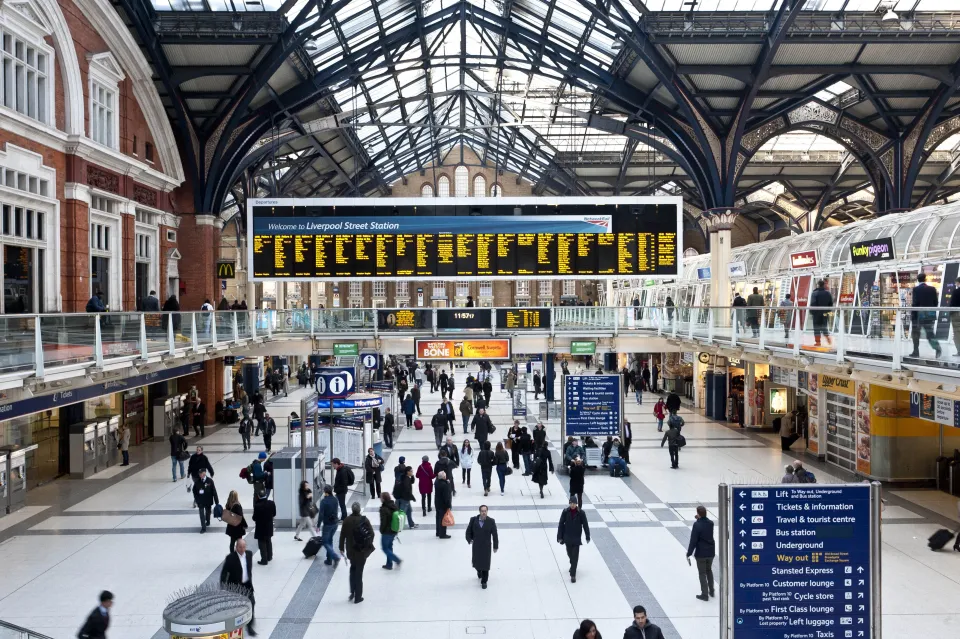
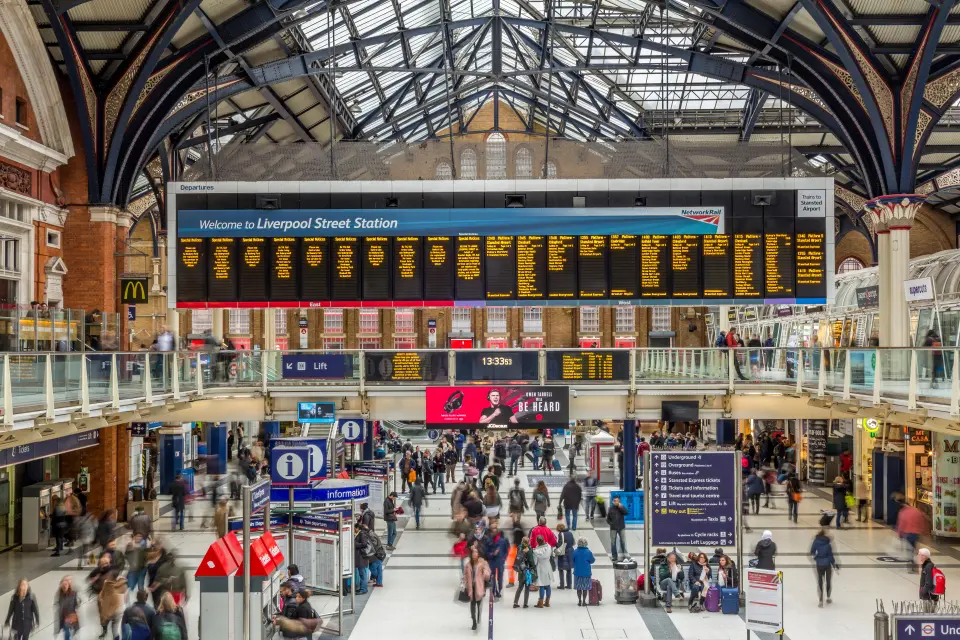
The closure at Liverpool Street Station will take place to improve roof drainage and track drainage, as well as vegetation management.
While most of the work has already been carried out, passengers have been told that Liverpool Street’s mainline station will experience its final closure on March 28 and March 29.
The Elizabeth line will still be running, however, there will be no access to the main concourse. Commuters have been also been warned that there will be no Overground Weaver line trains operating this weekend.
Train operating company, Greater Anglia, stated on its website: “On both days, Liverpool Street Main Line station will be closed (including the concourse) to all Greater Anglia, Stansted Express, c2c, Elizabeth line and London Overground services.
“Greater Anglia services to/from Cambridge, Bishop’s Stortford, Hertford East and Stansted Airport will start/terminate at Stratford.”
They added: “On both days, Elizabeth line’s low level Liverpool Street station remains open however services will not run beyond Stratford due to closures on the Great Eastern mainline.
“On both days London Overground Weaver line services will not run between London Liverpool Street and Enfield Town/Cheshunt/Chingford.”
Commuters have been directed to use rail replacement buses where possible. The services will run between Seven Sisters and Enfield Town/Cheshunt and Hackney Downs and Chingford.
Officials have urged passengers to plan their journeys ahead of time. It comes as the station recorded a staggering 98 million entries and exits between April 2024 and March 2025.
Trish Ashton, TfL’s Director of Rail, said: “We’re sorry for any disruption caused by weekend engineering work impacting London Overground and Elizabeth line services during March.
“These planned works are essential to help keep our services safe and reliable. Customers are advised to ‘check before they travel’ using the TfL Go app or at TfL.gov.uk, and allow a little extra time for their journeys.”
You can also check the Network Rail website here for more information on planned works.
THE UK Foreign Office has warned Brits heading abroad to be wary of longer-than-usual airport queues ahead of new travel rules being fully rolled out next month.
The new EES requirement has already resulted in lengthy wait times at airports and are predicted to only get worse across the next few weeks.
Sign up for the Travel newsletter
Thank you!
New EES machines are set to cause length delays at airportsCredit: AlamyNon-EU citizens are required to register details before they flyCredit: Alamy
The Entry/Exit System (EES) is the new travel system replacing the need for a passport stamp by automatically checking when a person enters and exits an EU country.
Non‑EU residents have to register their details on their first visit to a Schengen area country.
This is done using the EES machines at airports and ferry terminals to log their fingerprints, facial images and scan passports.
With lots of Brits are still yet to register, and with an influx of families heading abroad over the upcoming Easter break – it’s anticipated that this will result in delays and queues at the EES machines.
New advice on the government website reads: “Ahead of the Easter holidays, Brits are being advised to be aware of extra border checks – the EU’s Entry Exit System (EES) – and allow additional time at the border when travelling to the EU.”
It added: “EES checks should take only a few minutes per person, although longer waits at border control are possible, including for your journeys back to the UK.”
Some passengers could be subject to further delays – especially those heading to Spain as ground staff are planning to strike at 12 airports across the country.
Travel Reporter Alice Penwill queued for three hours through Lanzarote Airport
Several Spanish unions are set to begin an indefinite strike too from today.
Walkouts are planned to take place on Mondays, Wednesdays and Fridays, across three time slots: from 5am to 7am, from 11am to 5pm and from 10pm to midnight.
Other baggage handling staff have planned 24-hour strikes on March 28-29 and April 2-6.
Airports that could be disrupted by these strikes include Madrid-Barajas, Málaga-Costa del Sol, Alicante-Elche, Palma de Mallorca, Barcelona-El Prat, Bilbao, Valencia and Bilbao.
It could disrupt also affect airports on popular Spanish islands too, like Gran Canaria, Tenerife Sur and Norte, Lanzarote, Fuerteventura and Ibiza.
Here are Sun Travel’s top tips on how to deal with EES travel chaos…
Sit at the front First off is quite simple,book a seatat the front of the plane. If you want to get toborder controlbefore the rest of the passengers on your flight, then by being at the front, you’ll be able to get off first.
Early flights When you’re booking, it might ease wait times if you go head out on one of the first flights of the day. There are generally fewer scheduled flights and they experience less disruption.
Anticipate delays If you are taking a connecting flight, we’d advise to anticipate delays. Of course this varies from airport to airport, but some travellers might find it will take longer to get through because of the EES requirements. Similarly, if someone’s collecting you perhaps give them a bit more time – especially if they’re in one of the pick-up zones that costs money.
Go for a bigger airport If you can go to a bigger airport and take a longer road transfer, it could be worth it At a larger airport there’s likely to be more EES machines than at one of the smaller ones For example, Assistant Travel Editor Sophie Swietochowski found there were plenty more of the machines in Spain‘s Alicante Airport than in Austria‘s Salzburg.
Bring entertainment If you have children, or are generally just bored of queues (and who can blame you?) – think about entertainment It could be worth setting the kids up with an iPad or something that will keep them occupied. Bring a reserve of snacks because standing in line means no access to the airport’s cafes and shops.
Get into the priority lane For those who are disabled and require assistance make sure to let the airline know in advance as you would usually. After landing, staff should escort you straight through to the front of border control queues. Many major airports offer priority family lanes at passport control for families with young children (usually under 12 years old).
Use the plane facilities Quite simply, if you are going to be waiting in line for yours, then you want to be comfortable. So before landing, go to the toilet on the plane. If you’re queueing along corridors before heading into border control, then the chances are there won’t be access to toilets
Reports say that even police have been called in to deal with angry holidaymakers in TenerifeCredit: AlamyThere have been reports of further travel chaos at Tenerife South due to EESCredit: Alamy
EES is replacing the need for a passport stamp by automatically checking when a person enters and exits an EU country.
Non-EU nationals – which includes Brits – are required to register their details like fingerprints, facial images and scan passports on their first visit to a Schengen area country.
But at Tenerife South, passengers say that only a handful of these EES machines are working with some rejecting fingerprints.
Passengers are even saying they’ve missed flights due to delays in getting through controls.
Some Brits are warning to give as much as three hours before a flight just in case.
One Brit wrote on social media: “The key is to arrive three hours early so at least you are in the front of the queue when problems start.”
Another added: “Love Tenerife but HATE the airport.”
Police have reportedly been called in to the South Airport on several occasions to calm the crowds of angry passengers.
With bad weather and storms hitting the Canary Islands, those who miss flights are having to sleep inside the airport overnight before catching another plane home.
On one particular day, around 100 passengers were stranded there and many were unable to find overnight accommodation, so stayed in the terminal.
Passengers are blaming lack of staff and proper organisation for the chaos, with computers not working.
“Passport control is a disaster,” posted another Brit. “One person for thousands of travellers.”
Only 20 per cent of the biometric machines are working and officials admitted to the Spanish media that there were “computer failures.”
The chaos has been going on for months and tourism chiefs and hoteliers say the island’s reputation is being hit, compounded by the bad weather.
Since last week, the Canary Islands, including Tenerife, have also been struck with flash flooding and snow as a result of Storm Therese.
Even without bad weather, many airports have experienced delays caused by the new travel requirement of EES registration.
Due to their small size, airports on the Canary Islands have seen reports of long queues.
WITH new travel requirements in action at airports across Europe, EES is set to cause travel chaos this summer.
While you’re likely to be caught up in the chaos and lengthy queues, there are a few ways to make it more manageable.
Sign up for the Travel newsletter
Thank you!
If you’re heading on holiday – you might get caught up in EES delaysCredit: AlamyThere have been reports of queues up to four-hours long to get through passport controlCredit: Alamy
With many Brits yet to register for EES, it’s predicted that those heading abroad for the summerholidays will be privy to delays.
Some destinations even out of season have reported queues of up to four hours.
These include airports at Brussels, Lisbon, Prague and Lanzarote.
So while you might not beat the queues – here are some tips from Sun Travel to make your next trip easier.
So if you get an early flight, there’s less likely to be a backlog.
Whereas if you’re travelling in the early evening, there could still be passengers being processed who are plenty ahead of you.
Anticipate delays
If you are taking a connecting flight, we’d advise to anticipate delays.
Of course this varies from airport to airport, but some travellers might find it will take longer to get through because of the EES requirements.
Similarly, if someone’s collecting you perhaps give them a bit more time – especially if they’re in one of the pick-up zones that costs money.
Queues at Lanzarote Airport were up to 3-hours long for one Sun Travel reporter
Go for a bigger airport
If you can go to a bigger airport and take a longer road transfer, it could be worth it.
At a larger airport there’s likely to be more EES machines than at one of the smaller ones.
For example, Assistant Travel Editor Sophie Swietochowski found there were plenty more of the machines in Spain‘s Alicante Airport than in Austria‘s Salzburg.
So if you can fly into to a main hub and then continue from there, it could make your journey through the airport quicker.
Bring entertainment
If you have children, or are generally just bored of queues (and who can blame you?) – think about entertainment.
It could be worth setting the kids up with an iPad or something that will keep them occupied.
Also, bring a reserve of snacks because standing in line means no access to the airport’s cafes and shops.
Get into the priority lane
For those who are disabled, make sure to let the airline know in advance as you would usually.
After landing, staff should escort you straight through to the front of border control queues.
Many major airports offer priority family lanes at passport control for families with young children (usually under 12 years old).
Use the plane facilities
Quite simply, if you are going to be waiting in line for yours, then you want to be comfortable.
So before landing, go to the toilet on the plane.
If you’re queueing along corridors before heading into border control, then the chances are there won’t be access to toilets.
Here’s what you should expect to find when you get to an EES machine…
Select your language
Put your passport into the machine
Place your fingers onto the scanner
Look into the camera
Answer series of short questions about the trip e.g. where you’ll be staying, if you have a return journey booked and confirmation of travel insurance
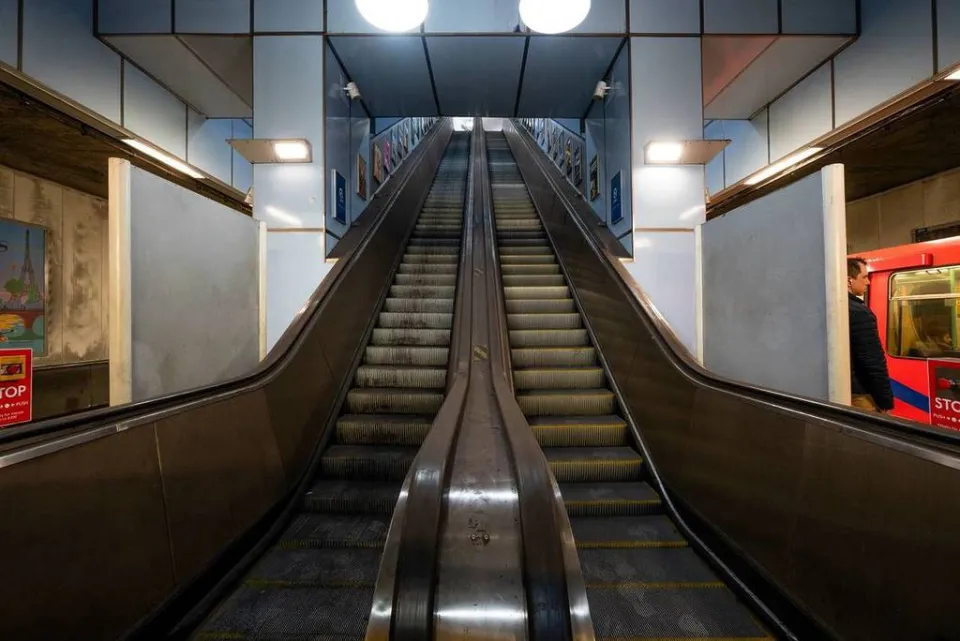
The shiny new escalators will be up and running from today – eight days earlier than TfL had announced – and should last the station 30-40 years.
The station is also much brighter as the escalators have rows of lights and the area has been whitewashed.
The pale blue panels have been replaced with white panels, which reflect light much better and have a noticeable effect on the station’s appearance.
A new lift has also been installed as well as energy-efficient lighting, upgraded safety features, local artwork, and a new raised ceiling.
Seb Dance, Deputy Mayor for Transport, told The Sun previously that it was “fantastic” the major upgrade at Cutty Sark DLR station could be delivered earlier than expected.
Before it closed, Cutty Sark was the third busiest station on the Docklands Light Railway (DLR), after Canary Wharf and Limehouse.
Thousands of passengers were forced to take the 121 station steps at Cutty Stark due to faulty escalatorsCredit: Alamy Stock Photo
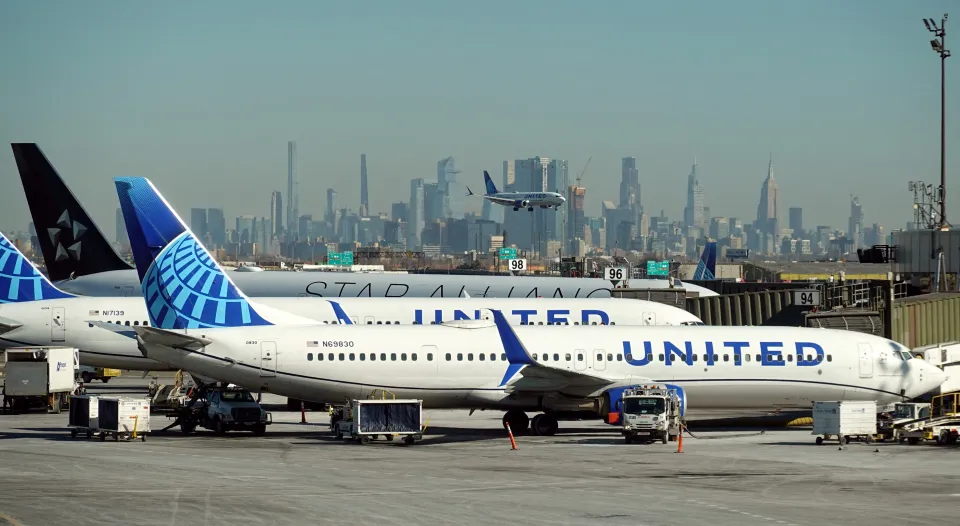
United Airlines is the latest to confirm that it would be cutting five per cent of flights in the second and third quarters of 2026.
With up to 5,000 flights a month – working out to around 4,000 domestic and 800 international routes – this means it affects around 250 flights a month.
And with this set to last until the end of summer, it means thousands of passengers will be affected.
While the affected flights haven’t been confirmed, it will mainly affect the “less profitable” routes so including midweek flights, as well as overnight and Saturday routes.
United Airlines has the world’s largest airline fleet with more than 1,075 aircraft.
United Airlines‘ Chief Executive Scott Kirby said the cancellations were due to fears of oil rising to as much as $175 (£131) a barrel, and remaining above $100 (£75) until the end of next year.
This would mean the airline’s fuel costs would rise to $11billion (£8.2billion) – double the profit of their best year which was $5billion (£3.7billion).
They warned: “There’s no point in burning cash in the near term on flying that just can’t absorb these fuel costs.”
It’s not just the cost of fuel but how much is being used by airlines as well.
The closure of airspaces and Middle East airports, particularly Dubai which is one of the world’s busiest, has forced airlines to fly alternative – and longer – routes, which burn more fuel.
Other airlines have already confirmed they would be cancelling flights due to expected fuel costs.
PASSENGERS face fresh travel misery as a major UK train station is set to partially close again this weekend.
Rail passengers can expect travel disruptions as the bustling hub undergoes a “once-in-a-lifetime overhaul”.
Sign up for the Travel newsletter
Thank you!
Trains have been slashed and major disruption is expected over the weekendCredit: Willie Vass
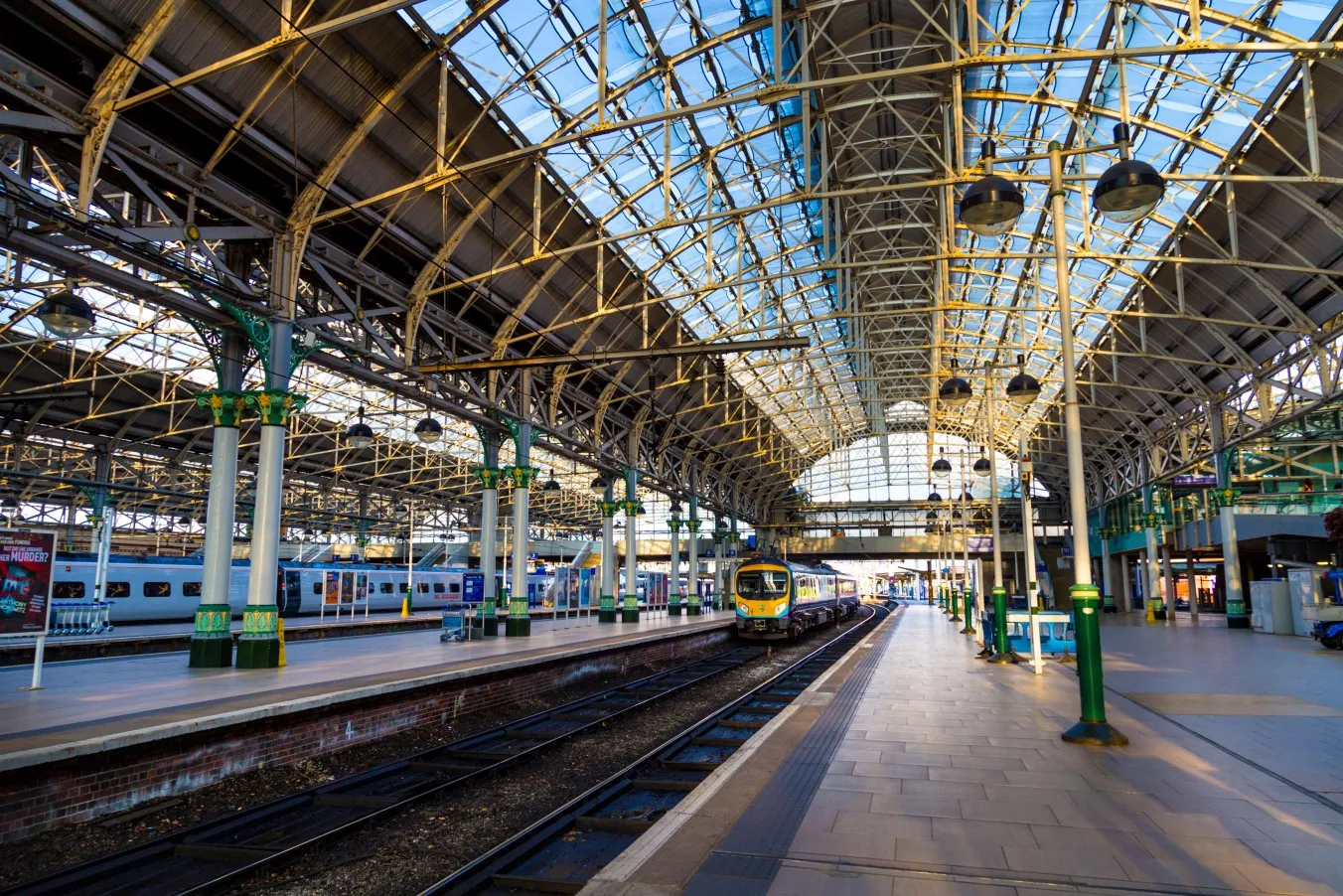
Trains have been slashed and major disruption is expected over the weekend at Manchester Piccadilly station.
Only a handful of services will run on Sunday, with no trains operating from the south and east until 1pm.
The busy city centre hub — one of the UK’s biggest — will have just Platforms 13 and 14 open until the afternoon, and even those will be running on a reduced timetable.
During last month’s shutdown, engineers carried out major upgrades — replacing 11 sets of points, laying 9km of signalling and telecoms cables, installing 4,000 sleepers and pouring 5,500 tonnes of new track foundation.
Bosses hailed the works as a “once-in-a-generation” improvement of the tracks.
This weekend’s services still running include routes to Liverpool Lime Street via Eccles and Earlestown, Blackpool North via Bolton, and Chester via Earlestown — but passengers are warned there is a reduced timetable.
Meanwhile, Metrolink services will continue running through Piccadilly this weekend as normal.
Separate tram works mean no services will run between Victoria and Rochdale on Sunday.
A spokesperson for Network Rail said: “We would like to say a big thank you to passengers for their patience while this once-in-a-generation upgrade has taken place over the last nine days.
“Manchester Piccadilly is one of the country’s busiest stations and it’s a key hub for people travelling to the North West.
“Upgrading the track over six lines in what’s known as the Piccadilly corridor will make journeys more reliable and the points and signalling systems less prone to faults – meaning fewer delays for passengers.
“It’s all part of our long-term commitment to invest millions of pounds to make the North West’s railway fit for the future.”
THE CANARY Islands are facing huge storms and rain this week, which has even meant snow in places like Tenerife and La Palma.
Here’s what you need to know if you have a holiday booked there.
Sign up for the Travel newsletter
Thank you!
Here is everything you need to know about a trip to the Canaries right nowCredit: AlamyThe storm is continuing the affect the CanariesIt has even brought snow to La Palma and TenerifeCredit: Tenerife Island Council
What is happening in the Canary Islands?
Storm Therese has left the Canary Islands in turmoil as weather warnings have remained in place for several days.
More snow is expected in Tenerife after the mountains in the Teide National Park were blanketed in white on Thursday.
As a result, more than 40 flights have been cancelled this week across the Canaries.
Orange and yellow alerts are in place across the islands, warning of heavy rain, storms, flooding and high waves.
SPANISH sun and a sense of calm was what I was expecting to greet me at Lanzarote Airport – instead I spend the first three hours of my holiday queuing to get out of the arrivals hall.
Because thousands of travellers like myself were stuck in huge queues, thanks to the new EES system – and with Easter and summer season on the way, I can see it getting worse.
Sign up for the Travel newsletter
Thank you!
I had to queue in the arrivals hall at Lanzarote Airport for three hoursThe huge queue led to the EES registration point
My Jet2 flight landed at half past one on a Thursday afternoon in early March and I didn’t get out until just after half past four.
The queues stretched along the corridor and zigzagged all the way through the arrivals hall that took passengers to EES registration.
I’d already signed up to EES, having visited Lithuania a few months ago – but that was no use at all.
There was no separate queue for – or any staff for that matter – advising those who have registered to head straight to the passport e-gates.
While this was frustrating, what was even more so was that only half of the EES machines were actually working.
When I finally made it to my bus transfer, even the Jet2Holidays rep said she’d ‘never seen delays this bad’.
While Lanzarote has had a bad rep for lengthy queues in recent weeks, they are by no means the only ones.
The Sun travel team has been to various airports across Europe since the start of 2026 and many of them have had much longer queues than usual.
Like in Lanzarote, in some places only half the EES machines are working.
In other destinations, all of the machines are switched off until around midday. So it’ s pure luck as to whether you’ll even get to sign up.
Thanks to its winter sun offering, Lanzarote is one of the first airports to really show what an issue the new system could be for Brits this summer – when millions of visitors arrive for their annual holidays across Europe.
Lanzarote Airport has been subject to ‘bottlenecking’ which is a term used when there are too many flights at once and it causes congestion in the airport.
It’s no surprise really, Lanzarote is a small island with a small airport.
Around 100 planes land at the airport each day and over one million British tourists visit Lanzarote each year, with more heading there over the Easter and summer holidays.
Looking at planned flights on flightradar24 for Thursday 19 March 2026, there are almost 40 from the UK alone, with just under 100 flights in total scheduled for the day.
Between 2pm and 3pm there are 10 flights due from the UK.
Two from Glasgow arrive at the same time, and others are within five and ten-minute intervals.
Delays in the airport in the Canary Islands will be worse during peak summer holidaysCredit: AlamyScheduled Lanzarote flights for Thursday 19 March see 10 arriving within one hourCredit: Flightradar24
With the queues in Lanzarote reportedly reaching four hours, I’ve seen parents fearing travel chaos for their upcoming holiday.
One mum even started a forum on Mumsnet with the subject ‘Lanzarote airport actual chaos or exaggerated drama’.
In the comments, one recent visitor described the airport as a ‘madhouse’.
Another, who went on holiday around the same time as me, described it as an “absolute nightmare” and has even cancelled their booking in April as a result.
The lengthy wait times are likely to crop up at other European destinations too because of the new EES requirement.
Delays have been reported at airports like Brussels, Lisbon and Prague, and officials have even called for the EES to be delayed until after the summer holidays.
As for Lanzarote, if you want to make the most of your arrival on the island, then I’d suggest booking an earlier flight so you’ll still have the afternoon to explore.
Otherwise all there is to do is line up and wait patiently.
Head of Sun Travel Lisa Minot reveals how EES will impact travellers during school holidays…
The impending deadline requiring all EU countries to be processing all passengers using the new Entry Exit System (EES) is looming and as Easter approaches we could see chaos across the continent.
We’ve seen significant disruption already as UK holidaymakers are caught up in hours-long queues to provide their details and unless the right staffing is in place, things could get much worse.
Speaking to the former boss of easyJet last year, he warned me airports could become overwhelmed and airlines may be forced to keep passengers on planes on arrival – throwing tight flight schedules into chaos.
The issue as far as I am concerned is the lack of joined up thinking and common systems. Every airport in every country I have travelled through since the system was launched has a different way of channelling passengers through the passport checking process.
At Rome last week, the kiosk I was directed to successfully took my biometric picture but seemed incapable of processing my fingerprints and I was directed to a customs agent for a traditional stamp.
Returning from Barcelona, no kiosks were in operation at all and we simply went through an e-Gate with no fingerprints checked and again, were directed to an agent for a stamp.
Bigger airports with the resources to invest in the costly equipment are probably going to be easy to travel through.
Whether that will be the same for smaller, regional airports that already struggle to cope with large crowds in busy periods remains to be seen.
Airlines and airports are lobbying the EU to allow the rules to be relaxed should large crowds start to build.
That seems imminently sensible to me as from may recent experiences, the system is not yet up and running efficiently – Head of Sun Travel, Lisa Minot
An spokesman said: “Due to the continuing uncertainty of the situation in the Middle East and airspace instability, and to provide more clarity to our customers, we’ve extended the temporary reduction in our flying schedule in the region.
“We’re keeping the situation under constant review and are directly in touch with affected customers to offer them a range of options.
“Since the situation in the Middle East began, we’ve helped thousands of customers return home and operated eight relief flights from Muscat in Oman.”
British Airways confirmed that they are operating more flights via other international hubs in replacement of Dubai, which is one of the world’s busiest airports.
This includes four more flights via Singapore and three more flights via Bangkok.
Passengers affected will be able to rebook with another airline, or move their travel to a different date.
Otherwise full refunds are being given to anyone with bookings up to May 31.
The ongoing Iran crisis is still causing chaos for travellers, not just those in the Middle East.
Virgin Atlantic has already ended its Dubai flights for the season early, which were due to conclude on March 28.
Network Rail has revealed “vital maintenance, renewals, and repairs” for the bustling hub, impacting all routes and services to and from the station.
Liverpool Street’s mainline station, which sees approximately 98 million commuters annually, is set to shut for five weekend days, during which its concourse will also be closed.
These closures will impact Elizabeth line and London Overground, as well as National Rail services, including Greater Anglia and c2c.
While the station itself will undergo roof drainage repairs, work will also be carried out relating to track drainage and maintenance, as well as vegetation management and litter clearance along railway lines.
Commuters can expect disruptions on the following dates:
Sunday, March 15
The entire station will be closed on this date, with London Overground services running from London Fields instead.
Elizabeth line services will continue to run, though commuters are advised there will be no access to the main concourse on this date.
Saturday, March 21 – Sunday, March 22
Again, the entire station will be closed for both these dates, with Elizabeth line services continuing to run on Saturday, March 21, with no access to the main concourse.
On Sunday, March 22, there will be no Elizabeth line trains running.
There will also be no Overground Weaver line trains on either of these dates.
Saturday, March 28 – Sunday, March 29
Liverpool Street Station will again be closed for both these dates, while Elizabeth line services continue to run throughout the weekend.
Again, there will be no access to the main concourse on these dates.
There will also be no Overground Weaver line trains running throughout the weekend.
To avoid travel disruptions, rail passengers are advised that rail replacement buses will operate between Stratford and Romford, and between Newbury Park and Shenfield tomorrow.
And before 9.50am, buses will replace trains between Seven Sisters and Enfield Town/Cheshunt and Hackney Downs and Chingford.
Check the Network Rail website for further details on replacement services throughout March.
A number of UK flights are included in this today, such as:
10:05am from London Heathrow to Frankfurt
11:05am from London Heathrow to Frankfurt
12:05pm from London Heathrow to Frankfurt
12:10pm from Manchester to Frankfurt
1:05pm from London Heathrow to Frankfurt
3:40pm from Edinburgh to Frankfurt
3:45pm from Manchester to Frankfurt
4pm from Birmingham to Frankfurt
4:05pm from London Heathrow to Frankfurt
6:05pm from London Heathrow to Frankfurt
8:05pm from London Heathrow to Frankfurt
A similar number are cancelled tomorrow as well, meaning thousands are affected travelling from the UK.
A statement from Lufthansa reads: “Lufthansa is working intensively to keep the impact on our passengers as low as possible and has published a special flight schedule for both strike days.
“According to this schedule, more than 50 percent of the originally planned flight program can be operated on Thursday and Friday.
“For long-haul connections, the share is as high as 60 percent.”
Passengers affected can request a refund or move their flight date for free up until March 23.