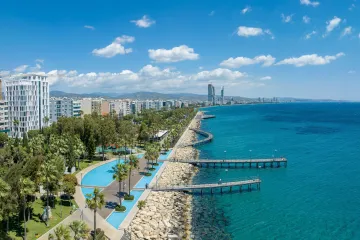
CYPRUS has been drawn into the Iran conflict – which has had a knock on effect on holidays.
The European country was hit by an Iranian drone earlier this month, after landing on RAF Akrotiri base on the island.
Sign up for the Travel newsletter
Thank you!
Brits are cancelling their holidays to Cyprus despite it still being safe for travelCredit: GettyThe country is the only one in Europe to have been drawn directly into the Iran crisisCredit: Alamy
Local business owner Vassilis Georgiou told the Guardian that people are “thinking twice” about visiting.
He explained: “It may be early days but I’ve been here since 1992 and suddenly hoteliers are saying bookings are down.”
Nick Aristou, who owns three hotels in Cyprus, said they’d had around 200 cancellations this month.
He told the i: “Most of the cancellations, I would say about 90 per cent, are all for March, about 10 per cent for April.”
And Thanos Hotels’ Panos Kyprianou, with four hotels on the island, said cancellations were coming from Brits with 65 cancellations for April.
Hr added: “Right now, April, is about 10 per cent behind what it was last year.”
But Agia Napa Municipal Sectary Mr Fotos Kikillos said while they were “hearing of cancellations” he reaffirmed that life was still “very safe” on the island.
He added: “People are enjoying themselves – there’s no sense of fear. The last thing we want in Cyprus is to be dragged into this war.”
With the tourist season officially starting in the beginning of April, it is expected that everything will be back to normal on the island, despite fears of summer cancellations.
Last week, Cyprus’ foreign minster Constantinos Kombos told the BBC: “I don’t think that anyone should be in two minds, given the fact that the situation, as I have been describing right now as we speak, has been perfectly normal.
“All activity is normal. Air traffic is going back to 100 per cent what it was before the incident.
“So I don’t think this is something that should be affecting people’s decisions.”
“After all, this is part of the regional situation. It’s not the Republic of Cyprus that has been targeted. It has been the British bases.
“And the security factor in terms of people feeling that everything is being done that is humanly possible to protect both citizens, residents, and visitors to Cyprus. The security apparatus is in place to try to do exactly that.”
Cyprus is one of the more affordable areas of Europe to visit, especially now.
According to Cirium, there are around 125 scheduled flights from the UK to Cyprus over the Easter holidays, working out to 25,000 passengers.
A COUPLE flew to the Alps for a day of skiing – which was still cheaper than a day out in London.
Hannah West, 39, and her husband Simon 52, flew to the French Alps to enjoy fondue and five hours of skiing.
Sign up for the Travel newsletter
Thank you!
Hannah West and her husband Simon decided to head skiing just for the dayCredit: SWNSThe couple claim it cost less than a fancy day out in London would have with a showCredit: SWNS
The duo, from Brighton, flew from Gatwick Airport to Geneva last month 6:10am and returned the same evening at 9:30pm.
The day trip included a day of skiing in La Clusaz – including ski gear hire – as well as some fondue, wine and desert.
Hannah said: “We got in five hours of skiing which I think is how much most people would do in a day anyway.
“The fact that we got to do that much skiing and it’s something we will never forget, I think it’s totally worth it.”
If the couple were to do another activity in the day, this could set them back anywhere between £30 and £100 each, and then, of course, add on having lunch out and getting London transport around the city.
It adds up quickly.
She also explained how she has seen a lot of people head off on city day trips, but “wanted to see if it was possible to do it for a ski trip”.
Full cost of the day ski trip vs day in London
Ski holiday
Return flights: £164.99 each
Ski day pass: £44.66 each
Ski gear: £22.75 each
Car hire: £30 each
Food and drink: £30.50 each
Airport car parking: £15.84 each
Fuel: £7.31 each
Tolls: £5.35 each
= £335.90 each
Day out in London
Return train tickets: £42.70 each
Unlimited Zone 1 and 2 travel: £8.90 each
Lunch out: £20 each
Attraction tickets: £30 each on average
Dinner out: £50 each
Drinks at a pub: £25 each
Best theatre tickets: £160 each
= £336.60 each
The couple from Brighton drove up to London Gatwick Airport and returned in the eveningCredit: SWNSThe even managed to enjoy fondue as well as skiingCredit: SWNS
Hannah said: “The whole day felt magical and I felt like I was beaming the whole time.
“I couldn’t believe it was possible, the whole day I was on a high. It was the best date day.”
“This is such a great opportunity to have an amazing date day with your partner – to do something you both really love together and have a really special day you’re going to remember forever.”
To save even more money, Hannah admitted that they could have booked their flights further in advance or booked as part of a group.
She added: “It’s not about replacing a week-long ski holiday, or am I suggesting this is something to do on a regular basis.
“But if you’re time-poor, or don’t have childcare for a week away, you can still have an amazing, special day together.”
HOLIDAYS to Dubai have been left in chaos following the Iran conflict, with thousands of flights cancelled after a number of drone attacks on the city in recent weeks.
So here is everything you need to know right now about travelling to the UAE city.
Sign up for the Travel newsletter
Thank you!
Here’s everything you need to know about travelling to Dubai right nowCredit: Getty
Is it safe to travel to Dubai right now?
Dubai remains on the no travel list, unless it is essential.
The UK Foreign Office states: “FCDO advises against all but essential travel to United Arab Emirates.
“Your travel insurance could be invalidated if you travel against advice from the Foreign, Commonwealth & Development Office (FCDO).”
While this isn’t outright ban against all travel, essential travel doesn’t usually mean holidays, but is instead things like work or essential family travel.
Emirates said: “Following the partial re‑opening of regional airspace, Emirates is operating a reduced flight schedule.
“Customers transiting in Dubai will only be accepted for travel if their connecting flight is operating.
“Please do not go to the airport unless you hold a confirmed booking for these flights.”
Virgin Atlantic briefly restarted flights from both Dubai to the UK.
However, a recent 16-hour ‘flight to nowhere’ which was forced to return to London Heathrow has led to the airline scrapping flights until the end of the season (March 28).
British Airways is also unable to operate flights to Dubai, and only has limited flights from Oman to London Heathrow.
Anyone flying with British Airways to Dubai up to March 15 can request a full refund, or change the flight date for free up to March 29.
Other areas in the Middle East such as Doha and Abu Dhabi are still being affected.
Qatar Airways is operating one flight a day to and from London Heathrow to Doha but warns that “scheduled flight operations remain temporarily suspended due to the closure of Qatari airspace”.
Etihad is operating limited flights to London Heathrow and Manchester from Abu Dhabi, but also warns that “all other scheduled commercial services to and from Abu Dhabi remain suspended.”
All non-essential travel to Dubai is still advised againstCredit: Alamy
What if I have a holiday to Dubai booked?
Most tour operators will allow Brits to cancel their holidays to Dubai for a full refund, or offer an alternative option, due to it being on the ‘only essential travel” list.
While this is not mandatory, many are cancelling holidays nonetheless.
Loveholidays is cancelling all holidays up to March 15 either to Dubai or ones that are travelling via Dubai.
They explained:”We’ve made the decision to cancel all holidays departing up to and including 15 March 2026 to countries currently on the FCDO ‘all but essential travel’ list
“This includes holidays with a connecting flight via one of these countries.
“Our team has begun processing full refunds for affected bookings in departure date order and will contact you directly with further information.”
Refunds will be processed in 3-5 working days.
They are also allowing anyone with Emirates flights up to March 31 to cancel their holidays for a full refund, while anyone flying to Dubai with Virgin Atlantic up until March 31 will have their holidays cancelled.
They are not selling any holidays to Dubai up until May, although June holidays remain unaffected.
TUI‘s latest Dubai update was on Friday, saying: “If you are due to travel to the UAE, or are scheduled to transit through, within the next seven days, our pre-travel team will contact you ahead of your departure date to discuss your options.”
On the Beach has cancelled all holidays to the UAE until tomorrow with full refunds although this is likely to be extended.
PASSENGERS have been filmed evacuating Kansas City International Airport amid unconfirmed reports of an active bomb threat.
Footage being circulated online shows hordes of travelers exiting the Missouri airport in masses.
Sign up for the Travel newsletter
Thank you!
Passengers have been ordered to evacuate parts of Kansas City airport, officials have confirmedCredit: XAirport officials are working with the FBI to assess the threatCredit: X
The reported evacuation began around 11:50am local time on Sunday, according to one onlooker on X.
Others have reported being moved from Concourse B to Concourse A and being filtered onto tarmac via staircases as “emergency sirens” sound in the background.
“We were all told to immediately get to concourse A. K9’s and agents all over the place. No planes on the tarmac,” one passenger wrote online.
There are unconfirmed reports that the evacuation has been triggered by an active bomb threat.
Tensions are high amid the US-Israeli war with Iran that has increased the domestic terror threat and the prolonged shutdown of the Department of Homeland Security (DHS) due to funding disagreements.
Former Security Secretary Kristi Noem warned that this would “endanger national security,” with TSA and border patrol agents stretched to their limits.
“Now is the time to be vigilant at home and to ensure that all of our doors are locked, so to speak,” Speaker Mike Johnson, warned on Wednesday as he discussed the continued shutdown and conflict.
This is breaking news. Please keep checking back for the latest updates…
Officials have told The U.S. Sun that the evacuation is a ‘precautionary’ measureCredit: X
SINCE I started working in travel at some of the UK’s top holiday firms, I’ve visited more than 200 hotels.
Some were impressive, some were expensive, and some try very hard to be both. But only a small handful earned a perfect 5/5 from me.
Holidays expert Rob Brooks has visited more than 200 hotels as part of his job – he’s shared with The Sun which ones have earned a perfect 5/5 from himCredit: Rob BrooksGrand Aquarium in Dalaman is apartment-style, spacious and calm, and the pool area feels relaxedCredit: Aquarium Hotels
And I don’t give that score lightly. But these places are better than some five-star properties I’ve visited.
I’m not marking purely on marble floors or how many à la carte restaurants there are. I’m looking at something much simpler: does this hotel genuinely deliver for what you pay?
Because I hate overspending on holidays.
So for 2026, I’ve picked one hotel in each destination that I personally rated 5/5. Not because they’re the most luxurious in the country – but because they’re the best at what they do.
And I’ve checked current prices to see if they’re still stacking up. Here’s what I found.
Turkey – Grand Aquarium, Dalaman
Turkey is full of huge, ultra-luxury resorts. Grand Aquarium isn’t that, and that’s exactly why I love it.
It’s apartment-style, spacious and calm. The pool area feels relaxed, the rooms are generous, and the whole place is easy to navigate. When I stayed, what stood out wasn’t extravagance – it was how smooth everything felt.
There’s super-friendly staff, the place is spotless and it’s a relaxed, family-feel atmosphere.
For early summer in Dalaman at a hotel I’ve personally rated 5/5, that’s excellent value. It’s the sort of price that makes Turkey feel like a very smart move again.
If you want value in the Canaries, Bakour Lanzarote Splash is hard to beatCredit: On The Beach
Canaries – Bakour Lanzarote Splash
If you want value in the Canaries, this is hard to beat.
Bakour Lanzarote Splash is all-inclusive as standard, and what I like is that it doesn’t feel like everything good is an extra. Waterpark, entertainment, food – it all feels included in the experience, not bolted on.
Because it’s Lanzarote, flight prices tend to stay reasonable year-round. That keeps the overall package price sensible even when demand rises.
For May 2026 (4-11 May), flying from Bristol, all-inclusive, it’s currently pricing from £413 per person.
For an all-inclusive with those facilities, in Lanzarote, that’s very competitive. For families especially, you’re getting a lot of hotel for that number.
L’Azure manages to feel modern and stylish while still working brilliantly for familiesCredit: On The Beach
Mainland Spain – L’Azure, Costa Brava
L’Azure manages to feel modern and stylish while still working brilliantly for families.
There’s a rooftop adults-only pool, which means parents can genuinely switch off for an hour. Downstairs, the family areas are lively but not overwhelming.
When you compare it to other Costa Brava hotels in the same bracket, it often comes in at a better price for noticeably better room quality.
For 2-9 June 2026 flying from Bournemouth, room-only is pricing from £373 per person. For a hotel of this finish and quality on the Costa Brava in June, that’s strong. You’re getting something that feels premium without paying luxury-brand money.
Edge by Rotana Sea Beach gives you scale and proper all-inclusive facilities without the usual hidden extrasCredit: On The Beach
Egypt – Edge by Rotana Sea Beach, Sharm el Sheikh
Sharm el Sheikh surprised me – and this hotel was a big part of that.
Edge by Rotana Sea Beach gives you scale and proper all-inclusive facilities without the usual hidden extras. Multiple pools, beach access, good dining – but it doesn’t feel overwhelming.
What makes it really strong value is context: compared to Caribbean or Indian Ocean resorts offering similar sunshine and facilities, Egypt remains far more affordable.
For 26 November-3 December 2026 flying from London Luton, all-inclusive is currently from £333 per person.
For winter sun, guaranteed warmth and a full resort set-up, that’s seriously competitive. You’d pay far more for a similar experience in the Caribbean.
This is one of those hotels where you leave thinking, “That was worth it.”
Sea Club has plenty going on, but it never feels cramped and the buffet is variedCredit: On The Beach
Majorca – Sea Club Mediterranean Resort, Alcudia
The Balearics can feel tight for space in peak season, but Sea Club doesn’t.
It’s spread out, relaxed and well organised. There’s plenty going on, but it never feels cramped. The buffet is varied, the layout makes sense, and it runs like clockwork.
For Majorca, in early season sunshine, at a hotel of this size and quality, that’s excellent value. It’s often cheaper than smaller hotels nearby with fewer facilities.
It’s not flashy – it just gets absolutely everything right.
Mitsis Rodos Village is a proper all-inclusive with strong service, varied dining and a setting that makes the most of the coastlineCredit: On The Beach
It’s a proper all-inclusive with strong service, varied dining and a setting that makes the most of the coastline. The grounds are well kept, the atmosphere feels polished but not stiff, and everything runs efficiently.
Mitsis as a brand tends to cost a little more on paper, but you see where the money goes. Service levels are high, and repeat bookings are common – which is always a good sign.
For 12-20 May 2026 flying from London Gatwick, all-inclusive is currently from £323 per person.
For eight nights in Rhodes at a hotel of this standard, that’s impressive. It feels like five-star treatment without a five-star bill.
Iberostar Waves Founty Beach is a brilliant base, with beach access, sea views and spaceCredit: On The Beach
It’s right on the sand, modern without being over-the-top, and has a layout that feels calm rather than crowded.
Compared to some Marrakech resorts inland, you’re getting beach access, sea views and space – often at a better overall package price.
It delivers atmosphere and sunshine without unnecessary extras inflating the cost.
For 30 November-7 December 2026 flying from London Luton, all-inclusive is currently from £398 per person. For winter sun on the beach, with strong reviews behind it, that’s very competitive.
Anesis Hotel is centrally located in Ayia Napa, walking distance to beaches, restaurants and shopsCredit: Anesis Hotel
Cyprus – Anesis Hotel, Ayia Napa
Anesis Hotel proves you don’t need a giant resort to have a great holiday.
It’s centrally located in Ayia Napa, walking distance to beaches, restaurants and shops, which removes the need for taxis or long treks in the heat.
The hotel itself is modern, clean and well run. The service is spot on, and the atmosphere is friendly rather than frantic.
For the price you typically pay in this part of Cyprus, it feels fair – and often better value than newer hotels charging more for less.
For 13-20 October 2026 flying from London Luton, bed & breakfast is pricing from £380 per person.
For Cyprus in late-season sunshine, that’s fair value for a well-located base that genuinely delivers.
Muthu Clube Praia da Oura sits close enough to Albufeira’s buzz if you want it, but far enough away to relax properlyCredit: On The Beach
It sits close enough to Albufeira’s buzz if you want it, but far enough away to relax properly. Apartment-style accommodation keeps things flexible, and the sea views here are genuinely strong.
When I stayed, what struck me was how much location you’re getting for the price. You’re near the beach, near the nightlife, but not paying top-tier five-star rates.
For 29 September-6 October 2026 flying from London Luton, self-catering is currently from £268 per person.
For Algarve sunshine at that time of year, that’s unbelievable value .
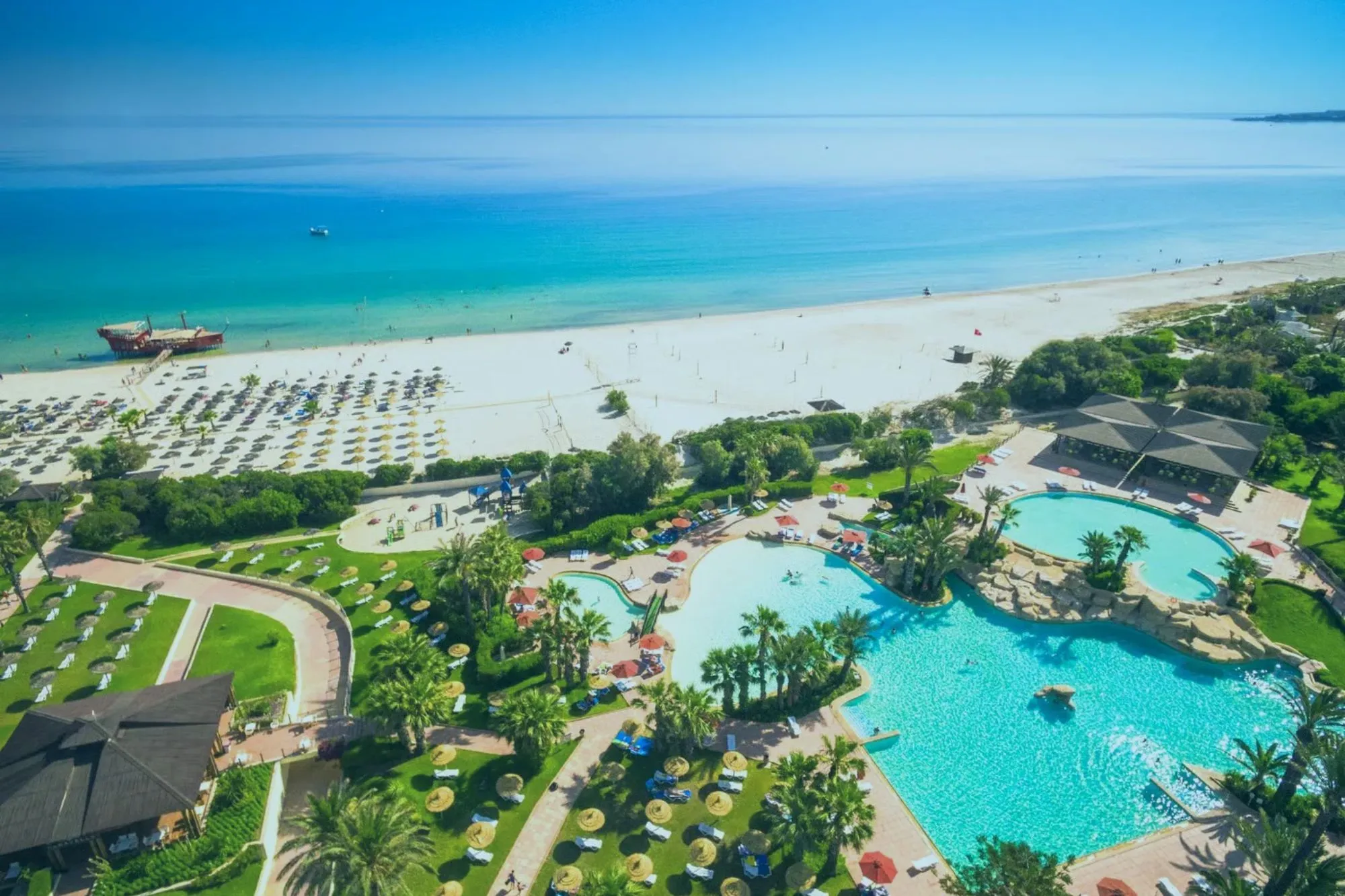
Sahara Beach Aquapark Resort is a big, energetic, family-focused property with multiple pools, slides and beachfront accessCredit: On the Beach
Tunisia – Sahara Beach Aquapark Resort, Monastir
Tunisia is one of the most underrated value destinations in the world.
Sahara Beach Aquapark Resort is a big, energetic, family-focused property with multiple pools, slides and beachfront access. It’s unapologetically fun.
What makes it 5/5 for value is scale, because you’re getting huge resort facilities and reliable sunshine at a price point that undercuts much of southern Europe.
DOH! Homer – no, not the Simpsons character, I mean the ancient Greek poet – must have got it wrong when he penned his classic Odyssey saga some 3,000 years ago.
For legend has it that the tiny Dodecanese island of Lipsi is his fabled Ogygia, where a saucy siren called Kalypso kept Trojan war hero Odysseus a prisoner for seven years.
Sign up for the Travel newsletter
Thank you!
The picturesque harbor of Lipsi island, Dodecanese, Greece is the type of place nobody should ever want to leaveCredit: AlamyThe rural landscape of Lipsi island shows how laid back life on the archipelago really isCredit: Getty
Now, according to Homer, Odysseus was desperate to escape from Ogygia and flee home to his wife Penelope in Ithaca, on the other side of Greece.
But after my week-long stay in Lipsi I can’t imagine anyone wanting to leave this lovely, laid-back island, lapped by the clear blue water of the Aegean Sea.
Especially with the cooling Meltemi breeze ensuring that, although the temperature can hover in the 30s in summer, it never feels oppressively hot.
Certainly Sally Vavoulas, from Tenterden, Kent, has not wished to leave.
She arrived in Lipsi in 2001, fell under its spell — and is still there.
These days she helps run the island’s excellent winery with husband Manolis. But more of that later.
Lipsi is not one island but an archipelago.
Only three of its 24 isles are occupied — and one has just two residents — while most of the 800-strong population are clustered in a sprawling village on the main isle.
Ferries chug into the little harbour every day from Kos and Samos, a two-hour cruise away — and twice a week from Athens, a longer nine-hour voyage.
Berthed alongside them are millionaires’ luxury superyachts, which have sailed from faraway spots such as the Caribbean and the United States.
Winemaker Sally Vavoulas came to Lipsi in 2001 and has never looked backCredit: Supplied
And tied up farther down the jetty are the locals’ tiny but colourful fishing smacks.
Fortunately, though, those huge skyscraper-like cruise ships are banned from Lipsi.
Lining the quay are a cluster of excellent tavernas — such as Pefko, where owner Nikos looks annoyed when I ask which is the best dish on that night’s menu.
“None is best,” he replies sternly, before breaking into a beaming smile and adding: “Everything’s superb.” Hmm, as I soon discover, Nikos isn’t wrong!
Just down the road there’s Kalypso, a restaurant owned by the brother of village mayor Fotis Mangos and named after the aforementioned siren.
Well, if she dished up a delicious sea bass like the one I tucked into, then no wonder Odysseus stayed for seven years.
Fotis, I have been warned, has a habit of suddenly breaking into song.
He doesn’t after joining me for dinner, but plays a YouTube video of him duetting with a Greek rapper on a little ditty called “Come With Me To Lipsi”.
Malcolm visited the apiary in Lipsi, discovering how the honey is infused with thymeCredit: Supplied
Former PE teacher Fotis is justly proud of his “hidden gem” of an island, and would love to see more British holidaymakers venturing there. September, he says, is ideal as the kids are back at school yet the sun is still hot and the sea remains comfortably warm.
Not too many tourists, though, because Fotis doesn’t want to turn the place into another overcrowded Santorini or Kos.
Probably unlikely, because there are no discos or nightclubs blaring out raucous music.
Nor will you find any sunbeds, parasols or pedalos on the tiny beaches scattered around its coves.
A couple do boast tavernas where you can sip a cold beer or the local aniseed-based ouzo over lunch. But most are virtually deserted and often you have them to yourself.
Two other restaurants in the village worth visiting are Manolis Tastes, whose chef was once voted Best in the Mediterranean, and Plateia, where Despina makes ice cream that is to die for.
One morning I take a 50-minute ramble along winding dirt tracks, following colourful hand-painted signs through the hills to Monodendri — which means “One tree”. It’s supposed to be a nudist beach, although none of the three sun-worshippers stretched out on towels are baring all when I arrive. And I don’t, either.
Small shops on the island give it a very authentic feelCredit: Supplied
But it’s an idyllic, peaceful spot where you hear just the gentle waves. Grand feast
I’ve hired a little runabout car from George’s Rentals but rarely use it. Lipsi is only some 16 square kilometres and you can walk to most places.
One day, hiking past lemon and fig trees, grapevines and donkeys, I bump into Dimitri, the island’s cheesemaker.
He doesn’t speak much English and only makes goat cheese — not surprising as there are twice as many goats as people on the island — but he offers me some. It’s delicious, at 13 euros a kilo.
The island is dotted with white, blue-domed churches, most just tiny family chapels with barely room to swing a cat (of which there are many on Lipsi).
One local tells me there are 400 churches, another reckons about 150.
So I ask the island’s priest as he sits sipping coffee outside a taverna. He reckons 57. And as from time to time Fr Georgios is called out to preach in all of them, he should know.
The biggest is Panagia Charou, or the Virgin Mary of Death Church, where a revered but rather strange icon shows her clutching a crucified Christ on the cross.
Every year on August 23, it seems that a bunch of withered lilies left there by a schoolgirl in 1943 miraculously bloom back to life.
The occasion is marked by a grand feast “filled with dancing and singing, eating and drinking, drawing believers from all corners”.
Panagia Charou is the biggest church on the island of Lipsi, one of at least 50Credit: Shutterstock
Out on another walk, I meet Nikiforos, who makes the island’s honey. He doesn’t speak English but happily shows me round his apiary.
Much of the honey is infused with the taste of thyme, which grows all over Lipsi. But, sadly, time isn’t on my side, and the holiday is almost over.
I manage to squeeze in a visit to Sally’s Lipsi Winery, where I taste four of their locally produced tipples.
One, a sweet red wine called Aposperitis, was served by the Greek President to Charles and Camilla during a state banquet in Athens a few years ago.
Sally wants to know which I prefer. So I umm and aah, before suggesting perhaps I should try a second glass of each.
Which is why, on my last night, I’m afraid I ended up rather tipsy in Lipsi.
GO: Lipsi
GETTING THERE: Jet2, Tui, easyJet, British Airways and Ryanair fly to Kos with return fares this September from £106pp, and from there Dodekanisos Seaways operate daily ferries to Lipsi for around £60 return.
STAYING THERE: The delightful Lipsi Blue Boutique Hotel, a ten-minute stroll from the village, boasts wonderful views of sunsets over the Aegean, and yoga sessions on the terrace. Four nights’ B&B costs from £540.
SPECTACULAR volcanos, breathtaking lakes and ancient jungle cities – explore this Central American gem before the crowds hit, says Picture Director Alan Gittos.
Here’s why it’s time to head to the central American country.
Sign up for the Travel newsletter
Thank you!
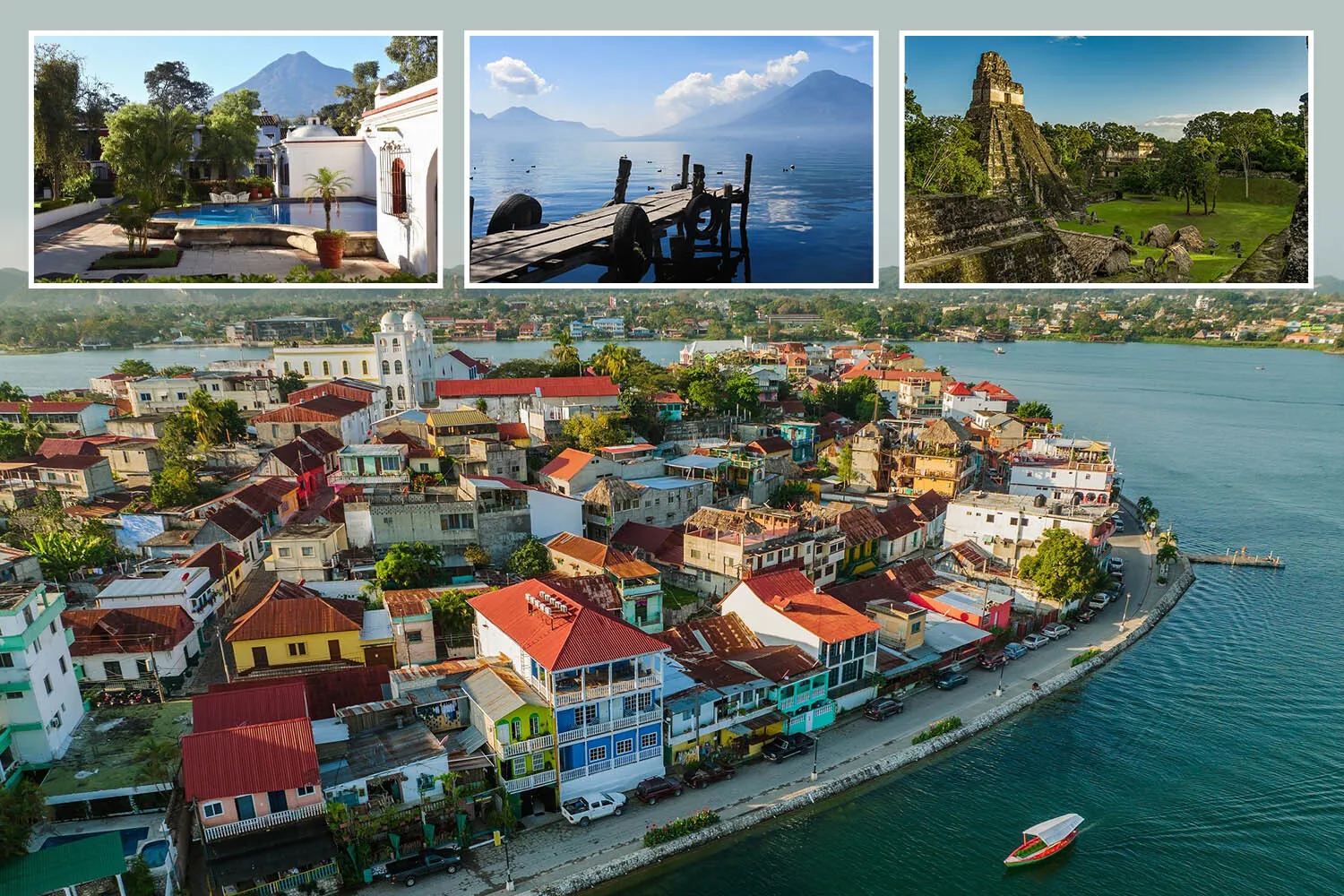
At hotel Villa Colonial, in former capital city Antigua, you can breakfast on the magnificent terrace with a great view of Fuego’s volcanic plumes
1 – Majestic Volcanos
As your flight descends into Guatemala City, you can’t miss the giant volcanoes that guard the highlands and stir the clouds.
Volcán de Fuego (Volcano of Fire) in the Sierra Madre mountains is one of the world’s most active stratovolcanoes.
And at hotel Villa Colonial, in former capital city Antigua, you can breakfast on the magnificent terrace with a great view of Fuego’s volcanic plumes. Stays cost from £77 per night (Villasdeguatemala.com).
To get even closer to playing a real game of The Floor Is Lava, take a trail ride up Volcán Pacaya, an hour’s drive from the city.
Let your horse carry you across dark ash soil to the base of the cone, then toast marshmallows on the geothermal vent – yes, really!
A six-hour horse-riding tour costs £67 per person (Pacayatours.com).
2 – Punchy Plates
For classic dishes in Antigua, head to charming La Fonda de la Calle Real
Breakfast is a big deal here. Try the traditional feast of eggs, black beans and tortilla somewhere atmospheric, such as Raíces Restaurant on the edge of Lake Petén Itzá – it will only set you back £3 (@Raicesrestaurante).
For classic dishes in Antigua, head to charming La Fonda de la Calle Real and order the delicious Chiles Rellenos De Res – battered roasted peppers stuffed with beef mince, £9 (Lafondadelacallereal.com).
After modern fusion cooking? Dig into a trio of ceviche at Maxán, £14, followed by Buñuelos – moreish plantain fritters laced with cardamom, £3 (@Maxangt).
3 – Floating Flores
Visit this small town on a tiny island in Petén as it was the last Mayan kingdom to resistCredit: Getty Images
This small town on a tiny island in Petén was the last Mayan kingdom to resist. Set sail on Lake Petén Itzá to spot kingfishers, vultures and maybe even a crocodile or two.
Expect to pay around £37 for a boat ride from the shore. Once back on dry land, browse the brightly painted shops for textiles, ceramics and souvenirs, then sip a refreshing, bright-green limonada con chaya, made with lime juice and local chaya leaves, £3.40, at La Danta restaurant as the sun sets (Ladantarestaurante.com).
After dark, settle into a charming cabin at nearby Hotel Villa Maya and drift off to the sounds of the rainforest.
Lake Atitlán was described as ‘the most beautiful lake on Earth’ by German explorer Alexander von Humboldt, and at sunrise it is truly bewitchingCredit: Getty Images/iStockphoto
Lake Atitlán was described as “the most beautiful lake on Earth” by German explorer Alexander von Humboldt, and at sunrise it is truly bewitching.
Stroll the water’s edge in Panajachel, then hop on a boat to the sleepy lakeside villages.
Stop off at San Juan La Laguna to meet women-run weaving cooperatives, watch natural-dye workshops and grab a large bag of fresh Arabica coffee, £8, from Café San Juan (Cafesanjuangt.com).
Day tours cost from £74 per person (Getyourguide.com). Finally, be sure to make the short, steep climb to Kaqasiiwaan Viewpoint for a stunning panorama – the £4 entry fee is well worth it.
At the top, sip cold Gallo beer crowned with spiced cucumber rings, £2, from the kiosk. Heaven!
5 – Cacao + Coffee
Marvel at the natural beauty all aroundCredit: Alamy Stock Photo
For thousands of years, maize and cacao have been Guatemala’s sacred crops.
In San Juan La Laguna, stop by Deleite Ancestral and learn to make traditional dishes, such as tz’utujil chicken stew with handmade tortillas – expect to get hands on! – then sample the mouth-watering results (@Deleiteancestral).
In Antigua, join a lively chocolate workshop at Ek Chuah to hear all about cacao’s history, while making sweet treats to take away.
An hour’s workshop costs £19 per person (Chocolateantigua.com). Coffee is the latest big Guatemalan obsession, and at 5,000ft above sea level, Antigua’s volcanic-soil plantations grow some of the world’s finest.
Take a tour of Finca Filadelfia to find out why shade-grown beans taste richer, why only women can plant the seedlings and why medium roast is the national sweet spot.
Finish with a tasting that’s both jittery and blissful. A 90-minute tour costs £19 per person (Facebook.com/fincafiladelfia).
6 – Gemstone shopping
Antigua Guatemala is a UNESCO World Heritage Site, with cobbled streets lined with ceramics, leather goods and exquisite jade jewelleryCredit: Getty Images
Antigua is a UNESCO World Heritage Site and its cobbled streets are filled with shops selling locally made ceramics, leather goods and exquisite jade jewellery. Discover why it’s the Mayans’ favourite gem with a free tour of Casa Del Jade’s museum (Casadeljade.com).
Later, check out the impressive 18th-century Convent of La Merced, with its giant fountain shaped like a water lily, and the Arch of Santa Catalina, £2 entry. But for the most dramatic view, head for Cerro de la Cruz (the hill of the cross) to snap vistas of the city beneath the incredible backdrop of Volcán Agua.
7 – Jungle adventures
Explore Tikal and climb Temple IV for one of the Americas’ most breathtaking views – seen in the first Star Wars filmCredit: Getty Images
Want to hear howler monkeys roar like dinosaurs and spy pyramids emerging from the jungle canopy?
Hit Tikal, a vast site built by the ancient Mayans using only stone-age tools, and climb Temple IV for one of the most extraordinary views in the Americas – it even featured in the first Star Wars film.
Tikal is also a UNESCO World Heritage Site for its biodiversity – back at ground level, coatimundis scramble across paths, spider monkeys hang from branches and leafcutter ants march across the jungle floor.
Tikal is also a UNESCO World Heritage Site for its biodiversityCredit: Getty Images/iStockphoto
Or to channel your inner Indiana Jones, head for the Belize border and pay the £8 entry to explore Yaxhá, a site whose origins are even older than Tikal.
It only receives about 80 visitors a day, so you may feel like the first to discover its huge plazas and temples.
Look out for the famous ball court, where Ancient Mayans played pok ta pok – a game with high stakes, where losing teams faced being sacrificed!
A SOUTHWEST Airlines flight has been diverted and forced to do an emergency landing after a mid-air security threat.
Flight 2094 from Nashville to Fort Lauderdale was forced to cut the journey short and land at Hartsfield-Jackson Atlanta International Airport at 9:06pm on Friday night.
Sign up for the Travel newsletter
Thank you!
Tactical officers were filmed boarding the aircraft and detaining a passengerCredit: TiktokA Southwest flight was diverted after a mid-air security threat that ended in a passenger being detained (stock)Credit: Alamy
While thousands of feet in the air, a security threat was reported which saw tactical cops storm the aircraft upon landing and detain a passenger.
A video allegedly taken on board the flight showed the moment a man was dragged off the flight by the Atlanta Police Department.
The clip shared on X showed terrified passengers with their hands raised above their heads as cops cuffed a passenger and took him off the aircraft.
The text on the clip claimed that there had been a bomb threat but this has not been commented on by the airline or police.
In a statement, Southwest said the diversion came due to a “possible security matter.”
“We appreciate the professionalism of our flight crew and sincerely apologize to our customers for the significant delay,” the spokesperson said.
“Nothing is more important to Southwest than the safety of its customers and employees.”
The Atlanta Police Department confirmed it worked with federal partners to attend to “last night’s incident” at the airport.
The nature of the security threat and if the passenger removed will face any charges remains unclear.
It is not known if the passenger is still in police detention.
Officials have not commented if any dangerous items were found onboard.
After the police activity, all passengers boarded another plane and continued their journey to Fort Lauderdale where they arrived safely just before 3:30am.
The airline has apologized to all affected passengers.
It comes as the Department of Homeland Security (DHS) remains on shutdown over funding disagreements which former Security Secretary Kristi Noem said is “endangering national security.”
The DHS has been shut down since February 14 which Noem said has negatively impacted and put huge pressure on TSA and border patrol.
In addition to this, Republicans have warned that the country is under an increased domestic terror threat due to the recent US-Israeli strikes on Iran.
“Now is the time to be vigilant at home and to ensure that all of our doors are locked, so to speak,” Speaker Mike Johnson, warned on Wednesday as he discussed the continued shutdown.
“Senate needs to fund the TSA. They’ve had them the Coast Guard, FEMA and Cybersecurity CISA on shut down for 3 weeks. We will surely see more of this,” one viewer of the footage from the diverted aircraft said.
“Unfortunately there’s going to be a lot more of this coming,” another said.
Someone allegedly onboard the flight claimed there had been a bomb threat, which has not been commented on by officialsCredit: Tiktok
WHILE prices for the most popular Mediterranean resorts keep rising, you can get the same turquoise seas, mountain drives and warm hospitality in Albania – for a fraction of the cost.
Visit in the shoulder season and you’ll enjoy golden light and near-empty beaches at an unhurried pace.
Sign up for the Travel newsletter
Thank you!
The town of Berat is nicknamed ‘city of a thousand windows’Credit: GettyEnjoy paddleboarding on crystal clear watersCredit: Getty
Flying in to capital Tirana makes a good start for a road trip to explore the country.
Pick up a hire car at the airport and within minutes you’re twisting through mountain passes, gliding along coastal bays and pulling over in centuries-old towns.
Highways are good, but off the main roads expect to be swerving around goats and making stunning switchback turns. It’s all part of the adventure.
White Ottoman houses stack up the hillside like sugar cubes, their wooden shutters glinting in the sun, giving it the nickname “city of a thousand windows”.
You can stay inside the Berat castle walls, living among ancient ramparts while children play football in cobbled lanes and grandmothers sell olive oil at their doorsteps.
It feels like stepping into another century.
Just outside Berat lies Alpeta Winery, run by the Fiska family.
The vineyards grow local grape varieties and the owner, Peter, walks among the tables at dinner, greeting guests and sharing his stories of the vines.
The wine-tasting tour takes you through reds, whites and fruit brandy rakia, partnered with local cheeses and olive oil.
This is Albania’s farm-to-table story in full swing.
After this, most tourists seeking sun and sea will race to Saranda, but Vlora makes a brilliant, less crowded alternative.
From here, you’re just a short drive from the Green Coast, home to some of the most beautiful beaches in Albania.
Turquoise coves framed by pine-covered hills and crystal-clear shallows rival anywhere in the Med.
Back in the capital, Tirana surprises with its creative energy, street art and cafes.
It’s got its own story — rugged, authentic and full of surprises.
From fortress towns perched on hillsides to empty coves by the sea, and from vineyard dinners to city nights that refuse to quit, you can have the kind of road trip that really stays with you.
If you’re chasing adventure, authenticity and excellent value for money, Albania is waiting, keys in the ignition.
GO: ALBANIA
GETTTING THERE:Wizz Air flies from Gatwick and Luton to Tirana (under three hours).
The flowers are impossible not to take photos of, and each colour is more beautiful than the last.
I’m here at Tulip Farm De Tulperij, a family attraction that has been around for almost 100 years and sits about an hour’s drive out of central Amsterdam.
It’s a busy day tour that I’m on: a stop at the farm, a canal trip and a visit to Keukenhof, the tulip gardens in Lisse — a veritable floral feast.
Arriving first at the farm, we are given a tour around the fields by owner Daan Jansze — and he certainly knows his tulips.
In his welcome, he tells us that the soil at this farm is extremely moist, with the water table just 60cm below the surface.
The tulips love this moist soil, and rows upon rows bloom each spring after being planted just before winter.
Daan is the third generation farmer of the land, and he points out his youngest son — hauling soil nearby — who will become the fourth generation to run the farm.
But before letting us loose in his field, Daan gives us some ground rules.
No walking through the beds, you’ve got to walk up and down.
And no picking the flowers. “Ok,” he says in his thick Dutch accent. “Now you can go take pictures for your Instagram.”
And we’re off.
My fellow tourists and I fling ourselves into the fields, fanning out between line after line of reds, pinks and yellows.
I won’t lie to you, it wasn’t quite fields as far as the eye could see.
But the long lines were definitely enough to keep us busy, and I got shot after shot of the bright flowers.
Brittany visiting tulips in HollandCredit: Supplied
There were people of all ages in the field around me — mothers and daughters, couples, families and friends, all keen to make the most of the colourful setting.
And when we got tired of taking pictures of ourselves, we headed to the farm’s little cafe that sold everything from apple pie to tiny clog keychains.
It also led to a second shock of tulips, all lined up in a manicured garden.
Two hours later and we were back on the bus, heading off to board a canal boat.
Surrounded by about 50 other tourists, we lapped up the sunshine for an hour as we floated past the windmills, geese and their goslings, and Dutch locals who had also hit the water to make the most of the stunning May weather.
We then piled on to the bus again to head to our final stop — the Keukenhof Gardens.
Like a botanic gardens on steroids, this tourist attraction is only open from March to May, completely dependent on the budding whims of the tulips.
This year, the season kicks off on March 19 and continues until May 10.
With the droves of tourists, it almost felt like an adventure park.
And while it was certainly busy, I would heartily recommend going there. Jaw-dropping displays
Even though we couldn’t quite get into the tulips like we did at the farm, the sheer effort it took to plant SEVEN MILLION bulbs to create this flower haven is impressive, to say the least.
The rows of tulips across the park are complemented by the stunning flower shows, with everything from orchids to lilies creating jaw-dropping displays.
By the end of the day, my photo reel is an explosion of colour and I’m almost (only almost) sick of flowers.
But I manage to summon up some energy and upload my pictures — and the “likes” come flooding in.
It might be too late for your own Insta career to take off, but now is the time to plan and book a trip like this.
The tulip season is short, so tours sell out pretty quick. Happy snapping!
GO: NETHERLANDS
GETTING THERE: Eurostar has up to five departures a day from London St Pancras direct to Amsterdam Centraal.
Paris also knows food and wine better than any other city and you can pick up a glass of very decent red wine for as little as €6.
There’s no better reason to visit than that.
STREETS MADE FOR WALKING?
WHY pound the pavements when you can whizz about in an old- fashioned Citroen 2CV, poking your head from its roll-back sunroof to gawp at all the key landmarks?
The 2CV was France’s answer to the VW Beetle, often starring in post-war films.
Paris is France’s beating heartCredit: Supplied
Today, however, it is the main mode of transport for Vintage Car Tour Paris, which offers customisable itineraries led by locals.
For a brief few hours, I was taken back to glam 1950s Paris, ticking off the cobblestoned streets of Montmartre, cruising by the pretty courtyards of the Latin quarter and posing at top attractions seen in the movies.
ANYTHING FOR BUCKET LIST?
CLIMBING the steps to Montmartre’s star attraction, the Basilique du Sacre-Coeur, is a must.
The view from the top is breathtaking and makes the steep climb worth it, although there is a funicular if you prefer.
It costs around €2. Like any big city, the area can attract a few individuals who prey on tourists for cash, so be wary if you’re climbing the main steps.
There is a quieter set of stairs to the left, where the funicular is, if you’re worried.
WHERE SHOULD I EAT?
THE famous Clown Bar, in the 11th arrondissement, is a foodie’s dream.
The menu features just six typically French dishes, enabling the kitchen to serve fresh ingredients — all of a very high quality.
Le Clown Bar Restaurant is a foodie’s dreamCredit: Getty
The bistro’s signature item is its veal sweetbreads — succulent and rich, served with a parsnip puree, sauteed mushrooms and a veal gravy.
There are plenty of options for non-meat eaters, too.
I loved my Mediterranean red tuna starter — delicate, tangy and delicious, marinated and served raw like a ceviche in a pickled broth.
For a sophisticated setting, head to Kinugawa restaurant on the top floor of SAX hotel, not far from the Champ de Mars and with views of the Eiffel Tower sparkling at night.
The menu is Franco-Japanese, with its star dishes being melt-in-the-mouth miso-marinated black cod, Wagyu beef sliders and delicious lamb chops with garlic and rosemary, the best I’ve ever tasted.
I FANCY A DRINK…
YOU can’t go wrong with a cocktail at the Little Red Door in the trendy Marais district.
It is listed in the top 50 bars in the world and, despite its reputation for creating mind-bending beverages, the vibe is unpretentious.
The view of the Sacre Coeur BasilicaCredit: Getty Images
Staff are happy to serve traditional cocktails alongside more creative options.
My first drink was the Cepe, which consisted of coffee, caramel and mezcal, which was a bit like having a boozy coffee with sparkling water. Amazingly, it worked.
Those after something light and refreshing should try the Aquaponie, a muddle of lemon, sweet clover and two different types of French vodka.
WHERE SHOULD I STAY?
IF you’re celebrating a special occasion, the 5H SAX Paris in the 7th arrondissement ticks every box.
Built in 1899, the property was once a telephone exchange, but today it houses a sumptuous spa and 118 rooms.
Rooms at the 5* SAX Paris start from around £500 per nightCredit: Supplied
Mine featured traditional French windows overlooking a garden area where there’s a heated swimming pool and Jacuzzi.
For those on a tighter budget, the Hilton Garden Inn Paris La Villette is just a 45-minute drive from the airport and only 300 metres from the Metro, making for a perfect pitstop.
GO: Paris
GETTING THERE: The Eurostar from London St Pancras International to Paris Gare du Nord from £35 each way.
STAYING THERE: Rooms at the 5H SAX Paris start from around £500 per night. Rooms at the Hilton Garden Inn Paris La Villette start from around £100 per night.