transaction

Nexstar finalizes acquisition of Tegna’s TV stations, despite opposition

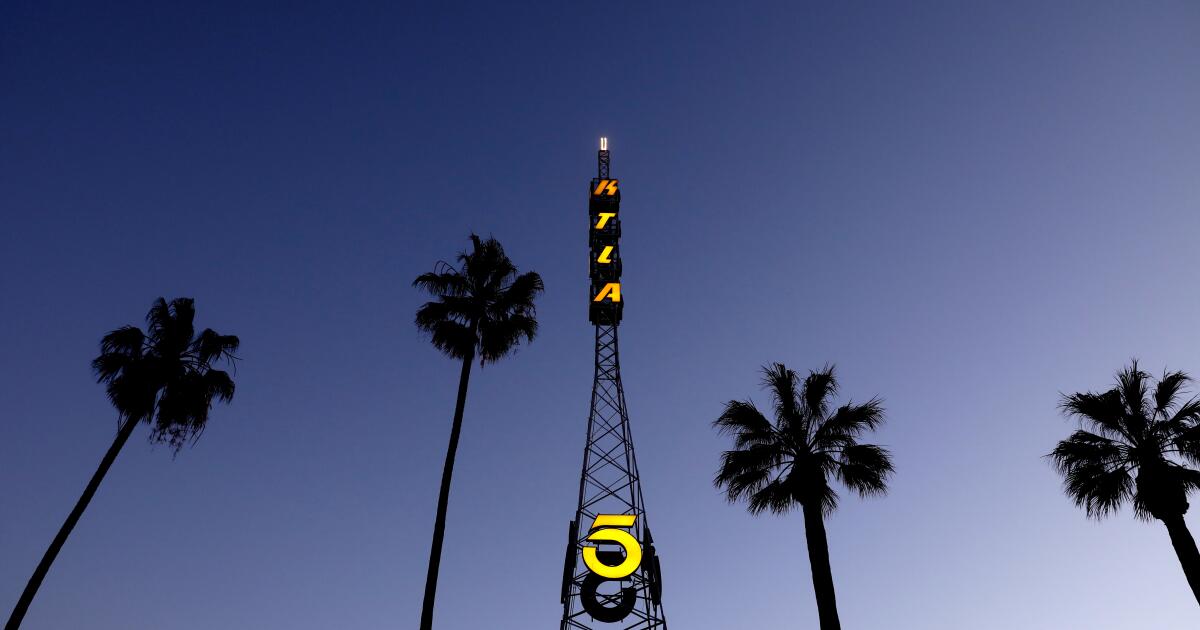
KTLA-owner Nexstar Media Group said it has closed its deal to acquire rival Tegna’s TV stations, despite opposition from eight state attorneys general who filed a lawsuit to block the merger.

The acquisition was approved by the Federal Communications Commission’s Media Bureau and the Justice Department, Irving, Texas-based Nexstar said Thursday.

“This transaction is essential to sustaining strong local journalism in the communities we serve,” Nexstar founder and Chief Executive Perry Sook said in a statement. “By bringing these two outstanding companies together, Nexstar will be a stronger, more dynamic enterprise — better positioned to deliver exceptional journalism and local programming with enhanced assets, capabilities and talent.”

Sook also mentioned President Trump and FCC Chairman Brendan Carr by name in the statement, saying the company was “grateful” they recognized the “dynamic forces shaping the media landscape” and allowed the transaction to move forward. Trump had supported the deal.

The surprise announcement came only a day after eight state attorneys general, including California’s Rob Bonta, sued to stop the deal, arguing it would give Nexstar too much control of local TV stations. At the time, Bonta said the combination would cause “irreparable harm to local news and consumers who rely on their reporting as a critical source of information.”

Nexstar is the largest TV station owner in the U.S., with 164 outlets including KTLA in Los Angeles. If the merger with Tegna succeeds, Nexstar would have 265 TV stations reaching 80% of the U.S. and multiple outlets in a number of markets.

The suit also claimed it would give the combined company too much leverage in negotiating fees from pay-TV providers that carry their stations, which could raise costs for consumers.

The plaintiffs in the suit also include state attorneys general in Colorado, Connecticut, Illinois, New York, North Carolina, Oregon and Virginia.

FCC Commissioner Anna Gomez said the merger violates the existing national ownership cap of 39% under federal law and said the acquisition did not receive a vote before the entire commission. The FCC approved this deal with waivers, meaning the company can operate in violation of that ownership cap.

“A transaction of this magnitude, which includes new and novel issues before the FCC, demands open deliberation before the full Commission, not a quiet sign-off meant to avoid public scrutiny,” Gomez said in a statement. “Given the increasingly alarming pace of reckless media consolidation, the American public deserves to know how and why this decision was made.”

The FCC did not respond to an immediate request for comment.

Times staff writers Stephen Battaglio and Meg James contributed to this report.
Source link

California attorney general vows to scrutinize Paramount/Warner deal

California Atty. Gen. Rob Bonta called out the federal government for largely vacating its role as antitrust regulator, saying it’s now up to California and other states to look out for consumers’ interests.

Bonta, the state’s top law enforcement officer, spoke Thursday at a Capitol Forum conference in Beverly Hills on antitrust issues and the future of Hollywood. His appearance came just days after the U.S. Department of Justice settled its case against Live Nation and Ticketmaster a week into a high-stakes trial, leaving state attorneys general to try to continue to fight that battle on their own.

The Justice Department’s about-face revealed a major fracture in antitrust enforcement. State attorneys general — particularly in Democratic-controlled states — say their role is becoming increasingly important to challenge alleged anti-competitive behavior.

President Trump has “abdicated the federal administration’s responsibilities to hold big corporations accountable to the law and protect a competitive marketplace,” Bonta said.

Bonta’s appearance comes as another major Hollywood merger appears to be sailing through its federal review with Trump’s tacit approval: Paramount Skydance’s proposed $110-billion deal for Warner Bros. Discovery.

The merger, announced late last month, has rattled Hollywood unions and some antitrust experts. It would combine legendary film studios, robust television production units and two prominent news organizations, CBS News and CNN, as well as dozens of cable channels.

“Paramount and Warner Bros. haven’t cleared regulatory scrutiny,” Bonta said. “My office has an open investigation into [the deal] and we intend to be vigorous in our review.”

California could bring its own lawsuit to block Paramount’s takeover, or join with other state attorney generals to launch legal proceedings to try thwart the deal or extract concessions — even if the Justice Department ultimately clears David Ellison’s deal.

Bonta outlined various concerns, including a continued contraction of Hollywood’s labor market, the consolidation of streaming services — Paramount+, HBO Max, Pluto and Discovery+ — and potentially higher prices and lower wages.

“There’s no industry as iconically California as the entertainment industry,” Bonta said. “It’s baked into California’s DNA.”

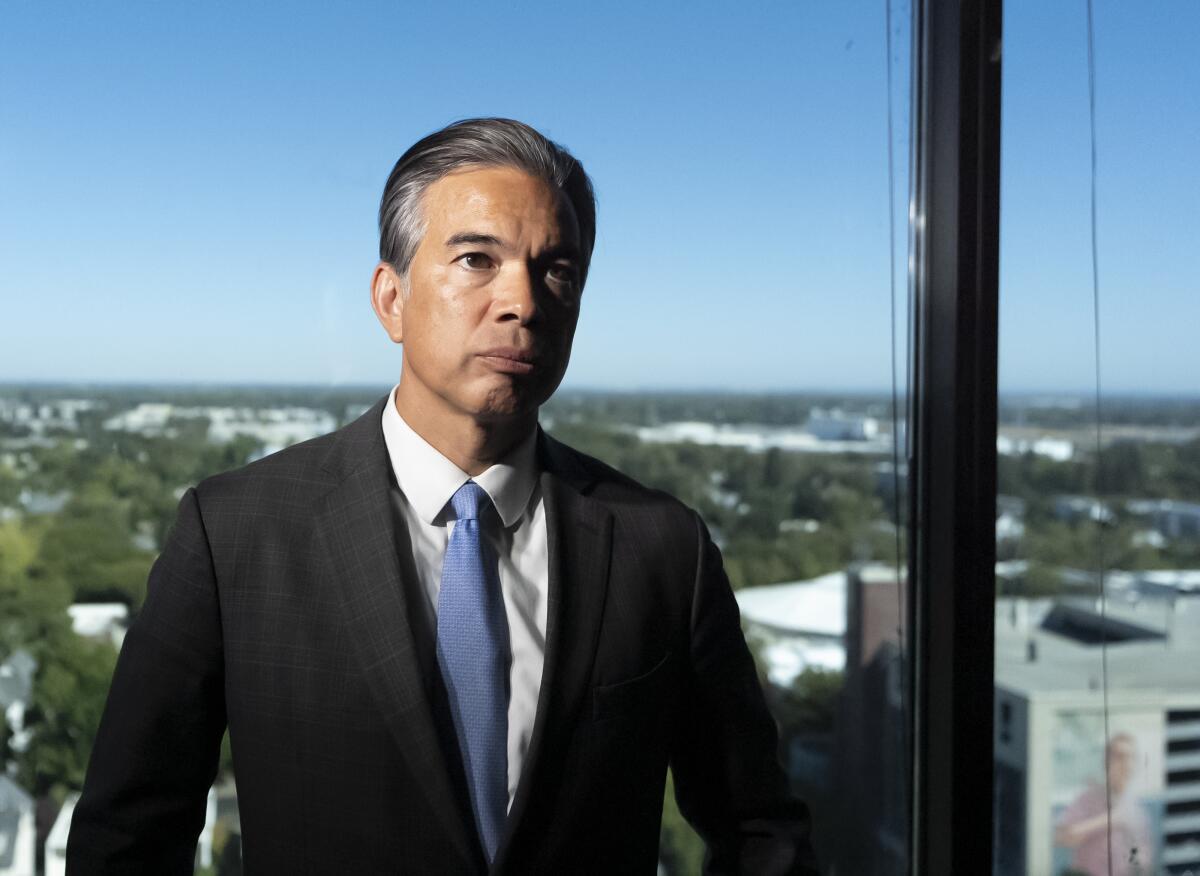
California Attorney General Rob Bonta. (Paul Kuroda / For The Times)

California Attorney General Rob Bonta vowed to drill into Paramount Skydance’s proposed takeover of Warner Bros. Discovery.

(Paul Kuroda/For The Times)

Paramount filed for Justice Department approval in December .

The maneuver started the regulatory review clock. And last month a key deadline for the Justice Department to raise concerns about Paramount’s proposed acquisition of Warner passed without comment from Washington.

Paramount has said it could finalize its deal by the end of September.

The architect of Paramount’s strategy, Chief Legal Officer Makan Delrahim, delivered his own keynote address, stressing the Ellison-family’s acquisition of Warner Bros. would not reduce competition and instead would be “a huge win for the creative community.”

“Paramount’s transaction with Warners is an opportunity to expand output, to grow the number of movies, shows and other content we are offering to the consumer,” Delrahim said, adding that will result in “more job opportunities,” including in Southern California, which is reeling from a production flight to other states and countries.

Delrahim conceded that Paramount was driven to buy Warner Bros. — it prevailed after Netflix bowed out — because Paramount is not big enough to compete in an industry dominated by technology giants.

He criticized the proposed Netflix deal, saying he doubted it would have passed regulatory muster due to Netflix’s strength in the streaming market.

Paramount still needs to win the support of Warner shareholders, and also gain regulatory approvals from the Justice Department, state attorney generals and overseas governments.

“This deal is a big win for Los Angeles, for California and for all communities that embrace filmmaking,” Delrahim said.

Tech mogul Larry Ellison has personally guaranteed the $45.7-billion in equity needed for the transaction . The company would have to take on more than $60-billion in debt — raising concerns among Hollywood workers about large-scale cost-cuts and layoffs.

“What is Paramount doing is …paying $110 billion to take out a rival,” said attorney Ethan E. Litwin, a former lawyer for TV networks, who also spoke at the conference. “When you take out a major rival in a highly concentrated industry … you are taking out competitors for projects. “

Bonta declined to say whether he would try to stop the Paramount-Warner merger.

Progressive State Leaders Committee, an affiliate of the Democratic Attorneys General Association, in December hired Rohit Chopra, a former director of the Consumer Financial Protection Bureau and former commissioner on the Federal Trade Commission, as a senior advisor. He will help coordinate efforts as the group, including Bonta, wages antirust enforcement battles.

“The federal government is just not enforcing the law,” Chopra said during Thursday’s conference. “Our states are really the last line of defense.”

Source link

Epstein’s longtime accountant testifies on his wealth and business ties

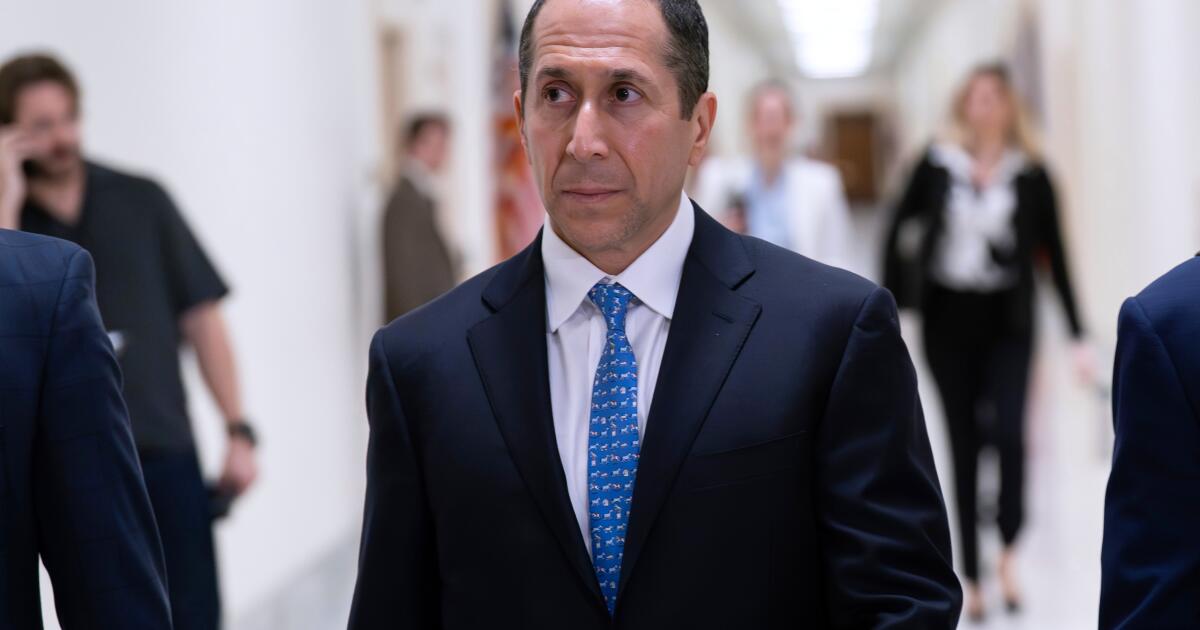
House lawmakers were digging into Jeffrey Epstein’s sprawling financial portfolio on Wednesday as a committee deposed his former accountant and tried to understand his connections to some of the world’s wealthiest men.

Richard Kahn, who worked closely with Epstein for years and now serves as an executor of his estate, appeared for the closed-door deposition on Capitol Hill. He told lawmakers that he had not personally seen evidence of Epstein’s sexual abuse, but provided a fuller picture of how Epstein acquired his wealth. The wealthy financier made hundreds of millions of dollars over two decades, during which he struck up friendships with some of the world’s most powerful men.

Kahn “was under the impression that Epstein made his money as a tax advisor and a financial planner,” said Rep. James Comer, the Republican chair of the House Oversight Committee. Lawmakers argued that a fuller picture of Epstein’s finances could help the public understand how, for years, he was able to get away with trafficking and sexually abusing underage girls.

“Jeffrey Epstein’s sex trafficking ring would not have been possible without Richard Kahn, who managed Epstein’s money for years, authorized payments, including payments to victims and survivors,” said Rep. James Walkinshaw (D-Va.), who added that Kahn told them he was unable to recall details of some of the transactions and communications that he was asked about.

Kahn has said that he was unaware of Epstein’s sexual abuse and had not seen any of his victims.

Comer (R-Ky.) also said that lawmakers confirmed during the deposition that Epstein received significant amounts of money from former retail shopping chain executive Les Wexner, hedge fund manager Glenn Dubin, tech entrepreneur Steven Sinofsky, investor Leon Black and the Rothschilds, a wealthy banking family.

None of those people have been accused of wrongdoing in their relationships with Epstein, but Democrats on the committee argued that anyone with ties to the wealthy financier should be scrutinized. Wexner was deposed by the committee last month, and Comer has also called on Black, among several others, to appear for transcribed interviews.

Kahn also told lawmakers that Epstein had financial ties to Ehud Barak, who was the prime minister of Israel from 1999 to 2001, according to Democratic Rep. Suhas Subramanyam. Barak has not been accused of wrongdoing and has said he regrets his friendship with Epstein.

Comer also said Wednesday that the committee has reviewed over 40,000 documents that it subpoenaed from JPMorgan Chase and Deutsche Bank. Epstein was connected to at least 64 business entities, according to Comer.

Republican President Trump has strongly denied any wrongdoing in his own ties to Epstein, and Comer said that Kahn had never seen any financial transactions between Epstein and Trump. Comer said that Kahn is the latest witness to testify that they had never seen Trump doing anything wrong with Epstein.

“The investigation’s about getting the truth to the American people, trying to figure out how the government failed, answer questions we all have,” Comer said.

Groves writes for the Associated Press.

Source link