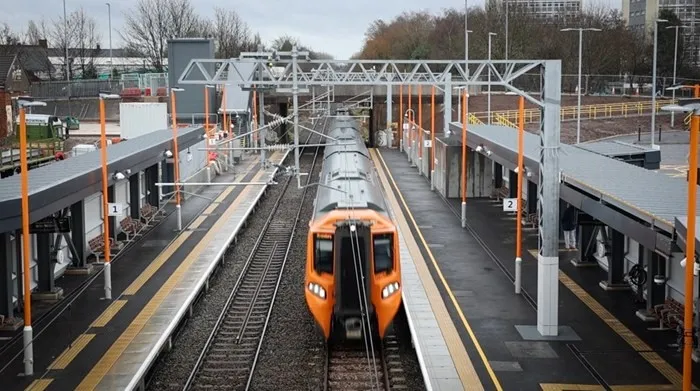
It’s back! A fantastic offer saving you money on your travel with Northern valid until March 27, 2026 with their Hop On Hop Off train ticket
The Mirror has teamed up with Northern Trains, to offer excellent prices on unlimited day or weekend train travel with their Hop On Hop Off train ticket, available between February 23 and March 27, 2026.
All you have to do is collect two tokens from the North edition of the Mirror between Monday, February 23 and Sunday, March 1, 2026, download a registration form from the Northern website and take them to your local staffed ticket office on the Northern network to redeem.
The best part is you can use your tickets to hop on any train on the Northern network!* So, if you’re looking for the perfect excuse to ride the rails as the days start to get longer or travel by train to one of the many great cities of the North, then this could be the ticket for you.
A great value train ticket that leaves you with more money in your pocket for that essential trip out treat! You can purchase either a Day ticket for £12 per adult or a Weekend ticket for £20 per adult. Don’t forget kids go half price on this offer, so you could take the whole family out for a fraction of the price!
The travel window will be open from February 23- March 27, 2026. (*No direct travel route available on Northern services between Newcastle and York).
Once you have your tokens, log in or register and complete the online form at northernrailway.co.uk/reachplc. Next, print the form, and hand it in at any local staffed ticket office on the Northern network to redeem. You will then be given the tickets to go do your thing!
Terms and Conditions: To qualify for this special offer, collect two tokens from the North edition of the Mirror between 23.02.26 and 01.03.26 and complete the online redemption form. Insert availability varies depending on title. Collect two tokens per redemption form. Two tokens allow you to buy up to four Northern Day Ranger tickets (£12 each) or four Weekend Rover Tickets (£20 each). Kids offer includes ages 5-15 years. Day Ranger ticket travel between 23.02.26 and 27.03.26. Weekend Rover ticket travel between 28.02.26 and 22.03.26. All tickets must be valid for travel on the same date. Tickets are valid on trains departing after 0845 Monday to Friday. Valid anytime at weekends, on Northern services only. *No direct travel route available on Northern services between Newcastle and York. Full t&c’s at northernrailway.co.uk/reachplc.
One train journey takes a staggering 167 hours to complete, with the railway spanning eight time zones to make it the longest in the world
The train journey is the longest, direct railway in the world(Image: Bruno Morandi/Getty)
The longest direct train journey in the world stretches a staggering 5,771 miles and takes almost a week to complete. Passengers on board the train undertake a mammoth journey through eight time zones.
The Trans-Siberian Railroad claims the title of the longest single rail system in the world. It connects east and west Russia, running from Moscow to Vladivostok.
To travel the length of the railway, it takes approximately 167 hours and requires no passenger changes. Heading east from Moscow, the train crosses the country to the Pacific Ocean.
There are even non-stop train options, so all passengers remain on board throughout the seven days. If you prefer to get off and explore the local surroundings, passengers can opt for the stopping service.
However, this takes between 14 and 20 days to complete. The Trans-Siberian railway runs through cities such as Moscow, Yaroslavl, Chelyabinsk, Omsk, Novosibirsk, Krasnoyarsk, Irkutsk, Ulan-Ude, Chita, Khabarovsk, and Vladivostok.
There’s also the Trans-Manchurian line, which runs through northern China to Beijing, and the Trans-Mongolian, which heads to Beijing but passes through Ulan Bator.
A famous train on the Trans-Siberian railway is Rossiya (the Russia), which has second-class sleepers, third-class open-plan sleeper bunks, and a restaurant car.
Passengers can pay for four tickets to ensure sole occupancy of a four-berth compartment, even if they’re the only ones travelling. The bunks convert to seats during the day, with toilets and washrooms at the ends of the corridors.
Many tourists who travelled the route chose not to start or end their journey in Russia. Tourists once began in London and made their way to Moscow before boarding the Trans-Siberian Railroad.
Once in Vladivostok, tourists could then head to Korea, Japan, or China without taking a plane. National Geographic also ran tours along the route, offering tourists the chance to travel on “one of the world’s most legendary railways.”
They described the journey: “Set out on an epic train journey across one-third of the world, travelling from Vladivostok, Russia to the heart of Moscow along the legendary Trans-Siberian Railway.
“From the Mongolian steppe to Lake Baikal’s remote shores to the snow-capped Ural Mountains, trace the history of tsars, exiles, and Mongols in the comfort of our luxury train, the Golden Eagle Trans-Siberian Express. Encounter remote cultures and the unique architecture of Siberia’s wooden cottages and Moscow’s onion domes.”
Tours like these have been halted, yet the train is reportedly still being used by Russians. The UK Government warn against all travel to Russia.
Official advice from the Foreign, Commonwealth & Development Office says: “FCDO advises against all travel to Russia due to the risks and threats from its continuing invasion of Ukraine, including security incidents, such as drone attacks, and Russian air defence activity, lack of flights to return to the UK and limited ability for the UK government to provide support.”
The train rocks you to sleep and wakes you somewhere spectacular
There was plenty of stunning scenery to explore(Image: Kirsty Bosley)
Just one sleeper train ride away from a major English city is spectacular views, deserted beaches and waterfalls. Features Writer Kirsty Bosley branded it “one of the most magical days of her entire life”.
Just the previous evening, she had been stuck in gridlock at Birmingham’s Five Ways island, stressed and anxious about missing the Caledonian Sleeper – the train that lulls you to sleep in the midland city and rouses you in the Scottish Highlands.
She secured a ticket to whisk her from Brum to Inverness, awakening in Scotland following a 10-hour journey on the overnight service and granting roughly 12 hours there before her pre-booked return departure.
Therefore, I was determined to cram in absolutely everything possible during those 12 hours – family-friendly attractions, trails for hikers, intimate experiences for lovers and tranquil spots for contemplation in the wilderness, much like the moment I was savouring on Dores Beach, reports Birmingham Live.
Furthermore, I aimed to accomplish everything whilst spending minimal money, surviving on Tunnocks Teacakes and Irn Bru alongside small portable snacks we grabbed en route. The day’s largest expense turned out to be the most worthwhile: a pre-paid £42 hire car from Enterprise.
After a brisk 15-minute stroll from the train station, we picked it up and embarked on our ambitious mission to navigate the entirety of Loch Ness (roughly 70 miles) in a single day.
Fuelled by a mere £15, we accomplished our goal, embarking on a clockwise journey that began with tears of joy as the loch unveiled itself, perfectly timed to Taylor Swift’s bridge from Cruel Summer blaring from the speakers.
We pulled over, rolled down the windows and danced roadside under the rising sun, brimming with anticipation for the perfect day ahead.
A masterclass in Loch Ness
Following our jubilant pit stop, our first destination was the Loch Ness Clansman Hotel to see the plaque commemorating Ozzy Osbourne’s nocturnal escapades in the loch, where he searched for Nessie alongside his son Jack.
Driving felt less like a chore and more like a pleasure with the constant backdrop of the Highlands. In Drumnadrochit, at the hotel where the monster tales originated, we made our second largest purchase of the day: £15 entry to The Loch Ness Centre, narrated in its entirety by David Tennant.
As we moved from room to room, we delved into the origins of the rumours, the ensuing frenzy, the history and geography of the land, and the Scottish myths and legends that lent an air of reality to the tale.
We also discovered the fascinating science behind why it’s impossible to definitively prove there isn’t a monster lurking in a body of water so extraordinarily deep that all the freshwater from every lake, reservoir and river in England and Wales combined couldn’t fill it.
Following that revelation, I found myself scrutinising the water far more intently, half-convinced there was a genuine possibility she might poke her enormous neck above the surface to greet us passing Brummies.
The sheer sense of wonder sparked by the centre’s masterclass justified the entrance fee entirely, as every subsequent free activity we undertook was now enhanced by our newfound knowledge.
We reached Urquhart Castle in remarkably quick time – a military ruin positioned directly on the water’s edge.
Walk-up admission costs £16 and whilst I was certain it would be spectacular to explore, we decided to save it for another visit now we were absolutely convinced we’d be returning. Boat excursions can transport you there, so that was immediately added to my ‘to-do’ list.
Enchanted woodlands and breathtaking vistas
We pressed on along the waterside A82 towards Invermoriston, the sort of place that appears lifted straight from an adventure film.
The Old Bridge spanning the thundering falls of the River Moriston, as it crashes dramatically towards Loch Ness, resembles something from a fairy tale. Despite being situated on the renowned Great Glen Way trail, it all felt like a mystical secret because remarkably few other visitors were present.
We parked up (parking is free, but donations are appreciated, as with many public toilets along the route) and embarked on a stroll into the woodland, pausing at the historic Summer House Victorian folly to soak in the surroundings, much like folks did years ago as salmon battled their way upstream.
Meandering through spongy clusters of radiant white reindeer lichen, pausing to observe the rapids and keeping an eye out for squirrels, I felt a sense of tranquillity wash over me. It’s a must-visit spot for any traveller – I wish every Brummie could experience it.
By the time we reached the South Shore, it was 2pm, and we’d managed to cover half the loch’s circumference in just four hours.
A brief pause for photos and laughter ensued before we rounded the southernmost point and were greeted by a view so breathtaking from the Suidhe Viewpoint that we had to pull over.
Another family of tourists arrived, and although we exchanged few words, our shared silence spoke volumes about the unforgettable, life-affirming moment we were experiencing. We swapped cameras to help each other capture proof of our presence in this extraordinary place. The wild beauty of our surroundings was almost overwhelming as we continued our journey.
Wildlife and waterfalls
We encountered a majestic stag who turned to regard our car. It felt like we’d stepped into an illustration on the front of a tin of special shortbread biscuits. Overhead, giant birds, possibly including a golden eagle, soared majestically.
Our next stop was the Falls of Foyers, a spectacular 140ft waterfall nestled within a forest inhabited by elusive red squirrels. Tunnocks Teacakes and Irn Bru proved insufficient fuel for the challenging descent down steep steps, but thankfully the Waterfall Cafe offered sausage rolls and other snacks to revive us.
With daylight fading, we passed by Boleskine House (the former residence of Aleister Crowley and Led Zeppelin’s Jimmy Page), which was shut, though we went anyway simply to say we’d been, before heading off to find a man we’d discovered at The Loch Ness Centre.
Dusk – One final adventure
Steve Feltham is a renowned ‘Nessie Hunter’ who abandoned his family business, relationship and home to move from Dorset. Since 1991, he’s lived on the loch’s shores and has devoted himself to spotting ‘the monster’ ever since.
Yet his tale is really about leaving behind what doesn’t fulfil you and pursuing the life you desire. I desperately wanted to meet him before nightfall.
We reached his modest dwelling as the sky began transforming colours above Dores Beach. He wasn’t there, but after the dog-walkers departed, I chose to wait a whilst longer in case he returned.
The pebbled shoreline is magnificent, the surroundings breathtaking. I pondered whether Steve might welcome a new neighbour, though I knew Birmingham beckoned so I could pen this account.
Both Steve and Nessie remained beyond our grasp, only one possessing confirmed existence but both surrounded by legends I yearned to explore further. Returning to relinquish the rental car and hop back on what I’ll forever dub the ‘Loch Ness Express’, we bid farewell to it all, but only physically.
I was convinced that my spirit remained in Invermoriston, still on the hunt for red squirrels. I plan to retrieve her on the next available journey aboard the Caledonian Sleeper. This time around, I’ll be sure to pack sandwiches.
Just under two hours away from London with Mediterranean-style beaches, this getaway won’t break the bank
A summer day in Broadstairs
Britain is approaching the final stretch of winter, with warmer weather hopefully just around the corner.
Whilst you might assume a lovely getaway requires jetting off overseas, the UK boasts plenty of stunning destinations perfect for a weekend retreat – and this seaside gem stands out as the finest of them all.
This picturesque town sits less than two hours from London, with train tickets starting at just £14, making it wonderfully budget-friendly. It offers Mediterranean-style beauty featuring sandy shores, clifftop rambles and mouth-watering cuisine, yet retains quintessential British character through its Victorian promenades and harbour.
The beautiful spot in question is Broadstairs in Kent, is dubbed the jewel of Thanet.
Ensure our latest stories always appear at the top of your Google Search by making us a Preferred Source. Click here to activate or add us as your Preferred Source in your Google search settings.
This sheltered coastal resort brims with sandy beaches, clifftop trails, independent cafés and seafood establishments, all conveniently accessible from its Victorian promenades and harbour.
For those who enjoy exploring on foot, there’s Viking Bay – a stunning horseshoe-shaped beach bordered by pastel-coloured huts.
Visitors can catch waves at Joss Bay, or traverse clifftop paths across Botany Bay for breathtaking vistas over the Channel.
If you’re after a more urban-style escape, there’s an abundance of independent retailers and dining spots to discover.
Independent cafés and seasonal eateries nestle alongside traditional fish-and-chip shops and family-owned institutions like Morelli’s Gelato, which dates back to the 1950s.
The town also boasts renowned literary connections. Charles Dickens spent his summers here at Bleak House.
This delightful coastal town brims with character, and the beauty of it is you won’t need to shell out hundreds of pounds or mess about with passports to experience it — eimply jump on a train and discover what’s on offer.
Pete Walls, Co-Founder of Split My Fare, remarked: “Broadstairs shows that you don’t need to go abroad for that coastal escape because clean beaches, local culture and atmospheric streets are right on our doorstep, and the train makes it easy to get there.”
RAIL services to and from a major UK airport are currently down, sparking travel chaos.
Passengers are facing major disruptions and delays due to a points failure on the line.
Sign up for the Travel newsletter
Thank you!
Train services are currently down between Manchester Picadilly and Manchester AirportCredit: Getty
All trains between Manchester Piccadilly and Manchester Airport are currently cancelled.
Trains are currently unable to run in either direction, with Northern, TransPennine Express, and Transport for Wales services all affected by the issue.
The points failure has occurred near Heald Green, approximately half way between the two stations, according to National Rail.
Passengers are advised to use the Metrolink or buses to travel between Manchester city centre and the airport this afternoon.
National Rail said “major disruption” is expected until at least 5pm today.
Network Rail confirmed it is “on site to investigate and resolve the issue”.
Failure to operate points correctly creates difficulties in safely switching tracks and avoiding rerouting trains.
One broken part can trigger larger, systemwide service outages.
The disruption comes ahead of planned engineering works on rail lines in the area scheduled to begin this weekend.
Anyone planning to travel should should check real-time updates through the official websites and apps of the applicable rail operators and consider alternative routes.
A woman recently visited a Victorian train station in the UK, but was left floored when she made a discovery hidden within its walls. Sometimes the most unexpected things await us
09:54, 11 Feb 2026Updated 09:54, 11 Feb 2026
She couldn’t believe what she found at the station (stock image)(Image: Newcastle Chronicle)
Thousands of people visit train stations every day, but sometimes more lies within them than we realise. One woman recently discovered this when she visited an old train station in the UK, and it left her totally taken aback.
Korina, known as thedreamywanders on Instagram, recently shared her epic find on social media, and it’s since gone viral, as people can’t believe how beautiful her discovery was. When she entered the train station, she ended up finding a lot more books than she did trains, and the experience left her, and her followers, totally mesmerised, and it’s pretty easy to see why.
In Korina’s clip, she wrote: “POV: You entered a Victorian train station and found the UK’s cosiest second-hand bookshop.” Alongside this, she added: “Barter Books is set inside a Victorian train station and it feels like stepping into a different world.
“There are shelves everywhere, cosy corners to browse and model trains running overhead as you explore. It’s the kind of place where every book feels like it’s waiting to be found.
“There’s also a café on site and fireplaces around the shop, so you can grab a coffee, sit by the fire and read for a while. One of those places you could easily lose track of time in.”
Content cannot be displayed without consent
The post quickly got people talking, and dozens were quick to comment. They shared all sorts of thoughts.
One said: “Oh I love this spot! You really captured its magic.” Another added: “Had the absolute joy of introducing a friend to this place today. He loved it.”
A third replied: “Wow, this is amazing.” Meanwhile, a fourth commented: “It’s a truly wonderful world. A place I could spend a whole weekend.”
One more also chimed in with: “I think I bought 17 books last time I was there.” Another also noted: “Such an adorable bookshop.”
Where can you find it?
The bookshop is located in Alnwick, Northumberland. If you haven’t visited before, it’s known for its charmingatmosphere, with towering shelves of second-hand books and a lovely collection of old railway memorabilia. Barter Books also features a unique “barter” system, where customers can trade in old books for store credit.
It’s considered a gorgeous place to visit for both book lovers and history enthusiasts alike. You’ll find it located in the historic former Alnwick Station, and it was opened in 1991 by Stuart and Mary Manley.
The station, which was built back in 1887, was later transformed into an amazing bookshop. It still contains much of its original Victorian architecture, including the station’s platforms and waiting rooms. Today it is one of the largest second-hand bookshops in Europe.
If you haven’t visited Northumberland before, it’s directly adjacent to and north of Newcastle upon Tyne. Many areas can be accessed in less than an hour by car or public transport.
It serves as a rural, and coastal counterpart to the city, offering easy access to attractions like Alnwick, Morpeth and the coast. As well as this, Northumberland is directly adjacent to Scotland, forming the northernmost county of England and sharing the border to the north and west.
Passengers are best to check their train operator before heading on board
09:55, 09 Feb 2026Updated 10:08, 09 Feb 2026
Some train operators request that certain food and drink not be taken on board (Image: Getty )
In the UK, there are several big train companies, and many are used by thousands daily for commuting, visiting family or friends, or even during a staycation. Each company has its own features. For instance, some trains have Wi-Fi and USB charging ports, while others do not.
When it comes to food and drinks, there are differences as well. Some railway companies offer catering services, but many others do not. Every train operator has its own rules about bringing your own food and drinks onboard – and there are some items you should avoid.
On National Rail’s official website, a statement reads: “Many train companies have onboard catering facilities. These can include trolley services, counter buffet services and restaurant cars. The longer the journey, the more likely that there will be food and drink available on board.”
Some train companies offer food and drink on board. Below is a list of the ones that do:
There are numerous others that don’t, however. The following train companies and services do not offer onboard catering:
c2c
Chiltern Railways
Elizabeth line
Gatwick Express
Great Northern
Heathrow Express
London Northwestern Railway
London Overground
Merseyrail
Northern
South Western Railway
Southeastern
Southern
Stansted Express
Thameslink
West Midlands Railway
According to National Rail, passengers can bring their own food onboard, and they are urged to “take care” with hot drinks. However, they should not “leave wrappers and other packaging behind”, or “get carried away” when consuming alcohol.
In a major “do not” alert, the passenger rail service says people should avoid bringing certain types of food on board. It says: “Don’t bring very smelly food on your journey – leave that wedge of Stinking Bishop at home!”
In terms of alcohol, National Rail adds: “In general, you can bring and consume alcohol on trains, except those managed by Transport for London. But some train companies will run alcohol-free services, so check before you travel. And remember, antisocial behaviour is not permitted at any time.” Scroll down below for a look at the trains that ban alcohol at certain hours and on specific routes.
The largest train companies in the UK, by network size, passenger numbers, and franchise size, include Govia Thameslink Railway (GTR), Great Western Railway (GWR), Northern Trains, Avanti West Coast, and ScotRail. GTR is the largest, running 22% of all passenger services in the UK, including Thameslink, Southern, and Great Northern.
Govia Thameslink Railway (GTR)
GTR covers Southern, Thameslink, Great Northern, and Gatwick Express. The railway operator doesn’t have a strict rule against certain food or drink items, but it is requested that passengers do not consume items that disturb or upset other passengers, and litter must be taken with them.
You are allowed to bring and eat your own food and drinks on Southern Railway trains. Usually, there aren’t any catering services on Southern Railway’s commuter trains, but passengers can enjoy their meals and drinks as long as they are ‘polite to others’, ‘keep the train clean’, and ‘take their rubbish with them’. You can have food and drinks, but please be ‘mindful of strong odours’. Alcohol is mostly allowed, but Southern might limit it on certain trains, like those for football games.
Regarding Thameslink trains, as there are no on-board catering services, passengers are encouraged to bring their own refreshments. However, the trainline asks passengers to avoid bringing ‘smelly, hot, or messy food’ that may disturb other passengers. Alcohol is generally allowed on Thameslink, but antisocial behaviour is not tolerated, and you may be asked to stop or leave if deemed intoxicated.
It is important to note that while London-based Thameslink services allow alcohol, other Transport for London (TfL) services do not. All of the above also applies to Great Northern and Gatwick Express trains.
Great Western Railway (GWR)
On GWR trains, you can bring your own food and drinks, including alcohol, but ‘avoid bringing food that smells really strong’. You can usually have alcohol, but ‘anti social behaviour is not allowed’, and specific, limited services may have restrictions.
Food and drink are available only on longer-distance routes operated by Intercity Express Trains. On most long-distance trips, there are snacks, drinks, and alcoholic beverages you can choose from. However, not all local routes have food and drink services, especially the ones between Penzance–Exeter St Davids and Exeter St Davids–Bristol/Cardiff/Gloucester/Worcester.
Usually, there is a free trolley service with snacks and drinks available at your seat on high-speed trains that run from 6am to 7.30pm. Passengers are urged to take their rubbish with them or use the bins that are available.
Northern Trains
You can usually bring food and non-alcoholic drinks on Northern Rail trains, so you can have your own snacks during the trip. But on some “dry trains,” alcohol is banned. It’s important for passengers to also be thoughtful of others by ‘not bringing strong-smelling foods’ and by ‘taking all their rubbish with them’.
A statement on the official Northern website reads: “On certain trains, we don’t allow any alcohol on board. We’ve made some of our services ‘dry trains’ because of past issues with people getting rowdy and causing trouble.
“If you’re on a ‘dry train’, our staff will ask you not to drink or hide any booze during your journey. If you’re visibly drunk or try to sneak alcohol on board, you won’t be allowed to travel and could face prosecution under railway byelaws. If you’ve got alcohol with you before you board these services, you’ll need to dispose of it before the barriers, please. No exceptions here – you won’t be able to travel with it.” The trains where you can’t bring alcohol are listed online.
Avanti West Coast (AWC)
You can bring your own food and drinks on AWC trains, but it’s best to avoid really smelly items. In Standard and Standard Premium classes, you can buy snacks and drinks from the onboard shop, and there are hot food choices too. In First Class, you get free meals and drinks, depending on the time and length of the trip. You can have alcohol, but don’t drink too much; also, some services might not allow alcohol, so it’s a good idea to check first.
ScotRail
You can bring and consume your own food and non-alcoholic drinks on ScotRail trains. Alcohol consumption is restricted, with a ban in place during certain hours. It is advised to avoid bringing very smelly food and to take your litter with you.
A statement on ScotRail explains: “Alcohol may be consumed on our trains between 10am and 9pm. Other restrictions may apply in certain circumstances, such as large sporting events or concerts, as determined by ScotRail and the British Transport Police (BTP), on a case-by-case basis. Railway Byelaw 4 (2) states that a passenger with intoxicating liquor can be prevented from entering, or be asked to leave, the railway.”
The smallest station in the UK only allows one door to open(Image: AlbertPego via Getty Images)
The UK’s tiniest railway station measures just 15 metres in length and can only accommodate one train door opening at a time. Among the hundreds of stations dotted across Britain linking villages, towns and cities, one holds the record for being the smallest.
Beauly Station in the Scottish Highlands claims this unique distinction. Its platform is considerably shorter than a single train carriage, meaning passengers must be given advance notice if they wish to alight there.
An announcement alerts travellers to plan accordingly if Beauly is their destination.
The station boasts a rich heritage, having first opened its doors in 1862. But by 1960, fierce competition from local bus services forced its closure.
Content cannot be displayed without consent
More than four decades later, following determined campaigns by local residents, it reopened. Since 2002, Beauly Station has featured a modest 10-space car park, bicycle storage and shelter facilities, reports the Express.
Whilst there’s no ticket office, the diminutive station remarkably handles approximately 35,000 passenger journeys annually, according to figures from the Carno Station Action Group. Located roughly 10 miles west of Inverness, it serves ScotRail services.
Trains calling at Beauly travel onwards to Wick, Kyle of Lochalsh, Dingwall, Invergordon, Ardgay and Inverness.
The station wasn’t always this compact, having previously boasted two platforms. Originally constructed for the Inverness to Invergordon line in the 1800s, it featured twin platforms, a passing loop and a goods shed.
During the 1960s, Beauly was amongst numerous stations axed. All stations between Inverness and Dingwall were shut down.
The solitary platform at Beauly standing today was constructed in 2002 when the station reopened. The reinstatement scheme came with a £250,000 price tag.
Class 158 trains normally operate on this line, which extend beyond Beauly’s platform length.
Usually, only the front door of the train opens to allow passengers to board and alight.
The railway operates on tracks dating back to 1725 and 1621, making it the world’s oldest. Heritage steam trains run every Sunday along the three-mile route, kept alive by dedicated volunteers
The railway is still in use(Image: Graeme J Baty via Getty Images)
Britain boasts a remarkable industrial heritage, with its railway network standing as a particular point of pride. Through decades of ingenuity and hard graft, tracks were laid across the country, linking villages, towns and cities together.
While many of these lines remain operational today, only one can claim the distinction of being the world’s oldest. Sections of this historic route stretch back to 1725 and continue to operate as a heritage railway.
A passenger service travels along the three-mile stretch every Sunday.
The Tanfield Railway winds its way through Gateshead and County Durham. Its origins began as a horse-drawn colliery wooden waggonway, then evolved into a rope-and-horse railway, and eventually into a rope-and-loco railway.
Preserved industrial steam locomotives still traverse the route between East Tanfield, Durham, and Sunniside, Gateshead. The railway holds the distinction of being the world’s oldest, with track sections dating to 1725 and other portions in service since 1621, reports the Express.
The Tanfield Railway was constructed for transporting coal, not people, to the River Tyne for shipping to London and further afield. It employed cutting-edge technology for its era, with wooden wagons running on wooden rails, hauled by horses.
This predated the arrival of iron rails and steam power on the railway by a century. Today, dedicated volunteers have shouldered the responsibility of maintaining Tanfield Railway’s remarkable heritage.
Last year marked the railway’s 300th anniversary, with celebrations featured in the BBC documentary, The World’s Oldest Railway. Tom Hartley joined as a volunteer in 2004 after being captivated by the North Polar Express train during a childhood trip with his parents.
At 19, Tom and three fellow volunteers set out to restore their own steam engine. They purchased the National Coal Board No. 38 from veteran volunteer Peter Weightman for just £1, working out at 25p each.
The group has invested countless hours and considerable funds into the restoration project, with hopes that the locomotive will soon be operational again.
Peter reflected: “It was frightening to see so many lovely machines that were getting scrapped in the 1960s, and that was my motivation really. Somebody had to do it before we lost our history, our local history.
“It has taken a lifetime to do it all, but I have confidence knowing that the next generation is going to repair it and get it working.”
Around 170 volunteers contribute to Tanfield’s operations, alongside three full-time employees.
General manager David Watchman expressed his pride: “I am really proud of our railway; we have a fantastic bunch of volunteers. Everyone has their own skill set. It is all about the people, and we have volunteers aged 12 through to 92. The railway wouldn’t exist without them.”
LNER has revealed its new fleet of trains in first-look images – and they’ve got perks for every customer.
The upgraded carriages will have water refill stations throughout the trains and in First Class even mood lighting and reclining seats.
Sign up for the Travel newsletter
Thank you!
LNER’s first-look images of its new Class 897 trains – First Class will have reclining seatsCredit: LNERThroughout all its carriages will be water refill stationsCredit: LNER
LNER, which operates trains across the East Coast Main Line, has revealed what its new fleet of Class 897 trains will look like.
The latest upgrades include “improved seating” across all classes with enhanced seat pads, side bolsters and wider head cushions .
One huge perk for all customers, especially those on a long journey, is that they’ll will be able to stay hydrated for free, thanks to the introduction of five water bottle refill stations throughout the train.
Travellers won’t have to pop to the cafe to buy a bottle of water – instead, just top up as you go.
The only other train line that offers complimentary water with refill stations is Avanti West Coast on its Pendolino and Evero trains.
Also onboard the new LNER trains will be new digital screens in each carriage so customers can keep an eye on their journey and the upcoming stops.
Each seat will have its own plug socket and USB-C ports too for phone charging.
For Standard Class customers, there will be a new and improved Café Bar.
Here, you can pick up snacks and drinks and can see what’s available in real-time on digital menu screens.
Those sitting in First Class can fully relax in seats that actually recline.
There will also be softer lighting, including mood and table lighting in First Class – so the lights won’t be too bright for those travelling during early mornings and evenings.
Other changes include the redesign of bike storage areas and toilets.
A digital menu will be outside the cafe so customers can see what’s actually availableCredit: LNERThere will be larger spaces for suitcases and bikesCredit: LNER
For wheelchair users, tables have been redesigned to make more room with seat legs moved and additional space created for assistance dogs.
The 10-carriage trains called ‘Serenza’, will each have a total of 569 seats across Standard and First Class, alongside wheelchair spaces.
No date for introduction of the Class 897s has been announced yet.
But the new fleet is set to replace LNER’s InterCity 225 fleet, which focuses on services between London King’s Cross and destinations like Leeds, York, Bradford Forster Square, and Skipton.
An ambitious transatlantic tunnel connecting London and New York could see travellers make the journey in just 54 minutes, though the project carries an estimated £15.6 trillion price tag.
The plan could one day become a reality(Image: nitimongkolchai via Getty Images)
Travelling from London to New York in less than an hour might one day become reality. Bold proposals could materialise following suggestions for a tunnel linking the two cities across the Atlantic.
The concept isn’t fresh, as countless visionaries have imagined such an achievement, though it’s long been deemed unfeasible. Nevertheless, Elon Musk weighed in on the notion, claiming his firm, The Boring Company, could turn it into reality.
Technological advances have progressed significantly, thanks to vacuum tubes and pressurised vehicles.
Despite carrying an eye-watering price tag, the journey could potentially come to fruition. Estimates for excavating beneath the Atlantic Ocean have exceeded £15trillion.
However, Musk insisted he could deliver it for considerably less. In 2024, he posted on X: “The @boringcompany could do it for 1000X less money,” responding to the cost projections, reports the Express.
The proposals might appear outlandish, but vacuum technology could be edging it towards reality. Newsweek reported that a vacuum within the tunnel could enable trains to achieve speeds exceeding 3,000 mph.
This would slash the London to New York journey time to just under an hour. The train could prove more environmentally sound as it may reduce air pollution from aviation.
The technology behind a vacuum tunnel resembles superloop trains, which Swiss engineers believe will “change the future of travel”. Yet, numerous companies have attempted and struggled to perfect the hyperloop technology.
Plans for the tunnel have prompted some engineers to suggest it should be constructed below the seabed, whilst others argue that suspending it using cables or supports would prove superior.
The Channel Tunnel serves as the closest comparison to the Transatlantic proposals, linking Britain to France.
It spans merely 40 miles in contrast to the 3,000 miles separating Britain from New York.
Moreover, it required six years to build. Should the proposed tunnel connecting Britain and America proceed at an identical pace, it would demand an extraordinary 782 years to finish.
Only a few parts of this long-forgotten railway line remain standing, but it once carried up to 2,000 people a year on their final journeys along with their mourning loved ones clad in black
Brockwood Cemetery still has a few remaining sections of track where the London Necropolis Railway ran(Image: Surrey Advertiser – Grahame Larter)
The Victorians have a reputation for dealing with death in strange ways, from photographing the dead to their obsession with Memento Mori objects, reminding them of the inevitability of death. But one almost forgotten part of Victorian history is particularly creepy and involves a long-abandoned railway line.
Early into Queen Victoria’s reign, the city faced a horrific problem. It had doubled in size thanks to the Industrial Revolution, bringing the population up to 2.5 million, many of whom lived in crowded, unsanitary conditions, causing outbreaks of conditions such as Cholera. London was the largest city in the world, but it also had insufficient sewage facilities and poor water quality, leading to disease and death. A Londoner born in the 1840s had an average life expectancy of just 36.7 years.
London’s churches soon found their graveyards were full to capacity, leading to the horrific practice of exhuming the recently deceased to make way for newer burials. As a solution, a huge new cemetery was planned in Brookwood, Surrey, but the plodding horse and carriages of the time would have taken hours to transport a body to this location. Therefore, the idea for the London Necropolis railway was formed.
The London Necropolis railway station was built next to Waterloo, and had a beautiful, ornate exterior typical of Victorian architecture. Here, the bodies of people of all ages and social classes were readied for their final 23-mile journey to the new Brookwood Cemetery in leafy Surrey, a world away from the grubby streets of London.
Coffins were issued a one-way ticket, while the mourners accompanying them would get a return ticket to take them back into the city after the service. Once the trains arrived in Brookwood, they made two stops in the Anglican and Nonconformist parts of the cemetery, depending on the religion of the deceased.
While all sorts of people were laid to rest in Brookwood, the rich, of course, enjoyed a better class of funeral than the Victorian poor. A first-class funeral came with a choice of burial plots and the ability to erect a permanent memorial. Those who chose a second-class funeral could put up a gravestone or other memorial for an additional cost, but if they failed to do so, the grave could end up being reused.
In third class were people who had a pauper’s funeral, paid for by their local parish. While these people weren’t given their own gravestone, they did get separate graves, which were much more dignified than the horrific burial practices going on at London’s graveyards at the time. The London Necropolis Company (LNC) carried out the burials, and about 80% of the funerals it held were third class, for those whose families couldn’t afford a service.
First and second class passengers had a separate waiting area, and their loved ones’ names were announced as their coffins were carried onto the train, a ceremonial touch not afforded to those headed to unmarked graves.
As London grew, and with the building of the London Underground, proper sewage systems, and overground railways, many churchyards stood in the way. The Necropolis Railway took on a huge new project, relocating the bodies from 21 churchyards across the city to the Surrey cemetery
Trains ran daily, and Sundays were a particularly busy day for funerals. It was the only day of the week when many workers had off, and by scheduling their loved ones’ funerals, they could avoid taking an extra day off.
The London Necropolis Railway ran until 1941, when a World War Two bomb destroyed the London station and track. By that point, funeral directors were increasingly using motorised hearses, and in the post-WW2 reconstruction of the city, the destroyed funeral train service wasn’t seen as a priority.
Visit Westminster Bridge House and you can still see some of the façade of the old station building, although the old sign is boarded up. However, in Brookwood Cemetery, the remains of this unusual chapter of history are still on display. You can still see parts of the track, and plaques commemorate the 200,000 people who reached their final resting place on this unique train line.
Have a story you want to share? Email us at webtravel@reachplc.com