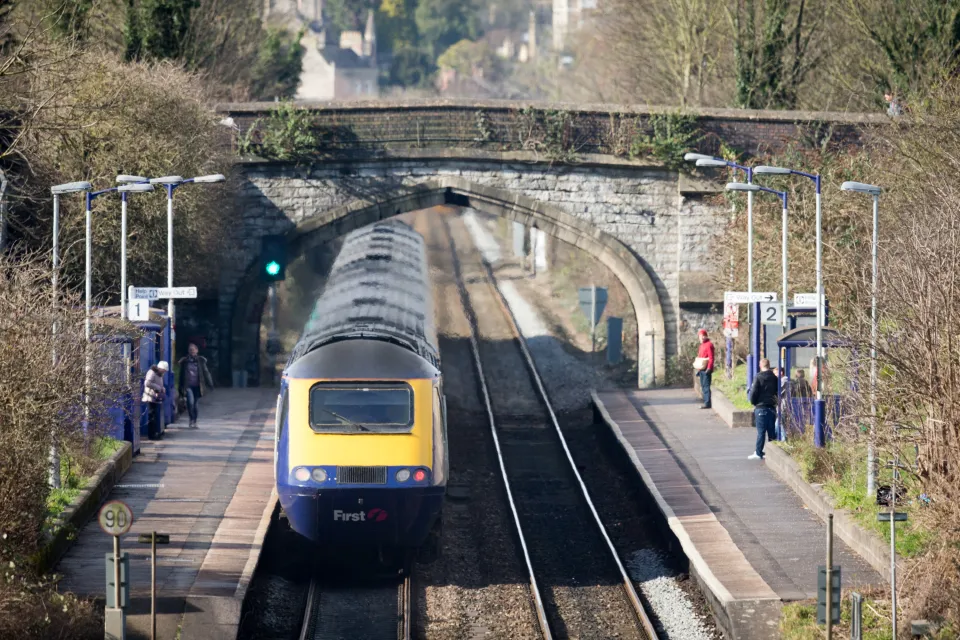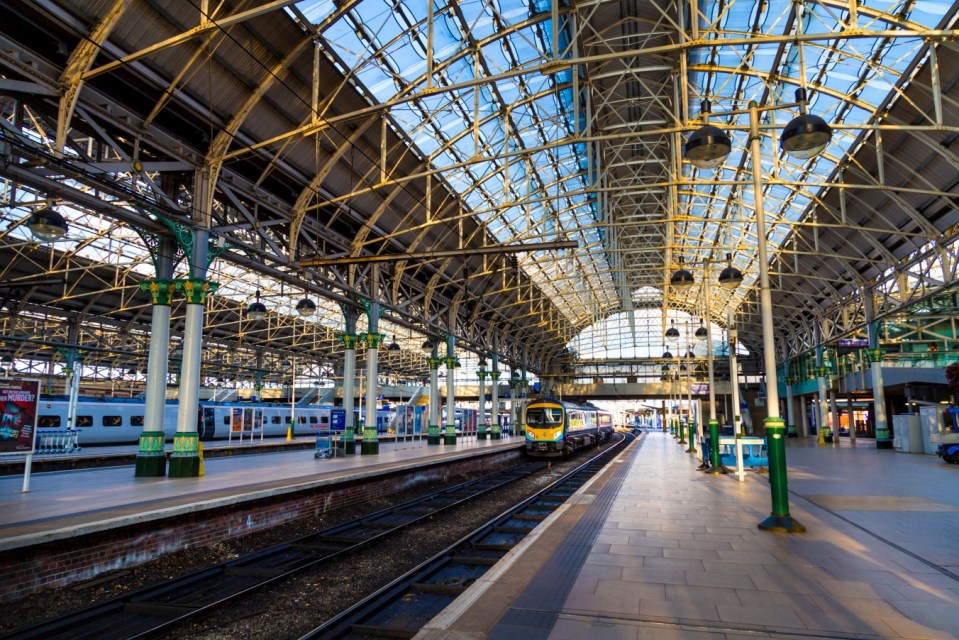
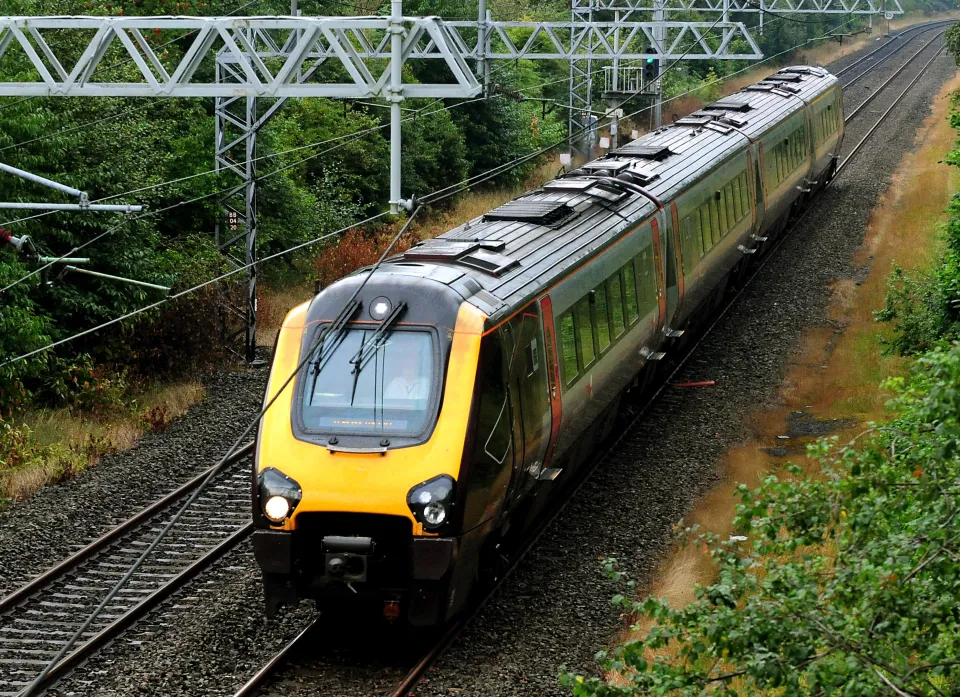
The smallest station in the UK only allows one door to open(Image: AlbertPego via Getty Images)
The UK’s tiniest railway station measures just 15 metres in length and can only accommodate one train door opening at a time. Among the hundreds of stations dotted across Britain linking villages, towns and cities, one holds the record for being the smallest.
Beauly Station in the Scottish Highlands claims this unique distinction. Its platform is considerably shorter than a single train carriage, meaning passengers must be given advance notice if they wish to alight there.
An announcement alerts travellers to plan accordingly if Beauly is their destination.
The station boasts a rich heritage, having first opened its doors in 1862. But by 1960, fierce competition from local bus services forced its closure.
Content cannot be displayed without consent
More than four decades later, following determined campaigns by local residents, it reopened. Since 2002, Beauly Station has featured a modest 10-space car park, bicycle storage and shelter facilities, reports the Express.
Whilst there’s no ticket office, the diminutive station remarkably handles approximately 35,000 passenger journeys annually, according to figures from the Carno Station Action Group. Located roughly 10 miles west of Inverness, it serves ScotRail services.
Trains calling at Beauly travel onwards to Wick, Kyle of Lochalsh, Dingwall, Invergordon, Ardgay and Inverness.
The station wasn’t always this compact, having previously boasted two platforms. Originally constructed for the Inverness to Invergordon line in the 1800s, it featured twin platforms, a passing loop and a goods shed.
During the 1960s, Beauly was amongst numerous stations axed. All stations between Inverness and Dingwall were shut down.
The solitary platform at Beauly standing today was constructed in 2002 when the station reopened. The reinstatement scheme came with a £250,000 price tag.
Class 158 trains normally operate on this line, which extend beyond Beauly’s platform length.
Usually, only the front door of the train opens to allow passengers to board and alight.
Hyundai Rotem CEO Lee Yong-bae (L) poses with Sarah Nichols, deputy city manager of Edmonton, Canada, after signing a $220 million rail vehicle supply contract in Edmonton on Tuesday. Photo courtesy of Hyundai Rotem
SEOUL, Feb. 4 (UPI) — South Korea’s Hyundai Rotem said Wednesday that it has signed a $220 million contract to supply high-floor light rail vehicles to Edmonton, Canada.
Under the agreement, Hyundai Rotem is scheduled to deliver 32 trainsets, each composed of three cars, to operate through the city center at a maximum speed of 50 mph.
The company noted that the fleet would replace aging rolling stock, with safety and passenger comfort as top priorities.
Because of the city’s harsh winter climate, the trains will feature customized designs that can withstand extreme cold and heavy snowfall.
Hyundai Rotem previossly has sign train deals in Canada.
In 2021, the Hyundai Motor Group subsidiary secured a separate contract to provide trams for Edmonton. Deliveries of those vehicles started last August, according to the company.
In 2005, it also struck an agreement to supply automated people movers for Vancouver International Airport as part of preparations for the 2010 Vancouver Winter Olympic Games.
“We will keep strengthening our relationship to contribute to Canada’s efforts to build environmentally friendly rail infrastructure,” Hyundai Rotem said in a statement. “The country is speeding up the replacement of diesel-powered rail vehicles with electric and hydrogen hybrid trains.”
In addition to rail systems, Hyundai Rotem also operates in the defense sector. It is best known for producing the K2 main battle tank for the South Korean military and overseas customers.
Over the past few years, the defense giant exported 180 K2 tanks to Poland. Last year, it finalized a second major contract to ship another 180 tanks to the European country in a deal valued at about $6.5 billion.
A CANNY businesswoman faced with a nightmare train journey from London to Newcastle costing more than £100 flew instead for £30 cheaper — via Italy.
Victoria Williams, 42, had visited friends in the capital.
Sign up for the Travel newsletter
Thank you!
Victoria Williams flew from London to Newcastle via Milan as it was £30 cheaper than a train ticketCredit: NNP
But what should have been a three-hour rail trip home on Sunday was hit by engineering works.
The £110 trek from Kings Cross to Newcastle involved two changes, including a bus replacement, and would take five hours.
Victoria spotted a Ryanair flight from Stansted to Milan, and then Milan to Newcastle, for a total of just £74 — despite travelling 1,400 miles instead of 240.
She took off at 2pm and arrived at Milan Bergamo two-and-a-half hours later.
IBIS Brighton is a modern, seaside hotel that is just a 10 minute walk from the beach.
Here’s everything you need to know – from room rates to dining options at the hotel’s restaurant.
Sign up for the Travel newsletter
Thank you!
ibis Brighton is a great affordable stop to visit the seaside townCredit: booking.comThe rooms are simple but spaciousCredit: booking.com
Where is the Ibis Brighton?
A big selling point of this one is its location.
It’s only a two-minute walk from the railway station, so no arduous lugging of luggage or need for a cab.
Plus, Brighton‘s famous Lanes, Royal Pavilion and Churchill Square shopping centre are just five minutes’ walk away, and it is a ten-minute stroll to the seafront.
What is the hotel like?
You know what you’re getting with Ibis – a clean, minimalist, modern and affordable hotel, all decorated in its trademark red and black.
Free croissants at reception were a nice touch and the staff were helpful and welcoming.
Parking is not provided but there is an NCP car park nearby.
What are the rooms like?
At this 140-room, tenfloor hotel, there is a simple choice of single or double/twin rooms.
We stayed in a top-floor double, which had a great view of the city.
It came with a very generously sized bathroom, with walk-in shower and complimentary toiletries.
Our room also had a flatscreen TV, coffee and tea-making facilities, and free wifi.
Double rooms start from £64.
What is there to eat or drink there?
The restaurant offers classic fare including chicken and chips, pizzas and curries, which were very tasty.
But if you want something more elaborate, you are spoilt for choice in Brighton – from modern Mediterranean eatery Burnt Orange and top gastropub The Ginger Pig, to champagne-and-oysters bar Riddle & Finns.
Plus, the city is a great place for vegans and vegetarians, with Terre A Terre and Food For Friends delivering imaginative and beautifully presented dishes.
What else is there to do at the hotel?
This Ibis branch has a funky and colourful modern reception area, which was designed with the help of a local artist and showcases images created by emerging Brighton talent.
Definitely a place to go back to – it was perfect for a budget city break.
A host of pubs, bars and restaurants are within easy reach, too, so you are right in the heart of the action from the moment you leave the hotel.
Is the hotel family friendly?
Yes, there are plenty of family rooms available.
Is the hotel accessible?
Yes, there are some accessible and wheelchair rooms available.
Looking for a place to stay? For more hotel inspiration click here.
Breakfast is limited but a great affordable optionCredit: booking.com
“In 2008, my wife, my then-7-year-year-old daughter and I were going to take Amtrak from Los Angeles to Chicago, but the Amtrak booking agent screwed the reservations up so badly that we instead decided to take a train from Montreal to Vancouver.
There was some poignancy to this, as my grandmother was a picture bride from Greece. She had grown up on a small Dodecanese island and crossed the Atlantic in the 1920s. For the last leg of her journey, she took a train from Montreal to meet my grandfather (for the first time) in Vancouver. They met on a Saturday and married on a Monday in a Russian Orthodox Church. Experiencing the same journey that my grandmother had taken seemed like a good vacation hook.
Montreal was our point of departure, an enchanting city with fantastic food and charming denizens. After a few days we headed out to Toronto on a commuter-style train. It was perfectly adequate, but not particularly enchanting, and certainly not what my grandmother would have traveled on.
In Toronto, my daughter and I had afternoon tea at the Fairmont Royal York across from the train station, where we embarked on a more picturesque excursion.
We had a triple compartment. It was located in a stainless-steel streamlined car that was built in the 1950s, spot on for our little family of Midcentury Modern enthusiasts. We saw the train snake through Ontario forests, felt it rumble along Canada’s midwestern plains and then head up through the spectacular Canadian Rockies. There were plenty of bear, elk and other wildlife sightings along the way. We ate surprisingly good food like trout and pork chops for dinner. At night we watched train movies like “Murder on the Orient Express.”
We got off in Jasper, the Yellowstone of Canada, filled with glaciers, craggy mountains, waterfalls, rivers and spectacular vistas. We took bike and horseback rides. When I admonished my 7 year-old for complaining too much during a particularly wonderful excursion, she retorted, “Daddy, complaining is my passion!”
After a few days we got back on the train and headed to Vancouver. This was another scenic parade of mountains, rivers and forests.
In Stanley Park I pondered my grandmother’s voyage. Our trip was one of leisure. Hers was a life decision to escape the bleak prospects of an island girl.”
Is there a better sensation for a traveller than when a train speeds out of a tunnel? The sudden flood of light, that howling rush of air. Clearly, it’s not just me who thinks trains are the new (old) planes, with 2025 having seen a 7% rise in UK train travel, and more Europeans than ever looking to hit the rails.
It’s late December, and I’m heading out on a slow-train journey across the historic railways of the Swiss Alps and the Italian lakes. It’s a trip of roughly 1,800 miles (2,900km), crossing five countries, almost entirely by scenic daytime trains.
What is clear from the off is how easy, and slightly disorientating, this type of train travel can be: drifting through stations, across platforms and over borders, it’s hard to believe we’ve hit three countries in less than a day – the UK, France and Switzerland – such is the ease of each passport stop. Gone are the sweaty finger scans of airport border control, replaced by the most polite immigration police I’ve ever encountered. “You’ve travelled a lot,” one says, with a wry smile and a German shepherd, to which I reply “legally”, just to cover my back.
Jonnie Bayfield took the spectacular Gotthard route. Photograph: Jakub Korczyk/Alamy
Outside, the French countryside soon blurs into Swiss hills, all behind a thin veil of white, wintry light. The fields, with their clumps of bare trees, seem suspended in mid-freeze, as though bracing for the full blast to come. As we roll into Zurich, we catch our first glimpse of the milky Alpine peaks.
This is the thrill of train trips: the steadily shifting scenes, the rise and fall of the landscape, leavened like fresh bread. Next morning, we’re greeted with crisp blue skies for our mountain ascent via one of Europe’s most historic train routes, the Matterhorn Gotthard railway. The original line opened in 1882 and was the railroad that changed Europe, slicing a path through inhospitable mountains and isolated villages.
We catch one of the historic trains (the IR46) – keen to avoid anything routed through the Gotthard base tunnel, which bypasses the beauty. In summer, a tourist train – with bigger windows and a bigger price tag – takes the exact same route, famously depicted by JMW Turner and described in awed terms by Goethe. “Here,” he wrote, “it is necessary to submit to nature.” Though it’s the cafe car selling Swiss coffee at eye-watering prices that forces me to revise Goethe: here, it is necessary to submit to inflation.
JMW Turner’s painting of the Devil’s Bridge, St Gotthard Pass. Photograph: Alamy
Phones duly on charge (as is slow-train travel etiquette), we sit back and gawp out of the window for three hours, eating Swiss truffles as the tracks snake the mythic Alps via the famous Gotthard “spirals” – corkscrew tracks built inside the mountains for a steady ascent. It’s the stuff of oil paintings all right – vertiginous gorges, frothing rivers and snow-capped peaks.
At Göschenen, we opt for a lunch stop via a short, even steeper rack-and-pinion route high into the former garrison town of Andermatt, now reinvented as a chic ski retreat. Up here, the snow is thick. Between that and the dark Alpine stone, it’s as though we’ve stepped out into a monochrome photograph. A comforting lunch at the excellent Biselli, along with several glasses of Swiss Ticino red (liquid lunch being another perk of slow-train travel) takes the edge off a dense mist that has crept over the rest of the day’s rail route. Thankfully, Italy soon pushes back, with clear skies andterracotta valley towns, and – just like that – another border is crossed, bringing with it a welcome drop in the cost of a cappuccino (from €5 to €2), enjoyed while skimming the edge of the ice-blue Lake Lugano.
By dusk, we’re at Lake Como. Bags dropped, we catch the last of the light with an easy passeggiata (stroll) round the perimeter of the famous lake, mercifully lacking its high-season crowds. Ornate street lamps line the water’s edge like washed-up pearls and, in the distance, the funicular up to the hillside town of Brunate shines with a string of golden lights that dangle down the slope like lost jewellery. It’s hard to imagine Como any other way.
Next morning, having got into the swing of slow-train transience, we pack up in record time and take coffee at the station. For our final stop, we’re heading in the direction of a much-needed metropolis. Ditching Milan – Italy’s least interesting city – we roll into Turin, one of its most underappreciated.
Stepping off the rickety regional train at Torino Porta Susa, what we find is a vibrant, easygoing student city that appears contentedly trapped in some kind of temporal ragu; a place where 1920s art deco neon signs cling to 18th-century baroque buildings that house vintage shops run by students dressed as if they are in the 1990s.
Miraculously, all this gels, and the student cohort rub along just fine with their more conservative elders, united beneath the impressive porticos that run, unbroken, for more than 18km and are lined with boutiques and historic coffee bars. We round out our first night with an aperitivo at the classic art-school haunt Caffè Università, with its frayed edges and charmingly outmoded daily buffet.
Next morning, Turin’s enviable portfolio of museums and galleries beckon, most free to enter with the Torino card. Here, the time-warp vibes continue within the soaring spire of the 19th-century Mole Antonelliana, now housing the superb Museo Nazionale del Cinema – surely, the only neoclassical building that’s home to an xenomorph egg from the film Alien? Likewise, another repurposed building, the Lingotto complex, boasts an even more outlandish upcycle: the famous Fiat test track on its roof has been reimagined as La Pista 500, a panoramic garden walk, where art installations live alongside the historic skidmarks. Proof that Turin is not interested in simply preserving history, but also evolving.
The cupola and spire of the Mole Antonelliana in Turin. Photograph: Steve Tulley/Alamy
With a chill in the air, we duck in for a perfect meal at the unassuming yet excellent Osteria Rabezzana, part of the Mangébin circuit that promotes Piedmontese cuisine. The brasato al barolo (beef braised in barolo wine) and local agnolotti delplin (beef- and cabbage–stuffedpasta) are excellent. This family-run restaurant and winery opened just after the second world war, and judging by the convivial atmosphere – full of local people on office festive outings – it has served the city well ever since.
Next morning, we are up and out to catch the 7.36 TGV all the way back to Paris. Drifting in and out of sleep, we take in a last glimpse of the Italian Alps. By the time we reach our Parisian pit stop, day is folding in on itself, and soon enough, we’re slumped back on the Eurostar, flanked by bags of clinking wine bottles cushioned by crushed panettone. Homebound and heady, we reluctantly plunge back into the black of the Channel tunnel, leaving all that light behind us.
THE Hilton Manchester Deansgate is the height of convenience for your next stay in Manchester, as well as providing guests with a seamless blend of comfort and sophistication.
Here’s everything you need to know about the hotel, from how much rooms cost to what to eat at the restaurant.
Sign up for the Travel newsletter
Thank you!
Here’s everything to know about Hilton Manchester DeansgateThe hotel has some great views of the cityCredit: booking.comIt id also right by the train stationCredit: booking.com
Where is the Hilton Manchester Deansgate?
The unmissable 23-storey building is just a 3 minute walk from Deansgate Station, providing an easy transport link to Manchester Piccadilly Station.
The hotel is also just a mile from the Manchester arena.
What is the hotel like?
The buzz and noise of Manchester are instantly left behind in the hotel lobby.
The foyer is sleek and modern, with an elegant spiral staircase at its far end. This atmosphere of class and sophistication is reflected throughout the hotel.
Yes, they are rather spacious, with huge, comfy beds, free wifi and a large TV.
My room had an armchair and a desk with a vanity mirror that was ideal for getting ready for a night out.
The ensuite bathroom had a large walk-in shower.
But the best feature of the room by far was the grand floor-to-ceiling windows, offering amazing views of the Manchester skyline.
Double rooms starting from £117 per night. For more information, click here.
What is there to eat and drink there?
Make sure to book a table at the 2 AA Rosette Podium Restaurant, which offers relaxed fine dining.
My starter, the cured salmon, didn’t disappoint. I opted for the potato fried in peanut oil as a main.
The spiralised spud was soaked in a mushroom sauce and topped with nuts. It was totally hearty.
I tried to resist dessert but ordered a lychee sorbet wrapped in a thin layer of chocolate. To this day, I still think about all three dishes.
What else is there to do at the hotel?
Head to Cloud 23 on the hotel’s 23rd floor for a drink with a view. The spicy margarita packs a real punch.
If drinking is less your thing, opt for an afternoon tea at Cloud 23.
You can enjoy a Traditional afternoon tea, a champagne afternoon tea, or even a mocktail afternoon tea, all with a stunning view of the Manchester skyline.
Additionally, why not indulge in the hotel’s health club facilities, featuring a steam room, sauna, indoor pool and fitness centre.
Is the hotel family-friendly?
Yes, the hotel is family friendly, offering amenities such as interconnecting rooms to provide more space for families to allow for the most comfort during their stay.
Is there access for guests with disabilities?
Yes, the hotel is accessible, providing accessible rooms and facilities to its guests.
Looking for a place to stay? For more hotel inspiration click here.
The hotel spa and pool are a must visit tooCredit: booking.com
TRAIN travel is on the up and what could be more glamorous than a train that travels through the desert with stops to stargaze?
A new luxury train experience is being launched in Saudi Arabia called Dream of the Desert.
Sign up for the Travel newsletter
Thank you!
A new train experience is set to be the most glamorous everCredit: Stephan JuillardDream of the Desert will travel across Saudi ArabiaCredit: Stephan Juillard
Across different journeys, the train will travel through breathtaking Saudi landscapes.
Due to launch in late 2026, the rail experience will carry 66 passengers on each journey and travel across a 807 mile network.
The train will feature 14 carriages with 33 suites, two restaurant cars and a traditional Arabic-inspired lounge.
In the two restaurant cars, there will be a rotating menu that celebrates both local and international chefs.
One of the restaurants will focus on Saudi flavours and regional ingredients and the other restaurant will use Italian techniques.
Meals are all included as part of the journey, as is the onboard programme and off-train experiences.
Inside, the Italian-built cabins will boast a design that reflects Saudi traditions, such as carved wood, woven textiles and a desert-inspired colour scheme.
According to Globetrender, the interior designer, Aline Asmar d’Amman, said: “The desert’s palette of earthy tones, and sandy browns are balanced with a zest of lavender, oasis green and burnt oranges, infusing each space with a sense of culture and serenity.
“From the reception lounge to the restaurant, the interiors become a continuous meditation on presence and place in motion.”
So far, five different journeys have been announced, which will run between October and May.
Though, there will be two seasonal routes.
The journeys include a two-day return between Riyadh and Jubbah and a longer route that travels to Al Jouf and AlUla.
Each journey is expected to have its own unique experiences – for example, on the Ramadan Nights itinerary passengers will experience a stargazing stop in Qassim.
Then on the Summer Mirage route, passengers will stay entirely on board during the hotter months.
Also included are meals, but you will have to start saving for a cabinCredit: Stephan JuillardThe dining carts are like a high end restaurant – no trolleys hereCredit: Stephan Juillard
Other experiences include desert camps, guided heritage tours and hosted outdoor meals.
On some routes, accommodation off of the train is included as well.
Prices don’t come cheap though, start at SAR 30,000 (about £6,000) per cabin per night.
The train is being developed by Italy-based Arsenale Group and follows the launch of La Dolce Vita Orient Express in Italy.
The chief executive of the group, Paolo Barletta, also commented that the Dreams of Desert train marks the company’s first overseas luxury train.
IF you’re sick of waiting on busy railway station platforms, then you might want to head to one of the world’s quietest.
Seiryu Miharashi Station in Japan is often called the world’s loneliest train stations, being completely secluded from nearby towns and villages.
Sign up for the Travel newsletter
Thank you!
One of the loneliest train stations in the world gets just one special train a monthCredit: Nishikigawa RailwayThe station is only used as a viewpointCredit: Nishikigawa RailwayTrains stop for around 15 minutes to look over the riverCredit: Nishikigawa Railway
Built in 2019, it cost around 112 million yen (£533,000) at the time.
The station has no entrances or exits, so the only way to get to the station is by train.
But don’t expect any scheduled services, or even any commuter trains.
Trains only stop there on request, as there is nothing else nearby such as houses or roads.
Liverpool Street station in London is set to undergo a huge transformationCredit: Network Rail Property and ACMEBut the upgrades could see up to 10 years of disruption for travellersCredit: Unknown
One architect who has opposed the plans said during a recent campaign meeting that the disruption could last for 10 years.
As part of the planning process, Network Rail has revealed the extent of disruption thatcommuterswould face despite the station remaining open during the works.
There would be an impact on some London Overground routes on Greater Anglia services including those from Chingford, Cheshunt and Enfield Town.
Documents reveal that platforms 1 and 2 which are used by London Overground trains would be closed for up to two years.
Proposals also suggest that later on, the area between platforms 9 and 10 would be needed for the building of a new upper concourse.
But Network Rail says these platforms as well as platforms 16 and 17 would remain open throughout the work.
Services could possibly face ‘thinning’ which is likely to result in overcrowding – particularly at rush hour.
The Stansted Express could possibly face disruption too.
Part of why Liverpool Street is so busy is due to the addition of the Elizabeth Line which was added in 2022.
However this would be unaffected by the construction to the main station.
Plans reveal a new office building above the main concourseCredit: Network Rail Property and ACMEOn top of the new building will be rooftop gardens
If the proposals go ahead, work would start at the beginning of 2029 and last seven years, with the new station completed by mid-2036.
Network Rail’s scheme is set to be considered by theCity of London Corporation’s planning committee on February 10, 2026.
Network Rail recently revealed a new fly-over video to show their proposed plans which has a large concourse area set to ease congestion during busy times.
It includes increased step-free access across rail and underground platforms, eight new lifts and more escalators which will increase from four to ten.
To reduce queues, additional ticket barriers would be added along with more toilet and family facilities on all levels.
On the upper concourse will be more cafes and food outlets and outside will be more green spaces.
Renders also show what the new office building that’s set to be built above the station concourse near the Grade II* listed Andaz Hotel will look like – with rooftop gardens.
Talking about the potential disruption, a spokesperson for Network Rail said to The Standard: “The scheme has been carefully designed and phased to ensure that the station remains open and operational during the works.
“There will be changes to entrances and routes and the only platform closure can be accommodated across the remaining platforms for that short period.
“We are engaging with our transport partners and ensuring customers can continue to use Liverpool Street with as little disruption as possible during the works is as important as the transformation for the future.”
In “Vanished,” premiering Friday on MGM+, Kaley Cuoco plays Alice, an archaeologist, a fact she repeats whenever she’s asked about herself, without particularly seeming like one, apart from passing mentions of Byzantine caves and “one of the earliest examples of Christian worship” to make her sound professional. Sam Claflin plays Tom, who works for a charity organization dealing with Syrian refugees in Jordan; in a flashback we get to see them meet cute on a dusty Jordanian road, where he has a flat tire and no spare. Alice gives him a lift to camp; they banter and flirt after a fashion. He does something heroic within her sight.
They have been long-distance dating for four years, meeting up, as Alice describes it, “in hotels all over the world” where they “actually want to have sex with each other all the time.” Currently they are in Paris (in a $500-a-night joint — I looked it up). But Alice, now working in Albania, has been offered a job as an assistant professor of archaeology at Princeton, which would allow her to settle down with Tom in a school-provided apartment and “build a life that’s mine, not just uncovering other people’s.” After an uncomfortable moment, he signs on, saying, “I love you, Alice Monroe.”
Would you trust him? Despite the script’s insistence otherwise, Cuoco and Claflin have no more chemistry than figures on facing pages in a clothing catalog. Fortunately for the viewer, Tom disappears early from the action — ergo “Vanished.” The couple are traveling by train down to Arles, where another hotel awaits them, when Tom leaves the car to take a call and never returns; nor can he be found anywhere on the train.
This happily makes room for the more interesting Helene (multiple César Award winner Karin Viard), a helpful Frenchwoman who steps in as a translator when Alice attempts to get an officious conductor to open a door to a room he insists is for employees only, and rules are rules. (Is he just being, you know, French, or is something up?)
They meet again when Alice gets off the train not in Arles but Marseilles; after she has no more luck with police inspector Drax (Simon Abkarian), who insists a person isn’t missing until 48 hours have elapsed, than with the conductor, she’ll turn to Helene again, who has the advantage of being an investigative reporter. (She’s also been made diabetic, which has no effect on the action other than halting it now and again so she can give herself, rather dramatically, a quick shot of insulin. Like Drax begging off because he’s late meeting his wife for an Alain Delon double feature, it’s a tacked on bit of business meant to suggest character.) Together they’ll ferret out and follow clues, as Alice comes to realize that it takes more than the occasional gauzy romantic getaway to really know a person, and Helene gets closer to nailing a big story.
Directed by Barnaby Thompson, whose credits are mostly in producing (“Wayne’s World,”“Spice World”), and written by his son, Preston — together they made the 2020 film “Pixie” — the series begins with a flash forward in which Alice flees for her life out an upper-story window, signifying action ahead. And indeed, there will be, leading to a climactic scene I don’t suppose was meant to make me laugh, but did, magnifying as it does one of the confrontational cliches of modern cinema. Many of the series’ notions and plot points (though not that particular one) may be found in the works of Alfred Hitchcock — who, you may remember, made a film called “The Lady Vanishes,” from a train yet — though they have been given new clothes to wear. But where Hitchcock never waited long to show you when a character wasn’t what they seemed, that information is held on here nearly to the end, with some added twists along the way to keep you confused.
Cuoco (unusually brunet here), has been good in many things, most notably her funny, winning turn as Penny across 12 seasons of “The Big Bang Theory” and more recently as the hallucinating alcoholic heroine of the “The Flight Attendant,” but she feels out of joint here. She’s not well served by the pedestrian direction and dialogue, but comes across as a person playing a person, rather than as the person she’s playing. Perhaps by virtue of their accents, the French actors feel more real; France, as usual, looks great.
FROM playing music out loud to putting your feet on the seats – travelling by train in the UK can be an infuriating experience.
But I’ve found a new frustrating trend – reserved carriages for school groups.
Sign up for the Travel newsletter
Thank you!
My latest commuting bugbear – schools reserving whole carriagesCredit: AlamyMore and more I am blocked from sitting in entire carriages
As someone who regularly commutes to London by train, I already have the daily battle of finding a seat, especially one with a table.
But I’ve noticed a recent surge in entire carriages being booked by teachers ahead of taking entire classes into London for the day.
According to Southeastern: “If your group is at least 30 people, we can look into reserving a carriage for you, although it may not always be possible during busier periods.
“Reserved carriages will generally be at the rear of a train, and will be marked with labels in the windows and on the doors stating that the carriage is reserved for your group.
While this may sound grumpy at first – after all, who wants to try and find 30 seats for school kids – my complaint comes with both the timing and space.
My train is regularly a four-carriage train until later in the journey.
Not only that, but as a commuter train, seats cannot be reserved until other train operators, so most seats are find-as-you-get-on.
So with a whole carriage taken up by a school, it ends up making these other busy carriages already a lot more chaotic.
A poor train conductor had the awkward task of kicking everyone already sitting in the carriage before the reserved time out onto the platform as they waited for an attachment
Not only that, but many of them are being booked for the morning commute, often around 9am.
In my opinion, there should be blocked out times to allow weary office-dwellers their last chance of respite before having to be stuck staring at a computer for nine hours.
At least there is one upside – I know which carriage to actively avoid unless I want to be subjected to streams of TikTok videos being played out loud next to me.
However, the Sun’s Head of Travel (Digital) Caroline McGuire backs reserved carriages.
She said: “As a school mum who has been on a lot of class trips in recent years, I think this decision by the train company to reserve an entire carriage for the kids is genius.
“Herding a group of children on and off transport through London – one of the world’s busiest cities – is a nightmare.
“Will you get them all in one carriage? Will one get left behind? Will they all get seats?
“Will the ‘other’ members of the public get annoyed with the exceptionally loud noise that accompanies 30-plus kids on a day out?
“This allows them to make sure all of the children travel safely, while causing minimal issues for other passengers.
“It’s so smart, I’m considering suggesting it to my child’s school next time that I accompany them on a trip.”
The Government has selected the 100-hectare site as one of 12 new towns
Shania King-Soyza and Jennifer Pinto
03:00, 29 Jan 2026
The new town is expected to deliver thousands of new jobs(Image: BBC)
A significant new town could be on the horizon for southeast London, promising up to 15,000 homes plus a fresh Docklands Light Railway extension linking the area straight to the capital’s heart. The Government’s New Towns Taskforce report has named Thamesmead Waterfront among 12 locations across England being considered for new towns aimed at increasing housing supply.
The 100-hectare brownfield site is mainly owned by Peabody, which has partnered with Lendlease and The Crown Estate in a joint venture to reimagine the area as a thriving riverside neighbourhood featuring homes, employment opportunities and public amenities.
Thamesmead has been viewed for years as an area brimming with unrealised promise. Initially designated in the 1960s as a post-war development, earlier proposals were hindered by transport links, environmental constraints and planning difficulties.
In recent years, collaborative work between local authorities, the Mayor of London and Transport for London resulted in the 2020 adoption of the Thamesmead and Abbey Wood Opportunity Area Planning Framework, establishing the Waterfront site as a priority for redevelopment.
Local backing appears strong, with surveys suggesting 85% of residents support the extension. A new DLR extension is viewed as crucial for realising Thamesmead’s full potential.
The SE28 postcode presently lacks any train or tube station, making the proposed connection a vital catalyst for future growth.
Transport for London (TfL) has already pledged financial backing for the scheme, which is predicted to generate a massive economic boost estimated at £15.6 billion when accounting for residential and commercial expansion on both banks of the Thames.
The project is set to produce as many as 30,000 new properties across both sides of the river, spanning Thamesmead and Beckton, establishing thriving new neighbourhoods complete with housing, employment opportunities, and community areas.
John Lewis, executive director Sustainable Places at Peabody, previously said: “It’s great to see the New Towns Taskforce give their vote of confidence in Thamesmead Waterfront.
“This 100-hectare site offers one of the largest and most deliverable opportunities for housing and economic growth in the UK – with the potential to deliver up to 15,000 new homes, thousands of new jobs, a new and expanded town centre, and outstanding open spaces on the southern bank of the River Thames.
“The right transport infrastructure has to be in place to make this scheme a reality. We will continue to work with TfL, partners and stakeholders progress the business case to government for the Docklands Light Railway extension to Thamesmead – a link that would also unlock 10,000 homes north of the river. TfL estimates that this would have a total economic impact of around £15.6 billion.
“With certainty and partnerships in place, delivery at Thamesmead Waterfront can begin within this parliament. We look forward to working with the New Towns Taskforce to secure its future.”
Ed Mayes, executive director, Development, Lendlease, said: “At Thamesmead Waterfront we’re in the process of unlocking one of the UK’s largest regeneration projects, which will deliver thousands of new homes, jobs and community spaces for local people.
“We welcome this announcement from Government and look forward to working with all stakeholders to ensure that Thamesmead Waterfront meets its full potential.”
A Russian drone strike on a passenger train in Ukraine’s northeastern Kharkiv region has killed at least five people. President Volodymyr Zelenskyy denounced the attack as an act of terrorism.
ONE of the UK’s original Victorian seaside towns is set to get even more beautiful – thanks to a multi-million pound train station renovation.
Scarborough Train Station has revealed new images of the £14million upgrade which is set to be completed by March.
Sign up for the Travel newsletter
Thank you!
Work started on upgrading Scarborough train station in 2025Credit: UnknownThe work is set to complete on March 31, 2026Credit: Unknown
Repairs have been underway at the station in the popular seaside town at the cost of £14million.
The project includes a new station roof, drainage system as well as the restoration of the stonework and general preservation of the Grade II-listed building.
Still yet to be finished is the waiting room and ticket office which will also be refurbished.
The changes made are set to ‘enhance passenger experience’ at the station – which has remained open during the works.
One of the most recognisable parts of Scarborough Station is the clock tower which is being restored thanks to a grant of £203,000 from the Railway Heritage Trust.
Ann Shannon, scheme project manager for Network Rail, said: “We’ve been able to repair all four clock faces, fully refurbish the tower and finials, and upgrade the uplighting.
“The finish line is now in sight, and visitors will see a real difference both inside and outside the station, with the beautifully restored clocktower providing the crowning glory.”
Trains from Scarborough generally call at Sheffield and York.
This saw an increase of tourists visiting the town and the addition of bathing ‘machines’ – for people to change intoswimwearwhich arrived in 1735.
With a rising number of holidaymakers, it opened a train station in 1845 to connect Scarborough to York.
Scarborough is well-known for being an incredibly popular destination for families heading to the seaside in the summertime.
The town has two beaches, North Bay Beach and South Bay Beach, and has been welcoming holidaymakers to its shores for over 400 years.
North Bay is the quieter spot along the coast, while South Bay is where you’ll find amusement arcades, cafes and a busy harbour.
Work is still ongoing to restore the clock towerCredit: Network RailThe roof on Scarborough’s train station has been fully repairedCredit: Network Rail
Other seafront attractions include the miniature railway called North Bay Railway, Scarborough Open Air Theatre and Scarborough Sea Life Centre.
The Grand Hotel in Scarborough is one of the seaside town’s most recognisable buildings and sits high above the promenade.
The building was completed in 1867 and at the time was the largest hotel in Europe – and one of the largest in the world.
Despite visiting this city numerous times, I’ve never managed to navigate my way without getting lost – from confusing roads and tram lines to the maze-like train station
This city is my nemesis when it comes to navigating my way around(Image: Getty Images)
With the aid of my phone maps and clear road signs, you’d think I’d be able to comfortably navigate myself around a UK city that I’ve visited countless times. But no matter how many times I drive and walk around Birmingham, I always end up confused and lost, and my recent visit was no different.
As a convenient halfway point to meet my family or friends, and with its Utilita Arena for concerts, I’ve visited the UK’s second-largest city on a number of occasions. I’ve driven into it multiple times, but I’m always left permanently scarred. I mean, have you seen Spaghetti Junction?
I should note that I’m a competent driver and often travel long distances, but driving into Birmingham is no mean feat. I’ve found myself driving back on myself, taking the wrong turning, hitting a dead end, encountering unexpected roadworks, and constantly circling roundabouts – even with the help of Google Maps!
The worst panic of all came when I was driving through the city a few years ago and found myself, alarmingly, driving down the same road as a tram line. My maps had led me in this direction, so I followed, yet the anxiety set in as I saw the tramlines, expecting the trolly-car to come hurtling up into me.
I continued to follow the road with nowhere else to turn, before I thankfully came back to a normal road. Little did I know that this could happen in some areas of Birmingham, as the West Midlands Metro shares some parts of the street with cars.
West Midlands Metro warns of the potential danger. “Please don’t obstruct the tramway – it sounds obvious, but remember we are on fixed rails and can’t get around you,” it pleads.
“Wherever possible, avoid driving directly on the tracks, particularly at speed, because they can become slippery, especially when wet. Please pay attention to highway regulations and remember that trams have different signalling systems to those of cars and other vehicles – even when we are using the same stretch of road.”
Those caught in restricted areas of tram roads could be fined. But it can be confusing for visitors. One resident shared on Facebook: “There are certain parts of the network where you can’t avoid sharing with the trams, Beeston/Chilwell springs to mind, but there are others.”
Another added: “Depends where in the city. There are places where you can drive in the tracks and places where you can’t, normally places where you can’t, you will get stuck.”
Personally, for me, it’s a route I won’t risk again.
Birmingham is sometimes known as the ‘workshop of the world’, thanks to its historical transformation from a medieval market town into a major ‘motor city’. The city prioritised cars as the future of transport, introducing inner ring roads, flyovers, and interchanges to welcome more people into the area and facilitate easier travel.
Yet for me, I vowed never to drive in the city again. And it’s not just me who has failed to navigate the impressive yet complicated roads of Birmingham, including its residents.
One person shared on Facebook: “A lot of drivers in Birmingham are confused by red lights, give way, traffic priority, roundabouts, timed bus lanes, and lane closures.”
Another shared: “I haven’t driven in Birmingham city centre for years now, it’s been confusing for a long time now not just recently.” A third also confessed: “I don’t ever drive in town. Either I would be heading to Scotland or a dead-end street due to getting lost because of the changes.”
From my driving experiences, it meant my recent trip to Birmingham was by train. I wrongly thought it would be the easier option. I boarded the overcrowded, stuffy but thankfully direct train to Birmingham on a Saturday morning, and was relieved to be dodging the traffic and avoid the fear of navigating the roads. But I still found myself lost.
Birmingham New Street Station is large, stretching out across 12 platforms, yet what confused me was the different zones. While they’re clearly labelled and colour-coded for the different platforms, I still found myself lost and confused with various directions and barriers to navigate. Plus, finding the exit was another ordeal for me.
Locating a toilet at the station was even more complicated. I followed the signs, but still had to go back through a barrier with my train ticket. And meeting people at the station is a challenge in itself, requiring me to go through yet another barrier to reach my family, who were in a completely different area.
I must have spent a good 20 minutes wandering around the station, trying to get my bearings and failing miserably. But to my defence, I’ve only boarded the train to Birmingham on a handful of occasions, and it sure beats the roads and extortionate car parking prices.
Only adding to the complications of visiting Birmingham is navigating the roads and paths on foot. In a bid to find my hotel, I turned to my trusty phone maps and followed the route, but I mistakenly risked a shortcut, only to find a boarded-up path and roadworks – Birmingham really doesn’t like shortcuts.
I also encountered a long-winded route to get to dinner that evening, and then on my way back to the station, I was taken through a pedestrian underpass under a roundabout, which was equally confusing. Perhaps my maps were just as confused as I, or maybe it was simply user error.
Whatever the reason, travelling around Birmingham has left me defeated. While it’s a fantastic city with brilliant transport links and a catalogue of restaurants, bars, entertainment venues, and a vibrant nightlife, I have to build up the momentum with every visit, bracing myself for getting lost in the well-connected yet confusing city.
Do you have a travel story to share? Email webtravel@reachplc.com
CONTROVERSIAL new plans are being introduced in a European country which bans kids from certain train carriages.
Rail operator SNCF has unveiled a new ‘Optimum’ carriage on its high-speed Inoui trains where during the week, there’s a ban on children.
Sign up for the Travel newsletter
Thank you!
One French rail company has banned children in its ‘Optimum’ classCredit: AlamyThe carriage also has reclining seats, Wi-Fi and chargersCredit: SNCF
It’s described it as a “high-quality travel experience” and is generally for commuters who want quiet before heading into the office.
Optimum class is a dedicated first class carriage, with reclining seats, individual power outlets, reading lights, free Wi-Fi and winged headrests.
Online details add that “to ensure maximum comfort in the dedicated space, children are not permitted”.
The carriage will always be at the end of the train which will stop passengers from walking through the Optimum dedicated area so it will remain quiet.
The ticket also includes use of TGV INOUI lounges in stations which have high performing Wi-Fi, drinks, an entertainment portal as well as newspapers and magazines.
The Optimum carriage is only available on SNCF’s main Inoui brand of express trains, which run across France and into Germany and Luxembourg.
And the ticket is also only an option from Monday to Friday – during the weekends every carriage is open to passengers of all ages.
And tickets don’t come cheap, A one-way journey from Paris to Lyon taking just over two hours is regularly priced at €56 (£48.63).
But with Optimum tickets it’s €180 (£156.31).
Not everyone is onboard with the decision though.
On the French news outlet, BFM, the French high commissioner for children, Sarah El Hairy, described the child-free ban as “shocking”.
The podcast Les Adultes de demain also said that “a red line has been crossed” and the the company shouldn’t be excluding children.
In its response to criticism, SNCF pointed out that the Optimum carriage forms less than 8 per cent of the total capacity of a TGV InOui train.
The ticket also includes access to TGV INOUI lounges before departureCredit: SNCF
While this may be a first for rail, it isn’t for the skies as some airlines have introduced dedicated child-free zones in recent years.
Corendon Airlines has ‘Only Adult’ zones for travellers over the age of 16 on flights between Amsterdam and Curaçao.
Scoot Airlines has its own ‘Scoot-in-Silence’ section which isisa child-free zone for those 12 and under in the forward economy cabin of Scoot’s Boeing 787 Dreamliner.
And AirAsia Xhas a “Quiet Zone” on certain long-haul flights which is a, child-free area for passengers aged 12 – usually this area is in the first seven rows of economy class.
IndiGo is another airline that has under-12-free zones.