Train tickets

Brand new sleeper train between two huge cities with £43 bed tickets launching this year

European Sleeper is a Dutch-Belgian train operator that runs night train services across Europe, currently connecting major cities such as Berlin, Prague and Amsterdam

Tickets for a new night train that’ll connect major European cities are about to go on sale.

European Sleeper is a Dutch-Belgian train operator that runs night train services across Europe, currently connecting major cities such as Berlin, Prague and Amsterdam. It is poised to launch its third route, a 17-and-a-half-hour journey from Belgian capital Brussels to Italy’s fashion hub Milan.

At first, the night train to Milan will depart from Belgium. However, an extra leg will later be added to and from the Netherlands from 2027. Once fully operational, the train will stop in Cologne in Germany, Zurich in Switzerland and Como in Italy.

It was announced late last week that the train will no longer launch in June as planned. The service will now take to the rails on 9 September. European Sleeper has said track works in Germany during summer 2026 and the certification process for Switzerland – which is a new country for its network – had caused the delay.

READ MORE: 20 iconic UK film sets you can enter for free for one week onlyREAD MORE: ‘We spent a day skiing in the Alps for same price as visiting London’

The European Sleeper is scheduled to depart from Brussels on Monday, Thursday, and Saturday evenings, arriving in Zürich and Milan the following morning.

The return service from Milan will operate on Wednesday, Friday, and Sunday nights. In Switzerland, the train will run via Zürich and the Gotthard Pass for the time being. That means it will not be going via the Simplon Pass, as previously planned. This has proved unfeasible due to track works scheduled through 2027.

“Luckily, the revised route via the Gotthard Pass also brings new opportunities,” a statement from the company read. “A stop in Göschenen provides convenient access to nearby ski resorts, while Lugano and Como offer easy connections to the well-known lakes and surrounding mountain landscapes.”

Tickets for the new route go on sale on 17 March 2026, with budget, classic, comfort standard and comfort plus available. Seats in budget start from €29.99 (£25) per person one way.

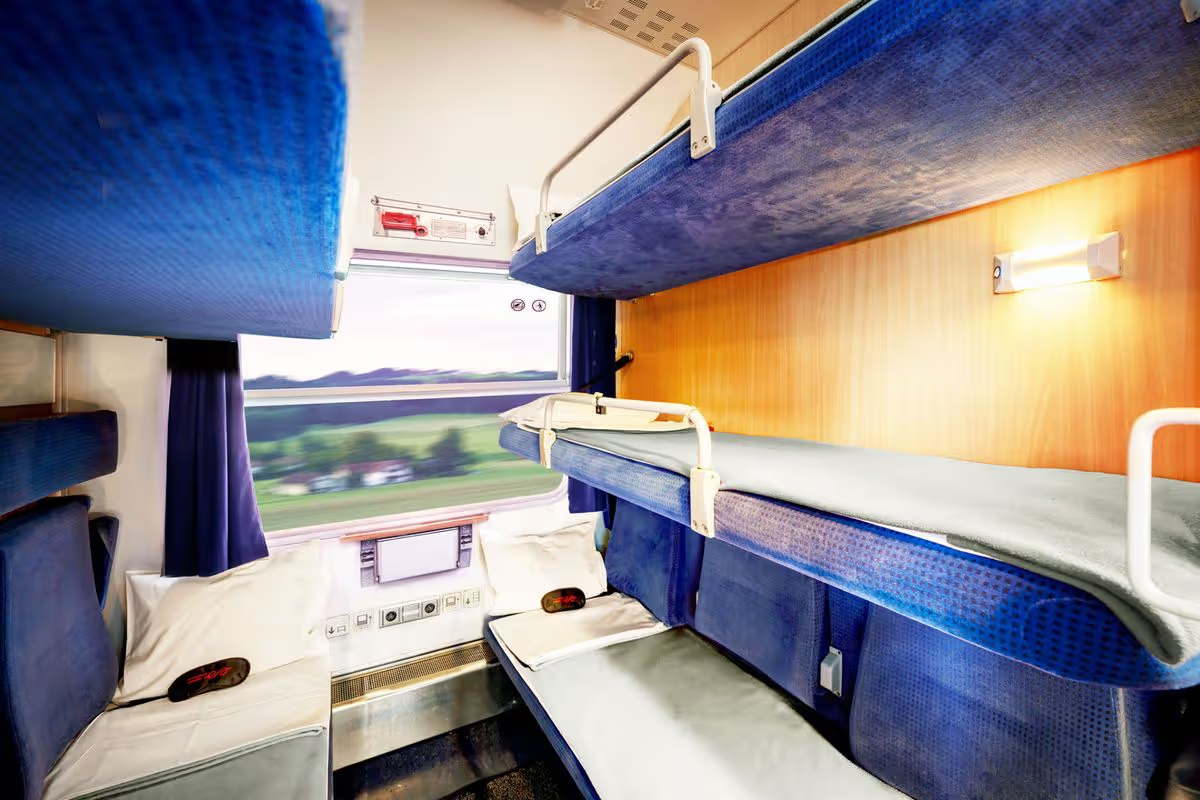
A couchette bed in a classic compartment is available from €49.99 (£43) including ticket, reservation, luggage and bed linen. Those who fancy splashing out a little more can choose comfort standard from €99.99 (£85) or comfort plus from €129.99 (£111) which includes breakfast.

READ MORE: Stunning remote island where you can live for free if hired for one jobREAD MORE: Jet2, Ryanair and easyJet passengers should avoid using ‘colourful suitcase’ this summer

“Although the first departure comes a few months later than originally planned, the new connection marks an important milestone,” the company said in a press release.

European Sleeper already operates a service between Brussels and Prague, and a new connection between Paris and Berlin is launching later this month. Right now, prices begin from €69.99 (£60) for a one-way ticket in a shared compartment.

Nox, a Berlin-based startup, has said it will offer an affordable alternative to short-haul flights, from 2027, with single rooms starting from €79 (£67).
Source link

Full list of people who can now get a third off train fares

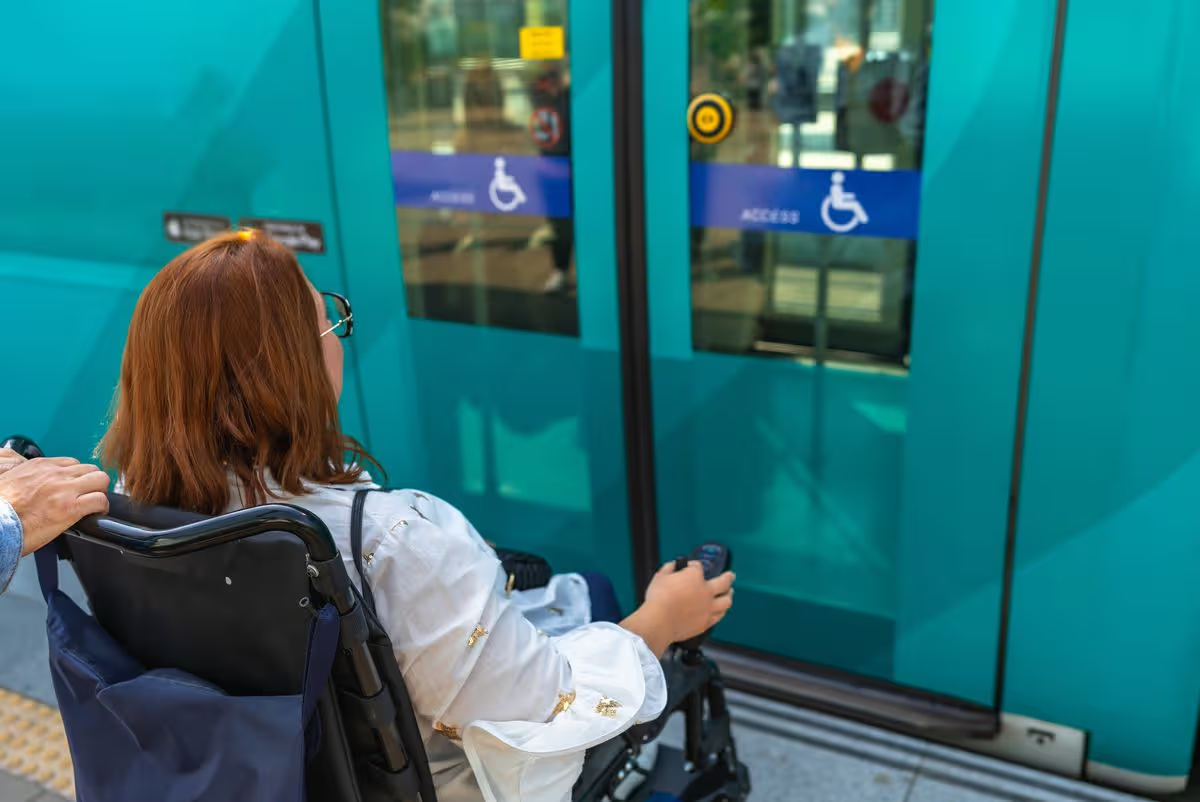
Seven extra groups now qualify for a Disabled Person’s Railcard including blue badge holders

More people will now qualify for reduced-price rail journeys across the UK. Seven additional categories are now eligible for a Disabled Person’s Railcard after the scheme was broadened on March 1.

This railcard grants the holder and an accompanying adult a one-third discount on most train tickets throughout England, Scotland and Wales. It presently costs £20 for one year or £54 for three. Until this month, the Disabled Person’s Railcard had exclusively been available to those claiming particular benefits or living with certain medical conditions. From March 1, it continues to be available to those individuals, but the criteria has been widened.

It now encompasses a wider spectrum of visible and non-visible disabilities. Individuals who now qualify include those who:

  • Have a blue badge
  • Have a disabled person’s bus pass (England, Scotland and Wales)
  • Have a disabled person’s Freedom Pass (London only)
  • Can’t drive on medical grounds
  • Receive Armed Forces Compensation Scheme benefits
  • Receive Industrial Injuries Disablement Benefit for 20 per cent degree of disablement or higher
  • Are without speech

Other people who still qualify

The existing qualifying criteria for a Disabled Person’s Railcard remains valid, which means you can hold a railcard if you:

  • Receive Personal Independence Payments or Adult Disability Payment
  • Receive Disability Living Allowance or Child Disability Payment at either the higher or lower rate for the mobility component, or the higher or middle rate for the care component
  • Have a visual impairment
  • Are registered as deaf or use a hearing aid
  • Have epilepsy and receive drug treatment for it
  • Receive Attendance Allowance, Severe Disablement Allowance or Pension Age Disability Payment
  • Receive war pensioner’s mobility supplement
  • Receive war or service disablement pension for 80 per cent or more disability
  • Buy or lease a vehicle through the Motability scheme

From September 2026 it is intended that the scheme will broaden further allowing even more people to apply for a card. On the Disabled Persons Railcard website, it states: “Phase 2, launching in September 2026, will further extend eligibility to disabilities and conditions that require professional health evidence and more detailed assessment, including some long-term or degenerative medical conditions, and neurodiversity where it has a substantial impact on a person’s ability to travel by train.

“More detailed evidentiary requirements will be made available for this phase closer to implementation in September 2026.”

It is worth noting that if you already hold one of these railcards, the changes won’t affect you. The website states: “These upcoming changes to the eligibility criteria won’t affect your current Railcard or your eligibility. You can continue using your Railcard as usual without any disruption.”

How to apply

You can submit an application online here. You can select a digital card accessible via your mobile, which becomes available within five working days.

Alternatively, you can choose a physical card, which may take up to 15 days to reach you by post. The application process should require no longer than 10 minutes to finish.

Before starting, you must ensure you have the following prepared:

  • A valid debit or credit card
  • Documentary evidence of the Railcard holder’s disability that can be scanned and uploaded as a file
  • A passport-style photograph (it can even be captured with your phone)

You cannot submit an application in person at a railway station but you can apply by post. To do this, you can download a Disabled Persons Railcard application form online or obtain an application form from any staffed station ticket office.

You will then need to fill in and return this application, together with the required evidence of disability and payment to:

National Railcards

PO box 8626

SWADLINCOTE

DE11 1JA

A complete list of what is recognised as documentary evidence of the disability can be located online here.

Source link