EU Enlargement Is Back as Brussels Fast-Tracks Accession
Accession talks accelerate in Brussels as Ukraine, Moldova, Albania, and Montenegro push for faster integration into the EU.
This article appears in the September 2026 issue of Global Finance Magazine.
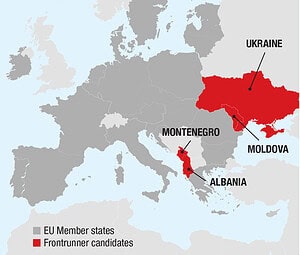
On July 14, the European Union took its most consequential step toward enlargement in two decades by holding four separate accession conferences in a single day and advancing membership talks with Ukraine, Moldova, Albania, and Montenegro.
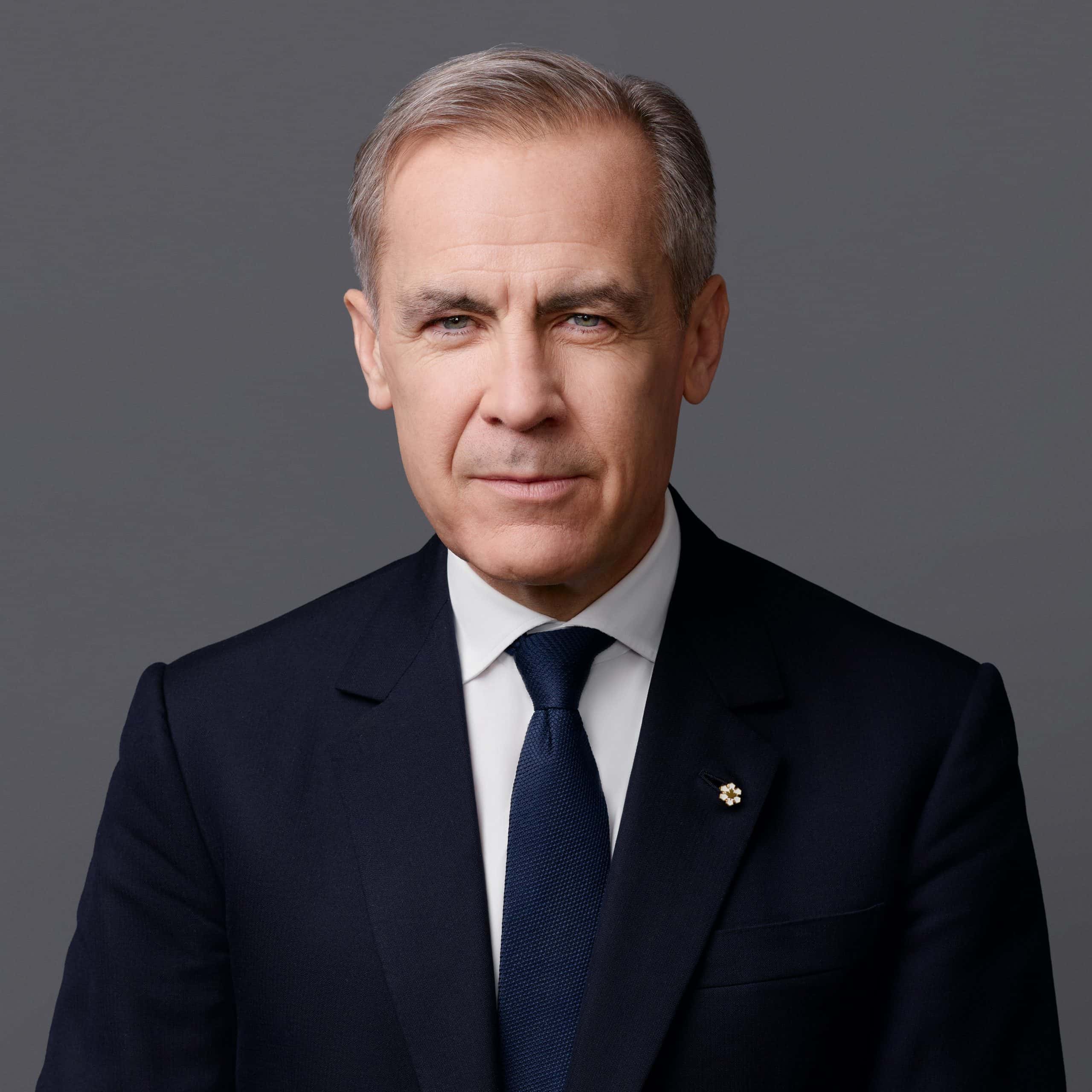
European Commissioner for Enlargement Marta Kos (pictured) called it “Super Tuesday.” The EU’s last great expansion, when 10 mostly Central European states joined in 2004, redrew the continent. Bulgaria and Romania joined in 2007, and Croatia in 2013. After that, the bloc shrank when the U.K. left the EU.
A New Geopolitical Calculus
Traditionally, the EU treated enlargement as a distant reward for would-be members rather than as an active geopolitical strategy. But Russia’s invasion of Ukraine, China’s expanding influence, and uncertainty about the U.S. commitment to Europe and NATO have shifted Brussels’ calculus. Rather than an economic transaction in which new participants open their markets in exchange for development funds, membership is now framed as a mutually beneficial bargain over border defense, energy security, and global leverage.
Still, candidates must meet strict reform benchmarks, and none of the new crop are likely to join before 2028. Negotiations cover 35 policy areas, or chapters, grouped into six clusters ranging from fundamentals and rule of law to the green agenda, and all 27 existing members must approve the opening and closing of each chapter: a veto power that has long paralyzed the process.
European Council President António Costa has urged lifting unanimity requirements for early accession stages, but this would require unanimous agreement, the very hurdle it is meant to remove. A proposal floated by French President Emmanuel Macron and German Chancellor Friedrich Merz would partially sidestep this barrier by giving candidates gradual, milestone-based access to the EU single market — covering goods, services, energy and regulatory standards — years before full membership.
Convergence Before Integration

Regardless, economic convergence is already outpacing political integration. Over the past two decades, the Central and Eastern European economies have grown at more than twice the rate of the EU-15, the wealthier Western and Northern European nations that were members before the big Eastern enlargement in 2004.
Some of those newcomers, according to Eurostat data, have since become the bloc’s growth engine. In 2025, the Czech Republic expanded by 2.6%, Latvia by 2.1%, and Lithuania by 2.9%. Poland, the frontrunner, grew by 3.6% and now ranks sixth in the EU by nominal gross domestic product, accounting for 4.9% of its total output, ahead of countries like Sweden, Ireland, and Austria.
It is not just EU officials betting that a second eastward enlargement will strengthen the bloc. Investors have taken notice, too. According to a report by accounting firm Forvis Mazars, mergers and acquisitions in the region hit a record €42.5 billion in 2025, up 36% year-on-year.
Risks loom, however.
Demographic decline, labor shortages, and exposure to geopolitical shocks could undercut the push toward enlargement. Enlargement also carries political costs, including further impeding an already sluggish decision-making process and straining a common budget under pressure from rising defense spending. Ultimately, expansion has come to seem a matter not of if but when. The eastern frontier region is no longer just the EU’s lower-cost manufacturing base, but where the bloc’s defense, industrial policy, and future growth will be decided.
Luca Ventura is a contributing writer based in Italy.