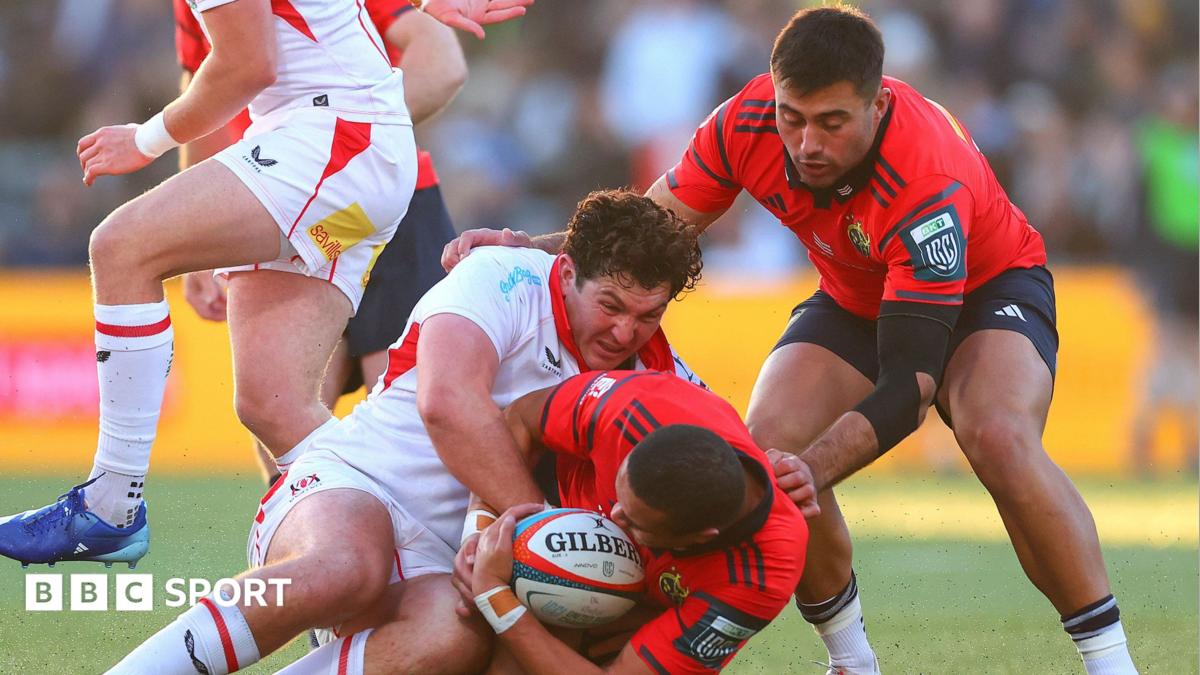
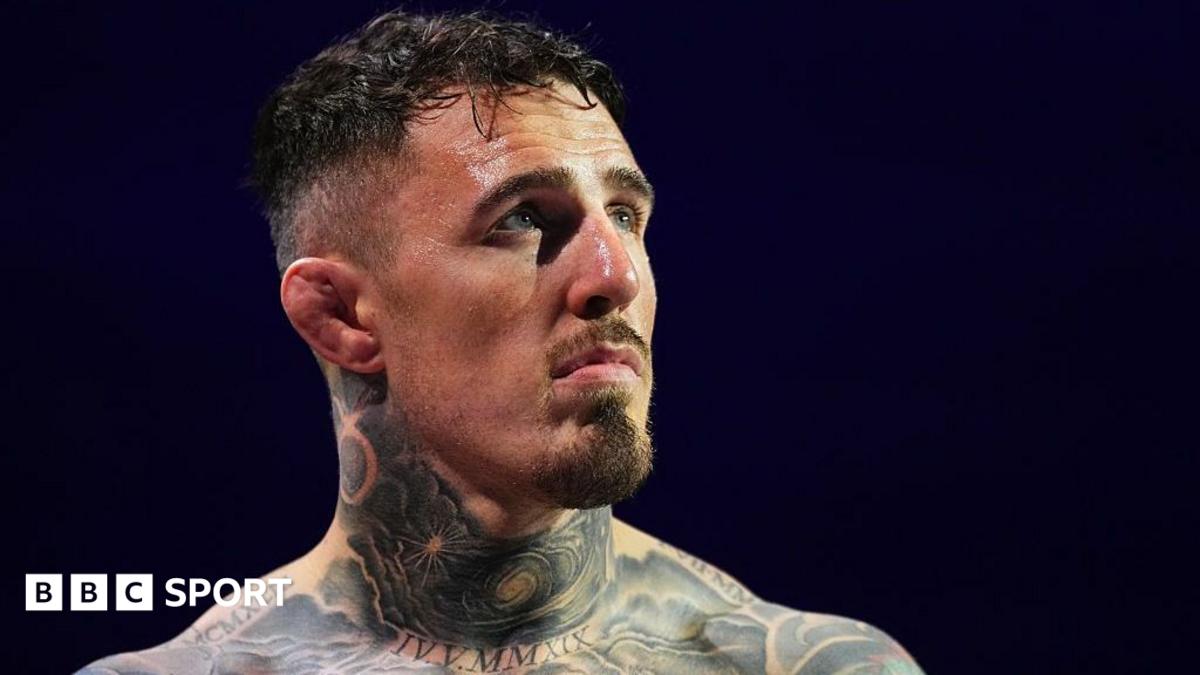
Ulster hooker Tom Stewart admits “I don’t think I’ve come to the party well enough” and says the squad must have “honest conversations” after an underwhelming start to the season.
Successive draws with Glasgow and Munster after a loss to Edinburgh leaves Ulster winless in the United Rugby Championship before starting their Challenge Cup campaign away to Zebre next week.
Head coach Richie Murphy said he was “bitterly disappointed” after his side were forced to fight back for a 26-26 draw with Munster, while Stewart questioned his own contributions to the game in Belfast.
“From a personal point of view, I’m not happy with my performances about it. I don’t think I’ve come to the party well enough, I don’t know if it’s my preparation or the mental side to the game,” said Stewart, who captained Ulster against Glasgow and Munster in the injured Iain Henderson’s absence.
“It’s something I really need to have a look at and plan better or whatever it is, but I need to start understanding why that is the case.”
Stewart, who marked his seventh Ireland cap with a try against Japan over the summer, added: “From my own point of view, I need to properly watch back my intent in some of the collisions and my actual process around what I’m doing.
“Then I think we need to have some honest conversations this week within ourselves, with the team, players and coaches to see where we’re at.”
Ulster travel to Zebre on Saturday (15:15 BST) before travelling to South Africa for difficult URC assignments against the Bulls and Stormers.
For Stewart, Ulster “can’t shy away” from the shortcomings in their performances as they strive to kick-start their season.
“It’s hard, when you have a game like that you don’t want to watch it back,” added the 25-year-old.
“You don’t want to review yourself properly, you don’t want to look at the hard stuff, the nitty-gritty that you haven’t done well, but that’s where you find the fixes, the learnings.
“The hardest stuff you watch will be the most impactful stuff going forward.”
Tom Pidcock wanted to “stop racing” after saying that two of his team-mates were hit by a police vehicle travelling the wrong way down the course at the Tre Valli Varesine in Italy.
Pidcock finished second at the one-day race in Varese but was left “mad” after Pinarello-Q36.5 team-mates Marcel Camprubi and Thomas Gloag were knocked off their bikes with six laps of the finishing circuit to go.
Spain’s Camprubi was able to continue in the race but Pidcock’s fellow Briton Gloag stopped and required stitches on his knee.
“First of all, I wanted to stop the race, stop racing myself,” Pidcock told Eurosport after the race, which was won by Belgium’s Jarno Widar in a sprint finish.
“I was mad. I had guys all riding in front of me, for me, and then two of them are on the floor.
“This shouldn’t happen. But we continued and got back into the race and I’m happy that I could be on the podium.”
BBC Sport has contacted race organisers and local police for comment.
In August, two-time Olympic mountain bike champion Pidcock won his second cross-country world title at the Mountain Bike World Championships.
He dedicated that win to British cyclist Finlay Tarling, 19, who died on 14 August during the Volta a Portugal following a high-speed collision with a van that had strayed on to the closed road.
Camprubi posted a picture of a broken bike on Instagram Stories, with a caption that read: “Sad that you have to risk your life to race, one month after a tragic accident.”
TOM CRUISE has built a career on cheating death, but even the veteran star couldn’t escape a crash landing at the weekend.
The Hollywood heavyweight is facing one of the most humiliating moments of his career after Digger, his first film since the last Mission: Impossible, bombed with critics and at the box office.
Tom Cruise’s box office disaster Digger is the latest setback for the Hollywood starCredit: AlamyA heavily made-up Cruise as a corrupt tycoon in DiggerCredit: Alamy
And it comes at the end of a bruising year for the star, from the collapse of his whirlwind romance with actress Ana de Armas to his daughter Suri dropping his surname.
The satirical black comedy took just £15million globally in its opening weekend, and industry experts fear it could lose as much as £100million.
Sign up for the Showbiz newsletter
Thank you!
It is one of the weakest debuts of Cruise’s career — a bitter result for a film billed to be the start of his next big chapter, as the ageing star looks to slow down the stunts and be taken seriously.
Instead, his bold attempt to prove he could move beyond the action-man image has been met with a resounding thumbs down.
It was meant to be a daring creative swing for a star who has spent decades being synonymous with blockbuster action.
But audiences appear to just want the old Tom back.
Ana, Tom and her dogs arriving for a London night out to celebrate her birthday in April this yearCredit: BackGridCruise’s ex Ana de Armas has a new love and plenty of top rolesCredit: Getty
The film’s £125million production budget, coupled with an estimated £75million marketing spend, means its disappointing box-office debut is unlikely to justify its hefty price tag.
Reviews were so divisive that Warner Bros reportedly resorted to running “decide for yourself” adverts in the run-up to release, after estimates were repeatedly revised down.
One fan summarised it as: “Tom Cruise’s Digger is a disaster — I couldn’t wait for it to be over.”
For Cruise, who has been box office gold since Risky Business and Top Gun in the Eighties, the figures will make uncomfortable reading.
His last major disappointment was 2017’s The Mummy, but since then he has enjoyed one of the biggest career resurgences in Hollywood.
Top Gun: Maverick became a global phenomenon, while Mission: Impossible kept him at the top of the action game well into his 60s.
Digger was supposed to prove there was another side to him. Instead, it marks his lowest box office opening in nearly 20 years.
Though Cruise certainly did everything he could to sell it.
Tom’s estranged daughter Suri ditched his surname ‘Cruise’Credit: SplashTom back in the cockpit for 2022’s smash hit sequel Top Gun: MaverickCredit: Alamy
Defending the film after the mixed reviews, Cruise told a screening audience: “OK, the door’s open. Now I want to push it again.”
He added: “This film is handmade. People want to see real things.”
But the response has left the awards buzz that once surrounded Digger fading fast.
Cruise had been tipped to land his first competitive Oscar after years of nominations, but those hopes now look considerably more distant.
It could also force the Hollywood veteran to reconsider whether audiences really want to see him outside of blockbuster action. There is already a clear indication of where he may go next.
Rather than continuing to take creative risks, Cruise is returning to familiar territory with a sequel to 1990’s Days Of Thunder, co-starring Anne Hathaway, while Top Gun 3 is also in the works, with him reprising his role as Maverick.
For a star whose career has been built on refusing to play it safe, it could be that the safest option is exactly what he needs.
Speaking to GQ, Cruise said: “Life, I’m coming right at it. It’s coming at me and I’m coming right at it.”
He certainly was not wrong about the second part.
Because Digger is far from the only thing to have knocked him off his stride this year.
Cruise in action for the final Mission: Impossible movieCredit: AlamyThe star with William, Kate and Becks at the Digger premiere in LondonCredit: Getty
In July, it emerged that his 20-year-old daughter Suri had seemingly severed her final tie with her famous father, after more than a decade of estrangement.
The college student has dropped the Cruise surname entirely, opting to go by Suri Noelle, her mother Katie Holmes’s middle name.
She publicly registered to vote in Pennsylvania, where she is studying, under the new moniker.
Suri was born in April 2006, and her parents tied the knot six months later.
They divorced in 2012 over irreconcilable differences, and the pair’s last public appearance together was that same year.
Insiders have since claimed Cruise and Suri have not seen one another privately in more than a decade.
Katie, meanwhile, has been enjoying a summer of love after making things official with a new man on her arm — artist Jason Bard Yarmosky — who is said to have helped her move on from the “trauma” of her marriage to Tom. But Tom’s love life has been rather more bruising.
Last October, Cruise suffered an even more public heartbreak, when The Sun exclusively revealed he had split from Ana de Armas after less than nine months together.
The star was first linked to the Cuban-born actress, 37, in February 2025, and they went public in the spring after being pictured holding hands during a break in Vermont.
Two months later, Tom whisked Ana to Madrid on his private jet, before they flew to London by helicopter for her 37th birthday, sharing selfies and describing it as “a fun night out on the town”.
But a source close to the couple told The Sun at the time: “Tom and Ana had a good time together but their time as a couple has run its course.
“They are going to remain good friends but they aren’t dating any more.
“The spark had gone between them but they still love each other’s company and they’ve both been really adult about it.”
A year on, the contrast between the former couple could hardly be starker. While Cruise licks his wounds, Ana appears to have moved on in spectacular fashion.
She has been linked to Venezuelan musician Beto Montenegro after the pair were spotted dancing at a concert in Madrid and sharing kisses on a romantic getaway to Spain’s Formentera island.
Before that, she was briefly pictured with venture capitalist Marcelo Valente in Los Angeles following the Cruise split.
A source said of Beto: “He’s an extremely charming and sophisticated guy, and he checks all the boxes Ana’s looking for right now.
“It’s an exclusive relationship, and they’ve had a pretty magical summer.”
Ana has also been getting back in front of the cameras, with a strong slate of projects, including espionage thriller Impunity.
And just this week she was pictured rubbing shoulders with an A-list crowd at a private Louis Vuitton party in Paris, joining Emma Stone and Chloe Grace Moretz.
She looked every inch the Hollywood star in a long-sleeved blouse, carrying a Louis Vuitton box clutch with gold trim.
There is still some unfinished business between the exes. Their joint project, Deeper, has been put on hold because of budget issues.
It all leaves Cruise facing a very different end to the year than the one he had planned.
He has, of course, bounced back from career setbacks before, and with Top Gun 3 and Days Of Thunder 2 on the way, he will be hoping a return to familiar territory can restore his reputation.
But for now, the man who has spent a lifetime defying gravity is facing being brought back down to earth.
The Tom Cruise-led movie “Digger” cratered at the box office this weekend, limping to a fifth-place finish with $8 million in the U.S. and Canada in its theatrical debut.
The Warner Bros. film was expected to do poorly after polarizing reviews from critics and a challenging marketing campaign. The film had a production budget of about $125 million. Worldwide, the film brought in just $20 million in its opening weekend, meaning the studio will probably post a significant loss from the release.
A representative of Warner Bros. did not respond to a request for comment.
Amazon MGM Studios’ “Verity,” starring Anne Hathaway, easily lapped “Digger,” coming in first at the domestic box office with a haul of $32.6 million. The film made $62.5 million worldwide.
The underwhelming performance from “Digger” marks a rare misfire from the usually bankable Cruise and adds to a difficult year for Warner Bros.’ film studio, whose lineup of movies has struggled to connect with audiences. That’s in stark contrast to 2025, when the studio ran up a string of hits such as “Sinners” and “Weapons.”
It also comes as Paramount Skydance’s $111-billion acquisition of Warner Bros. Discovery is set to close Tuesday. As part of the merger, there have already been several management shake-ups, including the exit of Warner Bros. film chiefs Pam Abdy and Michael De Luca. The duo oversaw the studio for the last four years, providing a mixed bag of hits and misses for the Burbank-based studio.
The deal is expected to dramatically reshape Hollywood by combining two of the major studios, a move that is expected to lead to massive layoffs. Paramount has already told Wall Street that it’s planning $6 billion in cost cuts.
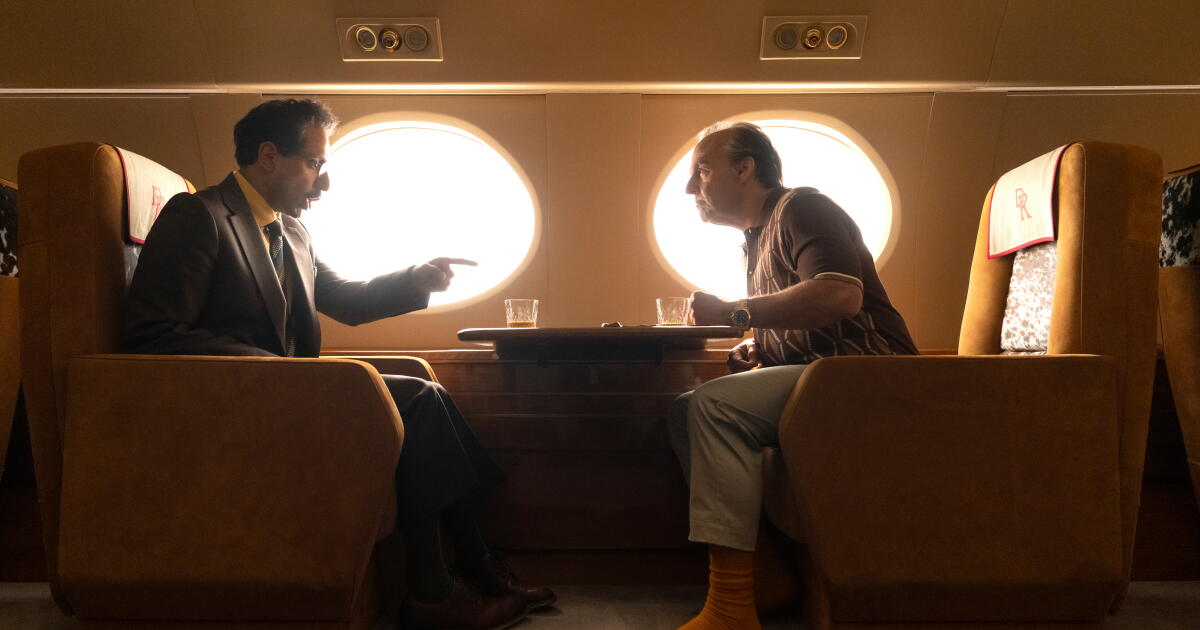
“Digger” is the result of nine years of work, as director Alejandro González Iñárritu started on the project before the pandemic. The film is a satire about an impending climate change apocalypse that’s triggered by the drilling operations of oil tycoon Digger Rockwell, played by Cruise, who looks nearly unrecognizable clad in prosthetics and graying hair.
In a post-screening, onstage discussion last week, Cruise noted the carefully handcrafted props and sets.
“Everything is practical,” he said. “It was so beautiful, and I just have to say … AI can’t do that.”
Sony Pictures’ “Resident Evil” came in second at the box office this weekend with $12.5 million in its third weekend in theaters. Paramount’s “Heart of the Beast” ($11 million) and A24’s “Primetime” ($8 million) ranked third and fourth.
As of last week, Warner Bros.’ domestic box-office haul this year was $437.7 million, representing about 5.6% of the total theatrical revenue in the U.S. and Canada, according to Rentrak data.
Last year, Warner Bros.’ total at this time was $1.8 billion, aided by back-to-back successes starting with “A Minecraft Movie,” which went on to become the highest-grossing movie at the domestic box office during that calendar year.
The studio does not have any film in the top 20 of domestic box-office earners this year, with Emerald Fennell’s adaptation of “Wuthering Heights” ranking at 21 with $84 million. Bets on films such as Maggie Gyllenhaal’s “The Bride!” cratered, while DC Studios’ “Supergirl” misfired.
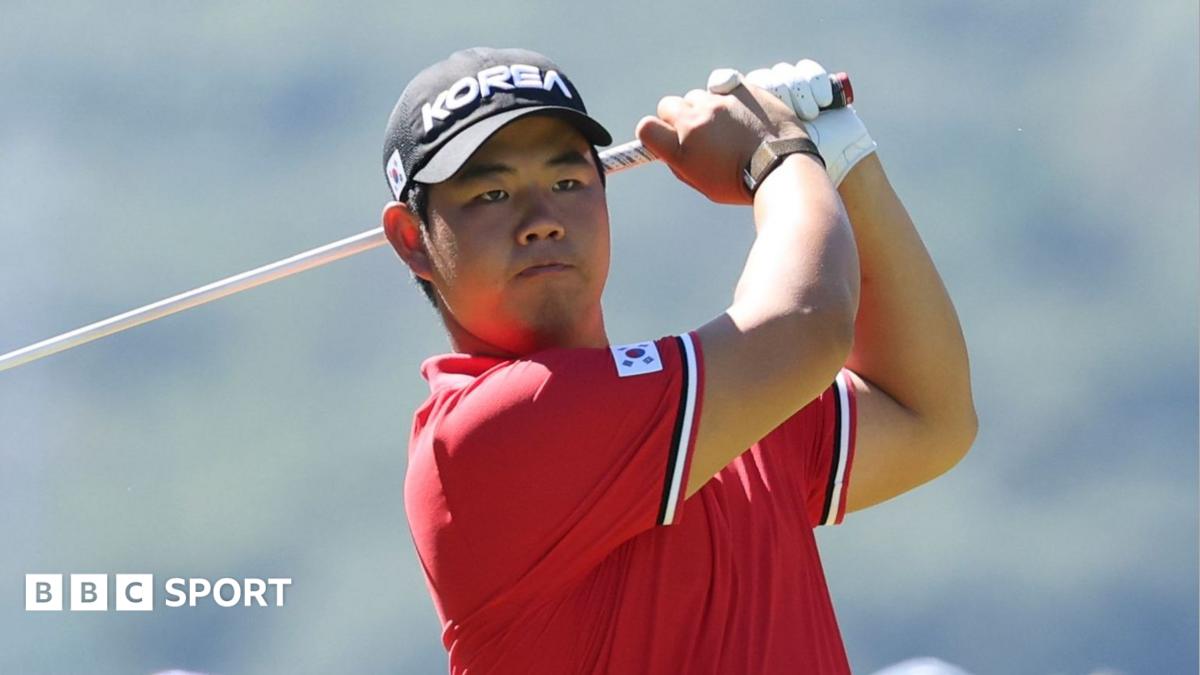
Tom Kim topped the men’s leaderboard after the third round at the Asian Games as he seeks a gold medal that will significantly reduce the time he is required to spend in South Korea’s military.
Having started two shots off the lead, Kim hit a brilliant five-under 65 that included five birdies and an eagle, taking him a stroke clear at 12 under par with one round to play.
Able-bodied South Korean males are usually required to undertake between 18 and 21 months of military service before the age of 28.
However the government rewards Asian Games gold medals and Olympic medals of any colour with a service exemption bar basic training, which lasts less than a month.
Athletes who have previously secured the exemption include former Tottenham footballer Son Heung-min, who served for only three weeks in 2020 having won the Asian Games two years earlier.
Kim hurried from the Presidents Cup in the United States to tee off at the Kasugai Country Club in Japan, having to manage on just six hours of sleep and a 14-hour time difference.
The 24-year-old previously came close to securing an exemption at the Paris Olympics in 2024, finishing day one tied for third before ultimately finishing eighth.
Having looked visibly emotional after that result, Kim is now chasing another chance to stop military service stalling his promising career, which has already featured an Asian Tour order of merit crown and four PGA Tour titles.
The world number 32’s lead would have been larger had he not missed birdie putts on the 14th and 18th holes, but he stands clear of Taiwan’s Wang Wei-hsuan, who had led overnight, and Japan’s Kazuki Higa going into day four.
The men’s team event title offers another route for military exemption, with South Korea also topping the men’s leaderboard by one stroke.
Gold in that event will exempt Tom Kim and SH Kim, 28, regardless of the individual result, but it would come too late for the third team member, Mun Do-yeob, who has already served.
“I think about it. It’s so tough,” SH Kim said of the possibility of military service.
“I am 100% nervous, for sure. It’s a lot of pressure. I could stay on the PGA Tour (with a gold). That’s my goal.”
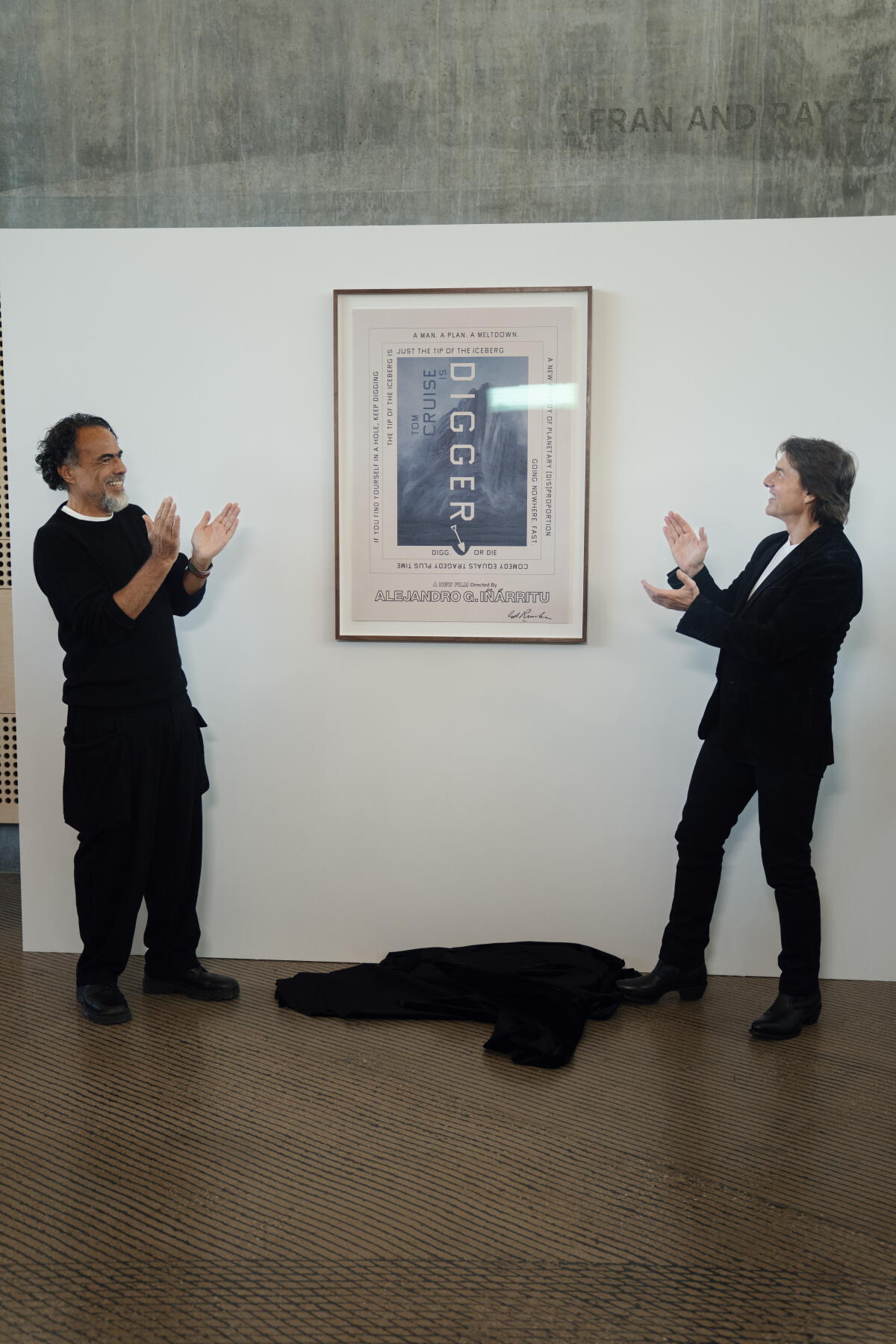
Academy Award-winning filmmaker Alejandro González Iñárritu and Pop artist Ed Ruscha have a long history of admiring each other’s work. Twenty-four years ago, a nervous Iñárritu visited Ruscha’s Venice studio to offer him the role of the gynecologist in “21 Grams.” They needed a doctor with noble features and blue, believable eyes. That plan didn’t pan out, schedule-wise, but the filmmaker and the artist finally found a way to collaborate.
The result — a Ruscha-designed poster for Iñárritu’s new film “Digger,” starring Tom Cruise — was unveiled Sunday at an intimate brunch at the Los Angeles County Museum of Art, attended by Iñárritu, Ruscha and Cruise, as well as “Digger” actors John Goodman, Jesse Plemons, Michael Stuhlbarg and Ross Hatt.
Iñárritu and Cruise laughed as they made a clumsy attempt at a countdown before whipping aside a black velvet curtain to reveal the poster for the first time: a very Ruscha, text-heavy work on a slate gray background with a beige border. A looming ice shelf in the background is surrounded by phrases including, “A Man. A Plan. A Meltdown,” and “Comedy equals tragedy plus time.”
Filmmaker Alejandro Iñárritu and “Digger” star Tom Cruise unveil Ed Ruscha’s new poster for the film. (They just pulled off the black velvet curtain on the floor below.)
(Kevin Garrison)
“Well, the movie blew my hair back,” Ruscha said at the unveiling brunch inside LACMA’s new (still unopened) restaurant, with LACMA Director and Chief Executive Michael Govan by his side. “And not only that, it parted it down the middle. It has since grown back.”
The crowd laughed knowingly. “Digger,” which opens Friday, is a satirical black comedy that follows oil tycoon Digger Rockwell as one of his drilling rigs in Greenland explodes, dislodging an ice shelf that floats away to cause a global disaster. As a dark parable for the dangers of climate change, the film has already proved polarizing, with early reviews coming in mixed.
Ruscha noted that he first saw “Digger” at a screening about six months ago, alongside Govan. “I knew I had seen an epic production, an epic product from an epic producer,” Ruscha said. “So I jumped at the idea of doing the poster. And I thought about it, and I think about this movie, and it reminded me of a kaleidoscope. It’s got so many running-around ideas. It was kaleidoscopic in its message, and its content and its humor.”
Ruscha turned his attention to Iñárritu, “It’s got something to offer to the world, and I thank you for that.”
The filmmaker loved the poster, and the fact that the ice shelf sat front and center.
From left to right — “Digger” actors John Goodman and Jesse Plemons, filmmaker Alejandro G. Iñárritu, artist Ed Ruscha, actor Tom Cruise, LACMA director Michael Govan and actors Ross Hatt and Michael Stuhlbarg — pose with Ruscha’s new poster for the film.
(David Jon)
“The billing is nature: We are human beings, we are in a war against nature,” Iñárritu said — describing what he feels the poster relays — in a phone interview from Mexico City a day before the event. “We think that we are different from nature. So nature, in a way, becomes our enemy. We are fighting a fight against nature, and the enemy is an ice shelf going to Europe. And he just put [that] in the center of it, [like] a disaster movie, which is very clever, as he always is.”
“Those decisions that he made with a very prominent element in a simple way, with one or two words, it just says so much with so little,” Iñárritu continued. “And then he [put] some lines around [it], very Ruscha, that in a way convey the spine or the character itself.”
The director had the same feelings two years ago, at LACMA’s Ruscha retrospective. He said so much with so little, Iñárritu thought, and that “less is more” thinking could hold so much power in a film poster.
Iñárritu, too, has been exhibited at LACMA: earlier this year, with the film installation “Sueño Perro,” a resurrection of lost footage from “Amores Perros;” and in 2017-2018, with the virtual reality installation “CARNE y ARENA,” which explored the human condition of immigrants and refugees.
The director’s collaboration with Ruscha is proof of concept for LACMA’s annual Art + Film gala, entering its 15th year, which seeks to highlight and strengthen the connections between film and visual art by bringing the two communities together at a splashy party — often creating lasting connections between the two groups.
Both Ruscha and Iñárritu have been honored at the gala, the former in 2012 (with Stanley Kubrick) and the latter in 2015 (with James Turrell). “This is a beautiful encounter of art and film,” Govan said at the unveiling.
“Digger” has evolved over nine years, Iñárritu said. It’s been a long journey of taking note of current events, including where the world is going, as well as people’s obsessions and fears.
“The film is a love letter for the young generation,” Iñárritu said. “I think it’s kind of a warning, or a wake-up call. But you can have fun about it, because it’s the only way to — humor allows us to have space and recognize ourselves in that absurdity. So I feel that it’s a human, urgent, now film.”
The Graham Norton Show returns tonight and Hollywood actor Tom Cruise addresses Prince William and Kate Middleton attending the premiere of his new movie, Digger
The Prince and Princess of Wales attended the world premiere of Tom Cruise’s movie Differ earlier this week(Image: Getty Images for Warner Bros.)
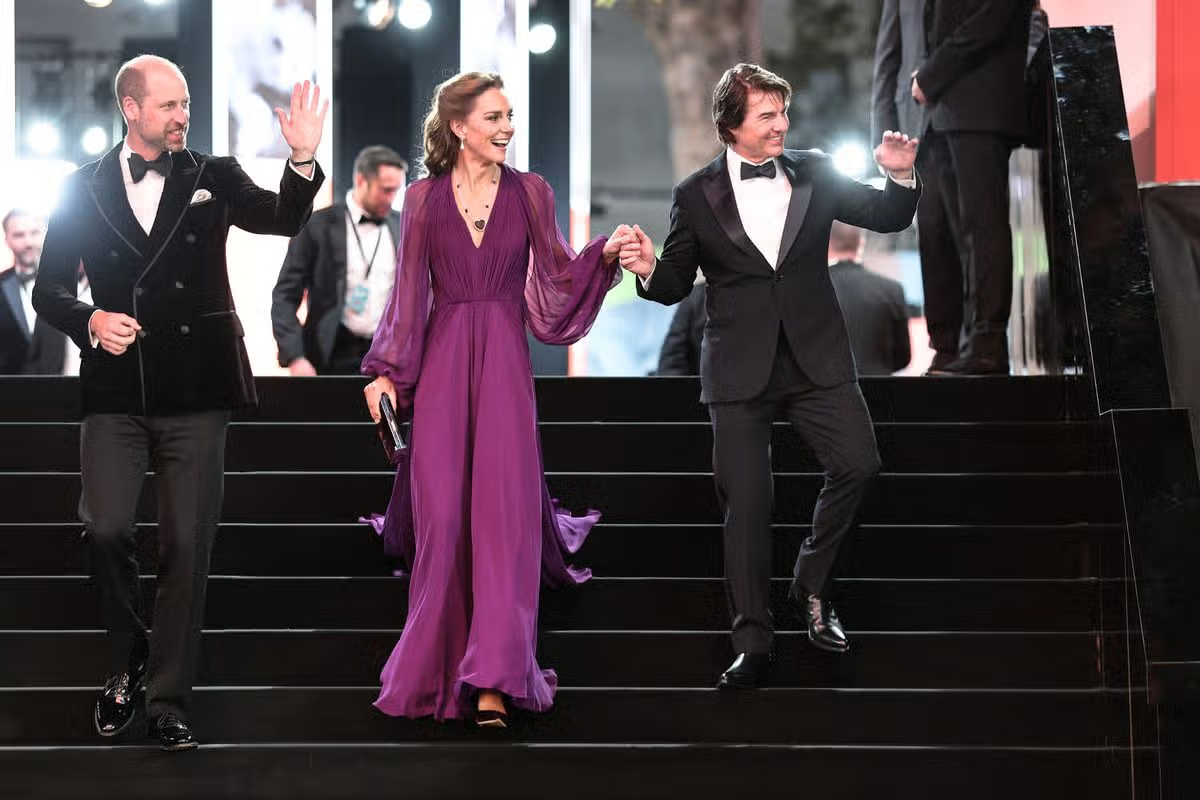
Tom Cruise has opened up about being joined by the Prince and Princess of Wales on the red carpet at his movie premiere.
Prince William and Kate Middleton attended Tuesday’s (September 22) premiere of Digger, which stars the 64-year-old Hollywood actor. The trio were snapped at the star-studded event with Tom pictured holding Kate’s hand as her husband William wove to fans in the crowd.
Tom is one of the guests of The Graham Norton Show which returned tonight (Friday, September 25) for a new series alongside Oscar-nominated actor Florence Pugh, comedian and actor Lolly Adefope, top comic John Bishop and singer-songwriter Emeli Sandé.
When asked by host Graham about the Royal couple attending the premiere, Tom gushed: “They are amazing – very charismatic. I had such a good time.”
The Mission Impossible star also explained the extensive transformation he had to undergo using prosthetics for Digger, saying: “The makeup was taking so long that I decided to get it down from six hours to one – it was like a ballet getting everything in place. It was just like Formula 1.” Adding jokingly: “I had someone else hold the stopwatch!”
Tom stars opposite Riz Ahmed, Sandra Huller and Jesse Plemons in the film, in which he plays an oil tycoon whose company sets off an ecological disaster before being tasked with a mission to save humanity from his own mess.
He told Graham: “My character is outrageous and unpredictable. He says things that others may be thinking and never say. It’s a timeless story about power, greed, and ego framed in a very timely manner by Alejandro G Inarritu – one of the greatest filmmakers of all time.
“I’ve never read a script like it, and I have never seen a character like Digger.” He also shared his childhood dream to have an “adventurous life”.
Tom explained: “I am always doing something, learning something new which I can add to characters. I want to push every artform. I love the challenge of doing one thing while working on another. To create is life.”
Elsewhere on the show, Don’t Worry Darling actress Florence chatted about starring in the new adaptation of the Steinbeck classic East of Eden, saying, “It is a sweeping epic, and my character is also epic in every way. It has been the most amazing journey working with Zoe (director Zoe Kazan).
“It has been so special and it’s like releasing our baby. I am very protective of it, and really excited.” When asked about playing a character over seven episodes, Florence said, “Because I play a character that goes across several decades the thrill for me was figuring her out as she aged.
“It really was amazing and I had a brilliant time. Creating the series was a dream and I will be talking about this role for the rest of my career.”
The Graham Norton Show continues Friday, October 2 at 10.40pm on BBC One and BBC iPlayer
IT was written all over Katie Holmes’s face as she arrived at the Calvin Klein show at this month’s New York Fashion Week.
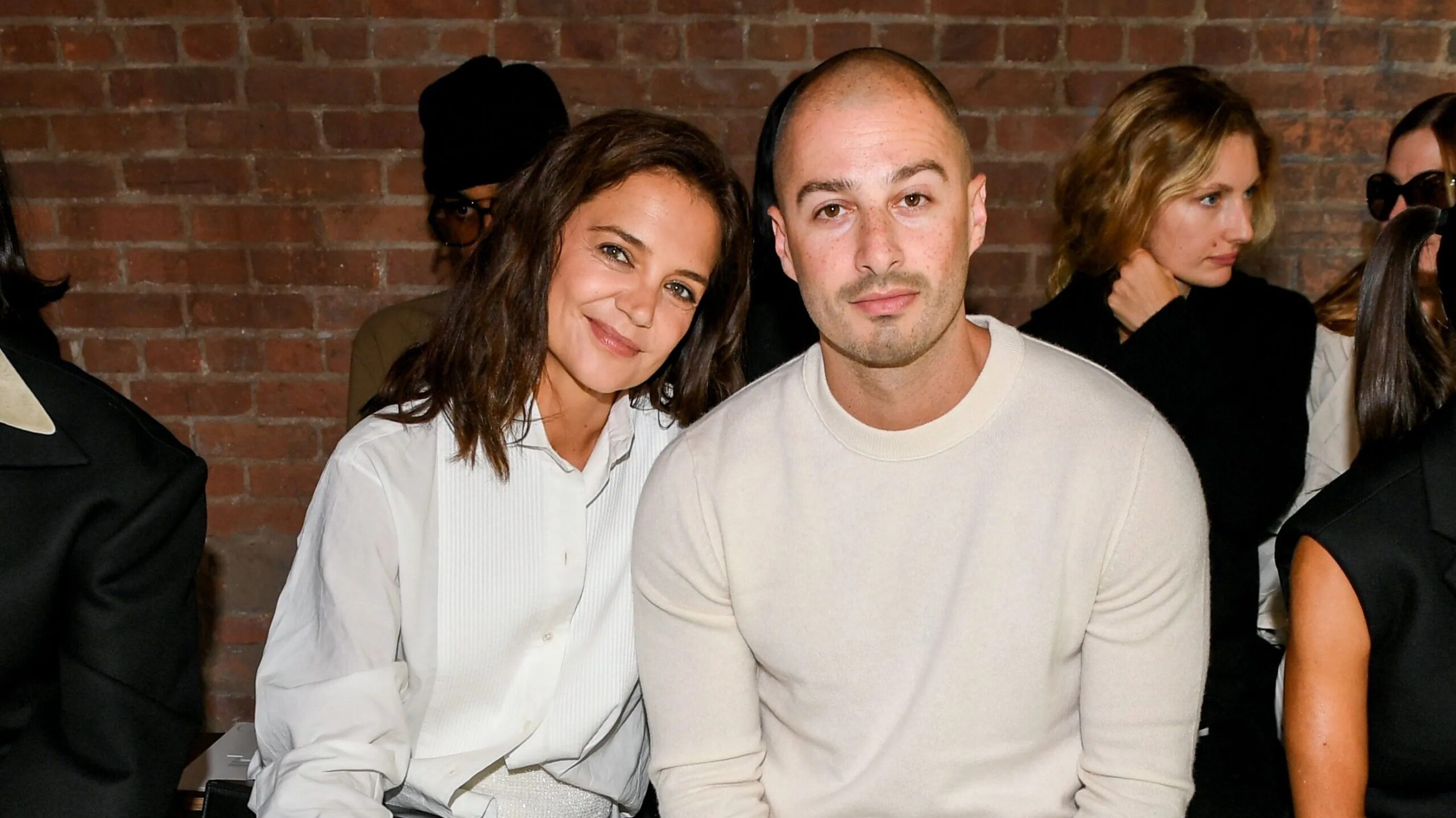
The reason for the actress’s mega-watt smile? The man on her arm, artist Jason Bard Yarmosky, whom Holmes, 47, has been dating since the start of the summer – and helped her get over the trauma of her doomed marriage to Tom Cruise.
Katie Holmes and Jason Yarmosky turned heads at New York Fashion Week as they stepped out in carefully co-ordinated looksCredit: Shutterstock EditorialThe actress and Tom Cruise were considered one of Hollywood’s biggest power couples before their marriage ended in 2012Credit: Reuters
Holmes and her new man, 39, attended four major fashion week events together, each time carefully co-ordinating their outfits – which in Hollywood terms says far more about relationship status than you might think.
Their romance has been the talk of New York society this summer, since they were first spotted in the Hamptons together in early July.
Handsome Jason is something of a name himself, building 40,000 followers on Instagram where he shares his work.
A source tells The Sun that he and Holmes have fallen for one another – fast – and that engagement may well be the next move.
“They have become close very quickly,” says the source.
“Something about Jason’s sense of self and passion for what he does really pulled Katie into his orbit and they’ve become inseparable. They are very much in love.”
They reportedly first met at a Tribeca Festival dinner in June, where Yarmosky had been selected for the festival’s Artist Awards Programme which was presented by Chanel.
They immediately bonded, says a source, over their “shared creativity”, with Holmes impressed by his work and his “quietly confident” energy.
Yarmosky is certainly cool, becoming something of a power player on the New York art scene, recently creating work for a special exhibition at iconic department store Bergdorf Goodman.
His website describes his paintings and drawings as centring around “themes of aging, time and memory” with a lot of his recent work inspired by his grandparents.
They made their relationship Instagram official this month, and shared sizzling photos from a trip they took to Lake Como in Italy as a collab post, the ultimate new power couple move.
Our source said that the trip was a huge step for them, and their electric connection was plain to see in the series of bikini photos as they enjoyed a boat trip on the lake.
Her friend Amy Astley, the former Vogue editor, commented that she was “glowing”.
“For Katie to make this romance so public is very telling,” said one friend.
“She has deliberately kept her romantic life under wraps for decades.”
Indeed, Holmes’s only long term relationship since her high-profile divorce from Tom Cruise, after almost six years of marriage, was with Jamie Foxx.
They were said to have dated for five years and in that time they were photographed together out in public only a handful of times.
In 2019, there were two – very rare – public appearances, first at the Clive Davis and Recording Academy Pre-Grammy Gala, then at the Met Gala.
A few months later, the romance was said to be over – and Holmes hasn’t found a great love again, until now, despite being linked fleetingly to chef Emilio Vitolo Jr. in 2020 and musician Bobby Wooten III in 2022.
“Things feel very different for Katie now,” said the source.
“For the first time since splitting from Tom, she wants to show the world how in love she is.”
And she certainly is – so much so that rumours are circulating that the pair could even be heading for engagement.
“It’s been a complete whirlwind,” said one Hollywood source.
“Katie’s friends and – most importantly – her parents Martin and Kathleen, all approve of the relationship. It is a big deal that they are together so publicly, it says a lot about where they are at.”
Katie and her new man have been increasingly open about their romance with a string of public appearances in New YorkCredit: GettyThe pair looked loved-up during their romantic getaway to Lake Como earlier this summerCredit: @katieholmes / instagram
Holmes has been notoriously private about every aspect of her life since her extremely high profile marriage, and subsequent divorce from Tom Cruise – something which left her feeling “shaken” and “cautious about living in the spotlight” said sources at the time.
It has been almost twenty years since the pair married in a lavish Italian wedding, at Bracciano’s 15th-century Odescalchi Castle – a celebration that reportedly cost them upwards of $3 million and included a performance by Andrea Bocelli.
Their relationship had been a whirlwind, from meeting in 2004, to getting engaged in 2005 and having their only child Suri in April 2006, just seven months prior to the wedding, the pair became a Hollywood power couple – known as TomKat – in record time.
She told W magazine, “I’ve found the man of my dreams”.
But their downfall was almost as dramatic as the couch-jumping which defined the start of the romance.
Holmes filed for divorce from Tom Cruise in 2012 after nearly six years of marriage through a carefully planned, covert exit from the relationship.
The Wall Street Journal reported at the time that the couple had been at loggerheads about Scientology, the controversial religion of which Cruise has been a prominent member for over 40 years, calling it a “beautiful religion”.
He said in 2016, “It’s something that has helped me incredibly in my life.”
He added, “It’s something, you know, without it, I wouldn’t be where I am. So it’s a beautiful religion. I’m incredibly proud.”
Reports revealed that Holmes and Cruise had disagreements over how the couple’s daughter, Suri, would be raised, with Holmes wanting to raise Suri away from Scientology.
During a court case in 2013, Cruise confirmed that it was “one of the assertions” made by his ex-wife which led to their split.
Following the split, Holmes was granted custody of Suri and they set up home in New York where they lived an exceptionally quiet life.
Katie Holmes and Tom Cruise pictured with their daughter Suri, who was born in 2006Credit: RexKatie and her Dawson’s Creek co-star and former boyfriend Joshua Jackson have reunited professionally for her new film Happy HoursCredit: Getty
Cruise was last photographed with his daughter, now 20 and attending Pennsylvania’s Carnegie Mellon University, in 2012 and she is said to have dropped his last name going instead by Suri Noelle, her mother’s middle name, in a recent Edinburgh Festival performance.
“They don’t have any kind of relationship,” a source has said of Suri and Cruise. “She was raised by Katie. They are incredibly close.”
Prior to her marriage Holmes had been riding high in her career which started with hit teen show Dawson’s Creek, and had just starred in Batman Begins in 2005.
Following their dramatic split, however, Holmes found herself somewhat “iced out of Hollywood”, says one industry insider.
Two years ago Holmes admitted: “Do I have 20 scripts at my door, all with the green light? No. Would that make life easier? Yes.”
Her most notable role in the post-Cruise years was as Jaqueline Kennedy in the TV miniseries The Kennedys, but the big blockbuster offers dried up.
Two years ago, she made a splash on Broadway with director Kenny Leon’s revival of Our Town.
Since then Holmes has been busy stepping back into the spotlight.
She has written and directed new romcom Happy Hours, in which she also stars alongside her former Dawson’s Creek co-star – and ex-boyfriend – Joshua Jackson.
She said earlier this year that “working with Josh again was a dream.”
Their friendship, which has been renewed in recent years after going no-contact while Holmes was married to Cruise, has been a huge part of Holmes’s “finding herself” again, our source tells us.
“With Josh, Katie can be herself,” they revealed. “He’s known her since they were kids. He’s encouraged her to find her voice artistically and also lean into being in the spotlight once again.”
And Holmes is certainly doing that, with more public appearances with her new man this year than we’ve seen since she was with Cruise, and a renewed spotlight on her life and career which she appears to be enjoying.
“Katie is happy and confident in who she is in a way that felt impossible even ten years ago,” said our source.
“Going through such a high profile divorce from someone who is so powerful, like Tom Cruise, was a life-shattering thing for her. It’s taken time but Katie feels free – and Jason is a big part of that.”
As Holmes said two years ago: “I’m adamant about having a life and not letting this industry dictate decisions as simple as what I wear or as complicated as what I do.”
She added, “You don’t want to be afraid of anything, right?”
It looks like Katie Holmes is really living by those words.
Emmerdale villain Tom King – played by actor James Chase – will make his return to the Dales later this year in a devastating twist for Belle Dingle and her new partner Kammy
Emmerdale villain Tom King is returning
Emmerdale villain Tom King is returning to the Dales in a shocking twist.
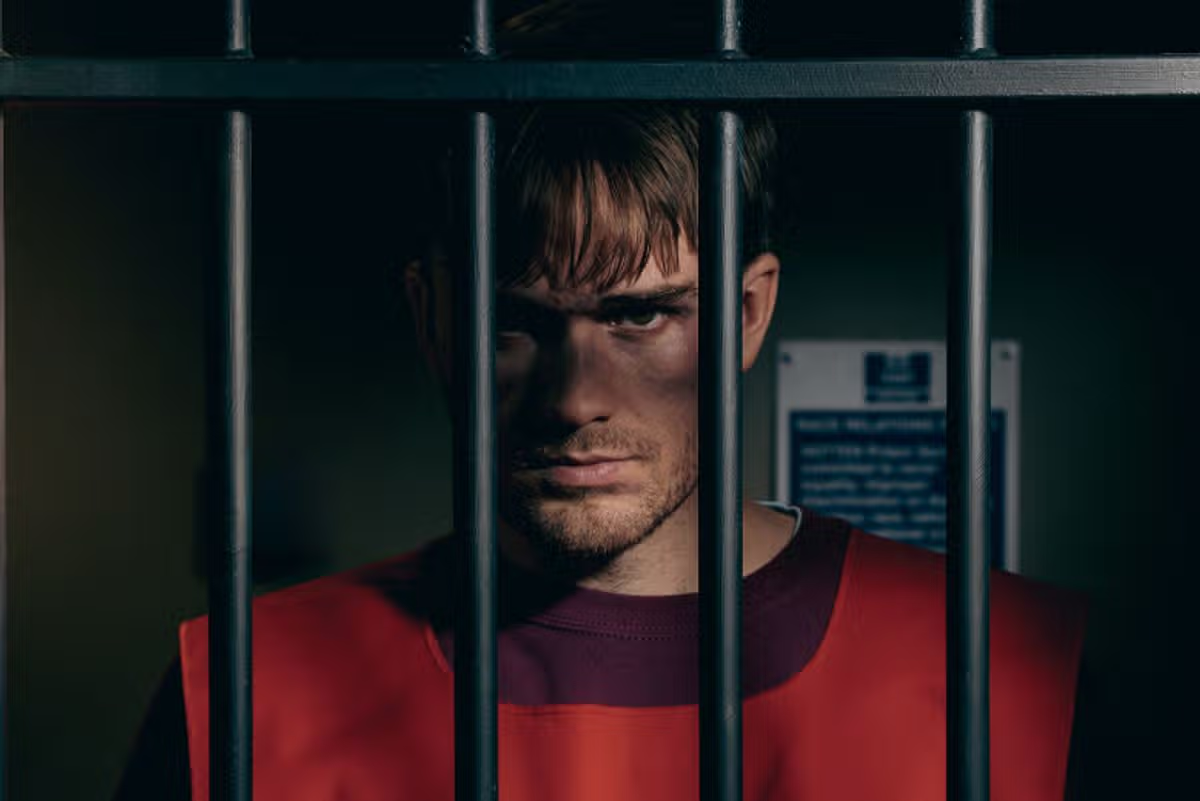
Actor James Chase is reprising his role as the abusive Tom King for new scenes later this year. Belle Dingle – played by Eden Taylor-Draper – was targeted by her abusive ex-husband Tom.
Throughout their relationship, she was controlled by Tom, where he psychological abused her, cyber-stalked her and even harmed the family dog Piper to coercively control his wife.
He was convicted and sent to prison but now he is up for parole, and his unexpected return in Belle’s life threatens to turn her life upside down once again. Can the Dingles find a way to keep him in jail or will he manipulate those around him once more?
Emmerdale producer Laura Shaw said of the new storyline: “James’ return isn’t just about bringing back a familiar face; it’s about reigniting a complex and challenging story.
“When Belle gets the news that Tom is up for parole she’s forced to confront a trauma she battled hard to overcome. With her family and new partner Kammy by her side, we explore the lasting impact of Tom’s abusive actions on Belle as she fights to keep Tom away from the village.”
James Chase added: “Stepping back into Tom’s shoes is a responsibility I don’t take lightly. He is a character driven by obsession and a desperate need for control, and it is both fascinating and challenging to step back into that mindset.
“The audience knows exactly who he is and what he is capable of, so the challenge now is to show the lengths he is willing to go to in order to get what he wants, even if it means dismantling Belle’s life all over again. It’s a dark path, and I’m ready to see how far Tom will push it.”
Actor James left the show back in December 2024 after his character’s 10 month campaign of mental and physical abuse against Belle Dingle. He said of his departure: “One hundred per cent this is the right outcome for King.
“If the Dingles had gone after him and killed him, or even Belle kill him, I think that would be understandable but she and the family would be stooping to his level. By keeping it in the realms of legality, it is the right course of action.”
He added at the time: “This storyline has really resonated with viewers and, sadly, it’s been happening for a long time behind closed doors. Unfortunately, in real life, these things can go on for years.
“By doing the storyline for most this year, we have brought that feeling across – that you are trapped, you are with someone who is awful and you can’t find your way out of it. I feel really proud of what we have achieved and I’m especially proud of Eden (Taylor-Draper) who plays Belle Dingle. She is bloody brilliant and it has been intense. She has spent nearly every day crying.”
Emmerdale airs 8PM, weeknights on ITV1and STV or from 7AM on ITVX and STV Player and YouTube.
Britain’s Tom Aspinall has vacated his UFC heavyweight title because of complications in his recovery from an eye injury, but says he has no plans to retire.
The 33-year-old has not fought since October 2025, when the first defence of his title against Ciryl Gane ended in a no-contest following several eye pokes.
Aspinall was diagnosed with a rare eye condition, and has had persistent double vision and several operations.
“I am absolutely gutted. I have chased this dream since I was 10 years old,” he said in a statement.
“I know what it’s like to have your career put on hold and I want the other fighters to have the opportunity to compete for the title.”
In June Aspinall said he had returned to full training for a rematch with France’s Gane and suggested they could fight in September.
In August Aspinall rejected reports that he would leave the UFC.
“I am not done. Stepping away from the title is not stepping away from the sport or the dream,” he said on Monday.
“I will continue doing everything I can to get healthy, get cleared and get back to competing as soon as possible.”
UFC president Dana White hinted over the weekend that Aspinall could be stripped of the title.
This month Valentina Shevchenko vacated the women’s flyweight title because of persistent injuries.