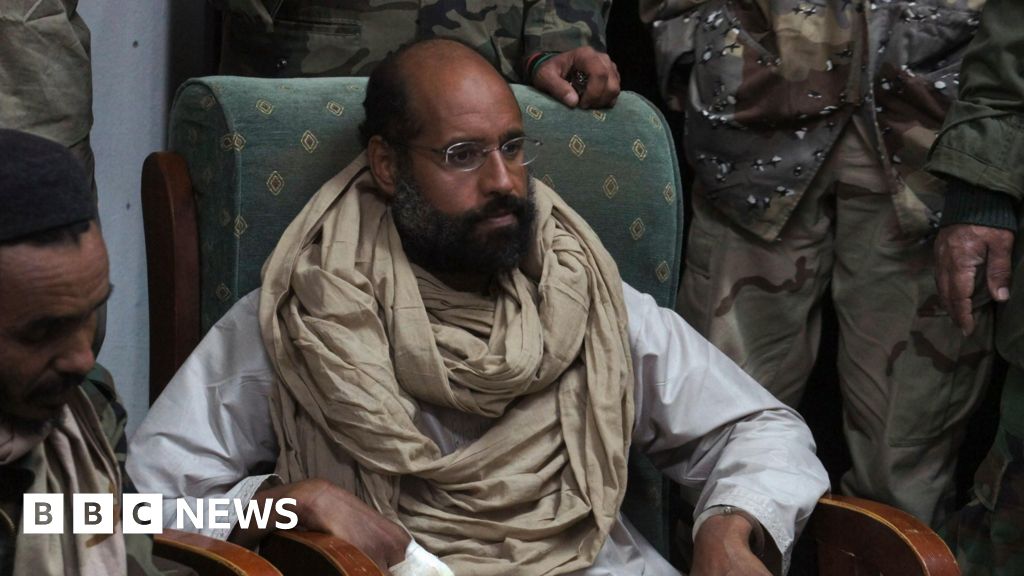
Reports say doctors diagnosed the woman with critically low blood sugar, likely leading to her weakened condition.
Published On 25 Nov 202525 Nov 2025
Share
A woman in Thailand has shocked staff at a Buddhist temple when she started moving in her coffin after being brought in for cremation.
Wat Rat Prakhong Tham, a temple in the province of Nonthaburi on the outskirts of the capital, Bangkok, posted a video on its Facebook page, showing a woman lying in a white coffin in the back of a pick-up truck, slightly moving her arms and head, leaving temple staff bewildered.
Recommended Stories
list of 3 itemsend of list
Pairat Soodthoop, the temple’s general and financial affairs manager, told The Associated Press news agency on Monday that the 65-year-old woman’s brother drove her from the province of Phitsanulok to be cremated.
He said they heard a faint knock coming from the coffin.
“I was a bit surprised, so I asked them to open the coffin, and everyone was startled,” he said.
“I saw her opening her eyes slightly and knocking on the side of the coffin. She must have been knocking for quite some time.”
According to Pairat, the brother said his sister had been bedridden for about two years, when her health deteriorated and she became unresponsive, appearing to stop breathing two days ago.
The brother then placed her in a coffin and made the 500km (300-mile) journey to a hospital in Bangkok, to which the woman had previously expressed a wish to donate her organs.
The hospital refused to accept the brother’s offer as he didn’t have an official death certificate, Pairat said. His temple offers a free cremation service, which is why the brother approached them on Sunday, but was also refused due to the missing document.
The temple manager said that he was explaining to the brother how he could get a death certificate when they heard the knocking. They then assessed her and sent her to a nearby hospital.

The abbot said the temple would cover her medical expenses, according to Pairat.
According to the Thailand News website, doctors later diagnosed the woman with severe hypoglycaemia, or critically low blood sugar, and confirmed she had not experienced cardiac or respiratory failure.
Fletcher fought for greater recognition of one of the deadliest incidents of race violence in US history.
Published On 25 Nov 202525 Nov 2025
Share
Viola Ford Fletcher, one of the last survivors of Oklahoma’s 1921 Tulsa Massacre, has died at age 111.
Despite her advanced age, Fletcher was a well-known activist thanks to her work trying to win justice for the victims of one of the worst episodes of racial violence in United States history.
Recommended Stories
list of 4 itemsend of list
“Today, our city mourns the loss of Mother Viola Fletcher. She was a survivor of one of the darkest chapters in our city’s history and endured more than anyone should,” Tulsa Mayor Monroe Nichols wrote in a Facebook post. “Mother Fletcher carried 111 years of truth, resilience, and grace and was a reminder of how far we’ve come and how far we must still go.”
Fletcher was seven years old at the time of the Tulsa Massacre in Oklahoma, a state living under the Jim Crow system that segregated the US South from the end of the 1800s until the Civil Rights Movement of the 1960s.
The massacre began on May 31, 1921, when police arrested 19-year-old Dick Rowland, a Black shoeshiner, over allegations that he had assaulted a white woman, according to a report by the US Justice Department’s Civil Rights Division.
As a survivor of the Tulsa Race Massacre, Viola Ford Fletcher bravely shared her story so that we’d never forget this painful part of our history. Michelle and I are grateful for her lifelong work to advance civil rights, and send our love to her family. https://t.co/km7RXnDKcW
When a group of white men gathered at the courthouse calling for Rowland to be lynched, a group of Black men from a nearby community responded and tried to protect him before “all hell broke out”, the report said.
Over the next two days, vigilante groups and law enforcement looted and burned down 35 blocks of Tulsa’s Greenwood District, which was then home to one of the wealthiest Black communities in the US. The Bureau of Labour Statistics in 2024 estimated that the scale of the damage was around $32.2m when adjusted for inflation.
As many as 300 residents of Tulsa were killed and another 700 injured, the report said, although the final tally is unknown because many were buried in unmarked graves.
Survivors like Fletcher and her family were forced to leave the area. Left destitute, her family became sharecroppers, a form of subsistence work where farmers give over almost all their harvest to their landlord.
Rowland was never charged, after Sarah Page, the lift operator he was accused of assaulting, said that she did not want to prosecute the case.
Despite the scale of devastation, the Tulsa Massacre received limited national attention until Oklahoma state launched an investigative commission in 1997. Efforts to win compensation for victims in 2001, however, failed due to the statute of limitations.
On the centennial anniversary of the massacre, Fletcher testified before the US Congress in 2021 about her experiences and co-authored a memoir, Don’t Let Them Bury My Story, with her grandson in 2023.
Fletcher was mourned by US leaders like former President Barack Obama.
“As a survivor of the Tulsa Race Massacre, Viola Ford Fletcher bravely shared her story so that we’d never forget this painful part of our history. Michelle and I are grateful for her lifelong work to advance civil rights, and send our love to her family,” Obama posted on X.
The controversial, US and Israel-backed Gaza Humanitarian Foundation (GHF) says it is winding down its aid operations in the Palestinian territory, after almost six months.
The organisation had already suspended its three food distribution sites in Gaza after the ceasefire between Hamas and Israel took effect six weeks ago.
The GHF aimed to bypass the UN as the main supplier of aid to Gaza’s population. UN and other aid agencies refused to co-operate with its system, saying it was unethical and unsafe.
Hundreds of Palestinians were killed while seeking food amid chaotic scenes near GHF’s sites, mostly by Israeli fire, according to the UN. Israel said its troops fired warning shots.
The GHF said on Monday that it was winding down operations now because of the “successful completion of its emergency mission”, with a total of three million packages containing the equivalent of more than 187 million meals delivered to Palestinians.
The GHF’s executive director, Jon Acree, also said the US-led Civil-Military Coordination Centre (CMCC) – which has been set up to help implement US President Donald Trump’s Gaza peace plan – would be “adopting and expanding the model GHF piloted”.
US state department spokesperson Tommy Piggott wrote on X: “GHF’s model, in which Hamas could no longer loot and profit from stealing aid, played a huge role in getting Hamas to the table and achieving a ceasefire.”
Hamas – which denies stealing aid – welcomed the closure of the GHF, Reuters reported. A spokesman for said GHF should be held accountable for the harm it caused to Palestinians.
“We call upon all international human rights organisations to ensure that it does not escape accountability after causing the death and injury of thousands of Gazans and covering up the starvation policy practised by the (Israeli) government,” Hazem Qassem wrote on his Telegram channel.
The GHF began operations in Gaza on 26 May, a week after Israel had partially eased a total blockade on aid and commercial deliveries to Gaza that lasted 11 weeks and caused severe shortages of essential supplies. Three months later, a famine was declared in Gaza City.
The GHF’s food distribution sites in southern and central Gaza were operated by US private security contractors and located inside Israeli military zones.
The UN and its partners said the system contravened the fundamental humanitarian principles of neutrality, impartiality and independence, and that channelling desperate people into militarised zones was inherently unsafe.
The UN’s human rights office said it recorded the killing of at least 859 Palestinians seeking food in the vicinity of GHF sites between 26 May and 31 July. Another 514 people were killed near the routes of UN and other aid convoys, it added. Most of them were killed by the Israeli military, according to the office.
The Israeli military said its troops had fired warning shots at people who approached them in a “threatening” manner.
The GHF said there were no shootings at the aid sites and accused the UN of using “false and misleading” statistics from Gaza’s Hamas-run health ministry.
The GHF’s future had been uncertain since Hamas and Israel agreed a ceasefire deal to implement the first phase of Trump’s peace plan.
It said aid distribution would take place “without interference from the two parties through the United Nations and its agencies, and the Red Crescent, in addition to other international institutions not associated in any manner” with Hamas and Israel.
UN spokesperson Stephane Dujarric said on Monday that the GHF’s shutdown would have “no impact” on its operations “because we never worked with them”.
He also said that while more aid was getting into Gaza since the ceasefire took effect on 10 October, it was “not enough to meet all the needs” of the 2.1 million population.
A new plan introduced on Monday reportedly eliminates some, but not all of Ukraine’s major concerns, with a 28-point plan unveiled last week. The revised document was hammered out over the weekend by the U.S. delegation, led by Secretary of State Marco Rubio, and a Ukrainian team, led by the head of the presidential office, Andriy Yermak. The updated peace proposal now contains 19 provisions.
As with the previous peace plan, we cannot independently verify the details of this latest one, which could be preliminary, subject to change, and/or not reported in the proper context.
US Secretary of State Marco Rubio (3rd L), Counselor of the US Department of State Michael A. Needham (L), US special envoy Steve Witkoff (2nd L) and US Secretary of the Army Daniel Driscoll (4th L), face Ukraine’s Presidential Office Chief of staff Andriy Yermak (4th R), Deputy Foreign Minister Sergiy Kyslytsya (3rd R), Deputy Chief of the Defence Intelligence of Ukraine Vadym Skibitskyi (5th R), Chief of the General Staff of the Armed Forces of Ukraine Andriy Hnatov (R) during discussions on a US plan to end the war in Ukraine at the US Mission in Geneva, on November 23, 2025. (Photo by Fabrice COFFRINI / AFP) FABRICE COFFRINI
U.S. Army Secretary Daniel Driscoll, the Trump administration’s top negotiator, on Friday warned that Washington would show little flexibility.
“We are not negotiating details,” he said, Financial Times wrote, citing a senior European official in the meeting at the Kyiv residence of US chargé d’affaires, Julie Davis
Monday’s version of the plan appears to be more amenable to Kyiv.
“Many of the controversial provisions were either softened or at least reshaped” to get closer to a Ukrainian position, said Oleksandr Bevz, an adviser to Yermak who participated in the Geneva summit, The Washington Post reported. “By Monday, while not all the language in the draft was considered entirely ‘acceptable’ to Kyiv, the text was revised to a point that it can at least ‘be considered, whereas before it was an ultimatum,’” Bevz said.
“The Ukrainian delegation affirmed that all of their principal concerns—security guarantees, long-term economic development, infrastructure protection, freedom of navigation, and political sovereignty—were thoroughly addressed during the meeting,” the White House said in a statement Sunday night. “They expressed appreciation for the structured approach taken to incorporate their feedback into each component of the emerging settlement framework.”
US Secretary of State Marco Rubio (R) and Ukraine’s Presidential Office Chief of Staff Andriy Yermak hold a press conference following their closed-door talks on a US plan to end the war in Ukraine at the US Mission in Geneva, on November 23, 2025. (Photo by Fabrice COFFRINI / AFP) FABRICE COFFRINI
Ukrainian representatives “stated that, based on the revisions and clarifications presented today, they believe the current draft reflects their national interests and provides credible and enforceable mechanisms to safeguard Ukraine’s security in both the near and long term,” the statement continued. “They underscored that the strengthened security guarantee architecture, combined with commitments on non-aggression, energy stability, and reconstruction, meaningfully addresses their core strategic requirements.”
Among other measures, the U.S. seemed willing to remove a Russian demand to limit Ukraine’s military to 600,000 troops.
However, the biggest sticking point remains. according to reports.
The aforementioned 28-point proposal would have seen Ukraine give up a considerable amount of territory in the east, including land it still controls. That is not something the Ukrainian President Volodomyr Zelensky appears willing to accept, even with the stick of reduced or eliminated support from Washington.
The Ukrainian leader has said his country could face a stark choice between standing up for its sovereign rights and preserving the American support it needs,” The Associated Press noted. “The proposal acquiesced to many Russian demands that Zelensky has categorically rejected on dozens of occasions, including giving up large pieces of territory,” the AP reported.
Ukraine’s President Volodymyr Zelensky faces tough choices as the peace negotiations drag on. (Photo by Ozan KOSE / AFP) OZAN KOSE
The Ukrainian leader has vowed that his people “will always defend” their home.
On Monday, Zelensky seemed hopeful that peace could be achieved, but he didn’t specifically address Russia’s lingering demand for land concessions.
“Today our delegation returned from Geneva after negotiations with the American side and European partners, and now the list of necessary steps to end the war can become workable,” Zelensky explained on Telegram. “As of now, after Geneva, there are fewer points, no longer 28, and much of the right has been taken into account in this framework.”
Zelensky said that the Ukrainian delegation has returned from Geneva after negotiations with US and European partners — and that, for the first time, the list of steps needed to end the war may finally be taking shape.
“There is still work to be done together – it is very difficult – to make the final document, and everything must be done properly,” the Ukrainian leader continued. “And we appreciate that most of the world is ready to help us and the American side is constructive. In fact, the whole day yesterday was meetings; it was a difficult, extremely detailed work.”
“I discuss the sensitive issues with President Trump,” Zelensky added.
However, there is no meeting scheduled between the two leaders, White House spokesperson Karoline Leavitt told reporters Monday.
The White House, she said, feels “optimistic” about the president’s proposed peace plan to end the war in Russia. The plan has input from both Russia and Ukraine.
Leavitt: Ukrainians were fully involved and strongly supportive of the plan.
Claims that the U.S. favors one side are false — the President and his team work around the clock to end this war.
No one here benefits from war. We want it finished.
“Yuri Ushakov, a veteran foreign policy aide to the Russian leader, told reporters in Moscow that the EU’s peace plan, launched in response to the 28-point plan presented by Washington, ‘constructively doesn’t fit us at all,’” Politico reported. “Ushakov added that Trump’s plan, which included several major concessions to Russia, including ceding vast swathes of Ukrainian territory and capping the size of Kyiv’s military, was more ‘acceptable’ to the Kremlin.”
Amid the flurry of diplomatic moves, Russia continues to slowly grind up Ukrainian territory, albeit at a tremendous cost in personnel and equipment.
“Russian forces have broken through Ukrainian defenses north of Huliaipole, creating a rapidly expanding threat to one of Ukraine’s most fortified positions in Zaporizhzhia Oblast,” Euromaidan Press reported on Sunday. “The breakthrough has prompted Ukrainian forces to reposition for a high-stakes defensive battle along the Zarichne River.”
Russian forces broke through Ukrainian defenses north of Huliaipole after capturing Uspenivka, the key Ukrainian strongpoint on the western bank of the Yanchul River. The breakthrough came after Russia concentrated approximately 40,000 troops on the position and fired over 400… pic.twitter.com/fJ7bpBiKnp
The community, which had a population of about 14,000 in 2016, was originally created in the 1770s as a military bulwark against invading forces. Huliaipole is once again fighting to ward off an encroaching enemy and is “the largest and most fortified Ukrainian stronghold in the region,” Euromaidan Press explained.
The Russians have amassed a force of about 40,000 troops, the publication claimed, adding that they are attacking from the north to try and encircle Ukrainian forces and avoid a costly head-on attack.
Russian troops reached the western outskirts of the settlement of Zatyshshia, 2,5km from the northern entrance to the town of Huliaipole, located on the Zaporizhzhia front.
— Status-6 (Military & Conflict News) (@Archer83Able) November 24, 2025
“Ukrainian defenders repelled seven attacks by the occupiers near the settlements of Zelenyi Hai, Zatyshshia, Solodke, and towards Varvarivka and Dobropillia,” the Ukrainian Armed Forces General Staff claimed on Monday. “Two clashes are still ongoing. In addition, enemy aviation struck the settlements of Huliaipole and Zaliznychne.”

For its part, the Russian Defense Ministry MoD) claimed it captured a small community about a mile and a half north of Huliaipole
The “liberation of Zatishye has strengthened the position of the Vostok Group of Forces and has become an important step towards further progress in this direction,” the Russian MoD stated on Telegram.
Meanwhile, about 60 miles to the northeast in the hotly contested Donetsk region, Ukrainian forces are still holding out in the embattled city of Pokrovsk; however, “Russian forces will very likely complete the seizure of Pokrovsk and Myrnohrad,” according to the latest Institute for the Study of War (ISW) assessment.
Soldiers from a 2S22 Bohdana artillery crew of the Striletskyi special forces police battalion of the Main Department of the National Police in Zaporizhzhia region. (Photo by Dmytro Smolienko/Ukrinform) NurPhoto
Another 60 miles northeast of Pokrovsk, the Russians are also pushing closer to the town of Siversk, according to ISW.
“Ukrainian 11th Army Corps (AC) spokesperson Lieutenant Colonel Dmytro Zaporozhets reported on November 23 that Russian forces are the most active in the Slovyansk direction and are attacking more specifically toward Siversk,” ISW explained.
“While attention is focused on Huliaipole and Pokrovsk, systemic problems are arising in other directions as well,” Ukrainian activist and noted milblogger Serhii Sternenko posited on Telegram. “Another front line where the crisis will soon become noticeable is Siversk/Yampil. I won’t write the details publicly. In short — the same set of problems as in other areas + increasingly active enemy drone operations against our logistics.”
Russian forces are making gains in particular along a 120-mile stretch from Huliapole in the south to Siversk to the north. (Google Earth)
Lt. Gen. Kyrylo Budanov, head of Ukraine’s Defense Intelligence Directorate, recently suggested that Russia plans to occupy all of Donetsk by next spring
While Budanov called that aspiration “unrealistic,” the ongoing peace process, if successful, could make that a moot point. However, given the tumultuous nature of the negotiations, Russia’s unwavering demands, and Ukraine’s continuing battlefield losses, that’s a pretty big if.
Recently, former National Economic and Development Authority (NEDA) director general Karl Kendrick Chua said that the Philippines is standing at a “critical juncture” that could determine whether the country finally attains sustained high growth or once again falls into a cycle of lost opportunities.
Speaking during a Makati Business Club briefing, Chua, who now serves as a managing director at Ayala Corp., noted that depending on the policy crafted, the results have been varied. “You have years where the critical juncture led to economic recession or depression. There are years where it led to economic growth,” he added.
The current economic position of the Philippines is the effect of several critical junctures where policy choices either accelerated or derailed long-term development. For example, Chua noted that if the country had avoided the 1983 debt crisis and the 1997–2003 fiscal crisis, per capita income today could have matched or even exceeded Thailand’s. “These crises wiped out decades of growth,” Chua said.
To understand the magnitudes involved, it is instructive to go beyond these remarks. So, let’s take a closer look at these past losses and the more recent ones.
Debt, fiscal and corruption crises
Starting in 1983, the debt crisis penalized the Philippine GDP for a decade.
Let’s assume that the economic trends that had prevailed prior to the crisis would have prevailed without a crisis. In this view, it was only after the early 1990s, that the Philippines GDP first got to level where it had first been 10 years before. In economic terms, the debt crisis was a lost decade.
Adding the cumulative losses, it cost the economy over $152 billion.
What about the fiscal crisis?
Starting in the mid-1990s, this crisis penalized the GDP until 2011. Again, let’s assume that the economic trend that had prevailed before the fiscal crisis would have prevailed without a crisis. In this view, it was only in the early 2010s that the Philippines GDP got to the level where it had first been almost two decades before.
Adding the cumulative losses, it cost the economy over $630 billion – over four times more than the prior crisis.
Although flood-control corruption is an old challenge, the present crisis associated with it – assuming the critics are right – moved to a new level after 2022. In that case, assuming the present trends prevail, it could penalize the GDP by more than $191 billion by 2028.
Notice that in the case of the debt and fiscal crises, we have historical economic data that allows us to test counterfactuals. Whereas in the case of the flood-control corruption, we are comparing economic performances in the Duterte years (2016-2022) and in the projected Marcos Jr. years (2022-28), in order to assess the economic value of missed opportunities.
The Costs of Three Crises. GDP, current prices; in billions of U.S. dollars. Source: IMF/WEO, author
Losses of almost $1 trillion in four decades
In a current project, I am examining the economic development of most world economies from the 19th century up to 2050. The kind of losses that the Philippines has suffered are typical to conflict-prone nations, but somewhat unique in countries that should benefit from peacetime conditions.
The lost opportunities and economic value associated with these crises indicate that in the past 45 years or so, the Philippine GDP has under-performed far more often than it has engaged in more optimal growth.
That translates to missed opportunities of massive magnitude, in light of the size of the economy. All things considered, these losses could amount to more than $970 billion.
Overcoming misguided and self-interested economic policies that serve the few at the expense of the many is vital in a nation, where poverty and food security is the nightmare of every second household.
Pressing need for development and smart diplomacy
According to public surveys, the national priority issues are topped by the need to control the rise in prices of basic goods and services (48%) and fighting corruption (31%). Other major concerns are also domestic featuring affordable food (31%), improving wages (27%), and reducing poverty (23%).
These are all pressing domestic, bread-and-butter issues. And yet, although foreign policy issues represent a fraction in popular national priorities, much of the country’s policy attention and resources have been allocated to precisely such priorities.
Of course, the country should insist on its national interest, but that interest should be defined by the needs of the many, not by the priorities of the few. And that should mean focus on inflation control, corruption, food security, rising wages and poverty reduction.
Most Southeast Asian nations have elevated their economic fortunes by accelerated economic development and smart regional diplomacy. There is no reason why the Philippines couldn’t or shouldn’t do the same.
Most Filipinos would certainly agree.
*Author’s note: The original version was published by The Manila Times on November 24, 2025
Israeli forces have killed at least four Palestinians and wounded several others across Gaza despite a six-week ceasefire, as a Palestinian armed group announced recovering the body of another captive in the war-torn territory.
The victims on Monday included a Palestinian man who was killed in a drone attack in the southern town of Bani Suheila, in an area controlled by Israeli forces beyond the so-called “yellow line”.
Recommended Stories
list of 3 itemsend of list
Separately, a Palestinian child was also killed in northern Gaza City when ordnances left behind by Israeli forces exploded, according to the territory’s civil defence.
The group said several more children were wounded, with some in critical condition.
Al Jazeera’s Tareq Abu Azzoum, reporting from Gaza City, said Israeli attacks also continued throughout the day, with artillery, air raids and helicopter strikes reported in both northern and southern parts of the enclave.
In Beit Lahiya, Israeli fire hit areas outside the yellow line. In the south, tanks and helicopters targeted territory northeast of Rafah and the outskirts of Khan Younis.
“There are extensive Israeli attacks beyond the yellow line that have led to the systematic destruction of Gaza’s eastern neighbourhoods,” Abu Azzoum said.
Testimonies gathered by families, he added, point to a “systematic attempt to destroy Gaza’s neighbourhoods and create buffer zones, making these areas completely uninhabitable, which complicates a return for families”.
In central Gaza, civil defence teams, operating with police and Red Cross support, recovered the bodies of eight members of a single family from the rubble of their home in the Maghazi camp, the Palestinian Wafa news agency reported, which was struck in an earlier Israeli attack.
A Palestinian man walks among the ruins of destroyed buildings in Gaza City [Jehad Alshrafi/AP Photo]
The Gaza Government Media Office said the number of bodies retrieved since the ceasefire began has now reached 582, while more than 9,500 Palestinians remain missing beneath the ruins of bombed-out districts.
Captive’s body recovered
The Palestinian Islamic Jihad, an armed group allied with Hamas, meanwhile, announced it had recovered the body of an Israeli captive in Nuseirat camp in central Gaza.
If the body is identified, two more will have to be recovered under the first phase of the Gaza ceasefire deal. Israel is supposed to return the bodies of 15 Palestinians in exchange for each captive’s body.
Hamas has previously said the widespread destruction has hampered efforts to locate the remaining bodies.
Also on Monday, the GHF, a US-backed entity that operated parallel to United Nations aid structures, announced the end of its activities in Gaza.
The organisation cited provisions in the October ceasefire as the reason for its withdrawal.
UN experts say at least 859 Palestinians were killed around GHF distribution points since May 2025, with Israeli forces and foreign contractors regularly opening fire on crowds desperately seeking food.
The scheme drew widespread condemnation for bypassing established humanitarian channels.
Israeli attacks on the West Bank
Across the occupied West Bank, Israeli forces stepped up raids overnight, arresting at least 16 Palestinians, according to Wafa. Arrests were reported in Iktaba near Tulkarem, in Tuqu southeast of Bethlehem, in Kobar near Ramallah, and in Silat al-Harithiya west of Jenin.
Israeli troops also detained residents in Tubas and the surrounding areas.
Violence escalated further on Sunday night when Israeli forces killed a 20-year-old law student, Baraa Khairi Ali Maali, in Deir Jarir, north of Ramallah.
Wafa reported that clashes erupted after Israeli settlers attacked Palestinian homes on the village’s outskirts. Fathi Hamdan, head of the local council, said troops entered the village to protect the settlers, then opened fire on Palestinians confronting them.
Mourners pray next to the body of one of two Palestinians killed by Israeli fire in Khan Younis in the southern Gaza Strip [Ramadan Abed/Reuters]
Maali suffered a gunshot wound to the chest and died shortly after arrival at hospital. His killing follows the fatal shooting of another young man by settlers in Deir Jarir last month.
Elsewhere in the West Bank, Israeli soldiers injured two Palestinian women and detained two brothers during a raid in Kafr Qaddum, east of Qalqilya.
Settler attacks also continued. Fires were set on agricultural land between Atara and Birzeit, north of Ramallah, destroying farmland belonging to residents.
In a separate incident in Atara, settlers from a newly established outpost torched olive trees and stole farming equipment.
Israeli settler violence has surged over the past two years; since October 7, 2023, at least 1,081 Palestinians have been killed in the occupied West Bank by Israeli forces and settlers, including 223 children, with more than 10,614 wounded and more than 20,500 arrested.
Israeli ceasefire violations in Lebanon
In Lebanon, Hezbollah held a funeral for senior commander Haytham Ali Tabatabai, assassinated by Israel on Sunday.
Images from Beirut’s southern suburbs showed mourners carrying his coffin, wrapped in yellow and green, as Hezbollah flags lined the streets. The group has not yet announced how it will respond.
Mahmoud Qmati, vice president of Hezbollah’s Political Council, called the killing “yet another ceasefire violation”, accusing Israel of escalating the conflict “with the green light given by the United States”.
Security analyst Ali Rizk said Hezbollah is weighing its options carefully, warning that the group is unlikely to “give Netanyahu an excuse to launch an all-out war against Lebanon”, which he said could be more devastating than the current limited exchanges.
Hezbollah fighters raise their group’s flags and chant slogans as they attend the funeral procession of Hezbollah’s chief of staff, Haytham Ali Tabatabai, and two other Hezbollah members who were killed in Sunday’s Israeli air strike in a southern suburb of Beirut [Hussein Malla/AP Photo]
Geopolitical analyst Joe Macaron said the US is “no longer restraining Israel” and is instead supporting Israeli operations in Syria, Gaza and Lebanon.
Reporting from Beirut, Al Jazeera’s Zeina Khodr said that Hezbollah, in turn, faces a strategic dilemma: retaliation could risk a massive Israeli assault, yet inaction could erode its deterrence.
Imad Salamey of the Lebanese American University said any Hezbollah response could be met with a “severe” Israeli reaction.
Speaking to Al Jazeera, he added that Israel’s right-wing government “is eager to escalate because escalation will serve that government staying in power”.
Salamey argued that Hezbollah’s deterrence capacity has been “severely damaged” and that the group “no longer has the support it used to have or the logistical routes it used to utilise via Syria”.
White House cites groups’ alleged support for Hamas, accusing them of waging campaign against US interests and allies.
Published On 24 Nov 202524 Nov 2025
Share
Washington, DC – United States President Donald Trump has ordered his aides to start a process to label the branches of the Muslim Brotherhood in Egypt, Lebanon and Jordan as “terrorist” organisations, citing their alleged support for the Palestinian group Hamas.
Trump issued the decree on Monday as Washington intensified its crackdown on Israel’s foes in the region.
Recommended Stories
list of 3 itemsend of list
The decree accused Muslim Brotherhood leaders in Jordan of providing “material support” to Hamas and the Lebanese branch of the group – known as al-Jamaa al-Islamiya – of siding with Hamas and Hezbollah in their war with Israel.
It also claimed that an Egyptian Muslim Brotherhood leader “called for violent attacks against United States partners and interests” during Israel’s war on Gaza. But it was not clear what the White House was referring to. The Muslim Brotherhood has been banned in Egypt and mostly driven underground.
“President Trump is confronting the Muslim Brotherhood’s transnational network, which fuels terrorism and destabilization campaigns against US interests and allies in the Middle East,” the White House said.
Trump’s order directs the secretary of state and the treasury secretary to consult with the US intelligence chief and produce a report on the designation within 30 days.
A formal “foreign terrorist organisation” label would then officially apply to the Muslim Brotherhood branches within 45 days after the report.
The process is usually a formality, and the designation may come sooner. The decree also opens the door to blacklisting other Muslim Brotherhood branches.
The White House is also pushing to label the groups as “designated global terrorists”.
The designations would make it illegal to provide material support to the group. It would also mostly ban their current and former members from entering the US, and enable economic sanctions to choke their revenue streams.
Longstanding demand of right-wing activists
Established in 1928 by Egyptian Muslim scholar Hassan al-Banna, the Muslim Brotherhood has offshoots and branches across the Middle East in the shape of political parties and social organisations.
Across the Middle East, Muslim Brotherhood-affiliated parties take part in elections and say they are committed to peaceful political participation.
But the group has been outlawed by several countries across the region.
Blacklisting the Muslim Brotherhood has been a longstanding demand for right-wing activists in the US.
But critics say that the move could further enable authoritarianism and the crackdown on free political expression in the Middle East.
The decree could also be used to target Muslim American activists on allegations of ties to the Muslim Brotherhood or contributions to charities affiliated with the group.
Right-wing groups have long pushed to outlaw Muslim American groups with unfounded accusations of ties to the Muslim Brotherhood.
Nihad Awad, executive director of the Council on American-Islamic Relations (CAIR), said the designation should not have an impact on Muslim American advocacy groups and charities.
“The American Muslim organisations are solid,” Awad told Al Jazeera. “They are based in the US. The relief organisations serve millions of people abroad. I hope that this will not impact their work.”
But he noted that anti-Muslim activists have been trying to promote “the conspiracy theory that every Muslim organisation in the US is a front to the Muslim Brotherhood”.
Recently, Republican Texas Governor Greg Abbott designated both the Muslim Brotherhood and CAIR as “foreign terrorist organisations and transnational criminal organisations”.
Kiernan Dewsbury-Hall’s superb first-half goal seals 1-0 win for the visitors, who had 10 players for most of the game.
Everton enjoyed their first Premier League win at Manchester United for 12 years despite playing virtually the entire game with 10 men after midfielder Idrissa Gueye was sent off for slapping his own teammate Michael Keane.
Kiernan Dewsbury-Hall’s superb first-half goal on Monday sealed a 1-0 win for the visitors, who shrugged off the 13th-minute incident that had a furious Gueye dismissed after he and Keane squared up.
Recommended Stories
list of 4 itemsend of list
United came into the match at Old Trafford on the back of a five-game unbeaten run and could have moved up to fifth with a win.
They dominated possession, especially in the second half, but Everton defended superbly to repel the hosts who looked blunt in attack.
Everton goalkeeper Jordan Pickford made several fine saves to preserve his side’s lead, the pick of them to claw away a Joshua Zirkzee header with 10 minutes remaining.
A second away win of the season lifted Everton above city rivals and champions Liverpool into 11th place, level on 18 points with United, who are above them on goal difference.
Everton suffered a big blow in just the 10th minute when they lost captain Seamus Coleman to injury.
But worse was to follow three minutes later with the scarcely believable bust-up between Gueye and Keane
The Premier League Match Centre posted on X: “The referee’s call of red card to Gueye for violent conduct was checked and confirmed by VAR – with the action deemed to be a clear strike to the face of Keane.”
Gueye is the first Premier League player to be sent off for fighting with a teammate since 2008.
Idrissa Gueye slaps Michael Keane in the face and earns himself a red card [Adam Vaughan/EPA]
The home crowd anticipated waves of attack but United failed to take advantage of their numerical advantage, proving toothless against David Moyes’ battling team.
Instead it was 10-man Everton who found the net, taking the lead courtesy of a wonderful strike by Dewsbury-Hall in the 29th minute.
Dewsbury-Hall received the ball and surged towards goal, beating Bruno Fernandes and Leny Yoro before bending the ball into the top corner.
United huffed and puffed for the rest of the half, with Pickford clawing away a Fernandes shot from distance as the half-time approached.
Ruben Amorim, marking the first anniversary of his maiden game in charge of United, brought on Mason Mount for Noussair Mazraoui at half-time but his team created little, despite dominating possession.
Amorim threw on Kobbie Mainoo and Diogo Dalot for Casemiro and Yoro in the 58th minute but still United looked blunt.
Pickford kept out a powerful Zirkzee header with just over 10 minutes of normal time to go and Everton hung on for a famous win.
Speaking after the game, Dewsbury-Hall said it was a “rollercoaster” of a game.
“I’m so genuinely happy for the lads and how hard they worked. A fantastic performance of gritting away, getting a goal and keeping that spirit,” he said. “So glad we got the three points.”
He said Gueye apologised to the team at full-time for the incident with Keane.
“We move on from it. The reaction from us was unbelievable. Top tier,” Dewsbury-Hall said.
“We could have crumbled, but if anything, it made us grow.”
United defender Matthijs de Ligt said the result and performance was a “step back” for his side after a decent run.
“I think the game says enough; against 10 men for 70 minutes and not creating that many chances,” the Dutch defender told Sky Sports. “Today was not a good night for us.
“We lacked the patience to play through the lines, and we crossed a lot of balls. We need to do a lot more.
“In all aspects today, it felt like a step back. Not just the result but the intensity and the focus.”
Reform UK leader Nigel Farage has insisted he has “never directly racially abused anybody”, following complaints from 20 people he went to school with.
A Guardian investigation spoke to contemporaries at Dulwich College who alleged Farage made racist and antisemitic remarks to them, which a spokesperson denied.
Speaking directly to a journalist about the allegations for the first time, Farage, 61, was pressed on what he meant by “directly” and replied: “By taking it out on an individual on the basis of who they are or what they are.”
He also ruled out holding an investigation into his own party, following the jailing of former Welsh Reform UK leader Nathan Gill for taking pro-Russian bribes.
Among the allegations in the Guardian are that Farage joked about gas chambers and put another pupil in detention, when he was a prefect, for the colour of their skin.
When asked about the claims, Farage responded: “Have I said things 50 years ago that you could interpret as being banter in a playground, that you can interpret in the modern light of day in some sort of way? Yes.”
He added: “I’ve never directly racially abused anybody. No.”
Pointing towards “political disagreements” with some of his school peers, Farage also denied having “ever been part of an extremist organisation or engaged in direct, unpleasant personal abuse, genuine abuse, on that basis”.
Pressed on whether he would say categorically that he did not racially abuse fellow pupils, Farage said: ” I would never, ever do it in a hurtful or insulting way.”
Asked whether he had perhaps said things to fellow pupils that he had not intended to be hurtful or racist, but they took it that way, he said: “I hope not.”
And asked whether he had said things at school that people might have taken offence to, he replied: “Without any shadow of a doubt.
“And without any shadow of a doubt I shall say things tonight on this stage that some people will take offence to and will use pejorative terms about.
“That is actually in some ways what open free speech is. Sometimes you say things that people don’t like.”
When asked if he would apologise to the people claiming he had been racist towards them, Farage replied: “No, I’m not, because I don’t think I did anything that directly hurt anybody.”
Farage, who was an MEP from 1999 until 2020, and was UKIP leader from 2006 to 2009 and 2010 to 2016, was also questioned about his former UKIP MEP colleague Nathan Gill, who was jailed for ten and a half years last Friday after admitting taking bribes to make pro-Russian interviews and statements when he was an MEP.
Gill was first elected to Brussels as a UKIP MEP in 2014, becoming a Brexit Party MEP in 2019, sticking with the party when it became Reform UK, and becoming Welsh leader in 2021, although he failed to get re-elected shortly afterwards.
Speaking at a Reform UK rally in Llandudno, north Wales, Farage said Gill was “briefly… leader of Reform Wales”.
The fact Gill took bribes “is of course an absolute and total disgrace,” he said.
“We disown his actions and we disown what he has done in every single way.”
In a separate interview,Farage was asked if he needed to investigate any other Russian links within his party, but said: “I’m not a police force, I haven’t got the resources.”
He added he thought there should be a broader investigation into Russian and Chinese interference in British politics, suggesting MI5 should conduct it.
Farage said he was as confident “as I can be” that no one else in Reform past or present had done similar things to the former Reform Wales leader, labelling the issue a “very minor embarrassment for Reform”.
He said: “I’m very shocked about Gill – he was in UKIP for a very, very long time – albeit it his time in Reform was very, very short…
“I’ve had no engagement with him and nobody in my leadership team has had any engagement with him whatsoever.”
Asked if that meant he could not rule out that there might be people in the party that might have spoken to him since his arrest, he added: “Nobody in authority.”
Responding to the accusations of racism during Farage’s schooldays, Liberal Democrat President-Elect Josh Babarinde MP said: “The Reform leader’s refusal to deny that he’s said these racist remarks is unbecoming from someone who wants to be our next prime minister.
“The British people deserve a straight answer.
“It looks like the mask has slipped and fact-of-the matter-Farage is turning into no-answers-Nigel.”
And Labour accused Nigel Farage of claiming “you can racially abuse people without it being hurtful and insulting”.
Lord Mike Katz, a Labour peer and former Chair of the Jewish Labour Movement, called on Farage to “come clean” about the claims and said “failure to do so would be yet more evidence that Farage is simply unfit for office”.
He said: “Just when you thought Nigel Farage couldn’t sink any lower, he is trying to say abhorrent racist comments, including vile antisemitic insults, doesn’t matter.
“He seems to think that you can racially abuse people without it being hurtful and insulting. Let’s be crystal clear: you can’t.”
Weekly insights and analysis on the latest developments in military technology, strategy, and foreign policy.
The U.K. Ministry of Defense is facing growing questions about the progress of its F-35 program, after key shortcomings were outlined in a recent critical report from the Public Accounts Committee, a body that examines the value for money of government projects. As well as the adverse effect on the program of years of cost-cutting, the F-35B still critically lacks a standoff strike capability.
In particular, the committee found that a shortage of maintenance engineers is having a profound effect on F-35B availability and output. During Parliamentary questions in the House of Commons, Ben Obese-Jecty, a Conservative member of parliament, asked the Ministry of Defense how long it would take to fix these issues.
A U.K. F-35B during Operation Highmast earlier this year. Under Highmast, 18 British F-35Bs were embarked in the Prince of Wales, which sailed to the Indo-Pacific region. Crown Copyright
In response, Luke Pollard, minister of state at the Ministry of Defense, said that the maintenance engineer shortages would not be fixed for three to four years, although steps had been taken in this direction, including a “significant” increase in the recruitment of engineers over the last two years. These efforts have included boosting training capacity as well as sign-on bonuses for new recruits.
According to the Public Accounts Committee report, The U.K.’s F-35 capability, the shortage of qualified engineers in the Royal Air Force (RAF) came about due to a failure to determine exactly how many of these critical staff would be needed. As a result, this is now one of the main reasons behind the F-35’s availability being judged “poor” and the jet consistently failing to meet targets.
“The Ministry of Defense has introduced a program of surging recruitment for the RAF so that it returns to workforce balance across every specialization,” Pollard explained. “This activity includes a significant focus on the engineer profession where, over the last two years, the RAF has offered joining bonuses and increased the capacity of technical training schools to enable more recruits to be trained. To improve retention, the RAF has implemented a Financial Retention Incentive for engineers. The recruitment and retention of personnel remains one of the top two priorities for the chief of the defense staff.”
While it’s true that the U.K. Armed Forces, in general, are suffering from a lack of technical support staff, it remains embarrassing that, in the case of the F-35B, the Ministry of Defense simply “miscalculated how many engineers would be needed per plane,” by failing to take into account staff taking leave and performing other tasks.
A pair of F-35Bs landing on board HMS Prince of Wales during Operation Highmast in May 2025. Crown Copyright
Overall, the Public Accounts Committee judges the F-35 “the best fast jet the United Kingdom has ever had.”
The jet is currently operated by two frontline units, the RAF’s No. 617 Squadron, the “Dambusters,” and the Royal Navy’s 809 Naval Air Squadron (NAS), as well as a training unit, No. 207 Squadron, RAF, which serves as the Operational Conversion Unit (OCU). All of these are home-based at RAF Marham in England, the main operating hub when the jets are not embarked in one of the two Royal Navy aircraft carriers or deployed on operations. As of this summer, 38 F-35Bs had been delivered, with one of these lost in a carrier accident in the Mediterranean.
The report found that a history of “cost-cutting” throughout the U.K. F-35 program “has caused significant problems in its use,” which have affected the jet’s “capability, availability to fly, and value for money.”
While these issues relate to the in-service F-35B, the short takeoff and vertical landing (STOVL) version of the jet, the same report also warns that the plan to introduce the conventional takeoff and landing F-35A version, which is nuclear-capable, is also likely to run into problems relating to costs and timelines.
When it comes to RAF Marham, the Public Accounts Committee slams the airbase for its “substandard accommodation,” which it described as “shabby, sometimes lacking hot water, and lacking bus access to a local town.”
The report notes that work on infrastructure at Marham won’t be finished until 2034, a “very complacent date,” and one that could further exacerbate problems in personnel retention.
Crown Copyright
Turning to the aircraft itself, one of the most significant problems caused by the cost-cutting relates to the facility that is required to assess the F-35’s stealth capability. This is critical to ensure that the fighter’s low-observable characteristics are functioning as they should. After all, the jet’s stealth features are key to its evading high-end air defense systems. More broadly, it should be noted that this type of infrastructure is a core requirement of the F-35’s unique capabilities, and constructing and sustaining it comes at an added cost.
To reduce the spending on the program, the Ministry of Defense delayed the investment in the facility, which provided a savings of £82 million (around $107 million) by 2024-25. However, due to inflation, the final cost of completing the facility will add another £16 million (around $21 million) on top of that by 2031-32.
British F-35Bs at RAF Marham. Jamie Hunter
In another effort to save cash in the short term, in 2020, the Ministry of Defense chose to slow down the delivery schedule of the F-35Bs, which had the effect of reducing the number of jets available on the flight lines today. The situation was then compounded by a lack of funds for buying new aircraft in 2020; this meant that seven aircraft were delivered a year late.
Finally, the Ministry of Defense took the decision to delay the full establishment of the first Royal Navy F-35B squadron, 809 NAS, again on budgetary grounds. This means the squadron has to wait until 2029 to get its full infrastructure at Marham. As a result, capability has been reduced and, once again, the eventual spend will be even greater: from £56 million (around $73 million) to a likely £154 million (around $201 million).
With this history of financial mismanagement in the program, the Public Accounts Committee is skeptical about how the Ministry of Defense will manage the introduction of another version of the jet, the F-35A.
“The new fast jets will be based at RAF Marham, with the Government expected to procure 138 F35s over the lifetime of the programme.” Everything else aside, this is about as clear a commitment to the UK’s full programme of record as you’re ever going to get……
After years of speculation, the United Kingdom finally announced this summer that it will buy 12 F-35As. As we have discussed in the past, this jet offers a number of advantages over the F-35B, but the Ministry of Defense has specifically highlighted its ability to join the NATO nuclear mission, which would see the jets armed with U.S.-owned B61-12 nuclear gravity bombs. On top of this mission, the RAF says that the new jets will be assigned to the training unit and will primarily be used in that role.
According to the Public Accounts Committee:
“Becoming certified for the NATO nuclear mission will add new requirements to training, personnel, and possibly infrastructure, but discussions in this area are at an early stage, and no indication of forecast costs has been provided by the Ministry of Defense.”
A U.S. Air Force F-35A drops a B61-12 during a test at Edwards Air Force Base, California. U.S. Air Force
One of those costs could well relate to the secure underground weapons vaults that are required to store the nuclear bombs. Whether such vaults did exist at RAF Marham in the past, it’s unclear whether this infrastructure remains intact or what degree of work it might need to accommodate the B61-12s. Some reports suggest the vaults have been dismantled or even filled in completely. Making use of U.S.-operated vaults at nearby RAF Lakenheath could be another option.
A Weapons Storage and Security System vault of the type used at NATO airbases in Europe, seen here in the raised position holding an older B61 variant. Public Domain/WikiCommons
When the F-35A decision was announced, TWZalso highlighted the potential disadvantages of a mixed fleet, especially with only a dozen of these versions, which represents very much a token force:
“A fleet of just 12 jets adds another type with some different maintenance and infrastructure requirements, and a relatively low availability rate, at least historically. At the same time, the training that it offers is not 1:1 for the STOVL F-35B, and it is questionable whether it will save money in the long run. That would change, however, if the British were to buy A-models in bigger numbers.”
Night flying aboard the British aircraft carrier HMS Queen Elizabeth. Lockheed Martin
The question of numbers is one that has surrounded the U.K. F-35 program for many years now.
So far, firm orders have only been placed for 48 F-35Bs. The previous Conservative government confirmed it was negotiating to buy another 27 F-35Bs for delivery by 2033. However, this batch of 27 jets will now be divided between F-35As (12) and F-35Bs (15).
At the very least, it seems the planned number of STOVL F-35Bs to be purchased will be reduced.
This could lead to problems, since it is widely considered that significantly more than 48 F-35Bs are required to meet the ambition of 24 jets available for the baseline Carrier Strike mission, across both carriers. Considering training and other demands, a figure of 60-70 jets is generally thought to be reasonable. In the meantime, U.S. Marine Corps F-35Bs have, on occasions, been relied upon to make up the required aircraft numbers during carrier cruises, although this wasn’t the case for the recent embarkation of 24 jets on HMS Prince of Wales.
A U.S. Marine Corps F-35B operates from HMS Queen Elizabeth during the U.K. Carrier Strike Group 21 deployment. Crown Copyright
Reports of Ministry of Defense financial mismanagement on the F-35 program also hardly inspire confidence in the even more ambitious plan for the Global Combat Air Program (GCAP), the United Kingdom’s future air combat initiative at the heart of which is the Tempest crewed stealth fighter.
As we have discussed before, the future of the GCAP program is by no means certain.
In the past, we have suggested that, should the F-35A prove itself with the RAF, that could open up the possibility of a follow-on purchase, and larger numbers of this version that would be a very obvious threat to the future of the Tempest.
A rendering of a pair of Tempests overflying the U.K. coastline. BAE Systems
That, however, likely depends on the Ministry of Defense solving the issues with the ongoing fielding of the F-35.
In summing up the U.K. F-35 program, Sir Geoffrey Clifton-Brown, the chair of the Public Accounts Committee, likened the mismanagement to a homeowner choosing to delay making repairs to a leaky roof, noting that “making short-term cost decisions is famously inadvisable … and yet such decisions have been rife in the management of the F-35.”
The Public Accounts Committee doesn’t provide a final figure for the U.K. F-35 program’s whole-life cost but does state that the Ministry of Defense’s projection of £57 billion (around $75 billion) through to 2069 “is unrealistic.”
Meanwhile, the additional capabilities that are promised under the latest Block 4 standard will represent another huge investment, but one that is required to ensure the jets perform to their fullest potential. The implications of Block 4 are also yet to be fully understood in terms of cost perspective, but will certainly be very significant.
By way of comparison, the United Kingdom expects to pay £31 billion (around $40 billion) for the design and manufacture of its four new Dreadnought class nuclear-powered ballistic missile submarines, including inflation over the life of the program.
The committee also notes that the Ministry of Defense’s figure does not include costs for personnel, fuel, and infrastructure.
While the financial side of the program is worrying, of more immediate concern for the U.K. Armed Forces is the fact that key capabilities are still missing from its F-35s. While full operating capability was recently declared, after demonstrating the ability to put 24 U.K.-owned F-35Bs on a single carrier, this milestone remains somewhat aspirational, since the personnel shortages are still to be properly addressed.
Alarmingly, for a jet that is the backbone of the Carrier Strike role, the Public Accounts Committee reiterates that the F-35 “will also not have the ability to attack ground targets from a safe distance until the early 2030s.”
This, according to the Chief of the Defense Staff, is the biggest concern of all.
The U.K. F-35’s current lack of long-range standoff weaponry has long been acknowledged as a significant shortfall.
Earlier this year, the National Audit Office (NAO), the U.K.’s independent public spending watchdog, stated the following:
“There are some important capabilities that the Ministry of Defense has delayed into the next decade. Most significantly, the F-35 does not have a standoff weapon to attack ground targets from a safe range, which will impact its effectiveness in contested environments.” The NAO added that this capability isn’t expected in full until the early 2030s.
Currently, the U.K. F-35B relies on the Paveway IV precision-guided bomb to attack surface targets.
Ultimately, it plans to integrate the Selected Precision Effects At Range (SPEAR) 3 standoff weapon, but this process has been repeatedly delayed, as you can read about here.
An artist’s impression of an F-35 armed with SPEAR 3 plus Meteor air-to-air missiles. MBDA
As an interim measure, the United Kingdom is now looking to provide its F-35Bs with the GBU-53/B Small Diameter Bomb (SDB) II, a weapon better known as StormBreaker.
“To acquire a more capable interim air-to-surface weapon, the U.K. F-35 program has requested funding for Small Diameter Bombs,” the NAO said, referring to the SDB II.
However, the NAO also noted that the Ministry of Defense “has yet to provide this funding.”
When it comes to standoff air-to-ground weapons, it is important to note that, while the F-35 is hard to detect using fire-control radars, it is not invisible. In some cases, making a direct attack on a target is impossible in terms of survivability, making it necessary to employ standoff munitions to degrade hostile air defenses.
All in all, the Public Accounts Committee report paints a sorry picture of the U.K. F-35 program, with a culture of cost-cutting constraining its capabilities in the short term, while also increasing costs in the long term.
In order for the U.K. Armed Forces to get the most out of the F-35, which it describes as “the best fighter jet this nation has ever possessed,” the report concludes that the Ministry of Defense “must root out the short-termism, complacency, and miscalculation in the program.”
The United States is asking the European Union (EU) to change its tech regulations before reducing U. S. tariffs on steel and aluminum from the EU. EU ministers wanted to discuss their July trade deal, which included cuts to U. S. tariffs on EU steel and removing them from goods like wine and spirits. However, U. S. Commerce Secretary Howard Lutnick stated that the EU must first create a more balanced approach to its digital sector rules.
After a meeting with EU ministers, Lutnick mentioned they could address steel and aluminum issues together if the EU improved its regulations. European Trade Commissioner Maros Sefcovic noted that he didn’t expect any immediate breakthroughs with the U. S. but was hopeful to begin discussions about steel solutions. The July trade agreement set U. S. tariffs at 15% on many EU goods, while the EU agreed to lower some of its duties on U. S. imports, with potential implementation not expected until March or April pending approval from European leaders.
The U. S. currently has a 50% tariff on metals and has also applied tariffs on related products, raising concerns in the EU about the impact on their trade agreement. The EU seeks to have more of its products subjected only to low tariffs and is open to discussing regulatory cooperation in various areas, including energy and economic security, particularly related to China.
The federal government seeks to develop tailored artificial intelligence (AI) solutions and drive significant cost savings by leveraging AWS’s dedicated capacity.
Published On 24 Nov 202524 Nov 2025
Share
Amazon is set to invest up to $50bn to expand artificial intelligence (AI) and supercomputing capacity for United States government customers, in one of the largest cloud infrastructure commitments targeted at the public sector.
The e-commerce giant announced the investment on Monday.
Recommended Stories
list of 4 itemsend of list
The project, expected to break ground in 2026, will add nearly 1.3 gigawatts of new AI and high-performance computing capacity across AWS Top Secret, AWS Secret and AWS GovCloud regions through new data centres equipped with advanced computing and networking systems.
One gigawatt of computing power is roughly enough to power about 750,000 US households on average.
“This investment removes the technology barriers that have held the government back”, Amazon Web Services (AWS) CEO Matt Garman said.
AWS is already a major cloud provider to the US government, serving more than 11,000 government agencies.
Amazon’s initiative aims to provide federal agencies with enhanced access to a comprehensive suite of AWS AI services. These include Amazon SageMaker for model training and customisation, Amazon Bedrock for deploying AI models and agents and foundational models such as Amazon Nova and Anthropic Claude.
The federal government seeks to develop tailored AI solutions and drive significant cost savings by leveraging AWS’s dedicated and expanded capacity.
The push also comes as the US, along with other countries such as China, intensifies efforts to advance AI development and secure leadership in the emerging technology.
Tech companies, including OpenAI, Alphabet and Microsoft, are pouring billions of dollars into building out AI infrastructure, boosting demand for computing power required to support the services.
On Wall Street, Amazon’s stock was up 1.7 percent in midday trading.
Other tech stocks surged amid the recent investments. Alphabet, Google’s parent company, closed in on a $4 trillion valuation on Monday and was set to become only the fourth company to enter the exclusive club. Its stock was up 4.7 percent.
Last week, Nvidia announced expectations of higher fourth-quarter revenue — a month after the tech giant announced a partnership to build supercomputers for the US Department of Energy — a deal that sent the company’s valuation topping $5 trillion.
Nvidia stock was up by 1.8 percent in midday trading.
European allies of Ukraine have given a cautious welcome to efforts to refine a United States peace proposal initially criticised for appearing to be weighted in favour of Russia’s maximalist demands.
The leaders Germany, Finland, Poland and the United Kingdom were among those agreeing on Monday that progress had been made in the previous day’s talks between Washington and Kyiv in Geneva that yielded what the US and Ukraine called a “refined peace framework”.
Recommended Stories
list of 3 itemsend of list
Still, the European leaders stressed work remained to be done.
“It was possible to clear up some questions, but we also know that there won’t be peace in Ukraine overnight,” said German Chancellor Friedrich Merz, adding that the peace plan initially drafted by the US had been “modified in significant parts”.
He welcomed the “interim result”.
“The next step must be that Russia must come to the table,” he said from Angola, where he was attending a summit between African and European Union countries. “This is a laborious process. It will move forward at most in smaller steps this week. I do not expect there to be a breakthrough this week.”
US President Donald Trump had blindsided Kyiv and its European countries last week with a 28-point peace plan criticised by some as a Russian wish list that called for Ukraine to cede more territory, accept limits on its military and abandon its ambitions to join NATO.
Britain, France and Germany responded by drawing up a counter-proposal that would cease fighting at present front lines, leaving discussions of territory for later, and include a NATO-style US security guarantee for Ukraine, according to a draft seen by Reuters news agency.
UK Prime Minister Keir Starmer said that Ukraine’s allies in the “coalition of the willing” – a broad term for about 30 countries supporting Kyiv – will hold talks about the negotiations on Tuesday by video.
The German Foreign Office said that chief diplomats of Germany, Finland, France, the UK, Italy and Poland consulted Monday with Ukrainian Foreign Minister Andriy Sybiha on further steps toward ending the war.
Also attending the summit in Angola, European Council President Antonio Costa said there was “new momentum” in negotiations.
European Commission President Ursula von der Leyen said the European Union would “engage further tomorrow with our partners from the coalition of the willing”.
‘Big progress’
On Monday, Trump indicated Sunday’s talks had gone well.
“Is it really possible that big progress is being made in Peace Talks between Russia and Ukraine??? Don’t believe it until you see it, but something good just may be happening,” the US President wrote on Truth Social.
Trump had given Ukrainian President Volodymyr Zelenskyy, who is under the doubled pressure of Russia’s continued advance on the front line and a corruption scandal that has tainted his administration, until Thursday to agree to a framework to end the war. He also accused Zelenskyy of showing “zero gratitude” for peace efforts.
Zelenskyy said on X on Monday that he was expecting a full report that evening on the Geneva talks.
“To achieve real peace, more, more is needed. Of course, we all continue working with partners, especially the United States, and look for compromises that strengthen but not weaken us,” he said.
Polish Prime Minister Donald Tusk also said on Monday that negotiations were a “delicate matter” since “no one wants to discourage Americans and President Trump from having the United States on our side in this process”.
The Kremlin said it had not been informed of the results of the Geneva talks, but that it was aware that “adjustments” were made to the US proposal.
In a call with Turkish President Recep Tayyip Erdogan on Monday, Russian President Vladimir Putin repeated his view that the initial US plan could “serve as a basis for a final peace settlement”.
During the call, Erdogan said Turkiye was ready to support efforts to bring Russia and Ukraine together, including helping to facilitate direct talks between the two.
However, Russian presidential aide Yury Ushakov said the European plan appeared “entirely unconstructive and unsuitable for us”, according to a report in the Russian state-run TASS news agency.
Reporting from Moscow, Al Jazeera’s Yulia Shapovalova said Russia was unlikely to accept the European revisions.
“If all Russian conditions and interests are not taken into account, Russia is ready to continue fighting because, according to Vladimir Putin, Russia is pretty successful on the battlefield and it wants to achieve its goals,” she said.
In comments made by video to a meeting at the Swedish Parliament, Zelenskyy had indicated that territory would still be a key sticking point, accusing Russian President Vladimir Putin of seeking “legal recognition for what he has stolen”.
Grim reality
Russia’s invasion of Ukraine has decimated the east of the country, forcing millions to flee their homes, ravaging towns and cities, and killing tens of thousands in Europe’s worst conflict since World War II.
On Monday, the war continued to grind on, with Russian forces keeping up their deadly and devastating strikes on civilian areas while making battlefield advances in Ukraine’s southeastern Zaporizhia region.
Russian drones hit residential areas of Kharkiv, Ukraine’s second-largest city overnight, killing four people and wounding 13, including two children, authorities said.
On Monday, Russian forces struck the city of Pavlohrad in Ukraine’s Dnipropetrovsk region with drones, wounding three people and damaging industrial facilities, according to regional authorities.
That morning, Russian shelling killed a 61-year-old woman in Kherson, according to the military administration of the city in southern Ukraine.
Across the border, Russian air defences downed Ukrainian drones en route to Moscow, forcing three airports serving the capital to pause flights.
A reported Ukrainian drone strike on Sunday knocked power out for thousands of residents near Moscow, a rare reversal of Russian attacks on energy targets that regularly cause power blackouts for millions of Ukrainians.
Young Palestinians in Gaza have used parts and fuel from abandoned Israeli military vehicles to create a pump to supply clean water for their community.
Talks in Geneva between the US and Ukraine aimed at ending the war with Russia have concluded, with officials from both sides reporting “progress” and an intention to continue working.
However, no details have emerged on how to bridge the considerable divide between Moscow and Kyiv over territorial issues and security guarantees for Ukraine.
Ukraine’s president Volodymyr Zelensky welcomed the “important steps” that had been made but warned that the “main problem” facing the peace talks was Vladimir Putin’s demand for legal recognition of Russian-occupied territories in eastern Ukraine.
“This would break the principle of territorial integrity and sovereignty,” he said, highlighting concerns that Moscow could be rewarded for its aggression with land it seized by force.
Meanwhile, President Donald Trump suggested on social media that “something good just may be happening”, but with the caveat: “Don’t believe it until you see it.”
The Geneva talks did not involve Russian representatives and the Kremlin said it hadn’t received any information on the outcome of the discussions. Spokesman Dmitri Peskov noted Moscow was aware that “adjustments” were made to the plan that had been welcomed by Putin.
A 28-point peace plan drafted by US and Russian officials was presented to Ukraine last week. Several of its elements seemed heavily geared towards Moscow’s longstanding demands, sparking consternation in Kyiv and its European allies.
Comments by Trump which suggested Ukraine had until Thursday to accept the deal or face serious cuts in US support contributed to creating a sense of urgency across Europe and talks between Ukraine and US officials were hastily convened.
By Sunday evening US Secretary of State Marco Rubio said a “tremendous” amount of progress had been made at the talks. “I honestly believe we’ll get there,” he said.
But some European leaders have been more cautious. “I am not sure if we are closer to peace,” Polish Prime Minister Donald Tusk said, while German Chancellor Friedrich Merz said discussions would be a “lengthy, long-lasting process” and that he did not expect any breakthroughs this week.
Europeans were left scrambling for a seat at the table last week, after they were seemingly caught unawares when the US draft peace plan was presented.
A counter-proposal – reportedly drafted by Britain, France and Germany – excluded any recognition of Russian-held regions, raised Ukraine’s allowed army size and left the door open to Ukraine joining Nato.
Rubio said he was not aware of the plan and on Monday Kremlin foreign policy aide Yuri Ushakov rubbished it as “completely unconstructive”.
Since launching its full-scale invasion of Ukraine in 2022, Russia has consistently demanded full Ukrainian withdrawal from the whole of the eastern Donbas region.
But Kyiv and its European partners are weary of any settlement which would jeopardise the principles of territorial integrity and sovereignty – and Zelensky has repeatedly warned that giving up the Donbas would leave Ukraine vulnerable to Russian attacks in the future.
Despite last week’s frenzied diplomacy the next steps in the process are unclear.
The expectation is that Zelensky will soon personally speak to Trump, after which a new draft peace plan will be eventually presented to Moscow. There were no plans for a meeting this week between Russian and US negotiators, the Kremlin said.
British Prime Minister Sir Keir Starmer said there was still work to do for a “just and lasting peace” in Ukraine. A virtual “coalition of the willing” meeting will take place on Tuesday to discuss developments, he added.
China and Germany have moved quickly to mend trade tensions that escalated after Beijing restricted exports of rare earths and chips, disruptions that have snarled German production lines and prompted calls to “de-risk” supply chains. Premier Li Qiang met German Chancellor Friedrich Merz on the sidelines of the G20 summit in South Africa, pitching closer collaboration in strategic industries including new energy, smart manufacturing, biomedicine, hydrogen technology, and intelligent driving. German Finance Minister Lars Klingbeil and top diplomat Johann Wadephul have also resumed high-level dialogue with their Chinese counterparts. China is Germany’s top European trade partner, with German auto, chemicals, and pharmaceutical firms heavily reliant on Chinese markets.
Why It Matters
Rare earths and other strategic components are critical to global high-tech and industrial production. China’s curbs on exports earlier this year revealed vulnerabilities in Germany’s manufacturing base, including autos and electronics, and underscored Europe’s reliance on Chinese supply chains. Restoring dialogue signals Beijing’s willingness to stabilize industrial flows while asserting its role as a global supplier. For Germany, balancing economic dependence on China with political pressure from allies like the U.S. highlights the ongoing challenge of managing strategic supply risks without alienating a key trading partner.
German industry particularly automakers, chemicals, pharmaceuticals, and advanced manufacturing stands to benefit directly from eased export controls. German policymakers, led by Chancellor Merz and Finance Minister Klingbeil, are focused on securing reliable access to rare earths and high-tech inputs while navigating geopolitical tensions. China’s government and state-backed firms aim to maintain Germany as a top European market and investor, leveraging bilateral ties to offset U.S. trade and technology pressure. The European Union observes closely, given implications for broader supply-chain strategies and collective European responses to China’s industrial policies.
What’s Next
Chancellor Merz is expected to visit China soon to meet President Xi Jinping, while diplomatic channels with Foreign Minister Wadephul are resuming. Both countries are likely to deepen engagement in strategic industries to reduce bottlenecks in rare earths, chips, and emerging tech sectors. Germany will continue to balance economic pragmatism with pressure from EU allies and the U.S. on issues like human rights, industrial subsidies, and supply-chain resilience. China may also push for policy alignment or reduced interference on geopolitical matters as a precondition for deeper cooperation.
A boy who grew up during Syria’s war reveals the untold origins of the conflict and the fight for his nation’s freedom.
In 2017, Al Jazeera broadcast a documentary by Clover Films that sought to highlight the true origins of the Syrian civil war. By that year, international sympathy for the rebel cause had diminished dramatically as Western media adopted the accepted mainstream position that groups such as al-Qaeda-linked al-Nusra Front and even ISIL (ISIS) had been behind the revolution. (ISIL didn’t even exist at the time of the uprising.) The Boy Who Started the Syrian War would change the narrative.
Now, with the collapse of Bashar al-Assad’s regime along with its army and militia, the Shabiha, it’s time to meet once again with the surviving characters from the original film. One of those is Mouawiya Syasneh, who had laid down his school satchel and picked up a gun to fight with the Free Syrian Army.
Leading tech companies are in a race to release and improve artificial intelligence (AI) products, leaving users in the United States to puzzle out how much of their personal data could be extracted to train AI tools.
Meta (which owns Facebook, Instagram, Threads and WhatsApp), Google and LinkedIn have all rolled out AI app features that have the capacity to draw on users’ public profiles or emails. Google and LinkedIn offer users ways to opt out of the AI features, while Meta’s AI tool provides no means for its users to say “no, thanks.”
Recommended Stories
list of 3 itemsend of list
“Gmail just flipped a dangerous switch on October 10, 2025 and 99% of Gmail users have no idea,” a November 8 Instagram post said.
Posts warned that the platforms’ AI tool rollouts make most private information available for tech company harvesting. “Every conversation, every photo, every voice message, fed into AI and used for profit,” a November 9 X video about Meta said.
Starting December 16th, Meta will start feeding all your data to AI. This video is an instructional on how to turn these settings off. pic.twitter.com/BUJagaMr5b
Technology companies are rarely fully transparent when it comes to the user data they collect and what they use it for, Krystyna Sikora, a research analyst for the Alliance for Securing Democracy at the German Marshall Fund, told PolitiFact.
“Unsurprisingly, this lack of transparency can create significant confusion that in turn can lead to fear mongering and the spread of false information about what is and is not permissible,” Sikora said.
The best – if tedious – way for people to know and protect their privacy rights is to read the terms and conditions, since it often explicitly outlines how the data will be used and whether it will be shared with third parties, Sikora said. The US doesn’t have any comprehensive federal laws on data privacy for technology companies.
Here’s what we learned about how each platform’s AI is handling your data:
Social media claim: “Starting December 16th Meta will start reading your DMs, every conversation, every photo, every voice message fed into AI and used for profit.” – November 9 X post with 1.6 million views as of November 19.
The facts: Meta announced a new policy to take effect December 16, but that policy alone does not result in your direct messages, photos and voice messages being fed into its AI tool. The policy involves how Meta will customise users’ content and advertisements based on how they interact with Meta AI.
For example, if a user interacts with Meta’s AI chatbot about hiking, Meta might start showing that person recommendations for hiking groups or hiking boots.
But that doesn’t mean your data isn’t being used for AI purposes. Although Meta doesn’t use people’s private messages in Instagram, WhatsApp or Messenger to train its AI, it does collect user content that is set to “public” mode. This can include photos, posts, comments and reels. If the user’s Meta AI conversations involve religious views, sexual orientation and racial or ethnic origin, Meta says the system is designed to avoid parlaying these interactions into ads. If users ask questions of Meta AI using its voice feature, Meta says the AI tool will use the microphone only when users give permission.
There is a caveat: The tech company says its AI might use information about people who don’t have Meta product accounts if their information appears in other users’ public posts. For example, if a Meta user mentions a non-user in a public image caption, that photo and caption could be used to train Meta AI.
Can you opt out? No. If you are using Meta platforms in these ways – making some of your posts public and using the chatbot – your data could be used by Meta AI. There is no way to deactivate Meta AI in Instagram, Facebook or Threads. WhatsApp users can deactivate the option to talk with Meta AI in their chats, but this option is available only per chat, meaning that you must deactivate the option in each chat’s advanced privacy settings.
The X post inaccurately advised people to submit this form to opt out. But the form is simply a way for users to report when Meta’s AI supplies an answer that contains someone’s personal information.
David Evan Harris, who teaches AI ethics at the University of California, Berkeley, told PolitiFact that because the US has no federal regulations about privacy and AI training, people have no standardised legal right to opt out of AI training in the way that people in countries such as Switzerland, the United Kingdom and South Korea do.
Even when social media platforms provide opt-out options for US customers, it’s often difficult to find the settings to do so, Harris said.
Deleting your Meta accounts does not eliminate the possibility of Meta AI using your past public data, Meta’s spokesperson said.
Google
Social media claim: “Did you know Google just gave its AI access to read every email in your Gmail – even your attachments?” – November 8 Instagram post with more than 146,000 likes as of November 19.
The facts: Google has a host of products that interact with private data in different ways. Google announced on November 5 that its AI product, Gemini Deep Research, can connect to users’ other Google products, including Gmail, Drive and Chat. But, as Forbes reported, users must first give permission to employ the tool.
Users who want to allow Gemini Deep Research to have access to private information across products can choose what data sources to employ, including Google search, Gmail, Drive and Google Chat.
There are other ways Google collects people’s data:
Through searches and prompts in Gemini apps, including its mobile app, Gemini in Chrome or Gemini in another web browser
Any video or photo uploads that the user entered into Gemini
Through interactions with apps such as YouTube and Spotify, if users give permission
Through message and phone calls apps, including call logs and message logs, if users give permission.
A Google spokesperson told PolitiFact the company doesn’t use this information to train AI when registered users are under age 13.
Google can also access people’s data when they have smart features activated in their Gmail and Google Workplace settings (that are automatically on in the US), which gives Google consent to draw on email content and user activity data to help users compose emails or suggest Google Calendar events. With optional paid subscriptions, users can access additional AI features, including in-app Gemini summaries.
Turning off Gmail’s smart features can stop Google’s AI from accessing Gmail, but it doesn’t stop Google’s access to the Gemini app, which users can either download or access in a browser.
A California lawsuit accuses Gemini of spying on users’ private communications. The lawsuit says an October policy change gives Gemini default access to private content such as emails and attachments in people’s Gmail, Chat and Meet. Before October, users had to manually allow Gemini to access the private content; now, users must go into their privacy settings to disable it. The lawsuit claims the Google policy update violates California’s 1967 Invasion of Privacy Act, a law that prohibits unauthorised wiretapping and recording confidential communications without consent.
Can you opt out? If people don’t want their conversations used to train Google AI, they can use “temporary” chats or chat without signing into their Gemini accounts. Doing that means Gemini can’t save a person’s chat history, a Google spokesperson said. Otherwise, opting out of having Google’s AI in Gmail, Drive and Meet requires turning off smart features in settings.
LinkedIn
Social media claim: Starting November 3, “LinkedIn will begin using your data to train AI.” – November 2 Instagram post with more than 18,000 likes as of November 19.
The facts: LinkedIn, owned by Microsoft, announced on its website that starting November 3, it will use some US members’ data to train content-generating AI models.
The data the AI collects includes details from people’s profiles and public content that users post.
The training does not draw on information from people’s private messages, LinkedIn said.
LinkedIn also said, aside from the AI data access, that Microsoft started receiving information about LinkedIn members – such as profile information, feed activity and ad engagement – as of November 3 in order to target users with personalised ads.
Can you opt out? Yes. Autumn Cobb, a LinkedIn spokesperson, confirmed to PolitiFact that members can opt out if they don’t want their content used for AI training purposes. They can also opt out of receiving targeted, personalised ads.
To remove your data from being used for training purposes, go to data privacy, click on the option that says “Data for Generative AI Improvement” and then turn off the feature that says “use my data for training content creation AI models.”
And to opt out of personalised ads, go to advertising data in settings, and turn off ads on LinkedIn and the option that says “data sharing with our affiliates and select partners”.
Business leaders face a nervous final few days before the chancellor’s second Budget, having borne the brunt of a brutal set of tax hikes this time last year.
Firms are still reeling from those: the £25bn National Insurance increase and an inflation-busting rise in the minimum wage.
Confidence in boardrooms has grown increasingly fragile as the Budget nears. Almost all measures of sentiment among chief executives and finance bosses in the last six months have shown alarm bells ringing.
So what can nervous business owners and leaders expect from Rachel Reeves?
We are certain taxes will rise, and that takes money out of the economy. Research firm Capital Economics estimates the Budget will knock 0.2% off GDP in 2026 – a meaningful hit to an economy that only grew 0.1% in the third quarter of this year.
However, as the chancellor pulls money out of the economy, the Bank of England is likely to push money back in by lowering interest rates, encouraging people and businesses to borrow and spend.
And, as one senior government adviser told the BBC, that means a lot of the “big things” that affect business confidence, including inflation, are expected to fall next year. I would expect the chancellor to accentuate those positives.
When it comes to business, the government will in part want to be judged on what it does not do in this Budget: no more nasty surprises, no blanket tax rises.
The head of the CBI business group, Rain Newton-Smith, has said “stability is the only road to growth” and urged the government not to hit businesses with more taxes.
Speaking to the CBI’s annual conference, she said the government needed to make “hard choices for growth now before they get harder, having the courage to take two tough decisions rather than 20 easier ones”.
“It means one or two broad tax rises, rather than death by a thousand taxes.”
PA Media
Budget ingredients
So what might be in the mix?
Business rates are a bug-bear. Many firms have seen their bills almost double, after a pandemic-era discount of 75% for retail, hospitality and leisure businesses was cut to 40% last year.
The chancellor has previously promised reform. She could make the existing discounts permanent and remove cliff edges that see small businesses’ rates bills shoot up when they expand. That could be partly paid for by increasing rates on the largest retail properties.
Business Secretary Peter Kyle addressed the Confederation of British Industry (CBI) conference on Monday, and had a couple of business-friendly policies to announce.
He pledged to lower electricity bills for 7,000 British businesses, and said the British Business Bank would focus its lending on the eight “high potential” sectors identified in the industrial strategy.
He told the conference: “Let’s not kid ourselves — actual growth, real growth, comes from enterprise and wealth creation.
“We will build a pro-business, pro-wealth creation, pro-growth Britain. This week’s budget will take the fair and necessary choices to embed that further.”
The chancellor is also likely to point to the upcoming Planning and Infrastructure Bill, a piece of legislation that she has described as “probably the biggest thing we will do this parliament”, as a way of removing barriers to growth.
Bank profits are a tempting target and there have been mixed messages on whether she might hike taxes there. But ministers are concerned it does not fit the pro-growth, pro-investment narrative.
It is possible that the Treasury will reduce payments to the Bank of England that cover their losses on the sales of government bonds that were bought to support the economy during the pandemic and financial crisis.
That in turn reduces payments to commercial banks and would be seen by them as a bank tax in all but name.
The oil and gas industry has lobbied hard for some respite on the “windfall” taxes on their profits, arguing that, with oil prices low, there is no windfall profit to tax. They say investment in the North Sea is shrivelling fast, with knock-on effects in refinery and chemical plant closures. Firms say relief could preserve jobs.
The additional 38% tax, which is on top of a 40% tax rate specific to the industry, is due to expire in 2030. There is a chance it could be phased out earlier.
Getty Images
Among bosses there is still concern over the government’s flagship Employment Rights Bill, which promises sick pay and protection from unfair dismissal for new workers from day one.
Rain Newton-Smith told the CBI conference that the government should “change course” on the bill and that businesses were not being listened to.
There is no sign the government is backing off, but Kyle recently told a committee of MPs that there were 26 consultations to come on exactly how these measures will be implemented.
The business secretary told the BBC’s Today programme on Monday that any changes to the law would “be implemented in a way that is benefiting business and benefiting the people who work in business”.
“We do not see this as zero-sum,” he said.
The chancellor is also expected to speak in the Budget about consumers having the “confidence to spend”.
Some in the business community will interpret this as possibly heralding another higher-than-inflation rise in the national living wage, which also tends to push up other salaries in a firm’s wage structure.
One other policy that will hit both employers and employees is a cap on salary sacrifice schemes which allow workers to put some of their pre-tax earnings into their pension pots.
Such schemes are widely used in larger companies and there is concern that cutting them will mean less generous workplace pensions in the years to come.
Restoring faith
What the government wants business to hear is that it is on their side, that it knows a lot was asked of them last time, and that this time they are being spared, even helped at the margin where possible.
After months of anxious waiting business may then breathe a collective sigh of relief.
According to a recent survey by Barclays, 55% of business leaders say they are delaying investment decisions until they have seen the Budget. But 43% say they expect to increase investment after it, a sign of possible pent-up optimism.
But confidence is still very fragile. The chancellor will need to handle with care.
Russia is framing artificial intelligence as a geopolitical technology on par with nuclear weapons, with Sberbank First Deputy CEO Alexander Vedyakhin warning that only nations capable of building their own large language models will hold real influence in the 21st century. Speaking at Moscow’s flagship AI Journey event, Vedyakhin said Russia considers it a strategic achievement to be among the few countries with home-grown AI and insists the state must rely exclusively on domestic models for sensitive sectors like public services, healthcare, and education. His comments echo President Vladimir Putin’s recent remarks that indigenous AI is essential for Russian sovereignty. While Sberbank and Yandex lead Russia’s push to compete with U.S. and Chinese AI giants, sanctions and limited computing power continue to restrain Moscow’s capability.
Why It Matters
Russia’s framing of AI as a sovereignty-defining technology signals a hardening global divide in the race for digital power. By likening AI to nuclear capability, Moscow is underscoring the strategic leverage it believes advanced models can confer over national security, economic competitiveness, and societal infrastructure. For Western policymakers, the statement highlights how AI is increasingly entwined with geopolitical rivalry, sanctions regimes, and technological self-reliance. For markets, the message is more nuanced: despite the rhetoric, Russia admits it cannot match global leaders in compute or scale, and it warns investors that AI infrastructure spending may not repay itself quickly, raising questions about the economic viability of high-intensity AI development.
Russia’s state institutions, security apparatus, and public-service sectors are central consumers of domestic AI models as Moscow seeks digital autonomy. Sberbank and Yandex are the primary corporate developers, tasked with building national-scale models under sanctions constraints. Western governments and AI firms remain part of the geopolitical backdrop, as Russia’s push for self-sufficiency follows restricted access to advanced chips and cloud hardware. Russian businesses, from healthcare to education providers, will increasingly rely on domestic AI systems while international partners watch how far Russia can expand its capabilities without global supply chains.
What’s Next
Russia aims to expand from one or two national AI systems to several independent models, but its development will remain limited by restricted access to high-performance computing. Moscow will continue steering AI regulation toward data sovereignty, banning foreign models from handling state or sensitive information. As Russia ramps its rhetoric around AI power, expect greater global pressure for technological blocs, digital “non-alignment,” and AI export controls. Meanwhile, the Kremlin’s caution about an “AI bubble” hints that its investments will be narrower and more state-directed than those in the U.S. or China, potentially slowing innovation but avoiding the risk of overextension.