Saab with Maduro and Rodríguez during a government event in December 2025. (EFE)
Caracas, February 6, 2026 (venezuelanalysis.com) – Luigi Giuliano, attorney for former Venezuelan diplomat and Industry Minister Alex Saab, has denied reports that his client was arrested in Caracas on Wednesday.
“It is simply not true that he has been arrested,” Giuliano told Reuters, adding that Saab hoped to meet with Venezuelan Acting President Delcy Rodríguez “for clarification.”
Colombian outlet Caracol claimed on Wednesday afternoon that Saab and prominent Venezuelan businessman Raúl Gorrín had been detained by Venezuela’s intelligence agency, the SEBIN.
An anonymous US official confirmed the arrest to Reuters, while other sources alleged that Saab and Gorrín were brought in for questioning concerning US money laundering charges as part of law enforcement cooperation between Caracas and Washington.
The two countries have expedited diplomatic rapprochement in the wake of the US’ January 3 bombings and kidnapping of President Nicolás Maduro. The Trump White House has sought to coerce the Rodríguez acting administration, including by administering Venezuelan crude exports.
Venezuelan officials have yet to issue any official statement concerning the two high-profile figures, whose whereabouts are presently unknown.
National Assembly President Jorge Rodríguez stated on Wednesday that he had no information about the case. On Thursday, Attorney General Tarek William Saab initially denied the arrest reports before stating instead that he had no knowledge of the matter.
Alex Saab and Gorrín have made no public statements since Wednesday. Saab’s wife, Camilla Fabbri, who heads the government’s “Return to the Homeland” repatriation program, posted on social media about the arrival of a deportation flight from the US on Friday, but offered no comment on her husband’s rumored arrest.
A Colombian-born businessman, Saab became a key ally and diplomatic envoy of the Maduro government for his role in securing imports amid US sanctions. He was arrested in 2020 on US orders during a stop in Cape Verde and was extradited to the US following a long legal battle.
Venezuelan authorities, alongside lawyers and activists, launched a sustained campaign to denounce Saab’s arrest in violation of his diplomatic immunity and demand his release. He spent more than three years in prison, facing money laundering conspiracy charges, before Caracas secured his freedom as part of a prisoner exchange deal with the Biden administration in December 2023.
Saab was appointed industry minister by Maduro in October 2024 and was replaced by Luis Villegas in January under the acting Rodríguez administration.
For his part, Gorrín has been blacklisted by the US Treasury’s Office of Foreign Assets Control (OFAC) and charged by the US Justice Department with corruption and money laundering.
Gorrín is the owner of La Vitalicia insurance and the private TV broadcaster Globovisión.
Before it was removed, Derrick Johnson, the president of the National Association for the Advancement of Colored People, or NAACP, called the video “disgusting and utterly despicable” and accused Trump of attempting to distract the public from the Epstein case and a “rapidly failing economy.”
Authorities investigating killing of Saif al-Islam Gaddafi, once seen as de-facto PM under father’s iron-fisted rule.
Published On 6 Feb 20266 Feb 2026
Share
Thousands of people have attended the funeral of Saif al-Islam Gaddafi, the late Libyan leader Muammar Gaddafi’s most prominent son, who was shot dead this week.
The burial took place on Friday in the town of Bani Walid, some 175 kilometres (110 miles) south of Tripoli.
Recommended Stories
list of 3 itemsend of list
Nearly 15 years after the elder Gaddafi was toppled and killed in a 2011 NATO-backed uprising, thousands of loyalists turned up to mourn his son, who was once seen as the former leader’s heir apparent.
Saif al-Islam Gaddafi was killed on Tuesday in his home in the northwestern city of Zintan. His office said in a statement that he had been killed during a “direct confrontation” with four unknown gunmen who broke into his home.
The office of Libya’s attorney general said investigators and forensic doctors examined the 53-year-old’s body and determined that he died from gunshot wounds and that the office was working to identify suspects.
“We are here to accompany our beloved one, the son of our leader in whom we placed our hope and our future,” said Waad Ibrahim, a 33-year-old woman from Sirte, nearly 300km (186 miles) away from Bani Walid.
Divided country
Saif al-Islam Gaddafi was once described as the de facto prime minister under his father’s iron-fisted 40-year rule, cultivating an image of moderation and reform despite holding no official position.
Championing himself as a reformer, he led talks on Libya abandoning its weapons of mass destruction and negotiated compensation for the families of those killed in the bombing of Pan Am Flight 103 over Lockerbie, Scotland, in 1988.
But that reputation soon collapsed when he promised “rivers of blood” in response to the 2011 uprising, which led to his arrest that year on a warrant issued by the International Criminal Court for alleged crimes against humanity.
In 2021, he announced he would run for president, but the elections aiming to unify the divided country under a United Nations agreement were indefinitely postponed.
Today, Libya remains split between Prime Minister Abdul Hamid Dbeibah’s UN-backed government based in Tripoli and an eastern administration backed by Khalifa Haftar.
The killing of Gaddafi, seen by many as an alternative to the country’s power duopoly, occurred less than a week after a reported January 28 meeting in France’s Elysee Palace, which brought together Haftar’s son and advisers to Dbeibah.
Repsol holds stakes in multiple oil and gas ventures in Venezuela. (Archive)
Caracas, February 6, 2026 (venezuelanalysis.com) – Venezuelan Acting President Delcy Rodríguez held meetings with oil executives from Repsol (Spain) and Maurel & Prom (France) on Wednesday as part of ongoing efforts to secure energy investments amid US pressure and unilateral sanctions.
“We discussed the models established in the reformed Hydrocarbon Law to strengthen production and build solid alliances toward economic growth,” Rodríguez wrote on social media.
State oil company PDVSA, represented at the meetings by its president, Héctor Obregón, touted the prospects of establishing “strategic alliances” and “win-win cooperation” with the foreign multinational corporations.
The Rodríguez administration recently pushed a sweeping reform of Venezuela’s Hydrocarbon Law. Corporations are set to have increased control over crude extraction and exports, while the Venezuelan executive can discretionally reduce taxes and royalties and lease out oil projects in exchange for a cut of production.
Venezuelan leaders have defended the pro-business reform as a step forward to attract investment for a key industry that has been hard hit by US coercive measures, including financial sanctions and an export embargo, since 2017, as part of efforts to strangle the Venezuelan economy and bring about regime change.
Former President Hugo Chávez had overhauled oil legislation in 2001 to reestablish the state’s primacy over the sector with mandatory majority stakes in joint ventures, increased fiscal contributions, and a leading PDVSA operational role. Increased revenues financed the Bolivarian government’s aggressive social programs of the 2000s, which dramatically reduced poverty and expanded access to healthcare, housing, and education for the popular classes.
Repsol and Maurel & Prom currently hold stakes in several oil and natural gas joint ventures in the South American country. The two firms, as well as Italy’s Eni, have operated in a stop-start fashion in recent years as a result of US sanctions.
The European companies have consistently lobbied for increased control and benefits in their projects in the molds now established in the reformed energy legislation.
Since launching military attacks and kidnapping Venezuelan President Nicolás Maduro on January 3, the Trump administration has vowed to take control of the Venezuelan oil sector and impose favorable conditions for US corporations. Senior US officials have praised Caracas’ oil reform.
According to reports, the White House has dictated that proceeds from Venezuelan crude sales be deposited in US-run accounts in Qatar, with an initial agreement comprising 30-50 million barrels of oil that had built up in Venezuelan storage as a result of a US naval blockade since December.
On Tuesday, the US Treasury Department issued a license allowing Venezuelan imports of US diluents required to upgrade extra-heavy crude into exportable blends. On January 27, Washington issued a sanctions waiver allowing US companies to purchase and market Venezuelan crude. The exemption requires payments to be made to US-controlled accounts and bars dealings with firms from Russia, Iran, Cuba, and North Korea.
The US Treasury is additionally preparing a license to allow US companies to extract Venezuelan oil, according to Bloomberg.
The White House has urged US corporations to invest in the Venezuelan oil sector and promised favorable conditions. However, executives have expressed reservations over significant new investments. According to Reuters, US refiners have likewise not been able to absorb the sudden surge of Venezuelan heavy crude supplies, while Canadian WCS crude remains a competitive alternative.
Vitol and Trafigura, two commodities traders picked by the White House to lift Venezuelan oil, have offered cargoes to European and Asian customers as well. India’s Reliance Industries is reportedly set to purchase 2 million barrels. In recent years, the refining giant has looked to Venezuela as a potential crude supplier but seen imports repeatedly curtailed by US threats of secondary sanctions.
US authorities have reportedly delivered US $500 million from an initial sale to Venezuelan private banks, which are offering the foreign currency in auctions that are said to prioritize private sector food and healthcare importers. Nevertheless, Venezuelan and US officials have not disclosed details about the remaining funds in a deal estimated at $1.2-2 billion.
Besides controlling crude sales, the Trump administration has also sought to impose conditions on the Venezuelan government’s spending of oil revenues. On Tuesday, US Treasury Secretary Scott Bessent told House Representatives that the flow of oil funds will be subject to outside audits.
US Secretary of State Marco Rubio had told a Senate committee last week that US authorities would scrutinize Caracas’ public expenditure and claimed that Venezuelan leaders needed to submit a “budget request” in order to access the country’s oil proceeds.
Washington’s attempted takeover of the Venezuelan oil industry also has an expressed goal of reducing the presence of Russian and Chinese companies. On Thursday, Russian Foreign Minister Sergei Lavrov told media that the country’s enterprises are being “openly forced out” of the Caribbean nation at the behest of the US.
In mid-January, the US’ naval blockade drove away Chinese-flagged tankers on their way to Venezuela. With crude shipments partly used to offset longterm oil-for-loan agreements, Beijing has reportedly sought assurances of the repayment of debts estimated at $10-20 billion. For their part, independent Chinese refiners have moved to replace Venezuelan supplies with Iranian heavy crude.
Weekly insights and analysis on the latest developments in military technology, strategy, and foreign policy.
The U.S. government has accused China of secretly conducting at least one “yield-producing nuclear test” in recent years despite the country having a stated moratorium on such activities. Last year, U.S. President Donald Trump announced plans to engage in new nuclear testing “on an equal basis” with China and Russia, but it remains unclear what that might mean and what action has been taken. The new test allegation also comes as American officials continue to call for a new nuclear arms control treaty that includes China to succeed the New START agreement with Russia, which sunset yesterday.
“Today, I can reveal that the U.S. government is aware that China has conducted nuclear explosive tests, including preparing for tests with designated yields in the hundreds of tons,” Thomas DiNanno, Under Secretary of State for Arms Control and International Security, said during a speech at the Conference on Disarmament in Geneva, Switzerland this morning. “The PLA [China’s People’s Liberation Army] sought to conceal testing by obfuscating the nuclear explosions because it recognized these tests violate test ban commitments.”
Then Deputy Assistant Secretary of State Thomas DiNanno seen descending into a Minuteman III intercontinental ballistic missile (ICBM) launch facility at Minot Air Force Base in North Dakota during an inspection in 2019. US State Department
China is a signatory to the Comprehensive Nuclear-Test-Ban Treaty (CTBT), but has never ratified it. The same is true of the United States. Both countries have stated self-imposed moratoriums on yield-producing nuclear testing. The CTBT does not prohibit sub-critical testing, which does not involve a full-fledged nuclear reaction. China’s last acknowledged critical-level nuclear test was in 1996. The last U.S. test of that kind was in 1992.
“China has used decoupling – a method to decrease the effectiveness of seismic monitoring – to hide its activities from the world,” DiNanno added. “China conducted one such yield-producing nuclear test on June 22nd of 2020.”
China has conducted nuclear explosive tests, including preparing for tests with designated yields in the hundreds of tons… China has used decoupling – a method to decrease the effectiveness of seismic monitoring – to hide its activities from the world. China conducted one such…
— Under Secretary of State Thomas G. DiNanno (@UnderSecT) February 6, 2026
As an aside, the last official nuclear test in Russia came in 1990, just before the fall of the Soviet Union. The United Kingdom, France, India, and Pakistan also conducted yield-producing nuclear tests at various points in the 1990s. North Korea is the only country known to have conducted such tests since 2000, with the detonation of five devices in separate instances between 2006 and 2017.
The video below offers an excellent graphical representation of the extent of known nuclear testing, covering detonations between 1945 and 1998.
A Time-Lapse Map of Every Nuclear Explosion Since 1945 – by Isao Hashimoto
At the time of writing, the U.S. government does not appear to have provided further details about the newly alleged Chinese nuclear testing. When American officials arrived at their current assessments about these activities is also unclear.
The U.S. State Department made no mention of any such testing in China in its most recent routine international arms control compliance report, published in April 2025. That report did reiterate previous U.S. accusations that Russia has engaged in supercritical nuclear testing in violation of its commitments to multiple test ban treaties, something DiNanno also highlighted in his speech today. Russia is a signatory to the CTBT and had previously ratified it. Russian President Vladimir Putin revoked that ratification in 2023 after the country’s parliament, or Duma, passed a law approving that action.
The Pentagon’s annual report to Congress on Chinese military developments, published in December 2025, also makes no mention of Chinese nuclear testing.
“They [China and Russia] don’t go and tell you about it,” Trump said. “You know, as powerful as they are, this is a big world. You don’t necessarily know where they’re testing. They — they test way under — underground where people don’t know exactly what’s happening with the test.”
“You feel a little bit of a vibration. They test and we don’t test,” Trump continued. “But Russia tests, China — and China does test, and we’re gonna test also.”
In an earlier compliance report, the State Department had raised concerns about work China was observed doing at its Lop Nur nuclear test site in 2019. That report was notably published in June 2020, the same month Under Secretary DiNanno says the PLA conducted the yield-producing test.
“China’s possible preparation to operate its Lop Nur test site year-round, its use of explosive containment chambers, extensive excavation activities at Lop Nur, and lack of transparency on its nuclear testing activities – which has included frequently blocking the flow of data from its International Monitoring System (IMS) stations to the International Data Center operated by the Preparatory Commission for the Comprehensive Nuclear Test-Ban Treaty Organization – raise concerns regarding its adherence to the ‘zero yield’ standard adhered to by the United States, the United Kingdom, and France in their respective nuclear weapons testing moratoria,” the report explained.
Following Trump’s interview in November 2025, Chinese authorities had pushed back and reiterated the country’s stated commitment to its moratorium on nuclear testing.
“China notes that the U.S. continues in its statement to hype up the so-called China nuclear threat. China firmly opposes such false narratives,” Chinese Ambassador Shen Jian, Deputy Permanent Representative of the People’s Republic of China to the United Nations Office at Geneva and other International Organizations in Switzerland, said today following Under Secretary DiNanno’s remarks, according to Reuters. “It (the United States) is the culprit for the aggravation of the arms race.”
It should also be pointed out that the United States and Russia are both generally assessed to have roughly 4,000 warheads each. The U.S. figure has been declining in recent years, while the Russian one has been growing, according to the Federation of American Scientists (FAS) think tank in Washington, D.C.
As noted, successive U.S. administrations have been pushing for a new nuclear arms control regime that includes China. Negotiations in the past have focused more heavily on bilateral agreements with Russia, and the Soviet Union before it. The most recent of these deals, New START, expired as scheduled yesterday, following the conclusion of a one-time five-year extension. There are still unconfirmed reports that the U.S. and Russia may be working on an interim and non-legally-binding arrangement to keep the New START limits at least for some amount of time, as you can read more about here.
“New START was signed in 2010 and its limits on warheads and launchers are no longer relevant in 2026, when one nuclear power is expanding its arsenal at a scale and pace not seen in over half a century and another continues to maintain and develop a vast range of nuclear systems unconstrained by New START’s terms,” Under Secretary DiNanno also said in remarks today. “[China’s] buildup is opaque and unconstrained by any arms control limitations.”
“Rather than extend ‘NEW START’ (A badly negotiated deal by the United States that, aside from everything else, is being grossly violated), we should have our Nuclear Experts work on a new, improved, and modernized Treaty that can last long into the future,” President Trump had written yesterday on his Truth Social platform.
Trump:
Rather than extend “NEW START” (A badly negotiated deal by the United States that, aside from everything else, is being grossly violated), we should have our Nuclear Experts work on a new, improved, and modernized Treaty that can last long into the future. pic.twitter.com/MPlDNeTWLZ
“The President’s been clear in the past that in order to have true arms control in the 21st century, it’s impossible to do something that doesn’t include China because of their vast and rapidly growing stockpile,” U.S. Secretary of State and acting National Security Advisor Marco Rubio also said during a press conference on Wednesday in response to a question about New START.
SECRETARY RUBIO: The President has been clear that in order to have true arms control in the 21st century, it’s impossible to do something that doesn’t include China — because of their vast & rapidly growing stockpile. pic.twitter.com/FiYVUsBAVb
Chinese officials have repeatedly rebuffed calls to join negotiations on a new nuclear arms control agreement.
The allegations Under Secretary DiNanno raised today prompt new questions about the future of U.S. nuclear testing, as well. As mentioned, there has been little elaboration on exactly what President Trump meant by his announcement last year about future testing “on an equal basis” with Russia and China. At that time, U.S. Secretary of Energy Chris Wright had downplayed the possibility of a resumption of American yield-producing nuclear tests.
“Since the President’s statement, we have received many questions about what he meant,” DiNanno said during his speech in Geneva today, before diving into the accusations about Chinese and Russian tests. However, the Under Secretary did not explicitly say whether or not this meant the United States intends to conduct its own testing at this level going forward. He did say later on in his remarks that the U.S. government is committed to efforts to “restore responsible behavior when it comes to nuclear testing.”
You can read more about what it would actually take for the U.S. government to resume full-scale nuclear testing in this previous TWZ feature.
The end of New START has already been fueling renewed concerns about a new nuclear arms race, and one that would not necessarily be limited to the United States, Russia, and China.
Following today’s revelations in Geneva, more details at least about the new U.S. allegations about Chinese nuclear testing activities may begin to emerge.
Update: 1:50 PM EST –
In light of today’s remarks from Under Secretary DiNanno, the Comprehensive Nuclear-Test-Ban Treaty Organization’s (CTBTO) Executive Secretary Robert Floyd has issued a statement.
”The CTBTO’s International Monitoring System (IMS) is capable of detecting nuclear test explosions with a yield equivalent to or greater than approximately 500 tonnes of TNT, including detecting all six tests conducted and declared by the DPRK [North Korea]. Below 500 tonnes is roughly 3 percent of the yield of the explosion that devastated Hiroshima,” Floyd says. “Mechanisms which could address smaller explosions are provided by the Treaty but can only be used once the Comprehensive Nuclear-Test-Ban Treaty enters into force. That is why it is important that the nuclear arms control framework includes the entry into force of the CTBT. The need is more urgent now than ever.”
“Regarding reports of possible nuclear tests with yields in the hundreds of tonnes, on 22 June 2020, the CTBTO’s IMS did not detect any event consistent with the characteristics of a nuclear weapon test explosion at that time. Subsequent, more detailed analyses have not altered that determination,” he adds. “Any nuclear test explosion, by any state, is of deepest concern.”
HumAngle Foundation, a sister organisation of HumAngle Media, has convened 17 peacebuilding actors, including civil society organisations, government institutions, and security agencies, for a two-day multi-stakeholder roundtable on local peacebuilding efforts in Plateau State, North Central Nigeria.
The roundtable, supported by the National Endowment for Democracy (NED), was held from February 5 to 6 in Jos, the Plateau State capital. It forms part of the Advancing Peace and Security through Journalism (APSJ) Project, launched by the Foundation in 2024 to strengthen the technological capacity of journalists and community-based organisations to promote peacebuilding, accountability, and good governance in conflict-affected areas.
Plateau State has, for decades, experienced recurrent communal violence driven by a complex mix of farmer–herder tensions, identity-based disputes, land ownership conflicts, and political grievances. The state has also suffered terror attacks by armed groups, further compounding insecurity, displacement, and trauma among affected communities. These overlapping forms of violence have resulted in significant loss of lives, widespread displacement, and deep-seated mistrust, underscoring the need for inclusive, locally driven peacebuilding approaches.
Speaking at the event, Angela Umoru-David, the Foundation’s Programme Director, said the roundtable was designed to bridge gaps between stakeholders who often work in isolation.
“Our objective is to deepen collective understanding of local peacebuilding efforts in Plateau state and promote knowledge exchange on innovative approaches to curbing violent conflict,” she said. “As the project progresses, we intend to also create linkages to journalists so that civil society organisations (CSOs) and community-based organisations (CBOs) can engage with media practitioners in a meaningful way and contribute to journalism for peace.”
Participants discussed emerging trends, persistent gaps, and new opportunities within Plateau State’s peacebuilding ecosystem. Describing the engagement as timely, Nanmak Bali, President of the Plateau Peace Practitioners Network, an umbrella body for peacebuilding organisations in the state, noted that the discussions would improve coordination among actors. “The roundtable is apt, and it is coming at the right time,” he said. “These conversations will strengthen our approach to information sharing and guide how we design and implement our interventions.”
Bwemana Hailey Adanchin, an officer at the Mediation and Dialogue Unit of the Plateau Peace Building Agency, also highlighted the value of collaboration fostered by the meeting. “Participating in this roundtable has been very impactful, especially the lessons on collaboration,” she told HumAngle. “It reinforces the fact that no single institution can build peace alone.”
The roundtable featured plenary sessions and breakout discussions, during which participants examined the progress and limitations of existing peacebuilding interventions in the state.
Alfred Alabo, spokesperson of the Plateau State Police Command, said security agencies were increasingly recognising the limits of force-based responses to conflict. “There is a growing understanding that peace cannot be achieved through kinetic approaches alone,” he said. “When we engage more deeply, we realise that dialogue and community engagement are essential. In many cases, civil society organisations are already on the ground before we arrive, and we work together to resolve issues.”
Plateau State Police Command’s spokesperson presenting findings from a group discussion during the Roundtable. Photo: HumAngle
Other participants echoed similar sentiments, emphasising the importance of early engagement, coordinated responses, and the responsible use of information in conflict-sensitive environments, and collaboration.
Fatima Suleiman, Executive Director of the Islamic Counselling Initiative of Northern Nigeria, described the roundtable as a moment of self-reflection. “This engagement has made me think more critically about stakeholder mapping and inclusion,” she said. “It highlighted gaps in how we identify and engage relevant actors in peacebuilding.”
Similarly, Kangyang Gana, Executive Director of Claire Aid Foundation, said the sessions helped her reassess her organisation’s interventions. “The discussions helped me identify gaps in our current interventions,” she said. “It has given me clarity on what needs to be adjusted to make our peacebuilding efforts more effective.”
Aliyu Dahiru, HumAngle’s Head of the Extremism and Radicalisation Desk, led a dedicated session on extremists’ use of media for propaganda, radicalisation, and recruitment. He stressed the role of journalists and peace actors in countering harmful narratives.
A cross-section of participants during the Multi-stakeholder Roundtable. Photo: HumAngle
“Violent groups understand the power of information,” he said. “Our responsibility is to ensure that media and community voices are not exploited to inflame tensions but are instead used to promote understanding, resilience, and peace.”
In another session, Abdussamad Ahmad, HumAngle’s Human Security and Policy Analyst, introduced participants to in-house tools, including the HumAngle FOI Hub and Maps.HumAngle, designed to help civil society organisations and local communities strengthen advocacy and accountability efforts.
“Our hope is that over time, stronger multistakeholder networks that understand their local contexts will be built and sustained,” Angela added.
Since its launch, the APSJ Project has hosted similar roundtable discussions in northwestern Nigeria. The initiative has also trained journalists and awarded grants to those reporting on grassroots peacebuilding efforts across the country, particularly in Adamawa, Borno, Cross River, Lagos, and Taraba states.
HumAngle Foundation organized a two-day multi-stakeholder roundtable in Plateau State, Nigeria, gathering civil society organizations, government institutions, and security agencies to address local peacebuilding efforts in the region.
Supported by the National Endowment for Democracy, this event forms part of the Advancing Peace and Security through Journalism (APSJ) Project aimed at enhancing peacebuilding, accountability, and governance in conflict-affected areas by strengthening technological capacities.
The roundtable addressed recurring communal violence in Plateau State, emphasizing the need for inclusive, locally-driven peacebuilding approaches. Discussions focused on emerging trends, persistent gaps, and new opportunities, emphasizing information sharing, and collaboration. The dialogue recognized the limits of force-based responses to conflict and highlighted the value of early engagement and coordinated efforts for effective peacebuilding.
Get our in-depth, creative coverage of conflict and development delivered to you every weekend.
Subscribe now to our newsletter!
Participants like Nanmak Bali and Fatima Suleiman, emphasized the importance of collaboration and self-reflection on stakeholder inclusion. Sessions led by Aliyu Dahiru and Abdussamad Ahmad highlighted the media’s role in countering harmful narratives, while introducing advocacy tools for community organizations.
Overall, the roundtable aimed to foster sustainable networks for peace and has previously hosted similar discussions in other Nigerian states to advance grassroots peacebuilding efforts.
In 1948, as the foundations of the Israeli state were being laid upon the ruins of hundreds of Palestinian villages, Albert Einstein wrote a letter to the American Friends of the Fighters for the Freedom of Israel (AFFFI), condemning the growing Zionist militancy within the settler Jewish community. “When a real and final catastrophe should befall us in Palestine the first responsible for it would be the British and the second responsible for it the terrorist organisations built up from our own ranks. I am not willing to see anybody associated with those misled and criminal people.”
Einstein — perhaps the most celebrated Jewish intellectual of the 20th century — refused to conflate his Jewish identity with the violence of Zionism. He turned down the offer to become Israel’s president, rejecting the notion that Jewish survival and self-determination should come at the cost of another people’s displacement and suffering. And yet, if Einstein were alive today, his words would likely be condemned under the current definitions of anti-Semitism adopted by many Western governments and institutions, including the controversial International Holocaust Remembrance Alliance (IHRA) definition, now endorsed by most Australian universities.
Under the IHRA definition, Einstein’s outspoken criticism of Israel — he called its founding actors “terrorists” and denounced their betrayal of Jewish ethics — would render him suspect. He would be accused not only of delegitimising Israel, but also of anti-Semitism. His moral clarity, once visionary, would today be vilified.
That is why we must untangle the threads of Zionism, colonialism and human rights.
Einstein’s resistance to Zionism was not about denying Jewish belonging or rights; it was about refusing to build those rights on ethno-nationalist violence. He understood what too many people fail to grasp today: that Zionism and Judaism are not synonymous.
Zionism is a political ideology rooted in European colonial logics, one that enforces Jewish supremacy in a land shared historically by Palestinian and other Levantine peoples. To criticise this ideology is not anti-Semitic; it is, rather, a necessary act of justice and a moral act of bearing witness. The religious symbolism that Israel uses is irrelevant in this respect. And yet, in today’s political climate, any critique of Israel — no matter how grounded it might be in international law, historical fact or humanitarian concern — is increasingly branded as anti-Semitism. This conflation shields from accountability a settler-colonial state, and it silences Palestinians and their allies from speaking out on the reality of their oppression. Billions in arms sales, stolen resources and apartheid infrastructure don’t just happen; they’re the reason that legitimate “criticism” gets rebranded as “hate”.
To understand Einstein’s critique, we must confront the truth about Zionism itself. While often framed as a movement for Jewish liberation, Zionism in practice has operated as a colonial project of erasure and domination. The Nakba was not a tragic consequence of war, it was a deliberate blueprint for dispossession and disappearance. Israeli historian Ilan Pappé has detailed how David Ben-Gurion, Israel’s first Prime Minister, approved “Plan Dalet” on 10 March, 1948. This included the mass expulsion and execution of Palestinians to create a Jewish-majority state. As Ben-Gurion himself declared chillingly: “Every attack has to end with occupation, destruction and expulsion.”
This is the basis of the Zionist state that we are told not to critique.
Einstein saw this unfolding and recoiled. In another 1948 open letter to the New York Times, he and other Jewish intellectuals described Israel’s newly formed political parties — like Herut (the precursor to Likud) — as “closely akin in… organisation, methods, political philosophy and social appeal to the Nazi and Fascist parties.”
Einstein’s words were not hyperbole, they were a warning. Having fled Nazi Germany, he had direct experience with the defining traits of Nazi fascism. “From Israel’s past actions,” he wrote, “we can judge what it may be expected to do in the future.”
Einstein warned about what many still refuse to see: a state established on principles of ethnic supremacy and expulsion could never transcend its foundation ethos. Israel’s creation in occupied Palestine is Zionism in practice; it cannot endure without employing repression until resistance is erased entirely. Hence, the Nakba wasn’t a one-off event in 1948; it evolved, funded by Washington, armed by Berlin and enabled by every government that trades Palestinian blood for political favours.
Zionism cannot be separated from the broader history of European settler-colonialism. As Patrick Wolfe explains, the ideology hijacked the rhetoric of Jewish liberation to mask its colonial reality of re-nativism, with the settlers recasting themselves as “indigenous” while painting resistance as terrorism.
The father of political Zionism, Theodor Herzl, stated in his manifesto-novel Altneuland, “To build anew, I must demolish before I construct.” To him, Palestine was not seen as a shared homeland, but as a house to be razed to the ground and rebuilt by and for Jews alone. His ideology was made possible by British imperial interests to divide and dominate post-Ottoman territories. Through ethnic partition and military alliances embellished under the 1917 Balfour Declaration to the ironic Zionist-Nazi 1933 Haavara Agreement, the Zionist project aligned perfectly with the West’s goal, as per the 1916 Sykes-Picot Agreement.
Zionism is a global power structure, not a monolithic ethnic identity.
Many Jews around the world — rabbis, scholars, students and Holocaust survivors and their descendants — continue Einstein’s legacy by saying “Not in our name”. They reject the co-option of Holocaust memory to justify genocide in Gaza. They refuse to be complicit in what the Torah forbids: the theft of land and the murder of innocents. They are not “self-hating Jews”. They are the inheritors of a prophetic tradition of justice. And they are being silenced.
Perhaps the most dangerous development today is, therefore, Israel’s insistence on linking its crimes to Jewish identity. It frames civilian massacres, apartheid policies and violations of international law as acts done in the name of all Jews and Judaism. By tying the Jewish people to the crimes of a state, Israel risks exposing Jews around the world to collective blame and retaliation.
Einstein warned against this. And if Einstein’s vision teaches us anything, it is this: Justice cannot be compromised for comfort and profit. Truth must outlast repression. And freedom must belong to all. In the end, no amount of Israel’s militarisation of terminology, propaganda or geopolitical alliances can suppress a people’s resistance forever or outlast global condemnation. The only question left is: how much more blood will be spilled before justice prevails?
The struggle for clarity today is not just academic, it is existential. Without the ability to distinguish anti-Semitism from anti-Zionism, we cannot build a future where Jews and Palestinians all live in dignity, safety and peace. Reclaiming the term “Semite” in its full meaning, encompassing both Jews and Arabs, is critical. Further isolation of Arabs from their Semitic identity has enabled the dehumanisation of Palestinians and the erasure of shared Jewish-Arab histories, especially the centuries of coexistence, the Jewish-Muslim golden ages in places like Baghdad, Granada/Andalusia, Istanbul, Damascus and Cairo.
Einstein stood up for the future for us to reclaim it.
The way forward must be rooted in truth, justice and accountability. That means unequivocally opposing anti-Semitism in all its forms, but refusing to allow the term to be manipulated as a shield for apartheid, ethnic cleansing and colonial domination. It means affirming that Jewish safety must never come at the price of Palestinian freedom, and that Palestinian resistance is not hatred; it is survival.
And if Einstein would be silenced today, who will speak tomorrow?
Former AC Milan and Sweden footballer Zlatan Ibrahimovic opens the 2026 Winter Olympic Games for the BBC, as he explains what it takes to become “a champion in Milan.”
Follow the Milan-Cortina 2026 Winter Olympics across the BBC from Friday, 6 February.
Gina Bashir is a 46-year-old farmer from Askira Uba, in Borno, northeastern Nigeria. At the peak of the Boko Haram insurgency, she lived in Benisheik, a small town in Borno, with her husband and six children.
During the height of the Boko Haram insurgency, she lost her brother, nephew, and six other relatives.
In this video, we talk about her survival and her ambition for her children.
Reported and scripted by Sabiqah Bello
Voice acting by Rukayya Saeed
Multimedia editor is Anthony Asemota
Executive producer is Ahmad Salkida
Gina Bashir, a 46-year-old farmer from Askira Uba in Borno, Nigeria, experienced significant loss during the Boko Haram insurgency. Residing in Benisheik with her husband and six children at that time, she mourned the loss of her brother, nephew, and six other relatives due to the violence. Despite these challenges, the focus is on her survival story and ambitions for her children’s future. The report involves contributions from Sabiqah Bello, Rukayya Saeed, Anthony Asemota, and Ahmad Salkida.
Right before the opening ceremony of the Winter Olympic Games, relay participants passed the torch for the final few times in central Milan. The flame began its journey across Italy in December, starting in Rome and travelling through all 110 Italian provinces.
Najaf, Iraq – Leaders of Iraq’s Coordination Framework – the Shia political coalition that came out on top in November’s parliamentary elections – are adamant that Nouri al-Maliki will be their candidate for the Iraqi premiership, even after threats from United States President Donald Trump.
Trump warned in late January that if al-Maliki, who previously served as Iraq’s prime minister between 2006 and 2014, returned to the role, then the US would cut off aid to Iraq.
Recommended Stories
list of 3 itemsend of list
“If we are not there to help, Iraq has ZERO chance of success, prosperity or freedom,” the US president wrote in a post on his Truth Social website.
Trump, and the US administration, view al-Maliki as part of Iran’s direct network of influence in Iraq, and fear that his return would undermine American efforts to weaken Iran’s power in its western neighbour, including limiting the reach of Iran-backed armed groups.
But, even with pressure ramping up, it appears that a majority of the Coordination Framework’s most influential actors are not willing to give up on al-Maliki, and are determined to find a way to push his candidacy forward.
Coordination Framework divided
The Coordination Framework (CF) is a coalition of Shia political parties established in 2021. It represents the biggest Shia bloc in the Iraqi parliament.
The loose nature of the coalition that makes up the CF means that opinions on al-Maliki’s candidacy are varied, with some opposing it, others willing to bend to Trump’s will and switch their backing, and still others who are adamant that they will push forward.
And it seems as though the majority are in the latter camp.
The CF issued a statement on Saturday reiterating its support for al-Maliki. “Choosing the prime minister is an exclusively Iraqi constitutional matter … free from foreign interference,” the statement added.
The statement reflects the position of various pro-Maliki forces in the CF, including former deputy parliament speaker Mohsen al-Mandalawi; the Badr Organization, led by Hadi al-Amir; and the Islamic Supreme Council, led by cleric Humam Hamoudi.
Current Prime Minister Mohammed Shia al-Sudani, whose party received the most votes in the elections but who did not receive the CF nomination despite his membership within it, is also officially supportive of al-Maliki’s nomination, even if he has not abandoned the possibility of continuing as prime minister himself.
Several of these factions did well in last year’s parliamentary elections, including al-Maliki’s own State of Law Coalition, as well as Badr and al-Sudani’s Reconstruction and Development Coalition.
But, with support from Kurdish and Sunni parties, the Shia al-Maliki sceptics have enough seats, and enough of a voice, to block the nomination if they desire to do so.
These include important Shia figures such as Qais al-Khazali, the leader of the Asaib Ahl al-Haq group; Ammar al-Hakim, the leader of the National State Forces alliance; and former Prime Minister Haider al-Abadi.
Al-Hakim, whose parliamentary bloc has 18 seats, warned that there would be “incoming economic repercussions” if al-Maliki was chosen, and added that “public interest must be prioritised over private interests”.
Meanwhile, the Victory Alliance, led by al-Abadi, issued a statement calling for “[the prioritisation of] the people’s vital interests given the exceptional circumstances Iraq and the region are experiencing”. Al-Abadi’s group has no seats in parliament, but retains an important voice within the CF.
Both statements contain a tacit acknowledgment of Iraq’s inability to withstand US pressure and the need for an alternative candidate suited to the current reality.
Other roadblocks
The CF, therefore, still has an uphill battle to confirm al-Maliki as prime minister. Outside of the Shia political groups, there is also opposition to al-Maliki, a divisive figure remembered negatively by many Iraqis, particularly Sunnis.
And there are also divisions within the non-Shia groups that are also slowing down the nomination process.
Under the Iraqi Constitution, parliament must first elect a president for Iraq, who then mandates the nominee of the largest parliamentary bloc to form the government. According to Iraq’s post-2003 “muhasasa” system of dividing political offices by sect and ethnicity, the prime minister must be a Shia, the president a Kurd, and the parliamentary speaker a Sunni.
To date, the main Kurdish factions – the Kurdistan Democratic Party (KDP) led by Masoud Barzani and the Patriotic Union of Kurdistan (PUK) led by Bafel Talabani – have failed to agree on a consensus candidate for the presidency.
The CF is attempting to broker an agreement between the Kurds. Recent efforts included a delegation led by al-Sudani meeting with both parties, and a personal visit by al-Maliki to Barzani. But these initiatives have not yet succeeded, and without a political agreement on the presidency, the process of designating a prime minister cannot proceed.
And even if the Kurds reach an agreement and don’t stand in the way of al-Maliki, the CF must persuade a long list of the former prime minister’s opponents.
Among them is Mohammed al-Halbousi, former speaker of parliament and leader of the Takadum Party, who issued a statement prior to the US veto implicitly rejecting al-Maliki’s candidacy.
Collectively, the anti-al-Maliki groups could gather roughly a third of the seats in parliament, enough to prevent a presidential election session due to a lack of quorum.
To avoid that scenario, the CF would have to either reset internal negotiations regarding the next prime minister, or nominate al-Sudani for a second term.
Al-Sudani’s party issued a statement on January 28 calling for “positive relationships with the United States” – a move interpreted as an indirect pitch for his renewal, leveraging his proven track record of managing relations with Washington during his tenure.
US leverage
The US may no longer be the occupying power in Iraq, but it still has enormous economic leverage over the country.
The revenue from Iraq’s main export – oil – is routed through the US Federal Reserve Bank in New York.
Trump may decide not to renew a presidential executive order, issued originally by President George W Bush in the wake of the Iraq War, that grants legal protection for the oil revenue funds and prevents them from being frozen by Iraq’s creditors. The order had been expected to be renewed as a formality upon its expiration in May.
If the US president decides against renewal, creditors will seek to claim their funds, and New York courts may issue rulings to freeze the Iraqi assets. This would disrupt the transfer of funds necessary to pay public salaries and sustain the economy for months or even years. In practical terms, the Iraqi economy would grind to a halt.
That therefore explains why the pro-al-Maliki bloc in the CF is attempting to persuade the US to change its position, rather than simply ignore Trump.
A high-ranking source in the CF’s State of Law coalition, who wished to remain anonymous in order to speak freely on the topic, told Al Jazeera there are “ongoing attempts to convince the US administration to lift the veto on al-Maliki”.
Aqeel al-Fatlawi, the State of Law spokesperson, also said he was hopeful that the US “will change its stance in the coming period”.
While blaming regional states, including Turkiye and Syria, for the US position towards him, al-Maliki himself has sought to soften his positions.
Syria has been one of the main points of difference between al-Maliki and the US, which has backed Syria’s President Ahmed al-Sharaa, even as the former Iraqi prime minister has denounced him for his past membership of al-Qaeda.
In a televised interview on Tuesday, al-Maliki used al-Sharaa’s full name, rather than the Syrian leader’s nom de guerre of “al-Jolani”, an attempt to emphasise that he was willing to move on from the past. Al-Maliki also attempted to soften his stance towards the Syrian government, directing his criticism towards the former regime of ousted President Bashar al-Assad and its role in supporting “terrorism” in Iraq.
Whether these attempts will go far enough to placate the US remains to be seen.
Reports indicate that US Special Envoy to Iraq Mark Savaya may have been removed from his position, although there is no official confirmation. His replacement would likely be Tom Barrack, currently the US ambassador to Turkiye and special envoy to Syria.
The CF favours Savaya, who has proven to be more supportive of using a more gradual approach in reducing the power of Iraq’s Shia militias, versus Barrack, who is viewed by the CF more negatively for his role in weakening Hezbollah in Lebanon and his support for Syria’s al-Sharaa.
An official announcement of a change could indicate where Trump’s thoughts are in the critical next few weeks – and whether the president will choose to not renew the US guarantee to protect Iraq’s oil revenue in May.
Crypto markets came under pressure this week when the price of the world’s most popular cryptocurrency, Bitcoin, tumbled to its lowest level in more than a year.
On Thursday afternoon, the price of Bitcoin fell below $66,000 and was hovering at about $62,900 on Friday morning.
Recommended Stories
list of 3 itemsend of list
The fall in the price of the digital asset kicked off in the last weekend of January, when it fell below $80,000.
In October last year, Bitcoin hit an all-time peak of more than $127,000 before falling back to about $90,000 in December.
Following its latest tumble, Bitcoin is currently down by about 30 percent more since the start of the year.
Here’s what we know about what’s going on in the world of cryptocurrency:
Why is the price of Bitcoin falling?
Volatility in other markets is one of the main drivers.
“Institutional demand has reversed materially,” CryptoQuant, an organisation which provides analysis of global markets to cryptocurrency investors, wrote in a report on Wednesday.
The report noted that US exchange-traded funds (ETFs) – a form of pooled investment – which had been buying up Bitcoin last year, are selling it this year.
Deutsche Bank analysts wrote in a note to clients this week that these ETFs “have seen billions of dollars flow out each month since the October 2025 downturn”, referring to investors in the funds cashing out of them.
Furthermore, they added that specialised US spot Bitcoin ETFs suffered outflows of more than $3bn in January this year, following outflows of about $7bn and $2bn in November and December 2025, respectively.
“This steady selling in our view signals that traditional investors are losing interest, and overall pessimism about crypto is growing,” the analysts said.
Adam Morgan McCarthy, product specialist at Kaiko, an organisation that provides crypto market data and analyses, told Al Jazeera: “The fall in Bitcoin prices has been largely tied to less interest in the markets and lower trading volumes. This leads to less liquidity, so any move higher or lower is exacerbated.”
He explained that the crypto market relies heavily on “hype-driven” cycles where people buy due to a fear of “missing out” on an opportunity.
“This hype forms the foundation of trading volumes, and that is what we mean by liquidity. Essentially, more trading volumes mean more liquidity, as it makes it easier to quickly buy and sell Bitcoin,” he said.
“Right now, that foundation is disappearing and this tends to happen during bear markets or ‘crypto winters’, making it much harder to effectively trade assets, and they become even less appealing then. So it’s quite a vicious circle that leads to these downward spirals,” he added.
A “crypto winter” is an extended period of declining or stagnant prices, something that can be driven by worsening macroeconomic conditions or tightening market regulations, among other reasons.
Volatility in gold and silver prices in the past two weeks has also dampened market sentiment, affecting the price of cryptocurrencies. Analysts say geopolitical instability and the prospects of a rising US dollar have led investors to sell precious metals, resulting in the sudden downturn.
Then, last week, prices came back sharply, with the price of gold hitting a record peak of almost $5,595 an ounce, while silver hit an all-time high of nearly $122.
But this peak did not last long, and this week, the prices of these precious commodities plunged – again – with gold falling to $4,872.83 per ounce on Thursday and silver falling to $77.36 an ounce.
Other cryptocurrencies like Ether, the second-largest cryptocurrency, have also fallen. The price of Ether has fallen by 19 percent this week, closing at $1,854 late on Thursday.
Does this mean ‘crypto-friendly’ policies in the US aren’t working?
The price of Bitcoin soared after United States President Donald Trump’s return to the White House last year, with analysts expecting he would adopt a “crypto-friendly” regulatory regime.
At a Bitcoin conference in July 2024, as part of his pre-election rally, Trump had said the US is the “crypto capital of the planet” and pledged to also create a Bitcoin “strategic reserve” if he became president.
In March 2025, on taking office, Trump announced his government would create a national strategic crypto reserve which would include five cryptocurrencies – Bitcoin and Ether as well as smaller currencies XRP, Cardano and Solana.
In July last year, Trump also announced the GENIUS Act, a new cryptocurrency legislation that would establish regulations and consumer protections for “stablecoin”, a type of cryptocurrency whose value is linked to a fixed currency or commodity.
Then, last month, the US also unveiled draft legislation that would create a regulatory framework for cryptocurrency, which, if signed into law, would clarify financial regulators’ jurisdiction over the cryptocurrency sector.
The US president has a personal interest as his family owns the cryptofirm World Liberty Financial (WLFI).
Last March, WLFI launched its own “stablecoin” – a dollar-pegged cryptocoin backed by US treasuries – called USD1.
But the president’s personal interest in cryptocurrencies and supportive policies have not shielded the digital asset from external market factors.
Have we seen ‘crypto winters’ before?
Yes.
A crypto winter was triggered after Bitcoin peaked in December 2017 and then tumbled in December 2018 due to intense regulatory crackdowns in the US, Canada and other countries, among other reasons.
Another such winter occurred in November 2022 after a peak in October 2021, due to the FTX currency exchange scandal. In November that year, crypto exchange FTX initiated US bankruptcy proceedings after a liquidity crisis prompted intervention from regulators around the world.
In a Thursday briefing note, analysts at Kaiko said the downward trend in prices “truly accelerated” after Trump appointed Kevin Warsh as the new Federal Reserve Chair.
Warsh will replace Jeremy Powell, who Trump has lambasted for not lowering interest rates.
The Kaiko briefing note stated: “Powell’s recent announcement on January 28th that interest rates would remain unchanged, combined with the appointment of the new Chairman, constituted a true turning point, acting as a catalyst for a sharp acceleration of the decline. The reaction was all the more pronounced given that the crypto market, particularly sensitive to changes in the macroeconomic regime, was already weakened,” the report said.
What will happen next?
Hougan noted that crypto winters typically last for about 13 months and assured investors that the current “winter” will not last for long.
“As a veteran of multiple crypto winters, I can tell you that the end of those crypto winters feels a lot like now: Despair, desperation, and malaise. But there is nothing about the current market pullback that’s changed anything fundamental about crypto,” he said in his report.
“I think we’re going to come roaring back sooner rather than later. Heck, it’s been winter since January 2025. Spring is surely coming soon,” he added.
A suicide bomb attack during Friday prayers at a Shia mosque in Pakistan’s capital Islamabad has killed dozens of people and injured at least 170 others.
Rescue teams reach the site after blast reported at a mosque in Tarlai Kalan during Friday prayers.
Published On 6 Feb 20266 Feb 2026
|
Updated: 10 minutes agoUpdated: 10 minutes ago
Share
At least 15 people have been killed and more than 80 wounded after a blast at a Shia mosque in Pakistan’s capital Islamabad, local officials say.
The explosion occurred at Khadija Tul Kubra mosque, in southeastern Islamabad’s Tarlai Kalan area, during Friday prayers.
Rescue teams have reached the site of the explosion.
At least 15 of those injured were taken to hospitals with some of them in critical condition, rescue official Mohamed Amir said, according to dpa news agency.
Islamabad police spokesperson Taqi Jawad said the cause of the blast has yet to be determined, local news outlet Dawn reported.
In November last year, a suicide bomber blew himself up at the entrance of the Islamabad District Judicial Complex, killing at least 12 people and wounding dozens.
Al Jazeera’s Abid Hussain contributed to this report.
The Joint Inter-Agency Task Force 401 (JIATF-401) released the three-page document on “Physical Protection of Critical Infrastructure” last Friday. The Pentagon established JIATF-401 last August to coordinate counter-drone efforts across the department and help accelerate the fielding of new capabilities. Last week, the Pentagon also announced new authorities for military base commanders, expanding their options for responding to drone threats more broadly.
The new guidance from JIATF-401 talks about “critical infrastructure” mostly in terms of civilian sites ranging from power plants to sports venues. Drones do present real and still growing threats to critical civilian infrastructure, something TWZ has been calling attention to for years now. The Pentagon explicitly said the document had been released as part of work it has been doing in cooperation with the White House’s FIFA Task Force, which is preparing for the United States to host the World Cup later this year. However, it is made clear that the contents are equally applicable to helping protect military facilities from uncrewed aerial systems.
“When we talk about Homeland defense, we’re not just talking about military bases, power grids and ports; we’re talking about places where Americans gather. With major international events like the World Cup on the horizon, the security of our stadiums, for example, is a national priority,” U.S. Army Brig. Gen. Matt Ross, Director of JIATF-401, said in a statement accompanying the release. “Whether it’s a forward operating base, an outdoor concert venue or a stadium hosting the World Cup, the principles of risk assessment and physical protection outlined in this guide remain the same. This new guidance provides a common playbook for our forces to work closely with federal and local partners to ensure a safe and secure environment against the growing challenge of nefarious drones.”
The new counter-drone guidance’s central concept is a framework called HOP, standing for Harden, Obscure, Perimeter.
“Hardening does not mean enclosing an entire facility, but selectively introducing obstacles that disrupt predictable aerial access,” the document explains. “Even modest obstacles can deter low-cost, consumer-grade drones and force higher-risk flight profiles.”
As noted, the guidance highlights nets and tensioned cables as examples of this kind of cost-effective hardening. It also recommends closing retractable roofs and otherwise covering any other roof openings where and when it is feasible to do so. Underscoring the immediate focus on the World Cup, the document notes that “netting used to protect fans from projectiles can be repurposed to disrupt sUAS [small uncrewed aerial systems] flight and observation.”
The section on hardening from the recently released counter-drone guidance. US Military
The guidance also recommends the construction of more substantial “permanent or semi-permanent structural shielding, including concrete walls, enclosures, or hardened roofs designed to protect critical systems from overhead approach, observation, or objects released from a UAS.”
We will come back to all of this in a moment.
The “Obscure” component of the HOP framework focuses on making it harder for drones and their operators to find their targets in the first place. This can include an array of different tactics, techniques, and procedures, such as physical camouflage and decoys, as well as regular changes to how personnel and assets move through a facility. “If a drone cannot easily identify targets, crowds, or critical systems, its effectiveness drops sharply,” the new guidance notes.
The obscuration section from the recently released counter-drone guidance. US Military
Lastly, there is the “Perimeter” portion of the HOP framework, which is centered on expanded security zones around a specific site and ways to improve general situational awareness. “Pushing the effective perimeter outward forces drones to operate at greater distance, which strains battery life, degrades video and control links, increases the chance of operator exposure, [and] creates a larger safety buffer if a drone is downed.”
The portion of the recently released counter-drone guidance discussing perimeter-related aspects of the HOP framework. US Military
As an aside, the recently announced new counter-drone authorities for the commanders of U.S. military bases include the ability to respond to threats inside expanded zones beyond the facility’s immediate “fence-line.” The right-sizing of perimeters around domestic facilities and their enforcement has been a particularly complex issue for the U.S. government when it comes to counter-drone policies in recent years. Potential second-order impacts to surrounding areas, especially in densely populated urban environments, have to be taken into account and mitigated. This all imposes limits on the kind of assets that can be employed to neutralize drone threats once they’ve been detected, as you can read more about here.
The counter-drone guidance released last week includes this annotated satellite image of SoFi Stadium in Inglewood, California, outside Los Angeles. The red circle reflects a traditional inner security zone perimeter, while the yellow circle shows the boundaries of an expanded perimeter to help better protect against uncrewed aerial threats. US Military
“We will have the need for bases, the main operating bases from which we operate,” U.S. Air Force Gen. Kevin Schneider, head of Pacific Air Forces (PACAF), said during a panel at the Air & Space Forces Association’s (AFA) 2025 Warfare Symposium last March. “The challenge becomes, at some point, we will need to move to austere locations. We will need to disaggregate the force. We will need to operate out of other locations, again, one for survivability, and two, again, to provide response options.”
Schneider added at that time that his service was faced with the need to “make internal trades” in how to apply available funding, including “do we put that dollar towards, you know, fixing the infrastructure at Kadena [Air Base in Japan] or do we put that dollar towards restoring an airfield at Tinian.”
A US Air Force F-16 sits in a hardened aircraft shelter at Spangdahlem Air Base in Germany. USAF
“I got tons of airfields from tons of allies, and we have access to all of them. The problem is, I can only protect a few of them,” now-retired Air Force Gen. James Hecker, then head of U.S. Air Forces in Europe (USAFE), another member of that same panel, had also said. “We can’t have that layered [defensive] effect for thousands of airbases. There’s just no way it’s going to happen.”
“I’m not a big fan of hardening infrastructure,” Gen. Kenneth Wilsbach, then head of PACAF, had also said at a media roundtable at the Air & Space Forces Association’s main annual symposium back in 2023. “The reason is because of the advent of precision-guided weapons… you saw what we did to the Iraqi Air Force and their hardened aircraft shelters. They’re not so hard when you put a 2,000-pound bomb right through the roof.”
It is worth noting here that traditional high-end guided missiles and other precision-guided munitions are no longer necessarily required to carry out strikes of this kind. Drones costing thousands of dollars, and able to be launched from very long distances away, can now execute precision attacks.
Wilsbach is now Chief of Staff of the Air Force, the service’s top officer.
The U.S. military has faced pushback from Congress on the topic of hardening. Multiple independent assessments have also raised alarms. TWZ has been following this often-heated debate closely.
There have been signs that the U.S. military’s position on hardening, and that of the Air Force’s more specifically, has been shifting already. In 2024, authorities at Langley Air Force Base in Virginia and Seymour Johnson Air Force Base in North Carolina both put out contracting notices asking for information about nets and other physical barriers to stop potential drone attacks. Langley had become a focal point for the drone threat discussion by that point after the base was subjected to weeks of still largely unexplained drone incursions in December 2023, which we were first to report.
A graphic included a contracting notice put out by authorities at Langley Air Force Base in 2024 showing how sunshade-type shelters at the base might be equipped with anti-drone nets. USAF
Last year, the U.S. Army Corps of Engineers (USACE) announced that it had developed upgrades for a family of modular, rapidly deployable protective structures specifically to improve their effectiveness against drone attacks.
Elements of the U.S. Army’s Modular Protective System-Overhead Cover (MPS-OHC) modular structure system is subjected to a live-fire test. US Army Corps of Engineers
“The technology is not going to solve this problem for us. We can’t field a system that will stop every drone,” JIATF-401 director Brig. Gen. Ross told TWZ and other outlets during a press call in December in response to a direct question about physical hardening from this author. “At the end of that would be protection, which would be netting or fencing or physical barriers that would prevent a [sic] unmanned system from having its intended effect.”
Brig. Gen. Ross had said that this was among the things JIATF-401 had discussed in meetings with the FBI and other law enforcement agencies as part of World Cup preparations, presaging the release of the new guidance last week.
“As you think about protection, I would go all the way down to protective protection type assets, those will be included in our marketplace. And so if somebody wants to buy a $10,000 radar that has limited range, they’ll be able to buy it on the marketplace. If they want to buy a low cost interceptor for … [small drones] that just uses kinetic energy to defeat a drone – that’s a drone that hits a drone for $1,000 – they’ll be able to buy it on our marketplace,” he added. “If they want to buy physical barrier material, whether it’s a fishing net or a chain link fence, they’ll also be able to buy that as part of that counter-UAS marketplace.”
The central “marketplace” mentioned here, through which elements of the military and other U.S. government agencies can source counter-drone capabilities, is a key initiative that JIATF-401 has been working on and that you can learn more about here.
It is important to stress that U.S. military officials are unified in their position that there is no one-size-fits-all approach to countering drones. Physical hardening is just one part of a layered approach and is not a ‘silver bullet’ solution to protect against all types of drone threats. Active defenses, including electronic warfare jammers, drone-like interceptors like Brig. Gen. Ross mentioned, and more traditional anti-aircraft assets, are still part of the equation, to differing degrees, for defending against drones at home and abroad.
Elements of a counter-drone kit that U.S. Northern Command has been deploying for domestic use that includes drone-like interceptors and various sensors. US Military
At the same time, the ongoing conflict in Ukraine has shown that even limited, lower-cost measures like netting can be useful for disrupting attacks by smaller kamikaze drones and loitering munitions in the ongoing conflict in Ukraine.
In Shebekino, Belgorod region, 41 apartment buildings have been covered with anti-drone nets. The local creatures are loving it – they joke about it and, as always, endure it with classic patience. pic.twitter.com/Q26fwKX1ut
The russian terrorist state no longer has the ability to produce Tu-95s or any kind of strategic bomber. This is a tremendous victory for Ukraine. pic.twitter.com/SVeQE78v0h
Outside of the United States, among adversaries and allies alike, there has also been a growing trend toward more physical hardening at air bases and other facilities. China has embarked on a particularly extensive effort to build new hardened and unhardened shelters at air bases across the country. The Chinese have been observed building other kinds of hardened infrastructure, including a new pattern of protected air defense sites along their disputed border with India, as well. Even before the unprecedented drone attacks last year, Russia had also been working to add new shelters, hardened and unhardened, to various air bases, but with a focus on ones closer to the fighting in Ukraine.
Structures that are sturdy enough even just to protect against shrapnel could have broader value, too. Just over a year ago, the Hudson Institute think tank in Washington, D.C., published a report assessing that 10 missiles with warheads capable of scattering cluster munitions across an area with a 450-foot diameter could be enough to neutralize all exposed aircraft on the ground and critical fuel storage at various key airbases. Marine Corps Air Station Iwakuni in Japan and Naval Support Facility Diego Garcia in the Indian Ocean, as well as Langley in Virginia, were specifically highlighted, as seen below.
Hudson Institute
Overall, the Pentagon’s counter-drone prescriptions are still evolving, especially when it comes to defending bases and critical civilian infrastructure within the United States. At the same time, despite public stances that officials have taken in the past, hardened structures and other kinds of physical defenses have become an important part of the current counter-drone playbook.
“People joke that I only did it because he didn’t do his homework,” says former Premier League referee Jon Moss about the time he sent off James Milner.
Twenty-four years after making his debut, Milner, 40, will equal the record for most Premier League appearances if he features for Brighton against Crystal Palace on Sunday.
A stellar career spanning more than two decades, six top-flight clubs, 652 Premier League appearances, 61 England caps, three Premier League titles, two FA Cups and one Champions League triumph has also delivered some unexpected moments.
“He said I couldn’t wait to get my card out,” laughs Moss about dismissing his former pupil after switching careers.
“People say I’m the only teacher to send off one of his pupils in a Premier League game. We can both laugh about it now.”
Milner is set to go level with Gareth Barry, who played 653 times, at the top of the all-time Premier League appearance list some 8,491 days after making his debut for hometown club Leeds United soon after leaving school in 2002.
“I think that will be a special thing for him but he is focused on top of that on the ambitions from the club as well. He wants to be always successful like he was his whole life,” said Brighton manager Fabian Hurzeler.
“He is a driver of this winning mentality and I think it’s very important to have these kind of players in the squad.
“They know how to win, they know what it needs to win, how you need to prepare a game, how you react in bad phases like on bad runs we have at the moment.”
Alan Shearer, who played with Milner at Newcastle, describes him as a model professional and a “manager’s dream”.
“You would do well if you had him in your squad because you knew exactly what you were going to get,” adds former England captain Shearer.
This is the story about a young lad from Leeds who evolved to set standards for hard work, professionalism and longevity – and earn respect from fans all over the world.
The Rafah crossing between Gaza and Egypt has finally partially opened this week after two years of Israeli-mandated closure. The news offers relief for many – particularly those Palestinians in urgent need of treatment abroad.
But for many elderly Palestinians in Gaza, staying in the enclave is an act of survival, resistance, and historical memory. Rafah may be open, but they are not planning to go anywhere.
Recommended Stories
list of 3 itemsend of list
In Kefaya al-Assar’s mind, that decision to stay is an effort to correct what she perceives to have been a historical mistake made by her parents – fleeing their village of Julis, which was depopulated in the 1948 Nakba, and is now within Israel.
“We blamed [our parents] a lot for leaving our home there,” said the 73-year-old Kefaya.
Kefaya has faced displacement during Israel’s genocidal war on Gaza five times. Originally from Jabalia in northern Gaza, she now shelters in a classroom at a school in central Gaza’s Nuseirat.
Widowed in early 2023 and without children, she said displacement revives the trauma she inherited from her parents.
“History repeats itself now,” she said. “My parents lost all their money when they were forced to flee. We also used to have money, but now we are displaced and have lost everything.”
When Kefaya was a child, her family lived in tents in Gaza’s refugee camps, before they became more permanent structures in later decades. Now, she says that she is reliving that same fate.
“I don’t want to repeat history, I want to die in my own country,” she said. “Even here, being in Nuseirat, I feel like a stranger. I wish I could go back to Jabalia.”
Her home in Jabalia was destroyed during the war, meaning that, for now, she is staying in Nuseirat. But she is still adamant that it will not mean her departure from Gaza.
“I will not leave for medical treatment outside … I choose to die on my own land rather than be treated outside,” she said.
That’s despite her own medical issues – Kefaya suffers from high blood pressure, and has not been able to receive adequate medical care because of the war.
Hidden crisis
The Rafah crossing partially opened on Monday after being largely closed by Israel since May 2024.
The opening of the crossing is part of the second phase of the Gaza “ceasefire”, even as Israel continues to violate the agreement by regularly attacking the Palestinian enclave, killing hundreds.
Only a few dozen Palestinians have been allowed to leave so far, all patients needing treatments accompanied by family members.
Other Palestinians have also put their names on the list, some hoping to go abroad for education or simply to escape life in Gaza, where Israel has killed more than 70,000 since the war began, and destroyed the majority of buildings, meaning reconstruction will likely be a years-long process, even if Israel cooperates.
“Israel is creating unlivable conditions in Gaza, denying Palestinians all essentials of life,” said Talal Abu Rukba, a political science professor at al-Azhar University in Gaza. “When people resist and stay in their homeland, they ruin the Israeli project of creating an Israeli state on a land ‘without a people’”.
Members of the Israeli right-wing, including members of the government, have repeatedly called for illegal settlements to be established in Gaza, and for Palestinians to be forced out.
The desire to stay in Gaza on the part of elderly Palestinians is despite a largely overlooked humanitarian crisis facing the demographic.
Research by Amnesty International and HelpAge International found that Israel’s blockade of aid and medicines to Gaza had contributed to a “physical and mental health crisis”.
“During armed conflict, older people’s needs are often overlooked. In Gaza, older people are enduring an unprecedented physical and mental health collapse as a direct result of Israel’s deliberate infliction of conditions of life calculated to bring about the physical destruction of Palestinians in Gaza,” Erika Guevara-Rosas, Amnesty International’s senior director of research, advocacy, policy and campaigns, said after the publication of the report.
The two organisations found that 76 percent of the elderly people interviewed live in tents, with 84 percent saying that their living conditions harmed their health and privacy. In addition, 68 percent of respondents had been forced to stop or reduce medication because of a lack of availability. Nearly half reported skipping meals so that others could eat.
Many are also suffering from mental health problems, with 77 percent reporting that sadness, anxiety, loneliness, or insomnia had reduced their appetite and impacted their wellbeing.
Nazmeya Radwan, 85, is a refugee originally from Jerusalem [Ola al-Asi/Al Jazeera]
Tired and lonely
Nazmeya Radwan, 85, is one of those struggling.
Ill, underweight and unable to access medication, she still refuses to leave Gaza.
Nazmeya has her own previous experience of displacement at the hands of Israel – like Kefaya’s parents, she was forced to flee her home in the 1948 Nakba, along with about 750,000 other Palestinians.
Originally from Jerusalem, her family was displaced to Deir el-Balah, in central Gaza, after 1948.
“All my life was displacement and wars since the Nakba,” Nazmeya said. “I am 85, and tired, lonely, ill and displaced, but I would never leave Gaza. I would live as a beggar and homeless and never leave Gaza.”
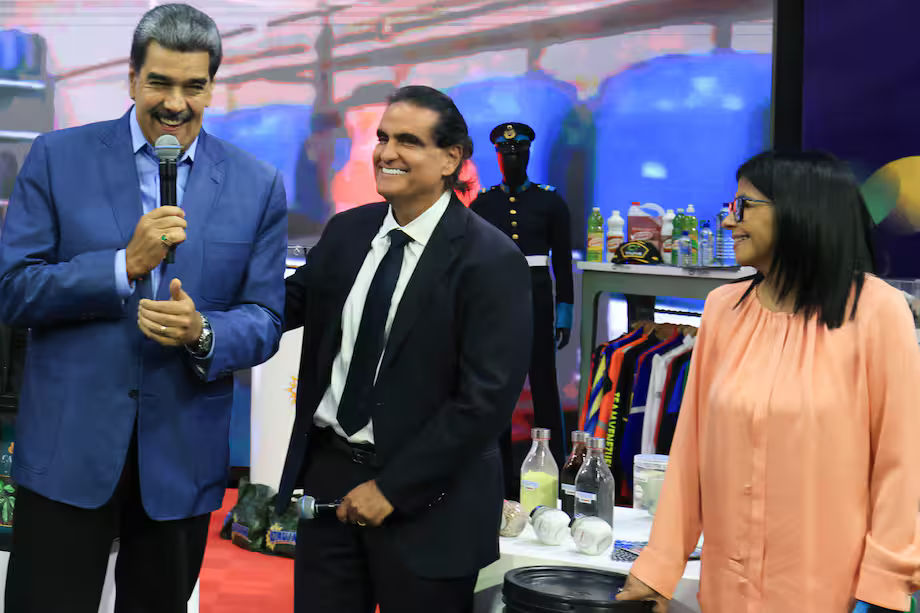
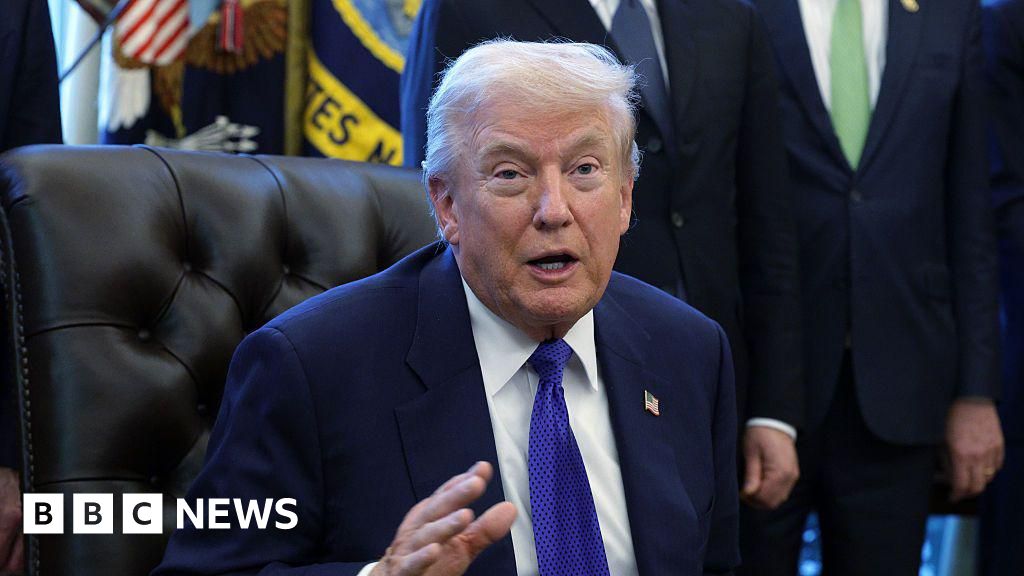


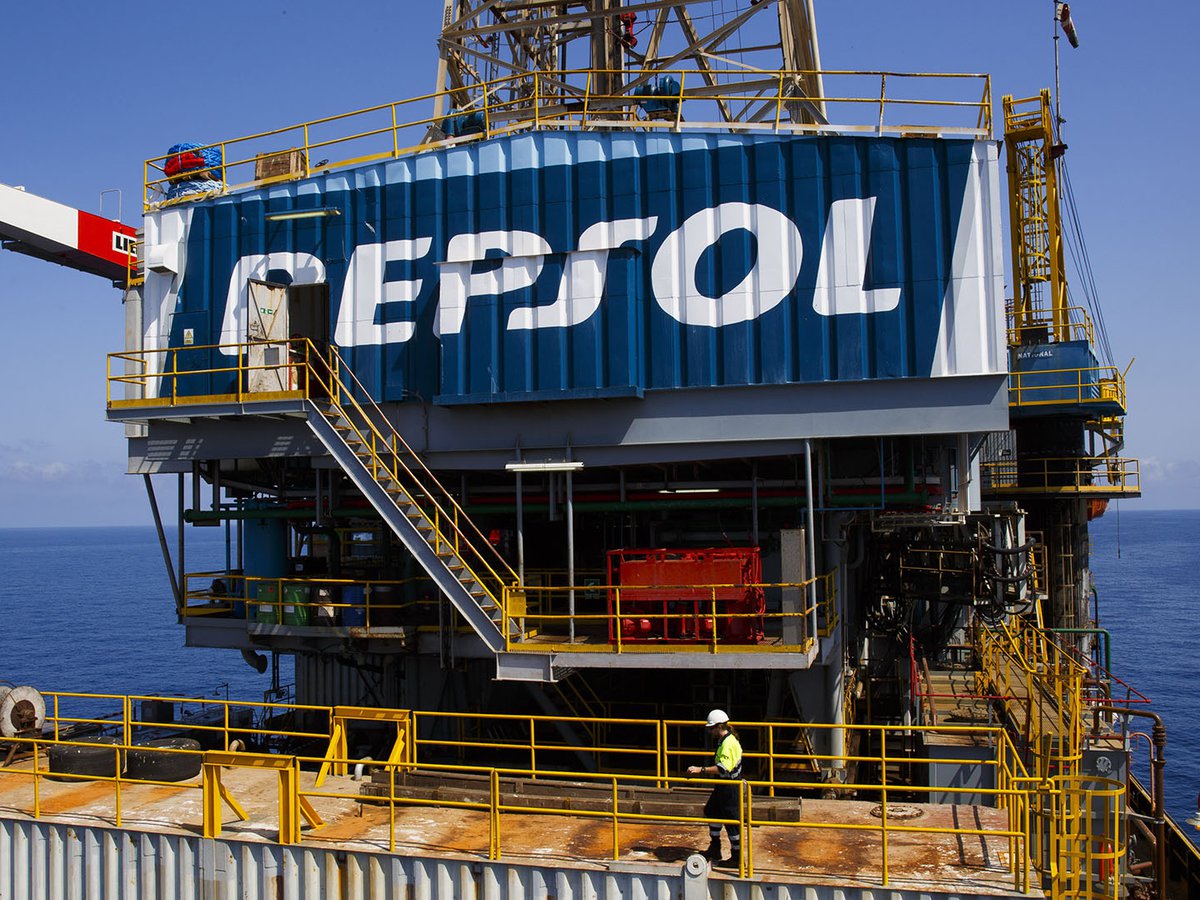
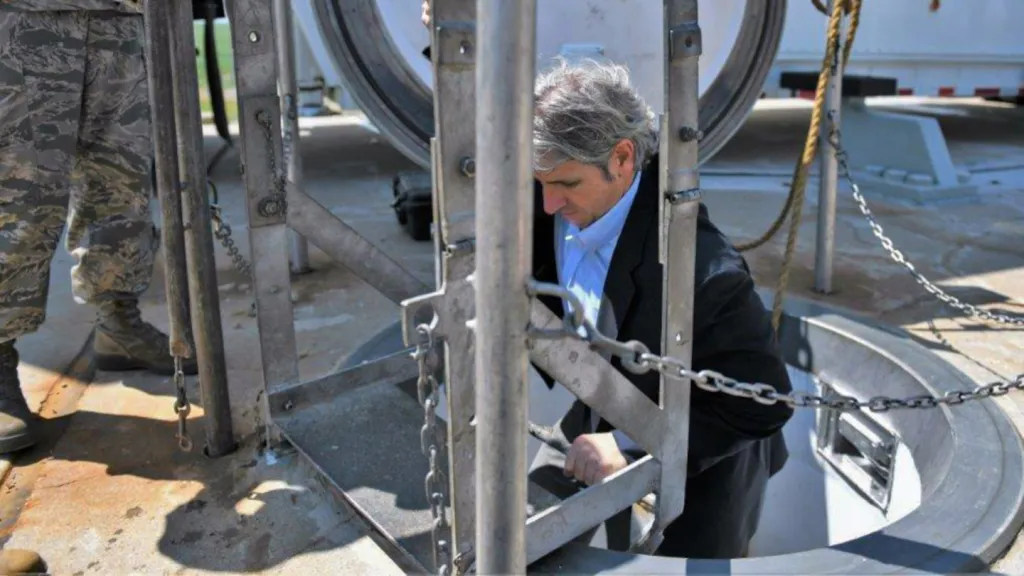


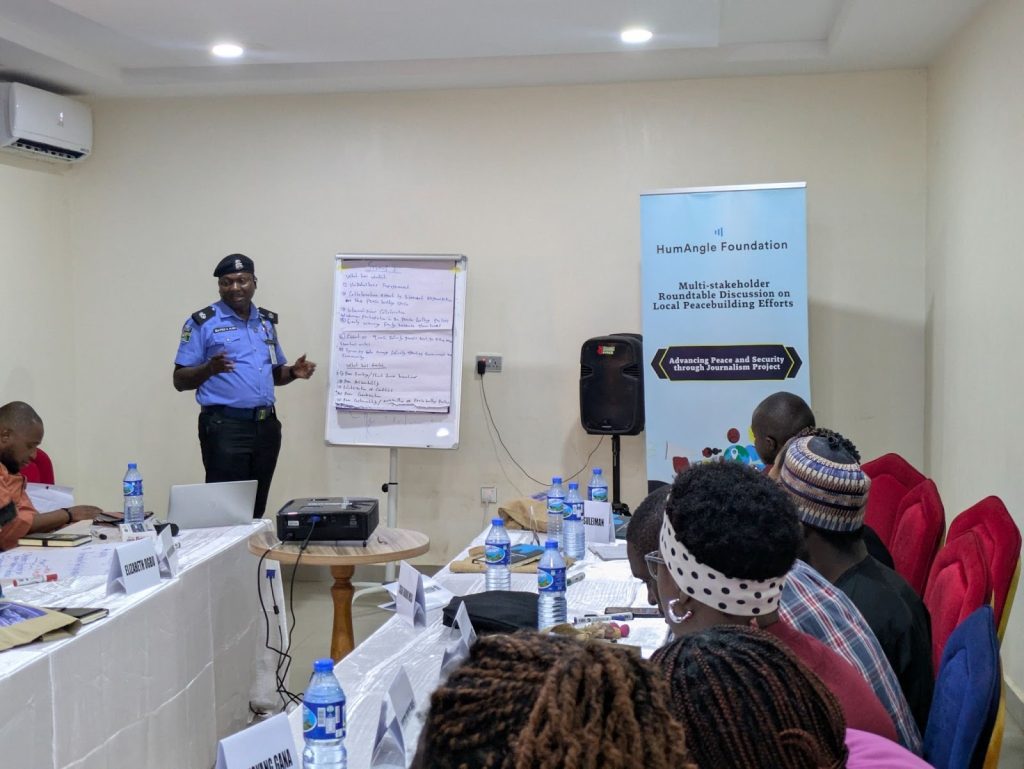






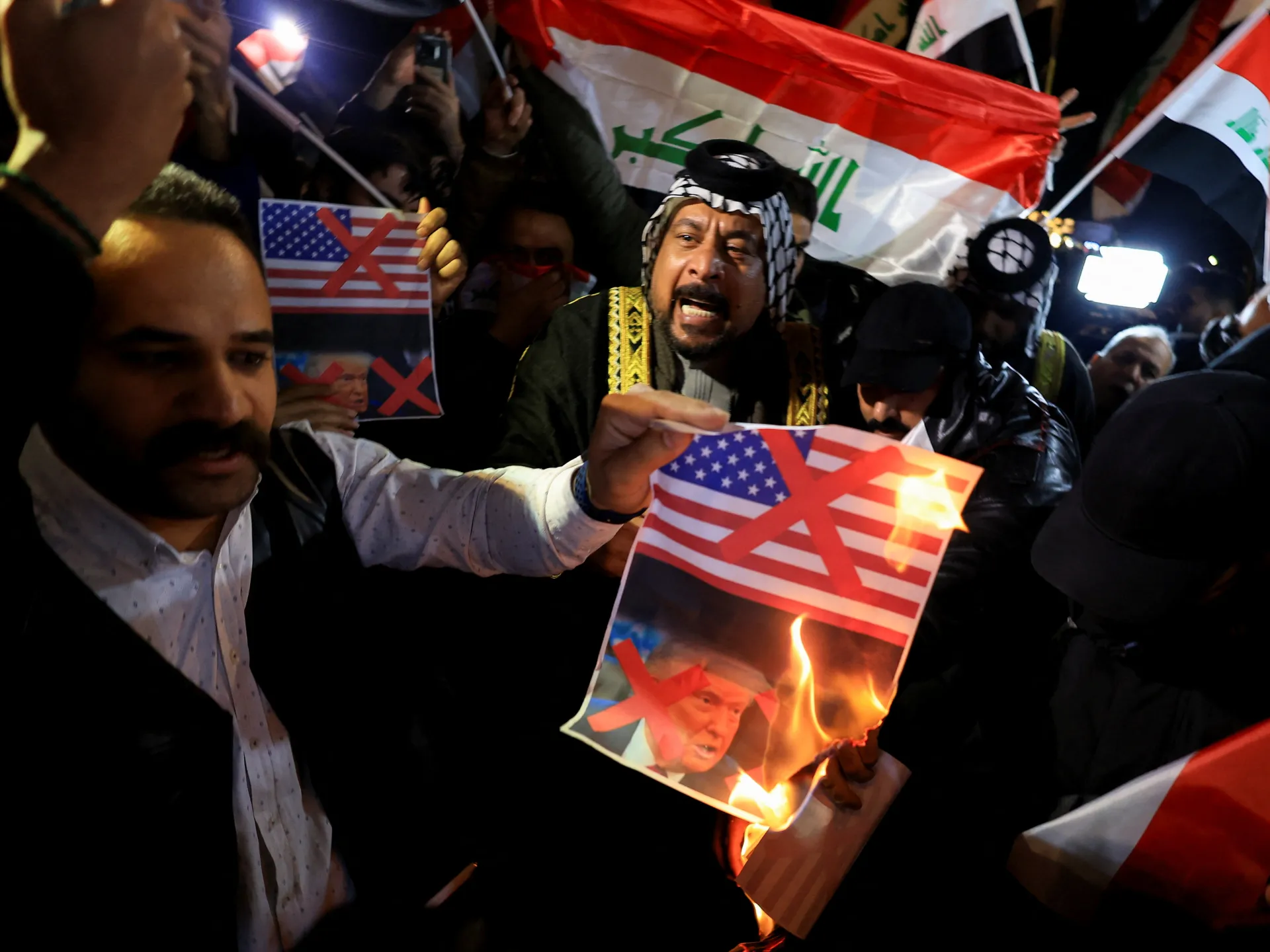



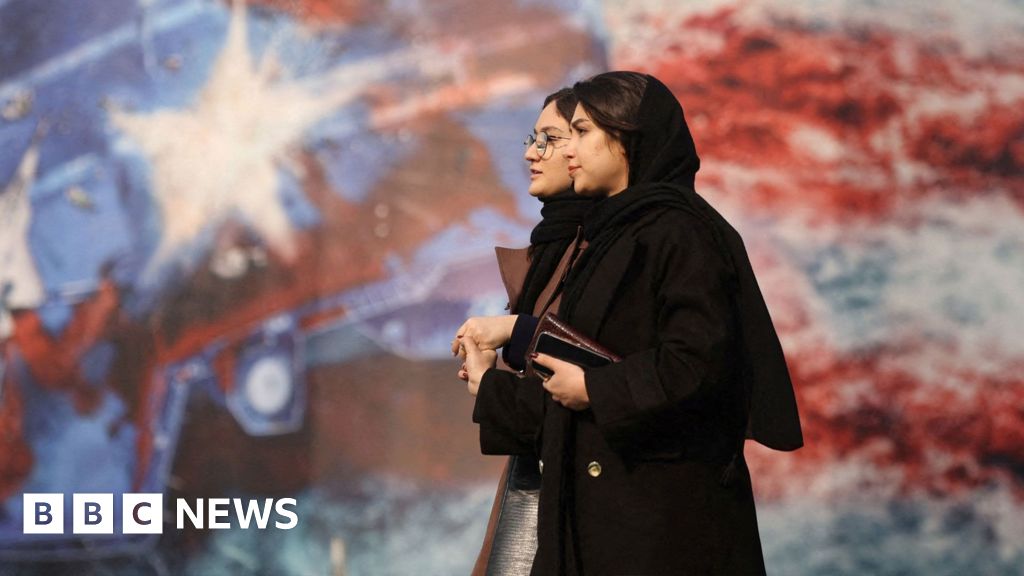
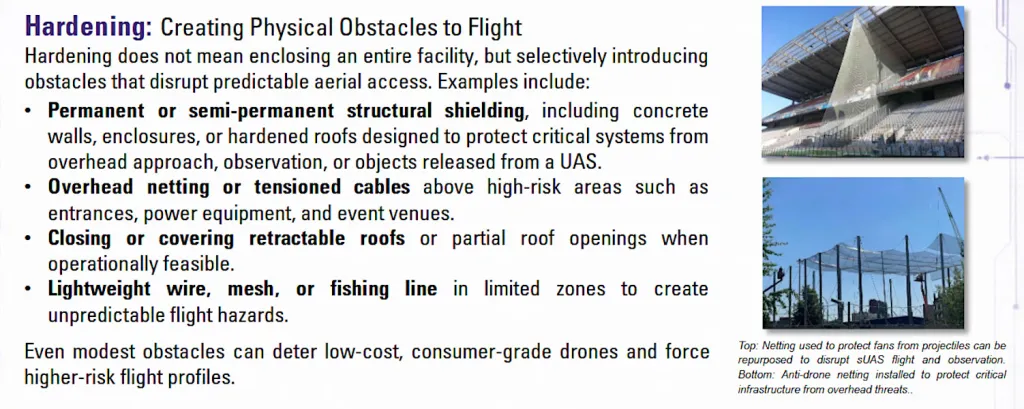


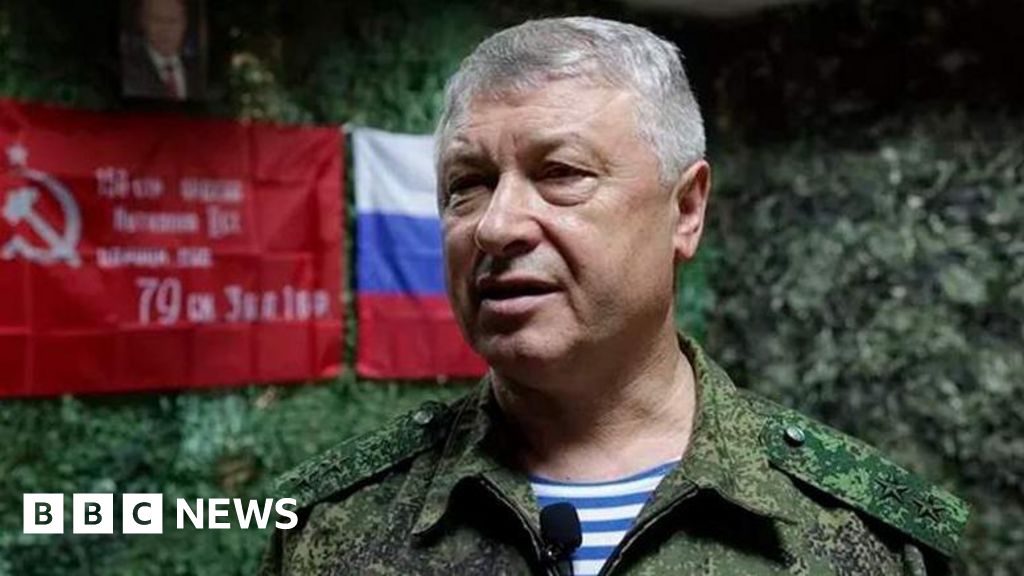


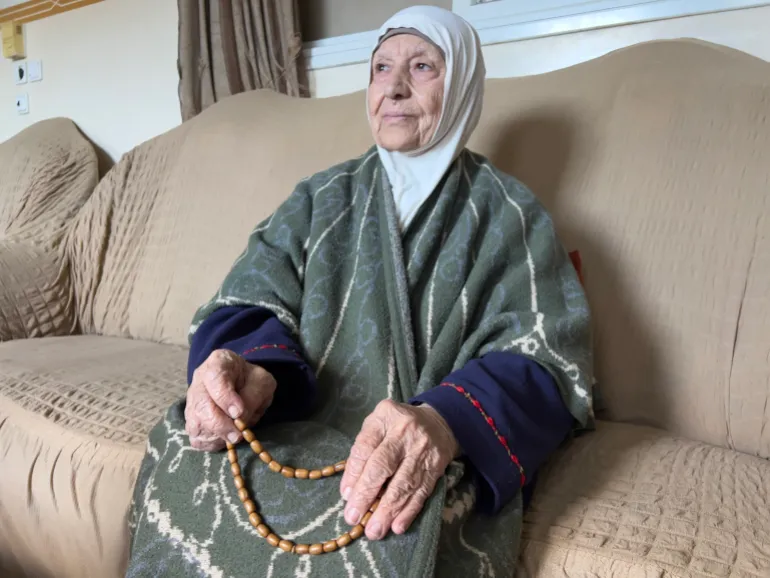
![Nazmeya Radwan, 85, refugee since 1948, from the Jerusalem district, displaced in Deir al-Balah [Ola al-Asi/Al Jazeera]](https://i0.wp.com/www.aljazeera.com/wp-content/uploads/2026/02/image00004-1770323728.jpeg?w=640&ssl=1)