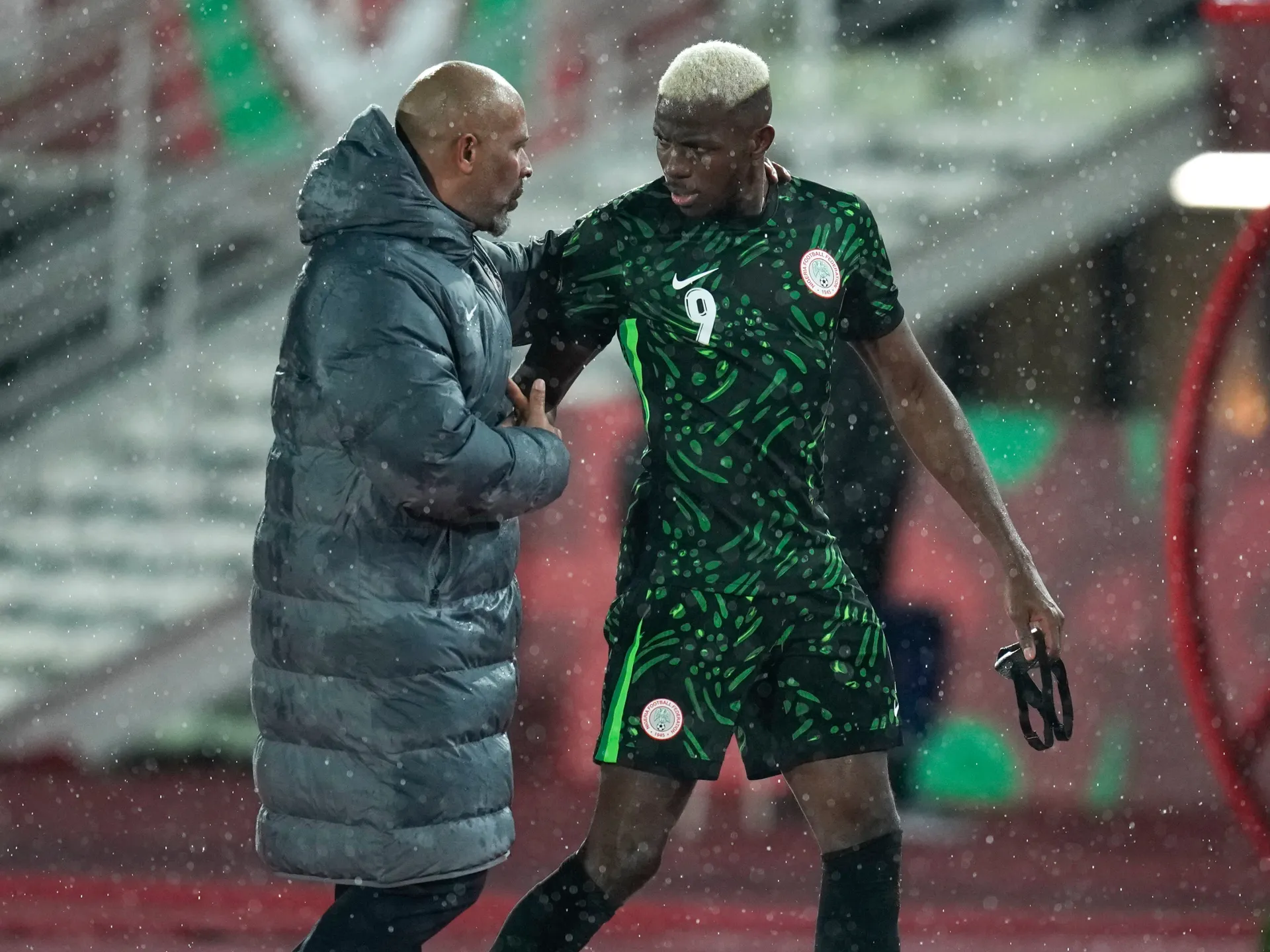
LIVE: Nigeria vs Tunisia – AFCON 2025 | Africa Cup of Nations News
Follow our live build-up, with team news coverage, before our text commentary stream of the Africa Cup of Nations tie.
Published On 27 Dec 2025
Follow our live build-up, with team news coverage, before our text commentary stream of the Africa Cup of Nations tie.
Published On 27 Dec 202527 Dec 2025
Share

Liverpool and Wolves paid tribute to Diogo Jota on an emotional day at Anfield as his two former sides met for the first time since his death.
The Portugal forward, 28, was killed in a car crash in Spain in July, alongside his 25-year-old brother Andre Silva.
Jota joined Liverpool in 2020 after three seasons with Wolves.
Dinis and Duarte, two of his three children, joined the matchday mascots on the pitch before their Premier League game on Saturday.
Jota’s sons, along with other young family members, led the Liverpool team out of the tunnel, walking out ahead of captain Virgil van Dijk.
Jota’s wife, Rute Cardoso, was also in attendance.
A banner which read ‘Diogo Jota, forever in our hearts’ was held aloft in the Kop stand before kick-off.
Chants of “Diogo, Diogo, Diogo” rang out from the Wolves fans in the away end before all of Anfield stood and applauded as Liverpool supporters sang in tribute to Jota in the 20th minute.
Dutch midfielder Ryan Gravenberch scored Liverpool‘s opener and dedicated it to Jota – recreating the shark-style celebration that the Portugal forward sometimes used.
Incursion follows Israeli defence minister’s order for military to ‘act forcefully’ against the Palestinian town.

Published On 27 Dec 202527 Dec 2025
Share
Israeli forces have carried out mass arrests and forced dozens of families from their homes in the town of Qabatiya in the occupied West Bank, on the second day of a sweeping military operation ordered by Israel’s defence minister.
Israeli forces sealed off entrances to Qabatiya while rounding up and interrogating dozens of residents on Saturday, local sources told Al Jazeera. They converted several homes into military interrogation centres, displacing their occupants, according to the Palestinian Wafa news agency.
list of 4 itemsend of list
Israel’s Army Radio reported that the town is subject to a “full curfew”.
The crackdown follows an order by Israeli Defense Minister Israel Katz to “act forcefully … against the village of Qabatiya”, where he claims a Palestinian alleged of carrying out a stabbing and car-ramming attack in northern Israel hails from.
In a statement on Friday, Israel’s military said it had deployed troops from multiple divisions, along with border police and members of the Shin Bet security service, into Qabatiya. It said forces had raided the attack suspect’s home and were preparing to demolish it.
Rights groups have long condemned Israel’s practice of demolishing the family homes of Palestinians accused of attacks against Israelis, describing it as an illegal form of collective punishment.
Israel’s military claimed its forces would “scan additional locations in the village” and “work to arrest wanted individuals and locate weapons”.
“There is a sense of fear among people in town,” one resident told Al Jazeera. “There are Israeli threats and Israeli incitement.”
The Israeli military raids on Saturday also extended elsewhere in the occupied West Bank, including to several villages surrounding Ramallah and Hebron, Wafa reported. Israeli forces assaulted and arrested eight people from the towns of Dura, Abda and Imreish near Hebron, according to the news agency.
Israeli military incursions and attacks across the occupied West Bank have been a near-daily occurrence during Israel’s genocidal war on Gaza.
Since October 7, 2023, Israeli authorities have arrested nearly 21,000 Palestinians. As of December 1, some 9,300 Palestinian prisoners were in Israeli jails, more than a third of them detained without charges.
Palestinian prisoners have been tortured, sexually abused and even killed in custody.

A ceasefire between Thailand and Cambodia has come into effect along the border, where almost three weeks of deadly clashes have forced nearly one million people from their homes.
In a joint statement, the defence ministers of the two countries agreed to freeze the front lines where they are now, ban reinforcements and allow civilians living in border areas to return as soon as possible.
The ceasefire took effect at noon local time (05:00 GMT) on Saturday. Once it has been in place for 72 hours, 18 Cambodian soldiers held by Thailand since July will be released, the statement said.
The breakthrough came after days of talks between the two countries, with diplomatic encouragement from China and the US.
The agreement prioritises getting the displaced back to their homes, and also includes an agreement to remove landmines.
Thailand’s Defence Minister Natthaphon Narkphanit described the ceasefire as a test for the “other party’s sincerity”.
“Should the ceasefire fail to materialise or be violated, Thailand retains its legitimate right to self-defence under international law,” he told reporters.
UN human rights chief Volker Türk said he hopes the ceasefire will “pave the way” for peace, while an EU spokesperson urged “good faith” in its implementation.
Thailand had been reluctant to accept the ceasefire, saying the last one was not properly implemented. They also resented what they saw as Cambodia’s efforts to internationalise the conflict.
Unlike the last ceasefire in July, US President Donald Trump was conspicuously absent from this one, although the US State Department was involved.
That ceasefire agreement collapsed earlier this month, when fresh clashes erupted. Both sides blamed each other for the breakdown of the truce.
The Thai army said its troops had responded to Cambodian fire in Thailand’s Si Sa Ket province, in which two Thai soldiers were injured.
Cambodia’s defence ministry said it was Thai forces that had attacked first, in Preah Vihear province, and insisted that Cambodia did not retaliate.
Clashes have continued throughout December. On Friday, Thailand carried out more air strikes inside Cambodia.
The Thai Air Force said it had hit a Cambodian “fortified military position” after civilians had left the area. Cambodia’s defence ministry said the strikes were “indiscriminate attacks” against civilian houses.
How well the ceasefire holds this time depends to a large extent on political will. Nationalist sentiment has been inflamed in both countries.
Cambodia, in particular, has lost many soldiers and a lot of its military equipment. It has been driven back from positions it held on the border, and suffered extensive damage from the Thai air strikes, grievances which could make a lasting peace harder to achieve.
Disagreement over the border dates back more than a century, but tension increased early this year after a group of Cambodian women sang patriotic songs in a disputed temple.
A Cambodian soldier was killed in a clash in May, and two months later, in July, there were five days of intense fighting along the border, which left dozens of soldiers and civilians dead. Thousands more civilians were displaced.
Following intervention by Malaysia and President Trump, a fragile ceasefire was negotiated between the two countries, and signed in late October.
Trump dubbed the agreement the “Kuala Lumpur Peace Accords”. It mandated both sides to withdraw their heavy weapons from the disputed region, and to establish an interim observer team to monitor it.
However, the agreement was suspended by Thailand in November after Thai soldiers were injured by landmines, with Thai Prime Minister Anutin Charnvirakul announcing that the security threat had “not actually decreased”.
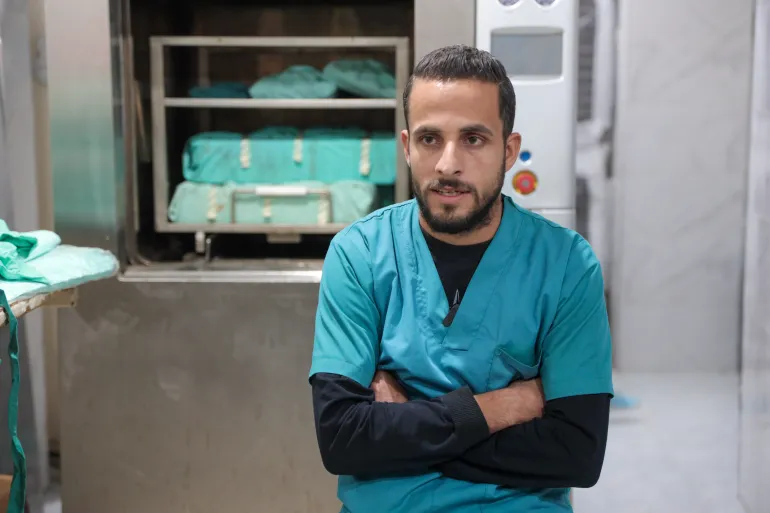
Gaza City – Dr Hussam Abu Safia, 52, remains in an Israeli prison a year after Israel detained him without charges or trial.
His family and supporters are demanding his release as his health deteriorates amid reports of the inhumane conditions under which he is being held.
list of 3 itemsend of list
Abu Safia, known for his steadfast presence as director of Kamal Adwan Hospital in Beit Lahiya, north of Gaza City, has become central in international discussions on the protection of medical personnel in armed conflicts.
He insisted on staying at the hospital, along with several medical staff, despite continuous Israeli attacks on the facility.
Israel eventually surrounded the hospital and forced everyone to evacuate. Since then, Abu Safia has been in detention, and the hospital has been out of service.
He was transferred between Israeli prisons, from the notorious Sde Teiman holding facility to Ofer Prison, being mistreated continuously.
No charges have been brought against Abu Safia, who is held under the “unlawful combatant” law, which allows detention without a standard criminal trial and denies detainees access to the evidence against them.
Abu Safia is being held in extreme conditions and, according to lawyers, has lost more than a third of his body weight.
His family is worried about him as he also suffers from heart problems, an irregular heartbeat, high blood pressure, skin infections and a lack of specialised medical care.
His eldest son, Ilyas, 27, told Al Jazeera via Zoom from Kazakhstan, where the family fled a month ago, about their grief over Abu Safia’s detention, adding that his father’s only “crime” was being a doctor.
Ilyas, his mother Albina and four siblings stayed with his father at Kamal Adwan through the Israeli attacks, despite opportunities to leave Gaza, especially as Albina is a Kazakh citizen.
On October 26, 2024, Israel killed Ilyas’s brother, Ibrahim, 20, while it shelled the hospital.
“The entire medical staff cried in grief for [my father] and for Ibrahim,” Ilyas said.
At dawn on December 27, 2024, the hospital woke up to a tightened Israeli siege with tanks and quadcopter drones.
Israeli tanks had been around Kamal Adwan since mid-October 2024, gradually moving closer – destroying parts of the infrastructure like water tanks – until that day when they were so close nobody could move outside.

Patients and staff gathered in the emergency reception corridor, according to Dr Walid al-Badi, 29, who stayed with Abu Safia until his arrest, and spoke to Al Jazeera on December 25 at the Baptist Hospital in Gaza City.
“The situation was extremely tense, loudspeakers were calling on everyone to evacuate, but Dr Abu Safia asked us to remain calm. Then the loudspeakers called Dr Abu Safia to come to the tank.”
Abu Safia was ordered to enter an armoured vehicle. According to al-Badi, the doctor returned carrying a sheet of instructions, dishevelled, his clothes dusty and a bruise under his chin.
Everyone rushed to check on him, and he told them that he had been assaulted.
“Israeli media showed a video claiming they … treated him with respect, but they didn’t show … how he was assaulted in the tank, threatened,” al-Badi said.
Abu Safia was ordered by the Israelis to prepare a list of everyone in the hospital, which he did and returned to the armoured vehicle, where he was told that only 20 staff could remain. The rest had to leave.
“Around 10am, the Israelis allowed some ambulances to take patients, wounded people, some displaced civilians, and the doctor’s family to the Indonesian Hospital [about 1km away] while the medical teams left on foot,” al-Badi recounts.
However, several patients remained, besieged along with the medics.
“The doctor told me to go, but I told him I would stay with him until the end.”
The only female medic who remained was intensive care unit head, Dr Mai Barhouma, who spoke to Al Jazeera from the Baptist Hospital.
Barhouma had been working with critical patients dependent on medical equipment and oxygen, and her conscience would not allow her to leave, despite Abu Safia asking her to.
The Israeli army repeatedly summoned Abu Safia for new instructions, once, according to Drs Barhouma and al-Badi, offering a safe exit for him alone.
He refused, insisting that he would stay with his staff. At about 10pm, the quadcopters ordered everyone to line up and evacuate.
During this time, Israel shelled and set fire to the upper floors and turned off the electricity.
“We were heartbroken as Dr Abu Safia led [us] out,” al-Badi recalled. “I hugged Dr Abu Safia, who was crying as he left the hospital he tried so hard to stay in.”
Testimonies from that day say medical staff were taken to al-Fakhoura School in Jabalia, where they were beaten and tortured by Israeli soldiers during interrogations.
Barhouma left in an ambulance with an ICU patient, but the ambulance was held for hours at the school.

“The soldiers bound our hands and forced us to walk towards al-Fakhoura school, [2km away] from the hospital. Our colleagues who had left in the morning were still there, being tortured,” al-Badi recalled, adding that they arrived at about midnight.
“They ordered us to strip down to our underwear, tied our hands and began severely beating us with boots and rifle butts, insulting and verbally abusing us.”
The interrogation and beatings of the medics in the freezing cold continued for hours while Barhouma was in the ambulance with the critically ill patient.
“The oxygen ran out, so I started using a manual resuscitation pump. My hands swelled from pumping nonstop, terrified that the patient would die,” she said.
She described hearing the screams of the male medics being tortured, and then being ordered out of the ambulance by Israeli soldiers.
“The soldier asked for my ID and took an eye scan, then ordered me to get out, but I refused and told him I had a critical patient who would die if I left them.”
Eventually, the Israelis released the medics, including al-Badi and Abu Safia, ordering them to head for western Gaza, while sending the ambulance with Barhouma in it on an alternate route westwards.
But the relief didn’t last. They had only walked a few metres when an Israeli officer called out to Abu Safia.
“Our faces froze,” al-Badi said. “The doctor asked what was wrong. The officers said: ‘We want you with us in Israel.’”
Al-Badi and a nurse tried to pull the doctor away, but he rebuked them and told them to keep walking.
“I was crying like a child being separated from his father as I watched the doctor being arrested and dressed in the white nylon uniform for detainees.”
Abu Safia’s family are appealing to human rights and legal bodies for his immediate release.
“My father’s lawyers visited him around seven times over the past year, [each visit allowed only] after exhausting attempts with the prison administration. Each time, my father’s condition has deteriorated significantly,” Ilyas told Al Jazeera.

“[He] has fractures in his thigh and shrapnel in his foot from an injury while at the hospital before his arrest. He also suffers other health problems and is subjected to severe psychological and physical abuse that does not befit his age.
“Israel is trying to criminalise my father’s work, his continued service to people and his efforts to save the wounded and the sick in an area Israel itself considered a ‘red zone’ at the time.
“My father’s presence and steadfastness inside the hospital posed a major obstacle to the Israeli army and its plan to empty the north of its residents.”
Ilyas is proud of his father.
“My father is a doctor who will be held up worldwide as an example of adherence to medical ethics and courage.
“I am proud beyond words, and I hope to embrace him soon and see him emerge from the darkness of prison safe and well.”

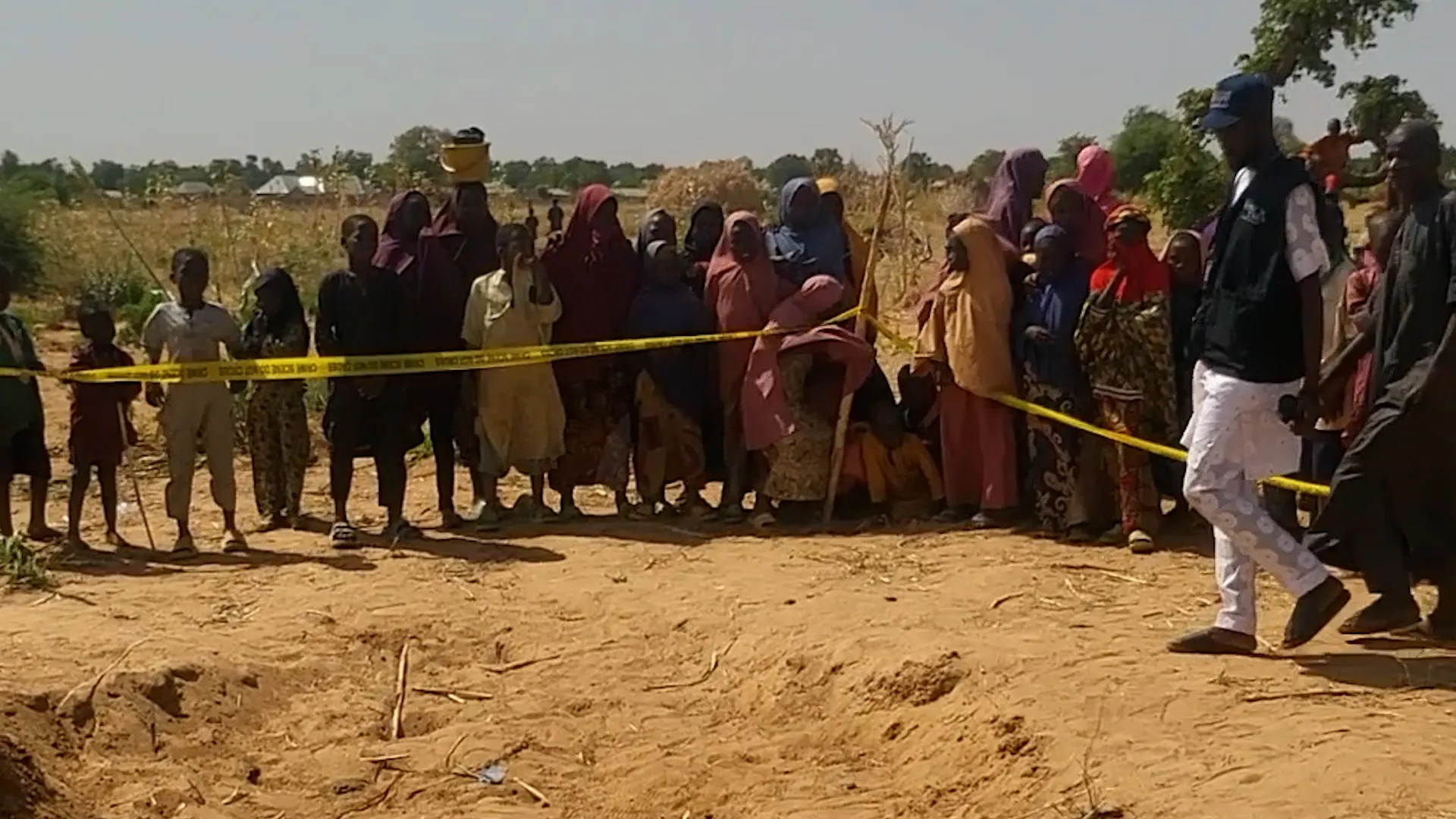
‘Debris was burning’.
Nigerians have described what they witnessed in US strikes on the town of Jabo, which President Donald Trump says were targeting ISIL.
Published On 27 Dec 202527 Dec 2025
Share
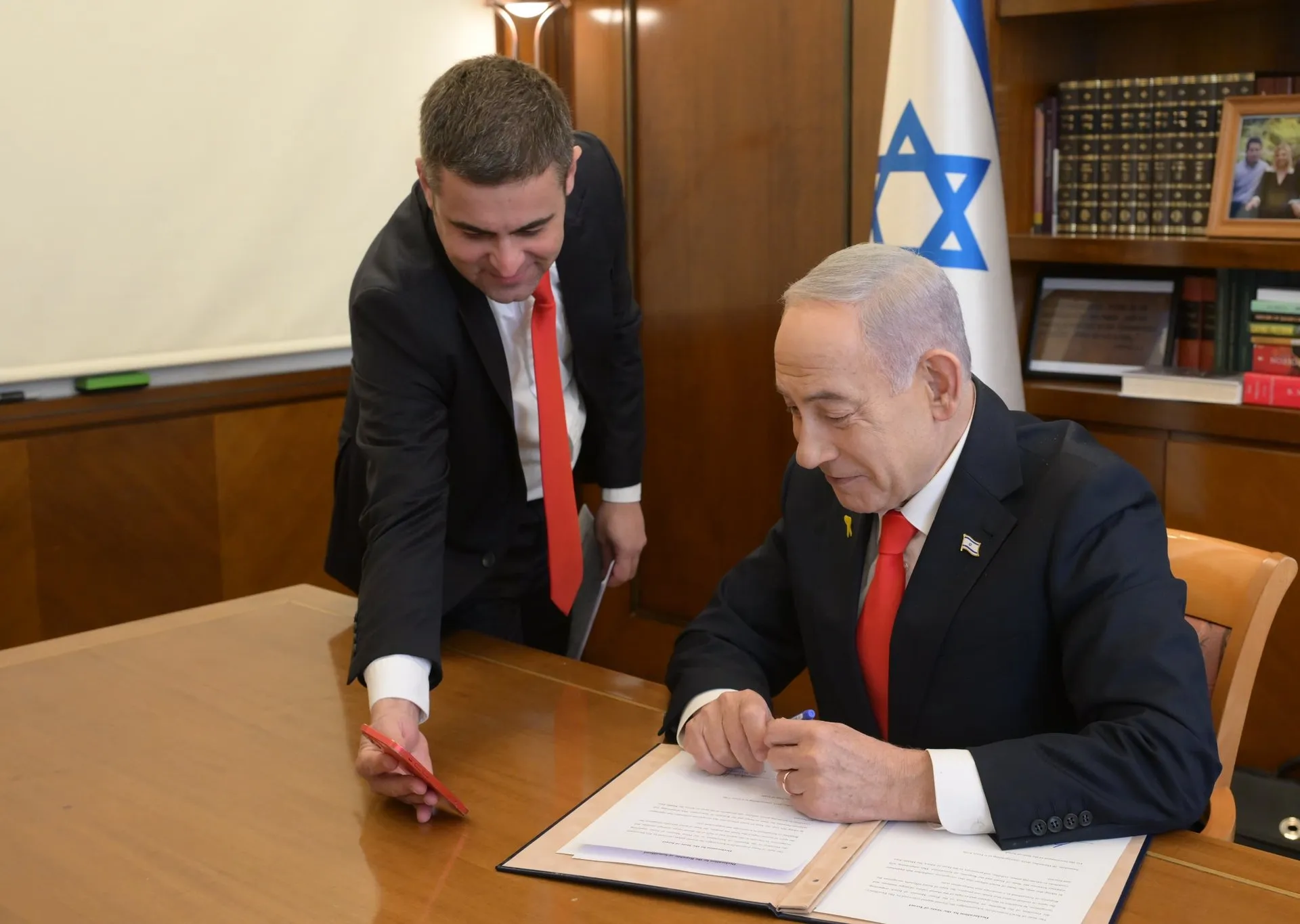
Somalia has demanded Israel reverse its recognition of the breakaway region of Somaliland, condemning the move as an act of “aggression that will never be tolerated”.
Ali Omar, Somalia’s state minister for foreign affairs, told Al Jazeera in an interview on Saturday that the government would pursue all available diplomatic means to challenge what it described as an act of “state aggression” and Israeli interference in the country’s internal affairs.
list of 4 itemsend of list
The sharp rebuke came a day after Israel became the first nation in the world to formally recognise Somaliland, triggering swift condemnation across African and Arab nations, and raising concerns about whether the move was part of an alleged Israeli plan to forcibly displace Palestinians.
Somaliland broke away from Somalia in 1991 following a brutal civil war but has never secured recognition from any United Nations member state. The self-declared republic has established its own currency, flag and parliament, though its eastern territories remain disputed.
“This will never be acceptable or tolerable to our government and people who are united in defending our territorial integrity,” Omar said. “Our government strongly advises the State of Israel to rescind its divisive actions and abide by international law.”
Somaliland President Abdirahman Mohamed Abdullahi, known locally as Cirro, had been signalling for weeks that recognition by an unnamed state was imminent, though he didn’t clarify which country. Somaliland’s capital Hargeisa had been dotted with billboards in recent weeks, telling residents that recognition was coming.
Omar said the strategic importance of the Horn of Africa was driving foreign interference and interest. “The importance of this region isn’t new. It is still important for international trade today,” he said.
Omar accused Israel of pursuing Somaliland’s recognition in order to further displace Palestinians from Gaza. “One of the motivating factors is the displacement of Palestinians from Gaza,” he told Al Jazeera. “It has been widely known – Israel’s goal on that issue.”
Palestine’s foreign ministry backed Somalia, recalling that Israel had previously identified Somaliland as a potential destination for forcibly displacing Palestinians from Gaza, which it described as a “red line”.
On Saturday, Somaliland’s Cirro defended the Israeli move, insisting it was “not directed against any state, nor does it pose a threat to regional peace”.
Hours after Israeli Prime Minister Benjamin Netanyahu announced the recognition on Friday, Somalia’s prime minister’s office issued a statement describing Israel’s action as a deliberate attack on Somalia’s sovereignty and an unlawful step, and emphasising that Somaliland remains an integral and “inseparable” part of the Somali territory.
Netanyahu framed the diplomatic breakthrough with Somaliland as being in the spirit of the Abraham Accords and said he would champion Somaliland’s cause during his meeting with United States President Donald Trump on Monday. Netanyahu also invited Cirro to Israel, which the latter has accepted.
But Trump has distanced himself from close ally Netanyahu on the issue, telling The New York Post newspaper he would not follow Israel’s lead.
Somalia’s Public Works Minister Ayub Ismail Yusuf welcomed Trump’s stance, writing on social media: “Thank you for your support, Mr. President.”
Trump’s comments marked a shift from August, when he told a news conference his administration was working on the Somaliland issue. In recent weeks, the US president has frequently attacked the Somali community in the US and Somalia.
The US has also expressed frustration with Somalia, saying at a recent UN Security Council meeting that Somali authorities had failed in improving security in the country despite billions in aid, and signalling it will not continue to fund a costly peacekeeping mission.
Meanwhile, the African Union’s chairperson, Mahamoud Ali Youssouf, rejected any initiative aimed at recognising Somaliland as an independent nation, warning it would set a dangerous precedent with far-reaching implications. The continental bloc cited a 1964 decision on the intangibility of borders inherited at a country’s independence as a fundamental principle.
Arab League Secretary-General Ahmed Aboul Gheit also condemned what he described as a provocative Israeli assault on the sovereignty of an Arab and African state. He said the Israeli recognition was a clear violation of international law and a flagrant infringement of the principle of state sovereignty.
Despite the international reactions, thousands poured onto the streets of Hargeisa on Friday to celebrate what many saw as the end of 30 years of diplomatic isolation. The Israeli flag was emblazoned on the national museum as residents welcomed the breakthrough.
Somalia has historically had contentious relations with Israel, stemming from Israel’s historic ties with Somalia’s regional rival, Ethiopia.
During the Cold War, Israel provided Ethiopia with military training, intelligence and weapons, while Somalia, aligned with Arab states hostile to Israel, was defeated in the 1977 Ogaden War, a setback that helped fuel decades of civil unrest.
Somaliland declared independence from Somalia in 1991 following persecution under former leader Mohammed Siad Barre, but Somalia has never recognised the breakaway region.
Earlier this month, Israeli Deputy Foreign Minister Sharren Haskel revealed there had been communication with Somalia’s government about shared concerns over Houthi influence in the region.
But Omar, the Somali state minister for foreign affairs, strongly denied any ties with Israel, stating that the country’s position on Israeli policies remained unchanged.


“I chose this story because it is a vital piece of investigative journalism that brings an urgent human face to a complex security failure. While much of the reporting focuses on the high numbers of Boko Haram fighters surrendering, this article exposes the under-reported risk faced by defectors.
The story, centred on the account of ‘Kakana,’ is a powerful narrative of trauma and betrayal. It highlights how Boko Haram’s successful network of spies tracks and assassinates former high-ranking members, effectively undermining the government’s Operation Safe Corridor and reintegration efforts.
This piece is exceptional because it moves beyond official statistics to show the devastating consequences, constant surveillance, assassination attempts, and social rejection which ultimately lead to the alarming rates of recidivism mentioned in the report.
It forces the reader to confront the reality that defecting is often not the end of the war for these individuals, but the beginning of a desperate, invisible fight for survival.”
–Usman Abba Zanna, Senior Multimedia Reporter.

“My favourite story for this year is one I wrote on how a medical error has left people with scars for life.
When patients are improperly injected in the buttocks, it affects the sciatic nerve, leading to paralysis of the leg.
I love the story because it sheds light on a hidden and unspoken crisis that has long robbed people of their dreams and ambition.
It is not an award-winning report, but receiving a lot of feedback from people thanking me for spotlighting the issue made me extremely excited.”
–Isah Ismaila, Investigations Reporter.

“I chose this story because, beyond the extremism, gruesome murders and deadly lifestyle which I didn’t find shocking, I got to have a glimpse into his intimate life and for a moment, it felt like I was watching a documentary.”
–Saduwo Banyawa, Adamawa/Taraba Correspondent.

“I chose this story because I enjoy stories that examine things that happen so often, we forget that they aren’t supposed to. I also have a heart for anything that centres women and their plight, which is exactly what the story does.
Writing-wise, I love that the story highlights how misogyny can never just be casual and following Rahimat’s journey, passions, and misfortunes was a hard but enjoyable read.”
–Azara Mabel Tswanya, NYSC Reporter.

“This story is my absolute favourite because of how it comprehensively captured the life of the late Boko Haram terror leader, Shekau, tracing his life before extremism, the evolution of his extremism, his ideology, the violence he orchestrated, and the circumstances, particularly grievances due to state failures, leading to it. It has been a long time since I read a piece this detailed and analytically rich.
The exposé is especially important as it adds depth to the ongoing discourse because it dismantles the false narrative of a “Christian genocide” in Nigeria. It laid bare the extremist ideology and how everyone, irrespective of religion and tribe, is an infidel and a target if you don’t conform to their practice of Islam.
The author, Salkida, is one of the few journalists who have a comprehensive understanding of the uprising. And this report, as indeed several other of his articles, significantly enriches the body of knowledge on terrorism and extremism studies in the Sahel. An absolute and essential reading for anyone studying these subjects.”
–Al-amin Umar, Specialised Reporter.

“Reading this story felt like reading a novel, before reality hits you and you remember that this really happened. The way the story describes how the echoes of his ideology literally birthed the existence of the violence we now know as Boko Haram is quite scary, because we don’t know how many other youths are out there striving to become Maitasine or Abubakar Shekau.
Also, the fact that Maitasine and his followers committed their atrocities without modern-day armed weapons but with sticks and stones, yet created such mass slaughter, just goes to show how terribly violent humans can get with the wrong set of thinking and somewhat right set of leadership.
I also particularly liked this story because I love history.”
–Hajara Hamzat Ibrahim, NYSC Audience Engagement/Multimedia Intern.

“This story is my favourite because it shows resettlement as more than a government initiative or a practical act of moving; it reveals what that movement does to familial relationships and highlights the tender bond between a mother and her son. It was an especially heartfelt story for me to document and write.”
–Sabiqah Bello, Senior Multimedia Reporter.

“I remember my annual leave had been approved by HR when the boss added me to the Google Docs draft. The story was so interesting that I began to feel conflicted about whether I truly wanted to take a break from work, feeling a strong case of FOMO (Fear of Missing Out). So I found myself in limbo, consuming my approved leave days so that I wouldn’t discourage editors from reaching out to me to contribute anything further to the report if the need arises. I have read the report for my pleasure many times before it was published.”
–Mansir Muhammed, Senior Specialist, GIS, OSINT & Emerging Tech.
The HumAngle Media article features investigative reports on pressing issues in Nigeria. One story highlights the dangers faced by defectors from Boko Haram who are tracked and assassinated by the group despite government reintegration efforts. Another report uncovers the severe consequences of medical errors causing paralysis in patients due to improper injections.
Further, the complexities of Abubakar Shekau’s life, the leader of Boko Haram, are explored, providing insights into his rise to extremism and the ideological violence he propagated. Additionally, the challenges women healthcare workers face due to everyday misogyny and the impact of resettlement in conflict zones on familial relationships are also examined. These narratives collectively shed light on the social, political, and health-related challenges in Nigeria.
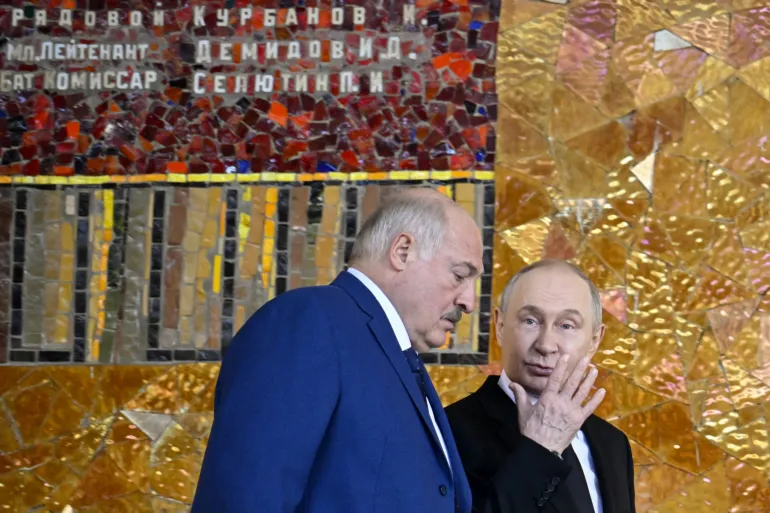
Ukrainian President Volodymyr Zelenskyy has accused Russia of using ordinary apartment blocks on the territory of its ally Belarus to attack Ukrainian targets and circumvent Kyiv’s defences.
Zelenskyy made the allegations on Friday amid revelations by intelligence experts that Moscow has likely stationed its new nuclear-capable hypersonic ballistic missiles at a former airbase in eastern Belarus – a move seen as bolstering Russia’s ability to strike targets in Europe.
list of 3 itemsend of list
“We note that the Russians are trying to bypass our defensive interceptor positions through the territory of neighbouring Belarus. This is risky for Belarus,” Zelenskyy wrote on the Telegram messaging app on Friday after a military staff meeting.
“It is unfortunate that Belarus is surrendering its sovereignty in favour of Russia’s aggressive ambitions,” the Ukrainian leader said.
Zelenskyy said Ukrainian intelligence had observed that Belarus was deploying equipment “in Belarusian settlements near the border, including on residential buildings” to assist Russian forces in carrying out their attacks.
“Antennae and other equipment are located on the roofs of ordinary five-storey apartment buildings, which help guide ‘Shaheds’ [Russian drones] to targets in our western regions,” he said.
“This is an absolute disregard for human lives, and it is important that Minsk stops playing with this,” he added.
The Russian and Belarusian defence ministries did not immediately respond to requests for comment.
Russia had previously used Belarusian territory to launch its February 2022 invasion of Ukraine, and Belarus remains a steadfast ally, though President Alexander Lukashenko has pledged to commit no troops to the conflict.

Amid reports of closer Russian and Belarusian coordination in the war on Ukraine, satellite imagery analysed by two US researchers appears to show that Moscow is stationing Oreshnik hypersonic ballistic missiles in eastern Belarus, according to an exclusive Reuters news agency report.
Oreshnik had been described by Russian President Vladimir Putin as impossible to intercept, and he previously made clear his intention to deploy the missiles – which have an estimated range of up to 5,500km (3,400 miles) – in Belarus.
Researchers Jeffrey Lewis of the Middlebury Institute of International Studies, in California, and Decker Eveleth of the CNA research and analysis organisation in Virginia, said they were 90 percent certain that mobile Oreshnik launchers would be stationed at the former Russian airbase near Krichev, some 307km (190 miles) east of the Belarus capital of Minsk.
The United States researchers said reviews of satellite imagery revealed a hurried construction project in Belarus that began between August 4 and 12, and contained features consistent with those of a Russian strategic missile base.
One “dead giveaway” in a November 19 satellite image was a “military-grade rail transfer point” enclosed by a security fence to which missiles, their mobile launchers and other components could be delivered by train to the site, Eveleth told Reuters.
Another feature, said Lewis, was the construction of a concrete pad that was then covered with earth, and which he called “consistent” with a camouflaged missile launch point.
The researchers’ assessment broadly aligns with US intelligence findings, according to the report.
Russia and Belarus have yet to comment on the Reuters report.
But, earlier this month, President Lukashenko acknowledged the deployment of such weapons in his country, although he did not say to which part of the country the Russian missiles have been deployed. He added that up to 10 Oreshniks would be deployed within the country.
State-run BelTA news agency quoted Belarusian Defence Minister Viktor Khrenin as saying this week that the Oreshnik’s deployment would not alter the balance of power in Europe and was “our response” to the West’s “aggressive actions”.
The White House did not immediately respond to a request for comment on the reported Russian missile deployment to Belarus.
Ukraine’s capital came under a new “massive” Russian attack early on Saturday, with explosions reported in the city, air defences in operation and the Ukrainian military saying cruise and ballistic missiles were being deployed.
On Sunday, President Zelenskyy is scheduled to meet with US President Donald Trump to finalise a possible ceasefire deal between Moscow and Kyiv.
In advance of the meeting, Zelenskyy told the Axios news site that he was open to putting the Washington-led “20-point” peace plan to a referendum – as long as Russia agreed to a 60-day ceasefire to allow Ukraine to prepare for and hold such a vote.
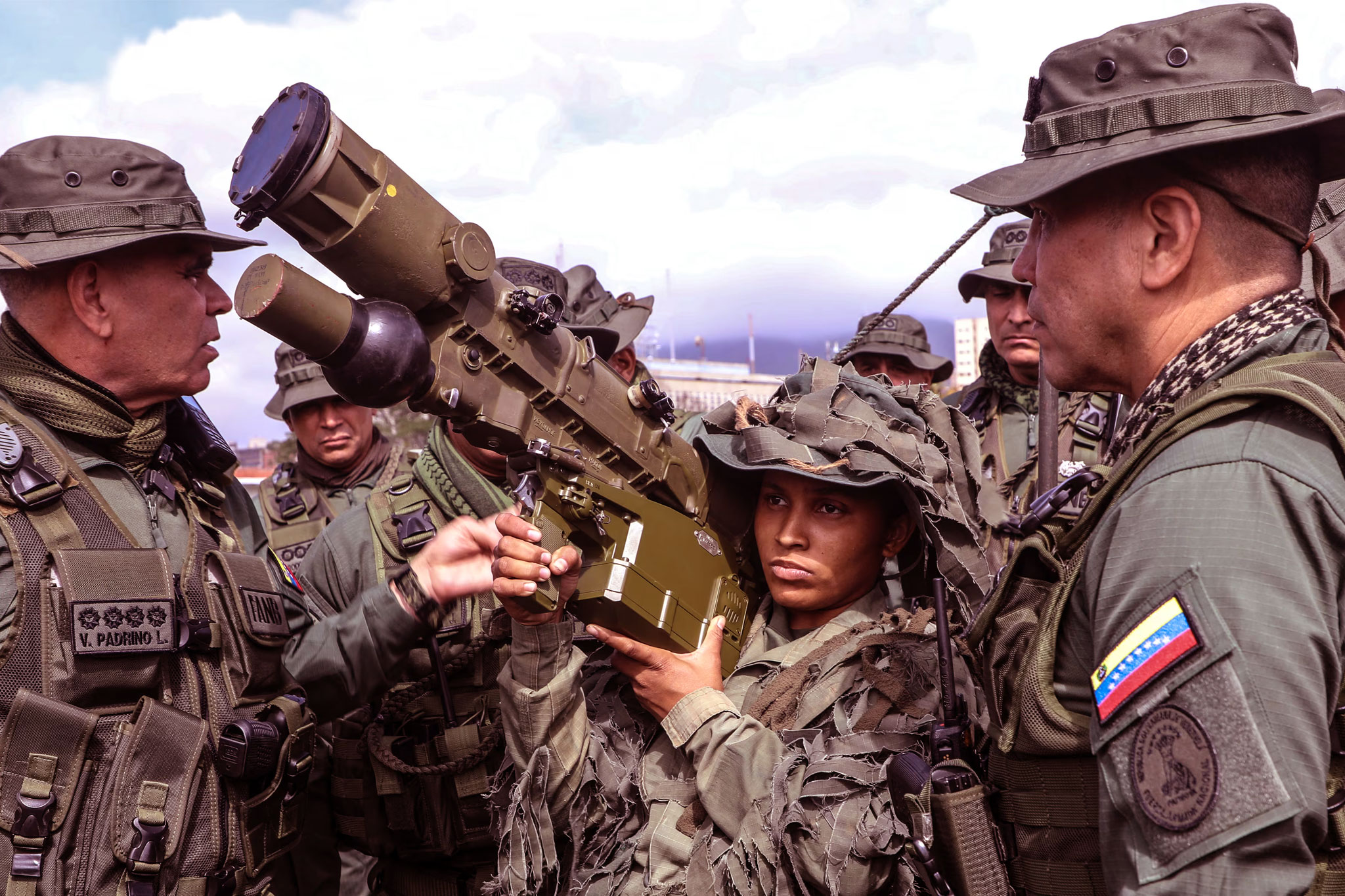
Venezuelan armed forces have held defense exercises in the face of US threats. (Archive)
Since 2002, the date of the 47-hour coup against Hugo Chávez, Washington has unsuccessfully sponsored and supported regime change in Venezuela time and again. In the name of human rights, freedom, and democracy, economic sanctions, color revolutions, oil strikes, recognition of illegitimate leaders, theft of foreign currency and infrastructure, assassination attempts, media offensives, military uprisings, and threats of ground invasion have been instigated or combined without interruption.
Many of these attacks, aimed at seizing the largest oil reserves on the planet, are acts of international piracy. They have caused immense damage to the country and enormous suffering to its people. They have resulted in billions of dollars in lost oil revenue. Countless Venezuelans have been forced to migrate to other nations to survive. Meanwhile, a segment of the old, corrupt oligarchy lives the high life in their mansions in Miami and Madrid.
But despite the lethality of the punishments and the harshness of the siege, the Bolivarian Revolution continues. Certainly, some Chavista political leaders have betrayed the cause. A few military and intelligence officers have gone over to the enemy ranks. Intellectuals have succumbed to the siren song of metropolitan power. But, against all odds, the majority of the population draws a line in the sand against gunboat democracy; they remain loyal to a project that allowed them to recover their dignity and advance in popular power.
For 27 years, Bolivarianism has won almost every election. Desperate in the face of this setback, the empire has tried other formulas for regime change. In December 2007, Enrique Krauze laid his cards on the table. “If Hugo Chávez has thought of turning Venezuela into a Cuba with oil, the Venezuelans who oppose him have discovered the antidote. It is the student movement,” he wrote. So the far right latched onto this movement and tested an insurrectionary scheme. However, the reactionary forces clashed with a reality that wasn’t in their playbooks. So they left to make their fortunes abroad.
All imperial attempts at regime change have run up against what, until now, seems insurmountable: the unity of the Bolivarian National Armed Forces (FANB). There is not a single indicator showing any internal divisions. Part of the key to this unity is the development of a new military doctrine known as the Comprehensive Defense of the Nation. This doctrine seeks to confront the US military threat based on a set of actions designed to deter a technologically and numerically superior enemy.
This strategy has three central elements: strengthening military power, deepening the civil-military union (between the people and the soldiers), and bolstering popular participation in national defense tasks. Previously, the armed forces were fragmented into divisions and brigades. Commander Chávez organized the country into regions, and each region has a military structure with all its components: Army, Navy, Air Force, National Guard, militias, and the people.
If someone attacks a region, that region has the capacity to defend itself. It doesn’t need to move units from elsewhere. On February 23, 2019, under the pretext of bringing in humanitarian aid from Colombia, the Contras and Washington attempted to establish a beachhead in Táchira that would give the illegitimate Juan Guaidó control of a strip of Venezuelan territory to establish a “seat of government.” For 17 hours, fierce clashes erupted between Chavistas and Venezuelan paramilitaries and guarimberos, who operated mostly from the Colombian side. The skirmish ended with the opposition’s defeat.
There, amidst the events, at the military installation beside the Simón Bolívar Bridge, I spoke with Diosdado Cabello, then president of the National Constituent Assembly. Most of the FANB (National Bolivarian Armed Forces) chiefs were also present, whom he introduced to me as his friends and as longtime collaborators of Hugo Chávez. I asked him about the resolve of his troops. In good spirits, he explained:
“President Maduro has visited every barracks. He shows up in the early morning. He arrives, runs with them, shares, does military exercises with them. We have total contact with them. We are like brothers. Many of us have been in this movement since we were children. We support each other and follow each other. We are a family. They will not break us…”
Regarding the role of the militias, he told me: “For the friends of the State, they are a diamond. For the enemies of the State, they are the worst news.” A military intervention by a foreign country in Venezuela is very complicated, and not only because of the civil-military alliance.
Caracas has modernized its weaponry by acquiring it from Russia, China, and Iran, with whom it also maintains an alliance. Furthermore, it covers an area of almost one million square kilometers. Its topography is highly diverse: the Andes mountain range, the Coastal Range, and the Guiana Shield, along with the extensive Orinoco River basin. It boasts 4,208 kilometers of coastline and dense rainforests. The poor neighborhoods of cities like Caracas are dangerous. It shares a 2,341-kilometer border with Colombia, a 2,199-kilometer border with Brazil, and a 789-kilometer border with Guyana.
No neighboring country desires armed conflict on its borders. Venezuela possesses the men, weapons, determination, and territory capable of sustaining a prolonged popular resistance, turning any attempt to occupy the country into a quagmire for whoever tries it. Regardless of what might happen on the day of the occupation, the true military challenge for an invading force lies in what to do in the days that follow. However, beyond what may happen in the future, in Venezuela, today is the time for peace.
The views expressed in this article are the author’s own and do not necessarily reflect those of the Venezuelanalysis editorial staff.
Luis Hernández Navarro is the Opinion editor of La Jornada, and the author of numerous books, including Chiapas: La nueva lucha india and Self-Defense in Mexico: Indigenous Community Policing and the New Dirty Wars.
Translated by Mexico Solidarity Media.
Source: La Jornada
From Ukraine to Palestine to Sudan, millions were exposed to conflict in 2025
Source link

Citizens of the Central African Republic (CAR) will vote on Sunday in highly controversial presidential and legislative elections expected to extend President Faustin-Archange Touadera’s tenure beyond two terms for the first time in the country’s history.
Touadera, who helped put his country on the map when he adopted Bitcoin as one of its legal tenders in 2022, had earlier pushed through a referendum abolishing presidential term limits. That, as well as significant delays that almost upturned the confirmation of two major challengers, has led some opposition groups to boycott the vote, calling it a “sham”.
list of 4 itemsend of list
CAR will also hold local elections for the first time in 40 years, after a long period of destabilising political conflict, including an ongoing civil war between the predominantly Muslim Seleka rebel movement and the largely Christian Anti-balaka armed groups, which has led to the displacement of one million people. There are fears that the country’s electoral body is not equipped to handle an election on this scale.
The landlocked nation is sandwiched between several larger neighbours, including Chad to the north and the Democratic Republic of the Congo (DRC) to the south. It has an ethnically and religiously diverse population of about 5.5 million, with French and Sango being the national languages.
Although rich in resources like crude oil, gold and uranium, persistent political instability since independence from France in 1960, and the ongoing civil war (2013-present) have kept CAR one of Africa’s poorest nations. For security, CAR is increasingly reliant on Russian assistance to guard major cities against rebels.
Citizens of CAR are referred to as Central Africans. The country’s largest city and capital is Bangui, named after the Ubangi River, which forms a natural border between CAR and the DRC. The country exports mainly diamonds, timber and gold, but much of the population depends on subsistence agriculture, and economic activity is limited.

Here’s what we know about Sunday’s election:
About 2.3 million Central Africans over the age of 18 are registered to vote for the country’s next president. Of these, 749,000 registrations are new since the previous election in 2020.
They’ll also be voting for national lawmakers, regional and, for the first time in about 40 years, municipal administrators. Average turnout in past years has been about 62 percent, according to the International Foundation for Electoral Systems (IFES). There are about 6,700 polling units across the country.
The National Elections Authority initially planned to hold the municipal government elections at the end of August, but moved the polls to December at the last minute, blaming insufficient funds as well as technical and organisational challenges. The decision has added to concerns among election observers and opposition politicians about how prepared the electoral body is.
Campaigning began on December 13, but opposition groups claim that delays in including Touadera’s biggest challengers in the process have favoured the president’s rallies.
The presidential candidate with an absolute majority is declared the winner, but if there is no outright winner in the first round, a second run-off vote will determine the victor.
Although presidents were previously limited to two, five-year terms, a controversial 2023 referendum introduced a new constitution which removed term limits and increased each term to seven years.
The country’s constitutional court approved Touadera’s candidacy alongside prominent opposition leader Anicet-Georges Dologuele, ex-Prime Minister Henri-Marie Dondra, and five others.
However, delays in approving the two major opponents and concerns around the readiness of the electoral body have led an opposition coalition, the Republican Bloc for the Defence of the Constitution (BRDC), to boycott the election. The group has, therefore, not presented a candidate.
Here is what we know about the candidates who are standing:
Touadera, 68, is a mathematician and former vice chancellor of the University of Bangui. He is running under the ruling United Hearts Movement (MCU).
He served as the country’s prime minister from 2013 to 2015 under President Francois Bozize. He was elected as president in 2016 and again in 2020, although opposition groups contested the vote.
Touadera, who is the favourite to win in these polls, has campaigned on promises of peace, security and new infrastructural development in the country.
After 10 years in office, the president’s legacy is mixed. His administration has been dogged by accusations of suppressing the opposition and rigging elections.
Indeed, Touadera would not be eligible to run had he not forced the 2023 referendum through. He sacked a chief judge of the constitutional court in October 2022, after she ruled that his referendum project was illegal.
Opposition members boycotted the referendum, but that only gave the Touadera camp more “yes” votes. Although a civil society group launched a legal challenge against his candidacy before the polls, the constitutional court threw out the suit.

Touadera is credited with spearheading some economic development, compared with his predecessors. New roads and highways have been built where there were previously none, but the World Bank still ranks CAR’s economy as “stagnant”.
Touadera has also been praised for achieving relative stability in the conflict-affected country where armed groups hold swaths of territory, especially in the areas bordering Sudan.
Support from a United Nations peacekeeping force, Rwandan troops and Russian Wagner mercenaries has helped to reduce violence in recent years.
CAR was the first country to invite the Russian mercenary group to the continent in 2018 in a security-for-minerals deal, before other countries, including Mali, Burkina Faso, and Niger, also secured security contracts.
CAR was historically closer to former colonial power France, but Paris suspended its military alliances and reduced aid budgets to the country in 2021 following the Russia cooperation.
At a meeting with Russian President Vladimir Putin in 2023, Touadera praised Russia for saving CAR’s democracy. The two met again in January 2025.
In advance of the elections, Touadera has also signed a series of peace accords with some armed groups active in the country, although there are fears that the agreements will only hold until after the polls.
The president launched Bitcoin as a legal tender in 2022, making CAR the second country to do so after El Salvador. The idea drew scepticism, as less than 10 percent of Central Africans can access the internet, and was ultimately abandoned after a year.
In February 2025, CAR launched the $CAR meme coin, which the government said is an experiment.
This week, Touadera’s government signed a new contract with Elon Musk’s Starlink to expand internet services to rural and remote regions.
The 59-year-old is a career banker and former finance minister. He is running under his Republican Unity party (UNIR), which has positioned itself as a reformist party and is not part of the opposition coalition. He served as prime minister under Touadera between 2021 and 2022 but was fired, likely because of his strong pro-France tendencies at a time when the administration was turning towards Russia, according to reporting by French radio, RFI.
Dondra’s candidacy was not approved until November 14, after Touadera accused him of holding Congolese citizenship, which he denied. The accusations raised fears that he would be barred from the vote. Two of his brothers were reportedly arrested and detained without charge before the vote, Dondra told Human Rights Watch in late November.

The main opposition leader of the Union for Central African Renewal (URCA) party broke from the boycotting opposition coalition in order to run in these elections. Dologuele’s candidacy has prompted what some analysts say are xenophobic statements from Touadera’s supporters.
The 68-year-old dual citizen French-CAR politician first ran for the top job back in 2015 and was the runner-up in the 2020 presidential race. His third bid has faced challenges over his citizenship status. The 2023 referendum limited candidates to CAR citizenship only, and derisive comments from some in the governing camp have suggested some opposition candidates are not “real Central Africans”.
In September, Dologuele said he had given up his French citizenship; however, in October, a Central African court stripped him of his CAR citizenship, citing a clause in the old constitution disallowing dual citizenship. Dologuele reported the issue as a violation of his human rights to the UN human rights agency. It’s unclear what, if any, action the agency took, but Dologuele’s name on the final candidates list suggests his citizenship was reinstated.
Dologuele served as prime minister in the 1990s, under President Ange-Felix Patasse, before joining the Bank of Central African States and later heading the Development Bank of Central African States.
Although he is seen by some as an experienced hand, others associate him with past government failures. Dologuele is promising stronger democratic institutions and better international alliances.
Protracted political conflict in CAR has continued for more than a decade, with many Central Africans saying they want a leadership that can bring peace.
Trouble began following a coup in March 2013 by the mainly Muslim Seleka rebel alliance that overthrew President Francois Bozize. In retaliation, Bozize assembled Christian and animist rebel armed groups, known as the Anti-balaka. Both sides attacked civilians and have been accused of war crimes by rights groups. Bozize, who continues to lead a rebel coalition, is now in exile in Guinea-Bissau. His attempted attacks in 2020 were fended off by Touadera’s Russian mercenaries.
However, killings, kidnappings and displacement continue in many rural communities in the country’s northwest, northeast and southeast regions, despite recent peace deals signed with some groups. Russian mercenaries have proven pivotal in securing major areas, but are also accused of human rights violations, such as mass killings, while opposition politicians have criticised the reliance on foreign fighters.
A 17,000-strong UN peacekeeping force, MINUSCA, has been extended until November 2026, although the move faced resistance from the US, which wants CAR to handle its own security going forward. The force has suffered at least three deaths in deadly attacks this year alone. There are also fears about the security of voters in rural areas; about 800 voting units were forced to close in the last elections due to rebel violence.
CAR remains one of the poorest nations in the world, with more than 60 percent of the population living in poverty, according to the World Bank.
Most people live in rural areas and survive on subsistence farming in the absence of any state-propelled industry.
Economic growth rate is slow, averaging 1.5 percent yearly. Only 16 percent of citizens have access to electricity, and only 7.5 percent have access to the internet.
Persistent fuel shortages make economic activity more difficult.
The country ranked 191st of 193 countries in the 2022 Human Development Index.
The country’s turbulent political history and the present landscape of deeply divided political groups have failed to deliver a unified opposition coalition that can challenge Touadera and enshrine a functioning democracy.
Fears around whether Touadera intends to run for life following the 2023 referendum are high, with opposition and rights groups already calling for reforms to the new constitution. There are also fears around vote rigging in the elections in favour of Touadera’s governing party.

BREAKINGBREAKING,
Agreement follows talks aimed at ending weeks of deadly clashes along the Thailand-Cambodia border.
Published On 27 Dec 202527 Dec 2025
Share
Thailand and Cambodia said they have signed a ceasefire agreement to end weeks of fierce fighting along their border that has killed more than 100 people and forced the displacement of more than half a million civilians in both countries.
“Both sides agree to an immediate ceasefire after the time of signature of this Joint Statement,” the Thai and Cambodian defence ministers said in a statement on Saturday.
list of 4 itemsend of list
“Both sides agree to maintain current troop deployments without further movement,” the ministers said.
The ceasefire is scheduled to take effect at noon local time (05:00 GMT) and extends to “all types of weapons” and “attacks on civilians, civilian objects and infrastructures, and military objectives of either side, in all cases and all areas”.
The agreement, signed by Thai Defence Minister Natthaphon Narkphanit and his Cambodian counterpart Tea Seiha, ends 20 days of fighting, the worst between the two Southeast Asian neighbours in years.
This is a breaking news story. More to follow soon.
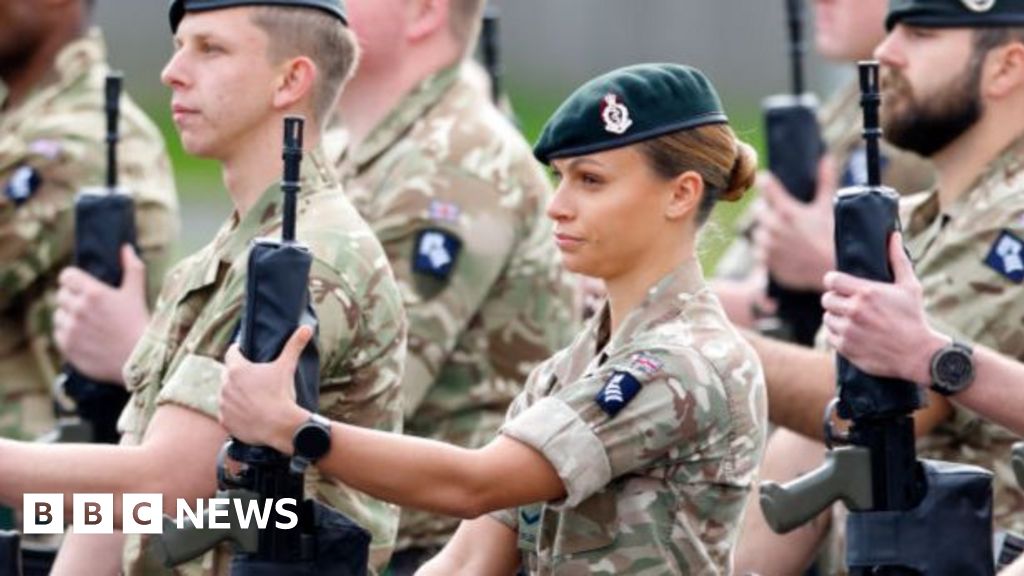
The Ministry of Defence (MoD) is to launch a “gap year” scheme to give school and college leavers a taste of the Army, Royal Navy and RAF, but without making a long-term commitment.
The paid 12-month course is aimed at under-25s and is part of efforts to help solve long-term recruitment and retention problems in the armed forces.
Applications open in spring 2026 to be part of the first cohort of 150 recruits, with ministers planning for the scheme to eventually grow to 1,000 young people a year.
The programme is paid but officials have yet to announce a salary.
The MoD says those who join the “gap year” programme will learn skills of leadership, teamwork and problem solving to set them up “for life” whether they pursue a career in the armed forces or not.
Officials hope the scheme will bring a broader range of people into the forces, and that some decide to stay to pursue a career in the military.
Defence Secretary John Healey MP said: “This is a new era for Defence, and that means opening up new opportunities for young people to experience and learn from our Armed Forces.
“This gap year scheme will give Britain’s young people a taste of the incredible skills and training on offer across the Army, Royal Navy and RAF. It’s part of our determination to reconnect society with our forces, and drive a whole of society approach to our nation’s defence.
“As families come together at this time of year, and young people think about their futures, I want the outstanding opportunities on offer in our Armed Forces to be part of that conversation in homes across the UK.”
Shadow defence secretary James Cartlidge said: “As ever with Labour, the reality does not match the spin. A scheme involving just 150 participants is barely a pilot, let alone the ‘whole of society’ response they claim to be delivering.
“Of course, the Australian scheme has its strengths but these tiny numbers do nothing for our war readiness, and expose the harsh reality that Labour is prioritising higher welfare spending over a proper increase in the defence budget. Meanwhile, their Defence Investment Plan is months behind schedule, and we still have no idea when, or how, they intend to reach 3% of GDP on defence.
“In contrast, the Conservatives are serious about defending our country, which is why we announced the Sovereign Defence Fund, to raise an additional £50bn for defence and strengthen our deterrence by giving our Armed Forces the modern capabilities they need.”
The “gap year” scheme was recommended by the UK Strategic Defence Review in June after being inspired by the Australian Defence Force (ADF).
The ADF gap year programme has been in operation for more than a decade, with applicants offered the chance “get a feel for military life while enjoying unique experiences you can’t find anywhere else”.

The TWZ Newsletter
Weekly insights and analysis on the latest developments in military technology, strategy, and foreign policy.
Ukraine is expanding its uncrewed surface vessel (USV) attacks to hit Russian targets on the Dnipro River and its tributaries. Kyiv’s USV campaign has previously hit enemy shipping, warships, and infrastructure in attacks made famous by the country’s State Security Service (SBU) and Defense Intelligence Directorate (GUR).
Meanwhile, as Russia begins to build out its own USV effort, Ukraine also said it struck a storage site for those vessels on Tuesday night in a preemptive effort to keep them from being deployed.
The 40th Coastal Defense Brigade of the 30th Marine Corps recently released a video showing the Barracuda USV it developed carrying out a mission in the Dnipro region. The video purports to show the Barracuda making its way through an inlet before hitting a small camouflaged Russian boat and outpost. The video then cuts to aerial drone views showing an explosion and resulting destruction.
“The unmanned boat ‘Barracuda’ carried out another successful mission,” the Corps stated on Telegram.
Много говорят про БЭКи “Магура” от ГУР МО Украины и Sea Baby от СБУ, хотя СОУ применяют и другие средства, не так часто показывающие свою результативную работу в эфирах всяких там “марафончиков”.
Одним из таких БЭК является Barracuda 40-й ОБрБО.
Одно из видео как БЭК выполнил… pic.twitter.com/MSBQAeGHQX
— Alexander Kovalenko (@zloy_odessit) December 24, 2025
The Barracuda USV is operated by a special unit of the same name, according to the 30th Marine Corps.
“The eponymous special unit, subordinated to the 40th Marine Brigade, independently designed and launched a water drone, which is already defending the coasts of Ukraine,” the Corps explained.

Unveiled earlier this year, the Barracuda was designed to carry out several missions, including one-way attack, strikes with grenades and first-person view (FPV) drones and resupply, according to the Corps.

This modular design is similar to the Sea Baby USVs produced by the SBU and the Magura line of USVs operated by GUR that have frequently staged attacks in the Black Sea. In addition to serving as one-way attack weapons, the USVs previously deployed by Ukraine have brought down jets and helicopters and launched attacks using aerial drones. This onslaught has already kept Russia’s Black Sea Fleet (BSF) at bay, forcing it to retreat from Crimea to Novorossiysk. Ukrainian USVs have also damaged enemy military facilities in occupied Crimea and the Kerch Bridge.

However, unlike Ukraine’s long-range USVs, the Barracuda is not equipped with satellite communications.
“Its range is therefore limited, making it suitable primarily for short-distance missions among the islands of the Dnipro River, which corresponds with the operating area of the 40th Coastal Defense Brigade,” the Ukrainian United24 media outlet noted.
The unit claims that the Barracuda is guided in part by artificial intelligence, but does not provide any details.
🇺🇦 Ukraine’s Marines unveil a new riverine naval drone — Barracuda.
Built by the 40th Coastal Defense Brigade, it’s modular, AI-enabled, and tailored for Dnipro island warfare: mining channels, striking with grenade launchers, and resupplying positions. pic.twitter.com/0a11OsO7R5
— Ivan Khomenko (@KhomenkoIv60065) August 24, 2025
Overall, the Barracuda appears to be a bit cheaper and less complex design that is better optimized for lower priority targets in riverine and shallow littoral areas. The lack of a satellite communications system is interesting as control of the boat would have to be provided locally, within line of sight of the boat or at least within line of sight of a relay, such as a drone, flying overhead. The boat could also follow waypoint navigation autonomously, but making pinpoint attacks in complex waterways would be a challenge for such a concept of operations.
The Barracuda attacks are part of a fight taking place on the Dnipro, its inlets and islands since the Ukrainian’s recaptured Kherson City in November 2023. With neither side being able to launch a major cross-river attack due to the difficulty of crossing a body of water while under fire from drones and artillery, the two sides have been jockeying for position in this area on a much smaller scale.
The success of Ukraine’s USVs has not been lost on Russia. Earlier this year, Moscow carried out a drone boat attack on a Ukrainian Navy reconnaissance ship in the mouth of the Danube River. That incident marked Russia’s first confirmed use of these weapons. In addition to building its own drone boats, Russia also created dedicated units to operate them. You can read more about Russia’s USV development in our story here.
The following video shows the August Russian USV attack on the Ukrainian ship.
Though there have been no confirmed Russian USV attacks since August, Ukraine remains concerned about the potential for future strikes.
“As part of a systematic reduction of the Russian aggressor’s military-economic potential, on the night of December 24, units of the Ukrainian Defense Forces carried out successful strikes on several enemy targets,” the Ukrainian Armed Forces General Staff claimed on Wednesday. “The storage and maintenance site for unmanned boats in the area of Mirny in the temporarily occupied Ukrainian Crimea was hit.”

The General Staff did not provide any visual evidence of the results of the attack and said that the extent of the damage is still being determined.
While Ukraine’s Barracuda USVs have not yet been carrying out attacks on high-value targets, the drone boats give Kyiv’s beleaguered forces another weapon they can use to help defend its internal waterways.
Contact the author: howard@thewarzone.com
The TWZ Newsletter
Weekly insights and analysis on the latest developments in military technology, strategy, and foreign policy.
An image has emerged that appears to show, for the first time, one of China’s growing series of low-observable combat drones aboard the country’s super-sized Type 076 amphibious assault ship, the Sichuan. The development is in line with previous predictions that this vessel will be capable of supporting high-end aerial drone operations as well as traditional amphibious assaults.
As it seems, for the first time a mock-up of one of the CCA UCAVs shown in September was seen on the deck of the PLANS-51 „Sichuan“ … Looks like a navalised variant of the Type-C. pic.twitter.com/Bs1Gxfiq9R
— @Rupprecht_A (@RupprechtDeino) December 26, 2025
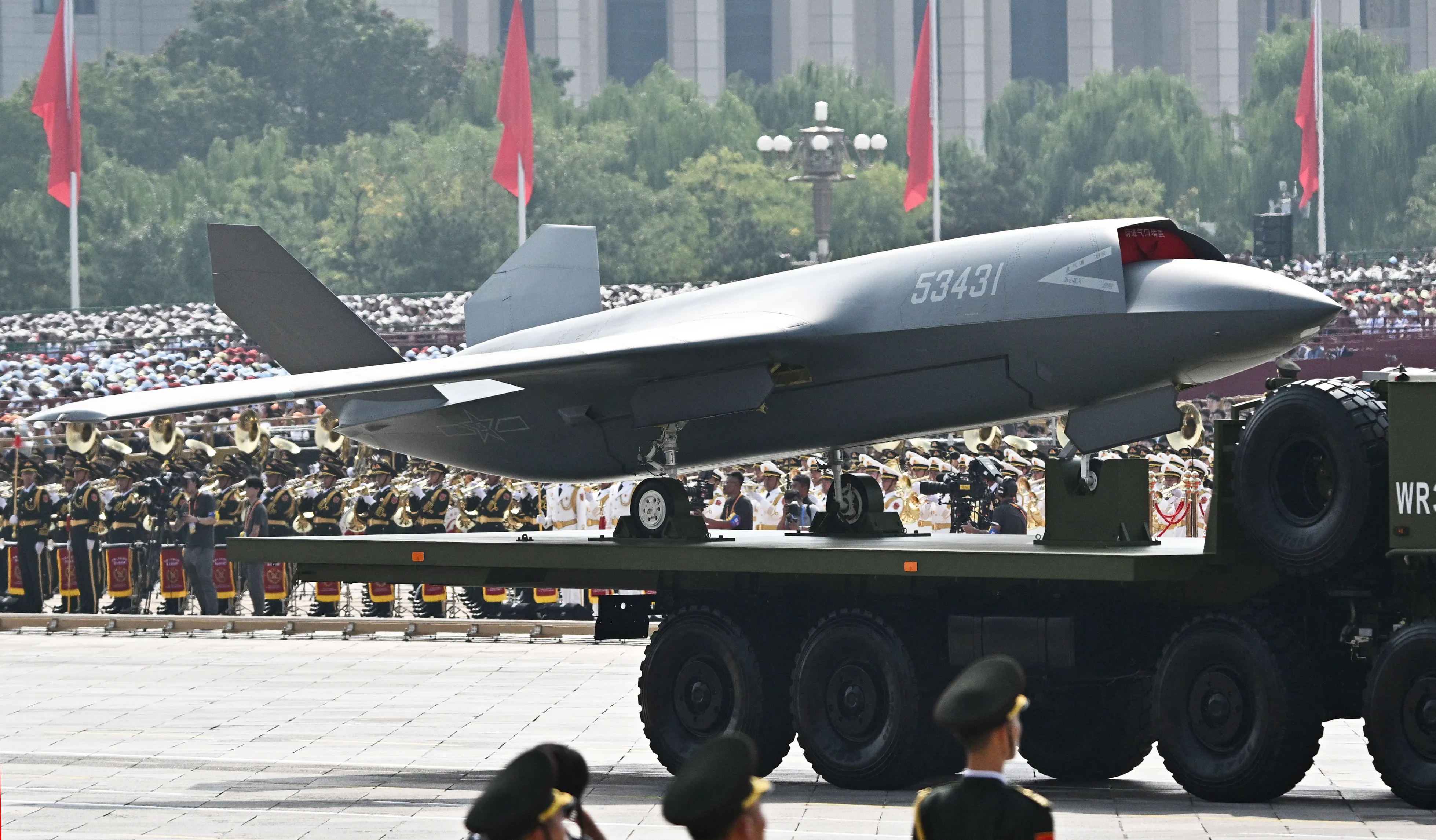
The image in question began to circulate recently online and shows the rear portion of the drone on the deck of the Sichuan, partly obscured by one of the vessel’s twin island superstructures. The characteristic twin, outward-canted tailfins of the drone suggest that this is a navalized version of the design that has been informally dubbed Type C by Chinese aerospace observers. It is part of a collection of aircraft that are considered to be broad Chinese equivalents of the U.S. Air Force’s Collaborative Combat Aircraft (CCA).
Well, back from work and back to this strange picture: 🤔
I start with my layman’s attempt to sort them a bit + adding the names according to Huitong’s CMA-Blog.— @Rupprecht_A (@RupprechtDeino) September 10, 2025
While the image appears to be genuine, it should be considered at least possible that the drone in question is a mockup. China makes considerable use of aircraft mockups, on land and at sea, to assist with the development and subsequent service introduction of aircraft carriers and assault ships.
The so-called Type C is a subsonic CCA or “loyal wingman”-type drone. Its key features include a swept lambda wing planform, the aforementioned canted tail fins, an internal stores bay, and a single jet engine fed by a dorsal intake. Overall, in terms of configuration, it has some similarities with the U.S.-made XQ-58A Valkyrie, but it is much larger. According to unconfirmed reports, it is said to be optimized for air-to-ground missions, although intelligence, surveillance, and reconnaissance (ISR) and electronic warfare would also be likely roles. The Type C is one of at least four new CCA-type drones that were publicly unveiled at the parade celebrating 80 years since the defeat of Japan in World War II, held in Beijing on September 3, 2025.

It would make a good deal of sense for the drone to now be evaluated by the People’s Liberation Army Navy (PLAN) onboard the Sichuan. As you can read about here, the first of the Type 076 assault ship left port for its first sea trials last month.

Thanks to its electromagnetically-powered catapult, the 44,000-ton Type 076 is unlike any other big deck amphibious warship in terms of the kind of air wing that it can accommodate, which is expected to be dominated by uncrewed types.
Previously, Type 076’s air wing was expected to include naval versions of the GJ-11 stealthy flying-wing uncrewed combat air vehicle (UCAV), sometimes known as the GJ-21. This theory was supported by apparent GJ-11 mockups that appeared at a test and/or training site right on Changxing Island in Shanghai, very close to where the Type 076 was being built. This may well still be the case, but it now looks like a navalized Type C drone will at least supplement it.
As it seems, for the first time clear images of a GJ-21 in flight are posted and this one – based on the still installed pitots – has its tail hook down. pic.twitter.com/5h1nVZHzIe
— @Rupprecht_A (@RupprechtDeino) November 1, 2025
The navalized GJ-11 is expected to operate primarily from China’s true aircraft carriers, including the catapult-equipped Fujian, which was commissioned last month. This carrier is expected to be followed by six more by 2035, according to a Pentagon report, which would provide the PLAN with a total of nine. Recent imagery indicates that China is now progressing with work on its fourth flattop, which is expected to introduce nuclear propulsion.
Returning to the Sichuan, in addition to drones, the warship will accommodate various helicopters, and very likely also a crewed tiltrotor aircraft, which is now in flight testing.
While we don’t yet know whether the Type C has been launched from the Sichuan, there have already been signs of preparations for flight trials. Shortly before the vessel left port for the first time, full markings had been painted on its flight deck, as part of its final fitting out.
Furthermore, as seen in the social media post below, evidence emerged at the end of October showing what looked to be a red-colored catapult test ‘truck’ on Sichuan’s deck. This, in turn, pointed to the start of testing of the ship’s lone catapult.
Again, as we have discussed before, as well as the catapult, the layout of the Type 076 design is heavily focused on sustained flight operations. These features include its unusually wide flight deck and the ship’s two islands. As such, fixed-wing drones can be launched by the catapult at the bow end and recovered via some form of arresting gear.
As TWZ previously wrote about the overall significance of the Sichuan:
“The potential value to the PLAN of having a fleet of very large deck amphibious assault ships that are highly capable of large-scale drone operations as well as traditional amphibious assaults is clear. These ships could be used to launch and recover UCAVs like the GJ-11 and other types of drones to perform a host of missions from maritime strike to intelligence, surveillance, and reconnaissance (ISR). They could be used to provide additional ‘mass’ in support of the operations of larger carrier strike groups and help to free the air wings of flattops like Fujian up for tasks they might be better suited for. In addition, they could provide a lower tier of naval aviation support that could be employed independently.”
…
“Simply having more naval aviation capacity overall would give the PLAN added flexibility for various operations closer to the mainland, including a potential military intervention against Taiwan or defending its expansive and largely unrecognized territorial claims in places like the South China Sea. Type 076s could also help project naval and air power further from China’s shores, something that has also been a driving factor behind the country’s broader carrier ambitions.”

Chinese PLA Navy’s First Type 076 Amphibious Assault Ship “Sichuan” Conducts First Sea Trial
It remains to be seen if the PLAN’s current ambitions include introducing the navalized Type C as part of the regular air wing for the Type 076, or whether it is currently being used as part of an evaluation that may lead to a different type of uncrewed aircraft going aboard the warship. By the same token, we don’t yet know if China currently plans to acquire more Type 076s, or if this design is also initially intended more to prove out the concept of super-sized assault ships.
For now, however, the appearance of the Type C, or a mockup thereof, aboard the Sichuan, underscores China’s broader goal of deploying a host of different uncrewed types aboard aviation-capable warships of various kinds.
Contact the author: thomas@thewarzone.com
Ramped up economic sanctions could lead to a quick deterioration of living standards. (Meridith Kohut)
The loudest question in Washington right now is whether Donald Trump is going to invade Venezuela. The quieter, and far more dangerous, reality is this: he probably won’t. Not because he cares about Venezuelan lives, but because he has found a strategy that is cheaper, less politically risky at home, and infinitely more devastating: economic warfare.
Venezuela has already survived years of economic warfare. Despite two decades of sweeping U.S. sanctions designed to strangle its economy, the country has found ways to adapt: oil has moved through alternative markets; communities have developed survival strategies; people have endured shortages and hardship with creativity and resilience. This endurance is precisely what the Trump administration is trying to break.
Rather than launching a military invasion that would provoke public backlash and congressional scrutiny, Trump is doubling down on something more insidious: total economic asphyxiation. By tightening restrictions on Venezuelan oil exports, its primary source of revenue, Trump’s administration is deliberately pushing the country toward a full-scale humanitarian collapse.
In recent months, U.S. actions in the Caribbean Sea, including the harassment and interdiction of oil tankers linked to Venezuela, signal a shift from financial pressure to illegal maritime force. These operations have increasingly targeted Venezuela’s ability to move its own resources through international waters. Oil tankers have been delayed, seized, threatened with secondary sanctions, or forced to reroute under coercion. The objective is strangulation.
This is illegal under international law.
The freedom of navigation on the high seas is a cornerstone of international maritime law, enshrined in the UN Convention on the Law of the Sea. Unilateral interdiction of civilian commercial vessels, absent a UN Security Council mandate, violates the principle of sovereign equality and non-intervention. The extraterritorial enforcement of U.S. sanctions, punishing third countries and private actors for engaging in lawful trade with Venezuela, has no legal basis. It is coercion, plain and simple. More importantly, the intent is collective punishment.
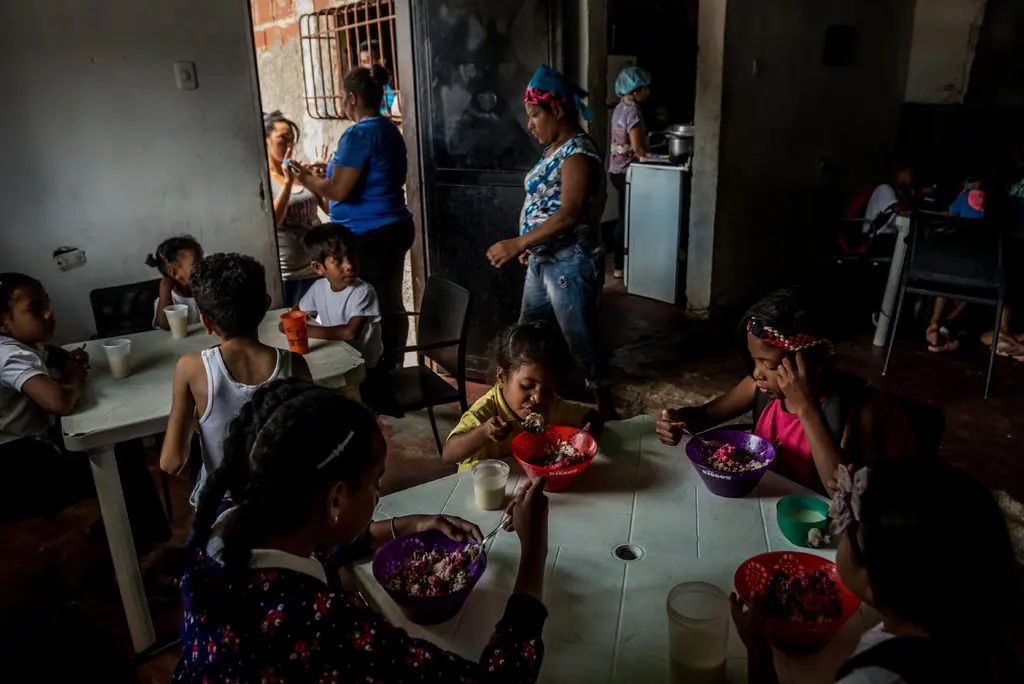
By preventing Venezuela from exporting oil, which is the revenue that funds food imports, medicine, electricity, and public services, the Trump administration is knowingly engineering conditions of mass deprivation. Under international humanitarian law, collective punishment is prohibited precisely because it targets civilians as a means to achieve political ends. And if this continues, we will see horrific images: empty shelves, malnourished children, overwhelmed hospitals, people scavenging for food. Scenes that echo those coming out of Gaza, where siege and starvation have been normalized as weapons of war.
U.S. actions will undoubtedly cause millions of Venezuelans to flee the country, likely seeking to travel to the United States, which they are told is safe for their families, full of economic opportunities, and security. But Trump is sealing the U.S. border, cutting off asylum pathways, and criminalizing migration. When people are starved, when economies are crushed, when daily life becomes unlivable, people move. Blocking Venezuelans from entering the United States while systematically destroying the conditions that allow them to survive at home means that neighboring countries like Colombia, Brazil, and Chile will be asked to absorb the human cost of Washington’s decisions. This is how empire outsources the damage. But these countries have their own economic woes, and mass displacement of Venezuelans will destabilize the entire region.
Venezuela is a test case. What is being refined now—economic siege without formal war, maritime coercion without declared blockade, starvation without bombs—is a blueprint. Any country that refuses compliance with Washington’s political and economic demands should be paying attention. This will be the map for 21st-century regime change.
And this is how Trump can reassure the United States Congress that he is not “going to war” with Venezuela. He doesn’t need to. Economic strangulation carries none of the immediate political costs of a military intervention, even as it inflicts slow, widespread devastation. There are no body bags returning to U.S. soil, no draft, no televised bombing campaigns. Just a steady erosion of life elsewhere.
Trump’s calculation is brutally simple: make Venezuelans so miserable that they will rise up and overthrow Maduro. That has been the same calculation behind U.S. policy toward Cuba for six decades—and it has failed. Economic strangulation doesn’t bring democracy; it brings suffering. And even if, by some grim chance, it did succeed in toppling the government, the likely result would not be freedom but chaos—possibly a protracted civil war that could devastate the country, and the region, for decades.
People in Venezuela celebrate Christmas and New Year’s gathered around the table to eat hallacas wrapped with care, slices of pan de jamón, and dulce de lechoza. They will share stories, dance to gaitas, and make a toast with Ponche Crema.
But if this economic siege continues, if Venezuelan oil is fully cut off, if the country is denied the means to feed itself, if hunger is allowed to finish what bombs are no longer politically useful to accomplish, then this Christmas may be remembered as one of the last Venezuelans were able to celebrate in anything resembling normal life, at least in the near future.
Polls consistently show that nearly 70 percent of people in the United States oppose a military intervention in Venezuela. War is recognized for what it is: violent, destructive, unacceptable. But sanctions are treated differently. Many people believe they are a harmless alternative, a way to apply “pressure” without bloodshed.
That assumption is dangerously wrong. According to a comprehensive study in medical journal The Lancet, sanctions increase mortality at levels comparable to armed conflict, hitting children and the elderly first. Sanctions do not avoid civilian harm – they systematically produce it.
If we oppose war because it kills, we must also oppose sanctions that do the same, only more quietly, more slowly, and with far less accountability. If we don’t act against economic warfare with the same urgency we reserve for bombs and invasions, then sanctions will remain the preferred weapon: politically convenient but equally deadly.
Michelle Ellner is the Latin America Campaign Coordinator at CODEPINK. Born in Venezuela, she holds a bachelor’s degree in Languages and International Affairs from Université Paris-Sorbonne (Paris IV). Her work focuses on U.S. foreign policy, economic sanctions, and solidarity with Latin America and the Caribbean.
The views expressed in this article are the author’s own and do not necessarily reflect those of the Venezuelanalysis editorial staff.
Source: Code Pink
UN experts say the armed group remains a major threat to stability in Somalia and neighbouring countries.
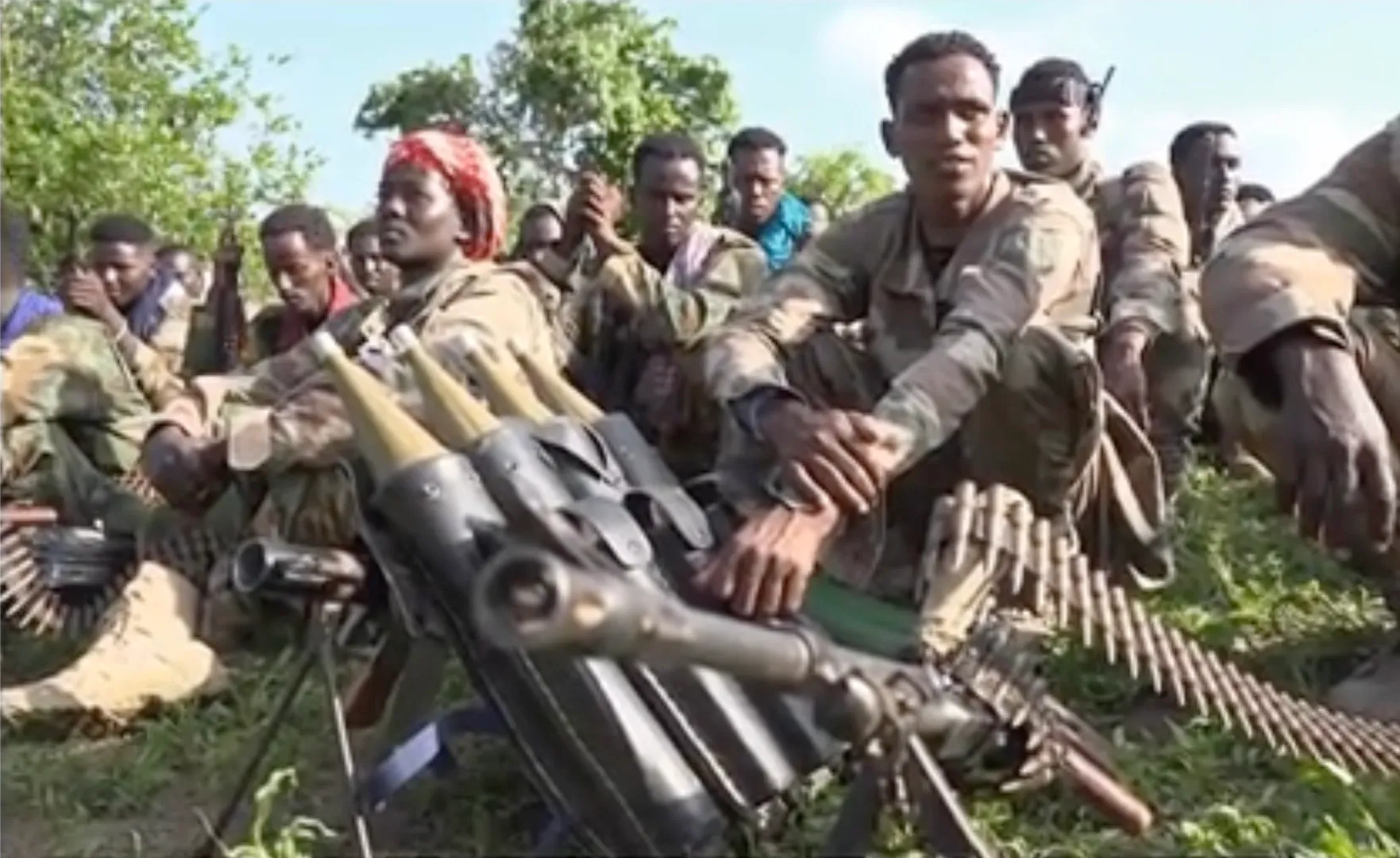
United Nations experts say the threat of al-Shabab remains the greatest immediate threat to Somalia and the East African region, especially Kenya.
The al-Qaeda-linked group controls significant parts of southern and central Somalia, carrying out attacks on government and security forces, as well as civilians.
list of 3 itemsend of list
Over the years, the group has claimed responsibility for attacks in Kenya, Uganda and Djibouti.
Despite efforts by Somali and international forces to combat its operations, it still has the ability to strike.
So why has the fight against this group failed over two decades?
Dareen Abughaida
Ismael Tahir – Research fellow at Hilin, an organisation committed to development, governance and politics in the Somali Peninsula.
Afyare Elmi – Research professor at City University of Mogadishu.
Abdullahi Halakhe – Horn of Africa security analyst.
Published On 26 Dec 202526 Dec 2025
Share
US troops descend from helicopters onto the “Skipper” tanker’s deck as part of an operation to seize the oil vessel. (Screen capture)
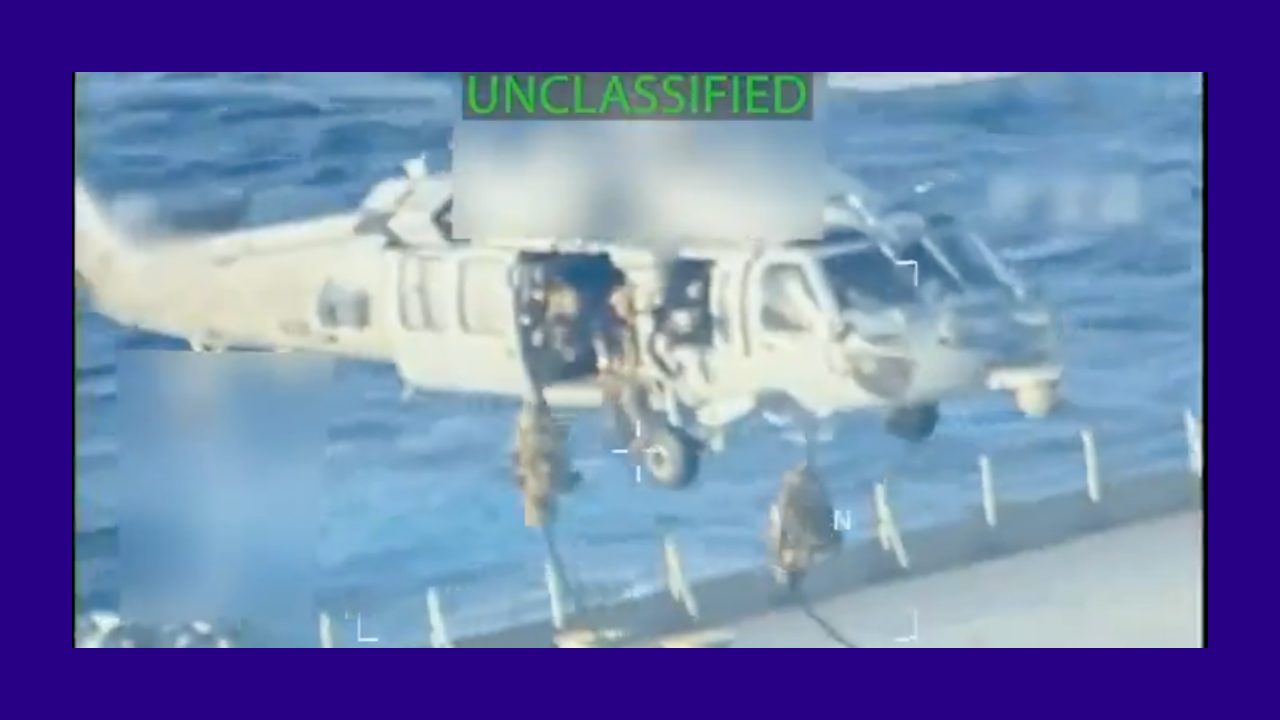
Mexico City, Mexico, December 11, 2025 (venezuelanalysis.com) – Venezuela accused the United States of committing “international piracy” after US authorities seized an oil tanker in the Caribbean, denouncing the action as part of a long-running US campaign to strip the country of its energy resources.
US President Donald Trump announced Wednesday that Washington seized an oil tanker sanctioned by the US off Venezuela’s coast. He described the vessel as the largest oil tanker ever seized and indicated that the United States would retain the crude aboard.
The move was met with a sharp rebuke from Caracas.
“The Bolivarian Government will appeal to all existing international bodies to denounce this grave international crime and will defend its sovereignty with absolute determination,” read the communiqué. “Venezuela will not allow any foreign power to take from the Venezuelan people what belongs to them by historical and constitutional right.”
According to Reuters, the “Skipper” tanker loaded an estimated 1.8 million barrels of crude at Venezuela’s José terminal early this month before unloading 200,000 to a Cuba-bound ship. The remaining cargo was believed to be destined for Asian markets. The move was viewed as aggression against Cuba as well, which relies on Venezuelan oil shipments for energy and income.
Cuban Foreign Minister Bruno Rodríguez Parilla condemned “the vile act of piracy” as a violation of international law.
Michael Galant, member of the Progressive International Secretariat, said that calling the US seizure an act of piracy fell short.
“This is the deliberate immiseration of the Cuban people, already suffering debilitating fuel shortages, blackouts, and a chikungunya outbreak thanks to the US blockade,” wrote Galant on social media.
US Attorney General Pam Bondi posted a video on social media on Wednesday evening showing armed US forces boarding the vessel. There was reportedly no resistance from the crew nor any casualties. The assault involved Coast Guard members, Marines, and special forces who were seen in the video descending from helicopters onto the ship’s deck.
The seizure of the tanker comes only days after Delaware District Judge Leonard P. Stark approved the sale of Venezuela’s US-based refiner CITGO to Amber Energy, a process that Venezuela called a “barbaric theft” of a Venezuelan asset via a “fraudulent process.”
In past years, the United States has intercepted shipments of Iranian fuel bound for Venezuela, ultimately taking control of the gasoline and selling it at auction. While US-led sanctions have created significant challenges for the sale of Venezuelan oil on international markets, Wednesday’s seizure marks the first time the US has directly impeded a crude shipment of from Venezuela. Reuters reported that buyers in Asia were demanding further discounts on Venezuelan crude as a result of the seizure.
Trump’s latest move is a significant escalation in the latest US effort to oust the Nicolás Maduro government from power. Since September, the US has built up its forces in the region, including the mobilization of the Gerard Ford Carrier Fleet, and has carried out deadly strikes on boats that the administration claims are tied to drug trafficking.
Washington’s decision to seize the tanker drew scrutiny from US lawmakers who have questioned the true intentions behind military mobilization and campaign in the Caribbean.
“If Trump’s aggression in the Caribbean is about drugs, why did he just seize an oil tanker?” asked US Representative Nydia Velázquez. “This is yet another dangerous escalation that brings us closer to a regime change war.”
Senator Mark Warner, who serves as the top Democrat on the Senate intelligence committee, questioned how the US was able to seize an oil tanker but has opted to strike alleged drug smuggling boats from the skies without an effort to arrest the occupants or seize the purported contraband.
Democratic Senator Chris Van Hollen spoke Wednesday on the floor of Congress to call on lawmakers to stop Trump’s ”regime change war” against Venezuela.
Caracas maintains that the US attacks are motivated by a desire for regime change in order to secure access to Venezuela’s natural resources.
Venezuelan opposition leader María Corina Machado, speaking from Oslo where she traveled to receive her Nobel Peace Prize, publicly endorsed the seizure of the tanker as a “very necessary step.”
Juan González, Joe Biden’s former chief Latin America adviser and the architect behind the former president’s Venezuela policy, said that a US Naval blockade was “potentially a viable option” despite admitting that it would constitute an act of war against Venezuela.
The White House has repeatedly threatened further escalation, including land strikes. The New York Times reported that US officials expected additional seizures in the coming weeks. This action would constitute an act of force and place additional pressure against Venezuela’s oil industry.
The United Nations (UN) Charter expressly prohibits all Member States from using or threatening force against the territorial integrity or political independence of another state. Blockades imposed without a declaration of war or that are not sanctioned by the UN Security Council are not considered legal. Likewise, UN independent experts have consistently maintained that the extraterritorial application of unilateral sanctions is contrary to international law.
Edited by Ricardo Vaz in Caracas.
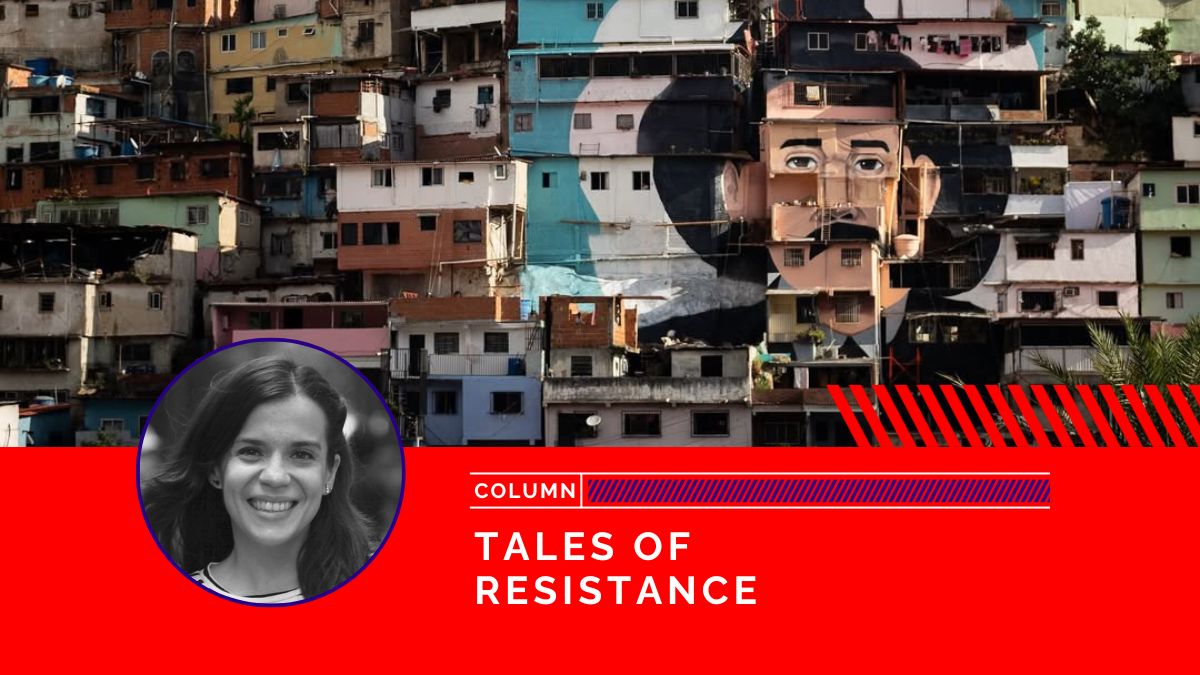
Despite being a pacifist, Hernández joined a voluntary militia to face foreign threats. (Venezuelanalysis)
On October 19, the Venezuelan people celebrated the sanctification of José Gregorio Hernández, the “doctor of the poor.”
With his beatification process launched under Pope Francis, the first Venezuelan to hold this honor was in a way an “exception” to the Catholic Church’s rules: the threshold is two “miracles” attributed to the candidate, and Hernández only has one.
Now, during the holiday season and with the year drawing to a close, a second miracle comes to mind: halting a foreign military operation against our country and staving off the collapse of the Venezuelan economy in the wake of the US naval blockade.
Why turn to José Gregorio for this? It actually makes perfect sense. In December 1902, German, British and Italian ships joined forces to blockade Venezuela’s coasts. It was a tactic to force the Cipriano Castro government to pay back exorbitant debts accrued by its predecessors.
In response, Castro issued his famous proclamation, “The foreigner’s insolent boots have desecrated the sacred soil of the Homeland!”, and called for national unity. His call was overwhelmingly backed, even by his adversaries.
Students, professionals and even doctors like José Gregorio Hernández were quick to enlist in a voluntary militia. Nationalist fervor, inspired by the memories of the independence struggle and figures like Bolívar and Ayacucho, contrasted with Venezuela’s military shortcomings in facing the powerful foreign fleets. History does have a way of repeating itself.
In spite of his pacifism, commitment to medicine and strong religious beliefs, Hernández did not waver for a second in answering the nation’s call.
After a lot of “gunboat diplomacy,” the Venezuelan government held its ground and ensured that the debts were subjected to international mediation.
The doctor of the poor, fortunately, did not have to change his stethoscope for a rifle. In contrast, he managed to do what we all want to do today: continue working for our country and its people.
Hernández studied in Europe and was a pioneer of experimental medical research in Venezuela. He created the histology, experimental physiology and bacteriology branch in the Central University of Venezuela. He introduced the use of the microscope and promoted modern scientific methods in the country.
Still, it’s not so much these achievements that have him worshiped by Venezuelans. Rather, it was his immense generosity, which included seeing patients free of charge and even leaving a little bag with money outside his office so that the poorest patients could buy medicines and food. Hernández saw medicine as a tool at the service of the majority.
Therefore, after his death in 1919, former president and writer Rómulo Gallegos wrote: “It wasn’t the common pain of losing a dedicated and eminent citizen, but a deeper, nobler feeling, something that poured in generous torrents.”
As time went on, this feeling would only grow. Thousands of faithful began to attribute “impossible” medical feats to Hernández; they printed out prayer cards with his face, built little statues to put on bedside tables, placed him on personal altars and filled churches with plaques and candles to acknowledge the “divine favors” bestowed.
The myth began to spread amongst the people. In contrast, Catholic authorities spent decades grappling with the phenomenon. But he was already a saint for the masses. Unlike the Church, he actually delivered…
In fact, Venezuelan religious authorities tried to undermine their believers’ wishes by claiming that Hernández could not be a saint. They claimed his figure was used by “sorcerers,” they disparaged him by claiming he was gay, forbade priests from naming him in public events, and even attempted to censor a song by Puerto Rican musician Daniel Santos dedicated to him.
But Venezuelans don’t really care that José Gregorio had no known love relationships, that he liked to dye his grey hairs or that he dressed outlandishly. On the contrary, we think that is awesome. There is nothing more Venezuelan than ignoring the norms!
The Venezuelan people looked at his virtues and, just in case, made up new ones, until he was consolidated as a religious, kind and serene myth, one who was dedicated to the common good. In the “popular pantheon” he stands alongside figures like independence hero Simón Bolívar, a military genius who traveled the entire continent on horseback several times.
Some historians posit that the peoples create myths that work as role models and express their inner beliefs. I think that’s a correct and very inspired conclusion. In that light, we have quite a spectrum of heroes. It goes from Bolívar, a republican warrior, all the way to José Gregorio Hernández, the pacifist healer. On one hand, a man who fought to liberate people from colonialism, and on the other, a man who heals them; one who proffered great victory speeches and one who triumphed quietly in a laboratory. But one thing they, and all our other heroes, have in common is that they never hesitated to defend the homeland against outside threats.
It is worth clarifying that the peoples, and not “miracles,” are responsible for turning the wheels of history. But with a bloodthirsty maniac like Trump in the White House, there is no harm in reaching out to divine entities as well…
José Gregorio Hernández, like Bolívar and so many others, bequeathed us a lot more than statues and official celebrations. They left us the example of fighting for something bigger than us, a nation that belongs to everyone. And facing a real imperialist threat, resistance is not optional. The struggle continues.
Jessica Dos Santos is a Venezuelan university professor, journalist and writer whose work has appeared in outlets such as RT, Épale CCS magazine and Investig’Action. She is the author of the book “Caracas en Alpargatas” (2018). She’s won the Aníbal Nazoa Journalism Prize in 2014 and received honorable mentions in the Simón Bolívar National Journalism prize in 2016 and 2018.
The views expressed in this article are the author’s own and do not necessarily reflect those of the Venezuelanalysis editorial staff.

A few locals gathered in an open area around 10 p.m. on Thursday, Dec. 25, when they saw a projectile hovering above them. Within minutes, a blast sent panic through the town, igniting a hail of fire and fury in Birikini, a rural settlement in Jabo, Tambuwal Local Government Area (LGA), Sokoto, North West Nigeria.
The explosion threw the community into chaos, with locals running towards the site of the strike to find out what had gone wrong.
“I was sitting at a joint when we saw a reddish item falling from the sky, illuminating the community. Suddenly, we heard a loud bang. I thought a car tyre had burst and caught fire at the same time,” said Ismail Umar, a local in Jabo town. “When we moved, we saw many people shouting and rushing towards the scene. Some thought it was an aircraft that fell. This raised tension, and people couldn’t sleep throughout the night. I went home around 12 a.m., but when I woke up for the morning prayer around 5 a.m., people were still outside, discussing the incident.”
The heavy artillery shell landed on an expanse of cultivated farm field in the area. When locals arrived at the scene, they found shrapnel scattered in the community and wondered where the strike had emerged. No casualties were recorded, according to locals who spoke to HumAngle. They noted that such an incident was unusual to them, as the area has not witnessed any terrorist attack in years.

Musa Dandare, an elderly man in the community, said he saw the projectile descending towards the town before it hit the ground with a loud bang. Although it was a bloodless attack, villagers insisted they were disturbed because they had never experienced such a military-grade airstrike.
Later that night, Donald Trump, the United States President, announced that the country’s military “launched a powerful and deadly strike against ISIS Terrorists in North West Nigeria…” He claimed that terrorists were dead and pledged that many more such attacks would happen. The US Africa Command (AFRICOM) and the US Department of War also confirmed the strikes.
Kimiebi Imomotimi Ebienfa, a spokesperson for the Nigerian Foreign Ministry, stated that the “precision hits on terrorist targets” were the result of a joint security and intelligence collaboration between the two nations.
“It was a successful operation,” said Yusuf Tuggar, Nigeria’s Minister of Foreign Affairs, though he did not disclose specific damage assessments. “We will have to wait for those who handled the operational aspects of the episode to return with the details.”
In November, President Trump threatened military action against Nigeria, accusing the government of failing to protect Christians from Islamic State terrorists. He also designated it as a country of particular concern. Although existing data and conflict show that the country’s security challenge cannot fit into a religious tag, Trump’s claim has drawn the attention of the international community to the insecurity in Africa’s most populous nation and has also deepened polarisation within the country.
Nigeria is home to several armed groups, including two that are associated with the Islamic State of Iraq and Syria (ISIS). One of these groups is the Islamic State West Africa Province (ISWAP), which emerged from the Boko Haram extremist faction and operates mainly in the northeastern region. Another is the Lakurawa terror group, which is active in the northwestern region. While the US forces have stressed that they were targeting ISIS fighters in Nigeria, security analysts suggest that they likely targeted the Lakurawa terrorists, a group that has become increasingly dangerous in Sokoto and Kebbi states in the past year.
The Lakurawa terrorists have operated in many communities in Sokoto State, including Tangaza, Gudu, and Silame, but they have recorded no activities in the Tambuwal LGA. The terrorists thrive in towns located along the permeable borders of Sokoto State, allowing armed groups to move easily between Nigeria and the Niger Republic. After crossing the border, they set up camps in the area’s vast bushland.

Exactly a year ago, on Dec. 25, a military airstrike targeted at the Lakurawa terror group killed up to ten civilians and injured several others in the Silame area of Sokoto State.
At the time, the Nigerian military said those killed had been “positively identified as associated with the Lakurawa group”. Military authorities later attributed the civilian deaths to secondary explosions, explaining that the strike hit a terrorist logistics hub and arms cache, triggering detonations that sent stored munitions exploding in multiple directions.
Meanwhile, locals in Jabo who spoke to HumAngle stressed that the locality targeted by the US forces is not controlled or infested by any terrorist group like other areas in the region. “It’s a peaceful place,” one local told HumAngle.
The locals said they have combed the entire Birikinin village and have found no civilians or terrorists hit by the US strike.
However, locals fear that this singular strike might cause the terrorists to beam searchlights on them. Unlike places like Isa, Sabon Birni, and Gada, which have had deadly terrorist attacks in the past, Jabo seems to be a haven for locals seeking calm and tranquillity in the state. The locals wondered why the US strike ignored terrorist enclaves in the state to target a thriving civilian community.
“It was the first time we heard what a bomb sounded like in this community,” Musa said. “Many of us couldn’t sleep throughout the night.”
Aliyu Garba, a local chief in Jabo, expressed concerns over how some locals have collected the relics of the explosive materials from the strike scene, saying some of the shrapnel might detonate or harm them. “It was as big as a car’s gearbox,” he said, describing one of the broken explosives found on the ground.
Garba added that they have lived in the community peacefully for years, praying that this new event would not bring calamity to them. Locals reiterated that they have not noticed any form of terrorist activities in the area for years, let alone the Islamic State operations that might call for such an airstrike.
According to Armed Conflict Location & Event Data (ACLED) records covering 2010 to 2025, Tambuwal LGA has experienced only a handful of violent incidents, primarily involving small-scale attacks and abductions by criminal groups. The dataset records no previous incidents involving airstrikes, heavy artillery, or aerial bombardment in the area. In the past 15 years, for instance, only seven significant events were recorded in the LGA, and none happened in the Jabo town.
HumAngle has obtained videos of civilian activities after the airstrike. The videos showed locals panicking and asking government officials to assure their safety. Another video showed the presence of security operatives in the community, with officers barricading the scene of the airstrike. HumAngle also observed that many residents are fleeing the area in fear of similar incidents, and this could cause widespread displacement. Local authorities tried to hold them back and assure them of their safety.
On December 25, a projectile hovered above a rural area in Jabo, Sokoto, Nigeria, leading to an airstrike that caused panic but no casualties. The US announced it was targeting ISIS terrorists; however, locals in Jabo, a region not known for terrorist activity, were disturbed by the unexpected military-grade strike. The US Africa Command validated the strike, alleging it was part of a joint operation with Nigeria against terrorist groups like Lakurawa in the region.
Residents expressed concern over potential impacts from the strike, fearing it might incite retaliation from terrorists, despite a history of peace in their community. There were no signs of terrorist presence or nearby casualties, puzzling the community over the choice of target. Despite past occurrences of violence in broader Sokoto, Jabo has remained largely peaceful, with locals now worried about becoming future terrorist targets due to the recent airstrike.
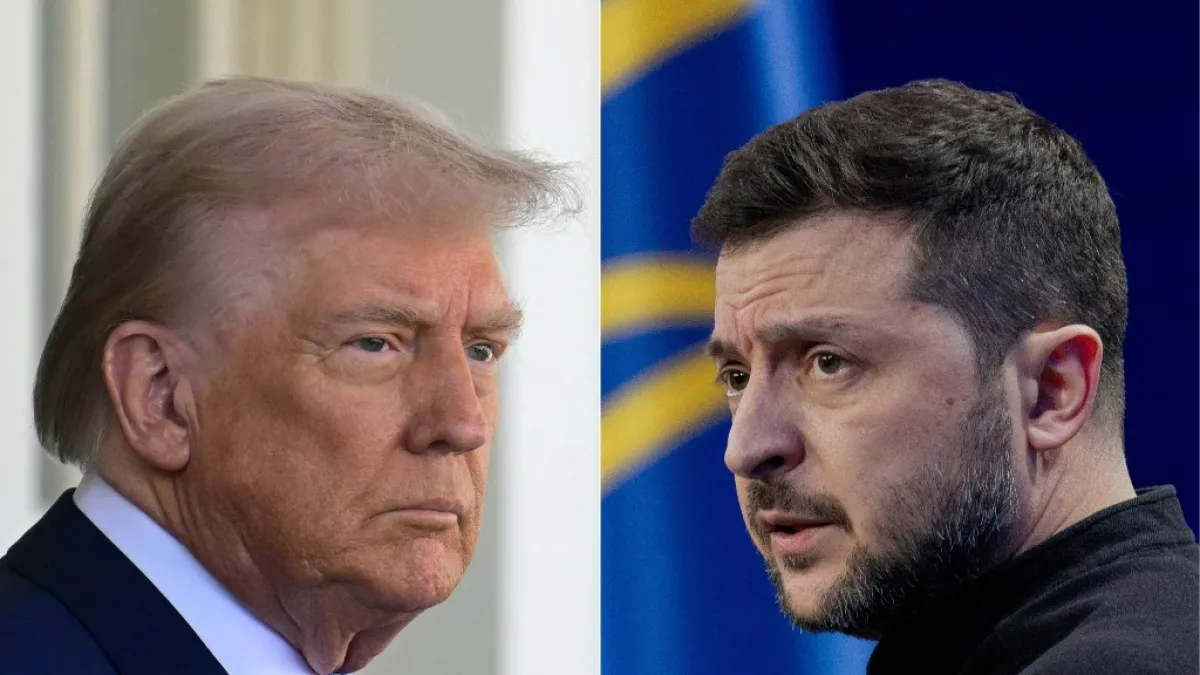
Ukrainian president highlights ‘significant progress’ in talks, but Moscow says Kyiv is working to ‘torpedo’ deal.
Published On 26 Dec 202526 Dec 2025
Share
Ukrainian President Volodymyr Zelenskyy is to meet with his United States counterpart, Donald Trump, in Florida on Sunday to discuss territorial disputes that continue to block progress towards ending Russia’s war on Ukraine.
Announcing the meeting on Friday, Zelenskyy said the talks could be decisive as Washington intensifies its efforts to broker an end to Europe’s deadliest conflict since World War II. “A lot can be decided before the New Year,” Zelenskyy said.
list of 3 itemsend of list
Territory remains the most contentious issue in the negotiations. Zelenskyy confirmed he would raise the status of eastern Ukraine and the Zaporizhzhia Nuclear Power Plant, which has been under Russian control since the early months of Russia’s invasion.
“As for the sensitive issues, we will discuss both Donbas and the Zaporizhzhia Nuclear Power Plant. We will certainly discuss other issues as well,” he told reporters in a WhatsApp chat.
Moscow has demanded that Kyiv withdraw from parts of the Donetsk region still under Ukrainian control as it pushes for full authority over the wider Donbas area, which includes Donetsk and Luhansk. Ukraine has rejected that demand, instead calling for an immediate halt to hostilities along the existing front lines.
In an attempt to bridge the divide, the US has floated the idea of establishing a free economic zone should Ukraine relinquish control of the contested area although details of how such a plan would operate remain unclear.
Zelenskyy reiterated that any territorial concessions would require public approval. He said decisions on land must be made by Ukrainians themselves, potentially through a referendum.
Beyond territory, Zelenskyy said his meeting with Trump would focus on refining draft agreements, including economic arrangements and security guarantees. He said a security pact with Washington was nearly finalised while a 20-point peace framework was close to completion.
Ukraine has sought binding guarantees after previous international commitments failed to prevent Russia’s invasion, which began in February 2022.
Trump has previously voiced impatience with the pace of negotiations, but he has indicated he would engage directly if talks reached a meaningful stage.
Last week, US Secretary of State Marco Rubio said his country is the only mediator that can speak to both sides to secure a peace agreement. At the same time, he downplayed the importance of the conflict for Washington.
“It’s not our war. It’s a war on another continent,” he said.
Zelenskyy said European leaders could join Sunday’s discussions remotely and confirmed he had already briefed Finnish President Alexander Stubb on what he described as “significant progress”.
Despite Zelenskyy’s assertion, Russian Deputy Foreign Minister Sergey Ryabkov accused Ukraine of working to “torpedo” the peace talks, saying a revised version of the US peace plan promoted by Kyiv was “radically different” from an earlier version negotiated with Washington.
“Our ability to make the final push and reach an agreement will depend on our own work and the political will of the other party,” he said during a television interview on Friday.
Ryabkov said any agreement must remain within the parameters set out between Trump and Russian President Vladimir Putin during a summit in August, which Ukraine and European partners have criticised as overly conciliatory towards Russia’s war aims.
On the ground, Moscow has intensified strikes on Ukraine’s energy infrastructure and the southern port city of Odesa while an attack on Kharkiv on Friday killed two people.