Today

Chronicle of Attacks on Churches, Mosques, and Schools in Nigeria (2000–2025)

The old walls of St. Francis Xavier Catholic Church in Owo, Ondo State, South West Nigeria, shook at 9:30 a.m. on June 5, 2022. It was Pentecost Sunday, and the priest’s burning of incense hung in the air. The choir was mid-hymn when the first explosion fractured the rhythm.

Eyewitnesses recalled two men stationed by the doors, firing automatic rifles into the congregation. When the smoke cleared, over 40 worshippers lay dead — children, ushers, and the parish catechist among them. HumAngle spoke to families of the victims, including Akinyemi Emmanuel, whose wife was killed, and Christopher, whose older brother was also a casualty.

The massacre made global headlines, but beyond the horror lay a familiar pattern — the tactics, the timing, and the grim echoes of earlier carnage: Madalla’s St. Theresa’s Church (2011), Kano’s Central Mosque (2014), Kaduna’s Murtala Square (2014),  and Mubi’s Madina Mosque (2017).

The data of devastation

HumAngle’s field researchers verified 20 major attacks on places of worship across Nigeria between 2011 and 2025. Each incident was cross-checked against ACLED, CFR’s Nigeria Security Tracker, official statements, and humanitarian field reports.

“Every line of data is a broken family,” said a researcher who assisted in the compilation. “We tracked events, but what we found was grief mapped onto geography.”

Key Figures

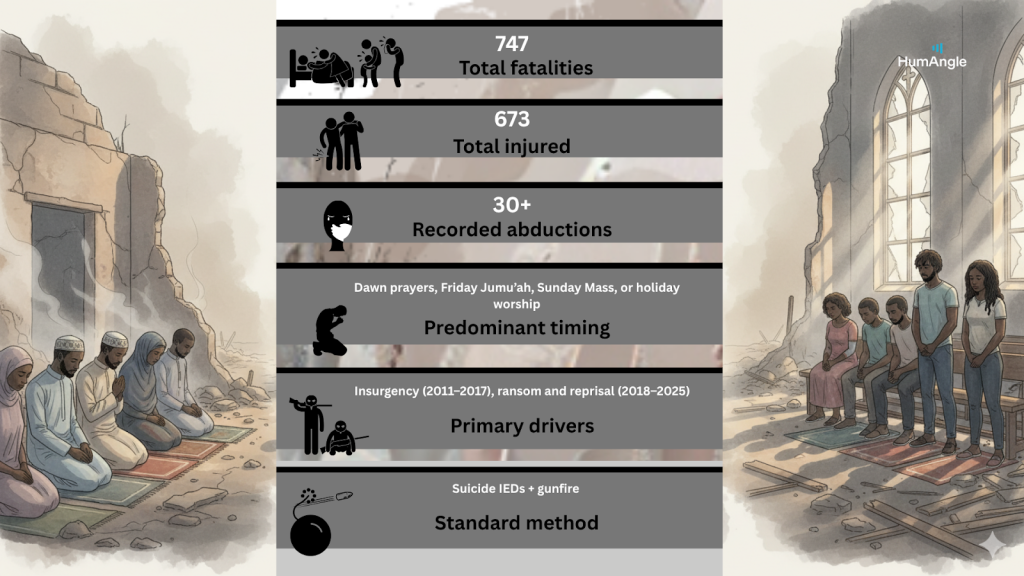
Infographic showing worshippers in ruins with statistics on fatalities, injuries, abductions, timing, drivers, and methods related to attacks.
Infographics by Damilola Lawal/HumAngle 

From 2011 to 2015, churches bore the brunt — Boko Haram’s campaign against the state and society, often weaponising sectarian imagery. Between 2016 and 2021, mosques and Islamic gatherings became targets as extremists purged dissenting clerics. By 2022, the pattern shifted again — terrorists and militias attacked worshippers of both faiths for ransom or reprisal.

Early years of fire (2000–2010): Shari’a, riots, and mob rule

The roots of Nigeria’s religious bloodshed date back to pre-independence; however, this report will examine only the events from 2000 to 2025. In the year 2000 when 12 northern states reintroduced Shari’a law. What began as a demand for moral order soon morphed into violent attacks against non-Muslims.

By 2001, the tension had already turned deadly. Over 100 people were killed in Kano, according to The Guardian (UK), after riotous Muslim youths attacked the minority Christian population in the city. Human Rights Watch later documented the carnage of reprisal that took place in Jos, with similar riots in Kaduna.

Shari’a’s reintroduction became both symbol and signal — a moral protest against state failure but also a green light for mob justice.

The spiral continued. In 2002, Kaduna was a flashpoint again. The infamous Miss World Contest riots, triggered by a controversial ThisDay article deemed blasphemous against Islam. The riots left at least 200 dead.

As the years passed, intolerance became routine. In 2006, a Bauchi-based teacher, Florence Chukwu, was lynched for allegedly confiscating a Qur’an from a student. A year later in Gombe, another teacher, Christiana Oluwasesin, met the same fate. Then, in 2007, Kano’s Tudun Wada suburb witnessed the killing of dozens of Christians after a student was accused of alleged blasphemy.  

Two decades later, the script remained tragically familiar. In May 2022, a Christian student, Deborah Samuel Yakubu, at Shehu Shagari College of Education, Sokoto State (a Muslim-majority state), was accused of blasphemy, then stoned, beaten and set on fire by a mob of Muslim students.

Even Muslims have not been spared from mob attacks due to alleged blasphemy against Islam. In 2008, a 50-year-old man was beaten to death in Kano, while Ahmad Usman, a Muslim vigilante, was burnt alive in Abuja in 2022.

In 2023, Usman Buda, a butcher in Sokoto, was stoned to death by his peers. In 2025, food vendor Ammaye met a similar fate in Niger State after an argument over religious differences.

From Pandogari to Sokoto, Facebook posts, WhatsApp messages, and street rumours have become digital triggers for extra-judicial deaths.

Nigeria’s decade of supposedly holy violence took a new form with Boko Haram’s rise. The insurgency’s ideological war turned places of worship into battlefields  as they circulated videos of beheading of Christians and the Muslims they accused of spying for the Nigerian state.

The Madalla Christmas massacre — 2011

On Christmas morning, a suicide bomber detonated a car outside St. Theresa’s Catholic Church in Madalla, Niger State, killing at least 40. Boko Haram claimed responsibility, vowing more attacks against Christians “for government sins”.

Attack on COCIN Headquarters in Jos — Feb 2012

A year later, a suicide bomber drove an explosives-laden vehicle into the Church of Christ in Nations (COCIN) headquarters in Jos during Sunday service, killing at least three worshippers and injuring dozens. The blast destroyed parts of the church and nearby buildings.

Suicide Bomb Attack at St Finbar’s Jos — March 2012

Barely a month after the attack, a car bomber targeted St. Finbar’s Church in the Rayfield area of Jos during Mass. The explosion killed 14 people and wounded over 20, causing extensive damage to the church premises.

Silencing the critics — 2011–2014

In Biu, Borno State, Shaykh Ibrahim Burkui was assassinated in June 2011 for criticising Boko Haram. His death, along with that of Ibrahim Gomari in Maiduguri and Shaykh Albani Zaria in 2014, underscored the extension of the group’s wrath to Muslims who opposed its doctrine.

Kano Central Mosque bloodbath — 2014

On Nov. 28, 2014, twin suicide blasts struck Kano’s Central Mosque. As worshippers fled, gunmen opened fire. About 80 died. Boko Haram attacked Sunni Muslims loyal to the Emir of Kano, Sanusi Lamido Sanusi, who had condemned extremism.

Eid of Ashes — Damaturu 2015

A 10-year-old girl walked into an Eid prayer ground in Yobe and detonated explosives, killing 50. A morning of celebration turned into a funeral for hundreds of people.

Mutations of terror (2016–2021)

AAfter the insurgency’s initial high tide receded, violence splintered into ideological and economic strands.

  • 2016 (Molai-Umarari, Borno): Two female suicide bombers killed 24 during dawn prayers.
  • 2017 (Mubi, Adamawa): A teenage bomber killed 50 in a mosque.
  • 2017 (Ozubulu, Anambra): Gunmen killed 12 during a Mass — incident later linked to a local feud.
  • 2018 (Mubi, Adamawa): 86 worshippers were killed after two suicide bombers detonated explosives in a mosque during an afternoon prayer. 
  • 2021 (Mazakuka, Niger): Terrorists killed at least 18 worshippers at a local mosque during Fajr prayers.
  • 2021 (Yasore, Katsina): 10  killed in evening prayers.
  • 2021 (Okene, Kogi): Three people were abducted from a Living Faith Church during a prayer meeting. They were later released. 
  • 2021 (Fadan Kagoma, Kaduna): Terrorists attacked and kidnapped three seminarians at Christ the King Major Seminary. Michael Nnadi, one of the captives, was later killed, while the others were released.

“The violence metastasised,” said Olawale Ayeni, an analyst in Abuja. “What began as jihadist warfare became an economy of fear — raids, ransoms, and retaliations.”

The new normal (2022–2025): Terrorism meets belief

Owo, Ondo State — June 2022

On Pentecost Sunday, attackers detonated explosives and opened fire at St. Francis Xavier Church, killing 41 and injuring 70. Initially attributed to ISWAP, investigations revealed financial links to northwestern terrorist networks.

Kafin Koro, Niger State — January 2023

Isaac Achi, a Catholic priest, was burnt to death in the early hours of the morning at the presbytery of Sts. Peter and Paul Catholic Church, Kafin Koro, in Niger State. The residence was also reduced to ashes. Achi was the parish priest in charge of St. Theresa’s Catholic Church, Madalla, when it was attacked in 2011.

Kajuru, Kaduna State – September 2024

Gunmen invaded two churches in Bakinpah-Maro during service, killing three and abducting several others. Videos later surfaced showing captives reciting prayers under duress.

Bushe, Sokoto – February 2025 

Terrorists invaded a mosque in Bushe Community of Sabon Birni LGA, Sokoro State. They kidnapped the Imam and 10 other worshippers during the dawn prayer. 

Marnona Mosque Attack, Sokoto – August 2025

On Sunday, Aug.  12, terrorists stormed a mosque in Marnona village in Wurno LGA of Sokoto State, killing one worshipper and abducting several others. 

Unguwan Mantau, Katsina — August 2025

During early morning prayers, terrorists opened fire inside a mosque, killing 27. Survivors said the attackers accused locals of tipping off soldiers.

Gidan Turbe, Zamfara State – September 2025

Terrorists stormed a mosque in Gidan Turbe of Tsafe LGA, Zamfara State, and abducted 40 worshippers during a dawn prayer. Reports indicated that the attack happened barely 24 hours after a peace deal with the gunmen terrorising the village. 

In recent years, the distinction between ideology and economics has become increasingly blurred.  Many southerners who are predominantly Christians living in the north are business owners; oftentimes, they are attacked, not for their beliefs but for their wealth.

Documented discrimination against Igbo Muslims

While the north burned, intolerance also took other forms in the country’s southeastern region. Minority Muslim residents, including Igbo indigenes, who practice Islam, face periodic attacks and persistent discrimination, such as institutional exclusion and social ostracism. 

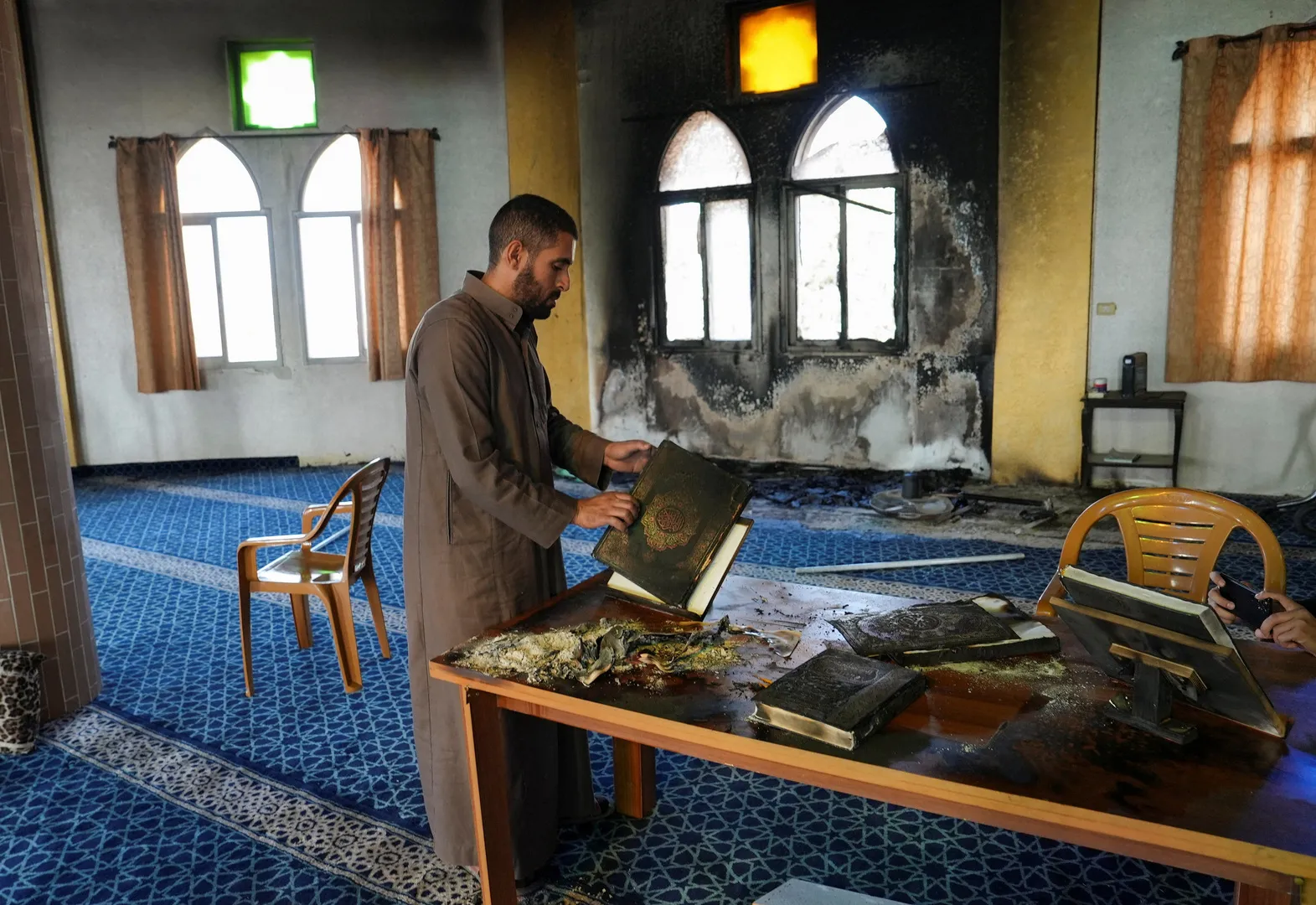
In Nsukka, Enugu State, mobs razed two mosques between Oct.  31, 2020 and Nov.  2, 2020, looting Muslim-owned shops after a local dispute spiralled. Though the state later rebuilt and returned the mosques to the Muslim community in 2021, the incident exposed how fragile interfaith coexistence remains. 

Around the same period, in Afikpo, Ebonyi State, an Islamic school reportedly received threats of invasion, prompting nationwide Muslim organisations to condemn what they described as “a wave of attacks on Muslims in the South East”.

Beyond physical violence, Igbo Muslims speak of systemic discrimination in both public and social spheres. The Chief Imam of Imo State, Sheikh Suleiman Njoku, in March 2024, lamented how Muslim indigenes are stigmatised – denied marriage prospects, labelled traitors, and treated as outsiders in their ancestral communities.

Similar accounts featured in a 2021 Premium Times report, where Igbo Muslims detailed how even acquiring land to build mosques or express faith publicly invites suspicion and resistance. 

Their testimonies mirror those of Christian minorities in majority-Muslim northern states, where churches are denied land ownership, leading to social alienation. There are also allegations of these minorities being denied state-of-origin certification. 

This reciprocal intolerance across regions highlights a broader national crisis in which faith identity, rather than shared citizenship, continues to shape belonging, opportunity, and trust among Nigerians.

School segregation

In northern Nigeria, school segregation along religious lines has deeply eroded interfaith tolerance and national cohesion. Historically, Christian mission schools, Islamic schools and public institutions evolved in isolation, reflecting entrenched religious divisions rather than shared civic identity. 

In many states, such as Kano, Kaduna, and Sokoto, Christian students often face discrimination or limited access to education in public schools dominated by Muslim administrators. Research shows that separate religious instruction – Christian Religious Knowledge (CRK) for Christians and Islamic Religious Knowledge (IRK) for Muslims —.has created parallel moral universes with little mutual understanding. This separation sustains mistrust and heightens communal suspicion.

The Deborah Samuel case in 2022, where a Christian student was lynched in Sokoto over alleged blasphemy, exemplifies how intolerance fostered from childhood schooling silos can erupt violently in adulthood. Studies by the EU Asylum Agency highlight that exclusion from inclusive schooling deprives youth of empathy across faiths, embedding prejudice into the social fabric. When children never learn together, they rarely learn tolerance. Unless education in northern Nigeria becomes deliberately integrative through mixed enrollment, pluralist curricula and interfaith engagement, religious segregation will continue to reproduce the fear, inequality and division that weaken Nigeria’s fragile unity.

Mass school abductions

Over the past 12 years, Nigeria has witnessed a series of mass school abductions that expose the evolving tactics of both terrorists and armed groups. Notably, on April 14,  2014, Boko Haram abducted 276 girls from Government Girls’ Secondary School, Chibok, Borno State, sparking the global #BringBackOurGirls campaign. 

Years later, in February and March 2021, a wave of similar attacks swept across the north: 279 girls were taken from Government Girls’ Science Secondary School, Jangebe (Zamfara); 27 students and staff were kidnapped from Government Science College, Kagara (Niger); and 39 students were seized from the Federal College of Forestry Mechanisation, Afaka (Kaduna). 

The cycle continued in March 2024, when gunmen abducted about 287 pupils from a school in Kuriga, Chikun Local Government Area, Kaduna State — one of the most significant of such incidents in recent years.

These abductions mark a clear shift from Boko Haram’s ideology-driven kidnappings to the ransom-motivated tactics of armed groups operating across the North West and North East. Christianity and Islam were affected by these abductions, and adherents have endured rape and psychological struggles following their ordeals. 

Among these tragedies, Leah Sharibu’s story remains one of the most haunting. 

On Feb. 19, 2018, the Islamic State West Africa Province (ISWAP), a Boko Haram offshoot, abducted 110 schoolgirls from Government Girls’  Science and Technical College, Dapchi, Yobe State. While most were later freed, Leah was held back for refusing to convert from Christianity to Islam. Now in her seventh year of captivity, she has become a symbol of religious persecution and the wider suffering of abducted girls. Her story underscores how Nigeria’s school kidnapping crisis intersects with issues of faith, gender  and insurgency.

In contrast, Lillian Daniel’s ordeal highlights the hundreds of lesser-known victims whose abductions pass with minimal notice. The 20-year-old zoology student of the University of Maiduguri, originally from Barkin Ladi, Plateau State, was kidnapped on Jan. 9,  2020, while travelling along the Benisheikh–Jakana–Maiduguri road.

Her abductors were ISWAP terrorists who disguised themselves as security personnel. Another passenger was released, but Lillian remains missing. Her case, briefly reported but soon forgotten, reflects the anonymity of many victims caught in transit through conflict zones.

In summary, Leah Sharibu embodies the now globally recognised face of Nigeria’s school abduction crisis, shaped by ideology and prolonged captivity. At the same time, Lillian Daniel represents its hidden dimension — solitary, underreported, and tragically routine. Together, their stories reveal the spectacle and the silence of Nigeria’s enduring tragedy of school abductions.

When clergy became premium kidnapping targets.

Chart of clergy kidnappings (2020-2025) with regions: 2020 (34, 4.5M, Kaduna/Niger), 2025 (53, 10+M, Kaduna/Katsina).
Infographics by Damilola Lawal/HumAngle 

Each ransom funds further raids. Analysts estimate that up to 15 per cent of ransom payments flow back into logistics for insurgents in Zamfara and Katsina.

Faith and identity: The shari’a factor revisited

The Shari’a revival was more than a legal reform; it was a reclamation of identity amid state collapse. Many Muslims saw it as a return to the moral order of the Sokoto Caliphate; others viewed it as the spark of two decades of religious strife.

Public institutions that once integrated faiths became segregated. Teachers and traders were attacked or expelled. The divide deepened, from classrooms to markets.

Shari’a, in principle, reserves blasphemy trials for qualified jurists. But in practice, mobs assumed divine authority, executing citizens in the name of faith. Many Christians and a few Muslims became victims of this street theocracy.

The justice vacuum

Out of the 20 worship-site attacks recorded, only one — Owo 2022 — reached federal arraignment. Fourteen remain unprosecuted; five are stalled as “unknown gunmen” cases.  

On the  Kano Central Mosque attack, no suspect has faced trial, while the Madalla bombing file remains “under review”.

“Justice in Nigeria moves slower than grief,” said a human rights lawyer in Abuja. “When the killers are never named, the dead are never remembered.”

Impunity has become policy. Each unsolved massacre guarantees the next.

A geography of grief

Nigeria’s worship-site attacks reveal a tragic spatial logic:

  • North East (Borno, Yobe, Adamawa): Insurgent bombings, suicide IEDs, and procession attacks.
  • North West (Katsina, Zamfara, Niger): Terrorists storming mosques during fajr prayers.
  • North Central (Benue, Plateau, Kaduna): Reprisal killings and clergy kidnappings.
  • South (Ondo, Anambra): Rare, symbolic assaults for national impact.

These are not frontlines of faith but fault lines of governance — places where the state’s absence defines daily life. 

At a mosque in Konduga, the imam now carries a walkie-talkie. In a church in Makurdi, ushers rehearse evacuation drills. Security has become as sacred as scripture. Concrete barriers line entrances. Metal detectors hum where choirs once sang. Pastors rotate parishes weekly to confuse abductors.

“When we gather,” said a priest in southern Kaduna, “someone must always watch the door. It used to be an usher. Now it’s a man with a rifle.”

Multiple faces of mob justice, one failure of the state

Mob justice in Nigeria takes many forms. In the north, a whisper of blasphemy or even sexual orientation can summon a crowd to lynch anyone to death. In the south, a cry of “Ole” (thief) or even an allegation of witchcraft can become a death sentence, with tyres and fire replacing the courtroom and the judge. 

The motives differ, but the barbarity does not.

Accused of robbing point of sale (PoS) machine operators, for instance, three women were burnt to death along the Aba-Owerri road in Aba, Abia State, on July 3, 2022. In March of this year, 16 hunters travelling from Rivers State capital Port Harcourt to Kano State were tied to used tyres and set ablaze in Uromi, Edo State, on suspicion of kidnapping.

What unites these episodes is a simple truth: they are crimes, yet their prosecutions are rare. That gap between law and practice isn’t a cultural quirk; its Local Security Equals High Fatality Rates. 

Across faiths, executioners signal that citizens expect neither safety nor fairness from the state. Each unpunished lynching teaches the next crowd that there will be no price to pay.

Lessons in numbers

From 15 years of blood and rebuilding, four insights emerge:

  1. Predictable Patterns: Attacks cluster around worship hours and feast days.
  2. Declining Ideology: Ransom and revenge now outweigh religion.
  3. Governance Gaps: Weak local security equals high fatality rates — across faiths.
  4. Institutionalised Impunity: No justice, no deterrence.

Policy paralysis

Successive Nigerian administrations have treated worship-site attacks as isolated tragedies, not system failures. Troops arrive shortly after each attack. Condolences flow. Then silence.

“There is no single desk in Abuja tracking attacks on religious sites,” admitted a senior intelligence official. “The data is fragmented, politicised, and rarely analysed.”

Without institutional memory, the nation is condemned to repetition.

Reconstructing faith’s refuge

HumAngle analysts recommend modest, achievable reforms:

  • Architectural retrofits: Two outward exits for every 150 congregants; Eid checkpoints relocated from dense zones.
  • Safety training: Rotating volunteer marshals during peak services.
  • Clergy protection: GPS-tracked parish vehicles and secure communications.
  • Public case tracker: Government–media collaboration to document investigations and trials.

Each measure is a step toward rehumanising worship in a country where prayer itself is perilous.

Faith beyond fear

In Konduga, survivors of a 2013 mosque attack still gather under a patched tarpaulin. In Owo, St. Francis Church has reopened — some survivors sit by the very pews where they once fell to the ground.

“They wanted to destroy faith,” said Sister Agatha, who lost her niece in Owo. “But faith is the only thing that made us rebuild.”

Nigeria’s crisis of worship-site violence is neither a Christian nor a Muslim story. It is a national failure of protection and justice.

When a mosque burns in Borno and a church is bombed in Ondo, the message is the same: extremism recognises no creed. The silence that follows — the absence of trials, the forgetting of names — has become a form of complicity.

Faith in Nigeria today is more than belief. It is resistance — quiet, fearful, and defiant. From Madalla to Owo, from Kano to Katsina, the faithful still gather. Each whispered prayer in a bullet-scarred hall is an act of remembrance and a testament to resilience.

To remember both streams of suffering in one chronicle is to reject the propaganda of division. It is to insist that faith, stripped of politics, can still illuminate what violence seeks to obscure: our shared humanity.


Data collection by Abdussamad Ahmad Yusuf
Source link

Railgun Damage To Japanese Target Ship Seen For The First Time

Japan’s Acquisition Technology & Logistics Agency (ATLA) has offered the first look at damage to a target ship after it was hit by projectiles fired from a prototype electromagnetic railgun in testing earlier this year. Japanese authorities say valuable data and experience were gleaned from the demonstration, which will feed into its continued push toward an operational railgun capability. This is an area of development where the U.S. Navy notably halted work in the early 2020s, despite having seen promising progress, due to significant technological impediments.

ATLA provided additional details about the at-sea railgun testing that took place this past summer during a presentation at its annual Defense Technology Symposium, which opened earlier this week. For the tests, the prototype weapon system was installed on the rear flight deck of the JS Asuka, a one-of-its-kind 6,200-ton-displacement testbed warship belonging to the Japan Maritime Self-Defense Force (JMSDF). Pictures of the railgun onboard Asuka first began to emerge in April. ATLA released an initial batch of imagery from the at-sea tests, along with a brief statement about the results, in September.

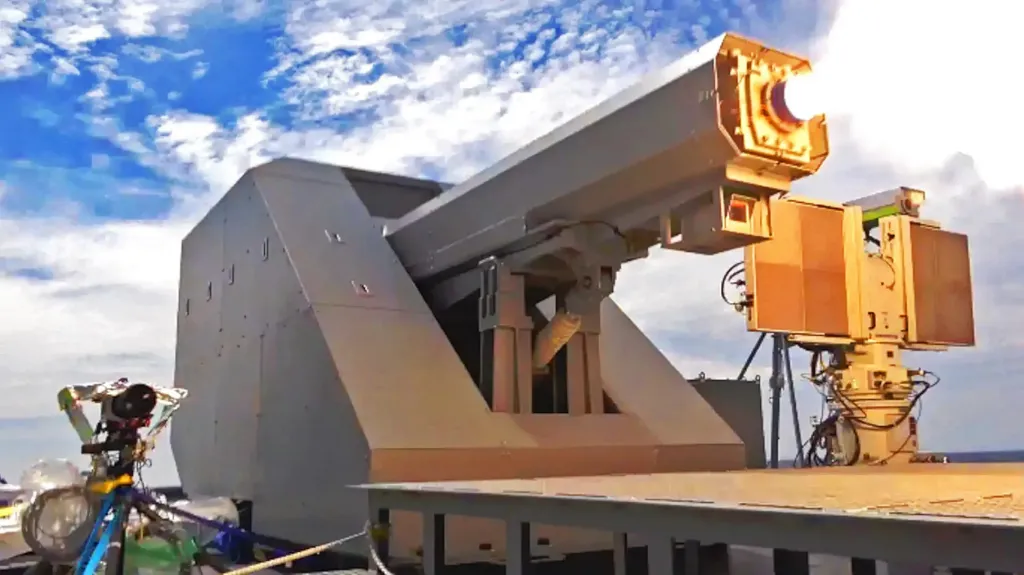
A previously released picture showing the prototype railgun installed on the JS Asuka being fired during the testing earlier this year. ATLA

The prototype railgun used in the testing is an evolution of a design that ATLA has been developing since the mid-2010s. That work has included previous live-fire testing at facilities on land, as well as at least one earlier at-sea test that did not involve shooting an actual target vessel.

Railguns, in general, use electromagnets instead of chemical propellants to fire projectiles at very high velocities. Dart-shaped projectiles, each with four fins at the rear and no warhead, were fired during the at-sea tests earlier this year. The projectiles were initially held inside a sabot that broke apart after leaving the muzzle. There was also a metal armature at the rear that served to push the projectile in the sabot down the barrel, which fell away after firing.

A slide from the ATLA presentation this week highlighting the evolution from earlier prototype railguns tested at facilities on land to the one mounted on the JS Asuka for the at-sea tests. ATLA
Another slide from the presentation discussing the design of the projectiles fired during the at-sea testing. ATLA

A tug-like ship was used as the target for the railgun installed on the JS Asuka. The target vessel was moving during at least some of the test shots, but under tow behind another ship rather than its own power. It was struck multiple times, with the cross-shaped impact points showing the fin-stabilized projectiles flew in a stable manner, as seen in the images at the top of this story and below.

The full slide covering damage to the target ship from ATLA’s presentation this week. ATLA
Another slide with additional details about how the test shots at the target ship were carried out. ATLA

In addition to level shots at the target ship, the railgun was fired at a 45-degree upward angle to provide an opportunity to gather data on the basic ballistics of the weapon and round combination.

Operators aimed the railgun remotely using a camera mounted under the barrel. An additional high-speed camera and a small radar were also positioned on JS Asuka‘s flight deck to collect additional data. A drone filmed the testing from above. When ATLA first released imagery from the testing back in September, TWZ highlighted the presence of what was likely a small radar array, as well as electro-optical and/or infrared cameras, which has now been confirmed.

A slide highlighting the camera under the railgun’s barrel, which was used to aim the weapons during the at-sea tests earlier this year. ATLA
A slide with additional imagery from the at-sea tests, including of the ballistic shots fired with the weapon aimed 45 degrees upward. The radar array and high-speed camera that helped collect data during the testing are highlighted in the image at far left. ATLA

ATLA says that the testing also provided valuable new experience regarding the installation and operation of a railgun on an actual naval vessel. Of course, an operational naval railgun would likely be far more deeply integrated into a warship compared to the test arrangement on JS Asuka. A more traditional naval installation on any ship would require finding sufficient space above and below deck for the railgun and its associated systems, as well as making a host of other necessary modifications, which could be costly and time-consuming.

Otherwise, ATLA continues to work to improve various key underlying technologies as part of its ongoing railgun development efforts, including when it comes to power and cooling, as well as general wear and tear. Japanese authorities say they have now been able to demonstrate a barrel life of more than 200 rounds when firing projectiles at around 2,300 meters per second. As of 2023, ATLA had reportedly been able to fire projectiles from prototype railguns at around 2,230 meters per second and had said it was working toward a barrel life of 120 rounds.

ATLA

The wear on barrels from the sustained firing of projectiles at very high speeds is one of a number of long-standing challenges for railguns, in general. A worn-out barrel can lead to the loss of range and accuracy, as well as increase the risk of a catastrophic failure.

Railguns also have significant power generation and cooling requirements, which have, in turn, historically made them very physically bulky. The installation on JS Asuka included four shipping containers full of additional systems and equipment to help meet those needs.

Kazumi Ito, principal director of the equipment policy division at ATLA, said his country’s railgun efforts were “progressing,” but acknowledged “various challenges,” while speaking through an interpreter at a panel discussion at the DSEI Japan 2025 exposition earlier this year, according to National Defense Magazine.

The ATLA video below shows previous live-fire testing of a prototype railgun at a facility on land.

In general, the potential rewards from developing a practical railgun suitable for operational military use are great. Such a weapon would offer valuable anti-air capabilities, as well as the ability to engage targets at sea and on land. It would also bring additional benefits in terms of the relatively low cost of its ammunition and magazine depth. As TWZ has previously written:

“In principle, a practical electromagnetic railgun would offer a highly capable and flexible weapon system that can rapidly engage a wide array of targets at sea, on land, and even in the air, and at considerable ranges. Japan has previously expressed interest in this capability explicitly to help protect against incoming hypersonic threats. Such a weapon would also offer benefits in terms of magazine depth and cost compared to traditional surface-to-air and surface-to-surface missiles, given the small size and lower unit price of the individual rounds.”

“When it comes to warships, in particular, where physical space is at a premium and where options for reloading missiles at sea can be at best extremely limited, having a weapon system firing lower-cost munitions from a large magazine and that can engage a broad swath of target sets would be a clear boon.”

A U.S. Navy briefing slide from the service’s abortive railgun program showing how ships armed with the weapons (as well as conventional guns firing the same ammunition) could potentially engage a wide variety of aerial threats, including cruise missiles, as well as surface targets. USN

The benefits railguns could offer extend to ground-based types, as well as ones installed on naval vessels. ATLA’s presentation this week shows a truck-mounted railgun, along with one on a warship, as part of the projected roadmap for further railgun developments. ATLA has highlighted the potential for land-based capability in the past, as well.

A slide showing the general planned progression of Japanese railgun developments from the work that has been done already to a more refined design, and then operational naval and ground-based capabilities. ATLA

The previously released ATLA video below also depicts ground-based truck-mounted railguns.

As TWZ has noted in the past, Japan’s continued push ahead with the development of railguns stands in ever-starker contrast to the U.S. Navy’s shelving of its work on such a capability back in 2022, at least publicly. Starting in 2005, the service had been very actively pursuing an operational railgun and had plans to move from extensive on-land testing out to sea. However, the expected at-sea tests were repeatedly delayed and never came to pass. The Navy cited major technological hurdles in its decision to halt its railgun program.

Interestingly, ATLA has reportedly met with U.S. Navy officials to discuss its past railgun work and how it might be useful to Japan’s ongoing efforts. The possibility of greater collaboration in the future has also come up. Last year, ATLA signed a separate deal with the Franco-German Research Institute of Saint-Louis (ISL) to cooperate on the development of railgun technologies.

China has also been experimenting, on-and-off, with railguns since the 1980s. In 2018, a prototype railgun mounted in a large turret emerged on a People’s Liberation Army Navy (PLAN) ship, but the exact status of that program is now unclear.

The Chinese naval railgun that emerged in 2018. Chinese internet

As mentioned, work on railguns is also ongoing as part of a joint effort between Germany and France. Turkey has received particular public attention for its railgun developments in recent years, as well. There continues to be general interest, globally, in railguns for naval and ground-based applications.

ATLA’s update on the at-sea railgun testing earlier this year makes clear that, regardless of any other global development, Japan very much remains committed to its pursuit of this capability.

Contact the author: [email protected]

Joseph has been a member of The War Zone team since early 2017. Prior to that, he was an Associate Editor at War Is Boring, and his byline has appeared in other publications, including Small Arms Review, Small Arms Defense Journal, Reuters, We Are the Mighty, and Task & Purpose.


Source link

I went to the UK’s best Christmas market which opens TODAY and it’s had a glow up

THE LEAD up to Christmas hasn’t fully begun until Winter Wonderland opens, and today that is happening.

Every year one of the UK’s biggest Christmas markets returns to Hyde Park in London.

Winter Wonderland official opens todayCredit: Alice Penwill
So, we went to check it out to see what this year’s event is likeCredit: Cyann Fielding

And this year, there are a number of changes.

I was one of the first to check it out – so here is my full rundown of everything that is worth it, from food and drinks to rides, as well as what you can skip.

The atmosphere

Winter Wonderland 2025 certainly has had a glow up.

The entrances all have exciting new themes and twinkling lights are everywhere.

Read more on travel inspo

CHEAP BREAKS

UK’s best 100 cheap stays – our pick of the top hotels, holiday parks and pubs


ALL IN

I found the best value all inclusive London hotel… just £55pp with free food & booze

It feels a lot like Christmas has thrown up in Hyde Park, in the best way possible.

Throughout, the attention to detail is impressive.

For example, in the alpine-themed bar after you exit Bar Ice, there are disused ski lift pods changed into seating areas and heaters in every corner to ensure it is nice and toasty, despite still being outside.

The rides all glow and the music booms, but not too loud that you can’t hear yourself think.

Rides and existing attractions

For 2025, fan favourites have returned including rollercoasters, drop towers, a giant Ferris Wheel and Bar Ice.

The towering wheel, which is the largest travelling wheel in the world, has been upgraded with pods that close to keep you dry and warm.

For £10 per adult and £8 per child, I was skeptical, but you do get around four full rotations for that and the views are unmatched.

The Bavarian Hall is as big as ever, and offers the ideal spot to have as a base if you’re attending as a group of friends.

Bar Ice has also returned, and though this was the thing I was most skeptical about costing between £15.50 and £18 depending when you visit, for a 20 minute experience, it ended up being my favourite attraction.

Bar Ice has returned – an entire bar made from blocks of iceCredit: Cyann Fielding
With your entry ticket you get a Mixtons cocktailCredit: CYANN FIELDING

The impressive bar made entirely of ice, features fantastical carved creations and has all been made in collaboration with Mixtons cocktails (which you get one included in the entry fee).

The cocktails are then served in a glass made entirely of ice.

In London, cocktails can often set you back upwards of £12, so when you think about it you’re paying around £5 for the experience – which in my opinion was more than worth it.

At the other end of the spectrum is the ice skating rink, which claims to be the UK’s largest open-air ice rink, which I find hard to believe having also visited Somerset House’s ice rink which I feel is bigger.

The ice skating was a little bit of a let downCredit: CYANN FIELDING

It costs between £11.50 and £17.50 per adult and £8.50 and £12.50 per child, and rather sneakily you are not allowed to take your bag onto the ice with you and are consequently forced to pay an additional £2 for the cloakroom.

The ice rink also sits at the edge of the attraction, and felt like it had been squeezed in and forgotten about – plus the entrance is super confusing to find.

Of all the attractions I visited, I would say this is the one to definitely miss.

Instead, head to Somerset House which costs from £15 per adult and from £10 per child and is in a stunning setting.

There are a number of food areas, including the Street Food Market and new for this year, Jingle Bell BistroCredit: Cyann Fielding

The new features

There are a number of new features at the event this year, including a good number of new attractions for kids.

Conveniently located next to the Red Gate (the recommended entrance if you want to head to more child-friendly activities), you will find the new Jingle Bell Bistro – a food market designed with kids in mind.

There are a number of street food vendors selling different child-friendly options, such as chicken nuggets and burgers.

Adults can also get food from here, but I think the idea is that it isn’t fussy food with all the bells and whistles, it is more core staples and comfort food that pleases everyone – a very good idea in my opinion.

Prices varied, including £8 per child-sized pasta dish, or £12 for an adult portion.

Just steps away from the new food area is Santa’s Grotto and Workshop, which is free to visit once inside Winter Wonderland.

The outside is impressive, looking as if it has just been plucked from the movie Elf – in fact, it made me want to be a kid again.

Visitors can explore the Elves Workshop where they help elves solve puzzles before heading into Santa’s Grotto, which is beautifully decked out with Christmas trees and Santa himself.

This year the Dr. Archibald VR Experience has a horror element each day from 5pmCredit: Cyann Fielding

There is also the Dr. Archibald VR Experience (Horror Edition) from 5pm each day.

It features special effects and a lot of robotics, and is rather costly per turn at £7 per adult and £5 per child.

Though, maybe this is still designed for kids as throughout the entire ride I didn’t jump until the very end when the ride host came to lift up my safety bar… How ironic.

The Magical Ice Kingdom also has a new theme for this year based around the four elements.

Inside, you will find an abundance of carved ice creations all set in a -10C world, that truly are breathtaking to see.

It costs from £9 per adult and £7 per child to see, which I do think is on the steep side as the experience lasts about 15 minutes.

I would say it is more for families who don’t like the rides.

Inside the Magical Ice Kingdom, this year’s theme is based around the four elementsCredit: Cyann Fielding

Another new spot for this year, this time for the adults, is the Après-Ski Themed Village with live DJs.

Sadly, upon our visit it was raining so there was no DJ playing and no one around, but I can imagine this area coming alive when it isn’t wet and windy.

There is also a new Zippos Christmas Circus (between £11.50 and £17 per adult and between £8.50 and £14 per child) show to check out, and a new Cirque Berserk (between £12.50 and £18 per adult and between £9.50 and £15.00 per child) show too.

Food and drink

Now let’s not lie… Every year TikTok and Instagram becomes full of people slating Winter Wonderland for its prices, and this includes food.

Winter Wonderland has loads of different places to grab food, but we headed to the Street Food Village, which is where you will find most of the meals you see go viral on social media.

And of course, we tried those options.

I opted for Stakehaus’ Xmas Sub, which was crowned the best Christmas sandwich in London by Time Out last year.

Stakehaus is one of the street food vendors available, serving up their 2024 award-winning Christmas sandwichCredit: Cyann Fielding

At £16.50 it certainly was the most expensive Christmas sandwich I have ever had (though I am not sure I can compare M&S Christmas edition sandwiches to this).

Encased in a soft bread bun, was dry-aged roast beef rump with gravy, sage and shallot crumble, parsnip crisps, cavolo Nero, cauliflower cheese with horseradish mayo.

And my word, it was as good as it sounds.

The gravy really helped to not make the whole thing dry, and the different textures made it truly feel like Christmas in a sandwich.

Admittedly, I would have perhaps liked to taste the horseradish a little more or have some cranberry.

The key thing to remember is that a lot of the vendors are in markets across the city, and when I compared prices between Stakehaus’ Winter Wonderland stall and their Camden Market one – I was please to see only 50p difference between their classic steak and fries option.

Fellow travel reporter Alice Penwill said: “The Mac Factory serves gourmet mac and cheese so of course I had to give their new Holy Quackaroni a try.

“It was £12.50 for a very generous portion, inside my pot was hot and creamy macaroni pasta topped with duck, cranberry sauce, crispy onions and two slices of brie – which if you leave long enough will melt on top.

Travel writer Jenna Stevens opted for the Mango Box from fried chicken shack, Only Jerkin’Credit: CYANN FIELDING

“The cranberry sauce was a bit much for me and very sweet – but all in all it was delicious, and so filling I couldn’t even finish it.

“You’ll struggle with this one if you still you want room for dessert.”

Travel writer Jenna Stevens said: “I went for the Mango Box from fried chicken shack, Only Jerkin’.

“For £14.50 I was served a generous portion of mango and coconut chicken strips, jerk fries, coleslaw, BBQ sauce and a chilli mango aioli.

“I’m so used to paying hefty prices and being disappointed by small portions from street food vendors.

“But I have nothing to complain about here – the flavours were the perfect mixture of sweet and spicy, and the big portion kept me full all night.”

For dessert I opted for the viral London Cheesecake Company – a frozen vanilla cheese cake, dipped in melted chocolate and the covered in a topping of your choice.

Of course I added a trend to the trend by getting Dubai chocolate as my topping.

The pick n’ mix is a bit of a rip off at the marketCredit: Cyann Fielding

The dessert came in at £9 – admittedly expensive – and it was extremely decadent.

One can definitely be shared between two or three people.

I reckon for a family of four, for a main meal, dessert and drink each, you would be looking at the £100 mark.

Though, you could definitely skip dessert as the mains are super filling and if there is one thing to not miss, it is Stakehaus’ Xmas Sub.

Elsewhere we also found a pick n’ mix and of course had to grab some for nibbles between rides.

However, when selecting our chosen sweets it was hard to know how much it would cost.

At the specific stall we were at, there were no signs to tell you how much 100g would cost.

So, you can imagine the gut wrenching feeling I got when 425g of sweets (for reference that’s around the same weight as three bags of fruit pastilles) cost me a staggering £16.11.

For that, I got around 35 sweets – so I would say to avoid the sweet stalls like the plague.

However, bar prices are reasonable and in line with elsewhere in LondonCredit: Cyann Fielding

When it came to drinks though, I was pleasantly surprised.

Mulled wine was £6.40, and whilst this is 30p more than last year, I don’t think it was ridiculous.

The same went for beer with a pint costing between £6.50 to £7.75, a double shot spirit and mixer came in at £11.50 and cocktails around £12.

Non-alcoholic drinks like Pepsi, 7UP or Tango would set you back £2.90 a can.

And that viral deluxe hot chocolate with cream and marshmallows? Well, it was still cheaper than heading to Starbucks (£4.85), at £4.70.

Prices to enter Winder Wonderland vary from free to over £7.50 during peak hours.

PEATY FEUD TWIST

Adam Peaty’s brother arrested over stag do threats sent to Olympian


CHOC HORROR

‘Disgusting’ price of 750g Quality Street tins are slammed by Tesco shoppers

If you are looking for more Christmas activities, these are the best affordable Christmas days out and festive fun events across the UK – either free or under £10.

Plus, the UK Christmas market that attracts nearly two million visitors is getting three new attractions.

Prices range to get into Winter Wonderland, for example, it will cost £7.50 or more to enter during peak hoursCredit: Jenna Stevens

Source link

China Warns Japan of “Crushing Defeat” Over Taiwan, Escalating Tensions

China’s military sharply escalated rhetoric on Friday, warning Japan it would suffer a “crushing defeat” if it attempted to intervene in Taiwan. The statement follows Japanese Prime Minister Sanae Takaichi’s remarks that a Chinese attack on Taiwan could create a “survival-threatening situation” prompting a military response from Tokyo. Beijing condemned her comments as dangerous and irresponsible, with state media linking the remarks to Japan’s historical militarism and right-wing ambitions.

Why It Matters
Taiwan lies just over 110 km from Japanese territory and oversees key maritime trade routes critical to Japan. Beijing’s warning highlights the deep sensitivities surrounding Taiwan and underscores the potential for regional conflict if Tokyo or other powers act militarily. The escalation also comes amid ongoing anti-China sentiment in Japan and rising tensions with Taiwan independence advocates, signaling a volatile mix of historical grievances, territorial concerns, and strategic rivalry.

China: Reinforcing territorial claims and signaling military readiness.

Japan: Balancing constitutional limits, alliance with the U.S., and proximity to Taiwan.

Taiwan: Maintaining sovereignty amid threats from China and international entanglements.

Regional Security: Neighboring states and trade routes face heightened risks if conflict escalates.

What’s Next
With rhetoric intensifying, Japan is calling for dialogue and peaceful resolution, while China continues to target both Taiwan independence advocates and critics abroad. The situation remains precarious, with the potential for miscalculation to trigger a broader regional confrontation.

With information from Reuters.

Source link

Jack Della Maddalena backs himself to beat UFC ‘legend’ Islam Makhachev | Mixed Martial Arts News

UFC boss breaks up tense face-off between the two fighters before their welterweight title bout at Madison Square Garden.

UFC boss Dana White had to separate a tense staredown between welterweight title holder Jack Della Maddalena and Islam Makhachev before their fight this weekend, as the defending champ pledged to beat the mixed martial arts “legend” to bring the belt home to Australia.

The fighters came nose-to-nose and refused to break eye contact during a face-off after their news conference on Thursday at Madison Square Garden, New York, where they will headline UFC 322 on Saturday night, eventually leading White to prise them apart.

Recommended Stories

list of 4 itemsend of list

Della Maddalena (18-2) will mount his first title defence after beating Belal Muhammad by unanimous decision to become champion in May. The 29-year-old Australian is undefeated in the UFC and is now on an 18-fight win streak overall.

The 34-year-old Makhachev (27-1), who is regarded as a pound-for-pound great and is on a 15-win streak, vacated his lightweight belt to move up a weight class.

Della Maddalena was taciturn but appeared unfazed as he received a chorus of boos from the crowd at Thursday night’s news conference, with his Dagestani opponent the clear fan-favourite.

“This is what I got in this sport for – big challenges, big moments. I’m excited for the challenge and I’m looking forward to it,” Della Maddalena said.

“I’m going to bring this belt back home to Australia, no doubt,” he added.

“Obviously, Islam’s a legend. A big win over him would be a big name on the resume and it would definitely put me up on the pound-for-pound list.”

Makhachev responded by saying he would go 4-0 against Australian fighters – although he may have been lumping the New Zealander Dan Hooker in that list, as his only previous Aussie opponent was Alexander Volkanovski, who Makhachev beat twice.

“Australia, it’s a good place. I was there, I like it and now it’s 3-0, I will make it four,” he said.

Della Maddalena hit back by saying several Australian fighters were thriving in the UFC.

“I am very proud to be Australian, very proud to raise the Australian flag,” he said.

“Australia is very competitive, it has a fighting culture and that’s why we’re doing so well. We have two champions and after this weekend we will still have two champions.”

Although Della Maddalena and Makhachev are both well-rounded fighters, the Australian is renowned for his boxing while the Dagestani is famed for his ferocious ground game.

Makhachev smiled and said he “didn’t know” when asked if Della Maddalena was the best boxer in the UFC.

“Jack is one of the best, but I am also a good striker, so let’s see who is better,” he said.

Della Maddalena, meanwhile, told reporters he would “absolutely” be able to defend Makhachev’s takedown attempts for the entire fight, as he did so effectively in his victory over Muhammad.

“[I can do it for the] full 25 minutes,” he said, with a wry smile of his own.

Source link

‘Silliness’: Ireland and Portugal coaches at odds over Ronaldo red card | Football News

Ronaldo at risk of being banned for first game of 2026 World Cup if Portugal qualify after red card against Ireland.

Ireland coach Heimir Hallgrimsson has said Cristiano Ronaldo was wrong to blame him for the red card he received as Portugal fell to a World Cup qualifying defeat.

The five-time Ballon d’Or winner exchanged words with Hallgrimsson after being sent off during Portugal’s 2-0 defeat in Dublin on Thursday.

Recommended Stories

list of 3 itemsend of list

Ronaldo said before the game the Ireland coach had tried to put pressure on the referee by telling the officials not to be influenced by the superstar striker.

With his team trailing by two goals in the second half, the 40-year-old was frustrated and elbowed Dara O’Shea in the back as the Ireland player marked him in the box.

“He complimented me with putting pressure on the referee, but listen, it had nothing to do with me, it was his action on the pitch that cost him a red card,” Hallgrimsson told reporters.

“It had nothing to do with me unless I got into his head.”

He added, “This was just a moment of a little silliness for him, I would say.”

It was Ronaldo’s first sending off in 226 appearances for the national side.

At the very least, Ronaldo will serve a mandatory one-game ban, but FIFA disciplinary rules require its judges to impose a ban of “at least two matches for serious foul play”.

DUBLIN, IRELAND - NOVEMBER 13: Dara O'Shea of Republic of Ireland reacts after being fouled by Cristiano Ronaldo of Portugal during the FIFA World Cup 2026 qualifier match between Republic of Ireland and Portugal at Aviva Stadium on November 13, 2025 in Dublin, Ireland. (Photo by Charles McQuillan/Getty Images)
O’Shea falls after being elbowed by Ronaldo, November 13, 2025 [Charles McQuillan/Getty Images]

Despite the blatant elbow, Portugal manager Roberto Martinez said the red card was harsh.

“I thought it was a bit harsh because he cares about the team,” Martinez told reporters. “He was almost 60 minutes in the box being grabbed, pulled, pushed and obviously he tries to get away from the defender.

“I think the action looks worse than what it actually is. I don’t think it’s an elbow; I think it’s a full body, but from where the camera is, it looks like an elbow. But we accept it.”

Martinez also questioned Ireland manager Heimir Hallgrimsson’s comments about Ronaldo “controlling the referee” in the reverse fixture in Lisbon last month, which Portugal won 1-0.

“The only thing that leaves a bitter taste in my mouth is at the press conference yesterday, Ireland coach was talking about the aspect of the referees being influenced, and then a big centre half falls on the floor so dramatically at the turn of Cristiano’s body,” Martinez said.

Portugal, who are assured at least a playoff spot, are two points clear of Hungary at the top of Group F with a superior goal difference. The Irish are one point further back.

Portugal host Armenia while Ireland travel to face Hungary in the final round of fixtures on Sunday.

Source link

India has called the Delhi blast an ‘act of terror’: How will it respond? | Conflict

New Delhi, India – Indian Prime Minister Narendra Modi’s cabinet late Wednesday described the car explosion which jolted New Delhi earlier in the week as a “heinous terror incident, perpetrated by antinational forces”.

The Indian government’s words, two days after a slow-moving car blew up near the Red Fort, an iconic 17th-century monument in New Delhi, killing at least 13 people and wounding several, have since led to questions about how it might respond, raising concerns over the prospect of a new spike in regional tensions.

Earlier this year, in May, the Indian government had declared a new security doctrine: “Any act of terror will be treated as an act of war.”

That posture had come in the aftermath of an intense four-day air war between India and Pakistan, after India blamed Islamabad for an attack in Indian-administered Kashmir that killed 26 civilians.

Now, six months later, as India grapples with another attack – this time, in the heart of the national capital of the world’s most populous country – the Modi government has so far avoided blaming Pakistan.

Instead, say political analysts, New Delhi’s language suggests that it might be veering towards intensifying a crackdown on Kashmir, at a time when Islamophobia and anti-Kashmiri sentiments have skyrocketed across India in the aftermath of the car explosion.

red fort
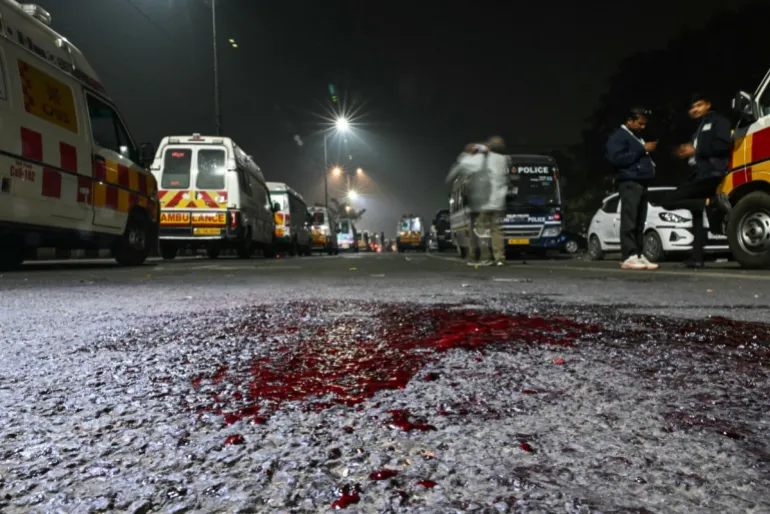
Ambulances are kept on standby on a blood-spattered road at the blast site after an explosion near the Red Fort in the old quarters of Delhi on November 10, 2025. At least 13 people were killed and 19 injured when a car exploded in the heart of the Indian capital, New Delhi’s deputy fire chief told AFP [Sajjad Hussain/AFP]

A crackdown in Kashmir

Even before the blast in New Delhi, police teams from Indian-administered Kashmir had been carrying out raids across the national capital region, following a lead from Srinagar, which led to the seizure of a significant amount of explosives and arrests of nearly a dozen individuals.

Among the suspects are several Kashmiri doctors – including Umar Nabi, a junior doctor who is suspected of being the driver of the car that exploded – who were serving in hospitals in satellite towns outside New Delhi.

Since the explosion near the Red Fort, police in Indian-administered Kashmir have detained more than 650 people from across the Valley as they dig deeper into what sections of the Indian media are describing as a “white-collar terror module” that had gathered enough explosives for the biggest attack on India in decades, if members hadn’t been arrested.

Police teams have raided several locations, including the residences of members of banned sociopolitical outfits.

Indian forces on Thursday also demolished the home of Nabi, the alleged car driver. In recent years, Indian authorities have often demolished homes of individuals accused of crimes without any judicial order empowering them to do so, even though the Supreme Court has ordered an end to the practice. Rights groups have described the act of demolishing the homes of suspects as a form of collective punishment.

Students of medicine and practising doctors in Kashmir are also increasingly facing scrutiny – more than 50 have been questioned for hours, and some have had their devices seized for investigation.

“There is a sense of complete disbelief among all of us,” said a junior doctor at a government-run hospital in Srinagar, the capital of the federal territory of Indian-administered Kashmir.

The doctor requested anonymity to speak, fearing repercussions from the police.

The 34-year-old has seen conflict in Kashmir up close, treating injured protesters firsthand for weeks on end, during previous clashes with security forces. “But I never thought that we would be viewed with suspicion like this,” he said, adding that the explosion that killed 13 in New Delhi was “unfortunate and should be condemned”.

“It is unreal to us that a doctor can think of such an attack,” the doctor said. “But how does that malign our entire fraternity? If a professional defects and joins militants, does it mean that all professionals are terrorists?”

red fort
Security personnel check for evidence at the blast site following an explosion near the Red Fort in the old quarters of Delhi on November 11, 2025 [Arun Sankar/AFP]

‘Away from Pakistan, towards an enemy within’

India and Pakistan have fought three wars over Kashmir since the nations were partitioned in 1947 as the British left the subcontinent. Today, India, Pakistan and China all control parts of Kashmir. India claims all of it, and Pakistan seeks control of all of Kashmir except the parts held by China, its ally.

After the April attack in the resort town of Pahalgam in Indian-administered Kashmir, India had launched missiles deep inside Pakistan. Modi claimed that the attacks killed more than 100 “terrorists”. Pakistan insisted that civilians and soldiers, not armed fighters, were killed. Pakistan, which had rejected Indian accusations of a role in the April killings in Pahalgam, hit back.

Over four days, the nuclear-armed neighbours fired missiles and drones across their contested border, striking each other’s military bases.

When the Modi government agreed to a ceasefire on May 10, it faced domestic criticism from the opposition – and some sections of its own supporters – for not continuing with attacks on Pakistan. The government then said Operation Sindoor is “only on pause, not over”.

Six months later, though, New Delhi has been significantly more cautious about who to blame for the Delhi blast.

“There is a lot of due outrage this time, but there is no mention of Pakistan,” said Anuradha Bhasin, a veteran editor in Kashmir and author of a book, A Dismantled State: The Untold Story of Kashmir After Article 370, about how the region changed under the Hindu majoritarian Modi government. The Kashmir administration has banned her book in the region.

“This time, it is not about a crackdown on Pakistan,” she told Al Jazeera. “The public anger is being directed away from Pakistan, towards ‘an enemy within’.”

She said the Modi government appeared to be aware that finger-pointing at Pakistan “would create pressure from the public to take [military] action” against the neighbour.

Instead, she said, “public anger can be assuaged by creating any enemy.”

red fort
Gayatri Devi, mother of Pankaj Sahni, who died in a deadly explosion near the historic Red Fort in the old quarters of Delhi, reacts next to Sahni’s body outside his home before the funeral, in New Delhi, India, November 11, 2025 [Anushree Fadnavis/Reuters]

Analysts point to the Modi government’s use of the term “antinational forces” to describe the alleged perpetrators of the Delhi attack.

That’s a phrase the Modi government has previously used to describe academics, journalists and students who have criticised it, as well as other protesters and dissidents. Since Modi took office in 2014, India has continuously slid in multiple democracy indices for alleged persecution of minorities in the country and its crackdown on press freedom.

To Sumantra Bose, a political scientist whose work focuses on the intersection of nationalism and conflict in South Asia, the Indian cabinet resolution was significant in the way that it shied “away from naming and blaming Pakistan, which was a rather reflexive reaction for decades”.

After the fighting in May, the Indian government learned, the hard way, Bose said, that “there is no appetite and indeed no tolerance anywhere in the world for a military escalation in South Asia.”

Bose was referring to the lukewarm global support that India received after it bombed Pakistan without providing any public evidence of Islamabad’s links with the attackers in Pahalgam.

Instead, India was left disputing the repeated assertions of United States President Donald Trump that he had brokered the ceasefire between New Delhi and Islamabad, even as he hosted Pakistan’s army chief, praised him, and strengthened ties with India’s western neighbour. India has long held the position that all disputes with Pakistan must be resolved bilaterally, without intervention from any other country.

The contrast in New Delhi’s response to this week’s blast, so far, appears to have struck US State Secretary Marco Rubio, too.

Reacting to the Delhi blast, Rubio said “it clearly was a terrorist attack,” and “the Indians need to be commended. They’ve been very measured, cautious, and very professional on how they’re carrying out this investigation.”

India’s new security doctrine – that an act of terror is an act of war – “was a dangerous, slippery slope”, said Bose, who has also authored books on the conflict in Kashmir. His last work, Kashmir at the Crossroads: Inside a 21st-Century Conflict, published in 2021, is also banned in Kashmir.

The doctrine, he said, was aimed at pandering to Modi’s “domestic gallery” – a way of showing muscular strength, even at the risk of “serious military escalation” between India and Pakistan.

Now, by using terms like “white-collar terrorism”, analysts said Indian officials risked blurring the line between Kashmiri Muslims and armed rebels fighting Indian rule.

“The term doesn’t make sense to me, but it does put the needle of suspicion on young, educated Muslim professionals,” said Bose.

“The fact has been for decades that militants come from all sorts of social backgrounds in Kashmir – from rural farming families, working-class backgrounds, to educated professionals,” Bose argued. “If anything, it reflects the discontent that has been in the society across the groups.”

Bhasin, the editor from Kashmir, said the Indian government’s posture would lead to “adverse economic impact for Kashmiri Muslims and further ghettoisation, where they find it harder to get jobs or a place to rent”.

India
A supporter of India’s Bharatiya Janata Party (BJP) holds a placard during a rally expressing solidarity with the Indian armed forces, in Srinagar, on May 15, 2025, following a ceasefire between Pakistan and India [Tauseef Mustafa/AFP]

‘Everyone is so scared’

Kashmiris across India are already facing the brunt of hate and anger following the Delhi blast.

Since the bomb exploded on Monday in New Delhi, Indian social media platforms have been rife with rampant hate speech against Muslims.

Nasir Khuehami, the national convener of a Kashmiri student association, has spent four days fielding calls from Kashmiri Muslims.

“Across northern Indian states, Kashmiris are being asked to vacate their homes, there is active profiling going on, and everyone is so scared,” Khuehami told Al Jazeera, speaking from his home in Kashmir.

This is only the latest instance of this pattern playing out: An attack in Kashmir, or by a Kashmiri armed rebel, has often led to harassment and beating of Kashmiri Muslims – students, professionals, traders, or even labourers – living in India.

Khuehami said “to end this endless cycle of crises for Kashmiris” – where they are detained at home and abused outside – “the government needs to take confidence-building measures.”

Otherwise, Khuehami said, the Modi government was marginalising Kashmiris in India. By doing that, he said, India would be playing into the hands of the very country it accuses of wanting to grab Kashmir: Pakistan.

Source link

Man who grabbed Ariana Grande in Singapore charged by police

A man who jumped the barricade and grabbed actress Ariana Grande at a Wicked: For Good premiere has been charged with being a public nuisance.

A now viral video shows the Australian man, Johnson Wen, pushing past photographers and charging at Grande while the cast made its way down a yellow carpet surrounded by fans. Co-star Cynthia Erivo could be seen wresting the stunned actress away from Mr Wen.

The 26-year-old had posted on Instagram late on Thursday that he was “free after being arrested”.

However, on Friday afternoon he was charged with being a public nuisance by a Singapore court. Local media reports say Mr Wen, who was unrepresented, intends to plead guilty.

This is not the first time Mr Wen, who describes himself as a “Troll Most Hated”, has invaded a concert or event.

His Instagram feed includes clips of him disrupting other celebrity events, including jumping on stage at Katy Perry’s Sydney concert in June this year and in a similar way during The Chainsmokers performance in the city last December.

If found guilty, he may be fined up to S$2000 ($1540; £1170).

Fans had earlier called for him to be arrested or deported.

“There needs to be action [taken] against him as this is clearly a criminal offence,” wrote an Instagram user, in a comment a video Mr Wen posted of his act.

“Oh wow so you do this a lot… how aren’t you in jail?” one Instagram user wrote.

Several accused Mr Wen for “re-traumatising” Grande, who had spoken of experiencing post-traumatic stress disorder after a suicide bomb attack at the end of her May 2017 concert in Manchester, killing 22 people and injuring hundreds.

“Ariana has been through so many scary things… and at her Manchester concert and you thought it would be fun to jump the barricade?” said another comment on Instagram.

Some fans also criticised security officers at the Thursday event for not being vigilant enough; while others called for social media platforms to ban Mr Wen’s videos.

In clips circulating online, Grande appeared shocked when she was grabbed by the intruder. Her co-stars Michelle Yeoh and Erivo can be seen comforting her while Mr Wen was escorted away by security.

Grande has not commented on the incident, and the rest of the event proceeded as normal.

The BBC has reached out to Singapore’s police and immigration authority for comment.

Hundreds of fans had gathered in a sea of green and pink at the Wicked: For Good Asia-Pacific premiere in a Singapore mall, including some who had stood in line for as long as eight hours before it began.

The movie, to be released on 21 November, is the second of a two-part adaptation of the popular Broadway and West End musical Wicked, which centres on the unlikely friendship between two very different witches.

The musical itself is a spin-off of the 1900 children’s novel The Wonderful Wizard of Oz.

Grande, who plays the good witch Glinda, was decked out in a champagne pink sequin dress at the premiere while Erivo, who plays the wicked witch, wore a black tube grown embroidered with roses.

They were joined by co-star Jeff Goldblum.

The first movie, Wicked, was the highest-grossing movie of 2024 in the UK, and scored 10 Oscar nominations, winning two for best costume and production design.

Source link

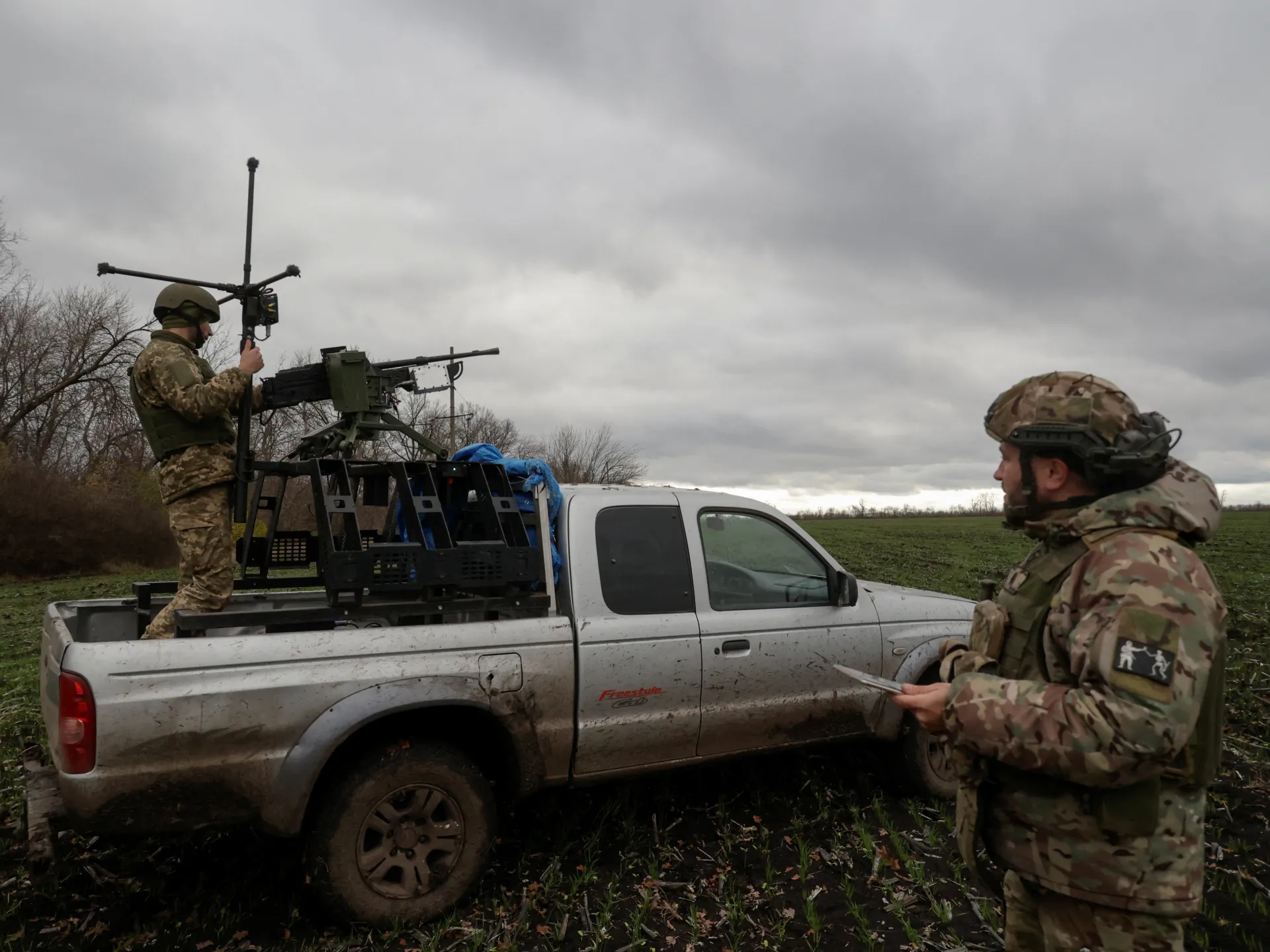
Russia Creates New Military Branch Dedicated To Drone Warfare

Russia has created a new branch of its military to oversee the production, operation, and testing of uncrewed systems and the tactics and techniques for using them. Called the Unmanned Systems Forces (USF), the new branch mirrors a similar one Ukraine created last year, even using the same name. Its work will encompass aerial, land and surface drones.

Ukrainian officials have acknowledged the creation of this new branch, with one calling it a “threat.”

1780/ The Russian Ministry of Defense showcased the emblem of the unmanned systems troops.

“The emblem features a crossed arrow and sword, with a microchip bearing a star and wings in the center.”

/t.me/warhistoryalconafter/248544 pic.twitter.com/l5WFY2nFK7

— Huligan (@Ghost132607472) November 12, 2025

In history’s most drone-saturated battlefield, both sides are seeking to streamline operations to better use the resources they have and stay ahead of the never-ending technology development cycle. The objective of the Russian USF is to do just that, according to its deputy chief.

“We have already formed established regiments, battalions, and other units,” Lt. Col. Sergei Ishtuganov told the Russian KP.Ru media outlet. “Their combat operations are conducted according to a unified plan and in coordination with other units of the troop groups. At the same time, the expansion of existing and the creation of new units… continues. We are assigning operators, engineers, technicians, and other support specialists to these units.”

The USF is already showing signs of success, Ishtuganov claimed, citing the situation in the embattled city of Pokrovsk, where both sides acknowledge that Russian drones have helped give Moscow the upper hand.

“Have you noticed what the enemy complains about most when surrounded in the Pokrovsk-Myrnohrad agglomeration? That’s right – drones,” exclaimed Ishtuganov. “Just a year ago, our troops weren’t so saturated with drones of all types. But gradually, Russian units managed to turn the tide in the skies and effectively ‘squeeze’ them from the Ukrainian Armed Forces.”

Beyond the battlefield, the USF is “conducting combat testing of both drones and electronic warfare systems, working closely with manufacturers,” the USF deputy chief noted.

As we pointed out earlier in this story, both sides are rapidly developing new technologies and methods to defeat them. A big focus of the Russian USF is on electronic warfare (EW), where countermeasures often last just weeks or less before they no longer work. 

“If necessary, we modify these or other products, taking into account the rapidly changing situation,” Ishtuganov explained. “The enemy plays with frequencies; we reconfigure our electronic warfare systems. The enemy begins to suppress us with electronic warfare; we switch to other frequencies. And this is an ongoing process, requiring, among other things, technical expertise.”

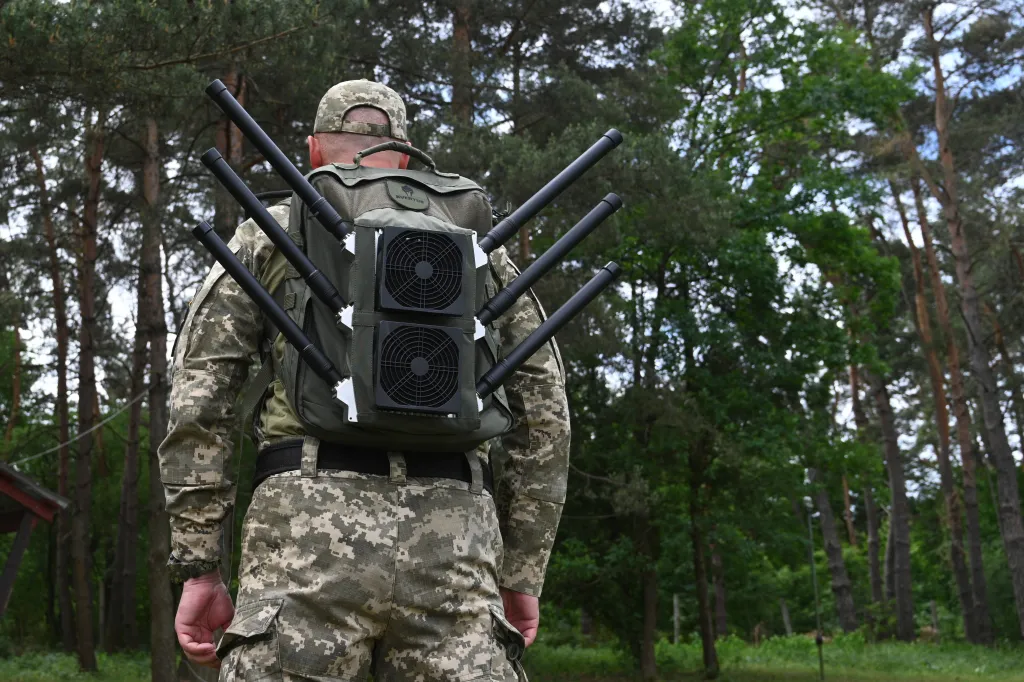
A Ukrainian serviceman tests an anti-drone backpack during a presentation of radio-electronic warfare (WB) and radio-electronic intelligence (PER) systems of the Ukrainian company Kvertus in Lviv region on May 28, 2024, amid the Russian invasion of Ukraine. The event was organized by the charity foundation 'Zavzhdy UA' (Forever Ukraine) with the Ukrainian company Kvertus. (Photo by YURIY DYACHYSHYN / AFP) (Photo by YURIY DYACHYSHYN/AFP via Getty Images)
A Ukrainian serviceman tests an anti-drone backpack. (Photo by YURIY DYACHYSHYN / AFP) YURIY DYACHYSHYN

While procurement is a major effort of the new military branch, Ishtuganov offered no details about the process. It is important to note that Russia is now receiving a good deal of assistance from Beijing, now producing drones completely made up of Chinese components. Overall, Moscow has announced lofty intentions for producing new drones. It has a factory where the goal is to build 6,000 Shahed-type drones per month. Russia also has plans to make a total of 2 million first-person-view (FPV) drones this year.

Equipment is just part of the equation. The USF is also recruiting top military talent, Ishtuganov said.

“The effectiveness of this new branch of the armed forces, which is still in its infancy, is demonstrated by its personnel approach,” he suggested. “The best service members are selected, taking into account their combat achievements, among other things.”

The USF was created at the behest of Russian President Vladimir Putin, who in December 2024 ordered the Defense Ministry to establish a dedicated branch for drone warfare. While Putin shrugged off concerns about the capabilities of his drone operations, one Russian military observer said a combination of issues had impeded operations. One is how troops are deployed, explained the Forces Group “ZAPAD” | News Telegram channel. The other is how they have been equipped.

“Drone operators should not be sent as assault troops, as some commanders do,” the Telegram channel pointed out. “Otherwise, the whole process loses its meaning. Patching holes is a consequence of problems. And the existence of such problems is a result of careless command actions. There is hope that the (USF) troops will become a kind of ‘shield’ for all successful drone operators.”

Resources have been another big issue.

“In combat conditions, losing a drone is very easy, and if you have a strict limit on the number of drones — you are limited in your capabilities,” Forces Group posited. “It is no secret that drones are currently in short supply almost everywhere. Especially night drones. Especially our equivalents of Baba Yaga.” Baba Yagas, as we have explained in the past, are large industrial quadcopter drones armed with guided munitions.

DONETSK OBLAST, UKRAINE - APRIL 20: Engineers of the Ukrainian drone battalion ‘Achilles’ test the night bomber drone ‘Vampire’ (Russian military also call it ‘Baba Yaga’) before the night mission on the Chasiv Yar direction on April 20, 2024 in Donetsk Oblast, Ukraine. After the occupation of Avdiivka, Russian troops focused on the offensive on Chasiv Yar, a town located west of Bakhmut. (Photo by Serhii Korovayny/Global Images Ukraine via Getty Images)
Engineers of the Achilles drone battalion testing night bomber drone Vampire (Russians also call it Baba Yaga) before the night mission on the Chasiv Yar direction in Donetsk region. (Global Images Ukraine via Getty Images Serhii Korovayny) Serhii Korovayny

The only Russian unit immune to this concern is Rubicon, a secretive force of drone operators that helped Russia push back Ukraine’s Kursk invasion.

“There is hope that the UAV Forces are being created, among other things, to solve the supply problem so that each unit can eventually call itself at least a mini-Rubicon,” Forces Group “Zapad” postulated.

Samuel Bendett, a drone expert and researcher with the Center for Naval Analyses think tank concurred with much of the Telegram channel’s hypothesis.

There are no official standards today for many tactical drone R&D and uses in the Russian military,” he told us. “There are uneven supplies, there are issues with UAV pilots treated as typical infantry used for assaults, uneven supplies of qualified pilots and drones, etc. There is hope from many in the Russian military that USF will solve many of these issues.”

The USF is not Russia’s first attempt to wrangle its drone operations. As we reported earlier this year, the Russian Navy dedicated regiments to operate uncrewed surface, undersea, air and land systems.

Ukraine, as we noted at the top of this story, created its own USF to address many of the same issues. The reaction in Kyiv toward the Russian version is one of concern.

“Heard a detailed intelligence report on the development of the enemy’s unmanned forces,” Oleksandr Syrskyi, commander-in-chief of the Ukrainian Armed Forces, noted on his Telegram channel. “The occupiers are following our experience, particularly in creating regiments of unmanned systems and interceptor drones, and are directing significant resources towards this. We must constantly improve to maintain technological superiority.”

“Special attention,” he added, “is given to scaling the [Ukrainian] Unmanned Systems Forces units: increasing the number of trained crews, involving personnel, and creating infrastructure for their effective operation.”

One Ukrainian official posited that Russia’s following Kyiv’s lead presents a real danger.

“They copied our successful solutions,” Andrii Kovalenko, the head of Ukraine’s Center for Countering Disinformation, stated on Telegram. “It was we who created strike UAV companies, which in 2023 allowed us to have an advantage over the enemy. And now the SBS operates very effectively. But the Russians copy and try to scale our innovations by quantity. This is a threat, of course.”

Contact the author: [email protected]

Howard is a Senior Staff Writer for The War Zone, and a former Senior Managing Editor for Military Times. Prior to this, he covered military affairs for the Tampa Bay Times as a Senior Writer. Howard’s work has appeared in various publications including Yahoo News, RealClearDefense, and Air Force Times.


Source link

Can Feminist Foreign Policy Keep Its Promises?

In an era of global polarization and escalating crises, the promise of a Feminist Foreign Policy (FFP) has emerged as a beacon of progressive change. Yet, a troubling paradox lies at its heart: while political support holds steady, the financial backbone of the movement—women’s rights organizations—faces a “life-threatening” funding crisis. In an exclusive multi-respondent Q&A, experts from the Feminist Foreign Policy Collaborative—Katie Whipkey, Spogmay Ahmed, and Beth Woroniuk—break down the alarming data from their latest report and outline the path from minimalist commitments to a truly transformative global agenda.

1. The Rhetoric-Reality Gap: A “Life-Threatening” Divide

Your report’s data reveals a world where support for FFP is growing, yet funding for women’s rights organizations is in “urgent alarm.” How do you explain this gap?

Katie Whipkey: The report found that feminist foreign policy is not experiencing the rollback that we might have expected during this time of deep polarization and gender backlash. However, to say that it is growing may not be quite right—the interest is holding steady. That gives us a lot of hope. FFP has enabled governments to double down on existing commitments to gender equality in multilateral spaces and push for more gender-inclusive language. However, when it comes to the tougher structural issues like funding, especially for non-traditional funding targets such as women’s rights organizations (WROs), we see a gap. The brash reduction in Official Development Assistance (ODA) and the continually miniscule funding for WROs is alarming. ODA dropped 9% in 2024 and is predicted to fall up to 17% in 2025. Many of the biggest ODA donors are FFP governments, and they are cutting development budgets while simultaneously increasing military spending. This is life-threatening as 90% of WROs in crisis contexts report disrupted operations due to funding cuts. So what we see is that gender equality has been better rhetorically mainstreamed while remaining fiscally marginalized.

Beth Woroniuk: This gap is not new. There has always been a huge divide between the statements of support for gender equality on the part of the development assistance donors, and their actual support for women’s rights organizations. Between 2014 and 2023, just 0.1 per cent of ODA reached women’s rights and women-led organisations directly. Another example: financing to support the implementation of the women, peace and security agenda has ‘failed to match the scale of the challenge.’ The hope was that countries with feminist foreign policies would start to reverse this trend. And we saw this start to happen. Unfortunately this momentum is threatened by the current trend to slash development assistance budgets.

2. Resisting Backlash: The Second Generation of FFP

We’ve seen high-profile FFP abandonments in Europe and the Americas. Where are you seeing the most effective resistance to this backlash, and what does that resistance look like on the ground?

Katie Whipkey: Resistance to backlash takes several forms. Perhaps the single strongest form is from within through institutionalization of as many elements of FFP as possible. When we move away from political feminism—declarations or speeches that can be reversed overnight—and toward institutional feminism—incorporating inclusive and responsive policy into laws, budgets, bureaucracies, and diplomatic culture—we have a chance to stave off conservative pushback. This is the second generation of FFP, where the architecture outlasts the architects. The report identifies five mechanisms for institutionalization: policy, through legislative or administrative provisions; architecture, through dedicated departments; budgetary, through earmarked funds; leadership, through dedicated high-level roles; and capacity, through staff training. Resistance also looks like feminist bureaucrats and civil servants quietly keeping feminist norms alive through budget tagging and gender audits even when political leadership changes.

Spogmay Ahmed: While our report identifies FFP abandonments across Europe and the Americas, it also points out that engagement in FFP discourse—primarily by civil society—has deepened and diversified. For example, our own Global Partner Network for Feminist Foreign Policy has grown from 14 to over 100 partners. Over the past few years, regional networks have launched and expanded. Likewise, academic coverage has greatly increased. While there is no shortage of skepticism, our report demonstrates that interest has persisted, evolved and broadened. That too is one form of resistance.

3. Following the Money: Where Gender-Focused Aid Really Goes

The data shows FFP countries give more gender-focused aid, but the actual amount reaching women’s rights organizations is “miniscule.” Where is the money actually going, and how can it be redirected?

Beth Woroniuk: Development assistance that is counted as ‘gender focused’ supports a wide variety of goals and is provided to governments, international organizations, private sector companies, and NGOs. The vast majority of this funding is for projects that have just one component that supports gender equality, while a small percentage supports projects that directly target gender equality objectives. Traditionally, women’s rights organizations have been seen as too small and too risky to be chosen as key ‘implementors.’ In recent years, new mechanisms have emerged to address these challenges. For example, women’s and feminist funds have mobilized both development assistance and philanthropic resources to provide core, flexible, and predictable funding. These funds allow bilateral assistance entities to reduce the high transaction costs involved in providing multiple small grants.

4. Protecting Resources: A Political Choice

The report’s 5R framework highlights “Resources” as a key pillar. With major donors cutting Official Development Assistance (ODA), how can FFP countries practically “ring-fence” and protect funding for gender equality?

Beth Woroniuk: Protecting development assistance funding for gender equality is a political choice. When ODA budgets are cut, choices have to be made about what programmes are reduced or eliminated. At this moment, governments have an opportunity to say ‘we stand for gender equality and we will not cut these strategic investments.

5. Signature Initiatives: Funding Models That Work

The reports mention “signature initiatives” that partner directly with civil society. What is one concrete example of a funding model that is successfully getting resources to feminist movements?

Spogmay Ahmed: In our report, we outline a few of these ‘signature initiatives,’ such as France’s Support Fund for Feminist Organizations, which is allocated EUR 250 million over five years. Similarly, Canada invested CAD 300 million in the Equality Fund. We point to the Equality Fund as a powerful example of ‘institutionalizing’ feminist foreign policy; by making a large early investment, Canada helped ensure the Fund’s continued global impact.

Beth Woroniuk: These ‘signature’ initiatives all respond to calls from feminist activists to both increase investments in gender equality and change the terms on which this money flows – focusing more on feminist movements and providing more flexible funding.

6. The Power of Regional Partnerships

Beyond money, how are regional partnerships, like the one between Chile and Mexico, proving to be a powerful tool for advancing FFP goals?

Spogmay Ahmed: Our report recognizes a marked increase in regional cooperation. We see this primarily through a rise in ‘South-South’ cooperation efforts. One example is Chile and Mexico institutionalizing their FFP partnership through a memorandum of understanding on FFP, diplomatic training and Indigenous cooperation. Through such partnerships, governments are able to share learnings, strengthen collaboration, and collectively push for gender equality and human rights.

7. True Partnership: Beyond Writing Checks

The report recommends that FFP countries “ally with women’s and feminist funds.” What does a true, equitable partnership look like in practice, beyond just writing a cheque?

Katie Whipkey: We see that true, equitable partnership is grounded in co-creation and power-sharing. It means shifting from donor-recipient models to structures based on shared decision-making. Practically, this looks like feminist groups being involved in decision-making about how funds are prioritized, distributed, and evaluated. Feminists from the Majority World would be viewed and valued as knowledge experts. It also means long-term, core funding that enables spending on administrative and political work – not just service delivery.

Beth Woroniuk: Most development assistance projects are highly bureaucratic. Women’s and feminist funds are rooted in and accountable to feminist movements. Working together as thought partners, co-creators, and innovators are promising examples of changing out-dated structures.

8. Learning from Outliers

The report notes that some non-FFP countries invest a greater percentage in gender equality than FFP countries. What can FFP champions learn from these outliers?

Beth Woroniuk: One of the lessons from the report is that you don’t have to have an FFP to invest development assistance in gender equality. There are countries supporting key initiatives who haven’t adopted this label. So one lesson is that all countries can boost their gender equality ODA investments. There can be feminist champions doing solid work, without the feminist label.

9. One Action for Real Commitment

If you could tell the leaders of the remaining FFP countries one thing they must do in the next year to prove their commitment is real, what would it be?

Spogmay Ahmed: Strengthen feminist principles across all areas of foreign policy. This brings us back to the ‘Reach’ in our global framework. I would encourage leaders to broaden the scope and application of their feminist foreign policies, as well as their ambition.

Katie Whipkey: Institutionalize. We need to guarantee our gains by legislating what we know works, including protecting staffing and training budgets, providing direct funding to women’s rights organizations, and mandating regular publishing of transparent progress reports.

Beth Woroniuk: I would encourage countries with FFPs to reach out and engage civil society organizations. Yes, activists are often critical, yet they are also an enormous source of strength and creativity. These relationships can be sources of inspiration, expertise, and accountability.

From Pledge to Power: The Road Ahead

The insights from Katie Whipkey, Spogmay Ahmed, and Beth Woroniuk paint a clear picture: the future of Feminist Foreign Policy depends on closing the gap between rhetoric and resources. While institutionalization and civil society partnerships offer hope, true progress requires political courage—to protect funding, share power with grassroots movements, and extend feminist principles across all areas of foreign policy. As Whipkey powerfully notes, “In a time of backlash, we need courage.” The stakes could not be higher, but neither could the resolve of those fighting for a foreign policy that serves all of humanity.

Source link

Will Pakistan’s defence overhaul strengthen or upset its military balance? | Military News

Islamabad, Pakistan – Pakistan has codified the most ambitious restructure of its military and judiciary in decades after President Asif Ali Zardari signed his assent to ratify the country’s 27th Constitutional Amendment on Thursday.

The amendment, which passed in both houses of parliament earlier in the week amid opposition protests and criticism from a range of civil society activists and sitting judges, makes major changes to Pakistan’s higher judiciary.

Recommended Stories

list of 4 itemsend of list

But many analysts believe that its most consequential feature is a sweeping overhaul of Article 243, the constitutional clause defining the relationship between Pakistan’s civilian government and the military.

The changes grant lifetime immunity from criminal prosecution to the country’s top military leaders, significantly reshape the military’s command structure, and further tilt the balance of the tri-services – the army, navy and air force – heavily in the army’s favour.

Analysts warn that this contentious reform risks colliding with entrenched institutional cultures and could rock the country’s fragile civilian–military equilibrium.

Al Jazeera has sought comment from the military’s media wing on the changes and the debate over them, but has received no response.

A new command structure

The revised Article 243 establishes a new post, the Chief of Defence Forces (CDF), to be held concurrently by the Chief of Army Staff (COAS). This effectively gives the army chief command authority over the Pakistan Air Force (PAF) and Pakistan Navy (PN).

The incumbent COAS is Field Marshal Asim Munir, who assumed command in November 2022 and was elevated to a five-star rank on May 20 this year, just 10 days after Pakistan ended its four-day conflict with India.

Munir became only the second Pakistani military officer – after Field Marshal Ayub Khan in the 1960s – to receive the five-star designation. The air force and navy have never had a five-star official so far.

The amendment also abolishes the office of Chairman Joint Chiefs of Staff Committee (CJCSC) at the end of this month. The role is currently held by four-star General Sahir Shamshad Mirza, who retires on November 27. Another major change is the creation of the Commander of the National Strategic Command (CNSC), a post overseeing Pakistan’s nuclear command. The position will be limited to only an army officer, appointed in consultation with the CDF, with a three-year term extendable by another three years.

The amendment effectively transforms five-star titles from what were honorary recognitions into constitutionally recognised offices with expansive privileges.

Under the new arrangement, five-star officers will enjoy lifetime immunity from criminal prosecution and will “retain rank, privileges and remain in uniform for life.”

Removing a five-star officer will require a two-thirds parliamentary majority, whereas an elected government can be dismissed by a simple majority.

“While government spokespersons refer to these titles as ‘honorary’, given to ‘national heroes’ to celebrate their services,” Reema Omer, a constitutional law expert, said, the amendment “implies actual power, not just honorary significance”.

Omer told Al Jazeera that lifelong immunity from criminal proceedings was “concerning from a rule of law perspective”.

A former three-star general, speaking on condition of anonymity, acknowledged that the changes appeared to be “meant to consolidate” the army chief’s power.

Hours after the president’s ratification on Thursday evening, Pakistan’s government brought amendments to the laws governing the three services.

Under the revised Army Act, the clock on the tenure of the army chief will now restart from the date of his notification as CDF.

Last year, parliament had increased the tenure of the service chiefs from three to five years, which meant Munir’s term would run until 2027. Following the new changes, it will now extend even further. Once the revised rules take effect at the end of this month, Munir will hold both posts – COAS and CDF – at least until November 2030.

President Asif Ali Zardari and Prime Minister Muhammad Shehbaz Sharif jointly conferred the baton of Field Marshal upon Chief of Army Staff (COAS) Field Marshal Syed Asim Munir during a special investiture ceremony at Aiwan-e-Sadr in Islamabad. [Handout/Government of Pakistan]
President Asif Ali Zardari, centre, and Prime Minister Muhammad Shehbaz Sharif, right, jointly conferred the baton of Field Marshal upon Chief of Army Staff (COAS) Field Marshal Syed Asim Munir, left, during a special investiture ceremony at the Presidency in Islamabad in May this year [Handout/Government of Pakistan]

Military dominance – and the role of the India conflict

Since independence in 1947, Pakistan’s military, especially the army, has been the most powerful institution in national life.

Four coups and decades of direct rule have been accompanied by significant influence, even when civilian governments have been in power. The army chief has long been widely viewed as the country’s most powerful figure.

No prime minister has ever completed a full five-year term, while three of four military rulers have governed for more than nine years each.

General Qamar Javed Bajwa, Munir’s predecessor, acknowledged this history in his farewell address in November 2022, conceding that the military had interfered in politics for decades, and promising to break with that legacy.

But three years later, rights groups and opposition parties allege that little has changed, and some claim that the military has further strengthened its grip over state institutions.

The military restructure under the 27th Amendment also comes six months after Pakistan’s brief conflict with India in May, raising questions over whether the reforms were linked to that fight.

Aqil Shah, professor of international affairs at Georgetown University in Washington, DC, argued that the confrontation with India created the opening for this “unprecedented role expansion” for the army chief.

The changes “formalise the army’s de facto hegemony over the other two wings of armed forces in the guise of the ‘unity of command’ as a necessity for war fighting,” Shah told Al Jazeera.

But supporters of the amendment disagree. Aqeel Malik, state minister for law and justice, said that the amendment aims to “plug holes” in Pakistan’s national security architecture.

“The amendment granted constitutional cover to defence integration and improved coordination. We have also provided a constitutional cover to the honour bestowed upon our national heroes and have addressed a long overdue cohesive and better coordination within the forces for a swift response,” Malik said.

Ahmed Saeed, a former vice admiral, similarly described the reform as a “forward-looking institutional change”.

He said the conflict with India exposed that Pakistan’s command model was rooted in a 1970s framework, unsuitable for “multi-domain, hybrid warfare of the 21st century”.

“The amendment is not about ‘fixing what is broken’ but about modernising what is functioning to ensure sustained effectiveness in future contingencies,” Saeed told Al Jazeera.

Fears of imbalance

Other critics, including former senior officials and security analysts, believe the amendment is less about modernisation and more about institutional consolidation.

They argue that creating the CDF post cements the army’s dominance over the other branches.

Many question why the command structure should be overhauled when, by the government’s own narrative, the existing system delivered what Pakistan claims was an “outright victory” against India.

A retired three-star general who served in senior roles before retiring in 2019 said the abolished CJCSC role, despite being largely symbolic, provided a mechanism for balancing perspectives across the army, navy and air force.

“The PAF and PN may lose autonomy in strategic planning and most probably senior promotions, which has the potential to breed resentment,” he said.

“These risks institutional imbalance, undermining the very cohesion the amendment claims to enhance,” the former general added.

The CJCSC – a four-star post and the principal military adviser to the prime minister – can theoretically be filled by any service, but the last non-army officer to hold the position was Air Chief Marshal Feroz Khan in 1997.

Security analyst Majid Nizami said that while the amendment aims to codify five-star ranks, it may create challenges for “cohesion and synergy” among the services.

If the goal was to modernise warfare strategy, he argued, there should have been a dedicated officer focused solely on integration, not the army chief assuming dual authority.

“There is a lack of clarity on rules and terms of reference for the CDF,” Nizami said.

Shah, the Georgetown academic and author of The Army and Democracy, said the amendment “formalises the de facto power” of the COAS over the other branches.

Saeed, the former navy official who retired in 2022, however, disagreed with critics, arguing that the amendment simply clarifies the CDF’s strategic coordination role.

“The amendment retains the PAF and PN’s distinct command structures within their domains of responsibility, and the CDF’s function is limited to integration at the strategic level, not administrative control or operational interference,” he said.

He added that claims of “army dominance” stem from “legacy perceptions, not from constitutional reality.”

Control of nuclear command

The amendment also codifies the army’s control of Pakistan’s nuclear programme, including research, development and deployment, responsibilities that fall under the strategic command structure.

The former three-star general who spoke to Al Jazeera said the new system’s operational details remain unclear. Under the current model, the Strategic Plans Division (SPD) manages Pakistan’s ballistic and cruise missile programmes and nuclear assets.

Nizami said that although the CJCSC nominally oversaw the SPD, operational authority has long rested with the army. The amendment now formalises this reality.

Saeed, however, countered by arguing that in effect, even with the changes, “the entire nuclear enterprise operates under civilian-led oversight with constitutional clarity”.

Political fallout

Critics have described the amendment as a “constitutional surrender” by political parties to the military, and an attempt to institutionalise the “supremacy of the uniform over the ballot”.

Asim Munir and Shehbaz Sharif meet Donald Trump
US President Donald Trump, left, met with Pakistani Prime Minister Shehbaz Sharif, second from left, and Field Marshal Asim Munir, second right, in Washington, DC, in September [Handout/The White House]

It also comes at a time when Field Marshal Munir’s public profile has risen significantly. He has undertaken multiple foreign trips, including several to the United States, and has been described by President Donald Trump as his “favourite field marshal”.

Meanwhile, former Prime Minister Imran Khan, jailed for the past two years, accuses Munir of orchestrating the crackdown on him and his party, Pakistan Tehreek-e-Insaf (PTI), since their ouster in 2022 through a no-confidence vote – a charge that the military has rejected outright.

In Pakistan’s February 2024 election, the PTI was barred from contesting as a party. But its candidates, contesting independently, secured the most seats even though they failed to secure a majority. Instead, the Pakistan Muslim League-Nawaz (PML-N) of Prime Minister Shehbaz Sharif formed the government with allies. The government and military rejected widespread accusations of election rigging.

Shah argued that the political class supported the amendment out of necessity.

“Lacking democratic legitimacy and faced with the political challenge posed by the PTI and Khan, the ruling PML-N government sees Munir as the key guarantor of their power and political interests,” he said.

Nizami, the Lahore-based analyst, meanwhile, said that separate appointments to the posts of the CDF and the army chief would have made more sense if the intent was to strengthen the military structure and balance. The amendment, he warned, could lead to “institutional imbalance instead of institutional synergy”.

Source link

Osimhen scores two goals as Nigeria set up World Cup clash with DR Congo | Football News

Victor Osimhen’s brace against Gabon puts Nigeria through to CAF World Cup playoff final on Sunday against DR Congo.

Star forward Victor Osimhen scored twice in extra time to clinch a 4-1 semifinal victory for Nigeria over Gabon on Thursday and set up a Confederation of African Football (CAF) 2026 World Cup qualifying final against the Democratic Republic of the Congo (DRC).

Captain Chancel Mbemba was the Congolese hero in the second semifinal, scoring in the first minute of added time to beat eight-time World Cup qualifiers Cameroon 1-0 in torrential rain in Rabat.

Recommended Stories

list of 3 itemsend of list

Nigeria will face DRC on Sunday in the Moroccan capital, and the winners qualify for a six-nation FIFA inter-continental tournament in March. The African playoffs involved the best four group runners-up.

Bolivia and New Caledonia have already secured slots in the playoffs; Iraq or the United Arab Emirates will represent Asia; and there will be two qualifiers from the Central America/Caribbean region. Europe are excluded.

After semifinals among the four lowest-ranked teams, the winners of the two finals will secure places at the World Cup in the United States, Canada and Mexico.

Nigeria are seeking a seventh appearance at the global showpiece and DRC a second, having played in the 1974 tournament when the central African country was called Zaire.

Osimhen squandered a great chance to give Nigeria victory at the end of added time, firing wide with only goalkeeper Loyce Mbaba to beat.

But the 2023 African Player of the Year atoned on 102 minutes, firing across Mbaba into the far corner after being set up by Benjamin Fredrick.

He struck again on 110 minutes, controlling a long pass before once again beating the goalkeeper with a shot into the far corner.

After conceding an 89th-minute equaliser in regular time, Nigeria regained the lead when substitute Chidera Ejuke scored his first goal for the Super Eagles after 97 minutes.

Alex Iwobi and Andre Poko in action.
Nigeria’s Alex Iwobi, left, in action with Gabon’s Andre Poko (#17) [Stringer/Reuters]

Osimhen’s impact

Akor Adams had put Nigeria ahead on 78 minutes, and Mario Lemina levelled after 89 minutes.

Nigeria had a purple patch midway through the opening half with Osimhen coming close three times to breaking the deadlock.

The 26-year-old Galatasaray striker headed wide twice, then had an appeal for handball turned down after a VAR review.

There was another VAR check on the hour after Nigeria full-back Bright Osayi-Samuel pulled the shirt of Aaron Appindangoye in the box, denying the defender a chance to connect with a free-kick.

After a lengthy review, Gabonese appeals for a penalty were turned down by the South African referee.

The deadlock in a tense showdown was finally broken when Adams intercepted a misplaced Gabon pass, rounded Mbaba and scored.

There was an element of luck about the Gabon equaliser as goalkeeper Stanley Nwabali appeared to have the shot from Lemina covered until it took a deflection and sneaked into the corner of the net.

Joris Kayembe and Etta Eyong.
Congo’s Joris Kayembe, left, and Cameroon’s Etta Eyong battle for the ball during a World Cup qualifying football match against Cameroon, on November 13, 2025, in Rabat, Morocco [AP Photo]

DRC deny Cameroon

With just six world ranking places separating Cameroon and DRC, a close encounter was expected, and so it proved with few clear-cut scoring chances in a cagey clash before Mbemba struck.

Manchester United striker Bryan Mbeumo had the best opportunity for Cameroon midway through the second half, but his low shot was just off target.

A little earlier, Congolese veteran Cedric Bakambu was foiled by goalkeeper Andre Onana, who pushed away his shot at the expense of a corner.

Group winners Algeria, Cape Verde, Egypt, Ghana, Ivory Coast, Morocco, Senegal, South Africa and Tunisia secured the nine automatic qualifying places reserved for Africa.

Source link

Russia-Ukraine war: List of key events, day 1,359 | Russia-Ukraine war News

Here are the key events from day 1,359 of Russia’s war on Ukraine.

Here is how things stand on Friday, November 14:

Fighting

  • Russian forces launched a “massive” attack on Kyiv early on Friday, Mayor Vitali Klitschko said, with air defences in action and a series of explosions reported in the capital.
  • Klitschko said falling debris had struck a five-storey apartment building in Dniprovskyi district on the east side of the Dnipro River, and a high-rise dwelling was on fire in Podil district on the opposite bank.
  • Ukrainian President Volodymyr Zelenskyy visited troops near Ukraine’s southeastern front line, where he warned of the need to shore up defences after his troops lost ground in increasingly high-intensity battles far from Russia’s main offensive in the east of the country.
  • President Zelenskyy said the situation near the city of Orikhiv in the Zaporizhia region was “one of the most difficult” along a sprawling front line and that thwarting Russian forces there was key to shielding Zaporizhzhia city.
  • Ukraine’s military said its troops hit a Russian oil terminal in occupied Crimea and also an oil depot in the occupied Zaporizhia region.
  • The Ukrainian General Staff said Russian oil facilities and other military targets were hit by domestically produced weapons, including the “Flamingo” ground-launched cruise missile, drone missiles, and drones.
  • Russia’s Ministry of Defence said its forces have captured two more Ukrainian settlements: Synelnykove in the Kharkiv region and Danylivka in the Dnipropetrovsk region.
  • Russian air defence units destroyed and intercepted 130 Ukrainian drones overnight over Russia, the state-run TASS news agency reports, citing daily data from the Defence Ministry in Moscow.

Peace talks

  • The Kremlin said Ukraine would have to negotiate an end to the war “sooner or later” and predicted that Kyiv’s negotiating position would worsen by the day.
  • Russian Foreign Minister Sergey Lavrov has said he hoped Washington would take no actions liable to escalate the Ukraine conflict.
  • Lavrov said United States President Donald Trump had long advocated dialogue with Russia, had sought to fully understand the Russian position on Ukraine and “demonstrated a commitment to finding a sustainable peaceful solution”.
  • “We are counting on common sense and that the maintaining of that position will prevail in Washington and that they will refrain from actions that could escalate the conflict to a new level,” Lavrov said.

Ukraine energy scandal

  • German Chancellor Friedrich Merz and President Zelenskyy have discussed the $100m energy corruption scandal that has engulfed Kyiv, the German government said in a statement.
  • Zelenskyy pledged complete transparency, long-term support for independent anticorruption authorities and further swift measures to regain the trust of the Ukrainian people, European partners and international donors, the statement said.
  • Ukrainian Prime Minister Yulia Svyrydenko also announced an audit of all state-owned companies, including in the energy sector, following the scandal that has led to the suspension of two cabinet ministers.
  • The European Bank for Reconstruction and Development (EBRD) said it is lending 22.3m euros ($26m) to a Ukrainian energy firm as part of a pipeline of deals, signalling its ongoing support for the sector despite the corruption scandal.
  • The EBRD cash will go to private Ukrainian energy company Power One to finance new gas-piston power plants and battery energy storage systems, the lender said in a statement.

Aid to Ukraine

  • The International Monetary Fund (IMF) will soon begin a staff mission to Ukraine to discuss its financing needs and a potential new lending programme, IMF spokesperson Julie Kozack said.
  • Ukraine is in talks with the IMF about a new four-year lending programme for the country that would replace its current four-year $15.5bn programme. Ukraine has already received $10.6bn of that amount.
  • European Commission President Ursula von der Leyen told the European Parliament that the European Union could either borrow the money needed to cover Kyiv’s financial needs in 2026 and 2027 against the collateral of its long-term budget, or each EU country could borrow on its own and extend a grant to Ukraine.
  • A third option was a proposal from the Commission to organise a loan that would effectively become a grant, on the basis of the Russian central bank assets frozen in the EU. European finance ministers agreed that funding Ukraine with a reparations loan based on immobilised Russian assets would be the most “effective” of the three options being considered.
  • Europe’s top development banks and Ukrainian energy firm Naftogaz signed a deal to provide an EU grant of 127 million euros ($127m) in additional funding to the firm, on top of a 300 billion euro loan ($349bn) it outlined last month to secure Ukraine’s natural gas supply, amid the ongoing attacks on Ukraine’s infrastructure by Russia.
  • Nordic and Baltic countries will together contribute $500m to the Prioritised Ukraine Requirements List arms initiative, their defence ministers said in a joint statement.

Russian sanctions

  • About 1.4 million barrels per day of Russian oil, or almost a third of the country’s seaborne exporting potential, remain in tankers as unloading slows due to US sanctions against energy firms Rosneft and Lukoil, according to US financial services firm JPMorgan.
  • Bulgaria’s parliament has overruled a presidential veto on legislation allowing the government to take control of Lukoil’s oil refinery and sell it to shield the asset from looming US sanctions.
  • Bulgarian President Rumen Radev had attempted to veto a move by lawmakers giving a government-appointed commercial manager powers to oversee the continued operation of Lukoil’s refinery in Bulgaria beyond November 21, when the US sanctions are due to take effect, and to sell the company if needed.
  • Russia’s Port Alliance group, which operates a network of sea cargo terminals, said foreign hackers had targeted its systems over three days in a distributed denial of service (DDoS) attack and an attempted hack.
  • The group said critical elements of its digital infrastructure had been targeted with the aim of disrupting export shipments of coal and mineral fertilisers at its sea terminals in the Baltic, Black Sea, Far East and Arctic regions. The attack was successfully repelled, and operations remained unaffected, Port Alliance said.

Source link

Will AI mean better adverts or ‘creepy slop’?

MaryLou CostaTechnology Reporter

Getty Images A young woman in an orange top looks at her laptop while chewing her fingerGetty Images

Advertisers are using AI to personalise online advertising

Imagine one night, you’re scrolling through social media on your phone, and the ads start to look remarkably familiar. They’re decked out in your favourite colours, are featuring your favourite music and the wording sounds like phrases you regularly use.

Welcome to the future of advertising, which is already here thanks to AI.

Advertising company Cheil UK, for example, has been working with startup Spotlight on using large language AI models to understand people’s online activity, and adapt that content based on what the AI interprets an individual’s personality to be.

The technology can then mirror how someone talks in terms of tone, phrase and pace to change the text of an ad accordingly, and insert music and colours to match, say, whether the AI deems someone to be introverted or extroverted, or have specific preferences for loud or calm music, or light or dark colours.

The aim is to show countless different ads to millions of people, all unique to them.

Brands in retail, consumer electronics, packaged goods, automotive, insurance and banking are already using the technology to create AI-enhanced, personality-driven ads to target online shoppers.

The AI is able to read what people post on public platforms – Facebook, Instagram, Reddit and other public forums – as well as someone’s search history, and, most importantly, what people enter into ChatGPT.

Then, with what it deduces about an individual’s personality, the AI overlays that on top of what advertisers already know about people. For example, what part of the country you live in, what age bracket you’re in, whether you have children or not, what your hobbies might be, where you go on holiday and what clothes you like to wear – information brands can already see through platforms like Facebook or Google.

That’s why the jeans you’ve been searching online for magically appear in your inbox as a sponsored ad, or the holiday you’ve been searching for seems to follow you around the internet.

Cheil Chris Camacho in a black, long-sleeved, collarless shirt, stands with his arm folded in front of an old brick wall. Cheil

AI ads will attempt to discover and use your emotional state says Chris Camacho

The difference is now AI can change the content of those ads, based on what it thinks your personality is, thanks to what it’s been reading about you. It targets individual people, rather than the demographic segments or personas advertisers would traditionally use.

“The shift is that we are moving away from what was collected data based on gender and age, and readily available information, to now, going more into a deeper emotional, psychological level,” says Cheil UK CEO Chris Camacho.

“You’ve now got AI systems that can go in and explore your entire digital footprint – your entire online persona, from your social media interests to what you’ve been engaging in.

“That level is far deeper than it was previously, and that’s when you start to build a picture understanding that individual, so whether they’re happy, whether they’re sad, or what personal situation they’re going through.”

An added bonus for advertisers is that they might not even need a bespoke AI system to personalise their output.

Researchers in the US studied the reactions of consumers who were advertised an iPhone, with tailored text written by ChatGPT based on how high that person scored on a list of four different personality attributes.

The study found the personalised text was more persuasive than ads without personalised text – and people didn’t mind that it had been written by AI.

“Right now, AI is really excelling on that targeting piece. Where it’s still in nascent stages, is on that personalisation piece, where a brand is actually creating creative copy that matches some element of your psychological profile,” explains Jacob Teeny, an assistant professor of marketing at Northwestern University’s Kellogg School of Management, who led the AI research.

“It still has some development to go, but all roads point to the fact that this will become the way [digital advertising is done],” he adds.

Personalised AI ads could also provide a solution to the problem of digital advertising ‘wastage’ – the fact that 15% of what brands spend on digital advertising goes unseen or unnoticed, so it generates no value to their business.

Alex Calder Bearded Alex Calder looks into the camera wearing a navy v-neck jumper.Alex Calder

Alex Calder warns that adverts could turn into “creepy slop”

Not everyone is convinced that personalisation is the right way to go.

“Congratulations – your AI just spent a fortune creating an ad only one person will ever see, and they’ve already forgotten it,” says Brighton-based Alex Calder, chief consultant at AI innovation consultancy Jagged Edge, which is part of digital marketing company Anything is Possible.

“The real opportunity lies in using AI to deepen the relevance of powerful, mass-reach ideas, rather than fragmenting into one-to-one micro-ads that no one remembers. Creepy slop that brags about knowing your intimate details is still slop.”

Ivan Mato at brand consultancy Elmwood agrees. He is also questioning whether people will accept it, whether regulators will allow it, and whether brands should even want to operate this way.

“There’s also the surveillance question. All of it depends on a data economy that many consumers are increasingly uncomfortable with,” says London-based Mr Mato.

“AI opens new creative possibilities, but the real strategic question isn’t whether brands can personalise everything – it’s whether they should, and what they risk losing if they do.”

Elmwood Ivan Mato wearing a tie and button-down collar looks into the camera.Elmwood

“Should brands personalise everything?” asks Ivan Mato

AI-personalised ads could also take a dark turn, Mr Camacho at Cheil UK acknowledges.

“There’s going to be the camp that uses AI well and in an ethical manner, and then there’s going to be those that use it to persuade, influence, and guide people down paths,” he says.

“And that’s the bit that I personally find quite scary. When you think about elections and political canvassing, and how the use of AI can influence voting decisions and who is going to be elected next.

But Mr Camacho is committed to staying on the right side of ethics.

“We don’t have to use AI to make ads creepy or to influence individuals to do things that are unethical. We’re trying to stay on the nicer side of it. We’re trying to enhance the connection between brands and individuals, and that’s all we’ve ever tried to do.”

More Technology of Business

Source link

France’s New Nuclear-Armed Supersonic Cruise Missile Seen Clearly For The First Time

French authorities have provided the first real look at the latest version of the Air-Sol Moyenne Portee (ASMP; or Medium-Range Air-to-Surface) ramjet-powered, nuclear-armed cruise missile. Officials in France have also confirmed that the ASMPA-Renove (ASMPA-R) variant is now in service with the country’s Navy.

A French Navy Rafale M fighter, belonging to the service’s Force Aeronavale Nucleaire (FANU), or Naval Nuclear Aviation Force, conducted a test launch of an ASMPA-R without a live warhead earlier today as part of what was dubbed Operation Diomede. The test involved “a flight representative of a nuclear raid,” according to a machine translation of a social media post from Catherine Vautrin, France’s Minister of the Armed Forces.

A French Navy Rafale M with an ASMPA-R missile on its centerline station. French Ministry of the Armed Forces

A separate statement from the Ministry of the Armed Forces of France says the ASMPA-R officially joined the FANU’s arsenal on November 10. The ASMPA-R has already been operational since 2023 with the Forces Aeriennes Strategiques (FAS), or Strategic Air Forces, part of the French Air and Space Force. Both services use Rafale variants as the launch platform for these missiles. French authorities did release pictures of an Air Force Rafale carrying an ASMPA-R last year, around the first known test launch of the missile. However, the weapon was entirely blurred out. A grainy image from the actual test was also released, but it was so low quality that there were no discernible details.

A French Air Force Rafale seen carrying an ASMPA-R missile in 2024. The missile has been entirely blurred out. French Ministry of the Armed Forces
The image that French authorities released from the ASMPA-R test launch 2024. French Ministry of the Armed Forces

It is worth noting here that a portion of the French Navy’s Rafale M fleet has already had a nuclear mission with older ASMP-Ameliore (ASMP-A; ameliore translating into English as “improved”) missiles. France’s sole aircraft carrier, the Charles de Gaulle, is the only surface ship in NATO currently known to be capable of hosting nuclear weapons, but the ship does not conduct routine patrols with ASMP-series missiles onboard.

We can now see that the “renovated” ASMPA-R is externally very similar to the preceding ASMP-A. Both missiles notably feature a pair of air intakes along the middle of their bodies, which is part of the ramjet propulsion systems. As seen below, the tail fin configurations do appear to be different between the A and R models. The A model has smaller fins at the rear and larger ones just in front, while the R somewhat reverses that arrangement. The reason for this is unclear.

A side-by-side comparison of an ASMP-A missile, at top, and the ASMPA-R seen in the pictures released today. French Ministry of the Armed Forces/MBDA

The ASMPA-R does reportedly have a greater range than the ASMP-A – 372 miles (600 kilometers) versus 310 miles (500 kilometers) – but both missiles are said to reach a peak speed of Mach 3.

There had been reports that the ASMPA-R features a new nuclear warhead, but some sources also say it is the same TNA design found on the ASMP-A variant. The TNA is a so-called ‘dial-a-yield’ design with reported yield settings ranging from a minimum of 100 kilotons to a maximum of 300 kilotons. It is possible that the TNA warheads in the R models have also been modernized as part of the upgrade process.

Otherwise, the ASMPA-R is generally described as a life-extension upgrade package for ASMP-A missiles, which first began to enter service in 2009. The ASMP-As replaced the original ASMPs, which had started entering service in 1986. The baseline ASMP had a maximum range of 186 miles (300 kilometers) and an older TN 81 warhead with the same reported range of yield settings as the newer TNA.

A French Air Force Rafale carrying an ASMP-A missile. MBDA

ASMP-series missiles fired from French Air Force and Navy Rafales make up the aerial leg of France’s current nuclear dyad. The missile’s combination of supersonic speed and standoff range is intended to help ensure the missiles successfully reach their targets, while also helping to keep the launch platforms further away from threats.

The development of the ASMPA-R, which dates back to the mid-2010s, is part of a larger ongoing effort to modernize France’s nuclear deterrent arsenal. This effort also includes the new M51.3 nuclear-armed submarine-launched ballistic missile, which officially entered service last month. M51-series missiles arm the French Navy’s Triomphant class nuclear ballistic missile submarines, forming the sea leg of the country’s nuclear dyad.

France is also working on a new air-launched cruise missile, the Air-Sol Nucléaire de 4ème Génération (ASN4G; or 4th Generation Air-to-Surface Nuclear), which is expected to be scramjet-powered, longer-ranged, and capable of reaching hypersonic speeds, typically defined as anything about Mach 5. Today’s statement from the French Ministry of Armed Forces also confirms that the goal is still for the ASN4G to begin entering service in the 2035 timeframe.

There have also been a number of significant developments regarding French nuclear deterrent policy, in general, this year. Reports in February said the French officials were eyeing forward-deploying nuclear-capable Rafales to Germany, citing concerns about the commitment of the United States to the NATO alliance. Within NATO, there are three nuclear powers, France, the United Kingdom, and the United States. Some non-nuclear member states are also party to agreements wherein they could gain access to U.S. nuclear gravity bombs in the event of a major crisis.

In March, French President Emmanuel Macron also announced that his country would establish a new nuclear-capable air base, the country’s fourth overall, which will host French Air Force Rafales. In July, France signed an agreement to formally coordinate its deterrence forces with those of the United Kingdom, as well.

There has been a certain new openness about nuclear weapons and deterrence within NATO, as a whole, in the past few years, which has come amid concerns about spillover from the conflict in Ukraine and general Russian aggression.

Regardless, France’s own nuclear modernization efforts are continuing apace, with French Navy Rafale Ms having now joined their French Air Force counterparts as launch platforms for the ASMPA-R cruise missile.

Contact the author: [email protected]

Joseph has been a member of The War Zone team since early 2017. Prior to that, he was an Associate Editor at War Is Boring, and his byline has appeared in other publications, including Small Arms Review, Small Arms Defense Journal, Reuters, We Are the Mighty, and Task & Purpose.


Source link

Global Sumud Flotilla as a Transnationalism Practice in Palestinian Humanitarian Issues

Over the past decade, we have seen again how the suffering experienced by the people of Gaza continues in the midst of global political forces that are silent on the sidelines. The Global Sumud Flotilla (GSF) as a new form of global solidarity emerged and was formed to turn a blind eye to this injustice. This movement itself sails across the country’s borders carrying messages of humanity and peaceful resistance as a form of opposition to Israel’s blockade policy that closes Palestinian land, air, and sea access to the Gaza Strip (Global Sumud Flotilla, 2025). The failure of formal diplomacy to open humanitarian channels has led international civil society to take the initiative to take over the role to show the world that now geopolitical conditions no longer limit and bind global solidarity to take steps on humanitarian issues like this.

The author considers that the Global Sumud Flotilla movement is a real representation of the practice of transnationalism, where this movement is a network of cross-border communities that move together with the same goals and basic human values. The moral, social, and political dimensions are all combined into one in the GSF; this is a concrete example of the active role of global civil society in humanitarian issues in Palestine. For this reason, the author will focus this discussion on three main aspects, namely the origins and actors behind the formation of the GSF movement, the human values and transnational solidarity that underlie this movement, and its relevance in the era of globalization, which is a manifestation of transnational society.

Discussion

The history of the formation of the Global Sumud Flotilla movement is rooted in an international network that has also tried to penetrate the blockade of Gaza through the sea route since 2010, namely the Freedom Flotilla Coalition (FFC) movement. Based on information from the official website of GSF (2025), there are more than 30 organizations from various parts of the world that are involved in this initiative, including Europe, Latin America, and Asia. It is not because of the state’s agenda or political interests, but the reason they sail is because of the humanitarian mission they bring, namely “Break the siege, break the silence.” There are various actors who participate in this movement, ranging from humanitarian activists and civil society leaders to journalists anddoctors, so this proves that the global community can also collaborate or cooperate outside the state structure. Keck and Sikkink (1998) put forward the theory of transnational advocacy networks; within the framework of this theory can be a strong example of how this network of cross-border activism uses their moral solidarity to oppose state power.

The main value that underlies or is the foundation of this movement is an Arabic term, namely “Sumud,” which means constancy or fortitude. Well, in this Palestinian context, sumud reflects the determination of the Palestinian people who are trying to survive and protect their homeland even in the midst of the colonial siege and violence that constantly hits them. This value was then adopted by the global community that is a member of the GSF as a form of symbolic solidarity that underlies their movement so that it is not only the Palestinian people who have constancy but also the common spirit of humanity who are moving to oppose and reject the injustices that occur. GSF volunteers stated that in this mission they not only brought the issue of aid but also defended the dignity of humanity in the face of the ruling military power (Harakah Daily, 2025).

            The practice of transnationalism in the GSF is very clear, and we can see it in how this movement operates. All coordination is carried out in full by global civil society networks through various mechanisms, such as donations, digital campaigns, and international advocacy, so no single country is the main leader or sponsor in this movement. In breaking through the blockade of Gaza, global civil society faces various major challenges, but the presence of this GSF shows us all how this cross-border collaborative movement can suppress world public opinion. Every voyage they make can be used as an alternative space for diplomacy or citizen diplomacy, which emphasizes the position of the global community, which plays an important role in encouraging international humanitarian issues.

In addition to bringing physical aid, such as food, medical equipment, clothing, and so on, the GSF also plays a powerful symbolic role that is no less important. For example, when their ship was attacked by the Israeli navy, which occurred in October 2025, these volunteers did not show their fear of the Israeli navy (Kumparan, 2025). Instead, they showed and affirmed their determination to continue sailing to give freedom to the Palestinian people, especially in the Gaza Strip. The attitude shown by these volunteers reflects how the sense of transnational solidarity can transcend and eliminate their fear of repression. So, these people are actually not just volunteers but also a real form of global moral resistance to structural injustice.

The GSF movement also showed the world an important shift in international political practice. We can see that in humanitarian issues, which used to only move and become the realm of state diplomacy, it has now changed with the takeover by a global civil society network that has a common vision. The biggest challenge for the international community in dealing with this problem lies not only in the physical blockade of Gaza but also in the moral blockade that occurs here, which makes many countries reluctant to take action (Dall’Asta, 2025). For this reason, the GSF is here as the antithesis of state passivity, which shows countries and the whole world that if the citizens of the world unite and take collective action, then they can break through the global political impasse, as happened to the state.

From an academic point of view, the Sumud Flotilla has actually expanded the meaning of transnationalism, as explained by Scholte (2005) in his book entitled “Globalization: A Critical Introduction,” that social relations that cross national borders are built on the basis of shared values and goals, not because of national sovereignty. The GSF here affirms the existence of a global civil society that works in parallel with the nation-state system. In addition, this kind of cross-border solidarity can create a transnational form of humanity that is arguably more organic, so it means that the world community forms a network of collective action to deal with the ongoing global crisis.

Although this impact has not been able to end the blockade of Gaza, the existence of the GSF itself has had a great moral impact. This movement revived our awareness that in fact world politics does not only belong to the elite and the state but also belongs to all of us, belonging to the citizens of the world who care about it. Not only that, this movement also shows how a human value is able to penetrate walls or boundaries in geopolitics. This kind of initiative plays a very important role in building global awareness of what is happening in Palestine, that the struggle of the Palestinian people is a universal humanitarian struggle (Saleem & Khurshid, 2025).

Conclusion

The three arguments above, which focus on the origins and actors behind the GSF movement, the underlying and foundational humanitarian values, and its relevance as a manifestation of this transnational society, have shown that the Global Sumud Flotilla movement is a tangible form of cross-border solidarity on humanitarian issues in Palestine. This movement confirms to the world that the moral strength possessed by global civil society can be a real alternative to diplomacy that has repeatedly failed to uphold justice. Thus, we can conclude that the Global Sumud Flotilla is not only a symbol of humanitarian shipping but also a form of real representation of the birth of a transnational society that plays an active role in fighting for global humanity. And it also reminds us that true humanity does not know the state border but is something that is born or created from the collective consciousness to continue to sail against the injustice that exists in this world.

Source link

Ronaldo sent off as Ireland stun Portugal to keep World Cup hopes alive | Football News

Troy Parrott scores twice in first half to keep Ireland’s hopes of reaching next tournament alive with a famous victory.

Ireland have stunned Portugal 2-0 to keep their narrow path to next year’s World Cup open and make the Nations League winners wait to book an automatic spot on a night where their captain Cristiano Ronaldo was sent off.

Ireland, who have not qualified for a major tournament in a decade and last reached a World Cup in 2002, needed at least a draw on Thursday to keep their qualification hopes alive and a first half Troy Parrott double capped their best performance in years.

Recommended Stories

list of 4 itemsend of list

They still need a win in Budapest on Sunday to claim a spot in next March’s playoffs after second-placed Hungary won 1-0 in Armenia. A draw at home to bottom-placed Armenia is likely the most Portugal need to secure automatic qualification.

But they will have to do it without Ronaldo, whose initial yellow card for lashing out with an elbow to the back of Ireland defender Dara O’Shea was upgraded after review to his first ever red card for Portugal in his 226th appearance.

Portugal, who were moments away from securing their seventh successive World Cup appearance a month ago before a stoppage-time Hungarian equaliser in Lisbon, fell behind on 17 minutes after Liam Scales headed a fizzed-in corner back across goal and Parrott could not miss.

Well worth the lead, Ireland went inches from doubling it when Chiedozie Ogbene struck the post with a fine effort before in-form AZ Alkmaar striker Parrott found the bottom corner with a brilliant finish from similar distance just before the break.

Ireland, who defended gallantly in the reverse fixture before going down to a late goal, did not require a repeat once Ronaldo received his marching orders on the hour, sarcastically clapping the delighted home fans as he departed.

Portugal, who are assured at least a playoff spot, are two points clear of Hungary at the top of Group F with a superior goal difference. The Irish are one point further back.

Parrott told RTE that it was “probably the best night” of his life.

“It is such a relief and overwhelming feeling to see the hard work paying off,” he said.

“We all knew how important this game was for us, especially given the other result tonight [Hungary beat Armenia]. I am just overwhelmed, I don’t know what words to give now. I am over the moon.”

Ireland coach Heimir Hallgrimsson praised the backing of the fans and suggested they may have gotten to Ronaldo.

“I can only praise the supporters. We have amazing fans as always. They have a lot of say in this win, they give us energy and help us at crucial times. They deserve this win,” he said.

“[Ronaldo[ lost his focus a little bit. Maybe it was the fans as well that helped a little bit. He was frustrated and reacted in a way that he knows he shouldn’t.”

Portugal's forward Cristiano Ronaldo (R) reacts after missing a free kick during the men's football 2026 World Cup Group F qualifier between Ireland and Portugal at Aviva Stadium in Dublin on November 13, 2025. (Photo by Paul Faith / AFP)
Ronaldo endures a frustrating evening against an excellent Ireland side [Paul Faith/AFP]

Elsewhere on Thursday, Two goals from star striker Kylian Mbappe helped send two-time champions France to the 2026 World Cup with a 4-0 home win against Ukraine.

Midfielder Michael Olise and substitute forward Hugo Ekitike added the other goals in a dominant second half from France, the World Cup runner-up in 2022.

Late goals from Gianluca Mancini and Francesco Pio Esposito helped Italy to a 2-0 win away against Moldova on Thursday, keeping alive their faint hopes of automatic qualification for the 2026 World Cup with their fifth consecutive victory.

The result lifted Italy to 18 points, three behind group leaders Norway, who earlier beat Estonia 4-1, with the two sides meeting on the final qualifying matchday on Sunday. The Azzurri now face what looks an impossible task, needing to win and overturn Norway’s goal difference of 17.

England eased to a mundane 2-0 victory over Serbia with goals from Bukayo Saka and Eberechi Eze to make it seven wins from seven games in their World Cup qualifying campaign at a rain-soaked Wembley Stadium on Thursday.

Serbia put up more resistance than in the 5-0 home drubbing by England in September and Dusan Vlahovic twice went close to equalising but the defeat means his side can no longer finish in the top two and earn a playoff shot.

Albania will finish as runners-up and are guaranteed a playoff place after they beat Andorra 1-0 away.

Source link

West Bank mosque torched amid surge in Israeli settler violence | Gaza

NewsFeed

Israeli settler violence targeting Palestinians in the occupied West Bank is at its highest level on record, according to the UN. Settlers are destroying mosques, dairy facilities, and attacking olive farmers in hundreds of attacks that are terrifying families and disrupting everyday life.

Source link

‘Failings at every level’ led to botched insulation scheme

A botched net zero scheme which has caused damp issues in thousands of homes was the result of ”serious failings at every level”, a UK government official has said.

Last month, the National Audit Office found that 98% of the 23,000 homes that had external wall insulation installed under two separate schemes will result in damp and mould if left unaddressed.

Its damning report also found that hundreds of homeowners’ health and safety had been put at immediate risk because the insulation work had not been done correctly.

Appearing before Parliament, Jeremy Pocklington, the most senior civil servant at the Department for Energy Security and Net Zero, said the failures were “unacceptable”.

These schemes commonly used external wall insulation, which involved fixing insulation boards to the exterior brickwork and then applying render to make it waterproof. It can go wrong when water becomes trapped behind the boards.

The damage also applies to about a third of homes which had internal insulation installed under the ECO4 scheme and the Great British Insulation Scheme, available to residents in England, Scotland and Wales.

More than three million homes have been insulated under a variety of government schemes over the last 20 years. Billions of pounds of public money have been spent on it.

Appearing before the Public Accounts Committee, Mr Pocklington began his evidence session by saying his thoughts were with the families and households affected.

The chair of the Public Accounts Committee, Sir Geoffrey Clifton-Brown MP, said the NAO report findings were the ”worst” he’d seen in 12 years of chairing the committee and accused the department of negligence.

Mr Pocklington said there had been poor oversight of the ECO4 and the Great British Insulation Scheme by Trustmark, the body responsible for overseeing the quality of the insulation work.

However, he added that the department ”did not oversee these schemes in the way that they should have done”.

Independent MP Rupert Lowe said this amounted to ”systemic failure of a government department”.

Acknowledging this remark, Mr Pocklington, said ”there are serious failings at every level of the system that are systemic”, and that the department “didn’t take enough steps to ensure that Trustmark was set up to deliver appropriately”.

Simon Ayers, the chief executive of Trustmark, earlier told the panel of MPs that his organisation had raised the issue of faulty installations with the Department for Energy Security and Net Zero from late-2022, but they were “informal operational meetings” and minutes were not taken.

Mr Pocklington explained that the department had been under pressure after dealing with the Covid pandemic and the effect on energy prices of the war in Ukraine.

Labour MP Clive Betts asked Mr Pocklington whether the department would take responsibility for all of the homeowners that have been ”badly treated” under all of the government’s energy efficiency schemes, not just those carried out since 2022.

Mr Pocklington said the focus was on the two schemes which had taken place since 2022.

Asked by Mr Betts if the government would “stand behind” affected homeowners, Mr Pocklington said the government’s responsibility was ”to ensure that the schemes we put in place operate effectively and that there are appropriate systems of consumer protection in place”.

Source link