Makhachev makes light of stepping up a weight class to beat Della Maddalena by unanimous decision.
Published On 16 Nov 202516 Nov 2025
Share
Islam Makhachev out-classed Jack Della Maddalena in a five-round beat-down to claim a unanimous decision victory and win the UFC welterweight championship at Madison Square Garden, with Valentina Shevchenko retaining her flyweight title in the co-main event.
Makhachev made light of stepping up a weight class after relinquishing the lightweight crown to chase a new challenge, utterly dominating his Australian opponent for 25 minutes with his smothering grappling to claim his 16th UFC victory in a row on Saturday night.
Recommended Stories
list of 4 itemsend of list
The 34-year-old softened up his 29-year-old adversary with calf kicks before launching a relentless wrestling attack and Della Maddalena had no answer, getting stuck on the mat dealing with submission threats under tremendous pressure for long periods.
“This is my plan. It’s not a secret, all my opponents know this, and nobody can stop it,” Makhachev said before calling for his first title defence to be at the proposed event on the White House lawn in 2026.
All three judges scored the contest 50-45 as Makhachev became the 11th fighter in UFC history to hold titles in two different weight classes.
Della Maddalena – who ended an 18-fight career win streak, that featured 14 finishes – walked out of the cage without conducting the traditional post-fight interview and lost his first title defence since he beat Belal Muhammad via unanimous decision in May to wrest away the welterweight championship.
In the co-headliner, Zhang Weili’s dream of joining the elite group of double-champions came up short as the wily Shevchenko out-pointed her in another dominant performance to retain the flyweight crown.
Shevchenko (26-4-1) won her 11th overall title fight once she swept the scorecards 50-45 against Zhang.
Shevchenko displayed her full array of skills, sniping at her Chinese opponent and hurting her with punishing kicks to the body, and taking her to the mat and controlling her whenever she felt in danger.
The fighter from Krygyzstan became the first female UFC fighter to record 60 career takedowns – and the fight indeed ended with Zhang on her back.
“I was preparing for this fight as the hardest challenge in my life,” Shevchenko said in the cage after her customary victory dance.
“This is what I call the art of martial arts. When they are here in front of me, they cannot do anything.”
Shevchenko, right, lands a big right hand on Zhang Weili during UFC 322 at Madison Square Garden [Ishika Samant/Getty Images via AFP]
The show went on without an appearance from President Donald Trump, a close friend of UFC CEO Dana White, who normally has a cage side seat for the tri-state area’s biggest events.
UFC fans at the Garden, though, did get a big fight well ahead of the main event when a massive brawl broke out near one of the tunnels used for fight entrances and spilled through the stands and near press row.
The stir – which involved MMA fighter Dillon Danis – had the crowd howling and caused a short delay to the start of the pay-per-view card as police and security tried to bust up the melee.
Fists continued to fly at a furious pace once UFC 322 truly got under way.
Beneil Dariush (in 16 seconds of the first round), Carlos Prates (at 1:28 of the second round), and Michael Morales (at 3:27 of the first round) each won with devastating knockouts to open the card.
When we talk about conflict in a country, we usually think of war, crisis, violence, and so on. Of course, these conflicts are crucial phenomena and need to be discussed. The civil war in Sudan is no exception. Sudan has been a country experiencing a humanitarian crisis since the military clashes in 2023. There are strong allegations of foreign interference through illicit funding, which has exacerbated this crisis. This issue is important to address because it shows that transnational societies are not always glorified as positive entities and that globalization can be an instrument contributing to the suffering of the Sudanese people.
The crisis in Sudan was sparked by a power struggle between the government military, the Sudan Armed Forces (SAF), led by General Abdel Fattah al-Burhan, and the Rapid Support Forces (RSF), led by Mohammed Hamdan Dagalo. Initially, the two military groups were allied to overthrow the regime of President Omar Al-Bashir, but disagreements arose over how to integrate their respective forces. Suspicion arose on both sides, leading to fierce fighting on April 15, 2023. The capital, Khartoum, suffered extensive damage, and the fighting spread, displacing more than 3 million people across the country and abroad. (Prayuda, Syafrana, Sundari, Shiddiqy, & Riau, 2024)
Given the complexity of the Sudanese conflict, the author views the Sudanese conflict as a concrete illustration of how transnational society and globalization can give rise to new contradictions: promising interconnectedness and collaboration across borders, while simultaneously giving rise to networks that exacerbate humanitarian crises. The author analyzes the Sudanese conflict based on the concepts of transnational networks and shadow globalization. This paper focuses not only on domestic phenomena but also involves various non-state actors. Thus, the author is guided by three arguments, namely: first, how the transnational network strengthens the conflict so that the conflict has been organized to the global level; second, how globalization becomes a tool for illegal flows, thus triggering ongoing violence; and third, how the presence of transnational networks and shadow globalization makes the Sudanese conflict not only related to domestic affairs but also a global responsibility due to complex interdependence.
The Sudanese conflict has involved transnational actors who play a role as suppliers of weapons and illegal funding for the warring factions. A report from Amnesty (2024) asserts that “the conflict in Sudan is being fueled by a constant flow of weapons into the country,” originating from China, the UAE, and Turkey. Anti-material rifles, jammer drones, and mortars made in China; armored personnel carriers (APTs) from the UAE; hundreds of thousands of blank firearms from Turkey; and variants of civilian light weapons from Russia have provided external support for both parties in the conflict. All this data clearly shows that national borders are no barrier to the export of violence. Brokers, military contractors, and sponsoring states continue to supply weapons, ultimately providing them with ammunition for war. In other words, the Sudanese conflict could transform into a global war, with transnational communities acting as intermediaries in supplying weapons and interests across borders.
The role of transnational networks is the reason why the Sudanese conflict is difficult to stop. When supply A is blocked, another supply emerges. In the concept of transnational networks, “Transnational networks are webs of interactions that connect actors across national borders for the exchange of resources, information, or influence” (Keck & Sikkink, 1999), so these cross-border non-state actors are independent and not controlled by national governments. Reporting from France 24, according to Sudanese officials themselves, there are sources of mining industry and Swissaid research; almost all of Sudan’s gold flows to the UAE through official trade routes, smuggling, and direct Emirati ownership. This certainly provides funding for the warring armies to purchase new weapons.
Amidst the rapid flow of globalization, we cannot ignore shadow globalization. This concept describes how aspects of the illicit economy are transforming from the domestic sphere into transnational networks operating under official auspices, thus giving rise to mutually beneficial relationships between markets and criminal groups. According to Peter Lock (2005), when countries reduce regulations and begin to open their economies as part of neoliberal globalization, this actually allows criminal agents and groups to move freely in the global sphere, for example, through money laundering or illicit trade. There is a strong suspicion of the misuse of legal economic activities, ultimately leading to illegal objectives that violate international law. Thus, shadow globalization is the dark side of globalization because it operates in accordance with legitimate global flows.
Sudan possesses abundant natural resources, including oil, gas, and gold reserves, but these resources are diverted through illegal cross-border channels. A report from Illicit Financial Flows (IFFs) indicates that the country lost approximately US$5.7 billion between 2012 and 2018 due to illicit activities, particularly in the gold and oil resources sectors. (Integrity, 2024). There are strong indications that funds intended for the benefit of the Sudanese people are instead being diverted to fund armed groups. More broadly, a 2020 UNCTAD report also stated that Africa loses approximately US$50 billion annually to illicit financial flows. This aligns with other reports that define illicit financial flows as funds whose origin, transfer, or use are illegal (In, 2020). Comprehensively, globalization can be an instrument of the shadow economy to support the ongoing violence in Sudan.
The situation in Sudan demonstrates that global structures are interdependent. Connectedness through technology, economics, politics, and security forces has erased national borders. Consequently, the decisions of actors, both formal and informal, influence other countries. Transnational networks and shadow globalization have transcended national borders through financial flows, arms trade, and gold, which have entered global markets and indirectly implicated external actors. Consequently, dependencies created by globalization impact economic stability, security, and humanitarianism.
Global responsibility is questionable, as the assumption that the conflict in Sudan is solely domestic is a misleading narrative. Every actor involved behind the scenes must recognize their moral responsibility for the profits derived from this conflict, for example, through the trade in gold, oil, and arms. According to a report by Chatham House (2023), the Sudanese conflict has a strong transnational dimension due to the involvement of Gulf states and global markets in the war economy. Furthermore, UNCTAD (2020) has confirmed that illicit financial flows in Africa have resulted in the loss of billions of dollars that could have been used for development and stability. Therefore, if globalization is understood as a global realm connecting all actors, the authors strongly argue that stability must be seen as a shared responsibility.
The three arguments above demonstrate that the Sudanese conflict can no longer be viewed as a domestic issue. The role of transnational networks and shadow globalization clearly illustrates how globalization fosters openness to cross-border cooperation but also opens up illicit flows of funds, weapons, and resources that exacerbate conflict. Furthermore, the concept of complex interdependence explains how the actions of one actor impact others. Therefore, the Sudanese conflict is a moral and political responsibility of the international community. Globalization has bound countries in interdependent relationships, so achieving stability must be seen as a shared project of the entire global community. With this awareness, the world is expected to view conflicts like Sudan as a real test of global solidarity and humanity.
Therefore, any findings regarding foreign funding and the involvement of global actors in the Sudanese conflict require further reporting. This article is not intended to marginalize any particular party but rather to open up space for reflection on the fact that amidst globalization, the boundaries between local and global interests are increasingly blurred. This relevance reminds us that the Sudanese conflict is not merely a spectacle but rather a mirror for shared humanitarian responsibility.
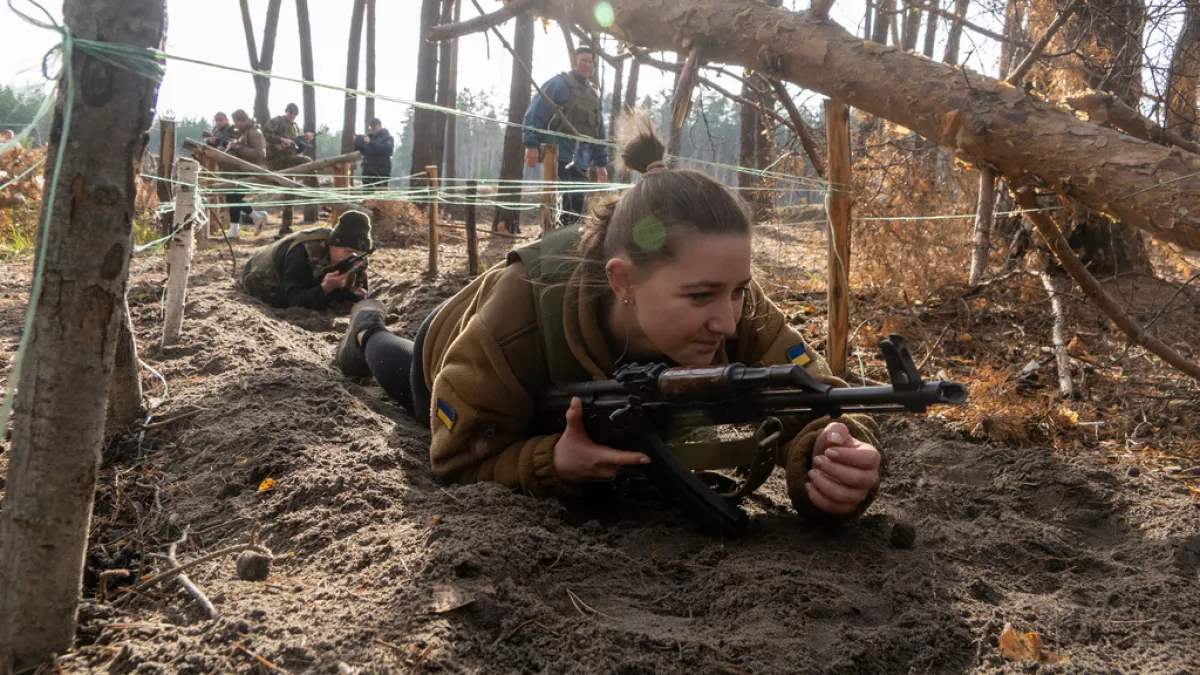
Here are the key events from day 1,361 of Russia’s war on Ukraine.
Published On 16 Nov 202516 Nov 2025
Share
Here is how things stand on Sunday, November 16:
Fighting
The Ukrainian military said it struck Russia’s Ryazan oil refinery, located about 200km (125 miles) southeast of Moscow, as “part of efforts to reduce the enemy’s ability to launch missile and bomb strikes”.
The Ukrainian military said the strike caused multiple explosions and a large fire at the site.
The Russian Ministry of Defence said its forces have taken control of the village of Yablukove in Ukraine’s Zaporizhia region.
The Ukrainian military confirmed withdrawing from the village of Novovasylivske in Zaporizhia, saying the retreat was necessary in order to relocate to “more favourable defensive positions”.
Ukrainian President Volodymyr Zelenskyy said the widow of the first victim of the 1986 disaster at the Chornobyl power plant was among several people killed in a barrage of Russian strikes on the capital of Kyiv in recent days. He said Nataliia Khodemchuk’s death was the result of “a new tragedy caused once again by the Kremlin”.
Russia’s RIA Novosti news agency reported that conditions are stable at the Moscow-occupied Zaporizhzhia nuclear power plant in Ukraine after an external power line was switched off as a precautionary measure on Friday.
The Russian state-run TASS news agency reported that Ukrainian forces have launched a drone attack on residential buildings in the Russian city of Volgograd, damaging “the facades and glazing of apartment buildings and the surrounding area”.
The Russian Defence Ministry said it shot down eight Ukrainian drones in the course of four hours over the regions of Belgorod, Bryansk and Kursk, as well as Russian-occupied Crimea, according to TASS.
Politics and diplomacy
Russia and Ukraine have agreed to move forward with a prisoner exchange that will see the release of about 1,200 Ukrainians, according to a Ukrainian official. The announcement came after several days of talks overseen by Turkiye and the United Arab Emirates, rejuvenating an exchange process laid out during previous negotiations in Istanbul.
President Zelenskyy promised a “reboot” of state-owned energy companies, including reforms to root out corruption, as his government continues to grapple with a major scandal in which investigators said $100m was embezzled from power firms.
Polish President Karol Nawrocki signed a bill providing social assistance for Ukrainian refugees, but stated it was the “last time” he would do so until new solutions to the issue were found. The Polish leader has argued that the provision of assistance to Ukrainian refugees, about one million of whom are living in Poland, is “unfair to Poles”. The legal status of Ukrainian refugees in Poland is set to expire in March.
Serbian officials said that the United States will not ease sanctions on the Serbian oil firm NIS unless it changes the company’s majority-Russian ownership share, despite pleas for leniency from Belgrade. Energy Minister Dubravka Djedovic Handanovic said that the US “clearly and unequivocally” demanded changes to Russian ownership, giving Serbia until February 13 to find a solution.
Military aid
Zelenskyy called for additional air defence resources, following a wave of Russian strikes on Kyiv that killed at least seven people and injured dozens more. The Ukrainian leader said that the attacks underscore the need for more assistance and “greater resolve” from allies following the strikes, which struck apartment buildings across the capital city on Friday.
Protesters demand justice over the nightclub fire that killed 63 people in the town of Kocani in March.
Published On 16 Nov 202516 Nov 2025
Share
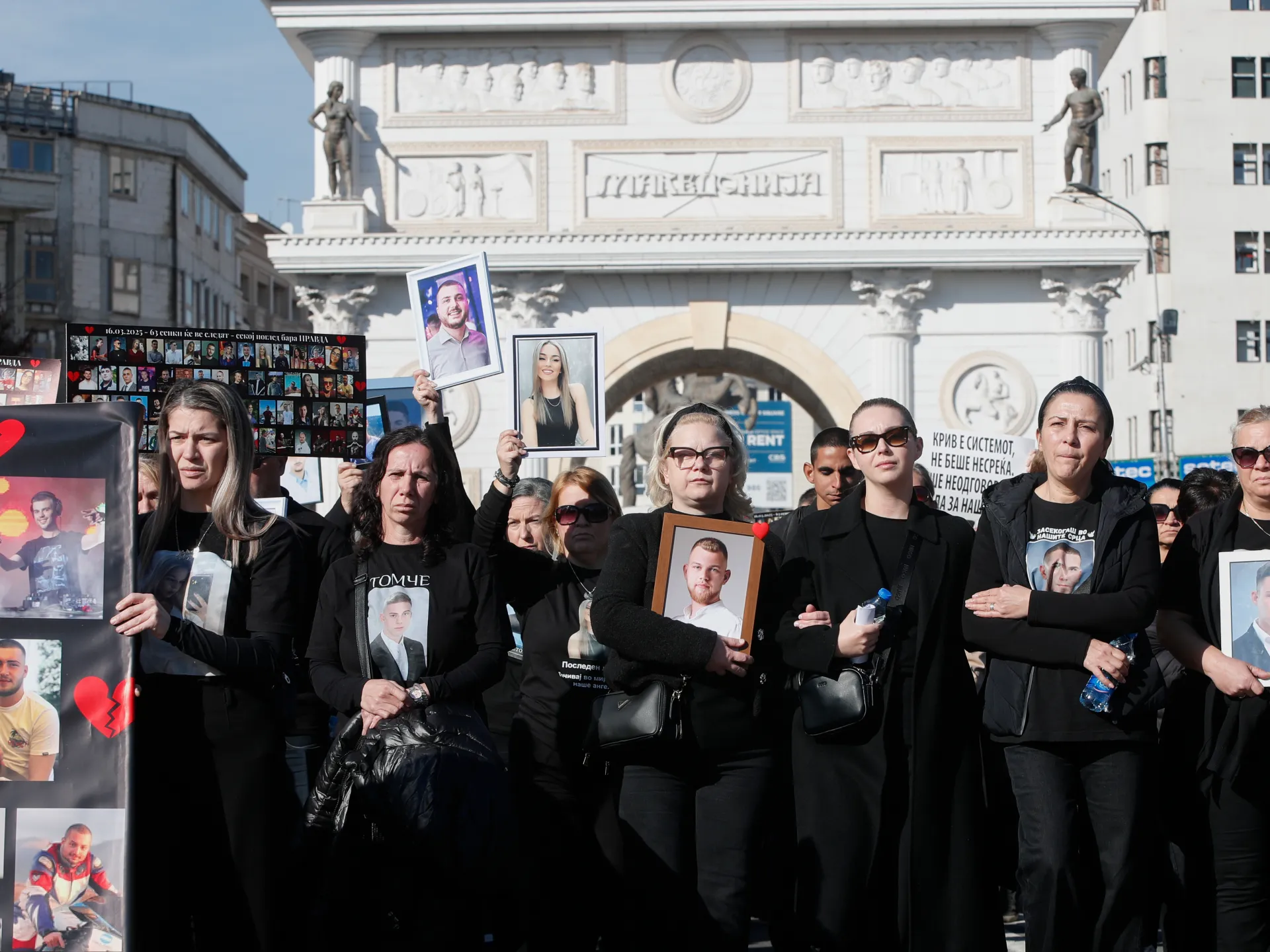
Thousands of protesters have marched in North Macedonia’s capital, Skopje, demanding justice for the 63 people who were killed in a fire at a nightclub in March.
The rally on Saturday comes ahead of the trial of the 34 people and three companies charged over the incident, which marked the deadliest blaze in North Macedonia’s history.
Recommended Stories
list of 4 itemsend of list
The fire broke out at the crowded Pulse club in the eastern town of Kocani during a hip-hop concert on March 16, triggering a stampede and killing 63 people. Some 200 others were injured.
Most of the victims were aged between 16 and 26.
Families of the victims and their supporters marched to the North Macedonian parliament on Saturday, dressed in black and carrying a huge banner with pictures of the victims, saying, “63 shadows will be following you”.
The protesters also chanted “justice for Kocani”.
The families blame corruption and greed for the deaths of their children at the unlicensed venue in Kocani. Authorities said the fire was sparked by a pyrotechnic flame that engulfed the roof of the club and that the venue had numerous and serious safety violations.
Natalija Gjorgjieska was among the families demanding justice on Saturday.
Her husband, musician Andrej Gjorgjieski, was killed in the fire. “We demand the truth. Where did the mistakes occur, who didn’t respond, which institutions were late, who had the responsibility to prevent [them] and did not?” she said.
The prosecution filed indictments for 34 people, among them the club owner, security guards and former mayors of Kocani, as well as representatives of three legal entities, including the security firm and the club owner’s companies.
They are accused of “serious crimes against public security”.
Other defendants include inspectors, civil servants and former economy ministers. If found guilty, they face up to 10 years in prison.
Corruption has long plagued North Macedonia. The Berlin-based monitor Transparency International ranked North Macedonia in 88th place globally on its Corruption Perception Index last year, one of the worst rankings in Europe.
Bribes to authorities to skip licensing requirements and skirt safety regulations are commonplace.
The European Union has repeatedly expressed concerns over pervasive corruption in the country, identifying it as a major obstacle to the nation’s accession to the bloc. North Macedonia is a veteran candidate country, waiting for entry into the EU since 2005.
Bin bags on the pavement outside an apartment building awaiting collection
Loïc Frémond loves living in London. On summer nights the sound of laughter from pubs and bars wafts through his neighbourhood – but so does the stench of rubbish.
Bin bags on pavements are a familiar sight where Mr Frémond lives – as in many cities – their contents often strewn across the street; the result of vermin clawing them as they wait to be collected.
Some of the bin bags Mr Frémond sees are his own. Eight months ago the bin room in his apartment building in Tower Hamlets was closed at the request of the local council.
Until then, residents would take their rubbish and recycling to the bin room as and when they needed to. On collection day, the concierge would put these bins on to the pavement for refuse workers to empty each week.
One day Mr Frémond, 29, came down to find the bin room locked. The concierge had been told a weekly collection was no longer a suitable arrangement.
Instead, residents were to leave their bags of rubbish on the pavement outside the building where refuse workers would collect them twice a day.
‘Rubbish sits there all night’
Mr Frémond says not only is this unsightly, it attracts foxes and rats and obstructs the pavement. And to make matters worse, collections are often missed.
“The rubbish just sits on the pavement all night long – sometimes until midday the next day,” he tells me. “In the summer in particular, this was an absolute nightmare – the heat causing quite a foul stench.”
Tower Hamlets Council was contacted for comment.
Mr Frémond feels the bin bag-filled pavements make his neighbourhood near Spitalfields Market, a popular spot for tourists known for its food and art stalls, less pleasant for residents and visitors alike.
Loïc Frémond
Bin bags are not always collected on time and their contents can end up strewn across the pavement
Other London boroughs, such as Wandsworth and Havering, don’t collect wheelie bins and ask all residents to place their bin bags on the pavement or just inside the boundary of their property.
Outside London, most councils – from the New Forest to Moray – use a flexible approach like Tower Hamlets where residents use wheelie bins if their property can accommodate one – and, if not, their bin bags are collected from the pavement.
Mr Frémond heard of one person interested in moving into his building who chose not to after seeing all the rubbish in the street.
He says other residents have spoken about moving out.
“It is a frequent topic of conversation in the tenants’ group chat,” he says.
Loïc Frémond
Mr Frémond feels the bin bags on the pavement make his neighbourhood less attractive
It’s not just rubbish from homes that ends up strewn across the streets, it’s waste from local businesses too.
Businesses place bin bags on pavements for collection by a variety of contracted waste firms, which they can choose from, who pick up at various times of day.
“It means that, at any given moment you walk down the street, there’s a reasonable chance you’re going to see piles of bin bags waiting for collection,” says Nicholas Boys Smith, a former adviser to the government on urban design.
This competitive system, which Mr Boys Smith says helps keep the cost of waste disposal down, doesn’t just affect people living in dense cities. Towns with historic centres and narrow streets often don’t have space for large outdoor bins for businesses to place their rubbish in either – so their bin bags hit the pavement.
“[The system works] OK in areas where you’ve got some dedicated, pre-built rubbish collection points as part of a big new development,” he says. “Where you don’t have that is historic high streets and town centres.”
So what can be done?
During the summer Mr Boys Smith visited Clamart in France, a suburb seven miles from Paris that was once an industrial site.
The local authority has redeveloped it into a residential area full of low-rise apartment buildings and shops – there’s even a lake.
Subterranean bins have been built into the brick pavement on street corners, where residents can drop their bags into a chute above ground.
This leads to a large underground storage unit which is then emptied by specialist bin trucks that have a crane attached.
These subterranean bins are clean, smartly presented, and a better use of public space, says Mr Boys Smith. “They help avoid ‘death by wheelie bin’, which plagues so many British streets [on collection day].”
Create Streets
Communal subterranean bins are dotted throughout Clamart following its redevelopment
These kinds of bins also exist in Tower Hamlets, though not in the neighbourhood where Mr Frémond lives. In Bethnal Green, a group of apartment buildings named after heroes from Greek mythology have subterranean bins for general waste and recycling.
According to Samuel Hughes, a housing expert from the Centre for Policy Studies think tank, they are the best solution for rubbish disposal in towns and cities and more should be installed to help residents like Mr Frémond.
Mr Hughes used to live in the Italian city of Florence where subterranean bins are common and he says they are widely used in most of western Europe.
There are some challenges, though. They would need to be installed in locations such as pavements if there is space or, failing that, they could fit into parking bays.
“But obviously this creates a brouhaha because you’re taking over some space that people are already using for cars,” he adds.
ReLondon
Councils are trialling new types of bins and bag collection stickers to tidy high streets
Buying and installing subterranean bins is also expensive, compared to wheelie bins, so cash-strapped councils might not be able to afford them in large numbers.
Another obstacle is the array of cables and pipes under streets which would need to be adapted in locations where subterranean bins are installed.
Some British high streets are so busy that there aren’t parking bays or space on the pavement for subterranean bins – so people living in flats above shops have no choice but to leave bin bags on pavements.
Councils have tried various methods to make this tidier, ranging from placing vinyl stickers on pavements showing where bin bags should be placed, to repurposing plastic storage containers normally made for grit or dog waste.
Businesses are trying too. Some in Putney, south-west London, have clubbed together to buy large e-bikes that are used to ferry rubbish from shopfronts to a central collection point. A bin truck then takes all the rubbish away in one go.
Mr Frémond hopes something similar might be done to improve things in his area.
“Everything is on my doorstep,” he says of living there – but the bin bags on his doorstep aren’t so welcome.
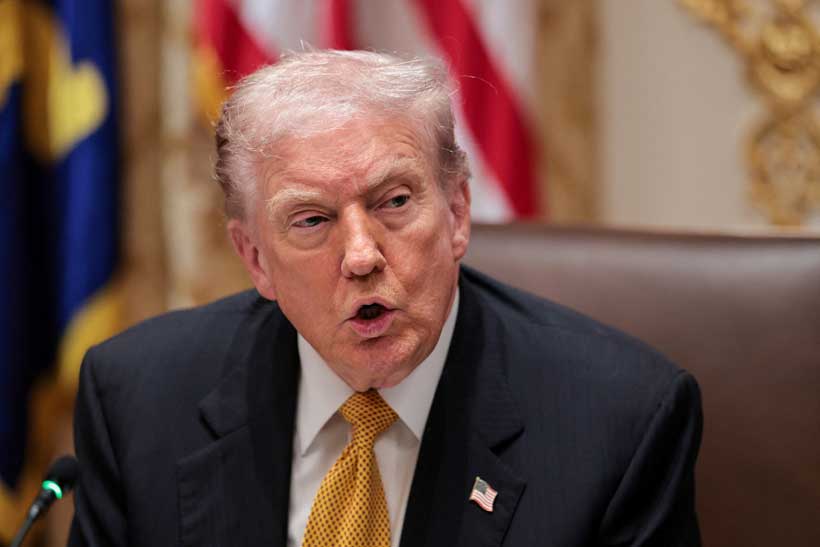
In an interview—with Fox News on November 11, 2025—US President Donald Trump defended the H1B Visa, saying that the US needed foreigners with special skills and talents that US workers did not possess.
Said Trump
“You don’t have certain talents… And people have to learn, you can’t take people off an unemployment line and say, I’m going to put you into a factory. We’re going to make missiles.”
In September 2025, the Trump administration had announced a massive hike in H-1B visa application fees. The revised fees for the H-1B Visa were fixed at $100,000. This decision had caused a lot of concern within several Information Technology (IT) companies and also among IT professionals already working in the US (Indian professionals account for 70% of H-1B visas issued in 2024).
Later, some clarifications were made by the Trump administration. The first was that this was a one-time visa fee that needed to be paid only by new applicants, and the second was that those already on F-1 or L1 visas would not need to pay this fee (this new fee was applicable only to applicants who were based outside of the United States). While these clarifications were important, the decision to raise the H-1B application fees had already created an atmosphere of uncertainty.
In the same interview with Fox News, the US president also said that while he did not want international students, they were essential for the US economy. Said Trump:
“We take in trillions of dollars from students. You know, the students pay more than double when they come in from most foreign countries. I want to see our school system thrive… It’s not that I want them, but I view it as a business.”
International Students in the US
International students make a significant contribution towards the US economy and also help in creating jobs in the US. In 2023-2024 there were well over 1.5 million international students, and they contributed over $40 billion to the US economy. A significant percentage of international students were from China and India (in 2024, India accounted for well over 1/4th of the total international student community). August 2025 witnessed a significant dip in the inflow of international students into the US, and this is likely to cause a significant dent to the US economy, according to estimates. Certain top US universities also witnessed significant budget cuts and layoffs.
Trump, while speaking at the White House earlier this month, also said that he is keen to welcome 600,000 Chinese students to the US.
Several international students, especially from India, have begun to look at alternatives to the US. There has been a rise in the number of Indian students going to Germany, Finland, and the UAE.
Reaction to Trump’s comments
Both comments of Trump—pertaining to H1B visas as well as international students—are likely to annoy the MAGA camp within the Republican party. Steve Bannon, a former aide of Trump, while criticizing the US President’s statements, said:
“This is Davos in a red tie! Telling American engineers and factory workers we lack talent? Then flooding campuses with CCP-linked students? It’s a gut-punch to every voter who bled for this movement. Wake up, Mr. President—this isn’t MAGA; it’s Chamber of Commerce betrayal.”
Significantly, in an interview with Fox TV, Nalin Haley, the son of Nikki Haley—former US Ambassador to the United Nations (UN)—had criticized H1B visas and said that US workers were suffering because of the same.
Trump’s statements reiterate the point that while not just the US — but other countries in the Anglosphere have legitimate concerns vis-à-vis illegal immigration — it is important to have a nuanced approach towards immigration issues and not view the issue from simplistic binaries. It remains to be seen if the US president sticks to this current stand.
Palestinian families call for help as Israel’s two-year military assault has left hundreds of thousands vulnerable.
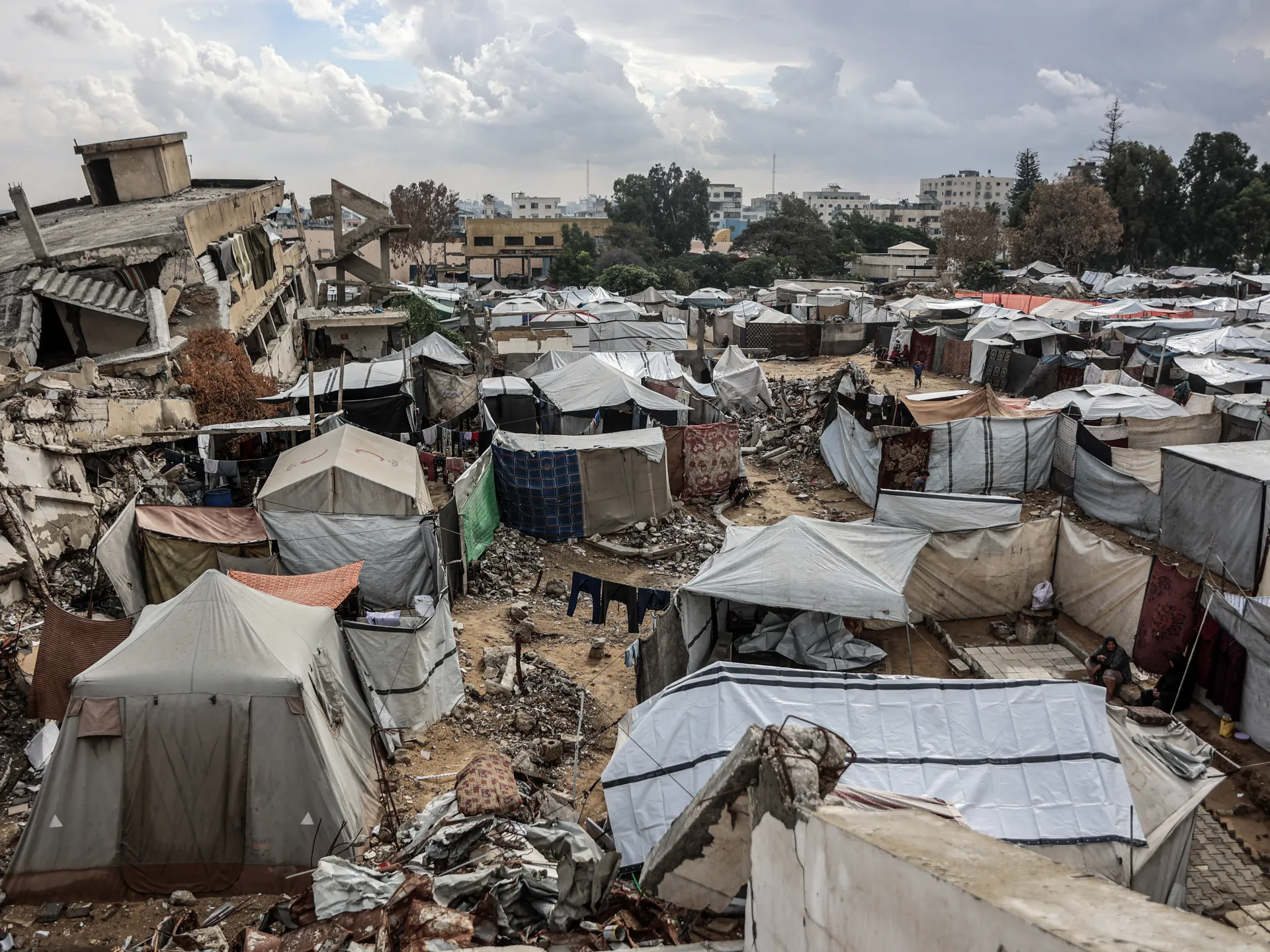
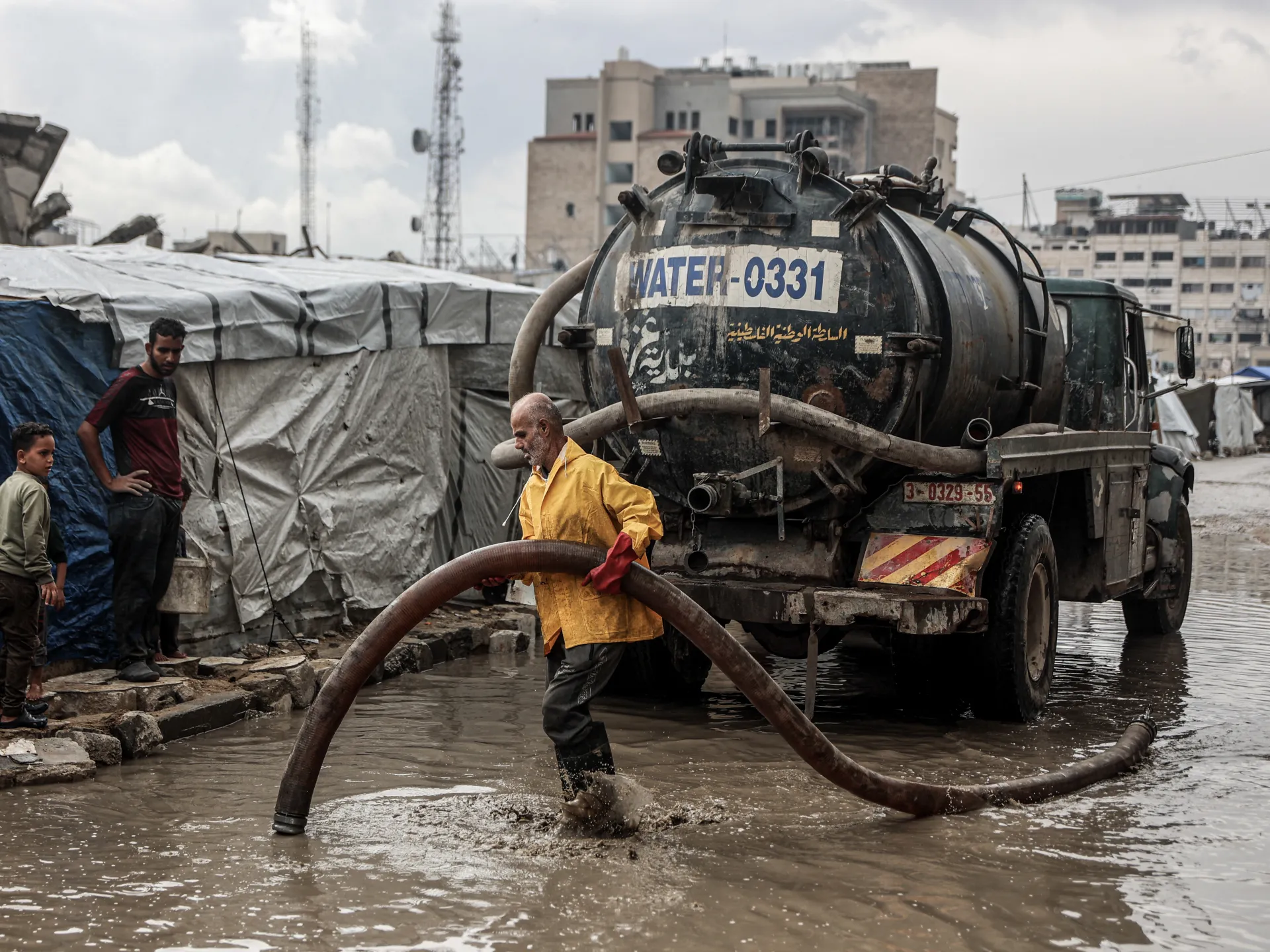
Cold temperatures and heavy rainfall have worsened already dire conditions for hundreds of thousands of displaced Palestinian families across the Gaza Strip, as Israel continues to block deliveries of tents and other critical shelter supplies to the besieged territory.
Humanitarian groups have been warning for weeks that Palestinians living in tent camps and other makeshift shelters do not have what they need to withstand blistering winter conditions in the coastal enclave.
Recommended Stories
list of 3 itemsend of list
Many have been forcibly displaced multiple times as a result of Israel’s two-year bombardment of Gaza, which damaged and destroyed more than 198,000 structures across the Strip, according to United Nations figures.
“I have been crying since morning,” a displaced Palestinian mother of two told Al Jazeera from Gaza City on Saturday, pointing to her family’s tent, which had been flooded as a result of heavy rainfall overnight.
The woman, who did not provide her name, said she was struggling to provide for her children after several members of her family, including her husband, were killed in Israel’s genocidal war, which began in October 2023.
“I am asking for help to get a proper tent, a mattress and a blanket. I want my children to have suitable clothes,” she said. “I don’t have anyone to turn to … There is no one to help me.”
The UN and other humanitarian groups have urged Israel to lift all restrictions on aid to the Strip, where more than 69,000 people have been killed in more than two years of Israel’s war.
But the Israeli government has maintained its severe restrictions on the flow of humanitarian aid despite a ceasefire deal with the Palestinian group Hamas that came into effect on October 10.
Aid groups said earlier this month that about 260,000 Palestinian families in Gaza, totalling almost 1.5 million people, were vulnerable as the cold winter months approached.
‘Misery on top of misery’
At the same time, the UN agency for Palestinian refugees (UNRWA) has said it has enough shelter supplies to help as many as 1.3 million Palestinians – but cannot bring them into Gaza due to the Israeli restrictions.
On Saturday, UNRWA chief Philippe Lazzarini said deliveries were more critical than ever as this winter coincides with Gaza’s displacement crisis.
“It’s cold and wet in Gaza. Displaced people are now facing a harsh winter without the basics to protect them from the rain and cold,” he said in a social media post.
Describing the humanitarian toll as “misery on top of misery”, Lazzarini noted that Gaza’s fragile shelters “quickly flood, soaking people’s belongings”.
“More shelter supplies are urgently needed for the people,” he added.
Reporting from az-Zuwayda in central Gaza, Al Jazeera’s Hind Khoudary also said many Palestinians have no other option but to remain in flooded and flimsy tents since their neighbourhoods were destroyed by Israel and shelters are full.
“Parents are unable to [buy] their children winter clothes, shoes and slippers,” she said. “Families are left helpless, without knowing what to do.”
Late on Saturday, the Israeli military fired flares in areas southeast of Khan Younis city, sources in southern Gaza told Al Jazeera. Armies generally launch flares to highlight enemy positions and indicate incoming attacks.
Earlier, Israel launched air strikes inside Gaza ceasefire’s “yellow line” demarcation near Khan Younis as well as Gaza City in the north.
Agents from ICE, Customs and Border Protection, and Department of Homeland Security have been deployed as part of Trump’s latest anti-immigration operation.
Published On 15 Nov 202515 Nov 2025
Share
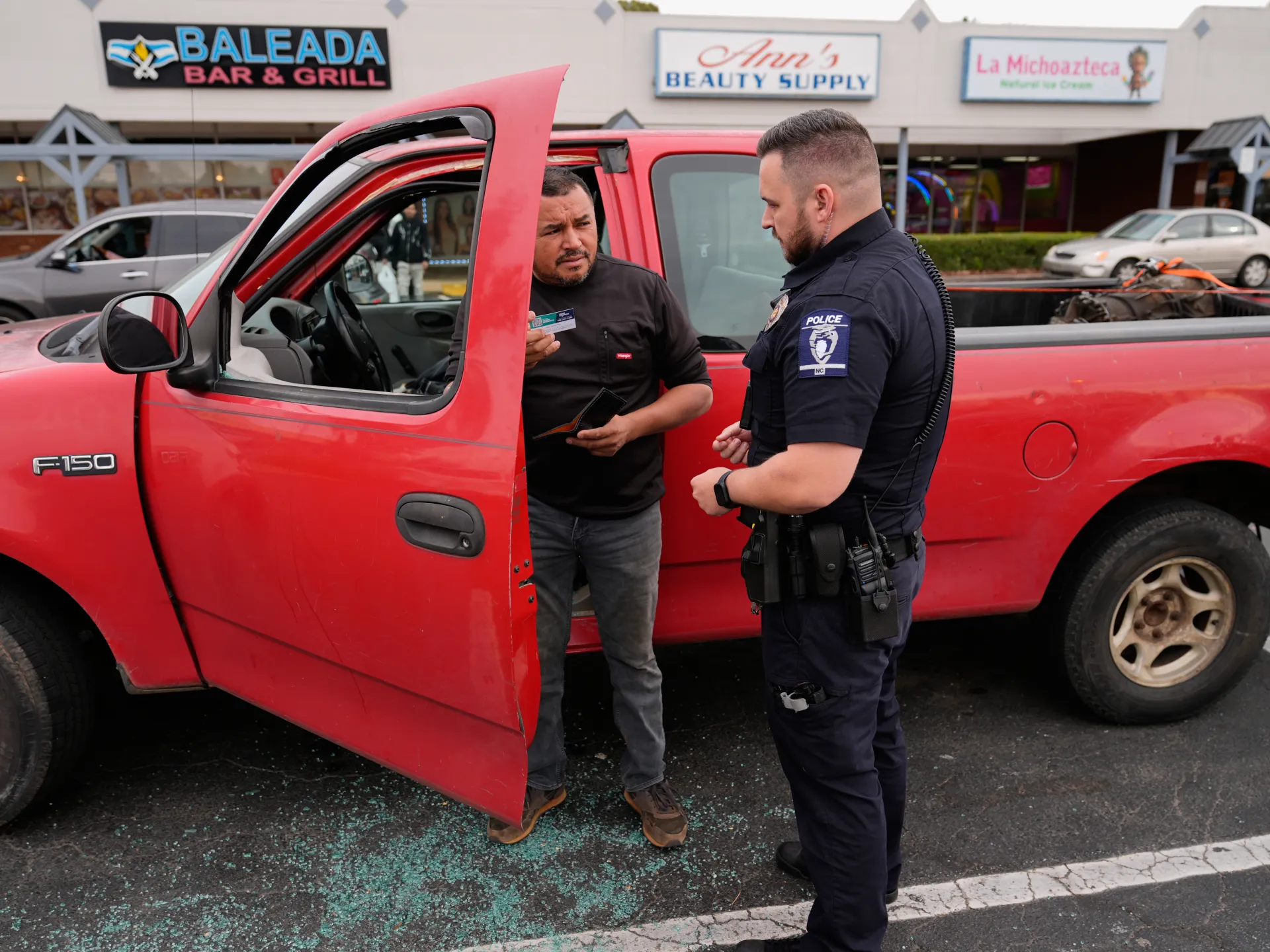
United States federal officials have confirmed that an immigration crackdown – the latest by President Donald Trump’s administration – is under way in North Carolina’s largest city, Charlotte, as agents were seen making arrests in multiple locations.
“Americans should be able to live without fear of violent criminal illegal aliens hurting them, their families, or their neighbors,” Assistant Homeland Security Secretary Tricia McLaughlin said in a statement on Saturday, according to The Associated Press news agency. “We are surging DHS [Department of Homeland Security] law enforcement to Charlotte to ensure Americans are safe and public safety threats are removed.”
Recommended Stories
list of 3 itemsend of list
Local officials, including Charlotte Mayor Vi Lyles, criticised such actions, saying in a statement they “are causing unnecessary fear and uncertainty”.
“We want people in Charlotte and Mecklenburg County to know we stand with all residents who simply want to go about their lives,” said the statement, which was also signed by County Commissioner Mark Jerrell and Stephanie Sneed of the Charlotte-Mecklenburg education board.
Charlotte is a racially diverse city of more than 900,000 residents, including more than 150,000 who are foreign-born, according to local officials.
The federal government hadn’t previously announced the push. But Mecklenburg County Sheriff Garry McFadden said earlier this week that two federal officials had told him that customs agents would be arriving soon.
Paola Garcia, a spokesperson with Camino – a bilingual nonprofit serving families in Charlotte – said she and her colleagues have observed an increase in Customs and Border Protection and Immigration and Customs Enforcement (ICE) agents pulling people over since Friday.
“Basically, what we’re seeing is that there have been lots of people being pulled over,” Garcia said. “I even saw a few people being pulled over on the way to work yesterday, and then just from community members seeing an increase in ICE and Border Patrol agents in the city of Charlotte.”
Local organisations responded by holding trainings, trying to inform immigrants of their rights, and considering peaceful protests.
Trump’s administration has defended federal enforcement crackdowns in cities like Los Angeles and Chicago as necessary for fighting crime and enforcing immigration laws.
Trump’s drive to deport millions of immigrants has prompted allegations of rights abuses and myriad lawsuits.
But Governor Josh Stein, a Democrat with a Republican-majority legislature, said Friday that the vast majority of those detained in these operations have no criminal convictions, and some are American citizens.
He urged people to record any “inappropriate behavior” they see and notify local law enforcement about it.
The Charlotte-Mecklenburg Police Department had emphasised ahead of time that it isn’t involved in federal immigration enforcement.
Suzanne Ellen Kaye was convicted for threatening to shoot FBI agents, and Daniel Edwin Wilson for conspiring to impede or injure police offers and illegal firearm possession.
White House officials said on Saturday that one pardon was given to a woman convicted of threatening to shoot FBI agents who were investigating a tip that she may have been at the US Capitol. Trump issued the second pardon for a defendant who had remained behind bars despite the sweeping grant of clemency for Capitol rioters because of a separate conviction for illegally possessing firearms.
Recommended Stories
list of 3 itemsend of list
These pardons are the latest example of Trump’s willingness to use his constitutional authority to help supporters who were scrutinised as part of the massive January 6 investigation that was conducted by the administration of former US President Joe Biden and that led to charges against more than 1,500 defendants.
With a stroke of his pen and within hours of being sworn in for his second term in January of this year, Trump upended the largest prosecution in the history of the US Department of Justice.
He freed from prison people caught on camera viciously attacking police as well as leaders of far-right groups convicted of orchestrating violent plots to stop the peaceful transfer of power after Trump’s 2020 election loss.
Suzanne Ellen Kaye, of Florida, was released last year after serving an 18-month sentence. After the FBI contacted her in 2021 about a tip indicating she may have been at the Capitol on January 6, she posted a video on social media citing her right under the US Constitution’s Second Amendment to carry a gun, and threatened to shoot agents if they came to her house.
Kaye testified at trial that she didn’t own any guns and didn’t intend to threaten the FBI, according to court papers. She told authorities she was not at the Capitol on January 6 and wasn’t charged with any Capitol riot-related crimes.
Trump also pardoned Daniel Edwin Wilson of Kentucky, who was under investigation for his role in the riot when authorities found six guns and roughly 4,800 rounds of ammunition in his home.
Wilson, who had been scheduled to remain in prison until 2028, was released Friday evening following the pardon, his lawyer said on Saturday.
A White House official said on Saturday that “because the search of Mr. Wilson’s home was due to the events of January 6, and they should have never been there in the first place, President Trump is pardoning Mr. Wilson for the firearm issues”.
Wilson had been sentenced in 2024 to five years in prison after pleading guilty to conspiring to impede or injure police officers and illegally possessing firearms at his home.
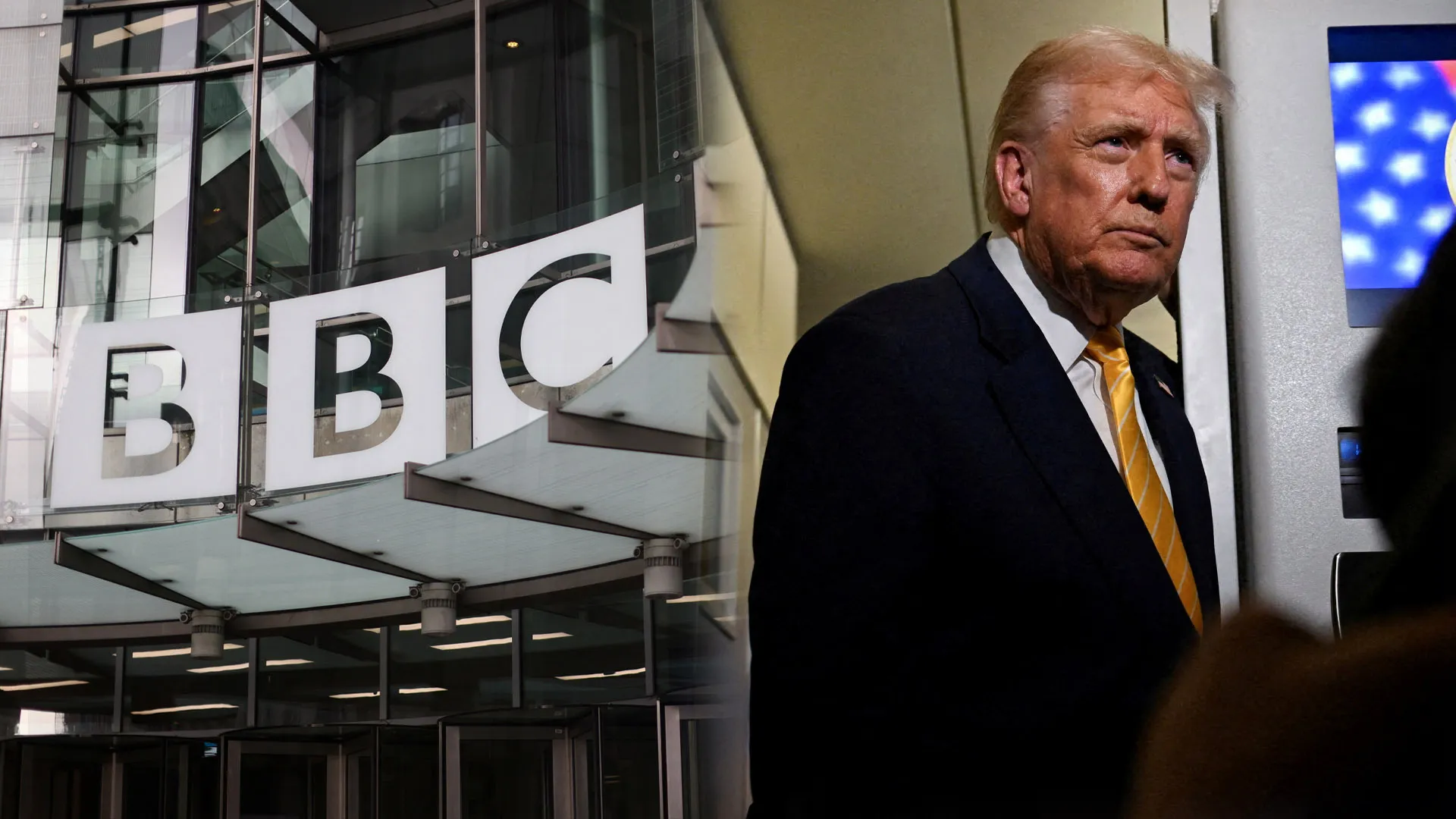
Trump has said he would likely sue the British Broadcasting Corporation (BBC) next week for as much as $5bn after the British media company admitted it wrongly edited a video of a January 6, 2021 speech he gave, but insisted there was no legal basis for his claim.
The controversy centres on the BBC’s edit of Trump’s remarks on the day his supporters stormed the US Capitol.
A multi-agency search is under way off the coast of the Republic of Ireland for a missing Royal Navy crew member.
The Irish Department of Transport (DoT) said in a statement that the crew member was last seen at about 22:30 (local time) on Friday when the boat was near Tory Island, County Donegal.
It said the Irish Coast Guard received a distress call at about 09:00 on Saturday.
The Ministry of Defence (MoD) said the Royal Navy is assisting in the search and rescue operation to find an individual from the Royal Fleet Auxiliary.
The Irish Coast Guard, the Irish Air Corps, the RNLI, the Royal Navy vessel and others are involved in the search which is to continue overnight.
A spokesperson for the DoT said the Malin Head Coast Guard is co-ordinating the search off the northwest coast between Tory Island and Eagle Island in County Mayo.
“The search from the air is being conducted by the Coast Guard’s fixed-wing plane Rescue 120F, based in Shannon airport; Coast Guard helicopter Rescue 118, based in Sligo; and the Irish Air Corps plane, CASA 284,” they continued.
The Royal Navy support vessel and three RNLI all weather lifeboats based at Ballyglass, Arranmore Island and Lough Swilly, alongside other vessels are also involved in the sea search.
Last week, a prominent Saudi Sheikh, Mohammed Al-Issa, visited the Auschwitz concentration camp in Poland to commemorate the 75th anniversary of its liberation, which signalled the end of the Nazi Holocaust. Although dozens of Muslim scholars have visited the site, where about one million Jews were killed during World War Two, according to the Auschwitz Memorial Centre’s press office, Al-Issa is the most senior Muslim religious leader to do so.
Visiting Auschwitz is not a problem for a Muslim; Islam orders Muslims to reject unjustified killing of any human being, no matter what their faith is. Al-Issa is a senior ally of Saudi Crown Prince Mohammad bin Salman (MBS), who apparently cares little for the sanctity of human life, though, and the visit to Auschwitz has very definite political connotations beyond any Islamic context.
By sending Al-Issa to the camp, Bin Salman wanted to show his support for Israel, which exploits the Holocaust for geopolitical colonial purposes. “The Israeli government decided that it alone was permitted to mark the 75th anniversary of the Allied liberation of Auschwitz [in modern day Poland] in 1945,” wrote journalist Richard Silverstein recently when he commented on the gathering of world leaders in Jerusalem for Benjamin Netanyahu’s Holocaust event.
Bin Salman uses Al Issa for such purposes, as if to demonstrate his own Zionist credentials. For example, the head of the Makkah-based Muslim World League is leading rapprochement efforts with Evangelical Christians who are, in the US at least, firm Zionists in their backing for the state of Israel. Al-Issa has called for a Muslim-Christian-Jewish interfaith delegation to travel to Jerusalem in what would, in effect, be a Zionist troika.
Zionism is not a religion, and there are many non-Jewish Zionists who desire or support the establishment of a Jewish state in occupied Palestine. The definition of Zionism does not mention the religion of its supporters, and Israeli writer Sheri Oz, is just one author who insists that non-Jews can be Zionists.
Mohammad Bin Salman and Netanyahu – Cartoon [Tasnimnews.com/Wikipedia]
We should not be shocked, therefore, to see a Zionist Muslim leader in these trying times. It is reasonable to say that Bin Salman’s grandfather and father were Zionists, as close friends of Zionist leaders. Logic suggests that Bin Salman comes from a Zionist dynasty.
This has been evident from his close relationship with Zionists and positive approaches to the Israeli occupation and establishment of a Jewish state in Palestine, calling it “[the Jews’] ancestral homeland”. This means that he has no issue with the ethnic cleansing of almost 800,000 Palestinians in 1948, during which thousands were killed and their homes demolished in order to establish the Zionist state of Israel.
“The ‘Jewish state’ claim is how Zionism has tried to mask its intrinsic Apartheid, under the veil of a supposed ‘self-determination of the Jewish people’,” wrote Israeli blogger Jonathan Ofir in Mondoweiss in 2018, “and for the Palestinians it has meant their dispossession.”
As the de facto ruler of Saudi Arabia, Crown Prince Bin Salman has imprisoned dozens of Palestinians, including representatives of Hamas. In doing so he is serving Israel’s interests. Moreover, he has blamed the Palestinians for not making peace with the occupation state. Bin Salman “excoriated the Palestinians for missing key opportunities,” wrote Danial Benjamin in Moment magazine. He pointed out that the prince’s father, King Salman, has played the role of counterweight by saying that Saudi Arabia “permanently stands by Palestine and its people’s right to an independent state with occupied East Jerusalem as its capital.”
Israeli journalist Barak Ravid of Israel’s Channel 13News reported Bin Salman as saying: “In the last several decades the Palestinian leadership has missed one opportunity after the other and rejected all the peace proposals it was given. It is about time the Palestinians take the proposals and agree to come to the negotiations table or shut up and stop complaining.” This is reminiscent of the words of the late Israeli Foreign Minister Abba Eban, one of the Zionist founders of Israel, that the Palestinians “never miss an opportunity to miss an opportunity.”
Bin Salman’s Zionism is also very clear in his bold support for US President Donald Trump’s deal of the century, which achieves Zionist goals in Palestine at the expense of Palestinian rights. He participated in the Bahrain conference, the forum where the economic side of the US deal was announced, where he gave “cover to several other Arab countries to attend the event and infuriated the Palestinians.”
US President Donald Trump looks over at Crown Prince of Saudi Arabia Mohammad bin Salman al-Saud as they line up for the family photo during the opening day of Argentina G20 Leaders’ Summit 2018 at Costa Salguero on 30 November 2018 in Buenos Aires, Argentina [Daniel Jayo/Getty Images]
While discussing the issue of the current Saudi support for Israeli policies and practices in Palestine with a credible Palestinian official last week, he told me that the Palestinians had contacted the Brazilian President Jair Bolsonaro to ask him not to relocate his country’s embassy to Jerusalem. “The Saudis have been putting pressure on us in order to relocate our embassy to Jerusalem,” replied the Brazilian leader. What more evidence of Mohammad Bin Salman’s Zionism do we need?
The founder of Friends of Zion Museum is American Evangelical Christian Mike Evans. He said, after visiting a number of the Gulf States, that, “The leaders [there] are more pro-Israel than a lot of Jews.” This was a specific reference to Saudi Arabia’s Crown Prince, and his counterpart in the UAE, Mohammed Bin Zayed.
“All versions of Zionism lead to the same reactionary end of unbridled expansionism and continued settler colonial genocide of [the] Palestinian people,” Israeli-American writer and photographer Yoav Litvin wrote for Al Jazeera. We may well see an Israeli Embassy opened in Riyadh in the near future, and a Saudi Embassy in Tel Aviv or, more likely, Jerusalem. Is Mohammad Bin Salman a Zionist? There’s no doubt about it.
The views expressed in this article belong to the author and do not necessarily reflect the editorial policy of Middle East Monitor.
Weekly insights and analysis on the latest developments in military technology, strategy, and foreign policy.
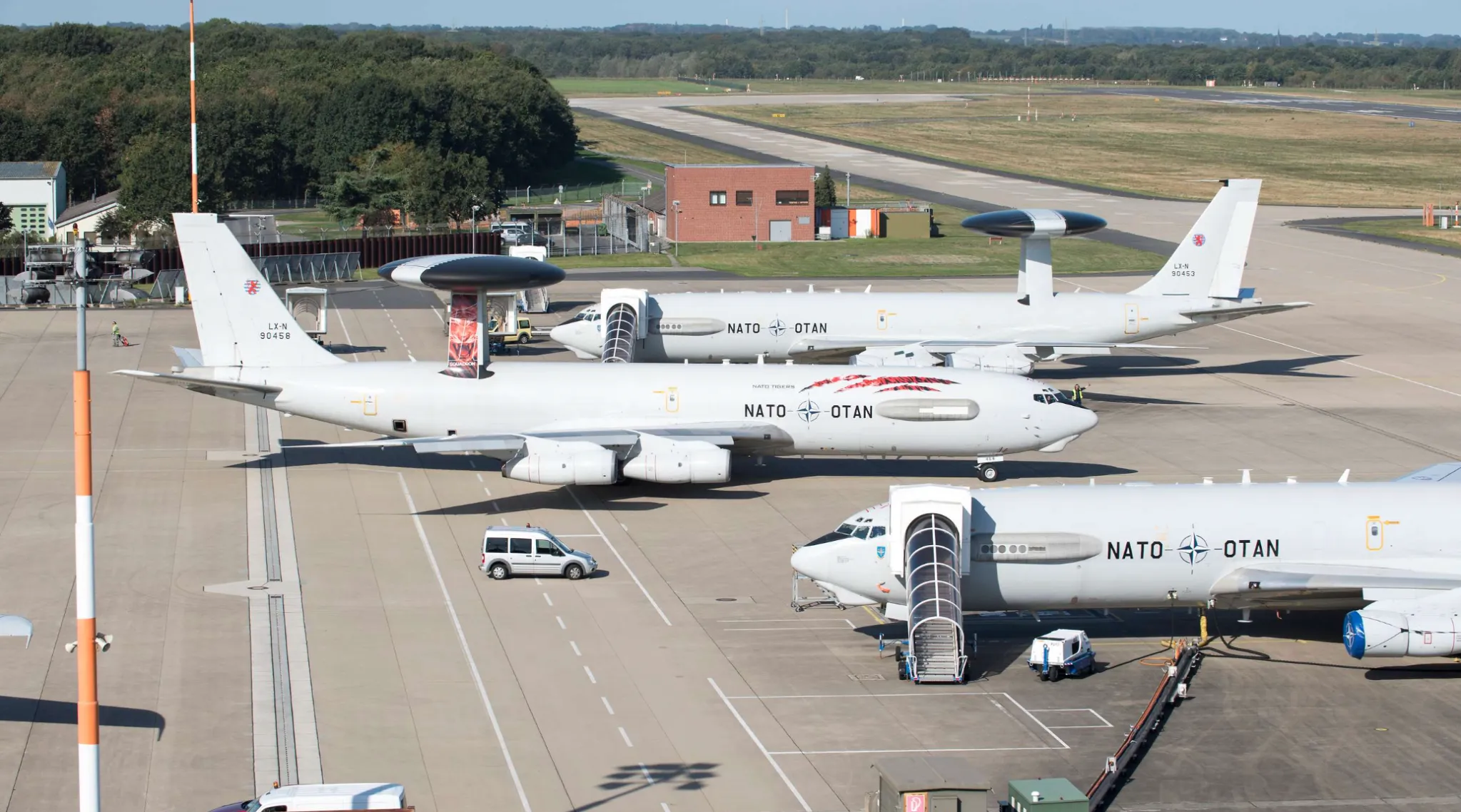
The Dutch Ministry of Defense has announced that NATO nations have dropped their plan to buy Boeing E-7A Wedgetail as the alliance’s next airborne early warning and control (AEW&C) platform. The decision comes after South Korea rejected the E-7 for its own AEW&C program and would appear to open the NATO door to Saab’s rival GlobalEye, which France has already said it intends to buy.
In a statement today, the Dutch Ministry of Defense said that the Netherlands, “together with a number of partner countries,” has decided not to purchase the six E-7s. These aircraft were expected to partially replace the 16 Boeing E-3A Sentry Airborne Warning And Control Systems (AWACS) aircraft that are operated by the NATO Airborne Early Warning & Control Force (NAEW&CF), home-stationed at Geilenkirchen Air Base in Germany.
NATO E-3s on the flight line at Geilenkirchen Air Base. Melanie Becker/Luftwaffe
The Dutch Ministry of Defense said that the E-7 program has lost its “strategic and financial basis,” and confirmed the United States had withdrawn from the program in July, resulting in “significant changes” to the alliance’s AWACS replacement program.
The statement added that the members are now exploring alternatives for replacing the AWACS fleet.
“The goal remains to have other, quieter aircraft operational by 2035,” said State Secretary for Defense of the Netherlands, Gijs Tuinman. The minister was referencing the fact that the E-3s will reach the end of their service life in 2035 and have been criticized for their excessive noise signature.
State Secretary for Defense of the Netherlands, Gijs Tuinman, meets with soldiers operating a leased German Leopard tank in Amersfoort on May 14, 2025. Photo by Vincent Jannink / ANP / AFP VINCENT JANNINK
Originally, the Netherlands was one of seven partner members in the AWACS replacement program, alongside Belgium, Germany, Luxembourg, Norway, Romania, and the United States. Apart from the United States, which stepped away in July, it’s unclear from the Dutch statement whether any of the other partners decided to depart the program. However, the statement says that the “remaining countries” are now “looking for new partners.”
Regardless, at this stage, it seems highly unlikely that Boeing and the E-7 will find a way back into NATO’s plans.
That would appear to leave European rival Saab and its GlobalEye AEW&C platform, which is based on a Bombardier Global 6000/6500 long-range bizjet airframe.
A prototype Saab GlobalEye aircraft. Saab Anders Bergstrand
In his statement, Dutch defense minister Tuinman also appeared to suggest that a European solution would be preferred, with Saab being the only realistic candidate.
“The withdrawal of the United States also demonstrates the importance of investing as much as possible in European industry,” Tuinman said.
A Saab spokesperson provided TWZ with the following statement today:
“We are aware of media reports related to NATO’s AWACS program. There is a significant increase in global interest for GlobalEye, and we believe GlobalEye makes an excellent solution for many countries that need long-range detection and identification capabilities of objects in the air, at sea, and over land. We are open to discuss and explore how our technology can support the needs of our potential customers.”
In its favor is the fact that the GlobalEye has already been earmarked by France to replace its E-3F Sentry fleet.
At the Paris Air Show this summer, Saab and the French defense procurement agency, the Direction Générale de l’Armement (DGA), signed a joint declaration of intent regarding the sale of two GlobalEye aircraft to France, plus two options.
“Our solution will enable France to maintain full sovereign control of its airborne early warning and control capability,” Micael Johansson, President and CEO of Saab, said at the time.
A pair of Saab GlobalEye aircraft over Sweden. Saab
Sweden, now also a NATO member, has placed orders (two firm and two options) for the GlobalEye, too, while Saab also pitched the aircraft to Denmark and Finland, with a view to them potentially jointly operating the type.
NATO had not yet placed a firm order for the six E-7s, but back in 2023 had announced its plan to “take steps toward acquiring” those aircraft, via U.S. Foreign Military Sales (FMS) channels. This was the first part of an effort known as Initial Alliance Future Surveillance and Control (iAFSC).
The original NATO decision in favor of the E-7 had been made after a “rigorous assessment process,” including an assessment of requests for information (RFI) and price and availability (P&A), and studies of previous E-7 acquisition programs, namely in Australia, South Korea, Turkey, the United Kingdom, and the United States.
The United Kingdom is already well underway with its E-7 procurement, but this program has been dogged by delays and cost overruns and has been trimmed to just three aircraft.
The U.K. Royal Air Force’s first E-7 Wedgetail AEW1 flies over the English countryside. Crown Copyright AS1 Iwan Lewis RAF
At the time, NATO had determined that the E-7 was “the only known system currently capable of fulfilling the strategic commands’ essential operational requirements and key performance parameters and available for delivery within the timeframe required.” This decision has now been turned on its head, apparently spurred by the U.S. decision to withdraw from the NATO program.
There remains the possibility that NATO might forego buying a crewed AEW&C platform altogether.
When the E-7 acquisition plan was first announced, NATO said it was “an initial element to mitigate the risk of airborne surveillance and control capability gap,” but the Wedgetail would be just “one contributing element […] to the overall Alliance Future Surveillance and Control (AFSC) system of systems capability.”
This indicated that the alliance ultimately planned to field the E-7 within an integrated network of sensors, also including drones, and other aircraft types that can operate in a surveillance-gathering capacity, and space-based systems.
In a graphic that NATO provided alongside the original E-7 announcement, the Wedgetail was shown as one part of a multifaceted surveillance enterprise that also included uncrewed airborne surveillance (illustrated with a NATO RQ-4D Phoenix high-altitude long-endurance drone), space-based intelligence, surveillance, and reconnaissance (ISR), maritime-based ISR, land-based radar, and MILSATCOM. Also featured were a digital backbone and combat cloud, while a final segment is left empty, suggesting the potential for other platforms or capabilities to be added at a later date.
NATO
Overall, NATO’s future AEW&C vision had some similarities with the U.S. Air Force’s plans in this domain.
Increasingly, the U.S. Air Force has viewed the E-7 as a solution to bridge the gap between the retirement of its own aging E-3s and a future space-based radar capability and other classified systems.
In general, the U.S. military has increasingly been looking at the possibilities for future distributed space-based networks that would ultimately exist as large, meshed constellations that could persistently surveil the skies of nearly the entire globe, opening up a whole new set of tactics and situational awareness capabilities. At the same time, these would be more resilient and less vulnerable than traditional surveillance assets. The Pentagon is also looking at ways to rapidly replace any satellites that are destroyed or otherwise rendered inoperable, reflecting the fact that even space-based assets are far from invulnerable to hostile actors.
It is far from clear what kind of progress NATO might have made in the development of radar-equipped satellites that could provide capabilities similar to crewed AEW&C aircraft. Also questionable is whether European NATO allies would be able to afford such a system, although buying into the U.S. constellation could be an option. Outside of the classified realm, meanwhile, many countries, as well as private companies, now publicly operate various space-based radars, albeit primarily for imaging purposes.
Concept image of a future U.S. Air Force E-7A Wedgetail AEW&C jet. Boeing
The program remained in limbo until this week, when the federal government shutdown lifted and appropriators approved spending for the U.S. Air Force’s E-7 program. The next tranche of funds, just under $200 million, will ensure that research, development, test, and evaluation (RDT&E) for the E-7 continues, alongside rapid prototyping activities. Remaining procurement funding from fiscal 2025 is directed to be allocated to the RDT&E effort.
There are, meanwhile, increasing concerns about the survivability of crewed surveillance aircraft like the E-7. While these kinds of platforms may be more relevant in the European scenario, there remain questions as to whether aircraft like these can get close enough in wartime to be effective at all.
Potentially, NATO could forego buying an interim crewed AEW&C platform altogether, although previous statements from officials make this sound less likely.
Referring to the choice of the E-7 for the alliance, Jens Stoltenberg, NATO Secretary General, said in 2023: “Surveillance and reconnaissance aircraft are crucial for NATO’s collective defense, and I welcome allies’ commitment to investing in high-end capabilities. By pooling resources, allies can buy and operate major assets collectively that would be too expensive for individual countries to purchase. This investment in state-of-the-art technology shows the strength of transatlantic defense cooperation as we continue to adapt to a more unstable world.”
Once again, should NATO decide to move forward with an alternative crewed AEW&C aircraft, the GlobalEye would appear to be the only realistic option given the timeframe.
It is notable, meanwhile, that interest in these kinds of aircraft is currently growing in the European region, a direct result of the growing threat from Russia, combined with other operational contingencies that demand broad-area surveillance and airspace control.
The sudden emergence of Russian drones as a threat within NATO airspace has further underscored the value of AEW&C assets, which have a critical look-down capability against uncrewed air vehicles as well as cruise missiles. Aircraft like these can keep watch over the alliance’s eastern flank to monitor Russian military aircraft and missiles, as well as potentially hostile movements on the ground and at sea.
Time will tell what path NATO follows as it sets about replacing its veteran E-3s, which are now getting so old that their availability will likely continue to degrade toward 2035. In another blow for Boeing, the E-7 would seem to be out of the picture as a NATO AWACS successor. If the alliance does opt for a crewed AWACS solution, the GlobalEye could end up playing a much bigger role across NATO.
The Labubu dolls, a global sensation this year, may be adapted into a feature film as reported by the Hollywood Reporter. Sony Pictures has finalized a deal to develop this movie, currently in the early stages of production, with no decision yet on whether it will be live action or animated.
The popularity of Labubus, created by China’s Pop Mart, has surged, with demand highlighted by celebrity endorsements from figures like Rihanna and Lisa of Blackpink. Consumers are eager to purchase the dolls, packaged in “blind boxes” that conceal the specific model until opened. Sony, known for producing the “Jumanji” series and the animated Netflix series “KPop Demon Hunters,” has not commented on this new project.
RSF is burning and burying bodies near a university, mosque, camp for the displaced people, and hospital in el-Fasher, Yale University researchers say.
The government-aligned Sudanese Armed Forces (SAF) have recaptured two territories in the North Kordofan state from the Rapid Support Forces (RSF), as the paramilitary group continues burning and burying bodies in Darfur’s el-Fasher to hide evidence of mass killings.
Footage circulating online this week showed army soldiers holding assault rifles and rocket-propelled grenades celebrating their takeovers of Kazqil and Um Dam Haj Ahmed in North Kordofan, the state where intense fighting is expected to rage over the coming weeks.
Recommended Stories
list of 3 itemsend of list
Kazqil, which had fallen to the RSF in late October, is located south of el-Obeid, the strategic capital city of the state in central Sudan, which the paramilitary group is trying to capture from the army.
The fighting between the two rival generals leading the army and the paramilitary group, which started in April 2023, has increasingly turned east over the past weeks as the RSF solidifies control over the western parts of the war-torn country, now in its third year of a brutal civil war.
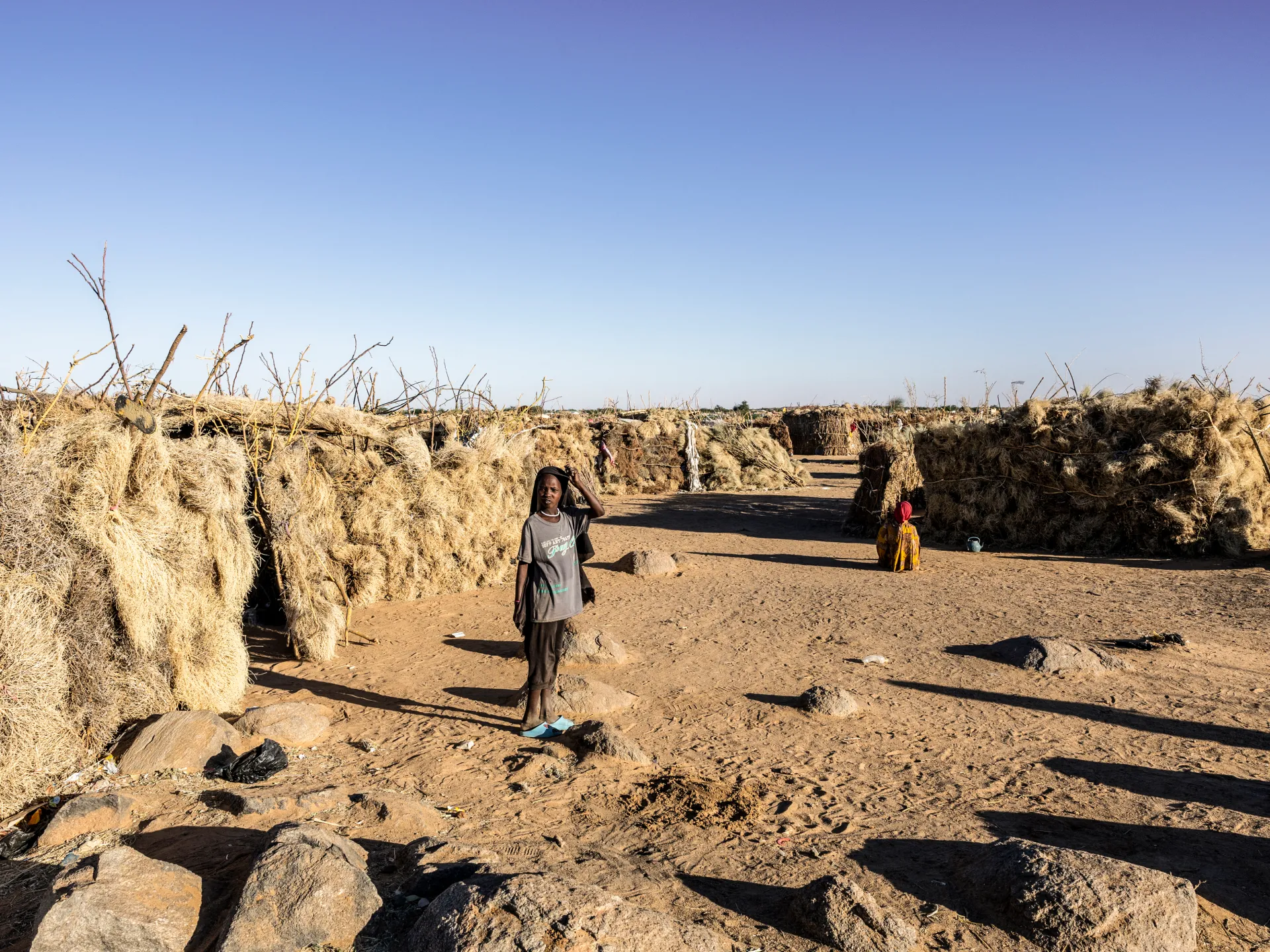
The fighting, fuelled by arms supplies from the region, has created what the United Nations has called the largest displacement crisis in the world. More than 12 million people have been forced from their homes, and tens of thousands have been killed and injured. The UN has also confirmed starvation in parts of the country.
The RSF said last week it accepted a ceasefire proposal put forward by the United States and other mediators, with the announcement coming after an international outcry over atrocities committed by the paramilitary group in el-Fasher, the capital of North Darfur state in western Sudan.
But the army has refused to agree to a ceasefire under the current battle lines, and both sides have continued to amass troops and equipment in the central parts of the country to engage in more battles.
The RSF launched an offensive against the Kordofan region at the same time as it took el-Fasher late last month, seizing the town of Bara in North Kordofan state as a crucial link between Darfur and central Sudan. The army had recaptured the town just two months earlier.
Satellite images reveal mass graves
More than two and a half weeks after fully capturing el-Fasher from the army, the RSF has continued to dispose of bodies in large numbers.
An analysis of satellite imagery released by Yale’s Humanitarian Research Lab (HRL) on Friday exposed four new locations where paramilitary fighters are disposing of bodies in and around el-Fasher.
Activities consistent with body disposal are visible at the University of Alfashir, a structure on the edge of Abu Shouk camp for internally displaced people, a neighbourhood near al-Hikma Mosque, and at Saudi Hospital, where RSF forces massacred hundreds.
The HRL could not conclude how many people the RSF had killed or how quickly, but it said the observations are alarming, given the fact that the whereabouts of many civilian residents remain unknown.
🚨ATROCITY ALERT🚨@HRL_YaleSPH has identified four new locations where the RSF is disposing of bodies in and around El Fasher. #KeepEyesonSudan
— Humanitarian Research Lab (HRL) at YSPH (@HRL_YaleSPH) November 14, 2025
Nathaniel Raymond, the lead researcher of that report, said an estimated 150,000 civilians are unaccounted for, and daily monitoring of city streets shows no activity in markets or water points, but only RSF patrols and many bodies.
“We can see them charred. So the question is, where are the people and where are the bodies coming from?” he told Al Jazeera.
Raymond said the evidence also includes numerous videos released by the RSF fighters themselves, who are “the most prodigious producers of evidence about their own crimes”.
The agreement is not expected to immediately change things on the ground, but to move forward a larger peace process.
Published On 15 Nov 202515 Nov 2025
Share
Representatives from the government of the Democratic Republic of the Congo (DRC) and the Rwandan-backed M23 rebel group have signed a peace deal in Qatar with the ultimate goal of putting an end to years of fighting.
Qatar and the United States announced the “comprehensive” deal in Doha on Saturday, setting it up as a roadmap to stop the deadly fighting and improve the dire humanitarian situation in the Central African nation.
Recommended Stories
list of 4 itemsend of list
The two sides have been holding mediated talks for months, and signed a truce deal in July that must still be subjected to more negotiations over exactly how it will be implemented.
Addressing a press conference in Doha on Saturday, Qatar’s Minister of State Mohammed bin Abdulaziz Al-Khulaifi said the latest agreement enhances the process in order to “find peaceful solutions through dialogue and understanding” to re-establish calm in the DRC.
He said the different sides achieved progress on several substantial topics in order to build on previous agreements discussed and signed over the past several months.
The agreement includes eight implementation protocols, two of which have already been signed, including one on ceasefire monitoring and another on prisoner exchange.
The rest of the protocols are expected to be discussed and finalised over the coming weeks. They will include a timeline as well as details on how different processes will work, how humanitarian aid will be allowed to reach the ailing population, and how to enable the return of refugees and internally displaced people.
Restoring state authority, implementing economic reforms, reintegration of armed groups into the government and the elimination of foreign groups are among other protocols that will need to be finalised.
Both sides have agreed to establish an independent committee to implement the peace process, and also to provide recommendations for recompensation within the framework of national reconciliation, which will be in line with the constitution of the republic, Qatar’s Al-Khulaifi said.
Massad Boulos, a senior advisor and envoy for US President Donald Trump who represented Washington in the talks, thanked the state of Qatar and other stakeholders who assisted the process, including the African Union and the state of Togo.
He told the conference in Doha that the agreement comes amid joint efforts with Qatar that have also yielded results in other areas, including the ceasefire deal reached between Israel and Hamas.
“Today is a historic occasion in many ways,” he said, referring to the framework deal on DRC as a “launching pad” for an eventual peace deal that will be built based on previous and ongoing negotiations.
“People were expecting some immediate results on the ground, but this is a process, this is not a light switch that you can turn on and off, and there are many angles to it,” Boulos said.
Reporting from Goma, Al Jazeera’s Alain Uakyani said the peace agreement has inspired hope among the population in the DRC, but not for any immediate and tangible changes on the ground.
He pointed out that the M23 said its forces were bombarded by the government on Saturday morning, but managed to take more ground from DRC soldiers.
The BBC is in turmoil. A leaked dossier exposing a misedited speech of United States President Donald Trump and other editorial concerns has triggered resignations at the top – and a $1bn lawsuit threat from the US leader. Why the leak surfaced now, and who steps in next, are still open questions. Most importantly, will the BBC be able to recover from this moment?
Contributors: Ben de Pear – Former editor, Channel 4 News Jane Martinson – Professor, University of London Karishma Patel – Former newsreader, BBC Tom Mills – Author, The BBC: Myth of a Public Service
On our radar
This week, Ahmed al-Sharaa became the first Syrian president ever to set foot in the White House. A landmark diplomatic trip filled with photo ops and political theatre, marking his transition from a US-designated terrorist to an ally. Meenakshi Ravi reports.
AI slop tsunami: Is the internet now a junkyard?
Elettra Scrivo explores how social media platforms are rapidly changing with the surge of AI content. Low-quality, mass-produced, artificially generated content, otherwise known as AI slop, is designed to trigger the algorithms and generate revenue for Big Tech companies.
Featuring: Drew Harwell – Technology reporter, The Washington Post Mark Lawrence Garilao – AI video content creator Myojung Chung – Associate professor, Northeastern University
Islam Makhachev steps up to welterweight to face champion Jack della Maddalena at UFC 322 on Saturday in Madison Square Garden.
The Russian is aiming to becoming a two-weight UFC champion and has a record of 27 wins and just one loss.
Makhachev has not lost a fight since 2015, but faces the newly crowned champion Della Maddalena.
The Australian is on a similarly unbeaten streak since 2016 after losing his first two fights.
Can Makhachev join an elite club of two-weight UFC champions or will Della Maddalena continue his rapid rise with a victory over the UFC’s pound-for-pound number two?
Figures from the world of MMA have given their predictions below.
An attack from members of the Islamic State West Africa Province (ISWAP) occurred around 5 p.m. yesterday near Sabon Gari in Damboa Local Government Area, Borno State, northeastern Nigeria. The terrorists, concealed along the route, opened fire on a mixed convoy of soldiers and members of the Civilian Joint Task Force (CJTF), killing two soldiers and two CJTF personnel.
A CJTF member stationed in Nzula, close to the attack site, told HumAngle that the convoy was moving in the direction of Bongry when it was intercepted. “It was on the Biu Road,” he said, requesting anonymity for safety reasons. “The convoy consisted of the military and members of the CJTF.”
A resident of Damboa, familiar with the movement of the convoy, said it departed the town around 2 p.m. with two Hilux vehicles, two armoured personnel carriers, and several motorcycles. “The terrorists killed two soldiers and two CJTF,” he said. “They also took away some motorcycles. Reinforcement later left Damboa – two Hilux and two armoured vehicles – when the incident happened.”
However, the most alarming development is the disappearance of a Brigade Commander who was part of the operation. A senior CJTF member in Damboa, who witnessed the convoy’s departure, confirmed the situation. “We don’t know where he is at the moment. But he responds to WhatsApp messages.”
The Commander was able to return on foot after missing for several hours in what is being described as an escape from the attackers.
This is the first time since the start of Nigeria’s counterinsurgency campaign that a serving General directly engaged on the frontline went missing for a while in an ambush. The development raises concerns about the sophistication of recent ISWAP attacks and the increasing risks faced by senior officers deployed to volatile areas.
Damboa and surrounding communities have seen repeated insurgent attacks in recent months, including assaults on patrol teams, ambushes along rural roads, and raids on farming settlements. Residents say the attack underscores the persistent insecurity along major roads despite years of military presence.
We were unable to obtain responses from the Nigerian military at the time of press. They had also not issued an official statement.