Verified videos emerging from Iran show bodies piled up in a hospital, snipers stationed on buildings and CCTV cameras being destroyed, following the unprecedented crackdown on protests earlier this month.
BBC Verify has been tracking the spread of protests across Iran since they first erupted in late December, but the near total internet blackout imposed by the authorities has made it extremely difficult to document the scale of the state’s deadly crackdown on protesters.
The US-based Human Rights Activists News Agency (HRANA) says it has confirmed the killing of nearly 6,000 people, including 5,633 protesters, since the unrest began at the end of December. It says it is also currently investigating another 17,000 reported deaths received despite an internet shutdown after nearly three weeks.
Another group, the Norway-based Iran Human Rights (IHR), has warned that the final toll could exceed 25,000.
Iranian authorities said last week that more than 3,100 people were killed, but that the majority were security personnel or bystanders attacked by “rioters”.
The latest videos to emerge from the country are understood to have been filmed on 8 and 9 January, when thousands of people took to the streets following a call for nationwide protests from Reza Pahlavi, the exiled son of the late Shah.
They are thought to be the deadliest nights for protesters so far and these newly verified videos show how Iran’s security forces have been violently cracking down on protesters.
Multiple clips analysed by BBC Verify and BBC Persian show bodies piled up inside a mortuary at Tehranpars hospital in east Tehran. We verified the location of the hospital by matching its interior to other publicly available images and videos of the building, and counted at least 31 bodies in just one video. Another clip shows seven body bags laid on the ground outside the hospital’s entrance.
Hundreds of people are seen protesting on a highway in west Tehran in another video before multiple rounds of gunfire can be heard and people begin to scream.
Protesters have also been seen trying to evade Iran’s heavy surveillance infrastructure by disabling CCTV cameras. Footage we verified shows one person in the capital climbing up a post and hitting a surveillance camera several times in an attempt to disable it. A huge crowd of protesters can be seen on the ground and heard cheering as the camera is damaged.
We have tracked the spread of the anti-government protests across 71 towns and cities in Iran, though the true number of areas where demonstrations have taken place is likely far higher.
In the south-eastern city of Kerman a video taken from high up in a building shows several armed men in military uniform walking down a road firing their weapons continuously, though it is not clear who they are shooting at. A small fire burns in the middle of the road while the sound of protesters chanting can be heard in the background.
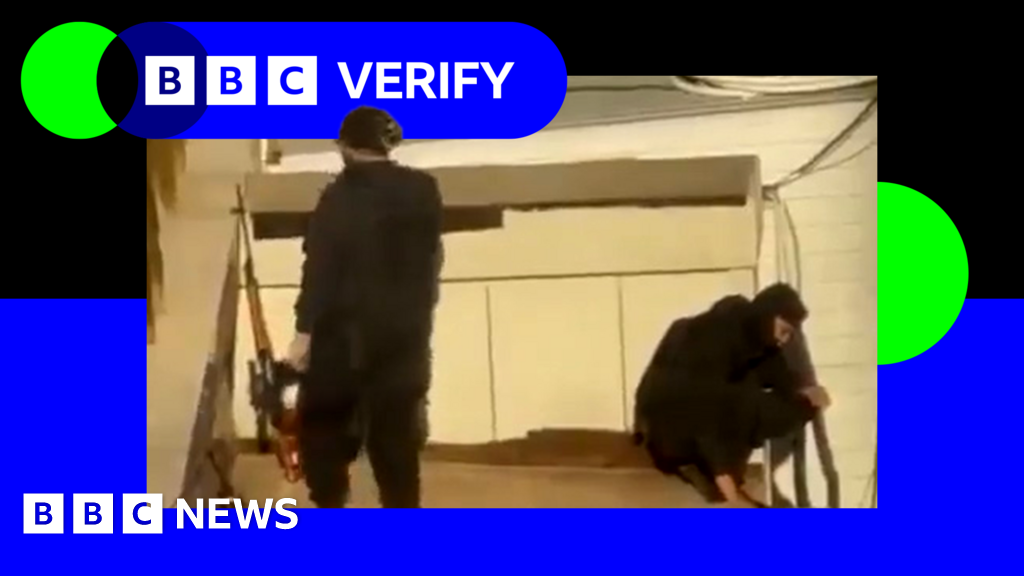
Snipers have also been recorded on the roofs of buildings. In the north-eastern city of Mashhad verified video shows two men dressed in black on a rooftop of a building in daylight. One man is standing next to a large rifle that is lent against a wall and speaking on the phone. The other man crouches on the floor while smoking.
For most people there has been an almost-total internet blackout since 8 January, but some have managed to briefly access the internet using methods such as SpaceX’s Starlink satellite internet and virtual private networks (VPNs).
More videos are likely to emerge in the coming days as the country’s economy has struggled during the blackout.
Seven of the 11 teams were running on Monday – Red Bull, Mercedes, Racing Bulls, Haas, Alpine and the new Audi and Cadillac teams.
McLaren said last week that they would not take their car on to the track until after day one as a result of trying to maximise design time. Ferrari, after an initial test at their factory last week, had also announced they would not run on Monday.
Aston Martin have said their new car will not be ready until Thursday, and Williams are missing the test entirely after delays to their design and production programme.
No times were issued, and all teams ran into at least some technical issues as they learned about their new cars.
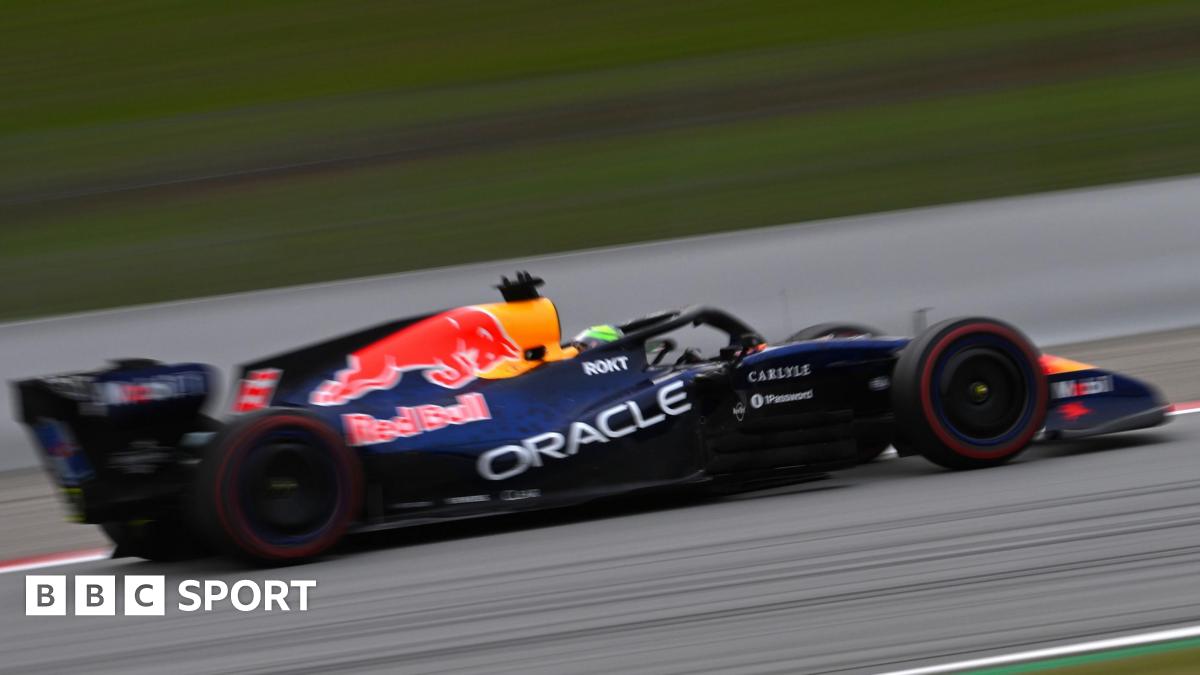
Rival teams were impressed by the amount of mileage the two Red Bull teams managed considering it was the first full day of running with their new in-house engine, which has been developed in conjunction with new partner Ford.
Before the test started, McLaren and Red Bull revealed images of their 2026 cars for the first time.
McLaren, who won the drivers’ and constructors’ championship double last year for the first time since 1998, showed the car in the one-off testing livery it will run in this week.
Red Bull showed studio shots of their car, carefully chosen to disguise key design features.
Russell added: “We are pleased with our day, but I’ve also been impressed by several other teams.
“The Red Bull power unit has completed a lot of laps which, given that it’s their first engine they’ve built, means they’ve clearly done a good job.
“Haas also managed a similar amount of running to ourselves, so the Ferrari power unit has also put together plenty of mileage. It’s not quite how it was in 2014! The sport has evolved so much since then and the level, in every single aspect, is so high now.”
Audi have taken over the Sauber team for the German car company’s first entry into F1. They suffered a reliability issue that prevented Bortoleto driving in the afternoon.
Team principal Jonathan Wheatley said: “We had a technical issue, spotted it and decided to switch the car off. Plenty of testing this year and wanted to really understand the problems, see what the weather conditions are and decide whether we run tomorrow.”
Rain is forecast for Tuesday’s second day of the test, during which teams are permitted to run on a maximum of three of the available days.
Bortoleto said: “The cars are very different. I feel these are going to be slower but it’s very cool to have the power unit being 50% electric – you go out of the corner and you have so much speed being deployed and you can see how strong the engine is.
“You need to adapt but it’s still a racing car.”
Racing Bulls’ Lawson said: “[The car is] very different to drive and I haven’t got my head around it fully yet. We will keep learning. It feels like there is a lot more we can do as drivers to make a difference, potentially, but right now it’s very early days, very hard to know where we are for now just trying to optimise the car.
“[The power unit] feels good. But it’s very hard to tell – the main thing is reliability at the moment.
“We have done a good amount of laps today and the only issues we had today were safety precautions, not actual issues. But hard to know where we’re at compared to everyone else.”
Weekly insights and analysis on the latest developments in military technology, strategy, and foreign policy.
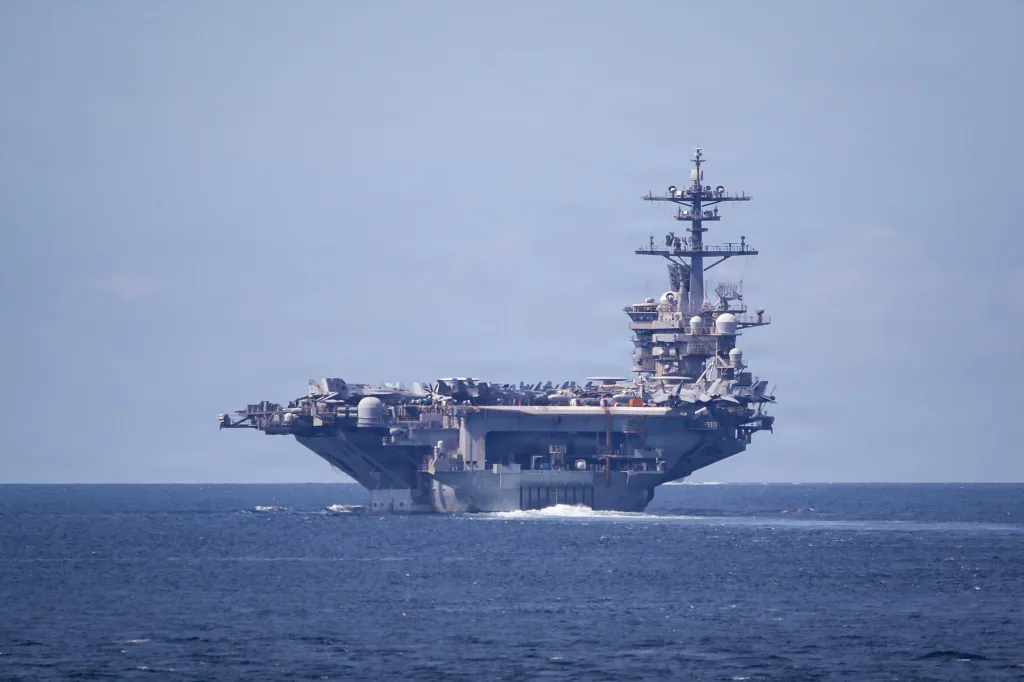
The U.S. military buildup for a possible attack on or from Iran took another step forward Monday as the USS Abraham Lincoln Carrier Strike Group (CSG) entered the U.S. Central Command region, a U.S. official confirmed to The War Zone Monday morning. Meanwhile, Iran on Monday said it was “prepared to defend itself against any new aggression” while its proxies in Yemen and Iraq have vowed to enter the fight on Tehran’s behalf. The Houthis on Monday released a video suggesting an attack on the Lincoln. More on that later in this story.
Elements of the Lincoln CSG were dispatched to the region from the South China Sea by U.S. President Donald Trump, who has repeatedly threatened to strike Iran over its brutal crackdown on anti-regime protests, resulting in thousands killed. The carrier, along with three Arleigh Burke guided missile destroyers escorting it (and usually a fast attack nuclear submarine), is currently located in the Indian Ocean, a U.S. Navy official confirmed to The War Zone.
The aircraft carrier USS Abraham Lincoln is now in the U.S. Centcom region amid rising tensions with Iran. (U.S. Navy photo by Mass Communication Specialist 3rd Class Christian Kibler) Petty Officer 2nd Class Christian Kibler
The arrival of the Lincoln CSG to the region follows a U.S. Air Force Central (AFCENT) announcement on Sunday that it will be conducting Agile Spartan, “a multi-day readiness exercise to demonstrate the ability to deploy, disperse, and sustain combat airpower across the U.S. Central Command area of responsibility.” AFCENT told us that Agile Spartan is “part of its regular exercise schedule and not in response to current tensions.” However, the optics of the timing are hard to avoid.
All these moves come amid a large surge of offensive and defensive assets to the Middle East. As we have previously reported, at least a dozen additional F-15E Strike Eagle fighters have been deployed to Muwaffaq Salti Air Base in Jordan, along with cargo jets and aerial refueling tankers across the region. In addition, online flight tracking indicates the movement of new air and missile defense systems to the Middle East as well. As we projected, the U.S. is sending additional Patriot and Terminal High Altitude Area Defense (THAAD) systems to the Middle East for increased protection from any Iranian attack, The Wall Street Journal reported.
#USAF United States Air Force – Middle East Activity 26 January 2026 – 1045z
Traffic is primarily focused on bases housing air defence systems like THAAD from Fort Hood. As the weather conditions don’t appear to have improved, the level of traffic is still fairly low. I’ve… https://t.co/INuCDdgv5spic.twitter.com/PQ9fchMiMf
Despite the buildup, it remains unclear what orders Trump will issue. Aside from threatening to strike Iran, Trump on Jan. 13 also promised those taking to the streets that help was on its way.
Regardless of his intent, the influx of additional assets to the region will give Trump a greater range of potential action and allow for the ability to defend against an Iranian attack, whether in response to U.S. military actions or not.
The Lincoln CSG would boost U.S. striking power in the region. Its embarked CVW-9 Carrier Air Wing consists of eight squadrons flying F-35C Lightning II, F/A-18E/F Super Hornets, EA-18G Growlers, E-2D Hawkeyes, CMV-22B Ospreys and MH-60R/S Sea Hawks. Its escorts, the Arleigh Burke class guided-missile destroyers USS Frank E Petersen Jr., USS Michael Murphy, and the USS Spruance of Destroyer Squadron (DESRON) 21 bring a large number of missile tubes that could be used to strike Iran. These vessels could also be used in the defense of U.S. and allied targets during a reprisal.
The Arleigh Burke class guided missile destroyer USS Michael Murphy is part of the Lincoln Carrier Strike Group.. (U.S. Navy photo by Ensign Joshua A. Flanagan/Released) Joshua A Flanagan
The presence of Strike Eagles in the region, especially those coming from RAF Lakenheath, is in itself not new. These jets have maintained a steady presence at Muwaffaq Salti Air Base in Jordan for nearly a decade, and their recent arrival in the Middle East was largely expected due to the current instability and saber-rattling. F-15Es played a key role in defending against multiple Iranian drone and cruise missile barrages on Israel and they are now more capable of that mission than ever. Beyond its offensive capabilities, if Iran were to launch a major attack on Israel and/or U.S. assets in the region, preemptive or in retaliation, the F-15Es would play a key part in defending against those attacks.
In addition to U.S. assets, the Royal Air Force’s “joint Typhoon squadron with Qatar, 12 Squadron, has deployed to the Gulf for defensive purposes, noting regional tensions as part of the UK-Qatar Defense Assurance Agreement, demonstrating the strong and enduring defense relationship between the U.K. and Qatar,” the U.K. Defense Ministry (MoD) announced on Thursday.
RAF Typhoon jets have deployed to Qatar in a defensive capacity.
The UK and Qatar have been close defence partners for decades. This deployment builds on that relationship, supporting regional stability and keeping us secure at home and strong abroad. pic.twitter.com/83FkaBPJng
While these are significant additions to the standing force posture in the region, more fighter aircraft would be expected for a major operation against Iran. We have not seen evidence of those kinds of movements just yet, although some movements are not identified via open sources.
Beyond tactical combat aircraft in the region, the U.S. can fly bombers there from the continental United States, as was the case when B-2 Spirits attacked Iran’s nuclear facilities during Operation Midnight Hammer last June. However, satellite imagery observed by The War Zone shows that no aircraft have arrived for a sustained operation in the Middle East.
As U.S. assets pour into the region, the U.S. Embassy in Baghdad highlighted a warning Trump delivered to Iran last week.
“We have a big flotilla going in that direction, and we’ll see what happens,” Trump told reporters Thursday afternoon aboard Air Force One. “We have a big force going toward Iran. I’d rather not see anything happen, but we’re watching them very closely.”
Israel, for its part, is preparing for both offensive and defensive actions toward Iran, its longtime archenemy.
IDF Northern Command chief Maj. Gen. Rafi Milo said Sunday that the military is preparing for the possibility that a US strike on Iran could trigger Iranian retaliation against Israel, according to Israeli media.
“We don’t know where this is heading,” Milo said in remarks broadcast by Channel 12 News, as tensions continue to mount,” the Times of Israel noted. “We see the force buildup the Americans are carrying out, both in the Persian Gulf and throughout the Middle East.”
Milo said the military is on heightened alert for any escalation, should the US decide to attack Iran.
“We are prepared and ready so that if the U.S. decides to strike Iran, we understand it could affect Israel, with part of the Iranian response possibly reaching here,” he said.
Israeli forces remain on high alert for an attack on or from Iran. (IAF) IAF
“The IDF is preparing for a possible American strike this coming weekend,” a high-ranking IDF official told us on Monday. “But again, there is no certainty.”
“Everything depends on the mind of one man,” he added, referring to Trump.
In another sign of a potential new conflict, Israel’s civil authority has told foreign airlines that Jan. 31 and Feb. 1 could be a period of security sensitivity, a likely reference to a U.S. military strike on Iran. If Israeli airspace is closed, foreign airlines will be given priority of exit.
Israel civil air authority tells foreign airlines that 31 January & 1 February might be the start of a period of security sensitivity (hinting at possible US military strikes on Iran). If Israeli airspace is closed, foreign airlines given priority of exit. https://t.co/HStZIOjwtN
CENTCOM commander Adm. Brad Cooper was recently in Jerusalem to talk about regional security issues. Israel’s Channel 14 news, a right-wing outlet closely aligned with Prime Minister Benjamin Netanyahu, claimed that Cooper and IDF officials have yet to come up with an attack date, that the U.S. “will need time to build up a significant force,” but will strike immediately if needed.
The U.S., according to the news outlet, wants “a clean, swift, and inexpensive operation” to “focus on those who harmed civilians and protesters. America is “ready to replace the regime in Iran,” Channel 14 added.
The War Zone could not independently verify these claims. Neither CENTCOM nor the IDF put out official statements on these conversations.
Summary of the meeting between CENTCOM commander Brad Cooper and senior IDF officials:
— No date for an attack on Iran
— The Americans will need time to build up significant force
Iranian officials maintain that they are prepared to fight both the U.S. and Israel.
Iran’s Defense Ministry spokesperson Gen. Reza Talaei-Nik warned Israel and the U.S. over any potential attack, saying it would “be met with a response that is more painful and more decisive than in the past.” Talaei-Nik was likely referring to the limited response Iran took in June 2025, attacking Al Udeid Air Base in retaliation for the Midnight Hammer strike.
“Iran is fully prepared to defend itself in the event of any renewed aggression,” said First Vice President Mohammad-Reza Aref. He stressed that “comprehensive forecasts have been made and a structured economic plan has been designed to confront a potential future war.”
Spokesperson of the Iranian Foreign Ministry:
“We face daily threats from the U.S. and Israel, as they aim to undermine regional security.”
“If we are subjected to any aggression, Iran’s response will be comprehensive.”
Any U.S. or Israeli military action would come without the tacit support of the United Arab Emirates.
“The UAE affirms its commitment to not allowing the use of its airspace, territory, or waters in any military operations against Iran,” the UAE Foreign Affairs Ministry announced on X. “The Ministry of Foreign Affairs affirmed that the UAE is committed to not allowing the use of its airspace, territory, or waters in any hostile military operations against Iran, and not providing any logistical support in this regard. It renewed its affirmation of the UAE’s belief that enhancing dialogue, reducing escalation, adhering to international laws, and respecting state sovereignty represent the optimal foundations for addressing current crises, emphasizing the UAE’s approach based on the necessity of resolving disputes through diplomatic means.”
الإمارات تؤكد التزامها بعدم السماح باستخدام أجوائها أو أراضيها أو مياهها في أي أعمال عسكرية ضد إيران
أكدت وزارة الخارجية أن دولة الإمارات تلتزم بعدم السماح باستخدام أجوائها أو أراضيها أو مياهها في أي أعمال عسكرية عدائية ضد إيران، وعدم تقديم أي دعم لوجستي في هذا الشأن.
Iran is not the only threat facing the U.S. and Israel. Iranian proxies like the Lebanese Hezbollah, the Houthis of Yemen and Iraq’s Kataib Hezbollah paramilitary group have all vowed to respond to any strike on Iran.
The Houthis, who waged a campaign against U.S. and allied military and commercial shipping from Nov. 2023 to May 2025, released a new video on Monday suggesting a missile and drone strike on the Lincoln.
The Israeli Air Force is stepping up attacks on Hezbollah targets in Lebanon, partly to blunt the group’s ability to join any Iranian retaliation. Hezbollah is already a shadow of prior self after Israel executed a protracted campaign to decimate the group.
IDF says it killed Hezbollah artillery chief Muhammad al-Husseini in southern Lebanon
Separately eliminated Jawad Basma, a Hezbollah operative linked to weapons manufacturing pic.twitter.com/hs307ZbY6T
The death toll from the unrest that began in Iran on Dec. 28 over rising prices, devalued currency that saw the rial crater now to basically nothing, a devastating drought, and brutal government crackdowns may be in the tens of thousands.
“As many as 30,000 people could have been killed in the streets of Iran on Jan. 8 and 9 alone,” TIME reported, citing two senior officials of the country’s Ministry of Health. “So many people were slaughtered by Iranian security services on that Thursday and Friday, it overwhelmed the state’s capacity to dispose of the dead. Stocks of body bags were exhausted, the officials said, and eighteen-wheel semi-trailers replaced ambulances.”
As U.S. military assets continue to flow into the region, this remains an increasingly tense situation that could erupt without notice. We will continue to monitor it and provide updates.
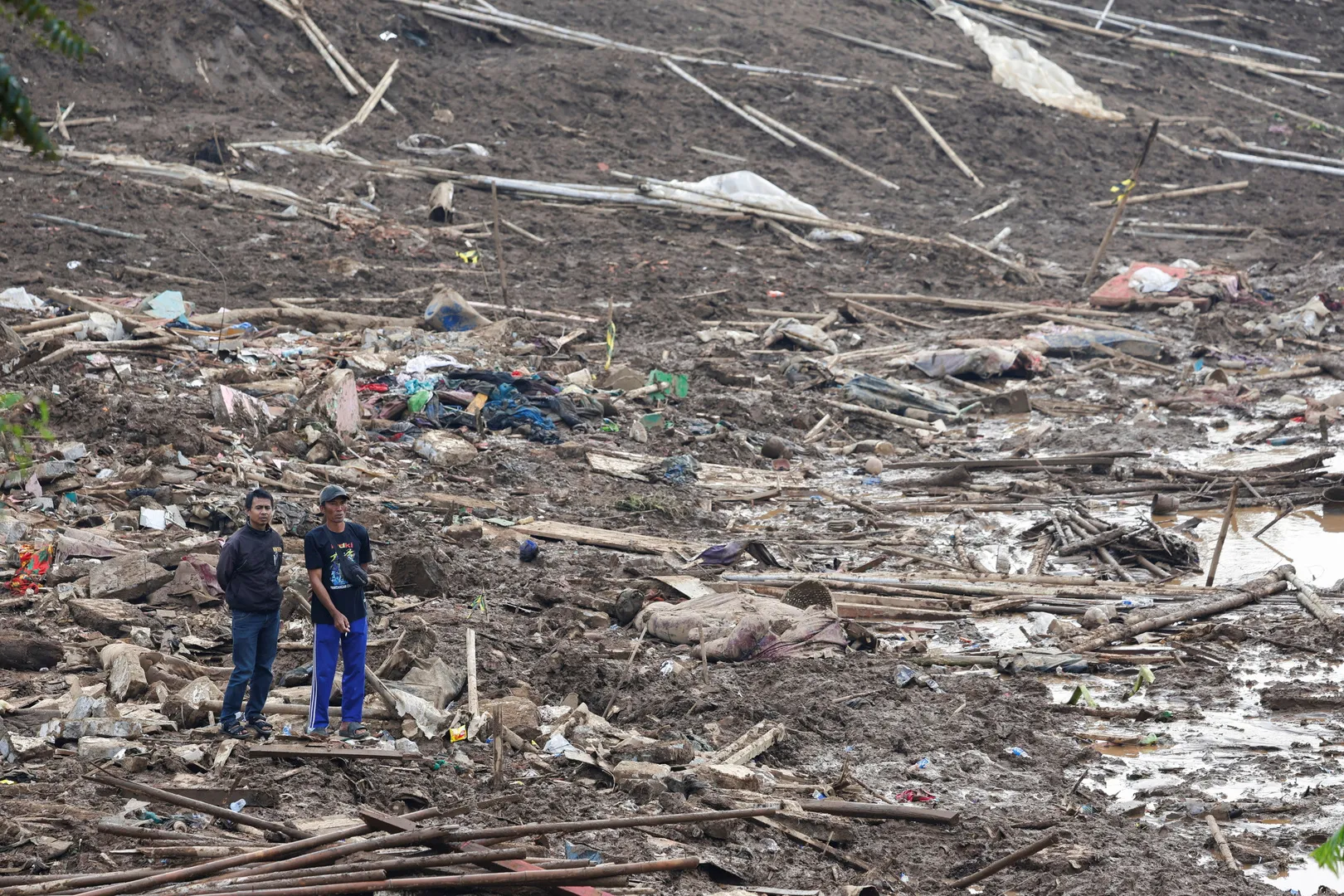
At least 80 people, including 19 members of an elite marine force, are missing and feared buried in a landslide in Indonesia’s West Bandung. The death toll has risen to 17. A massive search operation is underway including thousands of rescue workers.
Sheraz Malik was convicted by a jury at Birmingham Crown Court
An asylum seeker has been found guilty of two counts of raping an 18-year-old woman in a park in Nottinghamshire.
A trial at Birmingham Crown Court heard the woman had been drinking at Sutton Lawn park in Sutton-in-Ashfield when she was attacked by Sheraz Malik, shortly after being raped by another man he was with, who has yet to be identified.
Malik, 28, had claimed the sex was consensual, but the jury returned unanimous guilty verdicts on two counts of rape and a not guilty verdict on a third.
It can be now reported that Malik is an asylum seeker who was born in Pakistan and lived in Italy, Germany and France before coming to the UK.
Judge Simon Ash KC adjourned the case for a mention hearing on 6 February so a date for sentencing Malik – who lived at an address in Bath Street in Sutton-in-Ashfield at the time – could be fixed.
A reporting restriction was put in place at Nottingham Crown Court in September last year, preventing any mention of the defendant’s immigration status until the trial had concluded.
Police said another suspect was still being “relentlessly” sought in relation to the case.
After highlighting the suspect’s background on his Facebook and X accounts, demonstrators gathered in the town to demand tighter rules on immigration.
Counter-protesters also turned out, but Nottinghamshire Live reported these were outnumbered.
Protests related to the case were held last summer
Warning: This article includes details that some readers may find distressing
Prosecution counsel Nicholas Corsellis KC previously told the court the woman had been drinking at the park with a male friend, and was drunk when she met Malik and a group of other men, who she had never seen before.
Her friend asked the group to “look after” her while he went to meet another friend and one of Malik’s associates took the woman to an isolated area of the park so she could go to the toilet, the court heard.
Corsellis said: “The first man forcibly raped her before bringing her back to the group.
“The defendant then decided he wished to have sex with her and took his turn to take her to a secluded spot, where he physically struck her while raping her.”
The jury were told Malik had grabbed her by the neck and hair as he raped her, and afterwards she sent a Snapchat message to a friend saying “please help me”.
“The one you told to look after me tried to rape me… and the one with the black T-shirt,” the message said.
“Please help, I can’t cope, I feel like killing myself.”
Corsellis told the jury that the complainant was “alone, drunk and was obviously a vulnerable person”.
Google
The woman told police she was attacked in Sutton Lawn park in Nottinghamshire
Malik, who gave evidence in English during the trial, said he had been playing cricket with a group of other men and smoking cannabis in the park before the attack.
He denied he had slapped her at any point and claimed the woman had told him “I really like you” and “I really enjoyed it”.
Later in his evidence, Malik was asked why a different name had been used to book him a coach ticket to leave the Nottinghamshire area after the attack.
He said a friend had booked the ticket for him, adding that the Home Office was “giving me £50 for every week”.
Addressing Malik in the dock, the judge said: “You have been convicted of very serious charges and I will need to sentence you in due course.
“The case will next be listed on 6 February to fix a sentence date.
“I have ordered a pre-sentence report to assess the level of dangerousness. You must engage with the probation service when they seek to engage with you.
“You will be remanded into custody at this stage.”
In a statement after the sentencing, Nottinghamshire Police confirmed Malik was a Pakistani national who followed proceedings through a Pashto interpreter.
The force said the investigation remained a priority.
Det Insp Nicole Milner said: “As is always the case for investigations of this nature, there are many people involved and they have all played a part to bring Malik to justice.
“I particularly want to acknowledge the work of Det Con Malgorzata Kacprzycka and Det Sgt Barry Haines, who have been crucial in bringing Malik to justice.
“Above all, I also want to acknowledge the bravery and resilience of the victim.
“She has shown great courage throughout and helped us to build a very strong case against Malik, whose version of events lacked credibility from the start.
“As a result of her evidence, the jury was able to see through his lies and to convict him on three counts of rape.”
Commission President Ursula von der Leyen says Europe will not ‘tolerate unthinkable behaviour, such as digital undressing of women and children’.
Published On 26 Jan 202626 Jan 2026
Share
The European Commission has launched an investigation into Elon Musk’s AI chatbot, Grok, regarding the creation of sexually explicit fake images of women and minors.
The commission announced on Monday that its investigation would examine whether the AI tool used on X has met its legal obligations under the European Union’s Digital Services Act (DSA), which requires social media companies to address illegal and harmful online content.
Recommended Stories
list of 3 itemsend of list
Brussels said the investigation would examine whether X had properly mitigated “risks related to the dissemination of illegal content in the EU, such as manipulated sexually explicit images, including content that may amount to child sexual abuse material”.
In a statement to the AFP news agency, European Commission President Ursula von der Leyen said Europe will not “tolerate unthinkable behaviour, such as digital undressing of women and children”.
“It is simple – we will not hand over consent and child protection to tech companies to violate and monetise. The harm caused by illegal images is very real,” she added.
Grok has faced a recent outcry after it was uncovered that users could ask the chatbot to create deepfakes of women and children by simply using prompts such as “put her in a bikini” or “remove her clothes”.
EU tech commissioner Henna Virkkunen said the rights of women and children in the EU should not be “collateral damage” of X’s services.
“Non-consensual sexual deepfakes of women and children are a violent, unacceptable form of degradation,” Virkkunen said in a statement.
X has been under investigation by the EU over its digital content rules since December 2023.
This month, Grok said it would restrict image generation and editing to paying customers after criticism of the tool’s capabilities.
A nonprofit organisation, the Centre for Countering Digital Hate, published a report last week that found Grok had generated an estimated 3 million sexualised images of women and children in a matter of days.
In December, the EU ordered X to pay a 120-million-euro ($140m) fine for violating the DSA’s transparency obligations.
The EU is not the only body investigating Grok’s tool; the United Kingdom’s media regulator, Ofcom, announced it had launched an investigation into X to determine whether it had complied with requirements under the UK’s Online Safety Act.
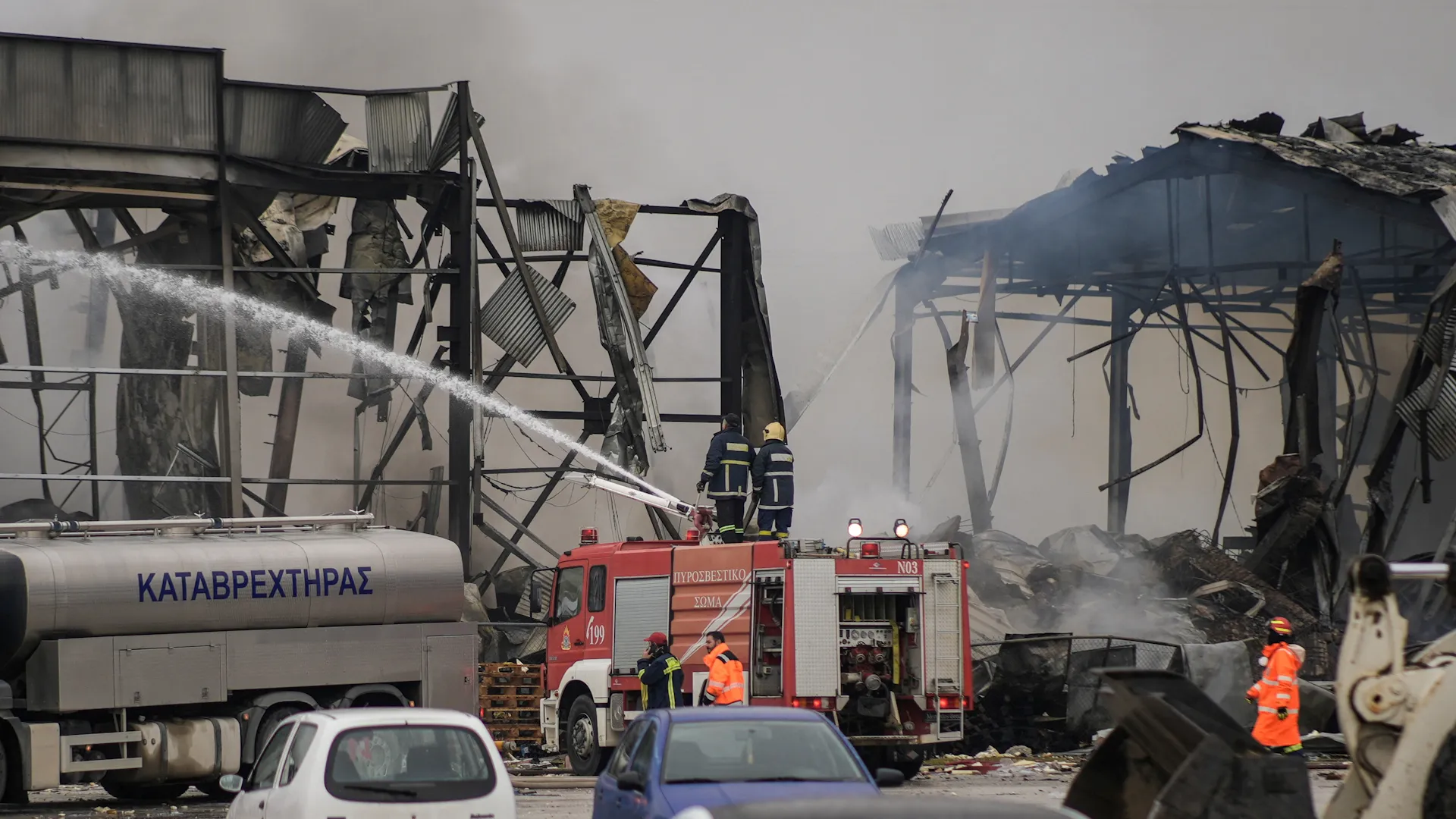
An overnight explosion at a biscuit factory in Trikala, Greece, has killed at least four workers. Investigators are working to determine the cause of the blast, which authorities believe may have originated near the factory’s ovens.
In 2007, Gustavo Petro was visiting Washington, DC, when he made an unusual request: to accompany his host’s friend on a school pickup run.
At the time, Petro was a rising star in the Colombian Senate who was in the United States to receive the Letelier-Moffitt Human Rights Award for exposing politicians’ ties to paramilitary groups. His host was Sanho Tree, director of drug policy at the Institute for Policy Studies (IPS).
“That’s something I can’t do in Colombia,” Tree remembered Petro telling him. “If your assassins know you’re going to pick up your kid at a certain time, that’s extremely dangerous.”
Such dangers were not new to Petro.
He began his career being hunted by soldiers as an armed rebel with the M-19, an underground student movement that sought a fairer, more democratic Colombia. After laying down his rifle, he became a whistleblowing senator, holding hearings on the shadowy alliance between politicians and paramilitary groups that reached the highest echelons of power – and earned him a price on his head from a paramilitary leader.
Throughout, he has pursued the same issues in a country torn apart by decades of armed conflict and where land has long been concentrated in the hands of the wealthy few.
“One thing we can say about Petro is that he’s been consistent,” said Alejandro Gaviria, Petro’s former education minister, who has been both a critic and ally of the president.
“If you watch an interview of his 20 years ago, he has exactly the same ideas. Then he was talking about peace, land reform; he was even ahead of his time talking about environmental issues.”
In 2022, Petro was elected the first left-wing president of the South American country and entered the presidential palace with promises to lead Colombia in a more equitable, eco-friendly direction.
On the international stage, he has been a rare figure among Latin American leaders as an outspoken critic of US President Donald Trump. After the US attacked Venezuela in early January and abducted the country’s leader, Nicolas Maduro, Trump threatened military action against Colombia. The former rebel responded by saying he would “take up arms” again to defend Colombia. A detente soon followed after a phone call between the leaders.
As Petro has struggled to put his ideas into practice throughout his term and faced tensions with Trump, what drives Colombia’s president?
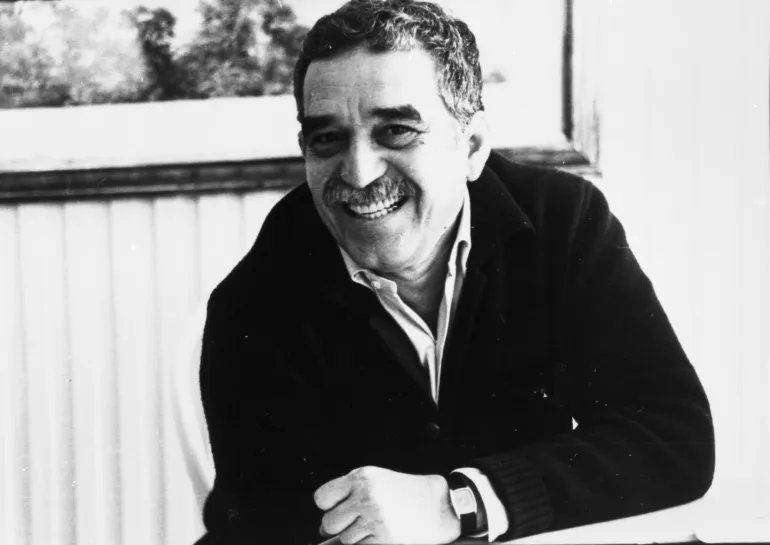
Gabriel Garcia Marquez, who won the 1982 Nobel Prize in literature, celebrated the 20th anniversary of his novel One Hundred Years of Solitude in June 1987. His novel has greatly influenced Petro [File: Reuters]
Bookish rebel
Petro was born in 1960 to a middle-class family in the Caribbean coastal town of Cienaga de Oro, but spent much of his childhood in the rainy capital, Bogota, and his teenage years in the city of Zipaquira.
From a young age, he questioned authority.
“He likes discussion, but not dogma,” his father, Gustavo Petro Sierra, once said in an interview where he recalled an incident when his son was three. He had tried to punish his son by slapping his hand, but missed and accidentally struck his face. Petro had looked his father in the eye and yelled, “Don’t hit me in the face, Dad!”
Petro’s father, a teacher, inspired his son’s love of reading, and Petro was particularly influenced by the celebrated novel, One Hundred Years of Solitude, by the Colombian author Gabriel Garcia Marquez. His father gave him a copy as a birthday gift when he was a child, according to former Culture Minister Juan David Correa, who met Petro in 2021 as the editor of his memoir.
The magical realism epic immortalises Colombia’s civil wars and class struggles through the saga of the Buendia family through the 19th and early 20th centuries. After independence from Spain in 1810, Colombia experienced intermittent warfare between its two main political factions: the secular, reformist Liberals and the Conservatives, who wanted to maintain the Catholic, colonial status quo.
“That was a book that was definitive in our lives as Colombians,” explained Correa, noting Petro’s belief that Colombians must know their history.
“We have to know who these oligarchies or aristocracies are that ruled the country over the past 200 years of solitude [since independence], as [Petro] called it.”
In the colonial era, the Spanish oversaw a feudal-like system in which landless campesinos (rural workers) toiled for a pittance on behalf of wealthy landowners. In the Colombia that Petro grew up in, this system persisted. Even at the dawn of the new millennium, only 1 percent of landowners possessed half the arable land.
As a boy, Petro’s mother, Clara Nubia Urrego, would tell him stories about the turmoil in the country, including the assassination of Jorge Eliecer Gaitan. Gaitan, a presidential candidate for the Liberals, called for reforms, including land distribution, which landowners fiercely opposed. His murder in 1948 kicked off a decade of bloodshed, known as La Violencia, between Liberal armed rebels and the Conservative government.
A truce in 1958 led to a power-sharing arrangement between the Liberal and Conservative parties, known as the National Front. Things had seemingly calmed by the early 1960s, but in 1964, inspired by the Cuban Revolution, the remaining Liberal rebels roaming the countryside came together as the communist Revolutionary Armed Forces of Colombia (FARC) and the smaller National Liberation Army (ELN).
Meanwhile, the National Front blocked any legitimate alternatives, going so far as to rig the election on April 19, 1970 against the populist ANAPO (National Popular Alliance), which attracted people fed up with the two-party system, including Petro’s mother, who had joined the party. Seeing his mother’s sadness at the election results became Petro’s political awakening. He was 10.
At his Catholic school in Zipaquira, Petro and three other friends formed a study group and pledged to dedicate their lives to a better Colombia. They read Alternativa, a left-wing magazine founded by Garcia Marquez, which ran interviews with Chilean and Argentinian rebels and criticised the US sway over Latin America. They became involved with local unions, bringing together workers, salt miners and teachers.
In his memoir, Petro recalls his “communist” beliefs did not make him popular with priests or his classmates whose parents hung portraits of Spain’s fascist dictator General Francisco Franco on their walls. But he credits his high school as the place where he learned about liberation theology, a strand of Catholicism that advocates uplifting the oppressed.
“Since then, love for the poor has remained by my side,” he wrote.
“I didn’t learn that from Marxism, but from liberation theology.”
FARC rebels enter a small town near Miranda, Colombia, on April 17, 1996, two days after the group ambushed a military convoy, killing 31 soldiers and wounding 18 outside the town of Puerres [Ricardo Mazalan/AP Photo]
Occupying a hillside
In 1978, after enrolling at university in Bogota to study economics, Petro was handed a document by Pio Quinto Jaimes, a teacher involved in activist circles. It outlined the goals of an underground student movement known as the 19th of April Movement or M-19, named after the 1970 election. Jaimes was impressed by Petro’s work with the unions and considered him a worthwhile prospect for the group.
Although often described as “urban guerrillas”, M-19 was distinct from the uniformed rebels of the FARC or the ELN. Whereas the FARC recruited from rural workers and wanted a Cuban-style Marxist revolution, M-19 mainly consisted of politicised students who sought social democracy, denied by the two-party system.
Unlike the FARC’s camouflaged commandos, who would raid army outposts before disappearing into the jungle, M-19 operated in the cities and preferred symbolic stunts such as stealing the sword of Simon Bolivar, Colombia’s 19th-century liberation hero, from a Bogota museum.
“Bolivar has not died,” read a note they left behind. “His sword continues his fight. It now falls into our hands, where it is pointed at the hearts of those who exploit Colombia.”
The M-19 hijacked milk trucks to redivert the goods to poorer neighbourhoods, and orchestrated kidnappings targeting Colombia’s wealthy elite.
Petro read the document from cover to cover.
“The movement connected me with the reality of the country, with my mother’s stories about Gaitan, Bolivar, and the ANAPO,” he wrote in his memoirs. “It was as if it had struck a chord that intensely stirred some fibres within me.”
Petro, along with two of his high school study group friends, joined the M-19.
Although he learned to use a gun, he did not take part in armed operations. He was instead tasked with disseminating propaganda. He took on the nom de guerre Aureliano, after a rebel leader in Marquez’s novel.
After graduation, Petro returned to Zipaquira and was elected an ombudsman, a public advocate, in 1981, to hear residents’ complaints about the local government.
In the early 1980s, Petro edited a newsletter – Letter to the People – where he called on readers to occupy a hillside on the outskirts and turn it into a housing project for poor people. Some 400 impoverished families answered the call and found 22-year-old Petro and a group of young activists measuring out 6-by-12 metre (19.7×39.4 feet) plots. There were no wells or sewage, and residents had to collect rainwater.
The squatters were eventually granted permission to stay by the mayor, and the community evolved into a neighbourhood named Bolivar 83.
Colombian presidential candidate Carlos Pizarro of the M-19 group surrenders his gun in Bogota in March 1990. The following month, Pizarro, 39, was assassinated by an armed man during a commercial flight [File: Zoraida Diaz/Landov via Reuters]
‘My youth was over’
By 1984, as peace negotiations between the government and M-19 gained momentum, Petro publicly acknowledged his involvement in the group.
“I did so at a demonstration that was one of the largest in the municipality’s history,” he said in an interview. “From then on, my life changed. My youth was over.”
After telling the crowd he belonged to M-19, Petro stepped back to applause.
But not everyone was pleased.
Petro’s father, who had no idea about his son’s secret life, was shocked by the risks he had been taking.
The talks with the government soon fell apart, meaning M-19 members were once again targets for arrest. Petro was forced to go underground.
He lay low in Bolivar 83, sleeping in different beds each night, and wore a disguise, a yellow dress and a wig, pretending to be a woman.
Around this time, Petro had a psychedelic revelation under the guidance of a shaman on a sacred mountain. Drinking ayahuasca, a powerful Amazonian brew, he experienced intense visions. The first showed an Indigenous princess descending from above as he was enveloped by roots.
“What does this mean?” he asked the shaman.
“Well, you are like a spirit taking care of nature,” the spiritual healer replied.
Petro, who recounted this experience in the book Children of the Amazon (2023), said this was the moment he realised his responsibility towards the environment. His second vision was more troubling: he saw his own death during an ambush.
In October 1985, soldiers poured into Bolivar 83, scouring the neighbourhood for M-19 rebels and intimidating residents. A terrified boy revealed the secret tunnels where Petro was hiding.
Petro was arrested, tortured for four days in a military barracks, and imprisoned. He served 16 months for possession of weapons, which he claimed were planted.
While imprisoned, he missed the birth of his first son, Nicolas. Katia Burgos, his wife, who he had known since childhood, was also with M-19.
Meanwhile, Colombia’s internal armed conflict escalated beyond the rebels and the government.
A Colombian soldier watches as cocaine seized in a raid is burned in 1989 [File: Zoraida Diaz/Reuters]
The rise of narcos
The emergence of drug cartels or narcotics traffickers, aka narcos, added another dimension to the conflict.
Cocaine, a white powder refined from coca leaves, gained popularity in the 1970s, fuelled partly by US disco culture. Initially, Colombia was mainly a transit point for cocaine smuggled from Peru or Bolivia, but it was not long before coca cultivation expanded within Colombia, soon becoming the most viable livelihood in rural areas.
Cocaine barons and other wealthy businessmen began bankrolling private armies and paramilitaries to protect their families and property from armed rebels.
Although both were engaged in criminal activities, the rebels sought to overthrow the ruling elite, but the narcos wanted to become part of it, pitting them on opposite sides of the conflict.
After his release from Bogota’s La Modelo prison in 1987 at age 26, the unease of Petro’s rebellion days stuck with him, and he even took to sleeping with an assault rifle under his bed.
The following year, he met Mary Luz Herran, an ardent M-19 member since she was 14. They would go on to marry and have two children, a daughter named Andrea and a son named Andres, before splitting.
Soon after they met, in 1990, the M-19 became the first significant rebel group to demobilise, transforming into the M-19 Democratic Alliance party.
But it was a dangerous time to be in Colombian politics.
In the 1980s and 90s, some 6,000 members of the left-wing Patriotic Union party were killed by narcos, paramilitaries and the security services.
M-19 were not spared, either. In 1990, their presidential candidate, Carlos Pizarro, was shot on board a passenger plane mid-flight.
While serving a term in Congress, Petro began receiving death threats from a paramilitary group called Colsingue, or Colombia Without Guerrillas, and for his and his family’s safety, he agreed to a diplomatic posting in Belgium in 1994. While there, he studied environmentalism and economics at the University of Louvain, and he became deeply interested in the work of Romanian economist Nicholas Georgescu-Roegen, who warned that while the global economy relies on constant growth, the Earth cannot be exploited forever.
But Petro grew restless in Brussels. “I felt bored, nostalgic, and eager to return to the political arena,” he writes in his memoirs.
He returned to Colombia, where he was re-elected to Congress in 1998. Two years later, he met his third wife, then a 24-year-old law student named Veronica Alcocer. They soon married, and despite initial tension with Veronica’s father — whom Petro described as an “almost fascist” in an interview with a Colombian magazine — Petro and his father-in-law grew close through their shared love of reading and intellectualism. His funeral in 2012 was one of the few times Petro cried in public. They have two daughters, Sofia and Antonella.
Meanwhile, in a bid to start peace talks in 1998, then-President Andres Pastrana conceded territory roughly the size of Switzerland to Colombia’s largest armed group, the FARC. It was meant to be neutral ground, but the rebels used it to recruit and train child soldiers, grow coca, hold captives and enforce their own brand of justice.
Enter Alvaro Uribe. A right-wing hardliner, Uribe won the 2002 presidential election by promising to quash the rebels with an iron fist.
With US support, Uribe’s beefed-up military inflicted devastating defeats on the FARC. Washington had an interest in stopping the flow of cocaine from the source to the US, and in the 2000s and 2010s, Colombia was the third-largest recipient of US military aid after Israel and Egypt.
Petro (C), then in Congress, talks with police during a protest in Cartagena on May 18, 2004, as Colombia hosts the launch of Andean free trade negotiations with the US [Eliana Aponte EA/Reuters]
Defying death squads
Overall, security improved, but the Uribe era revealed that the authorities had been colluding with paramilitaries for years. While presenting themselves as anti-communist vigilantes, the paramilitaries were responsible for the lion’s share of civilian deaths, terrorising vast swaths of the country.
In one particularly brutal episode in 1997, a band of armed men descended on the village of El Aro in Antioquia. Villagers were brutally tortured and raped, and up to 17 people were killed. The paramilitaries burned the village down as they left, and witnesses reported seeing a helicopter circling above — a yellow aircraft belonging to the Antioquia governor’s office, which at the time was occupied by Uribe.
The ghosts of El Aro were reawakened in the parapolitica (para-politics) scandal of 2006 after journalists and prosecutors revealed that several lawmakers were in league with far-right paramilitary groups, allowing them to murder and intimidate opponents while enriching themselves through bribes and illegal land grabs.
What happened next became one of the defining periods of Petro’s career. He held public hearings and accused the perpetrators of the El Aro massacre of operating with Uribe’s blessing while he was governor, such as by helping establish civilian “self-defence” groups as a front for the militias.
“Why the silence, Mr President?” Petro pressed him at a hearing. “Or does the government accept that violent narcoterrorists have a presence in its ranks?”
The then-president fired back, calling the senator a “terrorist in civilian clothes”. Uribe’s alleged paramilitary ties later landed him in a years-long court case from 2012, ending in his conviction for witness tampering last year, which was soon overturned on appeal.
Having lost comrades like Pizarro to the bloody purges of the 1980s and 90s, Petro knew all too well what he was up against. The scandal established him as a fearless crusader, but won him few friends.
“He was the one to [expose the paramilitaries] at a time when it was incredibly dangerous,” said Gimena Sanchez-Garzoli, a human rights advocate at the Washington Office on Latin America (WOLA).
“The impunity was so rampant … he was speaking to a Congress where 30 percent of it was linked to these groups.”
Tree, who nominated Petro for the human rights award in DC, remembered how the senator was on edge during this period.
“When I would meet with him in the mid-2000s in Bogota, he couldn’t stand near a window, and every night he had to go home by a different route,” Tree recalled.
Petro’s paranoia about standing near windows was not unwarranted; Salvatore Mancuso, the strongman behind the El Aro massacre, later confirmed that Petro’s name had indeed been on his hit list.
Petro gestures to supporters as he celebrates winning Bogota’s mayoral race, October 30, 2011 [Fernando Vergara/AP Photo]
Mayor of Bogota
In 2010, Petro launched his first presidential bid but found himself at odds with his own party, the Democratic Pole, which sidelined him in favour of another candidate. Petro ran anyway and came in third overall.
He founded a new party, Humane Colombia, and successfully ran for mayor of Bogota in 2011.
While the previous mayor and his brother profited from corruption, Petro implemented many progressive reforms. A ban on brandishing firearms in public saw murder rates plunge to a three-decade low. Petro’s administration addressed animal cruelty, stopping the practices of using horse-drawn carts for rubbish collection and bullfighting, and pioneered mobile clinics for homeless drug users, treating addiction as a matter of public health.
“We were the first organisation to propose these [drug] reform ideas,” said Julian Quintero, director of Social Technical Action (ATS), a Bogota-based NGO focused on harm reduction and drug policy reform.
“Petro participated with us, and he sort of embraced the proposals we made to him.”
But Quintero noted that Petro’s governing style was also uneven, characterised by a rapid turnover of staff – a preview of his presidential years.
“Petro did very well as a senator because he’s a very good analyst who trembles with accusations when he’s in the opposition,” Quintero said.
“But when he takes office, he doesn’t stand out for his bureaucratic and technical skills. He’s not a good administrator. He changes teams very quickly, not allowing for continuity in his projects.”
Moreover, he added, in Colombia, “the left isn’t used to governing”.
Quintero noted that deeply entrenched right-wing interests also made Petro’s job more difficult. A failed attempt to overhaul the capital’s waste management system in 2013 ignited a political battle that saw Petro ousted from office by the arch-conservative Attorney General Alejandro Ordonez. That decision drew mass protests, and Petro was reinstated a month later – a sign that his brand of politics was gaining momentum.
Petro (C) and his running mate Francia Marquez, at his left, with the Historical Pact coalition, stand before supporters with Petro’s wife Veronica Alcocer, second from left, and their daughter Andrea on election night in Bogota on May 29, 2022 [Fernando Vergara/AP Photo]
Path to victory
In 2010, Petro had lost his presidential bid to Juan Manuel Santos, Uribe’s defence minister, who oversaw his campaign against the FARC in the 2000s. But it was Santos who – to Uribe’s dismay – brokered peace with the rebels in 2016.
When Uribe’s protege Ivan Duque took office in 2018, however, the government largely abandoned that agreement, and violence surged.
“[The Uribe faction] wanted a candidate, basically a puppet, who was to rip up the peace agreement and not let it advance,” WOLA’s Sanchez-Garzoli explained.
Armed groups, including rogue FARC commanders, drug cartels and paramilitaries, rushed to fill the power vacuum, where they once held sway.
Then, in 2021, Duque’s attempt to raise taxes prompted mass protests that were met with police brutality and dozens of deaths. The unrest and growing public disillusionment with the status quo, now fully exposed by the collapsing peace process and the pandemic-ravaged economy, meant Colombia finally had an opening for its first progressive president; a break from the conservative elite such as Uribe and Duque, who came from, and represented the interests of, the wealthy landowning class.
A leftist coalition called the Historic Pact rallied behind Petro for the 2022 elections.
Eager to include Liberals as well, Petro reached out to economist and former government official Gaviria.
“It’s kind of funny because when you see him at a rally, he’s really energised, but in a one-on-one interaction, he is timid, he is quiet, he is difficult to engage in conversation,” Gaviria said, recalling Petro’s visit to his home as he tried to build a coalition.
“When he visited my apartment, I was trying to ask him questions, and he never said anything to me. He stayed silent for five minutes.”
The presidential hopeful eventually proposed that Gaviria, then the Liberals’ presidential candidate, ally with his progressive forces.
Ultimately, in the second round of the election, Gaviria threw his support behind Petro, who offered him a place in his new cabinet as education minister when he took office that August.
Petro addresses the 77th session of the United Nations General Assembly in 2022 [File: Brendan McDermid/Reuters]
International stage
As president, Petro took his message to the world. At his first United Nations speech, he warned, “the jungle is burning” while global powers were fighting over drugs and resources. He highlighted what he saw as the hypocrisy of vilifying cocaine while protecting coal and oil.
“What is more poisonous for humanity, cocaine, coal or oil?” he asked. With Colombia’s cocaine industry having fuelled decades of civil war, Petro has called for cocaine legalisation, calling the so-called war on drugs a failure.
“Cocaine is illegal because it is made in Latin America, not because it is worse than whisky,” he told a broadcast government meeting in February 2025.
In confronting the climate crisis, he has halted fracking and new gas projects to shift Colombia towards clean energy. In an economy reliant on fuel exports, however, this decision has been met with fierce scrutiny.
Petro has also sought to address the country’s armed conflict.
Influenced by French philosopher Jacques Derrida, who believed true forgiveness meant forgiving the unforgivable, Petro presented Congress with a plan to bring all remaining cartels, armed rebels and paramilitaries to the table, including by suspending arrest warrants and empowering local leaders as mediators.
The plan was called “Total Peace”.
Petro, left, and his running mate Francia Marquez, celebrate before supporters after winning a run-off presidential election in Bogota on June 19, 2022 [Fernando Vergara/AP Photo]
‘A dream’
Petro’s peace initiative was put to the test in Buenaventura, a key Colombian port on the Pacific Coast. The port had long been a strategic hub for cocaine smugglers loading cargo onto ships bound worldwide.
Then, in 2019, a deadly turf war exploded. Residents were terrified to leave their homes. In desperation, local archbishop Ruben Dario Jaramillo performed a mass exorcism of the city by spraying the streets with holy water from a convoy of vehicles.
But in October 2022, the leaders of two rival gangs met and shook hands at a church service, thanks to a truce brokered by Jaramillo, building on the Total Peace initiative. The following six weeks saw only one killing, compared with the previous monthly death toll of 25.
The broader peace plan, however, has had flaws. Anticipating a deal, armed groups consolidated their positions to get the upper hand in negotiations while taking advantage of ceasefires to recruit and resupply.
As Quintero observed, the groups calling themselves “guerrillas” today are mostly criminal gangs using the label to legitimise their actions. “There are no guerrillas with the ideology to overthrow the state,” he said.
“[Instead], today there are gangs of very well-armed drug traffickers posing as guerrillas.”
The two most problematic ones are the Gulf Clan and the ELN. The Gulf Clan is a powerful narco-paramilitary crime syndicate demanding talks to negotiate their surrender while aggressively expanding its empire. The ELN continues to carry out attacks and kidnappings and is battling a renegade FARC faction in the dense jungles of Catatumbo, a fertile coca-growing region near Venezuela, displacing tens of thousands of people and prompting Petro to declare a temporary state of emergency last January.
Gaviria said that while reining in heavily armed drug dealers hiding in mountains and jungles would be challenging for any government, Petro has not really had a plan.
“He thought political will was enough to achieve Total Peace, which is completely wrong,” Gaviria said.
He compared Petro’s approach with Santos’s.
“Santos had a strategy, a group negotiating with the FARC. He met with that group every week, having conversations with his experts around the world … he was very disciplined in the way he was conducting this difficult topic.
“Petro was just completely different. No strategy at all,” Gaviria added. “Big announcements and political will. [Petro] thought that was enough, and now we know that no, it was not enough, especially if you’re dealing with such a complex problem.
“Total Peace was not a strategy. Total Peace was an idea, a dream.”
The chaotic nature of Petro’s cabinet has also complicated matters. The turnover rate is high, averaging a new minister every 19 days. Gaviria resigned in early 2023, along with three other ministers, during a fallout over health reforms. And 13 ministers lost or left their jobs in just three months between late 2024 and early 2025.
“I think this is a direct result of his style of policymaking,” said Gaviria, describing it as “undisciplined”.
Petro tends to replace ministers with loyalists and former members of the M-19, while publicly squabbling with former staff and accusing them of disloyalty. Some connect Petro’s perilous past to this governing style.
“Petro has a paranoid style of government that almost defines him,” said Gaviria.
“He is always thinking that there is a conspiracy against him. And probably this idea is related to being a former guerrilla member and living [in hiding].”
Correa agreed, noting that Petro does not trust many people.
The replacements he selects, too, are not necessarily the best-qualified.
For example, Sanchez-Garzoli believes the ELN peace process collapsed because Petro appointed “an ideologue and less of a real negotiator”.
“They basically blew apart a process that could have demobilised thousands,” she explained.
For Gaviria, Petro is these days more interested in ideological battles on social media than in leading the country. “I think he knows that he has not been an effective president,” he said. “Governing a country can be difficult, boring … [and to be successful] you have to engage in difficult conversations. You have to change your mind.”
Petro, he believes, has struggled to accept that “tragic destiny”.
Petro speaks during a protest against Trump’s comments, accusing him of drug trafficking, and a court ruling that overturned convictions against former President Alvaro Uribe in Bogota on October 24, 202 [Luisa Gonzalez/Reuters]
Legacy
Petro’s advocacy on Palestine – and the severing of diplomatic ties with Israel over its genocidal war on Gaza – the climate crisis, drug reform and willingness to confront Trump have won him international praise. Trump, without any evidence, has accused Petro of running cocaine mills and called him a “sick man” on several occasions.
Back home, Petro points to having reduced poverty and infant mortality rates, increased agricultural production, and provided greater access to education, but his criticised peace strategy has failed to deliver broad demobilisation, and stark inequality persists. His approval rating has dropped from 56 percent when he took office to almost 36 percent.
Petro’s presidency has been overshadowed by scandals, including his eldest son Nicolas’s arrest for alleged money laundering linked to narco campaign funding. He calls such attacks targeting his inner circle “lawfare”, aimed at weakening him, something he experienced when he was briefly ousted as mayor of Bogota.
“The first thing they tried to destroy was my family,” he told Spanish daily El Pais last February. “They wanted to destroy the emotional ties because a man without emotional ties becomes hard, bad, and errs.”
He conceded that the presidency is a role that brings him “absolute unhappiness”.
As Petro faces the end of his presidency this year, his legacy may be that of a polarising figure, a revolutionary who tried to overthrow the system from within — yet was unable to solve Colombia’s toughest challenges.
Still, Petro’s supporters see his presidency as the start of a social transformation.
“Our country is a very conservative society; our values, our classism are very, very evident,” said Correa.
“I think that it will take two generations to reconstruct the society … And I think that this government represents only a beginning, a seed for the new generation.”
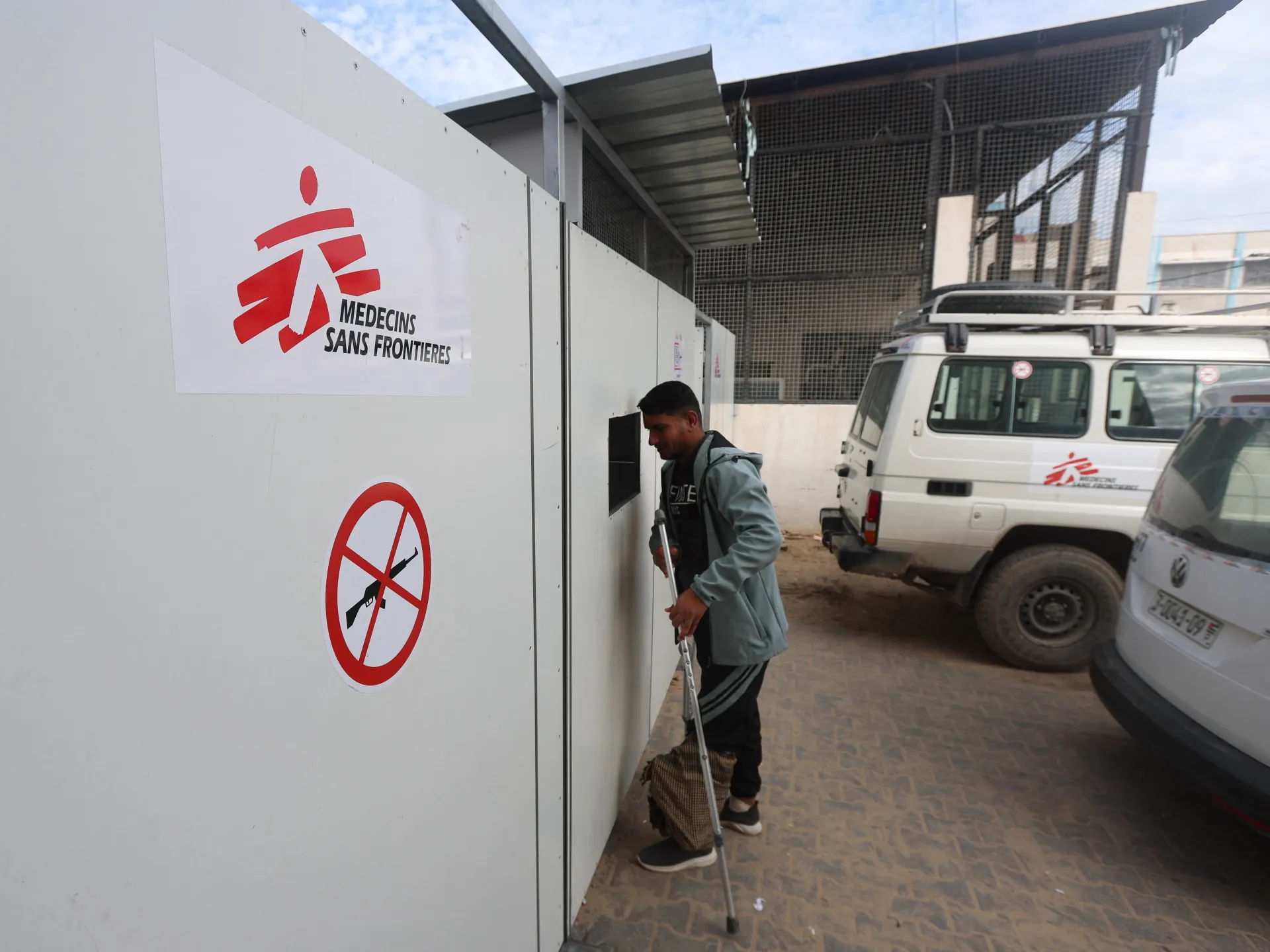
The medical charity Doctors Without Borders says it will provide Israeli authorities with the personal details of some of its Palestinian and international staff working in Gaza and the rest of the occupied Palestinian territory.
But critics warn Israel, whose army has killed more than 1,700 health workers – including 15 employees of the charity, also known by its French initials MSF – during the genocide in Gaza, could use the information to target more humanitarian workers in the besieged Strip and the occupied West Bank, including East Jerusalem.
Recommended Stories
list of 4 itemsend of list
MSF said it faced an “impossible choice” to either provide the information or be forced by Israel to suspend its operations.
On January 1, Israel withdrew the licences of 37 aid groups, including MSF, the Norwegian Refugee Council and International Rescue Committee and Oxfam, saying they failed to adhere to the new “security and transparency standards”.
The measure could exacerbate an already dire humanitarian situation for people in war-shattered Gaza, as they endure continued attacks.
Here’s what you need to know:
Why did Israel corner NGOs?
Last year, Israel said it would suspend aid groups that did not meet new requirements on sharing detailed information about their employees, funding and operations.
According to rules set out by Israel’s Ministry for Diaspora Affairs, the information to be handed over includes passports, CVs and names of family members, including children.
It said it would reject organisations it suspected of inciting racism, denying the state of Israel’s existence or the holocaust. It would also ban those it deems as supporting “an armed struggle by an enemy state or a terrorist organisation against the State of Israel”.
The measures were roundly condemned, given that Israel has weaponised aid throughout the genocide and falsely accused the United Nations humanitarian agencies of working with Hamas fighters and sympathisers.
Israel has also accused MSF – without providing evidence – of employing people who fought with Palestinian groups.
MSF said it would “never knowingly” employ people engaging in military activity.
Why did MSF agree to Israel’s demands?
MSF runs medical services in Gaza as well as the occupied West Bank, providing critical and emergency medical care, including surgical, trauma, and maternal care. It also helped run field hospitals in Gaza during two years of Israeli genocide.
In a statement on Saturday, MSF said following “unreasonable demands to hand over personal information about our staff”, it has informed Israeli authorities that, as an exceptional measure, “we are prepared to share a defined list of Palestinian and international staff names, subject to clear parameters with staff safety at its core”.
It said MSF’s Palestinian employees agreed with the decision after extensive discussions.
“We would share this information with the expectation that it will not negatively affect MSF staff or our medical humanitarian operations,” MSF said. “Since 1 January 2026, all arrivals of our international staff into Gaza have been denied and all our supplies have been blocked.”
How have observers reacted?
MSF’s decision was condemned by some doctors, activists and campaigners, saying it could endanger Palestinians.
A former MSF employee, who requested to remain anonymous, told Al Jazeera, “It is extremely concerning, from a duty of care perspective, from a data protection perspective, and from the perspective of the most foundational commitment to humanity, that MSF would make a decision like this.”
“Staff are extremely concerned for their wellbeing and futures. Other NGOs have been in uproar, since it further exposes their decision not to concede to Israel’s demands,” they said. “MSF faces profoundly difficult decisions – concede to the demands of a genocidal regime, or refuse and face complete expulsion and an abrupt end to all health activities in the coming weeks. But what is humanitarianism under genocide? There must be alternatives – alternatives that demand a much bolder and more disruptive approach to humanitarianism amid such brutal political decline.”
Ghassan Abu Sittah, a British surgeon who has volunteered in Gaza several times, said, “The moral bankruptcy lies in the implication that during a genocide, Palestinians are capable of making free consent. Their employees have as much choice as the Palestinians who knowingly went to their death at the feeding stations to feed their families.”
He added that the decision was “in clear contravention” of European Union data protection laws.
Hanna Kienzler, a professor of global health at King’s College London, said on X, “MSF, you have withdrawn your teams from war-affected settings before when you felt a mission’s integrity and/or safety were compromised. What makes you think Palestinian staff can be treated like cannon fodder so you can continue your mission in Gaza?”
Have other groups heeded Israel’s demands?
Israel says 23 organisations have agreed to the new registration rules. The others are understood to be weighing their decisions.
Al Jazeera contacted Oxfam and is awaiting a response.
Is aid being delivered to Gaza?
Gaza has been pulled back from the brink of famine, but needs far more aid to support the population amid continued Israeli attacks – more than 400 people have been killed since a fragile ceasefire came into place in October, large-scale displacement and a healthcare crisis.
Food shortages persist.
Israel said it would commit to allowing 600 aid trucks per day to enter the Strip, but in reality, only 200 or so are being let in, locals say.
At least five health centres in the Lubero territory of the North Kivu region were shut down following persistent attacks and civilian killings by the Ugandan Allied Democratic Forces (ADF) rebels in the Democratic Republic of Congo (DRC).
On the night of Jan. 21, the rebels killed five civilians, injured many others, and destroyed at least ten houses during an attack that took place in the Mavwe-Mavwe village.
Congolese officials revealed that the health centres recently shut down include Mausa, Pombi, Mandelya, Musenge, and the Masoya referral health facility, which was closed last week. The awful situation intensifies the dire humanitarian crisis in the region, which is heavily impacted by insecurity.
Some civil society organisations have expressed concerns over the authorities’ silence amid persistent insecurity, which has paralysed all socio-economic activities within the Baswagha chiefdom, leaving the people feeling completely abandoned.
“In view of the situation we are passing through, we think the nurses have very much helped the population. Already, members of armed groups and their wives receive medical treatment free of charge. The pressure on the Biambwe health centre has forced our nurses to close down our structure. That complicates the lives of the population, because all the health facilities have closed their doors in Mandelia, Pombi, Mausa, Masoya, and Musenge. They have locked themselves everywhere,” said Kambale Muthano, the leader of the Congolese New Civil Society.
Kambale noted that the civil society community has no issues with health agents. He said their main demand from the government is to guarantee the safety of the populations, including healthcare facilities, so that health professionals can work under suitable conditions.
Amid the ongoing crisis, however, health professionals have made an urgent appeal to military authorities to intervene and reactivate “Operation Shujaa”, a joint military effort between the Congolese army and the Uganda People’s Defence Forces (UPDF).
Since 2024, the Mwenye tribal group in the North Kivu region has been gripped by chronic instability marked by the massacre of civilians, massive displacement of populations, the closure of schools, and health facilities. A similar incident occurred in 2022 when eighteen healthcare facilities in Kamango were shut down due to repeated attacks by the Allied Democratic Forces (ADF) rebels, leaving civilians at risk.
At least five health centers in the Lubero territory of North Kivu, DRC, were shuttered due to attacks by the Ugandan Allied Democratic Forces (ADF), intensifying the region’s humanitarian crisis. The closures followed a violent attack on January 21, resulting in five civilian deaths and many injuries. Local civil society organizations criticized the government’s silence on the insecurity that has paralyzed socio-economic activities.
Kambale Muthano of the Congolese New Civil Society highlighted the community’s dependence on health professionals who offer free medical care but are now forced to close due to safety concerns. An urgent plea was made for military intervention to ensure safety under “Operation Shujaa,” a joint effort with the Ugandan forces. Since 2024, chronic instability, including prior incidents in 2022, has plagued the region, disrupting essential services.
Lebanese government says it documented 2,036 Israeli breaches of Lebanon’s sovereignty in the last three months of 2025.
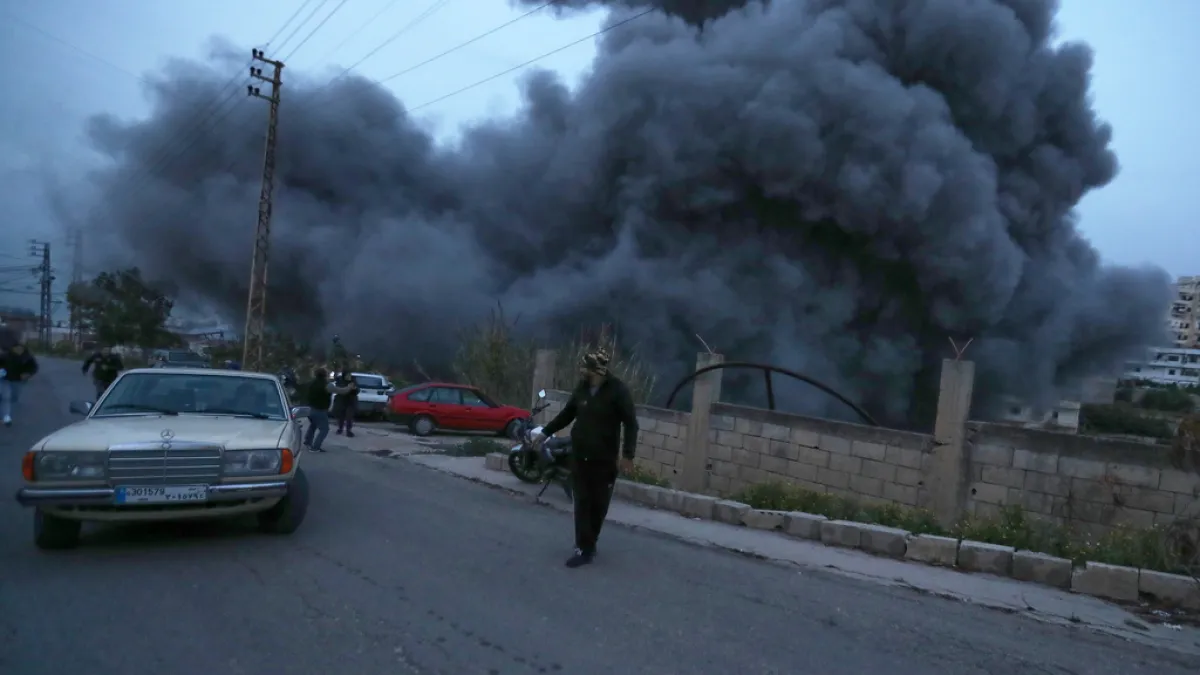
Lebanon has filed a complaint with the United Nations about repeated Israeli violations of a November 2024 ceasefire, calling on the Security Council to push Israel to end its attacks and fully withdraw from the country.
The Lebanese Ministry of Foreign Affairs and Emigrants said the complaint, sent on Monday, stressed that Israeli abuses are a “clear” violation of UN Security Council Resolution 1701, which ended a war between Israel and Hezbollah in 2006.
Recommended Stories
list of 3 itemsend of list
The ministry said it called on the 15-member body to compel Israel to “completely withdraw to beyond the internationally recognised borders”, end its repeated violations of Lebanon’s sovereignty and release Lebanese prisoners it is holding.
“The complaint included three tables detailing Israeli violations of Lebanese sovereignty on a daily basis during the months of October, November and December 2025. The number of these violations amounted to 542, 691 and 803 respectively, totaling 2,036 violations,” it added.
The complaint was made a day after Israel launched a wave of air strikes across Lebanon, killing at least two people.
Despite the 2024 ceasefire, the Israeli military has been launching near-daily attacks in Lebanon, which have killed hundreds of people. In November last year, the UN put the number of civilians killed in Israeli attacks at at least 127.
Israel also continues to occupy five points within Lebanese territory as it blocks the reconstruction of several border villages that it levelled to the ground, preventing tens of thousands of displaced people from returning to their homes.
Meanwhile, Israel is estimated to be holding more than a dozen Lebanese prisoners, including Hezbollah fighters and civilians who were taken from border villages in 2024. Israel has resisted calls to submit a list of the Lebanese citizens it is holding, leaving the fate of many missing people in southern Lebanon in limbo.
Israeli forces have also repeatedly opened fire at peacekeepers in the UN Interim Force in Lebanon (UNIFIL) in southern Lebanon.
The Foreign Ministry in Beirut said on Monday that “it called for pressure to be exerted on Israel to stop its attacks on UNIFIL, which continues to make the ultimate sacrifices to bring security and stability to the region.”
Lebanon has filed similar complaints to the UN in the past, but Israeli attacks have not relented.
On Monday, Israeli drones dropped two stun grenades in the southern village of Odaisseh, Lebanese news outlets reported.
Israel had severely weakened Hezbollah in an all-out war late in 2024, killing most of the group’s military and political leaders. Israel’s campaign has helped it establish a new balance of power and allowed it to launch regular assaults in Lebanon without a response.
Meanwhile, the Lebanese government has been pushing to disarm Hezbollah.
This month, Beirut said it had completed the removal of the group’s weapons south of the Litani River, 28km (17 miles) from the Israeli border.
Despite that announcement, Israeli air strikes have continued both south and north of the Litani.
Hezbollah has tacitly agreed to disarmament south of the Litani in accordance with UN Resolution 1701, but it has warned that it will not completely give up its weapons, arguing that they are necessary to stop Israel’s expansionism.
The next phase of the Lebanese government’s plan to remove Hezbollah’s weapons will target the region about 40km (25 miles) north of the Litani River to the Awali River.