

tip

Share a tip on a UK coast walk | Travel

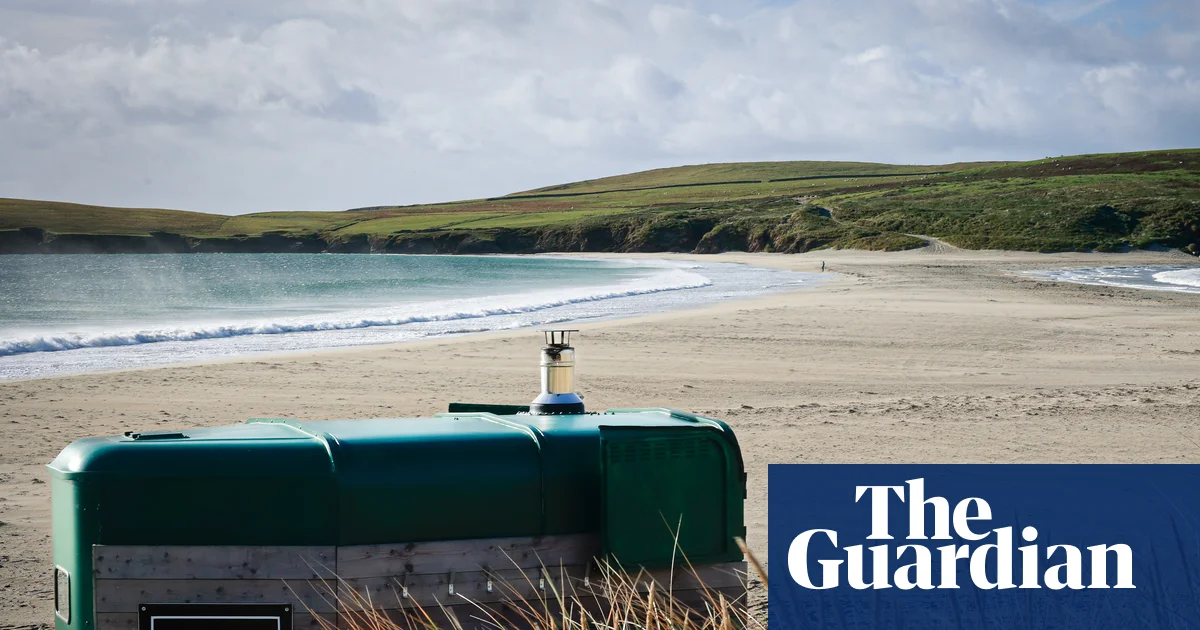
The King Charles III England Coast Path, which launches officially this year, is opening up miles of previously inaccessible coastal terrain to walkers in England. We’d love to hear about your favourite coastal walks all around the UK, from the White Cliffs of Dover to the Western Isles of Scotland.

The best tip of the week, chosen by Tom Hall of Lonely Planet wins a £200 voucher to stay at a Coolstays property – the company has more than 3,000 worldwide. The best tips will appear in the Guardian Travel section and website.

Keep your tip to about 100 words

If you have a relevant photo, do send it in – but it’s your words we will be judging for the competition.

We’re sorry, but for legal reasons you must be a UK resident to enter this competition.

The competition closes on Monday 18 May at 10am BST

Have a look at our past winners and other tips

Read the terms and conditions here

Share your tip

Share your travel tip using the form below.

Your responses, which can be anonymous, are secure as the form is encrypted and only the Guardian has access to your contributions. We will only use the data you provide us for the purpose of the feature and we will delete any personal data when we no longer require it for this purpose. For alternative ways to get in touch securely please see our tips guide.

If you’re having trouble using the form click here. Read terms of service here and privacy policy here.

Source link

Simple flight tip could get your suitcase off the baggage carousel first

It can be frustrating waiting for your suitcase to appear but one strategy could help you get your bags off the baggage carousel first

Airport security checks and baggage restrictions can turn holidays into a source of stress, and the anxiety only intensifies as you wait to see whether your suitcase has actually made it off the plane.

The dread of lost luggage hangs over many travellers right up until the moment they spot their bag on the carousel — and even then, there’s the worry that someone else might accidentally grab it. But there’s a straightforward trick that could see your suitcase come off the plane first, allowing you to get your holiday underway without unnecessary delays.

Guidance from Escape.com suggests checking in for your flight as late as you possibly can. The logic? Late check-ins mean your luggage gets loaded last, and in theory, should emerge first upon landing, according to Thomas Lo Sciuto, a ramp worker and gate agent at a regional US airport.

The airport worker explained: “Your best option is to be one of the last passengers to check your bags. This is because bags will always be loaded front to back on the bag carts.”

That said, bags aren’t solely loaded according to check-in times. Anyone who can’t stomach the idea of leaving check-in until the eleventh hour will be relieved to hear that weight is also a factor in certain circumstances, reports the Express.

SmarterTravel told HuffPost that US aviation giant Delta, which flies out of Terminal 3 at London Heathrow Airport (LHR), sorts luggage into large and small loads to ensure proper weight distribution across the aircraft. As passengers check in their luggage, it gets sorted into “cans” – large containers that hold multiple bags and can be transported as one unit.

SmarterTravel said: “In other words, how far back your bag ends up depends on the weight of the can and the needs of the plane, not when you check it.”

Aircraft with a single aisle typically “loose-load” bags one by one rather than bundling them into cans, as is the case with wider-bodied planes. When this happens, checked bags generally go into a holding area.

Luggage gets transported to the aircraft and loaded shortly before departure, meaning its chances of being loaded first hinge on when it was checked in.

If a bag was checked in early, it could end up at the rear of the storage space, meaning it would be last onto the plane and potentially first off.

Other tactics to ensure your bags come off the carousel first upon landing include marking them as “fragile”.

News.com.au suggests this clever trick often results in your luggage being loaded onto the aircraft last and therefore unloaded first, which can significantly reduce your wait at the carousel.

That said, when opting for “fragile” stickers, travellers ought to strip off any old tags from their bags to prevent mix-ups. To make luggage stand out, opting for vibrant colours, customised tags, or securely fastened ribbons could help your bags catch your eye more easily.

The most reliable way to get out of the airport as swiftly as possible is to travel with hand luggage alone. Make certain this meets your specific airline’s requirements to avoid being forced to check your cabin bag at the gate.

A personal item, sometimes referred to as a small bag, needs to fit beneath the seat directly in front of you and typically measures no larger than 40x30x20cm.

Cabin bags are stowed in the overhead locker and can generally weigh up to 10kg, with dimensions not exceeding 56x45x25cm.

Among UK carriers, British Airways typically provides the most generous complimentary hand luggage allowance on its basic tickets.

Travellers can bring one 23kg cabin bag (56x45x25cm) and one smaller personal item (up to 40x30x15cm) without charge.

Jet2 and Virgin Atlantic similarly permit a complimentary cabin bag (10kg, 56x45x25cm) alongside a personal item.

Source link

Share a tip on a favourite holiday in the UK | Travel

With everything going on in the world right now, more people are, unsurprisingly, choosing to holiday at home. And with great cities, amazing coastlines and glorious landscapes there’s a lot to choose from. We want to hear about your favourite holidays in the UK, whether it was an urban break, under-the-radar coastal resort or a long distance hike.

The best tip of the week, chosen by Tom Hall of Lonely Planet wins a £200 voucher to stay at a Coolstays property – the company has more than 3,000 worldwide. The best tips will appear in the Guardian Travel section and website.

Keep your tip to about 100 words

If you have a relevant photo, do send it in – but it’s your words we will be judging for the competition.

We’re sorry, but for legal reasons you must be a UK resident to enter this competition.

The competition closes on Monday 4 May at 10am BST

Have a look at our past winners and other tips

Read the terms and conditions here

Share your tip

Share your travel tip using the form below.

Your responses, which can be anonymous, are secure as the form is encrypted and only the Guardian has access to your contributions. We will only use the data you provide us for the purpose of the feature and we will delete any personal data when we no longer require it for this purpose. For alternative ways to get in touch securely please see our tips guide.

If you’re having trouble using the form click here. Read terms of service here and privacy policy here.

Source link

Share a tip on your favourite beach bar or restaurant in Europe, including the UK | Travel

What’s the one thing better than finding the perfect beach? Finding one with a perfect cafe, bar or restaurant, where even the simplest of meals is elevated by a sea view and a soundtrack of crashing waves. We’d love to hear about your favourite finds in the UK and Europe, whether it’s a laid-back chiringuito in Spain, a seafood shack on a UK beach or an archetypal Greek taverna.

The best tip of the week, chosen by Tom Hall of Lonely Planet, wins a £200 voucher to stay at a Coolstays property – the company has more than 3,000 worldwide. The best tips will appear in the Guardian Travel section and website.

Keep your tip to about 100 words

If you have a relevant photo, do send it in – but it’s your words we will be judging for the competition.

We’re sorry, but for legal reasons you must be a UK resident to enter this competition.

The competition closes on Monday 27 April at 10am BST

Have a look at our past winners and other tips

Read the terms and conditions here

Share your tip

Share your travel tip using the form below.

Your responses, which can be anonymous, are secure as the form is encrypted and only the Guardian has access to your contributions. We will only use the data you provide us for the purpose of the feature and we will delete any personal data when we no longer require it for this purpose. For alternative ways to get in touch securely please see our tips guide.

If you’re having trouble using the form click here. Read terms of service here and privacy policy here.

Source link

Martin Lewis shares ISA tip to ‘smooth out’ Iran war economic impact

He was asked if now is a good time to open an ISA or not

Martin Lewis has offered some advice on how you could organise your savings. He explained the practical tip amid the current uncertainty surrounding the economic impact of the Iran conflict.

The major war has already triggered a surge in oil prices, with fears of long-term consequences for food production and global economic growth.

Mr Lewis was questioned on his BBC podcast about whether now is an opportune moment to open a stocks and shares ISA, given that markets are struggling. When share prices fall, it can present a prime opportunity to invest, as your funds could increase in value when the market bounces back. But if prices decline further, the worth of your holdings could also drop. In response, Mr Lewis outlined the general principle to bear in mind.

He said: “If you’re talking about investing for a long term money that you don’t need for five years and you’re going to do that in a nice spread of investments, like a global tracker fund or an S&P tracker or FTSE tracker, then you just have to accept that you will never know when the perfect time to put money in is.”

£1,000 savings tactic

Nevertheless, he did reveal one strategy you could use to reduce the risk posed by market volatility. Mr Lewis said: “Let’s just imagine you’re putting £10,000 in a stocks and shares ISA, and you’re putting it away for a long time.

“You could put £10,000 in now but you could arrange with the provider that it sits in its cash part. You can hold it in cash, within a stocks and shares ISA, for the moment.

“You could say I’ve got £10,000, over the next 10 months, I’d like you to buy £1,000 a month of that tracker fund that I’m putting my investment into. It’s called pound-cost averaging.

“Because you’re drip feeding the money in, that helps smooth out the short-term volatility of buying at the right moment. So if you’re worried about that volatility, you might want to adopt that tactic.”

Mr Lewis continued in saying that in reality nobody can predict the optimal time to invest. He said: “They are unknowable in the short term, but in a broad spread of investment over the long term, on the balance of probabilities, investing will outperform saving.

“So don’t let the volatility put you off, but you might want to spread the time that you’re putting the money in.”

Major changes to ISA allowances

Savers may also want to note that major changes to ISA allowances are on the horizon. Currently, you can deposit up to £20,000 each tax year, which can be divided as you wish between cash ISAs and stocks and shares ISAs.

From April 2027, you will only be permitted to save up to £12,000 as you choose. The remaining £8,000 will only be available for deposits into investment-based accounts.

Savers aged 65 and over will be exempt from the new regulations, retaining the existing £20,000 allowance. ISAs are entirely tax-free, with no tax liability on any interest earnings or investment gains within these accounts.

Source link