














It was once owned by William the Conqueror and is one of the few privately owned villages left in the UK.

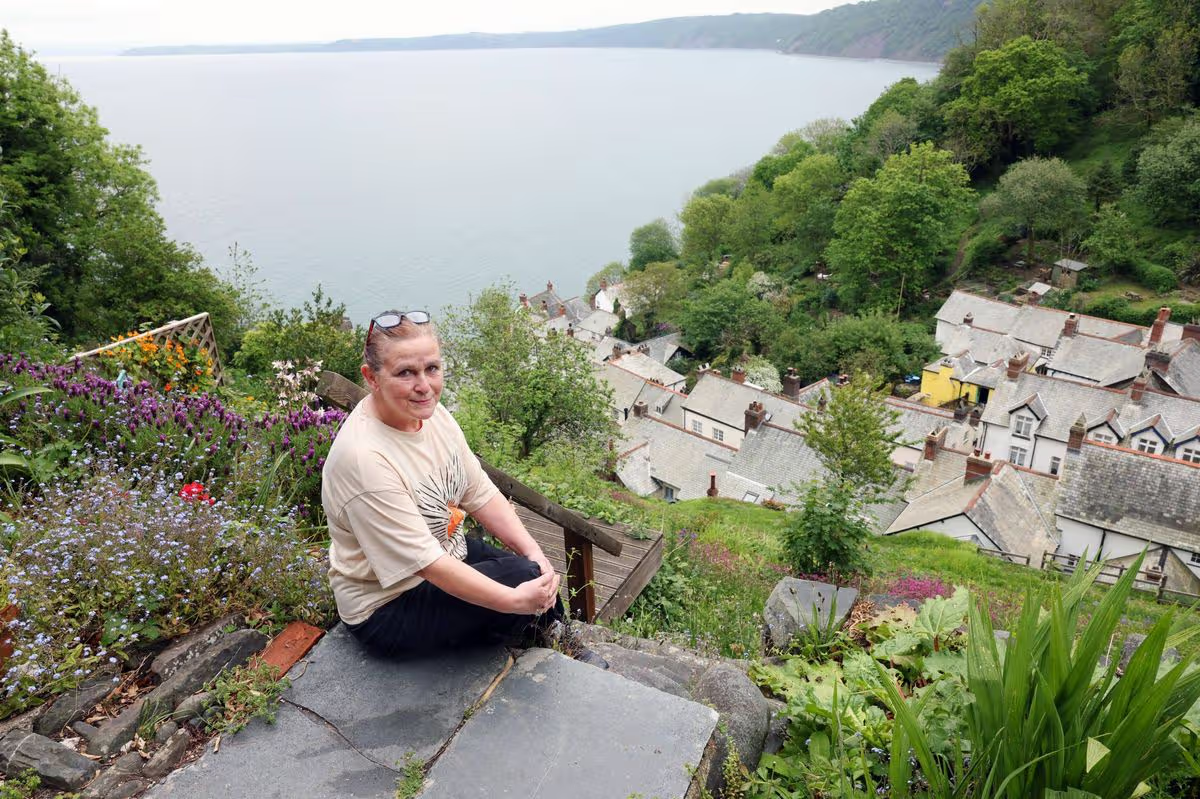
‘It’s like time has stood still, like going back to 1950s Britain’ says village resident Cassandra McFarlane, who has stunning sea views from her cottage(Image: Jonathan Buckmaster)
The honourable John Rous has a proud smile on his face as he tells me: “The village is built on a 400ft cliff overlooking a gorgeous bay with a living community, there’s nothing else like it.”
Mr Rous inherited the privately owned village of Clovelly on the North Devon coast from his mother, Countess Mary Rous, in 1983 and has since continued to develop and preserve what is one of the UK’s most unique destinations. Clovelly was recorded in the Domesday Book in the 11th century as the property of William the Conqueror. The estate was later inherited by his wife, Matilda of Flanders, England’s first crowned queen, before being purchased in 1738 by the Hamlyn family for £9,438.
Today, Clovelly remains one of the few privately owned villages in the UK and is now owned by the Hamlyns’ descendants, the Rous family. It continues to function as a thriving community, with around 250 residents living in 80 cottages throughout the car-free village, while also being a popular tourist destination that welcomes around 150,000 visitors each year.
When you arrive in Clovelly, you must pass through a visitor centre, where admission costs £10.90 for adults and £6.25 for children aged seven to 16. After taking over the estate in 1983, Mr Rous explains how there was a backlog of repair work that needed to be done. In order to pay for the work and maintain the upkeep of the village, he decided to create a visitor centre where all of the money raised would be redistributed into the village.
“We put together a plan to create the visitor centre and the money created there helps the maintenance of the whole village which is great,” Mr Rous, 75, said. “Fortunately, it all worked out financially and we’re still here today.”
After passing through the visitor centre, visitors can stroll down The Hobby Drive before reaching the cobbled High Street which leads down to Clovelly’s harbour 120m below. Cassandra McFarlane moved to the village from South East London in 2021 and now lives at the top of the High Street in a cottage she describes as “the best in the village”.
“I’ve been here around five years now and absolutely love it,” she says. “It’s like time has stood still in Clovelly, it’s like going back to 1950s Britain. Everyone talks to you, everyone’s polite, you don’t get anti-social behaviour. It’s just a blissful place to live. It’s so peaceful.”
She adds: “It’s very, very safe here. There’s no cars or noise and you have these amazing views. It’s beautiful. You go to sleep at night and hear the owls hooting and you wake up to birdsong or the village woodpecker. It’s just an idyllic place to live and visit.”
While Mr Rous has focussed on developing a tight-knit living community, he also understands the importance of tourism to keep Clovelly intact. The village attracts up to 150,000 people every year, with the majority of them visiting for just a day.
Ms Mcfarlane says: “People sometimes ask me if I get fed up with the tourists and I say: ‘Don’t bite the hand that feeds you’. We’re very lucky they still want to come and see the village because all of the money they spend to get in here is reinvested in the cottages.
“But also, I meet such lovely people who visit. Most people come here for a day and arrive at 10am and are gone by 4pm. Then it’s back to just the 250 of us.”
Mr Rous adds: “We’re quite fortunate to have a number of day visitors. They arrive after 10am, enjoy the village, and then are mostly gone by 5pm. The village then returns to its sleepy self. We do have people staying in the hotels obviously but they always appreciate and respect the village.”
As well as boosting tourism numbers, the decision to charge an entrance fee to Clovelly, rather than a car park charge, has allowed for a renovation of the historic cottages. Some of the properties date back to the 15th century and require regular maintenance throughout the wetter and windier months.
The regular income has also allowed Clovelly to maintain its policy of having no second homes or absentee landlords. Mr Rous, who lives on the estate which also includes 700 acres of woodland, three large farms and a sawmill, acts as the landlord for every cottage in the village and maintains a close relationship with the tenants.
“I say to people that if you love a traffic-free area or have always wanted to live by the sea, but you can stand visitors, Clovelly will be perfect for you,” Mr Rous explains. “We advertise for the properties but do like to speak with more than one applicant to see who fits the village best.
“We have some families that have been here for generations but also have new ones coming in which is great. The older people give stability to the village while the youngsters give it vitality. It’s the best of both.”
Another feature that makes Clovelly a truly unique village is its use of sledges, which largely replaced donkeys by the 1970s, to transport groceries, laundry and furniture up and down the 400ft cobbled high street. While the sledges might seem like a gimmick to visitors, they perfectly represent how the community has adapted to modern times while preserving its 1,000-year-old past.
“Everyone has their own sledge and they go past every day. I’ve even seen someone take a grand piano down the hill! It’s truly unique,” Ms McFarlane explains.
As there are no chain supermarkets in the village, locals order their groceries to be delivered. When the delivery drivers see “Clovelly” on the address, they give the customers a 15-minute warning so they have time to head to the top of the High Street with their sledge.
Ian Roberts, the manager of The New Inn located half-way down the High Street, is one of 70 staff who are employed to work on the estate throughout the year.
“The New Inn is around 500 years old and remains steeped in history. We [the village] have been here since the days of William the Conqueror and try to keep some of that history,” the 62-year-old says. “There’s so much history in Clovelly, it’s a very unique place. Visiting here is a great opportunity for people to see real history.”
The New Inn has also benefitted from a sympathetic restoration in recent years, preserving its character and enduring charm. The hotel once hosted Charles Dickens who wrote of the cobbled streets and cliffs in “A Message to the Sea”.
Likewise, Charles Kingsley, the 19th-century novelist and poet, lived in the village as a child. After his wife visited Clovelly for the first time in 1854, he wrote: “Now that you have seen the dear old Paradise you know what was the inspiration of my life before I met you.”
“It really is unique here. Places like this are very difficult to find in the UK now,” Mr Roberts, who manages The New Inn with his wife Theresa, adds. “It’s well worth a visit and the views alone are stunning – it’s Instagramable!
“People come here to eat, sleep, rest, relax and enjoy themselves. They come here to get away from the real world and refresh themselves.”
According to the hotel manager, Clovelly can become flooded with visitors over the warmer summer months, including coach loads of day-trippers from across the UK. Two of those tourists are David, who has visited Clovelly once before, and Margaret Herbertson, who is visiting for the first time.
“We didn’t know much about Clovelly before we got here,” Margaret, 75, says. “We obviously Googled it, and did a bit of research, and it looked amazing so we thought we’d come for a visit.”
While standing at the top of the High Street, overlooking the historic 14th-century harbour, David, 78, adds: “Yes, we’ve read about the donkeys going up and down with sledges to transport items. I found that interesting. It’s just a beautiful and peaceful place. I’ve been here once before when I was younger and it doesn’t look like it’s changed much.
“Where we’re stood now overlooking the sea it’s amazing. I don’t think there are many places like it around.” Margaret adds: “It’s unique, isn’t it? What I love is how quiet it is. There’s no cars and no rush.”
While Clovelly is a tranquil fishing village with just 250 inhabitants, there is still plenty to do for visitors. As well as soaking up the sweeping coastal views out the Atlantic, visitors have access to the South West Coast Path, which includes a hike to Mouth Mill Beach.
Ms McFarlane adds: “There’s also loads to do here which people don’t always realise. You can take the ambience in, you can go for walks in the area, we’ve got a museum, we’ve got a few nice little shops, the beautiful harbour, blissful gardens.”
The Clovelly Court Gardens, located at the top of the village, are a perfect spot to relax while visitors can also learn about local history at the Fisherman’s Cottage and the Kingsley Museum and Shop. The village is also the proud host of a number of festivals every year, including the Seaweed Festival in May, the Maritime Festival in July, the Lobster and Crab Feast in August and the Herring Festival in November.
“Around 120 years ago, Clovelly was just a fishing village with a lot of fishing a little bit of tourism. Now, it’s a little bit of fishing, which I’m keen to preserve through a number of festivals like the Lobster and Crab Festival, and a lot of tourism,” Mr Rous adds.
“We’ve maintained a living community while avoiding becoming a seaside village full of holiday lets. It’s such a welcoming place and the people are so proud to be associated with the village.”