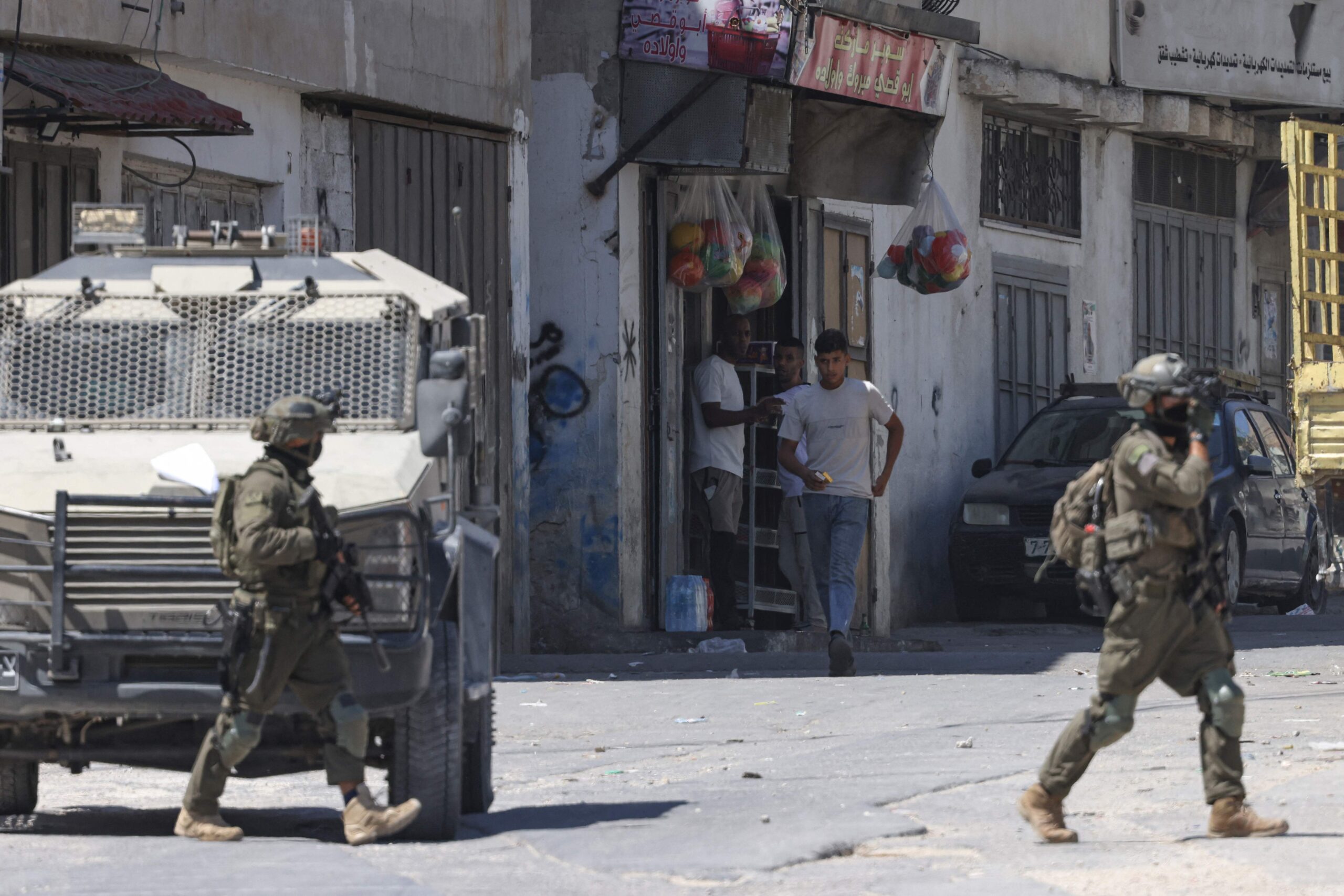
COPS have threatened to force arrested criminals to listen to Taylor Swift’s new release on loop.
Greensboro Police in North Carolina, US, jokingly swiped at the superstar’s album after it received mixed reviews.
Cops threatened to force arrested criminals to listen to Taylor Swift’s new release on loopCredit: FilmMagicTaylor re-released her Life of a Showgirl album with four new songs last weekCredit: AP
They posted: “Those who are arrested tonight will be required to listen to Taylor Swift’s new songs on repeat.”
But following a huge online backlash, the force later wrote: “We apologise for stirring up the Taylor bots.
Cruel Summer singer Swift, 36, re-released her Life of a Showgirl album with four new songs last week, adding “The Encore” to the title.
But critics were not impressed.
Music magazine Pitchfork rated it 4/10, saying: “Taylor Swift has let the quality of her songwriting slide in favour of commercial domination.”
Critic Shaad D’Souza added: “Yes, Taylor Swift will always have one of the greatest songwriting catalogues of all time.
“Not even Taylor Swift could take that away from her — but she sure is trying.”
The album came out in 2025 as the first release since the end of her record-breaking Eras Tour, but failed to win acclaim.
Swift previously said she did not intend to add new tracks, but later admitted she went on a trip with her collaborators and “did what we do when we feel anything: we wrote more songs”.
Solar stocks fell sharply on Thursday, led by First Solar’s (FSLR) 10.3% plunge to a new 52-week low, as high borrowing costs add pressure to an industry that depends heavily on project financing.
Losses among solar stocks were broad, including Enphase
We’re living under a dark cloud, with a steady downpour of graft, thuggery and baloney.
There’s the raffling of presidential pardons and the attacks on reporters for doing their jobs, the clownish trade war with Canada, the bungled disaster in Iran, the petty obsessions with the ballroom and the Kennedy Center, the hogwash about a stolen election, the attacks on immigrants and the shameless presidential profiteering while working people suffer the cost of Trump’s countless broken promises.
I could go on, and I will. But rest assured, I have not forgotten about the boost I promised.
For all the affronts, nothing strikes me as more sinister than the Trump administration’s ambitious assault on the planet. Despite nearly daily headlines about the global calamity of overheated oceans, melting glaciers, stark weather transformations and species extinction, Trump keeps shoveling more coal onto a fire that will rage long after he’s dead and gone.
He’s gutted environmental protections and scientific research and dismantled clean energy initiatives. Now his administration is rolling back limits on power plant emissions, attempting to open the California coast to more oil drilling and sabotaging the state’s ambitious goals on emission controls and electric vehicle conversion.
We don’t need AI to threaten the future of humanity. We’ve got Trump.
It’s tempting to duck under the covers and wait for the nightmare to end, but the good news is that a lot of people are standing up rather than rolling over, rebelling against the ignorance and callous disregard that threatens our most precious and fragile shared inheritance.
In August, hundreds showed up to defend California’s authority to govern its own coast at a Santa Monica hearing of the National Oceanic and Atmospheric Agency, and 18,000 more people filed comments online.
The rollback of environmental safeguards is, for many, a call to arms.
“Yes, I am discouraged. … But I am not despairing,” said Bill McKibben, an author and environmental activist who is organizing a worldwide event called Sun Day for next year to promote clean energy. “We’re reacting to multiple crises, and we’re led by a pack of fools, so why would anybody not stand up?”
McKibben launched a national movement five years ago called Third Act, and tens of thousands of people 60 and older have signed on to advocate for climate action, voting rights and civic participation. Third Act now operates in about 30 states, with a robust chapter in Southern California.
Former Times reporter Zan Dubin has worked as both a volunteer and a paid communications consultant for Third Act, and I asked her what someone could expect to do if they became a member of Third Act/SoCal.
Environmentalist and author Bill McKibben is organizing a worldwide event called Sun Day next year to promote clean energy.
(Amanda Swinhart / Associated Press)
“We do it all,” Dubin said, from promoting climate-friendly candidates to running phone banks and testifying at public meetings. She said Third Act co-sponsors protests at Dodger Stadium, and she and others planned to meet at Vin Scully Avenue and Stadium Way for Sunday’s game against the San Francisco Giants. They want the Dodgers to stop doing business with Big Oil and bench their sponsorship deal with Phillips 66.
She also called out Disneyland for its exhaust-spewing Autopia attraction, along with former Times climate columnist Sammy Roth, and Disneyland responded by announcing in 2024 that it was switching to electric cars beginning in 2027.
Dubin, co-founder of National Drive Electric Week, said 170 volunteer-led events were being held nationwide over the next month to promote EVs, and she was leading one Friday in Irvine.
“Action is absolutely the antidote to despair,” Dubin said. “I find that despite the onslaught of these horrifying headlines … taking action invigorates me.”
Claremont resident Margaret Davis knows that feeling. She emailed me in 2023, prior to participating in a Third Act event, and said many retirees have time on their hands, which puts them in a powerful position.
“The climate crisis is the greatest existential threat humans have ever faced, hence we live in a time when we can make the greatest change for the better,” Davis wrote at the time.
When I called her a few days ago, Davis told me she’s now a member of Senior Stewards Acting for the Environment. She lives at Pilgrim Place — a senior community with a focus on justice, peace and environment — where residents meet regularly to study, discuss and advocate for sustainability, biodiversity and environmental causes.
“When I was in college in 1970, we had the antiwar movement and that was the first year of Earth Day,” Davis said. “At the time, I thought Earth Day was just a distraction from what was going on in the world.”
Later, she said, “I came to realize it was the biggest issue of all time.”
Climate activist Sim Bilal stands next to pumps at an oil field in Los Angeles in 2024.
(Allen J. Schaben/Los Angeles Times)
Like Davis, I went to college in the ‘70s, and there’s no denying that our aggressively consumptive generation played a key role in manufacturing a crisis for our children and grandchildren. We’ve got matches in our hands and smoke on the horizon, and if we’re honest with ourselves, we’d see atonement not as a hobby, but as a duty.
As for the next generation, climate activist Sim Bilal, 24, said he too shares the sense that this is both a wickedly frightening time and a moment of opportunity.
“In the last month, we’ve gotten more young people involved,” said Bilal, executive director of Youth Climate Stewards 4 Local Action. “We usually have to reach out to them, but so many people have been wanting to get involved, and they’re so eager, and that’s been affirming for me. The policies are depressing, but the fact that people are reenergized and want to fight back is really exciting.”
Bilal said faith in politics, government and corporations is not high among his peers, but he’s trying to grow a network of young people to cultivate and support future leaders.
“A mentor told me there are two kinds of power — organized people, and organized money,” said Bilal, whose activism began when his grandmother died and he began wondering if her cancer, and global warming, were connected to the oil drilling in his South L.A. neighborhood. “We don’t have the money, but a lot of the work we do is political and civic education, demystifying power, and making people understand they have agency.”
Saudi Arabia has intensified air strikes against Houthi positions in Yemen as the Iran backed group expands its territorial gains along the Red Sea coast, opening a new front in the wider Middle East war and adding pressure to already disrupted global energy supplies.
The Houthis have swept through several Yemeni towns and seized islands near the Bab el Mandeb Strait, a strategically important maritime route connecting the Red Sea with the Gulf of Aden. The group has also released footage showing its fighters capturing armoured vehicles from Saudi backed forces.
Houthi military spokesman Yahya Saree claimed that the group had shot down a Saudi F 15 fighter jet and said Saudi Arabia had conducted as many as 450 air strikes in Yemen during the week. Saudi authorities have not confirmed the aircraft claim, while officials supporting the internationally recognised Yemeni government have acknowledged that Saudi and allied forces are carrying out strikes against Houthi positions.
Saudi Arabia faces growing security pressure
The escalation has brought the conflict closer to Saudi territory. The Houthis have repeatedly launched attacks toward Saudi Arabia over the past week, prompting alarms in cities across the kingdom’s south and west.
Stay ahead of the geopolitical week.
MD Briefing delivers expert analysis across five global fronts — the Indo-Pacific, energy, geoeconomics, European security, and the Middle East — every Monday morning. Free.
Saudi Arabia said its air defenses intercepted a Houthi drone south of Mecca before it entered restricted airspace over the holy city. Riyadh described the incident as a serious escalation because of the threat to religious sites. The Houthis denied targeting Mecca and accused Saudi Arabia of using the incident for propaganda.
The United States has also tightened its travel warning for Saudi Arabia, barring government employees from travelling within 20 miles of the Yemen border.
The latest escalation marks a sharp deterioration after several years in which the Saudi led conflict in Yemen had largely quietened under a ceasefire. The Houthis declared a naval blockade against Saudi Arabia in July and resumed attacks on areas in the kingdom before making rapid gains against forces aligned with the Saudi backed Yemeni government.
Energy markets face another shock
The renewed fighting is particularly significant because global energy markets are already under pressure from disruptions caused by the wider war involving Iran.
An attack blamed on Iran aligned fighters in Iraq last week knocked out Saudi Arabia’s East West Pipeline, an important route that allows the kingdom to move oil without relying entirely on the Strait of Hormuz.
Traders estimate that a prolonged closure of the pipeline could affect as much as 4% of global oil supply. Saudi Arabia has not given a timetable for restoring operations, although U.S. Energy Secretary Chris Wright said oil should begin flowing through the pipeline within days.
Brent crude was trading around $108 a barrel on Wednesday, close to its highest level since May. The average U.S. retail diesel price also reached a record above $6.30 a gallon.
The simultaneous disruption around the Strait of Hormuz and Saudi Arabia’s alternative export infrastructure increases the vulnerability of global energy markets to further regional escalation.
Washington faces another difficult choice
The developments also create a new challenge for the United States.
Saudi Crown Prince Mohammed bin Salman spoke with President Donald Trump last week seeking additional military support. So far, U.S. assistance has been limited to intelligence support.
The United States previously conducted a two month bombing campaign against the Houthis in 2025 before Trump announced a ceasefire with the group.
Washington now faces competing pressures. Greater support for Saudi Arabia could help contain the Houthi advance and protect regional energy infrastructure, but deeper military involvement could also expand the U.S. role in another theatre of the Middle East war.
What’s next
The immediate concern is whether the Houthi advance can be contained before the fighting causes further disruption to Saudi energy infrastructure and shipping routes.
For Saudi Arabia, the challenge is to push back against the Houthis while preventing the conflict from developing into a broader regional confrontation.
For global markets, the key issue will be whether disruptions to Saudi oil infrastructure remain temporary. Continued attacks on energy facilities or shipping routes could place additional pressure on already strained supplies.
The developments in Yemen therefore carry consequences well beyond the country’s existing conflict. The combination of Houthi territorial gains, pressure on Saudi Arabia and disruption to major energy routes has created another potential source of instability for the global oil market.
On Tuesday morning, 12-year-old Sundus al-Hamamdeh left her home in the Masafer Yatta village of Khirbet al-Fakhit, and went to school.
It was the third day of the new school year in the occupied West Bank.
Recommended Stories
list of 3 itemsend of list
But when the sixth-grade student at al-Fakhit Secondary School returned from her classes, the house she had left behind was gone.
Israeli forces had carried out a large-scale demolition operation in Khirbet al-Fakhit, destroying homes, livestock shelters, water infrastructure, and solar-power installations.
For al-Hamamdeh, her house was more than four walls and a roof. It was her safe space, the place she came back to every day.
For children in Masafer Yatta, south of Hebron in the occupied West Bank, the spectre of demolition is always present.
Much of Masafer Yatta lies in Area C of the West Bank, where Israel has control over planning and construction. Israeli authorities justifies the demolition orders by saying that the structures were built without permits; Palestinians, backed by the United Nations, note that such permits are nearly impossible for them to obtain.
And it’s not just their homes that are under threat, but their schools.
On August 4, Israeli forces surrounded Shaab al-Butum school, according to Bassam Jabr, the director-general of education in Masafer Yatta.
An Israeli military bulldozer then demolished two rooms used by teachers and administrators, and a storage room.
The UN independently documented the demolition of the rooms, saying Israeli authorities had cited the lack of an Israeli-issued building permit.
Things could still get worse; the main school building remains under a demolition order.
Focus of attacks
Established in 2015, the school serves about 60 students from kindergarten through 11th grade. Its remote location makes transferring students to other schools particularly difficult, Jabr said.
Education officials have appealed to Israeli courts, and called on the United Nations and foreign governments to intervene.
But the schools remain under threat. Even as the Israeli military and settlers’ pogroms against Palestinians continue across the West Bank, Masafer Yatta is especially targeted.
The remote communities there have little ability to defend themselves and conditions are harsh. In addition, the Israeli military has designated large parts of the area a military firing zone, another justification for forcing out the Palestinian population.
Masafer Yatta’s schools are a central part of the effort to keep Palestinians here – ensuring that families do not have to travel far for their children to be educated. Palestinians argue that is why the schools have been particularly targeted.
Intisar Omar Abu Sabha, an administrative director at the Masafer Yatta Directorate of Education, says schools in the communities of Zif, ar-Rifaiyah, Umm Qussa, Umm al-Kheir, Jinba, Shaab al-Butum, Khirbet al-Daba, and al-Majaz are among those facing demolition orders.
In addition to the threats to their schools, students and teachers also have to navigate road closures, checkpoints, and the presence of settlers to reach their classrooms.
Abu Sabha said schools have also faced damage and settler incursions or harassment in and around their grounds. She describes a cycle in which children risk losing both their homes and their schools.
“Imagine a student who is at school, then returns home and finds their home demolished … and comes back the next day to find their school demolished,” she said.
Yasmeen Sallaq, a Palestinian lawyer, says the threat to the Masafer Yatta schools directly undermines children’s right to education.
But Sallaq says that Israeli restrictions on movement, military raids, arrests, displacement, and attacks affecting students and education workers make that right increasingly difficult to exercise.
“We face the demolition of schools every day, making the continuation of the educational process almost impossible,” Sallaq said.
It first received a demolition notice in 2016. Years of legal proceedings followed, but an appeal against demolition was dismissed this year, with efforts continuing to obtain an interim injunction.
The uncertainty has already taken a toll. Some girls are experiencing fear and anxiety, while others have transferred to different schools, al-Salameen said.
“The school is not just a place for education,” she said. “This school is the students’ only outlet.”
She fears the school’s demolition could push some girls out of education altogether if alternative schools are too far away or require them to travel along unsafe roads.
At Zif, 10th-grade student Rabiha Yousef Jibril described the school’s importance.
“I am growing up in this school, and my dreams are growing with me day by day,” Jibril said, adding that while students fear its demolition, they insist they will continue to attend.
“Even if they demolish the school, we will continue to study, even under the trees,” she said. “Even if they confiscate the books, we will keep them in our hearts, as well as our minds.”
The war in Yemen is threatening to open a new front as the Iran-allied Houthi rebels are trying to advance along the Red Sea coast, through the mountain chains of Taiz province, edging closer to strategic ground that overlooks one of the world’s most vital maritime arteries.
For the internationally recognised Yemeni government, this is an offensive with global consequences.
Recommended Stories
list of 3 itemsend of list
In Wednesday’s interview with Al Jazeera, Yemen’s Ambassador to Qatar, Rajeh Badi, a former government spokesman, said that his government and its armed forces had not violated any truce since 2021.
The Houthis, he argued, are “the aggressors”. “What we are seeing now is a surprise Houthi offensive to seize strategic ground along the Red Sea, in order to allow Iran, through its Houthi proxy, to tighten its grip on maritime routes,” Badi said.
He added that the Houthis, who have advanced on al-Makha (Mocha) and al-Waziyah, and over large stretches of the mountain chain overlooking the Red Sea in Taiz province, “want commanding positions to launch more effective strikes on ships and disrupt navigation in the Red Sea”.
Badi said the Yemeni government responded by opening fronts in al-Jawf, Marib and al-Bayda, and that the consequences could extend far beyond Yemen.
[Al Jazeera]
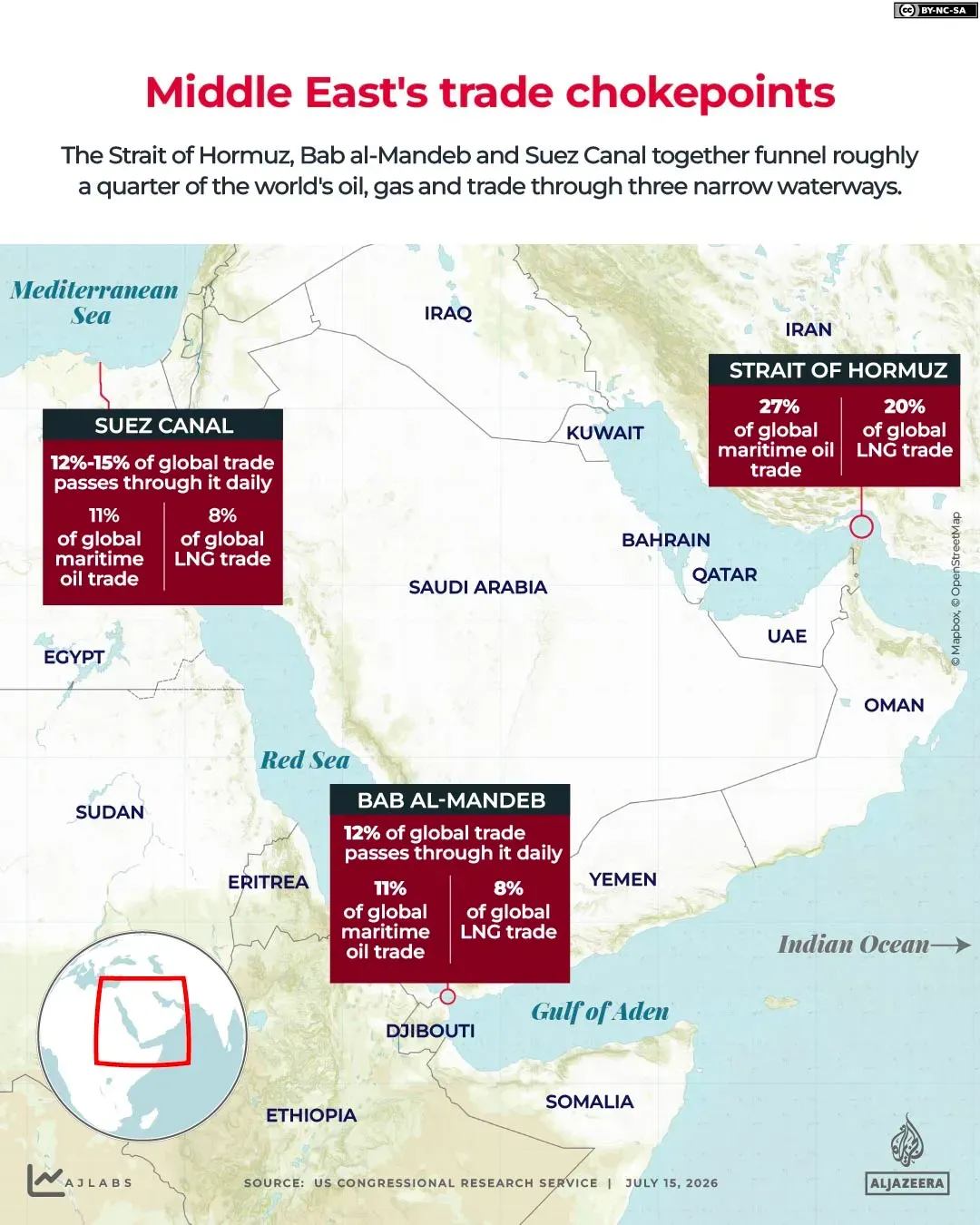
“We are now facing a real threat that does not stop at Yemen’s borders,” he said. “It threatens the entire region and the world. If the Houthis manage to choke maritime traffic in the Red Sea, we will be looking at another Hormuz in these waters – with potentially even greater impact.”
The Red Sea and Bab al-Mandeb “represent a vital artery for global shipping, for both energy and food supplies”, he added.
A chokepoint that belongs to the world
Bab al-Mandeb connects the Red Sea to the Gulf of Aden. To the north, the Red Sea leads to the Suez Canal, while farther east, beyond the Arabian Sea, lies another critical chokepoint, the Strait of Hormuz. This geography is what gives Yemen’s conflict consequences far beyond its borders, as Saudi Arabia is already being drawn into the confrontation.
The Houthis have targeted Saudi territory, civilian infrastructure in the kingdom’s south and Saudi-linked vessels in the Red Sea.
Major-General Turki al-Maliki, spokesman of the Saudi-led coalition in Yemen, said the Houthis on Wednesday attacked Saudi cities of Khamis Mushait, Abha, and Jizan with ballistic missiles and drones. He did not elaborate on any casualties as a result of the attacks.
Badi, who has spoken to the media for the first time since taking up his post, said those attacks are designed to change the nature of the war.
“By targeting Saudi territory, civilian infrastructure in the kingdom’s south, and Saudi-linked vessels in the Red Sea, the Houthis are trying to drag Saudi Arabia into their war. Their calculation is simple: they want to rebrand this conflict as a Saudi-Yemeni war,” he said.
The ambassador assessed that “every time their militias suffer heavy losses inside Yemen at the hands of the Yemeni armed forces, they respond by firing missiles and drones at civilian sites in Saudi Arabia, in an attempt to inflame Yemeni public opinion and convince the outside world that Yemen is at war with Saudi Arabia”.
The conflict, he said, is fundamentally about Yemen’s state and its future. The Yemeni people are fighting to “reclaim their state, their republic, their dignity and their stability”.
Footage released by Houthi media claims to show attacks on Saudi-coalition forces on the front lines in al-Jawf province on September 9, 2026 [AFP]
Iran’s hidden hand
Behind Yemen’s fragmented front lines, a larger regional confrontation looms, and its architect, according to Badi, is Iran.
The official said that Tehran’s relationship with the Houthis is now impossible to hide. “Iranian officials openly boast about it, and Houthi leaders proudly talk about their ‘strategic’ ties with Tehran,” he said.
The Houthis are “one of Iran’s key regional arms – just like Hezbollah in Lebanon or the Popular Mobilisation Forces (PMF) in Iraq. Many of Tehran’s other proxies have come under pressure,” he added.
“Former Yemeni President Abd-Rabbu Mansour Hadi used to say that if Iran gains control over Bab al-Mandeb and the Strait of Hormuz, it will not need a nuclear weapon – its grip over these two chokepoints would be more powerful than any nuclear arsenal. Events have proved him right,” Badi recalled.
‘We have exhausted all peaceful avenues’
For Yemen’s government, the alternative to another war was supposed to be diplomacy.
Badi urged the world “to stand with us so we can rid ourselves of this scourge – a threat that no longer targets Yemenis alone”.
“We have exhausted all peaceful avenues. For more than 13 years, we have been engaging in dialogue rounds and signing agreements, whether inside Yemen or after the Houthis seized the capital, Sanaa,” he said.
Badi added that the Houthi rebels have effectively “buried peaceful options. Peace is simply not part of this movement’s culture or mindset. That is what ultimately forced us to take up arms”.
“The world must understand this difficult equation,” the ambassador concluded, that the Houthis are “an armed proxy, an extension of the Iranian Revolutionary Guard Corps. The Houthis do not represent us”.
RIYADH: Eight Islamic and Arab countries on Sunday condemned Israeli plans for the removal of Palestinians from the Gaza Strip saying the designs, voiced by ministers, jeopardise a US-backed peace in the territory.
Israeli Defence Minister Israel Katz said Wednesday the government had plans to remove Palestinians from Gaza but was waiting for US approval on where to displace the territory’s population.
A day later, Israel’s National Security Minister Itamar Ben Gvir said the plan aimed to remove 250,000 Palestinians from Gaza in the first year, followed by the rest of the roughly two million residents over the following six years.
The foreign ministers of Saudi Arabia, Egypt, Jordan, the United Arab Emirates, Qatar, Pakistan, Indonesia and Turkey said they condemned in “the strongest terms” the “plans and mechanisms they proposed aimed at forcibly expelling Palestinians from their land”.
“Such measures directly challenge international efforts to achieve peace, particularly President Donald Trump’s comprehensive plan to end the conflict in Gaza, which includes a firm rejection of forced displacement,” they added referring to a US-backed, October 2025 peace plan for Gaza.
On Saturday the US ambassador to Israel Mike Huckabee, a staunch supporter of Israel and Israeli settlers in the occupied West Bank, denied there was an Israeli plan to force Palestinians out of Gaza.








![[Al Jazeera]](https://i0.wp.com/www.aljazeera.com/wp-content/uploads/2026/07/interactive-Straight-Of-Hormuz-ships-July-15-2026_COPYEDITED_INTERACTIVE-Bab-al-Mandeb-strait-red-sea-map-route-shipping-map-1784126907-1785434335.webp?w=640&ssl=1)