Thomas

Thomas Markle Sr. cut off his ankle monitor following child porn arrest

Meghan Markle‘s estranged father, Thomas Markle Sr., allegedly cut off his ankle monitor following his arrest on child pornography charges.

Four days ago, Markle Sr., 82, was ordered to wear a location monitoring device after a federal judge allowed him to remain out of custody pending his trial, according to Bill Essayli, first assistant U.S. attorney for the Central District of California. Markle Sr. was arrested in Florida and is charged in the Central District of California with possession of child pornography.

“He allegedly cut the bracelet off at 1:45 a.m. last night,” Essayli posted on X on Tuesday. “Release conditions are court orders, not suggestions. We are asking the court to revoke his release and detain him pending trial, and we will continue to prosecute this case to the fullest extent of the law.”

U.S. Magistrate Judge Lindsay Saxe Griffin has since ordered Markle Sr. to be jailed without bond at a hearing in Tampa, representatives from Essayli’s office told The Times.

Markle Sr. was arrested after federal authorities searched two storage units he allegedly rents in California. The storage units had been registered to Markle Sr. since 2008, with his most recent payments on both made in October via auto-pay.

Inside the storage units, agents say they found approximately 78 items, including slides, film negatives and books that contained suspected child pornography. The affidavit describes two images that show an adult man with a nude prepubescent girl. A third image depicts a nude prepubescent girl what appears to be a motel room in the Philippines. A witness who has known Markle Sr. since the 1970s identified him as the man in at least two photographs with a minor, according to the complaint.

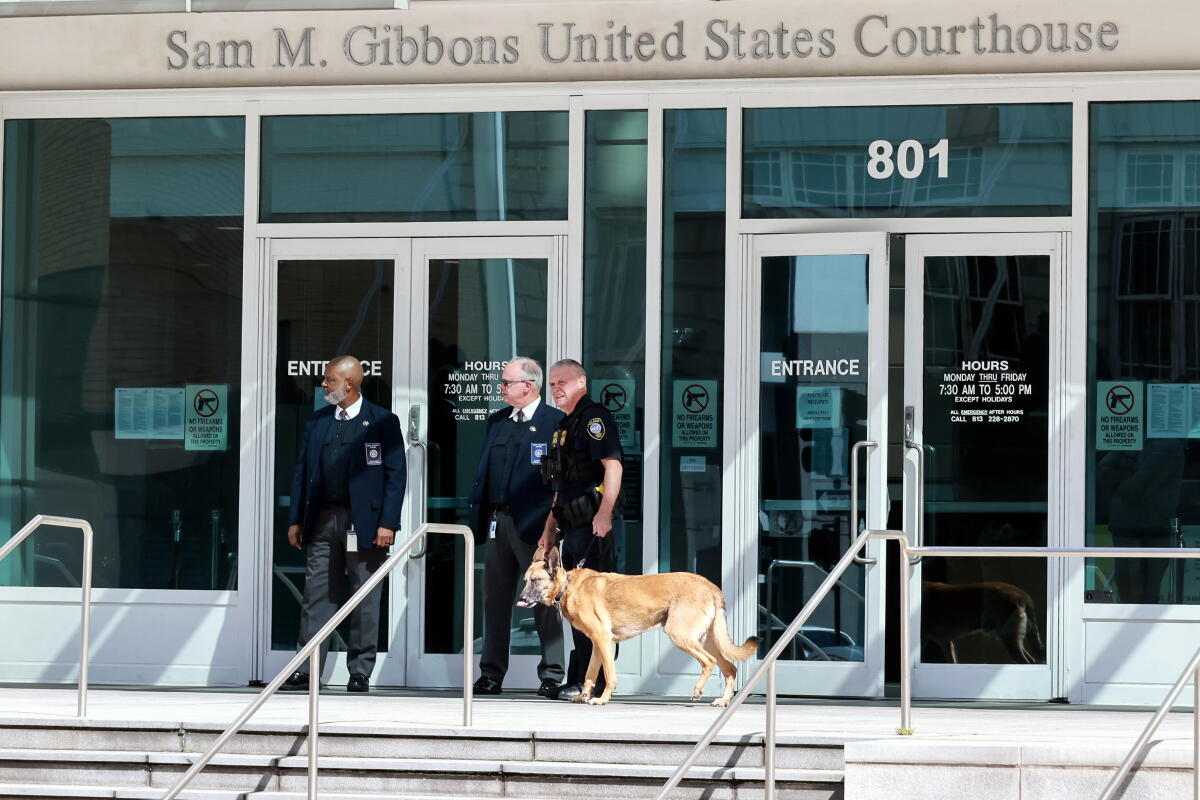
An external view of the Sean M. Gibbons U.S. Courthouse.

An external view of the Sean M. Gibbons U.S. Courthouse in Tampa, Fla. Meghan Markle’s father, Thomas Markle Sr., is facing charges of child pornography possession.

(Mike Carlson / Getty Images)

The affidavit further describes additional photographs that appear to show Markle Sr. with children in various stages of undress.

Last month, Meghan’s half-brother Thomas Markle Jr. claimed he’d found “hundreds, if not thousands” of child pornography images inside four large boxes at the Cebu, Philippines, home of his father, Markle Sr., and contacted authorities, according to the British tabloid the Sun.

Meghan’s team issued a statement to The Times following reports of the news, writing that she was “deeply distressed.”

“My thoughts are with any children who may have been harmed,” she said.

“In 2018, a letter was sent to the Metropolitan Police and Royalty and Specialist Protection. That letter was subsequently shared with me. It made troubling and disturbing allegations against my father and I was given assurances that these were being investigated,” she continued, adding, “I hope it can now be understood that, despite certain media publications’ distortion over the years, any distance from my father and my choice to not allow him to have contact with our children, was for one reason: to protect them.”

The Duchess of Sussex said that she trusted authorities were “doing the same for other families.”

“Although the breadth of what has now been uncovered is more sickening than one could ever imagine, my sincerest hope is that justice will be fully served and that the priority remains the safety and protection of innocent children,” she said.

Meghan’s relationship with her father, a former Hollywood lighting director, has been the subject of media scrutiny since 2018, when she and Prince Harry tied the knot. Markle Sr. did not attend the wedding.

Last month, Markle Sr. denied the accusations, calling them “bulls—” and “lies.” If convicted, he faces up to 20 years in prison.
Source link

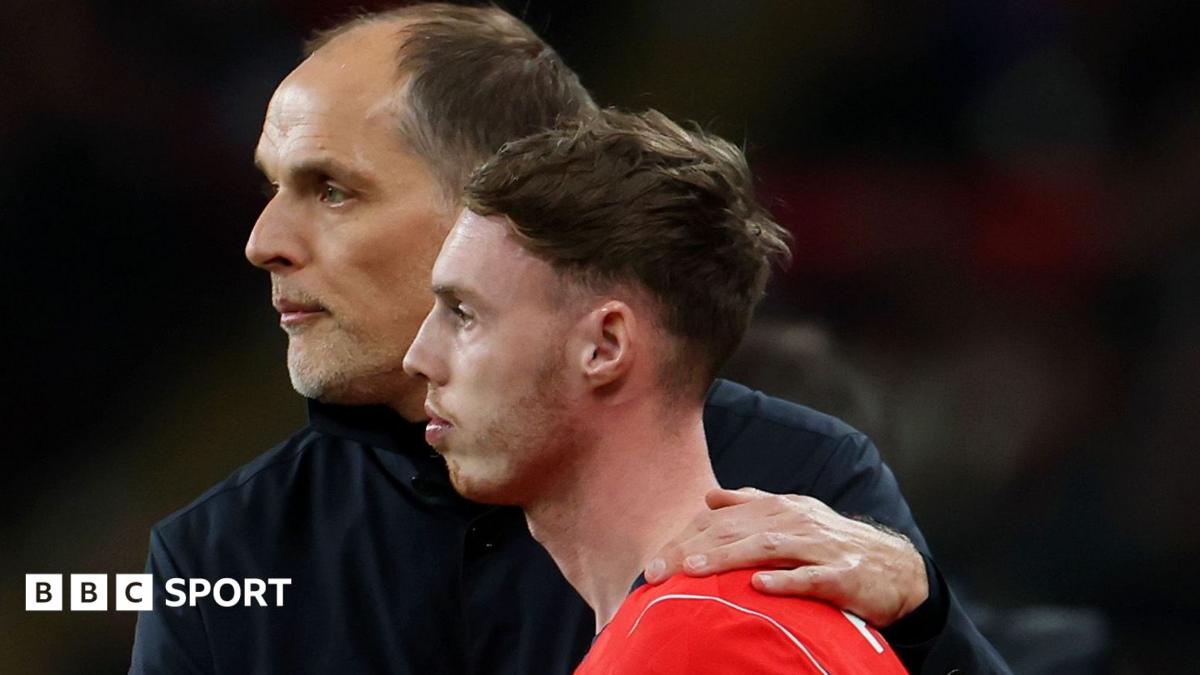
Who could Thomas Tuchel select for next England squad? Lankshear, King, Dewsbury-Hall, Henderson, White, Gibbs-White

England have made medical checks on Cole Palmer as Thomas Tuchel considers whether to select the Chelsea forward in his next squad.

The 24-year-old missed all four games during the previous international window with a minor injury.

He completed 90 minutes for Chelsea against Brentford before those matches, and started for the Blues in the first game afterwards.

Tuchel, who names his squad to face Croatia and Spain on Friday, said at the time that Palmer was “playing with discomfort and pain” but was “missing too many opportunities” with England.

Whether he is recalled will be a key theme on Friday. While it is normal for England medics to check on players under consideration, it also underlines that Palmer remains on Tuchel’s radar despite his stark comments last month.

In addition to deciding whether to select Palmer, head coach Tuchel has a number of other dilemmas to resolve.

Bukayo Saka’s injury absence opens the door to another attacker, with his Arsenal team-mate Noni Madueke pushing for a recall following a string of impressive performances.

Manchester United forward Marcus Rashford has not played since mid-October and is not fit for selection, while Chelsea defender Trevoh Chalobah is a major injury doubt.

Defenders Ben White and Djed Spence are pushing for recalls after missing out on the previous squad through injury.

The likes of Harry Kane, Jude Bellingham, Declan Rice and many others are now stonewall selections – but the intrigue is around the remaining few spots still seemingly up for grabs.

Will some old faces earn a recall or will there be new faces soon pulling on the England shirt? BBC Sport runs down some of the potential candidates for selection.

Source link

Muslims have always had to prove our Americanness. Enter Abdul El-Sayed

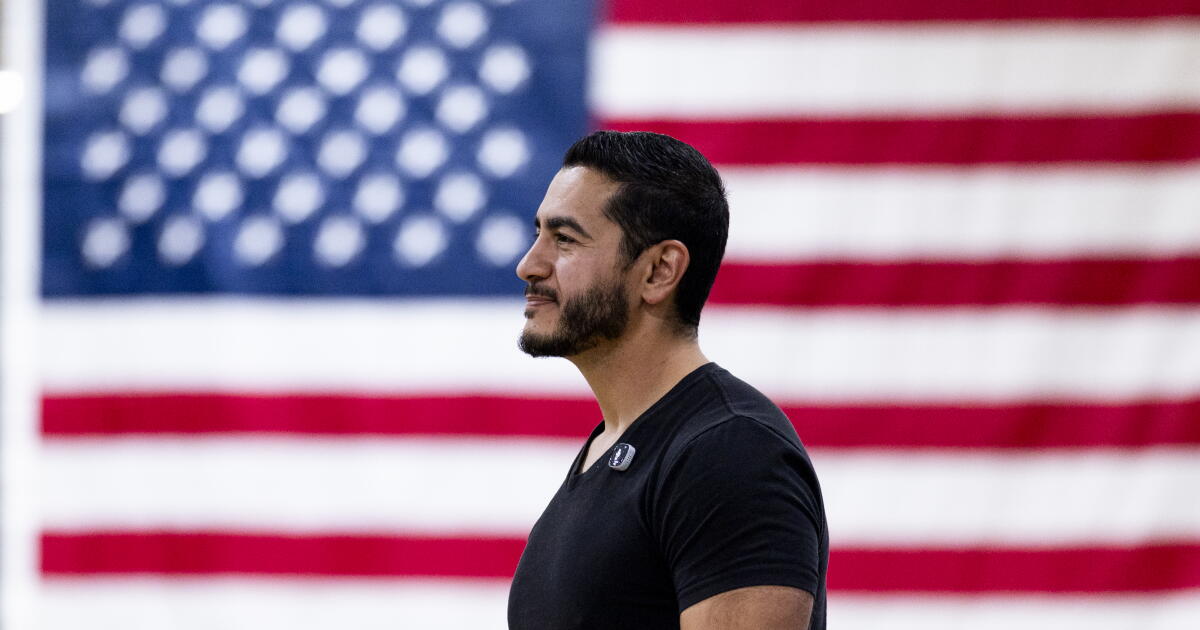
Michigan’s Democratic candidate for the U.S. Senate, Abdul El-Sayed, is many things to many people.

He represents change, part of a new generation of outspoken leaders who aren’t afraid to challenge the status quo.

He represents possibility: As the son of Egyptian immigrants, his trajectory is the American dream realized.

And he represents a threat to those who fear that his Muslim faith means he can’t possibly love America. El-Sayed is a handy bogeyman for Republican politicians who seek to scare their constituents into voting for them instead of the foreboding Arab name on the ballot.

But for people like me — American Muslims, or anyone with roots in the Middle East, North Africa, South Asia or other Muslim-majority regions — El-Sayed embodies the exhausting experience of having to explain yourself over, and over, and over …

We know what’s truly going on when someone discovers our lineage, then apropos of nothing asks, “How do you feel about the Oct. 7 Hamas attack?” In previous eras it was, “What are your thoughts about 9/11? The Iranian hostage crisis? The PLO?”

Regardless of the decade, the underlying question was the same: How American are you, really?

For generations, the insinuation has been that your loyalty lies somewhere else and that you have a predisposed soft spot for groups such as ISIS or Al Qaeda. Beneath that Taylor Swift-loving exterior, there must be a Bin Laden fighting to get out.

It was disappointing but hardly surprising when El-Sayed was asked at a recent town hall in Caro, Mich., if he would “disavow the Muslim Brotherhood.”

The questioner, who identified himself only as Tommy, was referring to a century-old Islamist movement with branches that have been designated as terrorist organizations by various countries and U.S. administrations.

It’s worth noting that El-Sayed was born and raised in Detroit, not Egypt or Jordan. He attended the University of Michigan medical school, not a radical madrassa, and received a Rhodes Scholarship to Oriel College, Oxford, where he completed a doctor of philosophy in public health (not bomb making).

El-Sayed answered the question without hesitation. “Sure, yeah, absolutely,” he said, then swiftly turned the tables and began interrogating the motives of his interrogator.

“You’re asking the question because implicitly, you assume that I’ll have dual loyalties, right?” El-Sayed said. “You assume that I wouldn’t disavow, or that I’ll have some higher order allegiance than to the Constitution, correct? Tommy, is that what you imply?”

The candidate spent four to five minutes laying bare the political motives behind what was clearly designed to be a “gotcha” moment.

His opponent in next month’s election, former Rep. Mike Rogers, has claimed without evidence that the Muslim Brotherhood funds El-Sayed’s campaign and that his family members have terrorist links. The attacks are on brand with a wider Republican strategy around sinking El-Sayed. Fearing a blue tsunami might flip the crucial swing state, Rogers and his allies have leaned heavily into Islamophobic attacks against the progressive Democrat.

It’s a campaign tactic endorsed at the highest levels. President Trump has referred to El-Sayed as a “radical jihadist” and claimed he is associated with the Muslim Brotherhood, mispronounced his name, infused it with nonsensical babble and called him “Muhammad Al-Fayad.” Trump has defended his racism by stating: “I’m the president. I can call him whatever the hell I want.”

El-Sayed preferred to talk about another president while addressing Tommy’s question at the town hall. He recalled that John F. Kennedy faced similar scrutiny during his 1960 presidential campaign when asked whether his Catholic faith would make him loyal to the pope and Vatican rather than the U.S.

“His answer, famously, was that he was not running to be a Catholic president,” El-Sayed said. “He was running to be president that happened to be Catholic. I’m not running to be a Muslim senator. I’m running for the U.S. Senate and happen to be Muslim.”

The standoff between El-Sayed and Tommy (who has since been outed as Thomas Teepell, the son of a Republican strategist and a former staffer to Republican Sen. Josh Hawley) has gone viral and is now being referred to as a 2026 election Rorschach test because both the right and left believe they prevailed.

It’s unclear to me how anyone might see El-Sayed’s evisceration of Teepell’s means-to-an-end question as a victory for the right. Perhaps it comes from eight years of watching Barack Obama weather insidious and overt racist attacks with the patience of a Shaolin monk. El-Sayed reacted, therefore they won?

On the left, El-Sayed’s articulate defense was widely applauded, but there were still criticisms that he may have come off as condescending. Liberal podcasters and influencers opined that El-Sayed should have just let it slide — for the 1,000th time.

Such an easy solution when it comes from those outside the sphere of suspicion.

But the reason we’re even having this conversation is because El-Sayed is challenging the norm. His rise to a formidable candidate who is willing to publicly dismantle loaded questions like Tommy’s represents progress wrought by successive generations of immigrants who’ve had to explain themselves ad nauseam.

Our parents and grandparents went out of their way to avoid those kinds of questions by taming their accents, changing their hard-to-pronounce names or eating their “ethnic” lunches outside the break room. The hope was that they’d melt into the proverbial pot with as little friction as possible.

My father, who emigrated from Iraq, did what all his Arab friends did here in L.A. — fit in. They used Brylcreem to tame their thick hair, listened to Johnny Cash and used terms like “guys and gals” as if they’d just stepped out of an Elvis movie.

As the next generation, I made it a point to openly embrace what my dad often downplayed — that we are Arab and Muslim. But given the post-9/11 climate, it came buffered with calming disclaimers: We are not a threat. Al Qaeda does not speak for Islam. And dolma is delicious, dammit.

El-Sayed’s refusal to brush off questions aligning him with terrorists may or may not cost him the election, but it’s a victory for all of us who’ve been defusing suspicion since we were kids.

The clip from the town hall ends with El-Sayed asking Thomas if he’s a Christian who has tried to live by Christian doctrine. Thomas affirmed. Then El-Sayed asked, “Do you disavow any attempt to read any religious doctrine into the laws of our country?” Thomas responded, “I do not.”

El-Sayed replied, “I think it’s you who needs to understand the Constitution, not me.”


Source link

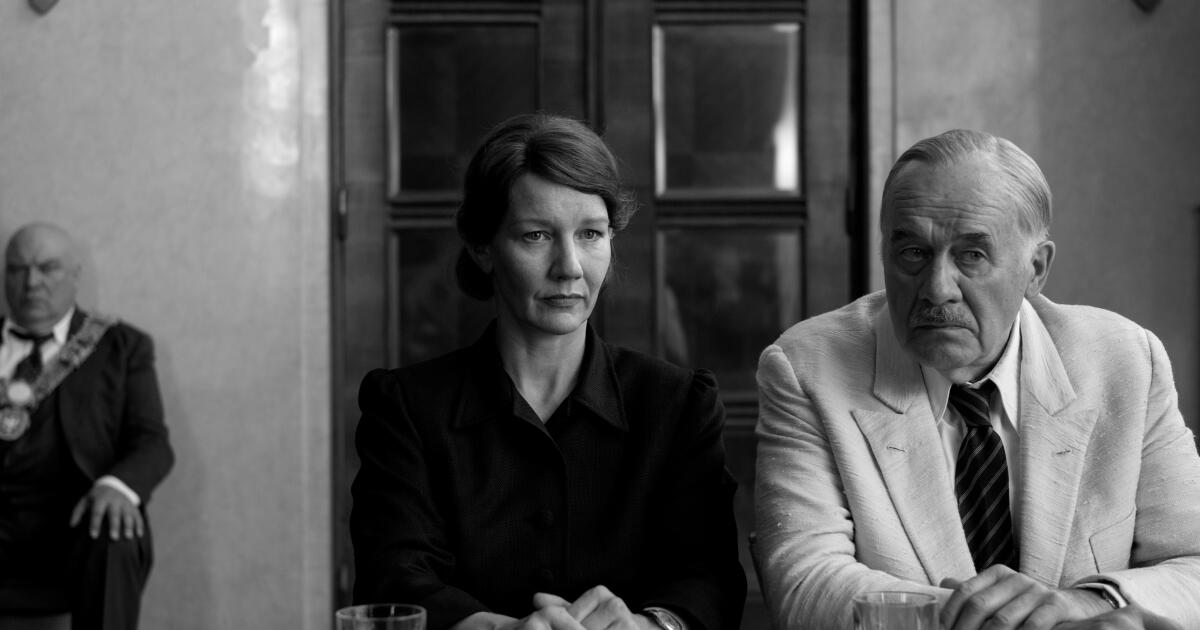
‘Fatherland’ review: Sandra Hüller triumphs in terseness

A bittersweet homecoming — emphasis on the bitter — propels Polish filmmaker Paweł Pawlikowski’s spare, precise drama “Fatherland,” which takes an episode from the life of Nobel Prize-winning German author Thomas Mann and, with the help of some poetic license, creates a story full of simmering anger and sorrow. Only rarely do the dignified characters allow their emotions to come storming out. When they do, though, the sound seems to reverberate, the tumult of the past ringing in our ears.

Like Pawlikowski’s previous two features, “Ida” and “Cold War,” “Fatherland” is a period piece shot in black and white in a boxy 4:3 aspect ratio so that the frame resembles an old photograph, although his images contain no hint of nostalgia. It’s 1949, and the 70-something Mann (Hanns Zischler) has returned to Germany for the first time since fleeing to America 16 years prior. Accompanying him is Erika (Sandra Hüller), his daughter and fellow writer, who begrudgingly serves as interpreter, personal assistant and driver. In addition, she’ll offer her brutally honest thoughts on the flowery speeches he will deliver while being honored for his artistry.

Quickly, they discover that while the war may be over, the bombed-out buildings remain, as do the lingering resentments within Germany, which is controlled by the United States in the west and the Soviets in the east. Thomas, an outspoken critic of Nazism, leading to his exile, believes that his public appearances can unite the country he loves. The cynical Erika knows better, convinced he’s a PR tool for a nation hoping to refurbish its tarnished reputation.

Drawing inspiration from “The Magician,” Colm Tóibín’s fictionalized 2021 Mann biography, Pawlikowski uses this trip as a jumping-off point, introducing real-life individuals who were not present and inventing a new central dynamic. (In truth, Thomas traveled with his wife, not his daughter.) But those creative liberties merely accentuate Pawlikowski’s narrative and thematic aims, which, as in “Ida” and “Cold War” include pairing an intimate story with the larger rumblings of postwar Europe. Thomas and Erika arrive in a Germany torn apart and the ruptures within their family are nearly as tumultuous.

The film is haunted by the specter of Klaus (August Diehl), Erika’s brother, who is actually the first person we see onscreen. In a masterful unbroken shot, Klaus is on the phone from France with his sister, expressing his bottomless anguish. “I don’t believe in anything anymore,” Klaus, who is also a writer, declares. “I can’t remember the last time I felt something.” He’s talking about the fractured Germany, but his depression speaks to something closer to home too. Concerned, Erika encourages Klaus to join them. He declines, but his absence — and a shocking later revelation — informs so much of their journey, personalizing the sense of disrepair Thomas and Erika experience.

Working with his usual cinematographer Łukasz Żal, Pawlikowski prefers a static camera, leaving plenty of headroom above the characters so that they feel entombed by their surroundings. The effect is especially disconcerting as this father and daughter navigate glad-handers and former Nazi collaborators in West Germany who are anxious to bury the past. But Thomas and Erika are no fools, coolly telling off smiling Hitler sympathizers during a tony reception. There has been no more satisfying slap in cinema this year than the one Erika lands on a smug German actor, leading to a wicked punchline that shouldn’t be spoiled.

Such moments of barbed humor are infrequent in “Fatherland,” but Pawlikowski wields them like grenades, shattering the stifling niceties enveloping Thomas and Erika. The Germany of “Fatherland” is one of contradictions, with Erika uncovering letters sent to Thomas’ hotel that savagely accuse him of betraying his country, despite state officials eager to embrace him as a symbol of the nation’s creative and cultural excellence. In contrast to the gorgeous monochrome visuals, this is a land that stinks of complicity and delusion — of opportunists desperate to scramble onto the right side of history. Pawlikowski has said that he keeps returning to the past in his films because addressing our modern ills directly would be too daunting. But whether in Frankfurt or, later, Weimar — where Soviet officials are as keen to canonize Thomas — this father and daughter aren’t simply driving through Germany but taking a tour across fascism’s long shadow, which still darkens the world.

Both leads are exceptional, with Zischler articulating the great writer’s arrogance and willful denial of the inconvenient truths he wants to ignore. As for Hüller, this is another superb performance in a series of them in recent years. Where Thomas is aloof and proud, Erika is prickly and sardonic, excellent tools for protecting a surprisingly fragile heart. Their journey to Germany will heal neither the nation nor the divisions within this family. You can’t go home again and in the case of the characters in “Fatherland,” maybe you shouldn’t try.

‘Fatherland’

In German, French, Russian and English, with subtitles

Not rated

Running time: 1 hour, 22 minutes

Playing: Opens Friday, Oct. 22 in limited release

Source link

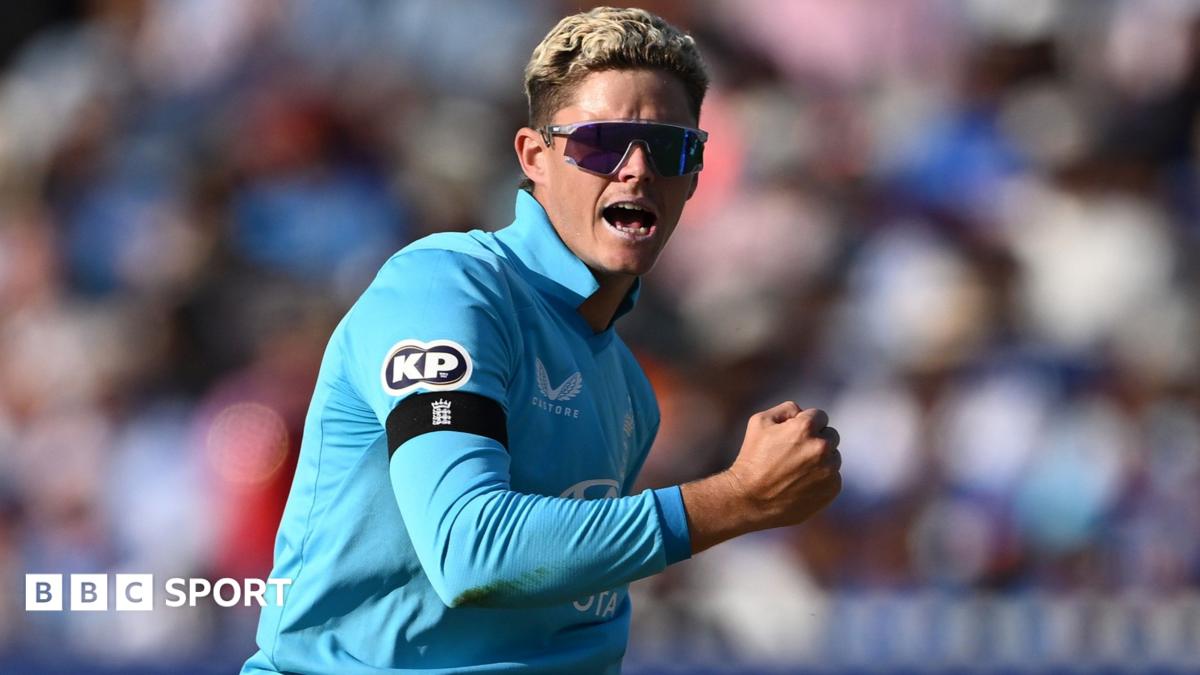
Australia vs England: Jacob Bethell returns as Thomas Rew and Eddie Jack get call-ups

For the ODIs, Jofra Archer is back in the pace attack after being rested for the tri-series in Pakistan in October.

Archer’s return means the 50-over squad is close to full strength, bar the absence of wicketkeeper Jos Buttler who is set for a lengthy spell on the sidelines following hamstring surgery.

After the ODIs, all of seamers Archer, Gus Atkinson, Josh Tongue and Sonny Baker, along with batter Ben Duckett, miss out on the T20s in order to prepare for South Africa.

The re-shuffle means eye-catching call-ups for Rew and Jack, while opener Aneurin Donald keeps his place after making his debut in the series against Sri Lanka last month.

The addition of Rew and Jack, who were awarded development central contracts on Monday, offers the tantalising prospect of a first international cap against England’s fiercest rivals in one of the most iconic venues in cricket. The first T20 is at the colossal Melbourne Cricket Ground on 21 November.

Rew does not turn 19 until 29 November. If he plays on the tour, he would become the third-youngest man to make his England debut in any format after Rehan Ahmed and Brian Close, and the youngest man to play for England against Australia.

Rew is the younger brother of James, who made his Test debut for England against New Zealand at The Oval in June.

Thomas captained England Under-19s to the final of the World Cup earlier this year and made two centuries for Somerset in the County Championship during the summer.

Jack, who has the middle name Vaughan after former England captain Michael, has been on England’s radar since last year.

He looks likely to earn a debut in Australia because he is one of only three specialist fast bowlers in the squad. Uncapped Henry Crocombe is down under for both series after earning a two-year central contract on Monday, while Luke Wood is part of the T20 squad despite losing his central deal.

Bethell’s return to both squads is an indication of the selection decision England will face for the Test series in South Africa.

In the left-hander’s absence for the home Test series against Pakistan this summer, Emilio Gay, Jordan Cox and Dan Lawrence came into the England XI. Bethell’s comeback could displace any one of that trio.

Harry Brook captains England on both legs of the tour and is once again set to play across formats in every game of the winter. He has not missed an international since a raft of players were rested for the T20 series in Ireland last September.

The trip will be Brook’s first return to Australia since a nightclub incident in Wellington, New Zealand, last October was revealed on the final day of the Ashes series in January.

During the Ashes, England’s players came under intense scrutiny from the local media, not helped by a series of off-field misdemeanours. Though a white-ball tour will not have the same profile as the Ashes, the tourists can still expect a degree of hostility from the home fans.

There will also be the spectre of former Test captain Ben Stokes, whose stint with Adelaide Strikers in the Big Bash League begins shortly after England’s tour ends.

Source link