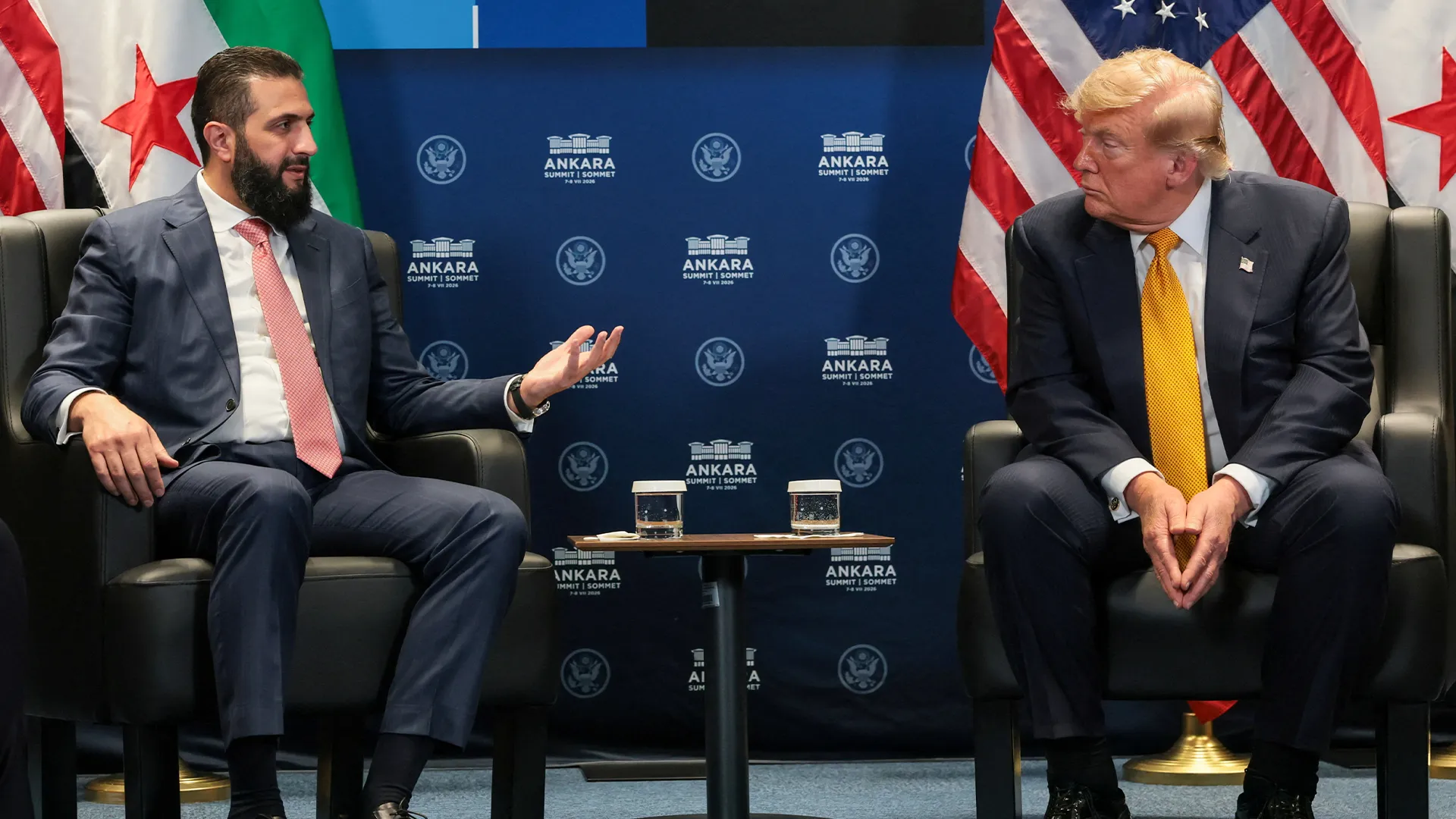
President Ahmed al-Sharaa said Syria is ‘shaking off a dark burden’ after the US removed it from the list of state sponsors of terrorism. Syria had been on the list since 1979, and its removal opens the country to outside investors.
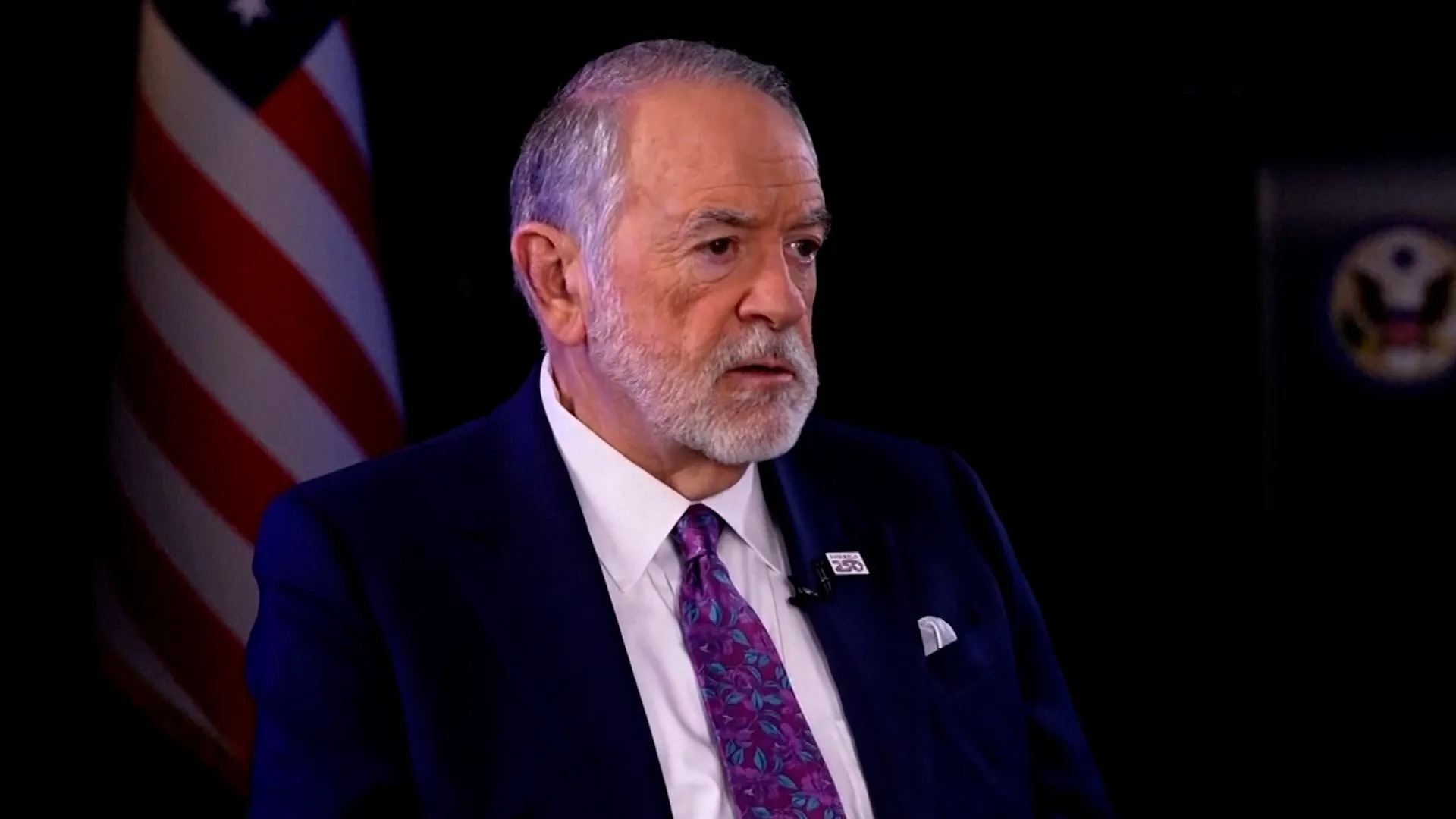
US Ambassador to Israel Mike Huckabee says Israeli settler violence in the occupied West Bank meets the definition of ‘terror’. His comments are a rare rebuke and follow a days-long siege of a Palestinian-American family’s home by Israeli settlers in the village of Qusra.
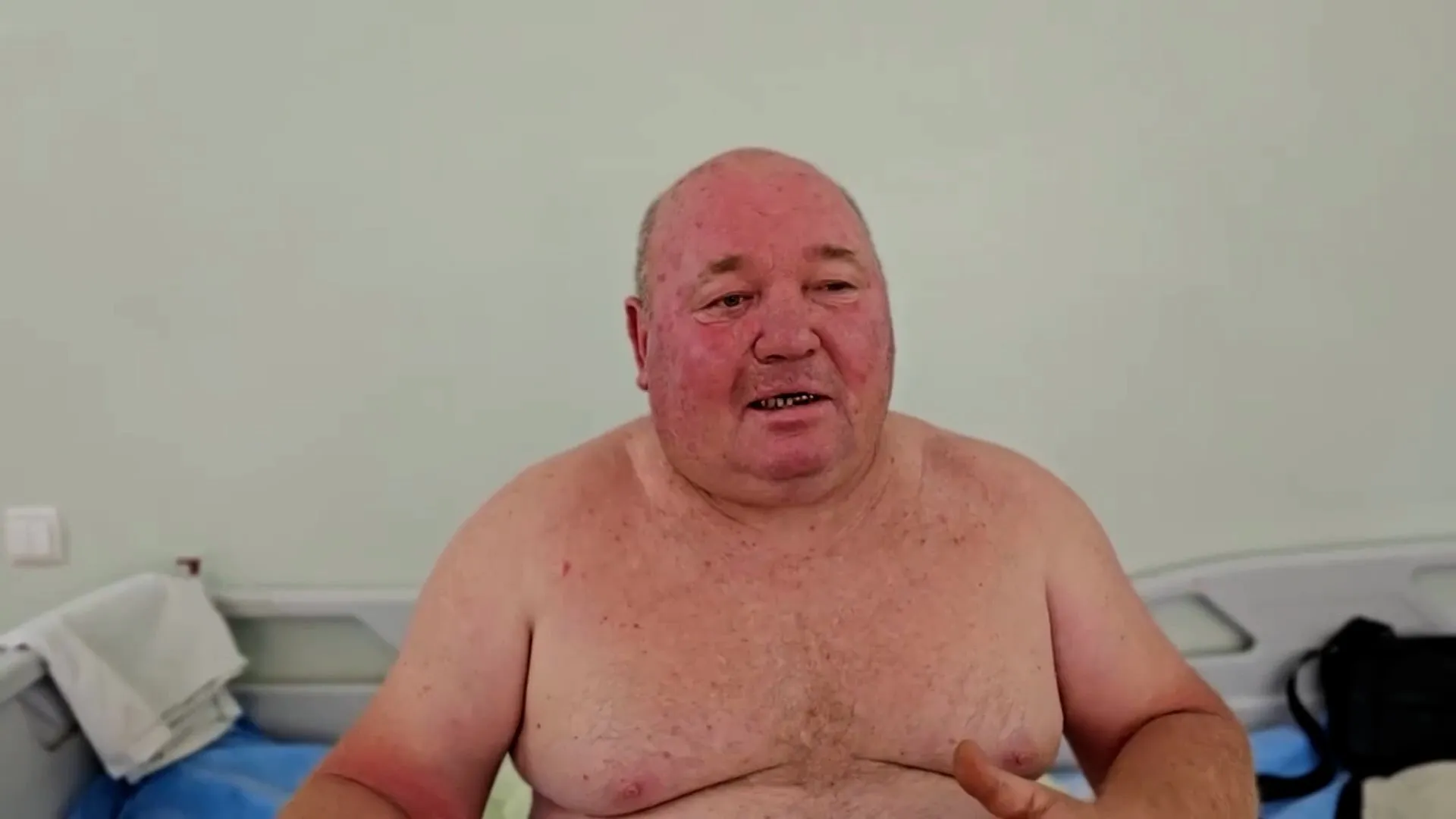
A Ukrainian man has relived the moment a suspected Russian drone chased him before it blew up. The video, which made headlines round the world, shows Yurii, the vegetable seller, being attacked in Kerson.
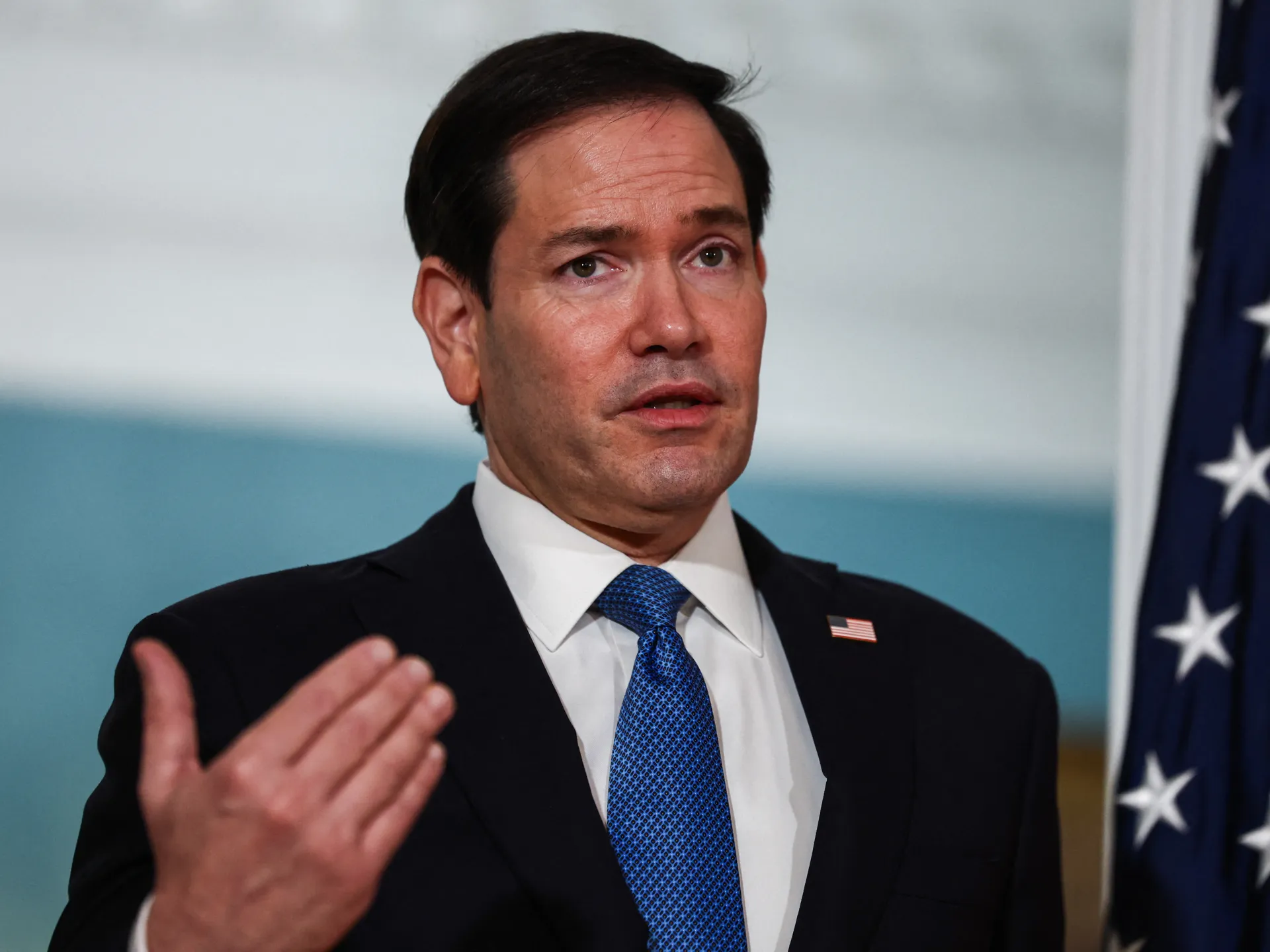
United States Secretary of State Marco Rubio is hosting more than 65 countries for a conference focused on political violence from the far left, a designation that a number of critics say is being used to target legitimate opposition.
The “Ministerial on the Resurgence of Political Terrorism”, taking place on Thursday, brings together government representatives from around the world to coordinate on what the US Department of State calls a “renewed threat” that has “remained a blind spot in the international community’s counterterrorism focus”.
Critics, including the American Civil Liberties Union, told the Reuters news agency that “the far-left terrorism designations could be used to target lawful protest activity and political opponents rather than genuine security threats.”
Here’s what’s driving the summit and who’s attending:
What is this summit about?
The Trump administration’s 2026 counterterrorism strategy identifies three primary threats: “Islamist terrorism”, “narco-terrorism”, and “violent left-wing extremists, including Anarchists and Anti-Fascists”.
The strategy states that the third category of left-wing “extremists” has been traditionally ignored, and notes that Charlie Kirk’s assassination in September 2025 was executed “by a radical who espoused extreme transgender ideologies”.
The counterterrorism strategy omits right-wing extremism and white supremacist groups, despite growing instances of violence that some of these outfits have been accused of – including several of those who attacked the Capitol on January 6, 2020, in an attempt to overturn the US presidential election that Donald Trump lost.
Thomas Renard, director of The Hague-based International Centre for Counter-Terrorism, said the summit reflects a fundamental shift in how the US sees the threat.
“What we are seeing now in the United States is that counterterrorism has been completely politicised, instrumentalised,” he told Al Jazeera. “For instance, the threat from far-right terrorism, which was for decades considered as the primary domestic threat, has now completely disappeared from the US counterterrorism strategy.”
Who has been invited?
Invites went to more than 70 countries as the State Department wrote on social media that countries had shown “overwhelming interest”. It is reported that Israel’s Foreign Minister Gideon Saar will be present alongside representatives from multiple countries. The stated aim is to “expand coordination, enhance information sharing, and strengthen international law enforcement mechanisms”.
The summit follows a series of smaller meetings held earlier this year, including one in The Hague with law enforcement officials.
Renard says many European nations are expressing their unease with this ministerial meeting by sending relatively junior ministers.
“They are not particularly convinced that this is a topic that justifies this type of gathering, but at the same time, they don’t want to antagonise the United States either. And therefore, this is the compromise they found,” he said.
In November, 2025, the US designated four European groups as terrorist organisations: The German Antifa Ost, the Italian Informal Anarchist Federation/International Revolutionary Front (FAI/FRI), the Greek Armed Proletarian Justice and the Greek Revolutionary Class Self-Defense.
What is “far-left terrorism”?
The term is usually used by governments to describe movements accused of violence and driven by left-wing ideologies, including Marxism, socialism, or anarchism. Such movements usually describe themselves as anti-capitalist and anti-imperialist.
Latin America saw several left-wing armed movements during the Cold War, a number of which carried out sustained campaigns of political violence, such as Colombia’s Revolutionary Armed Forces of Colombia (FARC), the Farabundo Marti National Liberation Front (FMNL) in El Salvador and the Tupamaros in Uruguay. Throughout the 20th century, Washington repeatedly backed hardline right-wing regimes that opposed left-wing movements across Latin America.
India has been dealing with the Naxalite rebellion, a far-left Maoist movement that started in the 1960s and claims to fight for the rural population. The group is seen as one of India’s most serious internal security threats. At its peak, about the year 2000, thousands of people were killed due to the conflict with the Naxalite rebellion.
During the 1970s and 1980s, Marxist groups like the Red Army Faction in West Germany were behind several assassinations, abductions and bombings that they argued were aimed at weakening the capitalist state.
By contrast, the Antifa movement, which the Trump administration has consistently tried to portray as a major violent threat, is a loose, decentralised collection of socialist-leaning individuals opposed to far-right extremism, white supremacy and authoritarianism. Several individuals described by prosecutors as Antifa members have been indicted on accusations of violence in US courts, especially in states like Texas that are ruled by Trump’s Republican Party, since he returned to power. In June, eight such individuals were sentenced to several years in prison: Benjamin Hanil Song, convicted of the attempted murder of a law enforcement officer, was sentenced to 100 years in prison.
Far-right political violence and terrorism in the US
But the same Trump administration has pardoned all those charged with violence during the January 6, 2023 insurrection, including individuals accused of beating police officers.
This week’s summit also specifically focuses on far-left political violence but does not include the threat from far-right ideology and terrorism, similar to the counterterrorism strategy.
This, even though the Oklahoma bombing, which killed 168 people and wounded nearly 700 in the deadliest act of domestic terrorism in the US, was carried out by the right-wing hardliner Timothy McVeigh.
The Cato Institute, a US think tank in Washington, DC, stated in February that of politically motivated terrorism on US soil between 1975 and 2025, excluding the Oklahoma bombing and 9/11, “right-wing terrorists account for 45 percent of people murdered, Islamists are responsible for 32 percent, left-wing terrorists are responsible for 16 percent.”
Renard says the summit creates the very problem it claims to solve: “The United States, with this summit and with its strategy, is creating, actually, a blind spot about far-right terrorist threats, as that threat is strongly anchored and rooted in the United States.”
London debuts new powers targeting state proxies after accusing Iranian military organisation of engineering anti-Semitic attacks.
Published On 13 Jul 202613 Jul 2026
The British government is pressing to use new powers allowing it to criminalise state proxies in order to designate Iran’s Islamic Revolutionary Guard Corps (IRGC) as a threat to national security.
In a statement issued on Monday, the government announced that it was submitting draft regulations to the UK Parliament that would ban support for the IRGC. The move follows a series of anti-Semitic attacks in the United Kingdom.
Recommended Stories
list of 4 itemsend of list
In the statement, the government said the submission of the legislation was part of an attempt to “crack down on foreign state-backed activity in the UK”, noting this would include “espionage, foreign interference in our democracy, sabotage and physical attacks”.
Following the designation, it will be a criminal offence to invite support for or express support for the military organisation, assist them in carrying out UK-related activities, engage in conduct likely to materially assist them, or accept or retain material benefits provided by or on their behalf, according to the report.
Apart from the IRGC, the UK government also listed the Islamic Movement of Companions of the Right (IMCR), an Iran-backed group that claimed seven attacks on Jewish sites in the UK earlier this year, and Russia’s military intelligence agency, the GRU Volunteer Corps, as “the first bodies designated under landmark new state threats powers”.
British police have investigated attacks on Jewish-linked sites in London, including the torching of four ambulances belonging to a community charity in March, as anti-Semitic hate crimes. Three men were charged with arson in April.
Volunteer ambulances run by a Jewish organisation were set on fire overnight in March in London [File: AFP]
“If approved by Parliament later this week, those conducting acts of sabotage including arson on behalf of these groups could face life imprisonment,” the statement added.
Caretaker Prime Minister Keir Starmer said: “These new powers will make it easier to prosecute and lock up anyone carrying out their dirty work here in Britain.”
The new legislation gives the UK government “proscription-like” powers to designate foreign state proxies deemed a threat to the UK’s national security. It will mean that prosecutors do not need to establish a foreign power connection in cases involving designated groups.
“Iran and Russia are using proxies and thugs to do their dirty work on our shores. I have rapidly designated three groups so those working for them will be tracked down and put behind bars,” Home Secretary Shabana Mahmood said.
Reporting from London, Al Jazeera’s Charlie Angela said the designation could come into force “as early as Friday”.
“What that’s going to mean is it will become a criminal offence to support the groups in any way or to help them operate, and that could carry a maximum sentence of life imprisonment,” Angela said.
“Diplomatically, it is going to mark a further deterioration in the relationship between Iran and the UK. Earlier, Foreign Secretary Yvette Cooper summoned the Iranian ambassador to the Foreign Office and questioned him. And that is likely going to get a strong response from Iran.”
The government said the IRGC has “a long history of using proxies and criminal networks to target people overseas – particularly the Jewish community and Iranian dissidents”.
Tehran, which is still at war with the United States and Israel, has previously denied using proxies.
Regarding the GRU military intelligence service, the government said Russia was using the group “for foreign intelligence collection and hostile covert operations and has a long record of targeting the UK and its allies”.
July 10 (UPI) — An eighth suspect has been arrested and charged in an alleged plot to attack last month’s Ultimate Fighting Championship event held at the White House, federal prosecutors said.
The suspect was identified as 21-year-old Chandler Scaggs of Chapmanville, W.Va.
The Justice Department said in a statement that he and the other seven suspects were charged in an indictment returned Thursday in Columbus, Ohio, with two conspiracy counts: providing material support to terrorists and conspiring to murder government officials on government grounds. Jail records indicate that Scaggs was arrested Tuesday, with federal prosecutors saying he was taken into custody by the FBI in West Virginia.
Federal prosecutors allege that the eight suspects, who range in age from 19 to 32, were among nearly two dozen people conspiring to attack the White House’s Freedom 250 UFC event on June 14, staged in celebration of the United States’ 250th anniversary and President Donald Trump‘s 80th birthday.
According to the indictment, the co-conspirators allegedly planned to attack the north side of the event with explosive-laden drones, which would force fight spectators to evacuate to the south, where stationed snipers would open fire on the fleeing crowd.
Prosecutors alleged that Scaggs was to be one of the snipers.
The indictment states that the eight defendants began plotting the alleged attack in May, with the conspiracy to provide material support to terrorists stemming from allegations that they worked together to procure money, firearms, ammunition, body armor, drones and other resources to further the plot. The charge is punishable by up to 15 years’ imprisonment.
They are alleged to have developed plans and encouraged one another in online chat groups and forums on encrypted applications, such as Signal, and on social media platforms, including TikTok and Instagram.
The indictment states that the second charge of conspiracy to murder government officials stems from allegations that the suspects planned to murder Trump, Vice President JD Vance and “other high-value targets” as well as Elon Musk and Israeli Prime Minister Benjamin Netanyahu, whose attendance at the event was not immediately confirmed. If convicted, the charge carries a potential penalty of up to life in prison.
The first five suspects arrested and charged in the scheme were taken into police custody last month after the parents of one of the suspects, 19-year-old Tycen Proper, alerted police to their son’s purchase of weapons and online activities.
Court documents state the group’s alleged grievances appear to be purported government corruption and U.S. lawmakers’ involvement with Israel.
As part of the scheme, Proper was allegedly supposed to pick up Scaggs and drive to Washington, D.C., for the event.
Prosecutors said that after Proper’s arrest, Scaggs allegedly indicated to the rest of his co-conspirators that he was still willing to carry out the attack and made arrangements with a second co-conspirator, who was not named, to pick him up.
The Thursday indictment follows earlier criminal complaints filed against the original seven defendants.
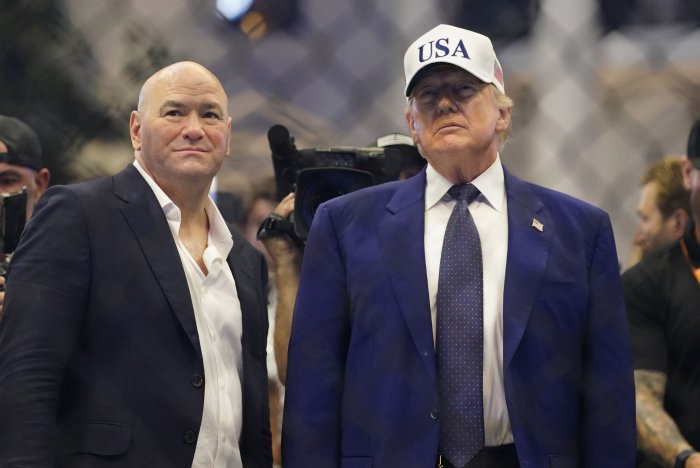
President Donald Trump and UFC CEO Dana White stand in the octagon after the UFC Freedom 250 event on the South Lawn of the White House in Washington, on June 14, 2026. Photo by Bonnie Cash/UPI | License Photo
“President Trump is excited to welcome the Los Angeles Dodgers BACK to the White House to celebrate their World Series championship!” White House spokesperson Taylor Rogers said in a statement to The Times.
“Back” to the White House.
How embarrassing.
The 2017 NBA champion Golden State Warriors wouldn’t go. The 2018 Super Bowl champion Philadelphia Eagles wouldn’t go. The 2025 NBA champion Oklahoma City Thunder wouldn’t go.
And now this group of Dodgers is going twice?
Their first visit last spring was bad enough, with Trump noting, “That is a very good-looking group of people,” while the Dodgers stood around him in slack-faced awe.
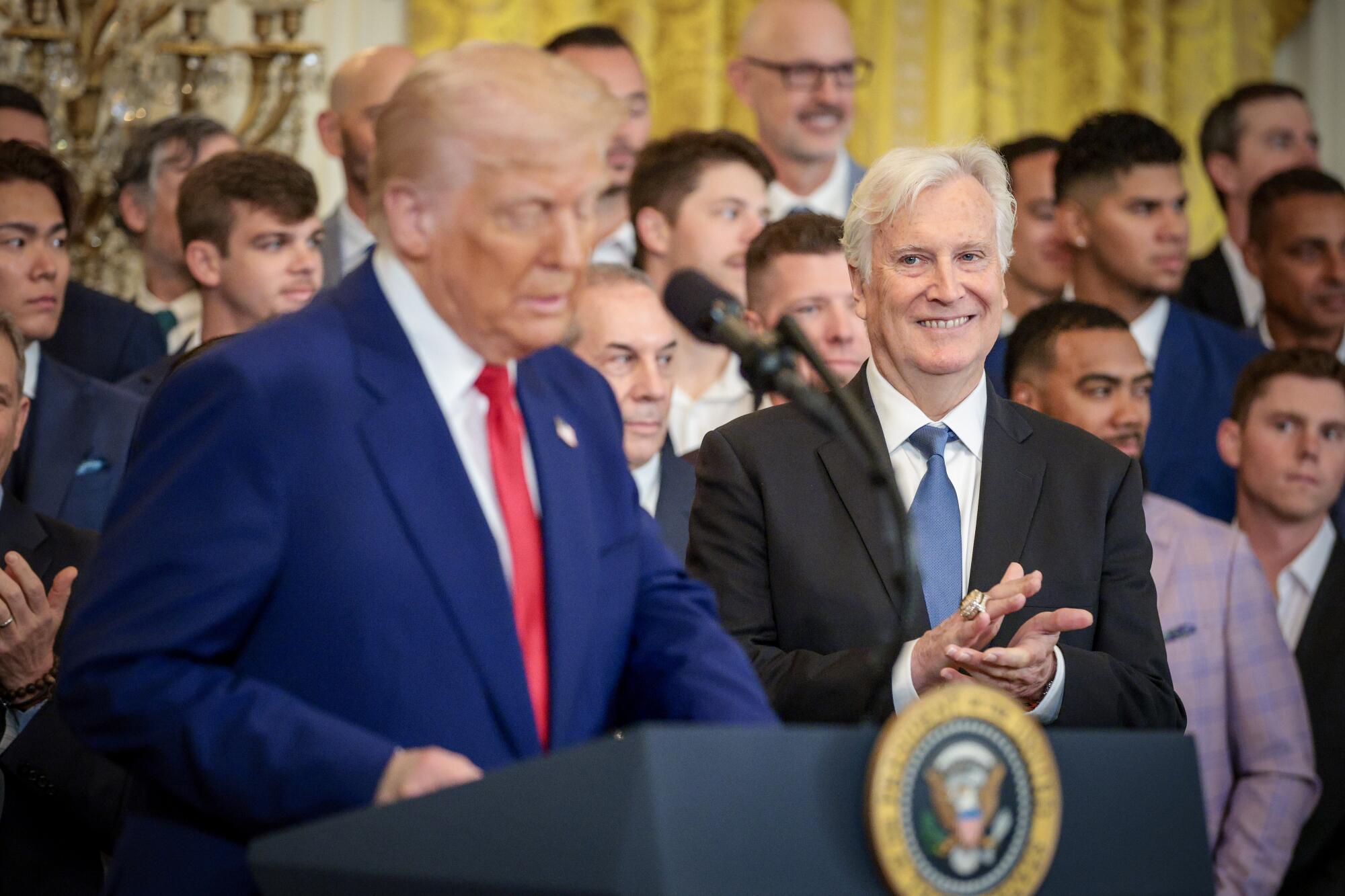
Dodgers owner Mark Walter smiles while listing to President Trump speak during the Dodgers’ championship visit to the White House in April 2025.
(Alex Wong / Getty Images)
Some, including Dodgers officials, argued this was a visit about tradition, not politics. Teams have been visiting the White House since President Andrew Johnson hosted two amateur baseball clubs in 1865. The Dodgers said they were just abiding by this once-revered sports custom. They said they were showing respect for this country’s highest office, not necessarily the man inhabiting it.
Understood. But what happened two months after that first visit altered even that flimsy bit of logic, as the man inhabiting the office rained terror on Los Angeles with the midsummer ICE raids that changed the lives of thousands.
Many impacted were the Dodgers fans who filled the stadium every night for the team with arguably the largest immigrant fan base in sports. Some even were wearing Dodgers caps and jerseys when they were swept up and hauled away.
While other pro sports teams in town immediately condemned the raids, the Dodgers said nothing until finally announcing and fulfilling a $1.1-million donation to community organizations to support families impacted by Immigration and Customs Enforcement.
At the time, only one Dodger spoke out publicly, with Kiké Hernández writing on Instagram, “Los Angeles and Dodger fans have welcomed me, supported me and shown me nothing but kindness and love. This is my second home. And I cannot stand to see our community being violated, profiled, abused and ripped apart. ALL people deserve to be treated with respect, dignity and human rights.”
A year later, Hernández is still on the Dodgers, he has much clubhouse credibility, and yet they’re still going back? Were they not listening?
The roster is filled with other levelheaded veterans who surely realize that by serving as a cheap Trump photo-op, they are honoring a man whose policies have ravaged their fans more than any other group in America, and yet they’re still going back?
An organization cannot boast of sharing a uniform with Jackie Robinson while sharing a very public afternoon with President Trump. That doesn’t work.
Kiké Hernández was the only Dodger who spoke out publicly last year.
(Gina Ferazzi / Los Angeles Times)
An organization that admirably fought back against the wishes of a conservative clubhouse to pioneer Pride Night cannot be the same organization that publicly normalizes the morality of President Trump. That doesn’t compute.
Can’t anyone on Vin Scully Avenue see the big picture here?
Maybe Jose Madera, director of the Pasadena Community Job Center, can show them.
Madera, a die-hard Dodgers fan, hasn’t attended a game since last summer’s ICE raids because he’s lost faith in the Dodgers’ connection with the Los Angeles community.
He says this latest news of a second White House visit only frays that connection further.
“It’s very disappointing to hear that our team is going to shake the hand of a person who has sent so much hate and terror into our community,” he said. “Thousands of families in our city live in fear … we can’t stand for what’s going on.”
Madera said the Dodgers need to remember who they are.
“The Dodgers bring so much joy to our community, but a large part of their fan base is the immigrant community, and they need to stand with us,” he said. “It’s very disappointing that they’re not, and we need to hold them accountable.”
It’s not too late. The Dodgers still have time to change their minds and do the right thing. They still have time to acknowledge that this is not about eschewing tradition or succumbing to politics or anything but common human decency.
The president has treated the Dodgers fans with a careless disregard for their basic humanity, and the Dodgers need to let him know this is not OK.
“They still have a chance to decline,” Madera said. “We’re all hoping they do.”
Yeah, sure, in two weeks they could strut into the most celebrated residence in America as two-time defending champions.
Search under way for suspect who fled scene after explosive device placed at entrance to residential building wounded three, authorities say.
Published On 30 Jun 202630 Jun 2026
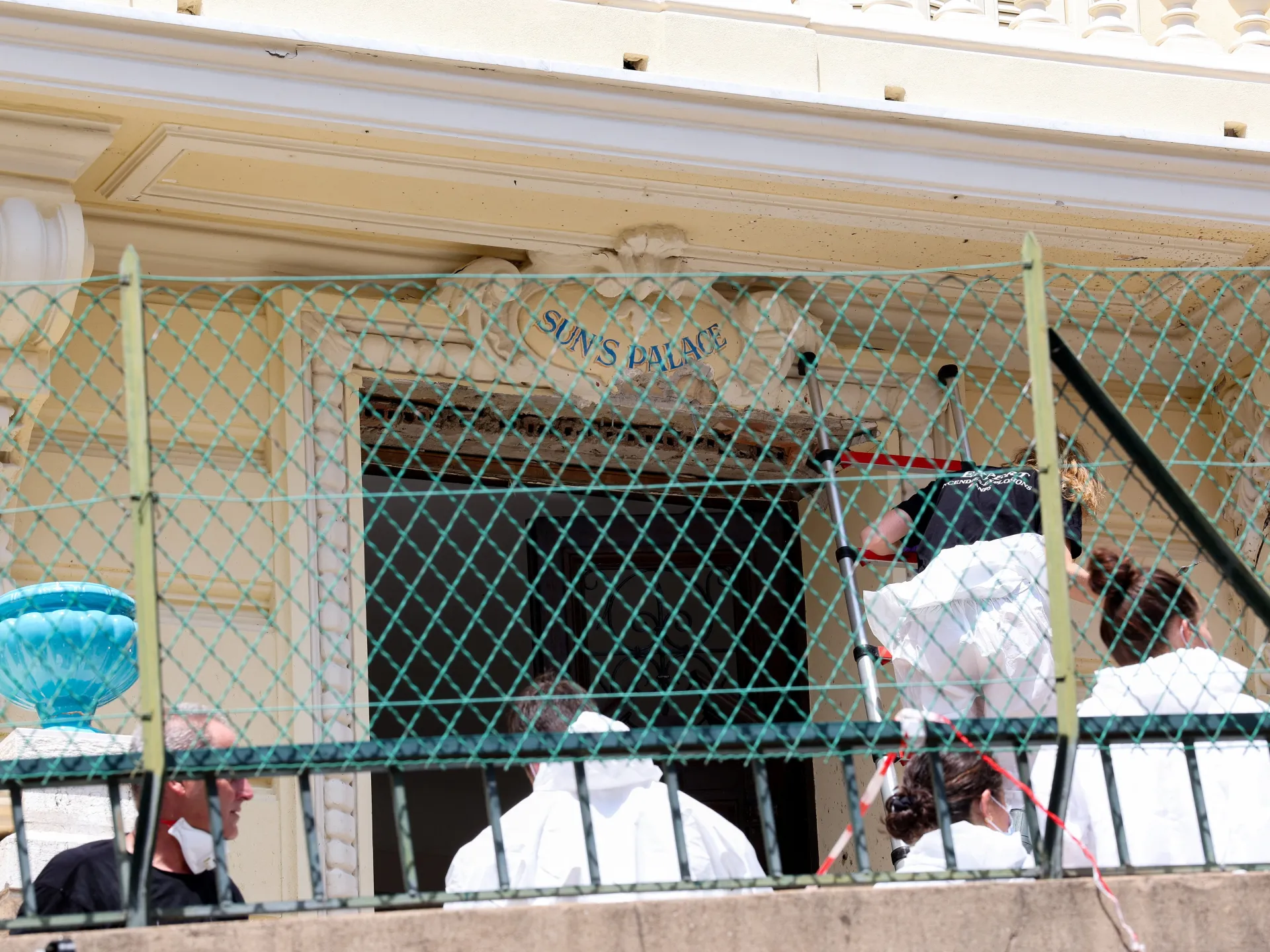
Authorities in Monaco say at this stage have ruled out “terrorism” as a motive in an explosion that left three people wounded.
The powerful blast took place at the entrance to a residential building on Monday evening, after a man had apparently left a package there.
Prosecutor Stephane Thibault told reporters on Tuesday the suspect who fled on foot acted alone and remained at large.
security-camera footage showed the suspect walking in a street wearing a black jacket, light-coloured trousers, white shoes and a black hat that partly conceals his face.
Police have opened an attempted murder probe but are not qualifying it as a “terrorism” investigation, said Thibault, adding that the motive remained unclear.
‘Caught in the explosion’
One of the three injured is a woman in life-threatening condition, while her partner and a 13-year-old child suffered less severe injuries but remain in the hospital. Thibault did not provide their identities.
Media reports identified Ukrainian construction tycoon Vadym Yermolaiev as being among the injured. Ukrainian news site Ukrainska Pravda said he was targeted by Ukrainian sanctions in 2023 for alleged ties to Russia.
The three victims were “apparently returning home peacefully” in the early evening, according to surveillance footage, Christophe Mirmand, the minister of state for Monaco, told French news broadcaster LCI
“They were caught in the explosion as they crossed the threshold of their apartment building,” he said.
Ukraine’s Foreign Ministry said it was in touch with authorities in Monaco, saying the explosion wounded three people of Ukrainian descent, who are members of one family. It did not name them, but said Ukrainian authorities are checking their citizenship.
Yermolaiev, a multimillionaire Monaco resident, has been subject to sanctions from Ukraine since December 2023, which Ukrainian security services reportedly said stemmed from his alcohol business activity in Russian-occupied Crimea.
Monaco is a microstate with a population of 38,000 people, where many ultra-wealthy people reside. It is considered to be one of the safest places in the world, with an extensive surveillance network of thousands of security cameras covering most public spaces.
When dozens of farmers bade farewell to their family members on the morning of Friday, June 12, and headed out in different directions to work on their farms, 17 of them were not lucky enough to return home alive. The farmers were killed after terrorists invaded their fields in the Maradun Local Government Area (LGA) of Zamfara, North West Nigeria.
Locals say 13 other farmers were injured during the attack, with three of them referred to the Usmanu Danfodiyo University Teaching Hospital (UDUTH) in Sokoto. A survivor of the attack, who identified himself only as Bello, told HumAngle that he was on his farm in the outskirts of Gora in the Maradun LGA, at around 9 a.m., when he heard the first gunshot. He said he thought it was one of the Yan Sakai local security guards, but it became clear that it was a terrorist attack when the gunshot sounded a second time. Yan Sakai security volunteers are young people carrying weapons to protect residents from terrorist attacks.
Bello recalled that he was lying face down while others fled. As the gunfire persisted, he managed to pull himself to the other side of the road before running home. “I was lucky, my farm is right on the side of the road; most of those killed had their farms a little bit away from the road,” he said.
For over ten years, rural terrorism has become widespread and persisted in Zamfara and other northwestern states. In many ungovernable areas, farmers are compelled to pay a farming tax before they are permitted to work on their fields as the wet season arrives. The armed groups also require farmers to make payments running into millions to cultivate their crops. Even after paying, not all communities are granted access to their farmlands. Many communities have been displaced, and food stores have been torched because residents failed to pay the required farming tax.
HumAngle recently reported that about 40 leaders of a farming community were abducted at a peace deal meeting with a terrorist leader in a village in the Maradun LGA. The community leaders were lured into a meeting to discuss how much they would pay to a terror group, only for them to be abducted by the leader of the criminal syndicate. In a separate report, we also documented how farmers were being displaced after paying millions of naira as farming tax to terrorists in Zamfara.
“There were a lot of motorcycles with bandits on top, shooting sporadically, but I managed to escape. The bandits [terrorists] must have divided into groups because there were gunshots from all corners,” Bello said.
The chairman of the Maradun LGA, Sanusi Dosara, stated that the recent devastating attack reflects the ongoing efforts of terrorists to disrupt farming activities in the state. Since early June, there has been an increase in attacks aimed at farmers in Zamfara.
Prior to the latest incident, two farmers were killed while tending to their fields near the Kaya community, not far from Gora in Maradun. Earlier, eight farmers were killed in an attack in Gima village, located in Anka LGA. According to locals, the farmers who lost their lives in the Gima assault were: Sani Kanen Tidurogo, Salisu Kadda, Bello Kyabe, Ibrahim na Yakubu Ziti, Yusuf Malan Rabi, Masaudu Sani Adake, Abdulmajid Sani, and Adamu Dungo.
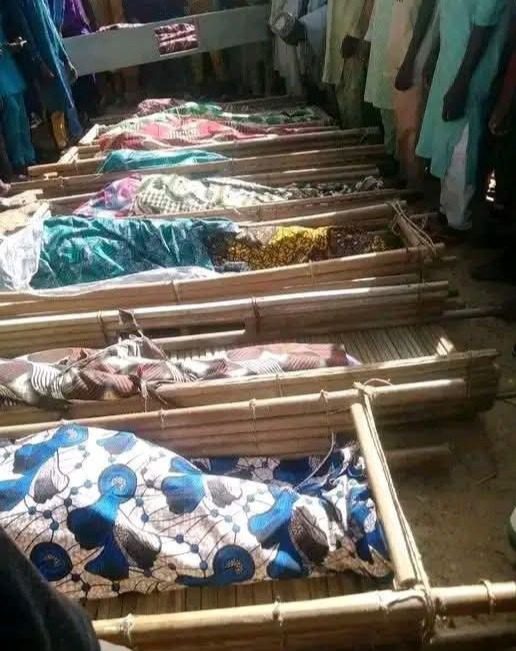
Funeral for the 17 farmers killed in Gora. Photo provided by Ibrahim Kaya.
“The terrorists are intentional about what they want,” Abdulmudallib Anka, a resident, told HumAngle. His house in Anka is filled with internally displaced persons from Gima and other villages. “The day of that attack, the terrorists circled a group of farmers working on their farms before they started shooting sporadically.”
Abdulmudallib noted that the recurring attacks have shown the terrorists are ready to continue their onslaught against the civilian population, so as to stop them from gaining access to their farms. There have also been reports of attacks in which farmers were killed in the communities of Kaura Namoda, Tsafe, Zurmi, and Birnin Magaji LGAs over the past few days.
Sulaiman Abdullahi, a youth leader in Birnin Magaji, said the situation has forced several farmers to stop going to the farm.
“Early June, farmers were attacked outside Tungar Danjuma and Gidan Kyafda, which led to the death of about six farmers with several others injured,” Sulaiman said. “That same day, farmlands on the Birnin Magaji – Kaura Namoda road were also attacked around 1 p.m.”
In Zurmi LGA, the terrorists struck on June 7 and invaded the outskirts of the town, along the road to Kaura Namoda, killing two farmers working on their farms.
Seventeen farmers were killed, and thirteen injured in a terrorist attack in Maradun LGA, Zamfara, Nigeria. This is part of a broader issue where rural terrorism has thrived for over a decade, forcing farmers to pay exorbitant “farming taxes” to militant groups for access to their fields.
Despite payments, many communities are displaced, and attacks on farmers are increasing, disrupting agriculture activities.
Local security has been ineffective as indicated by repeated incidents, including the abduction of about 40 community leaders under false pretenses. Recent violence has persisted across various local government areas of Zamfara, further highlighted by incessant attacks which resulted in deaths and injuries of numerous farmers.
The ongoing threat deters farming activities and devastates local economies, leaving residents in fear and uncertainty.
The United Kingdom’s Court of Appeal has ruled that the British government was right to proscribe the Palestine Action activist group as a “terrorist” organisation last year.
Palestine Action is a British protest group which was founded six years ago and describes itself as a movement “committed to ending global participation in Israel’s genocidal and apartheid regime”.
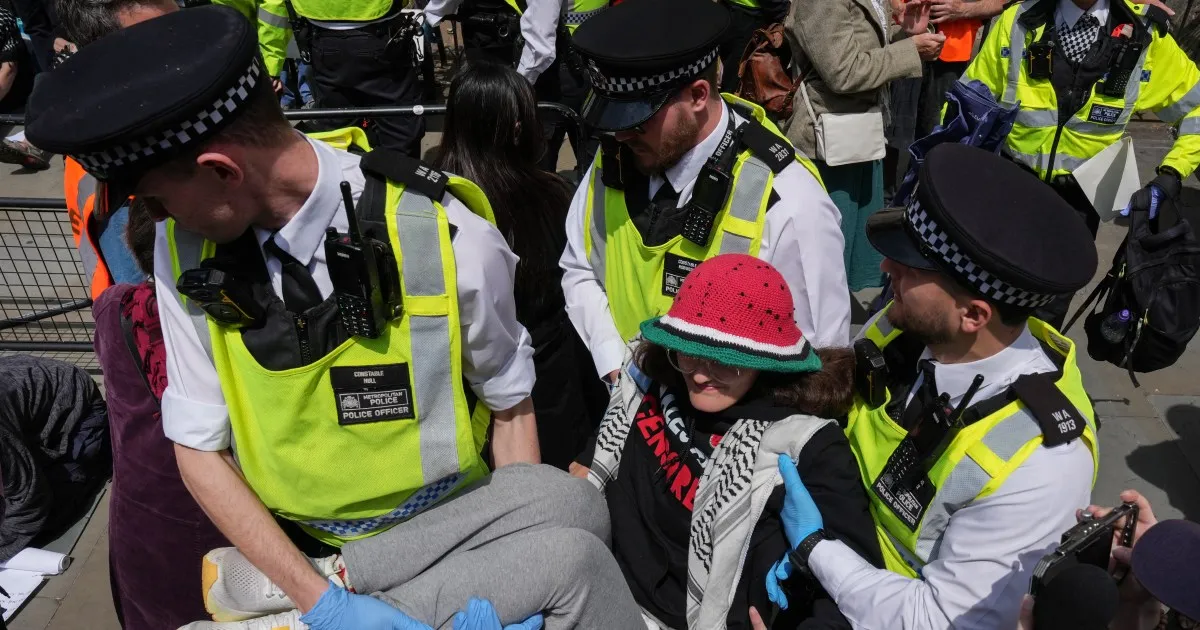
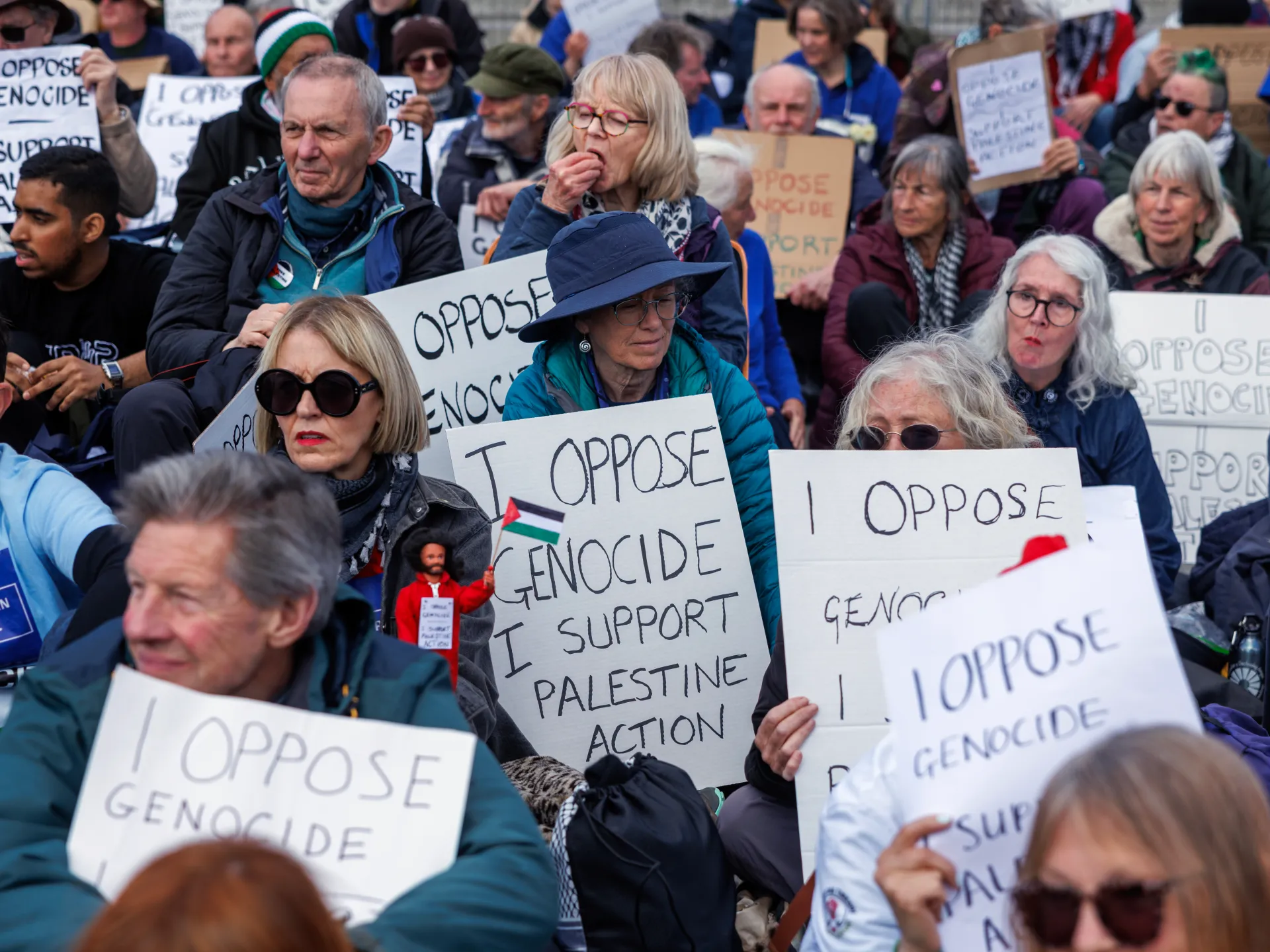
On Monday, police made more arrests of protesters demonstrating in support of Palestine Action outside the Court of Appeal in London.
Since the group’s proscription, which also bans support for proscribed groups, about 3,000 people have been arrested.
The Metropolitan Police welcomed the ruling and said it would continue to arrest those who protest in support of the group.
Here is what we know about the ruling:
What has the Court of Appeal ruled?
The judgement released on Monday states: “The proscription of an organisation like Palestine Action is highly controversial. But it is a fundamental mistake to overlook the fact that Palestine Action overtly promotes unlawful violence amounting to terrorism”.
The ruling was made by a five-strong panel, including the two most senior judges in England and Wales.
Palestine Action, which was formally proscribed by the UK last July, is a British protest group founded six years ago. It says it uses “disruptive tactics” to target “corporate enablers” and companies involved in the manufacture of weapons for Israel, such as Israeli group Elbit Systems, Italian aerospace company Leonardo, French multinational Thales and Teledyne from the United States. The group has targeted British facilities linked to those companies.
In all, British police say action by the group has resulted in millions of pounds of criminal damage.
A court in London ruled on June 12 that four Palestine Action members convicted of criminal damage at a British facility owned by Israeli weapons group Elbit Systems near Bristol, west England, would be sentenced on the basis that their actions had a “terrorist connection”.
Why was this case brought?
Following the proscription of Palestine Action last year, the group’s co-founder, Huda Ammori, challenged the decision in the High Court. In February, the High Court ruled that the government’s “terror group” ban was unlawful and disproportionate.
The government immediately said it would appeal. “I am disappointed by the court’s decision and disagree with the notion that banning this terrorist organisation is disproportionate,” Home Secretary Shabana Mahmood said.
The judgement on Monday agreed with her. Its ruling states: “The Home Secretary had the institutional competence and the democratic accountability to make the decision. The Proscription Decision was consistent with the Home Secretary’s Proscription Policy and was proportionate. It was not unlawful.”
Days after the Brize Norton attack, members of parliament voted in favour of proscribing the group. That classified Palestine Action as a “terrorist” organisation, bringing it into the same category as armed groups such as al-Qaeda and ISIL (ISIS).
Critics decried the vote, arguing that while members of the group have caused damage to property, they have not committed violent acts that amount to terrorism. More than 130 high-profile public figures have spoken out against the proscription.
Other previous actions the group has taken include:
In 2021, members protested for six days on the roof of Elbit Systems’ subsidiary, UAV Tactical Systems in Leicester, until some were arrested by police.
In 2022, the group broke into a Thales equipment factory in Glasgow, causing damage to weapons worth more than a million pounds ($1.3m).
In 2024, 10 months into Israel’s genocidal war on Gaza, Palestine Action activists broke into an Elbit Systems UK facility near Bristol in southwest England, causing another million pounds of damage.
How has Palestine Action responded to the ruling?
In a statement read by a representative following the ruling, Palestine Action’s Ammori said the group will challenge the judgement in the UK’s Supreme Court.
“We will fight this all the way. We will seek permission to appeal to the Supreme Court and, if need be, take this to the European Court of Human Rights,” Ammori said.
The European Court of Human Rights (ECHR), established by the Council of Europe, allows individuals to hold member states accountable for rights violations through a dedicated court. When the ECHR finds a violation, its judgements are legally binding on the state concerned under the European Convention on Human Rights.
“We will not stop fighting to overturn one of the most extreme attacks on free speech and the right to protest in modern British history,” Ammori added.
“This unprecedented abuse of power has devastated the lives of thousands of people while silencing dissent over Israel’s slaughter of the Palestinian people during the genocide, when that dissent could not be more urgent.”
How have others reacted to the ruling?
Anas Mustapha, Head of Public Advocacy at CAGE International, said: “This ruling tells us exactly what these powers are for. They are not safeguards against violence, they are authoritarian tools for crushing dissent.”
Mustapha added: “No ruling from any court is going to convince people that their conscience is wrong, and no amount of legislation will make support for Palestine disappear. The only sustainable outcome is the abolition of these laws in their entirety.”
Thomas Bell, acting UK Director of Human Rights Watch, said: “This disastrous decision further cements the UK’s place among countries that are backsliding on human rights by classifying acts of protest as terrorism.”
“When Palestine Action members have committed criminal damage, that should be dealt with under normal criminal laws, not by misusing overbroad and poorly defined terrorism powers. Defining a protest group as terrorists has created an absurd situation where thousands of people peacefully holding up signs have been arrested,” Bell added.
As a pariah child in search of Islamic knowledge, Goni Abubakar has no clue what it means to hold a gun and pull the trigger. He is just an almajiri who runs errands for his cleric master in Bama, a town in Borno State, northeastern Nigeria. He learns to recite Quran verses by heart; he is one of the brightest pupils under the cleric’s tutelage. In the beginning, the messages are clear: have faith in Allah, the Prophet Muhammad, and the Day of Judgement. Every pupil carries these heavy words around and keenly believes in them. They say the Quranic verses that match those words by heart: “O you who have believed, fear Allah and believe in His Messenger; He will [then] give you a double portion of His mercy and make for you a light by which you will walk and forgive you; and Allah is Forgiving and Merciful.”
The preaching is pious until peril pierces the heart of the preacher.
The teacher sells groceries, and Goni doubles as his shop assistant. Detached from his parents as a child, he was now a teen, tending only to the bidding of his mentor. Dozens of children are on this path to seek knowledge, but Goni is the teacher’s delight: fierce, smart, and completely loyal. Their earliest form of education is the Tsangaya, a traditional Quranic education in northern Nigeria, and most of them have not attended any formal secular school before they are thrown under the control of a man they all call “mallam”. The morning and evening classes are held in the shade of a tree and are led by the teacher, who preaches to them the ways of Islam.
Kids like Goni know what it means to grow up in a local community. A child can sing through the neighbourhood, begging anyone there for food and water. Local farmers prosper in peace after months of tilling and cultivating the land. People sleep at night without fear of being raided by assailants or militants. Fear and terror consumed the town when Boko Haram’s strange ideologies spread like wildfire into the communities. Goni’s teacher is among the first to embrace the ideologies propagated by Boko Haram’s founder, Mohammed Yusuf. As his preaching changed, his way of life changed too, beaming terror and extremism infused into the hearts of children under his mentorship.
In 2009, when Boko Haram went underground before re-emerging in 2010, Goni was already a 12-year-old. Too young and naive to ask questions, he and dozens of children followed their tutor to join the insurgent group that would later destabilise Nigeria. Now, in the northeastern region, the Boko Haram insurgency has uprooted over three million people and killed over 350,000, with government authorities failing to rein in the deadly scourge. Armed violence has spread beyond the region’s borders into parts of the northwestern and north-central regions.
Goni would become a grown man, swallowing the rulings of terrorists until he could no longer bear them. He now seeks redemption and reintegration through the state-backed deradicalisation programme. While it appears he has left a life of violence and attacks for good, it’s not that simple. For him and many other men in his shoes, post-Boko Haram life presents some puzzles that test the true efficacy of the deradicalisation scheme.
Are the terrorist deserters genuinely seeking redemption or only trying to survive? For months – between November 2025 and May 2026 – HumAngle probed the complexities of the former insurgents’ lives, documenting their journeys from the past to the present, their struggles to become civilians again, their secret frontline deals with the military, and the fragile peace their reintegration poses to the civilian population.
Another defector shows the scars he carries around. Photo: Ibrahim Adeyemi/HumAngle.
Snaring the cat
When Goni joined Boko Haram as a teen, his master’s preachings had switched from admonishing children under his watch to have strong faith in their religion to brainwashing them into a life of violence. They embraced it, truly believing that spilling the blood of people who don’t believe in their ideology was the clearest pathway to paradise. Elsewhere in Borno, in the Malam Fatori area, Ali Bukhar also listened to the sermons of Boko Haram’s jihadists. Those sermons summoned the beast in him and took away the best of his humanity. He joined them convinced that true salvation was immersed in the ideology of killing and maiming.
“In the preachings, they’d emphasise that if you died in the cause, you are a martyr. That you are going to paradise straight,” Ali recalls. He joined as an adult in 2014 during the peak of the Boko Haram emergence. About five months after joining the group, he was asked to attend training. His handlers took him to a riverine area and gave him a gun. “They have a specific instructor whose job is solely to train new intakes. You’d train for about four to five months. After the training, they’d return you to the Markaz [Arabic word for headquarters or centre]. And when it is time to go out for a fight, they’d give you guns.”
Suleiman Mohammad tells a slightly different story. He joined Boko Haram in 2013, during the first Baga attack. The militants and the military had been locked in a fierce battle that cost hundreds of civilians their lives and thousands their homes. A retaliatory raid after a military base was attacked in Baga took a bloody turn for mostly civilians, brewing a trust deficit in the operational methods of Nigerian forces in their fight against terrorism. The insurgent group took advantage of the situation to recruit young people into its unholy ways. Suleiman was among hundreds of people brought into the system after the Baga bloody saga and the uprising that followed. He was a herder in Malam Fatori and had grown up through the local Tsangaya education system.
“So after the Baga attack, I was contacted by the fighters who turned out to be from my village,” Suleiman reminisces. “We studied together when we attended Tsangaya and Islamiyya a long time ago. They told me how the other brothers were with them. They told me stories of how they recite the Quran collectively and also wage ‘holy war’ together. Then they invited me to join them. So, we made an appointment to meet at Mairari.”
A week later, the terrorists came as agreed and met with Suleiman’s father in his home.
“Your son is joining us in the cause of Allah. He’d work for Allah,” the terrorists say.
“Allah’s cause?” the father wonders. “Jihad is mandatory for all muslims. And since he has agreed to go with you, I have no objections.”
The terrorists had come with guns and machetes, Suleiman notes, suggesting that his father was made to agree under duress. “That was how I joined them. We had carried out several attacks ever since. From Mairari, Tungushe, and others. In fact, we held Mairari – under Magumeri – captive for quite some time before it was recaptured by the military.”
People joined the Boko Haram insurgency for different reasons. For Goni and his cohorts, it was a case of misguided faith rooted in brainwashing and psychological manipulation. The story is different for many others. The fire of the burning insurgency started from the charismatic oratory and radical sermons by the founder of Boko Haram, Mohammed Yusuf, between 2002 and 2009. Since at least 2021, HumAngle has interviewed dozens of defectors who revealed why they joined the deadly group before surrendering to a deradicalisation scheme organised by the government. Mohammed took advantage of the dysfunctions within the Nigerian state to campaign against a secular system of governance and, by extension, democracy.
Testimonies from defectors and custodians of Boko Haram’s history reveal that the post-2009 state repression, especially the actual brutality of the Nigerian military and police against civilians, and the uprising that trailed it, were among the factors that drove young people into insurgency. At the time, “Tura Takai Bango”was the mantra for the agitation, literally meaning “they had been pushed to the wall”. The era and the ugly events that unfolded encapsulate the desperation that leads civilians to affiliate with insurgents. When the state’s counter-insurgency tactics involve collective punishment, the civilian population often finds itself caught in a “double jeopardy” where both the state and the insurgents are viewed as existential threats.
Isa Alamndiri, one of the victims of the state repression, told HumAngle how he witnessed the summary execution of young people in 2016, in the Marte Local Government Area (LGA), on the grounds that they were shielding terrorists. “They came and gathered all of us in the village. They then separated the elderly and killed all the youths. They shot over 30 youths that day. Their reason was that we were harbouring Boko Haram in our midst,” Isa says.
Another witness of what many believe pushed youths in the state to the wall, Musa Kurama, recalls that the Nigerian military invaded his village in Meleri, also in Marte, to burn his house, among many others, to the ground, saying that the entire community was a hideout for terrorists. The cycle of violence forced young adults and naive teenagers to take the insurgents’ offer of “protection”, which was a predatory alternative to state-sponsored destruction.
Boko Haram also targeted schools for attacks, deliberately conducting mass kidnappings such as in Chibok and Dapchi to enforce their radical ideology by making secular educational institutions unsafe. This insurgent tactic strategically provides a supply of young captives who were groomed as fighters or forced into “marriages” that facilitate the group’s long-term sustainability. The state’s failure to secure these environments has led to the closure of over 600 schools in the region, creating a lost generation of children who are more susceptible to recruitment because of the absence of alternative futures.
Get our in-depth, creative coverage of conflict and development delivered to you every weekend.
Subscribe now to our newsletter!
Insurgents see children as alternative futures for their groups. Photo: Ibrahim Adeyemi/HumAngle.
Jihad: ‘Pathway to paradise’
Goni has grown up knowing nothing but violence and bloodshed, and now claims he’s out of the messy circle. He smiles as he speaks, but when he remembers how he joined other terrorists to pillage villages, uproot people from their homes, farmlands, and abduct scores, he furrows his brow.
“Before we go out, we would prepare. They’d mobilise 100 to 200 fighters, give them arms, and say, ‘We are going out to wage a holy war’. Then we would charge into military barracks,” he tells HumAngle curtly. “I believe we were deceived by our masters because they don’t practice what they preach and twist religious verses to suit their evil acts and intentions.”
Regardless of how and why they joined, newly recruited insurgents are made to believe that killing and spilling the blood of anyone not following their templates of violence has only one name: jihad. Most defectors we spoke to corroborated this during separate interviews in 2025 and later in 2026.
Experts and scholars in political science, human rights, and peace and conflict studies argue that Boko Haram weaponised the concept of jihad to manipulate its followers into believing keenly in killing and destroying those who disagree with their ideology. In the 2021 issue of the Al-Hikmah Journal on Social Sciences and Education, for example, Issa Muhammad-Jamiu, a researcher at Kogi State University in North Central Nigeria, notes that Boko Haram’s ideology contradicts Islamic injunctions. The most disturbing aspect, he states, is the condemnation of any scholarly verdict that falls short of their view.
“How could they attribute Islam to the prohibition of Western education, which has become a necessity, if not compulsory, to Muslims in the contemporary world? Do they mean that they are more knowledgeable and more committed to Islam than those Companions and Tabi’un who studied foreign cultures and sciences for the interest of Muslim communities?” Issa ponders.
At the Bama IDP camp in Borno State, North East Nigeria. Photo: Ibrahim Adeyemi/HumAngle.
Two sides of the coin
As Goni speaks, his lips look pale and peeling. He’s been battling typhoid and malaria and is still receiving treatment. He carries a gentle demeanour that betrays the terror he had perpetrated, and wears a blank face wrinkled with emotionlessness. For him, peace is a no-brainer when violence is pervasive.
He quips, throwing on a long, tedious smile when asked what he thinks of the concept of peace. “Peace tastes good,” he says. “Living peacefully among loved ones is greater than any other thing. I was in Njimia before leaving. I had worked in several places, including Gazuwa, my birthplace. What made me leave was recent developments. The conflict between the factions and the injustice. So, I took my weapon and left. I arrived at Konduga, where I was received. They then brought us to Bama and then to Hajj Camp.”
Goni believes that embracing peace simply means walking away from a life of pain, violence, and gnashing of teeth. Dwelling in the forest with terrorists means dining with the devil, he says. His moral postulation and spiritual freedom were destroyed in the terrorist camp. He had access to the Quran and understood its teachings, but every verse he read had to be interpreted in accordance with the sect’s teachings. He had no freedom of thought or understanding of whatever he read from the scripture. He had no meaningful life in the forest, he says, apart from destroying people’s lives.
He and many of the terrorist deserters we spoke to said they experienced pain in its most extreme form. Whenever they sustained gunshot wounds during field battles with the military, they returned to the forest almost dead. They were being treated by their locally-trained doctors, whom many of the ex-combatants described as quacks. Most times, they gave them dangerous, addictive opioids such as Tramadol and Refinol. They became addicted to these drugs to escape their daily ordeals, even after healing from the wounds.
“They punished us for taking hard drugs they introduced to us in the first place,” Goni complains. “Sometimes a fighter could be killed just because he takes hard drugs. When they knew it was bad, why did they use it to treat us?”
Many terrorists decided to surrender to the military for different reasons. One major cause of mass defections from the terrorist camps was the sudden demise of Abubakar Shekau, the Boko Haram gang leader who took over the mantle of terror from Mohammed Yusuf. There had been cracks within the insurgent group, leading to the rise of the Islamic State for West African Province (ISWAP), which was formed as a rebel group against Shekau’s camp. Another thing that followed the death of Shekau in 2021 was disease and hunger outbreaks.
The Nigerian military took advantage of Shekau’s death to launch several offensive attacks on the terrorist dens in northeastern Nigeria, destroying their logistics bases. That year, the military said it recorded thousands of defections from terrorists who surrendered to embrace peace. Once they submit themselves to the military after years of committing criminal atrocities, they are subjected to deradicalisation through the Borno Model.
Some terrorist deserters now live in the Bama IDP camp in Borno State. Photo: Ibrahim Adeyemi/HumAngle.
HumAngle interviewed several Boko Haram deserters to examine their understanding of peace after committing grave crimes against the human population in the region. Many of them curiously oversimplified the concept, reducing it to simply switching sides and moving from deadly armed violence to living an average civilian life.
“From my understanding, peace is us leaving the group,” Ali simply says and goes ahead to recount how he joined other fighters to enslave girls for sex after kidnapping them from their homes, schools, and farms. He had been through hell as a former Boko Haram member, and now seeks solace in embracing peace by surrendering to the military. He had been imprisoned by his superiors in the terror camp and asked to surrender his arms, but he refused. “I buried it where they could not see it. I was locked up for three months. When they released me, I went and dug up my gun and left them,” he recalls.
For him and several defectors, returning to the civilian community is an exciting prospect. Despite the horror they inflicted on civilian communities as terrorists, they consider living with ordinary locals again, especially close to their families, as a peaceful reconciliation of their horrible past. “We were ignorant when we did those things in the past. But now we know better,” one of them, Abubakar Saleh, says. He was a Boko Haram commander who led dozens of fighters to dislodge communities, rape women and girls and subjugate civilian communities under terrorist control.
He has now returned to Maiduguri with his family. His wife had just given birth when we spoke to him, and he has settled well into the civilian community. To him, peace is relief from the pain that comes with being a terrorist leader. Although he enjoyed authority as a commanding fighter, his life in the forest was miserable, as he was always on the move to evade military operations and surveillance.
“Life here is better,” he affirms. “It is more comfortable and peaceful. In the forest, there is no rest. You’d hunt daily like a lion. Always changing locations. But here, no attacks.”
For civilian casualties of the terror perpetrated by many of these terrorist deserters, however, peace doesn’t come easily. For years, victims of insurgency in the northeastern region have longed for peace and reparations. Thousands of displaced people not only lost their homes, but also lost hope in ever rebuilding their lives or returning to their settlements. In parts of Borno, especially at the Shuwari displacement site, displaced people feed on the leftovers from former terrorists undergoing the government’s deradicalisation programme, a situation that has created an atmosphere of distrust and inequalities. When the Borno State government began a resettlement scheme for displaced people, they were promised protection and stipends to rebuild their lives. Many of them ended up being re-displaced by terrorists and would not get the opportunity to rebuild their lives.
Ensuring peace and justice in the North East is far more complicated than many terrorist deserters have assumed, says Ndubuisi Ani, a Senior Researcher at the Institute of Security Studies. The transitional justice expert told HumAngle that the defectors’ curious understanding of peace undermines the pains and level of destruction civilians have witnessed at the hands of terrorists. He argues that peace and justice cannot be achieved in tackling violent extremism unless there’s inclusivity, good governance, and stability.
“The state must understand that there are basic needs to be responded to (on the side of victims),” Ndubuisi explains. “A lot of communities need a lot of social contracts on the ground.”
The security expert further explains that any transitional justice scheme by the government must be victim-centred. He advised that the state must go back to its original duty of protecting citizens and ensuring peace and tranquillity in society.
“You’ve not psychologically prepared actors. How do you let the victims understand?” he asked, stating that the government can’t successfully reintegrate terrorist deserters back into society without proper public engagement. “The intent is good, but the approach is the problem.”
Seeking peace and redemption
Like many terrorist deserters, Goni accepts that he has lived a complicated life of violence and horror. This is not the time for regret, he says. It’s a moment to seek forgiveness, to retrace his steps, and perhaps to wash the blood from his own hands. When he arrived at the Hajj Camp in Maiduguri after surrendering to the military and going through the process of deradicalisation, he struggled with the guilt of the atrocities he had committed, and, to prove to the military that he had backed off from a life of bloodshed, he agreed to work in the field with soldiers fighting terrorists. He’s not alone in this. Several former combatants we spoke to said they decided to work as auxiliary operatives to fight alongside the military against Boko Haram, the same sect they once belonged to. Several other defectors noted that when they chose to work with the military – as a way to seek redemption – they were handed rifles, loaded onto the backs of patrol trucks, and sent directly into the marshes and forests they had recently fled.
Asked whether they were coerced into joining the military, Goni laughed before saying the escapade was never mandatory.
“It is a choice,” he replies. “I may decide not to work with them again.”
It is a hard nut to crack, but the terrorist deserters say the military operatives have learned to work and walk with them.
“They arm us and take us with them. If, for instance, a Commanding Officer is going out for an operation, he’d request a certain amount of “repentants” from the Hajj Camp officials. And the officials would assign like 50 or 100 persons to him, depending on the scale of the operation,” Goni says.
By fighting the same people who recruited him into the monolithic Boko Haram camp as a teen, Goni says, he has freed himself from a lifetime of guilt. During his time with the killers, he recalls asking many of the fighters if they loved what they were doing. Those fighters feel trapped, he says; they’re homesick, but even their families have rejected them. Now that he has freed himself from the shackles of terrorism, he says he begs God for forgiveness. But while he seeks forgiveness for the atrocities he has committed, he would use every knowledge he has about the group to fight them back. That’s his way of seeking redemption.
“They give us food and allowances, and we give them intelligence. We show them the hideouts. Because we know the terrain better than they do. We know their fighting styles,” Goni brags, smiling and looking directly at the reporter. “We know their escape routes. Isn’t this helpful enough? Also, we lead the way. They’d follow behind. We charge in.”
Displaced persons at the Bama IDP camp live inside makeshift tents. Photo: Ibrahim Adeyemi/HumAngle.
Redemption through revenge
Ali’s life after Boko Haram is even more thrilling: he seeks redemption through revenge. He had fallen for peer pressure to join one of the most brutal terrorist organisations in existence, and his life had since remained terrifying. For years, he was a cog in the Boko Haram machine, serving with vim and vigour. He learned to repair military vehicles in the forest and became renowned as the sect’s mechanic. He would repair heavy military patrol vehicles seized by the insurgents or those stuck in the mud within the forest during ambushes.
Despite his servitude for Boko Haram’s cause, he says, his entire life with the terror group was a lie. He grew to realise that behind the Boko Haram ideology was a hail of deceit and human manipulation. Bamboozled with distorted interpretations of verses from the Quran, Ali recounts how he had joined hundreds of other fighters to trigger plague, tears, and horror in civilian communities in the name of holy war.
“The practice violates the preachings. My biggest reason was that the practice was not what the Prophet truly teaches,” he claims. “The commanders would usually stay behind, leaving a comfortable life, while the foot soldiers are left starving and fighting day and night.”
For Ali, the deal breaker with Boko Haram was during a chaotic raid in the Tungushe town of Borno. He had come under a heavy burst of military gunfire, which tore through his arm, shattering the bone. He had expected that the sect’s medical team would give him some extra care due to his critical condition, but they treated him like disposable property.
“I was so humiliated by the sect’s medical team, as treatments were handled haphazardly,” he laments. “If it were the commanders, they would treat them swiftly with maximum care. But for fighters, there is usually no medical attention.”
For two straight years, he nursed the pain alone and grew bitter resentment for the sect and its ideologies. He realised he was nothing but a tool for achieving the commanders’ personal hunches and interests. One night, he slipped away, through the scrublands, trudging northward until he found himself around the military garrison in Monguno, where he fell flat on the ground and surrendered.
“After surrendering in Monguno, they took us to Hajj Camp in Maiduguri,” Ali tells HumAngle. “Days later, they brought forward an opportunity where you could help in the fight. You may decide to follow the military during attacks or provide them with intelligence. Whatever you think you can do. So, I said I want to fight. I have a friend who also fights alongside the soldiers. I chose to fight because I have realised that we were deceived by the group.”
Repentance or survival?
Unlike Ali and Goni, repentance has an entirely different meaning for Suleiman: it is an illusion or a political statement made by people in government. Calling him a “repentant Boko Haram” is an insult, he says. To him, that word is a subtle qualifier for a coward. With a cold voice and a sour look, he describes how he worked with ground troops to attack Timbuktu, Sambisa, and other terrorist hideouts.
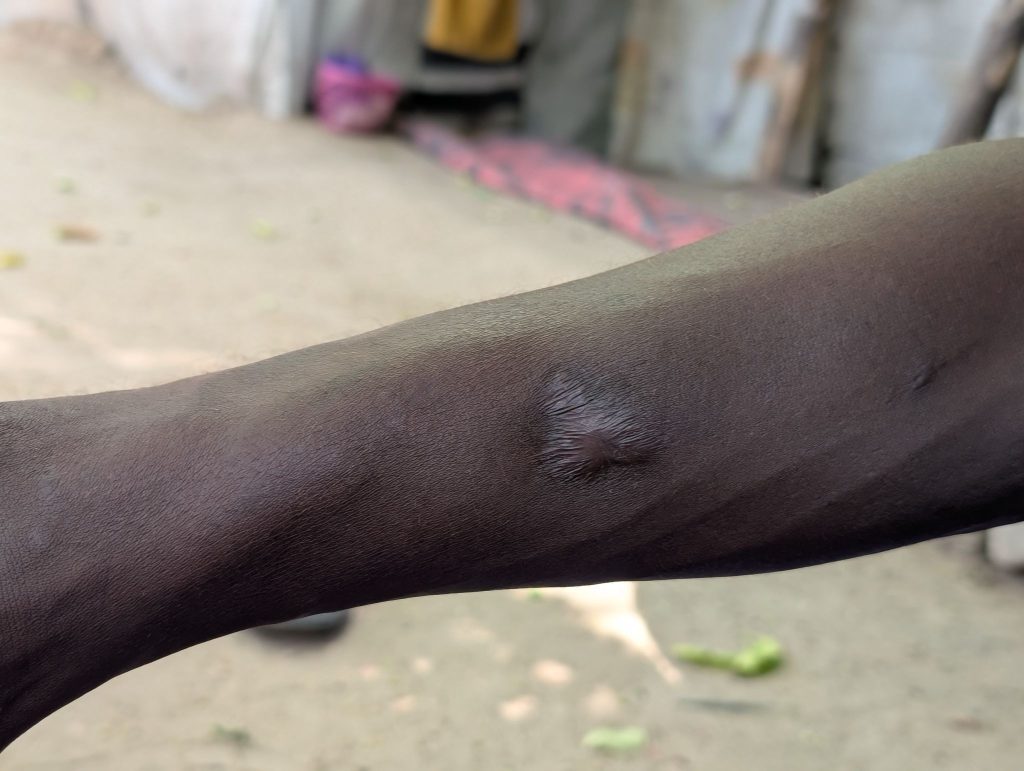
Four fingers of this anonymous terrorist deserter were chopped off while assisting the military on the battlefield against Boko Haram. Photo: Ibrahim Adeyemi/HumAngle.
His case is more of just switching sides than actual repentance. He dreads the term “repentant Boko Haram” and doesn’t hide it. As a terrorist, he lived for violence, pillaging villages and destroying people’s lives and properties. Following the rise of Abu Mushab al-Barnawi, a factional leader of the Boko Haram sect, Suleiman came under his command, joining over 100 fighters under his control. He had fought fiercely against the Nigerian military on many occasions, and he was feared for his precise brutality amid battles.
His cruelty had no bounds, as he had fought against top Nigerian military leaders, as he states, like Captain Bala, Manga, and Abu Ali, leaving scars on the town that are still visible today. He had also raided beyond Nigeria, maiming locals in the Niger Republic, especially in Diffa, Maine-Soroa, and Chabbal.
When factional infighting turned truly brutal, Suleiman chose to be on the safer side. Exhausted by the tireless internal slaughter, he left and surrendered to the military. Now, he does almost the same thing on the other side. The activity is the same, he notes, only the targets are different.
“I am not comfortable with that name [repentant]. I don’t like it,” Suleiman says. He would frown and then laugh during the interview to convey the complexity of the terror drowning him. “In the forest, I followed someone’s commands. Here too, I am commanded and still branded repentant?”
He wears a worn Civilian Joint Task Force (CJTF) uniform during the interview with HumAngle, bragging about following soldiers to the battlefield against terrorists in Geidam, Marte, Kala-Bridge and Malam Fatori. Despite his defiance, however, he seems to have taken bullets for the military during counterterrorism raids in northeastern Nigeria. His four fingers are chopped off, and there are scars all over his body. It was during a joint offensive with Chadian forces in northern Monguno. An artillery explosion had torn through the military ranks and killed several soldiers and terrorist deserters fighting by their side. He would follow the forces into the fortified hideouts of Timbuktu and Sambisa, giving on-the-ground intel to navigate the terrain.
“I got this arm scar, and my fingers were chopped off while digging out a planted landmine about five months ago,” he says of another military raid he participated in. “The explosion killed two other ex-combatants and nine soldiers. When the engineer scouted and identified a planted bomb, he refused to dig it out. None of the soldiers did. So they asked me to do it. One of the wires sparked. Then it exploded. It also affected my leg.”
The deradicalisation scheme
The term “repentance”, which Suleiman and several other defectors loathe, is one of the modus operandi of the Operation Safe Corridor, a military-led deradicalisation and reintegration programme across northeastern states. Established in 2016, the programme has witnessed both criticism and appraisal from experts and affected citizens. The quest for transitional justice, following the mass atrocities committed by Boko Haram against the people and the government of Nigeria, pushed authorities to come up with peacebuilding efforts.
The federal government had introduced the judicial approach of mass trials of Boko Haram figures captured on the battlefield, but systemic failures of the legal system derailed the processes. With a conviction rate of less than 10 per cent after conducting mass trials of thousands of fighters between 2017 and 2020, public distrust in the judicial system grew rapidly. These efforts also faced hurdles due to limited resources and circumstantial evidence, as well as a massive backlog of approximately 10,000 suspected fighters awaiting trial.
Following deficiencies in the judicial and military mechanisms, the government provided non-judicial options, such as the Operation Safe Corridor (OPSC) and, later, the Borno Model, a scheme designed to handle the mass defections of thousands of insurgents.
File: Some of the OPSC graduands. Photo: Solomon Odeniyi/Punch.
HumAngle reviewed at least two research studies that confirm our on-the-ground reporting on the deficiencies and the public misgivings against the counterinsurgency initiative. The independent studies, one led by Idayat Hassan, then of the Centre for Democracy and Development (CDD), and the other by Hassan-Taiwo Adebayo of the Institute of Security Studies (ISS), noted a systemic imbalance that seemed to favour the rehabilitation of perpetrators over the survival and justice of their victims. The disparity in the attention given to terrorist deserters also fueled widespread community resentment and birthed a narrative that terrorists are being pampered at the expense of their targets. The security and transitional justice experts also assert that a flawed public appeal and information management have sparked outrage and a trust deficit on the government’s side.
One concern Taiwo’s research raised is the persistent challenges in providing sufficient economic support to Boko Haram deserters once they leave the camps. Several defectors HumAngle interviewed raised the same concern. Although they vowed to live civilian lives again, they claimed their lives in the forest were more prosperous, and they’re now facing economic hurdles after defecting. The former insurgents, now working as assets to the military, also complained of constant failed promises. When they’re called upon for operations against the terrorists, the military would pledge mouth-watering financial gains only to offer them an amount far less than what they had promised.
“Then they’d say they’ll pay us each ₦1 million or ₦1.5 million for every crucial piece of information and operation. But after a successful mission, they’d go back on their words and pay ₦100,000 or below. Whereas we have families to cater for. Wives, children, and parents,” Suleiman recounts, a claim substantiated by other former combatants we interviewed.
Wayward ways
As many defectors struggle to settle into communities, civilians also struggle to embrace them. The reason is not far-fetched: the villagers have grown resentful of former Boko Haram members who have raided their settlements, stripping them of their homes and stable lives, only to come and live next door. The moment they leave the rehabilitation camps, they escape the military’s watchful eyes. Many times, this escape means defectors choose what they do with their lives, including displaying violent tendencies against civilians. The villagers call them “repentants”, but insist their ways are wayward.
Locals, including displaced people, say so-called repentant terrorists re-terrorise them, making them relive the terror they had inflicted on them. During separate interviews, civilian villagers accused security agents of shielding defectors when they commit offences against the people. They say this has triggered a climate of silence within the Maiduguri metropolis, where everyone is scared of speaking ill of a former Boko Haram fighter, even when they’re guilty of wrongdoing. When HumAngle visited the Bama displacement camp in 2025, for instance, we saw dozens of defectors moving around aimlessly with guns and other weapons. Camp officials claimed the armed defectors were protecting displaced persons, but when we requested to speak with them, they denied us access. Displaced persons also refrained from discussing their situation, fearing persecution.
In Shuwari, a peri-urban area just outside Maiduguri town in Borno, a few locals agreed to talk to HumAngle on the condition that their identities would be concealed. Villagers say these defectors incite violence, rob civilians, and harass women. When they complain or try to fight back, they brag about having ruled the forest for years and having the power to do whatever they want within the civilian communities. Displaced people also live side by side at the Shuwari IDP camp with men they believe are responsible for their displacement. Living with them at the camp comes with fear and mistrust, IDPs say.
When Salihu Garba briefly returned to Bama, following the Borno state resettlement programme, threats from former Boko Haram fighters forced him back to the Shuwari IDP camp, he says. While some defectors seem to be living without fighting their neighbours, others, especially those working as assets for the military, move around brandishing rifles, spurring terror, and instilling fear among locals. Simple communal disputes often degenerate into violence. Salihu tells HumAngle that, two months ago, a quarrel spiralled into stabbing a villager. A former insurgent had stepped on bricks laid by a villager to build part of his compound, and that escalated into an exchange of blows and domestic weapons. Both the civilian and the defector were arrested, but the latter returned the next day to stab the former, who was later rushed to the hospital to fight for his life.
Civilians say Boko Haram deserters are re-terrorising them. Photo: Al-amin Umar/HumAngle.
Rural criminality also adds to the tension that comes with forcibly reintegrating terrorists into civilian communities, locals say. One repentant terrorist was recently arrested for theft after breaking into shops and stealing six bags of beans. Before being sent to the police cell and later prison, he threatened the shop owner: “I will return and kill you after serving my term.”
For Isah Kamsulum, another resident of Shuwari, the fear is deeply personal. In 2015, he witnessed a man named Ba’ana slaughter fifteen people in Bama. Years later, Ba’ana resurfaced as a repentant, working with soldiers in the community. Isah’s nephew confronted him, enraged that someone who had killed his sibling now lived comfortably among them. Ba’ana killed the nephew. He was arrested, held briefly, then released. Today, he fights alongside the military in Gamboru. Residents say they were never consulted before repentants were resettled among them. “We just saw them,” he complains. “The government brought them out of the forest and kept us here, too. We are all under their control.”
Ibrahim Adam of the Zajeri community in the state says he had an even more concerning experience. Over a year ago, about ten former insurgents got an apartment for themselves within the community. They were at first unarmed, but some of their friends, who worked as auxiliary fighters with the military and were armed, would frequently come visiting them daily. Their presence, especially in large numbers, unsettled the villagers. The former insurgents started asking young women to marry them. One divorcee selling food by the roadside was told she must marry one of them. Scared to the bone, the woman abandoned her trade and fled the area.
Villagers say they have grown alarmed living with the repentants, with Ibrahim recounting that they have witnessed about 30 of them crammed in an apartment, talking recklessly and loudly about their past and bragging about their atrocities before surrendering to the army. The community demanded their eviction, but the landlord refused because he’s afraid. While older repentants in the community maintain some decorum, the younger ones, accompanied by armed companions, remain a source of fear.
For Goni, Ali, and several terrorist deserters HumAngle interviewed, relapsing into terror is not an option. They also said they’re not among the young repentants instilling fears into the civilian community. They say they’ve chosen the path of peace and would never return to a life of violence.
Four activists from the Palestine Action group face sentencing in the United Kingdom as “terrorists” on Friday, despite only being convicted by a jury of other criminal charges.
Palestine Action was formally proscribed as a “terrorist” organisation in the UK last July.
Last month, four of six activists on trial were convicted at Woolwich Crown Court in London of criminal damage during a 2024 raid on a factory in Filton, Bristol, operated by Israeli defence firm Elbit. One of the defendants was also found guilty of striking a police officer with a sledgehammer.
The possibility that the judge will rule that the offences have a “terrorist connection” for sentencing purposes has prompted protests.
What is Palestine Action?
The protest group Palestine Action, launched in July 2020, describes itself as a movement “committed to ending global participation in Israel’s genocidal and apartheid regime”.
It seeks to use “disruptive tactics” to target “corporate enablers” and companies involved in the manufacture of weapons for Israel, such as Israel-based Elbit Systems, Italian aerospace company Leonardo, French multinational Thales and Teledyne from the United States. The group has targeted British facilities linked to those companies.
The UK parliament voted in favour of proscribing the group on July 2, 2025, classifying it as a “terrorist” organisation, and bringing it into the same category as armed groups such as al-Qaeda and ISIL (ISIS). The proscription came days after its activists sneaked into an air force base in southern England.
Critics decried the move by MPs, arguing that while members of the group have caused damage to property, they have not committed violent acts that amount to terrorism.
What were they convicted of?
In August 2024, Palestine Action activists raided a factory in Filton near Bristol in southwest England, operated by Israeli arms manufacturer Elbit Systems. They entered the site and caused extensive damage in an attempt to disrupt the production of weapons and drone components they say would be used by Israel in Gaza.
The raid, which prosecutors said caused about one million pounds ($1.36m) of damage, happened 10 months into Israel’s genocidal war on Gaza that began in October 2023.
Last month, jurors at Woolwich Crown Court convicted Charlotte Head, 30, Samuel Corner, 23, Leona Kamio, 30, and Fatema Zainab Rajwani, 21, of criminal damage. The four activists have become known as “the Filton 4”.
Corner was also found guilty of striking a police officer with a sledgehammer and convicted of inflicting grievous bodily harm.
Two other Palestine Action activists, Zoe Rogers, 22, and Jordan Devlin, 31, were found not guilty.
The verdict followed an earlier trial, at which all six defendants were acquitted of aggravated burglary, while the jury was unable to reach verdicts for the criminal damage charges.
Each of the defendants gave evidence, admitting that they damaged Israeli military drones and equipment inside Elbit’s research and development facility in Filton – in order to “save lives in Palestine”, according to a statement by their lawyers.
What would a terrorism sentencing mean?
The jury was not told that, if they convicted, the four could be sentenced under terrorism laws. Criminal damage is not usually a terrorism offence, but in England and Wales judges can decide to treat an offence as having a “terrorist connection” at sentencing, even when the charge itself is not a terrorism offence.
If the court decides there was a terrorism connection, the activists would have to serve their entire sentences in prison, unless they have already completed at least two‑thirds of the sentence and a parole board decides they can be released.
Conversely, non-terrorist prisoners usually serve about 40 percent of their sentence in custody and are released early, but under conditions and supervision, sometimes called licence conditions. If they break those conditions, they can be sent back to prison to finish their sentence.
Additionally, if the activists are sentenced in this way, they can be recorded as “terrorists” for the rest of their lives, would be required to register new mobile devices, email addresses and bank accounts with the police for their lifetime, and face being returned to prison if they breach their licence conditions or reoffend.
What has the reaction to all this been?
On Wednesday, a group of more than 50 lawyers and law professors published an open letter denouncing plans to sentence the four Palestine Action members as terrorists.
The letter highlights that damage to property has been a recurring feature of protest campaigns from the Suffragettes who fought for women to have the right to vote, to environmental protest group Extinction Rebellion.
“It has never previously even been suggested that those taking such action should be treated as terrorists. Blurring the distinction between principled direct action and terrorism is the hallmark of authoritarian regimes,” the open letter stated.
The letter has been signed by law professors from universities in the UK, the Netherlands, Norway and Canada as well as by dozens of practising barristers and solicitors.
According to local news reports, a protest is expected at Woolwich Crown Court on Friday against the potential judgement.
When Nick Antosca was a kid, he didn’t like having good dreams.
“With good dreams, I’d wake up and think, ‘Well, that didn’t happen’ and be disappointed,’” he recalled in a recent video interview. “But with a nightmare I’d wake up with my pulse racing and think, ‘I’m OK, I survived.’ I loved nightmares.”
Chasing that excitement and “healthy” catharsis in his daily life, Antosca has built a career on telling crime and horror stories: “Channel Zero,” “The Act,” “Brand New Cherry Flavor,” “Candy” and “A Friend of the Family.”
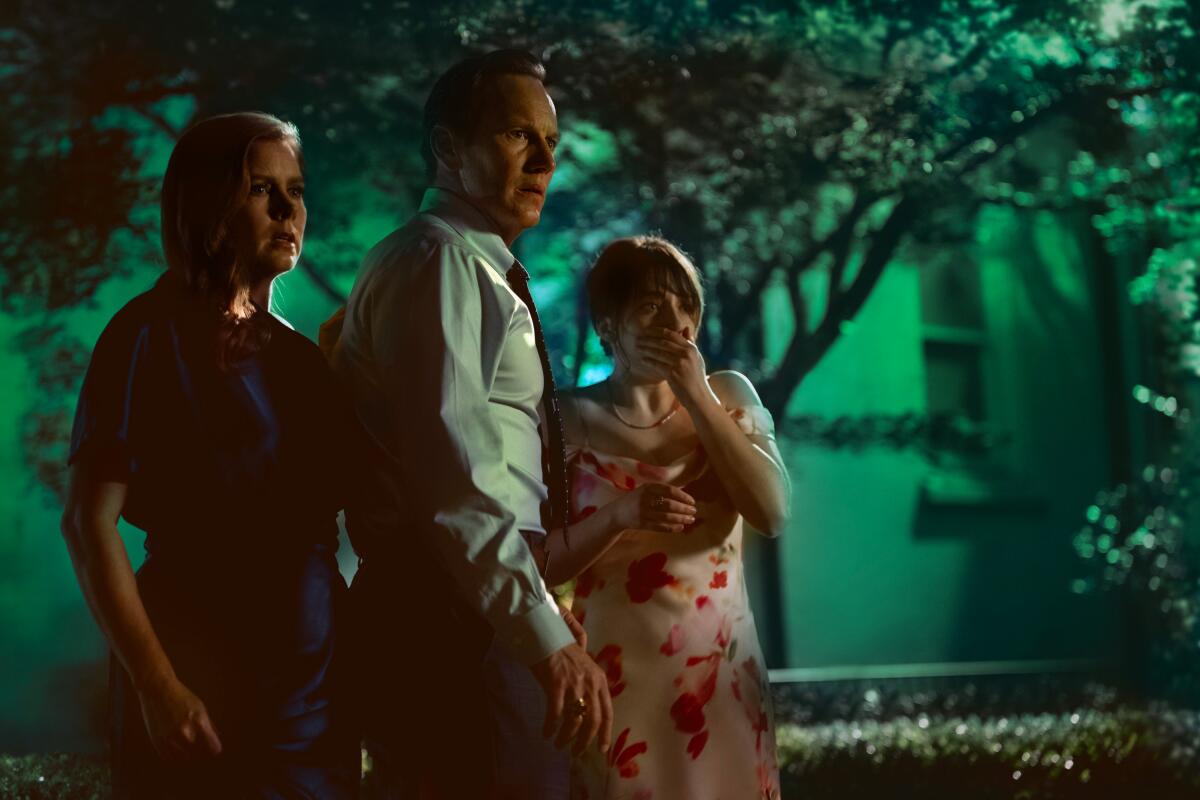
His newest project is a 10-episode remake of “Cape Fear” for Apple TV, starring Javier Bardem as Max Cady along with Amy Adams and Patrick Wilson as Anna and Tom Bowden.
“I think everything I’ve done is kind of a psychological horror story about the characters and their relationships,” he says, noting that this is true of the best horror tales like “Rosemary’s Baby,” “The Shining” and “Cape Fear.”
Antosca was a fan of both the original 1962 “Cape Fear” starring Robert Mitchum and Martin Scorsese’s 1991 remake starring Robert De Niro. But he felt it was time for a modern revision, a Southern Gothic fever dream that reflects the complexities of life today.
“The terror in ‘Cape Fear’ is about the destruction of the family,” he says. The story was originally about Cady, a rapist released from prison stalking Sam Bowden, who had interrupted his crime and testified against him. In Scorsese’s version, Bowden had been Cady’s defense attorney who, knowing Cady was guilty, had hidden evidence about the victim’s promiscuity to ensure a conviction and long sentence.
The original features “an all-American archetype of a virtuous family pitted against a monster,” while Scorsese depicted a “broken and dysfunctional family and the monster is even more extreme, he’s like a swamp creature.”
“The previous versions of ‘Cape Fear’ are pretty cut and dry,” Antosca says.
The Bowdens are portrayed by Amy Adams as Anna, Patrick Wilson as Tom and Lily Collias as daughter Natalie.
(Apple)
The new iteration features a sexting scandal, social media eruptions and drones — “there’s more ways to terrorize a family in 2026 and the world is scarier today than it was before” — but that’s not what makes it feel different.
“In our version the truth is more complicated, the past is more mysterious and both the family and the monster are more complicated,” he says. “The truth is murkier and that feels current.”
In this adaptation, Anna Bowden had been Cady’s defense attorney, and he’s no longer an illiterate rube but a successful restaurateur who was convicted of murdering his wife and unborn son. After the trial, Anna scandalously married Cady’s prosecutor Tom; he became stepfather to her newborn daughter Natalie (Lily Collias) and they later had a son Zack (Joe Anders).
“The foundation of their happiness is Max’s suffering,” he says, adding that while the crime was local in the previous versions, Cady’s conviction had been a national sensation in this one.
On the surface, the Bowdens are a perfect family, but cracks are rippling with increasing intensity just beneath, a fragility that will soon be exploited by Cady.
“In the first episodes, the family is permeable and a threat could be coming from anywhere,” he says. “Even if in your gut you think it’s Max Cady, it feels like it’s seeping into the family from all different directions.”
When Cady is suddenly exonerated and set free, he shows up to insinuate himself in the Bowdens’ life. Anna, ironically, works for a nonprofit that seeks to exonerate the wrongly convicted.
“All the versions ask, ‘What would you do to protect your family?’ but this also asks, ‘If an injustice was done to somebody, then what are they justified doing in return,’” he says. “I don’t want the audience rooting for Max, necessarily, but I want to trick them into having sympathy for somebody they didn’t expect to have sympathy for.”
To pull that off, “Cape Fear” needed a star as charismatic as Mitchum and De Niro.
Antosca always dreamed of Bardem as Cady: “When I’d pitch networks before there was a script, I’d say, ‘Picture Javier Bardem in this role.’” But this time, his dream came to vivid life.
The two developed the character together, everything from the explanation for Cady’s Spanish background to his exposure to Santería and prison and his “mutated version of the real religion” to the tattoos adorning Cady’s body to an early scene with a panther and the idea of the “psychological jungle,” which inspired Bardem to incorporate a panther’s physicality into his movement and his eyes.
Antosca always dreamed of Javier Bardem as Max Cady: “When I’d pitch networks before there was a script, I’d say, ‘Picture Javier Bardem in this role.’”
(Apple)
“Javier also asked questions about Max’s emotional history that was useful in shaping his character,” he says. “We wanted to show a little more authentic vulnerability, which we see very much in the previous versions intentionally.”
To make this series, Antosca first approached Scorsese and Steven Spielberg, who had initially developed the 1991 version. “They were incredibly generous and quite involved,” Antosca says. “They encouraged us to forge our own path.”
The one place they urged some fidelity to the past versions was in the score. “They said the Bernard Herrmann score is part of the DNA and feels like a character in both movies,” says Antosca, noting that Elmer Bernstein adapted the original in Scorsese’s version and Jeff Russo used the same starting point this time around.
Scorsese discussed episodes over FaceTime and Zoom, spending time dissecting a vicious fight scene while Antosca was editing it; shot in color but shown in black-and-white, the blood splattering may make you think of “Raging Bull,” but Antosca says the visceral violence was meant to call up “Casino’s” vise scene.
It may be nearly too much to handle, but Antosca is from New Orleans and says he found it easy to exploit the Southern Gothic sensibilities. “Everything is heightened in the Deep South and we were going for that energy, where something is adjacent to the real world but more saturated, sweatier, more feverish,” he says, noting that while the first episode is “cinematically pretty grounded and traditional, when the family gets shocked out of their comfort zone, things get a little crazy.”
That meant handheld cameras, flares, saturated colors, distortions, negative imagery and odd angles to reflect the growing sense of terror. Antosca promises that in the back half of the series, the show will get even wilder and more destabilizing.
“It just feels like there’s violence in the humidity in the South,” he says.
Subconsciously hearkening back to his childhood sleep experiences, he adds, “I wanted this story to feel like a nightmare that just keeps getting worse and worse and worse and worse.”
The president of Brazil, left-wing leader Luiz Inacio Lula da Silva, has denounced a decision by the United States to designate two of the South American country’s criminal networks as “terrorists”, warning that the label could be a “setback” for local law enforcement efforts.
The condemnation came in a 435-word message posted to Lula’s social media platforms on Friday.
Recommended Stories
list of 3 itemsend of list
In it, Lula drew a line between criminal activities and international terrorism, which is often understood to use violence for political or social aims.
“The terror inflicted by these organisations upon communities seeks to generate profit through crime — specifically through drug and arms trafficking,” Lula wrote.
Those activities, however violent, “must not be conflated with the ideologically, politically, or religiously motivated actions characteristic of international terrorism”, he added.
Lula’s statements came in response to an announcement a day earlier from the administration of US President Donald Trump.
Pushback against ‘terrorist’ label
On Thursday, US Secretary of State Marco Rubio revealed that he had designated Brazil’s two largest criminal groups — the Primeiro Comando da Capital (PCC) and the Comando Vermelho (CV) — “specially designated global terrorists”.
He also outlined plans to add the two groups to the list of “foreign terrorist organisations”, effective June 5.
Rumours had swirled for months that the Trump administration would apply the “terrorist” label to the two groups. But Lula and his ministers had pushed back, calling on Trump to hold off.
“Terrorist” designations freeze all US-based assets connected to the targeted groups, but they can also be used to penalise anyone who offers “material support or resources” to them.
Experts warn that such restrictions could potentially affect financial institutions and even the victims of such groups, including businesses and individuals who might be forced to pay extortion.
Lula has also expressed concern that the “terrorist” label could pave the way for US military intervention, a fear he reiterated in Friday’s statement, though he never named Trump outright.
“We remain fully prepared to develop joint solutions that yield mutual benefits for all nations involved,” Lula wrote.
“However, we will not tolerate the imposition of arbitrary measures from abroad, nor will we accept their use as a pretext to undermine our sovereignty or our economy. Unilateral, non-negotiated measures can undermine the fight against criminals and trigger actions that endanger the lives of people who have absolutely no connection to crime.”
A tight election in Brazil
A prominent left-wing leader in Latin America, Lula is in the midst of a heated election season, as he seeks a fourth nonconsecutive term as Brazil’s president.
Previously, he served as president from 2003 to 2011, before being re-elected to a third term in 2022.
In that race, he defeated the right-wing incumbent, Jair Bolsonaro, who would later be convicted of attempting to overturn the results of the race. Bolsonaro is currently serving a 27-year prison sentence.
His eldest son, Senator Flavio Bolsonaro, is thought to have been instrumental in Trump’s decision to issue the “terrorist” designations. The senator is currently running against Lula in the 2026 presidential election, and the two have been locked in a tight race.
This week, as he visited the White House, Senator Bolsonaro confirmed to reporters that he intended to seek “terrorist” designations for both the Primeiro Comando da Capital and the Comando Vermelho.
Trump has close ties to the Bolsonaro family, and he has previously intervened in elections around the world on behalf of right-wing candidates.
In Friday’s post, Lula accused Senator Bolsonaro of leveraging his family connections to “petition foreign authorities” for favour.
“It is deplorable that, once again, members of the Bolsonaro family have travelled to the United States to advocate for foreign intervention in Brazil,” Lula wrote.
He pointed to alleged efforts to stop the criminal prosecution of Jair Bolsonaro. Currently, one of the ex-president’s sons, Eduardo Bolsonaro, is facing obstruction charges related to efforts to lobby Trump to intervene in the case.
Trump ultimately did impose steep sanctions against Brazilian products in August 2025, citing the Bolsonaro trial as a reason.
Concerns about sovereignty
Under Trump, the US has taken an increasingly expansionist view towards the Western Hemisphere, reviving the 19th-century Monroe Doctrine, which described the Americas as Washington’s sphere of influence.
Trump himself has used crime as justification for taking unilateral military action in the region. Since September, his administration has conducted 59 strikes against alleged drug-trafficking boats in the Caribbean Sea and eastern Pacific Ocean, killing at least 196 people.
And on January 3, he launched an early-morning military operation against Venezuela, culminating in the abduction and imprisonment of then-President Nicolas Maduro on drug-trafficking charges.
While the Bolsonaro family has courted Trump in recent months, Lula has criticised those military-led actions as unjustified.
But security is expected to be a dominant issue in October’s presidential race. This week’s “terrorist” designations are likely to put Lula in an awkward position, forcing him to condemn the label without downplaying the extent of the violence.
Lula has attempted to brush off right-wing criticism that he has been lax on crime, pointing to his government’s recent $11bn investment in the “Brazil Against Organized Crime” programme.
That follows a separate $2bn programme in March to bolster the country’s prisons, improve homicide investigations and disrupt arms trafficking and other financial transactions carried out by criminal groups.
Still, Lula and Bolsonaro remain neck and neck in the lead-up to October’s election.
On May 16, the polling firm Datafolha found that both candidates would receive 45 percent of voter support in a one-on-one race, with 9 percent of voters indicating they would cast a null vote.