Tennis

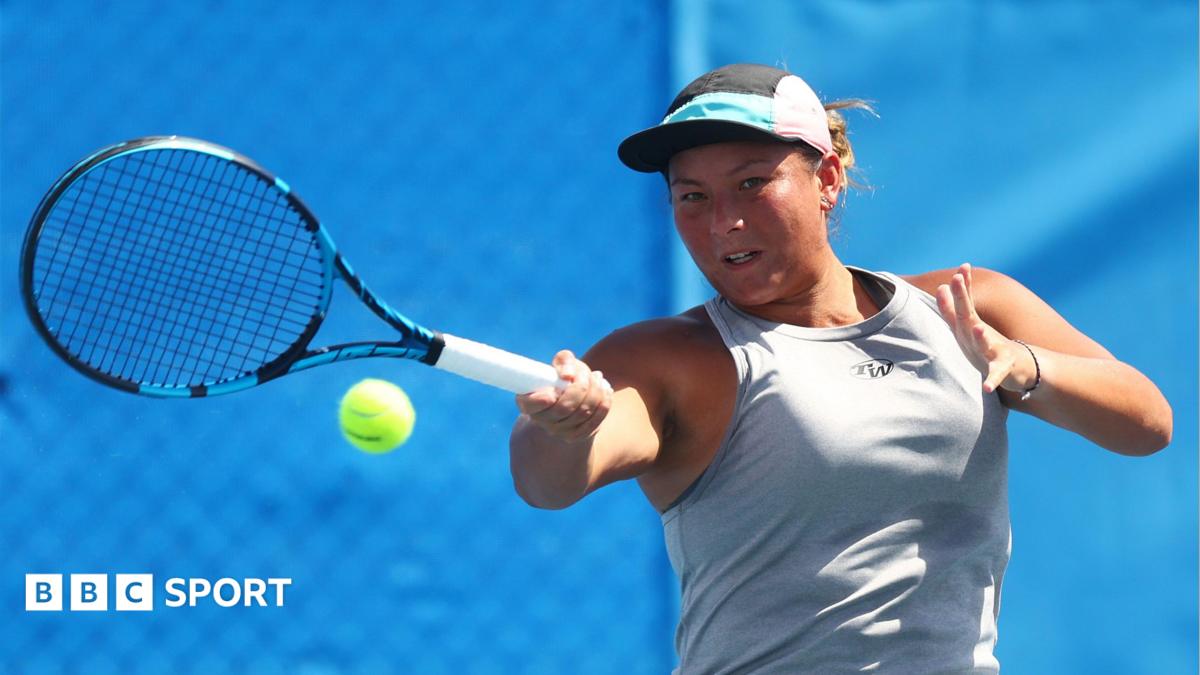
Tennis: British player Tara Moore’s latest legal bid over doping ban dismissed by US court

In April 2022, Moore tested positive for nandrolone and boldenone at a WTA 250 event in Bogota, with an independent tribunal ruling in December 2023 that contaminated meat was the source.

Moore, who was Britain’s leading women’s doubles player at the time of the failed test, was found to bear “no fault or negligence”, but the International Tennis Integrity Agency (ITIA) appealed against the decision.

Last year, the Court of Arbitration for Sport (Cas) ruled in favour of the ITIA and Moore was banned until 2028.

Moore then initiated proceedings with the American Arbitration Association, in which she claimed the WTA’s “failure to warn against eating meat in Colombia was a direct cause of her positive test result and the harm that followed”.

The arbitrator supported the ruling made by Cas and dismissed the case against the WTA.

In response, Moore filed a motion against the decision at the United States District Court in New York.

Moore, who was ranked a career-high 77th in the world in 2022, claimed she was denied a fair hearing by the arbitrator.

The motion detailed how Moore was seeking “no less than $20m in compensatory damages” after claiming the WTA “stayed silent in the face of a known and specific danger and then shifted the blame for its own negligence” to the player.

On Friday, United States district judge Andrew Carter found Moore’s challenge was “not justified” on a legal basis.

The WTA and ITIA have been approached for comment.

Source link

Asian Games 2026: Top athletes and storylines to look out for | Athletics

Asia’s biggest sport stars will descend on Japan this week to battle it out for continental glory as the Asian Games get under way.

Aichi-Nagoya 2026 will see several athletes eyeing first-time podium finishes while others look to defend their crown.

Recommended Stories

list of 4 itemsend of list

This year’s edition will see six sports make their debut, while in some sports, a gold medal will double as automatic qualification for the LA 2028 Olympics.

From Olympic champions to teen sensations to breakout stars, Al Jazeera Sport takes a look at some of the top athletes to watch:

Alex Eala, Philippines — tennis

Tennis’s newest sweetheart will be the favourite for gold in women’s singles. The 21-year-old Filipino star is coming off a career-high season that saw her first WTA 1000 title last month and a third-round finish at the US Open.

Eala will compete at the Singapore Open just before the games, but will skip the concurrent Beijing Open – regardless of whether the WTA decide to punish her – since a gold medal at the Asian Games serves as automatic qualification for the LA 2028 Olympics.

Defending champion Zheng Qinwen and former world number one Naomi Osaka will not be competing in Japan, leaving it wide open for Eala to claim gold and upgrade from the bronze she won in 2022.

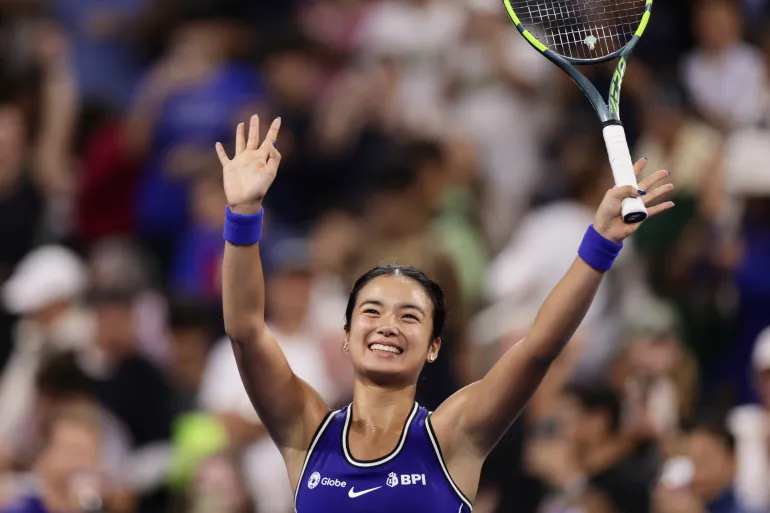
Eala acknowledges the crowd after defeating Mary Stoiana in the first round of the US Open in New York
Eala acknowledges the crowd after defeating Mary Stoiana in the first round of the US Open in New York [Adam Hunger/AP Photo]

Rumesh Pathirage, Sri Lanka — javelin

The javelin phenom has been collecting gold medals like Pokemon cards this year, and another one at the Asian Games will add to his Diamond League, Commonwealth, and Ultimate Champion crowns.

But gold is not the biggest prize for the 23-year-old, although it is almost guaranteed after his nearest contender, India’s Neeraj Chopra, withdrew with injury. Pathirage is eyeing the Asian record of 92.97m set by Arshad Nadeem at the Paris 2024 Olympics, which he is poised to break after becoming the only thrower this season to breach 92m twice.

Pakistan’s Nadeem, on the other hand, is far from fit and will be lucky to end his season with a medal after a string of subpar throws.

Sri Lanka's Rumesh Tharanga Pathirage celebrates with the trophy after his victory in men's javelin throw final during the World Athletics Ultimate Championship at the Gyula Zsivotzky National Athletics Centre, in Budapest on September 13, 2026. (Photo by Ben STANSALL / AFP)
Pathirage celebrates with the trophy after his victory in men’s javelin at the World Athletics Ultimate Championship in Budapest on September 13, 2026 [Ben Stansall/AFP]

Haruka Kitaguchi, Japan — javelin

Home favourite Kitaguchi is eyeing gold in the women’s javelin after being crowned Ultimate Champion in Budapest last week. Her 68.92m throw landed her a new national record and is tied for 10th-best in the world and second-best this season.

Surprisingly, the 28-year-old is making her Asian Games debut and will look to add continental gold in front of the home crowd after floundering at last year’s World Athletics Championships in Tokyo.

Yan Ziyi, China — javelin

Another javelin powerhouse to watch is world number one Yan Ziyi. She became only the sixth woman in history to surpass the 70m mark with her 71.74m throw in May that became a new Asian and World Under-20 record.

The Chinese teen sensation was unbeaten throughout the five Diamond League competitions she contested, but finished second to Kitaguchi at the Ultimate Championship after withdrawing with injury after one throw.

Should she recover in time, the 18-year-old can snatch back the crown from the Japanese veteran thrower to end the season on a high note.

XIAMEN, CHINA - MAY 23: Ziyi Yan of China poses with the results board after competes the women's Javelin Throw event during the Wanda Diamond League Xiamen on May 23, 2026 in Xiamen, China. (Photo by Lintao Zhang/Getty Images)
Yan Ziyi heads to the Asian Games as world number one in the women’s javelin throw [Lintao Zhang/Getty Images/File]

Vaibhav Sooryavanshi, India — cricket

As India look to defend their men’s cricket crown, all eyes are on 15-year-old Sooryavanshi to produce another phenomenal result on the pitch.

The left-handed top-order batter has already made headlines for being a generational talent, having broken records as the highest scorer in this year’s Indian Premier League and become India’s youngest men’s player.

Cricket - Third T20 International - England v India - Trent Bridge Cricket Ground, Nottingham, Britain - July 7, 2026 India's Vaibhav Sooryavanshi in action Action Images via Reuters/Andrew Boyers
India’s Vaibhav Sooryavanshi in action at the third India v England T20I in Nottingham [Andrew Boyers/Reuters]

Pan Zhanle, China — swimming

The Olympic champion returns to the stomping grounds where he first went sub-47 seconds in the men’s 100m freestyle – and became the first Asian male to do so – to break his own Asian record.

It was also on home soil at the Hangzhou 2022 games that he bagged a silver in the 200m and 400m freestyle, a bronze in the 50m, and a gold in the men’s 4x100m freestyle relay and 4x100m medley relay.

Pan Zhanle, of China, celebrates after winning the men's 100-meter freestyle final at the 2024 Summer Olympics, Wednesday, July 31, 2024, in Nanterre, France. (AP Photo/Petr David Josek)
Pan Zhanle celebrates after winning the men’s 100m freestyle final at the 2024 Summer Olympics [Petr David Josek/AP Photo]

Yu Zidi, China — swimming

The Chinese prodigy was only 12 when she made waves as the youngest-ever medallist at the 2025 World Swimming Championships. She narrowly missed a podium finish in her individual events but found redemption at the Chinese National Swimming Championships later that year with two golds, one silver, and an Asian record in the 200m Individual Medley.

Now 13, she is looking to dominate at her first, hopefully of many, Asian Games where she’s entered in the 200m IM, 400m IM and 200m butterfly events, alongside relays.

While training with the China team in Beijing, she told local media this month she was “excited” for her Asian Games debut.

“Train well, don’t slack off. Demonstrate the level of your training and work hard to break past yourself,” she said, according to state news agency Xinhua.

SHENZHEN, CHINA - MARCH 22: Yu Zidi of China competes in the Women's 200m individual medley final during day 4 of the China Open Swimming Championship at Shenzhen Universiade Center Aquatics Centre on March 22, 2026 in Shenzhen, China. (Photo by Lintao Zhang/Getty Images)
Yu Zidi of China competes in the Women’s 200m individual medley final at the China Open Swimming Championship in Shenzhen, China on March 22, 2026 [Lintao Zhang/Getty]

Source link

Arab News | Zverev hails mother’s unwavering belief after US Open triumph

NEW YORK: Family was at the ‌heart of Alexander Zverev’s US Open triumph on Sunday as the German saluted the members of his inner circle and paid a heartfelt tribute to his mother for refusing to let diabetes define his future.

The top seed beat ​American Ben Shelton 6-3 7-6(2) 5-7 6-2 at Flushing Meadows to finish a spectacular year at the Grand Slams in which he proved his doubters wrong by going from perennial nearly man to two-time major champion.

Shortly after his victory, Zverev reserved special praise for his mother Irina, a former professional tennis player, and credited her with ensuring type 1 diabetes never limited his ambitions in life.

“When your 4-year-old son is diagnosed with diabetes and doctors in the office tell you that life and sports will be very limited for that child, it takes a very strong mother to say ‘my ‌son will be ‌whatever he wants to be’,” Zverev said.

“’If he wants to be ​a ‌tennis ⁠player, he’ll ​be ⁠a tennis player. If he wants to do something else, he’ll do something else, but this illness will not define us’.

“I’m happy that we worked through it and we’re doing the things that we’re doing now. My mother is the most important and strongest person I know because it takes an unbelievably strong woman to do what she did.”

The 29-year-old thanked his team, which includes his father Alexander Zverev Sr and his brother Mischa, for their hard work that had delivered him another Grand Slam trophy to ⁠add to his Olympic gold medal from the Tokyo Games five years ‌ago.

“We went almost 30 years without winning a Grand Slam ‌title and now we’ve won two in a span of three ​months,” Zverev said.

“I think God has seen how ‌hard we’ve worked, how much we’ve suffered, how much pain we went through and I ‌think that 2026 is the outcome of all the years that happened before.”

SCARS OF 2020

Zverev had come agonizingly close to capturing his maiden Grand Slam title in New York in 2020, leading Dominic Thiem by two sets to none and later serving for the match in the fifth set before losing.

He finally won his first major ‌crown at this year’s French Open after defeating Flavio Cobolli in five sets, and the German doubled his tally in New York despite making ⁠a shaky start to ⁠the fortnight.

He also reached the Wimbledon final this year, falling to Jannik Sinner in four sets.

“The scars of the 2020 (US Open) final, they disappeared after I won in Paris. I said at Wimbledon, though I lost in the final, I enjoyed the match … enjoyed playing on Center Court in front of an amazing crowd,” Zverev said.

“Before winning in Paris, I felt a lot of stress all the time, because there was always a question mark. ‘Will I ever win one?’ Now it’s more of a joy to play those kinds of finals.”

With Sinner sidelined by a knee injury and Carlos Alcaraz having just returned from a wrist problem, Zverev reluctantly accepted that he was the man to beat in men’s tennis after a strong finish to the Grand Slam season.

“Four or five months ​ago, when both of them were healthy, I ​wasn’t. I was losing to Jannik all the time,” he added.

“So if everyone is healthy, Jannik is still ahead. It’s as simple as that.”

Source link

Sabalenka beats Pegula to set up Rybakina epic in US Open final | Tennis

Aryna Sabalenka beat Jessica Pegula 7-5, 6-2 to reach US Open final with Elena Rybakina, who toppled her as World No 1.

Aryna Sabalenka stormed past Jessica Pegula in straight sets on Thursday to keep her bid for a rare US Open threepeat on track, booking a championship showdown with Elena Rybakina.

Sabalenka was simply unstoppable in a 7-5, 6-2 victory on Arthur Ashe Stadium, where she beat Pegula en route to US Open victories in 2024 and 2025.

Recommended Stories

list of 4 itemsend of list

Rybakina battled back to beat 2023 champion Coco Gauff 3-6, 6-4, 6-4.

In Saturday’s final, the Kazakh will try to deal Sabalenka another blow after her run to the semifinals ensured she will end the Belarusian’s reign atop the world rankings.

Sabalenka, bidding to join Chris Evert and Serena Williams as the only women to win three straight US Open titles, pounded third-seeded Pegula remorselessly with her powerful groundstrokes.

“I was super desperate,” said Sabalenka, who has had a slow summer since back-to-back wins at Indian Wells and Miami in March.

“I wanted it badly to go to the finals, and of course, I want to go all the way.

“The mentality was just I’m ready. I’m ready for whatever it’s going to take to get the win,” Sabalenka added, after producing her best performance of the tournament to snuff out Pegula’s dream of a first-ever Grand Slam title.

Sabalenka’s frustration at her inability to make any headway against Pegula’s serve showed in a tense first set. But she maintained her focus and was rewarded as Pegula, feeling the pressure to stay in the set as she served down 6-5, fell behind 0-40.

The American saved one set point but could not salvage the next.

Sabalenka kept rolling in the second set, attacking Pegula’s suspect second serve and seizing a break for a 3-1 lead when she lasered a forehand into the corner.

She sealed the victory with another break courtesy of another thunderous forehand.

“I thought her level was insanely high,” Pegula said. “Honestly, I don’t really know if there was much I could do today.”

Rybakina, who beat Sabalenka in the Australian Open final in January to claim her second Grand Slam title, said she would need to raise her level to do the same in Flushing Meadows.

“I feel like I definitely need to step my game up, serve much better than today and stay aggressive,” Rybakina said.

Gauff’s bid to return to the final for the first time since she defeated Sabalenka for the 2023 title had got off to a smooth start, the American gaining the lone break of the opening set for a 4-2 lead and pocketing the set with a love game.

But Rybakina hit back with an early break on the way to a 4-1 lead in the second.

Gauff responded superbly, breaking back and holding to square the set at 4-4 to roars from the crowd.

But she was unable to make the most of her fightback and double-faulted in the 10th game to hand two set points to Rybakina, who pounced to force a third set.

Rybakina looked on the brink of victory after breaking Gauff for a 5-3 lead in the third. Gauff broke back, but Rybakina clinched it in the next game.

A deft volley from Rybakina left her with two match points, and Gauff then hit a wide-open smash long to hand her opponent victory.

“I feel like I was a little bit lucky on her serve,” Rybakina said. “A couple of deep returns, one mistake from her, it went quickly my way … It was a real battle.”

Gauff, meanwhile, was left reflecting on the fine margins of the defeat.

“It honestly came down to a couple of service games of mine in both sets and I didn’t quite hold,” Gauff said. “I think she was able to hold the line a bit better than I could tonight.”

The men’s semifinals are on Friday, when eighth-seeded Ben Shelton takes on 11th seed Frances Tiafoe in an all-American clash.

Shelton took out defending champion and seven-time Grand Slam winner Carlos Alcaraz in an epic quarterfinal that ended at 3:34am on Wednesday – the latest finish in tournament history.

“Big Ben” and “Big Foe” will duel for a chance to end American men’s 23-year Grand Slam title drought.

The winner will take on either top-seeded French Open champion Alexander Zverev or unseeded Russian Karen Khachanov.

Source link

Arab News | Alcaraz falls to Shelton in epic latest-ever US Open finish

NEW YORK: Carlos Alcaraz tumbled out of the US Open quarter-finals at 3:34 am Wednesday, falling to Ben Shelton in an epic five-set thriller that broke the record for latest finish ever at Flushing Meadows.

The big-hitting Shelton claimed his first career win over Alcaraz, 6-7 (5/7), 6-1, 6-3, 1-6, 7-6 (10/7), ending the Spaniard’s hopes of retaining his title in his first tournament back after a four-month injury absence.


Source link

US Open: Zheng in 5-0 comeback; Gauff, Rybakina, Zverev also in quarters | Tennis

Zheng Qinwen beats Iga Swiatek, while Coco Gauff and Elena Rybakina also reach the quarterfinals. Meanwhile, Alexander Zverev advances in the men’s.

Home favourite Coco Gauff and world number two Elena Rybakina sailed into the US Open quarterfinals, while China’s Zheng Qinwen mounted another extraordinary fightback to upset six-time Grand Slam champion Iga Swiatek.

Top seed Alexander Zverev beat Italian ⁠Luciano Darderi 6-2, 6-2, 7-6(3) at Arthur Ashe Stadium. The German was surprised to finish before midnight after coming through a couple of five-setters earlier in the tournament.

Recommended Stories

list of 4 itemsend of list

“I think after 10 hours on court, I just maybe found my rhythm a little bit better, which is helpful because the first two matches ⁠were really not [at a] great level,” Zverev said after his win late on Monday.

“I think I’m going in the right direction, moving forward in the right direction.”

Zverev, who is bidding for a second Grand Slam title after winning the French Open in June, avenged his defeat by Darderi at the Italian Open in Rome earlier this year.

Fourth seed Gauff outclassed compatriot Iva Jovic 6-1, 6-4 to set up a clash with French Open champion Mirra Andreeva for a place in the semis.

“Mirra is someone that I always have ‌tough matches with,” Gauff told reporters. “She’s obviously in a different mindset now at the top of the game coming off of a Grand Slam win … it’s going to be a really athletic, tough match.”

Gauff is the sixth American player into the quarters, joining Jessica Pegula, Emma Navarro, Frances Tiafoe, Alex Michelsen and Ben Shelton.

Rybakina continued her quest for a third major title with a 6-1, 6-4 win over former US Open champion Naomi Osaka, who was hampered by an Achilles tendon injury that had flared up in the previous round.

The victory leaves second seed Rybakina one win away from becoming world number one for the first time, with Olympic champion Zheng awaiting her in the quarters.

The win was another encouraging sign for ⁠Rybakina, who had arrived in New York with questions over her fitness after retiring from the Cincinnati Open in the ⁠build-up to the tournament.

“Preparation wasn’t that great,” she told reporters. “It’s an amazing progress. I’m really glad how everything worked out.”

Zheng has become something of an escape artist at Flushing Meadows.

After coming back from a 0-5 deficit in the deciding set against third-round foe Madison Keys, she let the first five games slip through her fingers in 20 minutes against 2022 ⁠champion Swiatek.

However, she clawed her way back into the match and collapsed to the court with her face in her hands after sealing the win on the fourth match point.

Zheng is the first qualifier since Emma Raducanu in 2021 ⁠to reach the quarterfinals of the women’s draw, as she battles back from a chronic elbow ⁠injury.

Andreeva’s entertaining match against Anastasia Potapova ended on a sour note as the Austrian went down injured in the final game.

Potapova valiantly retook the court but could not prevent the inevitable as Andreeva sealed the 5-7, 6-4, 6-3 win with a backhand strike before going across the net to hug her opponent.

The evening session in the men’s draw was not short on drama.

At ‌Louis Armstrong Stadium, Karen Khachanov fought back to claim a 7-5, 4-6, 6-7(6), 6-1, 6-4 win over 20-year-old American Learner Tien, while on the Grandstand court, Botic van de Zandschulp emerged victorious after a five-hour marathon against Arthur Gea.

The 21-year-old Gea had been one point away from becoming the first lucky loser ‌in ‌Grand Slam history to reach the quarterfinals, before his Dutch opponent engineered a 3-6, 6-7(0), 7-6(7), 7-6(3), 6-4 comeback win.

Earlier on Monday, Belgium’s Alexander Blockx dispatched Argentine 24th seed Francisco Cerundolo 6-3, 4-6, 7-5, 7-5 to reach his first Grand Slam quarterfinal.

Source link

Alcaraz breezes into last eight at US Open | Tennis News

Alcaraz hasn’t dropped a single set in four matches at the US Open after a win over Tommy Paul in the last 16.

Carlos Alcaraz beat American 20th seed Tommy Paul 6-4, 6-3, 6-4 in a high-voltage tennis hit-fest on Sunday to reach the US Open quarterfinals and remain firmly on track for back-to-back titles at Flushing Meadows.

The seven-time Grand Slam champion hit top form in New York after nearly five months out with a right wrist injury, and extended his major match-winning streak to 18 with a stunning display of shotmaking against a fellow big-hitter.

Recommended Stories

list of 4 itemsend of list

“I think I just played my game,” Alcaraz said. “I tried to play to my style. Tommy’s such a talented player, and his shots are pretty dangerous, and it’s difficult to control the ball when it comes to you. I was ready for a battle.

“I was trying to be aggressive all the time … I did well to put pressure on his return, which helped me stay calm and to think clearly. I was really happy with the performance.”

Spain's Carlos Alcaraz in action during his round of 16 match against Tommy Paul of the U.S
Spain’s Carlos Alcaraz in action during his round-of-16 match against Tommy Paul of the US [Robert Deutsch/Reuters]

Alcaraz’s serve came under pressure in the third game when Paul fired an exquisite 161km/hour (100 mph) forehand winner around the net that brought Arthur Ashe Stadium to its feet. Still, the Spaniard stood firm before striking late to snatch the opening set.

The 23-year-old left a vapour trail with a crosscourt winner to carve out an early opening in the second set and swiftly took a 2-0 lead, before trading breaks with Paul and breezing through the remaining games for a commanding lead.

Even with much of the show-court crowd yearning for a home winner, second seed Alcaraz continued to steal the show with his audacious play, moving to the brink of improving his win-loss record against American players at the Grand Slams to 13-0.

After shifting down to cruise mode, Alcaraz briefly flinched at the finish line, but he regrouped to deliver the knockout blow and set up a meeting with American Ben Shelton or Greek Stefanos Tsitsipas in the next round.

Alcaraz hit a rocket of a forehand to bring up match point, another sign that he was reaching the peak of his powers at a venue where he has thrived ever since his maiden Grand Slam triumph four years ago.

“I think so,” Alcaraz said when asked about being back to his best in New York, where he has reached the quarterfinals in five of his six appearances now.

“It shows how special this place is to me; I’m just enjoying myself on court here. It doesn’t matter that I was out for over four months. Every time I come here, I play well.”

Source link

Jovic moved to tears after beating ‘incredible’ friend Eala in US Open epic | Tennis

Iva Jovic outlasted the fellow young tennis sensation from the Philippines, Alex Eala, in an epic three-hour showdown.

American teen Iva Jovic was moved to tears while talking about her off-court friend and on-court opponent Alex Eala, whom she beat in a three-set thriller to enter the round of 16 at the US Open.

Jovic outlasted the fellow young tennis sensation from the Philippines in an epic three-hour showdown on Saturday to book a meeting with fourth-seeded former champion Coco Gauff.

Recommended Stories

list of 4 itemsend of list

The 14th-seed Jovic won five of the last six games for a 7-5, 3-6, 7-5 triumph over 17th-seed Eala after three hours and three minutes.

“That felt like a marathon, and I felt like I lost my sanity five times over to win that match,” Jovic said. “But it’s really worth it for this feeling.”

Two of the top rising stars of women’s tennis made their Arthur Ashe Stadium debut a memorable battle that featured 17 service breaks in 33 games.

“That match, definitely the way it finished, deserved that court,” Jovic said.

“It literally took everything to somehow squeeze my way through that.”

When the emerging US tennis star’s win was sealed, her Filipina friend went around the court to congratulate her instead of waiting at the net as players usually do at the end of tennis matches.

When Jovic was asked about Eala’s gesture in her post-match news conference, the American was moved to tears and said it showed her friend’s character.

“It says a lot about her as a person,” Jovic said while wiping away tears. “I’m gonna start crying, but it says a lot about her as a person to be able to do that after that type of match and still come over to hug me and wish me all the best. And even in the locker room behind closed doors … so that just says a lot about her and her character. Yeah, she’s incredible.”

Jovic, 18, and Eala, 21, are friends and sometimes doubles partners, knowing each other’s skills and style well. That helped produce seven service breaks in the first 11 games.

“I’m usually not one that shows that many emotions, but this one really meant a lot to me. It’s everything to have another match here at the US Open,” Jovic said.

That match will be against compatriot Gauff, the 2023 US Open and 2025 French Open champion.

“I’m going to be more than happy to just bring this fight and this energy, and whatever happens I can leave with my head high,” Jovic said.

Iva Jovic, left, of the United States, embraces Alexandra Eala, of the Philippines, after Jovic won in three sets in the third round of the U.S. Open tennis championships, Saturday, Sept. 5, 2026, in New York. (AP Photo/Frank Franklin II)
Jovic and Eala embrace at the end of the match [Frank Franklin II/AP]

‘Put on a show’

Jovic broke four times to win the first set but was broken three times by left-hander Eala to drop the second.

“The level was absolutely incredible from both sides,” Jovic said.

“We definitely put on a show, and it literally took everything to get through that … losing my earrings, falling literally flat-out on the floor, cuts on my knees, mental breakdowns,” she said.

Eala admitted: “I had my chances. I’m happy with the match in general. Of course there is disappointment in losing, but trying to see the positive side. It was a really good match. The level was really high.

“I left everything out there. I fought through the ups and downs … What I know for a fact is that I fought, so I’m happy with that.”

A quarterfinalist at this year’s Australian Open, Jovic won her first WTA title last year in Guadalajara at age 17.

She beat Eala at the French Open and Queen’s Club in London earlier this season in their prior meetings, but that was before Eala won her first WTA title at Washington.

“She played an outrageous level tonight. She was serving very good. She was showing a lot more versatility with her returns,” Jovic said of Eala.

“She’s playing some of the best tennis in the world right now, so it’s no doubt it takes a hell of an effort to beat her.”

Philippines' Alexandra Eala waves to the crowd after loosing to USA's Iva Jovic during their women's singles third round tennis match on day seven of the US Open tennis tournament at the USTA Billie Jean King National Tennis Center in New York City on September 5, 2026. (Photo by Leonardo MUNOZ / AFP)
The Philippines’ Alexandra Eala waves to the crowd as she walks off the court [Leonardo Munoz/AFP]

Source link

Alcaraz, Sabalenka into US Open last 16 as Williams sisters lose on return | Tennis

Defending singles champions Carlos Alcaraz and Aryna Sabalenka have sailed into the last 16 of the US Open as tennis icons Serena and Venus Williams suffered an agonising defeat on their long-awaited return to Grand Slam doubles.

Alcaraz, coming off a four-month injury absence, beat China’s Wu Yibing 6-3, 6-4, 6-1 on Friday to book his place in the fourth round, while Sabalenka was similarly dominant in a 6-3, 6-4 defeat of Kamilla Rakhimova.

Alcaraz will face 20th-seeded American Tommy Paul for a place in the quarterfinals after Paul beat 15th-seeded Alexander Bublik 6-4, 3-6, 6-7 (4/7), 6-1, 6-3.

“The way he plays is unbelievable, the rhythm he has on every shot – forehand, backhand,” Alcaraz said of Wu. “His balls skid a lot on the court and, for me, it’s really difficult to control sometimes.

“But I think I stayed there. I played aggressive. I played smart in the toughest moments.”

Wu recovered an early break in each of the first two sets, but Alcaraz pocketed both with breaks in the final games, and after saving a pair of break points in the first game of the third, the Spaniard rolled home.

“I think my level is really good,” he said. “I’ve got into the rhythm of the competition. I’m getting there.”

World number one Sabalenka did not face a break point in her dismissal of Rakhimova, firing 29 winners with 10 aces.

The numbers did not tell the whole tale of a match that saw 92nd-ranked Rakhimova challenge Sabalenka in a second-set slugfest.

Sabalenka was also unimpressed by the pervasive smell of marijuana – an increasingly common issue at the US Open – wafting down from the stands during her match.

“It’s a bit tricky to handle that smell while you’re trying to compete at your best,” said Sabalenka, who at one point complained to the umpire about the issue.

Sabalenka, who must repeat as champion to have a chance of remaining number one, next faces Taylor Townsend, the 96th-ranked American who beat 15th-seeded Russian Diana Shnaider 6-2, 6-7 (3/7), 6-3.

Williams sisters lose thriller

With Alcaraz and Sabalenka among the early starters, all eyes on the evening session were on the Williams sisters, partnering in a Grand Slam doubles event for the first time since 2022.

The duo returned to the US Open stage comes after 23-time Grand Slam singles champion Serena came out of a four-year retirement to play at Wimbledon.

But the most famous sister act in tennis – who won 14 Grand Slam doubles titles together along with three Olympic gold medals – were beaten 6-3, 6-7 (6/8), 7-6 (10/7) by 14th seeds Chan Hao-ching of Taiwan and Australia’s Maya Joint in a marathon three-hour battle.

The Williams duo had shown flashes of their brilliant best after recovering from losing the first set to level the match after taking the second set on a tie-break.

Momentum and a raucous New York crowd appeared to be carrying them towards victory after they sprinted into a 5-0 lead in the third-set tie-break. But Chan and Joint fought back superbly to erase the deficit before clinching victory.

USA's Serena Williams (R) and her sister Venus Williams (2R) shake hands with Australia's Maya Joint (2L) and Taiwan's Chan Hao-ching (L) after losing their women's doubles first-round tennis match on day six of the US Open tennis tournament at the USTA Billie Jean King National Tennis Center in New York City on September 4, 2026. (Photo by KENA BETANCUR / AFP)
Serena Williams, right, and her sister Venus shake hands with Chan Hao-ching, left, and Maya Joint after losing their women’s doubles first-round tennis match [Kena Betancu/AFP]

Pegula through, Muchova upset

In other singles action on Friday, third-seeded American Jessica Pegula, one of the players with a chance to knock Sabalenka off her No 1 perch, mounted a desperate fightback to beat Canadian Leylah Fernandez 1-6, 6-4, 6-3 in a battle of former finalists.

Elsewhere, Ukraine’s Marta Kostyuk beat Russian Ekaterina Alexandrova 6-3, 6-2 and American Emma Navarro upset seventh-seeded Czech Karolina Muchova 6-3, 7-5.

Back in the men’s draw, American 11th seed Frances Tiafoe was a comfortable 6-4, 6-2, 6-4 victor over Monaco’s Valentin Vacherot, seeded 22.

Tiafoe’s win earned him a last 16 showdown with Russian seventh seed Daniil Medvedev.

Medvedev was a similarly unfussy winner over French 26th seed Arthur Rinderknech, easing to a 6-4, 6-4, 6-4 win in just under two hours.

Unseeded former world number three Stefanos Tsitsipas – whose ranking has plummeted to 53 – meanwhile toppled 18th seed Jiri Lehecka, 2-6, 6-1, 7-6 (7/3), 6-1 to reach the US Open fourth round for the first time.

Tsitsipas will face American eighth seed Ben Shelton in the last 16. Shelton defeated Canada’s Denis Shapovalov 7-6 (7/3), 6-7 (5/7), 6-3, 6-4 in the late match.

Source link

Sabalenka interrupts US Open match against Rakhimova over cannabis smell | Tennis News

World number one Aryna Sabalenka’s straight-sets US Open win against Kamilla Rakhimova stopped by smell of cannabis.

World number one Aryna Sabalenka had an unusual interruption during ⁠her US Open third-round ⁠match, stopping play to alert the umpire to a strong smell of cannabis drifting onto the Louis Armstrong Stadium court.

Sabalenka, who ⁠had made a fast start to go 3-0 ahead before securing a straight-sets win against Uzbekistan’s Kamilla Rakhimova, raised the issue during her second service game on Friday, pointing ⁠out the smell before play resumed.

Recommended Stories

list of 4 itemsend of list

“Someone is smoking weed,” top seed Sabalenka told umpire Eva Asderaki-Moore as she was serving 30-0 up. “Would you mind to… because it’s so strong.”

Sabalenka later told reporters she was not objecting to anyone enjoying themselves, but asked for the smoking ‌to be kept away from the court.

“I was like, Guys, you can do whatever, you can smoke whatever, you can relax as much as you can, but please to not do it around the tennis courts,” a smiling Sabalenka said. “It’s a bit tricky to handle that smell while you’re trying to compete at your best.”

The odour of cannabis has become a familiar — if unwelcome — feature at ⁠Flushing Meadows, with players complaining about the distraction in the ⁠past.

While smoking is not permitted inside the grounds, recreational cannabis is legal for adults 21 and older in New York, and smoke from people in the surrounding Flushing Meadows-Corona Park can drift into the tennis ⁠complex and onto the courts.

Sabalenka said she had smelled cannabis before during the tournament but never so strongly during a ⁠match, with Friday’s wind apparently carrying the odour into ⁠the stadium.

“That strong, yeah. Also, because it was a bit windy,” she said. “I don’t know if it was coming from the crowd or was from the outside because the wind blows it into the stadium.

“I ‌just hope they are a bit more aware of that stuff,” she added, before laughing when the questions returned to the subject. “Come on, guys. I think there is ‌nothing ‌else to say about weed. I’m just asking people not to smoke it next to the tennis court.”

Source link

Nick Kyrgios cleared to return to tennis after accepting one-month ban for positive cocaine test

Nick Kyrgios is eligible to return to tennis after accepting a one-month ban for testing positive for cocaine.

The Australian, 31, was provisionally suspended on 4 August after a sample he submitted during the Mallorca Open in June was found to contain benzoylecgonine, a metabolite of cocaine.

Kyrgios told investigators from the International Tennis Integrity Agency (ITIA) that he used cocaine at a nightclub in Magaluf in the early hours of 20 June.

He played his first-round match at the Mallorca tournament two days later, losing in straight sets to compatriot Adam Walton.

The ITIA accepted he used cocaine outside of competition after consulting with an an independent expert.

Kyrgios could have faced a maximum three-month ban but it has been reduced to one month after he entered a treatment programme.

His one-month ban ended on Thursday, 3 September.

Kyrgios, who has fallen to 918 in the world rankings, will also lose his prize money of 6,570 euros (£5,650).

When the positive test was announced, Kyrgios said he would step away from social media and public life for the next 28 days to “focus on getting myself right”.

The former world number 13 has played just four singles matches this season, having struggled with knee and wrist injuries in recent years.

He last played in the men’s doubles at Wimbledon, where he and partner Alexander Bublik lost in the first round.

After his initial suspension was announced, Kyrgios said the past few years of injuries had taken “a huge toll on me, both mentally and physically”.

“My body hasn’t been able to do what my mind expects it to do,” he wrote in a lengthy statement on Instagram.

“Coming to terms with being near the end of my career has been harder than I ever imagined.

“None of that excuses what I did.”

Cocaine is classified as a stimulant and substance of abuse on the World Anti-Doping Agency’s prohibited list.

Kyrgios has long been a controversial figure in tennis.

His behaviour on court has been widely criticised and he has been given numerous large fines for smashing racquets, making audible obscenities and arguing with the umpire.

In 2023, he admitted assaulting an ex-girlfriend two years earlier. He avoided a criminal conviction.

He was criticised further for making a series of comments which have been considered misogynistic.

In 2024 he shared a post from controversial influencer Andrew Tate. He later said he had gone “to all lengths” to distance himself from the self-proclaimed misogynist.

Kyrgios was also critical of the handling of two high-profile anti-doping cases involving top players Jannik Sinner and Iga Swiatek, calling them “disgusting” for tennis.

Kyrgios has won seven ATP Tour singles titles and reached the Wimbledon final in 2022, losing in four sets to Novak Djokovic.

He and compatriot Thanasi Kokkinakis won the Australian Open men’s doubles title together in 2022.

Kyrgios has also spoken about his struggles with mental health, saying he “genuinely contemplated” suicide and spent time in a psychiatric hospital in London after losing at Wimbledon in 2019.

Source link

Venus, Serena Williams’ success backs science on younger siblings

Whenever Venus and Serena Williams decide to permanently close the door on their storied careers — the duo are competing in the U.S. Open’s women’s doubles this week after receiving a wild-card invitation — the extraordinary tale of two sisters from Compton, just 15 months apart, who both reached No. 1 and won bushels of major titles will continue to reverberate. It might be the most implausible sports story of the last 50 years.

Although Serena’s career accomplishments exceed her older sister’s by considerable margins, including a 23-7 advantage in singles majors, what if Venus had been the baby of the Williams bunch? Would those numbers have evened out?

It’s a fair question.

Research has shown that younger siblings often benefit from being last in the birth order, sometimes called a “younger-sibling effect.” Turns out, the proverbial runt of the litter may have an edge. And while the Williams sisters remain the gold-standard example in tennis, the sport has no dearth of cases, from Alexander Zverev and Andy Murray to Naomi Osaka and Tracy Austin, to name a few.

The birth-order advantage

Serena and Venus Williams hold their trophies after winning the women's doubles final at Wimbledon on July 9, 2016.

Serena and Venus Williams hold their trophies after winning the women’s doubles final at Wimbledon on July 9, 2016.

(Tim Ireland / Associated Press)

To researchers, Serena’s rise is not an isolated miracle of genetics, but a classic expression of family dynamics. Dr. Joseph Baker, a sports scientist at the University of Toronto, has found that elite athletes are statistically far more likely to be later-born children. “The birth-order effect means there’s some kind of social or genetic element in the family environment that’s driving it,” Baker says.

Dr. Frank Sulloway, a psychology research associate at the University of California, Berkeley, has found that the younger-sibling effect is a modest but reliable and statistically significant trend. While not deterministic — elite firstborns like John McEnroe and Novak Djokovic remain towering counter-examples, and both had younger siblings that played professionally — the later-born tilt repeats across the athletic landscape.

The backyard crucible

Some investigators trace the younger sibling effect to “situated learning.” That is, developing mastery through hands-on engagement, social modeling, and “vicarious experience,” according to Baker.

“Seeing someone from the same family unit achieve greatness gives the younger sibling the confidence to achieve the same,” he says.

For Serena, who is the youngest of five sisters in the blended Williams family, that meant learning to return Venus’s blistering serve on Compton’s public courts. It meant watching her more heralded older sibling navigate a mostly white women’s tour as a teenager. Because Venus was more experienced and stronger, Serena was forced to accelerate her development just to compete. And since their father, Richard Williams, largely kept them out of junior tournaments, that interdependent learning likely proved especially potent.

“I was able to learn, so I didn’t make the same mistakes she made,” Serena said in 2009. Now 44, Serena returned to compete at Wimbledon in singles and has teamed up for several doubles events this season, including in Cincinnati last month with 46-year-old Venus, after saying she was “evolving away from tennis” following her last appearance at the 2022 U.S. Open.

Sisters  Jessica Korda and Nelly Korda walk on the ninth green at the Aramco Championship on April 3  in Las Vegas.

Sisters Jessica Korda and Nelly Korda walk on the ninth green at the Aramco Championship on April 3 in Las Vegas.

(Harry How / Getty Images)

This crucible is not unique to tennis.

Michael Jordan famously credited his older brother, Larry, with igniting his competitive fire. Golfer Nelly Korda followed older sister Jessica onto the LPGA Tour before surpassing her with major titles and an Olympic gold medal, while Peyton and Eli Manning grew up amid the backyard competition of a football-obsessed family that produced two Super Bowl-winning quarterbacks.

The “rough draft” of parenting

Beyond hardwood or turf battles, younger siblings can benefit from a profound shift in parental behavior, a phenomenon Louisiana Tech University sport and exercise psychology professor Dr. Jordan Blazo calls the “rough draft hypothesis.”

Firstborn children are often a parent’s athletic test drive. Parents often face a steep, expensive learning curve when navigating youth sports with older children, overscheduling them and committing developmental mistakes. By the time a younger sibling arrives, parents know the ropes and the pathways to pursue, according to Blazo, who studies sibling relationships and social comparison in sports. They are more attuned to financial and other feasibilities, which gives them a clearer road map to success.

Southern California native Austin, the youngest of three accomplished tennis children and the youngest U.S. Open champion in history at 16 years and 9 months, says her physicist father maintained healthy boundaries. When Tracy once invited him to watch her play German great Steffi Graf, he declined because of a computer club meeting. “Having a parent that wasn’t overly engrossed in my winning and losing was the healthiest thing,” Austin says.

Meanwhile, her mother, having navigated four older siblings’ athletic careers, was free to travel with 14-year-old Tracy because the nest was empty.

Russia’s Mirra Andreeva, 19, agrees. The reigning French Open winner followed her sister, Erika, three years older, onto the pro tour. “I had more benefits because I’m younger,” said fifth-ranked Mirra of her sister, who has been ranked as high as No. 65. “[My] parents obviously knew what to do. Tennis-wise… maybe that saved me some time.”

Zverev, who followed brother Mischa, 9 years his senior, says traveling to pro events as a kid helped normalized the ATP Tour early. “Maybe I wasn’t as nervous… because I’ve seen them and known them for years,” says Germany’s Zverev, who captured his first major title at this year’s French Open and is the top seed in New York.

Swing for the fences: Risk-taking

This competitive ecosystem also shapes how younger siblings play. Sulloway’s research on birth order and risk-taking reveals that later-borns are more psychologically wired to take strategic risks to carve out their own niche and stand out in the family.

Sulloway’s 2010 study of Major League Baseball brothers, conducted in collaboration with psychologist Richard Zweigenhaft, found that later-born siblings were vastly more likely to attempt to steal bases (and were more successful at it) than their first-born brothers. They were also far more likely to strike out because they were literally swinging for the fences, a high-risk, high-reward strategy. In tennis, this could translate to a willingness to play more aggressively, such as going for more on second serves rather than playing it safe, according to Sulloway.

Warmth over hostility

Yet, this sibling incubator seems to work best with one critical condition: the familial relationship is based on warmth and companionship. Blazo’s research shows that when sibling dynamics are colored by hostility and toxic comparisons, younger siblings experience “differentiation.” They can suffer from lower perceived competence, burn out, and ultimately quit or flee to other sports to escape the older sibling’s shadow, which isn’t necessarily a negative course correction. Sometimes it works out best for both.

In other words, the most successful sporting siblings preserve their emotional bonds. Richard and Oracene Williams famously enforced a sisters-first rule, allowing Venus and Serena to battle on court but walk off as best friends. Mirra Andreeva says her parents taught them that sisters are “the closest people we’re gonna have in life,” and to protect that bond they rarely practice together to keep emotions from getting “messy.”

Sisters Venus and Serena Williams hold the U.S. Open doubles winners' trophy on Sept. 12, 1999.

Sisters Venus and Serena Williams hold the U.S. Open doubles winners’ trophy on Sept. 12, 1999.

(Al Bello / Getty Images)

When Venus and Serena were leapfrogging each other early in their careers, often clashing in Grand Slam finals across continents and surfaces, Serena insisted their competition existed in a supportive environment. Certainly it did in doubles, where they teamed up to win three Olympic gold medals and 14 major titles, including two at the U.S. Open in 1999 and 2009.

At the 2001 U.S. Open, where Venus beat Serena in the first all-Williams Grand Slam final, Serena said: “If anything I prefer to play Venus because that means that we have reached our maximum potential and that we’ll both go home winners. So for me, I always want to see Venus do well. I never want to see Venus lose.”

The long shadow

The McEnroe brothers, John and Patrick, separated by seven years, also saw their supportive relationship boost Patrick’s career. When Patrick, the youngest of three boys, was struggling in college and his mother pressured him to take the law boards, John stepped in, telling her to let Patrick chase his pro tennis dreams. Patrick eventually cracked the top 30 in singles and reached No. 3 in doubles, though he never reached the heights of John, who won seven Grand Slam titles and reached No. 1 in both singles and doubles.

“I think it holds water,” Stanford University alum Patrick said of his last-born experience, citing other examples such as Andy Roddick, whose older brother John was an accomplished collegiate player, and Hall-of-Famer Arantxa Sánchez Vicario, the youngest of four whose two older brothers, Emilio and Javier, were top ATP players. “It just so happened that my brother was exponentially more talented than I was as an athlete, but it’s definitely what at least got me into tennis.”

John McEnroe and his brother Patrick compete during in a doubles match in Richmond, Va., on Sunday, Feb. 6, 1984.

John McEnroe, left, and his younger brother Patrick compete during in a doubles match in Richmond, Va., on Sunday, Feb. 6, 1984.

(Joanna Pinneo / Associated Press)

The comparisons to John, however, played both ways. Patrick said they motivated him as a junior, but felt like a burden when he was trying to establish himself on tour.

With many physical, emotional and psychological variables in play, researchers admit it’s hard to pinpoint where DNA ends and drive begins when it comes to sibling dynamics. Ultimately, genetics and talent establish the ceiling, but the evidence suggests a supportive sibling ecosystem helps alchemize raw potential into greatness, and the sibling that benefits most is the one that comes later.

For Serena, the competitive yet protective shield provided by Venus was critical to her own success. Venus went first. She absorbed the bulk of pressure, provided the model and set the standard her younger sister spent a lifetime chasing, and eventually surpassing.

“Just everything that she does inspires me,” Serena said.

Source link

US Open: Schedule disputes and money – what is behind tennis’ late-night problem?

So the appeal is clear for those who manage the financial spreadsheets, but what about everybody else?

US Open organisers have not yet commented in the wake of the Williams-Kenin match, but they have previously argued late scheduling is a benefit to fans.

“Without question late-night matches were heavily discussed and reviewed after the 2022 US Open,” tournament director Stacey Allaster said in 2023, after opting to maintain the late schedule.

“We looked at starting the evening session earlier, instead of 7pm start at 6pm, but it’s not really a possibility because it’s hard for New Yorkers to get here even at 7pm.

“We talked about [changing to] one match at night, but we felt that’s not fair to our fans. One of the realities we have in tennis is that we are not defined by a start and an end time. We can have a short match or we can have a five-hour match.”

And that lack of certainty is where the problems arise. Organisers might not think all matches will run long, but they definitely know it’s a possibility.

A five-set men’s match can easily run for over four or even five hours and a women’s match that goes the distance can comfortably pass the three-hour mark. Put those two matches back-to-back on Arthur Ashe with a short break in-between and suddenly whoever is playing second isn’t finishing until about 3am.

The reason Williams and Kenin started their match so late is that Novak Djokovic’s defeat by Mariano Navone took five sets and over four hours to complete.

By the time Williams and Kenin were finished, the crowd in the 23,933-capacity stadium was sparse.

Source link

Venus Williams bows out of US Open with straight-sets defeat to Sofia Kenin | Tennis

American wildcard Sofia Kenin beat 46-year-old compatriot Venus Williams 6-2, 7-6(6) in a ⁠⁠US Open first-round match ⁠⁠that began past midnight in New York, the latest start in women’s tournament history.

The match at Arthur Ashe Stadium on Monday got under way after Novak Djokovic’s loss to Mariano Navone in five sets, with a sizable contingent of fans staying on well past midnight for one more look at Williams, who was playing as a wildcard in her 96th career Grand ⁠⁠Slam main draw appearance.

“It was extremely late,” Williams told reporters. “I’ve never played a match that late before, and I was happy to see that so many people stuck around for that. It was a real honour to play in front of them.”

Kenin broke serve in the opening game and never trailed ‌‌in the first set, racing to a 3-0 lead as both players struggled to find their rhythm, combining for nine double faults.

Williams, cheered on by chants of “Let’s go Venus”, broke back to love to trim the deficit to 3-1 but dropped serve again as Kenin pulled away to close out the set.

Kenin reeled off three straight games to lead 3-1 in the second set, and while Williams showed flashes of the form that earned her seven ⁠⁠Grand Slam titles, she struggled to string points together, with her second ⁠⁠serve proving especially costly.

Kenin saved four break points to level at 5-5, leaving Williams screaming in frustration at handing her opponent another game with unforced errors. However, Williams still found a way to hold for 6-5 before Kenin forced ⁠⁠a tiebreak.

Williams appeared to have the upper hand in the tiebreak but could not convert any of her seven set points, as Kenin dug ⁠⁠in to close out the win.

“It’s not ideal,” Williams said. “I ⁠⁠would have preferred something else, definitely. It wasn’t great for either of us, so I think we both tried our best.

“I just don’t know any other sport where you have to start that late. I definitely think there’s room for improvement there.

“It’s ‌‌not easy to do in the first round. It’s not easy to do it at 1 or 2 in the morning to try to find your rhythm and play your best, ‌‌but ‌‌I tried my best.”

Kenin, the 2020 Australian Open champion, will next face top-ranked American Jessica Pegula.

Venus Williams, of the United States, waves as she leaves the court following her first round loss to compatriot Sofia Kenin at the U.S. Open tennis championships, Monday, Aug. 31, 2026, in New York. (AP Photo/Frank Franklin II)
Venus Williams waves as she leaves the court [Frank Franklin II/AP Photo]

Medvedev out, Paolini through

Meanwhile, former champion Daniil Medvedev and Pegula ⁠⁠advanced with little fuss earlier in the day, as players began their campaigns to grab a slice of the record prize purse of $108m up for grabs.

Russian Medvedev had crashed out in a chaotic first-round defeat a year ago but was all business on Sunday at Arthur Ashe Stadium, downing French qualifier Hugo Gaston 6-4, 6-2, 6-4 to quieten doubts after a frustrating run-up to the tournament.

“The last couple of weeks were not easy,” said Medvedev, who exited the Cincinnati and Montreal tournaments early. “I’m happy that today ⁠⁠I managed to produce high-level tennis.”

Dozens of ticketholders were lined up long before the action kicked off, and the home crowd was rewarded as world number three Pegula beat Romania’s Elena-Gabriela Ruse 6-3, 6-2 in the first match ⁠⁠at the showpiece stadium.

Twice Grand Slam champion Barbora Krejcikova earlier became the first seeded player to exit the tournament, saving six match points before succumbing to Kamilla Rakhimova 7-6(4), 6-2 on the outer courts.

Italian Jasmine Paolini survived a scare to beat Slovenia’s Veronika ‌‌Erjavec 6-3, 3-6, 6-4 in the opener at Louis Armstrong Stadium to set up a meeting with compatriot Lucrezia Stefanini.

Czech Jiri Lehecka kicked off the action on the Grandstand with a 6-1, 7-6(5), 4-6, 6-2 win over Spain’s Pablo Carreno Busta before Ukraine’s Marta Kostyuk swatted aside Australian Storm Hunter 6-4, ‌‌6-1 ‌‌at the same stadium.

Kostyuk was joined in the next round by compatriot Elina Svitolina, who eased past Solana Sierra 6-1, 6-2.

Former champion Marin Cilic and 2022 runner-up Casper Ruud pulled out due to injuries shortly after the tournament got under way.

Russia's Daniil Medvedev chases a shot from France's Hugo Gaston during their men's singles first round tennis match on day one of the US Open tennis tournament at the USTA Billie Jean King National Tennis Center in New York on August 30, 2026. (Photo by ANGELA WEISS / AFP)
Daniil Medvedev chases a shot from Hugo Gaston [Angela Weiss/AFP]

Source link

US Open 2026: All to know about the schedule, top seeds and favourites | Tennis News

The season of Honey Deuce cocktails at Flushing Meadows is upon us as the 2026 US Open main draw gets under way in New York this Sunday.

This year’s fourth and final Grand Slam will feature some of the biggest names in tennis and breakout players on the up and up, although there will also be some notable injured absentees.

Recommended Stories

list of 4 itemsend of list

The mixed doubles title has already been claimed by Czech pair Karolina Muchova and Jakub Mensik on Wednesday night after defeating Switzerland’s Belinda Bencic and Italy’s Flavio Cobolli.

Here’s everything you need to know about the US Open main draw:

Where and when is the US Open?

All the main draw action from August 30 until September 13 is at the USTA Billie Jean King National Tennis Center in Flushing Meadows, just outside New York City.

The men’s and women’s quarterfinals begin on September 8 , followed by:

Women’s singles semifinals: September 10

Men’s singles semifinals: September 11

Women’s final: September 12

Men’s final: September 13

Who are the top seeds?

Women’s singles: 

  1. Aryna Sabalenka
  2. Elina Rybakina
  3. Jessica Pegula
  4. Coco Gauff
  5. Mirra Andreeva
  6. Karolina Muchova
  7. Linda Noskova
  8. Iga Swiatek
  9. Amanda Anisimova
  10. Elina Svitolina

Men’s singles: 

  1. Alexander Zverev
  2. Carlos Alcaraz
  3. Felix Auger-Aliassime
  4. Alex de Minaur
  5. Ben Shelton
  6. Novak Djokovic
  7. Daniil Medvedev
  8. Flavio Cobolli
  9. Taylor Fritz
  10. Alexander Bublik
Jakub Mensik, of the Czech Republic, celebrates with Karolina Muchova, right, of the Czech Republic, after they won the mixed doubles final match against Belinda Bencic, of Switzerland, and Flavio Cobolli, of Italy, at the U.S. Open tennis championships Wednesday, Aug. 26, 2026, in New York. (AP Photo/Frank Franklin II)
Jakub Mensik and Karolina Muchova celebrate their mixed doubles win [Frank Franklin II/AP Photo]

What are some major storylines?

  • Top-ranked Jannik Sinner withdraws: The World number one said he was “very sad and disappointed” to withdraw from after being unable to recover from a right knee injury that has sidelined him since winning the Wimbledon title. The Italian pulled out of hard-court tournaments in Montreal and Cincinnati that serve as a warm-up for the US Open.
  • Carlos Alcaraz back in action: The Spaniard will look to defend his title after a four-month hiatus from tennis due to a wrist injury, but Sinner’s absence means the crowd will not see the beloved “Sincaraz” rivalry this time.
  • Serena Williams, Alcaraz pair up for iconic mixed doubles duo: Two generational greats teamed up for this year’s mixed doubles, although their star power faded as they fell to Cobolli and Bencic in the quarterfinal.
  • Serena and Venus Williams receive doubles wildcard: The 23-time Grand Slam champion received a women’s doubles wildcard alongside older sister Venus. They have played together at the US Open nine times, winning in 1999 and 2009. Venus also received a wildcard for the women’s singles.
  • 2016 champion Stan Wawrinka handed last-minute wildcard: The former world number three was left off the initial list of wildcard entries in his farewell season, but was handed the entry on Wednesday after several days of outcry from fans over his exclusion.
  • Teen sensation Moise Kouame makes US Open debut: The 17-year-old made history at this year’s French Open when he became the youngest male Grand Slam winner in 17 years. However, the Frenchman’s US Open debut ended in the qualifying round after defeat to Nishesh Basavareddy of the US.
  • Novak Djokovic continues pursuit of elusive 25th slam: The world number five Djokovic has been in relentless pursuit of a record 25th Slam title since winning his 24th at the US Open in 2023. The Serbian’s ambition has repeatedly been tested by age as the 39-year-old struggled with stifling humidity at this month’s Cincinnati Open. Still, he reached the Australian Open final this year as well as the Wimbledon semifinal.

Is Roger Federer making a comeback?

No. The 45-year-old Swiss icon categorically ruled out a Williams-esque return.

His brief on-court appearance in New York this week was for primetime exhibition matches ahead of a trip to Newport, Rhode Island to be enshrined in the International Tennis Hall of Fame on Saturday.

epa13191699 Swiss former tennis player Roger Federer reacts to spectators during the 'Roger Federer: An Icon Returns to New York' exhibition match during US Open Fan Week at Arthur Ashe Stadium in the USTA Billie Jean King National Tennis Center in Flushing Meadows, New York, USA, 25 August 2026. EPA/SARAH YENESEL
He’s back – The Roger Federer: An Icon Returns to New York’ exhibition match during US Open Fan Week at Arthur Ashe Stadium [Sarah Yenesel/EPA]

Who’s likely to lift the trophy?

With Sinner out of contention, Alcaraz has a clear shot at his title defence for a third US Open win.

Wimbledon champion and top seed Alexander Zverev will also be looking to carry momentum from his maiden Slam win in June, although the German was knocked out in the fourth round at last week’s Cincinnati Open.

Arthur Fils, seeded 23rd, could be a surprise contender in the final four after the Frenchman defeated American Frances Tiafoe to clinch his maiden Masters 1000 title in Cincinnati last week.

NEW YORK, NEW YORK - AUGUST 25: Carlos Alcaraz of Spain returns a shot with partner Serena Williams of the United States in their mixed doubles match against Erin Routliffe of New Zealand and Lloyd Glasspool of the United Kingdom during Fan Week at the USTA Billie Jean King National Tennis Center on August 25, 2026 in the Flushing neighborhood of the Queens borough of New York City. Sarah Stier/Getty Images/AFP (Photo by Sarah Stier / GETTY IMAGES NORTH AMERICA / Getty Images via AFP)
Alcaraz will be chasing a third US Open title after defeating Sinner in the final last year [Sarah Stier/AFP]

Over on the women’s side, Gauff will look to defeat top-ranked Sabalenka for a repeat of her maiden US Open title in 2023, although the Belarusian will be eyeing a third consecutive win in New York.

That being said, the 28-year-old has faltered this season after a fourth round defeat in Cincinnati, the Toronto Masters, Wimbledon and a quarterfinal exit at Roland Garros.

World number two Rybakina is hot on Sabalenka’s heels for the top spot with 8,141 points to Sabalenka’s 8,575.

At 32, Jessica Pegula is the oldest top 10 player, but has been a finalist and semifinalist in the past two years and will look to continue that on home soil this year too.

Russian teenager Andreeva bagged her maiden Slam title at the French Open this summer and sits at a career-high world number five, although a fourth round appearance in New York will be her deepest at the US Open.

Alex Eala of the Philippines will be a force to watch after the 21-year-old found her breakthrough with a maiden WTA title this month at the Washington Open.

She received a wildcard for the US Open mixed doubles with Auger-Aliassime, although the duo fell in the first round to husband-and-wife duo of Gael Monfils and Svitolina.

Eala will headline the Stars of the Open exhibition event at Arthur Ashe on Thursday alongside young players Joao Fonseca, Iva Jovic and Learner Tien.

Alexandra Eala (PHI) kisses the championship trophy during the trophy ceremony after her match against Jessica Pegula (USA) (not pictured) in the women's singles final of the 2026 Mubadala DC Open
Eala received a wildcard for the US Open mixed doubles with Felix Auger-Aliassime, although the duo fell in the first round to husband-and-wife duo of Gael Monfils and Svitolina [Geoff Burke/Imagn Images]

What’s the prize money this year?

A record $108m prize pot is up for grabs this time:

Singles

Winner: $5.5m
Finalist: $2.8m
Semi-finalist: $1.45m
Quarter-finalist: $780,000
Round of 16: $480,000
Round of 32: $290,000
Round of 64: $190,000
Round of 128: $140,000
Qualifying Round of 32: $66,000
Qualifying Round of 64: $48,000
Qualifying Round of 128: $32,000

Doubles ($ per pair)

Winner: $1m
Finalist: $500,000
Semi-finalist: $250,000
Quarter-finalist: $125,000
Round of 16: $75,000
Round of 32: $45,000
Round of 64: $30,000

Who are some notable absences this year?

Alongside Sinner, Brazil’s Fonseca (ATP 26th ranking) and Briton Jack Draper (ATP 141st ranking) will be absent from the men’s side.

Emma Raducanu of Britain, world number 15 Victoria Mboko of Canada and Hailey Baptiste of the US, ranked 34rd, are other big names who won’t be in action.

Source link