tells

Rubio tells Al Jazeera that Strait of Hormuz to reopen ‘one way or another’ | News

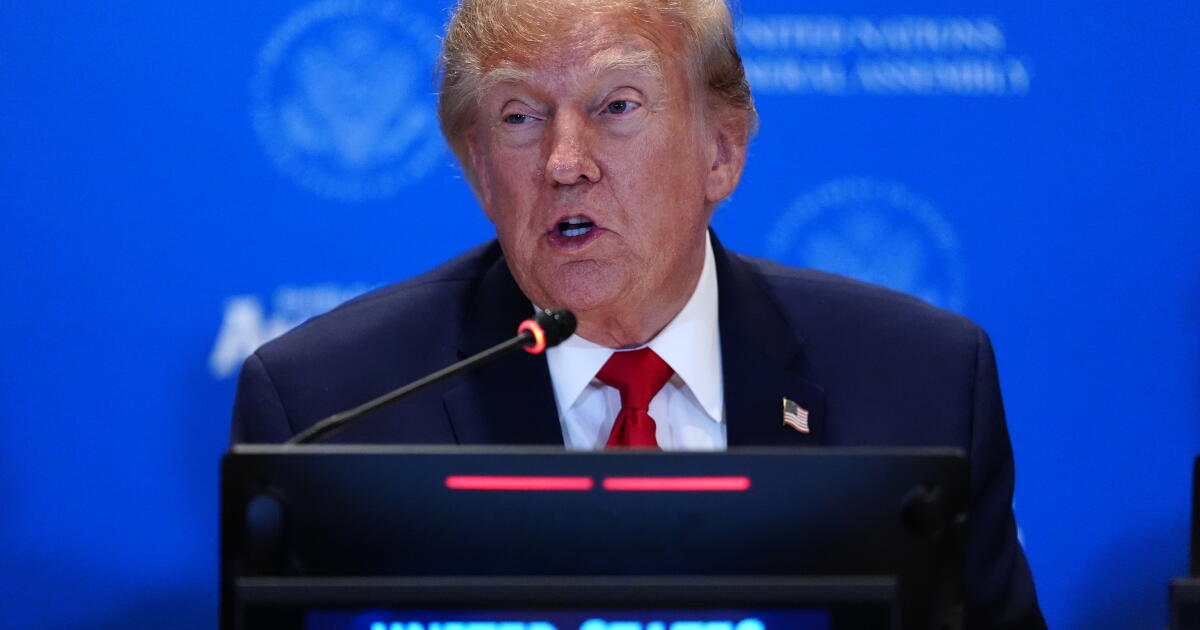
United States Secretary of State Marco Rubio has told Al Jazeera that the Strait of Hormuz will “reopen one way or another” in the wake of the eventual end of the US-Israeli war with Iran.

The exclusive interview on Monday came as speculation has grown over a possible US troop deployment in Iran and as the effective closure of strait continues to roil global oil markets.

US boots on the ground would represent a new phase in the grinding conflict, which began on February 28 with US-Israeli strikes, even as US President Donald Trump has repeatedly said that the US was pursuing diplomacy with Iran.

Rubio again maintained there were “ongoing direct talks between parties in Iran and the United States, primarily conducted through intermediaries”.

Iran has repeatedly denied that talks were ongoing. Pakistan on Sunday said it would host direct talks “in the coming days for a comprehensive and lasting settlement of the ongoing conflict”.

Rubio added that Trump “has always preferred diplomacy and seeks to reach a resolution – something that could have been achieved earlier”.

The Trump administration had previously pursued indirect talks with Iran to curtail its nuclear programme. One round of talks was derailed last year with Israel’s 12-day war against Iran, which ended with US strikes on Iran’s nuclear facility.

A second round of diplomacy was underway when the US and Israel began the latest war.

Rubio again indicated the administration’s preference for regime change in Iran, which the US and Israel have so far been unable to achieve despite several high-profile assassinations, including the killing of Supreme Leader Ayatollah Ali Khamenei.

“We would welcome a scenario in which Iran is led by individuals with a different vision for the future, and if such an opportunity arises, we will seize it,” he said.

Nuclear and ballistic weapons

Speaking to Al Jazeera, Rubio further called on Iran to take “concrete steps” to end its nuclear programme and stop “manufacturing drones and missiles”.

He accused Iran of seeking nuclear weapons to “threaten and blackmail the world”, a claim Tehran has for years denied, maintaining its nuclear programme was only for civilian purposes.

On Monday, the Wall Street Journal reported Trump was considering a special forces operation to seize enriched uranium stored in Iran. Military experts have warned throughout the war that US and Israeli airstrikes alone would not be able to destroy Iran’s capabilities.

In a statement to Al Jazeera, White House press secretary Karoline Leavitt did not deny the report, but said: “It’s the job of the Pentagon to make preparations in order to give the Commander-in-Chief maximum optionality. It does not mean the President has made a decision.”

Rubio said Iran “must also cease sponsoring terrorism and halt the production of weapons that threaten its neighbours,” he said. “The short-range missiles launched by Iran serve only one purpose: to attack Saudi Arabia, the UAE, Qatar, Kuwait, and Bahrain.”

Turning to the Strait of Hormuz, which Iran has effectively closed to open traffic, Rubio voiced optimism it would be reopened when the conflict ends.

“The Strait of Hormuz will reopen one way or another once our military operation in Iran is over,” Rubio said. “The strait will reopen either with Iran’s consent or through an international coalition including the US.”

He threatened “severe consequences” if Iran closes the strait after the fighting ends.

The US has previously sought to raise a coalition to protect ships in the Strait of Hormuz, but has faced wariness from many traditional allies concerned over tacit entry into the conflict.

‘Our objectives in Iran are clear’

Rubio’s statements on Monday broadly reflected a list of demands put forth by Washington to end the war.

Iran has rejected the proposal, with Iranian President Masoud Pezeshkian releasing its own list of demands, including “recognising Iran’s legitimate rights, payment of reparations, and firm int’l guarantees against future aggression”.

For his part, Trump told the Financial Times in an interview published on Sunday that he hopes to “take the oil in Iran” including by possibly seizing the key export hub of Kharg Island.

“Maybe we take Kharg Island, maybe we don’t. We have a lot of options,” he added. “It would also mean we had to be there [on Kharg Island] for a while.”

The Trump administration has presented a carousel of objectives in the war, including degrading Iran’s military capability, preventing it from ever developing a nuclear weapon, and helping to foment regime change.

However, its endgame has remained unclear, with its final goals possibly diverging from Israel, which has pushed for more comprehensive regime change.

To date, at least 1,937 people have been killed in Iran since the war began, with at least 20 killed in Israel, 26 killed across the Gulf states and 13 US soldiers killed.

Rubio told Al Jazeera that the administration did not expect the war to drag on indefinitely.

“Our objectives in Iran are clear, and we will achieve them within weeks, not months,” he said.

Source link

Clinton Tells of Marijuana Use in ’60s : Democrats: He says he tried the drug one or two times while a student in England. He had not been directly asked about it before and does not believe episode will hurt his candidacy, he adds.

Arkansas Gov. Bill Clinton acknowledged Sunday that he had experimented with marijuana while a 22-year-old student in England in the late 1960s, an admission that could raise doubts about his past candor in answering questions about his personal conduct.

For five years, the 45-year-old Clinton has answered questions about whether he had ever used drugs by saying he had never broken a U.S. law. During a televised debate here with Democratic presidential rival Edmund G. (Jerry) Brown Jr., a questioner for the first time asked Clinton explicitly whether he had ever broken either a state, federal or a foreign drug law.

“When I was in England I experimented with marijuana a time or two,” he answered on the WCBS-TV broadcast, “and I didn’t like it. I didn’t inhale and never tried it again.”

Asked the same series of questions, Brown answered bluntly: “No.”

Clinton’s disclosure, which overshadowed one of the most substantive exchanges of the political season between the two rivals, is hardly unusual for a person of Clinton’s generation. Two of the Democratic presidential candidates in 1988 acknowledged similar behavior. And nothing Clinton said about his use of marijuana contradicted what he had said before.

But his decision until now to fend off drug-use queries with a narrow response, which could mislead voters into thinking he had never used drugs of any kind, was likely to add to concerns of those who regard him as less than straightforward.

Clinton said he did not believe the episode would hurt his candidacy, noting that other politicians had admitted to using marijuana and had suffered no apparent electoral consequences. He defended his previous denials by saying he had seen no need to volunteer a reply to something he had not been directly asked.

“Nobody’s ever asked me that question point blank,” he said, adding: “I said I’ve never broken the drug laws of my country, and that’s the absolute truth.”

It was the second time in a week that Clinton found it necessary to clarify previous statements on drugs.

On Thursday, a Clinton campaign aide, Betsey Wright, volunteered to the Los Angeles Times that the governor had never used cocaine or knowingly been around it.

The Times had contacted Wright to ask about a state police drug investigation in the mid-1980s of Clinton’s half-brother and a political contributor. After answering the questions, Wright said: “I assume from the questions that you were implying guilt by association in a state where everybody is associated. For that reason, when I verified with Gov. Clinton the answers to some of the questions, I asked him the following questions:

“ ‘Bill, have you ever used cocaine?’

“He replied, ‘No.’

“I said, ‘Bill, have you ever been in a room where you were aware there was cocaine?’

“He replied, ‘No.’ ”

When asked Friday why she had posed questions never asked by The Times, Wright said she had heard “rumors” that reporters were trying to place Clinton at parties where cocaine had been used. “I decided it was best to go ahead and put the issue on the table,” she said. (Interviews by The Times with some people said to have been in attendance at those parties have produced no evidence linking Clinton to the drug.)

Later Friday, Clinton called The Times to say that the campaign had not intended to provoke a story quoting him as denying cocaine use. Senior Clinton campaign officials said they feared such a story might be seen by the public as raising yet another question about his personal life.

Clinton’s Sunday acknowledgement of marijuana use while a Rhodes Scholar at Oxford came only three days after Clinton was asked by a member of the editorial board of the New York Daily News whether he had been asked previously about his drug use.

Clinton said that he had been asked such questions, and that his answer had always been that he had never violated a U.S. law.

Clinton campaign officials later described the new admission as an “elaboration” of Clinton’s previous comments and suggested that it and the earlier, narrow denials were merely two ways of looking at the same issue.

“Bill Clinton told the truth at every step of the way,” his chief strategist, James Carville, said. “It’s like the old saying about the guy who’s being sworn into office and he’s asked, ‘Do you swear to tell the truth, the whole truth, and nothing but the truth?’ and he answers, ‘Which one do you want?’ ”

Carville and other senior Clinton aides nevertheless expressed concern that the issue would be given undue prominence and further tar their candidate at a time when polls show that a large number of Democratic voters still harbor questions about Clinton’s personal record.

For his part, however, Brown chose not to make an immediate issue either of Clinton’s marijuana use or his handling of questions about it.

After denying that he had violated any drug laws, Brown demanded of a questioner: “Why don’t you lay off this stuff? What you did 10 or 20 years ago is not really relevant.”

But Brown himself was forced during the debate to respond to a new suggestion of impropriety in a Washington Post story detailing his ties to a company that paid a $400,000 settlement to the federal government after being accused of making exaggerated claims about a product said to help treat AIDS.

Brown, who served on the board of directors of a subsidiary to the company, Costa Mesa-based ICN Pharmaceuticals Inc., until he began his presidential campaign, said he had had “nothing to do” with the episode. He said his position gave him “no responsibility and no contact” with the parent firm.

Clinton did not press the issue during the debate, saying his own experience made him wary of “piling on.” But he suggested later in the day that justice was being done as he told a Bronx audience that “the press is finally starting to look at” a rival he believes has been treated too gently.

Clinton framed his response to the drug question during an era when the issue rose to political prominence.

In 1987, Supreme Court nominee Douglas H. Ginsburg was forced to withdraw his name from nomination after it was learned that he had used marijuana when he was a law-school professor.

But other politicians, including Sen. Albert Gore Jr. of Tennessee and Gov. Bruce Babbitt of Arizona, both 1988 Democratic presidential candidates, acknowledged using marijuana while in college and suffered no apparent political consequences.

Supreme Court Justice Clarence Thomas has also admitted to having used marijuana, but the issue was given only passing attention during his confirmation hearings.

Clinton, by contrast, has steadfastly refused to answer “have you ever” questions about drug use, adultery or other matters of personal conduct on grounds that they are not legitimate subjects of inquiry.

He has said it is legitimate, however, for an officeholder or a candidate to be questioned about violations of law, and has always responded to questions about his drug use by stating that he had adhered to U.S. drug laws.

Earlier in the morning, Clinton delivered what amounted to an impassioned political sermon to the enthusiastic congregation of an African Methodist church in a mostly black neighborhood in Queens.

But faced with continued criticism of his periodic use of an all-white country club to play golf–conduct that Clinton has said was a mistake–his message Sunday was in part a plea for redemption from a black community from which he has so far drawn deep support.

“I have seen myself turned into a cartoon character of an old Southern deal-maker by the tabloids and television in a total denial of my life’s work,” he said.

He told the congregation he had made “a foolish mistake.” And as he cited Scripture later, the congregation joined him in a sympathetic chorus to murmur “those who are without sin should cast the first stone.”

The hourlong debate here between Clinton and Brown, who participated via satellite from Wisconsin, was one of the better illuminations of the differences between the Arkansas moderate and the California populist-liberal.

Again and again, the two candidates clashed on issues ranging from economic policy to capital punishment to labor issues to Middle East strategy.

On economic issues, Brown advanced his proposal to overhaul the current tax systems and replace them with a 13% flat-tax as a “progressive tax” whose simplicity would “jump-start the economy.”

But Clinton, who favors a more conventional middle-class tax cut and an increase on taxes for the wealthy, again derided Brown’s idea as a plan that would benefit only the wealthy and would “triple taxes on the poor and raise taxes on the middle class.”

In answer to a question, Clinton said he favored capital punishment as well as a proposal to accelerate what is now the time-consuming process under which a death-row inmate may appeal his sentence.

But Brown described Clinton’s decision earlier this year to order the execution of a man whose lawyer claimed he was retarded as a “moral abomination.” He contended that the proposal to limit death-penalty appeals was part of a “systematic erosion of civil liberties” and said: “I would oppose it with every ounce that I have.”

Brown said he would favor a five-year moratorium on the manufacture of handguns. But Clinton, while describing himself as an advocate of gun control, said he was unsure whether he could embrace such an approach.

On Israel, Clinton defended what he described as a longstanding U.S. willingness to “wink” at Israeli settlements on the occupied West Bank and criticized the Bush Administration’s recent get-tough policy. But Brown bluntly said he regarded the settlements as “a problem.”

Asked about an issue important to labor unions, the two candidates made clear that their allegiance pulled them in different directions.

Clinton said he would favor placing young people in jobs of all kinds as part of a civilian corps to give them training for the future.

But Brown warned that the low wages paid to such employees would undermine working people and suggested that any such corps be limited to outdoor conservation efforts.

Source link

Gabbard tells Senate panel only Trump can determine imminent threats

1 of 2 | Director of National Intelligence Tulsi Gabbard prepares to testify during a Senate Intelligence Committee hearing on worldwide threats in the Hart Senate Office Building on Capitol Hill in Washington, D.C., on Wednesday. Photo by Annabelle Gordon/UPI | License Photo

March 18 (UPI) — Director of National Intelligence Tulsi Gabbard defended U.S. military strikes on Iran during a Senate Intelligence Committee hearing Wednesday, calling them a strategic success.

Senators challenged Gabbard to reconcile the words of President Donald Trump with the intelligence her department has received on Iran. When pressed, Gabbard yielded that Trump has the final say on what threats the United States faces.

When the United States performed strikes on Iranian nuclear facilities in June, Trump said Iran’s nuclear capabilities were “obliterated.” Earlier this month, he said Iran’s development of nuclear weapons posed an imminent nuclear threat to national security, justifying military action.

Gabbard affirmed Wednesday that Iran’s nuclear enrichment program was “obliterated” in the June strikes.

“It is not the intelligence community’s responsibility to determine what is and is not an imminent threat,” Gabbard said. “That is up to the president, based on a volume of information he receives.”

Gabbard was once a vocal opponent of engaging in a war with Iran, even selling shirts that read “No War With Iran” in 2019 while she campaigned for the Democratic presidential nomination.

Iran is one of the United States’ top adversaries, the Office of the Director of National Intelligence’s “Annual Threat Assessment” said. China, Russia and North Korea are also on that list.

In the 19 days since the war with Iran began, Gabbard said the Iranian regime “appears to be intact but largely degraded.”

“Even so, Iran and its proxies remain capable of and continue to attack U.S. and allied interests in the Middle East,” Gabbard said. “The IC assesses that if a hostile regime survives it will seek to begin a yearslong effort to rebuild its missiles and UAV forces.”

President Donald Trump receives a bowl of shamrocks from Irish Taoiseach Micheal Martin to celebrate St. Patrick’s Day at the White House on Tuesday. Photo by Yuri Gripas/UPI | License Photo

Source link

Gov. Tim Walz tells a House panel the Trump immigration crackdown hampered Minnesota’s fraud fight

Minnesota’s governor and attorney general on Wednesday defended their efforts to combat fraud and told a U.S. House committee that their efforts have been hampered by President Trump’s immigration crackdown in the state.

Republicans on the House Oversight Committee accused Gov. Tim Walz and Atty. Gen. Keith Ellison of stalling to fight fraud in government programs, saying they put politics ahead of rooting out abuse instead of pausing payments.

“You have not been good stewards of the taxpayer dollars,” said Republican Rep. James Comer of Kentucky, chair of the committee. “And the Democratic position is keep the money flowing. The American taxpayers have had enough.”

Walz said he wanted to work with the federal government to help with fraud investigations, but the immigration surge was making that more difficult.

“The people of Minnesota have been singled out and targeted for political retribution at an unparalleled scale,” Walz said. “We’re going to prosecute, as we have, every single person that’s involved in fraud, but we can’t do it alone.”

Walz and Ellison defended their efforts on fraud, while also trying to turn the focus of the hearing to the surge of 3,000 federal agents in Minnesota that began in December. The Trump administration cited fraud as one justification for its enforcement action. Homeland Security Secretary Kristi Noem testified Tuesday that about 650 investigators remain in Minnesota as part of a broader fraud probe.

“Operation Metro Surge did nothing to address fraud in our state,” Ellison said. “It harmed our economy and it scarred our people and it dealt a devastating blow to fraud enforcement in Minnesota.”

Ellison noted the series of resignations of lawyers in the U.S. Attorney’s Office in Minnesota, leaving those who remain “drowning in immigration-related petitions” instead of prosecuting fraud. On Tuesday, the U.S. attorney for Minnesota appeared before a judge for a contempt hearing related to Immigration and Customs Enforcement not returning personal property of detainees.

Ellison said his office has “punched above our weight” in winning 300 Medicaid fraud convictions and recovering more than $80 million for taxpayers.

Republican Rep. Clay Higgins of Louisiana called on Ellison to resign, accusing him of not leading investigations into criminal fraud activity.

Last week, Vice President JD Vance said the Trump administration would “temporarily halt” $243 million in Medicaid funding to Minnesota over fraud concerns, as part of what he described as an aggressive crackdown on misuse of public funds. Minnesota sued on Monday to stop the money from being withheld, warning it may have to cut healthcare for low-income families if the money is held back.

Comer on Wednesday accused Walz of not stopping Medicaid payments despite knowledge of fraud because he “didn’t want to rock the boat.”

Comer and other Republicans accused Walz of lying about when he first found out about fraud in a $250-million scheme known as Feeding Our Future and stalling to act in order to protect the Somali American community. Republican Rep. Jim Jordan of Ohio asked Walz if he know how many of those who had been indicted were Somali Americans.

“Their ethnicity is not my concern,” Walz said.

Somali Americans make up 82 of the 92 defendants charged so far in the Feeding Our Future case, according to the U.S. Attorney’s Office for Minnesota.

Democratic Rep. Robert Garcia of Long Beach, as part of the effort to focus the hearing on the immigration crackdown, held up images of children detained by federal officers and a picture of the blood-stained car seat of Renee Good who was killed by an officer. Federal officers also killed another Minnesota resident, Alex Pretti, who had been filming enforcement operations.

“This violence does not make us safer,” Garcia said. “It does not address fraud, waste and abuse.”

Bauer writes for the Associated Press.
Source link