Trump intensifies his push for arming teachers amid bipartisan criticism
Reporting from Washington — President Trump on Thursday pressed his case for arming teachers to fight school shooters, despite widespread criticism, and for the first time suggested bonus payments for those who carry concealed firearms.
The president also called for making 21 the minimum age for buying long guns. Gun rights groups oppose raising age limits beyond 18 years, but Trump insisted he can sell the restriction to the “patriots” at the National Rifle Assn.
”I told them, we’re going to have to toughen” gun laws, Trump said, adding, “I really think the NRA wants to do what’s right.”
Trump elaborated on his ideas and other responses to last week’s Florida school massacre, starting with a series of morning tweets and continuing later at a White House roundtable on school safety with state and local officials. The televised session was much like one on Wednesday that Trump hosted with people touched by school shootings. Both offered a rare window into the president’s seemingly off-the-cuff thinking on gun policy, one of the nation’s most contentious issues.
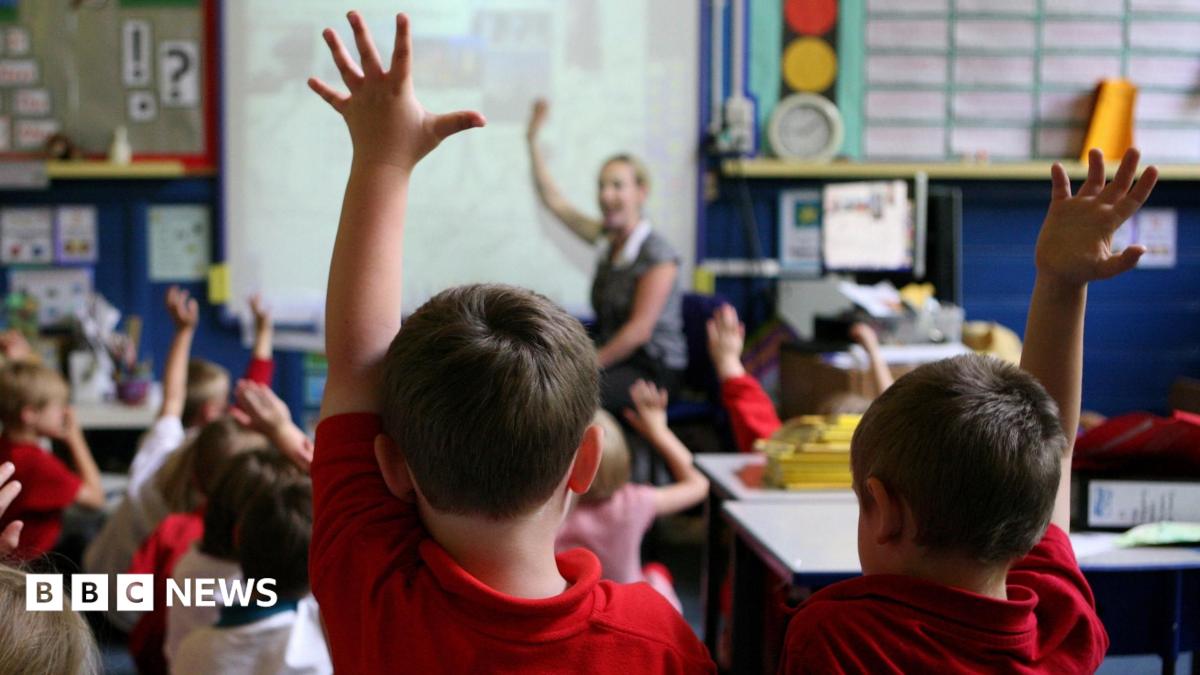
Trump reserved most of his enthusiasm for bringing concealed-carry permits to American schools, to allow teachers, coaches and other officials to be armed against potential killers.
He repeatedly berated the practice of declaring campuses as “gun-free zones,” calling that an invitation to armed attackers.
“We have to harden our schools, not soften them,” Trump said. “A gun-free zone to a killer or somebody who wants to be a killer, that’s like going in for the ice cream. That’s like ‘Here I am, take me.’ ”
His exuberance for the idea has seemed to build since a 19-year-old gunman killed 17 students and adults at Marjory Stoneman Douglas High School in Parkland, Fla. The administration had not previously floated the proposal. Since his campaign, Trump mainly has limited his talk of gun policy simply to a staunch defense of an absolute 2nd Amendment right to bear arms, but the pressure for action since the latest shooting has been intense.
Trump raised the proposal publicly when he met at the White House on Wednesday with the group that included survivors of the Parkland shooting. When he asked what students, parents and teachers thought of the idea of arming school personnel, a few raised their hands in support and a few against. Since then, however, several have spoken out in opposition.
By Thursday, nonetheless, Trump had turned into a hearty supporter of arming teachers. In four tweets, he advocated for guns in schools, and then espoused several other ideas in other posts, including raising the minimum age for certain gun purchases, bolstering the process of checking backgrounds of potential buyers and banning the so-called bump stocks that turn legal firearms into illegal rapid-fire ones.
In his midday meeting with state and local officials, Trump grew expansive on his ideas, and occasionally heated.
He said he didn’t want “everybody standing there with a rifle” in America’s schools, but rather select, trained personnel with concealed weapons. Then he pointed to White House Chief of Staff John F. Kelly, a retired Marine general, as an example of the sort of people schools could turn to for armed protection. “If he’s a teacher … I want him to have a gun,” Trump said.
“Frankly, you have teachers that are Marines for 20 years, they retire and become a teacher,” he said. “They’re Army, Navy, Air Force, they’re Coast Guard, they’re people who have won shooting contests for whatever, this is what they do. They know guns, they understand guns.”
Trump suggested without evidence that up to 40% of teachers could be armed. He then recommended that “we give them a little bit of a bonus” for bearing arms.
Trump did not address how to pay for the bonuses, school weapons or other proposals he is considering, except to say that the debate “isn’t so much about funding, it’s about common sense.”
By his focus on such ideas, Trump in recent days has steered the national gun policy debate away from more ambitious proposals, notably one to revive a long-lapsed ban on assault rifles like the Parkland shooter used. The newly minted gun control advocates among Parkland’s teenage survivors have called for a ban. He opposes one.
Instead, the president has raised some ideas, like new regulations against bump stocks, that the NRA has expressed willingness to consider, and a few — like the age limit for buyers — that, he says, his gun rights allies at the NRA can be persuaded to support.
“They’re ready to do things,” he said. “They want to do things. They’re good people.”
Asked later if Trump had spoken to the NRA about the higher age minimum, Deputy Press Secretary Raj Shah did not have an answer.
On the NRA’s website, a spokeswoman is quoted in opposition: “Passing a law that makes it illegal for a 20-year-old to purchase a shotgun for hunting or an adult single mother from purchasing the most effective self-defense rifle on the market punishes law-abiding citizens for the evil acts of criminals.”
The NRA’s longtime leader, Executive Vice President Wayne LaPierre, in a speech to the Conservative Political Action on Thursday, did not suggest any inclination toward compromise. Instead, he complained that liberals are trying to exploit the Florida shooting to advance their agenda.
“It’s not a safety issue, it’s a political issue,” LaPierre said. “Their solution is to make you, all of you, less free…. They want to sweep right under the carpet the failure of school security, the failure of family, the failure of America’s mental health system and even the unbelievable failure of the FBI.”
For Trump, the group likely would be a powerful ally for any expansion of concealed-carry laws to school employees, though the idea has met with concern from Republicans and Democrats, as well as school and law enforcement groups.
Sen. Marco Rubio of Florida, a Republican, agreed with a Parkland teacher who expressed opposition to the idea during a televised CNN forum on Wednesday night. “I don’t support that,” he told her, citing his concerns as a father of school-age children and “practical problems.”
Rubio explained: “Imagine in the middle of this crisis, and the SWAT team comes into the building, and there’s an adult with a weapon in their hands. And the SWAT team doesn’t know who’s who and we have another tragedy that was unnecessary.”
The Senate’s Democratic minority leader, Sen. Charles E. Schumer of New York, expressed doubt that Trump would really push for the proposals that the NRA opposes.
“The president is pushing for action on things — including comprehensive background checks — that the NRA opposes,” Schumer said. When Trump has talked about gun restrictions in the past, Schumer noted, he “quickly dropped his support once the NRA opposed it. I hope this time will be different.”
As tough as Trump talked about “hardening” schools, he bristled at the idea of practicing for a gun-related crisis. He had had little reaction on Wednesday, when a Parkland student and a parent advocated for more schools holding crisis drills. But on Thursday, when Florida’s education commissioner pressed the importance of holding regular “active shooter drills” so that students know how to behave when there is a threat, Trump snapped at her.
“I think that’s a very negative thing to be talking about. I don’t like it. I’d much rather have a hardened target,” he said, adding, “I think it’s very bad for children.”
Shah later clarified that the president considers the common term for the drills — “active shooter drills” — frightening to young students, suggesting that Trump doesn’t object to the practices themselves but only to the “brand.”
Advisors say the president isn’t zeroing in on specifics just yet. “Right now we’re in a listening phase,” said Shah, “but he is going to come forward later on with something a little bit more concrete.”
Twitter: @cparsons