talk

Prep talk: Five receive scholarships after learning to caddy

Imagine getting a scholarship to attend college by learning how to caddy?

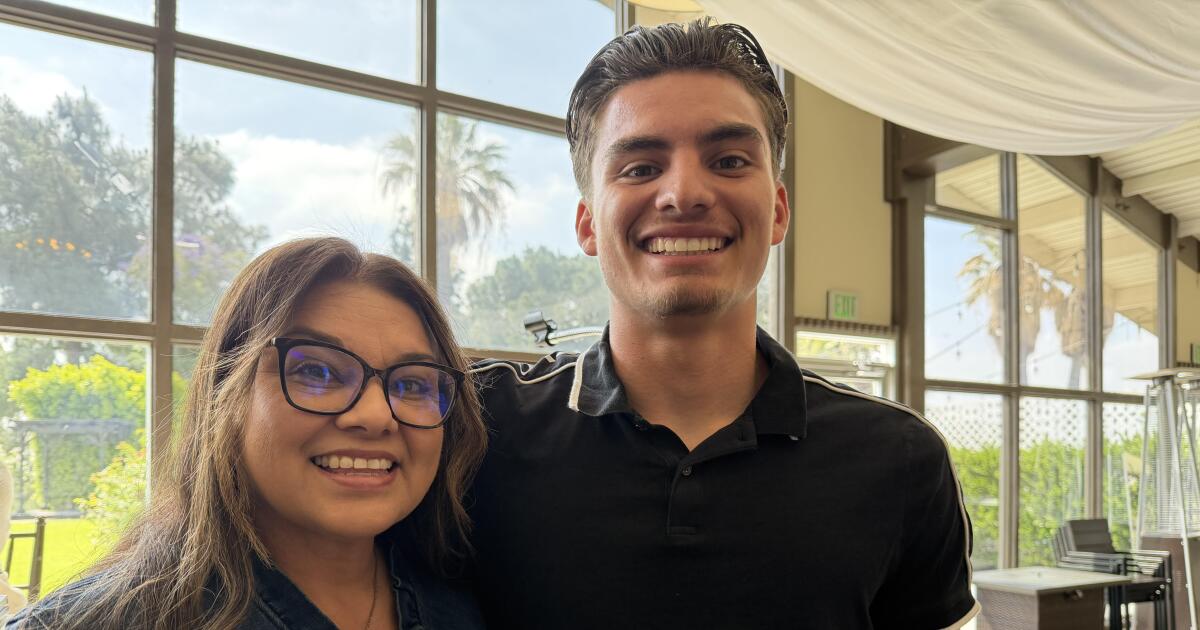
It’s happened to five Los Angeles-area high school students awarded the Evans Scholarship, a full housing and tuition grant offered to golf caddies.

This year’s recipients include Amaia Diaz and Marley Gomez from St. Mary’s Academy, Joel Arriaga Lopez and Sara Mejia from Compton Early College High and Cesar Sierra from Salesian.

The Western Golf Assn. Caddie Academy trains the students and supports the scholarship program.

A record 1,260 caddies in the program are enrolled at 27 universities. More than 12,000 caddies have graduated as Evans Scholars since the program began in 1930.

To qualify for the Evans Scholarship, students must meet the program’s four selection criteria demonstrating a strong caddie record, outstanding academics, financial need and exceptional character.

“Caddying taught me discipline, patience and responsibility,” Sierra said.

All five students caddied in Illinois during summer training. The Evans Scholarship is valued at more than $125,000 over four years.

This is a daily look at the positive happenings in high school sports. To submit any news, please email eric.sondheimer@latimes.com.

Source link

Prep talk: Moorpark AD Robert Dearborn chosen as Southern Section president elect

Moorpark athletic director Rob Dearborn officially has a new title: president elect of the Southern Section.

The Southern Section Council elected him on Thursday. He will serve as president elect under the new president, Alexis Barile, the former principal at Corona Centennial, for 2026-27 and 2027-28 before taking over a two-year term.

Dearborn, 62, a former track and football coach, is in his 40th year participating in high school sports. He started out at Newbury Park before moving to Moorpark. He directs the Southern Section track and field championships at Moorpark. His wife, Denise, ran track at UCLA.

Asked if his wife will now salute him, Dearborn said, “No, I still salute her.”

It’s a two-year term to preside over Southern Section Council meetings.

“I grew up with Southern Section sports that have been a big part of my life,” he said. “It’s exciting.”

His son is football coach at Moorpark.

This is a daily look at the positive happenings in high school sports. To submit any news, please email eric.sondheimer@latimes.com.

Source link

Bush and Civil Rights: Words Matter, but Actions Talk

What exactly is President Bush trying to achieve on civil rights?

Against the backdrop of the racial controversy that cost Trent Lott (R-Miss.) his job as Senate majority leader, Bush’s own intentions have come under closer scrutiny. But the president has sent such mixed signals that some critics believe he’s playing a double game — moderate on decisions that can be traced directly to him and much more conservative on judicial appointments that will profoundly affect the reach of civil rights law, but only gradually and far away from the White House.

Bush drew praise even from his staunchest critics in the traditional civil rights community for his strong condemnation of Lott’s wink toward segregation. Indeed, while the White House always said publicly that Bush didn’t want Lott to resign, the president’s sharp rebuke during a speech in Philadelphia probably did more to doom the Mississippi senator than anything else that happened since Lott’s remarks at Strom Thurmond’s 100th birthday party Dec. 5.

But since Bush’s speech, the liberal civil rights community has repeatedly insisted that the president’s stirring words in defense of equal opportunity needed to be measured against his actions. Just minutes before Lott stepped down Friday, a coalition of civil rights groups held a news conference in Washington to pound at that message.

Conservatives rightly argue that support for the agenda of the liberal civil rights community isn’t the only measure of commitment to equal opportunity. But it’s reasonable for the civil rights groups to insist that a president’s actions should always be weighed more heavily than his words.

So far, Bush has moved cautiously on the civil rights issues most directly under his control. He has appointed conservatives to most key civil rights positions, and liberals charge that the administration isn’t enforcing the laws as aggressively as Bill Clinton did when he was president.

But Bush’s record hasn’t generated the intense conflict that characterized the liberal response to the enforcement of the civil rights laws under Ronald Reagan, and even Bush’s father. William L. Taylor, chairman of the Citizens’ Commission on Civil Rights, a leading liberal group, says that Bush’s record shows “a policy that is largely inert, not moving forward, and in a few areas is regressing.” Considering the source, that’s mild criticism.

Nor has Bush moved to retrench the key federal programs that promote affirmative action — policies meant to expand opportunities for minorities in hiring and government contracting. For years, conservative thinkers have viewed these programs as unfair to whites and counterproductive — a group entitlement that exacerbates social divisions.

But Bush has made no effort to repeal the executive order requiring federal contractors to establish goals and timetables for hiring women and minorities. Conservatives have long accused that program, which affects fully one-fifth of all workers in America, of encouraging quotas. Nor has the administration retrenched the programs providing minorities preferences in federal contracting. In all, Bush has done little to disturb the “mend it, don’t end it” balance on federal affirmative action programs that Clinton established in 1995.

Likewise, even before Lott, the administration was hesitant about joining a lawsuit opposing racial preferences in admissions at the University of Michigan now heading toward the Supreme Court. After Lott, officials say, it’s even less likely that Bush will use the suit to argue for a sweeping rollback of affirmative action.

Bush has had such a hands-off policy on these issues that conservatives are starting to grumble. “Conservatives are going to be very disappointed if two years from now there hasn’t been any positive movement,” says Roger Clegg, general counsel of the Center for Equal Opportunity, a conservative group.

Clegg probably shouldn’t hold his breath. While Bush has always declared himself against quotas and preferences, he’s never shown any enthusiasm for direct combat on this front. His calculation seems to be that conflict over affirmative action would eclipse efforts to reach minority voters on other issues, such as education and homeownership. “Once you enter this thing,” one Bush political advisor says, “it’s hard to move the ball on anything else.”

But liberal groups take little comfort in Bush’s cautious approach to direct action. Their fear is that Bush is filling the federal courts with conservative judges who will reshape the civil rights laws in ways he wouldn’t risk through executive or legislative initiatives that carry his fingerprints.

It’s not an unreasonable fear. Many of Bush’s judicial nominees have records on civil rights much more conservative than the views Bush has expressed. Civil rights groups argue that Bush appellate court nominees such as Carolyn Kuhl, Jeffrey Sutton and Charles W. Pickering Sr. have displayed a determination to narrow the way civil rights laws are enforced.

All of these nominations will generate fireworks in the new year (especially if Bush fulfills his promise to renominate Pickering, whom the Democratic Senate Judiciary Committee rejected last year largely around accusations of racial insensitivity). But this conflict will really come to a head if Bush receives an opportunity to nominate a Supreme Court justice.

“That’s the big one,” insists Ralph Neas, president of People for the American Way, a liberal advocacy group. “If they get a firm [conservative] Supreme Court majority, it will render the progressive agenda moot for decades. This is the whole ballgame for them. That’s why they are willing to make compromises legislatively or in the executive branch.”

Bush is under no obligation to support Neas’ agenda on civil rights. But voters have a right to demand accountability from elected officials. If Bush wants to roll back affirmative action, it’s hard to explain his executive actions; if he doesn’t, it’s hard to explain his court nominations.

Bush is sending dissonant signals, perhaps intentionally. But in the end, it’s his decisions on the courts that will speak loudest. Words matter, but words fade. When he condemns Lott, Bush is writing in sand. When he picks judges, he is carving in granite.

*

Ronald Brownstein’s column appears every Monday. See current and past Brownstein columns on The Times’ Web site at: www.latimes.com/brownstein.

Source link

Prep talk: Mt. SAC Relays to feature Servite, Rosary relay teams

After record-setting performances in the 4×100 relays last weekend at the Arcadia Invitational, the Servite and Rosary relay teams will try to do it again on Saturday at the Mt. SAC Relays at Mt. San Antonio College.

The Servite relay team of sophomores Jace Wells, Jorden Wells and Kamil Pelovello and junior Benjamin Harris ran it in 39.70 seconds at Arcadia, the fastest in state history.

Rosary, which is the sister school for Servite, featured sophomore Tra’via Flournoy, senior Justine Wilson, junior Pfeiffer Lee and sophomore Maliyah Collins running 44.23, breaking Long Beach Poly’s 22-year-old state record of 44.50.

Coach Brandon Thomas works with both teams and said he wanted to support the track community by having both participate.

Defending state high jump champion JJ Harel will compete in his specialty after winning at Arcadia with a mark of 6 feet, 9 inches. He’s still only a few weeks into training because of a previous injury.

This is a daily look at the positive happenings in high school sports. To submit any news, please email eric.sondheimer@latimes.com.

Source link

L.A. Times Book Prize winners talk AI, book bans, diverse novels

Some of our finest contemporary writers got their laurels Friday night at the 46th Los Angeles Times Book Prizes ceremony at USC’s Bovard Auditorium.

At the awards ceremony, which opens the annual L.A. Times Festival of Books weekend, Oakland-born writer Amy Tan and literary nonprofit We Need Diverse Books received achievement honors, and finalists in 13 other categories became prize winners.

The presenters and awardees who took the stage balanced a spirit of playfulness — Times senior editor Sophia Kercher called the weekend’s festival “my personal Coachella” and Times columnist LZ Granderson saluted his fellow “booktroverts” — and one of reverence as they celebrated writing as an instrument for advocacy, imagination and history-keeping.

As Bench Ansfield virtually accepted his award in the history category for “Born in Flames: The Business of Arson and the Remaking of the American City,” which exposes a pattern of landlords setting residential fires to collect insurance payouts, he said, “It’s a scary time to be a historian in the United States.”

“Our field, like so many other fields, is under attack,” Ansfield said. “To understand the crises in front of us, we have to understand our history.”

Among the crises highlighted was AI encroachment, the subject of science and technology category winner Karen Hao’s “Empire of AI: Dreams and Nightmares in Sam Altman’s OpenAI.” The AI expert and investigative journalist’s book is a critical investigation into the rise of OpenAI and its impact on society.

In Hao’s acceptance speech, read by presenter Jia-Rui Cook in her absence, the author said she “can’t help but be disturbed by how the themes of this book have grown more relevant by the day.”

“That said, I have never been more hopeful of our chance to advance a different future,” the author said, adding that L.A.’s history of resistance movements — including the recent Hollywood strikes — made it an apt place to accept her award.

“Gatherings like this are one of many radical acts of resistance against the imperial project that seeks to strip us of our meaning and our humanity,” Hao said. “Let us continue to resist defiantly together and let us remember lessons in history: When people rise, empires always fall.”

Tan echoed Hao’s sentiments as she accepted the Robert Kirsch Award, which celebrates literature with regional and thematic connections to the Western United States, for her acclaimed portfolio of writing exploring identity and cultural inheritance — often through the lens of the immigrant experience.

In her speech, “The Joy Luck Club” writer said that while she never particularly considered herself a “political writer,” her stance on that has changed as government actions have made her think critically about her own identities.

“My birthright and that of millions of others is now being argued before the Supreme Court, and no matter what the outcome is, it’s been a kick in the gut to know that those in the highest echelons of government and those who support them believe that we don’t belong.”

As an author, Tan said, “I imagine the lives of the people I write about,” and that act of compassion, for writers, inherently “reflects our politics and our beliefs. And so yes, I am a political writer.”

Later, Caroline Richmond, executive director of We Need Diverse Books, celebrated the work of her nonprofit — the recipient of this year’s Innovator’s Award — which has made it so her daughter “has never really had to look that far to find herself on the page.”

Still, she said ongoing book bans are threatening those strides toward a more diverse literary marketplace.

“The work is very much far from over,” Richmond said, “but I have to remind myself that the people banning books are never the good guys in history, and it’s up to us in this room and beyond — as readers, as book lovers — to fight back because diverse books, we really need them now more than ever.”

As the ceremony wore on, the room was as charged with celebration as it was with resistance.

When writer-editor and former child actor Adam Ross accepted the Christopher Isherwood Prize for “Playworld,” a semi-autobiographical novel about a teen growing up in 1980s New York, he gleamed with joy about his second novel being out in the world and finding readers.

“When it became clear to me that I was writing something that was going to be a lot bigger and take a lot longer than I planned, I promised myself I would use all of my ability to capture my experience of a particular era in an enduringly magical city, and to hopefully express it in such a way that any reader willing to embark on a journey with me, but upon finishing close the book and say, ‘Yes, I know exactly what that was like,’” Ross said in his acceptance speech.

“Winning this award makes me feel like I succeeded in that endeavor,” the author said.

Other winners included Ekow Eshun, who topped the biography category for “The Strangers: Five Extraordinary Black Men and the Worlds That Made Them,” which parses Black masculinity as embodied by various civil rights activists, philosophers and other visionaries, and Bryan Washington, who accepted the fiction award for “Palaver,” which details the tense reunion of a Jamaican-born mother and her queer son, who are navigating years of estrangement in Tokyo.

The 31st annual L.A. Times Festival of Books will host 500-plus authors and celebrities and 300-plus exhibitors across more than 200 events including panels, book signings and cooking demonstrations. Top-billed guests include musician-memoirist Lionel Richie, veteran actor and recent Golden Globe Carol Burnett Award honoree Sarah Jessica Parker, and the mastermind behind “Curb Your Enthusiasm,” Larry David.

The schedule for the Saturday-Sunday event can be found here.

Here’s the full list of finalists and winners for the Book Prizes.

Robert Kirsch Award

Amy Tan

Innovator’s Award

We Need Diverse Books

The Christopher Isherwood Prize for Autobiographical Prose

Adam Ross, “Playworld: A Novel”

The Art Seidenbaum Award for First Fiction

Andy Anderegg, “Plum”

Krystelle Bamford, “Idle Grounds: A Novel”

Addie E. Citchens, “Dominion: A Novel”

Justin Haynes, “Ibis: A Novel” | WINNER

Saou Ichikawa translated by Polly Barton, “Hunchback: A Novel”

Achievement in Audiobook Production, presented by Audible

Molly Jong-Fast (narrator), Matie Argiropoulos (producer); “How to Lose Your Mother”

Jason Mott, Ronald Peet, and JD Jackson (narrators), Diane McKiernan (producer); “People Like Us: A Novel”

James Aaron Oh (narrator), Linda Korn (producer); “The Emperor of Gladness: A Novel”

Imani Perry (narrator), Suzanne Mitchell (producer); “Black in Blues”

Maggi-Meg Reed, Jane Oppenheimer, Carly Robins, Jeff Ebner, David Pittu, Chris Andrew Ciulla, Mark Bramhall, Petrea Burchard, Robert Petkoff, Kimberly Farr, Cerris Morgan-Moyer, Peter Ganim, Jade Wheeler, Steve West, and Jim Seybert (narrators), Kelly Gildea (producer); “The Correspondent: A Novel” | WINNER

Biography

Joe Dunthorne, “Children of Radium: A Buried Inheritance”

Ekow Eshun, “The Strangers: Five Extraordinary Black Men and the Worlds That Made Them” | WINNER

Ruth Franklin, “The Many Lives of Anne Frank”

Beth Macy, “Paper Girl: A Memoir of Home and Family in a Fractured America”

Amanda Vaill, “Pride and Pleasure: The Schuyler Sisters in an Age of Revolution”

Current Interest

Jeanne Carstensen, “A Greek Tragedy: One Day, a Deadly Shipwreck, and the Human Cost of the Refugee Crisis”

Stefan Fatsis, “Unabridged: The Thrill of (and Threat to) the Modern Dictionary”

Brian Goldstone, “There Is No Place for Us: Working and Homeless in America” | WINNER

Gardiner Harris, “No More Tears: The Dark Secrets of Johnson & Johnson”

Jordan Thomas, “When It All Burns: Fighting Fire in a Transformed World”

Fiction

Tod Goldberg, “Only Way Out: A Novel”

Stephen Graham Jones, “The Buffalo Hunter Hunter”

Mia McKenzie, “These Heathens: A Novel”

Andrés Felipe Solano translated by Will Vanderhyden, “Gloria: A Novel”

Bryan Washington, “Palaver: A Novel” | WINNER

Graphic Novel/Comics

Eagle Valiant Brosi, “Black Cohosh”

Jaime Hernandez, “Life Drawing: A Love and Rockets Collection” | WINNER

Michael D. Kennedy, “Milk White Steed”

Lee Lai, “Cannon”

Carol Tyler, “The Ephemerata: Shaping the Exquisite Nature of Grief”

History

Char Adams, “Black-Owned: The Revolutionary Life of the Black Bookstore”

Bench Ansfield, “Born in Flames: The Business of Arson and the Remaking of the American City” | WINNER

Jennifer Clapp, “Titans of Industrial Agriculture: How a Few Giant Corporations Came to Dominate the Farm Sector and Why It Matters”

Eli Erlick, “Before Gender: Lost Stories from Trans History, 1850-1950”

Aaron G. Fountain Jr., “High School Students Unite!: Teen Activism, Education Reform, and FBI Surveillance in Postwar America”

Mystery/Thriller

Megan Abbott, “El Dorado Drive” | WINNER

Ace Atkins, “Everybody Wants to Rule the World: A Novel”

Lou Berney, “Crooks: A Novel About Crime and Family”

Michael Connelly, “The Proving Ground: A Lincoln Lawyer Novel”

S.A. Cosby, “King of Ashes: A Novel”

Poetry

Gabrielle Calvocoressi, “The New Economy”

Chet’la Sebree, “Blue Opening: Poems”

Richard Siken, “I Do Know Some Things”

Devon Walker-Figueroa, “Lazarus Species: Poems”

Allison Benis White, “A Magnificent Loneliness” | WINNER

Science Fiction, Fantasy & Speculative Fiction

Stephen Graham Jones, “The Buffalo Hunter Hunter”

Jordan Kurella, “The Death of Mountains”

Nnedi Okorafor, “Death of the Author: A Novel”

Adam Oyebanji, “Esperance”

Silvia Park, “Luminous: A Novel” | WINNER

Science & Technology

Mariah Blake, “They Poisoned the World: Life and Death in the Age of Forever Chemicals”

Peter Brannen, “The Story of CO2 Is the Story of Everything: How Carbon Dioxide Made Our World”

Karen Hao, “Empire of AI: Dreams and Nightmares in Sam Altman’s OpenAI” | WINNER

Laura Poppick, “Strata: Stories from Deep Time”

Jordan Thomas, “When It All Burns: Fighting Fire in a Transformed World”

Young Adult Literature

K. Ancrum, “The Corruption of Hollis Brown”

Idris Goodwin, “King of the Neuro Verse”

Jamie Jo Hoang, “My Mother, the Mermaid Chaser”

Trung Le Nguyen, “Angelica and the Bear Prince” | WINNER

Hannah V. Sawyerr, “Truth Is: A Novel in Verse”

Source link

Bunker Talk: Let’s Talk About All The Things We Did And Didn’t Cover This Week

Welcome to Bunker Talk. This is a weekend open discussion post for the best commenting crew on the net, in which we can chat about all the stuff that went on this week that we didn’t cover. We can also talk about the stuff we did or whatever else grabs your interest. In other words, it’s an off-topic thread.

This week’s caption reads:

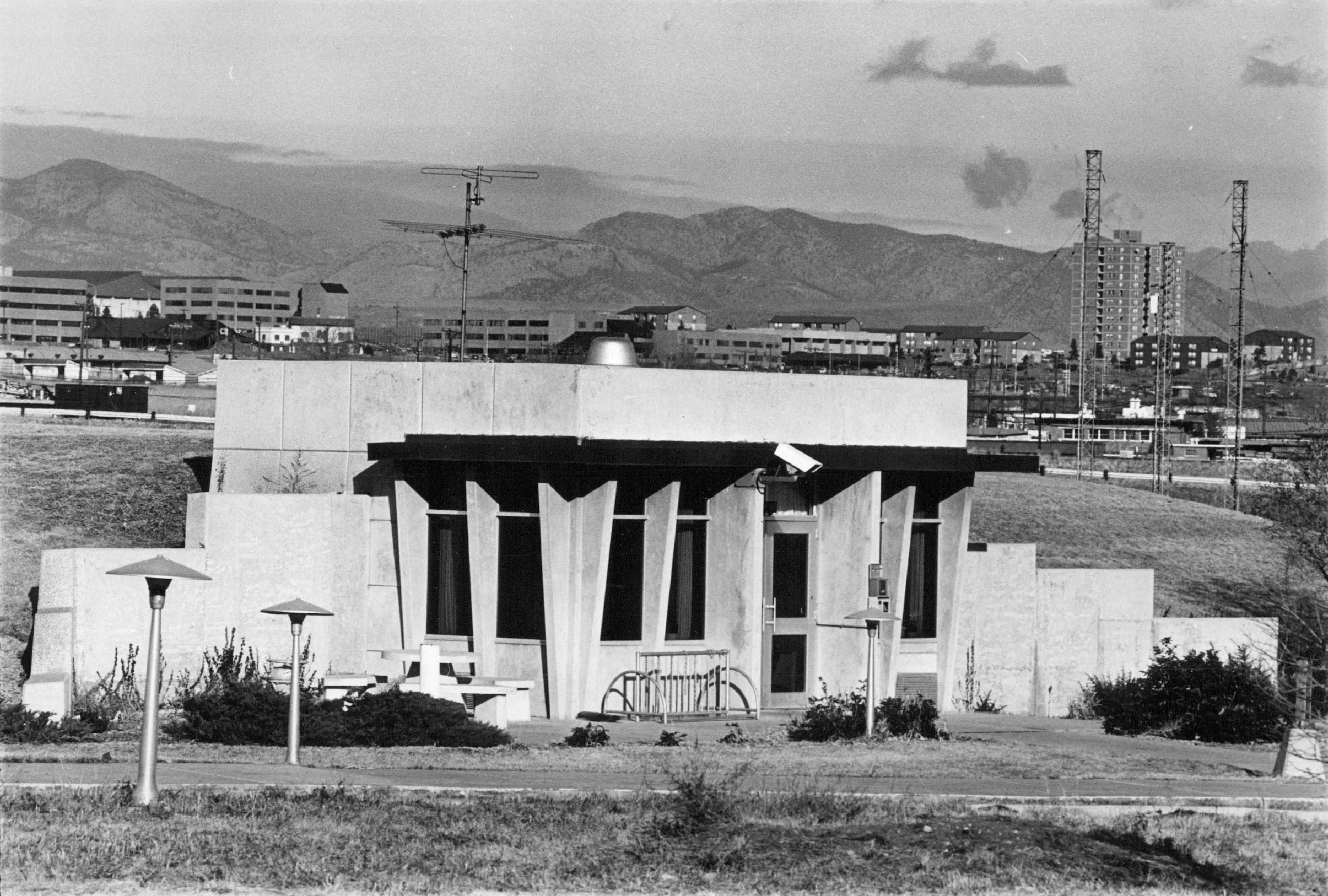
The Volcano Lair was the underground headquarters of the terrorist syndicate SPECTRE during the Bond film You Only Live Twice from 1967. 

Also, a reminder:

Prime Directives!

  • If you want to talk politics, do so respectfully and know that there’s always somebody that isn’t going to agree with you. 
  • If you have political differences, hash it out respectfully, stick to the facts, and no childish name-calling or personal attacks of any kind. If you can’t handle yourself in that manner, then please, discuss virtually anything else.
  • No drive-by garbage political memes. No conspiracy theory rants. Links to crackpot sites will be axed, too. Trolling and shitposting will not be tolerated. No obsessive behavior about other users. Just don’t interact with folks you don’t like. 
  • Do not be a sucker and feed trolls! That’s as much on you as on them. Use the mute button if you don’t like what you see.  
  • So unless you have something of quality to say, know how to treat people with respect, understand that everyone isn’t going to subscribe to your exact same worldview, and have come to terms with the reality that there is no perfect solution when it comes to moderation of a community like this, it’s probably best to just move on. 
  • Finally, as always, report offenders, please. This doesn’t mean reporting people who don’t share your political views, but we really need your help in this regard.

Tyler’s passion is the study of military technology, strategy, and foreign policy and he has fostered a dominant voice on those topics in the defense media space. He was the creator of the hugely popular defense site Foxtrot Alpha before developing The War Zone.


Source link

Trump’s lawyers are in talks with the IRS to resolve president’s $10-billion lawsuit

Lawyers for President Trump are engaged in talks with the IRS to resolve a $10-billion lawsuit the president filed against his own tax collection agency over the leak of his tax information to news outlets between 2018 and 2020.

In a federal court filing Friday, Trump asks a judge to pause the case for 90 days while the two sides work to reach a settlement or resolution.

“This limited pause will neither prejudice the parties nor delay ultimate resolution,” the filing says. “Rather, the extension will promote judicial economy and allow the Parties to explore avenues that could narrow or resolve the issues efficiently.”

Tax and ethics experts say the lawsuit raises a plethora of legal and ethical questions, including the propriety of the leader of the executive branch pursuing scorched-earth litigation against the very government he oversees.

Earlier this year, Trump filed a lawsuit in a Florida federal court, alleging that a previous leak of his and the Trump Organization’s confidential tax records caused “reputational and financial harm, public embarrassment, unfairly tarnished their business reputations, portrayed them in a false light, and negatively affected President Trump, and the other Plaintiffs’ public standing.”

The president’s sons, Donald Trump Jr. and Eric Trump, are also plaintiffs in the suit.

In 2024, former IRS contractor Charles Edward Littlejohn, of Washington — who worked for Booz Allen Hamilton, a defense and national security tech firm — was sentenced to five years in prison after pleading guilty to leaking tax information about President Trump and others to two news outlets between 2018 and 2020.

The outlets were not named in the charging documents, but the description and time frame align with stories about Trump’s tax returns in the New York Times and reporting about wealthy Americans’ taxes in the nonprofit investigative journalism organization ProPublica. The 2020 New York Times report found Trump paid $750 in federal income tax the year he first entered the White House, and no income tax at all some years, thanks to reported colossal losses.

When asked in February how he would handle any potential damages from the case, Trump said, “I think what we’ll do is do something for charity.”

“We could make it a substantial amount,” he said at the time. “Nobody would care because it’s going to go to numerous very good charities.”

Several ethics watchdog groups have filed friend-of-the-court briefs challenging the president’s lawsuit.

The watchdog group Democracy Forward’s February filing states that the case is “extraordinary because the President controls both sides of the litigation, which raises the prospect of collusive litigation tactics,” and “the conflicts of interest make it uncertain whether the Department of Justice will zealously defend the public fisc in the same way that it has against other plaintiffs claiming damages for related events.”

Hussein writes for the Associated Press.

Source link

Prep talk: Oakwood is 14-0 in baseball

When you think of Oakwood School in sports, Mitchell Butler comes to mind. He put the basketball team on the map when getting a scholarship to UCLA and playing in the NBA.

Steve Smith, who coached basketball at Windward and in the WNBA, came on as athletic director and has been trying to raise the level of sports commitment at a school known for its academics and having parents in the entertainment business.

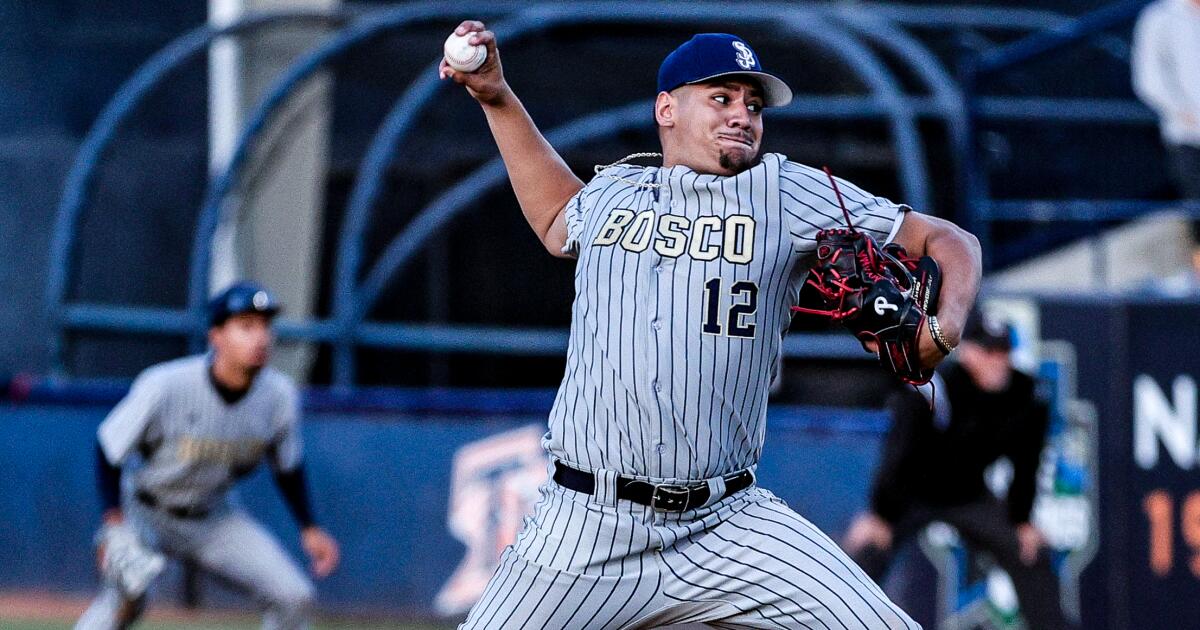
The baseball team is certainly showing passion and commitment this season with a 14-0 record, including wins over North Hollywood and Culver City.

Avery Ware, in his seventh season as coach, said, “It’s a lot of being selfless and versatile.”

Shortstop Jake Waco, who transferred from Sherman Oaks Notre Dame last season, has been effective as a fielder and hitter. He’s the son of David Waco, who was an All-City infielder for Chatsworth during the 1980s. He’s committed to Emory. The top pitcher is Trevor Jones, committed to Washington University.

If you believe Ware, the bus rides home have plenty of players singing, so someone might be capable of singing the national anthem before a game.

“We have a few kids with Hollywood ties,” Ware said.

Jones is a math whiz, also participating in competition with the STEM team. Other players are headed to Duke and Brown for academics.

“We’re making progress as a program,” Ware said. “For a lot of years, you could say baseball was a side note.”

Ware has his own celebrity ties. He and his brother, Anthony, were standouts at Hamilton. His cousins, Matt and Aaron Ware, were football stars at Loyola and Oaks Christian, respectively.

The team made an agreement to create a baseball field at North Hollywood Recreation Center next to the school.

And Ware appreciates Smith’s support.

“He’s able to create an environment of trust.”

This is a daily look at the positive happenings in high school sports. To submit any news, please email eric.sondheimer@latimes.com.

Source link