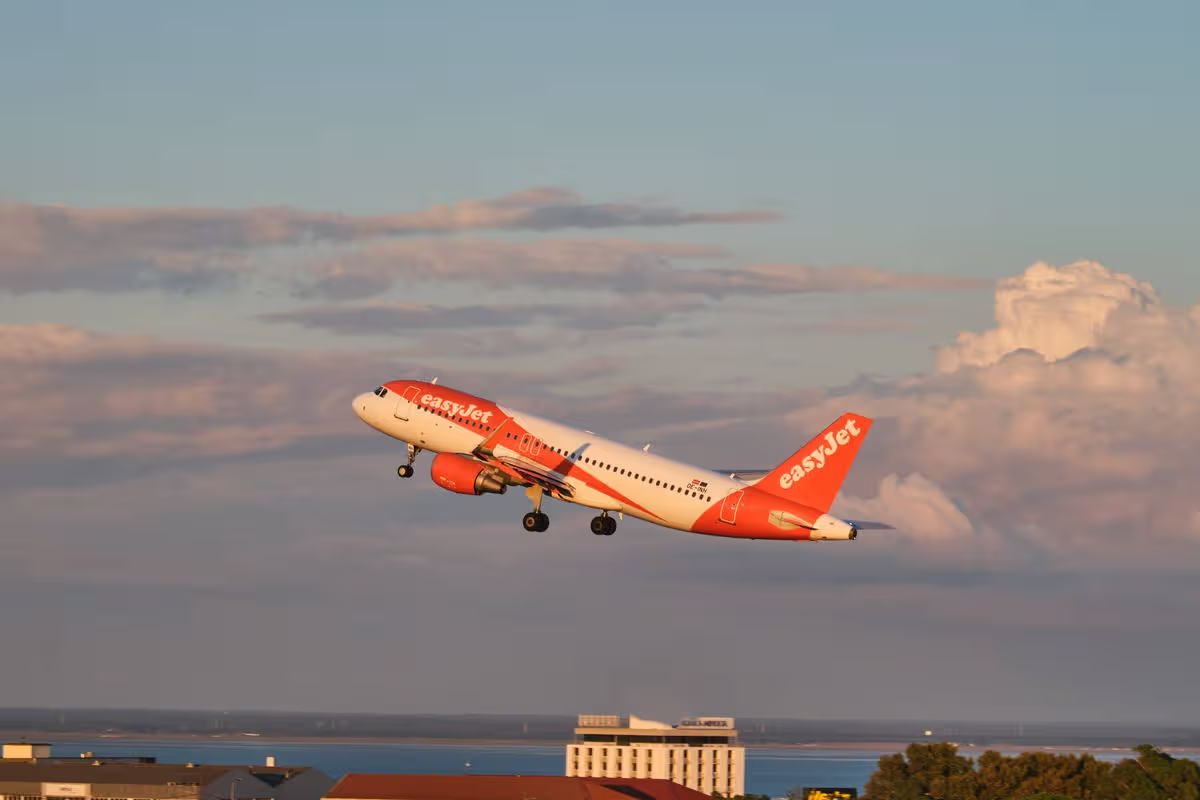
takeoff

Flight attendants sit in same position during takeoff and landing for important reason

Cabin crew adopt a specific safety posture with hands on their thighs during critical flight phases – and there’s an important reason behind it

For most flyers, those brief minutes before takeoff and after landing pass by in a blur — heads buried in mobile phones, half-watching the safety demonstration, or simply killing time until the aircraft reaches cruising altitude. However, for cabin crew members, these seemingly routine moments represent the most dangerous stretches of any flight, demanding razor-sharp attention, rigorous protocols and a meticulously rehearsed physical stance that passengers often notice but seldom comprehend.

Throughout these critical periods, flight attendants are vigilantly scanning the cabin to guarantee everything is properly secured. Travellers must remain seated with seatbelts fastened, tray tables tucked away and seats in the upright position, enabling the crew to devote their complete attention to safety matters.

Aviation experts confirm this elevated level of alertness is crucial, as the vast majority of incidents take place during takeoff and landing.

In conversation with Travel + Leisure, Katherine Drossos, a qualified flight attendant and in-flight supervisor at Cirrus Aviation Services, outlined the importance of these crucial moments. “During the critical phases of flight, specifically takeoff and landing, cabin hosts ensure the cabin is fully secure and passengers are seated, briefed, and prepared. This allows full focus on safety during the most sensitive portions of the flight,” she says.

Part of that groundwork involves the safety briefing, which details seatbelt usage, oxygen masks and life jackets. However, once the demonstration wraps up and the plane starts climbing or descending, travellers might notice something else: cabin crew seated bolt upright in their jump seats with their hands positioned firmly on their thighs or tucked underneath their legs, reports the Express.

While many assume they are merely “sitting on their hands”, Drossos clarifies the stance is deliberate. “What passengers often interpret as cabin hosts ‘sitting on their hands’ is actually a deliberate brace-ready position. Cabin hosts sit upright in the jump seat with feet flat on the floor and hands secured on their thighs or beneath the legs,” she explains.

“This posture stabilises the body, minimises the risk of injury during sudden movement or turbulence, and ensures hands are immediately available to respond if an evacuation or safety action is required.”

While precise hand positioning may differ based on airline protocol or aircraft model, the objective stays the same. Drossos points out that the stance is engineered to maintain “stability, alertness, and immediate readiness during the most critical phases of flight”.

The physical stance is merely one element of the procedure. While seated, cabin crew simultaneously undertake a silent mental rehearsal of emergency protocols.

“While seated, cabin hosts also conduct a silent safety review, mentally walking through emergency procedures, identifying exits, and confirming evacuation commands and responsibilities,” Drossos explains. This guarantees they are entirely ready to respond immediately should anything go awry.

The technique shot to prominence after a flight attendant known as @_hennylim went viral on TikTok for demonstrating the routine. In her clip, she displayed two crew members boarding the plane, getting into their jump seats, securing their seatbelts and positioning their hands underneath their legs.

She characterised the stance as the “bracing position”, outlining that it requires sitting upright with palms facing upwards, thumbs tucked in, arms loose and feet planted firmly on the floor. The objective, she noted, is to limit movement and minimise injury should an unexpected impact occur.

Passengers are not obliged to adopt the identical brace position, but aviation professionals recommend staying alert during safety demonstrations, studying the safety card, keeping seatbelts secured and ensuring seats are in the upright position during takeoff and landing. While it might appear straightforward, the manner in which flight attendants sit demonstrates comprehensive training and continuous alertness — a discreet yet crucial aspect of keeping everyone on board secure.

Source link

Flight attendant explains what happens if you forget to put windows up during take-off

Ever wondered what happens if you forget to put your window up during take-off or landing? One flight attendant explained the purpose behind the important safety precaution

Travelling on a plane comes with plenty of safety precautions, like going through security and putting your phone on airplane mode. While it can be nerve-wracking for people to remember these steps, there is a cabin crew to remind you along the way.

Now when you’re about to take-off, flight attendants usually have a checklist to tick off before the plane enters the runway. You must have your seats in a upright position, as well as armrests down. But one crucial part of safety is making sure your blinds are up during take-off and landing, so have you ever wondered what happens if you forget?

In a Reddit post, one person asked: “Why do you have to have the windows up for landing sometimes? This is something I’ve always wondered and I had no clue who to ask!”

Well the reason for having your windows up is quite simple – it’s in case of an emergency.

That’s because if you need to evacuate, you won’t be able to see if the engine is on fire, or there’s any hazard which means you can’t evacuate out of that side.

A flight attendant said: “In case something goes wrong a passenger can see it and alert the flight crew. It also has to do with safety. If you crash upon take-off inside a dark plane, the light could be blinding upon evacuating.”

Putting your window shades up during take-off and landing is for critical safety reasons as it also allows crew and passengers to see external hazards.

It’s also done for quick assessments to help your eyes adjust to light for a faster emergency exit and allows emergency services to see inside the cabin if needed.

Often flight attendants require your blinds to be up during take-off and landing. At night, shades stay open (with cabin lights dimmed) so emergency services outside can see in, meanwhile in the day, it’s so your eyes adjust.

What other safety precautions are there during take-off and landing?

  • Seatbelt: Passengers must make sure their seatbelt is fastened and even when the sign is off, it’s best to keep it buckled.
  • Seat position: Make sure your seat is in a full upright position
  • Tray table: Put it away securely
  • Electronics: All devices must be switched off or on airplane mode
  • Attention: Watch the safety video and demo
  • Exits: Revise your nearest exits in the case of an emergency
  • Shoes: Keep footwear on to protect your feet from debris
  • Window shades: Keep them open for visibility
  • Baggage: Make sure carry-ons are stowed away properly

Source link