Takaichi

Asian markets rise after Takaichi election win, while US futures trend lower

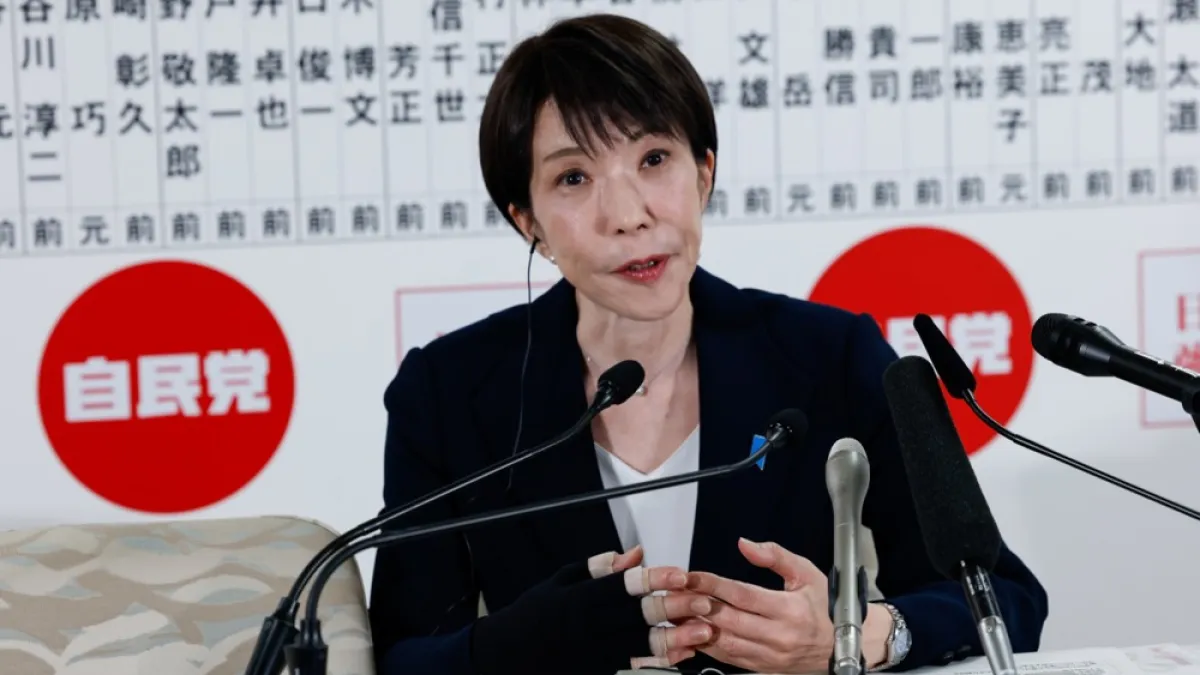
Asian markets edged higher on Monday as Sanae Takaichi’s Liberal Democratic Party (LDP) convincingly won the elections in Japan, providing greater clarity to investors worldwide.

The Japanese stock index, Nikkei 225, rose around 4%. Hong Kong’s Hang Seng jumped 1.76%, Korea’s Kospi rose 4.10%, while China’s SSE Composite Index saw a 1.41% gain.

In Europe, markets were mixed, with the STOXX Europe 600 trading less than 0.1% higher by around midday CET. France’s CAC 40 and the UK’s FTSE 100 fell, while Germany’s DAX was 0.18% higher and Spain’s IBEX 35 saw a 0.44% lift.

All eyes are now on the New York session open, with US futures trending downwards.

As for precious metals, gold is also up around 0.72% — back above $5,000 — while silver is more than 2% higher, at just under $80 per ounce.

The yen strengthened on Monday after Takaichi’s election victory, reversing six consecutive days of losses.

The PM assured the “continuation of responsible and proactive fiscal policies” after the election, although it’s unclear whether she is pursuing a weaker yen policy, highlighting that there are both advantages and disadvantages to a slide in the currency’s value.

Japan’s perceived stability

The first female Prime Minister of Japan, Sanae Takaichi, has regained a substantial amount of support for the LDP, which it had lost in recent elections due to inflation and corruption.

Following her electoral victory, Takaichi announced plans to accelerate the implementation of her campaign pledge to suspend the sales tax on food for two years.

The consequent loss of government revenue from this initiative, paired with high debt, is partially what caused a rout in Japanese bonds last month.

Nevertheless, Japan’s Finance Minister Satsuki Katayama talked down concerns over the country’s debt and the recent currency weakness, which many investors believe could prompt a rise in interest rates.

Katayama suggested utilising foreign exchange reserves to fund national expenditures. Although possible, this approach can be challenging as those reserves are usually only used for currency interventions.

The Japanese Finance Minister also underlined the ongoing collaboration and strong communication between the government and the Bank of Japan.

This assurance, together with the political stability provided by the robust mandate given to Prime Minister Takaichi, seems to have mitigated the markets’ distress — at least for the time being.

US economic reports

This week, investors worldwide are also bracing for major economic data releases in the United States, including reports delayed by the recent partial government shutdown.

The focus will be on the January jobs report on Wednesday and the January consumer price index (CPI) which comes out on Friday.

The delayed payrolls report is expected to show modest gains of roughly 60,000 jobs while the CPI is estimated to show inflation cooling to 2.5%.

Together with the release of these reports, multiple Federal Reserve governors, including Christopher Waller and Stephen Miran, are scheduled to speak throughout the week.

Investors are paying particular attention to the language used by members of the Fed to gauge the new policy line, following the announcement of Jerome Powell’s successor, Kevin Warsh, as the next Federal Reserve Chair.

Warsh is set to take over in May 2026, pending Senate confirmation.

President Donald Trump picked Kevin Warsh as a figure whose public and private track record is likely to reassure the financial markets. Warsh has advocated lower rates and a reduction in the central bank’s balance sheet.

Source link

Japan’s Takaichi vows to deliver on tax cuts after LDP’s ‘historic’ win | Politics News

LDP looks set to secure 316 seats in Japan’s 500-member house, marking its best result since its founding in 1955.

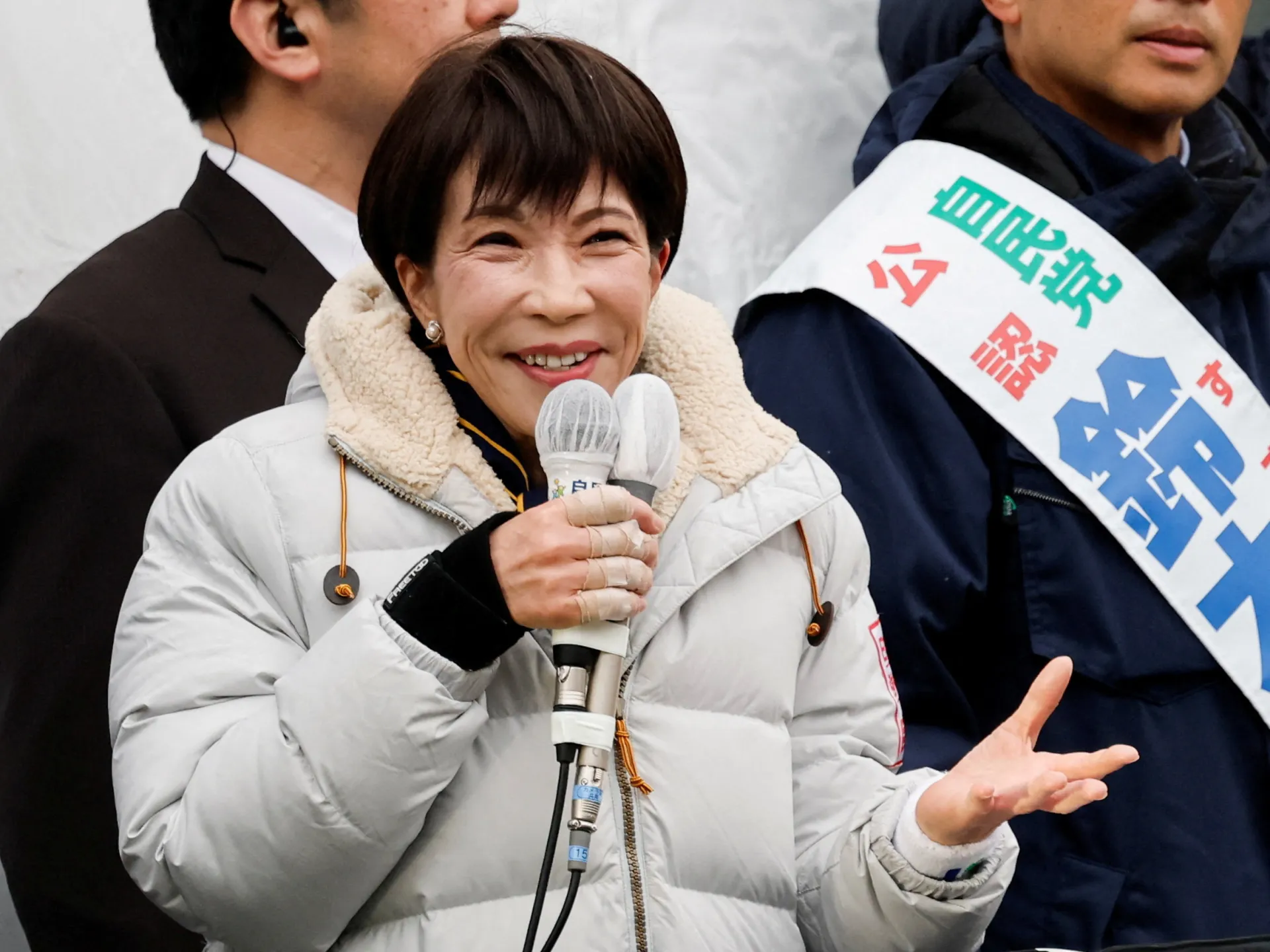
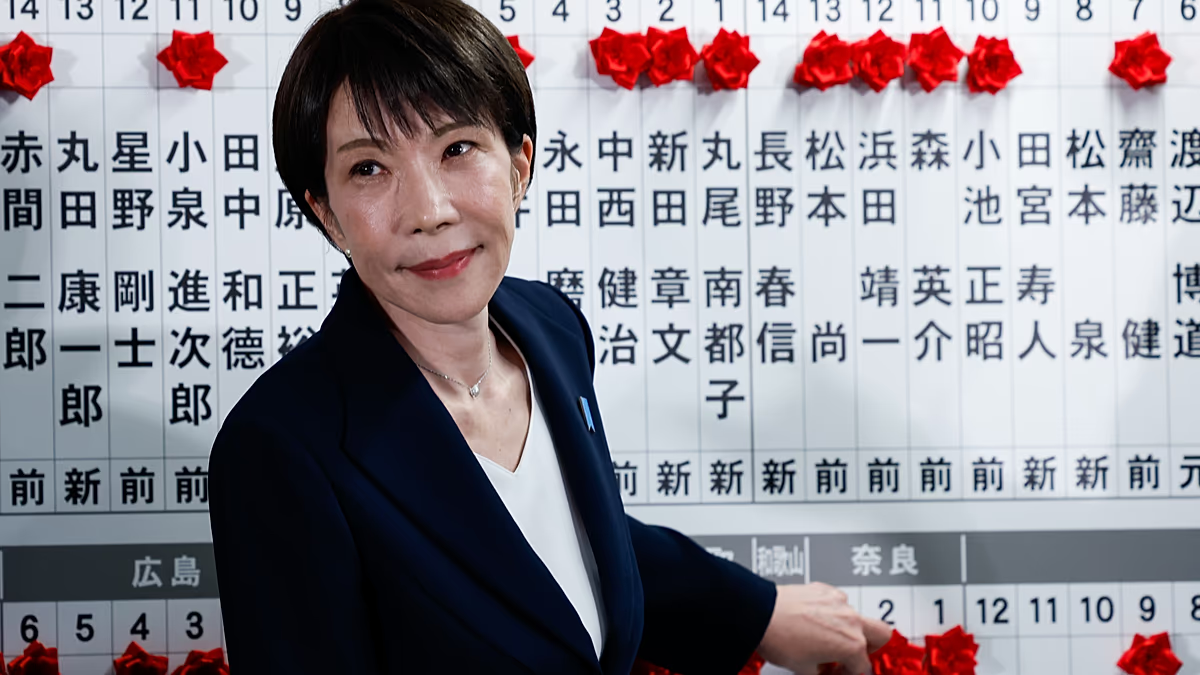
Japan’s Prime Minister Sanae Takaichi has promised to cut taxes and keep her cabinet intact as she celebrated her Liberal Democratic Party’s (LDP) landslide victory in Sunday’s general election.

Takaichi’s pledge on Monday came as projections by the NHK broadcaster showed the conservative LDP securing 316 seats in the 500-member National Assembly and winning a “historic” two-thirds majority in the lower house.

Recommended Stories

list of 3 itemsend of list

The results marked the best result for the LDP since its founding in 1955, surpassing the previous record of 300 seats won in 1986 under then-Prime Minister Yasuhiro Nakasone.

LDP’s junior partner Japan Innovation Party won 36 seats, while the main opposition Centrist Reform Alliance managed to keep only 49 of the 172 seats it previously held.

Analysts credited the LDP’s triumph to the extraordinary popularity of Takaichi, who is Japan’s first female leader, and say it will allow her to pursue significant changes in Japan’s security, immigration and economic policies.

In a televised interview with NHK on Monday, Takaichi said she will emphasise policies meant to make Japan strong and prosperous.

She told NHK that she will push for the reduction of consumption taxes as promised by the LDP. During the campaign, the governing party had said it would ease household living costs by suspending the 8 percent food sales tax for two years.

“Most parties are in favour of reducing the consumption tax, such as reducing the tax on food items to zero, or to 5 percent, or reducing the tax on all items to 5 percent,” Takaichi said.

“The LDP has also campaigned for a consumption tax cut. I strongly want to call for the establishment of a supra-party forum to speed up discussion on this, as it is a big issue.”

Takaichi also indicated that she will not make any changes in her cabinet, calling it a “good team”.

The head of Japan’s top business lobby, Keidanren, also welcomed the result, saying it will help in restoring political stability.

“Japan’s economy is now at a critical juncture for achieving sustainable and strong growth,” Yoshinobu Tsutsui said.

United States President Donald Trump, who endorsed Takaichi ahead of the election, congratulated Takaichi in a post on social media and wished her “Great Success”.

South Korea’s President Lee Jae Myung also offered his congratulations and said he hoped to see her soon in Seoul.

The leaders of India, Italy and Taiwan also welcomed Takaichi’s win.

Al Jazeera’s Patrick Fok, reporting from Tokyo, said the message from Taiwan’s President William Lai Ching-te to Takaichi could upset China.

“Remember that Takaichi triggered Chinese anger after suggesting that Japan might intervene in the event of a Chinese attack on Taiwan,” he said, referring to the diplomatic storm the Japanese leader set off last year shortly after taking office.

“How she handles that relationship between Tokyo and Beijing is likely to define Japan’s foreign policy,” Fok added.

China regards Taiwan as part of its territory and has been keeping a close eye on Takaichi and the results of the polls.

The strong mandate for Takaichi could also accelerate her plans to bolster military defence, which Beijing has cast as an attempt to revive Japan’s militaristic past.

“Beijing will not welcome Takaichi’s victory,” said David Boling, principal at the Asia Group, a firm that advises companies on geopolitical risk.

“China now faces the reality that she is firmly in place – and that its efforts to isolate her completely failed,” Boling told the Reuters news agency.

Source link

Japan heads to polls as Takaichi seeks mandate for conservative agenda | Elections News

Voters in Japan are casting their ballots in a parliamentary election expected to deliver a resounding victory for Prime Minister Sanae Takaichi’s conservative coalition.

The snap vote on Sunday comes as Takaichi seeks a new mandate to push through an ambitious agenda, including increased defence spending and tougher immigration measures.

Recommended Stories

list of 4 itemsend of list

The coalition of Takaichi’s Liberal Democratic Party (LDP) and the Japan Innovation Party, known as Ishin, could win more than 300 of the 465 seats in the lower house of parliament, according to multiple opinion polls.

The figure would mark a substantial gain from ⁠the 233 it is defending.

The opposition, despite the formation of a new centrist alliance and a rising far-right, is seen as too splintered to be a real challenger.

Takaichi, 64, is Japan’s first female prime minister and took office in October after being selected as the LDP’s leader. The ultraconservative politician has pledged to “work, work, work”, and her style – seen as both playful and tough – has resonated with younger voters.

She has said she will step down if the LDP fails to win a majority.

Rising cost of living

Voters on Sunday will select lawmakers in 289 single-seat constituencies, with the remainder decided by proportional representation votes for parties. Polls close at 8pm local time (11:00 GMT), when broadcasters are expected to issue projections based on exit polls.

The rising cost of living has taken centre stage in the election.

The issue is voters’ main concern, with prices rising while real wage growth lags behind inflation, leaving households worse off. Japan also faces longstanding problems with sluggish economic growth. The economy expanded just 1.1 percent last year and is on track to grow by only 0.7 percent in 2026, according to the International Monetary Fund.

Takaichi has promised to suspend the 8 percent sales tax on food for two years to help households cope with rising prices.

The pledge follows the approval last year of Japan’s largest stimulus package since the COVID-19 pandemic, a 21.3 trillion yen ($136bn) injection into the economy, heavily focused on cost-of-living relief measures, including energy bill subsidies, cash handouts and food vouchers.

Takaichi has also promised to revise security and defence policies by December to bolster Japan’s offensive military capabilities, lifting a ban on weapons exports and moving further away from the country’s post-war pacifist principles. She has been pushing for tougher immigration policies, including stricter requirements for foreign property owners and a cap on foreign residents.

Al Jazeera’s Patrick Fok, reporting from Tokyo, said Takaichi, who is favoured by a majority of voters under the age of 30, is hoping to capitalise on her “tremendous popularity” and secure a landslide victory for her coalition.

“That result – if indeed that’s how it turns out – will mark a remarkable turnaround, really, for the LDP. Months ago, it was a party in disarray. It had lost its parliamentary majority and was embroiled in a slush fund scandal. So, this turnaround has very much been engineered by Takaichi and what some describe as an almost cult-like popularity,” Fok said.

Sunday’s vote comes amid record snowfall in parts of the country. With up to 70cm (27.5 inches) of snow forecast in northern and eastern regions, some voters will have to battle blizzards to cast their ballots. The election is only the third post-war vote held in February, with polls typically called during milder months.

Fok said the heavy snowfall could affect voter turnout, but “there’s no suggestion that’s going to impact the outcome of the election”.

“A lot of people feel that the opposition parties are not offering anything substantially different. And perhaps they feel that Takaichi’s economic agenda will boost the country in the long term,” he said.

“She has a growth-oriented strategy. She wants to develop sectors like AI and semiconductors, and accelerate defence spending. Voters are perhaps betting on that unlocking the keys to stagnant wage growth in this country, and in turn, [to] counter rising inflation that they are experiencing here.”

Foreign policy

A landslide win for Takaichi’s coalition would also likely prompt a shift in foreign policy.

“It will allow her to do two fundamentally important things,” said Stephen Nagy, a professor of politics and international studies at the International Christian University.

“The first thing is to invest in the Japan-United States alliance, tighten its partnership, and secure that relationship,” he told Al Jazeera. “Second, it will allow her to take a more realistic approach to China by balancing engagement through trade and trying to deal with regional challenges, such as terrorism or climate change, and also resilience and deterrence policy.”

Nagy noted that Takaichi received the endorsement of US President Donald Trump on Thursday and called the move a “mixed blessing”.

On one hand, the Japanese public has been worried about Trump’s tariffs and his overtures to China.

“If he is going to create a G-2 relationship with China, this is going to come at the expense of Japan’s security and ordinary citizens’ idea of security in the region,” Nagy said.

On the other hand, the Trump endorsement helps because the Japanese public “are used to the strongest and most robust Japan-US alliance over the past 80 years” and believe that Takaichi will bring stability and forge a stronger relationship with Washington, he said.
Source link

Trump backs PM Takaichi before Japan vote, invites her to White House

SEOUL, Feb. 6 (UPI) — U.S. President Donald Trump gave his “total endorsement” of Japanese Prime Minister Sanae Takaichi ahead of a snap election in her country on Sunday and announced plans to meet with her at the White House on March 19.

Takaichi “deserves powerful recognition for the job she and her Coalition are doing,” Trump wrote on his Truth Social platform Thursday. “Therefore, as President of the United States of America, it is my Honor to give a Complete and Total Endorsement of her, and what her highly respected Coalition is representing.”

“SHE WILL NOT LET THE PEOPLE OF JAPAN DOWN!” he added.

Takaichi dissolved the lower house of parliament on Jan. 23, triggering a snap election set for Sunday. The 64-year-old hardline conservative leader and her ruling Liberal Democratic Party, or LDP, appear headed for a strong showing, according to a poll released Monday by the Asahi Shimbun daily.

The survey suggested the LDP is on track to secure an outright majority in the 465-member chamber. Along with its junior partner, the Japan Innovation Party, the coalition could capture around 300 seats, the poll indicated — well above the razor-thin majority it currently holds.

Such a result would strengthen Takaichi’s hand as she seeks to cement her leadership within the party and press ahead with her policy agenda.

In the 12-day campaign period ahead of the election, Takaichi has focused on economic measures to help households squeezed by rising prices.

She has floated the idea of temporarily suspending the consumption tax on food and expanding fiscal stimulus, while calling for increased public investment in strategic industries such as semiconductors and artificial intelligence as part of a broader growth strategy. Debate has also touched on foreign workers, tourism management and Tokyo’s security posture amid heightened tensions with China.

Takaichi is Japan’s first female prime minister. She took office late last year after winning a leadership contest within the LDP following the resignation of former Prime Minister Fumio Kishida, whose approval ratings had cratered amid high inflation and a wide-ranging slush fund scandal.

A former heavy metal drummer, Takaichi has brought a populist flair to Japan’s typically staid political establishment. Her social media savvy has made her a surprising favorite among younger voters, as her personal approval ratings run far ahead of the broader LDP.

Direct endorsements by sitting U.S. presidents in foreign elections are unusual, although Trump has previously voiced support for conservative leaders abroad, including Argentine President Javier Milei last year. On Thursday, he also endorsed Hungarian Prime Minister Viktor Orban in an April vote.

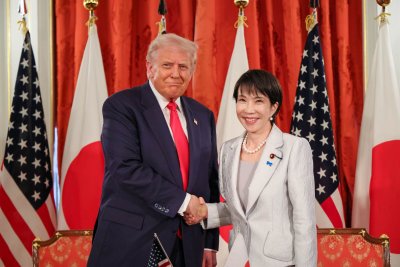
Trump and Takaichi met in October during his visit to Japan, just a week after she took office. The two reached agreements on trade and rare earth minerals, with Takaichi heralding a “new golden era” in bilateral ties.

Trump’s endorsement comes amid an ongoing rift between Tokyo and Beijing over comments Takaichi made in November, when she said a Chinese attempt to blockade or seize Taiwan could trigger a military response under Japan’s security laws.

During a phone call with Trump on Wednesday, Chinese President Xi Jinping said Taiwan was “the most pressing issue” in their relationship, reiterating Beijing’s claim that the self-governing democratic island is “China’s territory.”

Japan’s Deputy Chief Cabinet Secretary Kei Sato confirmed Friday that Trump had extended the March 19 invitation.

“Amid a turbulent international environment, we will reaffirm the unshakable unity between Japan and the United States with President Trump, further advance cooperation in diplomacy, economic and security fields, and open a new chapter in the alliance,” Sato said at a regular press briefing. “We will make thorough preparations to ensure the visit is meaningful.”

Source link