The Syrian embassy in Berlin has returned the passport of a citizen that the former Assad government seized 43 years ago. Adnan Wahoud, a mechanical engineer and inventor residing in Germany, says his passport was confiscated because he refused to cooperate with the former government.
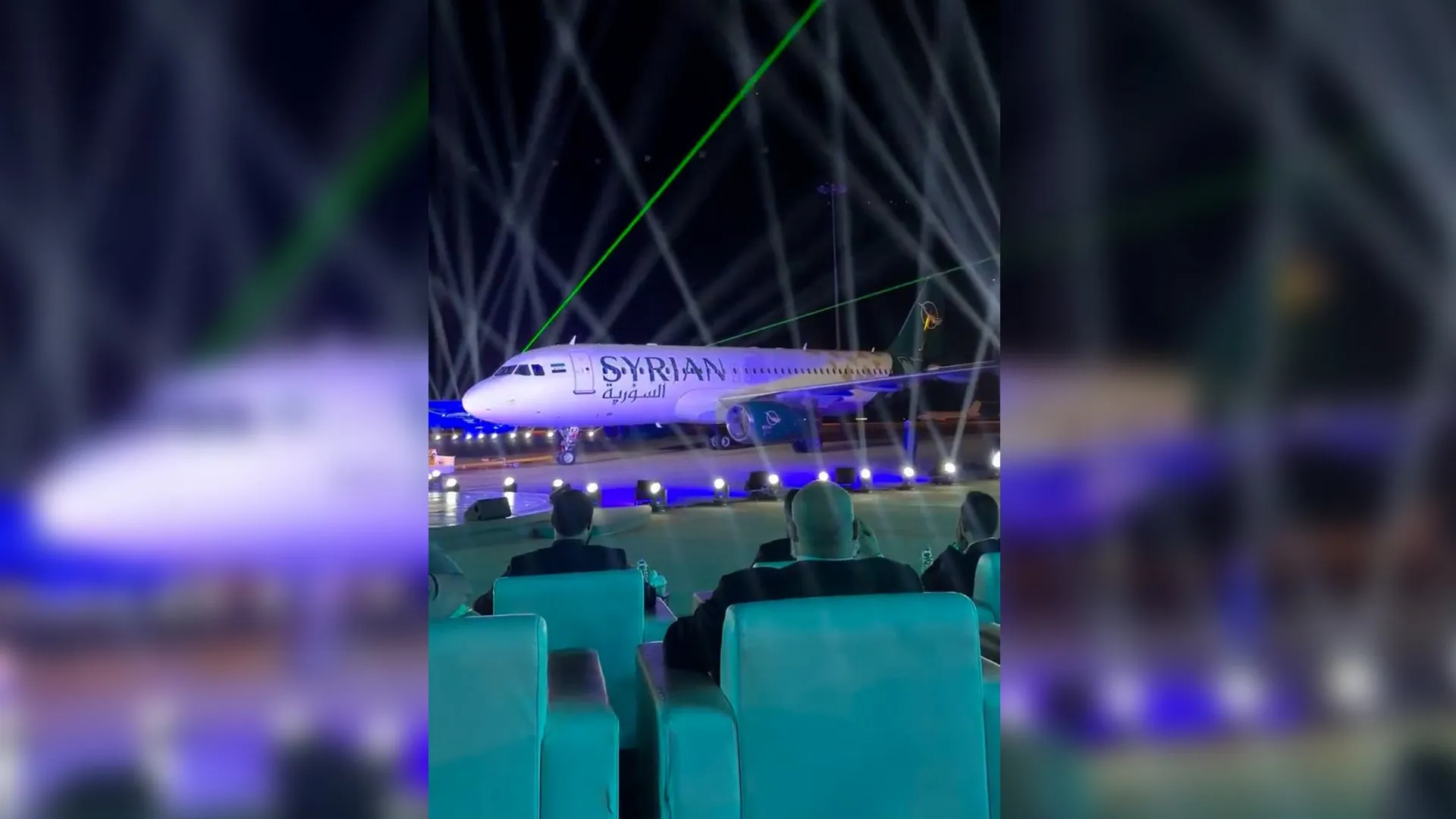
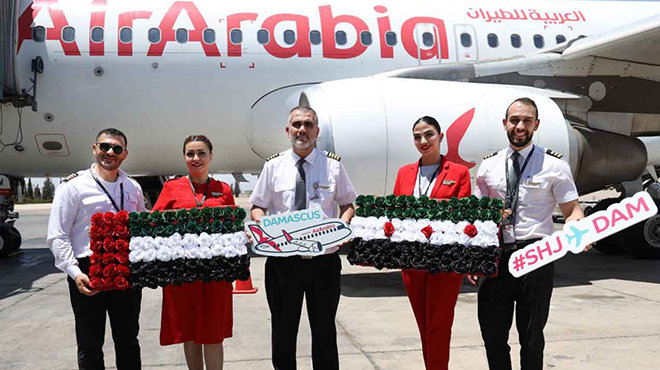
Syrian Airlines unveiled its new visual identity in a ceremony at Damascus Airport, featuring a revamped colour scheme, modernised booking and payment platforms, and a mobile app launching in November.
Syrians released from Israeli detention have described abuse including sleep deprivation, violent searches, and dog attacks, while dozens of others remain detained. Al Jazeera’s Heidi Pett met with some of them, who recounted the torture they suffered behind bars.
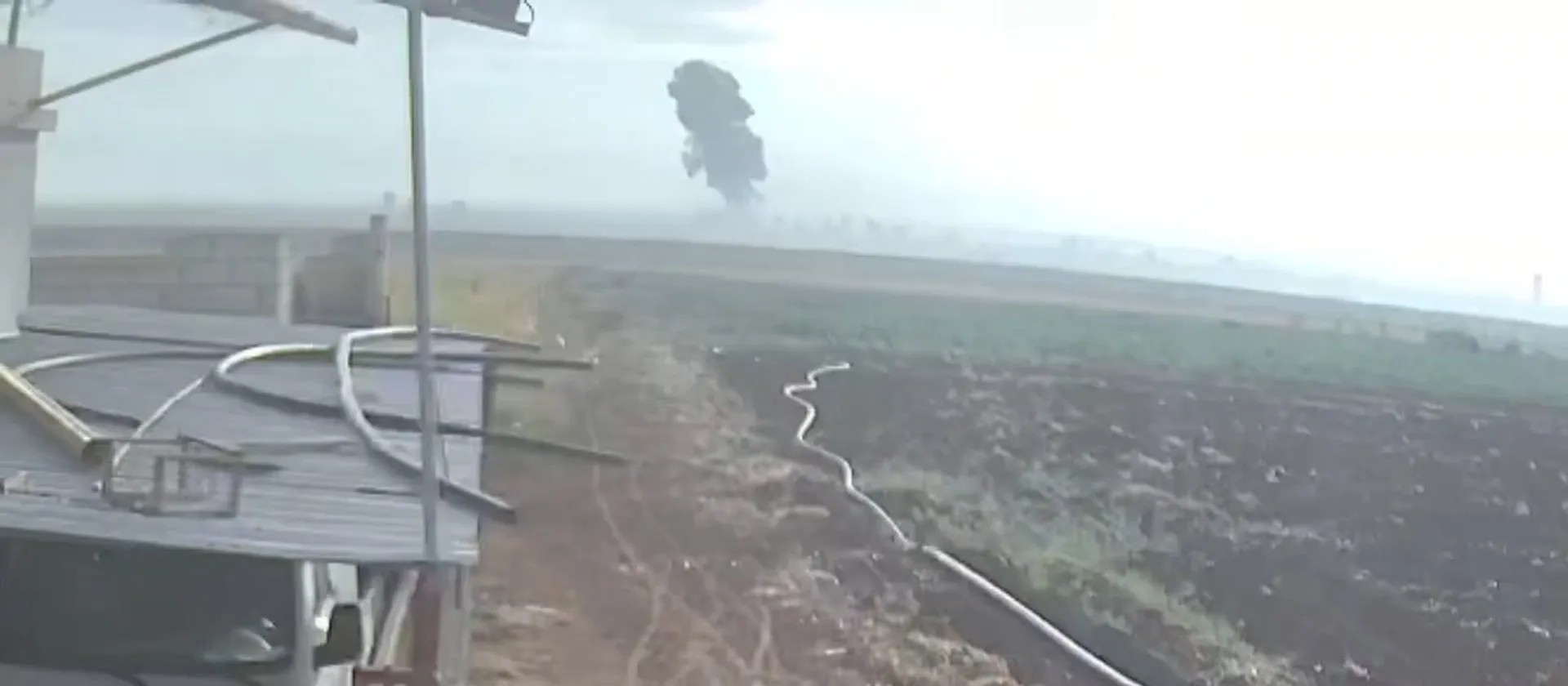
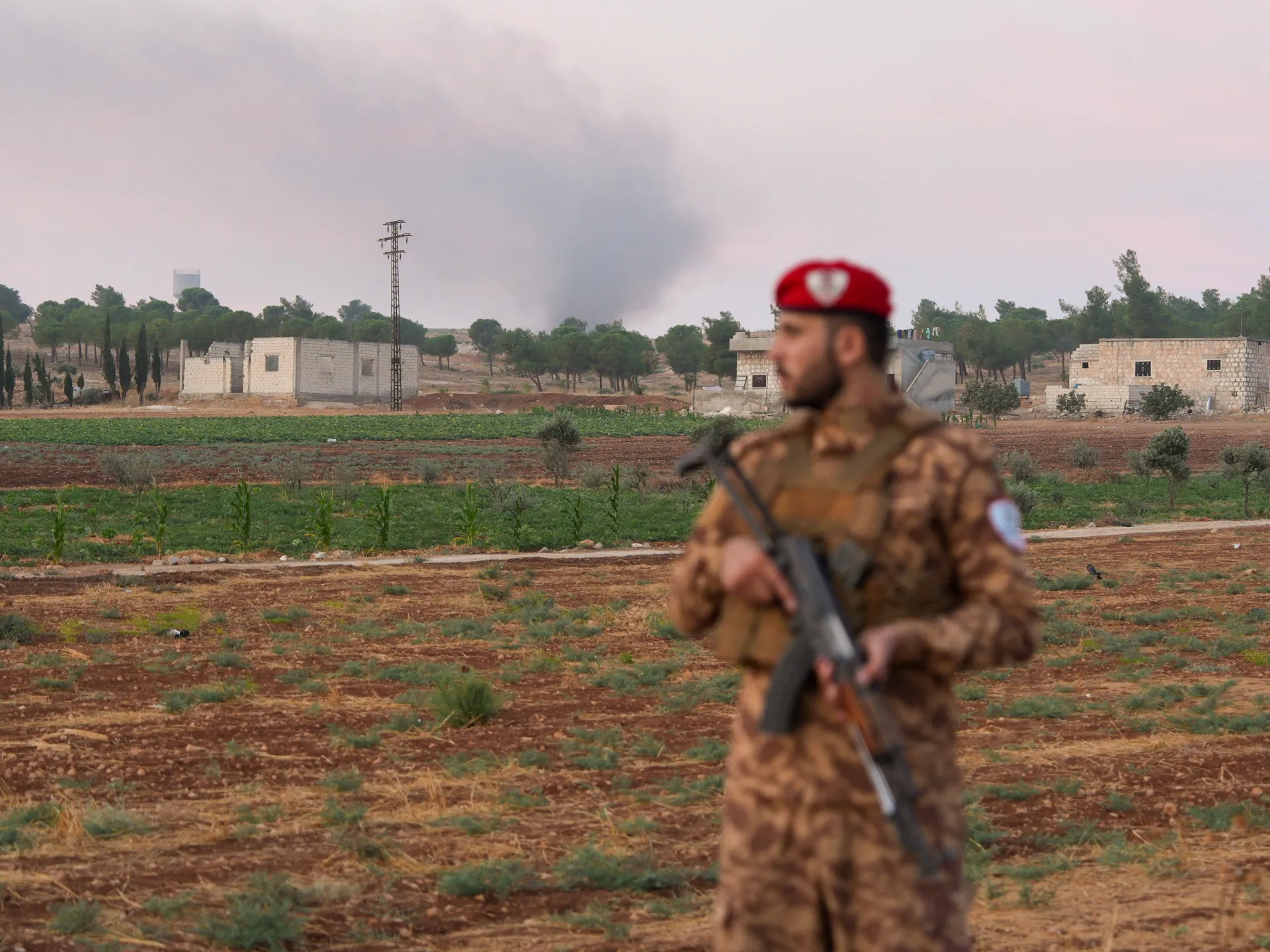
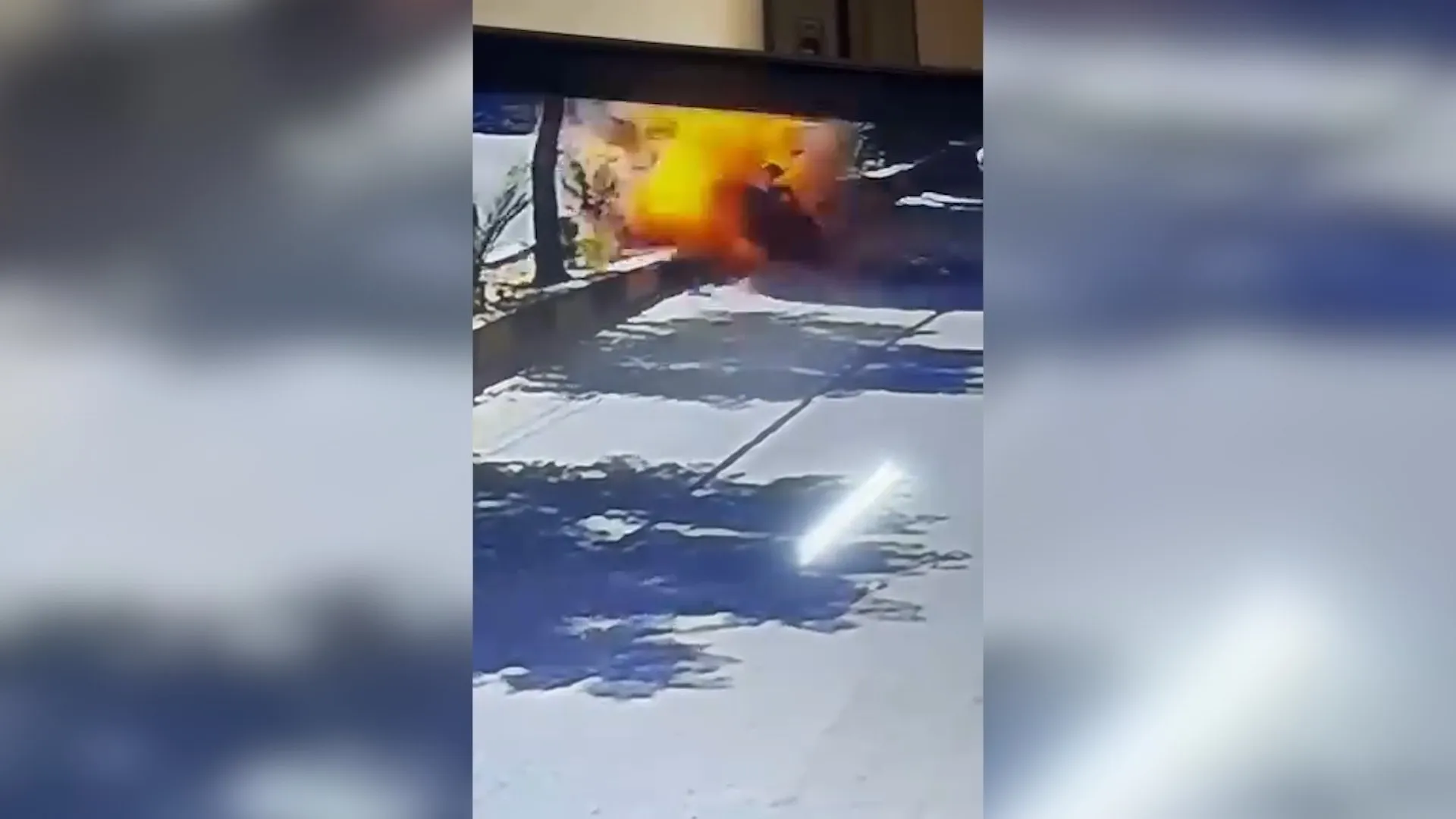
Two large explosions have occurred near Taftanaz military airport in Syria’s Idlib province, sending a plume of smoke into the sky. Witnesses say reconnaissance aircraft circled overhead afterwards. The military has not commented, and the cause of the explosion remains unknown.
WASHINGTON — The Trump administration is removing Syria from a list of countries that are not allowed to purchase or import U.S. weaponry, a step that is part of a monthslong process of easing sanctions on the new government in Damascus and its leaders.
In a notice published Wednesday in the Federal Register, the State Department said it was amending its International Traffic in Arms Regulations, or ITAR, so that Syria no longer was among the nations subject to a policy of denial for licenses and other approvals needed for the sale of U.S. weapons and munitions.
The change effective Thursday means that arms sales requests from Syria will now be considered on a case-by-case basis.
President Donald Trump acted last year to ease economic sanctions on Syria that had been in place for decades during now-ousted President Bashar Assad’s rule. In August, Secretary of State Marco Rubio rescinded Syria’s designation as a state sponsor of terrorism, helping paving the way for the latest step in drawing closer to the current government.
The State Department has also announced plans to reopen the U.S. Embassy in Damascus. It has been closed for 14 years.
With Syria’s removal from the ITAR blacklist, only seven countries remain subject to the policy of denial for licenses for U.S. arms exports: Belarus, China, Cuba, Iran, Myanmar, North Korea and Venezuela.
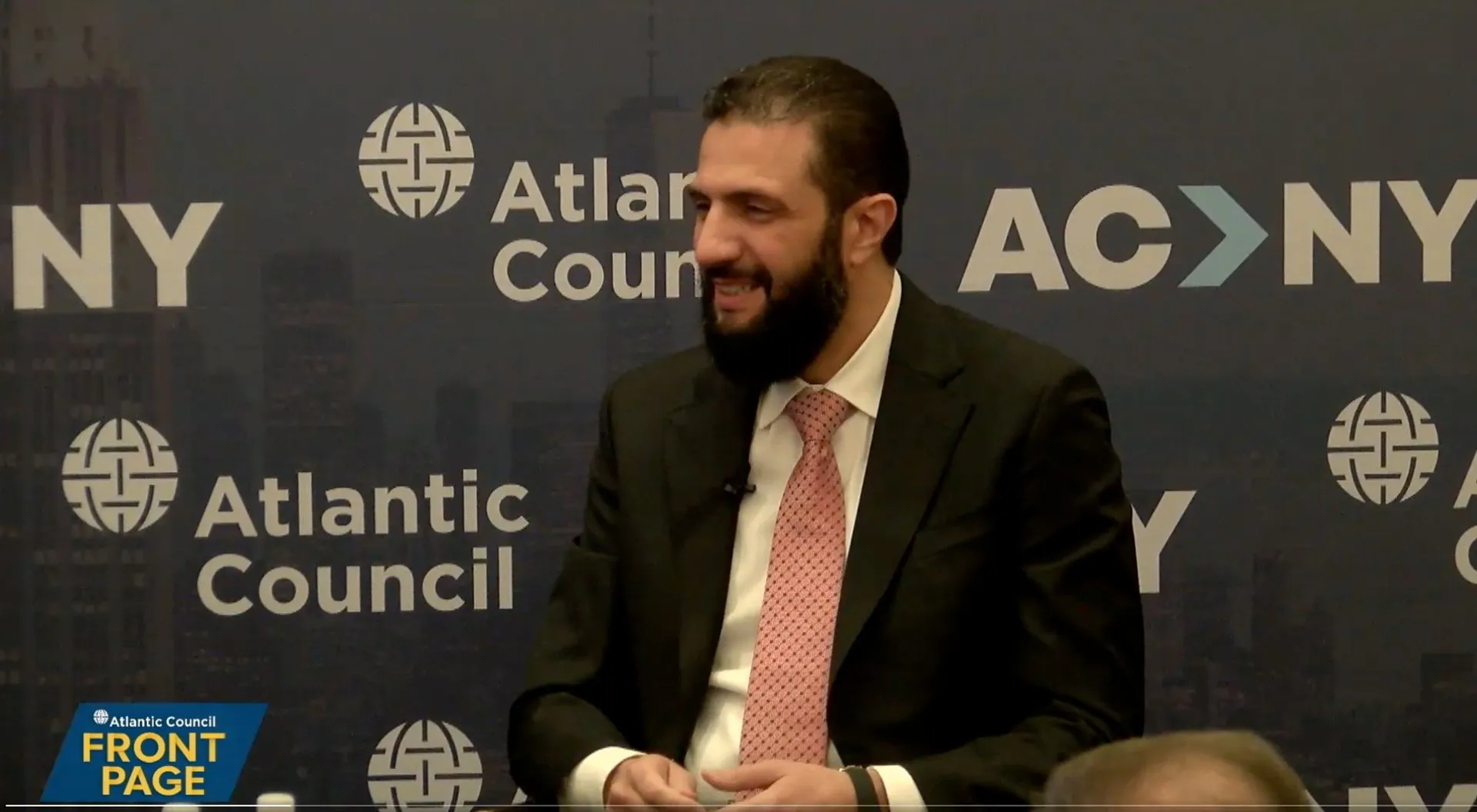
Syria’s interim president, former rebel leader Ahmad al-Sharaa, overthrew the Assad government nearly two years ago and has embarked on a policy of change that has impressed the Trump administration. His moves have led to hopes of eventual stability in a country that was wracked by civil war and the Islamic State insurgency that engulfed northeast and western Iraq for years.
Wednesday’s withdrawal of U.S. forces from Iraq may mean that the Syrian government plays a greater role in preventing an IS resurgence.
Iran’s foreign minister says his visit to the UN General Assembly last week was mainly to outline Tehran’s position on regional conflicts and the critical security situation in the Strait of Hormuz.
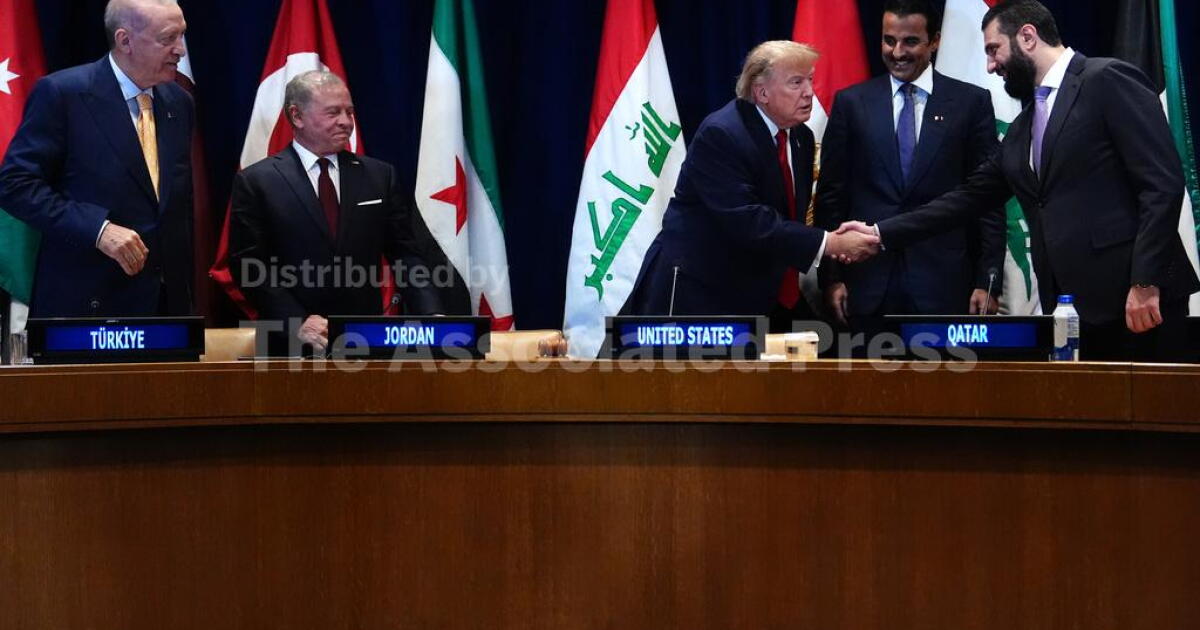
Syria’s President Ahmed al-Sharaa says Donald Trump should give New Jersey to Israel, instead of the Golan Heights. During an interview on the sidelines of UNGA, he criticised Israel’s policy of attacking and occupying Syria since October 7.
When the shooting starts, Sara tells her children to lie flat on the ground; the bullets, she said, can go straight through her family’s tent.
Sara, who asked that her real name not be used, has been arbitrarily detained for nearly a decade in Roj camp in Syria’s far northeast, which holds more than 2,300 children and mothers, many of whom are held on the basis of alleged family or other associations with ISIL.
Recommended Stories
list of 4 itemsend of list
Her children have grown up behind guarded fences topped with barbed wire and tangled with rubbish that often blocks the view of the barren, windswept landscape beyond.
United Nations experts and human rights groups describe open-ended detention in camps such as Roj as a breach of international law.
In recent months, women in the camp told Al Jazeera that the situation has steadily escalated: gunfire at night, stones thrown by guards and a boy left with a serious head injury.
Complaints to the administration, they say, bring promises but little else. “Every cry for help results in another wave of aggression,” one mother said.
Al Jazeera cannot independently verify their accounts, but they match reports by UN investigators and NGOs.
On September 8, the UN Independent Commission of Inquiry on Syria told the body’s Human Rights Council that conditions in Roj had worsened over the past year, with regular night raids, extortion and violence by camp security.
It described the camp as the world’s largest site of mass arbitrary detention of women and children on security grounds.
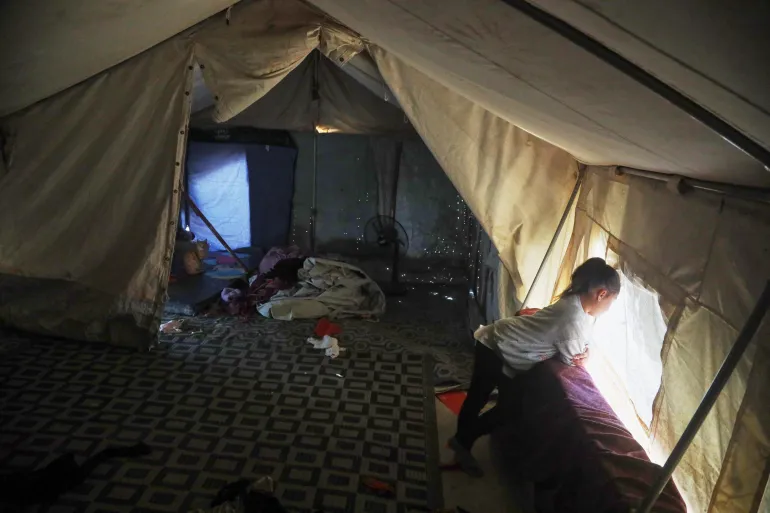
A young girl looks out from a tent in a section of Roj Camp in eastern Syria [File: Baderkhan Ahmad/AP Photo]
Who really controls the camp?
The violence comes amid sweeping change in the region.
On August 25, the Kurdish-led Syrian Democratic Forces (SDF), once a key US ally in the fight against ISIL, announced it would dissolve as an independent military force under an agreement with Syria’s central government in Damascus.
After a government offensive in January, the SDF lost much of the territory under its control and agreed to merge with the national army.
Its commander, Mazloum Abdi, has since been appointed a presidential adviser.
Roj, which the SDF had controlled until last month, is now the Syrian state’s responsibility.
But inside the camp, detainees said the transition has been anything but smooth.
One woman described to Al Jazeera a divided security presence, with those who accepted integration with the government on one side and holdouts who refused or were rejected on the other, and tensions between them that play out over the heads of the women and children.
In an open letter published on Monday, 11 mothers in Roj wrote that many of the same guards remain.
“While individuals’ [affiliations] may have changed,” one woman told Al Jazeera, “the people themselves remain the same”.
A woman and a child stand in Roj camp [File: Baderkhan Ahmad/AP Photo]
No legal basis for detention
Children from more than 50 countries remain stranded in Syria.
None has been given an individual legal process to determine why they are held, or for how long.
Fionnuala Ni Aolain, who served as UN special rapporteur on counter-terrorism and human rights from 2017 to 2023 and now sits on its inquiry commission, visited the camp in 2023.
Upwards of 70,000 people were once detained in al-Hol, another larger camp in the northeast holding the families of alleged ISIL fighters. In 2023, more than 52,000 people – mostly Syrians and Iraqis – were held in al-Hol and Roj, including an estimated 12,000 foreign nationals.
She found that conditions met “the threshold for torture under international law”. The violence women and children face now, she told Al Jazeera, is worse.
“It is utterly unacceptable that women and children who have never been convicted of any crimes, who have never been subject to any legal process, are being detained in this way,” she said.
There is no legal basis for their arbitrary detention, she said, adding that the remedy is release.
In January, order at al-Hol collapsed in chaos. The fate of thousands who had been held there remains unknown.
An SDF patrol at the al-Hol camp in northeastern Syria in February 2025 [File: Nils Adler/Al Jazeera]
Beatrice Eriksson, a spokesperson for the Swedish branch of the rights organisation Repatriate the Children, which has been in contact with hundreds of mothers in the camps since 2019, told Al Jazeera that boys have been taken from their mothers as young as 12 or 13 and initially held in so-called rehabilitation centres.
Some have since been transferred to Iraq, she said, where they were detained in a makeshift prison for adult alleged ISIL fighters. The whereabouts of others remain unknown.
Eriksson argues that integrating former SDF-controlled forces and administrative structures into the Syrian government could provide an opportunity for change.
She said responsibility for the families has shifted from a non-state group to an internationally recognised government with which most of their home countries have diplomatic relations.
However, some detainees told Al Jazeera that they feel trapped. Governments tell them to reach out to an embassy, but their detention makes that impossible.
Ni Aolain said the responsibility does not just lie with the Syrian government, which is “doing its best to manage the massive post-conflict needs of the population as a whole”.
Instead, she said part of the blame clearly lies with foreign governments, “who have remained persistently stony-faced and unwilling to accept responsibility for their nationals”.
“It is not consistent with solidarity and support for a transitional state, and it’s an abdication of both their human rights and their security responsibilities to Syria”, she said.
For the women and children in Roj camp, the current situation is not sustainable.
“We want the next steps to begin where we’ll see an end to the suffering of our children,” one woman told Al Jazeera, “even if that means going to prison back home.”
At the time of publication, Syria’s Ministry of Foreign Affairs and Expatriates had not responded to Al Jazeera’s request for comment on the reports of violence at Roj as well as the government’s plans for the camp and its detainees.
The camp administration also did not respond to Al Jazeera’s request for comment.
Repeated blasts at military sites expose the risks facing Syria as it rebuilds its army and consolidates weapons after years of war.
A series of explosions at weapons and ammunition sites across Syria this month have exposed the difficulties facing the country’s military in storing and moving munitions, as the armed forces rebuild after more than a decade of war.
The latest blasts injured at least four people in the early hours of Monday morning at an arms depot in al-Eis, south of Aleppo.
Recommended Stories
list of 3 itemsend of list
On Friday, a blast in Ayyash, west of Deir Az Zor, killed 11 soldiers. Another on September 9 killed 14 defence ministry personnel in Sarmada, Idlib. Also in Idlib, five people were killed when a vehicle carrying ammunition exploded in the town of Binnish on September 1 .
According to a tally by the Reuters news agency, at least 16 similar explosions have hit arms storage facilities since the fall of long-time President Bashar al-Assad in December 2024 after an opposition offensive.
Some have been attributed to poor storage conditions. The Syrian Defence Ministry said it is investigating the causes behind the recurrent explosions to prevent future incidents.
Long-time neglect
Security analysts are divided on the root causes, with some pointing to a lack of professional infrastructure and others highlighting the potential for foreign interference – although there is as yet no hard evidence for that.
Omer Ozkizilcik, a nonresident senior fellow for the Syria Project in the Atlantic Council’s Middle East Programmes, explained to Al Jazeera that the Syrian military is undergoing a period of huge change. It is reorganising from what it was under al-Assad, consolidating weapons from different sources and integrating various forces. All of that could be putting pressure on Syria’s storage infrastructure, which was already creaking after the long war and international isolation.
“The explosions could have happened due to neglect, Ozkizilcik said. “The Syrian army is receiving much more military aid than ever before. It gained control over the stockpiles of the former regime and the formerly US-backed [Syrian Democratic Forces]. The increase in quantity coupled with the need to protect weapons from potential Israeli airstrikes may have pushed the Syrian army to store weapons in inadequate places.”
Ozkizilcik emphasised that Syria’s military is still in a transitional phase. The former army was dissolved after the fall of the al-Assad regime and fighters from armed opposition groups were integrated into a new military structure. Damascus has also been working to integrate territory and forces previously controlled by the Kurdish-led SDF.
“The Syrian army has yet to become a professional army,” Ozkizilcik added. “These explosions are not the first that happen in Syria. Before the fall of al-Assad, similar things happened many times in Syria. [but] I don’t think these explosions will affect Syria’s military capabilities in any visible way. It’s merely a loss of some stockpiles that can be replenished.”
Weapons and ammunition, by their nature, need to be handled extremely carefully and stored properly. Storing large quantities of ageing ammunition for years in poor conditions, such as high temperatures or humidity, can accelerate their deterioration and lead to them becoming unstable.
“The current warehouse infrastructure suffers from severe ageing; most of it dates back decades and does not meet international safe storage standards,” said security expert Ismat al-Absi. “Storing ageing munitions in open or semi-closed environments without controlled cooling and humidity systems creates what we call a thermal runaway chain reaction.”
Possibility of sabotage
The repeated explosions have led to some fears of sabotage, particularly in light of repeated Israeli attacks against Syria since the fall of al-Assad, many of which have targeted the military, including the August strikes on the Abu al-Duhur airbase in Idlib.
Ozkizilcik noted that there was “no public information about possible sabotage” being behind the weapons depot explosions, and no evidence of any direct Israeli links. But the repeated explosions, coupled with Israel’s attacks in Syria and past intelligence operations against groups like Lebanon’s Hezbollah, mean it cannot be totally ruled out.
“Considering that the Israeli media recently wrote about the growing military capabilities of Syria, suspicions grow,” he said.
Al-Absi told Al Jazeera that the wide geographic scope of the explosions nevertheless meant that deliberate interference should be investigated.
“The main loopholes that [could have allowed sabotage operations] are the absence of smart surveillance, relying on traditional human guarding instead of remote sensors and thermal movement detection; weak securing of transport lines and administrative fragmentation,” al-Absi said. “The weakness of security discipline during the restructuring phase of the military institution has made some sites vulnerable to penetration or internal manipulation.”
Al Jazeera’s Obaida Hitto reports on explosions that rocked a Syrian army ammunition depot south of Aleppo, injuring at least four people. Exploding missiles and ammunition hampered rescue efforts, while authorities closed nearby roads.
Officials urge civilians to stay away from site in Al-Eis near Aleppo after series of explosions.
Published On 21 Sep 202621 Sep 2026
Powerful explosions at a weapons depot in northern Syria have injured at least four people, according to state media, with officials urging the public to stay away from the site.
The explosions occurred early on Monday at a Syrian army site in the vicinity of the town of al-Eis, south of the city of Aleppo, the state-run SANA news agency reported.
The cause of the explosions was not immediately clear.
Faisal Mohammad Ali, the head of civil defence operations in Aleppo, told SANA that rescuers have evacuated four injured people from the site.
Al Jazeera’s Obaida Hitto, reporting from Aleppo, said a series of blasts has followed the initial explosion.
“The explosions are audible from a few kilometres away from the site. We have now seen a series of ambulances and fire trucks enter towards the position,” he reported.
Aleppo Governor Azzam al-Gharib urged residents not to leave their homes for the time being, adding that “hospitals, ambulance and emergency teams are on full alert”.
Roads leading to the site of the explosions were closed “to ensure the safety of civilians”, Aleppo’s Internal Security Command said.
A resident of Aleppo’s Hamdaniyeh neighbourhood told the AFP news agency that they heard a “huge explosion” and when they went up to the roof could see “large flames in the distance”.
Several such blasts have previously occurred in Syria, which is emerging from more than a decade of civil war following the toppling of longtime ruler Bashar al-Assad in late 2024.
An explosion of unknown origin killed 11 people at a military site in the eastern province of Deir Az Zor on Friday.
Earlier this month, an explosion at a weapons depot belonging to the Ministry of Defence killed 14 people and injured 11 in Syria’s northwest Idlib province.
Five people were killed just over a week earlier in the same area when a vehicle carrying munitions exploded.
Thousands of people cheered as they welcomed Syrian icon Assala Nasri back at a sold-out concert in Damascus. She spent more than 15 years in exile after publicly supporting the 2011 uprising against the government of Bashar al-Assad.
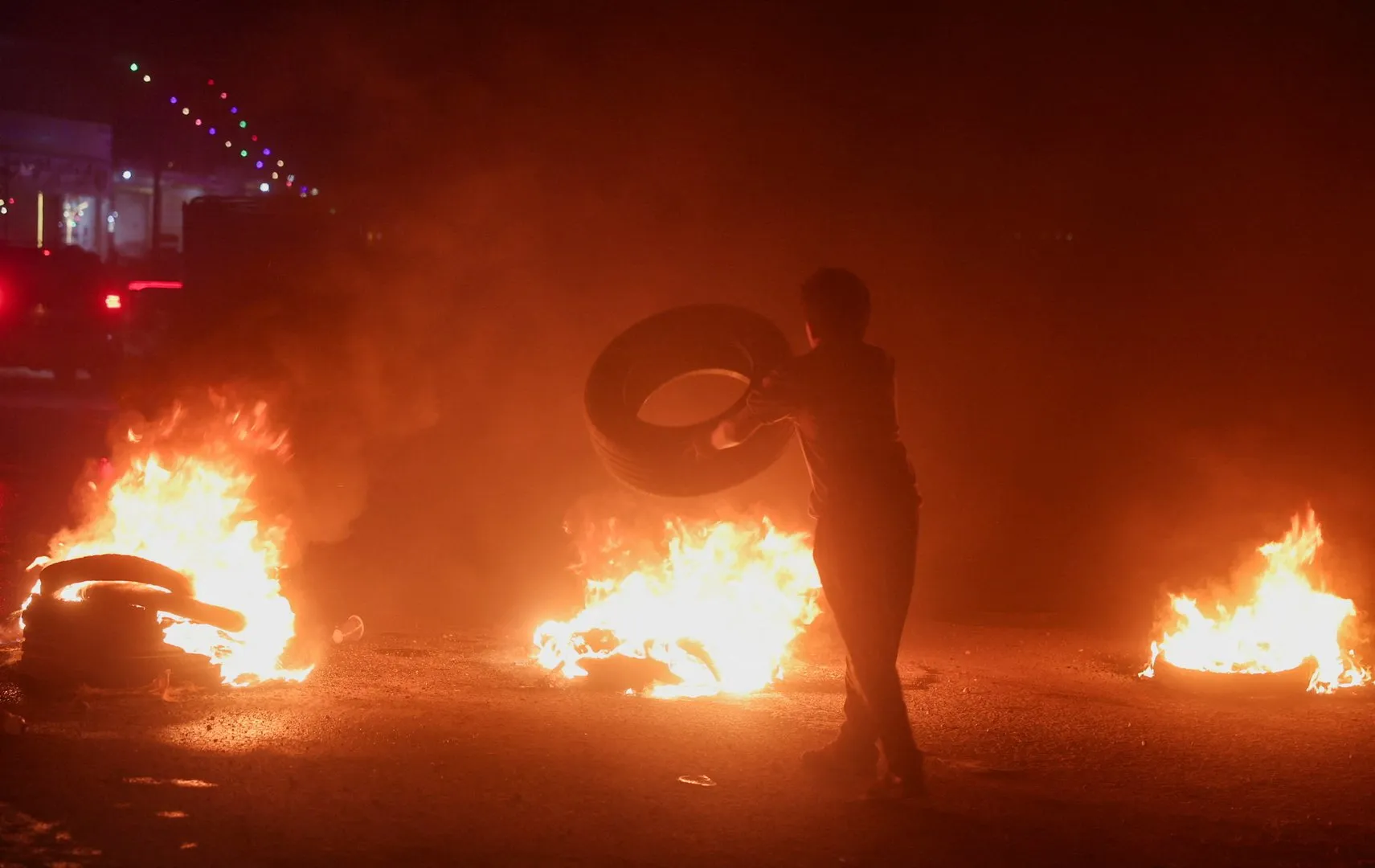
Demonstrators burn tyres and block highways as protests over increased fuel prices grip Syrian cities.
Published On 14 Sep 202614 Sep 2026
Protests have erupted across several cities in Syria after the government increased fuel prices, with demonstrators blocking a main highway for several hours.
The government raised prices on Sunday by up to 40 percent on diesel and 28 percent on petrol, in what it said were temporary increases caused by a sharp rise in the global cost of securing fuel.
Syria’s government also cited an overhaul of the critical Baniyas refinery for higher prices, saying it will raise capacity from 80,000 to 130,000 barrels per day.
A protester burns tyres on the highway between Aleppo and Turkiye to protest against fuel price increases in Syria on September 13, 2026 [Mahmoud Hassano/Reuters]
Protests were reported in Hama, Khan Sheikhoun and Maarat al-Numan. Footage published by Al Jazeera shows crowds gathering on the street and burning tyres. The price increases also prompted fierce debate on social media.
The country is currently producing about 102,000 barrels of oil per day, while it needs about 325,000 barrels per day for domestic consumption and is relying on imports to make up the difference, Syrian Energy Minister Mohammed al-Bashir said on Saturday.
The Ministry of Energy said it would continue to review prices as global market conditions change and would work over the long term to expand refining and storage capacity, according to the state-run Syrian Arab News Agency (SANA).
Syria’s fuel supplies are key to the country’s economic recovery as it seeks to rebuild after 14 years of war.
DAMASCUS: Syria’s civil aviation sector is moving beyond the restoration of suspended international routes toward a broader rebuilding of its air transport network, with foreign airlines returning, regional airports reopening and projects underway to expand capacity and connectivity.
After years of disruption and limited international services, Arab, regional and European carriers have gradually restored flights to Syria, initially through Damascus and Aleppo international airports. The recovery has since extended eastward, with Deir Ezzor International Airport returning to service and Qamishli International Airport nearing reopening.
Air traffic through Syrian airspace has also increased sharply, while airport expansion projects and new aviation ventures point to a wider revival of the sector.
International airlines return
One of the early signs of recovery came in March 2025, when Aleppo International Airport reopened after rehabilitation work. Royal Jordanian operated a test flight to the airport on March 23 to assess security and safety ahead of resuming regular services following a 14-year interruption.
European carriers followed. Romania’s Dan Air resumed flights to Syria on June 15, while Air Mediterranean operated a flight to Damascus from Austria and Greece on June 30.
Gulf carriers also restored connections. Air Arabia returned to Damascus from Sharjah on July 10, followed six days later by Emirates, which resumed flights after a 13-year interruption.
Air Arabia became the first of Gulf carriers that had restored connections to Syria on July 10. Emirates resumed flights six days later. (SANA)
The first Emirates flight carried 286 passengers, including UAE Minister of Sports Ahmad Belhoul Al Falasi. The carrier announced three weekly Damascus-Dubai services, restoring a route that had carried nearly 2.5 million passengers between its launch in 1988 and suspension in 2012.
The expansion accelerated in 2026. AJet restored Istanbul-Aleppo flights in April, followed by Pegasus Airlines in June. Etihad Airways began scheduled Abu Dhabi-Damascus flights on June 14, while Jazeera Airways launched Kuwait-Aleppo service later that month.
Traffic through Syrian airspace surges
The recovery has been reflected in air traffic over Syria.
The General Authority of Civil Aviation and Air Transport said the number of aircraft transiting Syrian airspace rose from 32 in March, after the airspace was closed amid regional tensions, to 2,523 in April.
The increase coincided with the resumption of operations by 12 international airlines through Damascus and Aleppo airports.
Authorities have also focused on restoring direct air links with Europe through coordination with international aviation organizations on safety and operational requirements.
On July 2, the first Syrian Airlines flight from Amsterdam arrived at Damascus International Airport, launching a service three times a week. The airline said the route was the first in a series of international destinations planned for the carrier.
Air Arabia restored daily Sharjah-Aleppo flights on July 4 after an interruption of about 12 years, while Flydubai announced daily services to Aleppo beginning July 20.
Kuwait Airways also returned to Damascus in July.
The first LEAV Aviation flight from Düsseldorf, Germany, arrived at Damascus International Airport on July 29.
On July 29, the first LEAV Aviation flight from Düsseldorf arrived at Damascus International Airport, opening the first regular air service between Syria and Germany in 14 years.
The flight followed a final air transport agreement signed by the Syrian and German governments on July 16. The agreement includes services from four German airports operated by two German airlines.
Aleppo prepares for major expansion
Aleppo International Airport reached another milestone Aug. 1 when it received inaugural flights from three international airlines in a single day: Türkiye’s SunExpress, Germany’s LEAV Aviation and Saudi Arabia’s Flynas.
The development underscored the accelerating recovery of Syrian civil aviation and growing confidence among international carriers.
Authorities are also preparing to expand the airport’s capacity. Development work at the existing Aleppo airport is scheduled to begin in early 2027, with annual passenger capacity expected to exceed 2 million.
The project aims to improve operational efficiency, technical capabilities and passenger services while preparations continue for a new Aleppo International Airport.
On August 1, 2026, Aleppo International Airport received the inaugural flights of three international airlines in a single day: Türkiye’s SunExpress, Germany’s LEAV Aviation and Saudi Arabia’s Flynas. (SANA)
The plans followed talks in Jeddah from Sept. 7 to 10 between a Syrian civil aviation delegation and Saudi Arabia’s Elaf Investment Fund, led by Bin Dawood Investment Group.
The agreement covers development and operation of the existing airport and construction of a new international facility. The new airport is planned in stages, with initial capacity of about 6 million passengers annually eventually rising to 12 million.
The project also includes financing for an integrated navigation radar system covering Syrian airspace.
Aviation recovery extends eastward
The expansion is no longer limited to Damascus and Aleppo.
Deir Ezzor International Airport returned to service Aug. 5 after rehabilitation work and years of suspension. Syrian Airlines resumed flights from Damascus, while Jazeera Airways launched regular direct Kuwait-Deir Ezzor service Aug. 8. A World Food Programme flight arrived two days later as humanitarian air operations resumed.
Three days after Deir Ezzor International Airport returned to service on August 5, it welcomed Syrian Airlines flights from Damascus, while Jazeera Airways launched regular direct Kuwait-Deir Ezzor service. (SANA)
On Sept. 1, German carrier LEAV Aviation operated its first direct flight from Cologne to Deir Ezzor, becoming the first European carrier to provide scheduled service to the airport.
Authorities said three additional regional destinations were being prepared, with technical teams expected to inspect airport equipment, infrastructure and safety and security procedures.
Qamishli International Airport is also nearing reopening as rehabilitation work enters its final stages. The project, which began Feb. 25, is expected to help reconnect Hasakah province and the wider eastern region with Syria’s national air transport network.
New aviation ventures
New aviation projects are emerging alongside the restoration of existing routes.
During a visit to Riyadh on Sept. 7, Syrian aviation officials met Flynas CEO Bandar Almohanna to review implementation of an agreement establishing “flynas Syria” and discuss expanding aviation cooperation between Syria and Saudi Arabia.
The meeting followed talks between Syrian and Saudi aviation authorities on boosting air traffic and coordination.
In February, the two sides signed an agreement to establish “nas Syria” as a new low-cost airline as part of a broader package of Syrian-Saudi commercial agreements.
During a visit to Riyadh on September 7, the head of Syria civil aviation authority met Flynas CEO Bandar Almohanna to review implementation of an agreement to establish “flynas Syria”. (SANA)
Authorities are also planning to convert Mezzeh Airport in Damascus from a military facility into an airport for limited civilian operations, mainly serving private and executive aviation.
Preliminary work includes rubble removal and upgrades to air navigation infrastructure, while technical, operational, environmental and regulatory studies are underway. The airport is expected to complement Damascus International Airport.
Reconnecting Syrians and supporting the economy
The restoration of air routes is facilitating family reunification after years of separation and reducing reliance on costly indirect flights and transit connections for Syrians living in Europe and the Gulf.
The expanding network is also expected to strengthen links between expatriates and their homeland and facilitate the return of skilled professionals.
Economically, improved air connectivity could support trade, investment and tourism while strengthening Damascus and Aleppo as regional economic centers. Plans for Aleppo airport also envisage increased passenger and cargo traffic and greater support for industrial and commercial activity in northern Syria.
The revival has coincided with closer aviation cooperation with Arab and European countries, including the air transport agreement with Germany and expanding coordination with Saudi Arabia.
From restoring routes to rebuilding a network
From only a handful of flights in early 2025 to more than a dozen international airlines operating through Damascus and Aleppo by mid-2026, Syria’s aviation network has undergone a marked transformation.
Routes now connect Syria with Türkiye, Germany, the United Arab Emirates, Kuwait, Saudi Arabia, the Netherlands, Austria and Romania.
At the same time, Aleppo is preparing for major capacity expansion, Deir Ezzor has returned to domestic and international service, Qamishli is nearing reopening, Mezzeh is being considered for limited civilian operations and a new low-cost airline venture is under development.
What began as the restoration of routes suspended for years is developing into a broader rebuilding of Syria’s aviation network, reconnecting its provinces, linking Syrians abroad with their homeland and expanding the country’s connections to regional and international air transport networks.
Protests have erupted in Syria after the government raised fuel prices by up to 40% for diesel and up to 28% for gasoline. The government cites higher import costs and the Baniyas refinery overhaul.
A child has been killed after an explosive object detonated when he touched it near Damascus. Relatives identified him as Khaled al-Ajeelah. Explosive remnants of war continue to endanger civilians across Syria. Warning: Contains distressing images.
DAMASCUS: Syria’s Culture Ministry is stepping up efforts to combat illiteracy and expand access to adult education as the country grapples with the legacy of years of war and displacement that has left about one in five Syrians unable to read or write.
The ministry highlighted the scale of the challenge at an event marking International Literacy Day, where officials outlined plans to expand literacy programs, introduce new teaching methods and use digital technology to reach people who have been excluded from education.
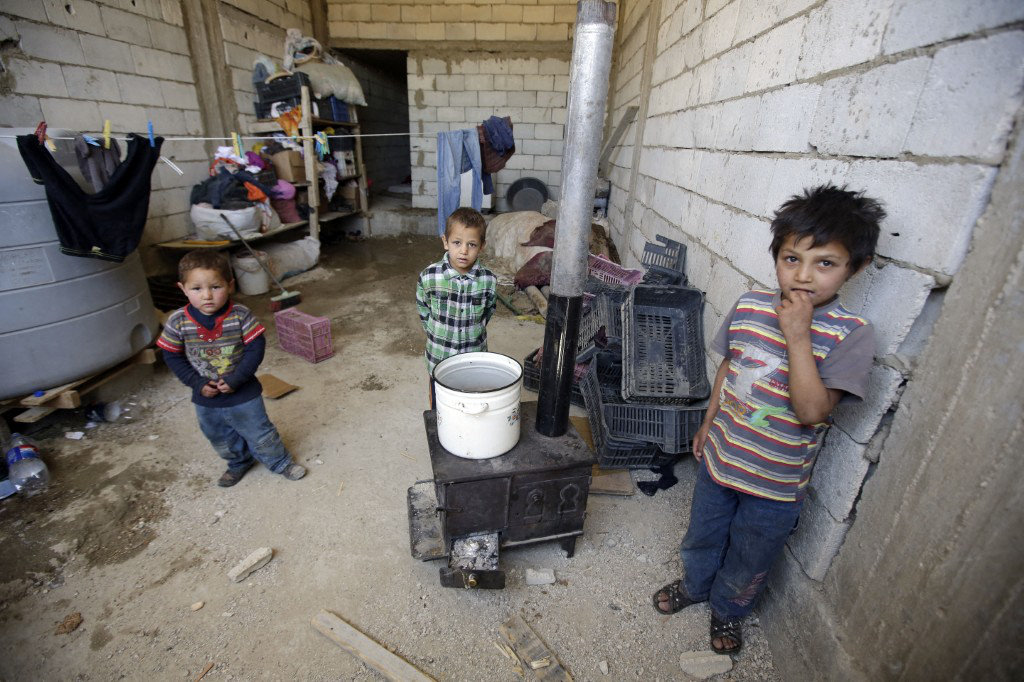
Ministry data presented at the event showed that around 4 million people in Syria are illiterate, equivalent to about 20% of the population, while an estimated 2.5 million children have dropped out of education.
Syrian refugee children whose mother was killed while fleeing recent violence in Qussayr pose in the place they live with their father on June 14, 2013 in Arsal in the Lebanese Bekaa valley.
Officials said years of war, displacement and deteriorating economic and social conditions had contributed to the high numbers, making literacy not only an educational issue but also a challenge for the country’s broader recovery and development.
Targeting single-digit illiteracy rate
Mohammad al-Asha, director of the Cultural Development and Adult Education Department at the ministry, said authorities were pursuing two parallel approaches to address the problem.
More than 400 literacy courses have been launched since the beginning of the year as part of an immediate response, while the ministry is also developing a national plan aimed at reducing the illiteracy rate to single digits within three years.
Syrian-Kurdish children refugee play outside tents at the Domiz refugee camp, 20 km southeast of the northern Iraqi city of Dohuk, on June 19, 2013.
New curricula are expected to go beyond basic reading and writing skills to include digital and legal literacy, critical thinking and Syrian cultural identity, as well as awareness aimed at preventing extremism, addiction and behavioral problems.
Deputy Culture Minister Ahmad al-Sawwaf said literacy was closely linked to human dignity, development and citizenship, describing reading and writing as essential tools for people to understand their rights and responsibilities and participate in rebuilding their communities.
Children walk back from school past building rubble in the devastated Hajar al-Aswad area near the Yarmuk camp for Palestinian refugees on the southern outskirts of Damascus on December 23, 2024.
Digital tools to broaden access
The event also focused on using digital technology and artificial intelligence to expand adult education at a time when limited resources and staffing pose additional challenges.
Engineer Ramez al-Sammak said digital tools could be used to assess learners’ abilities and tailor educational content to individual needs, helping move literacy programs beyond traditional classroom-based teaching.
Such technology could also help programs reach more people and address difficulties including low motivation and the challenge of attending lengthy courses, participants at a specialized seminar on digital literacy education said.
The event honored 18 people who had benefited from adult education programs, including some who went on to complete secondary education and others who used their newly acquired skills to start income-generating projects in food production, handicrafts, woodworking and crochet.
The event honored 18 people who had benefited from adult education programs.
People with disabilities who continued their education despite difficult circumstances were also honored.
The Culture Ministry said tackling illiteracy required a broad national effort to help vulnerable groups regain access to education and overcome economic, social and psychological barriers.
Through its Adult Education Directorate, the ministry implements Syria’s national literacy policy and develops programs aimed at providing sustainable learning opportunities and helping people excluded from formal education participate more fully in social and cultural life.