synthetic performer

A tool or or a human replacement: How Hollywood deals with AI

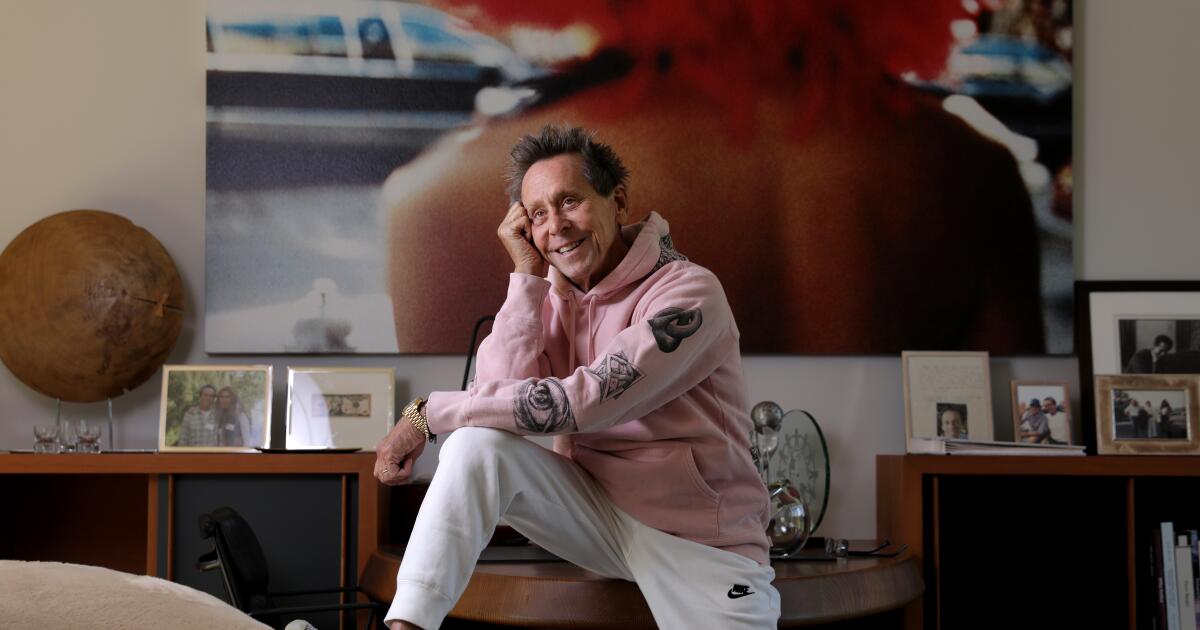
When Brian Grazer has an idea for a movie, he now starts with a chatbot. The co-founder of Imagine Entertainment — the company behind “A Beautiful Mind,” “Apollo 13” and “Liar Liar” — said he sits down with Anthropic’s AI assistant, Claude, to rough out a story before handing it to a writer.

“You can build the whole thing into an outline. You still need a screenwriter. I always believe you need a screenwriter,” Grazer said during a keynote at UCLA’s Entertainment Symposium on Thursday. What once could have taken up to a year, he said, now takes him about a week — but the human writer stays.

That balance — AI as an accelerant rather than a replacement — captures where much of Hollywood has landed in practice. Amazon MGM, Lionsgate, Netflix and Disney have all made major investments in the technology. The sharper question at the symposium, which drew many of the industry’s top lawyers and dealmakers to the Westwood campus, was not whether to use AI but how: who authorizes it, how far it goes and who gets paid.

For the companies building the tools, the answer increasingly comes from the client. Studios, production companies and distributors regularly approach Promise, a generative AI company, to bring AI into their productions, and each arrives with its own usage guidelines, said the company’s president, Jamie Byrne. Those rules govern which AI models Promise may use and what protections apply — effectively letting each client decide how heavily AI figures into the work.

“It comes down to a risk appetite,” Byrne said during a panel on AI. “We know that there’s talent that are staunchly against it. We know that there are many who are okay with it.”

He framed adoption as a competitive necessity: “Every time there’s a technology change, certain studios or production companies rise. Others fall, and it’s usually the ones that are not leaning into the new tool.”

Ron Howard, also of Imagine Entertainment, argued the limits will ultimately be set elsewhere — by viewers. “Sure, it’s about efficiencies and budgets, but more than anything, audiences are going to tell us where those restrictions are,” he said. He expects AI-generated content to settle into its own subgenre over time, with audiences signaling what they will accept.

The most contested ground is labor, where consent has become the dividing line. The emergence of synthetic performers such as Tilly Norwood has made AI a central issue in SAG-AFTRA’s contract. The union’s most recent agreement draws a clear line between authorized digital replicas, which use a performer’s likeness with their consent, and fully synthetic creations.

Talent agencies are organizing around the same principle. In recent years, Creative Artists Agency began digitally scanning clients into what it calls the CAA Vault, building a replica of a client’s image, likeness and voice while leaving the talent in complete control of how it is used.

That control is beginning to carry real value, said Tammy Brandt, CAA’s deputy general counsel, who said she is seeing more deals that involve digital likeness. Hollywood has been slow to work out how to monetize these replicas, she said, but once it does, audiences will start to encounter them more often.

“You have to lean into the technology and understand what it can do, and honestly, how you can make money, work with talent and with creative assets in a way that the user is interested in,” Brandt said. “There’s a little bit of trial and error as you go with that.”
Source link

SAG-AFTRA members approve deal with major studios

SAG-AFTRA members overwhelmingly approved a four-year TV and film deal with major studios including Netflix, Disney and Warner Bros. Discovery on Thursday night, increasing minimum wages and addressing concerns about the use of AI performers.

The deal, which was expected to be approved, received the support of 91% of SAG-AFTRA members who voted on the agreement, which starts July 1 and ends June 30, 2030. The union represents 160,000 performers, including actors, stunt performers and influencers.

“This agreement builds on the foundation members fought to establish and carries that work into the next chapter of our industry,” said SAG-AFTRA President Sean Astin in a statement. “It delivers meaningful gains in compensation, strengthens protections around artificial intelligence and digital identity, reinforces the long-term security of members’ benefit plans and recognizes the realities of how performers work today.”

Under the new deal, the length of the agreement between SAG-AFTRA and major studios represented by the Alliance of Motion Picture and Television Producers expands from three years to four years.

It also boosts minimum wage by 3% annually, increases contributions to the health plan by 1% and expands the bonus to the union’s Success Bonus Distribution Fund based on residuals that performers get for popular streaming programs.

The contract also addresses concerns about the growing use of artificial intelligence in TV and film and its impact on actor jobs. Last year, many actors spoke out about Tilly Norwood, a computer-generated “actor” and whether synthetic characters like her could threaten their livelihoods. Some performers have also advocated for getting paid if their likenesses are used to create such characters made through AI systems.

Not all members were in favor of the contract, saying it did not go far enough in protecting performers against AI.

“It normalizes the use of AI replicas and synthetic performers rather than drawing a firm line protecting human performers and their jobs,” said Chuck Slavin, a background actor and performer.

Slavin, a former New England local board member, ran against Astin for SAG-AFTRA president last year.

Producers agreed to “a principle strongly favoring human performances” and that producers would only use a synthetic if it “brings significant additional value to the motion picture.” If a producer decided to use a synthetic in a role that could be done by a human, they would need to notify the union and bargain in good faith.

Additionally, the contract merges the pension plans of the Screen Actors Guild and the American Federation of Television and Radio Artists, which were previously separate but combined in 2012 to form SAG-AFTRA.

Their health plans were consolidated in 2017, but the pensions have remained separate . That was a major sticking point with members, some of whom couldn’t qualify for benefits as their contributions were split between two plans. Studios agreed to boost their overall contributions to the combined plan by 1%.

SAG-AFTRA’s deal comes after the Writers Guild of America members also approved an agreement with the AMPTP in April.

The groups were able to agree on contracts this year, without striking as they did in 2023.

“SAG-AFTRA’s leadership brought a genuine commitment to partnership, and together with the WGA agreement, these deals demonstrate what is possible when the industry works toward practical solutions that support its long-term stability,” AMPTP said in a statement.

The Directors Guild of America began negotiations with AMPTP last month, with its contract expiring on June 30.

Staff writer Cerys Davies contributed to this report.

Source link

Film academy sets new AI rules for Oscars eligibility

As artificial intelligence becomes more embedded in film production, the Academy of Motion Picture Arts and Sciences is drawing a clearer line around it.

In new rules announced Friday for next year’s 99th Academy Awards, the academy said screenplays must be “human-authored” to be eligible for awards consideration, and that only performances “demonstrably performed by humans with their consent” will qualify for acting prizes. The group also reserved the right to request additional information about how AI tools were used in a film and the extent of human involvement.

The academy’s Board of Governors reviews its rules annually.This year’s revisions arrive as the industry continues to grapple with how AI tools are reshaping the creative process — and how institutions like the Oscars should reward that work, if at all.

The new changes build on guidance introduced a year ago, when the academy said that the use of AI would “neither help nor harm” a film’s chances of receiving a nomination, while emphasizing that voters should consider “the degree to which a human was at the heart of the creative authorship.” At the time, the organization stopped short of requiring formal disclosure of AI use, even as the technology became a flash point across Hollywood.

Taken together, the updated language suggests an effort to more clearly define the boundaries of authorship at a moment when tools such as voice cloning, digital doubles and AI-assisted writing are becoming more common in film production. The emergence of synthetic performers such as Tilly Norwood reflects how quickly those questions have moved from theoretical to practical.

In announcing the new rules, the academy framed the changes as part of an effort to reflect the current state of filmmaking, while maintaining what it called a “commitment to honoring human authorship and artistry.”

Beyond the AI provisions, academy leaders approved several structural changes across different categories.

In acting, performers may now receive multiple nominations in the same category if their performances rank among the top vote-getters, aligning the category with other branches.

The international feature film category also saw a notable shift. In addition to the traditional submission process through individual countries, non-English-language films can now qualify by winning top prizes at select major festivals, including Cannes, Berlin and Sundance. The award will be credited to the film itself, with the director accepting on behalf of the creative team, rather than to a submitting country or region.

Other changes — including updates to voting procedures in categories such as cinematography, visual effects and makeup and hairstyling — were largely technical in nature.

The new rules will take effect with next year’s Oscars, scheduled for March 14, 2027.

Source link