A tool or or a human replacement: How Hollywood deals with AI
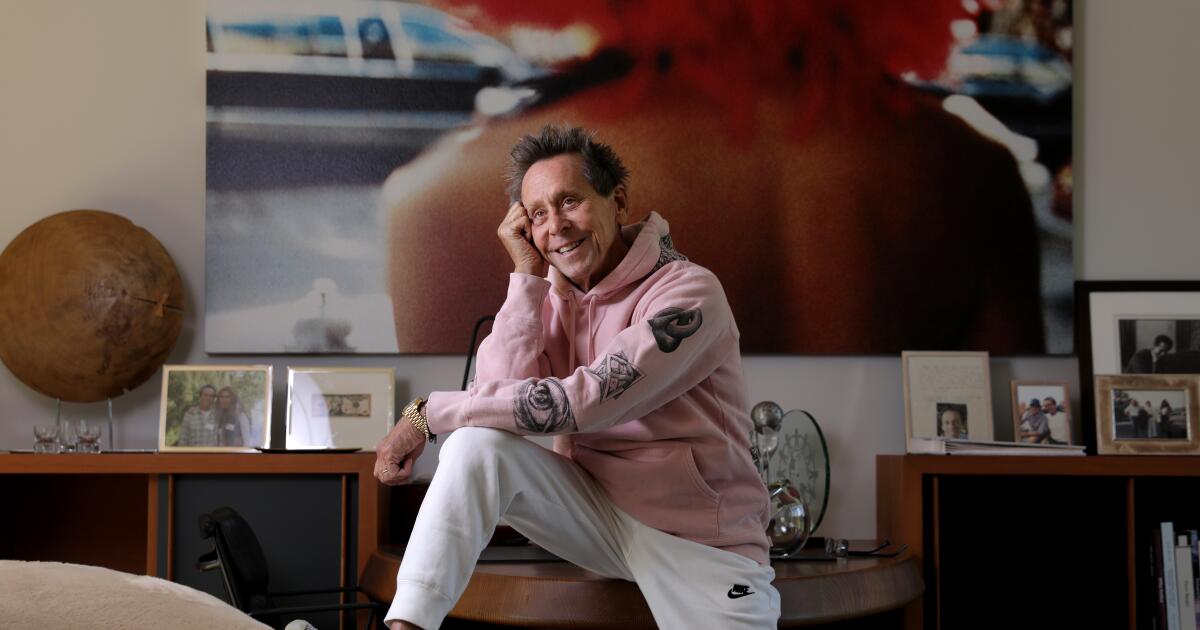
When Brian Grazer has an idea for a movie, he now starts with a chatbot. The co-founder of Imagine Entertainment — the company behind “A Beautiful Mind,” “Apollo 13” and “Liar Liar” — said he sits down with Anthropic’s AI assistant, Claude, to rough out a story before handing it to a writer.
“You can build the whole thing into an outline. You still need a screenwriter. I always believe you need a screenwriter,” Grazer said during a keynote at UCLA’s Entertainment Symposium on Thursday. What once could have taken up to a year, he said, now takes him about a week — but the human writer stays.
That balance — AI as an accelerant rather than a replacement — captures where much of Hollywood has landed in practice. Amazon MGM, Lionsgate, Netflix and Disney have all made major investments in the technology. The sharper question at the symposium, which drew many of the industry’s top lawyers and dealmakers to the Westwood campus, was not whether to use AI but how: who authorizes it, how far it goes and who gets paid.
For the companies building the tools, the answer increasingly comes from the client. Studios, production companies and distributors regularly approach Promise, a generative AI company, to bring AI into their productions, and each arrives with its own usage guidelines, said the company’s president, Jamie Byrne. Those rules govern which AI models Promise may use and what protections apply — effectively letting each client decide how heavily AI figures into the work.
“It comes down to a risk appetite,” Byrne said during a panel on AI. “We know that there’s talent that are staunchly against it. We know that there are many who are okay with it.”
He framed adoption as a competitive necessity: “Every time there’s a technology change, certain studios or production companies rise. Others fall, and it’s usually the ones that are not leaning into the new tool.”
Ron Howard, also of Imagine Entertainment, argued the limits will ultimately be set elsewhere — by viewers. “Sure, it’s about efficiencies and budgets, but more than anything, audiences are going to tell us where those restrictions are,” he said. He expects AI-generated content to settle into its own subgenre over time, with audiences signaling what they will accept.
The most contested ground is labor, where consent has become the dividing line. The emergence of synthetic performers such as Tilly Norwood has made AI a central issue in SAG-AFTRA’s contract. The union’s most recent agreement draws a clear line between authorized digital replicas, which use a performer’s likeness with their consent, and fully synthetic creations.
Talent agencies are organizing around the same principle. In recent years, Creative Artists Agency began digitally scanning clients into what it calls the CAA Vault, building a replica of a client’s image, likeness and voice while leaving the talent in complete control of how it is used.
That control is beginning to carry real value, said Tammy Brandt, CAA’s deputy general counsel, who said she is seeing more deals that involve digital likeness. Hollywood has been slow to work out how to monetize these replicas, she said, but once it does, audiences will start to encounter them more often.
“You have to lean into the technology and understand what it can do, and honestly, how you can make money, work with talent and with creative assets in a way that the user is interested in,” Brandt said. “There’s a little bit of trial and error as you go with that.”