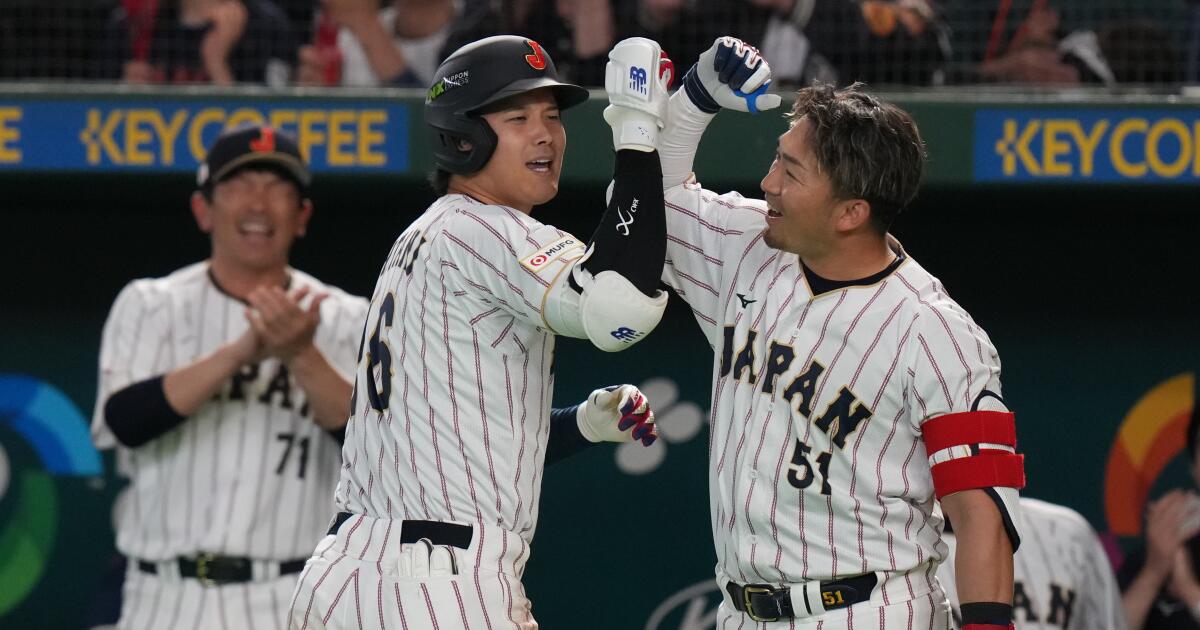
Suzuki

A 2009 crash killed an Angels pitcher. How Kurt Suzuki helped lone survivor heal

“Wow!”

The performance needed no evaluation beyond the exclamation. Kurt Suzuki bounded out of the visiting clubhouse at Angel Stadium to catch up with his friend.

In 2009, in the first start of his first full major league season, the Angels’ pitcher threw six shutout innings against Suzuki and the Oakland Athletics. On Team USA, Suzuki had been his catcher.

Suzuki congratulated the pitcher, shared the exclamation and — because this is what friends do — gave him a hard time.

Before the sun rose, Nick Adenhart was dead. He was 22.

“I woke up the next morning to 10 text messages you don’t want to hear,” Suzuki said.

A drunk driver had blown through a red light and into a minivan full of friends. He killed three of them, including Adenhart. One survived: Jon Wilhite, who played baseball at Cal State Fullerton with Suzuki.

Sixteen years later, a forever bond endures between Wilhite and Suzuki. When the Angels introduced Suzuki as their new manager last month, Wilhite was in the audience.

Their friendship is compelling. Their story is poignant. We’ll get to it, but first Suzuki ribs Wilhite for wearing long pants on a sunny autumn day in Manhattan Beach. Suzuki is wearing shorts and flip-flops.

“We’re by the beach, dude,” Suzuki laughs.

Suzuki eggs on Wilhite: Tell the story about the white suit.

In 2004, Fullerton won the College World Series, with Suzuki as the All-America catcher and Wilhite as a redshirt catcher. In 2005, the Titans visited the White House.

“I didn’t own a suit,” Wilhite said. “I went to the Men’s Wearhouse in Hawthorne, just by myself, and this guy sold me on a white suit.”

New Angels manager Kurt Suzuki, left, and general manager Perry Minasian speak to reporters at Angel Stadium last month.

New Angels manager Kurt Suzuki, left, and general manager Perry Minasian speak to reporters at Angel Stadium last month. Jon Wilhite was in the audience.

(Greg Beacham / Associated Press)

On the day of the White House visit, his teammates thought the white suit was a joke. Dear reader, it was not.

Wilhite stood in line with his teammates, waiting to meet President George W. Bush. As the president shook Wilhite’s hand, he took a look at the suit and deadpanned: “Bold move, son.”

Fullerton has won four College World Series championships, more than any other school besides USC, Louisiana State, Texas and Arizona State — elite by any standard, but frankly amazing given the Titans’ status as a financially challenged athletic program at a commuter school. The players believed in themselves, because they could not count on anyone else to believe in them.

“It was like a brotherhood,” Suzuki said.

That drunk driver very nearly killed Wilhite, too. You can get chills just by saying out loud the medical term for what happened to him: internal decapitation.

UC Irvine surgeons put his skull back atop his spine. At the time, UCI reported, only four other people were known to have recovered from that injury.

Wilhite was in the hospital for weeks, in rehabilitation for months. Suzuki, then in his second full major league season, raised more than $50,000 for Wilhite’s recovery fund by tapping veterans for baseball memorabilia that could be sold or auctioned.

“Luckily, with the money raised, I was able to take a year and get myself physically as good as I could be,” Wilhite said, “before I went back to work.”

That money was not the most valuable contribution Suzuki made toward Wilhite’s healing.

When Wilhite finished his rehabilitation program, Suzuki was back in Southern California, in the midst of offseason workouts.

Hey, he told Wilhite, come work out with me.

“This is a guy that’s a professional athlete getting ready for his next year,” Wilhite said, “and I was struggling to walk.

“I showed up every single day, and I got stronger. That’s when I really made strides. I wasn’t just a patient. I felt like an athlete again.”

Even in those worst of times, Suzuki was not above ribbing Wilhite. For both of them, it felt, well, normal.

“He was still getting his balance back,” Suzuki said. “I’m like, come on dude, don’t go falling on me or everybody’s going to be looking at us!”

Suzuki could have made a modest donation to Wilhite’s recovery fund. That would have been a lovely gesture.

Kurt Suzuki and Jon Wilhite, the lone survivor of the crash in which Nick Adenhart and two others were killed.

Angels manager Kurt Suzuki, left, and Jon Wilhite were teammates at Cal State Fullerton. “Would you just write your family member a check? No, you’re going to be there for him,” Suzuki said of how he’s supported Wilhite since the accident.

(Christina House/Los Angeles Times)

For Suzuki, that would not have been enough. The Titans were family, and to this day he remembers that Wilhite’s father attended practice just about every day, sitting in the front row, wearing that trademark white bucket hat.

“Would you just write your family member a check?” Suzuki said. “No, you’re going to be there for him.”

The Angels honor their best pitcher each year with the Nick Adenhart Award. Suzuki can present it now, and share his memories of Adenhart. Perhaps Wilhite could join Suzuki.

If he were to do that, he would want to make sure to share his memories of the other victims, too: Courtney Stewart, 20, a Fullerton classmate he described as smart, fun, and not at all scared to tease her ballplayer friends about their play; and Henry Pearson, 25, a law student and aspiring sports agent who Wilhite said never took a moment for granted.

We met at Marine Park in Manhattan Beach, where Pearson and Wilhite played youth baseball, and where a memorial reads: “On April 9, 2009, Henry Pearson, Courtney Stewart and Nick Adenhart were killed by a drunk driver. Jon Wilhite miraculously survived and recovered. They remain an inspiration to us all.”

Some days more than others, Wilhite feels the miracle of survival, of prayer, of modern medicine. I asked him how he explains what happened to people who don’t already know.

“I usually don’t like to drop that bomb on people,” he said. “I usually try to be vague.”

He knows he is the lucky one. He tries to remember that every day, but his mind never drifts far from the others.

“Three of the best people I know lost their life for a senseless act,” he said, “people with such promise.”

Thanksgiving is upon us, so I asked Wilhite if anything came out of this horrific tragedy for which he can be thankful.

He paused. The grief might never fully pass. He was not about to force an answer.

But, after a minute or so, he talked of the relationships he had built with the families of Adenhart, Pearson and Stewart, and the baseball community that supported him, and the close friends who stepped up to help him in his time of need.

“Like Kurt,” he said.

Source link

Torii Hunter bullish on Angels’ future: ‘They’ll be a force’

Trout National does not formally open until April. But, when you’re Mike Trout, you can invite your friends to play a couple rounds on the course that carries your name.

And so it was that Trout, the best player in Angels history, last week welcomed Torii Hunter, one of the most popular and respected players in Angels history. The course, designed by Tiger Woods and his team, is located in Trout’s hometown of Millville, N.J., and includes a refueling stop in “a concrete bunker tucked behind the 14th tee and styled like a classic baseball dugout.”

Said Hunter: “It’s a great course.”

Hunter could have managed his former teammate next season, had the Angels chosen him to replace Ron Washington. However, for the second time in three years, the Angels interviewed Hunter for their managerial vacancy and then hired someone else — this time, former Angels catcher Kurt Suzuki.

Hunter, speaking Monday at Pelican Hill Golf Club in Newport Coast before a fundraiser for Major League Baseball’s Urban Youth Academy in Compton, said he interviewed with Angels general manager Perry Minasian.

Hunter said he believed Suzuki would do well in the position and had no hard feelings about the process.

“It was a great interview,” Hunter said. “We had a good talk. It just didn’t work out.

“The opportunity presented itself. They were looking for a manager, and they decided to interview me for the job. They told me to.

“I still love the Angels. That’s why I did it. That’s why I wanted to do it.”

He felt the same way about his original team, the Minnesota Twins. He said he “put my name in the hat” for the Twins’ managerial vacancy and had informal discussions with the team, but no formal interview.

Hunter declined to discuss details of his interview with Minasian.

The Angels have baseball’s longest playoff drought, now at 11 years, and have finished in last place in back-to-back seasons. Hunter said prospects need to get to Anaheim and start playing with the young players already there.

“I think those guys have got a couple of years under their belts,” he said. “It’s time to go out there and really compete.”

The Angels’ minor league system is widely regarded as one of baseball’s thinnest. Hunter, who worked as a special assistant to Minasian last season, said he sees a fair amount of talent at the lower levels of the system.

“Maybe they don’t win the World Series next year,” Hunter said. “Maybe they don’t go to the playoffs.

“A shift in the team dynamic depends on the pieces that they add. But, in the next two years, you’re going to see these guys, and they’ll be a force to be reckoned with.”

Hunter said he is unsure yet whether his business interests — he owns five restaurants and two coffee shops, in addition to commercial real estate investments — will allow him to continue as an Angels special assistant. He hopes to do so.

“I love Kurt Suzuki,” Hunter said. “I played with him with the Twins in 2015, and I played against him forever. I love everything about him. I would love to be there to help him along the way if I can.”

Suzuki agreed to a one-year contract, which puts him in the uncomfortable position of being a lame duck before he manages his first game.

“I think he’ll be fine,” Hunter said. “You’ve got to give him time, and a chance to get to know the fellas. The guy is smart, he’s intelligent, he’s got great relationship skills. So, be patient.”

Source link